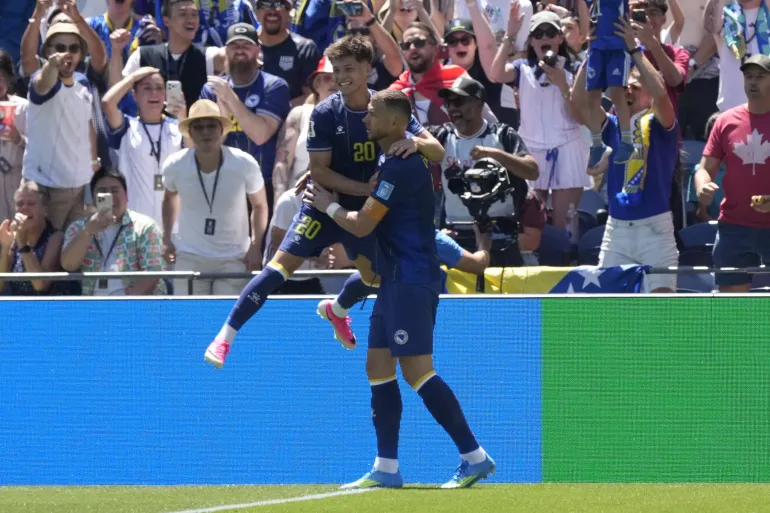
Cape Verde’s stunning debut headlines the team list for the World Cup knockouts, which begin on Sunday in Los Angeles.
Published On 27 Jun 202627 Jun 2026
The 48-team FIFA World Cup is nearing the end of the group stage matches and moving towards the knockout stages, beginning on Sunday.
Only 32 teams will advance to the next round of football’s most prestigious tournament. The 2026 iteration in North America is the first time 48 teams have featured, and some debutants have already left their mark.
Here’s what you need to know about the round of 32:
Cape Verde players celebrate after the 0-0 draw during the FIFA World Cup 2026 Group H match with Saudi Arabia at Houston Stadium on June 26, 2026 in Houston, Texas [Michael Steele/Getty Images/AFP]
What is the format of the World Cup knockouts?
The top two teams in each of the 12 groups, along with the eight best third-place finishers, advance to the knockouts.
The knockout phase begins with the round of 32, introduced at the World Cup following the tournament’s expansion from 32 to 48 teams.
Then comes the round of 16, followed by the quarterfinals, semifinals and a playoff for third place. The final is on July 19.
The stage-wise breakdown of the tournament’s knockout schedule is:
Round of 32: June 28 to July 3
Round of 16: July 4–7
Quarterfinals: July 9–11
Semifinals: July 14–15
Bronze medal match: July 18
Final: July 19
South Africa players celebrate after the match at Estadio Monterrey, Mexico on June 24, 2026 [Daniel Becerril/Reuters]
Which teams have qualified for the round of 32?
So far, 26 teams have punched their ticket to the knockouts. They include:
⚽️ Colombia
⚽️ Argentina
⚽️ France
⚽️ Norway
⚽️ Germany
⚽️ USA
⚽️ Mexico
⚽️ Switzerland
⚽️ Canada
⚽️ Brazil
⚽️ Morocco
⚽️ South Africa
⚽️ Ivory Coast
⚽️ Bosnia and Herzegovina
⚽️ Ecuador
⚽️ Netherlands
⚽️ Japan
⚽️ Sweden
⚽️ Australia
⚽️ Spain
⚽️ Cape Verde
⚽️ Paraguay
⚽️ Egypt
⚽️ England
⚽️ Ghana
⚽️ Portugal
FIFA World Cup 2026: Round of 32 full schedule
Sunday, June 28
South Africa vs Canada, 12pm (19:00 GMT) — Los Angeles Stadium, USA
Monday, June 29
Brazil vs Japan, 12pm (17:00 GMT) — Houston Stadium, USA
Germany vs Paraguay, 4:30pm (20:30 GMT) — Boston Stadium, USA
Netherlands vs Morocco, 7pm (01:00 GMT+1) — Estadio Monterrey, Mexico
Tuesday, June 30
Ivory Coast vs Norway, 12pm (17:00 GMT) — Dallas Stadium, USA
France vs Sweden, 5pm (22:00 GMT) — New York New Jersey Stadium, USA
Mexico vs 3C/3E/3F/3H/3I, 7pm (02:00 GMT+1) — Mexico City Stadium, Mexico
Wednesday, July 1
USA vs Bosnia and Herzegovina, 5pm (01:00 GMT+1) — San Francisco Stadium, USA
1L vs 3EHIJK, 12pm (16:00 GMT) — Atlanta Stadium, USA
1G vs 3AEHIJ, 1pm (20:00 GMT)— Seattle Stadium, USA
Thursday, July 2
Spain vs 2J, 12pm (19:00 GMT) — Los Angeles Stadium, USA
2K vs 2L, 7pm (23:00 GMT) — Toronto Stadium, Canada
Switzerland vs 3EFGIJ, 8pm (03:00 GMT+1) — Vancouver Stadium, Canada
Friday, July 3
Australia vs 2G, 1pm (18:00 GMT) — Dallas Stadium, USA
Argentina vs Cape Verde, 6pm (22:00 GMT) — Miami Stadium, USA
1K vs 3DEIJL, 8:30pm (01:30 GMT+1) — Kansas City Stadium, USA
Deaths of immigrants held in US detention centres have surged during Donald Trump’s second term.
Published On 26 Jun 202626 Jun 2026
The United Nations High Commissioner for Human Rights, Volker Turk, has called for an independent investigation into the severe uptick in deaths in migrant detention centres during President Donald Trump’s second term in office.
In a statement on Friday, Turk expressed concern over the lack of transparency over those deaths, at least 19 of which have occurred so far this year, according to US government statistics.
Recommended Stories
list of 3 itemsend of list
“Those responsible for violations of the law must be held to account, and the rights of the victims’ families to truth, justice and reparation and guarantees of non-recurrence must be upheld,” the UN rights chief said.
Deaths in immigrant detention centres have surged during Trump’s second term in office, a by-product of what rights groups and immigration lawyers have depicted as systematic neglect, inhumane conditions and abuses.
The Trump administration has sought to rapidly expand the network of immigrant detention centres, some operated by private contractors, as it seeks to carry out the mass deportation of immigrants in the US.
Trump stated in a social media post on Friday that his administration has the “Highest Average Daily Arrest Rate by ICE and CBP, including Total Detention, with Final Orders of Removal, than any other president, by far!”
The reported death of a Georgian man, Mamuka Artmeladze, in a detention facility in Louisiana on June 4 increased the number of fatalities so far this year to 19, compared to 33 last year and 11 in 2024.
“The mortality rate of deaths in ICE custody is at its highest level in over a decade and has more than doubled since Trump’s second term began,” the watchdog group Human Rights Watch wrote in a report on detention deaths earlier this month. “The rate is nearly four times that of the Biden administration and more than two and a half times as high as that of the first Trump administration.”
That report said the 52 people who have died in detention during Trump’s second term ranged in age from 19 to 75 and came from 20 different nationalities.
Turk wrote on Friday that there have been “concerning allegations regarding the use of force” at such facilities and that five of the deaths recorded in 2026 were classified as suicides.
He also expressed concern over the reported use of solitary confinement, which is associated with a heightened risk of suicide and considered a form of torture by the UN after a period of 15 days.
“All these factors exacerbate vulnerability and raise serious concerns as to whether some of these deaths in ICE custody could have been prevented,” he said.
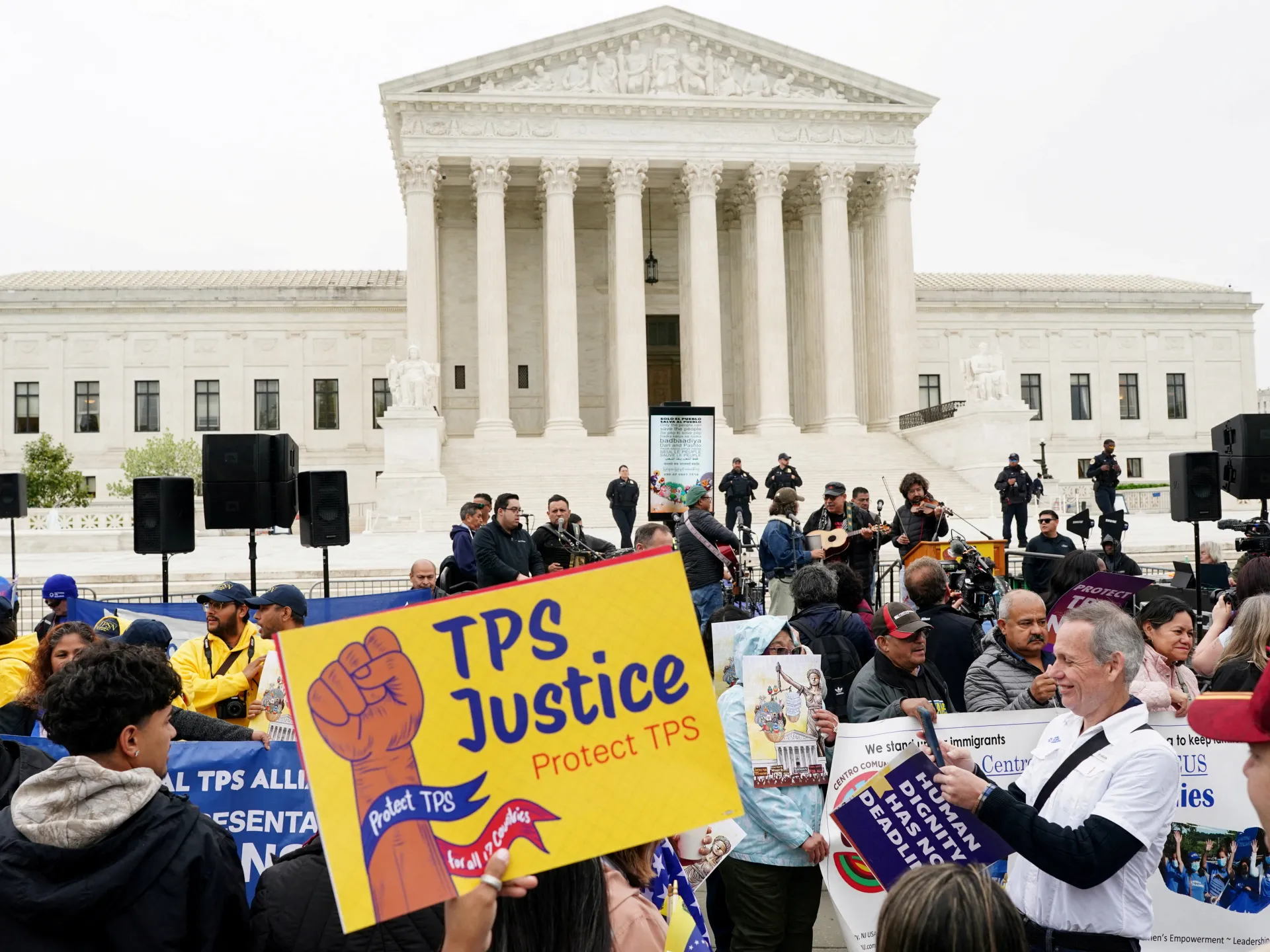
The Supreme Court’s ruling allowing the administration of US President Donald Trump to do away with a special legal status for Haitians and Syrians has sent shockwaves through communities across the country.
Immigration advocates say the 6-3 majority decision allowing the Trump administration to terminate Temporary Protected Status (TPS) will have a resounding impact on nationals of Haiti and Syria, raising the spectre of deportation and family separation, while likely leaving US employers in the lurch.
Recommended Stories
list of 3 itemsend of list
But the ruling is set to have more far-reaching implications, advocates have warned, creating a new tool to “empower Trump’s ICE deportation machine to take away legal protections and work permits from hundreds of thousands of people”, according to Hector Sanchez Barba, the president of the Mi Familia Vota advocacy group.
“This has been a defining element of the Trump- [White House adviser Stephen] Miller campaign of cruelty, revoking legal or temporary status, taking away work permits and forcing immigration judges to dismiss cases to accelerate detentions and deportations,” Barba said in a statement following Thursday’s ruling.
Here’s what to know.
What does the ruling mean for Haitians and Syrians on TPS?
Temporary Protected Status (TPS) was created by Congress as part of the Immigration Act of 1990. It allowed the executive branch, particularly the Secretary of Homeland Security, to declare that it is unsafe for foreigners to return to their home countries in light of extraordinary temporary conditions, such as armed conflict, natural disasters or other internal crises.
When a country is designated under TPS, its nationals are granted temporary legal status to reside and work in the US.
Haiti was first designated for TPS following the devastating earthquake in 2010, which killed over 250,000 people. The status has been repeatedly renewed as the Caribbean nation has suffered overlapping political, security and humanitarian crises.
Syria has been designated for the status since 2012, after the start of the civil war which lasted almost 14 years.
All told, about 350,000 Haitians and about 6,000 Syrians are believed to be in this status.
Immigration advocates say the ruling will send TPS recipients scrambling to find other legal pathways to stay in the US or become deportable under Trump’s mass deportation drive.
Given that both countries have been designated for TPS for over a decade, the decision also raises the spectre of family separation, particularly for parents with children born in the US.
“Ending these protections for hundreds of thousands of Haitians and thousands of Syrians will tear families apart, disrupt workplaces and communities and place vulnerable individuals at risk,” Council on American Islamic Relations (CAIR) national executive director Nihad Awad said.
“Many TPS holders have lived in our nation for years, raised American children, built businesses, contributed to our economy and become integral members of their communities.”
What does it mean for US employers?
Several labour organisations and unions have underscored the impact the sudden change in status could have on US industries.
Neidi Dominguez, the executive director of Organized Power in Numbers, called the ruling a “gut punch that requires workers, immigrant communities and the employers who rely on them to hit back together through our organising”.
“They work in hospitality, food service, education, construction, health care and every industry,” Dominguez said. “These are our coworkers, our neighbours and the backbone of the economy across this country, from service to construction and healthcare.”
The healthcare industry is expected to be particularly hard-hit by the decision, with the Migration Policy Institute finding that Haitian immigrants held over 103,000 healthcare jobs in 2021.
“This unconscionable ruling will leave thousands more immigrants – not just registered nurses and healthcare workers, but also teachers, airport workers, hard-working people – vulnerable to the Trump administration’s deadly, money-making deportation machine,” the National Nurses United union said in a statement.
“This decision will further strain our healthcare workforce and worsen the nurse staffing crisis,” it said.
Why does this extend beyond Haitian and Syrian TPS?
Lower courts had previously ruled that the Trump administration did not follow proper procedures, including conducting an inter-agency review to determine that conditions in both countries had improved, in terminating TPS for Haiti and Syria.
But, as Aaron Reichlin-Melnick, a Senior Fellow at the American Immigration Council, explained, the Supreme Court’s majority ruling did not even address whether the Department of Homeland Security Secretary had followed the legally mandated procedures in terminating TPS.
“Rather, the Court said that questions of whether the DHS secretary followed the law cannot be heard by courts in the first place,” he wrote, “meaning that in the future even an openly unlawful decision to grant or terminate TPS could be entirely insulated from judicial review”.
The ruling will further allow the Trump administration to “return to federal court in other cases and overturn decisions ruling against the termination of TPS for countries such as Venezuela, Somalia, Ethiopia and others”, he added.
Angelica Sedgwick Oun, a US immigration researcher at Human Rights Watch, said the ruling “leaves the DHS secretary with unfettered power to make a life-and-death decision about whether it is safe enough to send someone back to a country facing rampant violence, like Haiti, or conflict, like Syria, without meaningfully consulting on human rights conditions there”.
What comes next?
Because the Supreme Court is the top appellate court in the US, there is little recourse available through the judiciary.
But an array of advocacy groups have called on Congress to intervene.
In a rare bipartisan move on immigration, the US House of Representatives in April passed an extension to Temporary Protected Status for Haitians until 2029. The Senate has not yet taken up the measure.
Others have called on Congress to pass legislation to assert a process for courts to review any TPS terminations.
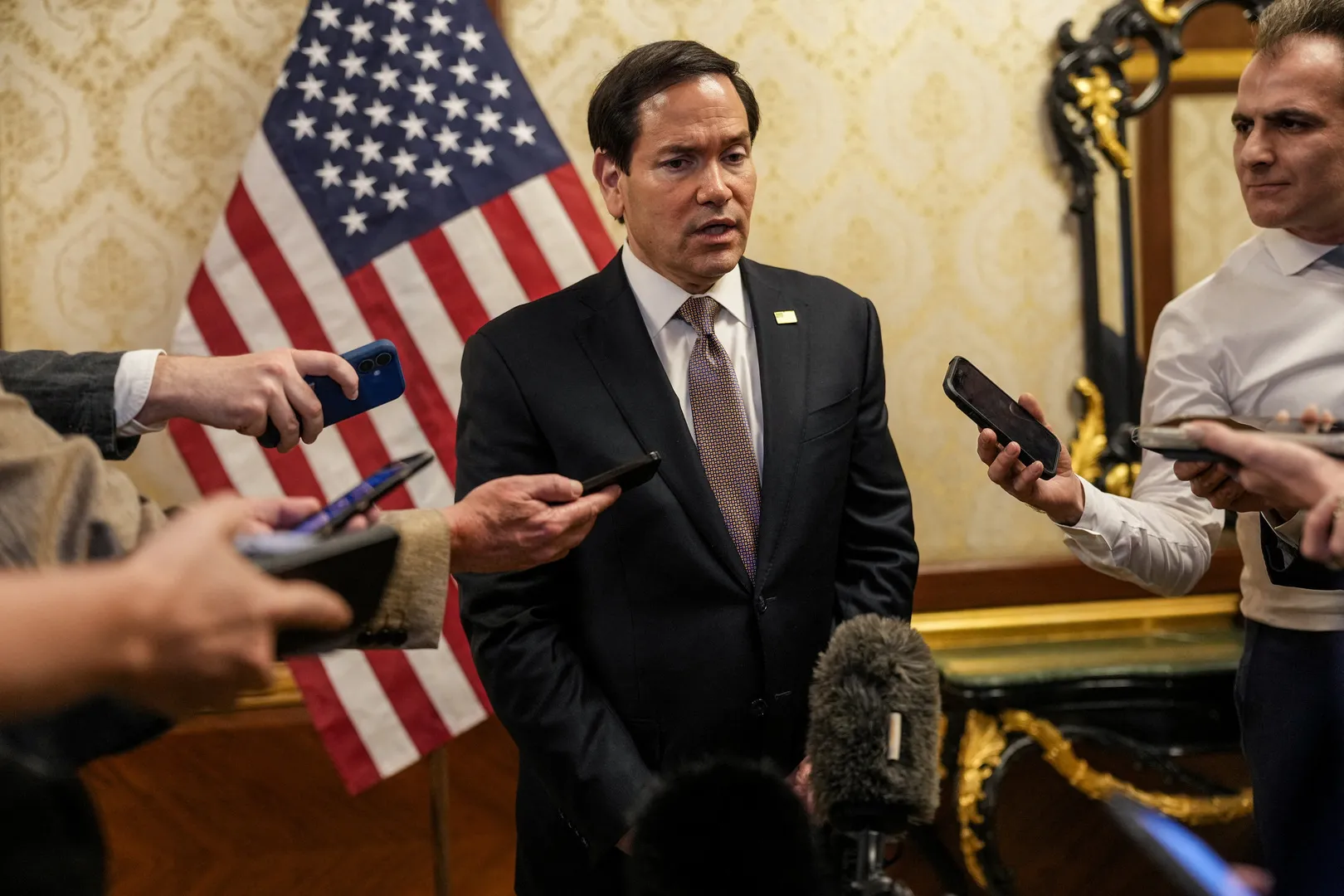
US Secretary of State Marco Rubio has announced the deal after talks unfolded in Washington, DC.
Published On 26 Jun 202626 Jun 2026
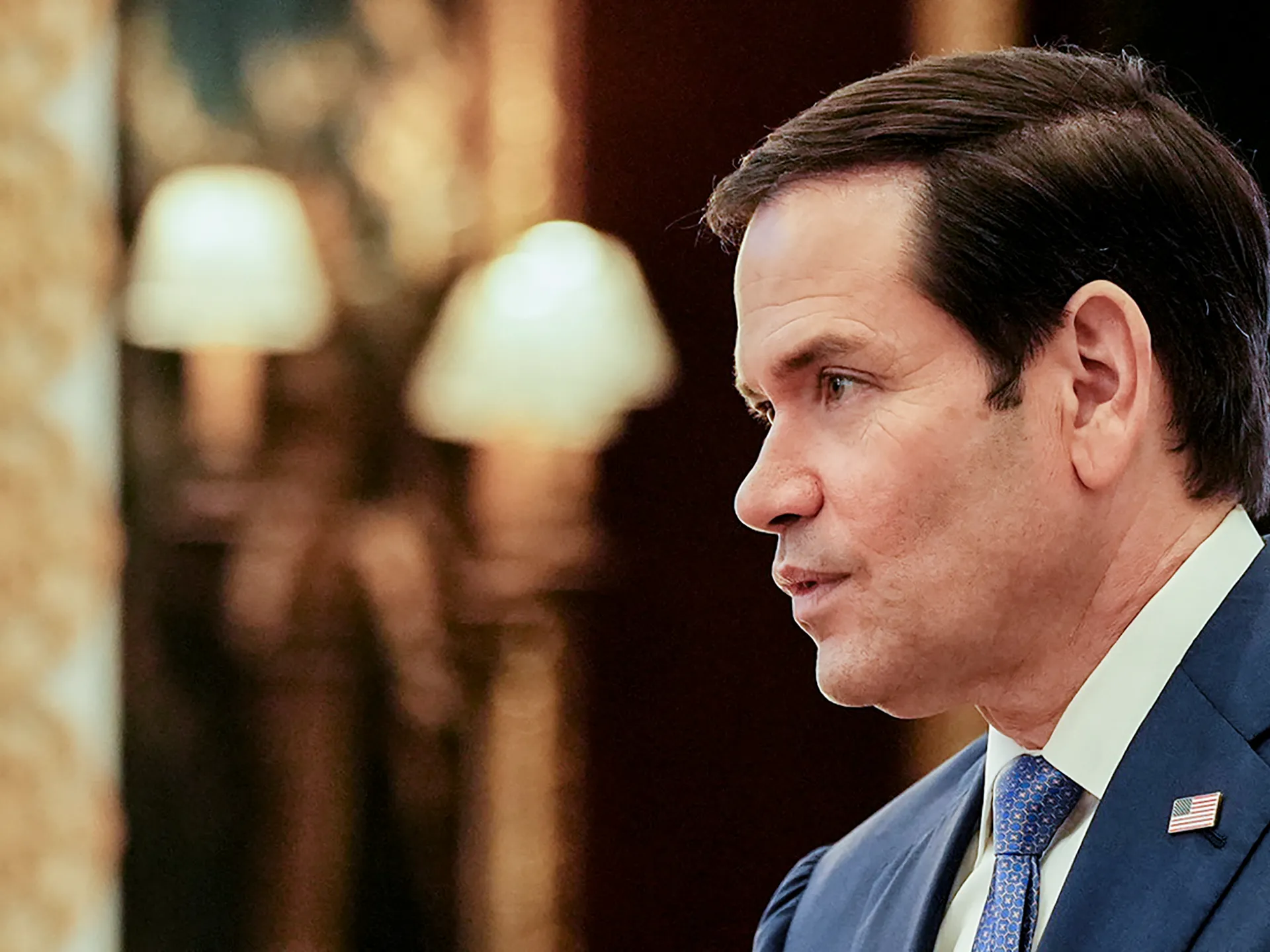
United States Secretary of State Marco Rubio has announced a deal framework between Lebanon and Israel after negotiations in Washington, DC.
Details about the agreement remain scarce. But in his remarks on Friday, Rubio made clear that the deal was only the “first step” in further negotiations.
“It’s the beginning of the beginning,” Rubio said, surrounded by representatives from both Lebanon and Israel.
“There’s a lot of work ahead. We don’t in any way underestimate the difficulty of the task ahead, but we understand the importance of it, how vital it is.”
The two sides had gathered in Washington, DC, for three days of US-mediated talks this week, starting on Tuesday.
Israeli and Lebanese delegations will continue their talks on Friday.
Published On 26 Jun 202626 Jun 2026
Israel continues to attack southern Lebanon on Friday as Israeli Prime Minister Benjamin Netanyahu pledges that the Israeli military is “not going to withdraw” from occupied areas.
Israel currently occupies about one-fifth of Lebanon.
This comes amid progress on the interim peace accord between the United States and Iran aimed at ending the US-Israel war on Iran, which began on February 28.
Here is what is happening:
In Iran
IAEA chief says inspectors to return to Iran: The interim US-Iran peace accord – also being referred to as the Memorandum of Understanding (MoU) – gives inspectors from the International Atomic Energy Agency (IAEA) access to Iran, the agency’s chief Rafael Grossi said, after Tehran indicated that key sites would remain off-limits until a final deal with Washington is reached and sanctions are lifted.
“There is an agreement and to comply with that agreement, the IAEA will have to have access and inspect,” the UN nuclear watchdog chief Grossi said at a news conference in Japan. “We hope to be there soon.”
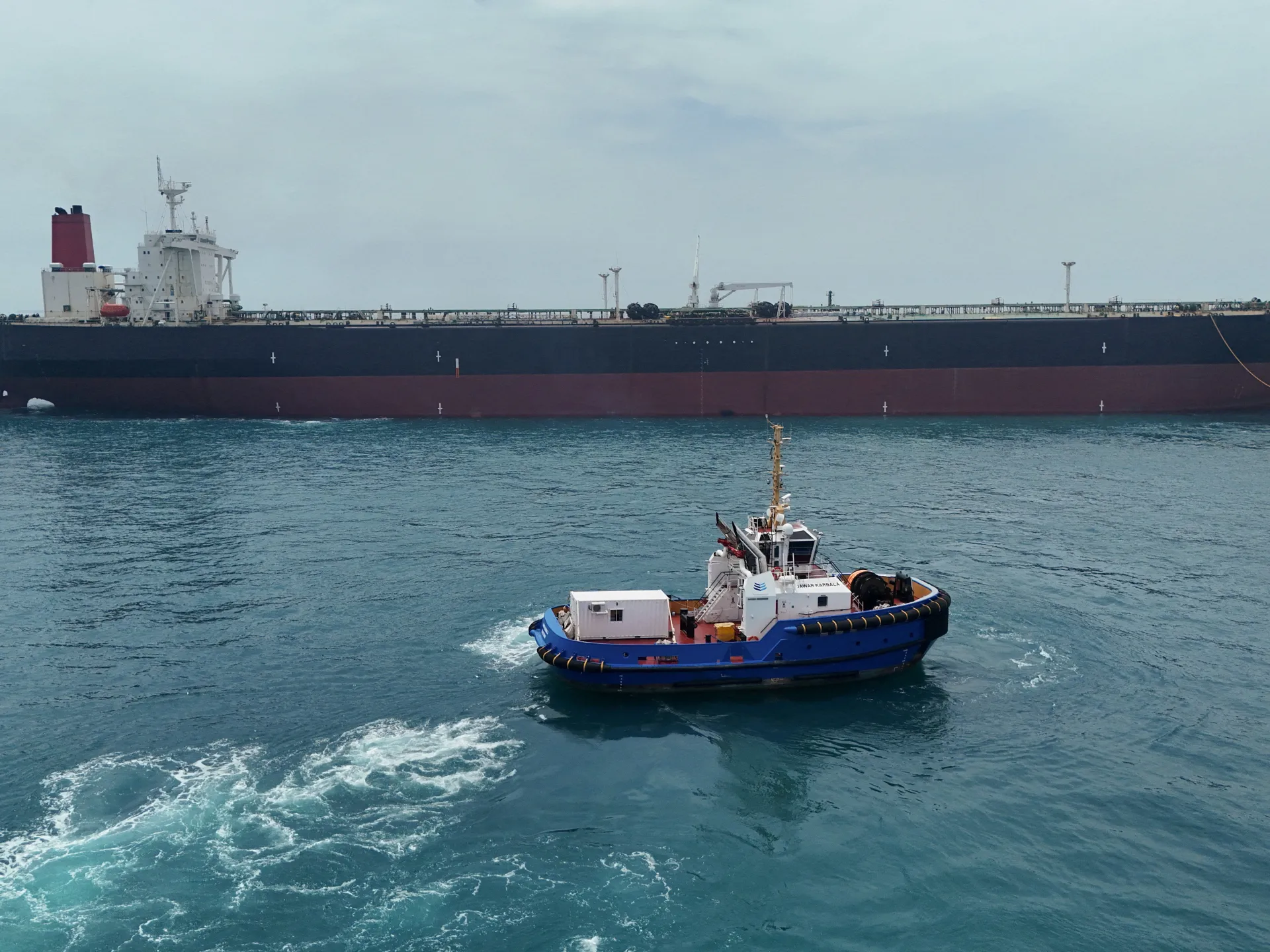
UN halts escort of ships through Hormuz: The UN International Maritime Organization (IMO) paused its operation to escort ships through the Strait of Hormuz on Thursday after a vessel reported an attack, reigniting concerns about whether a preliminary deal to end the Iran war will hold. The cargo ship said it was hit close to Oman by a projectile, the British Navy agency UKMTO said.
On Thursday, Iran’s Islamic Revolutionary Guard Corps (IRGC) warned vessels not to attempt to pass the strait without its express permission, despite Oman and the IMO releasing details of a new safe route. In April, the IRGC released its own safe-transit route for approved ships, showing shipping lanes much closer to its own coast.
(Al Jazeera)
In the US
Trump says unfrozen Iranian assets will be used to buy US agricultural products: US President Donald Trump reiterated during an event for US farmers that unfrozen Iranian assets will be spent on buying wheat, soya beans and corn from the US. Iran has not confirmed this.
In Lebanon
Two killed in Israeli raid: Two people were killed and another person was wounded in an Israeli raid on the town of Mayfadoun, in southern Lebanon’s Nabatieh district, the National News Agency reported, citing the country’s Ministry of Public Health.
An Israeli air raid also hit the town of Nabatieh al-Fawqa, according to Al Jazeera Arabic.
Talks to continue: A US State Department official has told Al Jazeera Arabic that Israeli and Lebanese delegations will resume their meetings on Friday.
(Al Jazeera)
Global economy
India ends commercial gas restrictions: India has lifted restrictions on supplies of commercial liquefied petroleum gas (LPG) imposed during the war, when energy supplies were hit by the closure of the Strait of Hormuz, the global energy chokepoint.
Aramco resumes oil loading: Saudi Aramco, the world’s largest oil company, has resumed oil loading at its Ras Tanura terminal in the Gulf after a nearly four-month halt, shipping data showed.
Former German player’s comments that ‘African football’ is ‘a bit unorthodox sometimes, a bit wild’ sparked controversy.
Published On 26 Jun 202626 Jun 2026
Even in one of the most joyous moments in his country’s footballing history, Ivory Coast manager Emerse Fae found himself managing sadness over the remarks of a former role model that have sparked debate about potential racist connotations.
But afterwards, Fae was asked to respond to analysis given by former German midfielder Bastian Schweinsteiger on German public TV ahead of Germany’s 2-1 win over the Ivorians in both teams’ second Group E match in Toronto.
Here is how DW.com characterised what Schweinsteiger said: “Ahead of the Group E clash in Toronto, which Germany won 2-1, Schweinsteiger said in his role as a pundit for German public broadcaster ARD that the Ivorians played ‘African football’, which he characterised as ‘a bit unorthodox sometimes, a bit wild, not quite as tactical.’”
In his response, Fae noted how he once admired the former Bayern Munich man so much that he sometimes was called “Bastian” by his friends.
“I think it’s sad,” said the 42-year-old Fae, who is only several months older than the 41-year-old Schweinsteiger. “He was a very, very good player; a great player.
“I’ve always loved him, personally. As a midfielder, I’ve always liked the way he played, the way he understood football. … So when I heard his comments, I was disappointed, disappointed in the man.
“Because when you know football the way he knows it, it’s odd that you would speak that way, which we could call racist if we were calling a spade a spade, but that’s the way it is.”
Schweinsteiger played parts of 13 seasons for Bayern Munich, helping the German club giants win eight league titles and one UEFA Champions League crown. Internationally, he was a key contributor to Germany’s 2014 World Cup-winning squad.
He has not publicly commented on the remarks in the days since.
On Thursday, Fae’s side got the better of one of the game’s most famous managers, the 78-year-old Dick Advocaat, who, in guiding Curacao, was managing in his third World Cup.
Fae’s group also earned a 1-0 victory to open the tournament against Ecuador, a team that came into this World Cup unbeaten in 19 matches and hailed for its defensive solidity.
“I can’t change the way he talks,” Fae said of Schweinsteiger.
“But all I can do is show on the pitch that Africa is not just the physical game. We are very technical as well, very tactical. And all I can hope is that this was just a clumsy statement, that it wasn’t particularly reflective of what’s in his mind.”
Both players were on the floor when Thomas pushed her fist into Clark’s throat before getting up and stepping over her.
Published On 25 Jun 202625 Jun 2026
Phoenix Mercury star guard Alyssa Thomas has been given a flagrant foul 2 by the WNBA office and suspended one game for “recklessly making contact with her fist to the throat area” of Indiana Fever star guard Caitlin Clark during Wednesday’s game between the teams.
The incident occurred with 6:52 left in the second quarter of the Mercury’s 111-109 triumph over host Indiana. No foul was called.
Thomas will serve the suspension Saturday when the Phoenix visit the Toronto Tempo.
Phoenix Mercury forward Alyssa Thomas (25) shoots the ball while Indiana Fever guard Caitlin Clark (22) defends in the first half at Gainbridge Fieldhouse. [Trevor Ruszkowski-Imagn Images/Reuters]
The WNBA office said it has the option to review games and “classify as flagrant any foul not called as such during a game.”
In this instance, Clark drove into the lane and fell on her side following contact with Phoenix defender Lexi Held. In the ensuing scramble for the ball, Thomas pushed her fist into Clark’s throat before getting up and stepping over Clark.
Fever coach Stephanie White was upset after the contest that Thomas wasn’t called for a foul.
“Number one, you’ve got to call it. It’s absolutely egregious and utterly disrespectful,” White said.
The teams also had played a testy contest two nights earlier in which a combined six technical fouls were called during Indiana’s 86-77 victory.
Thomas, 34, is a six-time All-Star. She is in her second season with the Mercury after playing 11 campaigns with the Connecticut Sun.
Thomas is averaging 14.7 points, 8.4 assists and 6.6 rebounds in 18 games this season.
Clark exited Wednesday’s game with 5:15 left in the third quarter due to back issues.
Clark, 24, is averaging a career-high 21.2 points, 8.2 assists and 4.0 rebounds through 17 games this season. She’s a two-time All-Star.
The Fever host the Los Angeles Sparks on Saturday.
Six countries – Saudi Arabia, the United Arab Emirates (UAE), Qatar, Kuwait, Bahrain and Oman – form the Gulf Cooperation Council (GCC), which was created in 1981 following fears of the perceived expansionist ambitions of the new Iranian government.
Recommended Stories
list of 4 itemsend of list
Since the 1979 Islamic revolution, Israel has attempted to isolate Iran and its wide network of regional proxy groups. But in a twist of irony, Israeli aggression in this pursuit has pushed some Gulf states closer to Tehran.
When Israel and the US launched strikes on Iran on February 28 – and Tehran responded by attacking Gulf states – they were again forced to reassess their relationship with their neighbour.
Gulf relations with Iran, at present, appear more shaped by realism than reconciliation, but this approach could help them navigate the uncertain road ahead.
“The ongoing conflict … compelled the Gulf states to pursue a more pragmatic relationship with Tehran, one that will include enhanced dialogue to deter conflict,” Farah al-Qawasmi, a researcher at the Gulf Studies Center at Qatar University, told Al Jazeera.
Embracing de-escalation – not Iran
All six GCC member states have welcomed a memorandum of understanding (MoU) signed by Iran and the US last week. But this is shaped more by the Gulf states wanting the war to end rather than a newfound trust of Iran.
“An agreement between the two parties is being [highly] advocated by the Gulf states in [an] attempt to prevent and contain regional conflicts,” al-Qawasmi said.
Shortly after the US and Iran agreed in 2015 to the Joint Comprehensive Plan of Action (JCPOA) – putting guardrails on Tehran’s nuclear programme – Gulf states remained sceptical about their neighbour.
The current war has only heightened these suspicions, but it has also seen regional states seek diplomacy with Tehran rather than military confrontation, despite Iran directly attacking Gulf cities.
“The Gulf states still feel like diplomacy is better than using force to get a deal … to change Iran’s behaviour and to insulate them from Iran’s destabilising actions,” Rob Geist Pinfold, a lecturer on security studies at King’s College London, told Al Jazeera.
Pinfold points out that Iran closed the Strait of Hormuz via drones and missiles, not nuclear weapons, making dealing with that threat a priority for Gulf states rather than Tehran’s nuclear programme.
Gulf states will want a more comprehensive agreement between Iran and the US, rather than the nuclear-focused JCPOA, said Pinfold.
“If you talk to people in Gulf capitals, they will tell you that the nuclear programme is a tomorrow problem for them,” he said.
“The today problem is Iran’s use of drones and proxies to destabilise and undermine the sovereignty of Gulf states, but also states throughout the region.”
US Secretary of State Marco Rubio’s three-day tour of the Gulf, which ends Thursday, is seen as a way of allaying these fears and assuring the GCC that Tehran will not be strengthened by the agreement.
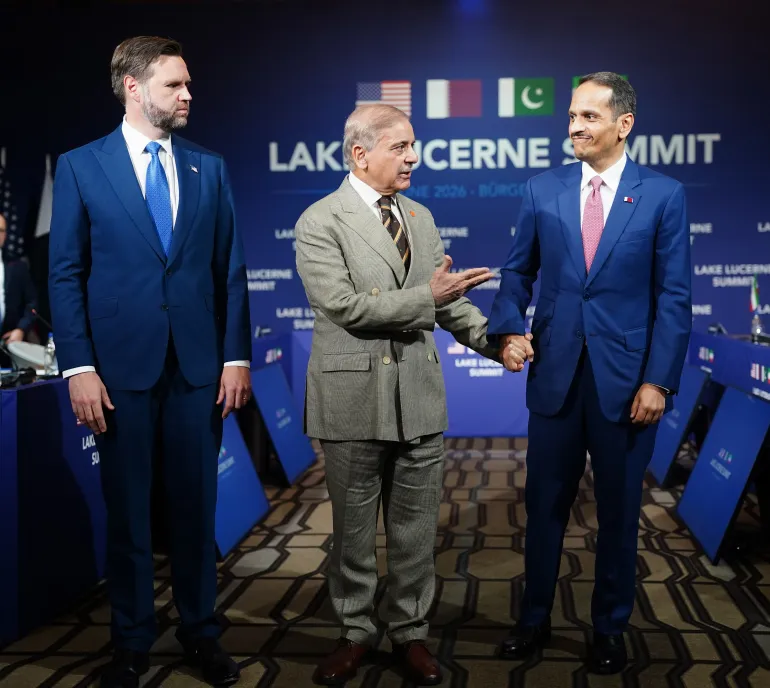
US Vice President JD Vance, left, looks on as Pakistan’s Prime Minister Shehbaz Sharif, centre, speaks and gestures towards Qatar’s Prime Minister and Minister of Foreign Affairs Sheikh Mohammed bin Abdulrahman bin Jassim Al Thani, right, at the start of a quadrilateral meeting between the US, Iran, Pakistan and Qatar [File: Nathan Howard/Pool via Getty Images]
Seat at the table
Mehran Haghirian, the director of research and programmes at the Bourse & Bazaar Foundation, believes Gulf states are in a better position to guide the outcome of the current US-Iran talks than in 2015.
“They are at the heart of the negotiations,” Haghirian said regarding the Gulf states’ role in the current talks.
In its role as a co-mediator, Qatar is essentially representing the GCC and their interests during the talks, while articles five and six of the Iran-US MoU place Gulf states at the centre of the agreement.
Among the biggest concerns for the GCC are the future of the Strait of Hormuz, with Tehran demanding tolls on shipping, and calls for the creation of a regional investment fund for Iran.
“There really cannot be any new Hormuz authority by Iran that would not include other GCC countries,” Haghirian told Al Jazeera.
US Vice President JD Vance claimed last week that the investment fund would be financed by the Gulf coalition, but Rubio said this week that regional allies would not be asked to contribute to any reconstruction fund for Iran.
Qatar’s Prime Minister Sheikh Mohammed bin Abdulrahman bin Jassim Al Thani has described the reported $300bn figure as “aspirational” in an interview with the Financial Times, while no Gulf state has yet said if it will contribute to the fund.
‘Maximum pressure era’
The analysts stress that the GCC is not a monolith – with Gulf states having contrasting and changing approaches towards Iran.
Oman, Qatar and Kuwait were broadly supportive of the JCPOA. Saudi Arabia, the UAE and Bahrain were more sceptical, but even these states publicly backed the agreement, said Haghirian.
When Trump pulled the US out of the JCPOA in 2018, Saudi Arabia, the UAE and Bahrain believed they had “found a partner in DC”.
That led to a “maximum pressure era” that brought a period of brinkmanship in the region, said Haghirian.
Suspected Iran-linked attacks on Saudi Arabia’s Abqaiq-Khurais oil facilities and vessels off the coast of Fujairah in 2019 were “the initial reaction by the Iranians to that maximum pressure” campaign, he added, but paradoxically, this also triggered a recalibration of relations.
“That was enough of a reason for Saudi Arabia [and] the UAE, particularly, to basically restructure their approach towards Iran,” Haghirian said.
The war and accelerated pragmatic rapprochement
While Israel has used war to attempt to increase its presence in the Gulf region – reportedly sending an Iron Dome battery to the UAE – other Gulf states view both Iran and Israel as unsettling forces in the region.
“Israel started the war, which was a destabilising act, and then Iran escalated by targeting the Gulf states, which was in turn a destabilising act,” Pinfold said.
Despite this, the Gulf states targeted by Iran still demonstrated patience and pragmatism in dealing with their neighbour.
Qatar, for example, has played a leading role in mediating between the US and Iran, even after being on the receiving end of Iranian drone and missile attacks.
“All six got attacked, and that’s really a level of foreign policy decision-making that is very difficult for any state to be able to really undertake, considering the fact that it was a military attack,” Haghirian said.
“But again, this pragmatism came out within this context to engage Iran and to actually speak for themselves at these negotiations. This war has really initiated a complete rebalancing of the entire region.”
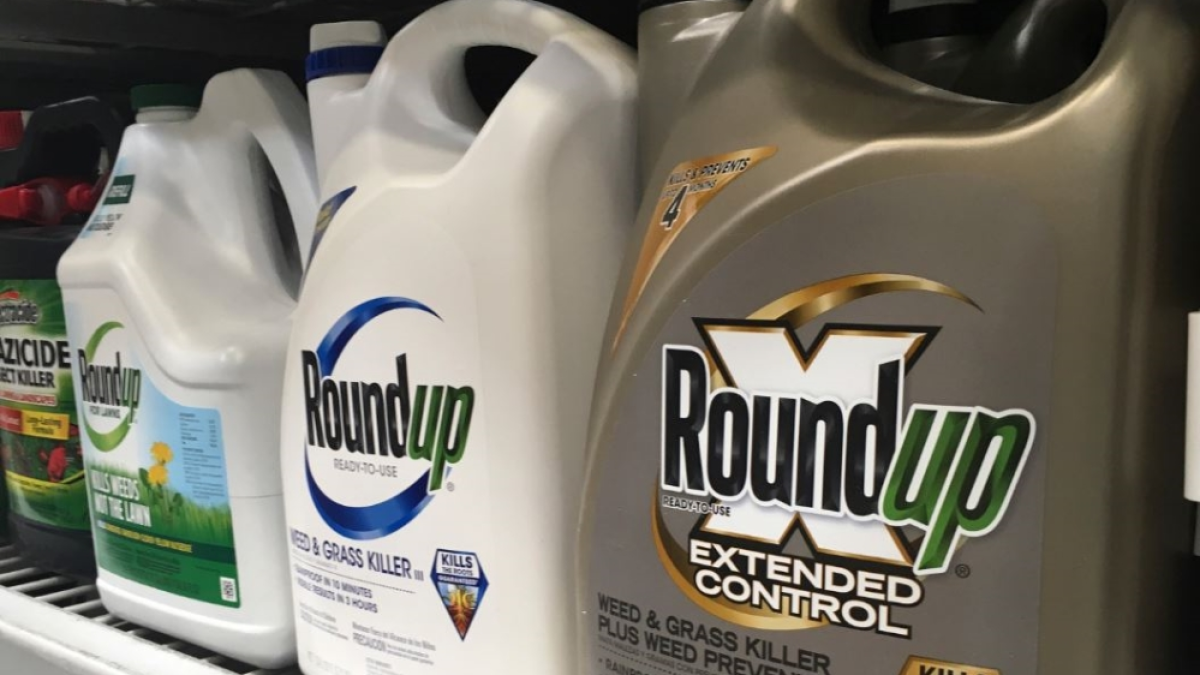
The United States Supreme Court has sided with the maker of Roundup weedkiller in a ruling expected to block thousands of lawsuits alleging it failed to warn people the product could cause cancer.
The ruling on Thursday was tied to a case that came before the justices after a tidal wave of litigation that included some multibillion-dollar verdicts against the global agrochemical manufacturer Bayer, a Germany-based company that acquired Roundup when it bought its original producer Monsanto in 2018.
Recommended Stories
list of 4 itemsend of list
The decision is a victory for US President Donald Trump’s administration, but one that could be tricky politically since allies in the “Make America Healthy Again” movement want to rein in pesticide use.
The high court, in a 7-2 ruling, found that the company cannot face failure-to-warn lawsuits in state courts because federal regulations have found a cancer link unlikely and do not require a warning label.
The justices overturned a jury verdict in Missouri awarding $1.25m to a man named John Durnell who said he was diagnosed with non-Hodgkin lymphoma after years of exposure to glyphosate in Roundup. The Supreme Court agreed with Bayer that a US law that governs pesticides precludes failure-to-warn claims that are brought under state law from moving forward in court.
Bayer shares jumped nearly 18 percent following the ruling.
Trump’s administration had backed Bayer in the case.
Conservative Justice Brett Kavanaugh, who authored the ruling, said the US Environmental Protection Agency, or EPA, has concluded glyphosate does not cause cancer and has not required a cancer warning on Roundup.
The law preempts Durnell’s claim because it “would require Monsanto to add a cancer warning to Roundup’s label even though federal law requires Monsanto to use the EPA-approved label without a cancer warning”, Kavanaugh wrote.
Liberal Justice Ketanji Brown Jackson, in a dissent joined by conservative Justice Neil Gorsuch, said that Durnell’s claim would impose equivalent labelling requirements on Monsanto that the federal law requires and so should not be preempted.
Jackson called the ruling “remarkable and regrettable, for it unjustifiably closes the courthouse doors to state tort plaintiffs like Durnell”.
Bayer acquired Roundup as part of its $63bn purchase of agrochemical company Monsanto in 2018. More than 100,000 plaintiffs have filed cases in US state and federal courts alleging a cancer link, and the German drugmaking and crop science company had said that the lawsuits could threaten its ability to supply the herbicide to farmers.
The torrent of litigation already prompted Bayer to remove glyphosate from its consumer version of Roundup. Bayer said before the Supreme Court ruled that a decision in its favour could largely end the Roundup litigation.
“The US Supreme Court decision is good for science, farmers, and industries that depend on regulatory clarity for innovation. It should help significantly contain the Roundup litigation after nearly a decade of legal battles. The ruling should result in the dismissal of current warning-based claims and bar future failure-to-warn claims,” Bayer spokesperson Tino Andresen said in a statement.
The company emphasised throughout the litigation that the EPA repeatedly found that glyphosate does not cause cancer and approved its product labels without a warning.
Facing billions of dollars in potential liability, Bayer announced in February a proposed $7.25bn settlement to resolve tens of thousands of current and future lawsuits. The settlement would not affect claims that stem from pending appeals or that fall outside the deal, according to the company. Those amount to nearly $1bn, it said.
‘Disaster for public health’
Environmental activists and others criticised the court’s ruling on Thursday.
“Once again, the Supreme Court has sided with big business over people and the environment. Today’s ruling is a disaster for public health,” said Tarah Heinzen, legal director at the advocacy group Food and Water Watch.
“The harm from this decision will perpetuate our cancer, infertility and general chronic disease epidemic for generations to come,” said Kelly Ryerson, co-executive director of advocacy group American Regeneration and a Make America Healthy Again activist who posts on social media under the moniker “The Glyphosate Girl”.
The sprawling dispute centres on a US law called the Federal Insecticide, Fungicide and Rodenticide Act, or FIFRA, that governs the sale and labelling of pesticides and bars states from imposing differing or additional requirements.
The measure prohibits pesticides that are “misbranded” with labels that lack an adequate warning to protect health and the environment.
Bayer has argued that Durnell’s claims are preempted by this law. The EPA has repeatedly approved labels without such a cancer warning, demonstrating that these products are not misbranded, the company said, adding that labels cannot be substantially changed without the agency’s approval.
Durnell’s lawyers said that despite the EPA’s registration of Roundup, the label may still be challenged as misbranded. They also said Durnell’s claims are not preempted because Missouri state law that requires products to adequately warn of dangers imposes the same requirements as FIFRA’s prohibition on misbranding.
‘A new era’
Union Investment fund manager Markus Manns called Thursday’s ruling a significant milestone for Bayer, adding that a decade after the Monsanto acquisition, the company is “entering a new era”.
“While future lawsuits are not entirely off the table, they will become considerably more difficult. A final breakthrough would come if the settlement is accepted by the plaintiffs and approved by the competent court in July. This would bring Bayer’s glyphosate litigation chapter to a definitive close, allowing management to fully refocus on operational and strategic matters,” Manns said.
Durnell sued Monsanto in Missouri state court in 2019, claiming it failed to warn users of the dangers associated with Roundup and glyphosate.
He was diagnosed with a rare and often aggressive form of non-Hodgkin lymphoma, a cancer that starts in the white blood cells, and attributed the disease to his exposure to Roundup starting in 1996. For about 20 years, he was the “spray guy” for a neighborhood association in St Louis, killing weeds at local parks without protective equipment, according to court papers.
A jury sided with Durnell in 2023, and in 2025, a state appeals court upheld that verdict.
The price of Brent crude has reached its lowest since February 27, before the war started.
Published On 25 Jun 202625 Jun 2026
Oil prices have extended their decline to levels last seen before the start of the Iran war, as expectations of rising supply from the Middle East outweighed demand concerns.
Prompt-month Brent crude futures for August delivery fell $1.06 (1.44 percent) to $72.68 a barrel by 06:39 GMT, while US West Texas Intermediate (WTI) lost 76 cents (1.08 percent) to $69.58 a barrel.
Recommended Stories
list of 4 itemsend of list
Both contracts hit their lowest since February 27.
August Brent was trading lower than September, which was priced at $73.59, signalling ample short-term supply.
Brent had fallen by more than $3 on Wednesday as supply concerns eased, while WTI settled down nearly $3.
US Energy Secretary Chris Wright told a forum that flows through the Strait of Hormuz were close to those before the start of the Iran war, with at least 20 million barrels having exited the strait in the past 24 hours.
A return to complete normality would take a few weeks, however, because the strait needs to be cleared of mines, he added.
Rising Middle East supply, together with Iran set to boost sales after a temporary reprieve from US sanctions, drove down prices of physical crude oil cargoes around the world.
New routes
An initial accord last week to end the US-Israeli war with Iran, which began on February 28, has allowed the resumption of traffic through the strait.
The accord set up a 60-day period of negotiations to tackle tougher issues, such as Iran’s nuclear programme.
Wright said oil would continue to flow through the strait even if the deal did not hold, and that Iran would not be able to close it again.
Tehran has said it plans to impose what it calls maritime service fees, as opposed to tolls, while the United States argues it is an international waterway and therefore should not be charged.
Oman opened temporary routes on Wednesday to ease tanker departures from the strait, with the International Maritime Organization and Omani authorities coordinating movements.
On Thursday, Iran’s Revolutionary Guards warned against any crossings of the Strait of Hormuz without authorisation, saying vessels not complying “will be dealt with” and condemning the new routes.
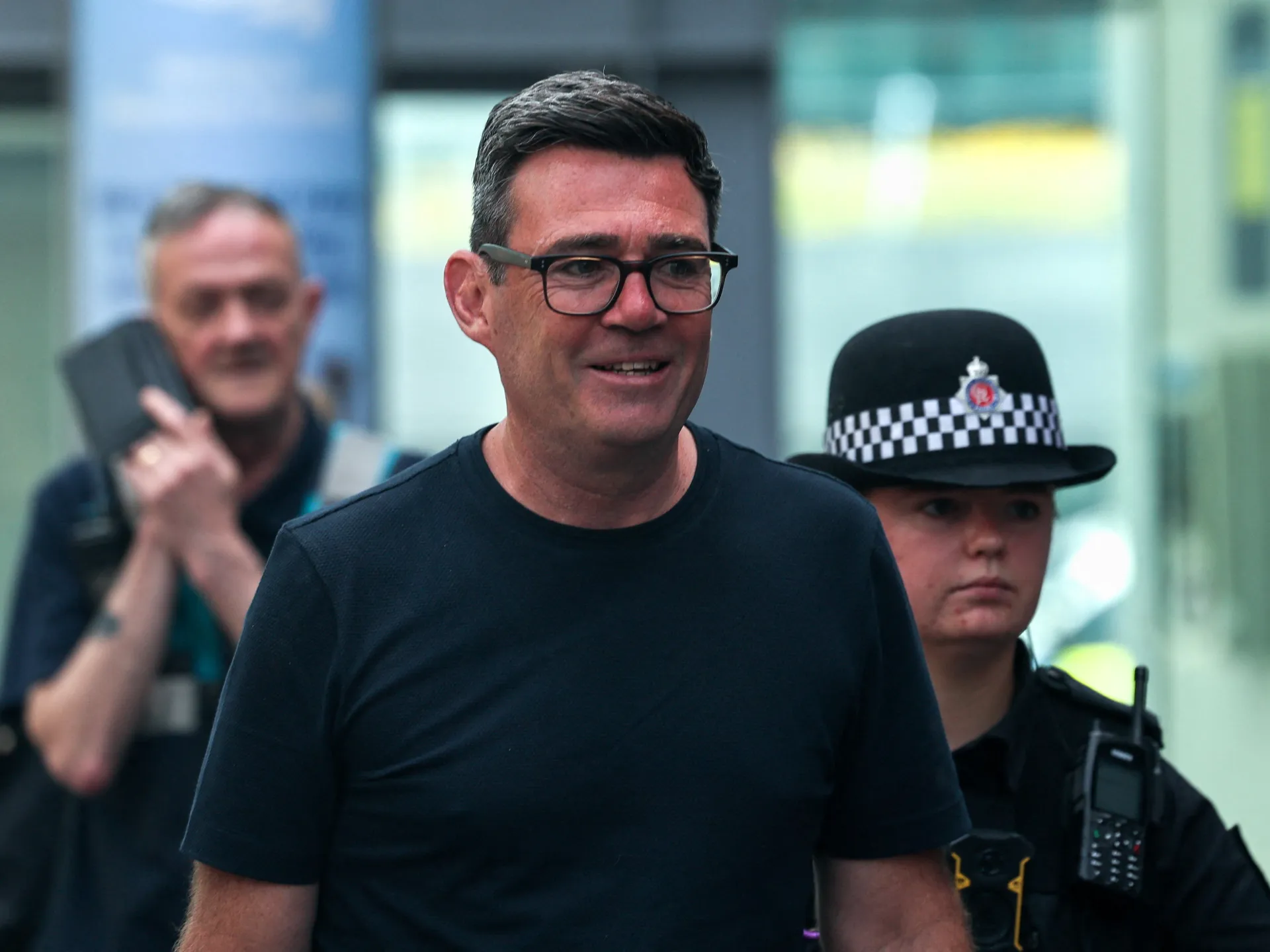
US President Donald Trump has made his first comment on the UK’s likely next leader describing Andy Burnham as ‘extremely liberal’. He also declared that Britain is ‘dying’ and urged greater oil drilling in the North Sea. The comments came after Keir Starmer announced plans to step down, with Burnham the only candidate to succeed him.
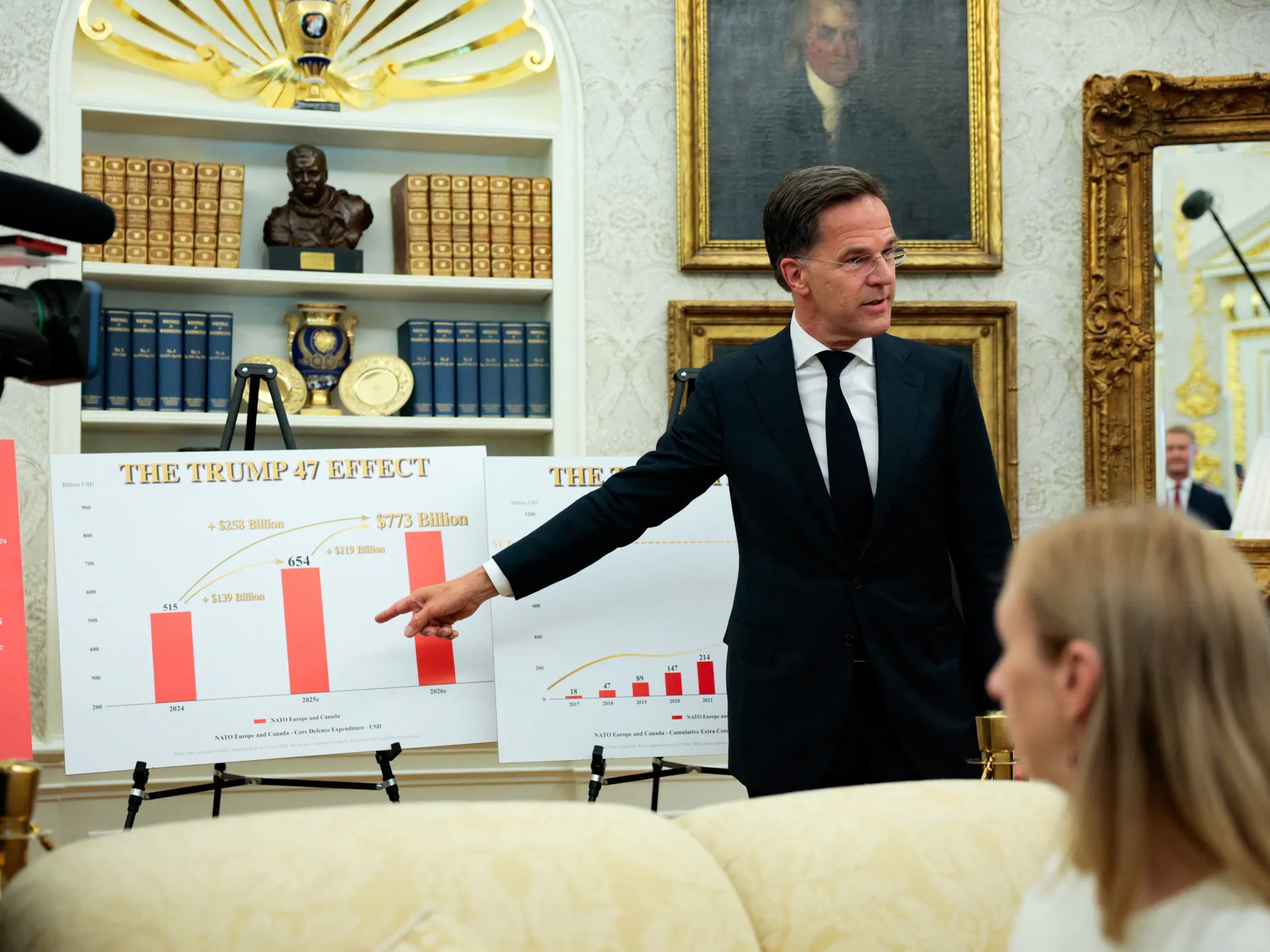
NATO chief Mark Rutte visited the White House to ease tensions with US President Trump ahead of next month’s NATO summit. Trump has said NATO isn’t doing enough, ordering a review of US forces in Europe after saying allies did not support the US war on Iran.
Despite bowing out without a point in their first World Cup since 1974, Haiti twice led against 2022 semifinalists Morocco.
Published On 25 Jun 202625 Jun 2026
Morocco twice overcame the shock of conceding to Haiti to win a World Cup thriller 4-2 in Atlanta, but missed out on the top spot in Group C to Brazil.
Haiti bowed out with their first World Cup goals in 52 years, as a Yassine Bounou own goal and Wilson Isidor’s stunning strike twice gave them the lead on Wednesday.
Recommended Stories
list of 4 itemsend of list
Achraf Hakimi and Ismael Saibari, with his third goal in as many games at the World Cup, levelled before half-time.
Soufiane Rahimi was nearly brought to tears when the 30-year-old’s deflected effort found the top corner to give Morocco the lead, before Gessime Yassine rounded off the scoring.
Soufiane Rahimi of Morocco celebrates scoring his team’s third goal [Kevin C. Cox/Getty Images/AFP]
But Morocco missed out on the top spot in the group to Brazil on goal difference, meaning they will head to Monterrey for a likely meeting against the Netherlands or Japan on Monday.
Despite bowing out without a point, Haiti’s performances at their first World Cup since 1974 have done a nation gripped by poverty proud.
Les Grenadiers were already eliminated after losing to Scotland and Brazil, but the thousands of Haitian expats in the stands in Atlanta were undeterred as every attack was met with deafening cheers.
Morocco boss Mohamed Ouahbi made four changes to the side that had impressed in holding Brazil and beating Scotland in their opening two games, and the Atlas Lions started sloppily.
Haiti’s long wait for a goal on the global stage was ended after just 10 minutes, when Jean-Kevin Duverne got to the byline, and Lenny Joseph flicked the resulting cross into the net via a deflection off Bounou.
Hakimi has continued to captain Morocco despite learning mid-tournament that he is to face a trial on rape charges in France.
The reigning African footballer of the year stormed forward from right-back at every opportunity and was in the right place to equalise on 39 minutes.
In his final game for Haiti, 38-year-old goalkeeper Johny Placide could only parry Bilal El Khannouss’s strike, and Hakimi had a simple task to force the ball over the line.
Within four minutes, though, Haiti had restored their lead in far more spectacular fashion.
Sunderland striker Isidor pounced on a loose ball and let fly from outside the area with a shot that arrowed into the top corner.
Hakimi and Ouahbi were visibly angered by conceding for a second time, but the 2022 World Cup semifinalists responded before half-time.
Saibari stroked home his third goal of the tournament with a cool finish from Hakimi’s low cross.
Brahim Diaz nearly gave Morocco a half-time lead when his curling effort shaved the post to end a thrilling first half.
Ouahbi began turning his attention to the last 32, as Bayern Munich-bound Saibari and Real Madrid’s Diaz were replaced with more than 20 minutes remaining.
But two of his substitutes came on to win the game for Morocco.
Rahimi’s powerful strike from a corner flew into the top corner via a deflection off a desperate Haiti defender.
He then turned provider by robbing possession on the Haiti byline and crossing for Yassine to roll into an empty net.
Bosnia and Herzegovina are on the verge of reaching the knockout stages of the World Cup for the first time after beating Qatar 3-1 in their final Group B match.
Bosnia move on to four points and are in a strong position to be one of the best eight third-placed teams to progress to the last 32.
Recommended Stories
list of 4 itemsend of list
Qatar, meanwhile, exit at the group stage, just as they did four years ago when they hosted the World Cup.
Goals from Bosnia’s youngest-ever World Cup player, 18-year-old Kerim Alajbegovic, and an own goal by Qatar goalkeeper Mahmoud Abunada looked to have put the European side in the box seat.
However, Qatar made a game of it when 35-year-old Hassan Alhaydos, their most capped player, pulled one back late in the first half.
Ermin Mahmic then put the game beyond the Qataris when he scored for the second successive match in the 80th minute.
Bosnia flew out of the blocks as soon as the whistle went, testing Abunada twice inside the first four minutes.
First, Abunada denied Ermedin Demirovic’s fierce drive, and then he tipped away Ivan Sunjic’s shot.
Bosnia’s dominance finally paid off, but it was not the 40-year-old talisman Edin Dzeko who broke the deadlock, but the sublimely talented teenage left-wing.
Edin Dzeko of Bosnia and Herzegovina and his teammates celebrate the second goal [Stephen Buddhist/EPA]
Abunada was unable to do anything about Alajbegovic’s screamer from outside the area, after he had beaten two players.
The youngster was mobbed by his teammates, and once they had trotted back to the halfway line, he stood and milked the moment, putting a finger to his lips.
Dzeko, winning his 150th cap, came more and more into the game, and not wishing to have his thunder stolen by the new kid on the block, he played an integral role in their second five minutes later.
His shot took a wicked deflection off Sultan Albrake and then Abunada on its way into the net.
Dzeko was well into his stride now, and he broke clear a few minutes later, his shot beating Abunada but rebounding off the post.
Bosnia’s earlier sprightliness dipped in the heat, and it was the doyen of Qatari football, Alhaydos, who repaid coach Julen Lopetegui’s faith by slotting home in the 42nd minute.
The Bosnian defence failed to learn from that, and in time added on, they had the far post to thank for keeping their noses in front as Pedro Miguel’s shot came back off it.
Alhaydos’s World Cup, and perhaps his distinguished international career, ended in tears as he trudged disconsolately off the pitch, injured in the 55th minute.
Chances were few and far between until Esmir Bajraktarevic stole in from the right wing and came close to emulating Alajbegovic’s effort, but Abunada turned it away for a corner.
Bosnian frustration gave way to ecstasy when Mahmic prodded the ball home – the scorer ripping his shirt off in celebration, and the 21-year-old paid little notice to being booked for it.
Lawsuit claims Tesla’s Autopilot shortcomings led to fatal crash; family seeks $1m in damages and punitive measures.
Published On 24 Jun 202624 Jun 2026
The family of a Texas woman who was killed has filed a lawsuit against Tesla after a driver using a Model 3’s automated driving assistance system crashed into a suburban Houston home last week.
The complaint, filed on Tuesday, argues that Tesla should be held liable for the wrongful death of 76-year-old Martha Avila. The family alleges that the automaker, led by Elon Musk, failed to adequately warn drivers about alleged defects in its Autopilot and Full Self-Driving systems.
Recommended Stories
list of 4 itemsend of list
Avila’s daughter, Jennifer Barbour, and her husband, Justin Barbour, said the Model 3’s driver, Michael Butler, told law enforcement he engaged Autopilot before ploughing through the front wall of Avila’s home in Katy, Texas, the United States, on June 19, pinning her before she succumbed to her injuries at a nearby hospital, according to the complaint.
Video obtained by KHOU – Houston’s CBS affiliate — shows the car travelling at top speed over the front lawn of Avila’s home in the Houston suburb before slamming into the front room.
The driver told the Harris County Sheriff’s Office that he was using the technology at the time of the accident. The driver in the incident was not under the influence of alcohol and is cooperating with authorities.
Butler is also a defendant in the Barbours’ lawsuit. It is unclear whether he has a lawyer.
Musk, the world’s richest person, posted on X on Monday night: “FSD drives slowly through neighbourhood streets and this was a high-speed crash!”
Ashok Elluswamy, vice president of AI software at Tesla, posted on X in response, saying that “the driver manually overrode self-driving by pressing the accelerator all the way to 100% of the accel pedal in this residential area.”
The lawsuit filed in a Harris County, Texas, state court seeks more than $1m in damages, and punitive damages reflecting Tesla’s alleged “reckless disregard for a substantial risk of severe bodily injury”.
The National Highway Traffic Safety Administration (NHTSA) has been investigating the crash.
Since 2016, the NHTSA has opened nearly 50 special investigations of Tesla crashes believed to involve advanced driver assistance systems. About two dozen deaths were reported.
In March, the NHTSA escalated its probe into 3.2 million Teslas equipped with Full Self-Driving, on concern the system may fail to detect or warn drivers in poor visibility. In 2023, Tesla recalled about two million vehicles, nearly all of its electric vehicles on US roads, to better ensure that drivers pay attention when using Autopilot.
Tesla has said Autopilot enables vehicles to steer, accelerate and brake within their lanes, while Full Self-Driving lets vehicles obey traffic signals and change lanes.
The carmaker has also said both technologies require “fully attentive” drivers whose hands are on the wheel.
The incident comes as the Musk-owned company is rolling out robotaxis using automated software in several US cities this year and plans to invite Tesla owners across the country to put their cars into the fleet using the same system.
US Secretary of State Marco Rubio said Washington will be “completely aligned” with Gulf allies in Iran peace talks. Rubio met Kuwait’s Crown Prince Sheikh Sabah Al Khalid Al Sabah during a visit to the region after the US and Iran signed an MoU.
US Secretary of State Marco Rubio has said Iran will not be permitted to charge tolls or fees for vessels transiting the Strait of Hormuz under any final agreement with Washington, exposing one of the biggest points of friction in negotiations aimed at ending months of conflict across the Middle East.
The dispute comes after Iran announced it would waive planned transit fees through the strait that crosses through its territorial waters for 60 days while talks with the United States continue in Switzerland, suggesting charges could be introduced once the negotiating period expires.
Recommended Stories
list of 4 itemsend of list
Washington and Tehran signed a preliminary agreement in Switzerland this week to halt hostilities and launched a 60-day diplomatic process focused on sanctions relief, Iran’s nuclear programme and the future administration of the Strait of Hormuz.
Pakistan, which helped mediate the talks alongside Qatar, has said negotiations to end the four-month US-Israel war on Iran are expected to resume early next week, likely on Tuesday.
The future of Hormuz has already emerged as a key sticking point after Iran effectively closed the waterway during the war, severely disrupting maritime traffic through one of the world’s most important energy chokepoints and causing the price of oil to soar.
In peacetime, one-fifth of the world’s oil and natural gas supplies are shipped for export by Gulf producers through the waterway.
In April, the US imposed a corresponding naval blockade on Iranian naval ports in a bid to stem Iranian oil exports.
While a number of ships have crossed through the strait since the US-Iran agreement was signed last week, uncertainty remains over whether Tehran intends to impose permanent fees or service charges on shipping operators using the route. Here’s what we know – and what else is happening in the Strait of Hormuz this week.
(Al Jazeera)
What are the US and Iran saying?
On Friday, Iran’s Persian Gulf Strait Authority (PGSA) said planned fees for ships using the waterway would be suspended during the 60-day negotiation period established under the memorandum of understanding (MoU) signed with the US.
Earlier this week, Iran and Oman said in a joint statement that they would study the future administration of the trade route as well as possible charges for services provided there, while maintaining their sovereignty claims over territorial waters bordering the strait.
Speaking at the start of a regional tour in the United Arab Emirates, Rubio rejected the idea of transit fees. “It’s an international waterway. No country is allowed to charge tolls or fees on an international waterway,” he said, adding that he believed “all the countries in this region would agree”.
Iran’s chief negotiator, Mohammad Bagher Ghalibaf, has signalled that Tehran views the post-war arrangement as fundamentally different from the status quo that existed before the conflict, however. Experts also say that Iran will not give up control of the strait, which has proved to be its greatest point of leverage in the conflict with the US.
“Hormuz will never return” to its prewar status, Ghalibaf said, despite both sides agreeing on Monday to establish “communication mechanisms” aimed at keeping the waterway open.
What does international law say?
International law protects the right of transit through strategic waterways such as the Strait of Hormuz, preventing coastal states from imposing explicit tolls simply for passage through international shipping lanes, even when they are passing solely through territorial waters.
However, countries can charge for specific services, including inspections, navigation assistance, security measures and certain insurance-related requirements, insurance experts say.
Examples include fees associated with transit through the Suez Canal and Panama Canal, as well as some services provided in Turkiye’s Bosporus and Dardanelles straits.
Mohammad Reza Farzanegan, an economist at Germany’s Philipps-Universitat Marburg, told Al Jazeera last month that Iran, like Turkiye, could justify a negotiated mechanism for transit fees or service-based contributions through natural straits as payment for maintaining a safe passageway, reducing environmental risks and providing predictability in a waterway that supports global energy, food and technology supply chains.
A key difference, however, is that while those waterways pass through the territory of a single state in each case, the Strait of Hormuz passes through the territorial waters of both Iran and Oman, while also connecting to waters used by the United Arab Emirates and other Gulf states.
“This sort of arrangement is unprecedented, and there would not be such an outcome, unless there is a complete coordination between the GCC [Gulf Cooperation Council] countries and Iran, with the approval of major international powers, such as China and the United States,” Nader Habibi, an Iranian American economist, told Al Jazeera.
How many ships are getting through the strait now?
Ship movements through the Strait of Hormuz remain well below prewar levels, when between 120 and 140 ships transited the passage each day, including tankers carrying about 20 million barrels of oil from the Gulf.
As the strait begins to open up, Oman says it is working with the United Nations’ International Maritime Organization (IMO) on temporary arrangements to facilitate safe transit through the strait, launching an operation to evacuate more than 11,000 sailors stranded in the area after the conflict left hundreds of vessels trapped for months.
Traffic through the strait has also been held back by ongoing concerns about the possible presence of sea mines in the central shipping channels used by international vessels before the war.
The Joint Maritime Information Center (JMIC), which includes representatives from the US and other maritime partners, has warned ships to avoid the area “due to the existence of mines”.
Other countries, including Japan, are currently weighing up whether to send ships to help with efforts to remove mines from the strait.
While Iran has never confirmed the presence of mines in the strait, when it first issued a map of the waterway for vessels it had approved for transit while the conflict was ongoing, it ordered ships to pass close to its coast to avoid possible mines. Ships had previously passed much closer to the coast of Oman.
The graphic below illustrates how much shipping through the strait dropped off as a result of the US-Israel war on Iran.
Could the dispute over strait fees derail a peace deal?
Mostafa Khoshcheshm, a professor at the University of Applied Sciences in Tehran, told Al Jazeera that Iran is unlikely to abandon plans to introduce long-term service fees in the strait.
“According to the MoU, Iran is not going to charge service fees for 60 days, but afterwards, Iran is definitely going to do that,” Khoshcheshm told Al Jazeera.
He said many Iranians were already unhappy that Tehran had agreed to suspend fees for the duration of the negotiating period.
“The money is not the real core of the issue,” he said. “The point here is how to impose your new protocols in the region. This is highly important for the Iranians.”
Cyrus Schayegh, professor of international history and politics at the Geneva Graduate Institute, told Al Jazeera the success of any new administrative arrangement would depend heavily on regional support.
“I think this is a very big question, and the biggest question is whether they will be able to sell it to the Emirates,” Schayegh told Al Jazeera.
“I think the Emirates will need to be involved in a really substantive way for any sort of new authority to actually work.”
More broadly, he said, the future of Hormuz forms part of a wider debate over Gulf security architecture following the war.
“It is only one piece of a much larger puzzle,” Schayegh said, adding that several regional states now accept that Iran has strengthened its deterrence capabilities following the conflict.
What other issues remain unresolved?
Hormuz is far from the only serious obstacle to a peace deal.
Questions also remain over the future of Iran’s nuclear programme, with Kazem Gharibabadi, Iran’s deputy foreign minister for legal and international affairs, saying that access for international inspectors to nuclear facilities damaged during the war would only be addressed as part of a final agreement with Washington.
His comments came after US President Donald Trump claimed Iran had agreed to “the highest level” of nuclear inspections.
Iranian officials insist no commitments were made in Switzerland regarding Tehran’s nuclear programme and say they did not meet representatives of the International Atomic Energy Agency (IAEA), including Director-General Rafael Grossi.
Regional security remains another major source of disagreement, with Israeli Defence Minister Israel Katz insisting Israeli forces will not withdraw from southern Lebanon “even if there is an American demand” to do so.
Meanwhile, Ghalibaf has identified the withdrawal of foreign military forces from the Middle East as one of Tehran’s strategic objectives in the negotiations.
The future of Iran’s frozen assets also remains a sticking point, with Trump indicating Washington is reluctant to release large sums of Iranian funds directly, arguing that money could ultimately benefit the Islamic Revolutionary Guard Corps (IRGC).
Instead, he has suggested a mechanism under which some funds would be used to purchase US goods.
“Food is desperately needed in Iran, and we will be purchasing it for them exclusively from the United States,” Trump said. Iran has not confirmed plans to do this.
The race for the Golden Boot at World Cup 2026 is shaping up to be one for the history books.
After just two games, Argentina talisman Lionel Messi leads the way with five goals, followed by France’s Kylian Mbappe and Erling Haaland of Norway with four goals each.
Recommended Stories
list of 4 itemsend of list
Germany’s Deniz Undav has three with Jonathan David of Canada on the same mark after a hat-trick against Qatar.
A further 20 players have scored twice in their opening two games, including 2018 Golden Boot winner Harry Kane of England, Cristiano Ronaldo of Portugal, Vinicius Jr of Brazil and Mikel Oyarzabal of Spain.
The stars are all shining and, given the rate of scoring so far, it seems possible double figures might be needed to win the Golden Boot, something done only three times in history – by Hungary’s Sandor Kocsis in 1954, Just Fontaine of France four years later and Gerd Muller of Germany in 1970.
Fontaine holds the record of 13 goals in one World Cup in just six matches in Sweden, but the expanded 48-team format in 2026 means the nations qualifying for the semifinals in July will play an unprecedented eight games in this edition.
At the 2006 World Cup in Germany and in South Africa four years later, only five goals were needed to claim the Golden Boot while nobody has scored more than eight in the past 13 editions, a feat achieved only by Brazil’s Ronaldo in 2002 and Mbappe four years ago in Qatar.
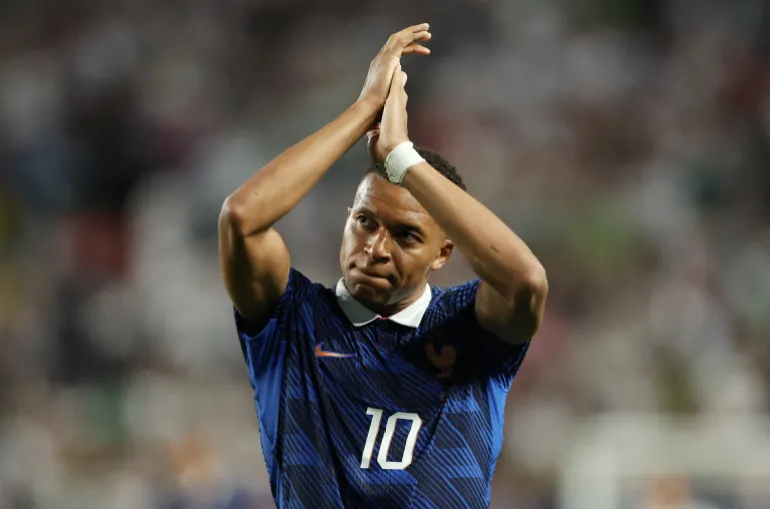
Kylian Mbappe followed his double against Senegal with another against Iraq in this year’s World Cup [Siphiwe Sibeko/Reuters]
Why have so many goals been scored at World Cup 2026?
It took just 33 matches for a century of goals to be racked up in this edition, second only to 1954 in terms of pace.
After Portugal’s 5-0 win over Uzbekistan on Tuesday, 139 goals had been scored across the first 45 games – the most in the group stages of a single edition of the finals, overtaking the 136 scored in 2014 in three fewer matches.
The record number of goals in one edition came in Qatar 2022 with 172 from 64 games. With an extra 40 matches in the new expanded format that went into effect this year, it was always likely to be broken, but the rate of scoring suggests the old mark will be obliterated.
The Adidas Trionda ball used in World Cup 2026 [Simon Fearn/Imagn Images]
One reason for the increase in goals might be the Adidas Trionda ball, which FIFA commissioned for this World Cup.
Before the tournament, FIFA said it boasts several key performance innovations, including intentionally deep seams designed to produce optimal in-flight stability by ensuring sufficient and evenly distributed drag as the ball travels through the air – in short, it flies through the air – while the surface of the ball is designed to increase grip when striking or dribbling in wet or humid conditions, which we have seen plenty of in the opening matches.
Austria head coach Ralf Rangnick said: “This ball is as fast as a cannonball. If you kick the ball in the right position, it’s extremely difficult to save.”
The controversial addition of hydration breaks to each half may also mean players are performing at their peak for longer, leading to the glut of late goals so far. Of course, the fact that 48 teams are taking part, drawn from the world’s leading 85 teams in the rankings, means there are some mismatches in the first phase.
Colombia coach Nestor Lorenzo also said attackers are more protected by officials than they used to be, which may contribute to the increased scoring, adding: “They didn’t have this protection some 20, 30 years ago when they were hit a lot more, when rough play was a lot more common.
“Today, any team that defends well and uses counterattacks and tries to play can manage to do well.”
Erling Haaland has scored two goals in each of his first two World Cup appearances. [John Sibley/Reuters]
Who is likely to win the Golden Boot?
Much will depend on fitness and, of course, how deep a country goes in the tournament, but Messi has to be considered the favourite to win his first accolade.
The 38-year-old scored seven goals at the last World Cup and has now scored in six straight tournament matches, having netted in every knockout round in Qatar and the first two games of this edition. He even missed a penalty against Austria, which would have made it back-to-back hat-tricks.
Argentina’s final group game on Sunday is against already eliminated Jordan although Messi’s inclusion from the start in that one is by no means a given as his side have already secured the top spot in Group J.
They look set for favourable knockout fixtures, though, with the potential for Uruguay or Cape Verde in the last 32, potentially Australia or Iran in the round of 16 and the possibility of Croatia or Colombia in the quarterfinals, should they make it.
Only in the semifinal might they come up against a powerhouse nation, likely in the form of England or Brazil or dark horses Japan, Norway or Mexico.
Mbappe also looks likely to have a favourable run and is likely to feature against Norway on Friday in the group finale, which will decide the top spot in Group I.
Winning the group could mean a round of 32 meeting with Sweden, Germany the potential opponents in the last 16 and the Netherlands or Morocco awaiting in the last eight.
Whoever finishes second out of France and Norway could face a tricky task against the Ivory Coast in the last 32 with Brazil or Japan awaiting the winners and the possibility of England lurking in the quarterfinals, which might put a ceiling on Haaland’s prospects, despite having scored 59 goals in 52 international games for Norway.
Kane will seek to enter the conversation with England facing a must-win Group L finale on Sunday against Panama with the prospect of a last-32 meeting with Cape Verde to follow and Mexico likely lying in wait in the Azteca (known during the World Cup as Mexico City Stadium) in the round of 16.
Cristiano Ronaldo may have left it too late to begin a real quest, given Portugal face Colombia on Sunday in their final Group K game and could face resolute Ghana in the last 32 with Spain potential opponents in the last 16.
But Vinicius Jr could add to his two goals when Brazil face Scotland on Thursday in their final Group C game although the knockout rounds would appear a stiffer test.
The United States Senate has voted in favour of invoking its war powers to force President Donald Trump to halt his military campaign against Iran or seek congressional approval before any further action is taken.
Here is a closer look at Tuesday’s vote – the 10th attempt Congress has made to rein in the US-Israel war on Iran – and what this means for the US government.
Why did this vote take place?
A similar measure had already been approved in the House of Representatives on June 3 by a vote of 215 to 208, and on Tuesday, the Senate passed it in a 50-48 vote. Trump’s Republican Party has slim majorities in both chambers.
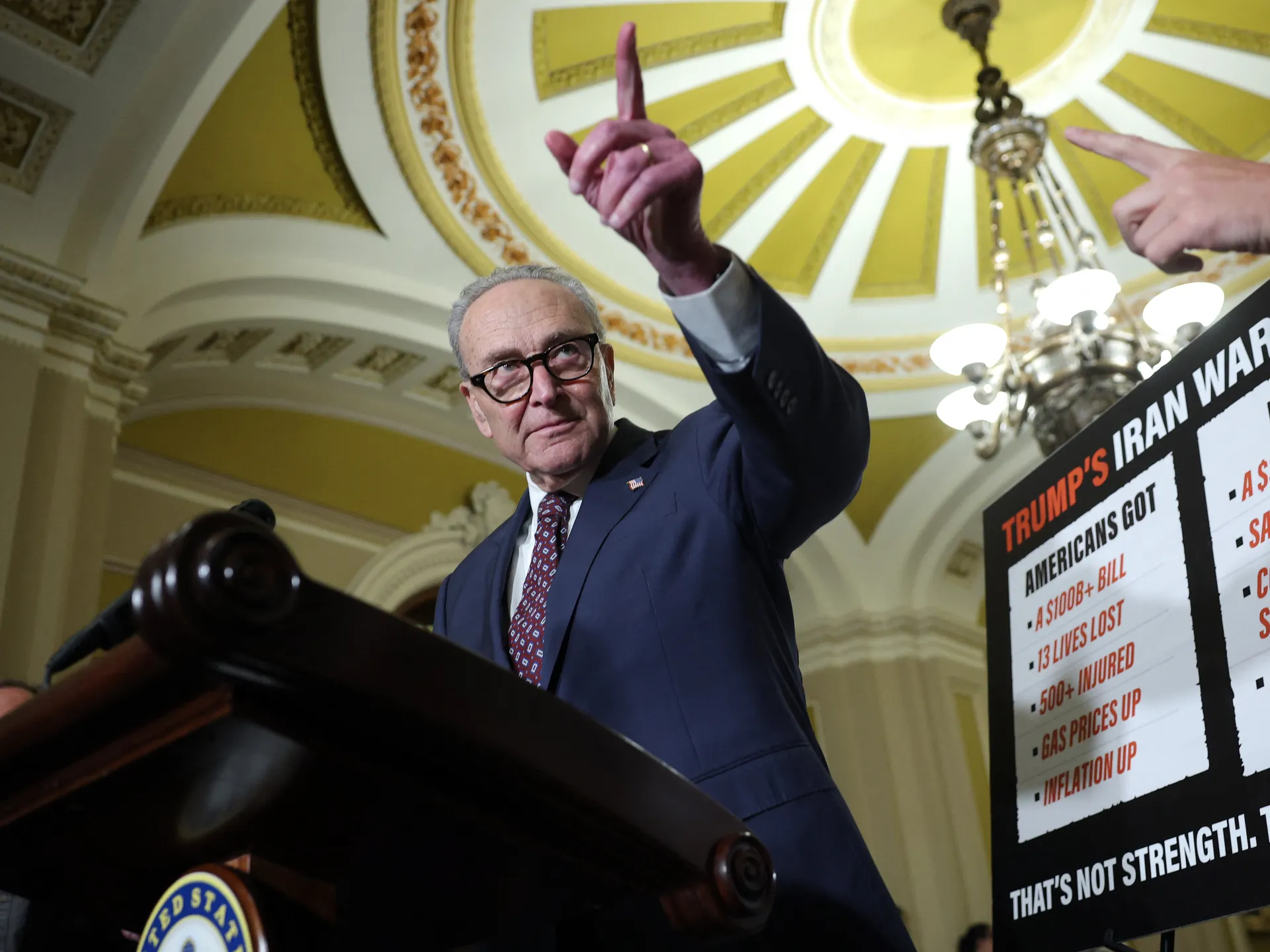
Speaking on the Senate floor before the vote, top Democrat Chuck Schumer advocated for the war powers resolution as he criticised Trump’s military campaign against Iran.
“For years, Trump promised to put maximum pressure on Iran, but he ended up delivering maximum confusion, maximum chaos, maximum cost to the American people with his disastrous war,” Schumer said.
“Time after time, the vast majority of Senate Republicans sided with Trump and his war instead of the American people. The American people have paid the price for Trump’s historic blunder in Iran. It’ll go down in the history books as one of the worst foreign policy forays America has ever made.”
The war against Iran has proved highly unpopular in the US. A poll released on Tuesday by the news agency Reuters and the research firm Ipsos found that 24 percent of respondents felt the war had been worth the cost.
Four Republican senators crossed party lines to vote for the resolution, and all but one of the chamber’s Democrats also voted in favour.
Tuesday’s breakaway Republicans were Bill Cassidy of Louisiana, Lisa Murkowski of Alaska, Susan Collins of Maine and Rand Paul of Kentucky. A further two Republicans did not vote: Mitch McConnell of Kentucky and Dave McCormick of Pennsylvania.
The lone Democrat to vote against the measure was Pennsylvania’s John Fetterman.
What does the resolution say?
The war powers resolution “directs the President to remove United States Armed Forces from hostilities against the Islamic Republic of Iran”.
Only if “explicitly authorised by a declaration of war or a specific congressional authorisation” would Trump be allowed to use further military force against Iran, it says.
The resolution, however, does allow for a limited military presence to remain in the Middle East to prevent any “imminent attack” against the US or its allies.
What is the significance of the vote?
The vote reflects growing unease even among some of Trump’s Republican supporters about the unpopular conflict, which began with US-Israeli air strikes on Tehran on February 28.
This is the first time both chambers of Congress have passed a resolution directing a president to remove US armed forces from a warzone under the War Powers Act although it was not immediately clear how the votes might affect the conflict.
Technically, the Trump administration should now seek explicit congressional approval for further strikes on Iran. However, previous administrations have found routes around this by securing more limited authorisations for the use of military force (AUMFs) instead.
For example, in the wake of the 9/11 attacks in 2001, Congress passed an AUMF that gave then-President George W Bush broad powers to conduct what would become the global “war on terror”.
And one year later, it passed another AUMF, allowing the use of the military against the government of Saddam Hussein in Iraq, which became the basis of the 2003 invasion.
The two authorisations remain in place, and presidents continue to rely on them to carry out strikes without first seeking congressional approval. The assassination of top Iranian General Qassem Soleimani in 2020 in Baghdad was authorised by Trump under the 2003 AUMF.
In addition, a resolution does not have the force of law. Experts said, therefore, that while the Senate vote is viewed as a rebuke to Trump, it is largely symbolic.
What effect will this have on US-Iran talks in Switzerland?
Before the vote on Tuesday, some Republican senators had warned that the war powers resolution would weaken Trump’s standing in the Switzerland negotiations.
“If this passes, the Iranians are going to simply stand up and walk away from negotiations,” Senator James Risch of Idaho told the Senate on Tuesday.
“They’re going to say: This thing’s over. The Congress has told the president of the United States, ‘Leave us alone. We can do whatever we want to do,’ and they will walk away.”
How will the Trump administration respond?
Risch also argued that the resolution is essentially useless, given its symbolic nature. “It’s going to have no effect. The president isn’t going to pay any attention to it,” he said.
The US Constitution gives Congress the sole power to declare war, but that division of power has eroded over the past 75 years as successive presidents alone have committed US forces to overseas conflicts.
Trump has pointed to that precedent to argue that he does not need congressional authorisation at all.
In an appearance on The Axios Show last week, Trump denied learning any “lesson” about the limits of his executive powers during the Iran war. “There are no limits,” he said.
The last time Congress voted to go to war was during World War II although it has passed AUMFs in the decades since, which allow for limited military engagement without congressional approval for all-out war.
During Trump’s first term, there were concerns that he could use the 2001 AUMF to strike Iran under the unfounded claim that Tehran supports al-Qaeda.
Some critics pointed out that Republicans may be more willing to confront Trump over the issue of congressional authorisation now as they defend their seats before November’s midterm elections.
Here’s a look at the viral moments and on-field controversies as well as the biggest players, best performances, goals and more.
Published On 24 Jun 202624 Jun 2026
Cristiano Ronaldo joined the party, Lionel Messi set a new record, Iran once again displayed their fighting spirit and Turkiye were shown the door.
The second round of the 2026 World Cup group stage had a fair amount of drama.
Recommended Stories
list of 4 itemsend of list
Al Jazeera breaks down the key moments:
Better late than never: Ronaldo strikes for Portugal
Unlike other high-profile strikers at the tournament who came out all guns blazing from the get-go, Ronaldo needed some time to open his account. But his two goals in Portugal’s 5-0 thrashing of Uzbekistan on Tuesday were enough to silence the critics as the 41-year-old became the first player in history to score in six World Cups.
Messi is saving his best for last
Age is just a number for Messi, who is celebrating his 39th birthday on Wednesday. His apparent last dance is bringing out the best in him as the Argentinian has set a new record for the most World Cup goals at 18 – a figure that is sure to increase with La Albiceleste now the number one favourites to add back-to-back World Cups to their trophy cabinet.
Is Messi “Mr Argentina”? It’s hard to argue otherwise with all five of the team’s goals scored by him. That also makes him the leading Golden Boot contender with one goal more than France’s Kylian Mbappe.
At this point in the tournament, Messi is the 2026 World Cup’s Golden Boot leader [Kai Pfaffenbach/Reuters]
Triple treat: Messi, Mbappe, Haaland score on same day, again
FIFA has come under criticism for a series of issues this tournament, but one thing it’s got spot on is the scheduling of Argentina, France and Norway games on the same day. For the second time in a row, fans were treated to back-to-back goals galore on Monday as Messi started the party with a brace before Mbappe did the same, and Erling Haaland topped it off with another double.
Norway’s ‘Viking row’ goes viral
Back at the World Cup after 28 years, Norway celebrated their round of 32 qualification in typical fashion: bringing out the famous “Viking row”. With the squad sitting in rows resembling those of a Viking longboat, captain Martin Odegaard began beating the drum to a joyous climax as thousands of Norwegians in the stadium also joined the fun.
Salah, Egypt celebrate on streets of Vancouver
It took Egypt an incredible 92 years to register their first World Cup win, so it wasn’t a surprise that they celebrated in style. Shortly after beating New Zealand 3-1 on Sunday, the Egypt squad was pictured on the streets of Vancouver with fans, singing and dancing to music blaring from a huge speaker. Mohamed Salah, nicknamed the “Egyptian King”, was the centre of attention yet again, held up on the shoulders of a teammate, as he grooved to the tunes.
Japan are Asia’s best hope at the tournament
While Asian teams enjoyed a great run during the first round of the group games, only one team – Japan – built on the momentum. After a 2-2 draw with the Netherlands in the first match, Japan thrashed Tunisia 4-0 in the next fixture on Saturday, collecting four points – the highest by an Asian team so far. According to Opta’s supercomputer, Japan have a 20.8 percent chance of reaching the quarterfinals and 9.41 percent probability of making the semifinals.
Persistent Iran fight hard to stay in contention
Despite travel restrictions imposed on them by the United States for their first two World Cup games, Iran have remained unbeaten with two draws. That keeps them alive in the knockout race, and with the squad now allowed to fly into the US from Mexico two days before their next match instead of one as was the case earlier, Iran can better prepare for their final group game on Saturday against Egypt in Seattle. A win would see them through while a draw might also suffice, depending on other results.
Turkiye’s talented team disappoints
From Arda Guler and Kenan Yildiz to Hakan Calhanoglu and Merih Demiral, Turkiye is filled with talent across all departments. But none of them could turn around Turkiye’s fortunes as they crashed out of the tournament after losing to Paraguay on Saturday. The early exit crushed the hopes of millions of Turkish fans, who waited 24 years to see their team return to the World Cup.
Turkiye’s Can Uzun and Kenan Yildiz look dejected after they were knocked out of the World Cup [Luisa Gonzalez/Reuters]
No Pulisic, no problem for USA
For years, Christian Pulisic has been the poster boy of the USA team, but the cohost nation proved that they can get the job done even in the influential winger’s absence. With Pulisic ruled out with a calf injury, Alex Freeman scored one, and the USA benefitted from a Cameron Burgess own goal as they sailed into the knockouts with a 2-0 victory on Friday against Australia.
Red-carded Almiron to go down in history
Paraguay midfielder Miguel Almiron made history, albeit for the wrong reasons, when he became the first player to be sent off at the 2026 World Cup for covering his mouth. Almiron – also handed a one-match ban – covered his mouth during a confrontation with Turkiye’s Mert Muldur. The straight red handed to him follows a new rule under which players are not allowed to cover their mouths to disguise what they are saying during confrontations with infringements leading to instant dismissals.
China’s LineShine overtakes US-based El Capitan as most powerful supercomputer, according to the TOP500 list.
Published On 24 Jun 202624 Jun 2026
China has displaced the United States on an influential ranking of the world’s fastest supercomputers, underscoring Beijing’s growing capability to compete with the world’s leading superpower in cutting-edge technology.
China’s LineShine is the most powerful system on the planet, overtaking the US-based El Capitan, according to the biannual ranking announced in Hamburg, Germany, on Tuesday.
Recommended Stories
list of 4 itemsend of list
LineShine, located at the National Supercomputing Centre in Shenzhen, achieved a performance of 2.198 exaflops, carrying out more than 2 quintillion calculations per second – a 20 percent lead over El Capitan, according to the latest TOP500 list.
LineShine’s position marks the first time a Chinese system has topped the list since Sunway TaihuLight did so in 2017.
El Capitan, based at Lawrence Livermore National Laboratory in California, had ranked as the top-performing system since November 2024.
Frontier, hosted by the Oak Ridge National Laboratory in Tennessee, ranked third, followed by Aurora at the Argonne National Laboratory in Illinois and Jupiter at the Jülich Supercomputing Centre in Germany.
Other countries represented in the top 20 include the UK, Japan, South Korea, Italy, the Netherlands, and Switzerland.
Unlike other supercomputers, LineShine runs entirely on general-purpose central processing units (CPUs), which have fewer processing cores and are slower at performing complex tasks than the graphics processing units (GPUs) indispensable to running AI models, such as ChatGPT and Claude.
LineShine is the first and only system to achieve more than 2 exaflops in performance using a CPU-only design, according to the TOP500 list.
The TOP500 list has been published twice yearly since 1993, when computer scientists Erich Strohmaier and Hans Meuer first compiled statistics on supercomputers around the world in preparation for a conference on the topic.
The list ranks supercomputers’ performance using the LINPACK Benchmark, which measures the amount of time it takes to solve a dense system of linear equations.
While the TOP500 list has been influential for decades, experts consider the ranking to have become less relevant since the advent of AI.
While corporate tech giants such as Microsoft and Amazon are at the forefront of today’s advances in AI, the list is largely made up of government and academic initiatives that volunteered their participation.
In a 2015 paper, researchers at Cornell University estimated that El Capitan achieved only 22 percent of the computational performance of xAI’s Colossus supercomputing facility in Memphis, Tennessee.
China and the US are locked in a fierce battle for global supremacy in leading technologies such as AI, with Washington and Beijing rolling out a slew of tit-for-tat sanctions and export controls to blunt each other’s advances.
The 2026 AI Index Report, released in April by Stanford University, found that China had “effectively closed” the AI model performance gap with the US.
While the US produces more top-of-the-line AI models, China holds the advantage in rolling out patents and industrial robot installations, the report said.