united states

Russia says it will stick to limits of expired nuclear treaty if US does | Nuclear Weapons News

Foreign Minister Sergey Lavrov did not say why he believed the US would respect the limits set out in New START.

Russia has said it will abide by limits on its nuclear weapons as set out in a lapsed arms control treaty with the United States, as long as Washington continues to do the same.

The New START agreement expired earlier this month, leaving the world’s two biggest nuclear-armed powers with no binding constraints on their strategic arsenals for the first time in more than half a century and sparking fears of a new global arms race.

Recommended Stories

list of 3 itemsend of list

In an address to parliament on Wednesday, Russian Foreign Minister Sergey Lavrov said that Moscow was in no rush to start developing and deploying more weapons – backtracking on comments made by his ministry last week that said Russia considered itself no longer bound by the treaty’s terms.

“We proceed from the fact that this moratorium, which was announced by our president, remains in effect, but only while the United States does not exceed the outlined limits,” said Lavrov.

“We have reason to believe that the United States is in no hurry to abandon these limits and that they will be observed for the foreseeable future,” he said, without explaining the basis for that assumption.

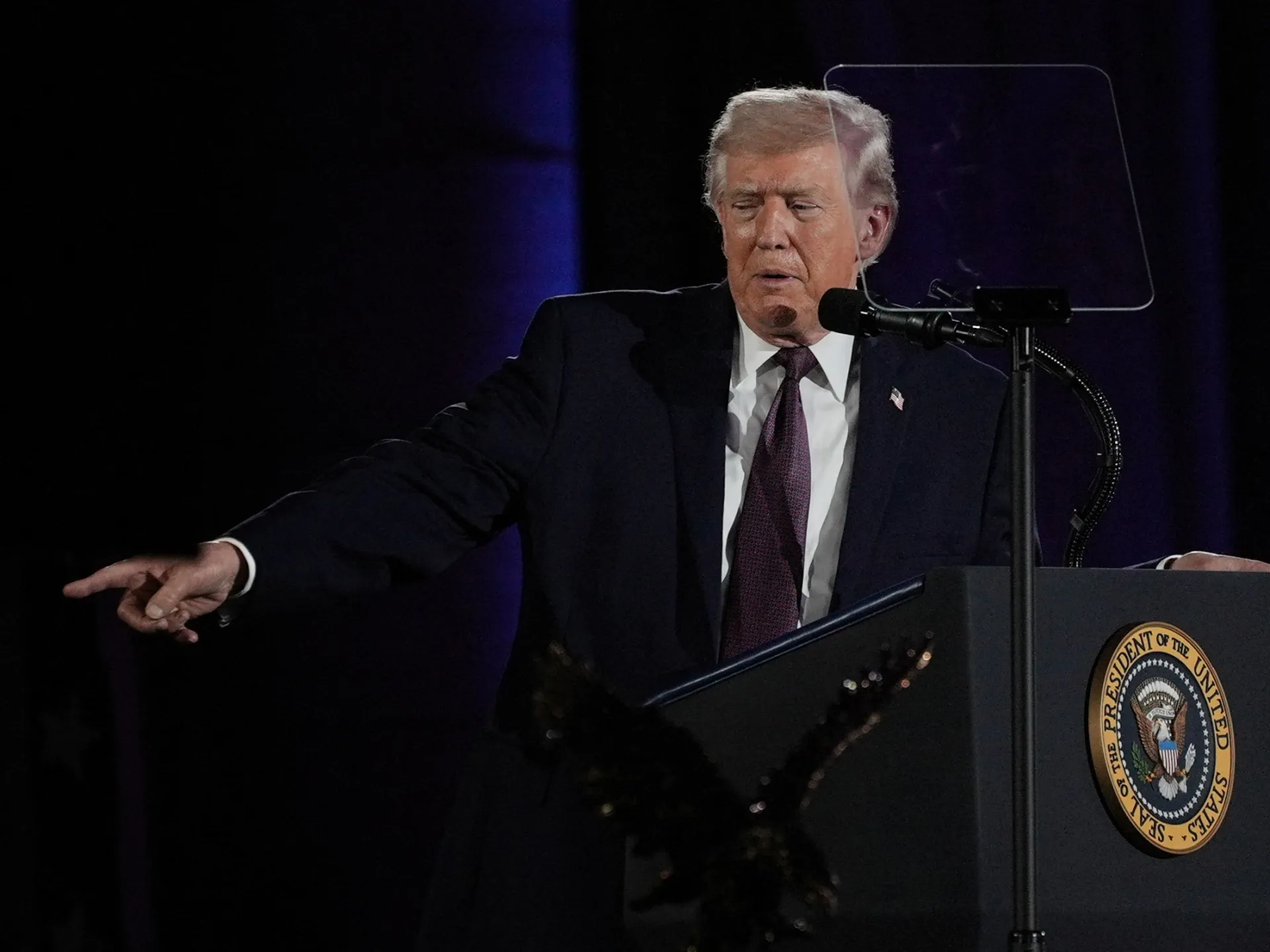
US President Donald Trump rejected an offer from Russian President Vladimir Putin to voluntarily abide by the limits set out in New START for another year, saying he wanted a “new, improved and modernised” treaty rather than an extension of the old one.

Russia has also indicated it wants to strike a new arms control agreement.

Washington is pushing for China to be included in the talks, pointing to its growing nuclear arsenal.

According to the Stockholm International Peace Research Institute (SIPRI), China’s nuclear arsenal is growing faster than that of any other country by about 100 new warheads a year since 2023.

However, Beijing refuses to negotiate with the US and Russia because it says it has only a fraction of their warhead numbers – an estimated 600, compared with about 4,000 each for Russia and the US.

As the treaty expired, Chinese Foreign Ministry spokesperson Lin Jian said that China would not be joining the bilateral arms-reduction talks.

Moscow says if China is brought into a new deal, then so too should the US’s nuclear allies, the United Kingdom and France, which have 290 and 225 warheads, respectively.

New START, first signed in Prague in 2010 by the then-presidents of the US and Russia, Barack Obama and Dmitry Medvedev, limited each side’s nuclear arsenal to 1,550 deployed strategic warheads – a reduction of nearly 30 percent from the previous limit set in 2002.

Deployed weapons or warheads are those in active service and available for rapid use as opposed to those in storage or awaiting dismantlement.

It also allowed each side to conduct on-site inspections of the other’s nuclear arsenal, although these were suspended during the COVID-19 pandemic and have not resumed since.

Russia in 2023 rejected inspections of its nuclear sites under the treaty, as tensions rose with the US over its nearly four-year war in Ukraine.

But it said it had remained committed to the quantitative limits set down.

Source link

Contributor: Mexico’s elections are a role model for the U.S.

Voting is fundamental to democracy, but here in the U.S. people don’t vote very much. In December, Miami held a runoff election for mayor, and all of 37,000 voters turned out. This was 2,000 fewer people than voted in comparable off-cycle elections in Apizaco, a small city in the mountains of central Mexico. It was no blip: The median turnout in U.S. city elections is 26% of the voting age population. In Mexico, by contrast, turnout rarely dips below 50%, and unglamorous small-town elections attract higher numbers, often more than 70% of the citizenry.

Nevertheless, the United States disdains Mexico as a pale shadow of its own democracy. Mexican elections are written off as corrupt, violent and unrepresentative. This was part-true for much of the last century, when versions of the Partido Revolucionario Institucional ruled without interruption for 71 years. Mexicans were “oriented” to vote by party managers, fined if they didn’t, violently dissuaded from voting for dissidents, disenfranchised with stuffed ballot boxes. Impressive turnouts were coerced. Even today, decades after the arrival of a competitive democracy, the violence persists. Thirty-four candidates were murdered in the 2024 elections.

Yet Mexicans also vote in impressive numbers because they have always cared profoundly about representative politics, and particularly at a local level. Many of those large turnouts in authoritarian Mexico were crowds of everyday people struggling to elect legitimate authorities in the teeth of a rigged system. Those struggles meant that sometimes they won.

Historical outcomes are revealing. More than 200 years of elections in Mexico have given results significantly more diverse and representative than those of the United States. In 2024 Mexicans elected the first female president in North American history, climate scientist Claudia Sheinbaum. In 1829 Mexicans elected the first Black president in North American history, mule driver Vicente Guerrero. In 1856 they elected lawyer Benito Juárez as the only Indigenous president in North American history.

The United States was born committed to rule by freely elected representatives. “We the people” is a good start to a piece of political writing and a good start to a country. When the French sociologist Aléxis de Tocqueville visited New England in the 1820s he was struck by how the citizens of small towns argued out their differences and came up with solutions together. The federal republic was a scaling up of those habits. The sum of those people’s beliefs, institutions and bloody-mindedness, Tocqueville wrote, was democracy in America.

The peoples of the United Mexican States, founded in 1824 after gaining independence from Spain, shared those ambitions. Mexico was likewise a federal republic, its rulers elected, its powers divided among executive, legislature and judiciary. As in the U.S., the female half of the population was excluded. But Mexico’s founders were ahead of ours in one sine qua non of genuine democracy: racial equality. In the Federalist Papers, Alexander Hamilton claimed that “to all general purposes we have uniformly been one people; each individual citizen everywhere enjoying the same national rights, privileges, and protection.” That was a self-evident untruth, because Black and Indigenous peoples were not included.

In Mexico, people of color had some standing from the founding onward. Mexican history has its own wrenching tragedies of race: the slavery of West Africans, the ethnocides of the North, the systematic impoverishment of peoples like the Maya of Chiapas, a eugenic hunger for white migration. But from the colonial outset Black people were acknowledged to be fully human, their enslavers’ abuses punished, their lynching unknown. Many Indigenous peoples preserved their language, lands and governments over centuries. Asians joined them; the first Japanese ambassador arrived in 1614. Mexico was the world’s first great melting pot.

So the founders of the United Mexican States made no formal distinction among the multitudes they contained. Their leaders in the War of Independence abolished slavery. Their post-independence congress mandated “the equality of civil rights to all free inhabitants of the empire, whatever their origin.” The 1824 Constitution extended the vote to every adult male. All would be free, all equal under law and all voters with a stake in the outcome.

In 1917 Mexicans passed the most progressive constitution in the world following their own revolution. It mandated an eight-hour working day, a minimum wage, equal salaries for men and women, and paid maternity leave. While women didn’t get the vote until the 1950s, they exercised notable power behind the scenes; even the most conservative parties had female organizers and supporters. Progressive social policies inspired leaders across the hemisphere, including Franklin D. Roosevelt.

Three core beliefs inspire Mexicans to vote. They believe that face-to-face freedom, embedded in the power and autonomy of the municipio libre, the free county, is sacrosanct. And they believe that to preserve communal freedom, whether from federal abuse or oligarchs, requires two things, sufragio efectivo y no reelección; in historian John Womack’s translation, “a real vote and no boss rule.”

Historically enough Mexicans — of all political stripes, from conservatives to anarchists — cared about those three beliefs to fight in elections tooth and nail.

Alongside the belief that voting is a duty comes clear-eyed rejection of boss rule. While Mexican Mayor Daleys are historically ubiquitous — they sparked the Mexican Revolution — there are none of the national dynasties that beset U.S. politics. The great dictator Porfirio Díaz left his ambitious nephew struggling to make army captain for eighteen years. Dynastic power befits monarchies, not democracies, and Mexicans know it.

Neither do Mexican politicians enjoy the unfettered power of their American counterparts to buy elections. Parties are publicly funded, under a system designed to promote fairness. Each party gets a certain amount from the state: 30% of that amount is the same for all, the remaining 70% proportional to their success in the previous elections. Private donations are transparent, regulated and capped at a very low level, on paper at least. The system unduly favors incumbents, and illegal, off-books funding is rife. Yet the need for sizable contributions to be covert keeps election results out of the hands of the likes of Elon Musk. A national watchdog and a diverse and competent press ensure it.

Sheinbaum spent $18 million winning her presidential election. In losing New York City’s mayoral election, Andrew Cuomo spent three times as much. A single oligarch, Michael Bloomberg, chipped in $13 million. Mexican elections are sometimes bought and sold, but never with the obscene unconcern prevalent in the U.S. since the Supreme Court’s Citizens United ruling.

Republics that endure rely on egalitarian beliefs, hard-nosed pragmatism, unwritten rules of decency and written rules of institutions — and unrelenting struggle against all who break those rules. Democracy relies on people of all races being recognized as fully human and guaranteed access to the ballot. It then relies on those people turning up to vote whenever given the chance. Mexicans have repeatedly demonstrated how deeply they know that across their history, against sometimes heavy odds. Their government documents come stamped with the revolutionary slogan sufragio efectivo y no reelección, a real vote and no boss rule, as a reminder. We could use one ourselves.

Paul Gillingham, a professor of history at Northwestern University, is the author of “Mexico: A 500-Year History.”

Source link

Bad Bunny’s Super Bowl show: Why is Cardi B upsetting traders?

By Euronews with AP

Published on

Cardi B was part of Bad Bunny’s Super Bowl halftime show. But exactly what she did during that show turned into a perplexing question for two major prediction markets.

At least one Kalshi trader filed a complaint with the Commodity Futures Trading Commission over how the prediction market handled Sunday’s appearance by the Grammy-winning rapper. The result of a similar event contract on Polymarket also drew the ire of some users on that platform.

Prediction markets provide an opportunity to trade — or wager — on the results of future events. The markets are comprised of typically yes-or-no questions called event contracts, with the prices connected to what traders are willing to pay, which theoretically indicates the perceived probability of an event occurring.

The buy-in for each contract ranges from $0 to $1, reflecting a 0% to 100% chance of what traders think could happen.

More than $47.3mn (€39.69mn) was wagered on Kalshi’s market for: “Who will perform at the Big Game?” A Polymarket contract had more than $10mn (€8.39mn) in volume.

Cameo appearance

Cardi B joined singers Karol G and Young Miko and actors Jessica Alba and Pedro Pascal on a starry front porch during the halftime spectacle. She danced to the music, but it was unclear whether she was singing along during the show, which included performances by Ricky Martin and Lady Gaga.

Due to “ambiguity over whether or not Cardi B’s attendance at the 2026 Super Bowl halftime show constituted a qualifying ‘performance,’” Kalshi cited one of its rules in settling the market at the last price before trading was paused: $0.74 for No holders and $0.26 for Yes holders. The platform returned all the money to its users.

Polymarket’s contract was resolved as Cardi B had performed, but the Yes was disputed. A final decision on the contract is expected to be announced on Wednesday.

In the CFTC complaint — first reported by the Event Horizon newsletter and posted by Front Office Sports — the trader alleges that Kalshi violated the Commodity Exchange Act with how it resolved the Cardi B contract. The trader — a Yes holder — is seeking $3,700 (€3,104).

Spike in Super Bowl trading

The Super Bowl capped a big NFL season for prediction markets.

Kalshi reported a daily record high of more than $1bn (€839mn) in total trading volume on the day of the game, an increase of more than 2,700% compared to last year’s Super Bowl.

The season-long total for all Super Bowl winner futures was $828.6mn (€695.32mn) up more than 2,000% from last year.

The increased activity on Sunday caused some deposit issues. Kalshi co-founder Luana Lopes Lara posted on X on Monday that the “traffic spike was way bigger than our most optimistic forecasts”.

She said the platform had reimbursed processing fees on the affected deposits and added credits to users who experienced delays.

Robinhood Markets highlighted the strength of its prediction markets when it announced its financial results for the fourth quarter and full 2025 on Tuesday.

“I think we are just at the beginning of a prediction market super cycle that could drive trillions in annual volume over time,” CEO Vlad Tenev said during an earnings call.

“This year is going to be a big year. The Olympics are going on right now. The World Cup is coming in the summer.”

Source link

US sanctions officials from Marshall Islands and Palau, citing China fears | Government News

The administration of United States President Donald Trump has sanctioned two leaders of Pacific island nations for alleged corruption, accusing them both of creating openings for China to increase its influence in the region.

On Tuesday, the US Department of State issued a notice alleging that the president of Palau’s Senate, Hokkons Baules, and a former mayor in the Marshall Islands, Anderson Jibas, had engaged in “significant corruption”.

Recommended Stories

list of 3 itemsend of list

Neither they nor their families will henceforth be allowed to enter the US, according to the statement.

“The Trump Administration will not allow foreign public officials to steal from U.S. taxpayers or threaten U.S. interests,” State Department spokesperson Tommy Pigott wrote on social media.

The State Department’s Bureau of International Narcotics and Law Enforcement (INL) also posted its support for the sanctions.

“Corruption that hurts U.S. interests will be met with significant consequences,” it said.

In both cases, the US credited the politicians’ actions with allowing the expansion of Chinese interests in the Pacific region.

The State Department alleged that Baules took bribes in exchange for supporting Chinese interests in Palau, an island in Micronesia that is the 16th smallest country in the world.

“His actions constituted significant corruption and adversely affected U.S. interests in Palau,” the US said in its statement.

Jibas, meanwhile, stands accused of “orchestrating and financially benefitting from” schemes to misuse the Bikini Resettlement Trust, a US-backed fund designed to compensate those negatively affected by nuclear bomb testing on the Bikini Atoll, part of the Marshall Islands.

The trust was worth nearly $59m in 2017, when the first Trump administration decided to hand control of the main resettlement fund to local authorities and relinquish its authority to audit.

Since then, the fund has emptied precipitously. As of February 2023, the trust had plummeted to a mere $100,000, and payments to Bikini Atoll survivors and descendants have ceased.

Critics have blamed Jibas, who was elected in 2016 to lead the Kili, Bikini and Ejit islands as mayor. He campaigned on having more local autonomy over the fund.

But reports in The Wall Street Journal and other news outlets accused him of misappropriating the funds for purchases including vacations, travel and a new pick-up truck.

In Tuesday’s announcement, the State Department connected Jibas’s alleged abuse to the spread of Chinese power in the Pacific and an increase in immigration to the US, two key issues in Trump’s platform.

“The theft, misuse, and abuse of the U.S.-provided money for the fund wasted U.S. taxpayer money and contributed to a loss of jobs, food insecurity, migration to the United States,” the department wrote.

“The lack of accountability for Jibas’ acts of corruption has eroded public trust in the government of the Marshall Islands, creating an opportunity for malign foreign influence from China and others.”

Both Palau and the Marshall Islands were US territories, occupied during World War II and granted independence in the late 20th century.

They both continue to be part of a Compact of Free Association with the US, which allows the North American superpower to continue military operations in the area and control the region’s defence.

They are also part of a dwindling list of countries that maintain diplomatic relations with Taiwan’s government, much to the ire of the People’s Republic of China.

Only about a dozen remain, and they are largely concentrated in Central America, the Caribbean or the Pacific islands.

But China has sought to pressure those smaller countries into rupturing their ties with Taiwan and recognising its government in Beijing instead.

The Asian superpower – often seen as a rival to the US – has also attempted to expand its sphere of influence to the southern Pacific, by building trade relations and countering US military authority in the area.

Baules, for example, is among the local politicians who have advocated for recognising Beijing’s government over Taipei’s, and he is a vocal proponent for increased ties with China.

Those shifting views have placed island nations like Palau and the Marshall Islands in the midst of a geopolitical tug-of-war, as the US struggles with China to maintain dominance in the region.

In other parts of the world, the US has also used sanctions to dissuade local officials from seeking closer ties with China.

Panamanian President Jose Raul Mulino, for instance, has accused the US embassy in his country of threatening to strip local officials of their visas, as the US and China jockey for influence over the Panama Canal.

Similar reports have emerged in neighbouring Costa Rica, where officials like lawmaker Vanessa Castro and former President Oscar Arias have accused the US of revoking their visas over ties to China.

But there have been other points of tension between the Pacific Islands and the US in recent years.

The Trump administration has withdrawn from accords designed to limit climate change and quashed international efforts to reduce emissions, straining ties with the islands, which are vulnerable to rising sea levels.

Still, the US State Department framed the sanctions on Tuesday as an effort to ensure local accountability and defend US interests in the region.

“The United States will continue to promote accountability for those who abuse public power for personal gain and steal from our citizens to enrich themselves,” it said.

“These designations reaffirm the United States’ commitment to countering global corruption affecting U.S. interests.”

Source link

US family demands pro-Palestine protester’s release after hospitalisation | Donald Trump News

Leqaa Kordia’s family say they were left in the dark when the 33-year-old was rushed from an immigration detention centre in Texas to a nearby hospital late last week.

For more than 12 hours, Kordia’s family and legal representation said they were given no information about her whereabouts and condition. Her cousin, Hamzah Abushaban, said the family was “stonewalled, like hardcore”, as they searched for answers.

Recommended Stories

list of 3 itemsend of list

“Full transparency: Many people in her family thought she might have died, especially with the secrecy of her condition,” Abushaban told Al Jazeera. “Sometimes, silence speaks for itself.”

Her family and legal team confirmed on Tuesday that she has been released from the hospital. Kordia had suffered a seizure, but her family has only had fleeting contact with her since the medical emergency.

The ordeal is the latest turn in Kordia’s nearly yearlong detention, which began when she was among several protesters targeted by immigration officials for taking part in pro-Palestine demonstrations at Columbia University in 2024.

Kordia remains the only person targeted in connection with the demonstration who is still in immigration detention.

Personal losses helped inspire her protest: Nearly 200 members of her family have been killed in Israel’s genocidal war on Gaza.

Her recent medical emergency underscores the dangers she faces from her continued detention, not to mention the urgent need for her release, according to Abushaban.

“She’s a fighter, but she’s not fooling anyone,” he said. “She’s still very sick”

‘Arbitrarily detained’

On Monday, Amnesty International joined calls for Kordia’s release, echoing her family’s assertion that she is being unfairly targeted for her pro-Palestine advocacy.

“She has been arbitrarily detained for over ten months for exercising her rights to free speech and protest,” Justin Mazzola, the deputy director of research at Amnesty International USA, said in a statement.

“The Trump administration must stop playing cruel political games with Leqaa’s life. Leqaa Kordia must be immediately released, and there must be accountability for the flagrant violation of her human rights.”

Kordia’s lawyers have also alleged unjust treatment, noting that federal judges had twice ruled she was eligible to be released on bond.

Each time, her release has been blocked after immigration officials filed “discretionary stay” requests to keep her in custody while the government appealed.

Since March 2025, the administration of President Donald Trump has targeted a range of student activists for deportation. They include Mahmoud Khalil and Mohsen Mahdawi, both of Columbia University, and Rumeysa Ozturk, who attended Tufts University in Massachusetts.

But those pro-Palestinian student activists have all successfully petitioned for their release as their cases continue in immigration court, though courts have signalled that they could be taken back into custody.

Kordia, however, has not had that same success.

Kordia came to the US in 2016 from the town of Ramallah in the occupied West Bank. Initially, she arrived using a visitor’s visa, later transitioning to a student visa.

Eventually, she applied for permanent residency through her mother, a US citizen residing in New Jersey.

But her legal team has said she was wrongly advised by a trusted mentor that the initial approval of her application meant she had legal status. She subsequently allowed her student visa to lapse.

Immigration officials have, in turn, maintained that Kordia was detained for overstaying her student visa, not for her pro-Palestine advocacy.

However, in an initial news release announcing Kordia’s arrest in March 2025, the Department of Homeland Security suggested that she and a second protester – who allegedly “self-deported” – were targeted for their advocacy.

“It is a privilege to be granted a visa to live and study in the United States of America,” Homeland Security Secretary Kristi Noem said in the release.

“When you advocate for violence and terrorism, that privilege should be revoked, and you should not be in this country.”

‘Intentionally dehumanising’

In his statement on Monday, Mazzola accused immigration officials of showing “blatant disregard” for Kordia’s human rights in detention, pointing to the deterioration of her health.

Kordia has been held at the Prairieland Detention Facility, some 2,400km (1,500 miles) away from her family in New Jersey.

Laila El-Haddad, an author and advocate, said she visited Kordia in December, finding her “very thin, very gaunt” as she complained about unsanitary conditions and a lack of nutritious food at the crowded facility.

“She talked about this being a place that is intentionally dehumanising; that aims to strip her and others of their dignity and their humanity,” she told Al Jazeera.

Kordia’s lawyers and family, meanwhile, said she regularly suffers dizzy spells, fainting and other signs of subpar nutrition.

Still, El-Haddad found that Kordia remained upbeat, and she described the 33-year-old as a pillar of support for other detainees.

“She’s very humble. She kept talking about how ‘I’m not a leader or an activist,’” El-Haddad remembered.

El-Hadded added that Kordia’s case has not gotten as much attention as those of other student protesters, but her story is just as powerful.

“She wasn’t a public-facing activist or speaker in the way some of the other [targeted protesters] were,” El-Hadded explained.

“But she found herself in a position and felt compelled [to protest] because of her own humanity and because she was a person with a deep moral compass and consciousness to act and to speak out.”

Abushaban said he has felt Kordia’s absence acutely at family events. It has been a year of missed birthdays, holidays and other gatherings.

He called for US officials, regardless of political affiliation, to have empathy for her plight.

“I was born and raised here, and the rest of my family were all born and raised here,” he said. “And just because we are Palestinians, we still have to feel suppressed in this country.”

Source link

Trump threatens Iran with ‘something very tough’ if US demands are not met | Donald Trump News

United States President Donald Trump has continued to threaten Iran with possible military attacks if Tehran does not accede to his demands on issues ranging from nuclear enrichment to ballistic missiles.

In comments to the Israeli outlet Channel 12, published on Tuesday, Trump hinted at aggressive actions if no deal comes together with Iran.

Recommended Stories

list of 3 itemsend of list

“Either we reach a deal, or we’ll have to do something very tough,” Trump told the news outlet.

The remarks come as Iran’s security chief Ali Larijani meets with the sultan of Oman, Haitham bin Tariq Al Said, to discuss the results of talks between US and Iranian officials last week.

In recent weeks, Trump has touted an increase in US military forces in the region, having sent a “massive armada” to nearby waters. That deployment includes the USS Abraham Lincoln, an aircraft carrier.

Channel 12 and the news outlet Axios reported on Tuesday that Trump is also thinking about sending a second aircraft carrier to the Middle East.

That military build-up has spurred fears of an impending US strike against Iran. Critics fear such an attack could destabilise the region.

Already, on Monday, the US has issued guidelines to US-flagged commercial ships, warning them to stay “as far as possible” from Iranian territorial waters.

‘With speed and violence’

Since January, Trump has heightened US pressure on Iran, warning that his country’s military is “locked and loaded and ready to go”.

Trump has also compared Iran’s situation to that of Venezuela, where a US military operation on January 3 resulted in the abduction and removal of deposed President Nicolas Maduro.

“Like with Venezuela, [the US military] is ready, willing, and able to rapidly fulfill its mission, with speed and violence, if necessary. Hopefully Iran will quickly ‘Come to the Table’ and negotiate a fair and equitable deal,” Trump wrote on social media on January 28.

Late last month, his administration issued three overarching demands. They include an end to Iran’s uranium enrichment, a requirement to sever ties with regional proxies, and limits on the country’s ballistic missile stockpiles, a goal long sought by Israel.

During his first term, Trump pulled the US out of a 2015 deal that placed strict limits on Iran’s nuclear activities, in exchange for sanctions relief.

Now, Trump has resumed his “maximum pressure” campaign against Iran since taking office for a second term in January 2025.

That campaign has included severe sanctions and pressure to dismantle Iran’s nuclear programme, which Tehran insists is for civilian energy purposes only.

Already, last June, Trump authorised a military strike on three Iranian nuclear facilities, as part of a 12-day war between Iran and Israel.

Focus on anti-government protests

Trump’s renewed threats in January have coincided with a recent wave of anti-government protests in Iran.

The government in Tehran reacted to those demonstrations with a violent crackdown that reportedly killed thousands of people, drawing widespread condemnation from rights groups.

Reports have found that state security forces opened fire on crowds of protesters as the country was under an internet blackout.

On January 2 — one day before his military operation in Venezuela — Trump threatened to intervene on behalf of the protesters and “come to their rescue“, although he ultimately declined to do so.

Some analysts have pointed out that the proposed strikes on Iran would do little to aid the protesters, but would align with longstanding US and Israeli goals of reducing Iran’s military capacity.

The Iranian government has argued that the protests included the violent targeting of security forces by armed groups, resulting in the deaths of hundreds of officers. It has also accused outside powers like the US and Israel of backing the anti-government demonstrations.

Details around the protests and their crackdown remain difficult to verify, but Iranian officials have conceded that the government’s response killed thousands of people.

Source link

Standing with Epstein victims, Schumer introduces ‘Virginia’s law’ | Sexual Assault

NewsFeed

Joined by survivors of Jeffrey Epstein’s abuses, US Democratic Senator Chuck Schumer introduced legislation to end the federal statute of limitations that has shielded sex traffickers. It’s named for Virginia Giuffre, one of the late sex offender’s most prominent accusers.

Source link

Pakistan beat USA to avenge T20 World Cup upset | ICC Men’s T20 World Cup News

After their shock defeat at the 2024 T20 World Cup, Pakistan exact revenge on USA with 32-run win at 2026 edition.

Opener Sahibzada Farhan hit a solid half-century while spinner Usman Tariq grabbed three wickets as Pakistan downed the United States by 32 runs in a T20 World Cup Group A game in Colombo.

The 29-year-old hit five sixes and six fours in his 41-ball 73 and was aided by a brilliant 32-ball 46 by Babar Azam (four fours, one six) to guide Pakistan to a strong 190-9 total on Tuesday at the Sinhalese Sports Club ground.

Recommended Stories

list of 4 itemsend of list

Their spinners then checked the inexperienced USA batting with Tariq taking 3-27 and Shadab Khan 2-26 to restrict their opponents to 158-8 in 20 overs.

The win avenged Pakistan’s shock defeat at the hands of the USA in the T20 World Cup two years ago and handed them a second win in as many games following their close three-wicket win over the Netherlands on Saturday.

For the USA, Shubham Ranjane top-scored with a valiant 30-ball 51, including three sixes and as many fours, before he fell to pace bowler Shaheen Shah Afridi, who was playing his 100th T20 international.

Opener Shayan Jahangir muscled his way to an attractive 34-ball 49 studded with two sixes and five fours while Milind Kumar scored 29 before the United States were derailed from 123-3 to lose the match.

Earlier, Farhan and fellow opener Saim Ayub, who scored a 17-ball 19 with two sixes, put on 54 in five overs.

Pakistan then lost two wickets in the sixth over of their innings, bowled by Shadley van Schalkwyk.

Ayub was caught off a slower one while skipper Salman Agha holed out on the deep square-leg boundary for one.

Farhan and Azam took control with an 81-run third-wicket stand as Pakistan cut loose in the middle overs.

Farhan passed 1,000 T20 international runs in his 41st match before he was caught in the covers off spinner Harmeet Singh in the 16th over.

Shadab Khan launched an assault to score 30 off 12 balls before Pakistan lost five wickets for just 13 runs in the last two overs.

Schalkwyk was the best USA bowler with 4-25, following his four-wicket haul against India in the 29-run defeat on Saturday.

Source link

Netanyahu says he’ll present ‘principles’ for Iran talks to Trump | Benjamin Netanyahu News

Departing for Washington, DC, Israeli prime minister hails his close ties to the US president amid nuclear talks with Iran.

Israeli Prime Minister Benjamin Netanyahu said he will present Donald Trump with “principles” for negotiating with Iran as he heads to Washington, DC, for his sixth official visit with the US president over the past year.

Netanyahu hailed the “unique closeness” between Israel and the United States and his own warm ties to Trump before leaving Tel Aviv on Tuesday.

Recommended Stories

list of 3 itemsend of list

“I will present Trump with principles for negotiations with Iran that are important not only to Israel but to everyone who wants peace and security,” Netanyahu told reporters, according to The Jerusalem Post newspaper.

“In my opinion, these are important principles for everyone who wants peace and security in the Middle East.”

His visit comes days after Washington and Tehran concluded a round of nuclear talks in Oman – the first negotiations since the June 2025 war that saw the US bomb Iran’s main nuclear facilities after waves of Israeli attacks.

Israel is not part of those talks, but Netanyahu has long sought to exert influence over US presidents to shape Washington’s policies in the region.

Netanyahu did not provide details about his “principles” for a potential Iran deal, but he has previously said Tehran should agree to full disarmament of heavy weapons, akin to Libya’s 2003 deal with the West.

Iran has ruled out negotiations over its missile programme, which it views as one of its most important deterrents against Israeli attacks.

When Israel launched its surprise assault against Iran in June of last year – killing several of the country’s top generals and nuclear scientists as well as hundreds of civilians – Tehran relied primarily on its missiles to respond after air defences were taken out.

Iran fired hundreds of missiles at Israel, dozens of which penetrated the country’s multilayered air defences, killing 28 people and causing significant damage.

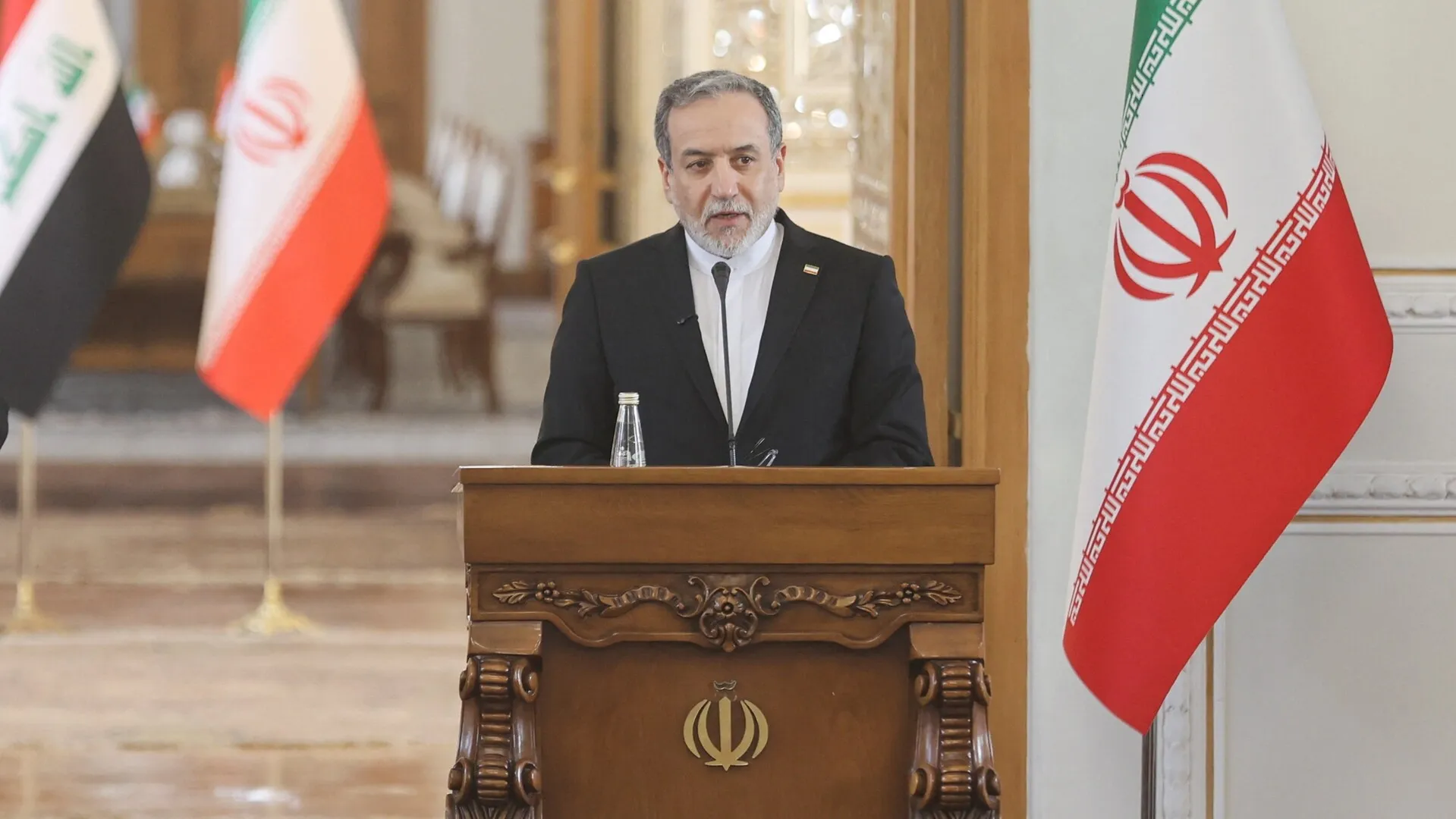
Iran’s Foreign Minister Abbas Araghchi told Al Jazeera on Saturday that Iran’s missile programme is a defence issue that is “never negotiable”.

Israel and the US may also push Iran to end support to its network of allied non-state actors in the region – including the Houthis in Yemen, Hezbollah in Lebanon, Hamas in Palestine, and armed groups in Iraq.

But that alliance, known as the Axis of Resistance, has already been weakened by Israeli assaults over the past two years.

Another sticking issue in the talks is whether Iran would be allowed to enrich uranium domestically.

While Tehran has said it would agree to strict limits and monitoring of its nuclear activities, it has maintained that domestic enrichment is a sovereign national right.

Despite Washington’s talks with Tehran, US Ambassador Mike Huckabee – who is joining Netanyahu on his trip – has stressed Israel and the United States have the same red lines when it comes to Iran.

“I think there’s an extraordinary alignment between Israel and the United States. Everyone would love to see something that would resolve without a war, but it will be up to Iran,” he told reporters.

“If they insist on holding nuclear weaponry and enriched uranium, then I think the president made very clear that this is not acceptable.”

The United States has moved the USS Abraham Lincoln aircraft carrier, destroyers, and fighter jets to the Middle East to pressure Iran into an agreement. Tehran says it won’t be swayed by threats of war.

Source link

Anticorruption efforts declining in democracies around the world: Watchdog | Corruption News

Transparency International says the average global score in its report is at its lowest level in more than a decade.

An anticorruption watchdog has warned in its latest report of worsening corruption in democracies around the world, with the score of the United States slipping to its lowest, raising concerns about developments in the US and the impact of its funding cuts around the world.

Berlin-based Transparency International (TI) said on Tuesday that the average global score in its 2025 Corruption Perceptions Index (CPI) had hit 42 on a scale of zero to 100, its lowest level in more than a decade.

Recommended Stories

list of 3 itemsend of list

The group’s index assigns a score between zero (highly corrupt) and 100 (very clean), based on data reflecting the assessments of experts and business executives.

US President Donald Trump, since returning to the White House early last year, has upended domestic and foreign politics while ramping up pressure on institutions ranging from universities to the Federal Reserve – the US central bank.

Fed Chairman Jerome Powell is currently under investigation by the Department of Justice (DOJ) after resisting pressure from Trump to reduce interest rates.

TI raised concerns over “actions targeting independent voices and undermining judicial independence” in the US.

“The temporary freeze and weakening of enforcement of the Foreign Corrupt Practices Act signal tolerance for corrupt business practices,” it said.

US ranking drops

The Trump administration’s gutting of overseas aid has also “weakened global anticorruption efforts”, it said.

The US’s CPI score has dropped to 64 from 65 in 2024, with the report noting that its “political climate has been deteriorating for more than a decade”. In the past 10 years, it has seen a drop of 10 points.

The report also said “the vast majority of countries are failing to keep corruption under control”, with 122 countries out of 180 posting scores less than 50.

However, it said 31 countries have improved significantly, highlighting Estonia (76 points), the Seychelles (68) and South Korea (63).

The US case illustrates a trend in democracies experiencing a “decline in performance” in battling corruption, according to the report, a phenomenon it also said was apparent in the United Kingdom and France.

While such countries are still near the top of the index, “corruption risks have increased” due to weakening independent checks, gaps in legislation and inadequate enforcement.

“Several have also experienced strains to their democracies, including political polarisation and the growing influence of private money on decision-making,” the report noted.

The worst-performing EU nations

The worst-performing countries in the European Union were Bulgaria and Hungary, both scoring just 40.

The report said the government of Hungary’s nationalist leader Viktor Orban, in power since 2010 and facing a tough battle for re-election in April, “has systematically weakened the rule of law, civic space and electoral integrity for over 10 years”.

“This has enabled impunity for channelling billions – including from European Union funds – to groups of cronies through dirty public contracting and other methods,” the report said.

The highest-ranked nation in the index for the eighth year running was Denmark with a score of 89, followed by Finland and Singapore. At the bottom were South Sudan and Somalia with nine points apiece, followed by Venezuela.

Among the more positive stories of progress in the report was Ukraine, which scored 36.

President Volodymyr Zelenskyy’s government has faced widespread public anger over corruption allegations against those close to him, even as the country has been at war with Russia for nearly four years.

However, the watchdog noted that “the fact that these and many other scandals are being uncovered … shows that Ukraine’s new anticorruption architecture is making a difference”.

It hailed the “civil society mobilisation” last year, which prompted Zelenskyy to backtrack in an attempt to curb the independence of anticorruption bodies.

Source link

US judge blocks Trump administration’s effort to deport Rumeysa Ozturk | Israel-Palestine conflict News

Lawyers say immigration judge found that the Department of Homeland Security failed to prove the Tufts student should be removed from the US.

A judge in the United States has blocked the deportation of Rumeysa Ozturk, a Turkish Tufts University student who was arrested last year as part of a crackdown on pro-Palestinian activists, according to her lawyers.

Ozturk’s lawyers detailed the decision in a letter filed at the 2nd US Circuit Court of Appeals on Monday.

Recommended Stories

list of 4 itemsend of list

They said the immigration judge concluded on January 29 that the US Department of Homeland Security had not met its burden of proving she was removable and terminated the proceedings against her.

Ozturk, a PhD student studying children’s relationship to social media, was arrested last March while walking down a street as the administration of US President Donald Trump began targeting foreign-born students and activists involved in pro-Palestinian advocacy.

Video showed masked agents handcuffing her and putting her into an unmarked vehicle.

The sole basis authorities provided for revoking her visa was an editorial she co-authored in Tufts’ student newspaper a year earlier, criticising her university’s response to Israel’s genocidal war on Gaza.

A petition to release her was first filed in federal court in Boston, where Tufts is located, and then moved to the city of Burlington in Vermont. In May of last year, a federal judge ordered her immediate release after finding she raised a substantial claim that her detention constituted unlawful retaliation in violation of her free speech rights.

Ozturk, who spent 45 days in a detention centre in southern Louisiana, has been back on the Tufts campus since.

The federal government appealed her release to the 2nd US Circuit Court of Appeals.

The January 29 decision, however, ends those proceedings for now.

Ozturk said it was heartening to know that some justice can prevail.

“Today, I breathe a sigh of relief knowing that despite the justice system’s flaws, my case may give hope to those who have also been wronged by the US government,” she said in a statement released by her lawyers.

Ozturk’s immigration lawyer, Mahsa Khanbabai, said the decision was issued by Immigration Judge Roopal Patel in Boston.

Patel’s decision is not itself public, and the Trump administration could challenge it ‌before the Board of Immigration Appeals, which is part of the US Department of Justice.

Khanbabai hailed Patel’s decision, while slamming what she called the Trump administration’s weaponisation of the US immigration system to target “valued members of our society”.

“It has manipulated immigration laws to silence people who advocate for Palestinian human rights and the ongoing humanitarian crisis in Gaza,” she said. “With this ruling, Judge Patel has delivered justice for Rumeysa; now, I hope that other immigration judges will follow her lead and decline to rubber-stamp the president’s cruel deportation agenda.”

The Department of Homeland Security, which oversees US Immigration and Customs Enforcement, said in a statement that Judge Patel’s decision reflected “judicial activism”.

Homeland Security Secretary Kristi Noem “has made it clear that anyone who thinks they can ‌come to America and hide behind the First Amendment to advocate for anti-American and anti-Semitic violence and terrorism – think again”.

The video of Ozturk’s arrest in the Boston suburb of Somerville was widely shared, turning her case into one of the highest-profile instances of the effort by Trump’s administration to deport non-citizen students with pro-Palestinian views.

Separately, a federal judge in Boston last month ruled that Noem and Secretary of State Marco Rubio had adopted an unlawful policy of detaining and deporting scholars like Ozturk that chilled the free speech of non-citizen academics at universities.

The Justice Department on Monday moved to appeal that decision.

Source link

Trump opposes Israeli annexation of occupied West Bank: White House | Occupied West Bank News

BREAKING,

White House official says Trump sees stability in the Palestinian territory as a ‘goal to achieve peace in the region’.

United States President Donald Trump opposes Israel’s annexation of ⁠the occupied West Bank, a White House official has said.

“A stable West Bank keeps ‌Israel secure, and is in ‌line ‌with this ⁠administration’s goal to achieve peace ‌in the region,” the official said on Monday, according to the Reuters news agency.

The comment from the White House comes after eight Muslim-majority countries denounced Israel for approving controversial new measures to expand control over occupied Palestinian territory, making it easier for Israelis to acquire land for new settlements, which are illegal under international law.

On Monday, Egypt, Indonesia, Jordan, Pakistan, Qatar, Saudi Arabia, Turkiye and the United Arab Emirates condemned Israel’s move “in the strongest terms”, according to a statement from the Saudi Arabian Ministry of Foreign Affairs.

This is a breaking news story. More to follow shortly.

Source link

United Nations presses for answers on US funding commitments | United Nations News

UN spokesperson says the international body is ‘waiting to see exactly when payments’ will be made by Washington.

The United Nations has asked the United States for clarity regarding unpaid budget dues, as declining US engagement puts the international organisation under growing strain.

UN spokesperson Stephane Dujarric said on Monday that while the US ambassador, Mike Waltz, said last week that payments would begin within weeks, no further details had been offered.

Recommended Stories

list of 3 itemsend of list

“We’ve seen the statements, and frankly, the secretary-general has been in touch for quite some time on this issue with Ambassador Waltz,” Dujarric said during a news briefing.

“Our [budget] controller has been in touch with the US; indications were given. We’re waiting to see exactly when payments will be made and in what amounts,” he added.

UN officials have said that unpaid fees from the US account for about 95 percent of all outstanding UN budget dues, as the administration of President Donald Trump decreases US involvement in international organisations.

UN chief Antonio Guterres warned in a January letter that the international body faces “imminent financial collapse” on account of unpaid membership dues.

The US owed the UN about $2.19bn by the start of February, along with another $2.4bn for peacekeeping missions and $43.6m for UN tribunals. UN officials have said that the US did not pay $827m for the budget last year, and has not paid $767m for 2026.

The US and its top ally, Israel, have frequently criticised the UN and sought to undermine its agencies, which they say are in opposition to their national interests.

The UN’s human rights chief, Volker Turk, said last week that his office was in “survival mode” amid budget shortfalls. The Trump administration cut off contributions to the agency in 2025.

Turk’s office has frequently issued critical reports about severe rights abuses by Israeli forces against Palestinians that the US and Israel have denounced.

Waltz said last week that the UN would see a “significant” payment towards the US dues soon, telling the Reuters news agency that “you’ll certainly see an initial tranche of money very shortly”.

“Just in general, towards the arrears, and also in recognition of some of the reforms that we’ve seen,” he said.

Last year, the Trump administration released a National Security Strategy, which asserted that the “world’s fundamental political unit is and will remain the nation-state”, not international organisations.

The US has historically been the largest donor to the UN and its programmes.

However, some conservatives from Trump’s Republican Party view the organisation as a hindrance to US global dominance, and international rules and regulations as a threat to the country’s sovereignty.

Source link

US Congress seeks answers, Maxwell invokes Fifth amid Epstein case tensions | Politics News

Ghislaine Maxwell avoids answering questions on alleged co-conspirators in case of convicted sex offender Jeffrey Epstein.

The associate and former girlfriend of convicted late sex offender Jeffrey Epstein has declined to answer questions during a deposition before the United States Congress.

Lawmakers expressed frustration after Ghislaine Maxwell, currently serving a 20-year prison sentence for her role in helping Epstein abuse teenage girls, invoked her Fifth Amendment right against self-incrimination.

Recommended Stories

list of 3 itemsend of list

“As expected, Ghislaine Maxwell took the Fifth and refused to answer any questions,” Representative James Comer, Republican chairman of the House Oversight Committee, told reporters. “This is obviously very disappointing.”

“We had many questions to ask about the crimes she and Epstein committed as well as questions about potential co-conspirators,” he added.

Maxwell was subpoenaed to appear before the committee to discuss her relations with Epstein, but her lawyers stated that she would only testify if US President Donald Trump granted her clemency. Lawmakers had declined a previous request to grant Maxwell legal immunity before testifying.

“She [Maxwell] pleaded the Fifth, which under the US Constitution gives you the right not to answer questions on the grounds that you might incriminate yourself,” said Al Jazeera correspondent Alan Fisher.

“People were waiting to hear answers to important questions, but we got nothing from Ghislaine Maxwell,” he added. “What she did say, very briefly, was that she never saw any evidence of Donald Trump or [former US President] Bill Clinton involved in anything that was illegal. Many people suggest that was a deliberate ploy on her part to say, ‘Look, you buy my silence, but I want clemency.’ She’s appealing to both parties here to say, ‘I will clear the people that you care most about.’”

In a letter released on Sunday by Representative Ro Khanna expressing frustration with Maxwell’s refusal to testify, Khanna noted that Maxwell had spoken with Deputy Attorney General Todd Blanche, who previously worked as Trump’s personal lawyer, without invoking the Fifth Amendment.

“This position appears inconsistent with Ms Maxwell’s prior conduct, as she did not invoke the Fifth Amendment when she previously met with Deputy Attorney General Todd Blanche to discuss substantially similar subject matter,” he said.

Maxwell was moved to a minimum-security prison in Texas after meeting twice with Blanche last year.

Lawmakers such as Democratic Senator Sheldon Whitehouse have called the decision “highly unusual” and questioned whether Maxwell had “been given special treatment in exchange for political favours” as President Trump’s own relationship with Epstein comes under growing scrutiny. Trump has strongly denied any wrongdoing and called the Epstein scandal a “hoax”.

Blanche has said that Maxwell was moved due to “numerous threats against her life”, without providing details. Maxwell has asked Trump to commute her sentence, which she was given in 2022 after being convicted on charges of sex trafficking minors.

She is the only person convicted of crimes related to Epstein, whose connections to a wide array of individuals at the height of political and economic power in the US and around the world have been revealed in the Epstein files.

Source link

White House to make it harder for US federal workers to challenge firings | Business and Economy News

If the proposal is implemented, workers would not be able to seek remedy through an independent review board.

The administration of United States President Donald Trump is making it harder for fired federal employees to get their jobs back by limiting their right to appeal dismissals to an independent review board.

The change was proposed as part of a government plan released on Monday by the Office of Personnel Management (OPM). Under the proposal, federal employees seeking to challenge their termination would be required to appeal directly to OPM, which reports to the president, rather than to an independent body known as the Merit Systems Protection Board (MSPB).

Recommended Stories

list of 4 itemsend of list

The MSPB acts as a mediator between federal workers and the government and has been in place since 1978. After Trump took office, the board’s caseload surged by 266 percent between October 2024 and September 2025. Federal workers who were cut in early 2025 and accepted buyouts received their final paycheques at the end of September.

If implemented, the proposal would build on Trump’s broader push to shrink the federal government and limit workers’ ability to challenge those decisions. The administration forced out roughly 317,000 federal employees last year.

The move comes amid a separate proposal announced last week that would reclassify high-level career civil servants as “at will” employees. That change would give the administration broader authority to fire career officials who do not align with the sitting president’s agenda, affecting roughly 50,000 workers at the nation’s largest employer.

Outlined in a more than 250-page document, the directive would allow workers to be fired if they were “intentionally subverting Presidential directives”.

“Congress gave OPM the authority to set how reduction-in-force appeals are handled, and this rule puts that responsibility to work,” an OPM spokesperson told Al Jazeera in a statement. “It replaces a slow, costly process with a single, streamlined review led by OPM experts. That means agencies can restructure without years of litigation, and employees get faster, fairer resolution if mistakes occur.”

The proposal also comes as the administration has sought to fire political appointees from previous administrations without just cause. Since last year, the White House has been attempting to remove US Federal Reserve Governor Lisa Cook over alleged mortgage fraud.

Cook challenged the decision in federal court, which ruled that the president did not have the authority to fire her. The White House appealed, and the case is now before the Supreme Court.

While the court has not yet issued a ruling, a decision in the president’s favour would make it easier to remove political appointees who do not align with a given administration’s agenda.

Source link

Iran suggests it could dilute highly enriched uranium for sanctions relief | Nuclear Energy News

Iran’s atomic energy chief says Tehran is open to diluting its highly enriched uranium if the United States ends sanctions, signalling flexibility on a key demand by the US.

Mohammad Eslami made the comments to reporters on Monday, saying the prospects of Iran diluting its 60-percent-enriched uranium, a threshold close to weapons grade, would hinge on “whether all sanctions would be lifted in return”, according to Iran’s state-run IRNA news agency.

Eslami did not specify whether Iran expected the removal of all sanctions or specifically those imposed by the US.

Diluting uranium means mixing it with blend material to reduce its enrichment level. According to the United Nations nuclear watchdog, Iran is the only state without nuclear weapons enriching uranium to 60 percent.

US President Donald Trump has repeatedly called for Iran to be subject to a total ban on enrichment, a condition unacceptable to Tehran and far less favourable than a now-defunct nuclear agreement reached with world powers in 2015.

Iran maintains it has a right to a civilian nuclear programme under the provisions of the nuclear Non-Proliferation Treaty, to which it and 190 other countries are signatories.

Eslami made his comments on uranium enrichment as the head of Iran’s Supreme National Security Council, Ali Larijani, prepares to head on Tuesday to Oman, which has been hosting mediated negotiations between the US and Iran.

Al Jazeera’s Ali Hashem, reporting from Tehran, said Larijani, one of the most senior officials in Iran’s government, is likely to convey messages related to the ongoing talks.

Trump said talks with Iran would continue this week.

Negotiations ‘very serious’

Both the US and Iran have given mixed signals about their progress in the negotiations. Iranian Foreign Minister Abbas Araghchi said Iran is “very serious in negotiations” and is eager to “achieve results”. However, he said, “There is a wall of mistrust towards the United States, which stems from America’s own behaviour.”

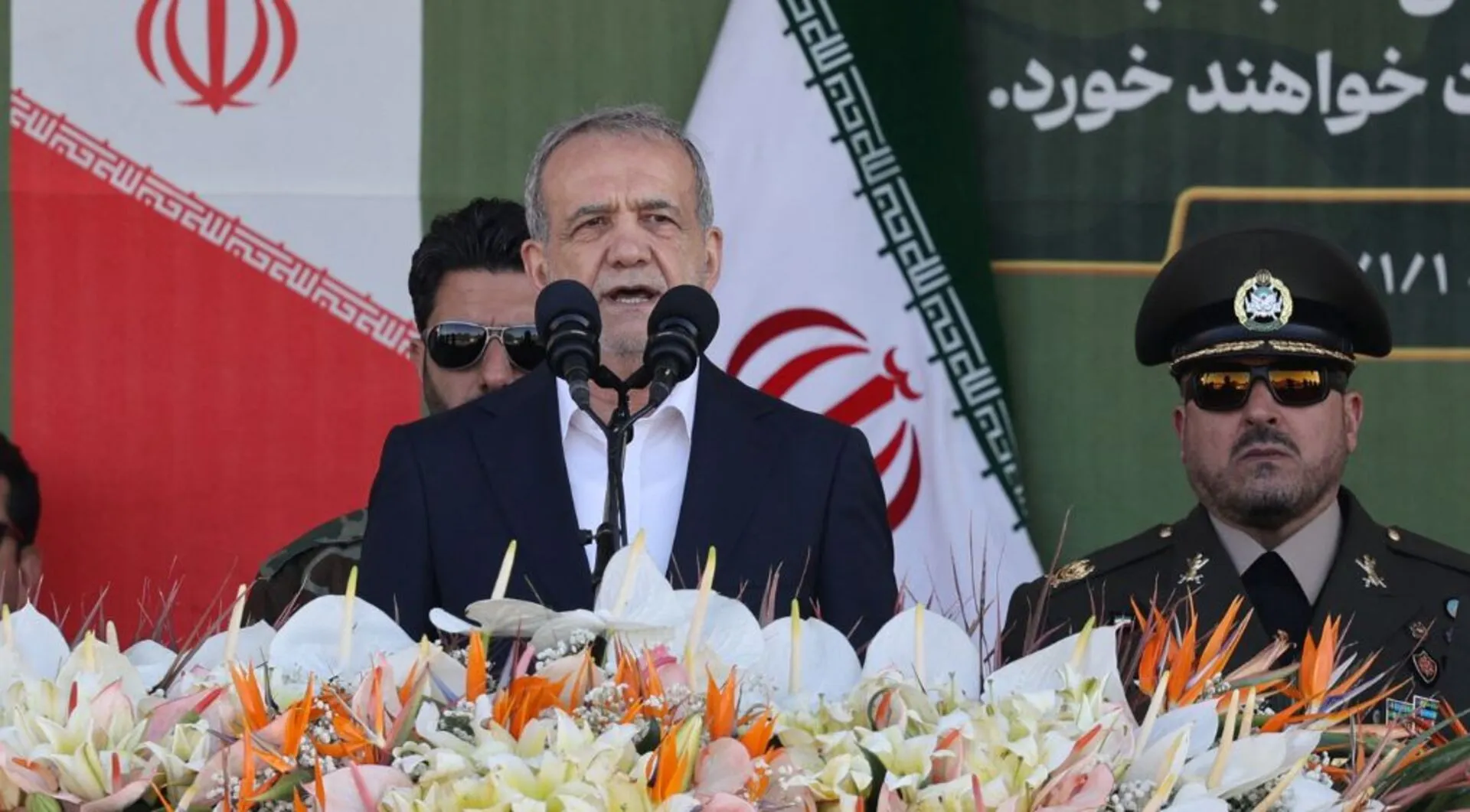
Iranian President Masoud Pezeshkian said the ongoing negotiations are an “important opportunity to reach a fair and balanced solution”, IRNA reported. He stressed that “Iran seeks guarantees for its nuclear rights” and the lifting of “unjust sanctions”, the agency added.

Trump, for his part, praised the latest round of talks on Friday as “very good” but continued to warn of “steep consequences” for Iran if it does not strike a deal.

“They want to make a deal as they should want to make a deal,” the US president said. “They know the consequences if they don’t.”

Before the two sides agreed to talks, Trump had repeatedly threatened Iran with a “far worse” attack than the US strikes on three Iranian nuclear facilities during June’s 12-day Israel-Iran war. He has escalated the pressure by deploying an aircraft carrier and accompanying warships to the Middle East.

Trump is expected on Wednesday to meet with visiting Israeli Prime Minister Benjamin Netanyahu, who is pushing the US to take a hardline stance in its negotiations with Iran, demanding not just concessions on its nuclear programme but also on its ballistic missiles and regional alliances.

Andreas Krieg, an associate professor in security studies at King’s College London, said the US and Iran appear to be “pivoting closer to a deal” than they were several weeks ago, even though there’s still a high risk of conflict.

“The [US] ‘armada’, as Trump calls it, is still in the area, so we still have that coercion going against the [Iranian] regime by the Americans,” Krieg told Al Jazeera. “But it seems to be fruitful in the way that the pressure works, and the Iranians have to make concessions.”

He added: “All the messaging from the Gulf countries – from Qatar, from Oman – from everyone involved, including from the Americans, has been very positive. And the Iranians’ feedback themselves was very positive.

“I think the problem that we have right now is how do we translate this momentum that we have right now on a strategic framework into the nitty-gritty of the details.”

Source link

Epstein pressed billionaire media mogul to influence coverage, files reveal | Business and Economy News

Jeffrey Epstein pressured a media tycoon he did business with to quash coverage of allegations of his sexual abuse of girls, according to documents released by the United States Department of Justice.

Epstein leveraged close personal and professional ties with the Canadian-American billionaire Mortimer Zuckerman to try to influence the New York Daily News’s coverage of allegations against him after his 2008 conviction for soliciting a minor for prostitution, the documents show.

Recommended Stories

list of 4 itemsend of list

After Epstein reached out to Zuckerman, the then-owner of the Daily News, the tabloid first delayed its coverage of the allegations and then omitted details that the late financier had specifically requested be left out, according to the documents.

In an email dated October 9, 2009, Epstein shared a “proposed answer” to questions from the newspaper with Zuckerman that disputed allegations made against him and his girlfriend Ghislaine Maxwell, who is currently serving a 20-year sentence for child sex trafficking.

The allegations, which had been put to Epstein and Maxwell by then-Daily News journalist George Rush, included accusations that the pair had subjected a minor known as “Jane Doe No 102” to routine sexual abuse and had engaged in threesomes with “various underage girls”.

The allegations also included claims that Maxwell kept a computer database of “hundreds of girls and oversaw the schedule of girls who came to Epstein’s homes”.

In the proposed response that he shared with Zuckerman, Epstein said “no sex occurred” with Jane Doe No 102 and she had admitted in a deposition to being an “escort, call girl, and a massage parlor worker since the age of 15”.

“All of the adult establishments in which she admitted working require proof of age. Rc the rest of the questions,” Epstein’s email to Zuckerman said.

“These are all malicious fabrications designed to get Mr Edwards clients more money than they normally receive though she did testify under oath that she made as much as 2000 per day,” the email said, referring to Bradley J Edwards, a Florida-based lawyer who has represented many of Epstein’s accusers.

Email

Later that day, Zuckerman told Epstein in an email that the Daily News was “doing major editing over huge objections” and he would “c copy asap”.

“take ghislaine out. if possible,” Epstein responded in an email a few minutes later.

“the very first plaintiff, deposed admitted in a sworn videotaped statement that she lied and was an escort , call girl since age 15. SHE took the fifth. over 40 times.. its crazy.. thanks for you help.”

“Please call me asap,” Zuckerman wrote to Epstein several hours later, before asking Epstein to call him again later that night.

The Daily News ultimately published an article on December 19, 2009, that described Epstein reaching a settlement with his accuser for an undisclosed amount of money.

The article noted that Epstein was facing “more than a dozen” lawsuits from women who accused him of sexually abusing them but made no mention of Maxwell or the allegations against her.

Zuckerman, a staunch supporter of Israel who served as head of the America-Israel Friendship League and the Conference of Presidents of Major American Jewish Organizations, has never been accused of any involvement in Epstein’s crimes.

Daily News
The front page of the New York Daily News on August 12, 2020 [Bebeto Matthews/AP]

Rush, who left the Daily News in 2010, confirmed that Epstein had tried to “cajole” Zuckerman, the current owner of US News & World Report, into burying or shaping the story to Epstein’s liking.

Rush said the Daily News decided to delay publication after Epstein offered the newspaper an interview.

“Unfortunately, Epstein immediately insisted that the interview be off the record. He also used the conversation to make remorseless claims that he was a victim of overzealous prosecutors and shyster lawyers,” Rush told Al Jazeera.

Rush said Zuckerman, who sold the Daily News in 2017, never suggested that the newspaper cancel the story altogether or publish coverage that was favourable to Epstein.

“I do recall being advised to leave Ghislaine Maxwell out of the story,” Rush said.

“At the time, the paper’s lawyers had libel concerns, and I saw it as a necessary compromise.”

Rush said he had objected to the efforts to interfere in his story but the episode did not cause a “newsroom furore”.

“Most people hadn’t heard of Epstein at that point. I didn’t like Epstein and Maxwell trying to appeal to the owner,” he said.

“But I was relieved that the story wasn’t killed, just delayed, and hopeful that Epstein might say something quotable in the interview. It speaks to Epstein’s arrogance that he thought he had the power to get Mort to do his bidding.”

Zuckerman’s personal assistant and the Zuckerman STEM Leadership Program, an initiative founded by the billionaire to fund scientific collaboration between the US and Israel, did not reply to requests for comment from Al Jazeera.

Ties for two decades

Zuckerman’s ties to Epstein stretch back more than 20 years.

In 2005, Zuckerman, who also owned The Atlantic magazine from 1984 to 1999, worked with Epstein on the short-lived relaunch of the gossip-and-entertainment magazine Radar.

After a US congressional panel in September released a scrapbook prepared for Epstein’s 50th birthday in 2003, Zuckerman was among a slew of high-profile names revealed to have sent the financier their well-wishes.

But the latest tranche of files from the 2019 prosecution of Epstein, released last week by US authorities, show that Zuckerman’s relationship with the sex offender was much closer than previously believed.

In 2008, Zuckerman sought Epstein’s advice on his plans for passing on his estate, sharing sensitive details about his financial affairs in the process, including a copy of his will and an evaluation of his assets that put his net worth at $1.9bn.

In 2013, Epstein drafted several agreements to provide Zuckerman with “analysing, evaluating, planning and other services” related to the billionaire’s plans for passing on his wealth.

Epstein proposed a fee of $30m in a proposal drafted in June 2013 before offering his services for $21m in a revised proposal that December, according to the documents.

In correspondence around this period, Zuckerman appeared to hold Epstein’s claimed expertise in high regard.

“Your questions have been critical to my growing understanding of how much lies ahead before my finances are properly organized,” Zuckerman wrote to Epstein in an email dated October 12, 2013, after the financier had earlier claimed to have identified “wild errors” in Zuckerman’s accounting of his finances.

“You have been an invaluable friend and In the most constructive way a provocateur I am completely grateful and am now beginning to focus, in on the issues you have raised. With appreciation from a hesitant amateur   Mort.”

Epstein
Documents that were included in the release by the US Department of Justice of its Jeffrey Epstein investigative files [File: Jon Elswick/AP]

It is not clear whether Zuckerman ultimately signed the agreement proposed by Epstein.

Zuckerman and Epstein communicated regularly, and the two men arranged numerous dinners and other meetings over the years, according to the documents, including at the financier’s Manhattan home.

“Mort is now booked for tonight at 8:30…i am being asked if you could see him this weekend…please advise,” Lesley Groff, Epstein’s personal assistant, wrote on May 5, 2015, in one of many emails detailing appointments.

While Zuckerman turned to Epstein for financial advice, he also appeared to regard him as a friend.

“Hi there. You are very special. And a great friend. Mort,” Zuckerman wrote to Epstein in an email dated August 24, 2014.

Source link

The anatomy of the Epstein network | TV Shows

The Epstein files dump has led to days of intense media coverage, revealing how powerful elites around the world engaged in either illegal or morally reprehensible behaviour. But even as journalists sift through millions of documents, one of the most significant stories remains largely missing from the mainstream narrative.

Contributor:
Murtaza Hussain – National security and foreign affairs reporter, Drop Site News

The farce of the ‘ceasefire’ coverage in Gaza

More than 500 Palestinians have been killed since a US-brokered “ceasefire” was signed, which begs the question: Should journalists, in contextualising the story, really be calling this a “ceasefire”? As Israel signals it’s preparing to resume full-scale war, we examine how media silence, selective framing and restricted access help keep Gaza off the world’s screens.

Featuring:

Shaiel Ben-Ephraim – Senior analyst, Atlas Global Strategies
Diana Buttu – Palestinian lawyer
Muhammad Shehada – Visiting fellow, European Council on Foreign Relations
Daniel Levy – President, U.S./Middle East Project

Source link