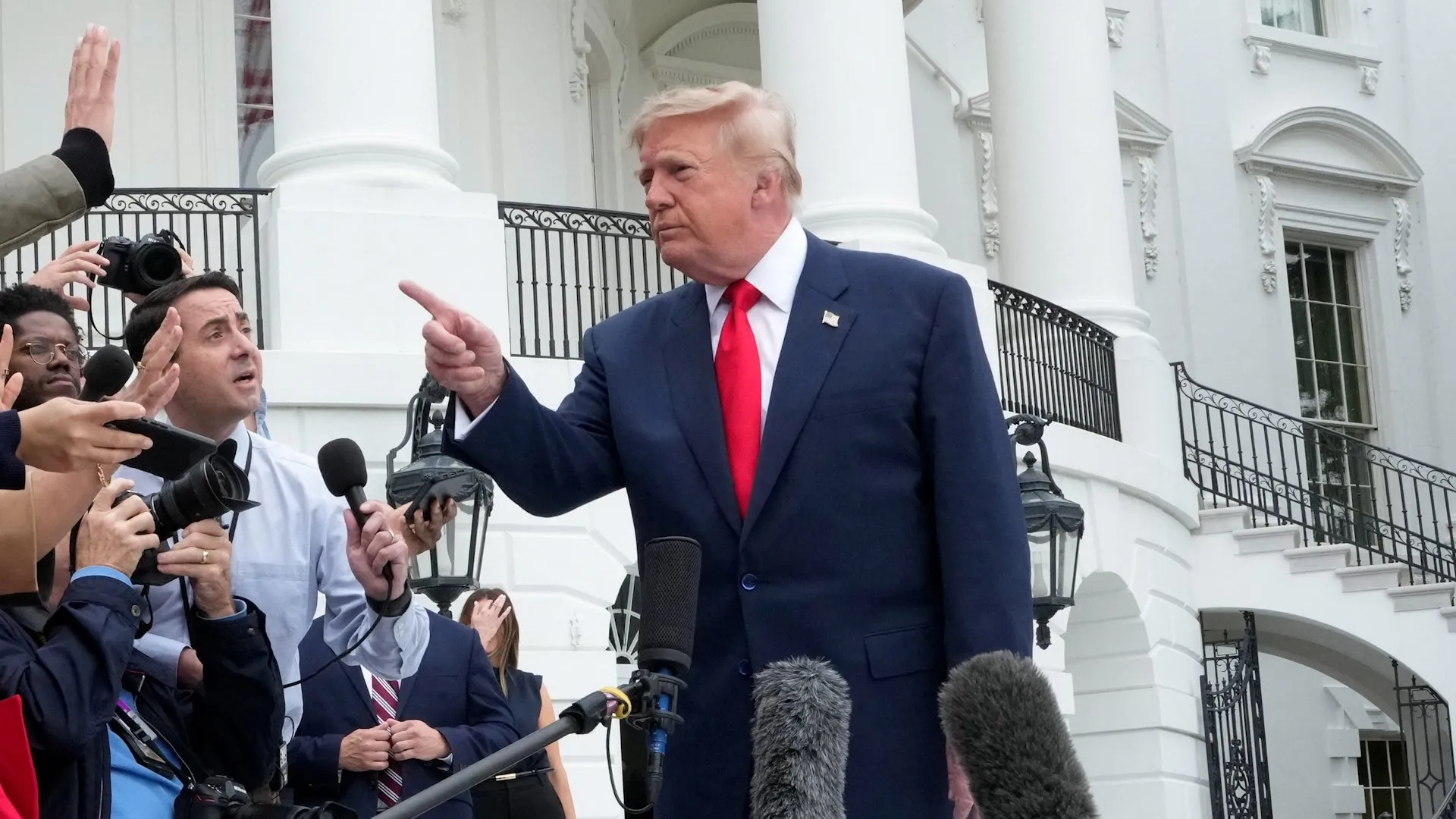
The deal, valued at more than $300m, gives Murdoch control of a storied magazine and a podcast division with a reach valued by advertisers.
Published On 20 May 202620 May 2026
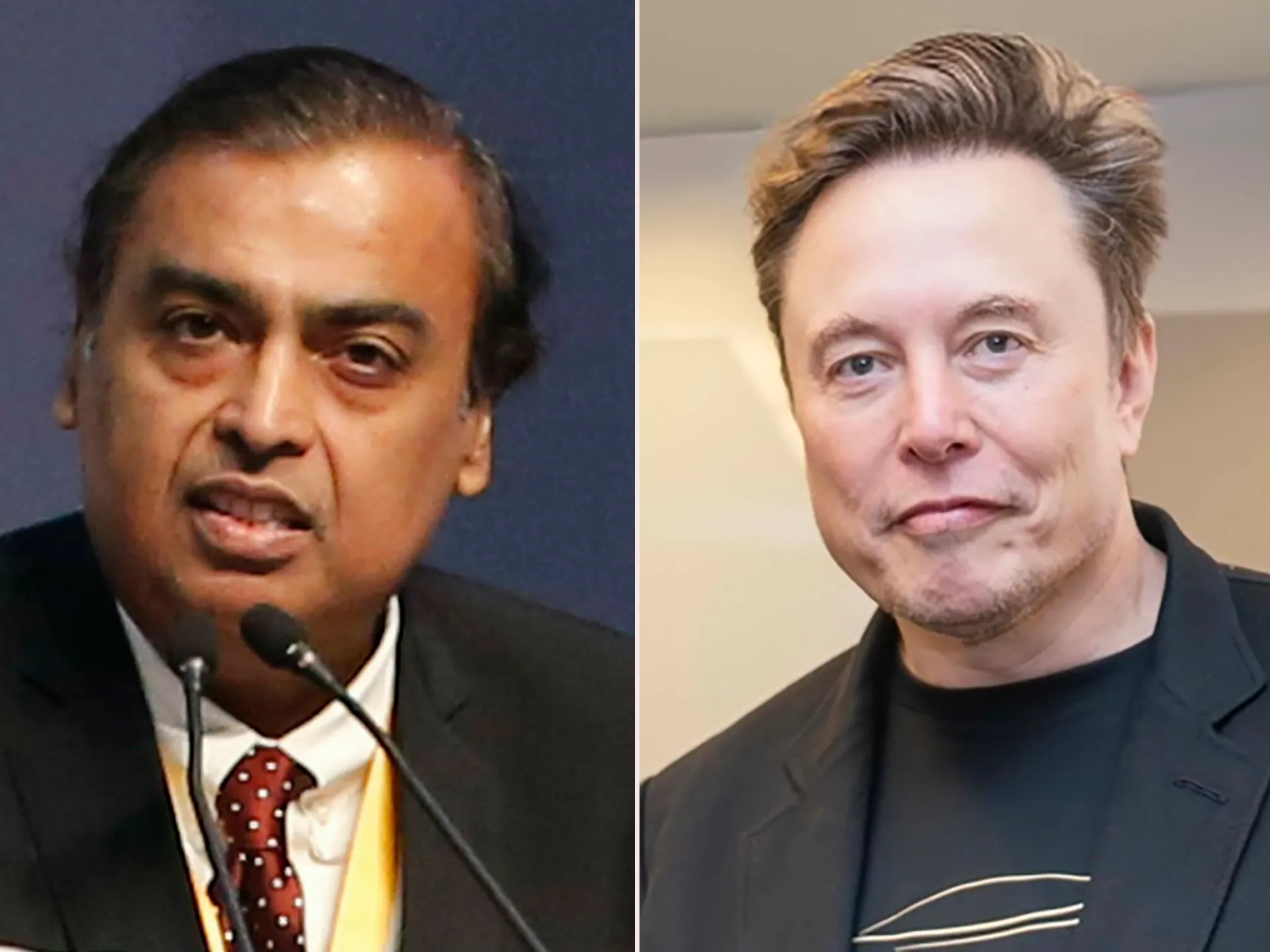
Media scion James Murdoch has agreed to acquire New York Magazine and the Vox Media Podcast Network in a deal that will significantly expand his portfolio and stands to boost his influence over news and entertainment.
“This acquisition reflects both our interest in the forward edge of culture and our deep commitment to ambitious journalism,” Murdoch, the younger son of media mogul Rupert Murdoch, said in a statement on Wednesday announcing the transaction. His company Lupa Systems will buy both properties from Vox Media.
Recommended Stories
list of 4 itemsend of list
The deal, valued at more than $300m, gives Murdoch control of a storied magazine known for its coverage of culture, politics and fashion, and a podcast division whose reach, among a demographic coveted by advertisers, rivals that of cable television news networks, according to several people with direct knowledge of the acquisition. The politics news site Vox.com is also included.
Murdoch and his wife Kathryn Murdoch were intimately involved in courting key talent from Vox, specifically Kara Swisher and Scott Galloway, stars of the popular Pivot podcast, as well as several other programmes on the company’s podcast network.
“I like James and Kathryn,” Swisher said in a phone interview. “Unlike many other media owners these days, they’re savvy about the business and willing to take smart risks.”
Vox’s podcast division was valued much higher than New York Magazine in the transaction, two of the people said, spotlighting the importance of making sure top programmes were locked in. Pivot, for example, has three years remaining on its contract, which will continue under Murdoch. Swisher met with the investor and his wife Kathryn several times before the deal came together.
“In a company like Vox, if its talent doesn’t like something, it’s not gonna happen,” Galloway said in an interview. He added, “James is the only Murdoch that this deal could have happened with.”
Several years ago, James was locked in a fierce dispute with his father over the editorial direction and future control of the family’s media empire. In 2019, he founded Lupa after stepping down as chief executive of 21st Century Fox. In 2020, he resigned from the board of News Corp, the publishing arm of the family’s media empire, citing “disagreements over certain editorial content”.
Vox’s podcast and publishing assets will operate as a subsidiary of Lupa Systems, which also owns Art Basel, which hosts annual events in Paris, Miami, Hong Kong, and Doha, and Tribeca Enterprises, the media and entertainment company cofounded by Robert De Niro and Jane Rosenthal.
Vox Media CEO Jim Bankoff will join Lupa Systems and will continue to lead the brands under the Vox Media label, he said in a note to the company’s staff, adding the deal is expected to close in four to six weeks.
New York Magazine’s publications include The Cut, Vulture and Intelligencer, with a digital audience of tens of millions and more than 400,000 paying subscribers currently.
The acquisition does not include other Vox Media brands such as Eater, Popsugar and The Verge. These brands, along with SB Nation and The Dodo, will become an independent company under a new corporate name.
James’s father, Rupert Murdoch, once owned New York Magazine from the late 1970s till he sold it in 1991.
The victory of Chris Rabb in a US House of Representatives primary in Pennsylvania represents a boost to Democrats’ progressive flank, a movement that has come under heavy pressure in recent years.
Running to represent a district stretching across Philadelphia, widely considered the “bluest” in the country, Rabb handily defeated his top competitors. The state lawmaker carried about 44 percent of the vote, compared with about 30 percent for State Senator Sharif Street and 24 percent for paediatric surgeon Ala Stanford.
Recommended Stories
list of 3 itemsend of list
With no Republicans on the ballot in the primary, Rabb is expected to skate to victory in the midterm.
While all candidates sought to highlight progressives’ bona fides in the race, Rabb skewed farthest left, railing against the political machinery that has long played kingmaker in local politics.
He also broke from his opponents on US policy towards Israel. He has pledged to join 12 current members of Congress in signing a resolution recognising the Nakba and has urged his competitors to describe Israel’s actions in Gaza as a “genocide” on the campaign trail.
In one exchange with voters, Stanford appeared to say that using the term “genocide” was “harmful”. Street, whose victory would have made him Philadelphia’s first Muslim member of Congress, has also been criticised for a lack of clarity on the issue.
In a statement, Kendra Brooks and Nicolas O’Rourke, cochairs of the Pennsylvania Working Families Party, said the race was a weathervane for Democrats.
“The question in this race was not whether we would elect a Democrat, but what kind of Democrat we would choose,” they said.
“The people of Philadelphia made their choice clear: bold, working-class leadership, and an end to the broken status quo.”
Indeed, the race in many ways mirrored internal strife for Democrats, kicked into overdrive following the party’s routing in the 2024 election.
Street, the former chair of the Pennsylvania Democratic Party, and Stanford, who was endorsed by outgoing Representative Dwight Evans, have largely been viewed as representing the party’s longstanding establishment.
Underscoring that perception, earlier this Month, Axios reported that Pennsylvania Governor Josh Shapiro had urged building unions supporting Street not to run attack advertisements against Stanford, over concerns it would boost Rabb’s chances.
Rabb, meanwhile, had been endorsed by a series of progressive stalwarts, including Representatives Ocasio-Cortez, Representative Ilhan Omar and Senator Chris Van Hollen and progressive groups, including Justice Democrats and the Sunrise Movement.
The Socialist Democrats of America, who endorsed Rabb early on in the race, have been largely credited with leveraging their ground operation before the primary win.
“We will be with Congressman Rabb every step of the way in the fight to abolish ICE (Immigration and Customs Enforcement), free Palestine and win Medicare for All,” the group said on Wednesday.
Progressives targeted
Rabb’s win represents a sign of hope for progressives, who have been heavily targeted in primary races, particularly for their criticism of Washington’s longstanding support for Israel.
In 2024, both Cori Bush of Missouri and Jamaal Bowman of New York, members of the so-called Progressive “squad” in Congress, lost their primary races amid a massive influx of spending by AIPAC and pro-Israel lobby groups. All told, AIPAC and affiliated groups spent about $25m to unseat the pair.
Progressives have so far seen a mixed bag this primary season. Analilia Mejia saw an early surprise victory when she defeated former Representative Tom Malinowski in February.
Malinowski, who has long portrayed himself as a centrist, was targeted by AIPAC in the 11-way race, in a strategy that has been viewed as a major backfire for the pro-Israel lobby. Instead of boosting a pro-Israel candidate, AIPAC’s targeting indirectly buoyed Mejia, a staunch critic.
In Texas, pro-Palestine pastor and civil rights leader Frederick Haynes III also won his primary race. Haynes was also endorsed by the Justice Democrats, an organisation launched in 2017 to support progressive candidates. The group has endorsed 15 candidates so far this year.
Three other progressive candidates, Junaid Ahmed and Kat Abughazaleh in Illinois, and Nida Allam in North Carolina, lost their primaries amid a massive onslaught of opposition spending from pro-Israel and artificial intelligence-aligned groups.
Still, Justice Democrats spokesperson Usamah Andrabi said Rabb’s victory was an energising sign before a slate of competitive races in June.
Also in Pennsylvania, incumbent Representative Summer Lee easily sailed to victory in her Democratic primary race in Pittsburgh.
“The sky is the limit,” Andrabi told Al Jazeera, “and it is clear that the Democratic base is desperate for a new generation of leadership that not only takes on Republican extremism but takes on the Democratic establishment and their corporate backers all at once.”
Battlelines draw
Tuesday’s primaries across six states saw the battle lines for the midterm election in November further drawn.
The vote will determine which party controls the US Senate and the US House of Representatives, which will set the pace for US President Donald Trump’s second term in office.
Most notably on the Republican side, US Representative Thomas Massie lost his primary race to Trump-backed challenger Ed Gallrein, in what was the most expensive House primary race in history.
Massie had broken with Trump on the investigation into billionaire financier Jeffrey Epstein, the war in Iran, and US support for Israel. His loss indicated Trump’s enduring hold over the party.
But it remained to be seen if that influence would extend to the general election, with Trump’s approval ranking tanking in recent months amid the war with Iran and its knock-on economic fallout. Polls have shown the president’s support has been particularly hard hit among independents, who typically do not vote in primaries.
In Georgia, two Republicans, Congressman Mike Collins and former football coach Derek Dooley, will advance to a run-off election on June 16 in the US Senate race. The winner will take on Democrat Jon Ossoff in one of the closest-watched races of the season.
Meanwhile, Democrat Keisha Lance Bottoms, the former mayor of Atlanta, won the party’s primary in the gubernatorial race. Two Republicans, Rich Jackson and Burt Jones, meanwhile, will head to a run-off.
The race is set to be consequential, with election administration – and the redrawing of congressional maps – in the state looming large in 2024 and potentially set to play a key role in the 2028 race.
Hotel operators avoid a ‘very real threat’ by signing a deal with 25,000 workers as the city hosts the 2026 tournament.
Published On 20 May 202620 May 2026
New York City hotel operators and unions have reached an eight-year labour deal covering about 25,000 workers, averting a strike over wages, workloads and staffing levels that had threatened to disrupt the city before the FIFA World Cup, said the head of the Hotel Association of New York City.
Vijay Dandapani, the association’s president and chief executive, said on Tuesday that the mood among owners was “overall positive” after weeks of negotiations, though the industry made significant concessions.
“We came a long way from where things were,” Dandapani said.
The United States will cohost the tournament with Canada and Mexico from June 11 to July 19.
While FIFA, football’s global governing body and tournament organiser, was not involved in the talks, the prospect of an influx of fans raised the stakes.
A union campaign had warned of a possible strike and urged visitors to avoid affected hotels.
The potential walkout was a “very real threat”, Dandapani said, noting recent labour actions in US cities including Los Angeles and Boston.
Dandapani said a figure of about $200,000 reflected compensation at the end of the agreement, not at the outset.
Hotel owners entered the talks aiming to preserve profitability, arguing New York’s lodging market has not fully recovered from the pandemic. Occupancy remains below 2019 levels, and inflation-adjusted room rates have yet to catch up, he said.
He also cited broader pressures, including the US-Israel war on Iran, tariffs and visa issues.
The deal follows the withdrawal of a proposed city measure that operators said would have sharply raised labour costs by limiting room attendants’ workloads and requiring double pay beyond certain thresholds. Owners estimated it could have lifted wage costs by about 40 percent.
The new pact will still add costs, though operators expect tourism demand and major events to support revenue.
Nearly three months after the United States and Israel launched their large-scale bombing campaign against Iran and about six weeks since the April 8 ceasefire took effect, President Trump faces an inflection point. Does he return to war? Maintain the ceasefire and U.S. blockade on Iranian ports in the hope of cutting a deal on American terms? Or drop his maximalist negotiating stance?
Sen. Lindsey Graham (R-S.C.), an informal foreign policy advisor for the White House, continues to press for more aggressive U.S. military action. Trump’s political advisors would prefer that the war end as soon as possible to minimize political repercussions against the Republican Party in a midterm election year.
Trump seems conflicted. Despite weeks of U.S. bombardment and an ongoing naval blockade, Tehran is as protective of its nuclear program today as it was before the war began. “For Iran, the Clock is Ticking, and they better get moving, FAST, or there won’t be anything left of them,” Trump wrote on Truth Social over the weekend. A day later, Trump took to the social media platform again to announce he suspended planned U.S. attacks on Iran to give talks more time.
Unfortunately for Trump, he’s proved to be his own worst enemy on this subject. Iran’s stockpile of highly enriched uranium and Tehran’s effective control of the Strait of Hormuz, the regime’s two biggest cards, are a byproduct of Trump’s own policy decisions.
The first is a clear indictment of Trump’s first-term order to withdraw the United States from the Obama-era Joint Comprehensive Plan of Action, a highly technical accord that put Iran’s nuclear work in a box by restricting the number and quality of centrifuges it could use, capped the amount of enriched uranium it could produce and compelled Tehran to ship 97% of its stockpile out of the country. When the Trump administration scrapped that hard-won deal, Iran responded by enriching more nuclear material at a faster pace and accumulating the very stockpile the Trump administration is now seeking to neutralize.
The Strait of Hormuz, Iran’s second card, would not even be an issue today if the Trump administration had refrained from going to war in the first place. On Feb. 27, the day before the conflict began, more than 150 tankers and vessels traveled through the strait. The international waterway was open for business.
Not so today. On Thursday, a grand total of three crossings were registered in the waterway. This collapse of commerce is a consequence of Iran’s ability to harass civilian tankers so much that shipping companies no longer view the journey as worth the cost. As Adm. Brad Cooper, the top U.S. commander in the Middle East, testified to the Senate Armed Services Committee on Thursday: “The Iranian capability to stop commerce has been dramatically depleted through the strait, but their voice is very loud. And those threats are clearly heard by the merchant industry and insurance industry.”
By virtue of his own actions, Trump is now left with a series of policy options that range from least bad to terrible. None of them are ideal, and all of them carry some risk.
For starters, Trump could resume the war. Any renewed U.S. bombing campaign would probably expand the U.S. military’s original set of targets to include a portion of Iran’s energy infrastructure, which Trump has threatened repeatedly to hit. A U.S. invasion of Kharg Island, where 90% of Iran’s oil processing takes place, might also be up for discussion. The aim would be to destroy Iran’s remaining military capabilities and further squeeze its oil revenue until Tehran’s strategic calculus on the war shifts to Washington’s liking.
Yet there are no guarantees that doubling down on military force will work. Trump’s entire strategy has relied on a baseline assumption: The more punitive the United States is, the more likely Tehran will be to cave. Yet that simply hasn’t occurred. If anything, Iran is more dug in now than it was in the opening days of the conflict. For the regime, capitulating to Trump is as dangerous as losing the war. Why would more bombing succeed where previous bombing failed?
The risks of additional U.S. military action are considerable as well. Before the ceasefire, Iran was launching ballistic missiles and attack drones across multiple gulf Arab states, hitting Qatar’s largest natural gas processing facility, Saudi Arabia’s east-west oil pipeline and Dubai’s luxurious high-rises. As the Iranians have stated, such attacks will not only resume if Trump orders a resumption of the war but will expand to new targets, including desalination facilities and nuclear power plants. Such strikes would raise global oil and gas prices to even more absurd levels, adding to the extra $40 billion the American people are already paying for fuel since the war began.
What about continuing the status quo? While this contingency would be less costly than another round of bombing or a U.S. ground invasion, it’s unclear whether it would help or hurt negotiations toward a settlement. There’s a possibility that extending the U.S. blockade of Iranian ports could merely reaffirm the regime’s earlier decision to preserve its own shutdown of the strait. Iran is now urging Washington to end its blockade before talks on the nuclear file can be held. And it’s a mystery whether Trump’s blockade is working anyway; the U.S. intelligence community assesses that Iran could withstand this pressure point for three to four more months, which may be too long for Trump to sustain given the oil disruptions that are bound to get worse.
Striking an agreement to end the war, return the strait to open traffic and restrict Iran’s nuclear program would be the most beneficial policy for the United States with the least amount of cost attached — not quite undoing the harm from Trump’s first-term decision to scrap the nuclear deal and his second-term decision to start a war. U.S. and Iranian negotiators are passing proposals back and forth as we speak. But as of now, Trump can’t stomach agreeing to a deal that covers some of Iran’s terms, including but not limited to a shorter suspension of enriched uranium and some kind of Iranian role in the management of the strait. Even if Trump did reassess his position, he would be forced to confront the hawks in his political coalition who would consider anything short of Iran’s total surrender a failure.
In short, Trump is in an unenviable position. He’s got nobody to blame but himself.
Daniel R. DePetris is a fellow at Defense Priorities and a syndicated foreign affairs columnist.
The daughter of mosque security guard Amin Abdullah is remembering him as the “absolute best dad in the world.” Family and community members gathered Tuesday to honour Abdullah, who was killed while confronting gunmen during the attack on a San Diego mosque.
With an estimated 72 percent of the vote counted, Ed Gallrein led with 54.4 percent to Massie’s 45.6 percent.
US President Donald Trump has tightened his grip on the Republican Party as Kentucky voters ousted one of the few conservative lawmakers willing to openly challenge his authority.
Congressman Thomas Massie‘s defeat, which was predicted by US news networks, including NBC and CNN, about two hours after polls closed on Tuesday, marks another victory in Trump’s campaign to punish dissent within Republican ranks.
Recommended Stories
list of 4 itemsend of list
With an estimated 72 percent of the vote counted, former Navy SEAL Ed Gallrein led with 54.4 percent of the vote to Massie’s 45.6 percent.
The Associated Press news agency called the race for Gallrein, whose campaign was backed by Trump’s endorsement as well as millions of dollars from pro-Trump and pro-Israel political lobby groups.
The contest, widely described as the most expensive House of Representatives primary in US history, saw more than $32m spent on advertising and offered the latest evidence of Trump’s hold over Republicans. It followed the primary defeat on Saturday of another Trump critic, Senator Bill Cassidy of Louisiana, as well as losses for dissenting Republican state lawmakers in Indiana earlier this month.
“Massie got Trumped. Donald Trump is the sun and the moon and the stars in the Republican Party in Kentucky,” Kentucky-based Republican strategist TJ Litafik said.
A test of Trump’s influence
The Kentucky vote was closely watched as a test of whether Trump’s hold on Republican voters remained firm despite concerns over his war on Iran, growing inflation and declining personal approval ratings, and whether there was still space in the party for lawmakers willing to break with him.
Massie had angered Trump by opposing US military action in Iran and Venezuela, criticising aid to Israel, resisting parts of the president’s agenda, and backing efforts to release files related to the late sex offender Jeffrey Epstein.
The president spent months attacking Massie, a libertarian-leaning seven-term congressman, calling him a “moron”, a “nut job” and a “major sleazebag”.
“Dealing with him is just horrible. I don’t think he’s a Republican… He’s not a libertarian,” Trump told reporters after polls opened on Tuesday.
“Sometimes they say he’s really a Dumb-ocrat. He votes against us all the time,” Trump said, using a nickname he frequently deploys against Democrats.
‘I’m not running against President Trump’
In the northern Kentucky city of Covington, Rob Barkley, a former Trump supporter who backed Massie, said the president’s attacks had pushed him further towards the congressman.
“He’s on the Republican side, so he has a conservative mindset,” Barkley told US media after casting his ballot.
“But he’s not as far-right leaning as Trump’s politics,” he said.
Massie, who voted with Trump roughly 90 percent of the time during the president’s second term, framed the contest as a broader test of independence within the Republican Party.
“I’m not running against President Trump. Most of the people voting for me support President Trump like I do,” Massie said.
Secretary of Defense Pete Hegseth also made a rare appearance in Massie’s district on Monday to campaign for Gallrein.
Federal law restricts government employees from engaging in partisan political activity while on duty, but Hegseth’s office said he attended in a personal capacity and that no taxpayer money was used.
Trump later revealed that Hegseth’s campaign appearance came just hours before the US had expected to launch a new military assault on Iran, although the operation was later postponed.
Several US states, including Georgia and Pennsylvania, held primaries on Tuesday in advance of November’s midterm elections, but the Kentucky race emerged as one of the night’s most closely-watched contests.
Massie, first elected in 2012, had long been one of Trump’s most persistent Republican critics.
Democratic lawmakers blast move, which follows the establishment of a controversial ‘Anti-Weaponization Fund’.
Published On 20 May 202620 May 2026
United States President Donald Trump, his family, and his businesses have been granted immunity from any ongoing audits into their tax affairs, according to a directive by the Department of Justice.
The move on Tuesday came as an addendum to Trump’s agreement a day earlier to settle a $10bn lawsuit against the Internal Revenue Service (IRS) over the leak of his tax information to media outlets between 2018 and 2020.
Recommended Stories
list of 4 itemsend of list
In a one-page document, signed by acting Attorney General Todd Blanche, the Justice Department said authorities would be “FOREVER BARRED and PRECLUDED” from “prosecuting or pursuing” tax claims against Trump, members of his family, and his businesses.
The document, which was posted on the Justice Department’s website without any official announcement or press release, stipulates that the waiver applies to inquiries that are “currently pending or that could be pending,” including any related to tax returns filed by Trump before Monday’s settlement.
Democratic lawmakers immediately blasted the move.
Senator Adam Schiff of California accused the Trump administration of engaging in corruption and “self-dealing”.
“The tax-dodging President gets himself and his whole family a tax break, thanks to Todd Blanche,” Schiff said in a statement on social media.
Richard Painter, the chief White House ethics lawyer under former President George W Bush, said that exempting Trump from any tax obligations would be unconstitutional.
“If the president or his family owe the IRS money, this is a violation of the domestic emoluments clause of the US Constitution, which specifically says that the president cannot receive any profits or advantages from the US government other than his salary appropriated by Congress,” Painter told Al Jazeera.
The Justice Department and the Trump Organisation did not immediately respond to requests for comment.
The Justice Department’s directive marks a dramatic expansion in Trump’s settlement, which established a so-called “Anti-Weaponization Fund” to compensate people who claim to have been victims of politically-motivated “lawfare”.
Critics have likened the initiative to a “slush fund”, warning that it is likely to be used to reward Trump’s allies.
Decisions on distributing money from the $1.776bn fund will be made by a five-member commission, four of whom will be directly appointed by Blanche, a Trump appointee who formerly acted as his personal lawyer.
In heated exchanges with Democratic senators on Tuesday, Blanche denied that Trump had directed him to establish the fund or that it would be used in a partisan manner.
“Anybody in this country is eligible to apply if they believe they were a victim of weaponisation,” Blanche said.
The US has banned non-Americans who have visited DR Congo, Uganda or South Sudan in the last 21 days from entry.
Published On 19 May 202619 May 2026
The United States will ensure that the Democratic Republic of the Congo’s (DRC) football team can enter the country to play in the World Cup, making an exemption to an Ebola-related entry ban, according to a senior Department of State official.
“We expect the DRC team to be able to attend the World Cup,” the official said on condition of anonymity.
Recommended Stories
list of 4 itemsend of list
The US has banned non-Americans who have been in the DRC, Uganda or South Sudan in the previous 21 days from visiting the country due to a deadly outbreak of Ebola.
The US official said the DRC team, the only one among the three countries to have qualified for football’s premier event, had already been training in Europe, so they may not have been subject to the ban in any case.
But if they had, in fact, been in the DRC over the last 21 days, they would be subject to the sort of strict screening required for returning US citizens.
“We’re working to get them into the same protocol for testing in isolation that American citizens returning and permanent residents would be,” the official said.
The official said the exemption would not apply to everyday fans from the DRC looking to come to cheer on the team.
The DRC begin their World Cup campaign in Texas against Portugal on June 17.
On Monday morning, a jury in Oakland, California, announced its verdict in one of the most-watched tech feuds between billionaire Elon Musk and OpenAI CEO Sam Altman. The nine-member jury handed a decisive victory to Altman, saying Musk had waited too long to bring his claims against the artificial intelligence company and its top executives.
Musk, who cofounded OpenAI as a nonprofit, had filed a $150bn lawsuit against the organisation, Altman and its president, Greg Brockman, accusing them of turning it into a for-profit entity for personal enrichment.
Recommended Stories
list of 4 itemsend of list
The verdict, however, stopped short of resolving the central question at the heart of the case, whether OpenAI betrayed the nonprofit mission on which it was founded in 2015 as it transformed from a research lab focused on benefitting humanity into one of the world’s most powerful AI companies.
Instead, the case became focused on a procedural issue. After deliberating for less than two hours, the jury unanimously found that the statute of limitations had expired before Musk filed the lawsuit in 2024, meaning jurors concluded he had waited too long to bring his claims under the applicable legal deadline. US District Judge Yvonne Gonzalez Rogers accepted the finding and dismissed the case.
The ruling removes a major legal threat for OpenAI at a pivotal moment for the company, which is deepening its commercial partnerships, expanding its relationship with Microsoft and moving towards what could become one of the largest public offerings in Silicon Valley history; while for Musk, the ruling leaves room to argue that the case was lost on timing rather than substance.
Shortly after the verdict, Musk repeated his accusations on X. “Altman & Brockman did in fact enrich themselves by stealing a charity. The only question is WHEN they did it!” Musk wrote on X. “Creating a precedent to loot charities is incredibly destructive to charitable giving in America.”
Musk has decided to appeal, ensuring that the increasingly bitter feud between two of Silicon Valley’s most powerful figures is unlikely to end any time soon.
How did Musk and Altman fall out?
Musk and Altman cofounded OpenAI in 2015 alongside Brockman and other researchers at a time when concerns were growing over how AI could reshape society.
The idea, according to testimony and internal discussions presented during the trial, was that the company could focus on building safe AI systems that benefitted humanity rather than prioritising shareholder returns.
Musk and Altman also believed the nonprofit structure would help OpenAI compete with technology giants such as Google by attracting top researchers and positioning the organisation as a mission-driven alternative.
Musk claims he contributed roughly $38m to OpenAI during its early years, but relations between the founders later deteriorated sharply. He resigned from OpenAI’s board in February 2018, officially citing potential conflicts of interest as Tesla became more focused on AI.
But the split deepened after OpenAI created a for-profit subsidiary and Microsoft invested heavily in the company. Microsoft has since committed tens of billions of dollars to its partnership with OpenAI, helping transform ChatGPT into one of the defining products of the global AI boom.
Musk became increasingly critical of the company, arguing that OpenAI had moved far beyond the nonprofit vision on which it was founded. In 2023, he launched a rival AI company, xAI, the maker of the Grok chatbot, before filing his lawsuit against OpenAI the following year.
Why did the case collapse?
At the centre of the trial was a relatively technical legal question about when Musk became aware that OpenAI was moving towards a profit-driven structure.
Because the lawsuit was filed in 2024, Musk needed to convince jurors that the alleged wrongdoing occurred within the legal time limit for bringing his claims.
Musk argued that his concerns fully crystallised only in 2023, particularly after Microsoft’s big investments into OpenAI’s for-profit arm.
But OpenAI’s lawyers argued that Musk had known for years that the company planned to pursue a commercial structure and raise huge amounts of outside funding.
Evidence presented during the trial showed that discussions about creating a for-profit arm dated back to at least 2017. Jurors also heard testimony that Altman had sent Musk documents in 2018 outlining plans for OpenAI to raise billions of dollars through a for-profit structure.
Ultimately, the jury sided with OpenAI’s argument that Musk could have filed his lawsuit much earlier – and therefore waited too long.
That meant jurors never had to answer the more explosive question at the centre of the case about whether OpenAI had actually betrayed its founding mission.
What did OpenAI argue?
OpenAI maintained throughout the trial that there was never an agreement to remain a nonprofit indefinitely. Its lawyers argued that Musk understood from the beginning that developing cutting-edge artificial intelligence would require extraordinary levels of funding and computing power.
OpenAI also portrayed Musk’s lawsuit as partly motivated by rivalry. By the time the case reached court, Musk’s xAI had emerged as a direct competitor to OpenAI in the race to develop advanced AI systems.
Meanwhile, OpenAI had become one of the most powerful companies in the technology industry, reportedly valued at more than $800bn and moving towards what could eventually become one of the largest public offerings in history.
Lawyers for OpenAI argued that Musk became hostile only after losing influence within the company and watching Altman turn OpenAI into the dominant force in generative AI.
What questions did the trial leave unanswered?
Although the verdict was a clear legal victory for OpenAI, the trial never became the sweeping test case about the future of artificial intelligence that many had expected.
Because the case was resolved on procedural grounds, the court did not answer some of the biggest questions raised by the AI boom: how these systems should be governed, who should benefit economically from them, and whether companies developing increasingly powerful AI tools can still claim to act in the public interest while pursuing enormous commercial growth.
The trial also touched only briefly on broader concerns surrounding AI development, including transparency, labour and the extraction of data used to train AI systems.
Nicole Turner Lee, director of the Centre for Technology Innovation, told Al Jazeera that one of the central problems surrounding AI is that the technology is deeply “extractive”.
“It does undergo theft where people do not consent as to whether or not their information, their image, their voice, their text are actually being extracted,” she said, raising concerns about compensation and consent in AI training systems.
Those issues remained largely outside the scope of the trial due to it ultimately centring on procedural issues.
The ruling, therefore, also removed the possibility of a far more disruptive outcome that could have threatened OpenAI’s corporate structure, its partnership with Microsoft and the wider wave of investment pouring into the AI industry.
But the broader debate over AI’s future is far from settled. With Musk preparing an appeal, the courtroom battle between the two former allies looks set to continue alongside wider questions about how AI should be governed.
Workers represented by a local union say ICE presence would create a climate of fear during the FIFA World Cup 2026.
Published On 19 May 202619 May 2026
Workers at the SoFi Stadium in Los Angeles have decided to go on strike if federal immigration enforcement agents are deployed at the venue when it hosts FIFA World Cup matches in June and July.
The UNITE HERE Local 11 – a labour union representing some 2,000 hospitality employees – on Monday demanded federal guarantees that Immigration and Customs Enforcement (ICE) would not be used during the matches scheduled at the stadium.
The venue, which will be known as the Los Angeles Stadium during the tournament, will host eight World Cup games, including the opening fixture for the United States on June 12.
Workers at the world’s most expensive sports arena say the ICE presence would create a climate of fear for themselves and for fans.
“ICE should have no role in these games,” said Isaac Martinez, a stadium cook, at a protest outside the venue.
“We do not want to live in fear coming to work, or fear being detained going home.”
“If we do not reach an agreement, my colleagues and I are ready to strike,” Martinez added, speaking on behalf of a workforce composed largely of food and beverage concession staff.
SoFi Stadium workers protest in Los Angeles on May Day [Jae C Hong/AP]
ICE has led the charge in President Donald Trump’s immigration crackdown.
Human rights groups have condemned the agency for its conduct during raids in several US cities, including Los Angeles last year.
In early 2026, ICE agents fatally shot two American protesters in Minneapolis.
Workers on Monday also raised alarms over FIFA’s accreditation process, which requires employees to submit personal data before the tournament, which runs from June 11 to July 19 across the US, Canada and Mexico.
“We ask FIFA not to share our information with ICE agencies, foreign countries, or intelligence services,” worker Yolanda Fierro said.
Protesters carrying plastic balls and signs reading “Kick ICE Out of the World Cup” drew support from Tom Steyer, a Democratic candidate in California’s gubernatorial race.
ICE’s mandate is border control, the financier-turned-politician said.
“Can anyone explain what that has to do with the World Cup? Nothing,” Steyer said.
“How is it possible that this is the agency that is going to be here when we know in fact they’re an absolute threat, a lawless threat, to workers in California?”
On Tuesday, voters in Pennsylvania’s third congressional district — which encompasses much of Philadelphia’s urban core — will decide what kind of progressive champion they want representing them in the United States House of Representatives.
Four candidates are vying for the Democratic nomination in Tuesday’s primary. They include state Representative Chris Rabb, state Senator Sharif Street, pediatric surgeon Ala Stanford and lawyer Shaun Griffith.
Recommended Stories
list of 3 itemsend of list
On the whole, all four campaigns are markedly progressive, focusing on issues such as expanding healthcare, affordability and housing.
But supporters say the race exposes the fault lines within the Democratic Party as it seeks to rally opposition to Republican President Donald Trump in the 2026 midterm cycle.
Marc Stier, who served as the director of the Pennsylvania Policy Center, a progressive think tank, until earlier this year, noted that there are few differences in the candidates’ platforms.
“They’re all opposed to Donald Trump. They’re all talking about civil rights, healthcare and voting rights,” said Stier, who backs Rabb. “So the differences aren’t that great.”
But the race has drawn nationwide attention, including endorsements from top Democrats.
For Stier and other local experts and leaders, the divisions come down to a duel between ideals and pragmatism — and how the candidates wish to be perceived along that spectrum.
A Democratic stronghold
The primary is highly symbolic for the Democratic Party. Pennsylvania’s third congressional district is considered one of the most left-leaning areas in the US.
According to The Cook Political Report, the district was 40 percentage points more Democratic than the national average in the most recent presidential election.
That makes it a key party stronghold in a pivotal swing state: Pennsylvania has alternated between voting Democratic and Republican in the last four presidential races, most recently siding with Trump.
Since 2016, Democrat Dwight Evans has represented the area. But in June, he announced he would not seek reelection after holding congressional office for a decade.
That opened a gateway to a heated primary, with no incumbent to lead the pack.
Street, Rabb and Stanford are considered the frontrunners. No independent polling has been conducted in the race, but surveys gathered by the candidates or their supporters show a volatile three-way contest.
An April poll sponsored by 314 Action, a group supporting Stanford, found the surgeon leading with 28 percent of voter support, followed by Rabb at 23 percent and Street at 16 percent.
Meanwhile, a November survey sponsored by Street found the state senator ahead with 22 percent support, ahead of Rabb at 17 percent and Stanford at 11.
State Representative Chris Rabb has embraced the progressive label and received endorsements from politicians like Alexandria Ocasio-Cortez [Michael Perez/AP Photo]
A three-way race
Each of the three candidates has positioned themselves as the Democrat who will shake up the status quo and deliver results.
“The same old politics and the same old politicians are not going to cut it,” Stanford declared at a forum hosted by WHYY public radio in February.
“We need people who step up in a storm, who lead when others wilt away, and that’s what I’ve done and will do for this city.”
There are differences, however, in how the candidates are presenting themselves.
Stanford is campaigning as the political outsider whose public health advocacy offered critical leadership during the COVID-19 pandemic. This is her first political run.
Street, on the other hand, is seen as the political veteran backed by party leadership. He first entered the state Senate in 2017, becoming the first Muslim elected to the chamber, and his father was a former Philadelphia mayor.
Then there’s Rabb, a democratic socialist who has positioned himself as the firebrand progressive in the mould of New York Congresswoman Alexandria Ocasio-Cortez.
He, too, has served in government since 2017, representing northwest Philadelphia in the state House of Representatives.
All three have embraced progressive rallying cries, such as increasing affordable housing, widening access to healthcare, and abolishing Immigration and Customs Enforcement (ICE), an agency accused of racial profiling and violent tactics.
But Street has set himself apart by wedding his reputation to the Democratic establishment. From 2022 to 2025, he served as chair of the Pennsylvania Democratic Party.
“Street has very strong relationships with the political machine here: the party establishment, the ward leaders and committee people, and other legislators,” Stier said.
State Senator Sharif Street was formerly the chair of the Pennsylvania Democratic Party [Aimee Dilger/AP Photo]
Supporters weigh in
But amid the frustration with the Democratic Party, particularly after its defeat in the 2024 presidential race, Street’s opponents have sought to distance themselves from the left-wing establishment.
“Rabb clearly says his goal is to push the envelope on issues and build public support for bolder ideas than Street is likely to push forward,” said Stier.
But Stier acknowledges that some voters see progressives like Rabb as all talk and no action.
“As my ward leader says, Rabb is one of those people that makes a lot of speeches but doesn’t get much done,” Stier said.
He dismisses such remarks as hackneyed. “It’s the kind of standard attack that is made by the establishment against people who are very outspoken and don’t always get along with the party establishment in Harrisburg.”
But it is the kind of argument Lou Agre, a ward leader and retired lawyer, sympathises with.
Formerly the president of the Philadelphia Metal Trades Council, Agre is backing Street in the upcoming election. He is not convinced that Rabb’s progressive positions can lead to tangible results.
“Street has always stood behind organised labour,” Agre said.
To Agre, Street represents experience, while Rabb is heavy on rhetoric. “This is a race between a guy with a record and another guy who has a platform that he’s using to get a point across,” he explained.
Surgeon Ala Stanford administers a COVID-19 swab test on resident Wade Jeffries on April 22, 2020, as part of an effort to care for Black communities [Matt Rourke/AP Photo]
Duelling endorsements
In many ways, local leaders say that the difference between Tuesday’s primary candidates comes back to familiar arguments that often divide centrist and progressive Democrats.
Those labels have, in part, translated into endorsements — and behind-the-scenes party battles.
The news outlet Axios reported this month that Pennsylvania Governor Josh Shapiro privately warned local building trade unions that attacking Stanford could inadvertently help Rabb, who has been critical of the governor.
Rabb, meanwhile, has earned the endorsements of some of the country’s most prominent progressives, including Ocasio-Cortez, Representative Ilhan Omar and Senator Chris Van Hollen.
Street, by contrast, has become the candidate of choice for some of Philadelphia’s biggest power brokers, including local labour unions, city council members and Mayor Cherelle Parker.
For her part, Stanford has scored the endorsement of the outgoing congressman, Evans, whom all three hope to succeed.
Tuesday’s primary will be key. The winner will almost certainly prevail in the general election in November. No Republicans have come forward with a bid.
But with the race split narrowly between the three candidates, the outcome may ultimately boil down to turnout, and which candidate can rally the most supporters.
“If people come out to vote, if turnout is high in North and West Philadelphia, parts of the southwest and those neighbourhoods, then Sharif will win,” Agre said of his preferred candidate. “If not, who knows what will happen?”
He described Stanford, whom some have depicted as a middle ground between Street and Rabb, as a complicating factor in the race.
“Ala Stanford’s the wild card. Is she fading, or does she still have her slice of the electorate? I don’t know,” Agre said.
Stier, meanwhile, acknowledged that each of the three candidates has a path to victory.
“There are pockets of support for all these candidates,” Stier noted. But he thinks the more moderate approach of Street and Stanford may open a path for victory for Rabb.
“The winner of this race is not going to have a majority. Someone’s going to win this race with 35 to 40 percent of the vote,” he explained.
“And I think Rabb’s campaign is expecting that Stanford and Street will split the more centrist vote, and he will get all the progressive votes, and he’ll run to victory that way.”
Victor Wembanyama outduelled Shai Gilgeous-Alexander to lead the San Antonio Spurs to an epic 122-115 double-overtime triumph over the Oklahoma City Thunder in game one of the NBA Western Conference finals.
Wembanyama scored 41 points and pulled down 24 rebounds in the thrilling game on Monday. He forced the second overtime with a dazzling three-pointer and delivered nine of the Spurs’ 14 points in the second overtime as San Antonio handed the defending champions their first defeat of these playoffs.
“It was, like, sheer willpower,” 22-year-old Wembanyama told broadcaster NBC after the game.
The French star played 49 minutes, producing a pair of dunks and a crucial block late in the second overtime to seal the victory.
With the triumph at Oklahoma City’s Paycom Center, the Spurs stole home-court advantage in the best-of-seven series that will send the winners to the NBA Finals.
Stephon Castle and Victor Wembanyama celebrate after the game [Jesse D Garrabrant/Getty Images via AFP]
Gilgeous-Alexander’s MVP motivates Wembanyama
Wembanyama admitted the sight of Thunder star Gilgeous-Alexander receiving his second straight Most Valuable Player trophy before the game made the clash more personal “for sure”.
He earned Defensive Player of the Year honours but finished third in the MVP voting announced on Sunday.
Spurs coach Mitch Johnson said the sight of Gilgeous-Alexander lifting the MVP award “100 percent” motivated his star.
“He’s competitive,” Johnson said. “If you’re a competitor and you see another competitor get rewarded with what you want.”
But Wembanyama said the main message of the night was that the young Spurs “are ready to go in any environment, in any place, against anybody”.
“And even though we’ve still got a lot to learn, our effort should be over anybody else’s and tonight we were relentless.”
Rookie Dylan Harper, starting in place of injured De’Aaron Fox, scored 24 points and snagged seven steals for San Antonio. Stephon Castle added 17 points and 11 assists as the Spurs extended their season dominance of the Thunder.
Oklahoma City, trying to become the first team to repeat as champions since Golden State in 2017 and 2018, piled up a league-best 64 regular-season wins but dropped four of five contests against the Spurs, who won 62 regular-season games to return to the playoffs for the first time since 2019.
Gilgeous-Alexander was limited to 24 points, shaking off a sluggish start to key the Thunder’s bid to rally from a 10-point fourth-quarter deficit.
Shai Gilgeous-Alexander scored 24 points for the Oklahoma City Thunder [Morgan Givens/Getty Images via AFP]
‘Wasn’t able to bring my best game’
Alex Caruso scored 31 points to lead the Thunder and Jalen Williams returned from a six-game injury absence to score 26.
Oklahoma City trailed by 10 in the fourth quarter, but the Thunder clawed back, and it was knotted at 99-99 with 33.2 seconds left when Wembanyama spun in for a basket that put San Antonio up 101-99.
Gilgeous-Alexander then tied it up with a layup and Chet Holmgren blocked Wembanyama’s potential game-winner at the buzzer.
Gilgeous-Alexander’s dunk put the Thunder up 108-105 with 57.6 seconds left in the first overtime.
But Wembanyama drilled a transition three-pointer to tie it, and they went to the second extra session.
“I know what my teammates are capable of, what we’re capable of as a team when we bring it,” Gilgeous-Alexander said. “It’s just unfortunate I wasn’t able to bring my best game tonight.
“But that’s how it goes sometimes … you’ve got to roll with the punches, don’t get discouraged and stay true to who you are.”
The Thunder, who swept the Phoenix Suns and LeBron James’s Los Angeles Lakers in the first two rounds, will try to bounce back when they host game two on Wednesday before the series shifts to San Antonio for games three and four on Friday and Saturday.
The series winners will face either the New York Knicks or the Cleveland Cavaliers in the NBA Finals.
Video shows helicopters dumping water on a fast-moving wildfire in southern California’s Simi Valley. The Sandy Fire has scorched more than 526 hectares (1,300 acres) and damaged at least one home. Thousands are under evacuation orders and warnings.
In the northwest corner of the United States, Oregon has fostered a reputation as a left-wing stronghold. Since the 1980s, the Beaver State has consistently elected Democrats in most of its statewide races.
But even in a comfortably blue state like Oregon, the fight to hold onto political power can be competitive.
Recommended Stories
list of 3 itemsend of list
On Tuesday, the state will hold its latest primary races, with each of the major parties picking its nominees for November’s midterm elections.
But a packed field of roughly 25 contenders, both Democrats and Republicans, is jockeying to replace Tina Kotek as she seeks a second term as governor.
Tuesday’s vote could also serve as an economic bellwether. Voters will weigh in on a referendum that could repeal a state fuel tax, as the US-Israel war on Iran heaps strain on consumers at the gas pump.
Who is running? And which races have attracted the most attention? We tackle those questions and more in this brief explainer.
What time do polls open?
Polls will open on Tuesday at 7am Pacific US time (15:00 GMT) and close at 8pm (4:00 GMT).
Oregon Governor Tina Kotek is seeking re-election in 2026 [File: John Rudoff/Reuters]
Who is running for governor?
Incumbent Governor Kotek is making a bid for a second four-year term. But she is fielding competition from dozens of other candidates, including nine Democrats.
Going into the Democratic primary, Kotek is the frontrunner. Her challengers include a children’s book author, the leader of an Indigenous nonprofit and an inventor who hopes to address water shortages.
Even more contenders are angling for the Republican gubernatorial nomination.
Among them is State Senator Christine Drazan, who ran against Kotek in 2022. Drazan has been critical of President Donald Trump’s tariff policies but supportive of his tough stance on immigration.
Also on the Republican ballot is former NBA player Chris Dudley, who was the Republican gubernatorial candidate in 2010. He had the smallest losing margin of any Republican candidate in decades.
State Representative Ed Diehl, meanwhile, is hoping to capitalise on the momentum he gained after leading the charge to block Kotek’s gas tax and fee increase package.
What are the opinion polls saying about the governor’s race?
Polls show Drazan leading the race to receive the Republican nomination, with 35 percent support.
Kotek is likely to grab an easy victory in the Democratic primary, with none of her opponents polling close behind.
What about the Senate race?
Another Democratic incumbent attempting to hold onto his seat is US Senator Jeff Merkley.
The 69-year-old, who began his career working on affordable housing, is running for a fourth consecutive six-year term. He first took office in 2009.
But while the senator faces eight rivals on the campaign trail – one Democrat and seven Republicans – his seat is considered relatively safe.
He is expected to win the Democratic primary on Tuesday and become the frontrunner for November’s general election.
Jeff Merkley is defending what is considered a safe seat for Democrats in the US Senate [File: Annabelle Gordon/Reuters]
What other positions are up for grabs?
All six of Oregon’s members of the US House of Representatives are running for re-election and will face the primary process on Tuesday.
Five are Democrats. One, Cliff Bentz, is a Republican, and he represents Oregon’s second congressional district, a sprawling area encompassing the entire eastern half of the state.
Also on Tuesday, voters will choose their party representatives in races for the state Senate and House.
The election will also determine a nonpartisan commissioner to lead the state Bureau of Labor and Industries.
Why does this race matter?
Oregon is a closed primary state, meaning that voters choose nominees only for the party they are registered under.
Given the state’s left-wing bent, the winners of the statewide Democratic primaries will likely emerge as frontrunners in November’s midterm races.
Still, there is room for surprise. According to state voter rolls, less than 25 percent of Oregonians are registered Republicans. But only 32 percent are registered Democrats, with the largest proportion of voters identifying as “non-affiliated” with any party.
Primary races in right-leaning areas like Oregon’s second congressional district could signify how closely the state’s Republican politicians want to align with President Trump.
Voters will also have a chance to vote on the referendum that could repeal the gas tax increase on Tuesday’s ballot.
Democrats in the state legislature raised Oregon’s gas tax to pay for roads and supplement the state’s transportation budget.
But as the US-Israel war on Iran causes gas prices to skyrocket, Republicans have used the referendum to appeal to voters on the cost of living. Gas is now averaging about 80 cents more in Oregon.
In addition, there are nearly 100 local measures sprinkled on ballots across the state, tailored to different counties. Many will focus on funding local fire departments, schools and libraries.
When are results expected?
Preliminary results are expected on Tuesday evening, shortly after polls close at 8pm local time.
But ballots will continue to arrive after election day, as mail-in votes and provisional ballots are counted, and some races may not be officially called until days later.
Two gunmen have killed three people at the Islamic Center of San Diego in what police are treating as a hate crime. Police say the attackers, aged 17 and 19, died from self-inflicted gunshots. A security guard was among those killed.
The race pitting a candidate endorsed by President Donald Trump against Congressman Thomas Massie, a rare Republican critic of Israel, has become the most expensive House of Representatives primary contest in the history of the United States.
The avalanche of spending, totalling more than $34m by Monday, according to official records, highlights the significance of the elections that could oust one of the few Republican opponents to the war with Iran.
Recommended Stories
list of 3 itemsend of list
In the final stretch of the campaign ahead of Tuesday’s vote, Massie has sought to highlight the oversized role of pro-Israel groups – including the American Israel Public Affairs Committee (AIPAC) – in the race.
He said the election will be a “referendum on foreign policy” and whether pro-Israel lobby groups will be able to “bully” members of Congress.
“You can tell that I’m ahead in the polls, and they’re desperate,” Massie told ABC News on Sunday.
“That’s why they’re sending the secretary of war to my district tomorrow. That’s why the president’s losing sleep and tweeting about this. That’s why AIPAC has dumped another $3m into my race this weekend.”
Trump has been incessantly bashing Massie on social media, and in an unusual move, Pentagon chief Pete Hegseth has travelled to Kentucky to campaign for Ed Gallrein, the Navy SEAL veteran challenging the congressman.
Massie has been critical of the unconditional US military aid to Israel and of the country’s abuses in Gaza and Lebanon. He has also helped spearhead the push for the release of government files related to the late sex offender Jeffrey Epstein.
The money
Despite the intensity of the race, the candidates have not raised record amounts of money themselves.
The bulk of the spending, more than $25.8m, has come from outside groups, known as super political action committees (super PACs).
Super PACs are usually used by special interest groups to spend heavily to oppose or support a candidate without the constraints of legal limits on direct campaign contributions.
Pro-Israel groups and donors have played a central role in the flood of funds and ads directed against Massie, with three groups linked to them spending more than $15.5m in the race, Federal Election Commission (FEC) data shows.
United Democracy Project (UDP), AIPAC’s election arm, has spent more than $4.1m.
The RJC Victory Fund, which is affiliated with the Republican Jewish Coalition, came in with around $3.9m.
MAGA KY has been the largest spender, at $7.5m.
The PAC’s finances have not been made fully public. But available records show that one of the group’s top funders is Paul Singer, a pro-Israel billionaire investor who has also made the largest individual donation to UDP over the past year – $2.5m.
MAGA KY also received funds from Preserve America PAC, a group linked to Israeli-American megadonor Miriam Adelson.
Details of the finances of Preserve America PAC remain unclear for this election cycle. But Adelson donated $106m to the PAC in 2024 to help elect Trump as president.
Trump has openly admitted that Adelson and her late husband Sheldon Adelson have influenced his Middle East policies.
Before the race in Kentucky’s Fourth Congressional District, the most expensive House primary was the 2024 election that ousted then-Democratic Congressman Jamaal Bowman, in which pro-Israel groups, including AIPAC, were also the largest spenders.
The third most expensive primary also involved AIPAC and its pro-Israel allies, who succeeded in helping defeat progressive Congresswoman Cori Bush in 2024.
The Trump factor
Beyond the millions of dollars in pro-Israel spending, Massie needs to survive another potent force in Republican politics – Trump’s wrath.
The US president has all but purged the party of lawmakers who have disagreed with him on major issues.
Most recently, Senator Bill Cassidy – who voted to convict Trump after the January 6, 2021, US Capitol riot – lost his primary to a challenger backed by the US president.
Trump is actively campaigning against Massie. In less than 24 hours between Sunday and Monday, the US president fired off three social media posts berating the congressman, calling him “weak”, “pathetic” and a “bum”.
“The worst Congressman in the long and storied history of the Republican Party is Thomas Massie,” Trump wrote on his Truth Social platform on Monday. “He is an obstructionist and a fool. Vote him out of office tomorrow, Tuesday. It will be a great day for America!”
However, Massie appears to have a few advantages that other Republican dissidents lacked.
Over the years, the congressman has built a reputation as a combative, principled libertarian and has gained popularity among right-wing commentators.
His campaign directly raised $5.5m, significantly more than Gallrein’s $3.1m, while also receiving outside support from pro-gun rights and libertarian PACs.
Massie has also been endorsed by some of his Republican colleagues, including Congresswoman Lauren Boebert, an outspoken right-wing lawmaker.
And due to the involvement of pro-Israel groups, Massie’s supporters are arguing that the race is not all about Trump, who remains popular amongst Republican voters.
“Why does Trump hate Massie? Is the congressman a secret liberal? Not at all,” right-wing commentator Tucker Carlson said in his newsletter on Monday.
“Unlike nearly everyone else in the Republican Party, Massie has refused to go along with the White House’s abandonment of the America First principles that got the president elected. He is one of the few honest people in politics. Everyone who cares about our country should root for him.”
Authorities say they are deploying ‘significant resources’ to the scene of the incident at Islamic Center of San Diego.
Published On 18 May 202618 May 2026
Police in California have said they are responding to an active shooter at a mosque in San Diego.
Authorities called on residents in Monday to avoid the area of the incident at the Islamic Center of San Diego.
There have been no official reports of casualties, but the Associated Press news agency cited officer Anthony Carrasco as saying that he believes people have been shot.
The police department said later on Monday that the situation remains active but has been “contained” without providing further details. “We have significant resources on scene at this time,” the department said.
Aerial television footage shows a heavy police presence outside the mosque.
San Diego Mayor Todd Gloria said he is continuing to receive reports about the incident. “Emergency personnel are on scene and actively working to protect the community and secure the area,” he wrote on X.
The office of California Governor Gavin Newsom said he is following the situation and coordinating with local law enforcement agencies. “We are grateful to the first responders on the scene working to protect the community and urge everyone to follow guidance from local authorities,” the office said in a statement.
The mosque is in a heavily residential neighbourhood about 9 miles (14 km) north of downtown San Diego. It is the largest mosque in San Diego County, according to its website.
United States President Donald Trump has withdrawn his $10bn lawsuit against the Internal Revenue Service (IRS) stemming from a leak of his tax returns and said his administration will create a $1.77bn anti-weaponisation fund that would compensate some of Trump’s political allies.
The court filing, released on Monday in Florida, did not disclose the terms of the deal, including whether either party settled.
Recommended Stories
list of 4 itemsend of list
However, the Department of Justice (DOJ) on Monday announced the establishment of a $1.77bn fund called the Anti-Weaponisation Fund that would “provide a systematic process to hear and redress claims of others who suffered weaponisation and lawfare”.
The DOJ said in its press release that it was part of the settlement agreement.
ABC News first reported last week that the president was prepared to drop the lawsuit as part of a deal that would create the fund to pay Trump allies who were perceived as wrongly investigated and prosecuted.
Trump, his adult sons Donald Trump Jr and Eric Trump, and the Trump Organization sued the IRS in January, arguing the agency should have done more to prevent a former contractor from disclosing their tax returns to media outlets during the president’s first term.
The case arose from former IRS contractor Charles Littlejohn’s leak of Trump’s tax returns to media outlets, including the New York Times and ProPublica, in 2019 and 2020.
Those returns showed that Trump paid little or no income taxes in many years, the Times reported in 2020.
Prosecutors charged Littlejohn in 2023 with leaking tax records of Trump and thousands of other wealthy Americans to the media, saying he was motivated by a political agenda. Littlejohn later pleaded guilty to improper disclosures, and a judge sentenced him to five years in prison.
Trump filed the lawsuit personally, not in his official capacity as president.
Political pushback
While the court filing did not mention the terms of any potential deal, news that the president would create a fund to protect his political allies sparked backlash.
Representative Jamie Raskin, a Democrat from Maryland, called the idea “unconstitutional”.
“This, of course, is a political grievance fund that Donald Trump can use to pay off his friends,” Raskin, the top Democrat on the House Judiciary Committee, said in an interview on Sunday with the ABC News programme This Week.
“If these people have a valid cause of action, they should bring it to the court like every other American does, and use the system of due process, and prove things by clear and convincing evidence, or a preponderance of evidence. Go and prove it. But the idea that Donald Trump can just pass it out like a pardon is absurd,” he said.
California Governor Gavin Newsom also criticised the president amid reports of the deal.
“Donald Trump wants to settle his joke lawsuit against his own IRS department to hand out $1.7 BILLION of OUR TAX DOLLARS to Jan. 6th insurrectionists and his cronies,” Newsom said in a post on X.
“It is an outrage that the American taxpayers are having to pay for this and that we have a president who is exercising such open corruption in front of everyone and expecting us to go along with it,” Representative Pramila Jayapal, a Democrat from Washington state, told the progressive MeidasTouch network.
Despite the criticisms, it is not clear who would specifically benefit from the funds.
Trump has long claimed that the DOJ under his predecessor, President Joe Biden, a Democrat, was weaponised against him, pointing to the criminal charges where he faced allegations that he conspired to overturn the results of the 2020 presidential election, which Trump lost by more than seven million votes, and that he retained classified documents at his Mar-a-Lago estate.
Merrick Garland, the attorney general during the Biden administration, denied allegations of politicisation. The Justice Department also investigated prominent Democrats, including Biden’s son Hunter Biden and former US Senator Bob Menendez, a Democrat from New Jersey.
“The machinery of government should never be weaponised against any American, and it is this Department’s intention to make right the wrongs that were previously done while ensuring this never happens again,” said Acting Attorney General Todd Blanche said in a release.
However, the Trump administration has actively pursued cases against perceived political enemies, including former FBI director James Comey and former Federal Reserve Chairman Jerome Powell, Fed Governor Lisa Cook, New York Attorney General Letitia James, Arizona Senator Mark Kelly, and California Senator Adam Schiff.
The DOJ said that there is legal precedent for the fund, pointing to a programme called “Keepseagle” under the administration of former US President Barack Obama, a Democrat. That created a fund to address allegations of racism against the federal government.
The White House referred Al Jazeera to the DOJ for a request for comment. The DOJ did not respond.
The government watchdog group Citizens for Responsibility and Ethics (CREW) announced on X that it would be investigating how the funds would be used.
“While Americans are struggling with an affordability crisis, President Trump plans to use nearly $1.8bn in taxpayer money to pay off his friends and allies—including potentially the violent insurrectionists who attacked the Capitol on January 6th,” CREW’s president, Donald K Sherman, said in a statement provided to Al Jazeera.
“By settling his absurd $10bn lawsuit against his own administration, Trump and the Justice Department just engaged in the most brazen act of self-dealing in the history of the presidency, and did so quickly in order to avoid the scrutiny of the judicial process, while quite likely violating the Constitution’s Domestic Emoluments Clause in the process. This is one of the single most corrupt acts in American history.”
A long time coming
Lawyers for the president asked a federal judge in April to pause the case for 90 days while the two sides worked to reach a settlement or resolution.
“This limited pause will neither prejudice the parties nor delay ultimate resolution,” the filing in April said. “Rather, the extension will promote judicial economy and allow the Parties to explore avenues that could narrow or resolve the issues efficiently.”
When asked in February how he would handle any potential damages from the case, Trump said, “I think what we’ll do is do something for charity.”
“We could make it a substantial amount,” he said at the time. “Nobody would care because it’s going to go to numerous very good charities.”
The litigation against the IRS raised novel legal questions, including conflicts of interest, about whether a president can sue his own government. It is not clear if the judge will accept Trump’s withdrawal of the case.
Under the US Constitution, federal courts may only hear genuine disputes between litigants with opposing stakes in the outcome.
US District Court Judge Kathleen Williams in Miami, who oversees Trump’s lawsuit, wrote last month that it was unclear whether the parties to the lawsuit were “truly antagonistic to each other”.
Williams had set a court hearing for May 27 to hear arguments on whether she should dismiss the case on those grounds.
Iran’s national football team has arrived in Turkiye for a pre-World Cup training camp, but players are yet to receive visas for entry into the US. FIFA says it is confident Iran will be able to play in next month’s tournament despite the uncertainty.
The fear of renewed US strikes in Iran looms while Israeli attacks continue in Lebanon despite extended ‘ceasefire’.
Published On 18 May 202618 May 2026
United States President Donald Trump has warned Iran that the “clock is ticking” to clinch a deal to end the war as reports have emerged that Washington and Israel might be planning to carry out air strikes on Iranian energy infrastructure.
“For Iran, the Clock is Ticking, and they better get moving, FAST, or there won’t be anything left of them,” Trump wrote on his Truth Social platform. “TIME IS OF THE ESSENCE!”
Iranian Ministry of Defence spokesperson Reza Talaei-Nik said on Sunday that the military is “fully prepared” to confront any new aggression from the US and Israel.
Saudi Arabia on Monday said it intercepted three drones, a day after a drone strike hit the Barakah Nuclear Energy Plant in the United Arab Emirates.
Meanwhile, Israel has continued its bombardment of Lebanon despite another “ceasefire” extension.
As the US-Israeli war on Iran continues for its 80th day, here is what we know:
In Iran
Mohsen Rezaei, a member of Tehran’s Expediency Council and former Islamic Revolutionary Guard Corps commander, issued a warning to the US to lift its blockade of Iranian ports, saying the Iranian military is ready for further confrontation. Rezaei made this warning while speaking to state television.
Talaei-Nik said the Iranian armed forces are “fully prepared to confront any new potential attack by the US and the Israeli regime against the country”.
War diplomacy
Mikhail Ulyanov, Russia’s envoy to international organisations in Vienna, suggested in an X post that Iran appoint a special envoy to Moscow, similar to Tehran’s arrangement with China.
In an X post, Jean-Luc Melenchon, the leading figure of France’s left-wing La France Insoumise party, condemned “European complicity” in the US-Israeli strikes on Iran, which have triggered a wider regional war.
In the Gulf
The New York Times reported that the Israeli military has operated two “covert” outposts in Iraq’s western desert and killed a shepherd and a soldier in a bid to hide one of the sites near the town of al-Nukhaib.
After the drone attack on the nuclear facility caused a fire, the UAE Ministry of Defence said two other drones had been “successfully” dealt with after they were launched from the “western border”. It did not elaborate.
The drone that got through the UAE’s defences hit an electrical generator outside the inner perimeter of the Barakah Nuclear Energy Plant, the Abu Dhabi Media Office said. Radiological safety levels were unaffected, and there were no injuries, it said. The UAE’s Federal Authority for Nuclear Regulation later confirmed that the plant remained safe with no radioactive material released from the strike.
Saudi Arabia said the three drones it intercepted entered from Iraqi airspace and warned that it would take the necessary operational measures to respond to any attempt to violate its sovereignty and security.
In the US
Marjorie Taylor Greene, a former US congresswoman and a once-close ally of Trump, has warned in a post on X that any attempt to send US troops into Iran would trigger what she described as a “political revolution”.
Republican Senator Lindsey Graham, speaking to the NBC broadcaster, urged Trump to “hurt” Iran, including launching attacks on its energy sites, until it agrees to US terms on its nuclear programme. The US and Israel have hit civilian targets multiple times during the war on Iran. Attacks on civilian facilities are considered war crimes under international law.
In Israel
Israel’s Channel 13 reported that dozens of US cargo planes carrying ammunition from bases in Germany have landed in Tel Aviv.
Israeli media reported that the military is preparing for renewed hostilities with Iran. The public broadcaster Kan quoted an unnamed security official as saying that Israel would join any new US strikes and target Iranian energy infrastructure.
In Lebanon
Israeli strikes have continued in southern Lebanon, where Israel issued evacuation orders for four towns and villages and then struck two of those locations.
Strikes were also reported in Az-Zrariyah on a moving vehicle while another raid in Tayr Debba resulted in some significant casualty numbers, Al Jazeera’s Obaida Hitto reported from Tyre, Lebanon.
Global markets
Stalled peace efforts between Iran and the US caused oil prices to rise again on Monday. This pushed the price of the global benchmark Brent crude up to about $111 per barrel, close to its highest level in weeks.