united states

US Senator Cassidy’s vote to convict Trump looms over Louisiana primary | US Midterm Elections 2026 News

A Republican senator who broke from his party to vote in favour of convicting US President Donald Trump in impeachment proceedings during his first term is facing a bruising primary challenge in his home state of Louisiana.

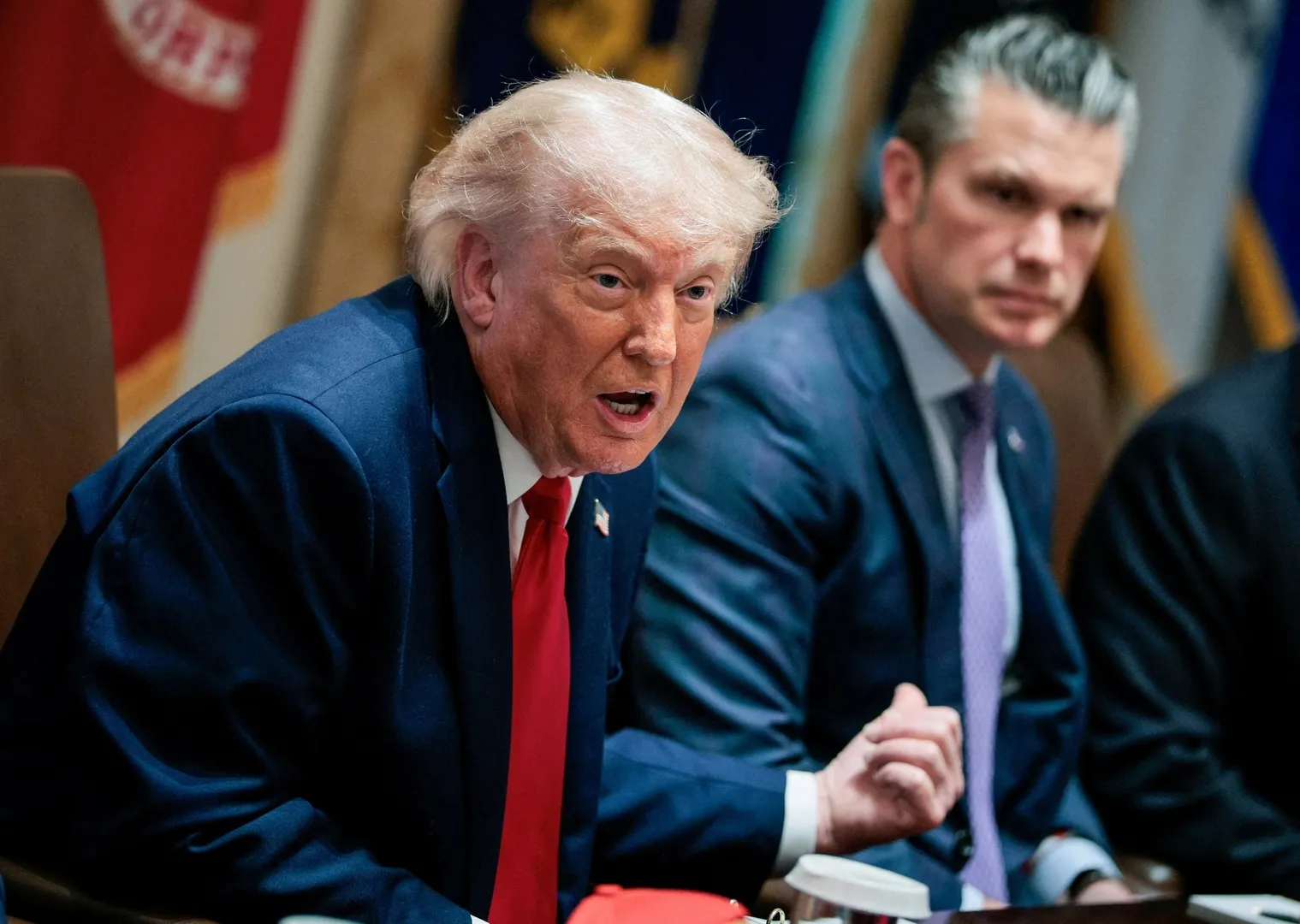
Bill Cassidy’s primary race on Thursday has been seen as a barometer of Trump’s continued hold over the Republican Party. Even as polls have shown the president’s approval tanking, early primary votes have shown the continued weight his endorsement carries.

Recommended Stories

list of 3 itemsend of list

Trump has backed US Representative Julia Letlow in the Senate race. State Treasurer John Fleming is also running. The winner of the Republican primary is all-but-assured to win in the general election in the deep-red state.

Cassidy had joined seven Republicans in the Senate in voting to convict Trump of “incitement of insurrection”, following his campaign to overturn the 2020 election results and his supporters’ storming of the US Capitol on January 6, 2021.

“Our Constitution and our country is more important than any one person. I voted to convict President Trump because he is guilty,” Cassidy said in a statement at the time.

Despite the handful of Republican defections, the chamber fell far short of the two-thirds majority needed to convict Trump of the charges, of which he was acquitted.

Initially viewed as politically toxic after leaving office in 2021, Trump mounted a stunning comeback in the years that followed, reshaping the Republican Party in his likeness.

That included the ascension of many lawmakers who endorsed Trump’s claims that the 2020 vote was stolen, for which he has provided no evidence.

Currently, most other Republican senators who voted to convict Trump alongside Cassidy have been ousted or chosen to leave office.

Among the group, only Republican centrists Susan Collins from Maine, who continues to be seen as a bulwark against Democratic challengers in her home state, and Lisa Murkowski from Alaska, who saw off a Trump-backed challenger in 2022, have escaped major intra-party fallout for their votes.

Letlow, an academic administrator who entered office in 2021, has also seized on Cassidy’s 2021 vote, saying in her campaign launch video that residents of Louisiana “shouldn’t have to wonder how our senator will vote when the pressure is on”.

A fine line

Cassidy, a physician, has walked a fine line during Trump’s second term, regularly touting the administration’s policy initiatives and appearing alongside Trump at the White House several times for healthcare-focused events and bill signings.

Still, Cassidy has had some high-profile clashes with the Trump administration. During Robert F Kennedy Jr‘s confirmation hearing to become health and human services secretary, Cassidy sparred with Kennedy over his vaccine scepticism.

“I am a doctor who has seen people die from vaccine-preventable diseases, and when I see outbreaks numbered in the thousands, and people dying once more from vaccine-preventable diseases, particularly children, it seems more than tragic,” he said during the hearing.

Cassidy later cast the deciding vote to confirm Kennedy after receiving assurances that he would not change federal vaccine recommendations. The HHS under Kennedy has since changed those recommendations.

In April of this year, Trump accused Cassidy of tanking his nominee for surgeon-general, Casey Means, who had come under fire for her vaccine scepticism and unproven wellness theories.

Trump decried what he called Cassidy’s “intransigence and political games”. In a subsequent post, he said hopefully Republicans “will be voting Bill Cassidy OUT OF OFFICE in the upcoming Republican Primary!”

Cassidy, in turn, has claimed opponent Letlow does not have conservative bona fides.

He has highlighted her past support of education diversity initiatives, which she has since disavowed, as well as her past attendance at the 2023 United Nations climate change conference.

Trump’s sway?

Trump carried Louisiana in the 2016 and 2020 presidential elections with about 58 percent of the vote, and in 2024 with 60 percent.

Heading into the primary vote, the president’s overall national approval rating has tanked, hitting a record low of 34 percent at the end of April. That has come amid widespread discontent over the US-Israel war on Iran and its economic toll.

Trump has maintained strong support among Republicans, but has notably seen dipping support among independents.

Polls have shown Cassidy trailing behind both Letlow and Fleming. If no candidate wins an outright majority, the race will move to a run-off on June 27.

Thursday’s race takes place amid an ongoing national battle over congressional redistricting.

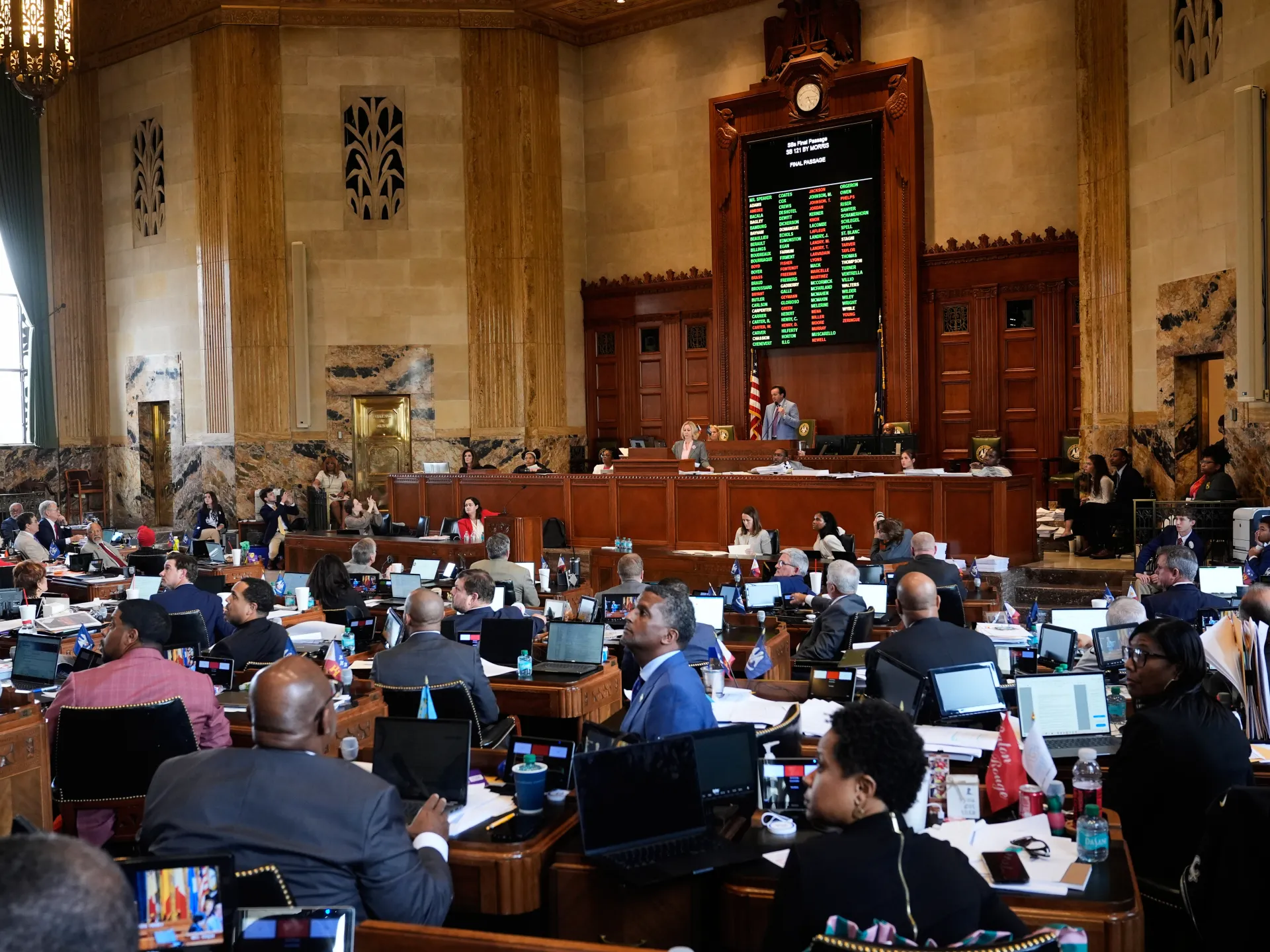
While Louisiana’s US House of Representatives primary was also scheduled for Thursday, Governor Jeff Landry has temporarily suspended the vote.

That after the US Supreme Court struck down a major provision of the Voting Rights Act, paving the way for the state’s Republican-controlled legislature to redraw its congressional map to do away with one of two Black-majority districts.

Civil rights groups have filed a lawsuit alleging the suspension violates both the US and the state’s constitutions.

Source link

Trump needs Xi much more than Xi needs Trump | Xi Jinping

In the past few months, the geopolitical chessboard has tilted dramatically, setting the stage for a highly anticipated yet asymmetrical summit between Donald Trump and Xi Jinping, now officially confirmed for May 13-15 following statements from both the White House and China’s Foreign Ministry. Washington has repeatedly signalled the importance it attaches to the meeting, while Beijing has approached it in its characteristically measured fashion, framing the summit less as a breakthrough than as part of the broader need for “communication” and “strategic guidance” between major powers.

This subtle diplomatic choreography speaks volumes about the shifting global balance of power. For the first time in decades, it is the United States that finds itself in a position of profound vulnerability, increasingly dependent on China’s cooperation to extricate itself from a self-inflicted disaster.

The source of this American predicament is the failure of its recent military adventurism in the Middle East. Having launched an illegal, unprovoked war against Iran alongside Israel, the US military has found itself trapped in a costly and protracted deadlock. In retaliation, Tehran has effectively choked off the Strait of Hormuz, with over a dozen US warships now enforcing a blockade that has rerouted dozens of vessels, sending shockwaves through global energy markets and raising fears of a worldwide economic meltdown. Washington now finds itself scrambling for an exit.

In a striking reversal of their usual hawkish rhetoric, top US officials — including Secretary of State Marco Rubio and Treasury Secretary Scott Bessent—have been making increasingly desperate public appeals for China to intervene. They are urging Beijing to use its considerable influence to convince Iran to reopen the vital waterway.

What makes this dynamic particularly striking is the contradiction at the heart of US policy. Even as Trump and Rubio appeal for China’s help on the Hormuz crisis, the broader US posture remains confrontational, with ongoing disputes over technology restrictions and other issues continuing to shadow the relationship. The contradiction exposes an administration increasingly driven by desperation.

Washington’s narrative conveniently frames China as the party most desperate for a resolution, citing Beijing’s heavy reliance on Middle Eastern energy imports. However, this assessment drastically miscalculates China’s strategic preparedness. Far from being paralysed by the disruption, Beijing has already demonstrated remarkable resilience. Through meticulous stockpiling, diversified supply chains, and robust domestic production, China has coped with the closure exceptionally well, avoiding the kind of immediate economic shock Washington appeared to expect.

Consequently, Beijing views the Hormuz standoff as a pivotal stress test it has already passed. Knowing the stakes, China is in no rush to bail out a belligerent Washington. Recent diplomatic engagements have made this increasingly clear. China has maintained close communication with Iran throughout the crisis, with Foreign Minister Wang Yi hosting his Iranian counterpart for talks on the situation. Rather than simply pressuring Iran to reopen Hormuz, Beijing is positioning itself to demand a comprehensive “grand bargain.” Why settle for a minor concession when you can force the US to cease its hostilities against Iran, lift its crippling sanctions, and accept a new multipolar security architecture in the Middle East?

Iran has submitted a response to a US proposal to end the war, focused on ceasing hostilities and addressing Strait security, which Trump promptly rejected as “completely unacceptable,” highlighting the continued deadlock Washington hopes Beijing can break.

China did not start this fire, but it is now the indispensable power capable of extinguishing it, and strictly on its own terms. Beyond the immediate crisis, Beijing’s ultimate strategic focus remains unwavering: the core issue of Taiwan. This broader assertiveness will undoubtedly carry over into the Trump-Xi summit. While Trump is desperate for tangible deliverables and a successful photo-op to distract from domestic turmoil, Xi can afford to play the long game.

Unlike previous administrations that settled for vague diplomatic pleasantries, Beijing is expected to intensify the pressure significantly. China will likely demand that the US explicitly oppose Taiwan independence, moving decisively beyond the current, tepid commitment to merely “not support” secessionist forces.

Recognising Trump’s eagerness for a win, the US president may attempt to use Taiwan as a bargaining chip. He could offer concessions on the issue in exchange for Chinese cooperation on reopening the Strait of Hormuz, massive purchases of American agricultural and energy products, or even help brokering peace in other conflicts.

However, Beijing is far too disciplined to fall for such short-term traps. Taiwan is a non-negotiable core interest, and any temporary trade-off would be strategically foolish.

While Trump may lavish praise on his personal relationship with Xi Jinping and project an image of amicable deal-making, Beijing harbours no illusions about the man across the table. China’s leadership understands that Trump cannot be trusted; any agreement reached today could be discarded tomorrow based on his whims or domestic political calculations. Even as Beijing entertains the prospect of a “grand bargain” and maintains a cordial facade, it refuses to structurally rely on Trump’s commitments.

By stabilising its bilateral relationship with the US over the coming months — especially with several high-level meetings scheduled between the two leaders throughout the year — China aims to secure a predictable external environment conducive to its long-term rise.

For Beijing, however, the stakes extend far beyond Taiwan alone. A key priority for China will also be securing firm guarantees regarding the trajectory of Japan’s remilitarisation. As Tokyo rapidly expands its military capabilities and grows increasingly vocal about its willingness to intervene in a Taiwan contingency, China will demand that Washington strictly curtail its ally’s ambitions.

On a broader geopolitical scale, Beijing is positioning itself as a responsible and stabilising great power, repeatedly calling on the international community to de-escalate the Hormuz crisis and prevent wider economic disruption. In doing so, China is drawing a stark contrast with a United States that is openly launching illegal wars, engaging in what critics describe as state terrorism, including the extrajudicial kidnapping and killing of foreign leaders and their family members.

Ultimately, the coming days are critical not only for the future of US-China relations, but for the resolution of the US-Israel war on Iran and the broader structure of the international order. The era of US unilateralism is gasping for air in the Gulf. Armed with strategic patience and increasingly strong leverage over the crisis, China enters the Trump-Xi summit in a commanding position.

The views expressed in this article are the author’s own and do not necessarily reflect Al Jazeera’s editorial stance.

Source link

China’s Xi expected to press Trump on Taiwan, tariffs during summit | Donald Trump News

Taipei, Taiwan – Chinese President Xi Jinping is expected to seek concessions on Taiwan and US tariffs when he meets United States President Donald Trump for a high-stakes summit taking place in the shadow of the war on Iran.

Trump will arrive in China on Wednesday evening for a three-day visit that will mark the first trip by a US leader to the country since 2017, when Trump visited in the early days of his first term.

Recommended Stories

list of 4 itemsend of list

Unlike Trump, who is renowned for his mercurial policymaking, Xi is widely seen as predictable in his goals for the summit, particularly as they concern Beijing’s longstanding “core interests” related to national security and territorial integrity.

At the top of that list is Taiwan.

While Taiwan’s government considers itself the head of a de facto sovereign state, Beijing views the island as an inalienable part of its territory.

The US formally cut ties with Taiwan – also known as the Republic of China – decades ago, but is committed to aiding the self-governing democracy’s defence under the 1979 Taiwan Relations Act.

Under the law, Washington has provided Taiwan with billions of dollars in arms and pursued cooperation in areas such as military training and intelligence sharing, which Beijing considers interference in its internal affairs.

The US government officially acknowledges that China views Taiwan as part of its territory, but does not express a stance on whether it agrees.

Washington is also intentionally vague about whether it would intervene to defend Taiwan if China sought to annex it by force.

In a call with US Secretary of State Marco Rubio last month, Chinese Foreign Minister Wang Yi made clear that Taiwan would be raised at the summit, describing the issue as “the biggest risk in the China-US relationship”, according to a Chinese readout of the call.

China’s embassy in Washington, DC, reiterated that message after Trump’s departure for the summit on Tuesday, naming Taiwan as the first of “four red lines” that “must not be challenged”.

While analysts say it is unlikely that the US will change its position on Taiwan due to Chinese pressure, Trump said this week that the summit’s agenda would include US arms sales to the island, raising questions about the future of a stalled multibillion-dollar arms deal.

The US Congress approved the arms package reportedly worth $14bn earlier this year, but the sale still requires Trump’s final approval.

Xi will use his meetings with Trump to “influence and potentially convince Trump to agree to scale back, if not completely suspend, sales to Taiwan,” William Yang, a Taipei-based analyst at the Crisis Group, told Al Jazeera.

If Trump were to make concessions on weapons sales to Taiwan, he would be breaking with a longstanding policy against consulting with Beijing that dates back to former US President Ronald Reagan.

Cancelling or watering down the deal would be a serious blow to Taiwanese President William Lai Ching-te, who is locked in an intense fight with the opposition over defence spending, Yang said.

“They are hoping to first influence Trump’s decision around this issue and potentially create a situation where it will be much harder for [Lai’s] government to request more special defensive spending in the future,” Yang said.

Restoring the US-China framework

Xi is also eager to smooth over US-China relations after a tumultuous 18 months that saw Trump launch a second trade war with the world’s second-largest economy, according to analysts.

The standoff saw each side roll out escalating tit-for-tat tariffs – briefly sending duties well above 100 percent – and other punitive measures, such as export controls, before Washington and Beijing hit pause in May.

During their last meeting in South Korea in October, Xi and Trump agreed to a one-year reprieve in their trade war, while keeping some trade measures in place, including certain tariffs and export controls.

Over the past month, the US has rolled out several rounds of new sanctions targeting Chinese firms, including refiners accused of buying Iranian oil and companies accused of helping Tehran obtain materials to build drones and missiles.

Earlier this month, Beijing issued a “prohibition order” directing firms to disregard the US sanctions on its oil refineries.

“Beijing wants predictability and certainty for the remainder of Trump’s term through January 2029, because Beijing needs to be able to plan its own economic policies,” Feng Chucheng, a founding partner of Beijing-based Hutong Research advisory, told Al Jazeera.

These policy considerations include understanding tariff levels the US will apply to China and its trade partners, Feng said.

Wang Wen, dean of the school for global leadership at Renmin University in Beijing, said China wishes to return to a relationship based on “peaceful coexistence, mutual respect, and win-win cooperation”.

“We hope that this meeting will bring the US policy towards China back to these three principles,” Wang told Al Jazeera.

The stakes are high for Beijing, where the view of Trump has shifted from a “predictable transactional counterpart” to a “more action-oriented and harder-to-restrain opponent,” Hung Pu-Chao, deputy executive director of the Center for Mainland China and Regional Development Research at Taiwan’s Tunghai University, told Al Jazeera.

Restoring the US-China relationship to a stable footing is one way to mitigate these risks, Hung said.

Rather than secure concessions, Hung said, China’s priority is “trying to adjust the current strategic position and negotiating pace that are unfavourable to it, and bring US-China interactions back into a framework that it can better control”.

At the summit, Xi is likely to agree to increase purchases of US agricultural exports and Boeing planes, Feng said, and could also back Trump’s plan to create a “Board of Trade” and a “Board of Investment” to oversee US-China economic ties.

But China is unlikely to make compromises on rare earths – a sector it dominates – unless the US makes major political concessions, Feng said.

Calling for dialogue on the war on Iran

The US-Israel war on Iran will loom large over the summit.

Although not a main player in the conflict, China has been hit by the economic fallout of the war and the shutdown of the Strait of Hormuz, through which one-fifth of global oil and natural gas supplies usually pass.

Beijing has called for negotiations and a comprehensive ceasefire since the start of the conflict, a message Xi is likely to reiterate in his talks with Trump, according to Jodie Wen, a postdoctoral fellow at the Center for International Security and Strategy at Tsinghua University in Beijing.

“Xi will talk about this issue with Donald Trump and say that we all know that the war has a huge impact on the world, on Asian countries and the US, so we must have dialogue,” Wen told Al Jazeera.

Trump said on Tuesday that he does not need China’s “help” resolving the war, though the White House has pressured Beijing to lean on Iran to reopen the strait.

Xi and his top diplomat, Wang, have met more than a dozen global leaders and high-level officials since the start of the war, playing a behind-the-scenes mediating role.

China has had a “comprehensive strategic partnership” with Iran since 2016, and buys more than 80 percent of its oil.

Wen, the postdoctoral fellow at Tsinghua University, said Xi is unlikely to agree to any involvement except as a mediator, which she described as consistent with China’s longstanding approach to global affairs.

“China’s foreign policy principle is non-intervention,” she said. “This is our principle.”

Source link

Trump and Xi to meet in Beijing: The key issues shaping the China summit | Donald Trump News

United States President Donald Trump has departed for Beijing ahead of a high-stakes summit with Chinese President Xi Jinping, after weeks of unsuccessful US efforts to persuade China to help bring Iran back to negotiations and ease tensions around the Strait of Hormuz.

The leaders of the world’s two largest economies are due to meet on Thursday and Friday during Trump’s first visit to China since 2017, with talks expected to focus on trade, Taiwan, artificial intelligence and the war involving Iran.

Recommended Stories

list of 3 itemsend of list

Here is what we know about the upcoming summit and the key issues expected to dominate the agenda.

Why does the Trump-Xi summit matter?

The Trump-Xi summit is a high-level meeting between Trump and Xi Jinping taking place in Beijing as the world’s two largest economies face growing tensions over trade, technology, Taiwan and the Iran war.

The summit is particularly significant because Trump will be the first US leader to visit China in nearly a decade, while the talks also come at a time of heightened geopolitical and economic uncertainty. Originally expected earlier this year, the meeting was delayed by the war on Iran.

Before departing for Beijing, Trump said he and Xi would have a “long talk” about Iran, although he stressed that trade would remain the central focus of the visit.

“Trade remains politically powerful, especially for Trump, because it gives rivalry a language that voters can easily understand,” said Salvador Santino Regilme, associate professor and programme chair of international relations at Leiden University. “Yet the deeper conflict concerns hierarchy, legitimacy and the future architecture of global order.”

Regilme added that both countries remain locked in a relationship shaped by strategic rivalry and deep economic dependence.

“The United States still relies heavily on China’s manufacturing capacity and low-cost production, while China depends on access to US consumers, technology, capital markets and the wider stability of the dollar-centred global economy.”

“This is the paradox of US-China rivalry: each side wants greater autonomy, yet both remain tied to a structure of mutual dependence that neither can easily dismantle without hurting itself,” Regilme added.

What are the biggest issues at the Trump-Xi summit?

Analysts say the US and China are entering the summit with different priorities.

Trump is expected to focus heavily on trade with the aim of securing what he can present as economic wins ahead of November’s midterm elections. Washington has pushed for China to increase purchases of American goods, including Boeing aircraft, beef and soya beans, while also seeking closer investment and trade cooperation.

Beijing, meanwhile, is expected to press the US to ease restrictions on advanced semiconductor exports and roll back measures limiting China’s access to critical chip-making technology. Taiwan is also likely to remain one of the most sensitive and contested issues in the summit.

Trump has also said he plans to raise the case of Jimmy Lai, the jailed Hong Kong media tycoon and pro-democracy figure sentenced earlier this year under Beijing’s national security law.

Beyond bilateral disputes, the two leaders are also expected to discuss the war on Iran, tensions around the Strait of Hormuz and the growing risks linked to artificial intelligence.

The biggest flashpoints include:

Tech vs rare earths

Technology and supply chains are expected to be among the key issues at the summit, as Washington and Beijing remain locked in a widening battle over semiconductors and critical minerals.

The US has tightened restrictions on advanced chips and chip-making equipment going to China, saying the measures are needed to slow Beijing’s military and AI development.

China, meanwhile, controls roughly 90 percent of global rare earth refining, materials essential for semiconductors, electric vehicles, military equipment and electronics, and has responded with tighter export controls on several critical minerals.

Beijing is expected to push for fewer US technology restrictions, while Washington wants China to resume shipments of rare earths and critical minerals after export controls disrupted parts of the American automotive and aerospace sectors.

 Iran war and the Strait of Hormuz

The Iran war is expected to be one of the most closely watched issues at the summit.

Analysts expect Washington to press Beijing to use its influence over Tehran, particularly because China remains the largest buyer of Iranian oil — by far — purchasing more than 80 percent of Iran’s shipped crude exports. US officials have also urged China to support efforts to reopen and secure the Strait of Hormuz, a vital route for global energy supplies.

The conflict has also increased pressure on China’s economy and energy security. About half of China’s crude oil imports come from the Middle East, while disruptions in the Gulf have left commercial shipping vulnerable to attacks and delays.

“I have no doubt that Trump is going to at least try to enlist Xi Jinping to assert some pressure for the Iranians to come back to the table and agree to a settlement,” said Dan Grazier, a senior fellow and director of the National Security Reform programme at the Stimson Center.

Experts say Iran may be one of the few areas where US and Chinese interests overlap, as both countries benefit from stable energy flows through the Gulf.

“Both sides would like to see the strait opened,” said Gregory Poling, director and senior fellow at the Center for Strategic and International Studies (CSIS), but he noted Beijing is unlikely to align itself too closely with Washington’s approach towards Tehran.

While China wants shipping through the Strait of Hormuz restored, Poling argued the diplomatic and strategic pressure created by the disruption is falling far more heavily on Washington.

“It is not China being humiliated in the strait … It’s the US.”

INTERACTIVE - IRGC releases map of control over Strait of Hormuz - May 5, 2026-1777975253

Taiwan: An existential problem

Taiwan is expected to be one of the most sensitive issues, with Beijing repeatedly warning that it remains the biggest source of tension in US-China relations.

China claims the self-ruled island as part of its territory and has increased military pressure on Taiwan in recent years through regular air and naval operations around the island.

Tensions have risen further under Taiwanese President William Lai Ching-te, whom Beijing has sharply criticised because his party views Taiwan as already sovereign.

The US officially recognises the communist mainland as China but is legally committed under the Taiwan Relations Act to support Taiwan’s self-defence, a policy that has long angered China. Washington has approved tens of billions of dollars in military sales to Taiwan over the years, including an $11bn package announced last year, and Trump recently said he discussed the issue with Xi ahead of the summit.

Analysts say Taiwan will be paying close attention to what Trump and Xi say publicly after the summit, especially on defence and arms sales.

“What matters is the precise wording,” Regilme said. “Whether Trump reaffirms support for Taiwan’s defence, whether he sounds ambiguous on arms sales, and whether he gives Xi any rhetorical opening to claim that Washington is restraining Taipei.”

Regilme said Beijing is likely to push for limits on US arms sales and stronger political restrictions on Taiwan, while also discouraging any movement towards formal independence. At the same time, Taipei fears it could become part of a broader geopolitical bargain between Washington and Beijing.

“In great-power politics, small words often carry large consequences, especially for those whose survival depends on the credibility of others,” Regilme added.

Tariffs

Trade is also expected to be a sticking point after years of friction between the US and China over tariffs and economic competition.

The latest trade dispute intensified last year when Trump imposed new tariffs on Chinese goods. China responded with its own tariffs.

At the height of the dispute, tariffs on some goods climbed above 100 percent, prompting concerns about the impact on global trade and supply chains.

The two countries later agreed to temporarily lower tensions through a trade truce reached during talks in South Korea. As part of the deal, China agreed to buy more US agricultural products, including soya beans, while Washington rolled back some tariffs.

What would count as a successful outcome for Trump and Xi?

Analysts say a successful outcome for Trump would likely need to be visible and easy to sell politically at home. That could include Chinese purchases of US goods, movement on tariffs, cooperation on Iran, or progress on rare earth exports.

“Trump’s foreign policy style places enormous value on the public performance of dealmaking, so the optics of success may matter almost as much as the substance,” Regilme said.

For Xi, success would mean preserving stability without appearing to bow to Washington, while securing greater economic predictability and recognition of China as a global power.

“A comprehensive trade deal seems unlikely because the structural sources of rivalry remain unresolved,” Regilme added.

Instead, he said a limited agreement is more likely, potentially involving tariff pauses, purchase commitments, rare earth arrangements or a framework for future negotiations.

“Such an agreement would manage the rivalry temporarily, while leaving untouched the deeper problem: the two economies remain mutually dependent, but their governments increasingly treat that dependency as a strategic danger.”

Source link

FBI Director Kash Patel fires back at drinking allegations | Donald Trump

NewsFeed

FBI Director Kash Patel and Senator Chris Van Hollen had a heated exchange during a Senate budget hearing after Van Hollen questioned Patel about drinking allegations first reported by The Atlantic magazine. Patel called the claims “unequivocally, categorically false.”

Source link

Sam Altman says Elon Musk wanted 90 percent of OpenAI in high-stakes trial | Courts News

In a United States court, OpenAI chief executive Sam Altman has rejected claims from fellow tech mogul Elon Musk that he betrayed the artificial intelligence company’s original vision.

Tuesday marked the start of Altman’s testimony in a contentious trial unfolding in Oakland, California, between some of tech’s richest and most powerful titans.

Recommended Stories

list of 3 itemsend of list

Musk, the wealthiest man in the world, has sued Altman and OpenAI president Greg Brockman on the basis that they “stole a charity” by shifting its purpose.

He alleged that OpenAI’s leader persuaded him to invest $38bn, based on a goal of improving humanity, only to see the company pivot to a for-profit venture in 2019.

On the witness stand on Tuesday, Altman instead framed Musk as a competitor obsessed with exercising control over OpenAI.

“It does not fit with my conception of the words ‘stealing a charity’ to look at what has actually happened here,” Altman told the court.

The two men have long had an acrimonious relationship, driven in part by differing views about artificial intelligence.

Musk — a self-described free speech “absolutist” — currently runs his own AI chatbot, Grok, which has been accused of perpetuating right-wing conspiracy theories and offensive materials.

He is seeking $150bn in damages from OpenAI and Microsoft, one of its principal investors.

Altman’s testimony comes more than two weeks into the trial, which has seen him and Musk square off against each other.

In his testimony, Altman argued that Musk knew of the plans to develop OpenAI into a for-profit enterprise when he invested, and he asserted that Musk even petitioned to have a majority stake in the company.

“An early number that Mr Musk threw out was that he should have 90 percent of the equity to start,” Altman told the jury. “It then softened, but it always was a majority.”

The outcome of the trial could determine the future of OpenAI, its leadership, and products like ChatGPT. As part of his lawsuit, Musk is pushing for the removal of Altman and Brockman.

The trial comes as OpenAI prepares for a potential initial public offering that could see it valued at $1 trillion, a historically large sum.

During earlier testimony, Musk portrayed Altman as a liar who could not be trusted with the development of the technology.

“If you have someone who is not trustworthy in charge of AI, I think that’s a very big danger for the whole world,” Musk said.

Musk’s lawyer, Steven Molo, also sought to undermine Altman’s reliability during questioning on Tuesday.

“Have you misled people when you do business?” Molo asked Altman.

“I do not think so,” Altman replied.

Altman, meanwhile, sought to cast doubt on Musk’s leadership; Musk ultimately left OpenAI’s board in 2018 to pursue his own AI development.

“I don’t think Mr Musk understood how to run a good research lab,” Altman said. “He had demotivated some of our most key researchers.”

The US public, for its part, has been largely unconvinced by high-minded rhetoric about the transformative potential of AI.

A March 2026 poll by the Pew Research Center suggested that a majority of respondents in the US believe AI will worsen, rather than improve, the ability to think creatively, form meaningful relationships, make difficult decisions, and solve problems.

Just 10 percent of respondents said they were more excited than concerned about the increased use of AI in daily life.

But the industry has been quick to translate its substantial economic power into political influence as lawmakers consider how best to regulate the technology.

The use of AI has emerged as an election-season issue as the US midterms approach in November, and the administration of President Donald Trump has proposed a “national policy framework” for the technology to avoid a patchwork of state regulations.

The AI industry has become a driver of eye-watering investment in recent years, with the United Nations estimating that the global market could be worth $4.8 trillion by 2033.

Source link

Trump downplays US-Iran differences as he heads to Beijing to meet with Xi | Xi Jinping News

Donald Trump gives conflicting messages on prominence of Iran war in upcoming talks, with his administration emphasising trade.

United States President Donald Trump has departed the White House en route to Beijing, where he will meet with his Chinese counterpart Xi Jinping.

Trump spoke briefly with reporters on Tuesday as he boarded the Marine One helicopter. He was then set to arrive in China aboard Air Force One on Wednesday, ahead of the planned meetings on Thursday and Friday.

Recommended Stories

list of 3 itemsend of list

United States officials have taken pains in recent days to downplay how big a topic the US-Israel war on Iran will be during Trump’s visit.

Beijing has made its opposition to the war clear, at times asserting behind-the-scenes pressure on its trading partner Iran. However, it has largely avoided being pulled into the fray.

In recent days, US Secretary of State Marco Rubio and Treasury Secretary Scott Bessent have stepped up their calls for China to use its influence to help reopen the Strait of Hormuz, through which about 20 percent of the world’s oil supply flowed before the war began.

But Trump again gave conflicting messages on Tuesday about how much the war would feature in his meetings in China.

“We’re going to have a long talk about it. I think he’s been relatively good, to be honest with you,” Trump said of his plans to discuss the conflict – and how it has roiled global oil markets – with Xi.

Minutes later, he added, “We have a lot of things to discuss. I wouldn’t say Iran is one of them, to be honest with you, because we have Iran very much under control.”

“I don’t think we need ⁠any help with Iran. We’ll win it one way or the other, peacefully or otherwise,” he said.

Trade to loom large

The upcoming meetings will be the first face-to-face exchanges since the leaders of the world’s two largest economies met on the sidelines of the Asia-Pacific Economic Cooperation (APEC) summit in Busan, South Korea, in October 2025.

It is the second time Trump will travel to China as president, and the first time since his second term began on January 20, 2025. Xi is expected to travel to the US later this year.

Beyond the war, the US administration has stressed that trade will be a top subject discussed, with Trump seeking a series of business deals and agreements.

Underscoring that initiative, Trump invited an array of US business leaders to accompany him on the trip, including Tesla CEO Elon Musk, who had previously chaired Trump’s so-called Department of Government Efficiency (DOGE), and Apple CEO Tim Cook.

Both sides are expected to seek to avoid a return to the tariff war that defined Trump’s early days in office, which saw Trump set tariffs on Chinese goods at 145 percent, while China announced a further tightening of rare-earth export controls that would have hurt US industry.

The two sides reached a fragile truce in October of last year.

China’s continued support for Iran’s ballistic programme and its defence of Tehran’s nuclear programme has also risked again derailing relations.

Last month, Trump threatened to impose a 50 percent tariff on China after reports that Beijing was preparing to deliver a shipment of new air defence systems to Iran. He later backed away from the threat, claiming that he had received written assurance from Xi that he would not provide Tehran with weaponry.

Days later, Trump said that the US Navy had intercepted a Chinese vessel carrying a “gift” for Iran. Neither side offered further details of the incident.

Xi was also expected to push Trump on US arms sales to Taiwan, the self-governing island that China claims as its own.

Source link

Trump backs Pakistan as Iran mediator after criticism from Lindsey Graham | US-Israel war on Iran News

US president lauds Islamabad, but his Republican ally says he does not trust Pakistan to facilitate Iran diplomacy.

Donald Trump has reasserted his support for Pakistan to serve as a mediator between Iran and the United States after Senator Lindsey Graham, a close ally of the US president, disparaged Islamabad’s diplomacy.

In remarks on Tuesday, the US president lauded Pakistan’s Prime Minister Shehbaz Sharif and its army chief Asim Munir, who helped negotiate a fragile ceasefire in Iran that came into effect last month.

Recommended Stories

list of 3 itemsend of list

Trump added he is not reconsidering Pakistan as a mediator.

“They’re great. I think the Pakistanis have been great. The field marshal and the prime minister of Pakistan have been absolutely great,” Trump told reporters.

Hours earlier, Graham had pressed Pentagon chief Pete Hegseth and top US general Dan Caine about a CBS News report claiming that Pakistan is allowing Iran to park military assets on its airfields, in order to shield them from potential US and Israeli attacks.

Both officials declined to comment on the veracity of the report, citing the sensitive nature of the talks between the US and Iran.

Asked by Graham whether it would be “consistent” for Pakistan to act as a fair mediator if the CBS report is confirmed, Hegseth said, “I wouldn’t want to get into the middle of these negotiations.”

The Republican senator quickly interrupted the defence secretary.

“I do. I want to get in the middle of those negotiations,” Graham said.

“I don’t trust Pakistan as far as I can throw them. If they actually have Iranian aircraft parked in Pakistan bases to protect Iranian military assets, that tells me maybe we should be looking for somebody else to mediate. No wonder this damn thing is going nowhere.”

The senator — an outspoken foreign policy hawk who has been calling for regime change in Iran — is seen as one of the most influential figures in Trump’s circle.

Graham has also been one of the most vocal supporters of the war with Iran, repeatedly cautioning Trump against agreeing to a deal that would include concessions to Tehran.

Weeks before the war broke out on February 28, Graham met the US president in Florida, where he handed Trump a hat that says, “Make Iran Great Again.”

Pakistan has been pushing to revive the stalled diplomacy between Iran and the US, following the April 8 ceasefire agreement.

On Sunday, Trump said Tehran’s latest proposal to end the war was “unacceptable”.

In late April, the US president announced he was sending his envoys to Pakistan to meet Iranian officials, but he called off the trip after Iran pushed the US to lift the naval blockade against its ports as a condition for resuming the talks.

Source link

California ex-mayor admits acting as agent of China, US authorities say | Crime News

Ex-mayor of wealthy Los Angeles suburb promoted pro-China propaganda at behest of Chinese officials, prosecutors say.

The former mayor of a wealthy suburb in the United States city of Los Angeles has admitted to acting as an illegal agent of China, according to authorities.

Eileen Wang, the former mayor of Arcadia, agreed to plead guilty to one count of acting as an illegal agent of a foreign government from late 2020 until 2022, the US Department of Justice said on Monday.

Recommended Stories

list of 4 itemsend of list

Wang admitted that she did not notify the US government that she was acting on behalf of China while promoting pro-Beijing propaganda, the Justice Department said.

Wang, 58, operated a website, called the US News Center, that published content supportive of the People’s Republic of China (PRC) while purporting to provide news for Chinese Americans, the department said.

Wang ran the site with Yaoning Sun, a Californian man who was sentenced to four years in prison after pleading guilty to acting as an illegal agent of a foreign government in October 2025, according to US prosecutors.

Wang’s activities included republishing a “PRC official-written essay” that denied allegations that the Chinese government was committing genocide against ethnic-minority Uighurs in its far-western region of Xinjiang, according to prosecutors.

Wang resigned as mayor on Monday, according to a statement published on the City of Arcadia’s website.

She faces a maximum penalty of 10 years in prison.

Her lawyers, Brian A Sun and Jason Liang, said Wang wished to apologise for “mistakes she has made in her personal life”.

“It is important to note, however, that the conduct underlying the information and the agreement with the government relates solely to Ms. Wang’s personal life – i.e., a media platform that she once operated with someone whom she believed to be her fiancé – and not to her conduct as an elected public official,” Sun and Liang said in a statement.

“Her love and devotion for the Arcadia community have not changed and did not waver,” they added.

“She asks for the community’s understanding and continued support.”

US Assistant Attorney General for National Security John A Eisenberg issued a statement expressing deep concern over Wang’s activities.

“Individuals elected to public office in the United States should act only for the people of the United States that they represent,” he said.

“It is deeply concerning that someone who previously received and executed directives from PRC government officials is now in a position of public trust at all, but particularly so because that relationship with that foreign government had never been disclosed.”

China’s embassy in Washington, DC, did not immediately respond to a request for comment.

Wang’s prosecution comes as US President Donald Trump and Chinese President Xi Jinping are set to meet in Beijing on Wednesday for a summit expected to focus on the US-Israel war on Iran, trade, and the status of Taiwan, among other issues.

The summit comes after the two leaders agreed to a yearlong pause in their trade war during a meeting in South Korea last October.

Source link

Trump says he will suspend petrol tax amid soaring US fuel prices | Energy News

Senator Hawley plans legislative action supporting President Trump’s bid to waive the petrol tax amid rising consumer costs.

United States President Donald Trump said he will cut the 18-cent federal tax on petrol to offset surging prices that have continued to soar after his comments that the US ceasefire with Iran is on “life support”.

On Monday, Trump said he would suspend the petrol tax, but did not specify an end date.

Recommended Stories

list of 4 itemsend of list

“Yup, we’re going to take off the gas tax for a period of time, and when gas goes down, we’ll let it phase back in,” Trump told CBS News.

Trump later told reporters that he would waive the tax, which generates $2.5bn in funds used for US roadway infrastructure, “till it’s appropriate”.

The US administration hinted at the idea on Sunday, when US Energy Secretary Chris Wright told the NBC News programme Meet the Press that the White House was considering suspending the tax.

While the Republican president claimed he would waive the tax, that is not within the White House’s authority. Suspending a federal tax requires an act of the US Congress.

However, key Trump ally Senator Josh Hawley, a Republican from Missouri, said on the social media platform X that he would introduce legislation on Monday to do that.

In March, Senator Mark Kelly, a Democrat from Arizona, proposed suspending the tax until October.

“I anticipate it would pass, but there could be a procedural delay. It also suggests that President Trump doesn’t see a quick end to the reduced volumes and is trying to cushion the American consumer,” Rachel Ziemba, adjunct senior fellow at the Center for a New American Security, told Al Jazeera.

“The impact could be greater in states that have also reduced their own petrol taxes and could reinforce differentiation between petrol prices by region.”

US states also tax petrol, with Indiana, Kentucky and Georgia moving to make cuts to give consumers some relief at the pump.

Petrol prices have continued to climb since the initial strikes of the US-Israel war on Iran on February 28. The average price for a gallon (3.78 litres) of regular petrol is $4.52, according to the American Automobile Association, which tracks daily petrol prices, compared with $2.98 when the strikes first began.

However, news of the stumbling ceasefire has sent oil prices surging. Brent crude futures were up $3.17, or 3.13 percent, at $104.46 a barrel, while US West Texas Intermediate crude was at $98.32 a barrel, up $2.90, or 3.04 percent. Brent reached a session high of $105.99 and WTI hit a peak of $100.37.

On Wall Street, stocks for oil and gas giants are trending upward. Shell was up 1.6 percent in midday trading, Exxon rose 3.1 percent, BP gained 2 percent, and Chevron climbed 1.7 percent.

Airline bailout?

Trump was also asked by CBS on Monday whether a bailout was planned for the airline industry, which has taken a hit since the war on Iran began.

The president told the outlet that a bailout had not “really been presented” and that “the airlines are doing not badly”.

However, earlier this month, budget carrier Spirit Airlines ceased operations after 34 years. Court documents said the airline shut down because of “recent geopolitical events resulting in a massive and sustained increase in fuel prices”.

That comes as other major US carriers raise prices. In April, United Airlines said it would raise fares by 20 percent amid a surge in jet fuel costs.

Source link

Iran denies proposal sent to US contains ‘excessive demands’ | US-Israel war on Iran

NewsFeed

Iran’s Foreign Ministry spokesperson Esmail Baghaei says Tehran’s response to the latest US proposal to end the war was “not excessive.” He says it’s the US that continues to make “unreasonable demands” during negotiations over ending the war and reopening the Strait of Hormuz.

Source link

Fears of an AI breakthrough force the U.S. and China to talk

Three years ago, in the idyllic town of Woodside south of San Francisco, the United States and China held their first high-level talks on the dangers posed by artificial intelligence. President Xi Jinping and his longtime foreign minister appeared serious in their conviction that a channel should be a established between Beijing and Washington — a red phone for AI in case of emergencies.

They authorized a diplomatic effort that would begin in 2024 in Switzerland, only months before the U.S. presidential election. A large U.S. delegation arrived with high hopes that were abruptly dashed, according to four sources who attended the talks. The Chinese contingent dismissed American concerns over runaway AI as academic, almost theoretical, quickly turning the conversation to export controls seen in Beijing as yet another U.S. effort to hold China back.

“They naturally view any American diplomatic initiative involving limitations or restrictions of one flavor or another on a capability as being a trap,” Jake Sullivan, U.S. national security advisor under President Biden, said in an interview.

Despite the distrust — and Democrats losing the White House to Donald Trump — an accord was struck in November of that year in Peru, where both sides agreed to keep AI out of the command and control of nuclear weapons.

“It was a breaking of the seal that we could actually do something on AI,” Sullivan said. “In the transition, I told the incoming Trump team that they should really pick up that dialogue. But the Trump administration’s view was just far more laissez-faire, and they didn’t seem particularly interested in it.”

“That’s all changed in the past few weeks,” he added.

A Trump administration once eager to gun for technological supremacy is now, for the first time, reckoning with the power AI could unleash if left unchecked.

In a surprise reversal, quiet discussions have taken place ahead of President Trump’s state visit to China this week to explore reviving talks on an emergency channel, officials told The Times, prompted by shared alarm in Beijing and Washington over the debut of Mythos, Anthropic’s powerful new model.

One senior administration official told reporters Sunday that the White House was looking to create a channel of communication for AI like others that they have “in many areas that have intense focus with the U.S. and China.”

“I think what that channel of communication looks like, its formality and what that looks like, is yet to be determined,” the official said, “but we want to take this opportunity with the leaders meeting to open up a conversation. We should establish a channel of communication on that matter.”

Mythos’ capabilities are seen across the industry and government as those of an unprecedented cyberweapon, able to infiltrate and exploit digital communication systems — including government databases, financial institutions and healthcare programs — with untold consequences.

Whether an announcement will come to fruition this week is not yet clear. Any talks between the United States and China over AI regulations — designing some kind of arms control agreement governing the use of a technology that neither side fully understands or controls — will be fraught with suspicion, misunderstandings and risk, experts say.

“Right now, there is almost no support from U.S. policymakers to engage in formal discussions on AI governance with China,” said Aalok Mehta, director of the Wadhwani AI Center at the Center for Strategic and International Studies.

“The logic is that this is a winner-takes-all race,” Mehta said, “and that it’s imperative to accelerate AI progress to ensure that the United States wins that race.”

America in the lead

China would enter those discussions with a powerful argument, that U.S. leadership in AI — and the prevailing strategy of American AI companies — is propelling the world to a fraught frontier.

Every major U.S. player in the arena — OpenAI, Google, Anthropic, Microsoft and Meta Platforms — is racing to be the first to build a model capable of artificial general intelligence, or AGI, a threshold without a common definition, but that most agree will require a model to perform any intellectual human task.

The prevailing theory is that the first to achieve AGI will secure a prize that multiplies itself: a self-training, recursively improving intelligence, growing exponentially and leaving all competitors in its wake.

Chinese companies, by contrast, are following a state-sanctioned strategy focused on integrating AI into siloed industries and systems, training models to improve individual tasks and accelerate growth in a more tailored approach.

“The Chinese believe there is no single race, but multiple races,” said Scott Kennedy, senior advisor on Chinese business and economics at the Center for Strategic & International Studies. “The U.S. is focused on achieving AGI, while China is focused on diffusion and applications of AI into the rest of their economy — manufacturing, humanoid robotics, all aspects of the internet of things.”

China scholars, AI industry insiders and successive administrations have questioned Beijing’s strategic thinking and forthrightness.

“It’s so baked into the community here that AGI will have this transformative potential that people can’t believe China isn’t focused on this, as well,” said Matt Sheehan, a scholar of global technology issues at the Carnegie Endowment for International Peace with a focus on China. “It says it’s focused on applications, but is that a fake out for an AGI program hidden in the mountains somewhere?”

But most insiders believe that Beijing’s guidance to Chinese companies reveals its true intentions.

“They are not as AGI-pilled as the United States is, and I think that remains the case today,” Sullivan said, “so they regarded a lot of the conversation in the U.S. around extreme frontier risk — misalignment and loss of control — as a bit abstract, and not really as relevant to how they saw AI diffusing in China.”

President Biden greets Chinese President Xi Jinping in Woodside, Calif., in 2023.

President Biden greets Chinese President Xi Jinping in Woodside, Calif., in 2023.

(Doug Mills / Pool Photo)

Although China’s progress has exceeded U.S. expectations — especially since DeepSeek released its model over a year ago — the state has focused computer power on specific applications rather than the broad strategy needed to develop more powerful models capable of advancing toward AGI.

“It’s not just chips. It’s money,” Sheehan added. “China’s leading companies are much more financially constrained than U.S. companies. There’s concern over a bubble here, but OpenAI is valued at something near $800 billion. Leading Chinese companies that have gone public are valued at $20 billion. There’s just an orders-of-magnitude gap in available financing.”

Still, some in the U.S. government fear China won’t need comparable computing power if it simply steals the technology wholesale.

Doing so isn’t simple. But last month, in a memo, the White House Office of Science and Technology Policy accused Chinese actors of “industrial-scale campaigns to distill U.S. frontier AI systems,” in effect replicating the performance of the most advanced existing models “at a fraction of the cost.” The memo did not accuse Beijing of endorsing the activity.

In the process, the memo added, carefully constructed security protocols are deliberately stripped away.

China’s negotiating advantage

Whatever its strategic calculus may be, China would enter talks with the Trump administration trailing in the race — while disagreeing on the nature of the finish line.

AGI, in theory, could reach a stage of recursive self-improvement that results in a loss of human understanding or control. But if it is only the Americans, and not the Chinese, seeking to reach that threshold, then who is responsible to stop it?

Daniel Remler, who led AI policy at the State Department during the Biden administration and took part in the Geneva talks, cast doubt on Chinese claims of disinterest in AGI and ignorance of its risks. China falling behind in the race is no strategic design, he said.

“Chinese technologists are close observers of the U.S. AI ecosystem, and sometimes they say what they think,” Remler said. “Many were impressed by the [Mythos] model to the point of despair. Leaders in China’s top AI labs have been vocal in recent months, even before Mythos, about how compute-constrained they are at the frontier. Some have said they may never catch their American competitors.”

Talks at this point in the race could follow a familiar pattern in the recent history of U.S.-China diplomacy, in which Beijing claims it is behind the United States in development, ultimately securing a handicap and greater concessions at the negotiating table.

In other competitive domains — such as with China’s entry into the World Trade Organization and in cybersecurity negotiations between Beijing and the Obama administration — agreements were ultimately reached that Washington believes in hindsight disadvantaged American companies.

The Trump administration, Remler added, “needs to approach AI diplomacy with China with clear-eyed expectations anchored to our own national interests.”

Silicon Valley itself is divided over regulating AI. Anthropic, which was founded on concerns that other AI companies were failing to take safety and alignment concerns seriously, raised alarms over Mythos, its own model, to the Trump administration, a moment that has prompted reflection at the White House on the best path forward.

Spooked after meeting with leaders from America’s top banks over their vulnerabilities, Treasury Secretary Scott Bessent internally advised U.S. government reviews of future model releases — a practice already underway in China, where the training parameters for models, known as “weights,” have been publicly released.

Even the suggestion of government oversight sparked backlash from Silicon Valley. Last week, the White House sent out a memo to reassure industry allies that submitting new models for federal review would be strictly voluntary.

If talks ultimately resume between Washington and Beijing on AI, experts believe the negotiations would be far more complex than those that resulted in arms control agreements governing nuclear weapons in the Cold War.

The superpowers would not only be discussing threats of instability to the global financial system, but also fears of proliferation — advanced AI tools getting into the hands of bad actors interested in using bio- or cyberweapons that could target both countries.

And they ultimately would have to decide whether to discuss regulating the integration of AI into the Chinese and U.S. militaries, an almost unfathomable goal between the world’s biggest adversaries, where trust is lowest and verification would be hardest.

Those in the industry who most fear what artificial superintelligence could bring have told the Trump administration that talks with China are an existential necessity.

Dario Amodei, the chief executive and co-founder of Anthropic, speaks at an event in New York in 2025.

Dario Amodei, the chief executive and co-founder of Anthropic, speaks at an event in New York in 2025.

(Michael M. Santiago / Getty Images)

But even within Anthropic, which has championed diplomacy, there are concerns that Beijing could exploit its current disadvantage to entangle American industry at the cusp of its crowning achievement.

Rather than pushing for a single sweeping agreement, industry insiders are advising the administration to pursue targeted deals with Beijing to mitigate specific risks, like the pact on nuclear command and control, two industry sources said.

In private, both Xi and Chinese Foreign Minister Wang Yi seemed to understand that the gravity of the emerging technology before them required some form of cooperation, Sullivan said.

“At a conceptual level, I believe they had a conviction on that and authorized it,” Sullivan said, “but I believe their level of urgency was considerably lower than ours, and saw this as a longer-term process that would play out over time.”

“Their level of urgency and their stake in it has gone up,” he added.

Source link

Timberwolves win, tie Playoff Series after Spurs’ Wembanyama is ejected | Basketball

Edwards’ 36 points give Minnesota 114-109 win and tie the Western Conference semifinals 2-2 against San Antonio Spurs.

Anthony Edwards scored 16 of his 36 points in the fourth ‌quarter and the Minnesota Timberwolves took advantage of Victor Wembanyama’s ejection to post a 114-109 win over the San Antonio Spurs.

The Timberwolves’ win on Sunday ⁠night in Minneapolis tied the Western Conference ⁠second-round series at two games apiece.

Recommended Stories

list of 4 itemsend of list

Naz Reid contributed 15 points and nine rebounds off the bench for Minnesota. He also took an elbow from Wembanyama into his chin on the play in which the Spurs’ star was ejected in the second quarter.

Jaden ⁠McDaniels scored 14 points, Julius Randle scored 12 and Rudy Gobert had 11 points and 13 rebounds for the Timberwolves. Ayo Dosunmu added 10 points for Minnesota.

De’Aaron Fox and reserve Dylan Harper scored 24 points apiece and Stephon Castle added 20 for the Spurs. Devin Vassell tallied 14 points for San Antonio. Wembanyama ⁠had four points, four rebounds and no blocks in 12-plus minutes.

“We never expected them just to go away,” Timberwolves coach Chris Finch said. “They won a game in the Portland series without Wembanyama, so they’re very good, very good team.”

The Spurs trailed by seven before Harper made two free throws with 29.1 seconds left and Julian Champagnie hit two with 20.6 seconds remaining to bring San Antonio within 112-109.

Dosunmu answered with two free throws with 9.8 ‌seconds left as Minnesota closed it out.

“Just small-time plays,” Edwards told reporters when asked how the Timberwolves won Game 4. “Small-time plays win big-time games. That’s what we needed. Diving on the floor, offensive rebounds and it was a great sub by Finchie for putting in Ayo for that last minute-and-a-half.”

Earlier, Wembanyama grabbed a rebound and was trying to protect the ball from two Timberwolves when he turned and unleashed a vicious right elbow into the chin of Reid and was called for a foul with 8:39 left in the first half.

The officiating crew studied views of the play before upgrading the foul to a flagrant 2, which is an automatic ejection. Crew chief Zach Zarba said, “There was windup, impact and follow-through above the neck ⁠of an opponent.”

“I’m glad he [Wembanyama] took matters into his own hands,” Spurs coach Mitch Johnson said. “Not in terms of ⁠hitting Naz Reid, I want to be very clear about that. I’m glad Naz Reid is OK and I didn’t want him to elbow him. But [Wemby’s] going to have to protect himself if no one else does for him. And I think it’s disgusting.”

Minnesota led 60-56 at the break. Edwards scored 18 in the half while Castle led San Antonio with 14 ⁠first-half points.

Despite the loss of Wembanyama, the Spurs scored 20 of the first 28 points in the third quarter and led 76-68 after a basket by Vassell with 4:33 left in the period.

“I thought offensively, we were really doing ⁠a lot of good things,” Finch said. “We lost our way a little bit, and gave them ⁠life.”

San Antonio’s Keldon Johnson drove for a hoop with 21.9 seconds remaining for an 84-80 advantage entering the final stanza.

Fox buried a 3-pointer to give San Antonio a 94-86 lead with 8:51 left in the contest before Edwards scored 12 points during the Timberwolves’ 14-5 run.

“We had a chance to win,” Johnson said. “We didn’t close it out the way we wanted to. … Minnesota made ‌some plays and finished the game.”

Edwards started the burst with a jumper and he soon scored five consecutive points on a short floater and a long straightaway 3-pointer to cut the Minnesota deficit to three with 7:10 remaining. He later canned two free throws with 5:51 left to bring the Timberwolves within ‌97-95 ‌before drilling a 3-pointer 39 seconds later to give Minnesota a one-point edge.

Gobert later delivered a thunderous dunk to give the Timberwolves a 107-101 lead with 1:56 to play.

Minnesota shot 44.7 percent from the field, including 10 of 27 from 3-point range, while the Spurs made 47.7 percent of their attempts and hit just 6 of 26 from behind the arc.

Game 5 is Tuesday in San Antonio.

Source link

Trump calls Iran response “totally unacceptable” | Show Types

NewsFeed

Al Jazeera’s Rosalind Jordan and Almigdad Alruhaid report on the latest developments after US President Donald Trump rejected Iran’s response to the US peace proposal, as negotiations increasingly focus on sanctions, ceasefire guarantees, and control of the Strait of Hormuz.

Source link

Trump to discuss Iran with Xi Jinping during China visit: Officials | Donald Trump News

Official says US president will likely ‘apply pressure’ on China over Beijing’s purchase of Iranian oil amid war.

Donald Trump is set to arrive in Beijing on Wednesday evening to discuss the Iran war and other issues with his Chinese counterpart President Xi Jinping.

White House Principal Deputy Press Secretary Anna Kelly said an opening ceremony and meeting will be on Thursday morning, and the trip will conclude on Friday. The US plans to host the Chinese leader during a reciprocal visit later this year.

Recommended Stories

list of 3 itemsend of list

Kelly said that this week’s trip would be of “tremendous symbolic significance” and focus on “rebalancing the relationship with China and prioritising reciprocity and fairness to restore American economic independence”.

Trump’s visit, initially scheduled for earlier this year but postponed in March due to the US-Israel war on Iran, comes as the US president struggles to contain the fallout from the war, both at home and abroad.

A senior administration official told news outlets in an anonymous briefing on Sunday that Trump could “apply pressure” to China on Iran in areas such as oil sales and Tehran’s purchase of potential dual-role military-civilian goods.

US Treasury Secretary Scott Bessent last week accused China of “funding” Iran.

“Iran is the largest state sponsor of terrorism, and China has been buying 90 percent of their energy, so they are funding the largest state sponsor of terrorism,” Bessent told Fox News.

Iran closed the Strait of Hormuz in response to US-Israeli attacks, restricting passage through a key artery of global energy transport.

China has said that it wants to see the war end and hosted Iranian Foreign Minister Abbas Arraghchi last week. At the same time, Beijing has refused to recognise Washington’s “unilateral” sanctions on Iran’s oil sector.

Disruptions stemming from the war have disrupted the global economy, with Asian states that depend on imports from the Middle East especially hard hit.

Trump could also bring up China’s support for Russia during the talks, along with trade and rare earth minerals, a vital resource for the US tech sector. Business executives from aerospace manufacturer Boeing and a handful of agricultural companies are set to travel with the US delegation.

The anonymous administration official said that no change was expected regarding the US stance on Taiwan, a main sticking point in relations between Washington and Beijing. China considers the self-ruling island a part of its territory, but the US has deep security and economic commitments to Taiwan.

Source link

Trump says US will not allow Iran to reach enriched uranium | US-Israel war on Iran News

President Donald Trump has warned that the United States will target any Iranian trying to reach the country’s highly enriched uranium, saying that the nuclear material is under constant surveillance by the US military.

In an interview with the syndicated TV show Full Measure that aired on Sunday, Trump appeared to play down the significance of the uranium, which is believed to be buried under the rubble of nuclear facilities, remaining in Iran for now.

Recommended Stories

list of 3 itemsend of list

“We’ll get that at some point, whenever we want. We have it surveilled,” Trump said.

“I did a thing called Space Force, and they are watching. If somebody walked in, they can tell you his name, his address, the number of his badge … If anybody got near the place, we will know about it, and we’ll blow them up.”

Iran’s highly enriched uranium is one of the major sticking points between Washington and Tehran in ceasefire negotiations to end the 10-week US-Israel war on Iran.

The US wants Iran to transfer the uranium outside the country and completely shut down its nuclear programme, but Tehran has stressed that it will not give up its right to a domestic enrichment programme.

Several international media reports have said that the uranium remains under nuclear sites that the US bombed in June 2025, but Tehran has not confirmed the location of the nuclear material.

Last month, Trump announced that Iran had agreed to allow Washington to retrieve the uranium and bring it to the US – claims that Tehran quickly dismissed.

Trump told Reuters on April 17 that the US would work with Iran “at a nice leisurely pace, and go down and start excavating with big machinery” to retrieve the uranium stockpile at the sites.

“We’ll bring ⁠it back to the United States,” he added.

Iran’s Foreign Ministry spokesperson Esmaeil Baghaei denied Trump’s claim. “Enriched uranium is as sacred to us as Iranian soil and will not be transferred anywhere under any circumstances,” he said.

Iran is estimated to have more than 400kg (882lb) of uranium enriched at 60 percent purity.

Uranium enrichment is a complex process of isolating and garnering the most radioactive variety – isotope – of the element to produce nuclear fuel.

When enriched to around 90 percent purity, uranium can be used to make nuclear weapons.

In 2015, Iran agreed to a multilateral deal that saw Tehran scale back its nuclear programme and cap its uranium enrichment at 3.67 percent under strict international supervision in exchange for lifting sanctions against its economy.

Trump nixed that agreement – known as the Joint Comprehensive Plan of Action (JCPOA) – and started reimposing sanctions on Iran.

In response, Tehran – which denies seeking a nuclear weapon – began to advance its enrichment programme well beyond the limits set by the JCPOA.

Trump has argued that the ongoing conflict with Iran aims to prevent the country from acquiring a nuclear bomb.

Asked about the rising oil prices due to the war, Trump said: “We cannot let Iran have a nuclear weapon because they’re crazy.”

The average price of one gallon (3.8 litres) of petrol or gasoline in the US has risen to more than $4.50 due to supply issues linked to the Iranian blockade in the Strait of Hormuz, fuelling inflation. It was less than $3 before the war.

Despite the truce that came into effect last month, skirmishes have erupted in the Gulf over the past week as the US continues to enforce a siege on Iranian ports amid Tehran’s Hormuz blockade.

Iranian state-affiliated news outlets reported on Sunday that Iran has delivered its response to the latest US proposal to end the war to Pakistan, which is mediating the talks.

But Trump said the war is not over while reiterating his claim that Iran has been “defeated”.

“They are defeated, but that doesn’t mean they’re done,” the US president said. “We could go in for two more weeks and do every single target. We have certain targets that we wanted, and we’ve done probably 70 percent of them, but we have other targets that we could conceivably hit.”

Source link

With food benefit cuts looming in the US, Californians eye billionaire tax | US Midterm Elections 2026

San Francisco, United States – Greer Dove’s days are packed with studying business and finance, as well as doing administrative work at college, along with caring for her eight-year-old daughter with special needs. But once a week, Dove, a single mother, makes sure to drop in at the food bank in California’s Marin County to pick up vegetables, fruit and other food. Along with the federal government’s food benefits, they keep her housing running.

“We need this so we can keep functioning at a high level,” she says. “She loves fruit, so I make sure to get it,” she says of her daughter.

Recommended Stories

list of 4 itemsend of list

Dove, who is also looking for a full-time job, has worked in restaurants, event management, retail, television shows, office administration and payroll over the years. But she has been on the federal government’s Supplemental Nutritional Assistance Program (SNAP) for six years, and with the food bank, for more than three years. Before she got food benefits, Dove fed her daughter all she had and skipped meals or looked around for snacks in the offices she worked at to get her through the day.

United States President Donald Trump’s One Big Beautiful Bill Act (OBBBA), passed in June, cut SNAP benefits by more than $186bn over the next 10 years to make up for extending cuts to income tax. This could lead to more than 3 million people nationwide, and 665,000 recipients in California, losing such food benefits, according to estimates.

“This will bring a series of cuts that collectively present an existential threat to food benefits,” says Andrew Cheyne, managing director of government relations and public affairs at the County Welfare Directors Association of California.

California’s proposed billionaire tax, which seeks to impose a one-time 5 percent tax on the assets of the state’s more than 200 billionaires to make up for the funding gap created by the OBBBA, got more than 1.5 million signatures in April. It is likely to be on the ballot for the November midterm election.

While most of the nearly $100bn expected to be raised through the tax will go towards filling the gap in health insurance created by the OBBBA, 10 percent will be used to make up for the retrenchment in food benefits.

In California, where more than 5.3 million people, more than any other state, receive food benefits, the impacts of the cuts began to be felt in April when 72,000 immigrants started losing benefits. June onwards, nearly 600,000 recipients will be screened for work eligibility. Recipients, including those who are homeless, seniors, foster youth and veterans, will have to work, study or volunteer to receive food benefits. Failing the screening to meet work requirements for three months will lead to their food benefits being cut.

Brian Galle, professor of law at the University of California at Berkeley and one of the tax measure’s authors, says that in California, the state that introduced gig work, “jobs are increasingly precarious. You may find enough work or not. You may get tips or not. But nutrition needs are steady.”

Making impossible choices

On a recent Friday morning, new members lined up to enrol at a whitewashed, bunting-festooned La Ofrenda food bank in San Francisco’s Mission district. The food bank doles out fresh vegetables, fruit and bread that have been donated by large grocery stores once those products neared expiration date.

Gladys Lee had taken a 45-minute train ride after a friend told her about it. Lee worked at downtown San Francisco’s Hyatt hotel as a room cleaner for three decades until a back injury meant she could not push the heavy cleaning carts any more and had to leave. After seven years of struggling to find work, food was getting scarce, and Lee found her way to La Ofrenda. She packed what she could into a carton and held it in her arms for the train ride back.

Food Bank in San Francisco, California
Volunteers gathered at the La Ofrenda food bank in San Francisco’s Mission District [Saumya Roy/Al Jazeera]

Food benefit rolls have shrunk by more than 3.3 million nationally in the six months from July 2025, when the OBBBA was enacted, to January 2026.

In California, the rolls of Calfresh, as food benefits are known in the state, shrank by 288,000 or 6 percent from July 2025 to February 2026, according to analysis by the Center for Budget and Policy Priorities, a Washington, DC-based think tank. This reduction in rolls happened even before the OBBBA cuts began.

Brooke Rollins, the agriculture secretary, wrote in a recent essay that the shrinking of SNAP rolls reflected an ebullient economy and buoyant job growth.

“The drop in SNAP recipients affirms that many Americans are moving from welfare to work,” she wrote. “It is no secret that Trump’s massive tax cuts and deregulation efforts are unleashing robust, private sector-led economic growth, which are fueling trillions in investments, booming wage growth”.

But unemployment remained stable at about 4.4 percent since July 2025, according to the Bureau of Labor Statistics data, while SNAP rolls shrank.

“This last time we saw such a steep, quick decline, other than during natural disasters, is three decades ago when welfare reform was enacted,” says Dottie Rosenbaum, senior fellow and director of  Federal SNAP Policy at the Center for Budget and Policy Priorities.

Nationally, SNAP rolls shrank by 8 percent, while in California, they shrank by 5.5 percent, in part because the work eligibility requirements were delayed until June, while some other states have already implemented them.

At La Ofrenda, Roberto Alfaro, executive director of the nonprofit Homey, says he started the food bank when food costs went up during the pandemic. They have stayed high, he says. Now he sees people doing day jobs and night jobs and coming for food when they have paid rent.

“People are making impossible choices,” says Keely O’Brien, a policy advocate at the Western Center for Law and Poverty.

While California is the world’s fourth-largest economy, growth has come with a soaring cost-of-living crisis.

“With rising housing and utility costs, few households can dedicate that much of their income towards food,” O’Brien says.

The OBBA has also shifted the administrative cost of meeting work eligibility requirements to states, and beginning next year, part of the cost of SNAP will also fall on states.

“To make requirements more stringent, you are creating more government, more bureaucratic logjam,” says Jaren Sorkow, state director for the Children’s Defence Fund.

This has already led to a 51 percent drop in SNAP rolls in Arizona, which has begun implementing the OBBBA cuts, according to data by the Center for Budget and Policy Priorities.

Food being given out at the La Ofrenda food bank in California, USA
Food being given out at the La Ofrenda food bank in San Francisco’s Mission District [Saumya Roy/Al Jazeera[

Making something from nothing

Several measures to counter the $100bn gap in funding for health insurance and food benefits created by the OBBBA have been floated in California. The biggest of these is the one-time 5 percent tax on those with assets of more than a billion dollars. The tax will raise $100bn, its authors estimate.

As it seems set to be voted on in the November election, it faces mounting opposition from the state’s tech entrepreneurs who have funded measures to undercut the tax.

Tech entrepreneurs have called it an economic 9/11, saying taxing their assets, including shareholding in startups, will lead to a flight of capital and innovation from the state. Sergey Brin, a cofounder of Google Inc, now spends a week in Nevada and a week in his Bay Area offices and has spent more than $57m on opposing the billionaire tax. He has backed two measures that undercut the billion tax, which have also received 1.4 million and 1.5 million signatures and are also set to be on the ballot for the November election.

One of these measures prohibits future taxes on personal property, including financial assets, savings and retirement accounts, as well as intellectual property. The other would increase audits of taxpayer-funded programmes, and includes language that would essentially invalidate the billionaire tax.

In a recent statement to The New York Times, Brin said, “I fled socialism with my family in 1979 and know the devastating, oppressive society it created in the Soviet Union. I don’t want California to end up in the same place.”

The coalition of unions backing the billionaire tax is bracing for the fight ahead. “We expect to be outspent,” says Kris Cuaresma-Primm, director of partnerships for the coalition that is backing the billionaire tax. “We will keep communicating to people that there is a tidal wave of pain coming from the cuts, and we want to reclaim the losses from the OBBBA.”

Giulia Varaschin, senior tax policy adviser at the International Tax Observatory, who recently coauthored a study on wealth taxes, says there is little academic evidence that such taxes cause the wealthy to leave at a notable scale. “There is only a marginal flight with very little, if any, economic impact,” she says.

The study, coauthored with the economist Gabriel Zucman, who supports the California billionaire tax, did find that wealth taxes had not raised as much revenue as estimated in several European countries and became less popular as a result.

Varaschin says this was because these taxes were levied on a larger set of the wealthy, which included homeowners or small businesses, rather than the ultra-rich or billionaires. The taxpayers could hardly afford to pay it, and the government made exemptions instead. These taxes also did not touch assets, where much of the wealth of the ultra-rich lies, Varaschin says.

The California tax remedies this by taxing only billionaires and taxing assets, including shares in companies.

Daniel Shaviro, Wayne Perry professor of taxation at New York University, says, “Traditionally, these taxes can be hard to enforce because tax administration don’t want to go after these people.”

Even if it passes, “The governor could just say this is not a high priority for him and not enforce it,” Shaviro says, referring to Governor Gavin Newsom, who has opposed the tax.

But Primm says, “The governor is out of touch with Californians on this”.

Newsom is in the last year of his last term as governor. However, nearly all the candidates running for the June 2 primary for governor, except billionaire Tom Steyer, who is running as a progressive Democrat, also oppose this measure. While some have said this will lead to a flight of capital, others say the spending plan does not include expenses for education, which was not cut in the OBBBA.

Greer Dove, who gets food through Calfresh and the San Francisco Marin Food Bank for herself and her daughter, says the looming food benefit cuts are worrying. “The anxiety of it all is adding up. I could be next.”

Source link

Can central banks curb inflation as energy costs rise? | Business and Economy

Central banks hold rates steady as energy shock tests inflation fight.

Caught between rising inflation and slowing growth, the United States Federal Reserve, the European Central Bank and the Bank of England are keeping interest rates and borrowing costs steady.

That’s despite rising energy bills, fuel and food costs squeezing businesses and households worldwide.

The International Monetary Fund is warning of a global slowdown, and no one knows how long the energy shock set off by the US-Israel war on Iran will last.

The impact will be felt hardest in emerging markets and developing nations. Central banks face a tough choice: fight rising prices or support a weakening economy.

Source link