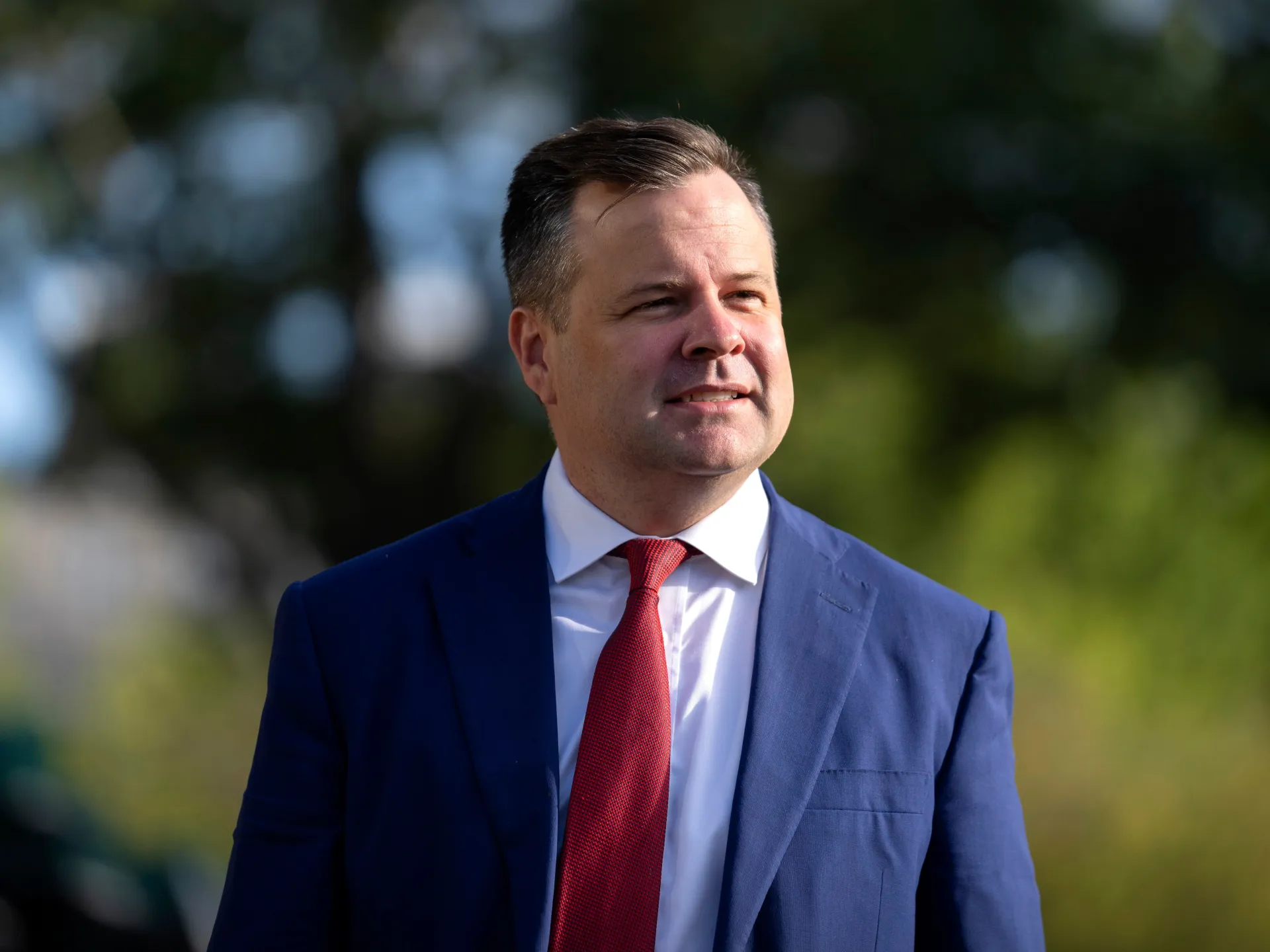
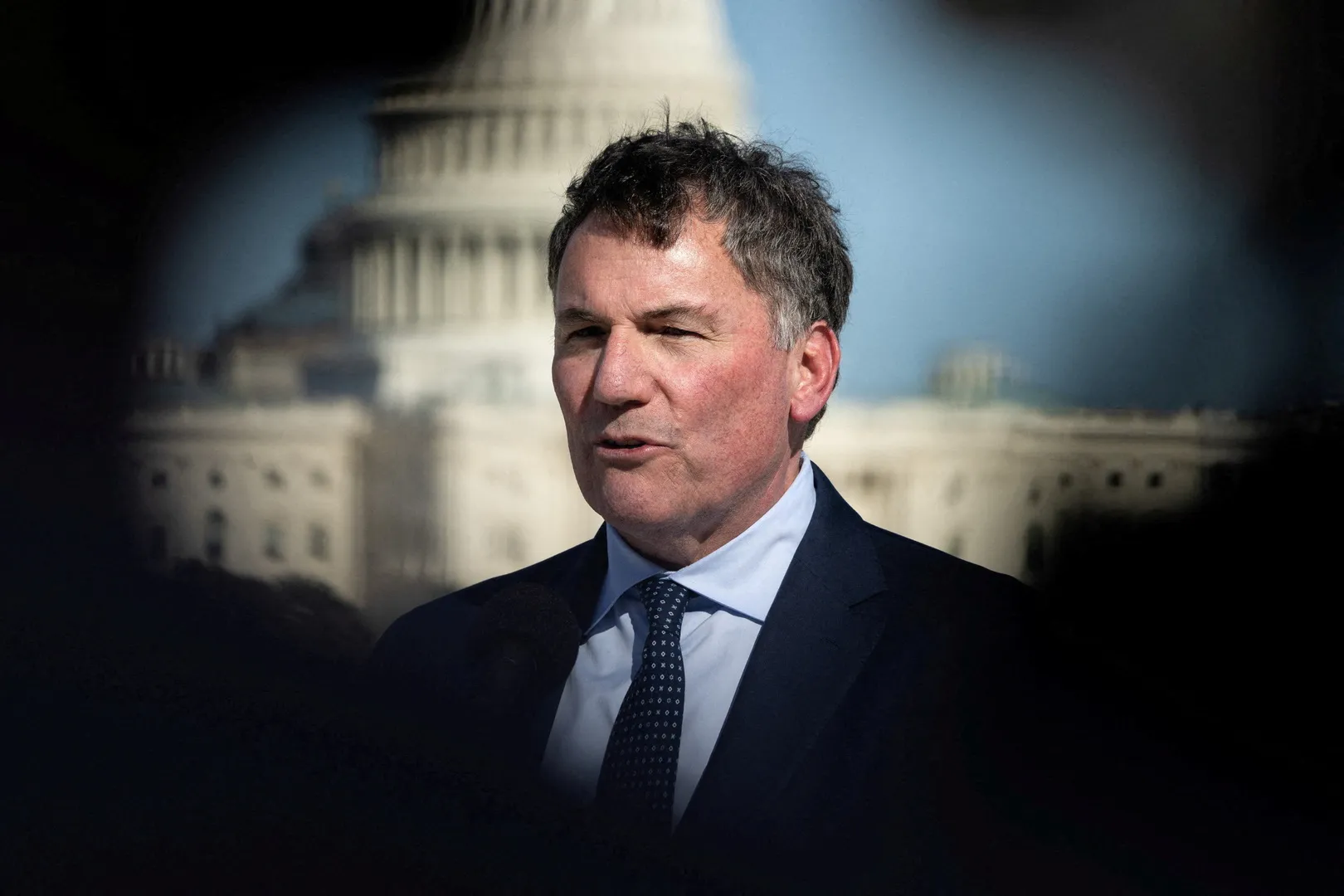
United States President Donald Trump has appointed businessman and federal housing regulator Bill Pulte as acting director of national intelligence (DNI).
Trump made Tuesday’s surprise announcement on social media that Pulte would replace Tulsi Gabbard, the former Hawaii congresswoman who has served as the director of national intelligence until recently.
Trump said Pulte will keep his other positions in addition to taking over from Gabbard, who resigned last month after revealing her husband’s cancer diagnosis.
Who is Bill Pulte?
Pulte, 38, a graduate of Northwestern University, has been director of the Federal Housing Finance Agency (FHFA) since March 2025.
He is heir to his family’s residential development firm – one of the US’s largest homebuilders, PulteGroup, which was founded by his grandfather in the 1950s. He previously founded a private equity firm, Pulte Capital, and is involved in large-scale philanthropic activity.
Pulte is seen as a loyal Trump supporter and has encouraged prosecutions of the president’s perceived political enemies, accusing New York Attorney General Letitia James and California’s US Senator Adam Schiff, both Democrats, and Federal Reserve Governor Lisa Cook, an appointee of Democratic former President Joe Biden, of mortgage fraud.
A federal grand jury refused to indict James in a Justice Department prosecution in December 2025 after Pulte wrote a criminal referral to the Justice Department, accusing her of listing a home she owned in Virginia as her primary residence to secure more favourable loan terms. Officials have also not brought charges against Schiff, who denies the allegations against him.
Trump attempted to fire Cook – an unprecedented move by a president against a US central bank official – over Pulte’s unsubstantiated accusations, but courts allowed her to remain in the role. She, too, denied the allegations. The Supreme Court is expected to rule in the coming weeks in her case.
In response to Pulte’s actions, Senate Democratic Leader Charles Schumer called the newly appointed director of national intelligence a “partisan thug” on Tuesday.
“A guy who can file such baseless, political and outrageous charges against political office holders he doesn’t like can’t be entrusted to protect our national security,” Schumer said.
Pulte’s views on whether the 2020 election was rigged against Trump – a claim many of his appointees have backed despite a lack of any evidence – are not immediately clear. He is understood to have deleted 25,000 social media posts before Trump nominated him to serve as FHFA head in January 2025, Senator Elizabeth Warren, a Democrat, said during his vetting process for the position.
Trump said Pulte will continue as FHFA director and chair of federally supported mortgage banks Fannie Mae and Freddie Mac.
“William has deep experience managing the most sensitive matters in America, the safety and soundness of the Markets, and over 10 Trillion Dollars at Fannie Mae/Freddie Mac, a substantial increase from where it was just 12 months ago,” Trump wrote on his Truth Social platform.
Pulte, who has no experience in intelligence operations, will oversee 18 intelligence departments including the Central Intelligence Agency (CIA) and the National Security Agency (NSA), which monitors foreign communications and helps defend the US against cyberattacks.
Could Pulte become the permanent intelligence chief?
Pulte can serve in the job for up to 210 days without being confirmed by the Senate. That timeframe would allow him to stay in the post through the November midterm elections, in which Trump’s fellow Republicans are seeking to retain control of Congress.
This is significant, as Republican Senator John Thune said Pulte might have trouble winning confirmation in the narrowly divided chamber if Trump decides to nominate him to the post beyond the current temporary appointment.
“If he’s somebody we want in that position permanently, he’s got a lengthy road ahead of him,” Thune was quoted by news agency Semafor as saying.
What have the reactions to Pulte’s appointment been?
Pulte’s appointment has drawn scepticism from lawmakers and intelligence officials.
“We don’t need a weaponised DNI. We need professionals there,” Senate Majority Leader Thune told reporters on Tuesday. “I’m trying to get more information about the current state of their thinking about that position. And, again, if he’s somebody they want in that position permanently, he’s got, as you all know, a lengthy road ahead of him.”
“I don’t see any evidence of qualifications for that job,” Republican Senator John Cornyn told reporters. Cornyn, a member of the Senate Intelligence Committee, lost a primary election last week to a Trump-backed challenger.
Arkansas Senator Tom Cotton, who chairs the Senate Intelligence Committee, said in response to questions about Pulte’s national security credentials: “I have no observations on the matter.”
Republican Senators Thom Tillis of North Carolina, Bill Cassidy of Louisiana and Cornyn of Texas, all of whom are leaving the chamber after this year’s elections, joined the chorus against Pulte.
“Doesn’t seem qualified,” Cassidy said.
“When we looked at his background for the current confirmation, I thought most of his experience was in the building industry,” Tillis said. “I didn’t know he had any national security experience.”
Senator Mark Warner, a Democrat from Virginia and the vice chair of the Senate Intelligence Committee, said in a statement on Tuesday: “The concern is not only that Mr Pulte lacks the ‘extensive national security experience’ required by statute for the job, which was created after intelligence failures led to the deaths of thousands of Americans on 9/11. It is that he appears to have been selected precisely because the White House believes he will provide the narrative it wants, not the intelligence we need.”
Senator Warren, a Democrat from Massachusetts, said in a written statement on Tuesday that Trump is now “rewarding his lackey – who has no national security experience – with a perch atop our nation’s intelligence community. What could go wrong?”
A revealing global journey into declining birth rates, ageing societies, and their far-reaching impact.
The last 100 years have seen a boom in trade, prosperity and wealth across the world, at unprecedented rates in human history. As a species, we are now more wealthy, healthy, and less likely to be killed in conflict than ever before, despite the many horrors we see in the daily news cycle.
This golden age we live in has run in tandem with an ever-expanding population; in the 1920s, there were only two billion people on the planet. A century later, that number has skyrocketed up to eight billion. Yet the increase of prosperity and people has come at a devastating price – global warming, the melting of the ice caps, an epidemic of plastic pollution and the mass destruction of the planet’s biodiversity are all intrinsically connected to population growth. More recently, however, the trend has been bucking. The watchful eyes of demographers have been drawn to data that reveal a world of ageing societies, plummeting birth rates, and dwindling populations. Surely this must be a good thing for the planet and therefore humanity … right? Armed with a file full of “population bomb” headlines – the explosion will happen mid-century, when humans will peak around 8.5 – 9 billion people, followed by drastic falls – we embark on a worldwide exploration with a very unique purpose. What truths and human stories can we discover behind the red flag statistics? What are the population tipping points of fertility, birth and death rates? And how, among the other culprits of climate change, conflict, global health and over consumption, might they make or break the future of our life on earth?
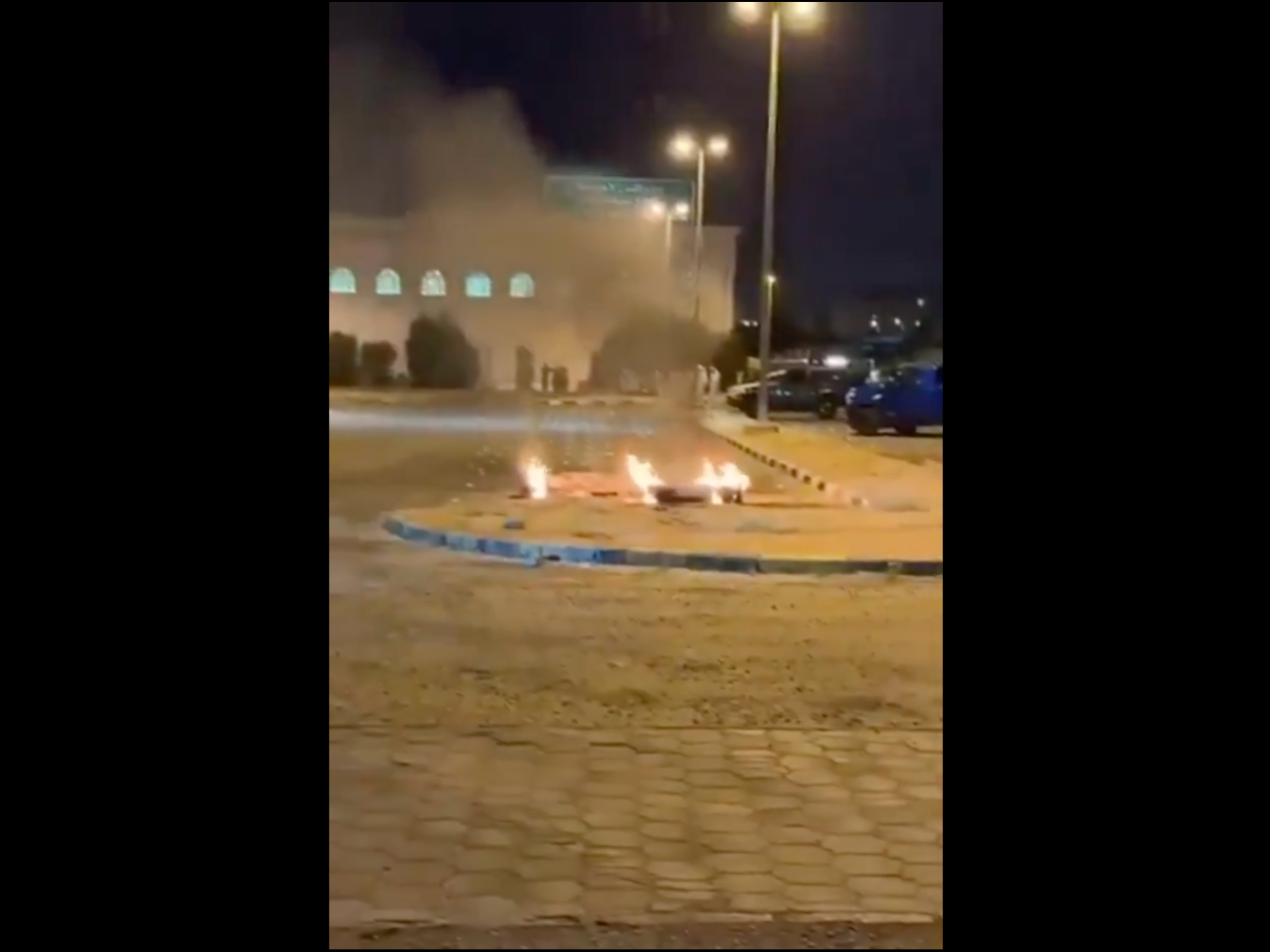
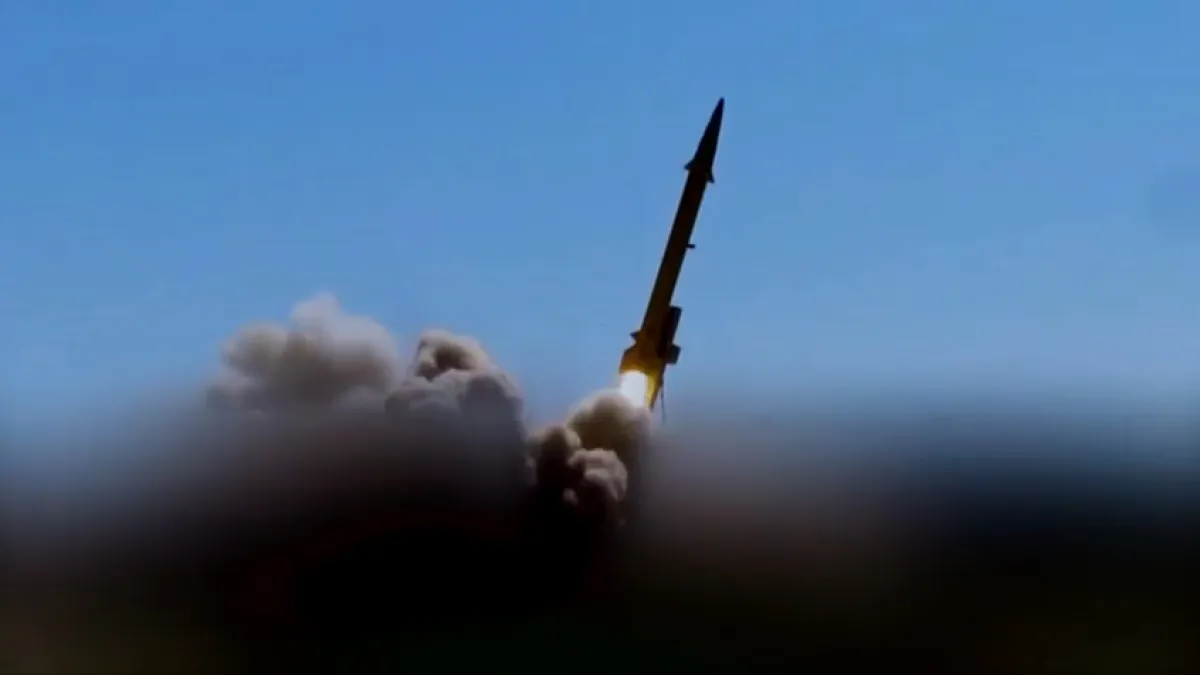
Kuwait and Bahrain have condemned an Iranian missile and drone attack, which Tehran says targeted US military facilities in the Gulf. A strike hit Kuwait’s airport, causing at least one death, dozens of injuries and flight suspensions. Tehran says the strikes are retaliation for US attacks on Iran.
Venezuela holds the largest proven oil reserves on earth. It has lithium. It has agriculture, a coastline three hours away from Miami, and—for the first time in a generation a political window. The reconstruction investment case is real. So is the obstacle for every actor, across every ideology, that wants Venezuelan assets to perform.
The obstacle is not the oil price. It is not the OFAC sanctions framework, which has been substantially liberalized since January 2026. It is not even the absence of functioning institutions, though that is the proximate problem every investor will encounter. The obstacle has a nucleus with name, a title, and an active intelligence apparatus. And his continued presence in power is not merely a moral affront.
This is not a story about mismanagement. Mismanagement leaves a paper trail.
What happened across Venezuela’s infrastructure ministries between 2002 and 2012 lest almost none, deliberately. Over $150 billion in documented railway, housing, and infrastructure contracts were disbursed across that decade. The projects largely do not exist. The documentation largely does not exist. The Tinaco-Anaco railway, a $7.5 billion contract signed with China Railway Engineering Corporation, produced looted campsites and empty concrete columns. The National Railway Plan, budgeted at $150 billion, produced less than one percent of its projected track.
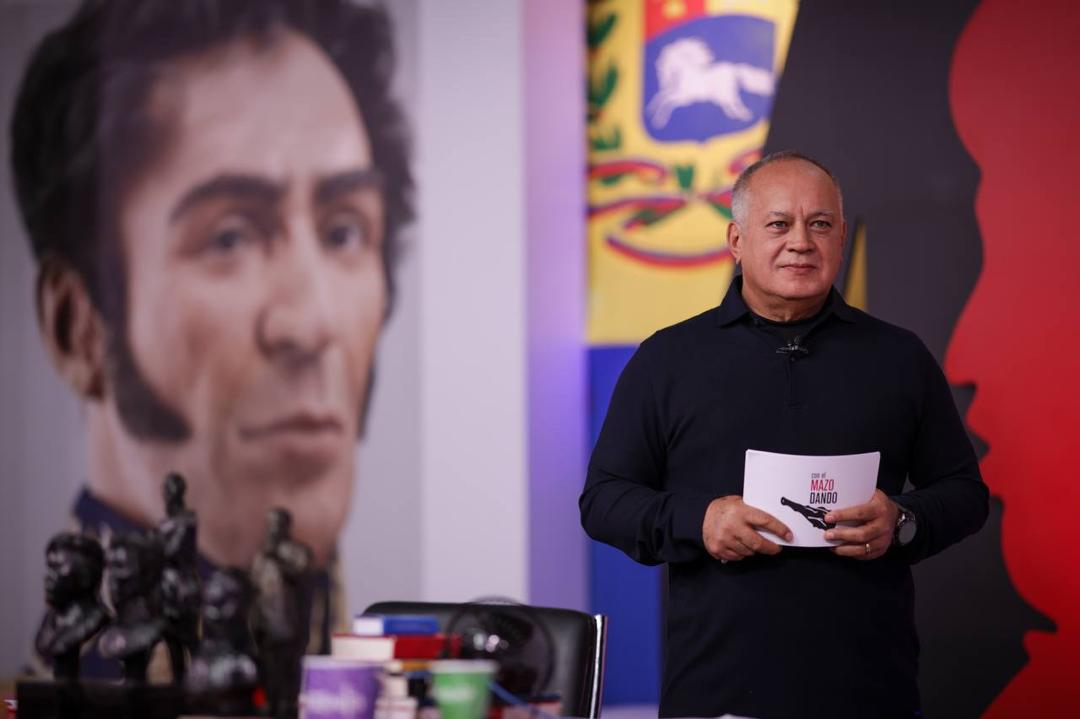
One of the ministers who oversaw that disbursement period of the infrastructure that is so dire, and who preserved an influence only surpassed by Hugo Chávez and Nicolás Maduro, today is the Interior Minister of Venezuela. He controls the national intelligence apparatus, the police, and the armed colectivos. He is Diosdado Cabello, your competing General Partner that has acted without impunity. He carries a live indictment from a New York court on narco-trafficking charges. He is sanctioned by the US Treasury. He hosts a television program that airs every Wednesday evening.
By 2011, the beneficial ownership architecture built by Venezuela’s ruling network spanned more than forty trustees across multiple jurisdictions: a parallel private equity structure embedded inside a sovereign state.
The distinction that every institutional investor must internalize is this: a mismanaged State is recoverable. A State whose productive apparatus was deliberately extracted (not ruined by incompetence but hollowed out because extraction was more profitable than production) presents a categorically different investment problem. The destruction was not the side effect of the governance model. It was the point of it. Cabello remains an icon of that governance model.
The counterparty problem
Conventional private equity rests on a foundational assumption: your counterparty has an interest in the underlying asset performing. Returns depend on it. Exit depends on it. The entire structure of an LP agreement, a term sheet, a co-investment right, all of it assumes a counterparty whose incentive is aligned with asset value.
In Venezuela, the sophisticated actor on the other side of the table for two decades was running a competing structure. One with no limited partners, no fiduciary duty, no quarterly reporting, and a sovereign intelligence apparatus for compliance. That structure had a single mandate: maximum extraction, minimum documentation, zero accountability. It executed that mandate with precision.
By 2011, the beneficial ownership architecture built by Venezuela’s ruling network spanned more than forty trustees across multiple jurisdictions. This is not a warlord’s operation. This is a parallel private equity structure embedded inside a sovereign state.
That sophistication is precisely what makes the residual presence of these networks so consequential for reconstruction capital. They did not disappear with the January 2026 transition. They repositioned. The structures that governed Venezuela’s extraction apparatus are experts at corporate layering: shell companies, nominee directors, off-channel financial instruments designed to distance beneficial owners from the assets they control.
This is the counterparty environment that reconstruction capital is walking into. Not a post-conflict landscape with residual corruption. An active, sophisticated, multi-jurisdictional extraction network that has spent 25 years perfecting its operational security
These are not improvised operations, they are multi-jurisdictional corporate architectures spanning Switzerland, Brazil, Spain, the Caribbean, and more recently Turkey and the Middle East. Each node chosen for its specific regulatory gap or enforcement lag. The $5.2 billion in gold shipped to Switzerland between 2013 and 2016, the Alex Saab procurement network running through Turkey and Cape Verde, the Zapatero indictment revealing consulting structures designed to siphon money from China, Venezuela, and Spain simultaneously these are documented examples of the same operational capability.
These networks retain the best advisors money can pay. Former heads of state, international law firms, financial intermediaries operating across jurisdictions. The Zapatero case is not the exception, it is the template. And they operate with the enforcement discipline of a cartel: strategic asset moves backed by the implicit and sometimes explicit willingness to use coercion when commercial pressure is insufficient. The SDNY indictments against senior regime figures on narco-trafficking charges are not separate from the financial architecture. They are evidence that the same command structure manages both.
This is the counterparty environment that reconstruction capital is walking into. Not a post-conflict landscape with residual corruption. An active, sophisticated, multi-jurisdictional extraction network that has spent 25 years perfecting its operational security, asset acquisitions by “patriotic”expropriations to serve their drug-logistic hubs and is now repositioning for the reconstruction window.
Why China doesn’t actually want this
China’s position in Venezuela is widely misread as unconditional support. The reality is more commercially specific. China has over $60 billion in loan-for-oil exposure through CNPC and the China Development Bank. Those loans require one thing: barrels flowing. Barrels require functional production infrastructure. Functional production infrastructure requires institutional stability, contract enforcement, and (critically) a counterparty with an interest in assets performing.
Beijing understands this better than any outside observer because its own institutions have investigated the damage. Xi Jinping’s Central Commission for Discipline Inspection placed a CITIC Group vice president under investigation for serious disciplinary violations, the same CITIC that embedded confidentiality clauses in Venezuelan housing contracts barring the Venezuelan government from accessing financial information about its own projects. An Andorran court documented $100 million in bribes paid by CAMC Engineering to Venezuelan officials. China did not need backchannel meetings to understand the corruption. Its own companies were defendants in it.
China also enforces its own code of conduct internally. The CCP’s anti-corruption apparatus, operating through the Central Commission for Discipline Inspection, has a long reach, including over state enterprise executives who participated in overseas schemes that damaged China’s institutional reputation. Chinese firms implicated in Venezuelan bribery networks in Andorra for payments to PDVSA lobbyists related to Venezuela’s electricity system did not operate without consequence within their own system. Beijing does not publicize these accountability mechanisms, but they exist. The party does not tolerate reputational exposure that undermines its economic diplomacy, regardless of the geography.
Every dollar that disappears into the extraction apparatus is a dollar that does not produce the barrel that services the Chinese loans.
The Trump-Xi summit concluded in Beijing on May 15, 2026, the same day Lamargas exploded on Lake Maracaibo, a facility operated by China Concord Resources Corp under a PDVSA joint venture contract. At the moment, the US and Chinese governments are navigating toward economic stabilization and a framework for managed competition, building on their South Korea thaw. That G2 stabilization has direct implications for Venezuela: a China that is repositioning toward US capital markets, Boeing purchases, and agricultural commitments is a China with diminishing strategic incentive to backstop a Venezuelan network that embarrasses it commercially.
The Chevron model—US-anchored, internationally governed, with Chinese off-take embedded through structured contracts—is precisely the kind of framework that serves Beijing’s debt recovery needs without requiring it to defend the indefensible.
A ministry based in a kleptocracy whose financial architecture is premised on assets not performing for the state is structurally incompatible with Chinese debt recovery. Beijing is not sentimental about this. It is calculating.
China’s $50-60 billion in loan-for-oil exposure to Venezuela requires one thing above all else: barrels flowing. Barrels require functional production infrastructure. Functional production infrastructure requires institutional stability, contract enforcement, and a counterparty whose economic interest is aligned with assets performing. When the ministry overseeing oil production is the same apparatus that systematically extracted value from every sector it touched, railways that produced concrete columns and nothing else, housing programs with $76 billion in unaccounted deficits, power plants that were paid for and never built, you can see that the problem for Beijing is not political. Every dollar that disappears into the extraction apparatus is a dollar that does not produce the barrel that services the loans.
China tried to correct this internally before abandoning the effort. In 2018, Margaret Myers at the Inter-American Dialogue pointed out that Beijing “tried over the past couple of years to guide decision-making in Caracas by providing advice or by tying loans to production capacity projects in the oil sector, in order to try to help Venezuela right itself economically. That has not proven successful.”
By 2016, China stopped issuing new loans entirely. That is not a diplomatic signal. That is a credit committee decision. The same kind of decision any institutional lender makes when the counterparty’s governance structure has made repayment structurally unlikely.
The Brazilian vector
Brazil’s relationship to Venezuela’s reconstruction is complicated by a paper trail that runs through the largest corruption scandal in Latin American history. Odebrecht paid the highest figure of any country outside Brazil itself. Venezuela’s own former prosecutor general, Luisa Ortega Díaz, formally linked those payments to senior Socialist Party figures including Diosdado Cabello after being removed from office and forced to flee the country. The investigation was halted by Venezuela’s highest court. The Swiss banking system was asked to provide a list of Venezuelan recipients. Neither process was allowed to reach its conclusion.
In Brazil, the Odebrecht network reached the highest levels of political life. Federal prosecutors investigated Lula for allegedly lobbying foreign governments on Odebrecht’s behalf after leaving the presidency, and for his role in directing state development bank BNDES financing toward Odebrecht projects abroad. The contracts that linked Odebrecht to Venezuela were not arm’s-length commercial transactions. They were, by Odebrecht’s own admission in its US Department of Justice plea agreement, instruments of a coordinated bribery architecture that spanned twelve countries and operated through a dedicated internal division (the Division of Structured Operations) whose sole purpose was managing political payments.
What does not yet exist is the decision—by US institutional capital—to arrive with a governance structure that the extraction network cannot penetrate.
Brazil has significant commercial interests in Venezuela’s reconstruction, across energy, agriculture, and infrastructure. Those interests are legitimate and Brazilian private capital is a natural reconstruction partner. The complication is not Brazil. It is the specific political-commercial network that governed Brazil’s prior engagement with Venezuela. Odebrecht did not select its Venezuelan counterparties through competitive markets. Contracts were directed through political relationships — between heads of state, with BNDES as the financing instrument, and with the Odebrecht Division of Structured Operations managing the payments in between.
Political networks have institutional memory. The preferred partners that flow through certain diplomatic channels into Venezuela’s reconstruction window carry relationships forged in that prior architecture. A governance framework serious about reconstruction cannot simply exclude Odebrecht, the legal entity. It must screen for the network that Odebrecht served. That screening is structural, not political. It is the difference between Brazilian capital that competes on merit and Brazilian capital that arrives pre-selected by the same diplomatic infrastructure that enabled the extraction.
The structure that worked and the decision that remains
One Venezuelan asset survived twenty-six years of chavismo with its value intact. One. CITGO Petroleum, incorporated in Delaware, governed under US fiduciary law, with its governance architecture anchored entirely outside Venezuelan legal jurisdiction. It survived not because of political protection but because of structural protection. US law held when every Venezuelan institution around it failed. That is not a coincidence. It is the blueprint.
Venezuela sits very close to Miami. Capital will flow in. The question is whether it arrives with a governance structure equal to the threat, or whether it arrives the way it always has in captured states: trusting counterparties who already demonstrated, at extraordinary scale, that trust was the wrong instrument.
The SDNY indicted the man who sits in the Interior Ministry. The US Treasury sanctioned him. He is still in the building. Turkish construction conglomerates, Asian commodity traders, and European energy juniors are already positioning—without FCPA compliance costs, without fiduciary obligations, without LP reporting requirements. They will move faster. They will price lower. This is what happened in Iraq after 2003. It is what happened in Libya.
The architecture to do this differently exists. Human capital exists in the diaspora: eight million Venezuelans left and within them there are over a million that hold verifiable credentials embedded in US and European institutions, carrying the technical and legal knowledge to rebuild what was taken. The OFAC licensing framework exists. The proof of concept exists in CITGO’s survival. What does not yet exist is the decision—by US institutional capital—to arrive with a governance structure that the extraction network cannot penetrate. That decision is the only thing standing between reconstruction and a second extraction with better letterhead.
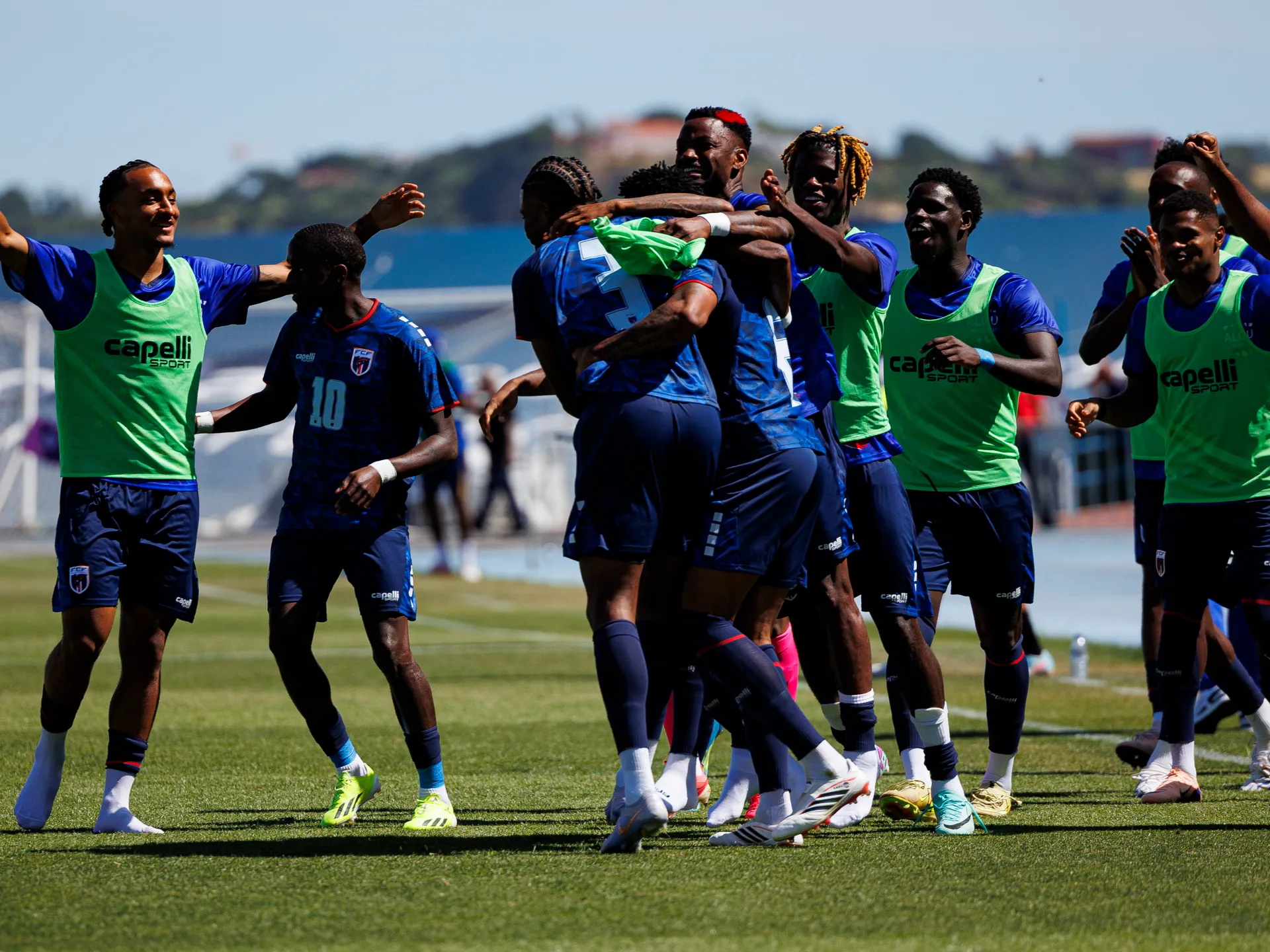
Cape Verde’s national football team has arrived in the US ahead to take part in their first ever FIFA World Cup. Players filmed themselves dancing in the aisle of the plane and were cheered on the tarmac.
Messi works on ‘specific exercises’ as he recovers from muscle fatigue in his left hamstring before the World Cup.
Published On 3 Jun 20263 Jun 2026
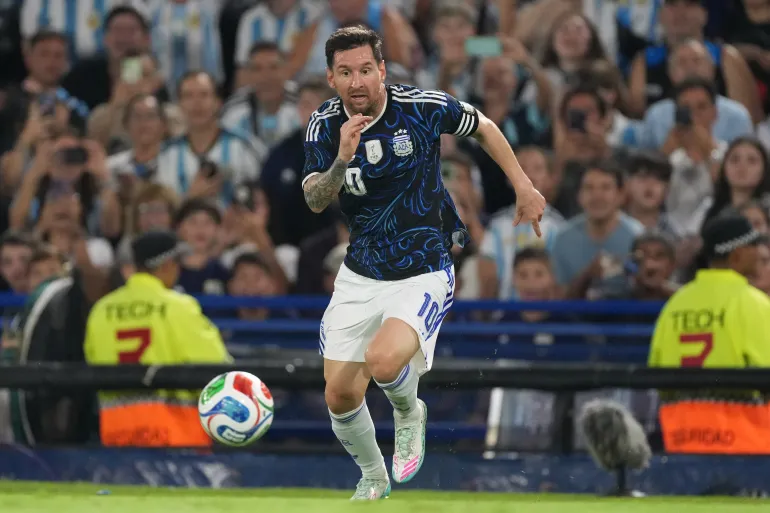
Lionel Messi has trained on his own during Argentina’s first practice session at their base camp in the United States, where the squad has assembled this week for their World Cup preparations.
The defending World Cup champions held their first pretournament training in Kansas City, Missouri, on Monday.
The Inter Miami captain has been dealing with muscle fatigue in his left hamstring since May 24 but is expected to be ready for Argentina’s opener against Algeria on June 16 in Kansas City.
Messi, 38, joined Argentina at their training base and worked on “specific exercises” along with several teammates who are also dealing with fitness concerns.
“The players who are suffering from niggles and injuries continue to work with the physiotherapy team on specific exercises on the pitch and are making good progress,” Argentina’s Football Association said.
Argentina, ranked number three in the world, will play their final tune-up match against Iceland on June 9 in Auburn, Alabama.
Messi, the two-time MLS MVP and eight-time Ballon d’Or winner, is competing in his record sixth World Cup. The midfielder is Argentina’s all-time leader in caps (198) and goals (116) since making his debut with the national team in 2005.
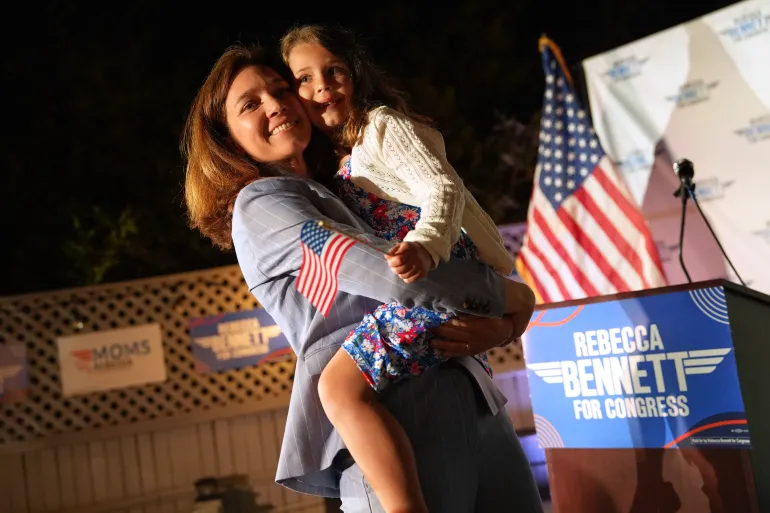
Rebecca Bennett has won a high-stakes Democratic Party primary in the US state of New Jersey, setting up a contest against Republican Tom Kean Jr, backed by President Donald Trump, for one of the most competitive seats in the upcoming midterm elections.
Bennett, a former US Navy helicopter pilot, defeated three Democratic rivals in New Jersey’s 7th Congressional District, securing about 47.2 percent of the vote, according to projected results on Tuesday.
Recommended Stories
list of 4 itemsend of list
Her nearest competitor, Tina Shah, received 20.2 percent.
Kean and Bennett will now square off in November for a seat that has changed party hands twice within the past eight years and ranks as a key target for Democrats hoping to capture the House of Representatives.
Independent analysts rate the contest as a toss-up.
Rebecca Bennett holds her daughter, Rosie, during a primary election night watch party in Bridgewater, New Jersey, on June 2, 2026 [Ryan Murphy/AP]
The race has attracted heightened attention because of Kean’s prolonged absence from Congress.
The Republican incumbent has missed more than 100 House votes since early March due to an undisclosed illness.
Despite his absence, Kean ran unopposed in the Republican primary with Trump’s backing.
Kean said on Tuesday that he remained focused on his recovery and expected to return to in-person work within weeks.
Hours before polls closed, Kean released a statement promising greater transparency about his health while suggesting his return to in-person work could take longer than previously anticipated.
On May 21, he said he expected to be back within “a couple of weeks”.
“Right now, I am focused on my recovery and, under the advice of healthcare professionals, I will transition from virtual to in-person work within a matter of weeks,” Kean had said.
Bennett targets cost of living, Kean’s absence
At an election night gathering in Somerville, New Jersey, Bennett sharply criticised Kean’s record and absence from Washington.
“You are failing us, and you do not deserve to represent us in Washington,” she told supporters, calling the congressman a “coward”.
Bennett built her campaign around her military service and economic issues, arguing that higher grocery and gasoline prices during the US-Israel war on Iran, combined with Trump’s tariffs, were squeezing working families.
Democrats have increasingly focused on the conflict’s economic impact, with higher energy costs contributing to inflation and broader cost-of-living pressures across the country.
The 7th Congressional District, which includes suburban communities, farm towns and Trump’s golf club in Bedminster, has emerged as one of New Jersey’s key battlegrounds.
The seat has changed hands repeatedly in recent election cycles, with Democrat Tom Malinowski defeating Republican Leonard Lance in 2018 before Kean unseated Malinowski in 2022.
Bennett’s victory over Tina Shah, Brian Varela and Michael Roth now sets up a high-stakes general election contest in a district both parties consider crucial to their House ambitions.
House Representative Tom Kean listens during a House Foreign Affairs subcommittee hearing about Belarus on Capitol Hill, Washington, DC, on December 5, 2023 [Mariam Zuhaib/AP] (AP)
Kean, 57, is the scion of a storied New Jersey political family.
His father, Thomas Kean, served two terms as governor and later chaired the 9/11 Commission, a panel set up in 2002 to investigate the circumstances surrounding the September 11, 2001, attacks in the US. He is also a descendant of William Livingston, New Jersey’s first governor.
The Republican congressman will also enter the race with the backing of Trump, who reiterated his support on the eve of the primary, despite Kean’s prolonged absence from Washington.
“Tom Kean has my Complete and Total Endorsement for Re-Election,” Trump wrote on social media, adding: “HE WILL NEVER LET YOU DOWN!”
Voters in the district have ousted incumbents in recent midterm elections, making the race one of the most competitive House contests in New Jersey.
Elsewhere in New Jersey, Analilia Mejia won the Democratic nomination in the 11th Congressional District, while LaMonica McIver secured the Democratic nomination in the 10th Congressional District.
Mexico and Canada have backed extending the USMCA trade agreement for another 16 years as negotiations over its future continue. The proposal comes amid an ongoing trade dispute with the United States.
The US military says it carried out ‘self-defence’ strikes on Iran’s Qeshm Island after Iran earlier launched missiles and drones at US bases in Kuwait and Bahrain. Despite the exchange, the US says the US-Iran ceasefire remains in effect.
In January 2024, the publication Axios reported that the United States president at the time, Joe Biden, was “running out of patience” with Israeli Prime Minister Benjamin Netanyahu.
Israel’s genocidal war on Gaza had been raging for months by that point, and Biden was facing public backlash over US support for the conflict.
Recommended Stories
list of 3 itemsend of list
The assault would continue for the rest of Biden’s term and bleed into the first 10 months of Donald Trump‘s second presidency.
Since then, media outlets have continued to publish anonymous accounts of rifts and “frustrating” calls between Trump and the Israeli prime minister. But US support for its Middle East ally has never wavered.
Another anonymously sourced report about a furious, expletive-laden call between US and Israeli leaders came out this week, and it spread rapidly across international media.
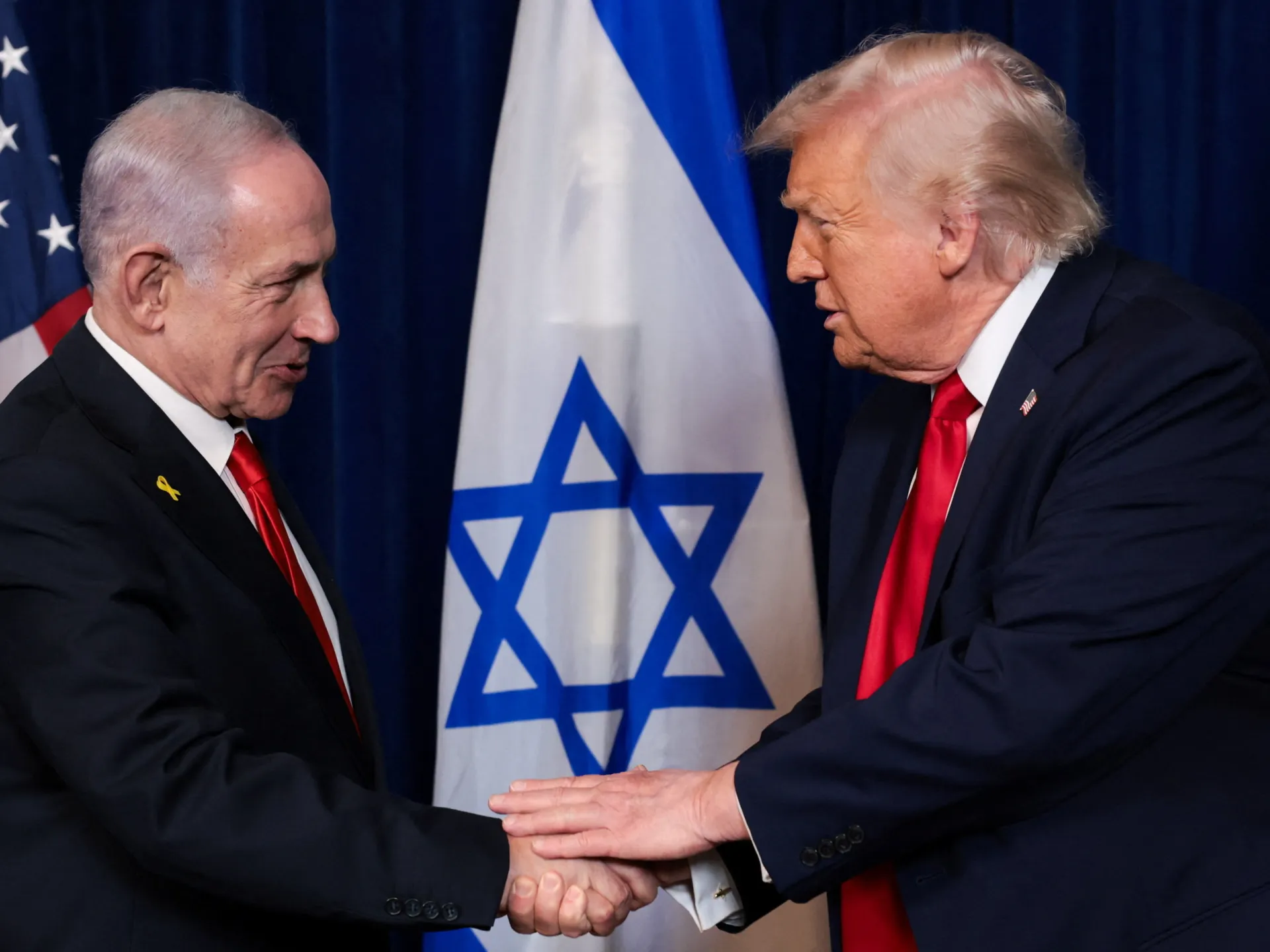
Axios reported on Monday that Trump called Netanyahu “f***ing crazy” and berated him over Israel’s escalation in Lebanon.
Around the same time, an Israeli attack killed six people, including two children, in the southern Lebanese town of al-Marwaniyah.
Experts say that despite leaks of feuds and harsh words between US leaders and Netanyahu, policies are ultimately what matters, and they have changed very little.
Ryan Costello, the policy director at the National Iranian American Council Action (NIAC), said political observers have grown to “mock” reports of closed-door anger from US presidents against Netanyahu.
“What’s really important is what actually happens in practice,” Costello told Al Jazeera.
Two administrations, same reports
Though there are reports of Trump giving Netanyahu a dressing-down, Isabelle Hayslip, an advocacy manager at the US-based rights group DAWN, said that US policy remains aligned with Israeli interests.
“Single-source reporting of Trump as a strongman who picks up the phone and yells at Netanyahu for undermining US policy is contradicted by the actual policy outcomes where Netanyahu gets exactly what he wants,” Hayslip told Al Jazeera.
“Trump has no final say over Israeli actions. Like his predecessors, the president has proved completely unable to prioritise American interests, instead catering to Israel’s expansionist whims.”
The latest report comes as Trump faces increasing pressure from his Democratic rivals and segments of his base over his handling of the war on Iran, which he launched jointly with Netanyahu on February 28.
The conflict, which saw Iran close the Strait of Hormuz, has sent gasoline prices soaring in the US and fuelled inflation.
Critics have accused Trump of allowing Israel to drag the US into a war that does not advance Washington’s priorities.
With negotiations to end the war stagnating, Israel’s escalation in Lebanon and its threat to bomb Beirut risks derailing the fragile truce that came into effect in April.
Iranian officials have suggested that they cut off contact with the US over the Israeli attacks in Lebanon.
Before the Axios report, Trump announced he had spoken to Netanyahu and an unidentified Hezbollah representative, and both sides agreed that “all shooting will stop”.
But Netanyahu was quick to assert that the Israeli military “will continue to operate as planned in southern Lebanon”, where it is deepening its invasion and turning entire towns into rubble.
Advocates say Israeli atrocities in Lebanon and across the region could not have happened without US backing.
Since the start of Israel’s genocidal war on Gaza in October 2023, the US has provided Israel with nearly $25bn in military aid, helped fend off retaliatory Iranian attacks against the country and vetoed several ceasefire resolutions at the United Nations Security Council.
Nonetheless, anonymous accounts that the US president is angry at Netanyahu have become a regular feature in the media.
Such reports are attributed to US officials, but it is unclear how leaks with a similar message on the same topic have continued across two administrations from different political parties.
‘Moderating the anger’
Publicly, aides of both Biden and Trump have largely refrained from criticising Israel.
Trump has regularly praised the Israeli prime minister, arguing on more than one occasion that Israel would have ceased to exist without Netanyahu’s leadership.
In December, the US president also called the Israeli prime minister a “hero” during a meeting in Florida.
“We’re with you, and we’ll continue to be with you,” Trump told Netanyahu.
Two weeks earlier, Axios reported that the White House had “scolded” Netanyahu over Israel’s ceasefire violations in Gaza.
“The White House message to Netanyahu was: ‘If you want to ruin your reputation and show that you don’t abide by agreements, be our guest, but we won’t allow you to ruin President Trump’s reputation after he brokered the deal in Gaza,” the publication quoted a US official as saying.
Few people know the exact content of high-level calls at the White House. Sometimes, top officials, including members of the National Security Council, sit in on conversations between the president and world leaders after briefings.
Negar Mortazavi, a senior fellow at the Center for International Policy, a research nonprofit, said the leak about the tense call between Trump and Netanyahu may be aimed at making Trump look tough on Israel to quell outrage over the war.
“It could be sort of a way of moderating the anger or the blame at the US for continuing this unpopular, illegal, unnecessary war,” Mortazavi told Al Jazeera.
She added that the message it sends is, “Look, we’re very angry at Israel. We yell at them. We call them names.”
But Mortazavi stressed that policy is more important than rhetoric: “Does that change the facts on the ground?”
Information war
For his part, Costello argued that the leak was likely directed at Iran.
“I see this one primarily as a signal to the Iranians that Trump is serious, and he wants to insulate what’s happening in Lebanon and Israel’s attacks from the Iran negotiations,” Costello said.
“It remains to be seen the extent to which that excoriation has actually led to a change in Israel’s policies, and I think there is a strong incentive for continued defiance from Netanyahu.”
Axios, meanwhile, has defended its coverage.
“We stand by our reporting, which by the way noted ‘Trump and Netanyahu have had several tense calls in the past but have still coordinated closely on Iran and other issues,’” Jake Wilkins, a spokesperson for the publication, told Al Jazeera in an email.
Mortazavi warned that all sides of the war on Iran are trying to influence public perceptions of the conflict.
She pointed to recent reports that Iranian President Masoud Pezeshkian had resigned, a rumour that was promptly denied by his office.
“This is a very hybrid war. It’s a war on the battlefield. It’s an intelligence war. It’s a war of narratives,” Mortazavi told Al Jazeera. “And then there’s also an information war, which includes disinformation, half-truths and strategic leaks.”
The administration of United States President Donald Trump has proposed a new 25 percent tariff on imports from Brazil amid allegations of unfair trading practices.
US Trade Representative Jamieson Greer announced the new punitive tariffs late on Monday, stemming from issues including digital trade and illegal deforestation.
Recommended Stories
list of 4 itemsend of list
The new tariffs would be imposed under Section 301 of US trade policy — a statute that gives the US government broad authority to impose trade sanctions based on violations of trade agreements, as well as what it deems “unfair” trade practices under the Trade Act of 1974.
Greer said there has been an investigation that began in July. The practices under investigation were related to issues such as illegal deforestation, ethanol market access, and anticorruption enforcement, among other key issues, according to the summary released by the US Department of Commerce on Tuesday.
In the 107-page document, the US government said that trade practices between the two nations “are unreasonable and burden or restrict US commerce”, and pointed to agreements that Brazil has with Mexico and India.
“Brazil’s trade arrangements with Mexico and India also create incentives to offshore US production by creating a financial advantage to exporting to Brazil from these countries, as opposed to exporting from the United States,” the document says.
There is a comment period for the general public to weigh in on the proposed tariffs, which begins on Thursday. The written comment period ends on July 1, and there will be a public hearing in Washington on July 6.
Beef, coffee, rare earths, other metals, energy, and aircraft parts are among the products that would be exempt from the tariffs.
On CNBC, Greer said that it would release more findings on unfair trade practices in the next several weeks in order to address what Greer called a “giant” trade deficit.
However, the data shows that the US maintains a trade surplus with Brazil. In March, Brazil bought more goods, worth $3.3bn, from the US than it exported at $2.9bn, representing a $420m trade surplus.
Other countries under investigation include China and Vietnam.
The new tariff would partially replace a tariff of 50 percent on many Brazilian goods imposed last year by Trump, with 40 percent serving as a punishment for Brazil’s prosecution of former President Jair Bolsonaro, a Trump ally.
The White House also recently dropped tariffs on select aluminium, copper, and steel imports, which include agricultural equipment such as harvesters. Those tariffs will drop from 25 percent to 15 percent. The tariffs expire in December 2027.
The new tariffs come after the Supreme Court, in February, struck down the use of the International Emergency Economic Powers Act (IEEPA), which the White House used to impose its sweeping global tariffs.
“They are the first of many new tariffs to replace the IEPPA national security tariffs. The period of public comment will allow for potential modest tweaks and exemptions. Ultimately, it will add to some inflation pressure compared to the last few months but not compared to a year earlier,” Rachel Ziemba, a senior adjunct fellow at the Center for a New American Security, told Al Jazeera.
Political tensions
The changes come despite President Luiz Inacio Lula da Silva’s visit to Washington last month, as relations have deteriorated in recent months.
The US State Department has also designated two of Brazil’s criminal gangs as “terrorist organisations”, a move that supported Senator Flavio Bolsonaro’s position, Lula’s main rival in October’s election, and over the objections of Brazilian officials.
“I expressly asked President Trump not to tariff our companies,” Bolsonaro wrote on X on Tuesday. “Tariffs are not the solution.”
The White House did not respond to Al Jazeera’s request for comment.
The countdown to the FIFA World Cup 2026 has entered the single-figure mark, with the tournament getting under way in nine days in Mexico City.
The biggest edition of the World Cup, with 48 nations and 104 games, will be hosted by three countries for the first time, as the United States and Canada share the honours with Mexico.
Recommended Stories
list of 3 itemsend of list
All 48 teams heading to the tournament have released their final 26-man squads, marking possible final appearances for greats like Lionel Messi and Cristiano Ronaldo.
Young stars looking to dethrone the icons, including Spain’s Lamine Yamal and Brazil’s Endrick, will look to make their mark in their first appearance at the global event.
Here are all 48 World Cup squads for the FIFA World Cup 2026:
Midfielders: Houssem Aouar, Nabil Bentaleb, Hicham Boudaoui, Fares Chaibi, Ibrahim Maza, Yassine Titraoui, Ramiz Zerrouki
Forwards: Mohamed Amine Amoura, Nadir Benbouali, Adil Boulbina, Fares Ghedjemis, Amine Gouiri, Riyad Mahrez, Anis Hadj Moussa
Argentina World Cup squad
Goalkeepers: Emiliano Martinez, Geronimo Rulli, Juan Musso
Defenders: Leonardo Balerdi, Gonzalo Montiel, Nicolas Tagliafico, Lisandro Martinez, Cristian Romero, Nicolas Otamendi, Facundo Medina, Nahuel Molina
Midfielders: Leandro Paredes, Rodrigo De Paul, Valentin Barco, Giovani Lo Celso, Exequiel Palacios, Alexis Mac Allister, Enzo Fernandez
Forwards: Julian Alvarez, Lionel Messi, Nicolas Gonzalez, Thiago Almada, Giuliano Simeone, Nicolas Paz, Jose Manuel Lopez, Lautaro Martinez
The World Cup 2026 will be Lionel Messi’s swansong [File: Gustavo Garello/AP]
Australia World Cup squad
Goalkeepers: Patrick Beach, Paul Izzo, Mathew Ryan
Defenders: Aziz Behich, Jordan Bos, Cameron Burgess, Alessandro Circati, Milos Degenek, Jason Geria, Lucas Herrington, Jacob Italiano, Harry Souttar, Kai Trewin
Midfielders: Cameron Devlin, Ajdin Hrustic, Jackson Irvine, Connor Metcalfe, Aiden O’Neill, Paul Okon-Engstler
Goalkeepers: Patrick Pentz, Alexander Schlager, Florian Wiegele
Defenders: David Affengruber, David Alaba, Kevin Danso, Marco Friedl, Philipp Lienhart, Phillipp Mwene, Stefan Posch, Alexander Prass, Michael Svoboda
Midfielders: Christoph Baumgartner, Carney Chukwuemeka, Florian Grillitsch, Konrad Laimer, Marcel Sabitzer, Xaver Schlager, Romano Schmid, Alessandro Schopf, Nicolas Seiwald, Paul Wanner, Patrick Wimmer
Forwards: Marko Arnautovic, Michael Gregoritsch, Sasa Kalajdzic
Belgium World Cup squad
Goalkeepers: Thibaut Courtois, Senne Lammens, Mike Penders
Defenders: Timothy Castagne, Zeno Debast, Maxim De Cuyper, Koni De Winter, Brandon Mechele, Thomas Meunier, Nathan Ngoy, Joaquin Seys, Arthur Theate
Midfielders: Kevin De Bruyne, Amadou Onana, Nicolas Raskin, Youri Tielemans, Hans Vanaken, Axel Witsel
Forwards: Charles De Ketelaere, Jeremy Doku, Matias Fernandez-Pardo, Romelu Lukaku, Dodi Lukebakio, Diego Moreira, Alexis Saelemaekers, Leandro Trossard
Bosnia and Herzegovina World Cup squad
Goalkeepers: Nikola Vasilj, Martin Zlomislic, Osman Hadzikic
Defenders: Sead Kolasinac, Amar Dedic, Nihad Mujakic, Nikola Katic, Tarik Muharemovic, Stjepan Radeljic, Dennis Hadzikadunic, Nidal Celik
Midfielders: Amir Hadziahmetovic, Ivan Sunjic, Ivan Basic, Dzenis Burnic, Ermin Mahmic, Benjamin Tahirovic, Amar Memic, Armin Gigovic, Kerim Alajbegovic, Esmir Bajraktarevic
Defenders: Alex Sandro, Bremer, Danilo, Douglas Santos, Gabriel Magalhaes, Ibanez, Leo Pereira, Marquinhos, Wesley
Midfielders: Bruno Guimaraes, Casemiro, Danilo Santos, Fabinho, Lucas Paqueta
Forwards: Endrick, Gabriel Martinelli, Igor Thiago, Luiz Henrique, Matheus Cunha, Neymar Jr, Raphinha, Rayan, Vinicius Jr
Brazil’s forward Neymar has found himself in the five-time champions’ World Cup squad despite recent injuries [File: Mauro Pimentel/AFP]
Canada World Cup squad
Goalkeepers: Dayne St Clair, Maxime Crepeau, Owen Goodman
Defenders: Alistair Johnston, Derek Cornelius, Richie Laryea, Niko Sigur, Joel Waterman, Luc de Fougerolles, Moise Bombito, Alphonso Davies, Alfie Jones
Midfielders: Stephen Eustaquio, Ismael Kone, Tajon Buchanan, Mathieu Choiniere, Ali Ahmed, Nathan Saliba, Liam Millar, Jacob Shaffelburg, Jonathan Osorio
Attackers: Jonathan David, Cyle Larin, Tani Oluwaseyi, Promise David
Forwards: Gilson Benchimol, Jovane Cabral, Dailon Livramento, Ryan Mendes, Nuno da Costa, Garry Rodrigues, Willy Semedo, Helio Varela
Colombia World Cup squad
Goalkeepers: Camilo Vargas, Alvaro Montero, David Ospina
Defenders: Davinson Sanchez, Jhon Lucumi, Yerry Mina, Willer Ditta, Daniel Munoz, Santiago Arias, Johan Mojica, Deiver Machado
Midfielders: Richard Rios, Jefferson Lerma, Kevin Castano, Juan Camilo Portilla, Gustavo Puerta, Jhon Arias, Jorge Carrascal, Juan Fernando Quintero, James Rodriguez, Jaminton Campaz
Forwards: Juan Camilo Hernandez, Luis Diaz, Luis Suarez, Carlos Gomez, Jhon Cordoba
Defenders: Josko Gvardiol, Duje Caleta-Car, Josip Sutalo, Josip Stanisic, Marin Pongracic, Martin Erlic, Luka Vuskovic
Midfielders: Luka Modric, Mateo Kovacic, Mario Pasalic, Nikola Vlasic, Luka Sucic, Martin Baturina, Kristijan Jakic, Petar Sucic, Nikola Moro, Toni Fruk
Forwards: Ivan Perisic, Andrej Kramaric, Ante Budimir, Marco Pasalic, Petar Musa, Igor Matanovic
(Standby: Lovro Majer, Franjo Ivanovic, Dion Drena Beljo, Ivan Smolcic, Karlo Letica, Adrian Segecic, Luka Stojkovic)
Defenders: Dylan Batubinsika, Gedeon Kalulu, Steve Kapuadi, Joris Kayembe, Arthur Masuaku, Chancel Mbemba, Axel Tuanzebe, Aaron Wan-Bissaka
Midfielders: Brian Cipenga, Meshack Elia, Gael Kakuta, Edo Kayembe, Nathanael Mbuku, Samuel Moutoussamy, Ngal’ayel Mukau, Charles Pickel, Noah Sadiki, Aaron Tshibola
Forwards: Cedric Bakambu, Simon Banza, Fiston Mayele, Yoane Wissa, Theo Bongonda
Ecuador World Cup squad
Goalkeepers: Hernan Galindez, Moises Ramirez, Gonzalo Valle
Defenders: Piero Hincapie, Willian Pacho, Pervis Estupinan, Felix Torres, Joel Ordonez, Jackson Porozo, Angelo Preciado, Yaimar Medina
Midfielders: Moises Caicedo, Alan Franco, Kendry Paez, Gonzalo Plata, Pedro Vite, Jordy Alcivar, Denil Castillo, John Yeboah, Nilson Angulo, Alan Minda
Forwards: Enner Valencia, Kevin Rodriguez, Jordy Caicedo, Anthony Valencia, Jeremy Arevalo
Egypt World Cup squad
Goalkeepers: Mohamed El Shenawy, Mostafa Shobeir, El Mahdy Soliman, Mohamed Alaa
Midfielders: Rouzbeh Cheshmi, Saeid Ezatolahi, Mehdi Ghaedi, Saman Ghoddos, Mohammad Ghorbani, Alireza Jahanbakhsh, Mohammad Mohebi, Amir Mohammad Razzaghinia, Mehdi Torabi, Aria Yousefi
Forwards: Ali Alipour, Dennis Dargahi, Amirhossein Hosseinzadeh, Mehdi Taremi, Shahriar Moghanlou
Iraq World Cup squad
Goalkeepers: Fahad Talib, Jalal Hassan, Ahmed Basil
Defenders: Hussein Ali, Manaf Younis, Zaid Tahseen, Rebin Sulaka, Akam Hashem, Merchas Doski, Ahmed Yahya, Zaid Ismail, Frans Putros, Mustafa Saadoon
Midfielders: Amir Al Ammari, Kevin Yakob, Zidane Iqbal, Aimar Sher, Ibrahim Bayesh, Ahmed Qasim, Youssef Amyn, Marko Farji
Forwards: Ali Jassim, Ali Al Hamadi, Ali Yousef, Aymen Hussein, Mohanad Ali
Ivory Coast World Cup squad
Goalkeepers: Yahia Fofana, Mohamed Kone, Alban Lafont
Goalkeepers: Yazid Abulaila, Noor Bani Attiah, Abdallah Al Fakhouri
Defenders: Mohammad Abu Hashish, Abdullah Nasib, Hussam Abu Dhahab, Yazan Al Arab, Mohammad Abu Alnadi, Salem Obaid, Saed Al Rosan, Ehsan Haddad, Anas Badawi
Midfielders: Amer Jamous, Noor Al Rawabdeh, Rajaei Ayed, Ibrahim Sadeh, Mohannad Abu Taha, Nizar Al Rashdan, Mohammad Al Dawoud, Mahmoud Mardahi
Forwards: Mohammad Abu Zraiq, Ali Olwan, Mousa Al Tamari, Odeh Fakhoury, Ibrahim Sabra, Ali Azaizeh
Mexico World Cup squad
Goalkeepers: Raul Rangel, Guillermo Ochoa, Carlos Acevedo
Defenders: Jorge Sanchez, Israel Reyes, Cesar Montes, Johan Vasquez, Jesus Gallardo, Mateo Chavez, Edson Alvarez
Midfielders: Erik Lira, Orbelin Pineda, Alvaro Fidalgo, Brian Gutierrez, Luis Romo, Obed Vargas, Gilberto Mora, Luis Chavez
Forwards: Roberto Alvarado, Cesar Huerta, Alexis Vega, Julian Quinones, Guillermo Martinez, Armando Gonzalez, Santiago Gimenez, Raul Jimenez
Morocco World Cup squad
Goalkeepers: Yassine Bounou, Munir El Kajoui, Ahmed Reda Tagnaouti
Defenders: Noussair Mazraoui, Anas Salah-Eddine, Youssef Bellammari, Achraf Hakimi, Zakaria El Ouahdi, Nayef Aguerd, Chadi Riad, Redouane Halhal, Issa Diop
Midfielders: Samir El Mourabet, Ayoub Bouaddi, Neil El Aynaoui, Sofyan Amrabat, Azzedine Ounahi, Bilal El Khannouss, Ismael Saibari
Defenders: Kristoffer Vassbakk Ajer, Fredrik Bjorkan, Henrik Falchener, Sondre Langas, Torbjorn Heggem, Marcus Holmgren Pedersen, Julian Ryerson, David Moller Wolfe, Leo Ostigard
Midfielders: Thelonious Aasgaard, Fredrik Aursnes, Patrick Berg, Sander Berge, Oscar Bobb, Jens Petter Hauge, Antonio Nusa, Andreas Schjelderup, Morten Thorsby, Kristian Thorstvedt, Martin Odegaard
Forwards: Erling Haaland, Alexander Sorloth, Jorgen Strand Larsen
Panama World Cup squad
Goalkeepers: Orlando Mosquera, Luis Mejia, Cesar Samudio
Defenders: Cesar Blackman, Jorge Gutierrez, Amir Murillo, Fidel Escobar, Andres Andrade, Edgardo Farina, Jose Cordoba, Eric Davis, Jiovany Ramos, Roderick Miller
Midfielders: Anibal Godoy, Adalberto Carrasquilla, Carlos Harvey, Cristian Martinez, Jose Luis Rodriguez, Cesar Yanis, Yoel Barcenas, Alberto Quintero, Azarias Londono
Forwards: Ismael Diaz, Cecilio Waterman, Jose Fajardo, Tomas Rodriguez
Defenders: Juan Caceres, Gustavo Velazquez, Gustavo Gomez, Junior Alonso, Jose Canale, Omar Alderete, Alexandro Maidana, Fabian Balbuena
Midfielders: Diego Gomez, Mauricio Magalhaes, Damian Bobadilla, Braian Ojeda, Andres Cubas, Matias Galarza, Alejandro Gamarra
Forwards: Gustavo Caballero, Ramon Sosa, Alex Arce, Isidro Pitta, Gabriel Avalos, Miguel Almiron, Julio Enciso, Antonio Sanabria
Portugal World Cup squad
Goalkeepers: Diogo Costa, Jose Sa, Rui Silva
Defenders: Tomas Araujo, Joao Cancelo, Diogo Dalot, Ruben Dias, Goncalo Inacio, Nuno Mendes, Matheus Nunes, Nelson Semedo, Renato Veiga
Midfielders: Samuel Costa, Bruno Fernandes, Joao Neves, Ruben Neves, Bernardo Silva, Vitinha
Forwards: Francisco Conceicao, Joao Felix, Goncalo Guedes, Rafael Leao, Pedro Neto, Goncalo Ramos, Cristiano Ronaldo, Francisco Trincao
Qatar World Cup squad
Goalkeepers: Salah Zakaria, Meshaal Barsham, Mahmoud Abunada
Defenders: Boualem Khoukhi, Pedro Miguel, Sultan Al Brake, Al Hashmi Al Hussain, Ayoub Al Alawi, Issa Laye, Lucas Mendes, Homam Al Amin
Midfielders: Ahmed Fathi, Jassim Gaber, Assim Madibo, Abdulaziz Hatem, Karim Boudiaf, Mohammed Mannai
Forwards: Almoez Ali, Akram Afif, Tahsin Mohammed, Edmilson Junior, Ahmed Al-Janehi, Ahmed Alaa, Hassan Al Haydos, Mohammed Muntari, Yusuf Abdurisag
Saudi Arabia World Cup squad
Goalkeepers: Nawaf Al Aqidi, Mohamed Al Owais, Ahmed Alkassar
Defenders: Saud Abdulhamid, Jehad Thakri, Abdulelah Al Amri, Hassan Tambakti, Ali Lajami, Hassan Kadesh, Moteb Al Harbi, Nawaf Boushal, Ali Majrashi, Mohammed Abu Alshamat
Midfielders: Ziyad Al Johani, Nasser Al Dawsari, Mohamed Kanno, Abdullah Al Khaibari, Alaa Al Hejji, Musab Al Juwayr, Sultan Mandash, Ayman Yahya, Khalid Al Ghannam
Forwards: Salem Al Dawsari, Abdullah Al Hamdan, Feras Al Brikan, Saleh Al Shehri
Scotland World Cup squad
Goalkeepers: Craig Gordon, Angus Gunn, Liam Kelly
Defenders: Grant Hanley, Jack Hendry, Aaron Hickey, Dom Hyam, Scott McKenna, Nathan Patterson, Anthony Ralston, Andy Robertson, John Souttar, Kieran Tierney
Midfielders: Ryan Christie, Findlay Curtis, Lewis Ferguson, Tyler Fletcher, Ben Gannon-Doak, John McGinn, Kenny McLean, Scott McTominay
Forwards: Che Adams, Lyndon Dykes, George Hirst, Lawrence Shankland, Ross Stewart
Forwards: Arda Guler, Baris Alper Yilmaz, Can Uzun, Deniz Gul, Irfan Can Kahveci, Kenan Yildiz, Kerem Akturkoglu, Oguz Aydin, Yunus Akgun
Uruguay World Cup squad
Goalkeepers: Sergio Rochet, Fernando Muslera, Santiago Mele
Defenders: Guillermo Varela, Ronald Araujo, Jose Maria Gimenez, Santiago Bueno, Sebastian Caceres, Mathias Olivera, Joaquin Piquerez, Matias Vina
Midfielders: Maximiliano Araujo, Giorgian de Arrascaeta, Rodrigo Bentancur, Agustin Canobbio, Nicolas de la Cruz, Emiliano Martinez, Facundo Pellistri, Brian Rodriguez, Juan Manuel Sanabria, Manuel Ugarte, Federico Valverde, Rodrigo Zalazar
Forwards: Rodrigo Aguirre, Federico Vinas, Darwin Nunez
USA World Cup squad
Goalkeepers: Chris Brady, Matt Freese, Matt Turner
Defenders: Max Arfsten, Sergino Dest, Alex Freeman, Mark McKenzie, Tim Ream, Chris Richards, Antonee Robinson, Miles Robinson, Joe Scally, Auston Trusty
Midfielders: Tyler Adams, Sebastian Berhalter, Weston McKennie, Cristian Roldan, Brenden Aaronson, Christian Pulisic, Gio Reyna, Malik Tillman, Tim Weah, Alejandro Zendejas
Forwards: Folarin Balogun, Ricardo Pepi, Haji Wright
The FIFA World Cup begins on June 11. You can follow the action on Al Jazeera’s dedicated World Cup 2026 page with all the latest news, match build-up and live text commentary, and keep up to date with group standings, real-time match results and schedules.
52-year-old Ryan McFarland killed six of his family members and later took his own life when confronted by the police in Muscatine in the US state of Iowa.
US tech giant says fundraising drive includes deal to sell $10 bn of stock to Berkshire Hathaway.
Published On 2 Jun 20262 Jun 2026
Alphabet, Google’s parent company, has announced plans to sell $80bn worth of shares to fund its rollout of artificial intelligence.
Alphabet said on Monday that the equity offerings would finance the rollout of AI infrastructure needed to meet “unprecedented customer demand”.
Recommended Stories
list of 4 itemsend of list
The US tech giant said the fundraising drive included a deal to sell $10bn of stock to Berkshire Hathaway, the conglomerate led for six decades by legendary investor Warren Buffett.
The remaining $70bn will come from $30bn in underwritten offerings – a type of share issuance where a financial institution buys stock to sell on to investors – and $40bn in staggered sales on the open market.
“The company is experiencing strong demand for its AI solutions and services from enterprises and consumers, at levels that are exceeding the company’s available supply,” Alphabet said in a statement.
“By scaling its investments, the company seeks to expand its foundational infrastructure to support the significant growth opportunity ahead.”
Shares of Alphabet, which has a market capitalisation of more than $4.5 trillion, were down about 1 percent in after-hours trading following the announcement.
Like other Silicon Valley giants, Alphabet, whose AI business spans the Gemini family of assistants, data centres and cloud services, has committed eye-watering sums to AI-related infrastructure.
The company said in its most recent earnings call that it expected its capital expenditures to reach $180-190bn this year, and rise “significantly” in 2027.
US tech behemoths, such as Alphabet, Microsoft, Amazon and Meta, are expected to spend some $800bn on AI-related capital investment in 2026, according to an analysis by Goldman Sachs.
Troy Hooper, co-head of equity capital markets for the Americas at the financial intelligence provider Mergermarket, said Alphabet’s funding plans underscored the intensity of the race to lead the AI buildout.
“For hyperscalers, compute capacity is a direct driver of future revenue,” Hooper told Al Jazeera.
“By leaning into equity, Alphabet is bringing in permanent capital rather than burdening a balance sheet already absorbing record capex,” Hooper said, using the shorthand for capital expenditure.
Hooper said US tech giants have come to view underinvestment in AI as an “existential risk” and over-investment as “merely expensive”.
“The logic is simple: under-investing is an existential risk; over-investing is merely expensive. Microsoft, Amazon, and Meta are following the same calculus,” Hooper said.
“Ownership at scale lowers the marginal cost of training advanced models, building a moat smaller competitors will struggle to match. The message is clear: The winners of the AI era will be decided not just by algorithms, but by who owns the largest and most efficient compute platforms.”
Media freedom advocates condemn move as latest effort to curtail independent reporting on the US military.
Published On 2 Jun 20262 Jun 2026
The United States Department of Defense has barred journalists from its press office, the latest move by the Pentagon to restrict media access since President Donald Trump’s return to the White House.
Acting Pentagon Press Secretary Joel Valdez said on Monday that the administration had re-designated the office as a “Sensitive Compartmented Information Facility” due to its use by speechwriters with access to classified government information.
Recommended Stories
list of 4 itemsend of list
“These speechwriters routinely handle classified material and require SIPRNet access,” Valdez said in a statement provided to Al Jazeera, referring to the secure computer network used by the Pentagon to share classified information.
“As a result, journalists will no longer be permitted to enter the office space. Access to the office of the Assistant to the Secretary of War for Public Affairs and to the Press Secretary remains available by appointment only,” Valdez added, using the Trump administration’s preferred title for Defense Secretary Pete Hegseth.
The Washington Post first reported the change.
The move follows a slew of steps by the Trump administration to curtail the ability of US media outlets to report on the military and other areas of the government.
In March, the Defense Department said it would no longer allow media outlets to maintain offices at the Pentagon after a judge sided with The New York Times in a lawsuit challenging the imposition of new rules for obtaining press credentials.
The Pentagon also announced that journalists would require an official escort while inside the complex, a policy that The New York Times is seeking to overturn in a separate lawsuit filed in May.
The National Press Club, the main professional organisation for journalists in the US, condemned the latest restrictions as a “troubling escalation” in the Trump administration’s efforts to curtail media scrutiny of the Pentagon.
“Independent reporting on the US military is not optional,” National Press Club President Mark Schoeff Jr said in a statement.
“When journalists are pushed farther from the institutions they cover, the American people are left with less information, less transparency, and less oversight. Any effort to restrict that access should alarm everyone who values a free and informed society.”
The Freedom of the Press Foundation, a nonprofit advocacy organisation, also criticised the move.
“It’s rare for anything other than disingenuous spin and outright lies to come out of the Pentagon’s press office these days, so it’s hard to imagine what basis they have to call the space classified,” Seth Stern, chief of advocacy at the organisation, told Al Jazeera.
“The only thing sensitive or confidential about the information released by Pete Hegseth’s Pentagon is that it’s not true.”
As Israel faces growing international scrutiny for its actions in Gaza and Lebanon, Al Jazeera’s Ava Warriner takes a look at the Israeli and US officials who joined the annual Israel Day parade in New York – the world’s largest gathering in support of the State of Israel.
Anthropic, which operates AI chatbot Claude, did not disclose the size or the terms of the offering.
Published On 1 Jun 20261 Jun 2026
Artificial intelligence giant Anthropic has confidentially filed for an initial public offering (IPO) in the United States, teeing up what could become a watershed moment for Wall Street’s AI frenzy.
The move, announced on Monday, sets up a high-stakes test of whether investor appetite for the AI revolution that has reshaped white-collar work around the world can match the sky-high expectations surrounding the booming sector.
Recommended Stories
list of 4 itemsend of list
Anthropic, which operates AI chatbot Claude, did not disclose the size or the terms of the offering. Confidential submissions let companies advance IPO preparations while shielding sensitive financial details from rivals and the public.
Anthropic last raised $65bn at a post-money valuation of $965bn in late May, putting it ahead of rival OpenAI. The company said at the time it was making annualised revenue of $47bn from selling its technology to people and organisations using Claude to write code and do other work and personal tasks on their behalf.
The crucial step towards a listing comes on the heels of SpaceX’s mega-IPO, which is on course to rewrite the record books as the Elon Musk-led company pursues a $75bn offering at a $1.75 trillion valuation.
Anthropic was formed in 2021 by ex-OpenAI leaders, and now both AI firms, along with Elon Musk’s rocket and AI company SpaceX, are all expected to become publicly traded. All three are also still losing more money than they make, fuelling concerns of an AI bubble.
OpenAI and Anthropic have become the face of the AI boom that has redrawn corporate strategies, sparked a global arms race for computing power and talent, and turned AI-linked companies into some of the market’s most richly valued firms.
Anthropic’s rapid rise in early 2026 rattled markets, triggering sharp sell-offs in software and IT stocks as investors worried its increasingly autonomous AI tools could upend traditional business models and accelerate disruption across industries.
“OpenAI and Anthropic are in a race to go public before capital runs out,” said analyst Gil Luria from the investment firm DA Davidson.
“The other reason for Anthropic to try to beat OpenAI out to the public market is that they will get to set the agenda for how a frontier model reports financials and do so in a way that is favourable to their financial model.”
OpenAI is also preparing to confidentially file for a US IPO in the coming weeks, adding to a wave of blockbuster listings anticipated in the year ahead.
A market milestone
As many blockbuster listings race towards public markets, companies from SpaceX to AI giants are competing for a finite pool of investor capital.
“The combined demand for capital from SpaceX, OpenAI and Anthropic will be so considerable that it is likely to create disruptions in the capital markets, so going early will be a great advantage,” Luria said.
The listing would represent one of the most consequential stock market debuts in years, potentially reshaping benchmark indexes, investor flows and the broader narrative driving US equities.
At close to a $1 trillion valuation, Anthropic would vault into the top tier of the S&P 500, alongside a handful of elite companies that dominate global equity markets.
An Anthropic debut would be a major boost for the long-sluggish IPO market, though experts and bankers warn an offering of such scale could drain liquidity and investor attention from smaller listings.
Nvidia is set to bring artificial intelligence to laptop and desktop computers with brands like Microsoft and Dell later this year as the US tech giant broadens its AI presence.
The Santa Clara, California-based AI chipmaker unveiled on Monday at its annual Nvidia GTC event in Taipei new powerful chips that would bring advanced AI functions to laptops and desktop computers.
Recommended Stories
list of 4 itemsend of list
CEO Jensen Huang said that the new development is “going to reinvent the PC [personal computer]”.
The changes come amid three years of collaboration between Microsoft and Nvidia and pit the latter against companies like chipmaker Advanced Micro Devices and personal computer brands Intel and Apple.
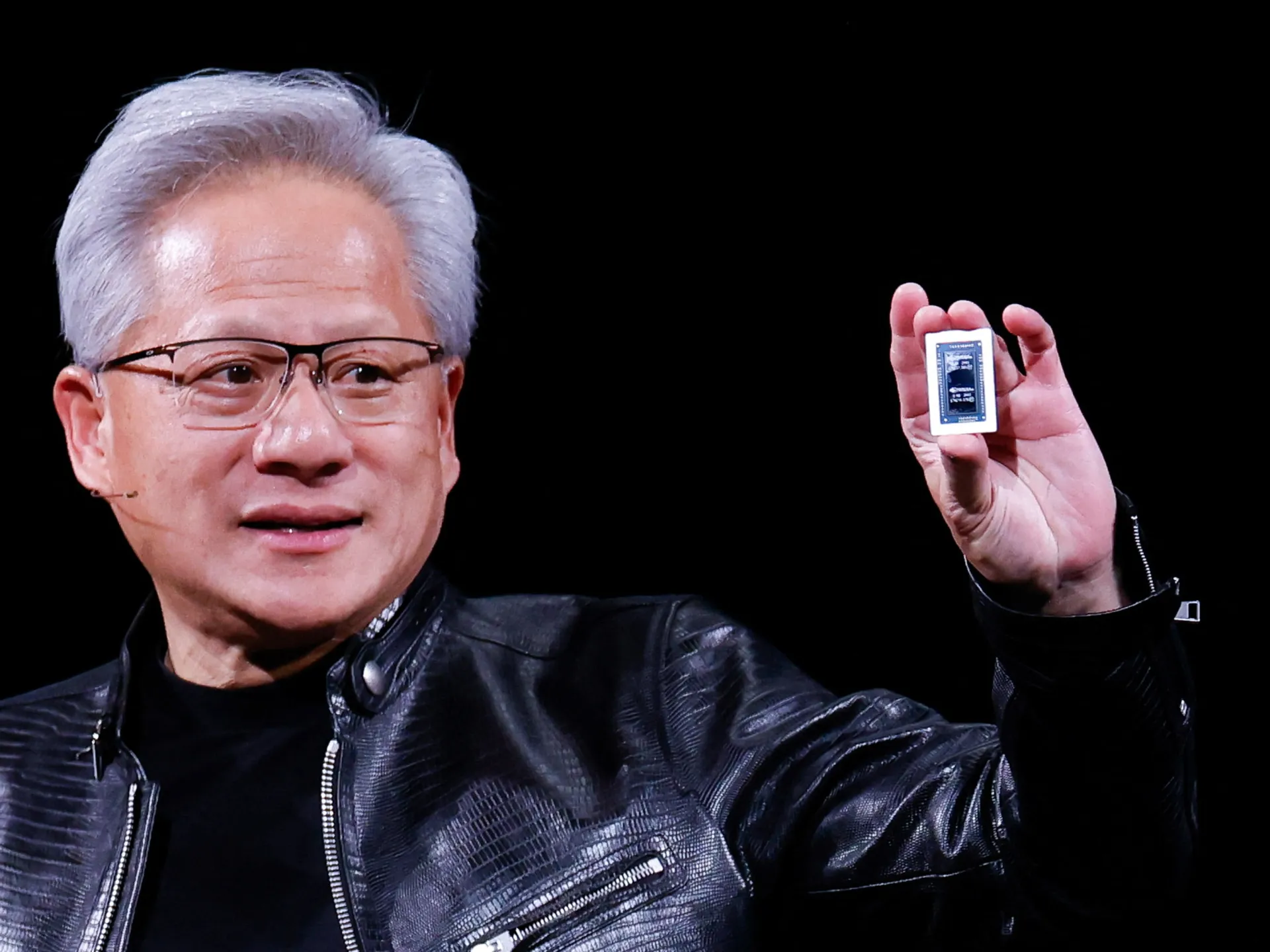
“This is going to be the new PC,” Huang said as he unveiled Nvidia’s RTX Spark superchip — which combines CPU, or central processing unit, and GPU, or graphics processing unit, capabilities — that would power new Windows laptop and desktop computer models in what the company called “AI personal computers”, expected to debut in the fall of this year.
The chip, developed with Taiwan’s MediaTek, will be in compact desktops from Dell, HP, Lenovo, ASUS, Microsoft Surface and MSI, with models from Acer and GIGABYTE to follow.
“When it has an autonomous [AI] agent, an agent that’s helping you, that understands you, you could talk to it. It could look at you. You could ask it to read files, go help you do some research. It could do a lot more,” Huang said.
Microsoft said in a separate statement that the personal computers running on Nvidia’s RTX Spark superchips would be able to support “highly capable AI models” and complex workloads. With the new superchips, these personal computers can run AI agents locally, Nvidia said.
“This is the first across the lineup of PC reinvention for 40 years,” Huang said.
Nvidia’s move is significant at a time when demand is growing for the use of personal AI agents, said Lian Jye Su, chief analyst at the technology research and advisory group Omdia.
“For consumers, it means more choices, which is always a good thing,” Su said.
Neil Shah, analyst and co-founder of Counterpoint Research, described Nvidia’s announcement as a move that’s “revolutionising how PCs would look like in the next 10 years”.
The new laptops and desktop computers “will drive agentic AI applications in every home”, Shah said, with an aim of having an “AI supercomputer” in each household.
Also during Monday’s speech, Nvidia’s Huang said its new Vera CPUs for data centres are in full production and are “going to be our new major growth driver” on the boom of AI agents, with early customers including Anthropic, OpenAI and SpaceXAI.
Huang also revealed a humanoid robot reference design that could act as a blueprint for future research, especially within the higher education sector. Nvidia said its “Isaac GR00T” stands nearly 1.83 metres (6 feet) tall and has the humanoid chassis of Chinese robot maker Unitree’s H2. It is equipped with five-fingered dexterous hands, made by Singapore-based robotics startup Sharpa, that are capable of finely controlled movements.
Reception for AI PCs has been mixed so far. HP reported last week that the devices helped prop up quarterly sales, but Dell said earlier this year that demand had fallen short of initial expectations. Qualcomm, looking to capitalise on AI demand, has also been offering AI PCs with Microsoft.
On Wall Street, Nvidia stock rose nearly 4 percent on the news in midday trading. Microsoft ticked up 2.5 percent and Dell surged 9.3 percent. Competitors AMD and Intel, on the other hand, are on the decline. AMD is down 0.1 percent from the market open, and Intel is down by 2.5 percent.
Kuwait activated its air defences after what its foreign ministry later described as a ‘heinous Iranian attack’. Iran says it targeted a US base in retaliation for being used, according to Tehran, to launch recent attacks on Iran.
While a peace deal between the US and Iran remains elusive, Israel has deepened its offensive into southern Lebanon.
Published On 1 Jun 20261 Jun 2026
The United States military says it has struck Iranian military sites, and Iran’s Islamic Revolutionary Guard Corps (IRGC) says it has targeted a US base in response, the latest in a series of exchanges as negotiations to end the three-month US-Israel war on Iran are conducted.
US President Donald Trump also on Monday described Iran as eager to reach an agreement.
“Iran really wants to make a deal, and it will be a good one for the USA and those that are with us,” he posted on his Truth Social platform.
Here is the latest on the US-Iran negotiations as both sides announced on day 94 of the war on Iran that they traded attacks:
In Iran
Production restored at South Pars: Iran has restored gas production at three offshore platforms in the South Pars gasfield after Israel attacked them in March.
US says it attacks Iranian military sites: The US military’s Central Command (CENTCOM) said it conducted “self-defense strikes” on Iranian radar and drone sites in the city of Goruk and on Qeshm Island at the weekend.
Iran executes two men over January protests: Iran executed two men convicted over their role in antigovernment protests in January, according to the Mizan news agency. The men were found guilty of setting fire to a mosque in Tehran, damaging public property and clashing with security forces, Mizan reported.
War diplomacy
Iran says messages being sent to US: Iranian Foreign Minister Abbas Araghchi said Tehran is continuing to exchange messages with the US on a deal to end the war.
Trump’s stance: Araghchi’s comments came after US media reported that Trump has called for tougher terms in the preliminary agreement.
In the Gulf
Kuwait intercepts missiles and drones: The General Staff of the Kuwaiti army said its air defences were “confronting hostile missile and drone attacks”. If sounds of explosions are heard, they are the result of air defences intercepting the projectiles, the army added.
In Lebanon
Israel pushes farther into Lebanon: Prime Minister Benjamin Netanyahu has ordered Israel’s military to push farther into Lebanon after Israeli forces made their deepest incursion into the country in more than 25 years.
Hezbollah says it downs Israeli drone: The Lebanese armed group said it shot down an Israeli Hermes 450 drone over the western sector of southern Lebanon using a surface-to-air missile on Sunday evening. It said in a statement on Telegram that the strike was in response to Israeli violations of a ceasefire that went into effect on April 8.
Hezbollah strikes Israeli forces in southern Lebanon: Hezbollah also said its fighters fired a large number of rockets and artillery shells at Israeli forces on the eastern outskirts of the town of Yohmor al-Shaqif in southern Lebanon early on Monday.
US proposes new plan: The US has put forward a proposal to de-escalate hostilities in Lebanon, a US official told Al Jazeera, adding that Secretary of State Marco Rubio held separate talks with Lebanese President Joseph Aoun and Netanyahu.
In Israel
Israel said rocket fired from Lebanon intercepted: The Israeli military said it intercepted a rocket that set off sirens in northern Israel and destroyed the launcher from which Hezbollah fired the projectile. Earlier, Israel’s Ynet News website reported that air raid sirens had been heard in Western Galilee, the town of Kiryat Shmona and surrounding areas.
In the US
The IRGC says it strikes US airbase: The IRGC said it struck an airbase that was used for an attack on a telecommunications tower on Sirik Island, located in the southern province of Hormozgan, Iran’s Fars news agency reported. The IRGC did not specify the location of the facility.
Trump says Iran wants to make a deal: In a new Truth Social post, Trump claimed Tehran “really wants to make a deal” and whatever deal is reached will “be a good one” for the US “and those that are with us”.
Jerome Powell says the US central bank is undergoing a ‘stress test’ like other institutions in the current era.
Published On 1 Jun 20261 Jun 2026
Former US Federal Reserve Chair Jerome Powell has warned against the politicisation of monetary policy amid President Donald Trump’s repeated attacks on the independence of the central bank.
In a speech at an awards ceremony in Boston on Sunday, Powell said that the Fed had been undergoing a “stress test” like many other institutions in the Trump era.
Recommended Stories
list of 4 itemsend of list
Powell said the US Congress had “wisely” chosen to insulate the central bank from political pressure and that all other advanced economies had similar norms upholding the independence of monetary policy.
“These protections have served the public well, and administrations from both parties have respected them,” Powell said after accepting the 2026 John F Kennedy Profile in Courage Award.
“If any administration finds a way to remove Fed officials over policy differences, then future administrations will do so as well,” Powell said.
“The public would lose faith that the central bank will make decisions based only on what’s best for all Americans.”
Powell, who stepped down as the head of the central bank last month, said that the Fed’s credibility would be “lost” in such a scenario.
“That credibility enables the Fed to support a strong and stable economy for the benefit of American families and businesses,” he said.
“Our credibility has been built and sustained over many decades, and we have a duty to safeguard that priceless asset for our fellow citizens and for generations to come.”
Powell, who made the usual decision to stay on as one of the seven members of the Fed’s Board of Governors after stepping down as chair, also offered a broader defence of democratic institutions generally.
“Partisan political differences are normal – indeed essential – in a thriving democracy. But we ought to be united in our commitment to the higher principles that define our nation,” Powell said.
“Chief among them is respect for the rule of law. As John Adams wrote, ours is ‘a government of laws and not of men’. Our public institutions carry us forward through change. These institutions embody our commitment to freedom, democracy, and service of the public good.”
While Powell did not mention Trump by name, the US president has waged a sustained pressure campaign against the central bank for not heeding his demands to cut interest rates more sharply.
Trump repeatedly threatened Powell with dismissal during his tenure, while Trump appointee and ally Jeanine Pirro opened a short-lived criminal investigation into Powell’s congressional testimony about ongoing renovation works at the Fed’s headquarters.
Trump also ordered the removal of Fed governor Lisa Cook over unproven claims of mortgage fraud, though the Supreme Court has ruled that she can remain in her position while it considers a legal challenge against her firing.
Under the Federal Reserve Act, the US president must demonstrate “cause”, widely interpreted to mean malfeasance, to remove any of the Federal Reserve’s governors.
The John F Kennedy Profile in Courage Award was created in 1989 to honour those who demonstrate courage in public service without regard to professional or personal consequences.
Past winners of the award, which is named after Kennedy’s Pulitzer-winning book Profiles in Courage, include former US President Barack Obama, then-Ukrainian President Viktor Yushchenko, and then-UN Secretary-General Kofi Annan.