Iran war live: Trump urges allies to keep Hormuz open amid Gulf attacks | News
US President Donald Trump says allies who rely on Gulf oil must help keep the Strait of Hormuz open.
Published On 15 Mar 2026
US President Donald Trump says allies who rely on Gulf oil must help keep the Strait of Hormuz open.
Thousands rallied in central Madrid calling for an end to the war involving the United States, Israel and Iran, with protesters warning the conflict could escalate into a global war.
Published On 14 Mar 202614 Mar 2026
Share
WASHINGTON — Anti-Muslim rhetoric from some Republicans in Congress intensified this week against the backdrop of the Iran war, with several lawmakers — including one who said that “Muslims don’t belong in American society” — drawing condemnation from Democrats but little response from GOP leaders.
The derogatory language has been percolating among Republican officials for months, often prominent when criticizing New York Mayor Zohran Mamdani, who is Muslim. But against the backdrop of the Iran war, a country with an overwhelmingly Muslim population, and attacks at a synagogue in Michigan and a college in Virginia, the tone sharpened this week.
“The enemy is inside our gates,” Sen. Tommy Tuberville of Alabama wrote Thursday in response to a photo of Mamdani sitting on the ground during an iftar dinner at New York City Hall. The photo was juxtaposed with a picture of the Sept. 11 attacks.
Hours later, Tuberville added: “To be clear, I didn’t ‘suggest’ Islamists are the enemy. I said it plainly.”
The rhetoric intensified Friday as GOP lawmakers responded to the attacks in Michigan and Virginia by urging a halt to all immigration into the United States. Some singled out Muslims specifically.
For many Muslims, it’s a political moment that carries echoes from the early 2000s, when the Sept. 11 attacks and the Afghanistan and Iraq wars generated hostility toward Muslim communities in the United States, often accompanied by discrimination and racist violence.
“When members of Congress speak, it’s not just words,” said Iman Awad, the national director for policy and advocacy for the Muslim American advocacy group Emgage Action. “It shapes public perception. It legitimizes prejudice.”
Rep. Andy Ogles (R-Tenn.) in his social media post stated flatly that Muslims don’t belong in the United States. He stood behind it after criticism mounted, later writing that “paperwork doesn’t magically make you American” and that “Muslims are unable to assimilate; they all have to go back.”
Asked about Ogles’ post Tuesday, House Speaker Mike Johnson (R-La.) said he had spoken to members “about our tone and our message and what we say.” He said Ogles used “different language than I would use,” but added that he believes the issue raised by the comments is “serious.”
“There’s a lot of energy in the country, and a lot of popular sentiment that the demand to impose sharia law in America is a serious problem,” Johnson said. “That’s what animates this.”
Sharia is a religious framework that guides many Muslims’ moral and spiritual conduct. References to “sharia law” have often been invoked by officials to suggest Muslims are attempting to impose religious practices on communities in the United States.
Many Republicans point to a Muslim-centered planned community near Dallas as proof of “sharia law” — though the developers have denied the allegations and said they are being targeted only because they are Muslim.
With Johnson not condemning Ogles’ remarks — or recent comments from Rep. Randy Fine (R-Fla.) that “the choice between dogs and Muslims is not a difficult one” — the anti-Muslim rhetoric grew louder. After the photo circulated of Mamdani at the iftar dinner, several Republicans responded with critical posts.
Democrats broadly condemned the Republican messages. Sen. Chuck Schumer of New York, the leader of Senate Democrats, called Tuberville’s post “mindless hate.”
“Islamophobic hate like this is fundamentally un-American and we must confront and overcome it whenever it rears its ugly head,” Schumer said.
Mamdani — in response to Tuberville’s post that “the enemy is inside our gates” — said: “Let there be as much outrage from politicians in Washington when kids go hungry as there is when I break bread with New Yorkers.”
Federal officials identified a man who rammed his vehicle into a hallway at Temple Israel in West Bloomfield Township, Mich., this week as a naturalized citizen born in Lebanon. Officials have said that the man — who was killed by security guards at the temple — had lost four family members in an Israeli airstrike in Lebanon during the ongoing war in the Middle East, just after sunset as they were having their fast-breaking meal during the Muslim holy month of Ramadan.
In Virginia, Mohamed Bailor Jalloh opened fire in a classroom at Old Dominion University before ROTC students subdued and killed him. Court documents showed that he had served time for attempting to aid the militant group Islamic State and was released less than two years ago.
Some Republican lawmakers claimed vindication for their views. Others pushed for legislation. Rep. Tom Emmer of Minnesota, the House Republican whip, said that “the security of our nation hinges on our ability to denaturalize and deport terrorists.”
Rep. Riley M. Moore (R-W.Va.) said he would introduce a bill to denaturalize and deport any naturalized citizen who “commits an act of terrorism, plots to commit an act of terrorism, joins a terrorist organization or otherwise aids and abets terrorism against the American people.”
Similar rhetoric and policy efforts have surfaced before and stoked controversy. Protesters connected to demonstrations in recent years over the Israel-Hamas war were arrested and targeted by authorities, including former Columbia University graduate student Mahmoud Khalil, a Palestinian activist the government has sought to detain and deport.
Middle East conflicts bringing domestic tensions is nothing new. With the war in Gaza, both Muslim and Jewish communities have faced faith-based discrimination and attacks.
Mamdani said the posts invoking the 9/11 attacks are problematic not just because of the words, but because of “the actions that often accompany them.”
“I think too of the smaller indignities, the indignities that many New Yorkers face, but that Muslims are expected to face in silence,” the mayor said. “Of the exhaustion of having to explain yourself to those who are not interested in understanding. Of the men who introduce themselves by their given name only to be called Muhammad for years on end.”
The stark silence from Republican leaders, including President Trump, reflects a broader change in the party. After the Sept. 11 attacks in 2001, Republican President George W. Bush visited the Islamic Center of Washington to explicitly warn against Muslim discrimination.
“America counts millions of Muslims amongst our citizens, and Muslims make an incredibly valuable contribution to our country,” Bush said during the visit, adding: “They need to be treated with respect. In our anger and emotion, our fellow Americans must treat each other with respect.
“Those who feel like they can intimidate our fellow citizens to take out their anger don’t represent the best of America, they represent the worst of humankind, and they should be ashamed of that kind of behavior,” Bush said.
Cappelletti writes for the Associated Press.
The administration of President Donald Trump has warned that news outlets could have their broadcasting licences revoked over critical reporting on the war against Iran, accusing the media of “distortions”.
Federal Communications Commission Chairman Brendan Carr said in a social media post on Saturday that broadcasters must “operate in the public interest”, or else lose their licences.
list of 3 itemsend of list
“Broadcasters that are running hoaxes and news distortions — also known as the fake news — have a chance now to correct course before their license renewals come up,” Carr wrote.
The warning was the latest apparent threat from Carr, who has repeatedly attracted scrutiny for statements that appear to pressure broadcasters to conform with Trump priorities.
Last year, for instance, Carr called on the channel ABC and its distributors to “find ways to change conduct, to take action” on comedian Jimmy Kimmel, whose late-night show had been critical of the president.
“We can do this the easy way or the hard way,” Carr said of Kimmel on a podcast. ABC temporarily suspended Kimmel’s show in the aftermath of those comments.
Carr’s latest statement prompted swift condemnation from politicians and free-speech advocates, who likened his remarks to censorship.
“This is a clear directive to provide positive war coverage or else licenses may not be renewed,” Senator Brian Schatz of Hawaii wrote.
“This is worse than the comedian stuff, and by a lot. The stakes here are much higher. He’s not talking about late night shows, he’s talking about how a war is covered.”
Aaron Terr, the director of public advocacy at the Foundation of Individual Rights and Expression (FIRE), likewise denounced Carr for seeking to silence negative war coverage.
“The First Amendment doesn’t allow the government to censor information about the war it’s waging,” Terr said.
Carr’s latest statement came in response to a social media post from Trump, accusing the “fake news media” of reporting that US refuelling planes had been struck in an Iranian attack in Saudi Arabia.
“The base was hit a few days ago, but the planes were not ‘struck’ or ‘destroyed’,” Trump said in a Truth Social post. “Four of the five had virtually no damage, and are already back in service.”
He added that reporting to the contrary was intentionally misleading. “Lowlife ‘Papers’ and Media actually want us to lose the War,” he wrote.
The president and his allies have faced accusations that they use the power of the state to penalise dissent and critical news coverage, raising concerns about press freedom.
Polling shows that the war, launched by the US and Israel on February 28, is largely unpopular in the US.
A recent Quinnipiac poll found that 53 percent of voters oppose the military action against Iran, including 89 percent of Democrats and 60 percent of independent voters.
The war has also been condemned by legal experts as a clear violation of international law, which prohibits unprovoked attacks.
Trump, however, has offered shifting rationales as to why he believes Iran posed an imminent threat to US security.
He has also asserted that the war is proceeding successfully, despite ongoing Iranian attacks on US forces across the region and the shutdown of the Strait of Hormuz, a key trade artery.
“We’ve won. Let me tell you, we’ve won,” he told a rally this week in Kentucky. “In the first hour, it was over.”
His administration, meanwhile, has blamed the news media for turning public opinion against the war.
“Yet some in this crew, in the press, just can’t stop,” Secretary of Defense Pete Hegseth said during a briefing on Friday.
A former Fox News host, Hegseth called for “patriotic” reporters to write more optimistic headlines instead. He denounced TV banners that read, for example, “Mideast war intensifies.”
“What should the banner read instead? How about ‘Iran increasingly desperate’? Because they are. They know it, and so do you, if it can be admitted,” Hegseth said.
He criticised the news outlet CNN, in particular, for a report asserting that the Trump administration had underestimated the chances of Iran closing the Strait of Hormuz.
Hegseth quipped that he hoped a prospective deal would soon place CNN under the control of David Ellison, son of close Trump ally and tech executive Larry Ellison.
“The sooner David Ellison takes over that network, the better,” he added.
A strike on the heavily fortified United States embassy compound in Baghdad caused a fire and damage to the complex. It is the second attack on the embassy since the United States and Israel launched strikes on Iran on February 28.
Published On 14 Mar 202614 Mar 2026
Share
Videos posted by social media users showed smoke rising from the US embassy in Baghdad after a reported attack. Iraqi officials said a helipad at the embassy was hit by a missile.
Published On 14 Mar 202614 Mar 2026
Share
“The US Navy at this point can’t even get anywhere close to the Strait of Hormuz without being attacked.” Experts are pouring cold water on Pete Hegseth’s claims that the US is working effectively to reopen the world’s most crucial shipping lane.
Published On 14 Mar 202614 Mar 2026
Share
Rights groups have slammed United States Secretary of Defense Pete Hegseth for saying that “no quarter” will be shown to Iran, as the US and Israel continue their military campaign against the country.
“We will keep pressing. We will keep pushing, keep advancing. No quarter, no mercy for our enemies,” Hegseth told reporters on Friday.
list of 3 itemsend of list
Under the Hague Convention and other international treaties, it is illegal to threaten that no quarter will be given.
Domestic laws, such as the 1996 War Crimes Act, also prohibit such policies. US military manuals likewise warn that threats of “no quarter” are illegal.
Brian Finucane, a senior adviser at the International Crisis Group, a think tank, said Hegseth’s comments appear to run afoul of those standards.
“These comments are very striking,” Finucane told Al Jazeera over a phone call. “It raises questions about whether this belligerent, lawless rhetoric is being translated into how the war is being conducted on the battlefield.”
But Hegseth has publicly dismissed concerns about international law, claiming he would abide no “stupid rules of engagement” and no “politically correct wars”.
His rhetoric has provoked concern among some experts that measures designed to prevent civilian harm are being ignored in favour of a campaign of “maximum lethality”.
Hegseth’s remarks also come after a US strike on a girls’ school in southern Iran that killed more than 170 people, most of them children. The war has left at least 1,444 Iranians dead and millions more displaced.
Prohibitions against declaring “no quarter” go back more than a century, part of an effort to impose restraints on conduct during war.
The Nuremberg trials after World War II upheld that legal standard, as Nazi officials were prosecuted, in some cases, for denying quarter to enemy forces.
“The basic idea is that it’s both inhumane and counterproductive to execute people who have laid down their arms,” said Finucane.
He added that the “mere announcement” of “no quarter” from a government official can itself be a war crime.
The US and Israel have already faced allegations of violating international law during their war against Iran. Experts have condemned their initial strike on February 28 as “unprovoked”, deeming the conflict an illegal war of aggression.
Iranian officials also protested after a US submarine sank a military vessel, the IRIS Dena, off the coast of Sri Lanka, as it returned from a ceremonial naval exercise in India. That attack killed at least 84 people.
While warships are considered legal military targets, Iran has said that the ship was not fully armed, raising questions about whether it could have been interdicted rather than sunk.
US forces also purportedly declined to help rescue sailors from the Dena, even though the Geneva Convention largely requires aid to the shipwrecked. The Sri Lankan navy ultimately helped collect survivors from the wreckage.
Responding to the attack, Hegseth described the sinking of the ship as a “quiet death”. He also told reporters, “We are fighting to win.”
US President Donald Trump himself remarked that he asked why the ship had been sunk, not captured.
“One of my generals said, ‘Sir, it’s a lot more fun doing it this way,’” Trump said.
The US military has faced criticism for killing civilians in military operations for decades.
That includes during the so-called “global war on terror”, when airstrikes resulted in thousands of civilian deaths, including a 2008 attack on a wedding party in Afghanistan.
Even before the war with Iran, the Trump administration had faced accusations that it violated international law by attacking alleged drug-trafficking vessels in the Caribbean Sea and eastern Pacific Ocean.
At least 157 people have been killed in those attacks since they started on September 2.
The Trump administration, however, has never identified the victims nor presented evidence against them. Scholars have condemned the attacks as a campaign of extrajudicial killings.
Analysts say that the Pentagon’s policies of emphasising lethality at the expense of human rights concerns has carried over into its war against Iran.
“Death and destruction from the sky all day long. We’re playing for keeps. Our warfighters have maximum authorities granted personally by the president and yours truly,” Hegseth said during a briefing on March 4.
“Our rules of engagement are bold, precise and designed to unleash American power, not shackle it.”
Sarah Yager, the Washington director at Human Rights Watch, called such rhetoric alarming.
“I’ve been engaging with the US military for two decades, and I’m shocked by this language. Rhetoric from senior leaders matters because it helps shape the command environment in which US forces operate,” Yager said.
“From an atrocity-prevention perspective, language that dismisses legal restraints is a serious red flag.”
While the impact of Hegseth’s rhetoric on combat operations is not certain, a recent report from the watchdog group Airwars found that the pace of the US and Israeli assault on Iran has far outstripped other military operations in modern history.
Reports indicate that the US dropped nearly $5.6bn worth of munitions in the first two days of the war alone. Airwars says the US and Israel hit more targets in the first 100 hours of the Iran war than in the first six months of the US campaign against ISIL (ISIS).
Following Hegseth’s remarks on Friday, Senator Jeff Merkley condemned the Pentagon chief as a “dangerous amateur”. He cited the attack on the Iranian girls’ school as an example of the consequences.
“His ‘no hesitation’ engagement rules set the stage for failing to distinguish a civilian school from a military target,” Merkley wrote in a social media post.
“The result, more than 150 dead schoolgirls and teachers from an American missile.”
MEXICO CITY — Cuba has begun direct talks with the United States in an effort to solve “bilateral differences” between the two countries, Cuban President Miguel Díaz Canel said Friday.
The comments, broadcast nationwide in Cuba, are the first confirmation of bilateral talks between two governments that have been fierce adversaries for almost 70 years, since Fidel Castro’s revolution toppled the U.S.-backed dictator Fulgencio Batista.
What exactly the talks are about remains unclear, but the Trump administration—which has choked off oil supplies to the island, triggering a severe energy crisis—has been insisting that Cuba’s communist government must change.
In a statement released on social media, Díaz Canel said, “The primary purpose of this conversation is, firstly, to identify the bilateral problems that require a solution—based on their severity and impact—and, secondly, to find solutions for these identified problems.”
Rumors of direct talks between the two nations have been circulating for months, but neither Washington or Havana had confirmed the talks until now.
On Tuesday, the Cuban ambassador to the United States, Lianys Torres Rivera, told The Times that the Cuban government was “ready to engage with the U.S. on the issues that are important for the bilateral relations, and to talk about those in which we have differences.”
Trump and Secretary of State Marco Rubio, the son of Cuban immigrants, have been insistent that the current government must change.
“It may be a friendly takeover, it may not be a friendly takeover,” Trump told Latin American leaders gathered in Florida on Saturday.
“It wouldn’t matter because they’re down to, as they say, fumes. They have no energy. They have no money. They’re in deep trouble,” Trump said.
Trump responded to the Cuban leader’s willingness to negotiate on Friday morning by amplifying a news article with the headline:”Cuba confirms talks with Trump officials, raising hopes for US deal.” He posted that on his Truth Social account.
Rolling blackouts, shortages of food and medicine, a lack of gasoline and other shortfalls have become everyday occurrences on the island, home to 10 million. Images of uncollected garbage rotting on Havana’s streets have been broadcast across the globe. A lack of jet fuel has bludgeoned the critical tourism sector.
“The status quo is unsustainable,” Rubio said last month. “Cuba needs to change…And it doesn’t have to be change all at once. It doesn’t have to change from one day to the next.”
The Cuban announcement comes 13 days after the U.S. attacked Iran and two months after U.S. forces, deployed by Trump, deposed Venezuelan President Nicolás Maduro, a longtime Cuban ally, and brought him to New York to face drug trafficking charges.
Miguel Diaz-Canel says discussions held to find solutions ‘through dialogue’ as Washington tightens oil blockade.
Cuban officials have held talks with the United States government to seek solutions to the crippling blockade imposed by Washington, President Miguel Diaz-Canel said, as the Trump administration’s threats to take over the Caribbean nation escalate.
“These talks have been aimed at finding solutions through dialogue to the bilateral differences we have between the two nations,” Diaz-Canel said in a video aired on national television on Friday.
list of 3 itemsend of list
Diaz-Canel said “international factors have facilitated these exchanges”.
He said no petroleum shipments have arrived on the island in the past three months, which he blamed on the US energy blockade.
Critical oil shipments from Venezuela were halted after the US attacked the South American country and abducted President Nicolas Maduro.
Cuba’s western region was hit by a massive blackout last week, leaving millions without power.
The talks come days after President Donald Trump levelled his latest threat at Cuba, saying the White House’s plans for the Caribbean nation may include a “friendly takeover”.
Diaz-Canel added that Cuba, which produces 40 percent of its petroleum, has been generating its own power but that it hasn’t been sufficient to meet demand.
He said the lack of power has affected communications, education and transportation, and that the government has had to postpone surgeries for tens of thousands of people as a result.
“The impact is tremendous,” he said.
The president added that the aim was “to determine the willingness of both parties to take concrete actions for the benefit of the people of both countries”.
“And in addition, to identify areas of cooperation to confront threats and guarantee the security and peace of both nations, as well as in the region,” he said.
For decades, severe US economic sanctions on Cuba have crippled its economy and cut it off from global trade. In response, Cuba has depended on oil supplies from foreign allies, including Mexico, Russia and Venezuela.
Six days after the commencement of Operation Epic Fury, President Trump took to Truth Social to announce, in the context of the ongoing joint American-Israeli military campaign against the Islamic Republic of Iran: “There will be no deal with Iran except UNCONDITIONAL SURRENDER!” In the same post, the president seemed to equate such “unconditional surrender” with “the selection of a GREAT & ACCEPTABLE Leader” to lead Iran, which would enable the country to come back from the “brink of destruction” and emerge “stronger than ever.”
Just three days after announcing “unconditional surrender” as his goal, Trump, speaking on March 9 in Doral, Fla., proclaimed that the end of the war will happen “very soon.” One might be forgiven for experiencing some whiplash — especially because earlier that same day, Trump told Fox News he was “not happy” with Iran’s naming of a new supreme leader, Mojtaba Khamenei. In fact, around the same time he was demanding “unconditional surrender” the prior week, Trump had already called Khamenei the younger “unacceptable.”
What exactly is going on here?
Trump is a conservative nationalist, which means his general approach to foreign policy and his specific foreign policy “excursions” are guided by his view of how best to secure the American national interest. Accordingly, since Operation Epic Fury started, Pentagon press briefings featuring Secretary of War Pete Hegseth and Chairman of the Joint Chiefs of Staff Dan Caine have repeatedly emphasized empirical metrics for measuring success, such as Iranian naval vessels sunk, Iranian air force planes shot down, Iranian ballistic missile silos and launch sites destroyed and so forth.
Trump hasn’t said it explicitly, but the Trump administration’s goal — and thereby, definition of victory — in Operation Epic Fury seems clear enough: the neutralization of Iran as an active, ongoing threat to the United States and our interests. If nothing else, at least, that is how victory in the current campaign should be defined.
That does still raise at least one pressing question, though, especially in the context of exiled Crown Prince Reza Pahlavi’s call to the Iranian people to prepare for “the decisive stage of our final struggle”: Where does that most controversial of foreign policy goals, “regime change,” fit into the puzzle?
At this point, it is undeniable that wholesale regime change is the most desirable outcome for the conflict in Iran. The pursuit of regime change as a goal unto itself is often now disparaged, coming in the aftermath of the failed neoconservative boondoggles earlier this century. But it ought to be axiomatic that there are some foreign regimes that behave in a manner that redounds to the American national interest, and there are some foreign regimes that behave in a manner that is contrary to the American national interest. It is natural and logical that we would wish for the latter types of regime to be heavily reformed or outright replaced — especially with the local populace leading the way.
Perhaps even more to the point: One does not take out a 37-year-ruling despot like Ali Khamenei, as the American and Israeli militaries did in the opening hours of the present operation, and not hope for full-scale regime change. All people of goodwill should be hoping for that outcome — for the Iranian people to rise up like lions and throw the yoke of tyranny off their necks once and for all, delivering a long-sought victory for the American national interest in the process.
But it’s entirely possible full-scale regime change won’t happen. The people of Iran just witnessed tens of thousands of their countrymen brutally gunned down during the anti-regime uprisings of late December and early January. They are an unarmed populace facing Nazi-esque regime jackboots, in the form of the Islamic Revolutionary Guard Corps and the Basij paramilitary.
All of that, then, raises one final question: Is it possible for there to be victory in Operation Epic Fury, and for the Iranian regime to be neutralized as a threat to the United States and our interests, if there isn’t full-scale regime change in Tehran?
In theory, the answer is yes. Venezuela provides a model.
Delcy Rodríguez, the current leader, is a hardened Marxist-Leninist in the mold of her predecessors Hugo Chávez and Nicolás Maduro. But Rodriguez has been fully cooperative with the United States since the astonishing January operation to extract Maduro for the simple reason that she has no real choice in the matter: She remains in power, yes, but only on the condition of an “offer” presented by Trump and Secretary of State Marco Rubio that, to borrow from Vito Corleone in “The Godfather,” Rodríguez “can’t refuse.” Rodríguez has thus been fully cooperative in areas such as American oil extraction and the reestablishment of diplomatic relations with the United States.
In theory, a similar arrangement is possible with a decimated, chastened regime in Tehran. And some experts predict that such an arrangement will characterize the regime in Iran a year or two from now. In practice, however, there is the ever-thorny problem that has frustrated and perplexed Westerners for decades when they attempt to reason with zealous Islamists: They do not fear death. A socialist like Delcy Rodríguez can, ultimately, be reasoned with; an Islamist like Mojtaba Khamenei (or his successor), perhaps not.
The cleanest solution to the Iran quagmire at this particular juncture — and the one that most clearly fulfills Trump’s “unconditional surrender” victory criterion — is indeed full-scale regime change. That is certainly the outcome that would be best for the neutralization of the Iranian threat and the corresponding advancement of the American national interest. I’m far from certain it will happen. But like many, I pray that it will posthaste.
Josh Hammer’s latest book is “Israel and Civilization: The Fate of the Jewish Nation and the Destiny of the West.” This article was produced in collaboration with Creators Syndicate. X: @josh_hammer
A drone attack on a joint French-Kurdish base in northern Iraq has killed one French soldier and wounded several others. Iran-aligned armed groups have been carrying out attacks against US and coalition forces in the region.
Published On 13 Mar 202613 Mar 2026
Share
Gulf countries, including Qatar, Bahrain and Kuwait, have declared force majeure on gas exports following the United States-Israel war on Iran, now in its third week, and the disruptions to shipping through the Strait of Hormuz, as Tehran has retaliated across the region, targeting US assets.
QatarEnergy was among the first to halt production, shutting down gas liquefaction on March 2 and sending ripples through global energy markets. Kuwait Petroleum Corporation and Bahrain’s Bapco Energies followed days later, while India invoked emergency measures to redirect gas supplies to priority sectors.
Oil prices also soared to more $100 a barrel as war intensified and uncertainty grew over energy shipments through one of the world’s most critical maritime chokepoints.
Here’s what we know about force majeure and what Gulf countries invoking it means for global oil and gas markets.
Force majeure, from the French meaning “superior force”, is a clause in contracts that allows a party to be excused from its obligations when an event beyond its control prevents performance.
This legal move can allow a party to suspend its obligations temporarily, be released from them partially or fully, or adjust them to reflect the new circumstances.
Companies in Qatar, Kuwait and Bahrain have invoked it following severe disruptions to shipping through the Strait of Hormuz caused by US-Israeli military strikes against Iran that started on February 28.
Following these attacks, a commander in Iran’s Islamic Revolutionary Guard Corps (IRGC) said on March 2 that the Strait of Hormuz was closed and warned that any vessel attempting to pass through would be attacked, a statement echoed by Iran’s new supreme leader, Mojtaba Khamenei, on Thursday.
As a result, Gulf companies started invoking force majeure, in order “to avoid paying damages or other financial penalties under their contracts”, Ilias Bantekas, a professor of transnational law at Hamad bin Khalifa University in Qatar, told Al Jazeera.
“These companies are most likely unable to fulfil their obligations, for example, to deliver shipments of oil and gas to other countries, or for shippers to transport them across the Arabian Gulf,” he said.
No. For war to qualify as force majeure, it must either be covered by the contract or actually prevent one or both parties from performing their obligations.
Companies and states typically include force majeure clauses that define which events qualify, meaning that when force majeure is invoked, the parties rely on provisions they previously agreed upon.
“War can always be foreseen, but perhaps not at the level at which it is being waged right now,” Bantekas said, adding that under general contract provisions, ships carrying goods are usually expected to find another route, “even if it is more costly to them”.
“What we could never have foreseen is that the Strait of Hormuz could be closed to shipping altogether, even if Iran were attacked in the brutal way it is now. I think that, on its own, could be sufficient to constitute a force majeure event,” he said.
“However, only a court would have the authority to make a definitive determination as to whether this kind of war, under these particular circumstances, amounts to force majeure,” he added.
Yes. QatarEnergy’s declaration of force majeure alone has already significantly disrupted the global LNG market, as Qatar accounts for nearly 20% of global supply.
Gas prices soared immediately following the country’s halt of gas production, and global gas markets are expected to experience shortages for weeks, if not longer.
“The lack of visibility over the likely duration of force majeure, and of the broader military conflict, is injecting extreme uncertainty into global oil, gas and LNG prices,” Seb Kennedy, global gas and LNG analyst, told Al Jazeera.
“Prices will necessarily keep rising as volumes are withheld from the market, until price pain triggers demand destruction in price-sensitive areas of the economy,” he noted.
On Tuesday, India invoked force majeure to redirect gas supplies from non-priority sectors to key users after disruptions to liquefied natural gas shipments through the Strait of Hormuz, according to a government notification.
But India’s measures are a “domestic demand-management response”, Kennedy said, as its government is relocating its limited gas supplies internally “to protect critical sectors such as households, small businesses, power generation and city gas distribution”.

Kennedy said the move reflects the difficult choices facing LNG-dependent economies, where governments may prioritise households and power generation over industrial users.
This prioritisation of LNG for domestic use “highlights the tough choices facing LNG-dependent countries”, he noted.
Aside from India, Omani trading house OQ also declared force majeure to a customer in Bangladesh after the Qatari supply was halted.
US LNG exporters are likely to benefit from the disruption. Analysis by Energy Flux estimates that US LNG exporters could generate about $4bn in windfall profits in the first month of the disruption alone.
If the situation persists, “US LNG windfall profits could reach $33bn above the pre-Iran average within four months. Over eight months, that figure rises to $108bn,” says Kennedy.

These gains largely come at the expense of European consumers, Kennedy notes, as Europe is the main destination for US LNG and remains heavily reliant on those supplies to refill gas storage and ensure winter supply security.
European stock markets fell last week, while the region’s natural gas prices rose sharply again.
Major Asian economies such as India, China and South Korea rely heavily on imported LNG.
On the other hand, Southeast Asia alone has significant fossil fuel resources, but the region still depends heavily on imported oil and gas, much of which is transported through the Strait of Hormuz.
“Wealthier buyers such as Japan and South Korea can generally outbid others to secure cargoes during periods of extreme scarcity,” Kennedy said, noting that price-sensitive importers, especially in South and Southeast Asia, tend to be “forced out of the market” whenever prices soar, “leading to demand destruction, fuel switching, or industrial curtailment”.
“In that sense, the crisis does not hit all LNG importers equally: It becomes a contest of balance sheets as much as a question of physical supply.”
If a force majeure clause is written in the contract, then it stands because the parties have consented to it.
Contrary to that, if it has not been written in the contract, then any unforeseen event would potentially be open to legal challenge, and it becomes a matter of convincing the courts that the event could never have been foreseen and that it makes obligations on one of the parties impossible to perform.
“However, in the present circumstances, the stronger parties – the ones waiting for deliveries of oil and gas elsewhere in the world – may actually be harming themselves if they refuse to accept force majeure,” Bantekas said.
“Doing business with Gulf countries could become more difficult in the future, and premiums would likely rise significantly. So, I do not think they will be taking these matters to court,” he noted.
Heavy Israeli strikes have hit Tehran, Iran, as its allies launch attacks across Gulf states, and shipping through the Strait of Hormuz has been severely disrupted, sending global oil prices soaring.
Meanwhile, political pressure is mounting in Washington as the conflict spreads across the region.
list of 1 itemend of list
Here is what we know about what has been happening in the past 24 hours:
Supreme leader speaks: Appointed last week following the assassination of his father, Iran’s new Supreme Leader Mojtaba Khamenei has issued his first statement, warning that attacks on Israel and US military assets and infrastructure in the Middle East will continue unless bases hosting US forces in the region are closed.
Heavy strikes on Tehran: The Israeli military has launched a new “extensive wave” of air attacks on Iran’s capital, Tehran, leaving the city covered in thick smoke on Friday morning.
Strait of Hormuz closure and surging oil prices: The Strait of Hormuz, which connects the Gulf to the Gulf of Oman, is closed, causing Brent crude oil prices to surge past $100 per barrel. The strait, which falls into the territorial waters of Iran and Oman, is the only waterway to the open sea available to oil and gas producers in the Gulf. Iran has stated that the strait is under Iranian control and US-and Israel-linked ships are banned. Other vessels must receive Iranian permission to pass.
Civilian casualties: Iran’s ambassador to the United Nations, Amir Saeid Iravani, said at least 1,348 civilians have been killed, with victims ranging in age from eight months to 88 years old.

Regional retaliation and attacks: Iran has launched waves of drones and missiles towards Gulf countries that host US military assets and troops, and has targeted oil tankers and facilities.
Bahrain: The nation has reported intercepting 114 missiles and 190 drones since the war began on February 28.
Saudi Arabia: The country intercepted 10 drones over its eastern region and later destroyed an additional 28 drones that breached its airspace.
Attacks on the UAE: The country has strongly condemned Iranian strikes on the region, and said they have hit Dubai International Airport and some hotels.
Evacuations: Australia has ordered all “non-essential” officials to leave the United Arab Emirates and Israel, and urged its citizens to evacuate the Middle East while it is still safe to do so
Qatar’s response: Qatar’s airspace is officially closed, but Qatar Airways has scheduled more than 140 special flights to help repatriate stranded residents and citizens.
Qatar has strongly rejected Israeli media claims that it intentionally paused liquefied natural gas (LNG) production to manipulate US energy prices; officials clarified that the suspension was actually forced by an Iranian drone attack.

Trump claims war moving ‘rapidly’: US President Donald Trump told reporters the war against Iran was moving “very rapidly”.
“It’s doing very well, our military is unsurpassed,” he said at the White House, not directly responding to the latest comments from Iran’s new supreme leader.
Domestic opposition: More than 250 US organisations have signed a letter calling on Congress to halt funding for the war. They argue the $11.3bn spent in the first six days of the conflict is diverting crucial funds from urgent domestic needs, such as food benefits.
No ‘need’ for ground troops in Iran: US Senator Lindsey Graham has played down the possibility of US troops being deployed to Iran, but suggested the war could continue for some time. “I don’t see this conflict ending today,” the Republican senator told reporters in Washington, DC.
![]()
New missile wave launched at Israel: The Israeli military said early on Friday that Iran had fired a new barrage of missiles towards Israel, and instructed people in affected areas to head to shelters.
Israel strikes Basij force: Israel’s military said it had struck checkpoints set up in Tehran by the Basij force of Iran’s Revolutionary Guards as part of efforts to undermine control by the authorities.
Regime change: Israeli Prime Minister Benjamin Netanyahu said Israel can create conditions for regime change, but it is up to Iran’s people to take to the streets. He also said Israel is aiming to stop Iran from moving nuclear and ballistic projects underground.
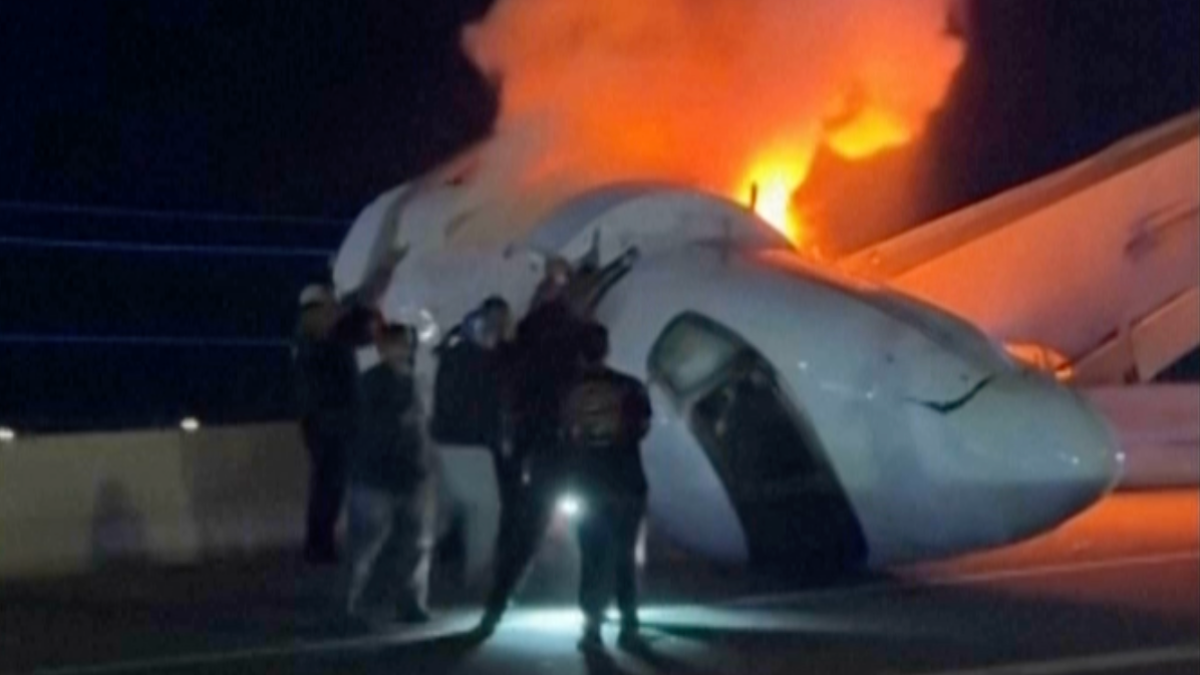
Downed US aircraft: A US KC-135 refuelling aircraft crashed in western Iraq. While the Islamic Resistance in Iraq claimed it shot the aircraft down using air defence systems, US Central Command (CENTCOM) stated the aircraft went down in “friendly airspace” and was not the result of hostile fire.
Iraqi port closures: Iraq has shut its port operations after an Indian crew member was killed during an attack on a US-owned oil tanker in Iraqi waters.
Six French soldiers hurt: A drone attack wounded six French soldiers in Erbil, in Iraq’s autonomous Kurdish region, President Emmanuel Macron said on Thursday.
Deadly attacks in southern Lebanon: Israeli bombardments continue on southern towns and villages. A strike on the village of Arki, near Sidon, killed nine people, including five children.
Mounting death toll and mass displacement: Lebanese officials have reported that at least 687 people have been killed in Israeli attacks on Lebanon since last Monday, including 98 children. The intense bombardments have displaced an estimated 700,000 to 750,000 people from their homes.
Protesters in Athens have marched to the US Embassy to condemn the US-Israeli attacks on Iran, joining protests held worldwide over the escalating conflict.
Published On 13 Mar 202613 Mar 2026
Share
Israeli Prime Minister Benjamin Netanyahu said several Iranian nuclear scientists were killed in Israeli strikes. He also said a “new path of freedom” for Iran was approaching and told Iranians the country’s future ultimately depends on them.
Published On 13 Mar 202613 Mar 2026
Share
Iran’s UN ambassador Amir Saeid Iravani said Tehran will not close the Strait of Hormuz and remains committed to freedom of navigation. His remarks came after Supreme Leader Mojtaba Khamenei said the waterway would remain closed to pressure Iran’s enemies.
Published On 12 Mar 202612 Mar 2026
Share
Washington, DC – In September, the United States began launching dozens of deadly military strikes against alleged drug-smuggling boats in the Caribbean Sea and eastern Pacific.
Nearly half a year later, remarkably little is known about the strikes. The identities of the nearly 157 people killed have not been released. Any purported evidence against them has not been made public.
list of 3 itemsend of list
But a group of United Nations and international law experts are hoping to change that on Friday, when they testify at the Inter-American Commission on Human Rights (IACHR).
The international hearing will be the first of its kind since the strikes began on September 2, and rights advocates hope it can help lead to accountability as individual legal cases related to the strikes proceed.
Steven Watt, a senior staff lawyer with the American Civil Liberties Union’s human rights programme, said the goal of the hearing will be threefold.
“Our ask will be to conduct a fact-finding investigation into what’s going on,” Watt said.
The second aim, he continued, would be “to assert or to arrive at a conclusion that there is no armed conflict here”, in what would be a rebuke to US President Donald Trump’s previous claims.
Finally, Watt said, he hopes the proceedings will yield long-sought transparency from the Trump administration on “whether or not they have a legal justification for these boat strikes”.
“We don’t think there are any,” Watt added.
The experts set to testify at Friday’s hearing said the IACHR has a unique mandate to uncover the truth behind the US strikes.
The commission, based in Guatemala City, Guatemala, is an independent investigative body within the Organization of American States, of which the US was a founding member in 1948.
While the Trump administration has claimed it has a right to carry out the deadly attacks as part of a wider military offensive against so-called “narco-terrorists”, rights groups have decried the campaign as a series of extrajudicial killings.
They argue that Trump’s deadly tactics deny those targeted of anything that approaches due process.
Legal experts have also dismissed Trump’s claims that suspects in drug-related crimes are equivalent to “unlawful combatants” in an “armed conflict”.
Few details have emerged from the air strikes. Several families have come forward, however, to informally identify the dead as their loved ones.
Victims are said to include 26-year-old Chad Joseph and 41-year-old Rishi Samaroo, who were sailing home to Trinidad and Tobago when they were killed in October, according to relatives.
A complaint filed against the US government said both men travelled often between the islands and Venezuela, where Joseph found work as a farmer and fisherman, and Samaroo laboured on a farm.
The family of Colombian national Alejandro Carranza, 42, have also said he was killed in September when the US military attacked his fishing boat off the country’s coast.
The US has yet to confirm the victims’ identities, and only two survivors have ever been rescued in the 45 reported strikes.
A clearer picture of what happened will be a significant step towards accountability, according to experts like Watt.
“[The IACHR] is uniquely positioned to identify who all these persons are,” Watt said. “We just know the numbers from the United States. We don’t know the names or the backgrounds of these people.”
The IACHR has launched a range of human rights investigations in recent decades, including probes into the 2014 mass kidnapping of 43 students in Iguala, Mexico, and a series of murders in Colombia from 1988 to 1991 dubbed the Massacre of Trujillo.
The commission has also examined US policies, including extrajudicial detentions at Guantanamo Bay, Cuba, during its so-called “global war on terror”.
The IACHR has the power to seek resolutions to human rights complaints or refer them for litigation before the Inter-American Court of Human Rights.
Just last week, the court ordered Peru to pay reparations to the family of a woman who died during a government-led forced sterilisation campaign in the 1990s.
The Carranza family has filed its own complaint to the IACHR, and the families of Joseph and Samaroo have also lodged a lawsuit against the US in a federal court in Massachusetts.
Angelo Guisado, a senior staff lawyer at the Center for Constitutional Rights (CCR), said a fuller accounting of the US actions is needed to prevent future abuses. He is among the experts testifying on Friday.
“You can’t normalise assassinating fishermen off the coast of South America,” Guisado told Al Jazeera. “That’s just sadistic and an abomination to the rules-based order that we’ve created.”
“So we hope that the commission can do some investigation.”
One of Guisado’s goals for Friday’s hearing will be to unpack the Trump administration’s argument that the attacks are necessary from a national security standpoint.
Even before the US strikes began, the Trump administration began framing the Latin American drug trade as an existential threat to the US.
As part of that re-framing, the administration borrowed messaging from its “global war on terror”, taking the unorthodox approach of labelling several cartels “foreign terrorist organisations”.
Speaking last week at a meeting of Latin American leaders, White House security adviser Stephen Miller maintained there is no “criminal justice solution” to drug cartels.
Instead, he affirmed that the US would use “hard power, military power, lethal force, to protect and defend the American homeland”, even if that meant carrying out deadly operations throughout the Western Hemisphere.
Guisado, however, noted that the administration has admitted that the targeted boats were largely carrying cocaine, not the highly addictive fentanyl responsible for the majority of US drug overdoses.
He explained that the administration has done little to prove its claims that drug traffickers are part of a coordinated effort to destabilise the US.
Such hyperbolic language, Guisado added, could be used as a smokescreen to conceal illegal actions.
“When you invoke national security interest, it seems as if scrutiny and any legitimate analysis or condemnation gets pushed to one side in favour of an ersatz martial law,” Guisado said.
“The idea that you could just proclaim anyone a narcoterrorist and do whatever you want with them is just so repugnant to our system of fairness, justice and law.”
Watt, meanwhile, said he hopes the IACHR will draw a clear “line in the sand”, separating drug crimes from what is conventionally considered an armed conflict.
He also would like to see the IACHR clearly outline the US’s human rights obligations.
“But even if there was an armed conflict — of which there isn’t — the laws of war would prohibit the type of conduct that the United States is engaging in here,” Watt explained.
“It would be an extrajudicial killing. It would be a war crime.”
Friday’s hearing will only be an initial step towards accountability, and critics question how effective the IACHR will ultimately be.
The US has regularly shrugged off human rights probes at international forums, and it is not party to entities like the International Criminal Court in The Hague, raising barriers to the pursuit of justice.
Despite being a member of the OAS, the US has also not ratified the American Convention on Human Rights, one of the organisation’s founding documents.
It is, therefore, unclear how binding any IACHR decisions could be, although Watt argued that it is “longstanding jurisprudence of the commission that the declaration imposes obligations on non-ratifying member states”.
Still, legal experts said Friday’s hearing may yield clarity on the Trump administration’s legal argument for the boat strikes.
The IACHR has said US government representatives are set to appear at the hearing.
To date, the US Department of Justice has not released the Office of Legal Counsel’s official reasoning for the boat strikes, considered the foundational legal document for the military actions.
A separate memorandum from that office addressed the US abduction of Venezuelan President Nicolas Maduro on January 3, which it framed as a drug enforcement action.
That memo touched on the boat strikes, but it only served to raise further questions about Trump’s rationale.
“This will be an opportunity for the United States to put its case before the commission,” Watt said.
“But of course, it depends on US cooperation,” he continued. “They’re going down there, but it’ll be interesting to see what they actually say”.
WASHINGTON — Iran’s new supreme leader, Mojtaba Khamenei, vowed retaliation Thursday against the United States and Israel and signaled that Tehran will continue to choke off the world’s most critical oil route, as the war strained global energy markets and raised new security concerns in the United States.
In his first public remarks since U.S.–Israeli strikes killed his father, former Supreme Leader Ayatollah Ali Khamenei, Mojtaba Khamenei swore revenge. The new leader, notably, did not appear in person for the televised statement. Instead, his written words were read aloud on Iranian state media.
“We will never retreat and vow to avenge the blood of our martyrs,” he said. “Our revenge will be never ending, not only for the late supreme leader, but also for the blood of all of our martyrs. … Those who killed our children will pay the price.”
The new leader expressed condolences to families who lost children in a strike on a girls school in Minab that killed more than 165 people, many of them children. He also warned that the war could expand, declaring that the continuation of the conflict “depends on the interests of the parties.”
The Associated Press, citing two sources, reported that outdated intelligence likely led to the United States carrying out the deadly missile strike on the elementary school. U.S. Central Command relied on target coordinates for the strike using outdated data provided by the Defense Intelligence Agency, according to a person familiar with the preliminary finding.
Khamenei indicated that Tehran would maintain its blockade in the Strait of Hormuz, a key choke point through which 20% of the world’s oil supply is shipped. He also said he believes in friendship with his country’s neighbors, but that attacks on U.S. military installations in the region will continue. He described maintaining pressure on the passage as a necessary part of Iran’s war strategy.
His remarks came as attacks continued to disrupt shipping and energy infrastructure across the Persian Gulf. The war sent oil up 10% Thursday as hostilities in Iran drag on.
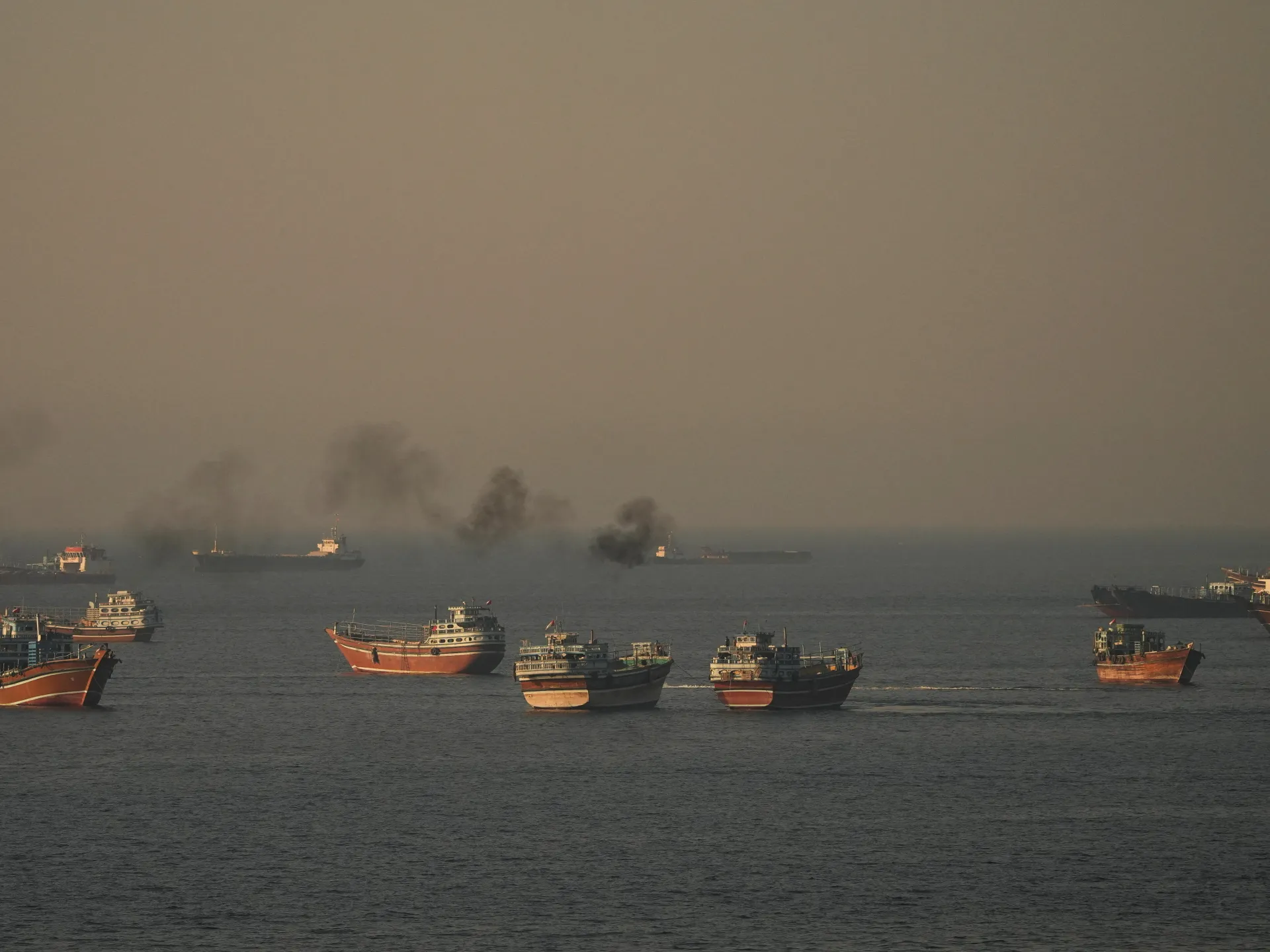
Reports from the region said Iranian forces have intensified strikes on vessels attempting to pass through the Strait of Hormuz, leaving hundreds of ships stranded at its entrances and rattling global oil markets.
Two oil tankers were struck by explosives in Iraqi waters near the port of Basra. The Islamic Revolutionary Guard Corps claimed responsibility for the attacks, which killed at least one crew member and set both vessels ablaze, according to the Associated Press. A third unnamed vessel was reported to have been struck by an “unknown projectile” near Dubai and Jebel Ali, causing a small fire, the United Kingdom Maritime Trade Operations reported.
The latest incidents come after drone strikes targeted fuel storage facilities across the Gulf, including at energy sites in Bahrain and at the port of Salalah in Oman, an important hub for tankers seeking to bypass the Strait.
“They will pay the price. We will destroy their facilities,” Khamenei said. “It is necessary to continue our defensive activity, including continuing to close the Strait of Hormuz.”
New York City, United States – Rising prices on the back of US-Israel strikes on Iran are adding to the economic pressure facing US consumers despite efforts by US President Donald Trump to paint the war as a success.
On Wednesday, Trump declared, “We won – in the first hour it was over.”
list of 4 itemsend of list
Trump’s declaration comes even as the Strait of Hormuz remains closed, cutting off oil from the Gulf amid warnings from Iran, which continues to strike ships, that oil could reach $200 per barrel.
Oil prices spiked above $100 per barrel on Sunday and again today.
The magnitude of the economic pressure on consumers will depend on how long the war lasts and, crucially, how soon shipping traffic can return to the Gulf.
“If it drags on and especially if it remains at this intensity, prices will be higher, and more volatile for consumers,” said Rachel Ziemba, an adjunct senior fellow at the think tank Center for a New American Security.
“If it ends quickly, and it’s a credible and stable end, then we could see prices fairly quickly normalising”.
If the war lasts more than a few weeks, however, observers say the US economy is more likely to see deepening impacts, like 1970s-style “stagflation” or a recession.
On Thursday, the International Energy Agency said in a report that “the war in the Middle East is creating the largest supply disruption in the history of the global oil market.”
According to Sam Ori, who directs the Energy Policy Institute at the University of Chicago, in the past, when oil prices have reached 4 percent to 5 percent of gross domestic product and stayed elevated, “that’s always triggered a recession.”
The US will not hit that threshold as quickly as it would have in the 1970s, when its economy was more deeply dependent on foreign oil, Ori said, but added he expected a recession if prices remained about $140 a barrel for most of the year.
Alternatively, “the indefinite closure of the Strait of Hormuz would so vastly exceed that number, it would not take a year,” he said.
Ori, who used to run an oil shock war game for US officials, said he would have been “laughed out of the room” if he had proposed a scenario where the strait was closed for six months, because many analysts see it as “too big to fail”.
Ori says that assessment is still likely, but recent developments “are chipping away at that level of certainty”.
The Gulf, which separates the Arabian Peninsula and Iran, provides more than one-fifth of the world’s oil supply via tanker ships through the Strait of Hormuz.
The severity of that threat to the global economy is the “strongest indicator that this is going to get resolved pretty fast, because it’s impossible to fathom what would happen if it didn’t”, Ori said.
He added that the conflict has now entered a phase in which it may be moving out of US control, especially as some countries have turned off the oil wells as they run out of storage.
While those events have now been baked into oil prices, the things that he is on the lookout for include “successful mining of the strait, some kind of structural blockage, or a battlespace development that binds the US into a longer, drawn out conflict”, outcomes that could signal a total loss of the strait for an unknown amount of time and create the “conditions for a complete meltdown”.
The war is already driving petrol prices up for US consumers.
Patrick DeHaan, who leads petroleum analysis for the app GasBuddy, said that the national average as of Wednesday is now $3.59 per gallon ($0.95 per litre) – up 65 cents since February.
The highest increases are near the coasts, where US petrol, diesel and jet fuel supplies are more easily diverted to meet global demand, according to DeHaan.
An end to the conflict could lower petrol prices within weeks, DeHaan said, but “every week that this goes on, we could see another 25 to 40 cent increase”.
Robert Rogowsky, an adjunct professor at Georgetown University’s School of Foreign Service, said lower-income people in particular, “will pay the price for this inflationary burst”.
As the war continues, it will also nudge up prices for consumer goods.
Peter Sand, chief analyst for freight intelligence platform Xeneta, said the backup at the Strait of Hormuz is already causing congestion at ports worldwide.
In the short term, consumers should not feel much of a pinch, Sand said. But if the conflict lasts for a month, some goods will be delayed, “and of course, the price tag on those goods also goes up.”
The war also means that the Red Sea, mostly closed in 2025 due to Houthi attacks, will likely stay closed throughout 2026, Sand said. It was expected to reopen, which could have lowered consumer prices.
Oil and oil byproducts from the Gulf are also used directly in consumer goods, like plastics, pharmaceuticals and fertilisers. Shortages now may mean higher prices later.
Fertilisers from the Gulf, for example, are needed soon for spring planting. Delays could affect crops next year.
A shortage of helium from the Gulf could also impact semiconductor manufacturing, delaying car manufacturing and other industries, Ziemba said.
Higher consumer prices could increase the risk of “stagflation”, when stagnant economic growth occurs alongside high unemployment and high inflation.
That is how the US economy responded to the oil price shocks of the 1970s.
Severin Borenstein, faculty director of the Energy Institute at the University of California, Berkeley’s Haas School of Business, said, “There’s certainly concern about stagflation again.”
That combination of high inflation plus high unemployment, Borenstein said, “is just really tough for the Fed to deal with”.
“They can either juice the economy or slow it down, and the two problems call for opposite solutions”, Borenstein said.
The Fed can lower interest rates to prompt spending and hiring, which can make inflation worse, or it can raise interest rates to lower inflation, which can slow hiring.
Ziemba said higher oil prices likely point to “inflation remaining stickier, which means it’s harder for the Fed to cut interest rates.”
As a result, “mortgage rates and other long-term interest rates might be stuck at their current levels,” Ziemba said. Mortgage rates, which were at 5.99 percent on February 27, are up to 6.29 percent as of March 12.
Even if the war ends tomorrow, it may already be accelerating longer-term shifts.
Rogowsky called US attacks on Iran “an injection of adrenaline” into a realignment already under way, as middle powers seek to reduce their reliance on the US.
That realignment “will affect our terms of trade, which will have a distinct impact on our economy”, Rogowsky said.
Logistics consultant David Coffey said for some businesses, the war is expediting conversations about risk. “They may have been assuming ‘Yes, there’s risk in the Middle East,’ but they may not have been assuming that this would kick off”, Coffee said.
Making supply chains more secure could raise costs for consumers, he said.
Meanwhile, Heidi Peltier, a senior researcher at Brown University’s Costs of War Project, said war also means long-term expenses around debt payments and veterans’ healthcare.
“We have spent at least $1 trillion in interest on the Iraq and Afghanistan wars – and rising, because it’s not like we’ve paid off any of that principal”, Peltier said.
Military spending, she said, also tends to create fewer jobs than government investment in education or healthcare. “If we’re spending money on this, what are we not spending money on?” Peltier asked.
The United States military is “not ready” to accompany oil ships through the Strait of Hormuz, a top official in President Donald Trump’s administration says as Iran continues to block the strategic waterway.
US Energy Secretary Chris Wright told the CNBC business news channel on Thursday that the markets are experiencing a “short-term disruption”, predicting that the war would go on for “weeks, not months”.
list of 3 itemsend of list
Despite Trump’s repeated threats, Iran has largely succeeded in shutting down the strait, which links the Gulf to the Indian Ocean. The closure has sent oil prices soaring.
Wright described the effects of the crisis as “short-term pain for long-term gain”, arguing that the US is “destroying” Iran’s ability to threaten the energy market.
Last week, Trump suggested that the US Navy would escort ships through the Gulf, but Wright said on Thursday that the move “can’t happen now”.
“We’re simply not ready. All of our military assets right now are focused on destroying Iran’s offensive capabilities and the manufacturing industry that supplies their offensive capabilities,” the energy secretary said.
“We don’t want this to be a brush-off for a year or two. We want to permanently destroy their ability to build missiles, to build roads, to have a nuclear programme.”
His comments came as Iran’s new supreme leader, Mojtaba Khamenei, affirmed in his first public comment since being selected to succeed his assassinated father, Ali Khamenei, that the Strait of Hormuz should remain closed during the war.
“The will of the people is to continue effective and deterrent defence,” Khamenei said in a written statement. “The tactic of closing the Strait of Hormuz must also continue to be used.”
The Iranian military has said it would “welcome” the US Navy escorting oil ships, suggesting it is prepared to strike US forces in the narrow waterway.
On Wednesday, three commercial vessels were attacked near the strait.
Wright announced earlier this week on social media that the US Navy had escorted an oil ship through the strait, then quickly deleted the post. The White House subsequently confirmed that the claim was not true.
It is not clear why the statement was released and then retracted.
Assurances by US officials that Washington would open the strait have temporarily calmed markets, only for prices to spike again.
The price of a barrel of oil peaked at about $120 on Sunday, up from about $70 before the US and Israel launched the war on February 28. It has been yo-yoing between $80 and $100 for the past few days.
In addition to the marine blockade, Iran has targeted oil installations across the Gulf.
As one of the world’s largest oil producers, the US is largely self-sufficient. But possible shortages in Asia and Europe have put a strain on prices globally.
According to data from the American Automobile Association, the average price of one gallon (3.78 litres) of petrol in the US is now $3.60, up from $2.94 last month.
Rising energy prices could fuel inflation and affect the cost of basic goods, including food.
But Trump suggested on Thursday that the US is benefitting from skyrocketing oil prices.
“The United States is the largest Oil Producer in the World, by far, so when oil prices go up, we make a lot of money,” the US president wrote in a social media post.
“BUT, of far greater interest and importance to me, as President, is stopping an evil Empire, Iran, from having Nuclear Weapons, and destroying the Middle East and, indeed, the World.”
Iran denies seeking a nuclear weapon, and Trump reiterated for months before the current conflict that US strikes against Iranian facilities in June had “obliterated” the country’s nuclear programme.
Iranian President Masoud Pezeshkian has laid out terms for ending the war with the United States and Israel in what analysts say is a possible sign of de-escalation from Tehran as the US-Israel war on Iran entered its 13th day on Thursday.
In a post on Wednesday on social site X, Pezeshkian said he had spoken to his counterparts in Russia and Pakistan, and that he had confirmed “Iran’s commitment to peace”.
list of 4 itemsend of list
“The only way to end this war – ignited by the Zionist regime & US – is recognizing Iran’s legitimate rights, payment of reparations, and firm int’l guarantees against future aggression,” Pezeshkian wrote.
This is a rare posture from Tehran, which has maintained a defiant stance and initially rejected any possibility of negotiations or a ceasefire when war broke out nearly two weeks ago.
Pezeshkian’s statement comes as pressure mounts on the US to halt what has become a very costly mission. Analysts say speculation from Washington that Iran would quickly submit after the killing of Supreme Leader Ayatollah Ali Khamenei were misguided.
Tehran is likely going to determine the end of this war, not the US or Israel, because of its ability to inflict economic pain broadly, they say.
Amid a military pummelling by the US and Israel, Iran has launched heavy retaliatory strikes at US assets and other critical infrastructure in Gulf countries, upsetting global supplies. It has also adopted what analysts call “asymmetric” tactics – such as disrupting the critical Strait of Hormuz and threatening US banking-linked entities – to inflict as much economic pain on the region and wider world as it can.
This is what we know about Pezeshkian’s stance and what the pressures are on both sides to draw the conflict to a close, quickly.

Economically, both sides have weaponised energy. Israel first targeted Iran’s oil facilities in Tehran on March 8, prompting an outcry from global health experts over the potential risk of air and water pollution.
Iran has, meanwhile, tightened its chokehold on the Strait of Hormuz shipping route – the only route to open sea for oil producers in the Gulf – with its military promising on Wednesday that it has the capabilities to wage a long war that could “destroy” the world economy.
Attacks on ships in the strait, through which about 20 percent of global oil and gas traffic normally passes, have effectively closed the route.
Oil prices rocketed above $100 per barrel late last week, up from around $65 before the war, with ordinary buyers feeling the increases at pumps in the US, Europe and parts of Africa.
On Wednesday, Iran upped the ante, saying it would not allow “a litre of oil” to pass through the strait and warned the world to expect a $200-per-barrel price tag.
“We don’t know how quickly it’ll revert back,” Freya Beamish, chief economist at GlobalData TS Lombard, told Al Jazeera. “We do think it’ll revert back to $80 in due course, but the ball is to some degree in Iran’s court,” she said, adding that because Iran needs oil revenue, the price hikes are expected to be time-limited.
The International Energy Agency agreed on Wednesday to release 400 million barrels from the emergency reserves of several member states but it is not yet clear what impact that will have, nor how quickly this quantity of oil can be released.
Tehran has also been accused of directly attacking oil facilities in neighbouring countries this week. Iraq shut all its oil port operations on Thursday after explosive-laden Iranian “drone” boats appeared to have attacked two fuel tankers in Iraqi waters, setting them ablaze and killing one crew member.
A drone was filmed striking Oman’s Salalah oil port on Wednesday, although Tehran has denied involvement.
There has been conflicting messaging from the Iranian leadership.
Iran’s elite army unit and parallel armed force, the Islamic Revolutionary Guard Corps (IRGC), continues to show defiance, issuing threats and launching attacks on Israel and US military assets and infrastructure in neighbouring Gulf countries.
However, the political leadership has appeared more inclined towards diplomacy, analysts say. On Wednesday, President Pezeshkian said that ending the war would take the US and Israel recognising Iran’s rights, paying Iran reparations – although it’s unclear how much is being asked for – and providing strong guarantees that a future war will not be waged.
In a video recording last week, he also apologised to neighbouring countries for the strikes and promised that Iran would stop hitting its neighbours as long as they do not allow the US to launch attacks from their territory.
“I personally apologise to the neighbouring countries that were affected by Iran’s actions,” the president said, adding that Tehran was not looking for confrontations with its neighbours.
However, it is not known how much sway the political leadership has over the IRGC. Hours after the president’s apology last week, air defence sirens went off in Saudi Arabia, Qatar, the UAE and Bahrain, as strikes continued on the Gulf.
“Iran wants to go to the end to make sure that the United States and Israel never attack Iran again … so this has to be the final battle,” Al Jazeera’s Resul Serdar Atas explained.
Indeed, the IRGC sees this as an existential war, but the timing of Pezeshkian’s statement about ending the conflict also shows Tehran is pressured economically, politically and militarily, Zeidon Alkinani of Qatar’s Georgetown University told Al Jazeera.
“These differences and divisions [between IRGC and political leaders] always existed even prior to this war but we may notice it now more, given the fact that the IRGC believes that it has the right to take the front seat in leading this regional war, which is why a lot of the statements and positions are contradicting with the official ones from Pezeshkian,” he said.
The IRGC reports directly to Iran’s Supreme National Security Council (SNSC) and not to the country’s political leadership. That council is led by Ali Larijani, a top politician and close aide to the late supreme leader, Ali Khamenei, who analysts describe as a “hardliner”.
In a post on X on Tuesday, Larijani responded to threats from Trump about attacks on the Strait of Hormuz, saying: “Iranian people do not fear your hollow threats; for those greater than you have failed to erase it … So beware lest you be the ones to vanish.”
The newly elected supreme leader, Mojtaba Khamenei, was once in the IRGC and was put forward by the unit as the next ayatollah after his father was killed on the first day of the war, analysts say. He is thus not expected to follow the reformist, diplomatic ideals of President Pezeshkian and other political leaders which his father managed to marry with the IRGC militarised stance, they say.

There have also been conflicting messages from the Trump administration and Israel regarding when the war mission on Iran, codenamed Operation Epic Fury, is likely to end.
Trump told US publication Axios on Wednesday that the war on Iran would end “soon” because there’s “practically nothing left to target”.
“Anytime I want it to end, it will end,” he added. He had said earlier on Monday that “we’re way ahead of our schedule” and that the US had achieved its goals, even as speculation mounts about a possible US ground mission.
On the other hand, Israel’s Defence Minister Israel Katz said on Wednesday that the war would go on “without any time limit, for as long as necessary, until we achieve all the objectives and decisively win the campaign”.
Analysts say Trump’s stance that the conflict will be quick reflects increasing pressure on his administration ahead of upcoming mid-term elections in November.
Trump’s advisers privately told him this week to find a quick end to the war and avoid political backlash, according to reporting by The Wall Street Journal. That came as polls from Quinnipiac University and The Washington Post suggested that most Americans are opposed to the war in Iran.
In his 2024 presidential campaign, Trump promised to lower prices, and inflation had stabilised at 2.4 percent ahead of the war, according to government data released on Wednesday. Analysts speculate the conflict will likely push it back up.
The US spent more than $11.3bn in the first six days of the war, Pentagon officials told lawmakers in a classified briefing on Tuesday, Reuters reported this week – nearly $2bn a day.
The Washington-based think tank, Center for Strategic and International Studies (CSIS), estimated that the war cost Washington $3.7bn in its first 100 hours alone, or nearly $900m a day, largely due to its expenditure on costly munitions.
“It’s quite ironic that [Trump] chose a war that would make affordability worse, not better,” Rebecca Christie, a senior fellow at the Bruegel think tank, told Al Jazeera’s Counting the Cost.
“Every time the US loses even one object, air defence or a plane or something like that, that represents an awful lot of money that could have been used on some of these issues that have an impact on people’s day-to-day lives in the United States.”