Belgium v Egypt live: World Cup 2026
Follow our live build-up, with full team news coverage, ahead of our text commentary stream.
Source link
Follow our live build-up, with full team news coverage, ahead of our text commentary stream.
Source link
Israeli journalist Gideon Levy says the US-Iran announcement represents a personal defeat for Prime Minister Benjamin Netanyahu and his ambitions against Iran and Lebanon. His relationship with US President Donald Trump could also be at risk if Israel jeopardises the deal.
Published On 15 Jun 202615 Jun 2026
Share
The World Cup group stage continues on Monday, with four more matches taking place across the United States.
Spain begin their campaign against World Cup newcomers Cape Verde, Belgium face Egypt in what could be one of the day’s closest games, Saudi Arabia take on Uruguay in Miami, and Iran meet New Zealand in Los Angeles.
list of 4 itemsend of list
Away from the football, Uruguay’s disrupted travel plans, divisions within Los Angeles’s Iranian American community before Iran’s opener, and Haiti’s inspiring return to the World Cup are all drawing attention beyond the pitch.
Here is what to know:
Spain take on Cape Verde at Atlanta Stadium in Atlanta, with kickoff scheduled for 12pm local time (16:00 GMT).
Belgium face Egypt at Seattle Stadium in Seattle at the same time, with the Group G rivals also getting under way at 12pm local time (19:00 GMT).
Later, Saudi Arabia meet Uruguay at Miami Stadium in Miami Gardens, Florida. That match starts at 6pm local time (22:00 GMT).
The day’s final fixture sees Iran face New Zealand at Los Angeles Stadium in Inglewood, California. Kickoff is at 6pm local time (01:00 GMT on June 16).
Spain are the clear favourites to win, but Cape Verde have already made history by reaching the World Cup for the first time.
The teams have never played each other. Spain’s last two World Cup matches against African opponents came against Morocco, drawing 2-2 in 2018 before losing on penalties after a 0-0 draw in the 2022 quarterfinals.
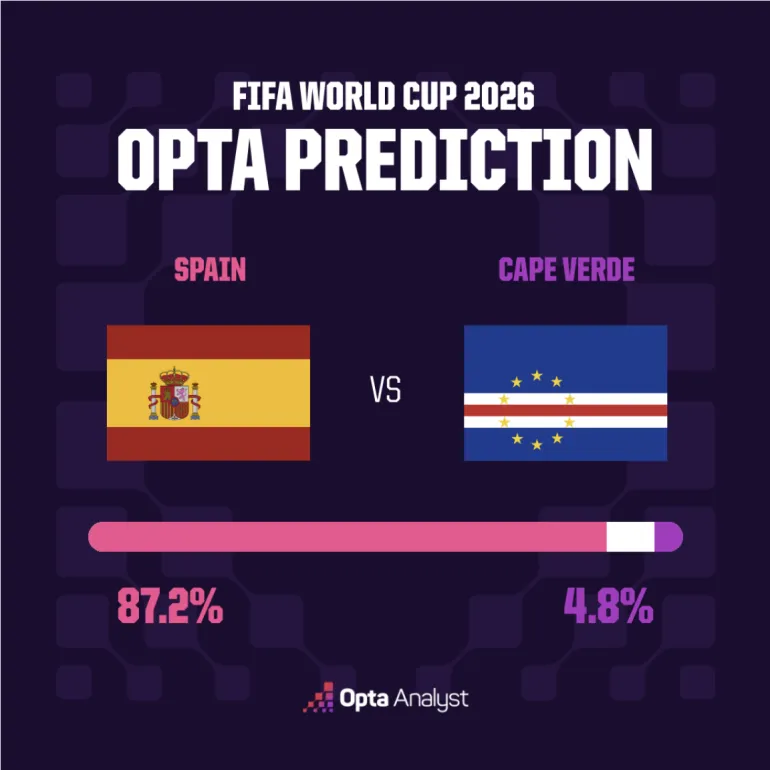
Opta’s predictions strongly favour Spain. After running 25,000 simulations, the statistics company gave Spain an 87.2 percent chance of winning the Group H opener. A draw was predicted in 8.1 percent of the outcomes, while Cape Verde were given a 4.8 percent chance of causing an upset.
Only one African team has ever beaten Spain at a World Cup: Nigeria, who won 3-2 in the group stage in 1998.

This one could be much closer than many people expect.
Opta’s predictions suggest there is very little separating the sides. In 25,000 match simulations, Belgium won 37.2 percent of the time, while Egypt came out on top in 35.5 percent. A draw happened in 27.3 percent of the simulations.
Belgium are slight favourites. It could end up being one of the closest games of the day, with a single goal potentially making the difference.
Belgium face pressure to avoid repeating their performance in 2022 in Qatar, when they did not advance beyond the group stage. The Belgians finished third in 2018 in Russia.

Saudi Arabia and Uruguay have met only once before at a World Cup. Uruguay won that match 1-0 in 2018.
The teams have also faced each other in a friendly match. That game, played in Saudi Arabia in 2014, ended in a 1-1 draw.
The predictions favour Uruguay. In 25,000 simulations run by Opta, Uruguay won 64.7 percent of the time. Saudi Arabia won 13.9 percent of the simulations, while 21.4 percent ended in a draw.

Iran and New Zealand have only played each other twice before, and this will be their first meeting in a competitive match.
Their first game ended in a 0-0 draw in New Zealand in 1973. Thirty years later, Iran won 3-0 in Tehran, with Ali Karimi scoring twice before Hossein Kaebi added a third goal.
The predictions give Iran the edge. In 25,000 simulations run by Opta, Iran won 53.8 percent of the time. New Zealand won 20.4 percent of the simulations, while 25.8 percent ended in a draw.

Uruguay’s preparations for their World Cup opener have been disrupted after travel problems delayed the team’s arrival in the US.
The squad had been due to fly from Cancun, Mexico, before Monday’s Group D match against Saudi Arabia in Miami. However, reports in Uruguay said the charter flight was not cleared to enter the US, forcing the team to make alternative arrangements.
The Uruguayan Football Association (AUF) said the delay was outside its control. A replacement plane was eventually organised, with the team expected to reach South Florida only about a day before kickoff.
“Due to problems beyond the control of the AUF, the departure from Mexico has been delayed,” the association said in a statement. “The squad is resting at the hotel. The new departure time set by FIFA is 4:15pm [21:15 GMT].”
The blue bags Japanese fans waved while celebrating their team’s goals, and then stayed behind for something else after the match ended.
Following Japan’s 2-2 draw with the Netherlands, supporters stayed behind to collect rubbish from the stands before leaving the stadium, continuing a tradition that has become a familiar part of the World Cup.
The cleanup effort first caught global attention at the 1998 tournament in France, and Japanese fans have kept it going at every World Cup since.
As Iran prepare to begin their World Cup campaign in Los Angeles, members of the Iranian American community in Westwood, or “Tehrangeles”, remain split over how to respond.
While some opposition activists plan protests against the team, others are setting politics aside to support the football. Business owner Roozbeh Farahanipour told Al Jazeera’s reporter Ali Harb that “the community is divided” and there is no consensus on whether to boo the national team or back the US-Israel war against Iran.
Former Canadian Prime Minister Justin Trudeau attended the US World Cup opener against Paraguay in California instead of Canada’s game against Bosnia and Herzegovina in Toronto.
Trudeau said he chose to be at the game in Inglewood because his girlfriend, singer Katy Perry, was performing in the pre-match show at SoFi Stadium.
“Sometimes supportive boyfriend duties call. But you know who I’m rooting for to take the Cup,” he wrote on X.
Canada’s opener in Toronto and the US match in Los Angeles were played just hours apart, prompting some fans to question why the former prime minister was not supporting the home team.
Trudeau served as Canada’s prime minister from 2015 to 2025.
After returning to the World Cup for the first time since 1974, Haiti’s campaign has given people a rare reason to celebrate.
For Olivier Woodensky Pierre, the World Cup is a dream come true. He is the only player in Haiti’s squad who still lives in the country. Born in Cite Soleil, one of the poorest areas in the capital, Port-au-Prince, Pierre hopes the team’s achievement will inspire young people back home.
“Every player always wishes to play in the World Cup. That was my dream. That’s why I’m fighting to be here. I got the chance to be selected to play in the World Cup. I am advising the youth not to be discouraged. Keep fighting, work, and be disciplined,” Pierre told Al Jazeera’s Teresa Bo.
Haiti’s qualification has brought a sense of hope to a country going through one of the most difficult periods in its recent history. Gangs control large parts of the capital, violence has displaced hundreds of thousands of people, and many Haitians have taken to the streets to demand peace while also celebrating the team’s return to football’s biggest stage.
The journey to the World Cup was far from straightforward. Because of the ongoing political crisis, Haiti had to play its home qualifiers abroad. There was also a lack of funding.
“It was really difficult before because there were no sponsors to finance the team. You know, since we qualified for the World Cup, FIFA provided money for preparation, and the government provided $4m that were crucial to help us prepare,” Thecieux Jeanty of the Haitian Football Federation told Al Jazeera.
Pastor Winston Noel also voiced disappointment over US visa restrictions affecting Haitians.
“FIFA must talk to the Trump administration to tell them that this cannot be the case because it is the World Cup. All countries that qualify must have their fans to come and support their teams,” he said.
“The World Cup is something special for us Haitians. Many children here in Haiti will participate in the World Cup, even though this generation doesn’t know the names of all the players. But we are very happy because it’s a great achievement for us,” Noel said.
Haiti eventually opened their World Cup campaign with a 2-0 defeat to Scotland, but for many supporters the tournament is about more than results. It remains a rare moment of pride, unity and hope for a country that has endured years of hardship.
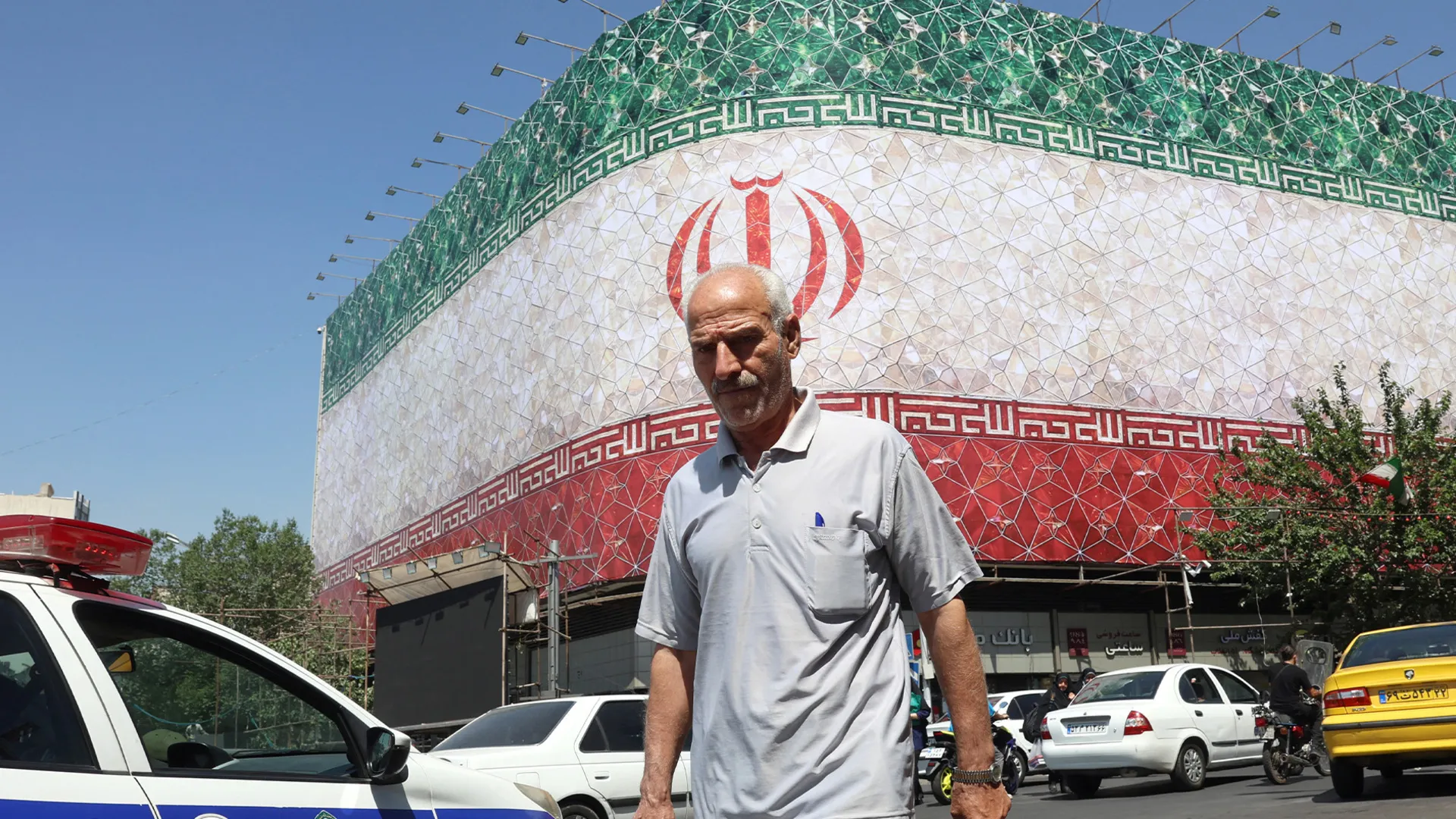
The US and Iran say they have reached a deal to end fighting on all fronts and open the Strait of Hormuz. Al Jazeera’s Osama Bin Javaid explains how both sides are claiming victory, even as tough negotiations over the details still lie ahead.
Published On 15 Jun 202615 Jun 2026
Share
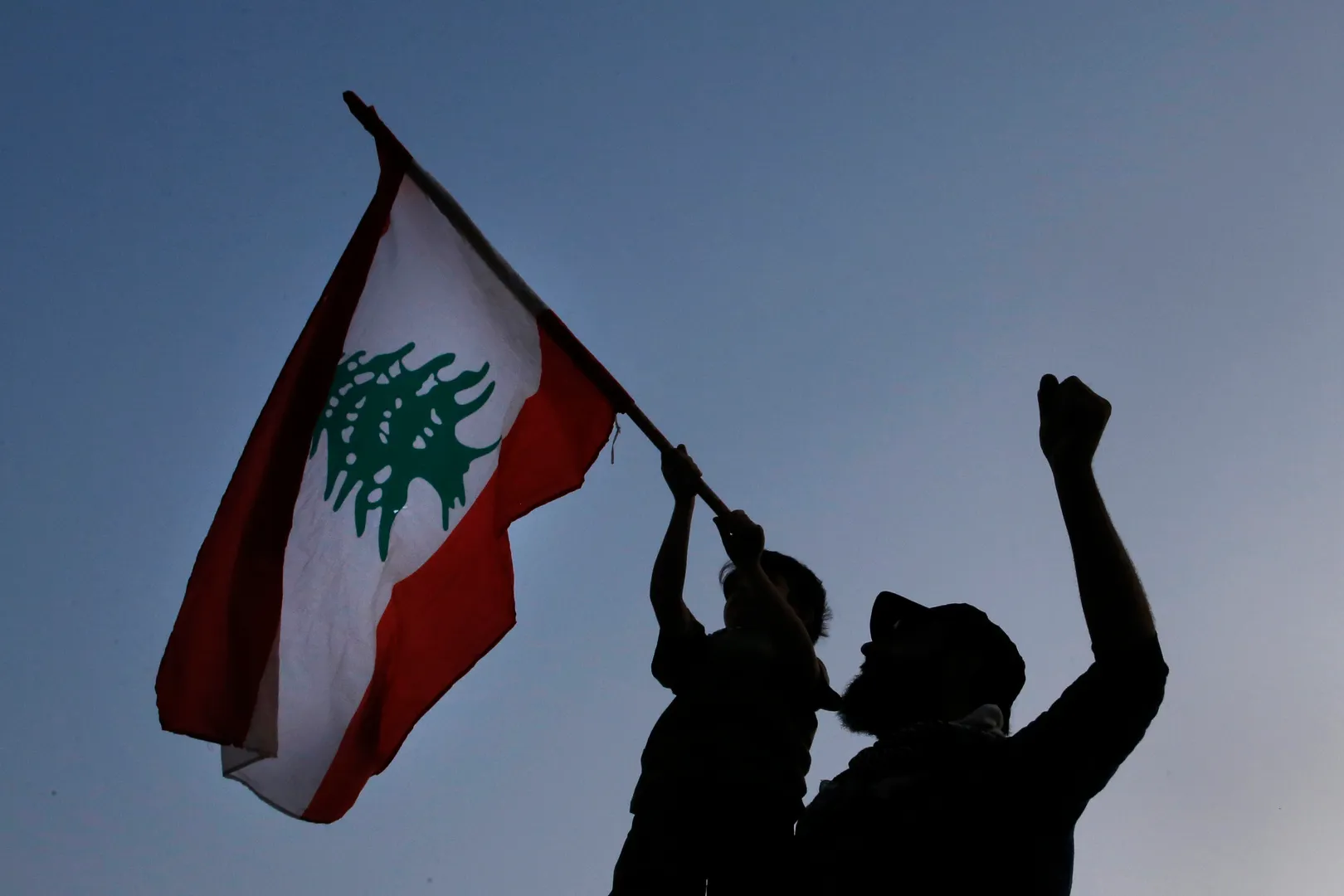
The US-Iran ceasefire announcement has raised hopes in Lebanon, after Pakistani mediators claimed it included an end to Israel’s war on the country. But as Al Jazeera’s Heidi Pett explains, we’ve been here before.
Published On 15 Jun 202615 Jun 2026
Share
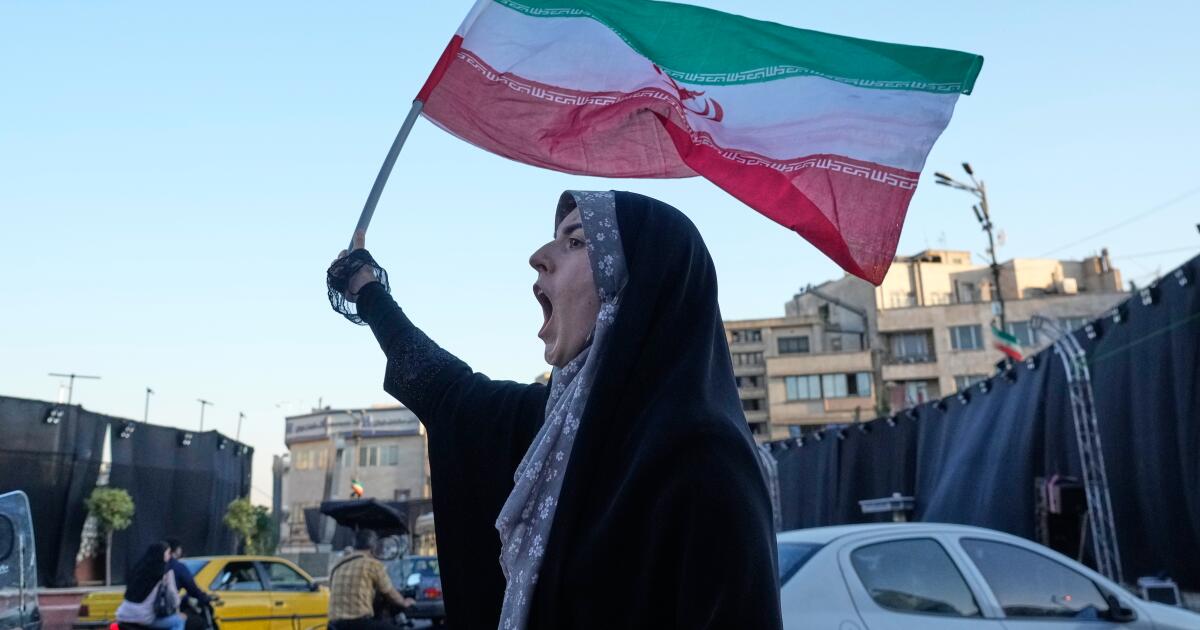
WASHINGTON — President Trump said Sunday that the United States and Iran have reached a framework agreement to end the war in the Middle East, a breakthrough in months of negotiations aimed at ending the conflict.
The deal, described by diplomats as a memorandum of understanding, commits Tehran to forgo the development or acquisition of nuclear weapons in exchange for helping reopen the Strait of Hormuz, and the paced release of its assets frozen overseas, upon the signing of the deal Friday in Switzerland.
Trump said he has also authorized “the immediate removal of the United States Naval blockade” on Iranian imports.
“Ships of the World, start your engines. Let the oil flow!” Trump wrote in a social media post Sunday evening. It was the president’s 80th birthday.
The full details of the agreement have not been released. Many details — including how Tehran would give up, destroy or dilute its fissile material, or whether Iran would continue treating the international strait as its sovereign waters — will continue to be negotiated in the coming days.
Pakistani Prime Minister Shehbaz Sharif said Sunday that mediators are planning to hold a series of meetings this week to “lay the foundation for the technical talks and the official signing ceremony.”
“We would like to thank the United States of America and the Islamic Republic of Iran for their commitment to finding a diplomatic solution to the conflict,” Sharif wrote in a post on X.
The Associated Press reported that negotiations on outstanding issues like Iran’s nuclear program would continue over the next 60 days, according to two senior Pakistani officials who spoke on condition of anonymity.
Vice President JD Vance told Fox News that the White House is “still figuring out the logistics” on whether he or Trump will attend the signing ceremony.
“What we know is that we have a lot of work to do, but a very big win for the American people tonight,” Vance said.”We are just going to keep on working at it, keep on driving energy prices down, keep on ensuring that region of the world is less than a basket case and finally, and most importantly, celebrate, that we can say with confidence Iran will never have a nuclear weapon.”
Iran’s deputy foreign minister, Kazem Gharibabadi, confirmed the agreement on state television but said Iran would not start implementing it until it was signed on Friday. He said the deal followed over 14 hours of talks in Tehran with a representative from Qatar, another mediator.
Iranian state TV showed a banner asserting: “US was forced to sign an agreement to end the war.”
Iran’s commitment to refrain from pursuing nuclear weapons would simply repeat a vow Iran has made several times before, including in its signing of the Nuclear Non-Proliferation Treaty and its nuclear deal brokered with international powers under the Obama administration over 10 years ago.
Iran has 972 pounds of uranium that is enriched up to 60% purity, a short, technical step from weapons-grade levels of 90%, according to the International Atomic Energy Agency. Under the 2015 international agreement with Iran abandoned by the first Trump administration, Iran’s uranium enrichment was capped at less than 4%, monitored by IAEA inspectors.
The vagueness of the new agreement, the demand for further negotiations to flesh out its details, and the pacing of sanctions relief for Iran are all likely to draw criticism of the president, who launched his political career in 2015 by attacking President Obama’s newly signed nuclear deal as a historically bad agreement.
That deal, known as the Joint Comprehensive Plan of Action, followed two years of painstaking negotiations that were predicated on a similar, yet more detailed framework, called the JCPOA.
Defense Secretary Pete Hegseth said in a Sunday morning interview on CBS’ “Face the Nation” that the the difference between the JCPOA and how the Trump administration is handling negotiations is the “threat of military force.”
“The huge difference is we did this from a position of strength,” Hegseth said. “That military might will stay as long as necessary.”
And, as in 2015, Israeli leadership across the political aisle remains deeply skeptical of the agreement, pronouncing they will not be bound by a deal to which they are not a party.
In a phone interview with the New York Times on Sunday afternoon, Trump called Benjamin Netanyahu, the prime minister of Israel, a “very difficult guy.”
“To be honest with you, he should be very thankful to us for doing this. Because if Iran had a nuclear weapon, Israel wouldn’t be around for two hours,” Trump said.
Since the U.S.-Israeli attacks on Iran that started the war Feb. 28, there have been 3,468 confirmed deaths in Iran, according to independent monitors. In addition, 13 U.S. service members have been killed, and the Israeli war with Hezbollah has killed 2,679 in Lebanon as well as 23 Israelis, including eight civilians.

Dan Perry: The US ‘may pretend’ that Israel can’t attack Hezbollah ‘in order to get this deal done’. Israeli affairs analyst Dan Perry explains how the US, Israel and Iran may react as they get closer to a potential agreement.
Published On 14 Jun 202614 Jun 2026
Share
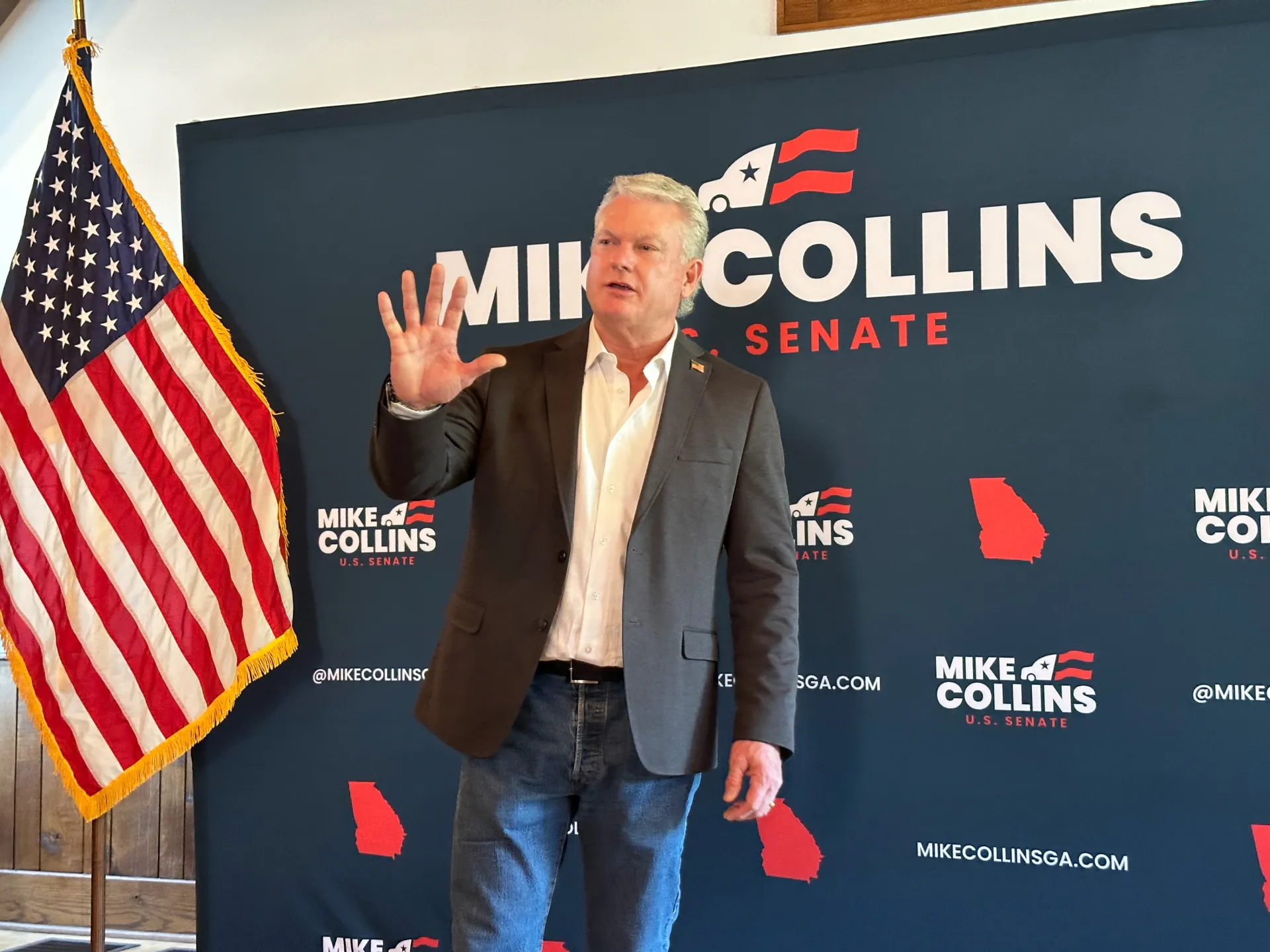
Donald Trump picks Mike Collins over Derek Dooley in race to determine who will face Democrat Jon Ossoff in November midterms.
Published On 14 Jun 202614 Jun 2026
United States President Donald Trump has made a late endorsement in a Republican run-off for a key US Senate race in Georgia ahead of the US midterm elections.
In a post on his Truth Social account, Trump threw his support behind US Representative Mike Collins over former football coach and political newcomer Derek Dooley.
list of 3 itemsend of list
Collins and Dooley will face off in a Republican run-off race on Tuesday to determine who will challenge incumbent Senator Jon Ossoff, a Democrat, in the midterm election in November.
In a post on Truth Social, Trump praised Collins for being a staunch supporter of his Make America Great Again (MAGA) movement and a “true friend, fighter, and WARRIOR”.
Ossoff entered office in 2021 as part of a blue wave in Georgia that saw the majority of the state vote for former US President Joe Biden, as well as his fellow Democrat, Senator Raphael Warnock.
Georgia, which had for decades been dominated by Republicans, swung back towards Trump in the 2024 vote. Defeating Ossoff is seen as one of the Republicans’ best chances at claiming a new seat in the 100-member chamber, where they are hoping to hold on to their slim 53-seat majority.
Democrats are hoping to win control of both the House and the Senate in November, which would create a major bulwark against Trump’s agenda during his final two years in office.
Trump’s endorsement pits Collins against Georgia’s Republican Governor Brian Kemp, who has supported Dooley.
Kemp has remained generally supportive of Trump, but has faced off with him on several issues, notably Trump’s evidence-less claims that the 2020 election in Georgia was marred by fraud.
Dooley has said he did not vote in 2016 or 2020 when Trump was on the ballot, and has maintained that the election results in Georgia were legitimate.
Collins carried about 40 percent of the vote during Georgia’s Republican primary on May 19, with Dooley taking about 30 percent. Representative Buddy Carter, who did not advance to the run-off, came in a close third.
It remains unclear how big of an impact Trump’s endorsement will have. He made the announcement after early voting had already ended for the run-off.
Trump’s endorsements have seen mixed results in the primary season.
Trump’s decision to back Texas Attorney General Ken Paxton was seen as aiding in the MAGA loyalist’s defeat of US Senator John Cornyn in Texas’s primary run-off.
Cornyn had widely been viewed as the strongest Republican candidate to take on Democratic challenger James Talarico in the general election.
In Iowa, Trump’s late endorsement of US Representative Randy Feenstra did not give him the bump needed to defeat fellow Republican Zach Lahn in the gubernatorial primary race.
Beyond the run-off in Georgia, Alabama will also hold several primary run-offs on Tuesday. That includes a Republican race for the solidly red seat of US Senator Tommy Tuberville, who is running for governor.
Oklahoma and the federal district of Washington, DC, will also hold primary votes.


Pre-tournament favourites Spain open their Group H campaign with a match against World Cup debutants Cape Verde.

Published On 14 Jun 202614 Jun 2026
The 2026 World Cup will have 13 different kickoff times. You can use the Al Jazeera Sport widget to find out exactly when your team is playing in your local time.
Who: Spain vs Cape Verde
What: FIFA World Cup 2026 Group H match
Where: Mercedes-Benz Stadium, Atlanta, United States
When: Monday, 12pm local time (16:00 GMT)
How to follow: Catch all live updates on Al Jazeera Sport
list of 4 itemsend of list
Spain, the reigning European champions and strong favourites for the 2026 World Cup, begin their title bid on Monday by facing minnows Cape Verde in Atlanta.
Since winning their maiden world title in 2010, Spain have endured a dismal run in the following three campaigns, bowing out in the group stage in 2014 and exiting in the round of 16 in 2018 and 2022.
But their Euro 2024 success and a new golden generation of Lamine Yamal, Pedri, Gavi, Ferran Torres and others have prompted bookmakers to keep Spain at the top of the potential winners‘ list.
La Roja – known for playing entertaining, attacking football – have become unshakeable over the last four years, going 30 matches unbeaten since a 1-0 friendly loss to Colombia at Wembley in March 2024.
Spain will arguably be the team to beat in North America, with Opta’s supercomputer handing them a 15.94 percent probability to lift the title, and France a close second at 13.62 percent odds.

Yamal single-handedly stole the show in Germany two years ago en route to their Euro title, and will hope to repeat that form at the June 11 – July 19 tournament.
But the teen sensation may have to wait a little longer to make his World Cup debut.
Spain could take a cautious approach for the Cape Verde opener with winger Yamal and young forward Nico Williams in the final stages of recovery from hamstring injuries sustained in April.
Both returned to training with their teammates on Thursday, but De la Fuente could opt to name them on the bench or keep them out of the matchday squad until they reach full fitness.

Known for its crystal-clear waters and sandy white beaches, Cape Verde will make noise for different reasons this North American summer.
The archipelago of 10 islands in the Atlantic Ocean will make its World Cup debut on Monday, arriving at the global showpiece as one of 10 African representatives.
After their fairytale qualification, which coincided with its 50th anniversary of independence from Portugal, Cape Verde – with fewer than 600,000 inhabitants – became the third smallest country by population to reach the tournament after Iceland in 2018 and Curacao, also in 2026.
The team has slowly built credibility in recent years. Their international breakthrough came in 2013 when they qualified for their first Africa Cup of Nations (AFCON) and reached the quarterfinal stage.
Cape Verde has spread the national team net wide with starters based in several countries, including Portugal, the Netherlands, and the United States.
![Cape Verde beat record African World Cup qualifiers Cameroon to seal their spot in the finals [File: Cristiano Barbosa/AP]](https://i0.wp.com/www.aljazeera.com/wp-content/uploads/2026/03/AP25286764425321-1774510671.jpg?w=640&ssl=1)
Spain are strong favourites to win this match, having an 87.2 percent probability of walking away with three points. Cape Verde have a slim 4.8 percent chance of victory, while a draw has an 8.15 percent chance.
Overall, Spain have a 76.53 percent probability to win Group H, which also includes Saudi Arabia and Uruguay.
The following is the list of broadcasters and platforms to watch the game in these countries:
Vinicius Junior scored a brilliant goal to dig Brazil out of trouble after Ismael Saibari had put Morocco ahead.
A moment of magic from Vinicius Junior salvaged Brazil a point against Morocco in New Jersey, as the five-time World Champions made a shaky start to the tournament.
Ismael Saibari ran through to give Morocco a 21st-minute lead with a clever scoop in the Group C opener on Saturday, but a solo effort from Vinicius ensured the points were shared in this much-anticipated group match.
list of 4 itemsend of list
Here are the biggest takeaways from the 1-1 draw at New York New Jersey Stadium.

Brazil are chasing a record sixth World Cup title, 24 years after last lifting the trophy, but this performance suggests there is a lot of work to be done by Carlo Ancelotti’s side.
They showed signs of nerves during the early stages of the game and struggled to cope with a lively Morocco attack.
A fifth-placed finish in South American qualifying underlined the scale of the challenge facing Ancelotti, and this performance has done little to ease concerns about the quality of the Brazil squad.
A number of their players struggled to cope with the intensity of the Moroccan team, with midfielder Casemiro subbed off at half-time after a difficult opening 45 minutes in the heat.
The World Cup final is a long way off in New Jersey, but Brazil will have to vastly improve if they are to have any hope of making it.
The Atlas Lions stunned the world of football in 2022 as they made it all the way to the semifinals in Qatar.
Four years later, Morocco have the chance to show that it was not a one-off run to the last four and they are the real deal.
Judging by their performance in New Jersey on Saturday, the North African nation are truly a force to be reckoned with.
They arrived in North America as African Cup of Nations champions, after being retrospectively awarded the title following a controversial final defeat to Senegal, and they continued their strong form with a commanding performance against Brazil, playing with a high level of confidence and plenty of attacking threat.
Morocco appear set for another strong tournament showing.

If Brazil are to make it to the latter stages of this tournament, they will rely heavily on Vinicius to provide goals and assists in North America.
The Real Madrid man has consistently scored for his club this season, including 16 goals in La Liga and five in the Champions League, and it now appears that he is bringing this form to the world stage.
With Brazil struggling in the first half, Vinicius received the ball from Bruno Guimaraes on the left side of the area before cutting back onto his right foot and hammering into the far corner past Yassine Bounou.
It was the kind of magic moment that he regularly produces for Real Madrid, and the Selecao will be looking for more individual brilliance in their coming games.
The Neymar soap opera is set to dominate another tournament for Brazil, with the 34-year-old on the sidelines for yet another major tournament match.
Brazil’s all-time record goalscorer is still recovering from a calf injury, having not played for his country since 2023.
He was dramatically recalled to the national squad, despite not featuring in Ancelotti’s plans during the Italian’s year in charge, but he remains under scrutiny over his fitness and form following years of injury trouble and an underwhelming spell back at Santos.
It is unclear exactly when Neymar will be fit enough to return to first-team action, but judging by the media’s focus on him during Saturday’s match, this saga is set to dominate discussion around Brazil.

Brazil and Morocco are the clear heavyweights in their group, but Saturday’s draw in New Jersey has left Group C somewhat in the balance.
Scotland currently sit top of the table after a 1-0 victory over Haiti in Boston, and they will now be eyeing the chance to reach the knockout stages for the first time in their history.
Morocco and Brazil remain heavy favourites to finish in the top two automatic qualification spots, but Scotland know that any points in their final two group games will almost certainly book their spot in the round of 32.
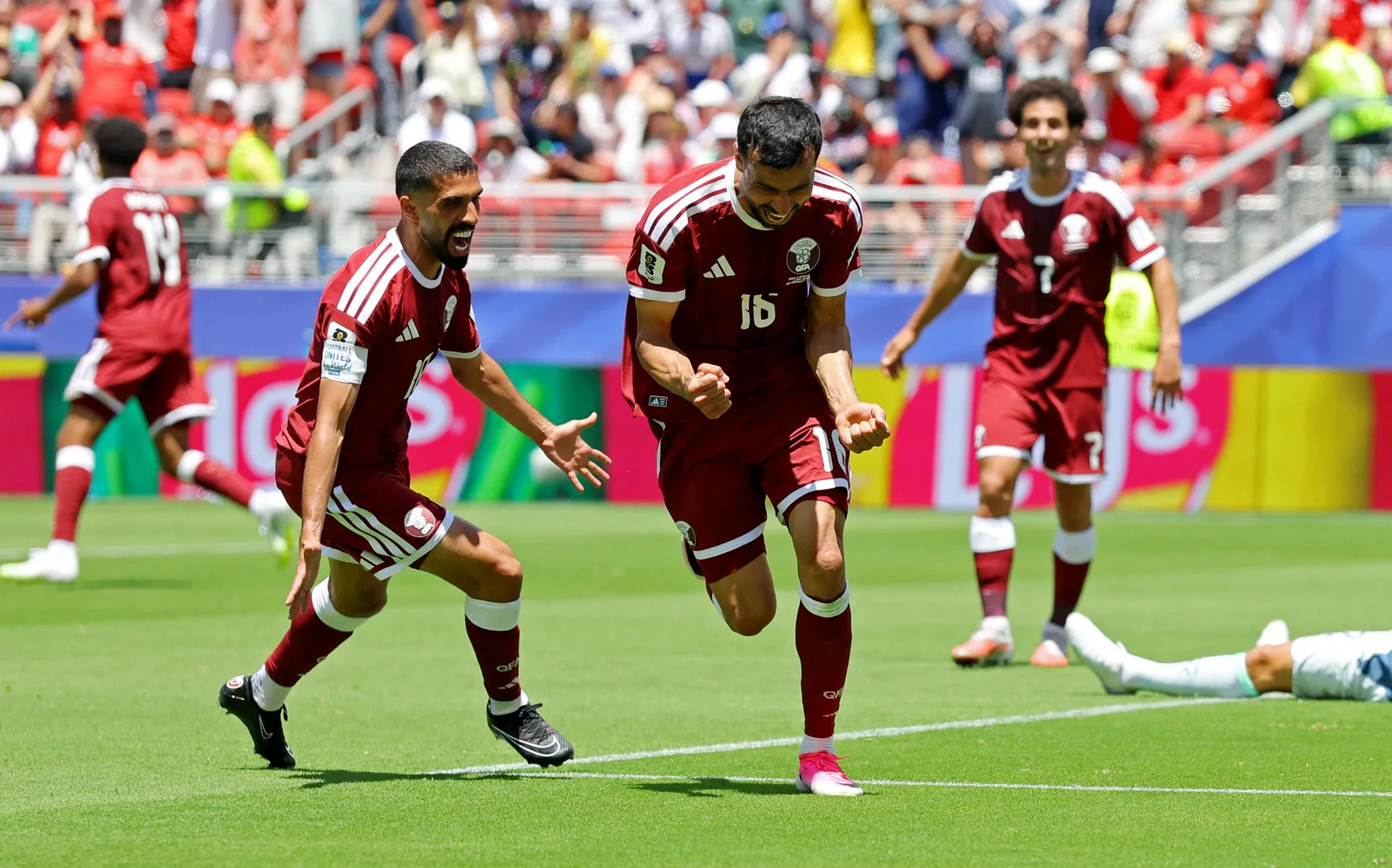
Qatar has earned its first-ever FIFA World Cup point in dramatic fashion against Switzerland. An injury time own goal put Qatar level with the Swiss in San Francisco. Al Jazeera’s Paul Rhys was there.
Published On 14 Jun 202614 Jun 2026
Share
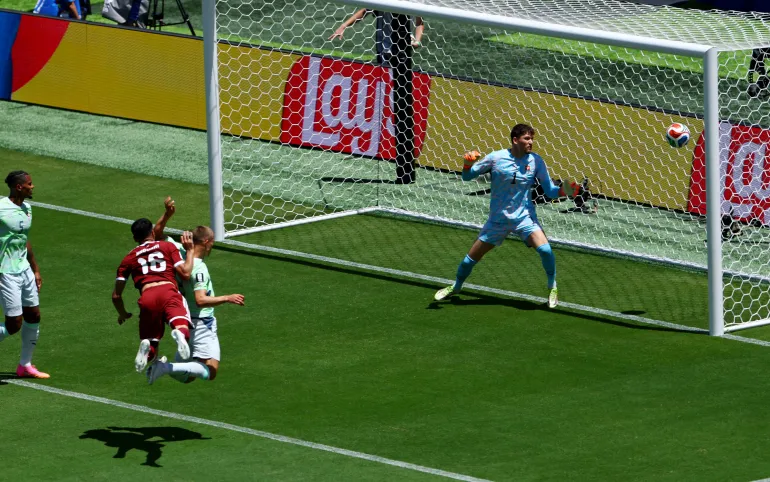
Asian Cup holders Qatar level in injury time to draw 1-1 with Switzerland in World Cup 2026 opening game.
Published On 13 Jun 202613 Jun 2026
Boualem Khoukhi scored an equalising goal on a header in the fourth minute of stoppage time, and Qatar spoiled a dominant day by Switzerland in a 1-1 draw in Group B of the World Cup.
Several of the Qatari players fell to the ground on Saturday in celebration of the late goal, as others ran to each other to embrace.
list of 4 itemsend of list
Breel Embolo scored for Switzerland from the penalty spot in the first half just over a week after being cleared to enter the US following a visa delay, but the Swiss failed to capitalise on multiple other scoring chances.
In the 13th minute, Embolo was fouled by Qatar goalkeeper Mahmoud Abunada, who received a yellow card on the play. Abunada lay face down and appeared motionless for a couple of minutes before he began to move his legs and was able to stand up again.
When Embolo calmly sent his penalty into the upper left corner in the 17th minute, it sent the red-clad Swiss fans into a dancing frenzy in the stands of San Francisco Bay Area Stadium.
The 29-year-old forward applied for an urgent visa at the United States embassy in Bern on June 3, one day after he was denied boarding the team’s flight to travel for his third World Cup because of a 2018 criminal conviction that was only finalised in April.
Switzerland dominated the possession game on an unseasonably warm June afternoon — with sprinklers running during a first-half break.

There were thousands of empty seats scattered throughout Levi’s Stadium, home of the NFL’s San Francisco 49ers. Brazil and Colombia drew 70,971 two years ago in a group match at the Copa America. The stadium in Santa Clara staged the Super Bowl only four months ago.
Switzerland goalkeeper Gregor Kobel made a save in the second minute after Edmilson Junior got through the defence for a one-on-one. Kobel corralled the ball again in the 90th on a close-range attempt by Ahmed Alaaeldin.
Switzerland is hoping to advance further than its round-of-16 showing four years ago before losing 6-1 to Portugal — when Goncalo Ramos delivered an improbable hat-trick playing in place of benched star Cristiano Ronaldo. The loss prompted Switzerland midfielder Xherdan Shaqiri to apologize the the fans.
The Swiss used consistency and experience to go unbeaten through qualifying against Sweden, Kosovo and Slovenia. Coach Murat Yakin’s team produced four wins and two draws to secure its sixth straight World Cup appearance and hasn’t missed one since 2002, but the team has never gotten beyond the quarterfinals.
Qatar, led by Spanish coach Julen Lopetegui, had to qualify through a playoff in November — beating the United Arab Emirates and Oman — after missing an opportunity from its group stage of Asian qualifying.
The Gulf state country became the first host nation to lose all of its group matches four years ago. It lost to Senegal, Ecuador and the Netherlands in the 2022 tournament, scoring its lone goal in a 3-1 loss to Senegal.
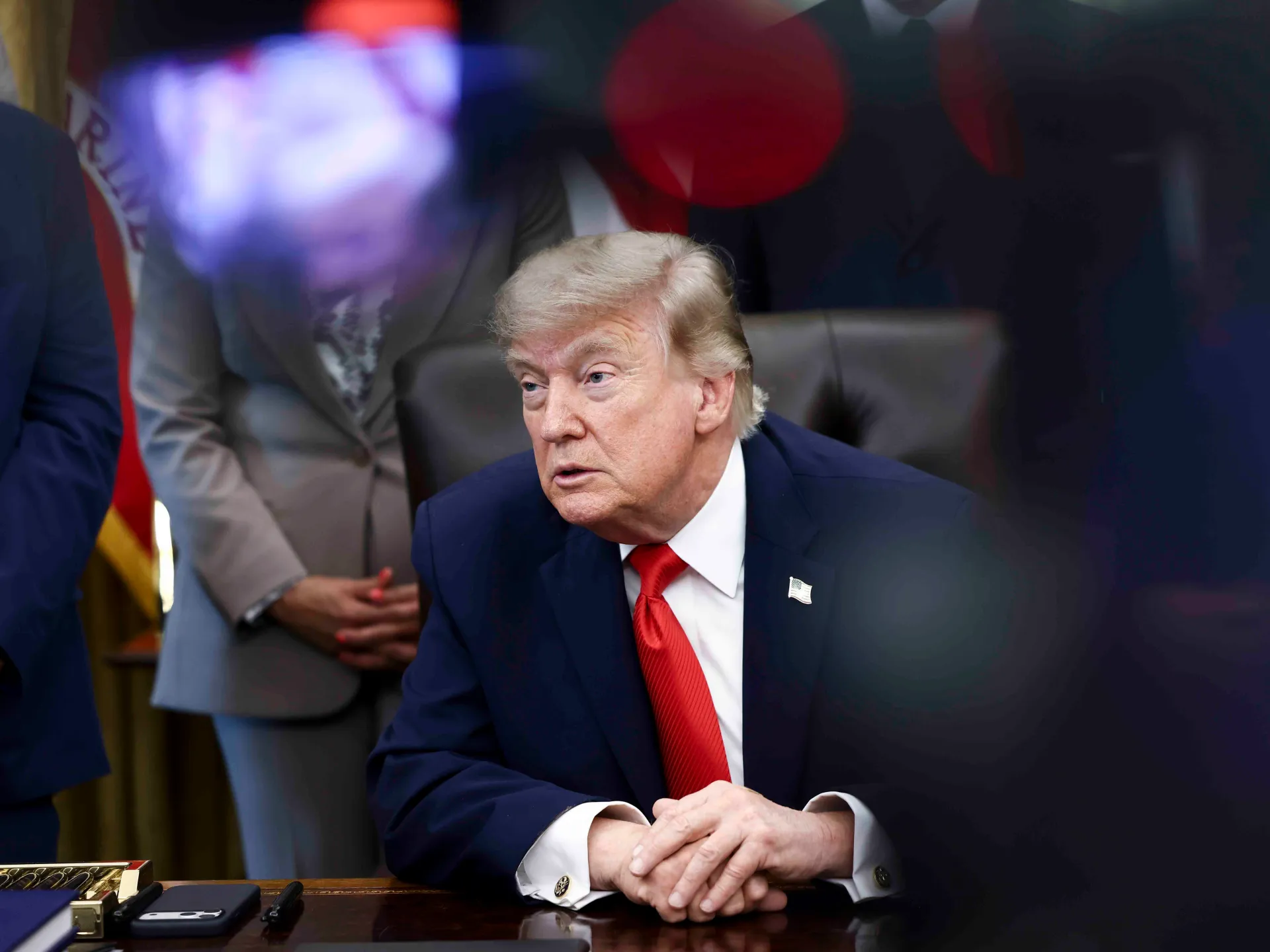
United States President Donald Trump has said an initial agreement to end the US-Israeli war with Iran is “scheduled to get signed tomorrow”.
But that announcement, made on Trump’s Truth Social account on Saturday, contradicts an earlier statement by Iranian Ministry of Foreign Affairs spokesman Esmaeil Baghaei.
list of 3 itemsend of list
In remarks carried by Iran’s IRNA news agency, Baghaei said a memorandum of understanding would not be signed on Sunday and that negotiators are not planning to travel immediately to Geneva, Switzerland, in preparation for such an event.
According to Baghaei, a signing could happen “in the coming days”.
Hours later, Trump wrote, “The Deal is scheduled to get signed tomorrow, and immediately after it is signed, the Hormuz Strait is OPEN TO ALL.” Sunday marks Trump’s 80th birthday.
In recent days, Iran and the US have repeatedly contradicted each other when describing the details of the anticipated agreement, even as both sides have broadly signalled that a deal was closer than ever before.
Still, no terms have been officially released, with US and Iranian officials on Friday stressing that the agreement had not been finalised.
Beyond opening the Strait of Hormuz, Trump said in Saturday’s post that the agreement would be a “A WALL TO NO NUCLEAR WEAPON!” and that “no money would exchange hands”.
Trump also maintained that “at the appropriate time, when all is calm, we will go in and get the Nuclear Dust”, referring to Iran’s stockpile of enriched uranium.
But speaking on Iran’s Press TV on Friday, Iranian Foreign Minister Abbas Araghchi said the initial memorandum of understanding would only be a launch point for negotiations about the future of Iran’s nuclear programme.
He added that the signing would result in an immediate pause in fighting, but that Iran and Oman would continue to administer the Strait of Hormuz.
The issue of lifting foreign sanctions against Iran and unfreezing the country’s assets would be discussed following the signing of the memorandum of understanding, Araghchi said.
The latest flurry of diplomacy came after the US and Iran traded strikes for two days this week, threatening to end a pause in fighting that has persisted since April 8.
The US and Israel launched the war on Iran on February 28, amid ongoing indirect talks on the future of Iran’s nuclear programme.
The US and Israel had also launched a 12-day war on Iran in 2025, during another round of nuclear talks.
Iranian officials have said that deep distrust towards the US has slowed the progress towards creating a lasting agreement to bring the current war to an end.
Trump, meanwhile, has repeatedly pledged to reach a deal that would surpass the 2015 Joint Comprehensive Plan of Action (JCPOA), struck under his Democratic rival, former President Barack Obama.
That agreement, from which Trump unilaterally withdrew in 2018, saw Tehran agree to limit its nuclear programme and allow for international inspections in exchange for sanctions relief.
For years, Iran has maintained that it is building a nuclear programme for civilian use only and is not seeking a nuclear weapon.
In his post on Truth Social, Trump again pledged that any deal reached would be more stringent than the JCPOA.
“Our relationship with Iran is a much different and better one than previous Administrations have had,” he said.
“Hopefully, this process will all work out quickly, easily, and smoothly,” he added.
“If it doesn’t, we have the ultimate alternative, hopefully never to be used again!” he wrote, without elaborating on what his threat meant.

On a Thursday in early June, under the hot bright lights of the famous Blue Note jazz club in Hollywood, the legendary trumpeter and composer Arturo Sandoval took center stage with a microphone in hand — and a hip wiggle for good measure. Rocking a silk shirt adorned with rhinestones, and backed by his incredibly nimble band, the Cuban-born virtuoso kicked off his four-night residency at the club with sizzling banter and panache.
“I had to watch what I said in Cuba,” he told the audience. “Now I live in the United States of America, man — I say whatever the hell I want. Do you like it? Well, if you don’t, I don’t care!”
Now 77, Sandoval feels he was liberated by the power of jazz. Released in May, his dynamic new album, “Sangú” — Spanglish for “sounds good!” — is bursting with the free-spirited energy he’s cultivated in the decades since he came to the United States from Cuba. Sandoval maintains a fiery pace throughout the album, commanding not only the trumpet, but the timbales and piano. (He even recorded his own scat singing for the appropriately-titled track, “Scat.”)
Once derided by the revolutionary government as “Yankee imperialism,” jazz music became a staple of Sandoval’s daily diet. As a young trumpet player in Cuba’s national band, he sought refuge in the sounds of Charlie Parker and Dizzy Gillespie by tuning into Voice of America: a radio program covertly broadcast from the States. Sandoval eventually served three-and-a-half months in jail in the 1970s when he was caught listening to the program — but with famed pianist and director Chucho Valdés, Sandoval would pioneer a distinctly Afro-Cuban jazz fusion with the Orquesta Cubana de Música Moderna, which was renamed Irakere and won a Grammy for best Latin recording in 1980.
It was in 1990, while touring Europe with his hero Gillespie, that Sandoval finally defected from Cuba with his wife and son — and found the refuge he’d been seeking in the U.S.
“Jazz is synonymous with freedom,” he said. “And I’ve always said the most important word in any dictionary around the world is the word ‘freedom.’”
Inside his Tuscan-style home in the Valley, Sandoval’s shelves are lined with the myriad of awards he’s collected in the time since he arrived in the States: an Emmy award for scoring the 2000 movie based on his own life, “For Love or Country,” which starred Cuban American actor Andy García; 10 Grammy statuettes and the Presidential Medal of Freedom, which was presented to him by President Obama in 2013.
Just last month, Sandoval was also awarded knighthood by the King of Spain. “Does that make me Don Arturo Sandoval?” he audibly asked the ChatGPT application on his phone; indeed, it does. (“My wife gets a little jealous of ChatGPT,” he added with a laugh.)
Come July 4, Sandoval will perform at the America250 concert in Washington D.C., which is a bipartisan celebration of the United States’ 250th birthday. Co-chairs of the event include former President George W. Bush, former First Lady Laura Bush, former President Obama and former First Lady Michelle Obama. Seated next to his Bösendorfer grand piano, Sandoval spoke with The Times while on break from his world tour to discuss the new album, his collaborations with Karol G and Ariana Grande, as well as his weakness for a good cigar.
This interview was edited and condensed for clarity.

Share via
What keeps you playing the trumpet after all these years?
I have no choice. The piano is not that complicated, but the trumpet is a pain in the butt. The trumpet is merciless. You have to practice every single day, otherwise it sends you a bill.
How do you smoke cigars and stay healthy enough to play the trumpet?
I’ve been a big time cigar smoker since I was 14 years old. I never miss a day. I had a good one already. Every year they put me in the MRI to check my lungs. And the doctor always says, “Man, you have lungs like a person who never smoked.” A cigar is completely different from cigarettes. [With] a cigar you don’t inhale to the bottom of the lung, you know, it’s from here [taps his throat]. That’s the art.
You’ve been knighted by the king of Spain! How does that feel?
Great! We’re having 30 people over tonight. My wife is cooking for everyone. The consul [from Spain] called me three or four days ago [and] said, “Arturo, I got a surprise for you. I just got a package from the king at my house, ready to give it to you.” And I said, “What kind of joke is that?” My four grandparents came from Spain to Cuba — from my mother’s side, they were from Tenerife, Isla Canaria. From my dad’s side, they were Gallegos from Galicia. Even if I weren’t related to my family in Spain, whatever — I love Spain!
Given how restricted music and expression were in Cuba, how did you get into the international jazz community?
We put together a big band called Orquesta Cubana de Música Moderna [later called Irakere]. I met a journalist who played the saxophone — he said, “Man, you ever hear any jazz music?” He played for me a compilation or recordings of Dizzy Gillespie and Charlie Parker. That was in ’67 or ’68. Ten years later, I got a phone call from the guy — there was a jazz cruise going around the Caribbean and they [were in Havana] for 48 hours. I told him, “Pretend we never had this conversation!” But I went to the harbor. When the boat arrived, I saw Maestro Gillespie coming down the stairs. I didn’t know how to say one word in English. But God has always been good to me.
A guy behind him started talking to me in perfect Spanish. He was a percussionist playing with the great Stan Getz … a bunch of good musicians there. Dizzy started asking me questions through him. They said, “You have a car?” I had a Primo 1951, but it was falling apart. He said, “Ok, show me Havana.” He stayed for a jam session that night with Irakere. Gillespie went back to New York and told everybody about those musicians he heard in Cuba. Then one day a guy came to Irakere’s rehearsal and introduced himself with a translator — he was the president of CBS Records. A few months later, he put us on the plane [to New York] and drove us in a little bus straight to [perform at] Carnegie Hall. CBS made a recording of that, [which gave us] our first Grammy.
Many years later, in 2013, you were awarded the Presidential Medal of Freedom. What’s something special you remember about that night?
My granddaughter Lola was there, she was 6. It’s customary to take a photo with the president and the first lady. And we did, the whole family. When we got together for the photo, Lola started pulling at Obama’s jacket. He looked her and said, “May I help you?” She said, “Mr. President, I missed school today. I need a note from you.”
I said, “Oh Lord.” But Obama smiled and said, “Of course.” Then he got a paper with the White House [logo] on top and wrote, “Please excuse Lola from the school today … [Signed,] Barack Obama.”

Legendary jazz trumpeter Arturo Sandoval, shown performing at Dorothy Chandler Pavillion in Los Angeles in 2016.
(Courtesy of Timothy Norris)
Your new album is so cinematic. What’s the story behind it?
One day my son and his wife, who’s my manager, came over and said, “Papa, you’re getting old. You have to change your repertoire.” I said to my son, “I’ve been feeding you for 50 years and then you come and tell me what to do? Gimme a break!” But to be honest, when the pandemic happened, I was locked [inside] here. I used to travel a lot, and I was so frustrated and sad. So for two-and-a-half years, I started writing two or three new tunes a day and recorded a few hundred on my own. They picked 100 out of those; I said, “[Now] pick 12.”
When I got with the band, when somebody told me what to play — a little faster, a little slower — I said, “What the heck, man?” But I did it. And they were right. I’m so happy, blessed and grateful because they are amazing musicians. Nobody’s weird. No drugs, no alcohol, strictly into the music.
You joined Karol G’s band at Coachella this year — how did that happen?
As an old man, it’s not every day you have the opportunity to play Coachella. She called me last year to play on a tune in her latest album, “Ivonny Bonita.” So when they invited her to Coachella, she said, “Arturo, we’d like to play with you there.” She’s got great charisma and knows how to put a show together. To play for [more than] 150,000 people each night? That’s not my daily gig. I was nervous, but grateful for the opportunity. And when I checked my followers on Instagram, I got like 5,000 people in a few days — that never happens to me!
Let’s talk about Instagram!
Oh that’s a funny story. [In 2018] I did an album of duets with Stevie Wonder, Pharrell Williams, Ariana Grande … big time people. When Pharrell wrote a song for our duet, we were in the studio, cutting the track. He said, “Arturo, I’m producing for Ariana Grande in a studio across the hall. You would like me to call her?” I said, “Of course, man.” They sang together, Pharrell and Ariana. And by the end, I got my phone and said, “Ariana, can we take a photo with Pharrell?” She took my phone out of my hand to take [a selfie] and said to me, “Put it on Instagram.” I didn’t know what that was. She said, “You don’t know what Instagram is?” Sorry, I’m old! But I put it on Instagram, thanks to Ariana Grande. She’s so talented, man.
How do you stay dedicated to music after all this time?
People talk a lot about the word “talent.” What’s that? A lot of people supposedly have big talent, but they don’t have the passion, the discipline, the commitment. See those roses in my yard? If somebody gave you a seed, you put it in a vase with fresh dirt. Add some vitamins and water, and if you’re lucky, you’re gonna have a rose. But if they gave somebody the exact same seed and they left it on a table somewhere, that rose is gonna die! I’m 77 years old and I still practice every day. Nothing goes to my head. All those awards would mean nothing if I didn’t take care of what I had.
The U.S. men’s soccer team chose an incredible day to have an incredible day.
Crucially, the United States aced its only chance to make a first impression, kicking off this colossal World Cup it’s co-hosting with Mexico and Canada with a 4-1 victory over Paraguay.
Consider it a save for the tournament, three points for soccer in America and maybe even a win for uniting the States.
The Americans on the pitch did all that, including making sure a sellout crowd of 70,492 fans got their money’s worth for their exorbitantly high-priced seats to watch football under Friday Night Lights at SoFi Stadium.

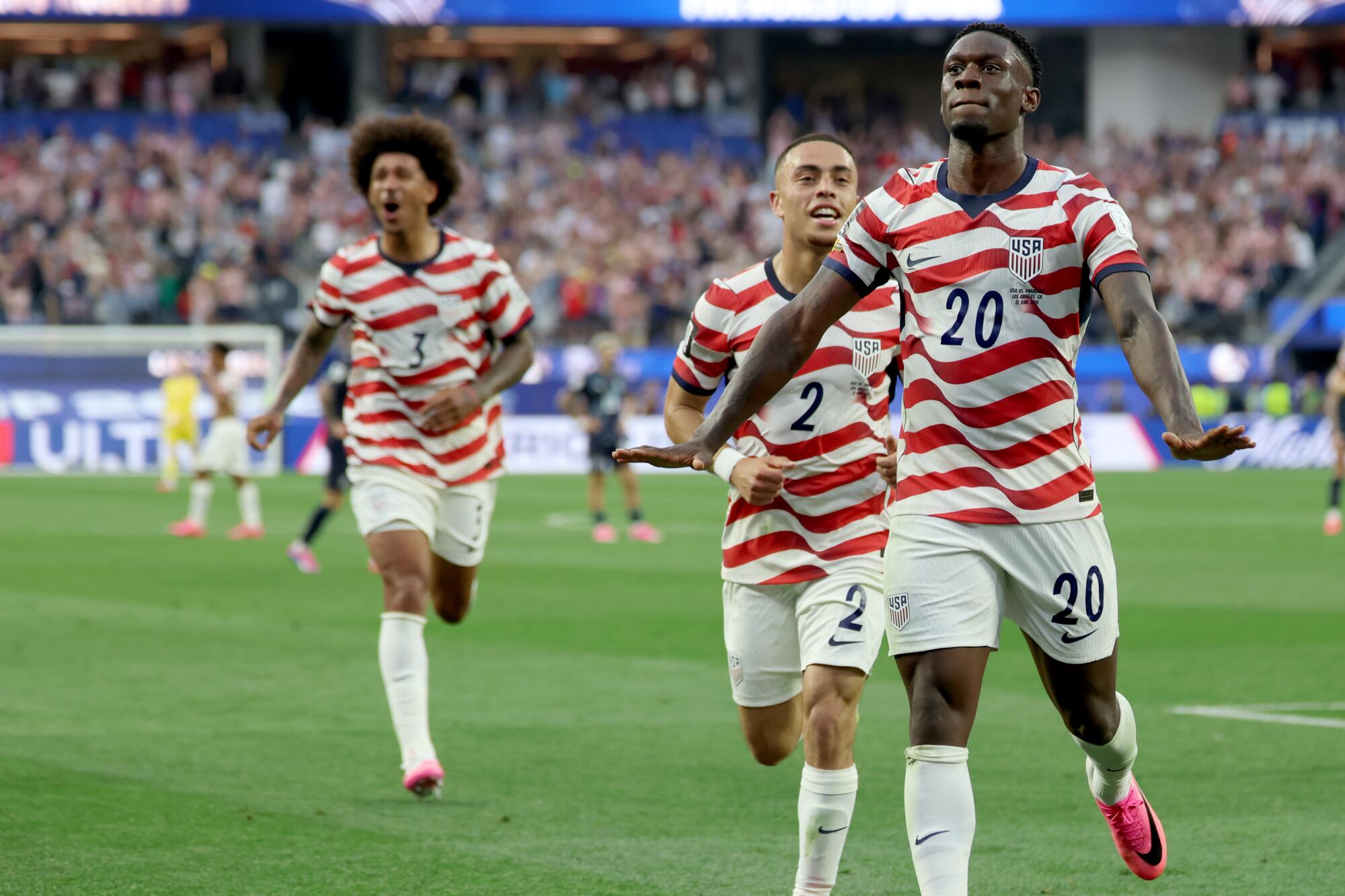
U.S. forward Folarin Balogun, right, celebrates with Sergino Dest and Chris Richards after scoring during a World Cup win over Paraguay on Friday at SoFi Stadium.
(Robert Gauthier/Los Angeles Times)
It was not a clean sheet. And it wasn’t an elixir for all the issues — visas, tickets, transportation — that ailed the tournament in its buildup.
But the opening statement by the United States confirmed what we thought might be true. Only one thing could save this soccer tournament: soccer.
The U.S. delivered a performance to change the conversation — for the next few weeks and maybe longer.
Making history to alter history.
The United States scored multiple goals in a World Cup first half for the first time since 2002.
It got two of them from Folarin Balogun, the Brooklyn-born, England-raised forward of Nigerian descent who became just the second USMNT player to score two goals in a World Cup game and the first since 1930.
Got a perfect match from Chris Richards, the afro-rocking defender with the long, loping strides, who was 83 for 83 on his passes. That’s better than any player at a World Cup since 1966.
And if possession is nine-tenths of the law of attraction, know that the Americans possessed the ball 71% of the first half, most in the first half of a World Cup game in the modern era.
Landon Donovan, star of the 2002 team that reached the World Cup quarterfinals — a record that still stands — posted on X: “From start to finish, that was the most enjoyable day of soccer I’ve ever experienced.”
That’s the stuff that will get the American people going. Get us invested, get us behind them. That could convert even devout casuals.
Americans love a good underdog story. We also want the best, the finest, the biggest — and this, with its expanded field of 48, is the biggest version of the biggest and best tournament in the world.
And the only thing we love more than winning is dominating. The United States did that Friday against a Paraguayan team that had allowed only 10 goals in 18 World Cup qualifying matches, and whom the United States beat 2-1 in a tense match in November.

Fans cheer during the U.S. win over Paraguay in their World Cup opener Saturday at SoFi Stadium.
(Robert Gauthier/Los Angeles Times)
That was Mauricio Pochettino and his players helping us help them.
“The fans, amazing,” said Pochettino, the team’s accomplished Argentine coach. “On behalf of the whole team, a massive thank you to the fans. Because the energy that they [gave] to the team was amazing. We can do amazing things if the fans are in this as well.”
Friday was so good for soccer in America.
And so good for America. The kind of butt-kicking that’s chicken soup for a nation’s soul.
Maybe it’s idealistic and naive, or apple-pie-in-the-sky wishful thinking, but I believe that they can win. (And by win, I mean make the quarterfinals again.)
There’s no removing politics from this World Cup, but wouldn’t it be fun to all rally behind a team together? Can’t you see the country coalescing behind the right wingers and left wingers on the pitch? Picture people celebrating the freedom inherent in Pochettino’s system? Cheering the all-for-one and one-for-all of this team of dual nationals and Americans raised abroad — or in Alabama?
Postmatch, Pochettino refused to single out any one player, instead giving reporters a recitation of his roster: “[Christian Pulisic] was amazing [setting up two goals]. Balogun was amazing, of course. Tim Ream was amazing, of course. Chris Richards was amazing, yes. Weston McKennie, he was amazing, amazing. Antonee Robinson, Alex Freeman, amazing. Sergiño Dest, amazing …”
Like they put it on the @USMNT Instagram account: “Together as Won.”
U.S. soccer, amazing.
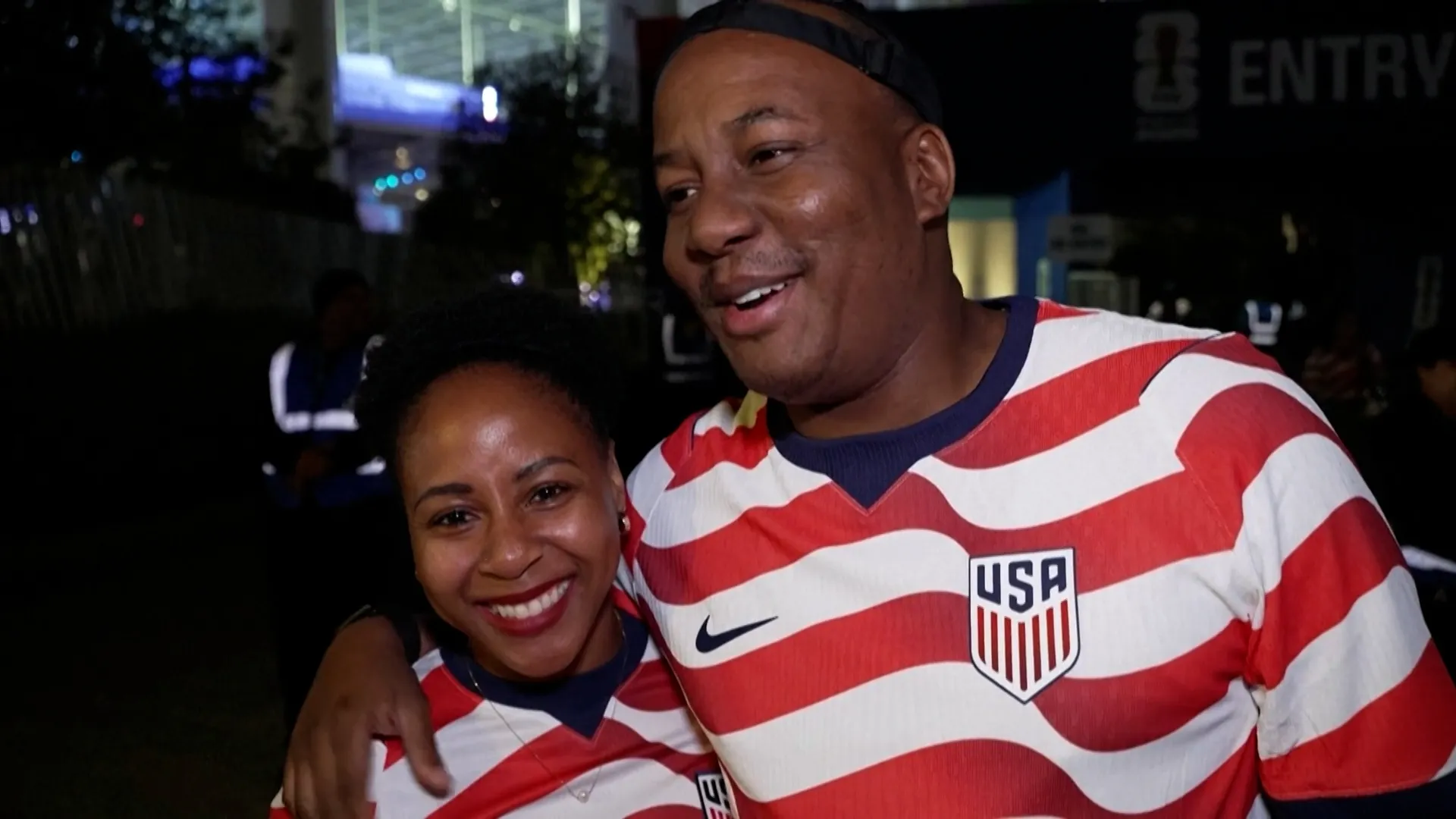
‘$1,250’
‘$1,200’
‘$1,350’
‘FIFA should be ashamed of themselves.’
World Cup fans reveal how much they paid for a seat at the US’s opening game against Paraguay, amid controversy over record-high ticket costs and dynamic pricing.
Published On 13 Jun 202613 Jun 2026
Share
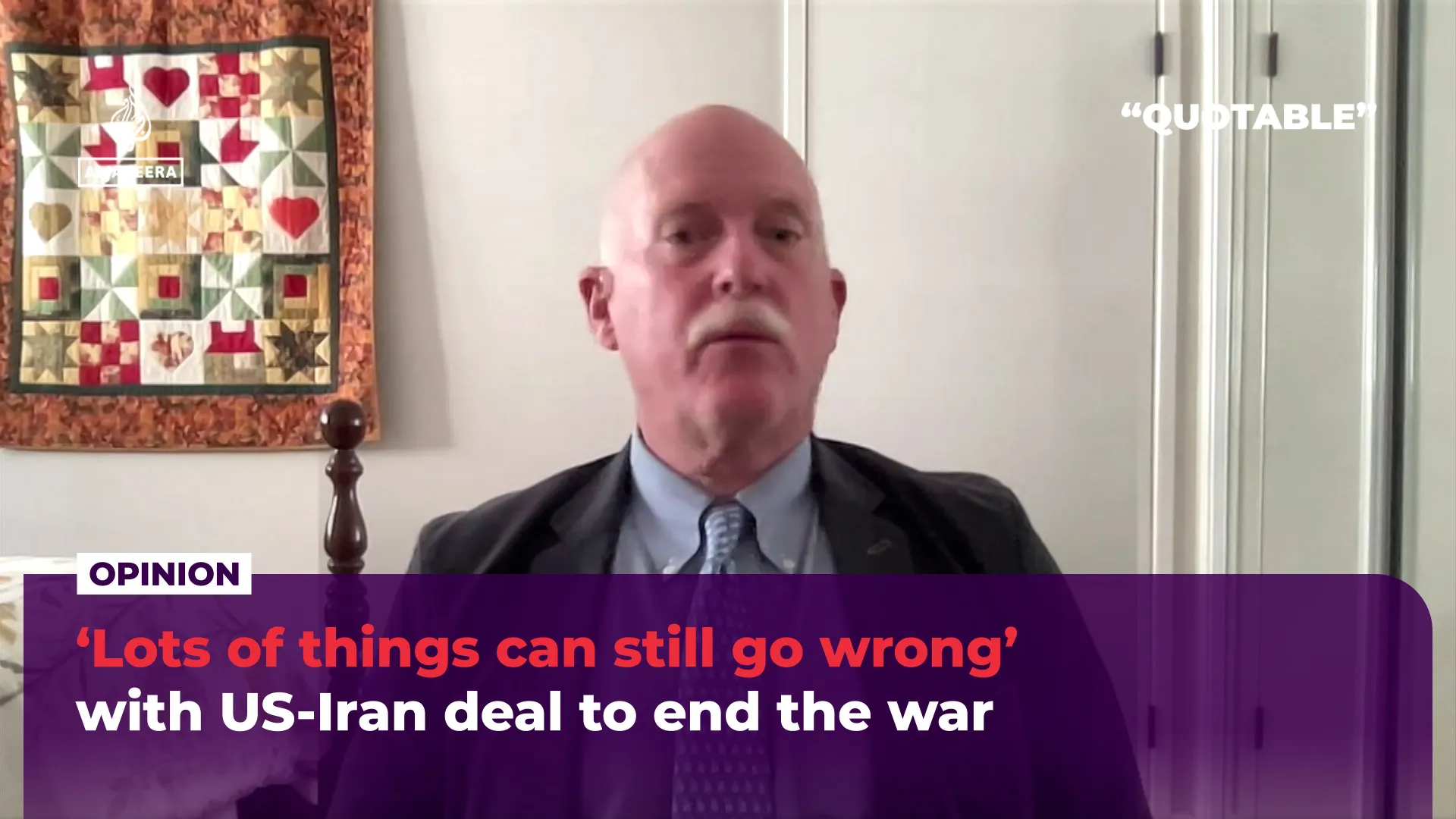
Henry Ensher, a former US ambassador, says the US–Iran agreement is not a final settlement but only the start of a process, with many ways it could still go wrong.
Published On 13 Jun 202613 Jun 2026
Share
The company said it received an export control directive to suspend access to Fable 5 and Mythos 5 for foreign nationals.
By Al Jazeera Staff and Reuters
Published On 13 Jun 202613 Jun 2026
The AI firm Anthropic has blocked access to its newly released cutting-edge software, following an order by the United States government.
In a blog post published Friday, the company behind the Claude chatbot said government agencies had instructed it to prevent all foreign nationals from accessing the AI models Fable 5 and Mythos 5, citing national security concerns.
list of 4 itemsend of list
Anthropic said it received the order at 5:21pm (21:21 GMT) on Friday and that the letter did not explain the government’s specific security concern in detail.
The ban also affects foreigners currently in the US – including those working at Anthropic.
As a result of the order, the company had to cut off access for everyone at short notice, it said.
The artificial intelligence behind Anthropic’s Mythos AI model is particularly adept at detecting software vulnerabilities, some of which have remained undiscovered for decades.
This capability has been used by US authorities and selected companies to plug security gaps.
However, a concern from the outset has been that such AI could become a dangerous cyberweapon in the wrong hands.
The Fable 5 model, released just this week, is based on Mythos technology, but its cybersecurity and biotechnology capabilities are blocked.
Mythos 5 is the non-public full version, which should continue to be used only by government agencies and selected corporate partners to harden their systems.
Anthropic emphasised that it had so far received only partial information from the government.
The company said it had reviewed a report which, in its assessment, was likely to have triggered the order.
Anthropic’s experts concluded that this referred to a limited capability to use the AI to review specific programme code and correct errors.
Models from other providers, such as GPT-5.5 from rival OpenAI, also possess this capability, the company stressed.
Anthropic said it disagreed that software used by hundreds of millions of users should be blocked for this reason, and that the safety measures in Fable 5 have been extensively tested.
Earlier this month, Anthropic proposed that the world’s top artificial intelligence companies coordinate to pause development of advanced AI systems, warning that the technology is improving so quickly that there is a risk humans would lose control.
The company said in a blog post in early June that, as cutting-edge AI gets increasingly faster at carrying out tasks, “it would be good for the world to have the option to slow or temporarily pause” its development.
The World Cup continues on Saturday, with Brazil beginning their campaign and three more group-stage matches taking place across North America.
Brazil take on Morocco in the day’s biggest match, while Qatar face Switzerland, Haiti meet Scotland and Australia play Turkiye as more teams get their tournaments under way.
list of 4 itemsend of list
Away from the football, there has been plenty to talk about. Donald Trump skipped the United States’ opener, former Canadian Prime Minister Justin Trudeau was at the US game instead of Canada’s, and Ghana midfielder Thomas Partey will miss his team’s first match after Canada denied his visa application.
In Peru, police made headlines after carrying out a drug raid dressed as World Cup mascots.
Here is what to know:
Qatar take on Switzerland at BC Place in Vancouver, with kickoff scheduled for 12pm local time (19:00 GMT).
Later, Brazil face Morocco at MetLife Stadium in East Rutherford, New Jersey. The Group C clash kicks off at 6pm local time (22:00 GMT).
The day’s action concludes with Haiti meeting Scotland at AT&T Stadium in Arlington, Texas. Kickoff is set for 8pm local time (01:00 GMT on June 14).
Australia and Turkiye then get Group D under way at Lumen Field in Seattle, with kickoff at 9pm local time (04:00 GMT on June 14).
Brazil and Morocco have only faced each other once before at a World Cup, with Brazil winning their 1998 group-stage meeting. Morocco got their revenge in a 2-1 friendly win in 2023.
Brazil have won seven of their eight World Cup matches against African opponents, with their only defeat coming against Cameroon in 2022.
The five-time champions have not lifted the trophy since 2002. Since then, they have usually exited in the quarterfinals, apart from their run to the 2014 semifinals.
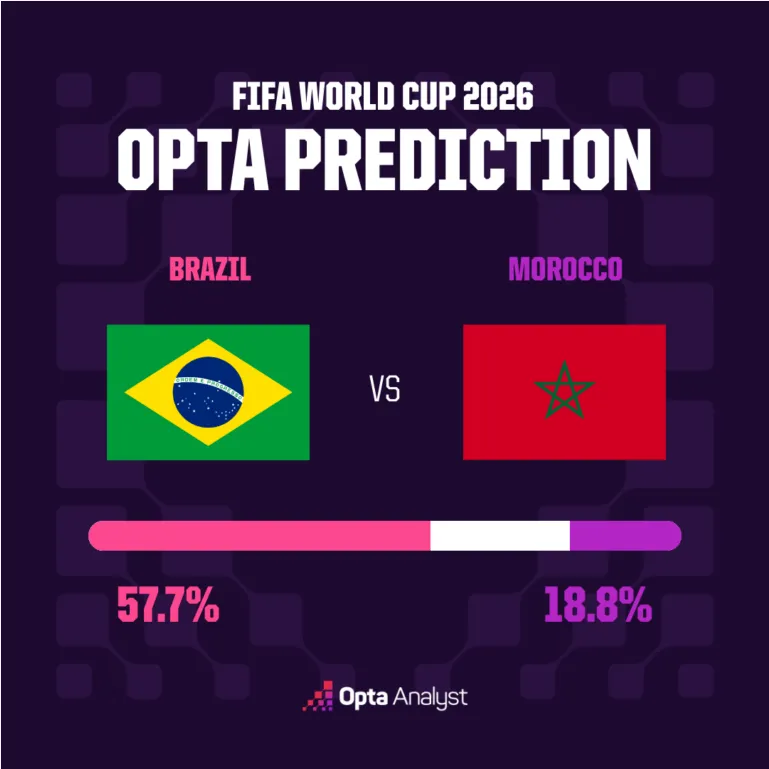
Opta’s 25,000 simulations give Brazil a 57.7 percent chance of winning. A draw happened in 23.5 percent of the projections, while Morocco won in 18.8 percent.
The winner could put themselves in a strong position to top Group C.

Qatar and Switzerland have met only once before, with Qatar claiming a 1-0 friendly win in 2018 thanks to a late goal from Akram Afif. Afif is among nine players from that squad still in Qatar’s 2026 World Cup team, while Switzerland have seven survivors from that defeat, including Granit Xhaka and Remo Freuler.
Opta’s 25,000 simulations make Switzerland the clear favourites in this Group B clash, giving them a 76.0 percent chance of victory. Qatar won just 9.1 percent of the projections, while 14.9 percent ended in a draw.
A point would likely be considered a positive result for the Gulf side.

Australia and Turkiye have met only twice before, with Turkiye winning both friendlies in 2004. Turkiye have also won all four of their previous World Cup matches against Asian opponents.
Opta’s 10,000 simulations give Turkiye a 55.3 percent chance of victory, compared with 20.5 percent for Australia and 24.1 percent for a draw.
Neither side has a strong record in World Cup openers, however. Turkiye have lost both of their previous first matches, while Australia have lost five of their six opening games.

Haiti and Scotland have never faced each other before, making this one of several first-time matchups at the expanded 48-team World Cup. It will also be Haiti’s first-ever game against a team from the British Isles.
Opta’s 25,000 simulations make Scotland clear favourites, giving them a 59.0 percent chance of victory. Haiti won 19.2 percent of the projections, while 21.8 percent ended in a draw.

The football has only just started, but the World Cup is already making headlines away from the pitch, too.
The US president did not attend the US men’s national team’s World Cup opener against Paraguay in Los Angeles.
His absence drew attention because Trump has recently attended several high-profile sporting events, including Game 3 of the NBA Finals earlier this week. He is also expected to host a UFC event at the White House on Sunday.
A White House official said Trump instead plans to attend the World Cup final on July 19 at MetLife Stadium in East Rutherford, New Jersey.
The US president called into a USMNT team meeting with some words of support via Andrew Giuliani, the White House’s World Cup task force CEO.
Ghana midfielder Thomas Partey will miss his country’s World Cup opener against Panama after Canada denied his visa application while he awaits trial in the United Kingdom on multiple rape charges, which he denies.
FIFA confirmed on Friday that the 32-year-old would not be permitted to travel from Ghana’s base camp in Smithfield, Rhode Island, to Toronto for Wednesday’s match.
“His visa application has been refused by the Canadian government,” FIFA said in a statement.
“FIFA is not involved in the immigration processes of host countries, including the adjudication of visas. As with previous FIFA events, the host government ultimately determines who receives a visa and is admitted into the country.”
As Canada and the US kicked off their World Cup campaigns on the same day, former Canadian Prime Minister Justin Trudeau was in California rather than Toronto.
The 54-year-old did not attend Canada’s 1-1 draw with Bosnia and Herzegovina at BMO Field. Instead, he was at SoFi Stadium in Inglewood alongside pop singer Katy Perry, who performed during the pre-match opening ceremony before the US faced Paraguay.
Peruvian police have gone viral after carrying out a drug raid in Lima dressed as World Cup mascots.
Video shared by police showed officers dressed as World Cup mascots breaking through a metal gate with a battering ram before entering the property.
Once inside, they arrested a suspected drug dealer and recovered weapons and bags of what authorities believe were narcotics.
The World Cup may be decided on the pitch, but another competition is already under way off it: Which host city has the best food?
In a report for Al Jazeera, Lou Browne travelled across North America to find out what fans can expect beyond the stadiums.
In Mexico City, taco vendors are hoping the tournament brings more customers. “Well, now the World Cup is coming, and we hope we’ll get customers,” a tortilla cook at El Califa de Leon told Al Jazeera. “I imagine there will be a lot of people, foreigners or locals.”
Philadelphia is proudly backing its famous Philly cheesesteak. Locals say visitors should learn how to order properly. “You want to tell them what kind of cheese you want,” Anthony Rossi, a cook at Geno’s Steaks, explained. “And you say if you want onions, which is ‘wit’ or ‘wit-out’ … Keep it simple.”
Across the border, Toronto is making the case for poutine, the Canadian dish of fries topped with gravy and cheese curds. “Poutine is the … not the best … dish, but poutine is from Canada,” said Lisa Deni, a French tourist.
In Kansas City, barbecue is a point of pride. “This is really good,” diner Camilla Thomas said. “We’ve been enjoying coming here. and bringing people from out of town here and giving them a little taste of Kansas City.”
And in Miami, locals insist the Cuban sandwich is a must-try. “The Cuban sandwich, croquetas, and cafecito are really the way to go,” said Daniel Figueredo, cofounder of Sanguich. “The Cuban sandwich really is the thing you have to have when you come to Miami.”
For fans travelling across North America this summer, the hardest choice may not be picking the World Cup winner, but deciding which host city serves the best food.
Los Angeles, United States – Draped with a US flag, Alex Saldivar could hardly contain his broad smile as he exited the stadium after the United States beat Paraguay 4-1.
Not only did his team win their World Cup opener, they did so on home soil – and the 23-year-old got to witness it.
list of 3 itemsend of list
“This is a dream come true, a serious dream come true. I don’t know what to say,” Saldivar said, as he swayed from side to side, alternating his standing foot.
His excitement sums up the historic day for US football.
Tens of thousands of fans had descended on SoFi Stadium, putting on an eccentric display of oversized hats and US flag-themed outfits.
White and red striped dungarees, blue and white hair, star-spangled trousers, painted faces and Uncle Sam suits – supporters represented their country’s colours in every possible way.
Ryan Schellhous, who came to Los Angeles from San Jose in northern California, was dressed literally from head to toe in US flag colours, including a mask that only showed his eyes.
He told Al Jazeera it was great to have the World Cup in the US.
“There’s a lot of excitement for soccer in America right now, and this is great,” Schellhous said, adding that he expected Team USA to go deep in the tournament if players perform to the best of their ability.

For many fans, the World Cup is offering a rare opportunity to experience football at its best. And they are cherishing the moment.
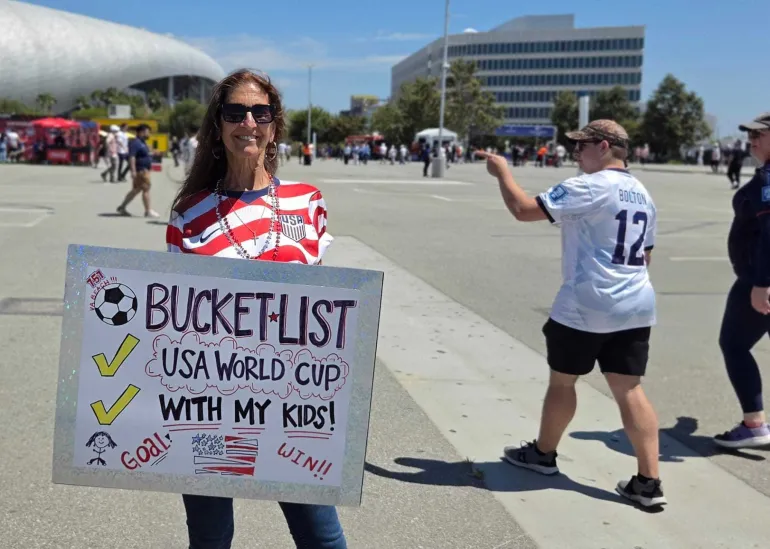
Michele Churchill, who travelled from Virginia with her three children to attend the opening match, called it a “bucket list” event.
Asked about the exorbitant ticket prices, she said the experience is worth it.
Churchill also had a bold prediction for the US team’s fortunes at the tournament.
“They’re going to win. They’re going to take the cup,” she told Al Jazeera.
Fans started streaming into the stadium four hours before the game. One was dressed in a Gulf-style thobe with a US flag as a headscarf. Another was in an outfit resembling George Washington, the first president of the US.
Despite concerns about logistics and organisation, everything went largely smoothly with armies of staff and volunteers ensuring safety and orderliness.
An alphabet soup of law enforcement agencies was present.
The Transportation Security Administration staffed entrances to oversee the airport-style security checkpoints. Agents from the Drug Enforcement Administration, Bureau of Alcohol, Tobacco, Firearms and Explosives, and Department of Homeland Security were also at the scene.
On the local level, heavily armed agents from the Los Angeles County Sheriff’s Department were also deployed around the stadium, as were Inglewood Police officers.
Many agents were accompanied by police dogs. Before crowds started to arrive, some had their canine companions pose for a photo next to the oversized World Cup ball outside the stadium.
Reports that President Donald Trump may attend the first game ultimately did not materialise to the apparent relief of many fans in mostly liberal Los Angeles.
Inside the stadium, it was celebrities – the likes of Tom Cruise and David Beckham – who got the cheers from the crowd.

It took a while for the stadium to fill out.
About an hour from kickoff, during the first part of the opening ceremony, which featured several rappers, including Future and Rema, the venue was still almost half-empty and the crowd was quiet.
But coinciding with Katy Perry taking the stage before the first whistle, the stadium started to come to life, and chants of “USA, USA” grew louder.
It was really forward Christian Pulisic who electrified the crowd with his first-half display, running straight at his markers and producing dangerous crosses or shots.
The once faint chants turned into deafening roars when the US scored their first, courtesy of a Paraguayan own goal in the seventh minute.
The distinct screams of goal celebrations would ring out three more times for Team USA at the stadium, with Folarin Balogun finding the net twice and Giovanni Reyna scoring a gorgeous curler from the edge of the box to wrap up the game.
A stadium announcer said more than 70,000 people were in attendance.
“We have a full house,” he said to the cheers of the crowd.
But the announcement did not pass the eye test.
Many seats throughout the stadium remained empty, especially in the most expensive sections overlooking the middle of the field.
It is possible that organisers FIFA did sell every seat but resellers struggled to offload some tickets.
The bottom line – ticket prices and Trump’s travel policies may be dampening the buzz around the World Cup, but the tournament is still delivering what football promises: happiness, excitement and a sense of togetherness.
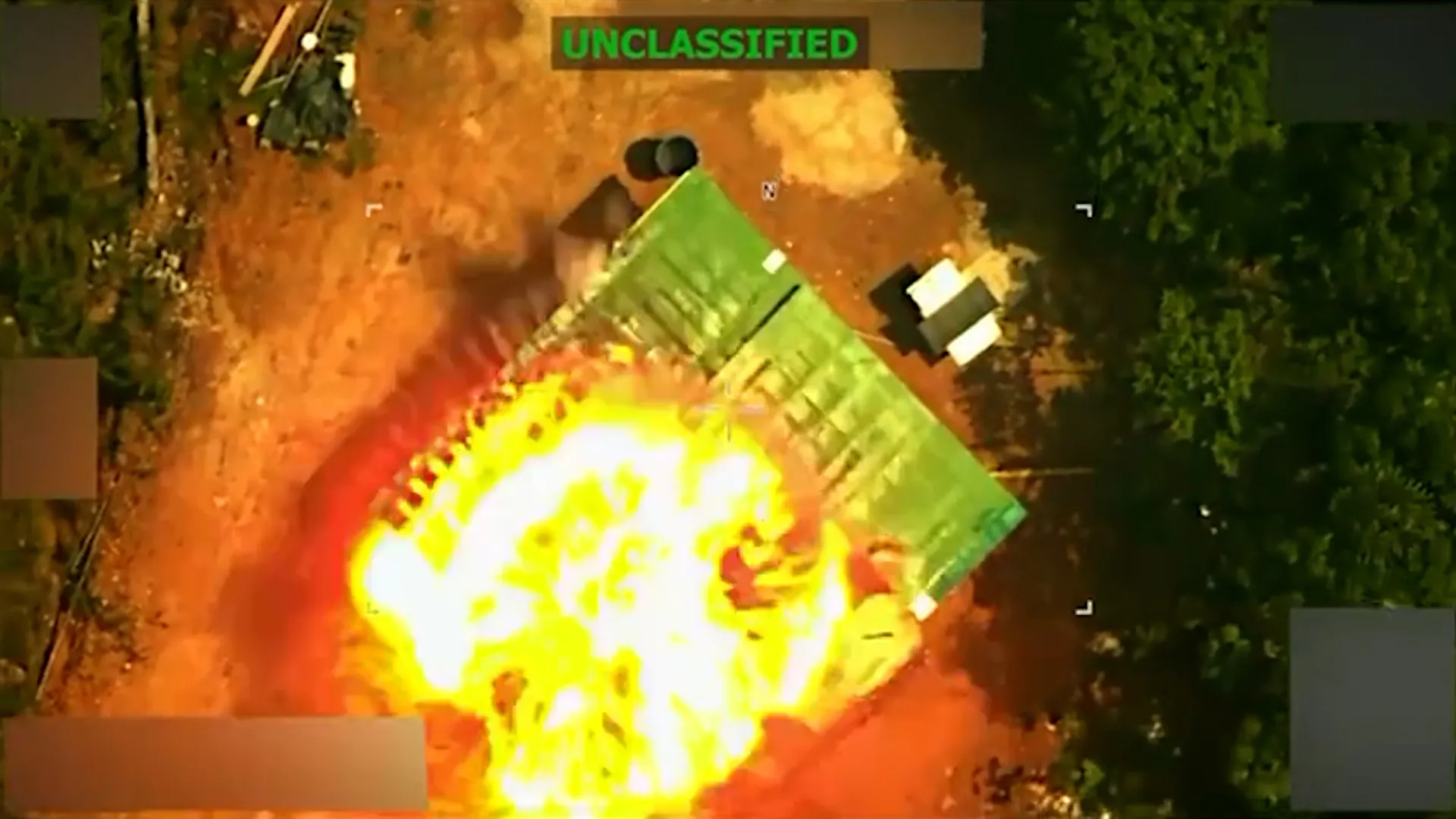
President Donald Trump has posted a video of a ‘swift and lethal’ US strike he claims has killed the leader of Venezuela’s Tren de Aragua gang. Trump said Venezuela helped the US with the strike on Hector Rusthenford Guerrero Flores.
Published On 13 Jun 202613 Jun 2026
Share
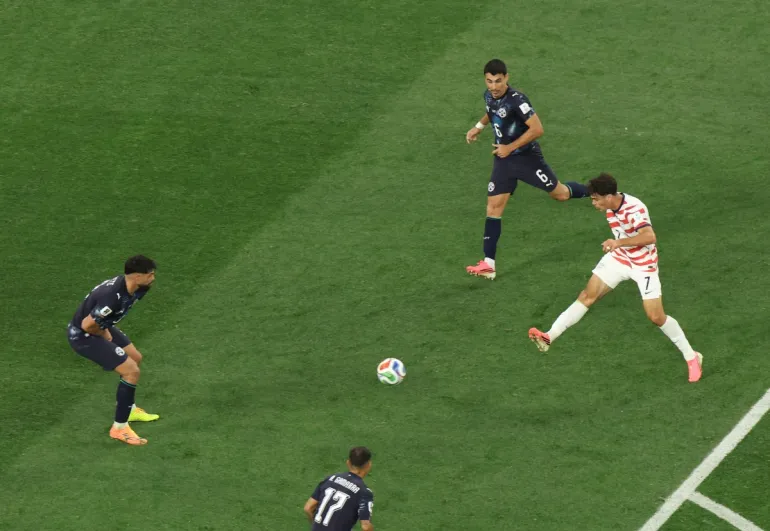
USA beat Paraguay 4-1 in Los Angeles as each of the three World Cup cohosts have now staged a game in the 2026 edition.
Published On 13 Jun 202613 Jun 2026
The United States could scarcely have scripted a better start to their World Cup as a Folarin Balogun brace and a Gio Reyna curler fired the cohosts to a 4-1 drubbing of Paraguay in front of Hollywood royalty in Los Angeles.
The hosts took the lead in the tournament’s first game on US soil within seven minutes thanks to an own goal, and by the end of an utterly dominant half, the home fans were in dreamland, their side up by three.
list of 4 itemsend of list
Tom Cruise, Leonardo DiCaprio and Paris Hilton were among a sold-out 70,492 crowd as the US – cohosting the tournament with Mexico and Canada – piled wave after wave of attacks on the South Americans, with Reyna polishing off the win late in stoppage time after Mauricio had pulled one back.
The win and emphatic scoreline put the US in a favourable position already to progress from Group D, which also contains Australia and Turkiye.
The night’s only potential sour note was the half-time withdrawal of Christian Pulisic, the US attacking talisman who is carrying the hopes of the nation as they attempt a deep run into the World Cup knockouts for the first time since their quarterfinal appearance in 2002.
Paraguay could not have been more obliging guests from kickoff. In the seventh minute, Weston McKennie picked up the ball in the centre circle and drove upfield, finding Pulisic.
Pulisic darted between two defenders and returned the ball to McKennie, whose pass to striker Balogun was bundled into his own net by a hapless Damian Bobadilla.
The stadium erupted, and a US onslaught began.
The hosts oozed confidence. Both McKennie and Tillman played backheel through balls into the area, while captain Tim Ream sprayed out passes from the heart of defence.

Balogun had a goal ruled out in the 28th minute. He had strayed offside, as had Pulisic in the buildup.
But the Monaco striker had the ball in the net again three minutes later, thanks to a superb ball down the left flank by Antonee Robinson to Pulisic, whose cross to Balogun took a slight fortuitous deflection.
The US added a third on the cusp of half-time. Tillman found Balogun down the right, who evaded Omar Alderete’s challenge, skipped inside Gustavo Gomez and curled his shot perfectly into the top left corner.
It could have been four or five, with Chris Richards – returning from injury – flashing a header barely an inch wide. The US had 75 percent possession in the first half.
Now, without the dangerous Pulisic, the hosts sat back slightly in the second half.
Paraguay finally offered a threat. Their dangerous forward Julio Enciso, who started despite a hamstring injury, picked up the ball on the edge of the area and fed in Brazil-born substitute Mauricio, who pulled one back.
Reyna scored a superb fourth with the outside of his right foot that curled just inside the far post.
The game had been preceded by a Tinseltown-style opening ceremony. Katy Perry delivered the headline performance, accompanied by singers Future, Tyla, Anitta and K-pop singer Lisa.
Performers danced around a giant World Cup trophy beneath enormous “FIFA” letters in the gold favoured by US President Donald Trump – who did not attend, instead wishing the team luck via phone before kickoff.