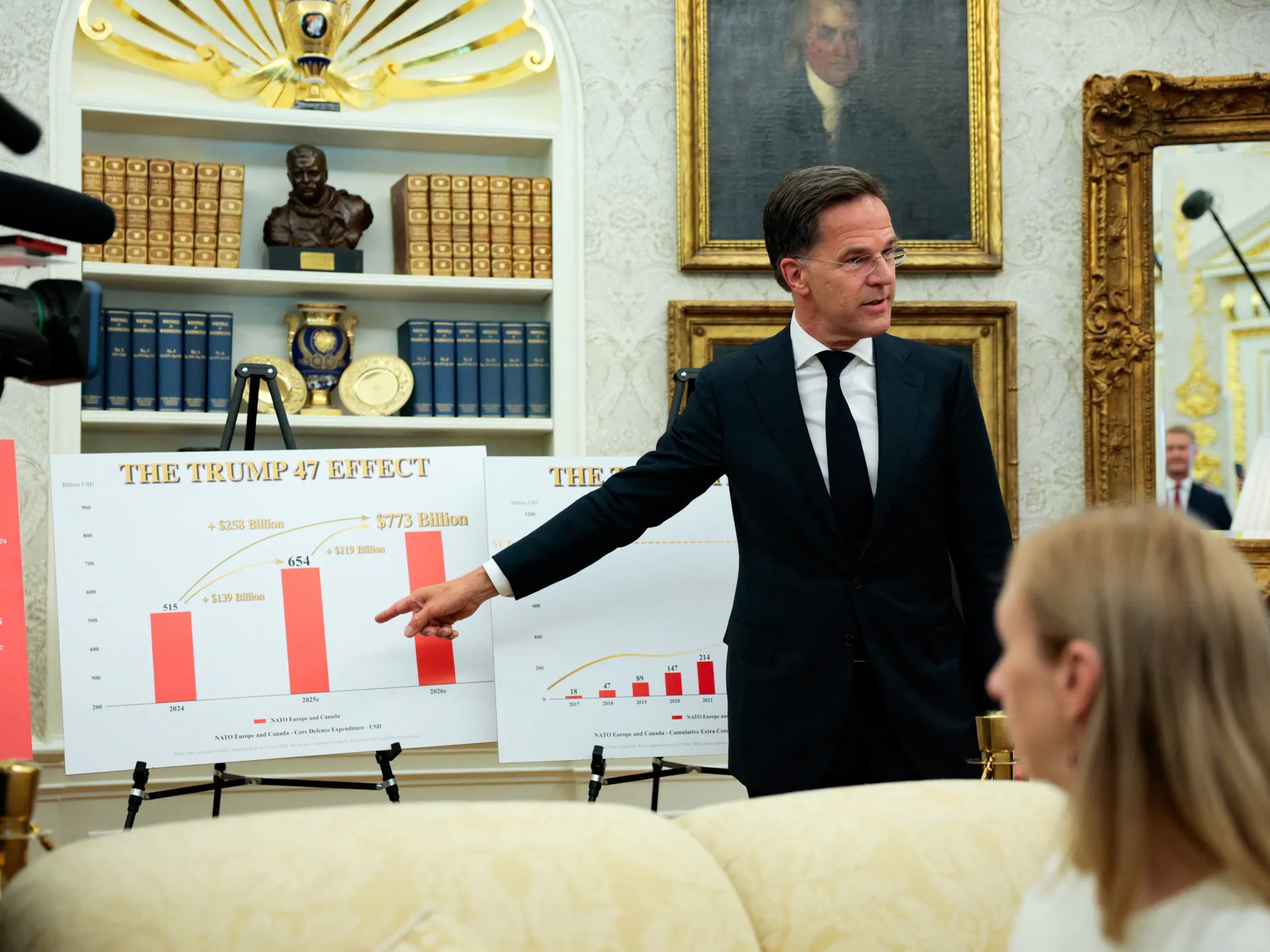
NATO chief Mark Rutte visited the White House to ease tensions with US President Trump ahead of next month’s NATO summit. Trump has said NATO isn’t doing enough, ordering a review of US forces in Europe after saying allies did not support the US war on Iran.
Lawsuit claims Tesla’s Autopilot shortcomings led to fatal crash; family seeks $1m in damages and punitive measures.
Published On 24 Jun 202624 Jun 2026
The family of a Texas woman who was killed has filed a lawsuit against Tesla after a driver using a Model 3’s automated driving assistance system crashed into a suburban Houston home last week.
The complaint, filed on Tuesday, argues that Tesla should be held liable for the wrongful death of 76-year-old Martha Avila. The family alleges that the automaker, led by Elon Musk, failed to adequately warn drivers about alleged defects in its Autopilot and Full Self-Driving systems.
Recommended Stories
list of 4 itemsend of list
Avila’s daughter, Jennifer Barbour, and her husband, Justin Barbour, said the Model 3’s driver, Michael Butler, told law enforcement he engaged Autopilot before ploughing through the front wall of Avila’s home in Katy, Texas, the United States, on June 19, pinning her before she succumbed to her injuries at a nearby hospital, according to the complaint.
Video obtained by KHOU – Houston’s CBS affiliate — shows the car travelling at top speed over the front lawn of Avila’s home in the Houston suburb before slamming into the front room.
The driver told the Harris County Sheriff’s Office that he was using the technology at the time of the accident. The driver in the incident was not under the influence of alcohol and is cooperating with authorities.
Butler is also a defendant in the Barbours’ lawsuit. It is unclear whether he has a lawyer.
Musk, the world’s richest person, posted on X on Monday night: “FSD drives slowly through neighbourhood streets and this was a high-speed crash!”
Ashok Elluswamy, vice president of AI software at Tesla, posted on X in response, saying that “the driver manually overrode self-driving by pressing the accelerator all the way to 100% of the accel pedal in this residential area.”
The lawsuit filed in a Harris County, Texas, state court seeks more than $1m in damages, and punitive damages reflecting Tesla’s alleged “reckless disregard for a substantial risk of severe bodily injury”.
The National Highway Traffic Safety Administration (NHTSA) has been investigating the crash.
Since 2016, the NHTSA has opened nearly 50 special investigations of Tesla crashes believed to involve advanced driver assistance systems. About two dozen deaths were reported.
In March, the NHTSA escalated its probe into 3.2 million Teslas equipped with Full Self-Driving, on concern the system may fail to detect or warn drivers in poor visibility. In 2023, Tesla recalled about two million vehicles, nearly all of its electric vehicles on US roads, to better ensure that drivers pay attention when using Autopilot.
Tesla has said Autopilot enables vehicles to steer, accelerate and brake within their lanes, while Full Self-Driving lets vehicles obey traffic signals and change lanes.
The carmaker has also said both technologies require “fully attentive” drivers whose hands are on the wheel.
The incident comes as the Musk-owned company is rolling out robotaxis using automated software in several US cities this year and plans to invite Tesla owners across the country to put their cars into the fleet using the same system.
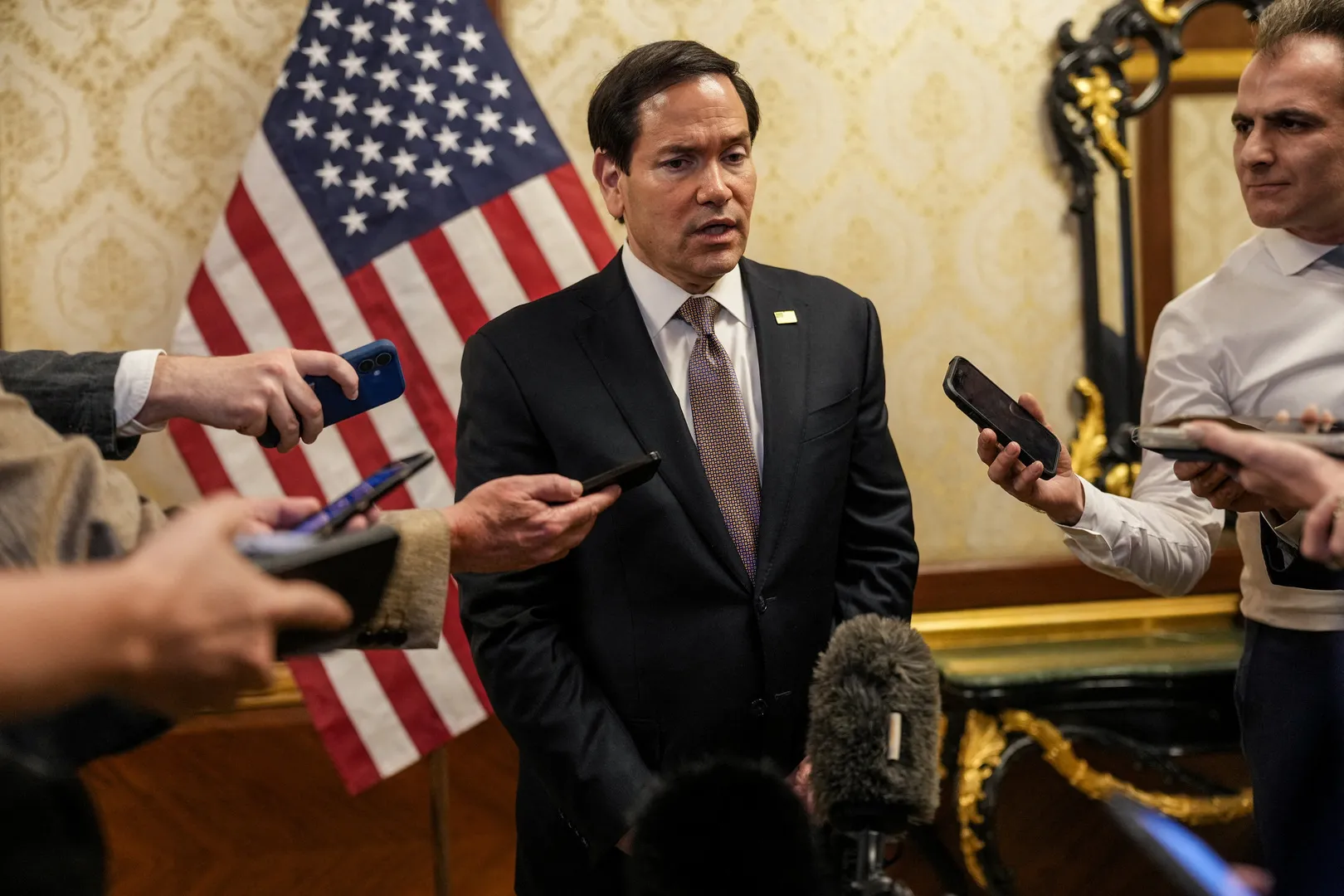
US Secretary of State Marco Rubio said Washington will be “completely aligned” with Gulf allies in Iran peace talks. Rubio met Kuwait’s Crown Prince Sheikh Sabah Al Khalid Al Sabah during a visit to the region after the US and Iran signed an MoU.
US Secretary of State Marco Rubio has said Iran will not be permitted to charge tolls or fees for vessels transiting the Strait of Hormuz under any final agreement with Washington, exposing one of the biggest points of friction in negotiations aimed at ending months of conflict across the Middle East.
The dispute comes after Iran announced it would waive planned transit fees through the strait that crosses through its territorial waters for 60 days while talks with the United States continue in Switzerland, suggesting charges could be introduced once the negotiating period expires.
Recommended Stories
list of 4 itemsend of list
Washington and Tehran signed a preliminary agreement in Switzerland this week to halt hostilities and launched a 60-day diplomatic process focused on sanctions relief, Iran’s nuclear programme and the future administration of the Strait of Hormuz.
Pakistan, which helped mediate the talks alongside Qatar, has said negotiations to end the four-month US-Israel war on Iran are expected to resume early next week, likely on Tuesday.
The future of Hormuz has already emerged as a key sticking point after Iran effectively closed the waterway during the war, severely disrupting maritime traffic through one of the world’s most important energy chokepoints and causing the price of oil to soar.
In peacetime, one-fifth of the world’s oil and natural gas supplies are shipped for export by Gulf producers through the waterway.
In April, the US imposed a corresponding naval blockade on Iranian naval ports in a bid to stem Iranian oil exports.
While a number of ships have crossed through the strait since the US-Iran agreement was signed last week, uncertainty remains over whether Tehran intends to impose permanent fees or service charges on shipping operators using the route. Here’s what we know – and what else is happening in the Strait of Hormuz this week.
(Al Jazeera)
What are the US and Iran saying?
On Friday, Iran’s Persian Gulf Strait Authority (PGSA) said planned fees for ships using the waterway would be suspended during the 60-day negotiation period established under the memorandum of understanding (MoU) signed with the US.
Earlier this week, Iran and Oman said in a joint statement that they would study the future administration of the trade route as well as possible charges for services provided there, while maintaining their sovereignty claims over territorial waters bordering the strait.
Speaking at the start of a regional tour in the United Arab Emirates, Rubio rejected the idea of transit fees. “It’s an international waterway. No country is allowed to charge tolls or fees on an international waterway,” he said, adding that he believed “all the countries in this region would agree”.
Iran’s chief negotiator, Mohammad Bagher Ghalibaf, has signalled that Tehran views the post-war arrangement as fundamentally different from the status quo that existed before the conflict, however. Experts also say that Iran will not give up control of the strait, which has proved to be its greatest point of leverage in the conflict with the US.
“Hormuz will never return” to its prewar status, Ghalibaf said, despite both sides agreeing on Monday to establish “communication mechanisms” aimed at keeping the waterway open.
What does international law say?
International law protects the right of transit through strategic waterways such as the Strait of Hormuz, preventing coastal states from imposing explicit tolls simply for passage through international shipping lanes, even when they are passing solely through territorial waters.
However, countries can charge for specific services, including inspections, navigation assistance, security measures and certain insurance-related requirements, insurance experts say.
Examples include fees associated with transit through the Suez Canal and Panama Canal, as well as some services provided in Turkiye’s Bosporus and Dardanelles straits.
Mohammad Reza Farzanegan, an economist at Germany’s Philipps-Universitat Marburg, told Al Jazeera last month that Iran, like Turkiye, could justify a negotiated mechanism for transit fees or service-based contributions through natural straits as payment for maintaining a safe passageway, reducing environmental risks and providing predictability in a waterway that supports global energy, food and technology supply chains.
A key difference, however, is that while those waterways pass through the territory of a single state in each case, the Strait of Hormuz passes through the territorial waters of both Iran and Oman, while also connecting to waters used by the United Arab Emirates and other Gulf states.
“This sort of arrangement is unprecedented, and there would not be such an outcome, unless there is a complete coordination between the GCC [Gulf Cooperation Council] countries and Iran, with the approval of major international powers, such as China and the United States,” Nader Habibi, an Iranian American economist, told Al Jazeera.
How many ships are getting through the strait now?
Ship movements through the Strait of Hormuz remain well below prewar levels, when between 120 and 140 ships transited the passage each day, including tankers carrying about 20 million barrels of oil from the Gulf.
As the strait begins to open up, Oman says it is working with the United Nations’ International Maritime Organization (IMO) on temporary arrangements to facilitate safe transit through the strait, launching an operation to evacuate more than 11,000 sailors stranded in the area after the conflict left hundreds of vessels trapped for months.
Traffic through the strait has also been held back by ongoing concerns about the possible presence of sea mines in the central shipping channels used by international vessels before the war.
The Joint Maritime Information Center (JMIC), which includes representatives from the US and other maritime partners, has warned ships to avoid the area “due to the existence of mines”.
Other countries, including Japan, are currently weighing up whether to send ships to help with efforts to remove mines from the strait.
While Iran has never confirmed the presence of mines in the strait, when it first issued a map of the waterway for vessels it had approved for transit while the conflict was ongoing, it ordered ships to pass close to its coast to avoid possible mines. Ships had previously passed much closer to the coast of Oman.
The graphic below illustrates how much shipping through the strait dropped off as a result of the US-Israel war on Iran.
Could the dispute over strait fees derail a peace deal?
Mostafa Khoshcheshm, a professor at the University of Applied Sciences in Tehran, told Al Jazeera that Iran is unlikely to abandon plans to introduce long-term service fees in the strait.
“According to the MoU, Iran is not going to charge service fees for 60 days, but afterwards, Iran is definitely going to do that,” Khoshcheshm told Al Jazeera.
He said many Iranians were already unhappy that Tehran had agreed to suspend fees for the duration of the negotiating period.
“The money is not the real core of the issue,” he said. “The point here is how to impose your new protocols in the region. This is highly important for the Iranians.”
Cyrus Schayegh, professor of international history and politics at the Geneva Graduate Institute, told Al Jazeera the success of any new administrative arrangement would depend heavily on regional support.
“I think this is a very big question, and the biggest question is whether they will be able to sell it to the Emirates,” Schayegh told Al Jazeera.
“I think the Emirates will need to be involved in a really substantive way for any sort of new authority to actually work.”
More broadly, he said, the future of Hormuz forms part of a wider debate over Gulf security architecture following the war.
“It is only one piece of a much larger puzzle,” Schayegh said, adding that several regional states now accept that Iran has strengthened its deterrence capabilities following the conflict.
What other issues remain unresolved?
Hormuz is far from the only serious obstacle to a peace deal.
Questions also remain over the future of Iran’s nuclear programme, with Kazem Gharibabadi, Iran’s deputy foreign minister for legal and international affairs, saying that access for international inspectors to nuclear facilities damaged during the war would only be addressed as part of a final agreement with Washington.
His comments came after US President Donald Trump claimed Iran had agreed to “the highest level” of nuclear inspections.
Iranian officials insist no commitments were made in Switzerland regarding Tehran’s nuclear programme and say they did not meet representatives of the International Atomic Energy Agency (IAEA), including Director-General Rafael Grossi.
Regional security remains another major source of disagreement, with Israeli Defence Minister Israel Katz insisting Israeli forces will not withdraw from southern Lebanon “even if there is an American demand” to do so.
Meanwhile, Ghalibaf has identified the withdrawal of foreign military forces from the Middle East as one of Tehran’s strategic objectives in the negotiations.
The future of Iran’s frozen assets also remains a sticking point, with Trump indicating Washington is reluctant to release large sums of Iranian funds directly, arguing that money could ultimately benefit the Islamic Revolutionary Guard Corps (IRGC).
Instead, he has suggested a mechanism under which some funds would be used to purchase US goods.
“Food is desperately needed in Iran, and we will be purchasing it for them exclusively from the United States,” Trump said. Iran has not confirmed plans to do this.
The race for the Golden Boot at World Cup 2026 is shaping up to be one for the history books.
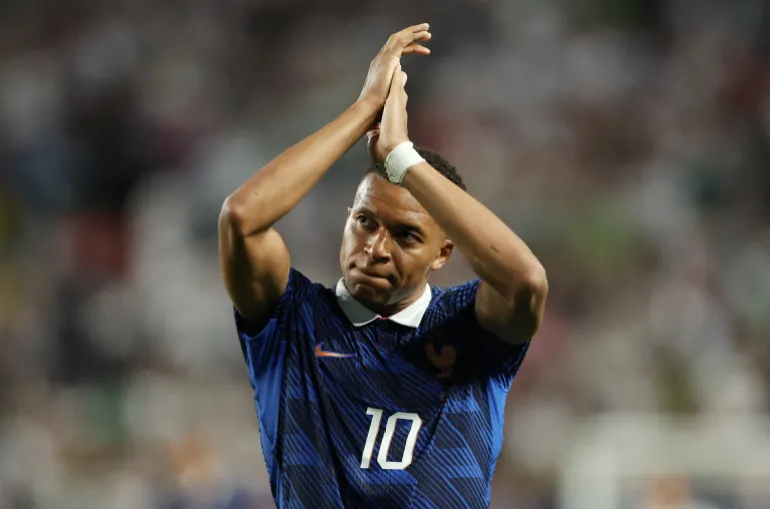
After just two games, Argentina talisman Lionel Messi leads the way with five goals, followed by France’s Kylian Mbappe and Erling Haaland of Norway with four goals each.
Recommended Stories
list of 4 itemsend of list
Germany’s Deniz Undav has three with Jonathan David of Canada on the same mark after a hat-trick against Qatar.
A further 20 players have scored twice in their opening two games, including 2018 Golden Boot winner Harry Kane of England, Cristiano Ronaldo of Portugal, Vinicius Jr of Brazil and Mikel Oyarzabal of Spain.
The stars are all shining and, given the rate of scoring so far, it seems possible double figures might be needed to win the Golden Boot, something done only three times in history – by Hungary’s Sandor Kocsis in 1954, Just Fontaine of France four years later and Gerd Muller of Germany in 1970.
Fontaine holds the record of 13 goals in one World Cup in just six matches in Sweden, but the expanded 48-team format in 2026 means the nations qualifying for the semifinals in July will play an unprecedented eight games in this edition.
At the 2006 World Cup in Germany and in South Africa four years later, only five goals were needed to claim the Golden Boot while nobody has scored more than eight in the past 13 editions, a feat achieved only by Brazil’s Ronaldo in 2002 and Mbappe four years ago in Qatar.
Kylian Mbappe followed his double against Senegal with another against Iraq in this year’s World Cup [Siphiwe Sibeko/Reuters]
Why have so many goals been scored at World Cup 2026?
It took just 33 matches for a century of goals to be racked up in this edition, second only to 1954 in terms of pace.
After Portugal’s 5-0 win over Uzbekistan on Tuesday, 139 goals had been scored across the first 45 games – the most in the group stages of a single edition of the finals, overtaking the 136 scored in 2014 in three fewer matches.
The record number of goals in one edition came in Qatar 2022 with 172 from 64 games. With an extra 40 matches in the new expanded format that went into effect this year, it was always likely to be broken, but the rate of scoring suggests the old mark will be obliterated.
The Adidas Trionda ball used in World Cup 2026 [Simon Fearn/Imagn Images]
One reason for the increase in goals might be the Adidas Trionda ball, which FIFA commissioned for this World Cup.
Before the tournament, FIFA said it boasts several key performance innovations, including intentionally deep seams designed to produce optimal in-flight stability by ensuring sufficient and evenly distributed drag as the ball travels through the air – in short, it flies through the air – while the surface of the ball is designed to increase grip when striking or dribbling in wet or humid conditions, which we have seen plenty of in the opening matches.
Austria head coach Ralf Rangnick said: “This ball is as fast as a cannonball. If you kick the ball in the right position, it’s extremely difficult to save.”
The controversial addition of hydration breaks to each half may also mean players are performing at their peak for longer, leading to the glut of late goals so far. Of course, the fact that 48 teams are taking part, drawn from the world’s leading 85 teams in the rankings, means there are some mismatches in the first phase.
Colombia coach Nestor Lorenzo also said attackers are more protected by officials than they used to be, which may contribute to the increased scoring, adding: “They didn’t have this protection some 20, 30 years ago when they were hit a lot more, when rough play was a lot more common.
“Today, any team that defends well and uses counterattacks and tries to play can manage to do well.”
Erling Haaland has scored two goals in each of his first two World Cup appearances. [John Sibley/Reuters]
Who is likely to win the Golden Boot?
Much will depend on fitness and, of course, how deep a country goes in the tournament, but Messi has to be considered the favourite to win his first accolade.
The 38-year-old scored seven goals at the last World Cup and has now scored in six straight tournament matches, having netted in every knockout round in Qatar and the first two games of this edition. He even missed a penalty against Austria, which would have made it back-to-back hat-tricks.
Argentina’s final group game on Sunday is against already eliminated Jordan although Messi’s inclusion from the start in that one is by no means a given as his side have already secured the top spot in Group J.
They look set for favourable knockout fixtures, though, with the potential for Uruguay or Cape Verde in the last 32, potentially Australia or Iran in the round of 16 and the possibility of Croatia or Colombia in the quarterfinals, should they make it.
Only in the semifinal might they come up against a powerhouse nation, likely in the form of England or Brazil or dark horses Japan, Norway or Mexico.
Mbappe also looks likely to have a favourable run and is likely to feature against Norway on Friday in the group finale, which will decide the top spot in Group I.
Winning the group could mean a round of 32 meeting with Sweden, Germany the potential opponents in the last 16 and the Netherlands or Morocco awaiting in the last eight.
Whoever finishes second out of France and Norway could face a tricky task against the Ivory Coast in the last 32 with Brazil or Japan awaiting the winners and the possibility of England lurking in the quarterfinals, which might put a ceiling on Haaland’s prospects, despite having scored 59 goals in 52 international games for Norway.
Kane will seek to enter the conversation with England facing a must-win Group L finale on Sunday against Panama with the prospect of a last-32 meeting with Cape Verde to follow and Mexico likely lying in wait in the Azteca (known during the World Cup as Mexico City Stadium) in the round of 16.
Cristiano Ronaldo may have left it too late to begin a real quest, given Portugal face Colombia on Sunday in their final Group K game and could face resolute Ghana in the last 32 with Spain potential opponents in the last 16.
But Vinicius Jr could add to his two goals when Brazil face Scotland on Thursday in their final Group C game although the knockout rounds would appear a stiffer test.
The United States Senate has voted in favour of invoking its war powers to force President Donald Trump to halt his military campaign against Iran or seek congressional approval before any further action is taken.
Here is a closer look at Tuesday’s vote – the 10th attempt Congress has made to rein in the US-Israel war on Iran – and what this means for the US government.
Why did this vote take place?
A similar measure had already been approved in the House of Representatives on June 3 by a vote of 215 to 208, and on Tuesday, the Senate passed it in a 50-48 vote. Trump’s Republican Party has slim majorities in both chambers.
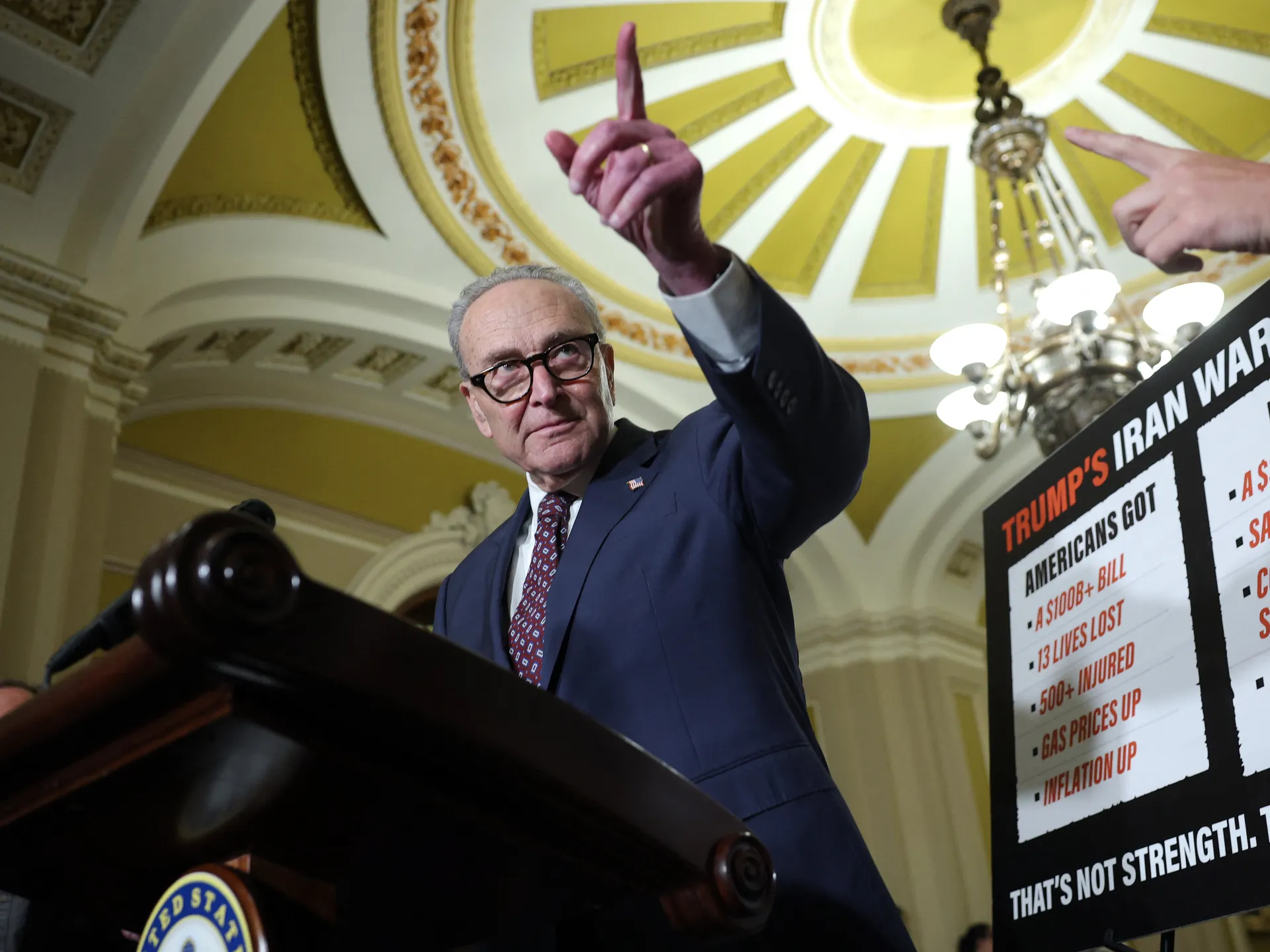
Speaking on the Senate floor before the vote, top Democrat Chuck Schumer advocated for the war powers resolution as he criticised Trump’s military campaign against Iran.
“For years, Trump promised to put maximum pressure on Iran, but he ended up delivering maximum confusion, maximum chaos, maximum cost to the American people with his disastrous war,” Schumer said.
“Time after time, the vast majority of Senate Republicans sided with Trump and his war instead of the American people. The American people have paid the price for Trump’s historic blunder in Iran. It’ll go down in the history books as one of the worst foreign policy forays America has ever made.”
The war against Iran has proved highly unpopular in the US. A poll released on Tuesday by the news agency Reuters and the research firm Ipsos found that 24 percent of respondents felt the war had been worth the cost.
Four Republican senators crossed party lines to vote for the resolution, and all but one of the chamber’s Democrats also voted in favour.
Tuesday’s breakaway Republicans were Bill Cassidy of Louisiana, Lisa Murkowski of Alaska, Susan Collins of Maine and Rand Paul of Kentucky. A further two Republicans did not vote: Mitch McConnell of Kentucky and Dave McCormick of Pennsylvania.
The lone Democrat to vote against the measure was Pennsylvania’s John Fetterman.
What does the resolution say?
The war powers resolution “directs the President to remove United States Armed Forces from hostilities against the Islamic Republic of Iran”.
Only if “explicitly authorised by a declaration of war or a specific congressional authorisation” would Trump be allowed to use further military force against Iran, it says.
The resolution, however, does allow for a limited military presence to remain in the Middle East to prevent any “imminent attack” against the US or its allies.
What is the significance of the vote?
The vote reflects growing unease even among some of Trump’s Republican supporters about the unpopular conflict, which began with US-Israeli air strikes on Tehran on February 28.
This is the first time both chambers of Congress have passed a resolution directing a president to remove US armed forces from a warzone under the War Powers Act although it was not immediately clear how the votes might affect the conflict.
Technically, the Trump administration should now seek explicit congressional approval for further strikes on Iran. However, previous administrations have found routes around this by securing more limited authorisations for the use of military force (AUMFs) instead.
For example, in the wake of the 9/11 attacks in 2001, Congress passed an AUMF that gave then-President George W Bush broad powers to conduct what would become the global “war on terror”.
And one year later, it passed another AUMF, allowing the use of the military against the government of Saddam Hussein in Iraq, which became the basis of the 2003 invasion.
The two authorisations remain in place, and presidents continue to rely on them to carry out strikes without first seeking congressional approval. The assassination of top Iranian General Qassem Soleimani in 2020 in Baghdad was authorised by Trump under the 2003 AUMF.
In addition, a resolution does not have the force of law. Experts said, therefore, that while the Senate vote is viewed as a rebuke to Trump, it is largely symbolic.
What effect will this have on US-Iran talks in Switzerland?
Before the vote on Tuesday, some Republican senators had warned that the war powers resolution would weaken Trump’s standing in the Switzerland negotiations.
“If this passes, the Iranians are going to simply stand up and walk away from negotiations,” Senator James Risch of Idaho told the Senate on Tuesday.
“They’re going to say: This thing’s over. The Congress has told the president of the United States, ‘Leave us alone. We can do whatever we want to do,’ and they will walk away.”
How will the Trump administration respond?
Risch also argued that the resolution is essentially useless, given its symbolic nature. “It’s going to have no effect. The president isn’t going to pay any attention to it,” he said.
The US Constitution gives Congress the sole power to declare war, but that division of power has eroded over the past 75 years as successive presidents alone have committed US forces to overseas conflicts.
Trump has pointed to that precedent to argue that he does not need congressional authorisation at all.
In an appearance on The Axios Show last week, Trump denied learning any “lesson” about the limits of his executive powers during the Iran war. “There are no limits,” he said.
The last time Congress voted to go to war was during World War II although it has passed AUMFs in the decades since, which allow for limited military engagement without congressional approval for all-out war.
During Trump’s first term, there were concerns that he could use the 2001 AUMF to strike Iran under the unfounded claim that Tehran supports al-Qaeda.
Some critics pointed out that Republicans may be more willing to confront Trump over the issue of congressional authorisation now as they defend their seats before November’s midterm elections.
Here’s a look at the viral moments and on-field controversies as well as the biggest players, best performances, goals and more.
Published On 24 Jun 202624 Jun 2026
Cristiano Ronaldo joined the party, Lionel Messi set a new record, Iran once again displayed their fighting spirit and Turkiye were shown the door.
The second round of the 2026 World Cup group stage had a fair amount of drama.
Recommended Stories
list of 4 itemsend of list
Al Jazeera breaks down the key moments:
Better late than never: Ronaldo strikes for Portugal
Unlike other high-profile strikers at the tournament who came out all guns blazing from the get-go, Ronaldo needed some time to open his account. But his two goals in Portugal’s 5-0 thrashing of Uzbekistan on Tuesday were enough to silence the critics as the 41-year-old became the first player in history to score in six World Cups.
Messi is saving his best for last
Age is just a number for Messi, who is celebrating his 39th birthday on Wednesday. His apparent last dance is bringing out the best in him as the Argentinian has set a new record for the most World Cup goals at 18 – a figure that is sure to increase with La Albiceleste now the number one favourites to add back-to-back World Cups to their trophy cabinet.
Is Messi “Mr Argentina”? It’s hard to argue otherwise with all five of the team’s goals scored by him. That also makes him the leading Golden Boot contender with one goal more than France’s Kylian Mbappe.
At this point in the tournament, Messi is the 2026 World Cup’s Golden Boot leader [Kai Pfaffenbach/Reuters]
Triple treat: Messi, Mbappe, Haaland score on same day, again
FIFA has come under criticism for a series of issues this tournament, but one thing it’s got spot on is the scheduling of Argentina, France and Norway games on the same day. For the second time in a row, fans were treated to back-to-back goals galore on Monday as Messi started the party with a brace before Mbappe did the same, and Erling Haaland topped it off with another double.
Norway’s ‘Viking row’ goes viral
Back at the World Cup after 28 years, Norway celebrated their round of 32 qualification in typical fashion: bringing out the famous “Viking row”. With the squad sitting in rows resembling those of a Viking longboat, captain Martin Odegaard began beating the drum to a joyous climax as thousands of Norwegians in the stadium also joined the fun.
Salah, Egypt celebrate on streets of Vancouver
It took Egypt an incredible 92 years to register their first World Cup win, so it wasn’t a surprise that they celebrated in style. Shortly after beating New Zealand 3-1 on Sunday, the Egypt squad was pictured on the streets of Vancouver with fans, singing and dancing to music blaring from a huge speaker. Mohamed Salah, nicknamed the “Egyptian King”, was the centre of attention yet again, held up on the shoulders of a teammate, as he grooved to the tunes.
Japan are Asia’s best hope at the tournament
While Asian teams enjoyed a great run during the first round of the group games, only one team – Japan – built on the momentum. After a 2-2 draw with the Netherlands in the first match, Japan thrashed Tunisia 4-0 in the next fixture on Saturday, collecting four points – the highest by an Asian team so far. According to Opta’s supercomputer, Japan have a 20.8 percent chance of reaching the quarterfinals and 9.41 percent probability of making the semifinals.
Persistent Iran fight hard to stay in contention
Despite travel restrictions imposed on them by the United States for their first two World Cup games, Iran have remained unbeaten with two draws. That keeps them alive in the knockout race, and with the squad now allowed to fly into the US from Mexico two days before their next match instead of one as was the case earlier, Iran can better prepare for their final group game on Saturday against Egypt in Seattle. A win would see them through while a draw might also suffice, depending on other results.
Turkiye’s talented team disappoints
From Arda Guler and Kenan Yildiz to Hakan Calhanoglu and Merih Demiral, Turkiye is filled with talent across all departments. But none of them could turn around Turkiye’s fortunes as they crashed out of the tournament after losing to Paraguay on Saturday. The early exit crushed the hopes of millions of Turkish fans, who waited 24 years to see their team return to the World Cup.
Turkiye’s Can Uzun and Kenan Yildiz look dejected after they were knocked out of the World Cup [Luisa Gonzalez/Reuters]
No Pulisic, no problem for USA
For years, Christian Pulisic has been the poster boy of the USA team, but the cohost nation proved that they can get the job done even in the influential winger’s absence. With Pulisic ruled out with a calf injury, Alex Freeman scored one, and the USA benefitted from a Cameron Burgess own goal as they sailed into the knockouts with a 2-0 victory on Friday against Australia.
Red-carded Almiron to go down in history
Paraguay midfielder Miguel Almiron made history, albeit for the wrong reasons, when he became the first player to be sent off at the 2026 World Cup for covering his mouth. Almiron – also handed a one-match ban – covered his mouth during a confrontation with Turkiye’s Mert Muldur. The straight red handed to him follows a new rule under which players are not allowed to cover their mouths to disguise what they are saying during confrontations with infringements leading to instant dismissals.
Iran and the US clash over nuclear inspections and Hormuz as negotiators push for a final deal within 60 days.
Published On 24 Jun 202624 Jun 2026
Iran and the United States have offered conflicting accounts of key issues as negotiators work towards a final agreement within a 60-day window. Differences remain over nuclear oversight and the implementation of any deal, underscoring the challenges facing both sides.
US Secretary of State Marco Rubio said Iran would not be allowed to charge tolls in the Strait of Hormuz under a final agreement, stressing that the strategic waterway must remain open to international shipping.
Meanwhile, Iran rejected US claims that it had agreed to allow nuclear inspectors back into the country after President Donald Trump said Tehran had accepted the “highest level” of monitoring. The conflicting statements highlight the gaps that negotiators are still trying to bridge.
Here is what has happened:
In Iran
Iran’s military shifts to ‘offensive doctrine’: General Ahmad Reza Pourdastan, head of Iran’s Army Strategic Studies and Research Center, said Tehran has moved away from a purely defensive posture and now includes preemptive operations in its military strategy. Quoted by the semi-official Fars news agency, Pourdastan said Iran could “severely surprise the enemy” if national interests required it and added that much of the country’s military capability has yet to be used.
Iran says no IAEA inspections planned: Tohid Asadi, reporting from the Strait of Hormuz, says the Iranian Foreign Ministry spokesperson Esmaeil Baghaei has denied reports of a meeting with International Atomic Energy Agency (IAEA) chief Rafael Grossi and said there are currently no plans for visits or inspections by the UN nuclear watchdog. Baghaei said Iran’s dealings with the IAEA would be governed by existing procedures, its safeguards obligations, parliamentary legislation and decisions by the Supreme National Security Council. Iran suspended cooperation with the IAEA after US and Israeli strikes on its nuclear facilities in June 2025, and while diplomacy continues under a 60-day framework, Tehran says it has not granted permission for inspectors to return.
War diplomacy:
‘No way’ US and Iran can finalise deal in 60 days, analyst says: Charles Kupchan, a senior fellow at the Council on Foreign Relations, told Al Jazeera there is “no way” Washington and Tehran can complete a final agreement within the 60-day timeframe repeatedly cited by President Donald Trump. “I think we’re talking about at least into the next calendar year,” he said, adding that he would not be surprised if both sides simply “run out the clock” by continuing negotiations and keeping the Strait of Hormuz open without reaching a final deal before the end of Trump’s presidency.
Qatar says LNG production could return to normal within weeks: Prime Minister Sheikh Mohammed bin Abdulrahman bin Jassim Al Thani told the Financial Times that Qatar is preparing to restore normal liquefied natural gas (LNG) production after the interim US-Iran deal. Qatar, the world’s second-largest LNG producer, halted output in March following an Iranian drone attack on the Ras Laffan facility. Sheikh Mohammed said most production could resume within weeks, except at the damaged site, adding that QatarEnergy would only lift its force majeure declaration once it is satisfied that all safety and operational concerns have been addressed.
In the Gulf:
Rubio ‘trying to sell the deal’ with Iran on Gulf tour: Alan Fisher, reporting from Washington, DC, said US Secretary of State Marco Rubio is visiting the United Arab Emirates, Kuwait and Bahrain, three Gulf countries seen as having been among the most affected by the war with Iran. Rubio, who also serves as Trump’s national security adviser, is expected to reassure regional allies that US security commitments remain intact. He will also address the Gulf Cooperation Council in Bahrain, where he is “really trying to sell the deal”, amid concerns over Washington’s response to Iranian attacks.
In the US
US Senate approves resolution to curb Trump’s war powers on Iran: The Senate voted 50-48 to pass a measure requiring congressional approval for further US military action against Iran, marking the first time a war powers resolution on the conflict has cleared both chambers of Congress. Four Republicans – Bill Cassidy, Lisa Murkowski, Susan Collins and Rand Paul – joined nearly all Democrats in backing the measure, while Pennsylvania Democrat John Fetterman voted against it. The resolution is expected to face a veto from President Trump.
In Israel
US ‘very naive’ on Iran, Ben-Gvir says: Israeli National Security Minister Itamar Ben-Gvir said the US would be “very naive” if it believed Iran would abandon its nuclear programme, and hinted that Israel may act independently against Tehran. “It is Israel’s responsibility to confront this Iranian threat and act against it alone,” he told Israel’s Channel 7, adding that “no circumstances” could force Israel to act “according to the dictates of a friend, even if that friend is truly great”. His remarks come amid reported tensions between Washington and Tel Aviv over Israel’s attacks on Lebanon and ongoing US-Iran negotiations. Last week, US Vice President JD Vance publicly criticised Israeli cabinet ministers for “attacking” Washington, calling the US Israel’s “only powerful ally” left in the world.
In Lebanon
UN says ceasefire ‘largely holding’ in southern Lebanon: The United Nations said the ceasefire in southern Lebanon appears to be “largely holding”, although peacekeepers continue to observe Israeli military ground and air activity. UN spokesperson Stephane Dujarric said UNIFIL troops witnessed “heavy” machine-gun fire and three tank rounds fired by Israeli forces near Biyyada on Monday, while drones were also seen “apparently to monitor UNIFIL peacekeepers”. The incident came a day after peacekeepers reported the first day without exchanges of fire since fighting escalated on March 2. The UN urged all sides to “adhere fully to the ceasefire and refrain from any escalation, particularly during this delicate period of ongoing negotiations”.
China’s LineShine overtakes US-based El Capitan as most powerful supercomputer, according to the TOP500 list.
Published On 24 Jun 202624 Jun 2026
China has displaced the United States on an influential ranking of the world’s fastest supercomputers, underscoring Beijing’s growing capability to compete with the world’s leading superpower in cutting-edge technology.
China’s LineShine is the most powerful system on the planet, overtaking the US-based El Capitan, according to the biannual ranking announced in Hamburg, Germany, on Tuesday.
Recommended Stories
list of 4 itemsend of list
LineShine, located at the National Supercomputing Centre in Shenzhen, achieved a performance of 2.198 exaflops, carrying out more than 2 quintillion calculations per second – a 20 percent lead over El Capitan, according to the latest TOP500 list.
LineShine’s position marks the first time a Chinese system has topped the list since Sunway TaihuLight did so in 2017.
El Capitan, based at Lawrence Livermore National Laboratory in California, had ranked as the top-performing system since November 2024.
Frontier, hosted by the Oak Ridge National Laboratory in Tennessee, ranked third, followed by Aurora at the Argonne National Laboratory in Illinois and Jupiter at the Jülich Supercomputing Centre in Germany.
Other countries represented in the top 20 include the UK, Japan, South Korea, Italy, the Netherlands, and Switzerland.
Unlike other supercomputers, LineShine runs entirely on general-purpose central processing units (CPUs), which have fewer processing cores and are slower at performing complex tasks than the graphics processing units (GPUs) indispensable to running AI models, such as ChatGPT and Claude.
LineShine is the first and only system to achieve more than 2 exaflops in performance using a CPU-only design, according to the TOP500 list.
The TOP500 list has been published twice yearly since 1993, when computer scientists Erich Strohmaier and Hans Meuer first compiled statistics on supercomputers around the world in preparation for a conference on the topic.
The list ranks supercomputers’ performance using the LINPACK Benchmark, which measures the amount of time it takes to solve a dense system of linear equations.
While the TOP500 list has been influential for decades, experts consider the ranking to have become less relevant since the advent of AI.
While corporate tech giants such as Microsoft and Amazon are at the forefront of today’s advances in AI, the list is largely made up of government and academic initiatives that volunteered their participation.
In a 2015 paper, researchers at Cornell University estimated that El Capitan achieved only 22 percent of the computational performance of xAI’s Colossus supercomputing facility in Memphis, Tennessee.
China and the US are locked in a fierce battle for global supremacy in leading technologies such as AI, with Washington and Beijing rolling out a slew of tit-for-tat sanctions and export controls to blunt each other’s advances.
The 2026 AI Index Report, released in April by Stanford University, found that China had “effectively closed” the AI model performance gap with the US.
While the US produces more top-of-the-line AI models, China holds the advantage in rolling out patents and industrial robot installations, the report said.
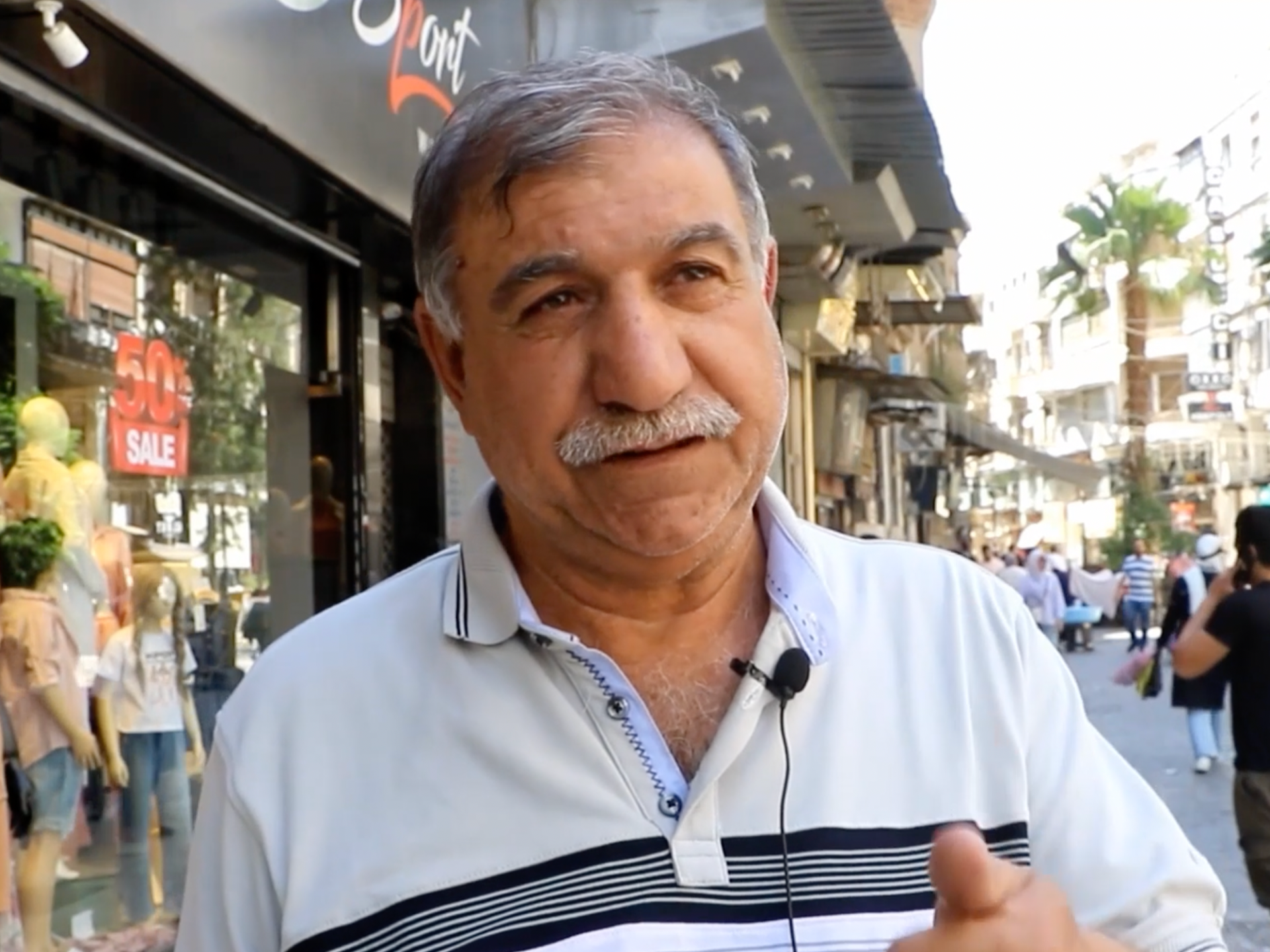
Residents in Damascus rejected US President Donald Trump’s suggestion that Syria should confront Hezbollah in Lebanon. They say Syria should avoid being drawn into new regional conflicts. In a rare critique, Trump told Israel to let Syria take on Hezbollah.
FIFA president Gianni Infantino will be ‘enjoying the final’ with Trump and present the trophy together on July 19.
Published On 23 Jun 202623 Jun 2026
FIFA president Gianni Infantino has confirmed plans to include United States President Donald Trump in the trophy presentation ceremony at the World Cup final.
“We will be together with the president, enjoying the final, and handing the trophy to the winner – of course, together,” Infantino said during an interview with Fox News on Tuesday morning.
Recommended Stories
list of 4 itemsend of list
Asked to clarify that he and Trump would present the trophy together at the match on July 19 in East Rutherford, New Jersey, Infantino added: “Of course. We are together all the time.”
Trump notably participated in the ceremony at last year’s Club World Cup final, when Chelsea defeated Paris Saint-Germain 3-0 at the same venue.
Chelsea’s Reece James lifts the trophy as he celebrates with teammates after winning the FIFA Club World Cup, with US President Donald Trump and FIFA president Gianni Infantino also on stage [Jeenah Moon/Reuters]
He remained on stage as Chelsea lifted the trophy. Later, the trophy was spotted in the Oval Office, with Chelsea reportedly having received a replica version.
According to The Athletic, citing FIFA sources, Infantino has been aiming to attend as many matches as possible at the tournament.
So far, that has been up to two a day. Trump has yet to attend any matches in this year’s World Cup.
Following the start of the US-Israel war on Iran on February 28, Tehran had effectively closed off the strait, leaving vessels stuck.
Published On 23 Jun 202623 Jun 2026
The United Nations’ International Maritime Organization (IMO) has begun evacuating more than 11,000 sailors stranded in the Strait of Hormuz following the memorandum of understanding signed by the United States and Iran to end the US-Israel war on Iran.
IMO Secretary-General Arsenio Dominguez said in a statement on Tuesday that the operation would be carried out in “close cooperation with Iran, Oman, all other coastal states in the region, the United States and the maritime industry”.
Recommended Stories
list of 3 itemsend of list
“We have secured the necessary safety guarantees and have thoroughly verified the conditions for safe navigation to support these operations,” he said.
Following the start of the US-Israel war on Iran on February 28, Tehran had effectively closed off the strait, leaving vessels stuck on the waterway.
But shipping traffic has increased since the signing of the agreement last week, with the Kpler shipping intelligence agency reporting that at least 36 commercial vessels passed through the strait on Monday, a record level of traffic since the war began.
According to Oman’s Defence Ministry, the evacuation process under the IMO plan, which has been under discussion for months, will be phased.
“Given the elevated risk of collision in the current environment, a gradual and controlled evacuation of vessel traffic is required,” it said.
Denmark announced on Tuesday that it will join an international maritime mission set up by France and Britain to help reopen the crucial waterway.
Reporting from the Strait of Hormuz, Al Jazeera’s Tohid Asadi explained that talks between the US and Iran on a peace deal have gotten “a little bit better”.
“Today, we’ve got a joint statement by the Omani and Iranian sides saying they are talking about mechanisms to reopen trade through the Strait of Hormuz. This is a positive indication,” he said.
“However, it remains to be seen how long it’s going to take for the strait to reopen, and until then, we see hundreds of ships stranded on both sides of Hormuz.”
Meanwhile, US Secretary of State Marco Rubio arrived in the United Arab Emirates on Tuesday and reiterated that Iran would not be allowed to charge tolls in the strait under any final deal with the US.
“It’s an international waterway. No country is allowed to charge tolls or fees on an international waterway,” he said, adding that he believed “all the countries in this region would agree”.
Tehran’s top negotiator, Mohammad Bagher Ghalibaf, had earlier insisted the Strait of Hormuz “will never return” to the pre-war status quo, despite the foes agreeing to set up communication lines to keep it open.
Colombia’s outgoing leftist president, Gustavo Petro, has alleged electoral fraud after preliminary results from a presidential run-off saw his handpicked candidate lose by a small margin.
In a barrage of posts on the social media site X on Monday, Petro alleged that the opposition bought votes and Israel and the United States interfered to help opposition far-right candidate Abelardo de la Espriella win.
Recommended Stories
list of 4 itemsend of list
Petro has refused to recognise the results and has called for an investigation by the judiciary.
The president, who was barred by the constitution from running for a second term, was Colombia’s first leftist president, putting him at odds with the US.
His administration is praised for reforms that boosted social spending, raised the minimum wage and redistributed land to poorer families. Petro also cut ties with Israel over Israel’s genocidal war on Gaza and distanced himself from US President Donald Trump’s administration.
However, critics said his refusal to accept the election results risks inflaming political tensions – and violence. Here’s what we know:
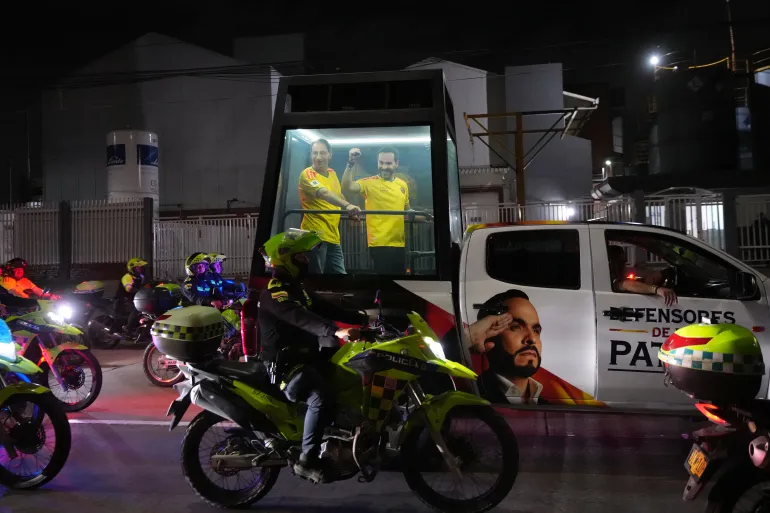
Presidential candidate Abelardo de la Espriella of the opposition Defenders of the Motherland movement and his vice presidential running mate, Jose Manuel Restrepo, ride inside a bulletproof enclosure towards a victory rally in Barranquilla on June 21, 2026 [Rodrigo Abd/AP]
What are the election results?
The first round of the presidential election was held on May 31. Neither of the two leading candidates – Abelardo de la Espriella of the right-wing Defenders of the Homeland movement and Senator Ivan Cepeda of the ruling Historic Pact – secured at least 50 percent of the vote, leading to a run-off on Sunday.
De la Espriella narrowly won with 49.66 percent over Cepeda’s 48.7 percent, according to preliminary results released on Monday by the National Registry, which manages vote numbers.
The razor-thin difference amounts to less than 1 percent of the vote and represents one of Colombia’s closest elections.
Trump-backed de la Espriella, 47, is to take office on August 7. The criminal lawyer is a multimillionaire who campaigned on tougher security and anti-leftist policies. He also has US citizenship.
De la Espriella’s win is part of a recent trend of Latin American countries electing far-right, populist leaders who are pro-Trump. Argentina’s Javier Milei, Honduras’s Nasry “Tito” Asfura, El Salvador’s Nayib Bukele and Costa Rica’s Laura Fernandez Delgado all have close ties to the Trump administration.
Why is Petro alleging fraud?
Petro took to X to denounce in a series of posts what he said was voter fraud committed with the help of Israel and Prime Minister Benjamin Netanyahu.
Petro said there was evidence of manipulation of Form E-14, the official, handwritten tally of sheets filled out by poll workers at each voting station.
The form is a physical record of the vote count and is meant to prevent electoral fraud. It is filled out by hand, and digital scans are also uploaded to the National Registry’s portal for public auditing. If found to have errors, parties may request a recount.
Petro alleged that foreign actors accessed the National Registry’s website and rewrote voting data on some E-14 forms.
“Today we have evidence of a change in IP addresses of several servers of the national registry,” he posted.
“This means that the software was compromised and others wrote data for polling stations and voting posts. The only entity in the world capable of doing that is the state of Israel,” Petro added without providing evidence of Israel’s alleged involvement.
Petro said his party had requested a “technical audit” of the voting software before the elections and asked authorities to retrieve the digital footprints of all digitally transmitted documents to avoid modification. He claimed those requests were ignored.
The outgoing president shared videos of what he alleged captured the “premeditated” modification of E-14 forms. He also claimed the manipulation was done “from the offices of the Bautista brothers”.
Electoral workers, observers and party delegates attend the official vote count the day after the presidential run-off in Bogota on June 22, 2026 [Fernando Vergara/AP]
Who are the Bautista brothers?
Petro was referring to Thomas Greg & Sons, an influential private logistics and security printing firm that runs Colombia’s electoral infrastructure. Until recently, it also printed Colombian passports.
It is run by brothers Fernando and Camilo Bautista Palacio. The duo was convicted of bank fraud in the US in the 1980s.
Thomas Greg & Sons, which was founded by their father, Gregorio, has been contracted by the National Registry for more than a decade to manage election logistics, preliminary vote counting and vote-tallying software.
Petro in April accused the Bautista brothers of negotiating a deal with de la Espriella that would see them secure the presidency for the far-right candidate in return for clinching passport printing contracts once more.
At the time, de la Espriella refuted the claims, and his lawyers threatened Petro with a lawsuit.
What are authorities saying?
Attorney General Gregorio Eljach has dismissed the allegations and told reporters there is “no evidence of fraud” with more than 99 percent of the votes counted.
De la Espriella, meanwhile, has so far not responded directly to Petro.
Is de la Espriella linked with Israel?
Yes, de la Espriella has consistently voiced support for Israel and campaigned in Colombia’s Jewish community, making pro-Israel promises and saying his government would “defend Judeo-Christian principles”.
He pledged to reverse Petro’s 2024 decision to cut ties with Israel and has promised to relocate the Colombian embassy to Jerusalem.
Netanyahu congratulated de la Espriella on Monday, saying: “I look forward to working with you to strengthen the bond between Israel and Colombia.”
How has the US reacted?
In his posts, Petro also blamed Trump for interfering in the elections by publicly endorsing a candidate and thus swaying voters.
Trump endorsed de la Espriella on his Truth Social platform weeks before the run-off.
Trump and US Secretary of State Marco Rubio also congratulated de la Espriella on his preliminary win, and Trump took credit for the far-right candidate’s victory.
“He was in 10th place. I endorsed him, and he won the election. He called me last night and thanked me for the endorsement,” Trump told reporters at the White House on Monday.
Rubio wrote on X: “The Trump administration looks forward to working closely with your incoming administration to advance regional security cooperation, end illegal immigration to the United States, and strengthen our economic ties.”
Petro has invited Trump to make a statement on the electoral fraud allegations.
“I formally invite President Donald Trump to speak,” Petro wrote, adding that the US president bears responsibility for “having supported a candidate and not the freedom of the Colombian people”.
What is the US-Colombian relationship like?
Although both countries have close trade ties, diplomatic relations have often been strained over drug trafficking policies and relations with Israel, among other issues.
But relations essentially collapsed under the Trump and Petro administrations.
Petro in January last year refused to allow US migrant deportation planes to land in his country and said on X that the US “cannot treat Colombian migrants like criminals”.
In October, the US sanctioned Petro, his family and key officials in his government based on unproven allegations of involvement in the drug trade.
In January this year, the US military abducted leftist Venezuelan President Nicolas Maduro from his Caracas home after the Trump administration accused him of “narcoterrorism”.
US announces the temporary easing of oil sanctions for 60 days after Iran agrees to allow international nuclear inspections.
Published On 23 Jun 202623 Jun 2026
Iran’s top negotiator, Mohammad Bagher Ghalibaf, says an agreement has been reached with the United States to release $12bn in frozen Iranian funds following talks in Switzerland.
The US eased sanctions on Iranian oil for 60 days after Tehran committed to allowing international nuclear inspectors to return to the country during negotiations to end the US-Israel war on Iran.
Recommended Stories
list of 4 itemsend of list
Israel and Lebanon are scheduled to hold talks in the US as a ceasefire appears to be holding in Lebanon.
So what’s the latest as the conflict enters its 116th day?
Diplomacy
Iranian Deputy Foreign Minister Kazem Gharibabadi says technical talks with the US have concluded and the next phase “will take place under the supervision of the high-level committee” that includes Ghalibaf, Foreign Minister Abbas Araghchi and US Vice President JD Vance.
Ghalibaf has hailed “good achievements” in the US-Iran talks and confirmed the release of two tranches of $6bn in frozen funds.
The US Treasury Department has waived sanctions on the sale of Iranian crude oil, petrochemicals and petroleum products until August 21.
Omani Foreign Minister Badr Albusaidi reaffirms a commitment for “toll-free passage” in the Strait of Hormuz after talks with Iranian diplomats in Muscat.
Henry Ensher, a former US ambassador and deputy assistant secretary of state, says the release of frozen Iranian assets and the resumption of maritime traffic in the Strait of Hormuz suggest that Washington and Tehran are both “getting what they want”. “Both sides are very interested to show that, somehow, they’ve gotten the upper hand or at least that they’re not being taken advantage of,” Ensher tells Al Jazeera.
In Iran
Iranian President Masoud Pezeshkian has called for a “full commitment to agreed obligations”. “The effectiveness of the talks depends on full commitment to the agreed obligations and their precise implementation,” Pezeshkian says.
Ghalibaf has defended the decision to hold talks with the US, saying Iranian delegates went to Switzerland to end the bloodshed in Lebanon.
Central Bank of Iran Governor Abdolnaser Hemmati has denied comments by US President Donald Trump that released Iranian funds would be used to buy US farm products. Hemmati tells the Tasnim News Agency that Iran has “no obligation to buy” agricultural products from the US. He says the agreement between the US and Iran on the matter says the first $6bn can be used to buy “basic goods and medicine”.
In the US
Trump says Iran “will agree” to have weapons inspections and any released Iranian assets will be used to buy US produce.
Democrats on the Foreign Affairs Committee of the US House of Representatives have accused Trump of granting Iran sanctions relief before making progress on key issues under negotiation, including Tehran’s nuclear programme. “Trump officials repeatedly said sanctions relief would be tied to Iran addressing its nuclear program and terrorist proxies. Neither has been addressed, but the regime has been gifted sweeping sanctions relief it has dreamed of for decades,” they say in a post on X.
In Lebanon
A ceasefire between Israel and Hezbollah has largely held, even as fear of renewed hostilities has kept displaced people from returning home.
The United Nations said Sunday marked the first time its peacekeepers have detected no air attacks in Lebanon since March 2, the day the war between Israel and Hezbollah escalated and two days after the US-Israel war on Iran began.
Mahmoud Qamati, deputy head of Hezbollah’s political council, has warned that the Lebanese group will respond to any violation of the ceasefire by Israel, according to Iran’s Press TV. “Hezbollah remains fully alert with its finger on the trigger, ready to confront any violation by the Israeli regime,” Qamati is quoted as saying.
Israeli Prime Minister Benjamin Netanyahu, Defence Minister Israel Katz and Chief of the General Staff Eyal Zamir say Israeli troops will continue to occupy southern Lebanon.
The Israeli military will continue to “act with determination in order to neutralize threats against our soldiers and our citizens” and to demolish infrastructure belonging to Hezbollah, they say in a statement.
The Israeli military will also continue to “maintain the security zone in southern Lebanon”, they say, referring to the land Israel occupies there, razing buildings and forcibly displacing one million people.
Israel and Lebanon are to start a new round of direct talks in Washington, DC, on Tuesday.
Goals from Nadhir Benbouali and Amine Gouiri steered Algeria to a 2-1 win over Jordan in Group J, completing their second-half comeback.
Published On 23 Jun 202623 Jun 2026
Algeria stormed back to beat Jordan 2-1 and eliminate the World Cup debutants with a match to spare on Monday thanks to second-half goals from substitute Nadhir Benbouali and Amine Gouiri.
Benbouali’s header cancelled out Nizar Al-Rashdan’s first-half opener, and Gouiri poked home in a goalmouth scramble eight minutes from time to revive Algeria’s campaign after their opening 3-0 loss to Argentina.
Recommended Stories
list of 3 itemsend of list
The victory put Algeria level with Austria on three points in Group J, while ensuring defending champions Argentina will go through to the round of 32 as group winners following their 2-0 win over the Austrians earlier on Monday.
Algeria fans celebrate in the stands after Amine Gouiri scores their second goal [David Gonzales/ IMAGN IMAGES via Reuters]
Algeria coach Vladimir Petkovic put veteran attacker Riyad Mahrez in his starting 11 after benching him against Argentina, and he proved influential in breaking down a Jordan team that defended in numbers and was quick on the counterattack.
Mahrez blew an early chance when he ran onto a sublime lofted pass from Hicham Boudaoui but lost the ball under his feet. He then latched onto another long ball from Boudaoui to be one-on-one with Yazeed Abu Laila, but the Jordan goalkeeper got a hand to his chipped shot.
Jordan, who lost their opener 3-1 to Austria, went ahead in the 36th minute following clever link-up play and a touch of fortune when Algeria midfielder Ramiz Zerrouki turned the ball over in defence.
Mousa Al-Tamari’s shot went sideways to Al-Rashdan, who drilled home first-time into the bottom right corner.
Jordan’s Nizar Al-Rashdan celebrates scoring their first goal [Carlos Barria/Reuters]
Petkovic brought on Nabil Bentaleb and Benbouali at the break, and Algeria lifted their intensity.
Surrounded by Jordan defenders, Benbouali rose highest to meet a Mahrez corner and sent a glancing header bouncing into the corner of the net in the 69th minute.
Thirteen minutes later, Algeria took the lead from another setpiece.
Substitute Anis Hadj Moussa curled in a corner kick and a deflection off Jordan goalscorer Al-Rashdan allowed a gleeful Gouiri to poke in the winner.
Algeria players celebrate after the match [Carlos Barria/Reuters]
For Algeria, it sets the stage for a grudge match against Austria, 44 years after the “Disgrace of Gijon”.
At the 1982 World Cup, Austria and West Germany were alleged to have colluded in a group match against each other to ensure both would advance at the expense of eliminated Algeria.
West Germany and Austria denied wrongdoing and FIFA cleared them.
Algeria can take a measure of revenge against Austria when they face them in Kansas City on Saturday, while Jordan face Argentina and superstar Lionel Messi, who has scored all five of their goals at the World Cup so far.
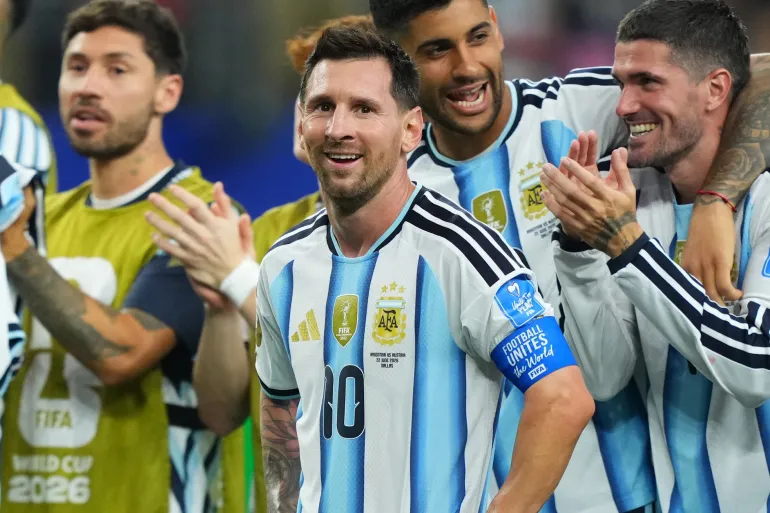
Lionel Messi cemented his status as arguably the greatest football player of the modern era after sweeping aside several records as he powered his side to the round of 32 at the World Cup — the Argentinian captain’s record sixth appearance.
Messi broke the record for the highest number of goals in the history of the World Cup after scoring his team’s opening goal in their Group J match against Austria on Monday.
Recommended Stories
list of 4 itemsend of list
He then added another in the final minutes, taking his tally to 18 goals in six tournaments to reach the top of the charts to deafening roars at Dallas Stadium in Arlington, Texas.
Austria coach Ralf Rangnick, who has revived the national side since taking over in 2022, attempted to break down the nearly 39-year-old Argentinian maestro’s work ethic.
“Lionel Messi maybe doesn’t put in the same legwork as in the past,” Rangnick said.
“He likes to stay on the side, and sometimes he likes to stop in front of the goal, in the offside position.
“That doesn’t mean that they have one man less, but they have one man less that works in the counter-pressing.
“But that makes him so dangerous, because he might be in a position, free in a position, and we need to be prepared for that.
“We shouldn’t have too many transition moments, and not allow transition moments, and not allow him to be free to accept the ball.”
‘Very angry’
That notion unravelled in front of a frenzied crowd of 70,000 dominated by Argentina fans decked out in light blue and white.
Messi pulled an early penalty wide to pass up the chance to move clear of Miroslav Klose for the most World Cup goals.
Messi said afterwards that he was “very angry” with himself, and then twice came close to scoring after that, only for Austria captain David Alaba to deny him twice.
And then came the big moment, Messi sweeping in on 38 minutes after being set up by Facundo Medina.
Just as Rangnick had warned, Messi had ambled into space and was all alone to score with a trademark swing of his left foot.
It was his 17th World Cup goal, and his 18th arrived when Messi pounced again in the fifth minute of injury time.
This time, the veteran squeezed home as several defenders threw themselves desperately at the ball.
Messi, at his sixth World Cup, was still going strong in the 95th minute.
The goals took the maestro to five at this edition, having hit a hat-trick in a 3-0 win over Algeria.
Lionel Messi of Argentina celebrates with teammates after winning the FIFA World Cup 2026 group stage match Argentina against Austria, in Dallas, USA, on June 22, 2026 [Jeffrey McWhorter/EPA]
Last Messi the best one?
Argentina coach Lionel Scaloni, Messi’s teammate at the 2006 World Cup, has built an ecosystem around Messi to allow his captain to do his thing.
That means letting others do the running around him.
Not that Messi is totally exempt from the dirty work.
“Today, when the team was struggling without possession, he put in the work,” Scaloni said.
“You could see his commitment, that speaks volumes about him.”
Renowned Spanish journalist Guillem Balague, who wrote an authoritative biography of Messi, said before the World Cup that this version of the player was “very different” from the one that burst onto the scene with Barcelona in the early 2000s.
“Messi has reinvented himself at least five times to evolve into the player he is now for Argentina and Inter Miami,” Balague wrote in a column for the BBC.
“He has adapted so he can dominate and stay ahead of a game that has always been chasing him,” he added.
He noted how Pablo Aimar, Messi’s childhood idol, once said: “The last Messi is always the best Messi.”
That version is a player who walks more than he runs, said Balague, but “still sees everything first”.
“Critics once used this [lack of running] against him. Now it reads as mastery,” he wrote.
Senegal fought back until stoppage time but couldn’t draw level and must beat Iraq for a chance to progress.
Published On 23 Jun 202623 Jun 2026
Erling Haaland scored his second World Cup brace in a row as Norway beat Senegal 3-2 at New York New Jersey Stadium to secure their place in the last 32.
Norway substitute Marcus Holmgren Pedersen struck late in the first half, before Haaland doubled the lead shortly after the break in the Group I fixture on Monday.
Recommended Stories
list of 4 itemsend of list
Ismaila Sarr cut the deficit for Senegal, only for Haaland to punish more slack defending as Norway progressed to the knockout rounds with a game to spare, despite a late consolation from Sarr.
Manchester City forward Haaland now has four goals in two games at the tournament, hot on the heels of Lionel Messi’s double earlier in the day, which carried him to a record 18 World Cup goals. Not to be outdone, Kylian Mbappe scored another brace, too, as France beat Iraq 3-0.
Norway have lost only once in their last 18 matches and will take on France in a compelling battle for top spot in the group in Boston on Friday.
Senegal must beat Iraq, who are also without a point, in their final game to stand a chance of avoiding an early exit.
Led by the unstoppable Haaland, who increased his astonishing international goals tally to 59 in 52 games, Norway recorded back-to-back wins at the World Cup for the first time.
They added weight to the belief they can do serious damage at these finals with a dominant display against a Senegal side that paid heavily for their errors.
Norway quickly set the tone as Kristoffer Ajer’s header forced Senegal goalkeeper Edouard Mendy into a terrific save with his legs at a corner, but they lost full-back Julian Ryerson to injury early on.
Captain Martin Odegaard skied over an inviting cut-back from the right for Norway, as Nicolas Jackson looked to be Senegal’s most dangerous threat.
Mendy again came to Senegal’s rescue with a superb block to deny Odegaard, after Haaland cushioned down Antonio Nusa’s chipped cross into the box.
But Mendy allowed Pedersen’s low drive to creep under him after a dreadful mistake from skipper Kalidou Koulibaly gave the ball to the replacement right-back on the edge of the box.
Haaland rolled against the post from a tight angle after Mendy got in a tangle, but he made amends three minutes into the second half as Norway sliced Senegal apart on the counterattack.
Odegaard surged upfield and slid a pass through to Haaland, who buried an emphatic finish past Mendy to add to the two goals he scored in Norway’s opening 4-1 victory over Iraq.
Senegal clawed their way back as Sarr showed great composure to poke home after tumbling to the ground following a clever flick into the area by Sadio Mane.
However, Koulibaly was at fault once more, failing to clear as Haaland steered a volley in off the crossbar from Patrick Berg’s cross, delighting Norwegian fans, who provided a colourful backdrop with their viral, rowing chant.
Norway fans perform their traditional rowing celebration in the stands [Dylan Martinez/Reuters]
Mory Diaw came on for the injured Mendy in goal, but only a headed goal-line clearance from Pathe Ciss prevented Oscar Bobb from netting Norway’s fourth.
Sarr’s second of the night set up a tense finish, but Norway held on to join France in the next round and leave Senegal’s hopes hanging by a thread.
Sarr also became the first Senegalese player to score at two different World Cups.
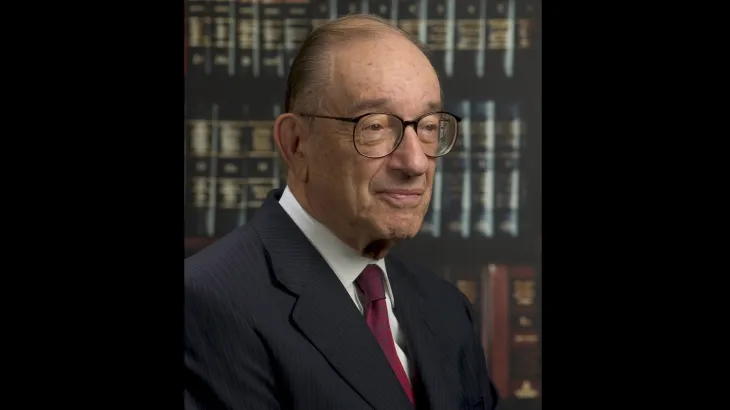
Alan Greenspan, one of the most influential economic policymakers in modern US history, has died aged 100. Greenspan led the Federal Reserve for nearly two decades under four presidents, overseeing a long period of economic growth but also faced criticism linked to the 2008 financial crisis.
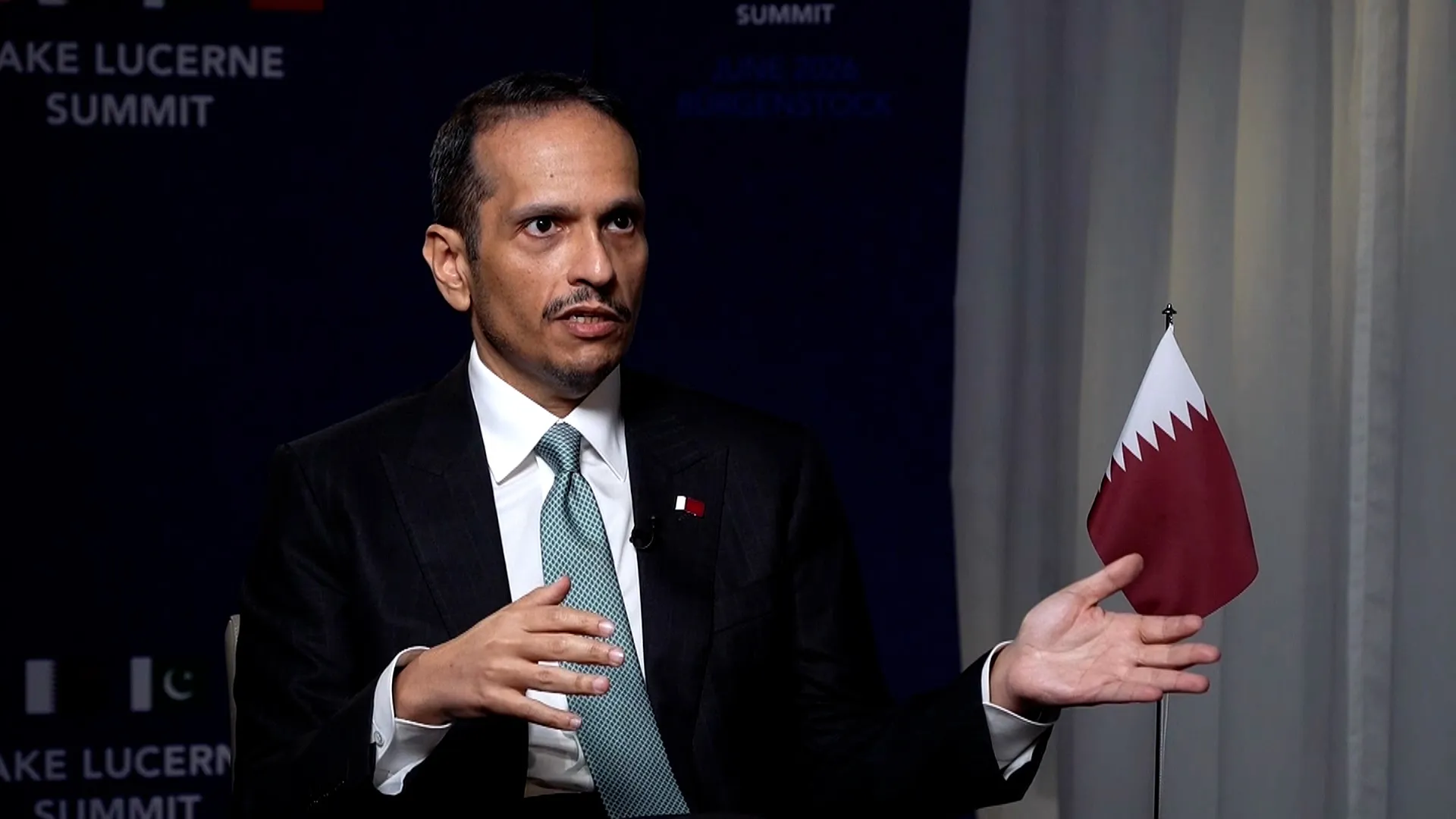
Qatar’s PM Sheikh Mohammed bin Abdulrahman Al Thani told Al Jazeera that safeguards have been put in place to prevent US-Iran negotiations from regional escalation, including tensions in Lebanon and the Strait of Hormuz, stressing diplomacy and respect for agreements.
China has added 10 United States-based companies to its export control list and barred government procurement from nearly 50 US companies two weeks after the Pentagon blacklisted some of China’s best-known companies for their alleged ties to the Chinese military.
China’s Ministry of Commerce announced the export order on Monday, barring Chinese companies from exporting “dual-use” items that can be used for civilian or military purposes to the US firms.
Recommended Stories
list of 4 itemsend of list
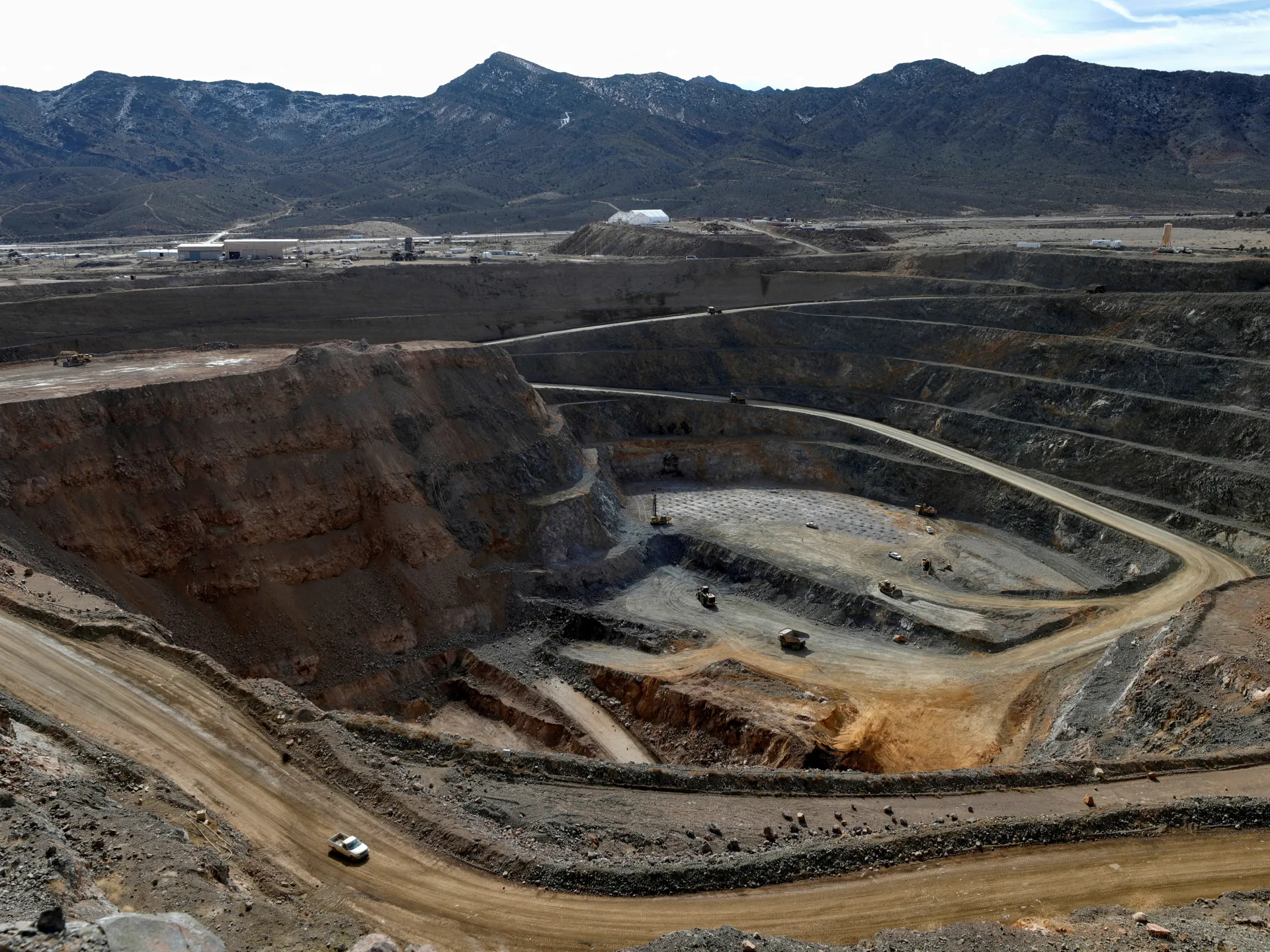
The list of companies includes rare-earth mine operator MP Materials Corp, rare-earth magnet maker USA Rare Earths, and US defence contractors specialising in fields such as aerospace, drones, synthetic-aperture radar, and shipbuilding and repairs.
Under the order, “foreign institutions and individuals worldwide are also prohibited from transferring or providing Chinese dual-use goods to them” while ongoing export transactions must be suspended immediately.
The Commerce Ministry said the export ban had been issued to “safeguard national security and interests and fulfil international obligations such as non-proliferation”.
China’s Ministry of Finance on Monday separately barred Chinese government procurement from 46 companies, including subsidiaries of major US defence contractors like Lockheed Martin, Boeing, General Atomics and General Dynamics. US-funded, locally registered companies, however, have been given an exemption by the ministry.
Experts described Beijing’s orders as a retaliation, albeit a largely symbolic one, against the US after the Pentagon in early June added about 80 Chinese companies and their subsidiaries to its list of “Entities Identified as Chinese Military Companies Operating in the United States”.
The designation means the Pentagon either believes the companies are owned or controlled by the Chinese military or they are “military-civil fusion contributors”, a term for commercial companies that contribute to China’s military development despite their civilian status.
The updated list includes Chinese e-commerce giant Alibaba Holdings, search engine giant Baidu and electric automaker BYD, some of China’s largest and best-known companies.
While the order does not bar US companies from doing business with them, it does impact US defence contractors and their future supply chains.
“We can interpret this as a tit-for-tat response, and that fits into China’s playbook any time we’ve seen escalation from the US side in terms of trade and investment tools,” said Nick Marro, global trade lead analyst at the Economist Intelligence Unit.
China-based supply chain consultant Cameron Johnson said the Commerce Ministry’s order mirrors US semiconductor export controls designed to keep the most advanced chips out of Chinese hands.
“They basically say it doesn’t matter where or who you are, you are bound by this regardless of circumstance,” said Johnson, who is also a senior partner at the Shanghai consultancy Tidal Wave Solutions. “Organisations or individuals in any country or region are prohibited from transferring dual-use materials that originated in China.”
He said Beijing’s orders in practice may be hard to enforce and many of the companies named in those orders have already moved their supply chains out of China or begun to “de-risk” their operations there.
Johnson said the wide scope of companies included in Washington’s and Beijing’s directives could be a sign of more to come and may signal a new front in the US-China trade war.
“This is probably just the beginning of the back and forth,” he said. Last year, after returning to the White House for a second term, US President Donald Trump reignited the US-China trade war, leading Washington and Beijing to impose escalating rounds of tariffs on each other.
Trump and Chinese President Xi Jinping agreed to a trade truce in October, which was extended during a summit between the two leaders in Beijing in May.
Despite promises to “enhance economic cooperation” during the meeting, observers like Singapore-based geopolitical analyst Steve Okun predicted the goodwill may be short-lived.
“The US’s recent closure of chip export loopholes and China’s continuing addition to its export bans show the national security lane remains active in both capitals regardless of the diplomatic niceties at the recent Trump-Xi summit,” Okun told Al Jazeera.
“There is no ‘truce’ in the US-China trade war. Expect further actions from both sides as well on export controls and investment restrictions,” he said.