England vs Norway LIVE: FIFA World Cup 2026 – quarterfinal
Live coverage and text updates as England play Norway in a quarterfinal clash in Miami.
Source link
Live coverage and text updates as England play Norway in a quarterfinal clash in Miami.
Source link
Three wins to go. How can your team reach the final and win the World Cup 2026? Click here to find out.
Who: Norway vs England
What: FIFA World Cup 2026 – Quarterfinals
Where: Miami Stadium, Miami Gardens, Florida, the United States
When: Saturday, July 11, at 5pm (21:00 GMT)
How to follow: We will have all the build-up on Al Jazeera Sport from 18:00 GMT before our live text commentary stream.
list of 3 itemsend of list
Four weeks ago, if you told Norwegians their team would be in the World Cup quarterfinals, they might have laughed it off. But this weekend, the Scandinavian country is set to break new ground.
Norway’s dream run in North America enters a new chapter when the tournament’s dark horses take on title contenders England for a place in the semifinals.
It took Norway a whopping 28 years to return to the sport’s biggest stage, and they have made their mark in style – from their traditional Viking row celebrations capturing global attention to striker Erling Haaland becoming the internet’s darling.
A lethal presence in the box and a goofy, no-nonsense personality off the pitch, Haaland has become somewhat of an all-round entertainer for viewers. His exemplary goal-scoring figures make you almost forget he’s playing in his debut World Cup – and next up, the towering striker will go toe-to-toe with England’s Harry Kane, another number nine who delivers when it matters most.
Norway finished second in Group I with six points, beating Senegal and Iraq and losing to France. They started their knockout phase with a late 2-1 win over the Ivory Coast before stunning Brazil by the same scoreline to reach the quarterfinals for the first time.
England topped Group L with seven points, beating Croatia and Panama and drawing with Ghana. They needed a second-half comeback to beat the Democratic Republic of the Congo in the round of 32 and knocked out cohosts Mexico 3-2 in a scintillating last-16 contest at the iconic Azteca Stadium.

The chants of “It’s Coming Home” were louder than ever when England’s fighting spirit – against the background of high altitude, history and a red card – steered them to victory against the home side Mexico.
Sharing 10 of the team’s 11 goals between them, the dynamic duo of Kane and Jude Bellingham has kept England alive in the title race, especially at a time when there are defensive deficiencies in the squad.
The in-form side, which also boasts more World Cup experience than Norway, are deemed favourites to reach the semifinals for the first time since 2018.
“We’ve been here a few times,” said England winger Bukayo Saka. “But the best team on the day is going to be the team that wins, so we’re aware of that and that’s where our focus is.”
England’s leaky defence – which has kept only two clean sheets in five games – will face its toughest test yet against Haaland, whose seven goals rank him third in the Golden Boot race, only behind Lionel Messi and Kylian Mbappe.
In their first World Cup since 1998, Norway, a nation of just more than five million people, has exceeded expectations.
After stunning the record five-time world champions Brazil to reach their first-ever quarterfinal, Norway will be eager to take down another giant and extend their fairytale run.
As much as their success has been a team effort, the spotlight has centred on their poster boy, Haaland – the blond, pony-tailed, 1.95-metre- (6ft4-) tall striker and a new social media sensation.
With his nonchalant replies in news conferences, awkward post-match selfies on Snapchat and a glittering collection of luxury handbags, the striker has drawn attention for more than just his goal-scoring prowess. In fact, “Haaland mania” has reached a fever pitch during the course of the World Cup.
Instagram is flooded with AI-generated and animated videos of him, stitched with his now-famous song “Ha-ha-ha-Haaland”.
“It’s important to joke around … I like to joke a little bit, and I like to have fun,” Haaland said. “That’s a key for my daily life – to joke around and, of course, train well and prepare well.”
Haaland’s top-notch preparation has delivered outcomes that even the 25-year-old did not expect.
“To be in the quarterfinals with Norway in the World Cup is quite surprising, even for me,” he said.
“Just to be able to play in the World Cup is, for me, a huge honour, and it was a huge goal for me in my career. To be able to be here and play on the biggest stage with my Norwegian friends against the best teams in the world, it’s really special.”
The Opta supercomputer gives England a 50.4 percent likelihood of winning in regulation time, while Norway’s chances of winning are 25.1 percent.
The model estimates a 24.6 percent probability of the game going to extra time.
To check the TV listings for your country, head to FIFA’s TV listing schedule here.
The winner of the Norway vs England match will play Argentina or Switzerland in the semifinals in Atlanta on Wednesday.
Norway and England have never met at the World Cup, but have previously faced each other 12 times. England have won seven times, Norway twice, while three matches ended in a draw.
Their most recent encounter came in a 2014 international friendly, which England won 1-0 at Wembley.
England will be without defender Jarell Quansah after he was handed a two-match ban for picking up a red card in the game against Mexico. He will miss the quarterfinal and a potential semifinal should England advance.
Centre-back Marc Guehi has a slight hamstring strain and will be assessed later on Friday to see if he is fit to play, while Reece James remains doubtful with a hamstring injury.
Defensive midfielder Jordan Henderson has been ruled out of the rest of the tournament with a broken wrist.
No issues have been reported in the Norway camp.
(4-3-3): Nyland (goalkeeper); Ryerson, Ajer, Heggem, Moller Wolfe; Berg, Berge, Odegaard; Sorloth, Haaland, Nusa
(4-2-3-1): Pickford (goalkeeper); Konsa, Stones, Guehi, O’Reilly; Rice, Anderson; Saka, Bellingham, Gordon; Kane
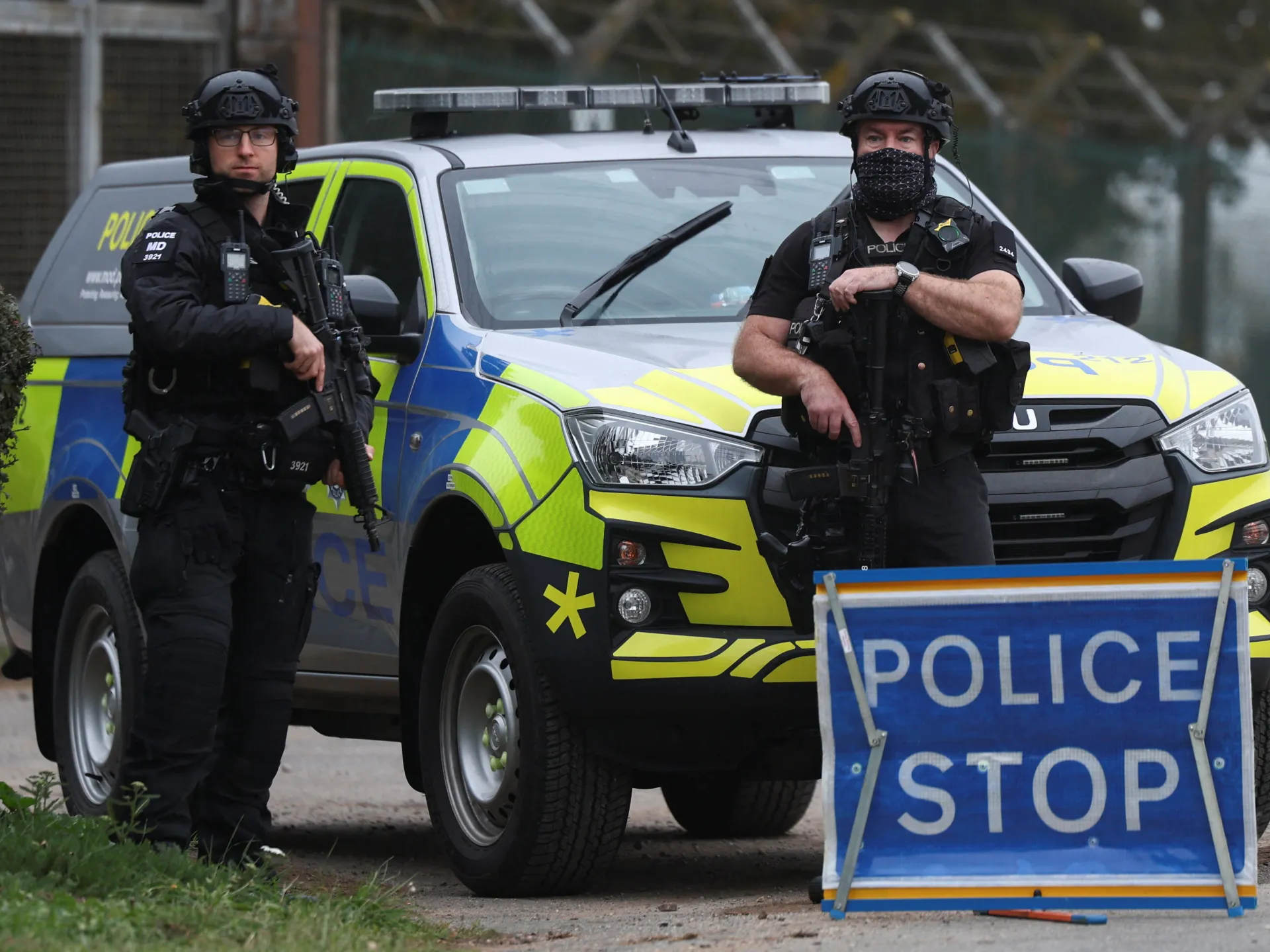
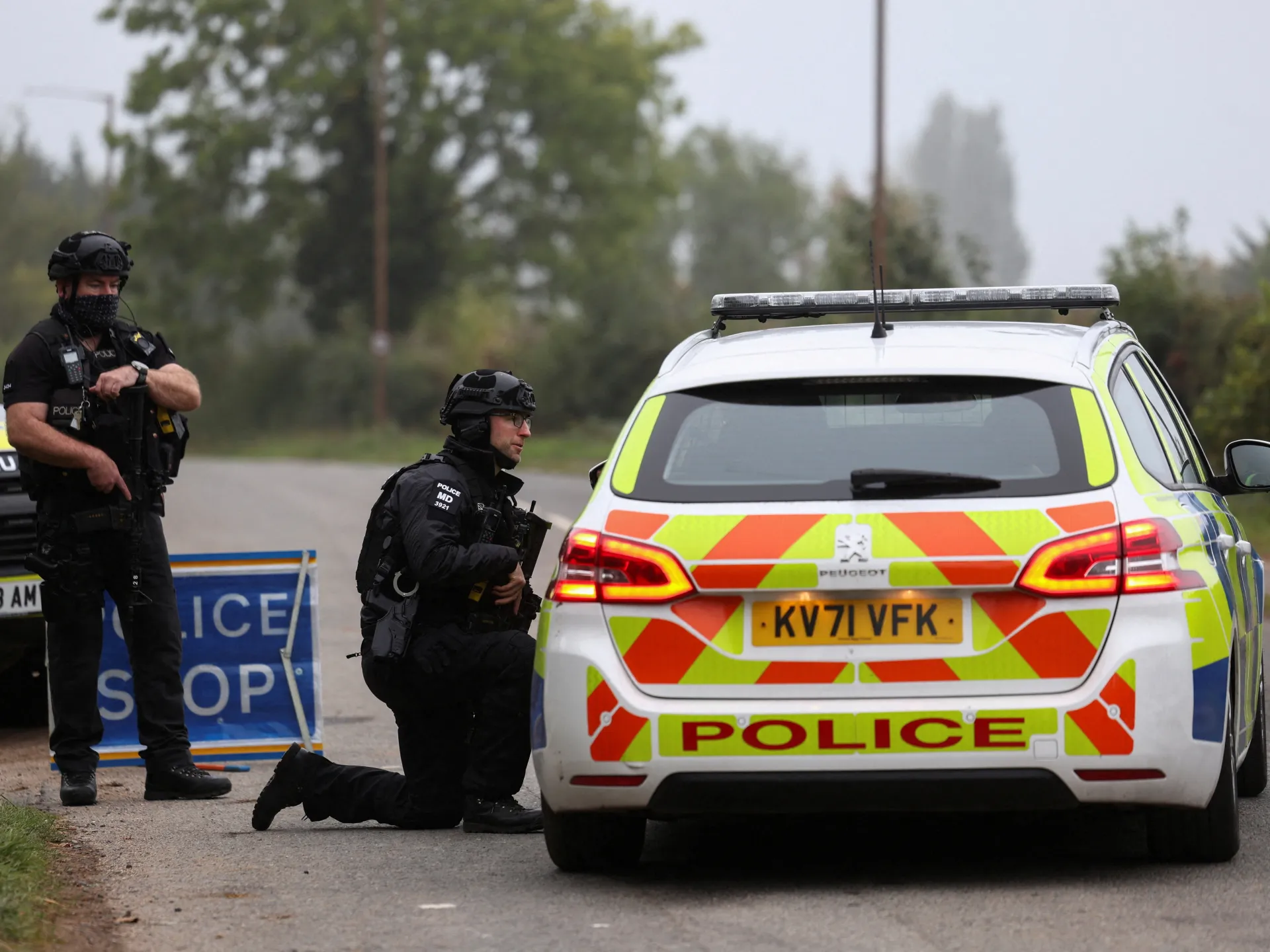
There has been unrest on the streets of London where Morocco fans were confronted by police following their team’s 2-0 loss to France and exit from the World Cup. Several arrests were reportedly made late on Thursday night around London’s Edgware road.
Published On 10 Jul 202610 Jul 2026
Share
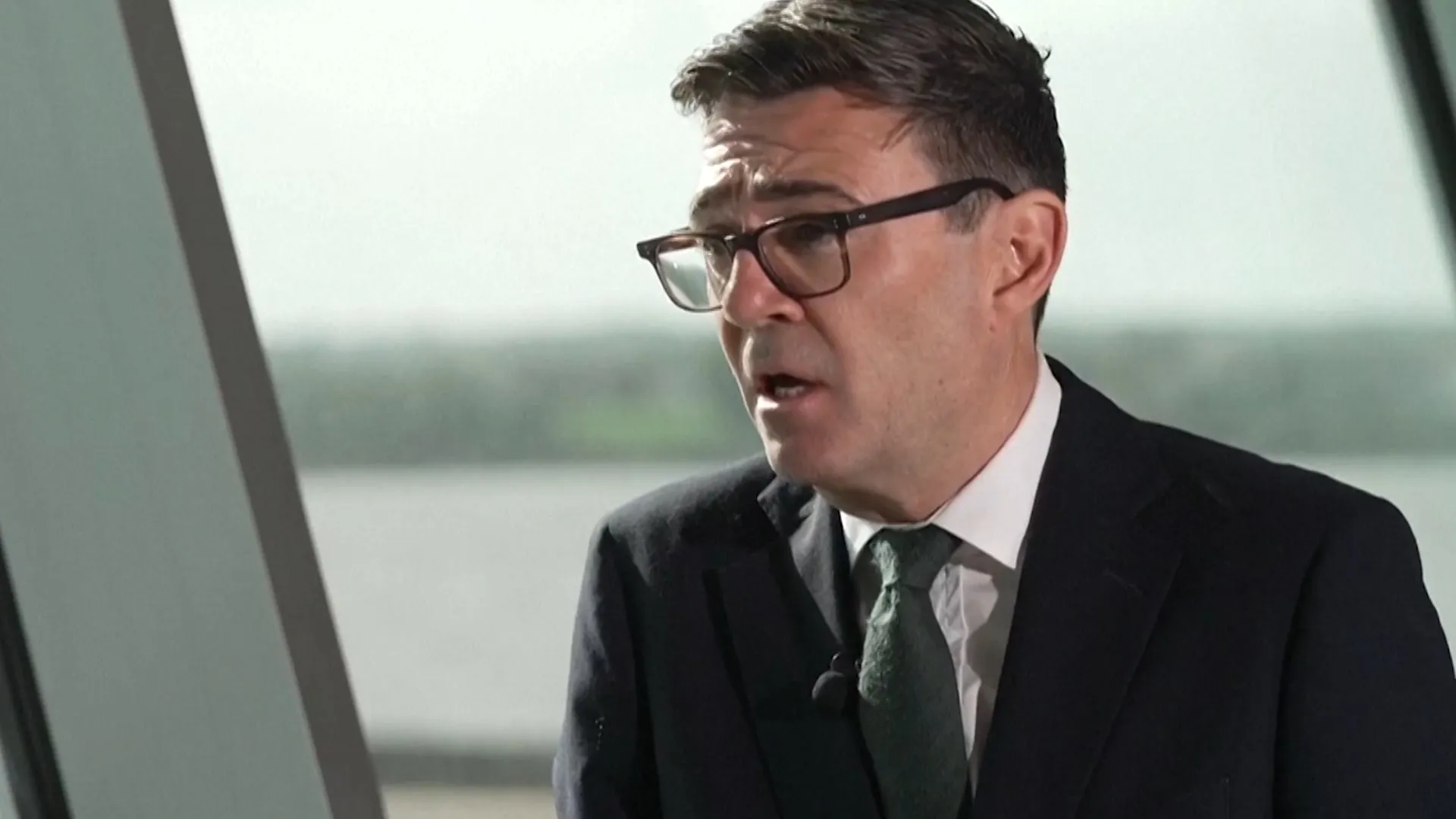
Andy Burnham, who is expected to become the next Prime Minister of the United Kingdom, took to social media to apologise for the Labour Party’s initial stance on Israeli attacks in Gaza. He’s now calling for accountability of the Netanyahu government.
Published On 10 Jul 202610 Jul 2026
Share
England host India in a women’s Test at the iconic Lord’s Cricket Ground – the first of such a kind at the venue.
Published On 9 Jul 20269 Jul 2026
Lord’s will finally host a women’s Test, 142 years since staging its first such men’s match, when England face India in a four-day game at the “Home of Cricket” starting on Friday.
“It just boggles my mind that it is just the first (women’s) Test match here at Lord’s,” said India coach Amol Muzumdar.
list of 3 itemsend of list
“It is a great occasion, and we are looking forward to it.”
The match takes place just more than 50 years since the first women’s match of any kind at the renowned London venue, with England beating Australia by eight wickets in a one-day international on August 4, 1976.
England’s captain at Lord’s that day was the late Rachael Heyhoe Flint, a pioneering figure in a women’s game where players were still wearing skirts rather than white or coloured trousers, as they do now.
Heyhoe Flint, who died in 2017, now has a gate named after her at Lord’s.
But in 1976, Marylebone Cricket Club (MCC), the owners of Lord’s, were still decades away from admitting women as members, with the thought of females walking directly through the Long Room of the pavilion before taking the field a distant dream.
England’s No 5 that day, Megan Lear, compared the experience to the moon landing, telling The Guardian: “On that day in 1976, to walk on to the hallowed turf at Lord’s, it was like one small step for us women cricketers, but one giant leap towards the future of women’s cricket.”
It is a sign of how things have changed from those amateur days that a Test between two professional sides will also be England’s second fixture at Lord’s in less than a week, following Sunday’s defeat by Australia in the women’s T20 World Cup final – a match that attracted a capacity crowd.
Nine of England’s World Cup squad are included for the Test, including captain Nat Sciver-Brunt, who is “hoping to play” despite a nagging calf injury.
“We’ve always known this has been on the calendar,” said England coach Charlotte Edwards.
“A lot of our players have been doing Test match prep throughout the T20s, so we’re really looking forward to it,” added Edwards, England’s captain when they won the 2009 Women’s T20 World Cup final at Lord’s.
“It’s a historic Test match for us as a group and for the Indian team, and we can’t wait to play in front of a lot of people again over the next four days.”
Teenage England spinner Tilly Corteen-Colman is well aware of the importance of the occasion.
“I remember speaking to Lottie (Edwards) about when she used to play here and they weren’t allowed in the Long Room,” said the 18-year-old.
“The first women’s Test at Lord’s is history in the making, so to be involved would be incredible. It would mean the absolute world.”

As well as a breakthrough, the game will also mark England batter Tammy Beaumont’s farewell to international cricket.
Beaumont has made 260 appearances for England since her debut 17 years ago, and she was the first English woman to score a double century in a Test – 208 against Australia at Trent Bridge in 2023.
“When I fell in love with playing cricket as a young girl, I barely knew that playing cricket for England was an option,” said Beaumont.
The 35-year-old, who will continue to play domestic cricket, added: “Our first ever women’s Test at Lord’s feels like the perfect occasion to sign off on a career that I could never have dreamt would be as special as it has been.”

Police arrested pro-Palestine activists for blockading a UK facility operated by UAV Engines Ltd, a subsidiary of Israeli arms manufacturer Elbit Systems, and one of the world’s largest drone engine manufacturers. Activists say Elbit’s weapons are used in Israel’s war on Gaza.
Published On 9 Jul 20269 Jul 2026
Share
London, United Kingdom – Should Andy Burnham enter Downing Street as early as July 17, if he is confirmed unopposed as Labour leader, one of his most consequential early decisions will have nothing to do with defence spending, immigration, or the economy.
It will concern a seven-year 330-million-pound ($440m) contract between NHS England and Palantir Technologies, a leading defence and intelligence software firm in the United States that received no contracts from Burnham’s Greater Manchester administration during his nine years as mayor.
list of 4 itemsend of list
The ramifications of such a decision could extend well beyond the NHS.
Media reports surfaced last week that Burnham is minded to hold that line with Palantir across all of the UK government when he arrives in Downing Street.
When approached by Al Jazeera, an Andy Burnham spokesperson said: “We’re not going to comment on individual government procurement contracts or companies and there are legal processes that must be followed.
“However, in general, Andy’s guiding principles on procurement are that we need to be getting value for money for the taxpayer and that we need to be safeguarding people’s data and British interests.”
For a company that has spent six years embedding itself across several public sector entities – the NHS, the Ministry of Defence, the Home Office, the Financial Conduct Authority – that posture is a real shift from the outgoing Labour administration led by Keir Starmer.
Starmer’s government actively courted US-based AI companies championed by the former UK ambassador to Washington, Peter Mandelson.
According to the Financial Times, which cited people briefed on the discussions, Burnham’s advisers, including former tech minister Josh Simons, are working with researchers Antonio Weiss and Martha Dacombe on a new AI strategy prioritising British companies and workers.
The story of how we got here runs through Manchester.
Burnham served as Mayor of Greater Manchester from 2017 until June, when he returned to Westminster via the Makerfield by-election.
Under his leadership, the Greater Manchester Combined Authority issued no contracts to Palantir. Greater Manchester Police has separately confirmed it did not have a Palantir contract in the past five years.
The more instructive precedent, though, is in the NHS – an institution Burnham has no direct mayoral authority over, but shaped politically through Greater Manchester’s landmark health devolution settlement.
Rather than adopt the NHS England-mandated Federated Data Platform, built on Palantir’s Foundry software, Greater Manchester’s NHS leaders spent six years building their own analytics infrastructure instead. That became a proof of concept, which allies now cite nationally: effective NHS data management, they argue, does not require Palantir.
In May, Al Jazeera spoke to the Good Law Project about its concerns that Palantir was a “potential security risk”.
Some campaigners have interpreted recent political signalling from Burnham’s camp as supportive of their position, although a Good Law Project spokesperson said it has had no direct contact with him or his team.
In his first major speech since returning to Westminster as an MP, Burnham said he wanted social value to weigh more heavily in government procurement decisions. The reasoning, according to those close to him, is as much political as ethical.
Reports have described concern within his camp that “unfettered tech boosterism” risks alienating voters already uneasy about how much of the state now runs on American software.
Underneath that concern sits a more specific worry: that a company built to serve defence and intelligence clients does not necessarily share the values of an institution built to treat patients.
“A defence company has inherently different values than a healthcare organisation like the NHS,” said Duncan McCann, Technology and Data Lead at the Good Law Project, which has led legal action seeking greater transparency over the contract. “That’s where I think this concern was created.”
Palantir is not unique in this respect. Its origins in US defence and intelligence contracting are shared, to varying degrees, by most of the US AI firms now supplying British government departments – a lineage that, for critics like McCann, taints the whole category rather than one company alone.
The NHS contract is the most visible, but it is unlikely to be the only one making headlines this year.
A parallel battle is already under way in London, where Palantir has launched a High Court challenge after Mayor Sadiq Khan blocked a 50-million pound ($67m) Metropolitan Police contract, arguing the decision amounts to stifling free speech.
Khan’s office has since approved a smaller arrangement – a partial reversal that has done little to settle the underlying tension.
![NHS workers contend that Palantir’s extensive support to the Israeli military will have inevitably contributed to Israel’s 804 attacks on Gaza health facilities [Vi Dimitrova/Health Workers for a Free Palestine]](https://i0.wp.com/www.aljazeera.com/wp-content/uploads/2024/04/London-1712147891.jpg?w=640&ssl=1)
For campaigners who have spent years pushing for greater scrutiny of Palantir’s role in British public life, Burnham’s ascent could be the moment the tide finally turns. The NHS break clause falls in March 2027, but a decision needs to be made by December.
Burnham is expected in Downing Street later this month. He will soon decide whether Palantir has a future in Britain’s health service – and, by extension, in the rest of the UK’s public sector.
Al Jazeera reached out to Palantir for comment but had not received a response at the time of publishing.
England hands Mexico their first World Cup loss at Estadio Azteca, winning 3-2 to reach the 2026 quarterfinals.
Published On 6 Jul 20266 Jul 2026
Jude Bellingham’s double inflicted a rare defeat on Mexico at their Estadio Azteca as 10-man England won a nerve-racking World Cup classic 3-2 to reach the quarterfinals.
Harry Kane also scored from the penalty spot as the Three Lions overcame Jarell Quansah’s red card, high altitude, and a fervent home support on Sunday to keep their quest for a first major tournament win in 60 years alive.
list of 4 itemsend of list
England have relied on Bellingham and Kane throughout the tournament, and the duo has carried them into a last-eight showdown with Erling Haaland’s Norway.
Bellingham struck twice in 98 seconds in the first half to condemn Mexico to just a third defeat in 90 matches at the Azteca.
Julian Quinones and Raul Jimenez reduced the Mexican arrears, but they fell short of a place in the quarterfinals.
Victory also helped to erase some of England’s nightmarish memories at the Azteca in the quarterfinals of the 1986 World Cup, when Diego Maradona scored a double for Argentina, including the infamous “Hand of God” goal.
Sunday’s match was delayed by an hour after a thunderstorm and heavy rain lashed the Mexican capital for hours before the planned 6pm (00:00 GMT) kickoff time.
Despite the sodden conditions, more than 80,000 fans crammed into the stadium to create a deafening noise.
England coach Thomas Tuchel was wary of a fast start from Mexico as his side adjusted to the altitude of 2,240 metres (7,350 feet) above sea level.
Mexico had flown out of the traps when they won a World Cup knockout game for the first time in 40 years against Ecuador 2-0 on Tuesday.
This time, England managed to keep Javier Aguirre’s side at bay, but they did need a crucial intervention from Jordan Pickford to deny Jimenez opening the scoring with a diving header that was headed for the bottom corner.
Tuchel made three changes to the side that needed a heroic performance from Kane to prevent an embarrassing early exit to DR Congo.
Quansah was forced to deputise at right-back with Reece James not fit to start for a third consecutive game, opening up Tuchel to criticism over his decision not to select more specialist cover in the position.
Anthony Gordon and Bukayo Saka also started out wide, and both made telling contributions.
Saka’s cross picked out Bellingham to power in a header for the first goal Mexico conceded in five World Cup games.
The hosts failed to compose themselves, as within two minutes, the Real Madrid midfielder had doubled England’s lead.
Kane’s ball across fell perfectly for Bellingham to power in his fourth goal of the tournament.
Yet what should have been a comfortable lead was nearly wiped out by half-time.
Quinones blasted in his fourth goal of the tournament to spark the Mexico rally after England failed to clear a free kick.
Jimenez drilled wide and saw another header saved by Pickford before Bellingham made a last-ditch intervention to deny Cesar Montes a certain equaliser.
Nico O’Reilly nearly restored England’s two-goal cushion as his deflected shot cannoned off the post.
Quansah was shown a straight red card on 54 minutes after a VAR review for a mistimed lunge on Jesus Gallardo.
But just six minutes later, the 10 men had added to their lead when Gordon was wiped out by Mexico goalkeeper Raul Rangel and Kane emphatically dispatched the penalty.
The England captain’s sixth goal of the tournament puts him just one behind Haaland, Lionel Messi and Kylian Mbappe in the race for the Golden Boot.
The game took another huge momentum swing when, this time, Kane was penalised for a foul inside his own box and Jimenez slotted home the penalty to set up a frantic final 20 minutes.
England, though, stood tall, defending at times frantically to resist the Mexican wave during 11 minutes of additional time, and have reached a third consecutive FIFA World Cup quarterfinal.
Research published in the British Medical Journal (BMJ) has found that a United Kingdom-United States pharmaceutical deal could cause 229,000 excess deaths as a result of the diversion of billions of pounds away from Britain’s National Health Service (NHS).
In December, the UK and US signed a pharmaceutical trade deal, under which the US government agreed not to impose tariffs on UK pharmaceutical and medical technology exports for the next three years.
list of 3 itemsend of list
In return, the British government committed to increasing NHS spending on new US medicines from 0.3 percent in 2026 to at least 0.6 percent of its gross domestic product (GDP) by 2036. This means that medicine spending overall should increase from 10 percent to 12 percent of the NHS budget.
UK politicians defended the deal with Science Minister Patrick Vallance saying in April that the arrangement gives patients across the NHS access to “life-changing new medicines that they previously would have been denied”.
“Not only this, but as the first country in the world to benefit from a zero percent tariff on pharmaceuticals to the US, Britain’s life sciences sector will be further boosted,” Vallance argued.
But the research published in the BMJ found that the commitment to spend so much more on new branded medicines over the next decade without any increase in NHS funding will “create substantial opportunity costs elsewhere, having a direct effect on population health”.
Samuel Cross, a professor in the department of pharmacology and therapeutics at the University of Liverpool, who coauthored the report, said the agreement “benefits pharmaceutical companies and comes at a cost of NHS patients”.
“There’s really no way to sugar-coat that. The numbers speak for themselves,” Cross told Al Jazeera.
Here’s what we know about the report:
The agreement signed on December 1 was hailed as a landmark deal between British Prime Minister Keir Starmer and US President Donald Trump on pharmaceutical trade and pricing.
The US agreed not to impose tariffs on UK pharmaceutical and medical exports for the following three years – until January 19, 2029.
According to a policy paper published by the British government, the preliminary understanding of the agreement recognised that the US and UK shared a “mutual interest in developing a global medicines system that supports development and commercialisation of new innovations”.
In February, Vallance disclosed that funding for the increased spending on medicines would come from the Department of Health and Social Care, which funds the NHS in England, rather than the Treasury.
The study in the BMJ forecast that if spending targets are met and the economy grows as forecast by the Office for Budget Responsibility, the NHS would need to spend an extra 1.3 billion pounds ($1.73bn) a year by 2028 – about 25 million pounds ($33.4m) a week. By 2036, this would rise to an extra 8.8 billion pounds ($11.74bn) a year – about 170 million pounds ($227m) a week). Over the course of the agreement, that would add up to about 44.7 billion pounds ($59.7bn) by the end of 2036.
“Costs are even higher if the impact on publicly funded adult social care is also considered – modelling of English local authority data indicates that every £1bn [$1.33bn] the NHS must find to fund this deal will increase the costs of adult social care by £118m [$157.5m] because of increases in morbidity and mortality,” the report found.
Ultimately, the study predicted, excess deaths are likely as a result.
“Even if we restrict attention to the direct effect of reductions in available NHS expenditure, by 2036 this deal is likely to result in roughly 229,000 excess deaths – more than during the COVID-19 pandemic between March 2020 and June 2022 (137,000). If the indirect effect on adult social care is also included, the increase in excess deaths is even greater (291,000),” the report stated.
The report added that the findings are “unsurprising” given the existing pressures on the NHS and the “large burden of unmet need in highly cost-effective areas of care”.
It also referred to shortfalls in NHS funding and pharmaceutical pricing as “opportunity costs”.
Cross said that in health economics, opportunity costs are the “key to all of this”.
“In the NHS, we have a finite budget – we’re not made of money – and if you take money away to pay for, in this case, more medicines. then that comes at an opportunity cost of the places that the money has been diverted away from,” he explained.
The research predicted that the greatest number of deaths would occur in cardiovascular, respiratory, gastrointestinal and cancer patients.
It added that there will also be broader harm caused to quality of life for patients in those sectors as well as “neurological, endocrine, musculoskeletal, and mental health problems”.
“Despite this evidence and reassurances that ‘frontline services’ will be protected, the NHS will need to fund this deal from allocations made six months before the deal was agreed. The evidence suggests that if additional public expenditure was available, it could be more effectively deployed within the NHS itself,” it added.
The report also called the government’s claims that the US-UK agreement would encourage pharmaceutical innovation in the country “uncertain”.
“Pharmaceutical research and development operate within a global market, of which the UK represents a relatively small share. As such, there is limited evidence that UK domestic pricing materially influences global investment decisions,” the report stated.
“Even so, evidence suggests in most cases the UK is already paying more than 100 percent of the long-term value of new medicines; incentivising production of new medicines under this deal will do long-term harm to the public health objective of the NHS,” it added.
Cross added that because money has in effect been diverted away from the NHS, there is no way for the government to offset the impact on the service.
“If the funds are used to pay for new medicines, we will lose positive health outcomes elsewhere, and that is as simple as that,” he said.
He called for the government to release an impact assessment to trigger a public discussion about how good the US-UK deal really is for Britain.
A punishing heatwave affected many parts of the country during the last week of the month.
Published On 1 Jul 20261 Jul 2026
Last month was provisionally the warmest June in England since records began, as well as the second-warmest for the United Kingdom, according to figures published by the country’s Met Office.
Rare extreme heat warnings were issued for several days last month, with “exceptionally warm overnight temperatures”, the weather agency said on Wednesday.
list of 4 itemsend of list
England registered an average temperature of 17.1C (62.78 degrees Fahrenheit) last month – the highest since records began in 1884.
“The exceptional warmth was driven by an intense and record-breaking heatwave at the end of the month,” the Met Office said in a statement.
The previous record of 16.9C (62.4F) was set in June 2025, nearly 3C (5.4F) above the long-term average. It means England’s top three warmest Junes since data began in 1884 have all occurred this decade, with the third being in 2023.
A punishing heatwave affected many parts of the country during the last week of the month, with temperatures topping 30C (86F) at some places in the UK for seven days in a row from June 21-27.
A peak of 37.7C (99.86F) was provisionally reached at Lingwood in Norfolk on June 26 – the highest maximum temperature ever recorded for the month.
This was more than 2C higher (3.6F) than the previous June record of 35.6C (96.08F), set in 1957 at Camden Square in London and equalled in 1976 at Mayflower Park in Southampton.
Last month also saw a provisional new June record for the highest overnight minimum, with temperatures at Cardiff Bute Park dropping no lower than 23.5C (74.3F) on June 25.
More than 1,000 schools and nurseries were closed during the heatwave, and there was disruption to public transport with overhead wires and signalling strained because of the heat.
Critics felt the country was ill-prepared to deal with the sweltering heat. Climate experts have urged the UK government to adapt its infrastructure to warming summers, with a surge in demand for fans and air conditioners, which remain rare in British homes.
The heatwave has also affected many countries in Europe, including France, Germany, Slovakia, Serbia, Croatia, Italy, Austria and western Ukraine, with more than 1,000 deaths linked to the scorching heat reported in France alone.
A group of scientists blamed climate change for the dangerous weather blazing across Europe. In a report by the World Weather Attribution, experts warned that the phasing out of fossil fuels is essential to reverse the extreme weather trend.
Follow updates from the round of 32 clash – including the build-up, analysis and live text commentary of the game.
Source link
Plan includes more than 5 billion pounds for drones and autonomous systems over four years, Ministry of Defence says.
Published On 30 Jun 202630 Jun 2026
Outgoing Prime Minister Keir Starmer has announced that Britain will spend almost 300 billion pounds ($397bn) over the next four years to modernise its armed forces amid rising threats.
Starmer, expected to leave office next month after losing the support of Labour MPs, announced on Tuesday that the overall defence budget would increase by 15 billion pounds ($20bn) over the next four years to almost 300 billion pounds as he launched his long-awaited defence investment plan.
list of 3 itemsend of list
“Last year I made the decision in the national interest to reprioritise aid spending towards defence and achieved the biggest uplift in defence spending since the end of the Cold War,” Starmer said.
“That was the right choice because the world has changed. National security is economic security.
“Today we uplift defence spending further – an additional 15 billion pounds worth of funding – by … reprioritising spending across government.”
The plan includes more than 5 billion pounds ($6.6bn) for drones and autonomous systems over the next four years, the Ministry of Defence said in a news release.
The announcement followed months of wrangling within Starmer’s Labour government over the resources required to modernise the United Kingdom’s armed forces in the face of rising threats, including from Russia.
Two defence ministers quit this month in a row over the spending proposals, including Defence Secretary John Healey, who said the plans risked making Britain “less safe”.
Starmer’s pledge came as United States President Donald Trump has repeatedly urged NATO allies to spend more on defence and become less reliant on Washington for security.
Starmer will take the plan, which foresees spending nearly 80 billion pounds ($105.7bn) a year by 2029, to Ankara for a NATO summit on July 7-8. He wants to signal Britain is on track to spend 3.5 percent of its gross domestic product on defence by 2035.
With likely successor Andy Burnham due to take power as early as July 20, Starmer acknowledged new governments could “build” on his blueprint.
Critics said the plan, delayed for more than nine months, was too little, too late.
Men’s defending champion Jannik Sinner and women’s top seed Aryna Sabalenka both arrived at Wimbledon with question marks hanging over them but answered the doubters with contrasting first-round victories.
Italy’s Sinner – playing his first match since his shock collapse and defeat in the second round of the French Open on a scorching day in Paris – was stretched to the limit by Serbia’s Miomir Kecmanovic but survived, winning 4-6, 6-3, 6-7(6), 6-2, 6-3 on Monday.
list of 4 itemsend of list
Sabalenka, who left Paris in a “deep, dark place” after losing the last 10 games of her quarterfinal against Diana Shnaider, followed Sinner onto Centre Court and breezed past Serbian qualifier Teodora Kostovic 6-2, 6-3.
While world number one Sinner, the overwhelming favourite in the absence of Spain’s Carlos Alcaraz, lived to fight another day, there were some early seeded casualties.
Norway’s 11th seed Casper Ruud was handed a tough draw in the shape of big-serving Pole Hubert Hurkacz and duly lost 6-4, 6-2, 7-6(7), while 12th seed Andrey Rublev was edged out in a five-set battle against fellow Russian Roman Safiullin, losing a deciding set tiebreaker 14-12 after missing two match points.

There was heartbreak too for surprise French Open runner-up Maja Chwalinska as she lost 2-6, 7-5, 6-2 to Thai qualifier Mananchaya Sawangkaew on Monday after the Pole fell and hurt herself while on match point.
Several women’s seeds moved through on a day mercifully cooler than the heatwave that gripped London last week.
Japan’s Naomi Osaka once again dressed to impress, walking on court in a Kill Bill-inspired white kimono and tennis shoes that shone as the 14th seed beat Elsa Jacquemot 6-1, 7-5.
American fourth seed Jessica Pegula beat Darja Vidmanova 7-5, 6-3, while newly crowned French Open champion Mirra Andreeva, seeded fifth, beat Magda Linette 7-5, 6-4.
Swiss 11th seed Belinda Bencic had far too much experience for young wildcard Mika Stojsavljevic, whose defeat was one of many on a miserable day for home players.
It was a grim day for the home nation, who failed to celebrate a single victory.
Twenty-one players, including 12 wildcards, were in the first-round draw, but after Emma Raducanu withdrew with an injury on the eve of the tournament, she was followed on Monday by Jack Draper, who announced he was also pulling out with an arm injury.
Ten British players lost, including British number one Cameron Norrie, seeded 26, beaten in five sets by inspired American qualifier Michael Zheng.
Sinner’s meltdown in the Roland Garros furnace against Juan Manuel Cerundolo had raised questions about his durability in long matches, but he answered those, albeit in relatively cool conditions, against Kecmanovic.
Sinner racked up his 94th Grand Slam match win, equalling the Italian record of Nicola Pietrangeli, but shed plenty of sweat and a little blood in reaching that mark, his white shoe stained red after injuring a nail in a fall.
“It was a little tight in the beginning; I didn’t play at my best, but I tried to get into it,” he said. “I’m happy I turned it around because the third set was very tough to swallow.”
Sinner had a point to go two sets to one ahead but lost it, and Kecmanovic pounced. Sinner was in danger of becoming only the third defending Wimbledon men’s champion to lose in the first round, but dominated from then on and later said his foot injury was not serious despite the pounding it took during his third-longest match at Wimbledon at three hours and 30 minutes.
“I’m actually surprised that they let me keep playing, because my all-white outfit turned into a little red,” he added.
Court One fans expecting to see Raducanu in action were left disappointed as the replacement match saw home hope Harriet Dart beaten by Latvia’s Jelena Ostapenko.
Next up was a duel between two more former US Open champions, Daniil Medvedev and Marin Cilic, but that fell flat as Cilic was made to look all of his 37 years as eighth-seed Medvedev romped to a 6-1, 6-2, 6-4 win.
Two of the new men’s generation lit up the opening day.
Brazil’s Joao Fonseca, cheered on by a large contingent of fans in yellow football shirts, beat Spanish veteran Roberto Bautista Agut 7-6(4), 6-4, 6-3, before heading off to watch Brazil beat Japan to reach the last 16 at the World Cup.
Rising Spanish teenager Rafael Jodar, also aged 19, made an impressive debut, beating British wildcard Felix Gill 6-3, 6-3, 7-5.
The frontrunner to succeed Keir Starmer was criticised for not taking questions after a speech setting out his policy vision.
Published On 29 Jun 202629 Jun 2026
Andy Burnham, the frontrunner to become Britain’s next prime minister, has vowed to “bring about the biggest rebalancing of power our country has seen” by handing more autonomy to the regions if he succeeds Keir Starmer.
In a speech on Monday setting out his policy vision, in Manchester where he spent nine years as mayor, Burnham pledged fiscal discipline and promised to reduce Britain’s ballooning welfare bill, having already sought to calm markets by committing to the government’s current borrowing limits.
list of 4 itemsend of list
“Growth cannot be ordered from the top down. Instead, it can only be nurtured from the bottom up,” Burnham said.
“If councils can’t fix potholes, what chance do they have of bringing forward major regeneration schemes to get growth going?”
He set out a 10-year plan to get “good growth in every postcode”, in a country where wealth and power are concentrated in London and the south of England.
Burnham won a by-election on June 18 to regain a seat in parliament, where he was sworn in on June 22, the same day Starmer announced that he will resign as soon as a successor is chosen.
Burnham is so far the only contender in the Labour Party leadership contest. If nobody challenges him, he will become prime minister by July 20.
Although he is considered more charismatic than Starmer, Burnham will face the same political and economic challenges, including a sluggish economy, tattered public services and a cost-of-living squeeze.
He will be constrained by the platform the Labour Party was elected on in 2024, with a pledge not to increase taxes on working people.
Like other NATO countries, Britain is also under pressure to dramatically increase defence spending to counter a more aggressive Russia and less reliable United States.
The government’s long-awaited defence investment plan is expected to be published before a NATO summit in Turkey on July 7 and 8. Starmer’s successor will be expected to stick to the commitments in the plan.
Burnham drew criticism from political commentators and opposition leader Kemi Badenoch of the Conservative Party for declining to take any questions after his speech.
“He doesn’t have a plan beyond telling the mayors to go and sort it out,” Badenoch said. “If he wants to be the leader of our country, it’s time to start acting like it.”
Andy Burnham, Britain’s likely next leader, vowed to enact radical change to the nation’s politics during a speech in Manchester on Monday. Burnham could become Britain’s seventh prime minister in a decade as soon as July 20.
Published On 29 Jun 202629 Jun 2026
Share
Keir Starmer is out after a short tenure as prime minister during which he failed to connect with voters and much of Britain’s media. As Andy Burnham prepares to become the UK’s seventh prime minister in a decade, can he navigate a media landscape transformed by Brexit and the rise of Reform UK?
Contributors:
Chris Painter – Professor, Birmingham City University
Peter Oborne – Journalist and broadcaster
Shehab Khan – Political editor, Zeteo UK
Polly Toynbee – Columnist, The Guardian
A controversial luxury resort backed by Donald Trump’s family has sparked weeks of protests in Albania. With much of the country’s media looking the other way, Ryan Kohls examines how demonstrators are using independent journalism and social media to shape their own narrative.
As right-wing populists take power across Latin America, they have waged a ‘cultural battle’ to reclaim the past. In Argentina, President Javier Milei – and a legion of supportive influencers and YouTubers – are revising how the country’s history of military dictatorship is remembered and debated.
Featuring:
Agustín Laje – President, Fundación Faro; YouTuber
Sol Montero – Professor, National University of San Martín
Reporter: Tariq Nafi
Producer: Ella Willis
Published On 28 Jun 202628 Jun 2026
Share
England test captain Ben Stokes will retire from international cricket after the ongoing test match against New Zealand.
Published On 28 Jun 202628 Jun 2026
England captain Ben Stokes has made the dramatic decision to announce his imminent retirement from international cricket midway through the deciding third test against New Zealand.
“This is my last two days as your captain and my last two days representing England,” Stokes told his England teammates inside the dressing room on Sunday at the start of play at Trent Bridge on Day 4, in a video released on social media by England Cricket.
list of 4 itemsend of list
The match is headed to a fifth and final day on Monday, with the series on the line at 1-1.
The shocking announcement came 15 minutes before the tea break. Stokes picked up a wicket moments later and was given a standing ovation as he led England off at the end of the session.
“The reasons can wait [about] why,” Stokes said in his dressing-room speech. “But I’ve had many trips to the well before for this team, and I’ve got one more trip to do.”
Stokes, 35, one of the world’s best known cricketers, has represented England for 15 years, the peak surely coming in 2019 when he starred for England in its wild win over New Zealand in the 50-over World Cup final at Lord’s.
He was also a key player in England’s T20 World Cup-winning team in 2022, the same year he became test captain.
Stokes has decided to quit international cricket during a series when he made front-page news after being dropped by England for the second test amid an investigation following a night out with teammate Gus Atkinson after the first test at Lord’s.
The two players were in a London nightclub when an England team security official was reportedly struck by a rugby player from English club Saracens.
The England and Wales Cricket Board (ECB) dropped Stokes and Atkinson, and later said they had “breached specific contractual obligations” and were given a written warning. The sport’s independent oversight panel – the Cricket Regulator body – said after its investigation that there was “insufficient evidence to establish that any regulatory breach occurred”.
Stokes was recalled for the third test.

ECB chairman Richard Thompson said Stokes is “one of England’s greatest ever cricketers and one of the defining figures of his generation.”
“His performances under pressure, his relentless competitiveness and his ability to produce the extraordinary when it matters most have given me and millions of other fans memories that will endure forever,” Thompson said.
“Beyond his remarkable achievements on the field, his performances have inspired many youngsters to embrace cricket with positivity and belief. We are losing a batsman, a bowler, a captain and a talisman.”
A record 10 African teams are competing at the 2026 World Cup. But 60 years ago, not one African nation played in the 1966 World Cup. Al Jazeera’s Samantha Johnson looks at the 1966 boycott that helped reshape the tournament for generations to come.
Published On 26 Jun 202626 Jun 2026
Share
Shafali Verma’s half-century helps the 50-over world champions reach the target inside 17 overs at Old Trafford.
Published On 25 Jun 202625 Jun 2026
India beat Bangladesh by five wickets in Manchester to bolster their hopes of a semifinal place at the Women’s T20 World Cup.
Chasing a modest target of 137 at Old Trafford, opener Shafali Verma struck 53 from 34 balls as India reached their target inside 17 overs on Thursday.
list of 4 itemsend of list
South Africa, meanwhile, capitalised on a maiden T20 international century from Tazmin Brits to overwhelm the Netherlands by 88 runs.
That means India and South Africa are now effectively involved in a shootout for the second semifinal spot behind unbeaten Group A leaders Australia.
They both have six points, two behind the Australians and two ahead of Bangladesh, who still have a slim mathematical chance of qualifying for the knockout stages, with their last pool match against South Africa at Lord’s on Sunday.
India have the better run rate but face the daunting task of toppling Australia in their game on Sunday, which is also at Lord’s.
The Indians will likely need to improve their fielding against six-time champions Australia after dropping four catches on Thursday, although Bangladesh were too weak to capitalise as they slumped to 136-8.
Spin again provided the bulk of India’s wickets, with Radha Yadav taking 3-28 and Shree Charani 2-21.
South Africa were never in danger once Brits and Laura Wolvaardt put on 121 for the first wicket.
When Wolvaardt departed for 45, Brits continued to cane the Dutch bowlers with Annerie Dercksen, who made 37 not out off 16 balls.
Brits finished with 114 not out from 69 balls with 15 fours and three sixes as South Africa finished on 208-1.
The Dutch also made a good start with openers Phebe Molkenboer (41) and Sanya Khurana (36) adding 58 for the first wicket. Sterre Kalis kept the momentum going with a 28-ball 26, but once those three were gone, the innings folded.
Medium-pacer Ayabonga Khaka was the most successful of the bowlers with 3-19 while slow left-armer Chloe Tryon took 2-16 from her four overs.
US President Donald Trump has made his first comment on the UK’s likely next leader describing Andy Burnham as ‘extremely liberal’. He also declared that Britain is ‘dying’ and urged greater oil drilling in the North Sea. The comments came after Keir Starmer announced plans to step down, with Burnham the only candidate to succeed him.
Published On 25 Jun 202625 Jun 2026
Share
‘Too much change, but nothing really is changing for the better.’ Londoners shared mixed reactions to Keir Starmer’s resignation, voicing frustration over living costs, political turmoil and unfulfilled promises.
Published On 22 Jun 202622 Jun 2026
Share
Keir Starmer is under intense pressure from his own Labour party to announce plans to step down as Prime Minister.
By AFP, Reuters and The Associated Press
Published On 22 Jun 202622 Jun 2026
Prime Minister Keir Starmer could shortly announce a plan to step down, according to UK media reports, as his likely successor Andy Burnham is expected to be sworn in as a member of parliament.
Government ministers said the Labour leader was reflecting on his political future over the weekend.
list of 4 itemsend of list
Starmer could set out an exit timetable on Monday, conceding to pressure from his Labour Party to hand over the reins of power.
The threat to the British leader, which has been building for months, increased sharply on Friday when Burnham, the Greater Manchester mayor, decisively won a parliamentary election to return to Westminster, beating a candidate from Nigel Farage’s Reform UK party, which has led national opinion polls for more than a year.
That victory gave hope to Labour lawmakers that Burnham, a career politician known for his communication skills, could transform the fortunes of a party that has lost support under Starmer, whose popularity ratings have sunk.
If Starmer does announce his exit, he will be the sixth prime minister in a decade to stand outside 10 Downing Street and announce a premature departure.
The beleaguered leader “is expected to announce on Monday that he will step down as prime minister after overwhelming pressure from Labour MPs to make way for Andy Burnham”, The Guardian said.
The BBC said “signs are growing” that Starmer could set out a plan to resign on Monday, while newspapers splashed with headlines like “Game Over”.
But the widely expected change of leader is not without risk.
Beyond saying that the country needs fundamental change and to bring down the cost of living, Burnham has yet to make clear his approach to foreign affairs, the economy and defence.
Like Starmer, he could find he has little room to manoeuvre, hemmed in by bond market investors opposed to any additional government borrowing, and confronted by an angry electorate who believe the country is not working properly.
Starmer had said on Friday he would stand in any formal Labour leadership contest that sought to replace him.
While Starmer’s team believes his landslide national election win in 2024 gives him the mandate to stay in post until 2029, business minister Peter Kyle said on Sunday the prime minister was reflecting on “the political challenges that he faces in this moment”.
If Starmer does step aside, it is unclear whether Burnham would face a coronation or a challenge. Wes Streeting, who resigned as health secretary last month to protest against Starmer’s leadership, has said that he will run in a contest if there is one.
Burnham, if he succeeds, would become Britain’s seventh prime minister since the Brexit vote to leave the European Union, which took place 10 years ago this week.
That level of turnover – the highest in Britain in nearly two centuries – underlines the struggle of maintaining the support of voters angry at successive failures to improve living standards, public services and tackle undocumented immigration.