United Kingdom

Before UK Greens, who else has equated Zionism with racism? | Israel-Palestine conflict News

The United Kingdom’s Green Party has voted to define Zionism as a form of racism, drawing condemnation from the Israeli government.

In a binding vote held at the party’s conference over the weekend, members voted to usher in the new definition as well as a series of other strongly pro-Palestine policies.

Recommended Stories

list of 4 itemsend of list

However, just as the resolution has drawn international criticism, it has also proved internally controversial with four of the party’s five members in parliament opposing it.

Israel on Monday banned party leader Zack Polanski from the country just a day before the politician faces a by-election as he runs in the London constituency that former Prime Minister Keir Starmer represented.

Zionism emerged as a political ideology in the late 19th century. It called for the creation of a Jewish homeland at a time of rising anti-Semitism and persecution of Jews in Europe. Theodore Herzl, an Austro-Hungarian journalist considered the father of political Zionism, originally proposed an independent and colonial Jewish state in either Palestine or Argentina.

Here’s what we know about what the Greens have said:

BOURNEMOUTH, ENGLAND - OCTOBER 04: Green Party leader Zack Polanski (r) chats with Ben Jamal, Director of the Palestine Solidarity Campaign, on the second day of the Green Party Conference at the Bournemouth International Centre, on October 04, 2025 in Bournemouth, England. The Green Party go into this year's conference with new leader Zack Polanski and will focus on the cost-of-living, climate crises and the NHS. (Photo by Finnbarr Webster/Getty Images)
Green Party leader Zack Polanski, right, chats with Ben Jamal, director of the Palestine Solidarity Campaign, at the 2025 Green Party conference in Bournemouth, England [File: Getty Images]

What is the resolution?

The Greens endorsed the motion to equate Zionism with racism by a vote of 1,022 to 813.

In addition, the party restated its “commitment to Palestinian liberation” and called for the “establishment of a single democratic state throughout historic Palestine”.

The party also recommitted to its support of Palestinians’ right of return as well as to the Boycott, Divestment, Sanctions movement against Israel.

“The real, material, manifestation of Zionism has been the historic and ongoing dehumanisation, displacement, dispossession, disenfranchisement and destruction of Palestinians,” a Green Party statement said.

A  significant number of party members, including four of its five MPs, were against parts of the resolution, exposing divisions within the party.

Codeputy leader Rachel Millward said in a post on X that while the party is committed to “stop the genocide”, the term Zionism means “different things to different people, … so I personally do not think the policy helps us do the work we all want to”.

Meanwhile, Polanski, who is Jewish and was away campaigning during the vote, told journalists afterwards that if Zionism equates to the displacement of Palestinians, “that is clearly racist.”

Polanski said he, however, did not support the reference to a single Palestinian state and external entities should not decide what a future state would look like.

How has Israel responded?

Israel has accused the party of legitimising “terrorism”, and senior officials equated it to anti-Semitism.

“The Greens have adopted not only the green of Hamas, but also its ideology: the elimination of the State of Israel through armed struggle,” the Israeli Ministry of Foreign Affairs wrote on social media.

Israeli President Isaac Herzog said it would “deliberately endanger Jews and Israelis everywhere”. Opposition leader Yair Lapid said the party was “racist”.

The Green Party has rejected equating criticism of Israel with anti-Semitism and reiterated its stance against “any form of discrimination or harassment”.

“We know there is no conflict between supporting the rights of Palestinians and the rights of Jewish people,” Polanski and other senior party members said in a statement on Sunday.

Has Zionism been equated to racism before?

Yes. In 1975, the UN General Assembly passed a resolution that “determines that Zionism is a form of racism and racial discrimination”.

The vote was sponsored by the Soviet bloc and the Arab League. It passed after 72 countries, largely from the Middle East and Africa, voted for it. Israel and 34 other countries – chiefly from the West – were against it. Thirty-two other countries abstained.

Just a year before, at the 1974 General Assembly, Palestinian leader Yasser Arafat had given his “olive branch” speech at the General Assembly.

About the same time, African countries opposing the apartheid regime in South Africa, which was increasingly allying with Israel, had resolved separately that the Israeli government was “racist” and both had an “imperialist origin.”

Also, in 1975, at the first international women’s conference, held in Mexico City, attendees decided there would be no international peace outside the “elimination of foreign occupation, Zionism, apartheid” and all other forms of “racial discrimination”.

However, the General Assembly vote proved controversial. Chaim Herzog, then-Israeli ambassador to the UN and later president, told the assembly in a speech that it was “based on hatred, falsehood and arrogance” and proceeded to rip up copies of the resolution in front of the audience.

The US too accused the UN of making “anti-Semitism international law”.

In December 1991, the US, under President George HW Bush, stepped up a campaign to revoke the resolution with Bush declaring at the UN that equating Zionism with racism “is to reject Israel itself” and to “challenge its right to exist”.

Israel also insisted it would not participate in the Madrid Peace Process to continue negotiations between Israel and Palestinian leaders if the resolution was not cancelled.

After much pressure from the US, an overwhelming majority of countries voted for its revocation – 111 to 25, including European and African countries.

Who else equates Zionism with racism?

Jewish Voice for Peace, the American anti-Zionist and pro-Palestinian advocacy group, has also named Zionism as a movement that creates a “racist hierarchy with European Jews at the top”.

In a February statement, the group reiterated its stance against what it called the “colonial ideology” of Zionism’s founders.

Similarly, in the United Kingdom, an employment tribunal in 2024 backed anti-Zionist activist and professor David Miller, who was earlier sacked from his post at the University of Bristol in 2021 for his views that the movement was “inherently racist”.

Source link

Britain’s military in Kenya: Allegations, immunity and a fight for justice | Human Rights

“Get away with it”

Memusi Lochede sits on a bed as her 24-year-old daughter Chaula lies motionless on the floor of their home in Archer’s Post, in the shadow of the training grounds. A donated wheelchair sits in the corner. Her daughter’s right leg is gone; metal rods brace a body so badly injured that she struggles to hold up her head.

“I have so much pain in my heart seeing my daughter in this condition,” 46-year-old Lochede tells Al Jazeera, wiping the drool from her daughter’s chin. “I feel ashamed that she needs so much help, and I don’t know how to help her.”

In 2019, Chaula, then a teenager, says she was hit by a speeding BATUK vehicle while crossing the road. Her leg was amputated and, her mother says, she was left paralysed and spent nearly three years in hospital.

A BATUK representative later came to see Lochede, she says.

“He apologised for what happened and said they don’t want a court case and would take care of my daughter — anything she needs,” she recounts.

The MOD said it “has not located a record of an approach having been made by a BATUK representative to the family.”

When her daughter was discharged, BATUK paid the hospital bills — without receipts or disclosing the amount — and disappeared, Lochede says. For years, Lochede called its community liaison officer, the Kenyan official tasked with receiving complaints like hers, who never answered. Eventually she gave up.

The MOD told Al Jazeera in August that BATUK is aware of the claim that one of its drivers “hit and injured a minor” in 2019, “resulting in permanent injuries”.

It said legal representatives have been in contact with the Kenya National Commission on Human Rights about the case and that a compensation offer has been made but the commission has not responded.

In late September, Al Jazeera asked the MOD what had been offered, when, and through whom. It did not provide those details, saying instead that BATUK “remains willing to engage with the child’s family, through an appropriate representative and on a without-prejudice basis,” but that “to date, we have been unable to establish contact with the family or an authorised representative”. Any resolution would have to rest on “verified medical and factual information” and, because the claim concerns a minor, be approved by a Kenyan court.

Ruth Getobai Nchagwa, a deputy director at the commission, says it has “never engaged with BATUK directly as our letters to them went unanswered”.

Chaula’s case “has not been addressed to date,” she notes, and the commission is not aware of any discussions about compensation. Lochede similarly says no one has ever approached her about compensation.

Before the accident, Lochede supported her five children by making beaded necklaces and selling them in Nairobi. Now she cannot leave her daughter’s side, and Chaula’s care costs about 30,000 Kenyan shillings ($230) a month — more than Lochede usually earns.

“It’s a shameful feeling to pick up the phone and call so many numbers for help, and no one picks up your call,” she explains, her lips quivering as she fights tears. “In those moments where I can’t provide for my daughter, I just lock myself inside the room and lie in my bed and cry.”

Her daughter, once healthy and active, now barely speaks.

“There are some days she wakes up and says just one word, like ‘food’ or ‘bathroom,’” Lochede says. “Those are the good days. Other days, she refuses to eat. I can see that she’s depressed and lonely. Inside, her soul is shattered.”

“These soldiers do these things because they know they can get away with it,” she adds sharply. “They know we don’t have money. We don’t have power. It’s extremely difficult for us to fight them.”

Cases like Chaula’s are far from isolated. Last year, a landmark two-year inquiry by Kenya’s parliamentary defence committee put decades of alleged BATUK abuses on the official record.

The 94-page report gathered testimony from hearings across Laikipia and Samburu, including a herder allegedly shot by a British sergeant; the alleged gang rape of 30 women at knifepoint in 1997; a boy who lost both arms and an eye to unexploded ordnance; and women with children their British fathers had never acknowledged.

BATUK declined to appear, citing its status and immunities under the defence arrangements. The committee condemned the refusal as contemptuous, calling it “emblematic of institutional contempt for the authority of Parliament and, by extension, the sovereignty of the people of Kenya”.

It concluded that BATUK “is increasingly seen as an occupying presence rather than a development partner”, with affected residents drawing parallels to colonial injustices. Witnesses told the committee that “suspected BATUK abuses are not only unpunished but actively covered up” — that whenever a BATUK member is implicated, police files often “go missing” and complainants are “intimidated into silence.”

An MOD spokesperson told Al Jazeera the UK “deeply” values its relationship with Kenya, “which has long been the UK’s defence partner of choice in East Africa”.

The MOD is “addressing concerns raised by Kenyan authorities and communities, focusing on legal accountability, ethical standards, environmental stewardship, economic benefit and social responsibility,” the spokesperson said.

Regarding road traffic incidents, the spokesperson said BATUK “cooperates fully with the local authorities and Kenyan Police”, that all such incidents are “investigated thoroughly” and that “where claims are made, BATUK submits to the jurisdiction of the Kenyan courts”.

When asked what progress the MOD had made on the concerns raised by the committee, and whether it was investigating any of the specific cases, it referred Al Jazeera to the written statement it submitted to the inquiry, which said it was “not aware of any evidence to support any allegation of collusion with security forces to suppress or dismiss complaints, or intimidate, bribe or coerce victims into silence”, and that any such evidence “would be taken extremely seriously and investigated accordingly”.

For Awino Okech, professor of feminist and security studies at SOAS University of London, the parliamentary report points beyond individual abuses. “This is no longer a case of a few bad apples but reckoning with what many will interpret as accepted militarised institutional culture,” she tells Al Jazeera.

“The fundamental question the British government is being asked to reflect on is their responsibility when there is a documented pattern of malbehaviour by their employees in a foreign country.”

Okech says the pattern cannot be separated from race. “We cannot ignore the racialised element. In this case, it is visible when crimes committed in Kenya are taken less seriously.”

Source link

‘Trauma still there’: A decades-old standoff returns to Northern Ireland | Conflict News

Portadown, Northern Ireland – When the summer holidays arrived, Chris Nelson worried about his mother.

At night, he lay awake waiting for her to return. During the day, he rang family members to ask if she was safe. There were threats and letters through the door.

Recommended Stories

list of 4 itemsend of list

“I was afraid to leave the house,” he told Al Jazeera.

His mother, Rosemary Nelson, was a lawyer representing the Catholic residents opposing the Protestant Orange Order parade along Portadown’s Garvaghy Road in Northern Ireland in the late 1990s.

Every July, as marching season approached, there was a standoff.

Orangemen sought to return from Drumcree church along what they regarded as their traditional route. Residents opposed the passage of the anti-Catholic organisation through a majority Catholic street. In some years, police forced the parade through. In later years, it was blocked.

Rosemary would spend summer evenings alongside the residents on Garvaghy Road. Before leaving home each evening, she told her son that she was going to look after families and make sure their children were okay. She compared them to his friends at primary school.

“She was a big believer in helping the underdog,” said Chris, now 39. “She did a lot of work for free.”

His mother helped people from both sides of the community. When work allowed, the family went to Bundoran, across the border, and for a day the fear would pass.

But one night, during a standoff in 1997 when the state police force, the Royal Ulster Constabulary (RUC), used batons to clear Catholic locals from the road, “she was beaten by the police”, said Chris. “She was spat on”, bruised and bloodied.

“That was very traumatic. I was always thinking something was going to happen to my mum.”

On a Monday in March 1999, nearly a year after the Good Friday Agreement brought an end to the conflict, Rosemary drove away from her home in Lurgan.

As she braked at a nearby junction, a bomb beneath her car exploded. Her eight-year-old daughter, Sarah, was at primary school nearby and heard the blast. The family had spent the previous weekend in Bundoran together.

Chris, 11 at the time, and his older brother were away on a school ski trip when they received a phone call with the news of her death.

“That was hard”, he said, his voice tailing off.

A legacy of loss

Nearly three decades later, another standoff has recast these childhood memories into fears for the next generation, with a renewed attempt by the Protestant Orange Order to march through the Catholic neighbourhood, threatening to unravel a fragile peace.

The Troubles began in the late 1960s as protests by Catholics against discrimination were met by repression and violence. Republican paramilitaries fought for a united Ireland as loyalists and the army battled to preserve British rule, in a conflict that killed more than 3,500 people.

The 1998 Good Friday Agreement established a framework for peace and power-sharing.

Under the agreement, the people of Portadown have lived in relative peace for the past 28 years.

But this was suddenly unsettled by a last-minute decision by the High Court to allow the march. In response, Catholic residents blocked the road. Many camped out as Orange men gathered at the top of the road, awaiting police permission to pass – an image of division that never truly left.

Portadown Orangemen march from Drumcree Church to start their march towards Garvaghy Road, which was stopped a short distance later by police, in Portadown, Northern Ireland on September 27, 2026 [AFP]

Many of the Garvaghy Road residents are now parents, and fear what their children might inherit from a dispute they hoped had been left behind.

Paul O’Connor, of the Pat Finucane Centre human rights group in Northern Ireland, said Rosemary Nelson is among 21 people whose deaths were linked to the Drumcree dispute.

Many are still being investigated, with families continuing to seek justice and pressing for public inquiries amid concerns about collusion between the British state and loyalist paramilitaries, many of which were members of the Orange Order.

“These murders encompass LVF (Loyal Volunteer Force) killings at that time, and are all linked to the Drumcree disputes. They were responsible for many of the killings around the Mid Ulster area at that time. They were trying to destabilise the peace process, with many riots spreading around, including into Derry,” O’Connor told Al Jazeera.

He worked with Rosemary Nelson and is now seeking a public inquiry into the murder of Sean Brown, another Drumcree-linked case, he believes. The 61-year-old father of six from Bellaghy, County Derry, was abducted and murdered in May 1997.

The following year, the three Quinn brothers – Richard, 10, Mark, nine, and Jason, eight – died after loyalists petrol-bombed their home in Ballymoney, County Antrim, as they slept. Their deaths, during the unrest surrounding Drumcree, brought widespread calls for the Orange Order to end its standoff.

Protesters continue to block the Garvaghy Road in Portadown, Northern Ireland on September 27, 2026, preventing a parade of marchers from the Orange Order using the route through the mainly nationalist area of the town.
Protesters block the Garvaghy Road in Portadown, Northern Ireland on September 27, 2026, preventing a parade of marchers from the Orange Order using the route through the mainly nationalist area of the town [AFP]

Fear and loathing in Mid Ulster

In Portadown town centre, a Union flag flies among plinths dedicated to the Ulster Defence Regiment, a locally recruited unit of the British army and the Ulster Covenant – a document signed when nearly 500,000 people opposed a form of self-government for Ireland in 1912.

Around the corner, in the Edgarstown housing estate, Ulster Volunteer Force (UVF) flags hang from lampposts, and the kerbs are painted red, white and blue, alongside a mural of a Rangers FC badge.

The area is one of the heartlands of unionism. The Orange Order was founded in 1795 in the village of Loughgall, a few miles from Drumcree.

The Orangemen say they have marched the route through Garvaghy Road since 1807. The parade has been blocked from Garvaghy Road since 1998, but the Orangemen have continued submitting requests to march.

The latest Parades Commission decision permitted 35 men to walk without music. Since then, Orangemen have repeatedly approached the police line before returning to the church.

UVF flags fly alongside UK flags in the Edgarstown estate, Portadown, Northern Ireland, on October 1, 2026 [Caolán Magee]

Irish nationalists have criticised the police assessment underpinning the decision to allow the march, while unionists have denounced police for failing to forcibly remove protesters blocking the route.

Al Jazeera contacted the three main unionist parties – the Democratic Unionist Party (DUP), the Traditional Unionist Voice (TUV) and the Ulster Unionist Party (UUP) – for comment but received no response.

Addressing around 200 supporters in Portadown, loyalist activist Jamie Bryson described protesters as “an unlawful snarling mob”.

He has called for the First Minister, Sinn Fein’s Michelle O’Neill, and police Chief Constable Jon Boutcher to resign, and demands that the Orange men must be allowed to walk the Garvaghy Road.

O’Neill has faced criticism for standing beside the protesters.

At Drumcree Church, the Orangemen were not marching, but sitting down drinking tea and eating crisps. Around six men, one wearing his sash, huddled under a gazebo in the cold.

“We are waiting patiently for the chief constable to apply the law of the land,” Nigel Dawson, the Portadown Orange Order district master, told Al Jazeera.

“Portadown District has never in its history stopped a parade down the road to have a confrontation with its neighbours, ever. So I don’t know where the fear and trepidation comes from.”

Another Orangeman, who requested anonymity, added: “We are determined to get home after Sunday service … We just want to go home.”

Orange Order members sit outside Drumcree church as they await passage along Garvaghy Road in Portadown, Northern Ireland, on October 1, 2026 [Caolán Magee]

Around a mile further down the Garvaghy Road, Irish folk band the Mary Wallopers performed to hundreds of residents and supporters.

Children danced and slid down the embankment, as parents watched from above. Palestine and Ireland flags flew in the wind.

Linda O’Neill, 51, a Garvaghy Road resident, told Al Jazeera the scene would have been unimaginable 30 years ago.

“It was horrendous growing up as a teenager. We stayed in our own community. We didn’t access the town centre … This community was a ghetto. And that was deliberate.”

Another resident, Ciaran O Ferghail, remembered summers spent surrounded by British forces.

“This community was turned into a war zone. There were tanks and British Army everywhere, thousands of RUC. This community was completely under siege every summer, by the Orange Order, the British military, the RUC and loyalist paramilitaries. We were surrounded on every road and in every direction.”

O’Neill said the confrontation changed as residents began asserting their rights.

In 1995, hundreds sat down on Garvaghy Road to block the parade. The ensuing violent standoff between security forces and Orangemen and their loyalist supporters ended in a compromise allowing the march through. Residents say they understood it would be the last.

But the following summer, the parade returned. Police initially blocked it, then reversed course after five days of widespread loyalist attacks. Officers forced residents off the road and beat them, sparking riots in Catholic communities.

In 1997, security forces sealed off the Catholic neighbourhood before dawn and allowed the parade through at midday amid loyalist threats to kill Catholics if it was stopped. Nationalist protests and violence followed. From 1998, the march was banned from Garvaghy Road. But for residents, summers remained marked by the army’s steel barricades until 2000.

Children play on the embankment as music rings out along Garvaghy Road in Portadown, Northern Ireland, on October 1, 2026 [Caolán Magee]

Lessons from the past

Chris Nelson, almost 40, is around the same age his mother was when she was killed.

The Garvaghy Road protests mark the first time he has chosen to speak publicly about his mother.

He went on to study law at university, but says his life would have followed a different trajectory if she were still here.

The public inquiry into his mother’s death found no evidence that state security agencies had “directly facilitated” her murder, but it “could not exclude the possibility” that individual members of those agencies had helped the perpetrators.

The inquiry brought the past back repeatedly as he tried to get on with his life. But seeing photographs of families linking arms on Garvaghy Road brought back unavoidable memories of his mother.

“If she were here, that’s where she would be,” he said, “standing with the people of the Garvaghy Road”.

While there has been no violence in Portadown, in Derry’s Waterside, two recent nights of disorder saw petrol bombs and masonry thrown at police. Officers described the crowd on the second night as mostly young people.

The renewed attempt to bring the Orange Order parade through Garvaghy Road risks leaving its mark on children on both sides. With some schools closed, Chris Nelson worries about parents having to explain to their kids what is happening.

“Children don’t forget things“, he said. “They absorb everything.”

He remembers how it felt waiting for his mother each night, and how that worry followed him through the summer holidays. He wants something different for the children growing up now.

“Children shouldn’t grow up knowing the difference between Catholic and Protestant.

“It isn’t something that should be brought into the mind of a child.”

A ‘Garvaghy Road says no’ sign with an Irish tricolour in the background in Portadown, Northern Ireland, on October 1, 2026 [Caolán Magee]

Source link

Croatia vs England: UEFA Nations League – Kane, Modric, teams, form | Football

Heavyweights England play away to Croatia, with captain Harry Kane going up against veteran Luka Modric.

Who: Croatia vs England
What: UEFA Nations League 2026-27, Group A3 match
Where: Rujevica Stadium, Rijeka, Croatia
When: Saturday, October 3, at 6pm local time (16:00 GMT)
How to follow: Al Jazeera Sport will bring you all the build-up and live updates from 13:00 GMT

Action in the Nations League continues this weekend with a matchday three tie between Croatia and England.

Recommended Stories

list of 4 itemsend of list

With a win and a defeat each, Croatia and England have both made a mixed start to this year’s competition.

Drawn in a group alongside the reigning world champions Spain and minnows Czechia, Croatia and England find themselves in an interesting yet challenging pool.

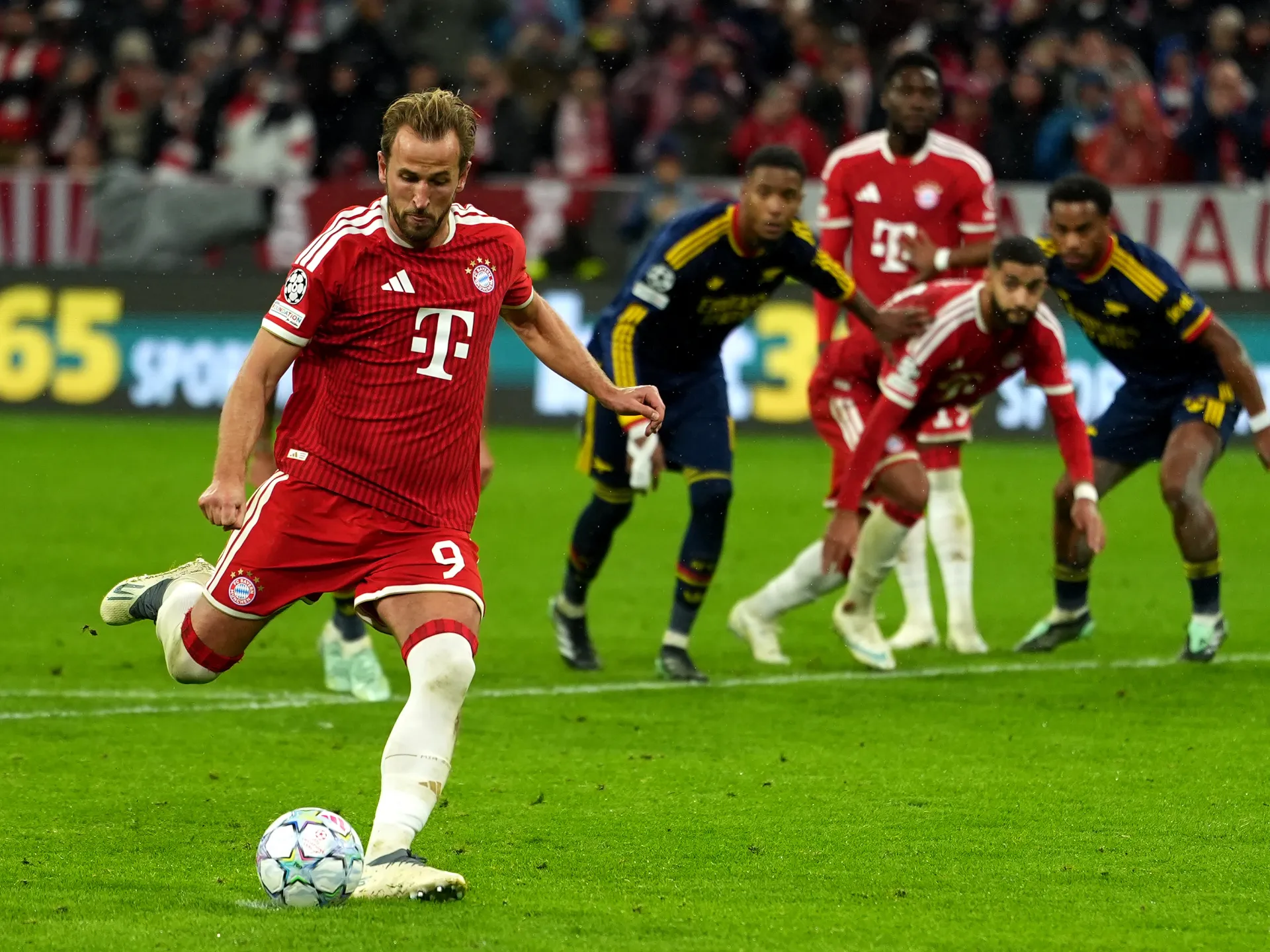
Captain Harry Kane has led from the front for the Three Lions, excelling in front of goal alongside winger Anthony Gordon, while Luka Modric continues to defy age, still playing a vital role in Croatia’s midfield even at 41.

Al Jazeera breaks down everything ahead of Croatia vs England:

What is the UEFA Nations League?

The UEFA Nations League was founded in 2018 to reduce the number of meaningless friendlies and give nations competitive matches against top-ranked teams.

In this competition, countries from across Europe participate in a league structure which features promotion and relegation.

How have Croatia and England played in the Nations League?

Both Croatia and England have won once and lost once.

Croatia started their Nations League campaign with a 2-1 win over Czechia in Prague before losing 4-1 to world champions Spain in Seville.

England, on the other hand, fell 3-2 to Spain in their campaign opener in London before beating a 10-man Czechia side 2-0 in Prague.

When did Croatia and England last meet?

They last met at the 2026 FIFA World Cup.

England beat Croatia 4-2 in a World Cup group game on June 17 in Arlington, Texas. Captain Harry Kane scored a brace, while Marcus Rashford and Jude Bellingham scored a goal apiece.

Croatia vs England: Head-to-head

  • Matches: 12
  • Croatia wins: 3
  • England wins: 7
  • Draws: 2

Croatia vs England: Form guide

(Last five games, latest results first)

Croatia: L-W-L-W-W

England: W-L-W-L-W

Who are the top players to watch?

Luka Modric and Ivan Perisic (Croatia): The evergreen Modric, very much the heartbeat of the Croatian midfield even at 41 years old, scored the opening goal in their away win in Czechia. Time and again, the captain has pulled the strings in the middle of the park, proving age is just a number. His fellow experienced teammate, Perisic, is also chipping in style, bagging back-to-back assists.

PRAGUE, CZECH REPUBLIC - SEPTEMBER 29: Anthony Gordon of England celebrates scoring his team’s first goal during the UEFA Nations League 2026/27 group phase match between Czechia and England at Fortuna Arena on September 29, 2026 in Prague, Czech Republic. (Photo by Justin Setterfield/Getty Images)
England international Anthony Gordon has scored in back-to-back games [Justin Setterfield/Getty Images]

Harry Kane and Anthony Gordon (England): The script for England has looked the same in the last two games: Gordon opens the scoring, and Kane follows suit. While that wasn’t enough to beat the mighty Spain, it did the job against Czechia. Can this dynamic duo strike again? The numbers swing in their favour – Gordon has five assists already for Barcelona this season, while Kane has scored six times for Bayern Munich.

Team news and predicted lineups

Croatia

Centre-back Martin Erlic is out injured until mid-October, and right-back Josip Juranovic is sidelined with illness.

Probable Croatia XI: Dominik Livakovic; Josip Stanisic, Luka Vuskovic, Josko Gvardiol, Ivan Perisic; Luka Modric, Mateo Kovacic; Luka Sucic, Petar Sucic, Franjo Ivanovic; Dion Beljo

England

England are without left-back Nico O’Reilly, who withdrew from the squad with injury.

Probable England XI: James Trafford; Trent Alexander-Arnold, Trevoh Chalobah, Marc Guehi, Lewis Hall; Elliot Anderson, Miles Lewis-Skelly; Bukayo Saka, Morgan Rogers, Anthony Gordon; Harry Kane

Croatia vs England: TV channel, livestreaming

  • Croatia: gol
  • United Kingdom: ITV1
  • United States: FOX Sports, FuboTV, ViX
  • India: Sony Sports Network
  • Middle East and North Africa: beIN SPORTS
  • South Africa: DStv Stream

You can find your regional broadcaster on UEFA’s official broadcaster listing.

Source link

UK arrests British-Iranian suspect over RAF ‘plot’: What we know | Crime News

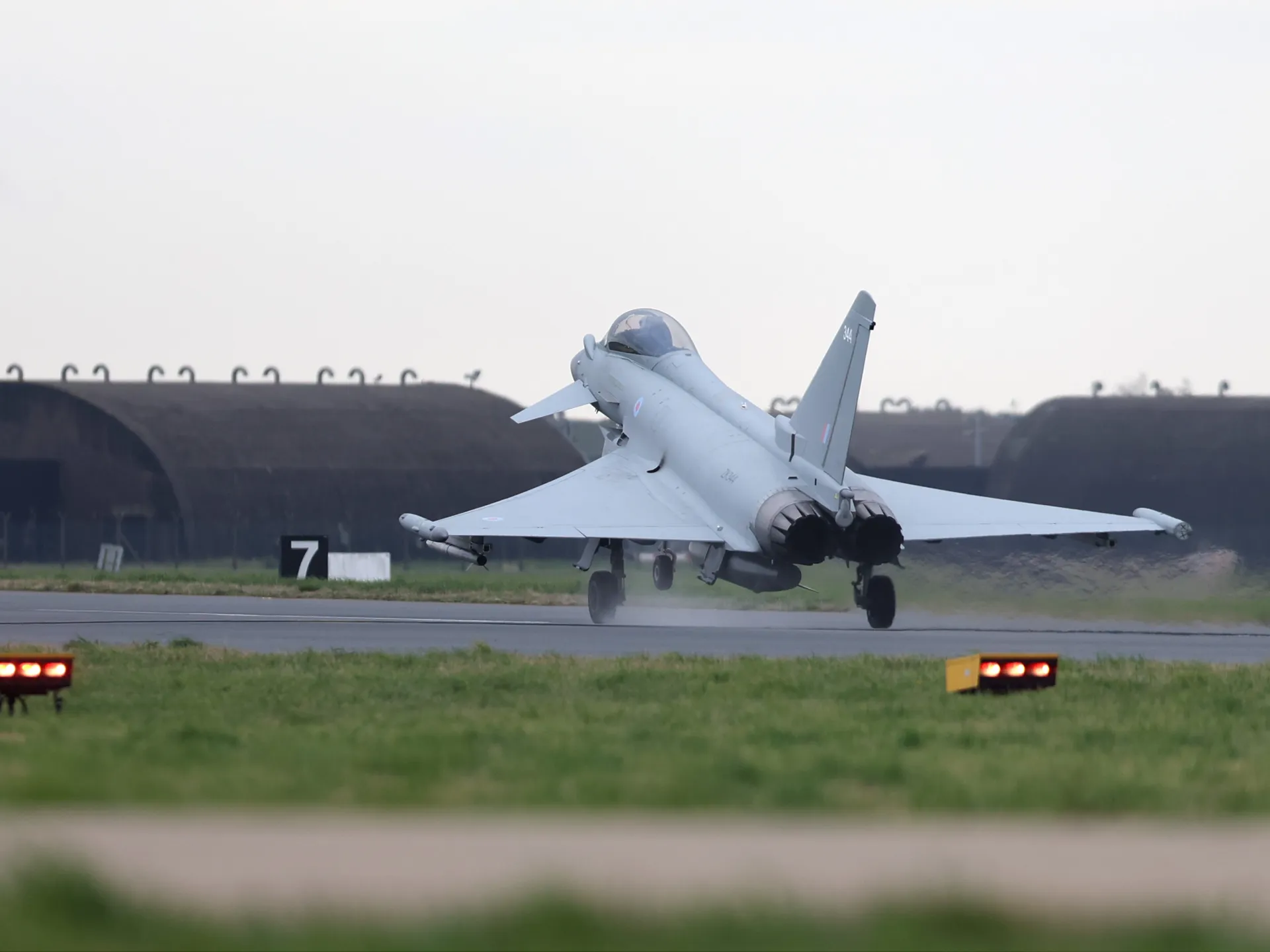
United Kingdom police have arrested a 25-year-old British-Iranian man in relation to a security incident at a Royal Air Force (RAF) station near Fairford, England, this week

The man, described by police as a “dual UK/Iranian national” and detained on suspicion of preparing “terrorist” acts, is the sixth person to be arrested in what British authorities said was potentially an Iran-backed plot. The five other people arrested earlier were released on bail on Monday.

Recommended Stories

list of 3 itemsend of list

The investigation began when British authorities were alerted early on Sunday about unusual activity near the airbase, including oddly parked vans and a group of masked men. After searching the vans, authorities found no weapons or explosives but did recover a “quantity of petrol”.

The RAF station has been used by the United States for military operations, including by bombers during the US-Israel war on Iran.

Here’s what we know about the latest development in the case:

What’s happened?

British counterterrorism police announced the arrest of a 25-year-old British-Iranian dual national in Westminster, London, on Thursday. Iran, however, does not recognise dual citizenship, and treats Iranians with a second passport solely as Iranian.

The man was detained on “suspicion of preparation of terrorist acts under Section 5 of the Terrorism Act 2006”, the same offence cited in the arrests of the five other suspects. In line with standard police practice, none of the suspects has been named ahead of any charges being made.

Police said they also conducted searches of two properties in the London area. They appealed to the public for any information that could assist the investigation.

What do we know about the suspect in custody?

The Times newspaper reported that the British-Iranian suspect is being investigated as a possible “recruiter” in the still-opaque plot or as someone otherwise believed to have played a significant role.

The media reported that the man was placed under surveillance after the arrest of the first five men. He has not been named.

What evidence is there that this was an Iran-linked plot?

The UK has pointed to an Iranian connection but has so far kept the reason for that assessment under wraps.

On Wednesday, Prime Minister Andy Burnham said there are “strong indications” of Iran’s involvement in the incident and an “ongoing, complex and serious police investigation” is continuing.

He did not give information on what the suspects may have been planning or what intelligence has led the UK to suspect the involvement of Iran, saying only that he would “update people more in due course”.

In the US, President Donald Trump said the case “might be” Iran-linked and the US had been keeping tabs on the suspects “for a long time”. Trump criticised the UK’s decision to release the first five suspects on bail.

In Israel, Prime Minister Benjamin Netanyahu said his government had forewarned the UK about a potential “Iranian-sponsored attack” but did not specify if that was related to the same RAF base incident.

Iranian officials have firmly denied any connection to the incident. Deputy Foreign Minister for Political Affairs Majid Takht-Ravanch called the claims “false and ridiculous”.

Iran’s Ministry of Foreign Affairs summoned British Ambassador Hugo Shorter on Thursday to protest against the allegations.

What happened at RAF Fairford?

Authorities received two early-morning calls on Sunday alerting them to suspicious activity near the Fairford airbase, including three vans parked strangely and a group of hooded, masked men.

Unusually, the first call to the UK’s emergency line was made by one of the suspects who would later be arrested.

Police responded and arrested five British men in their early 20s in the nearby Whelford area, saying they were suspected of explosives offences. Counterterrorism police later took over the investigation and said the men were suspected of preparing “a terrorist act”.

The suspects were released on bail on Monday but remained subject to “stringent conditions on their movement and contact with others”, according to the UK’s head of counterterrorism policing, Laurence Taylor.

After searching the vans located near the airbase, police said they found no explosives but did retrieve a “quantity of petrol”.

Why were the men arrested at the scene given bail if this is a major incident?

That’s one of the big unanswered questions.

Under British “counterterrorism” law, police may hold suspects for up to two weeks before charging them. However, if authorities find little evidence to support their initial suspicion of “terrorism”, they have far less time – usually 24 to 36 hours, Chris Phillips, a former head of the UK’s National Counter Terrorism Security Office, told Al Jazeera.

Other security experts told Al Jazeera that police likely released the first five suspects because they did not deem them to be an imminent security risk or found that their potential involvement in any plot was unwitting.

“In cases involving terrorism, suspects can still be released on bail when the authorities feel relatively confident that these individuals do not pose an imminent danger of either carrying out or organising a terrorist attack,” Andrew Silke, professor of criminology at Royal Holloway, University of London, told Al Jazeera.

“Individuals may have been involved unknowingly or in a peripheral manner to potential terrorist activity. This seems possible in the current case,” he added.

Afzal Ashraf, a visiting fellow in international relations and security at Loughborough University and a former senior RAF officer, agreed that police likely have assessed that the five released suspects do not pose “any immediate danger”.

“We can reasonably assume that police judged that these individuals did not present any immediate danger nor did they have any credible means or intention of creating further danger to the public or to government installations,” Ashraf told Al Jazeera.

However, he said their release on bail should not necessarily be taken to mean the incident in question “was minor or that the Iranian-involvement hypothesis has been rejected”.

What happens next?

British authorities said they are continuing to investigate all aspects of the case, including the possibility of it being a foreign-backed “plot”.

Silke said authorities will likely be thoroughly analysing all suspects’ communications and interactions, looking for information on contacts who may have organised their involvement and for any payment the suspects may have received.

“The authorities can investigate all of these links to establish if they lead back to foreign government sources or agencies,” he said.

Silke added that authorities will also look into any links between the RAF airbase incident and previous plots carried out on British soil.

Phillips said he believes the suspects could have been recruited online by foreign actors to carry out some type of malicious activity, such as “setting fire to something”.

He said both Russia and Iran have allegedly paid “stooges” to carry out such acts in recent years. “At first glance now, it seems that that may be the case, but time will tell,” Phillips added.

Iran and Russia have also previously been accused of orchestrating plots in the UK. Those plots have involved “surveillance, sabotage, arson or physical violence”, MI5 Director General Ken McCallum said last year.

Source link

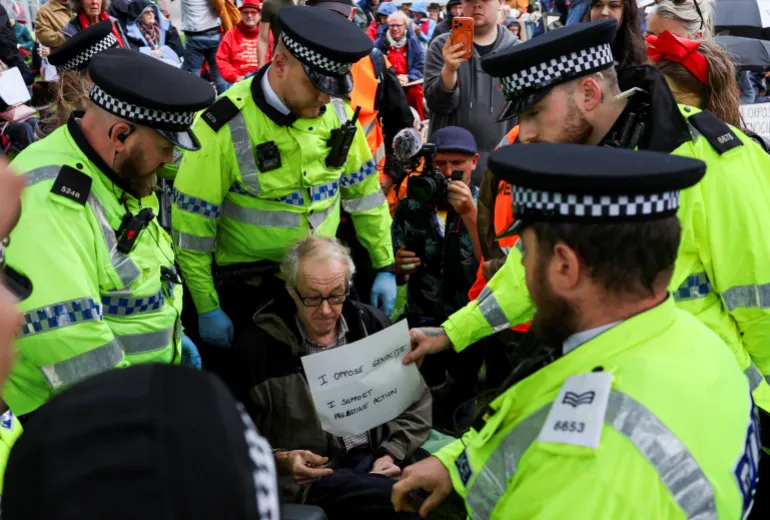
94-year-old Jewish barrister arrested for supporting Palestine Action | Gaza

‘I’ve been trying to get arrested for quite some time.’ 94-year-old Jewish human rights barrister Margaret Owen was detained at a pro-Palestine rally in Liverpool after displaying support for Palestine Action, a group proscribed as a terrorist organisation in the UK.

Source link

Tyson Fury vs Anthony Joshua fight confirmed, but is the bout too late? | Boxing

When Tyson Fury was asked whether his fight against Anthony Joshua had come too late for both boxers, the Gypsy King responded: “Is it too late?… It’s the icing on the cake of two great careers.”

Former heavyweight world champions Fury and ⁠⁠Joshua came face to face ⁠⁠in London on Wednesday to allay months-long fears and rumours surrounding their long-awaited fight, which has been confirmed for December 11 in Cardiff.

The British boxing stars are 38 and 36 years old, respectively, and have kept the boxing world waiting for years.

For many fans, why it took so long to agree on a fight is almost as big a question as who will win.

Neither boxer wanted to take the hit for delaying the biggest fight in British boxing history when they appeared in front of the media in London. Fury blamed Joshua, despite reports stating Joshua insisted the fight take place in the United Kingdom for the sake of home fans.

“You’ve been crying behind the scenes to get out of this fight,” Fury said. “I’ve checkmated you. You have to fight. I’ve said I’ll fight anywhere.”

But is the Gypsy King right? Can Fury vs Joshua live up to more than 10 years of hype?

Al Jazeera Sport breaks it down:

Ten years of near misses

Joshua and Fury are prizefighters who decide their destiny in the ring, but outside of it, their promoters negotiate contracts, choose venues and make calls on top billing.

The history goes back 10 years and is full of near misses, contractual problems and other fighters entering the fray.

It all started in 2020, when the two camps agreed to a two-fight deal. A year later, contracts were signed for an undisputed heavyweight showdown. However, Deontay Wilder, an American former world heavyweight champion, won an arbitration case that forced Fury into a trilogy fight in 2021.

In 2022, Joshua reportedly accepted a 60-40 purse split in Fury’s favour, but that deal collapsed too. During this period, unbeaten Ukrainian heavyweight champion Oleksandr Usyk defeated Joshua twice and proceeded to beat Fury twice as well.

All this while, Fury vs Joshua failed to materialise.

British heavyweight boxers Tyson Fury (L) and Anthony Joshua pose following a press conference in London on September 30, 2026, ahead of their highly anticipated heavyweight boxing fight in Wales in December. (Photo by Adrian DENNIS / AFP)
Tyson Fury and Anthony Joshua confirmed their fight at a media event in London [Adrian Dennis/AFP]

Eddie Hearn vs Dana White

Online streaming platform Netflix, which holds global rights to the fight, has billed it as a collaboration between Saudi sports powerbroker Turki Alshikh’s The Ring magazine and Dana White, the owner of mixed martial arts promotion UFC.

Neither Joshua’s promoter, Eddie Hearn, nor Fury’s, Frank Warren, was named when talks of the fight resurfaced earlier this year.

Alshikh and White cofounded a boxing promotion, Zuffa Boxing, which was launched earlier this year and became a point of contention in the Joshua-Fury fight. Hearn was of the view that Joshua’s contract barred White and Zuffa’s parent company from any promotional role.

“Dana White cannot be involved with this fight promotion,” Hearn said recently.

However, Fury saw it differently and blamed Hearn for costing “the biggest fight in boxing history” in an Instagram post.

White was not seen at the London news conference, where fans booed his name.

A battle of egos

In boxing, the name that comes first on the poster usually signals the A-side, or the bigger fighter.

Joshua claimed he got a call asking whether he minded Fury’s name going first, because Fury was “unwilling to sign unless he does”.

Fury boasted: “I’m number one.”

There was also the issue of the fight venue and, specifically, the host country.

Joshua insisted he ensured it would happen in the UK, whereas White had pushed for it to be held at Madison Square Garden in New York.

“I know we are going to inspire this generation, and I know for a fact we are going to inspire the next generation,” Joshua said.

The niceties didn’t last long between the opponents as Fury claimed he would knock Joshua out.

“I’m going to catch him and, when I do, it’s going to be curtains,” Fury said.

Joshua welcomed the outburst and said: “This is the energy that we want.”

In the end, money got the deal over the line.

Reports in UK media say the fighters will share a $200m purse and will bag more than “any British fighter has earned in a fight ever”.

British heavyweight boxers Tyson Fury and Anthony Joshua poses following a press conference in London on September 30, 2026, ahead of their highly anticipated heavyweight boxing fight in Wales in December. (Photo by Adrian DENNIS / AFP)
Fury and Joshua pose following the news conference in London [Adrian Dennis/AFP]

Source link

British police arrest UK-Iranian national over airbase incident | Crime News

DEVELOPING STORY,

Counter-terrorism police also questioned a UK national, days after five others were arrested and released on bail.

A man with dual UK-Iranian citizenship has been arrested in connection with an alleged security incident at an airbase in southwest England over the weekend.

British counter-terrorism police said on Thursday that a “27-year-old man, a dual UK/Iranian national, was arrested” in central London.

He was detained “on suspicion of preparation of terrorist acts” as part of an investigation into the events Sunday near RAF Fairford.

A second man, 26 – a UK national – was also “questioned under caution”, the police statement added.

The RAF base 160km west of London has been used by US bombers during decades of conflicts in the Middle East, including the US and Israel’s war on Iran, which began in February.

On Sunday, five men, all in their 20s and from London, were arrested on suspicion of explosives offences and “terrorism” over the incident at RAF Fairford. They have since been released on bail.

“The investigation into circumstances surrounding events in Gloucestershire is hugely complex, and our specialist teams are interrogating multiple lines of enquiry,” Vicki Evans, the senior national coordinator for counter-terrorism policing for the Metropolitan Police, said in a statement.

“As we’ve made clear, we’re looking at all possible angles – including possible foreign state involvement.”

Earlier, UK Prime Minister Andy Burnham said there were “strong indications” that Iran played a role in an alleged security incident.

Iran, however, strongly denied any involvement in the incident and the country’s foreign minister, Abbas Araghchi, hit back at Burnham’s allegations.

More to come…

Source link

UK PM Burnham says Iran likely behind RAF base incident: Is there evidence? | Military News

British Prime Minister Andy Burnham has said the UK’s security services have “strong indications” of Iranian involvement in the incident at a British Royal Air Force (RAF) station near Fairford this week in which five men were arrested before they were released on bail.

The five British men were spotted near the airbase and arrested on Sunday on suspicion of “terrorism” and explosives offences, before they were released.

Recommended Stories

list of 3 itemsend of list

The United States has used the British base to carry out operations in various conflicts, including to deploy bombers in its war against Iran.

Iran has strongly denied any involvement with the airbase incident, with Foreign Minister Abbas Araghchi saying British authorities are “barking up the wrong tree”.

So, what do we know about the incident, and is there evidence Iran played a role?

What happened at the airbase?

Authorities were alerted to suspicious activity near the base early Sunday morning, including three vans parked oddly and a group of hooded, masked men.

Police responded and arrested five British men in their early 20s in the nearby Whelford area, saying they were suspected of explosives offences. Counter Terrorism police later took over the probe and said the men were suspected of preparing “a terrorist act”.

The suspects were released on bail Monday, but remain subject to “stringent conditions on their movement and contact with others,” according to the United Kingdom’s head of counter terrorism policing, Laurence Taylor.

On Tuesday, after three days of investigations, including using a bomb disposal team, police said they had found no explosives in the vehicles that were parked the near the base, but had retrieved a “quantity of petrol”.

Who is linking the incident to Iran, and have they cited evidence?

Officials in the UK, the US and Israel have all pointed to Iran but offered no details.

Burnham on Wednesday spoke of “strong indications” of Iran’s involvement and said an “ongoing, complex and serious police investigation” is continuing.

However, the prime minister did not give any details on what the suspects were planning or why the UK thinks Iran was involved, saying only that he would “update people more in due course”.

In the US, President Donald Trump said the case “might be” Iran-linked and that the US had been keeping tabs on the suspects “for a long time”. Secretary of State Marco Rubio said the case “clearly involved the hands of a foreign actor”, without naming a specific state.

In Israel, Prime Minister Benjamin Netanyahu said Israel had forewarned the UK about a potential “Iranian-sponsored attack”.

How has Iran responded?

Iran has firmly denied involvement.

In a statement on Monday, Iran’s embassy in London said it “categorically rejects and strongly condemns” any attempts to link Iran to the individuals arrested near the airbase.

It said the spread of such “fabricated speculations” fuel “Iranophobia propaganda” and that Iran reserves the right to “take appropriate legal measures”.

On Wednesday, Iran’s Foreign Minister Abbas Araghchi said the UK was “barking up the wrong tree” by pointing to potential Iranian involvement.

Why has the UK released the suspects on bail?

It is unclear. Under British “counterterrorism law”, police can hold suspects for up to two weeks before charging them. However, if authorities find little evidence to support their initial suspicion of “terrorism”, they would have far less time – usually 24 to 36 hours, said Chris Phillips, a former head of the UK’s National Counter Terrorism Security Office.

“If it’s not an actual terrorist attack, then the police don’t have anywhere near as long to keep them in custody,” said Phillips. “I think the police just need more time to do their enquiries.”

Andrew Silke, professor of criminology at Royal Holloway, University of London, said the suspects could have also been released on bail while under suspicion of “terrorism” if “authorities feel relatively confident that these individuals do not pose an imminent danger of either carrying out or organising a terrorist attack”, such as if they had “peripheral” or “unknowing involvement”.

Afzal Ashraf, a visiting fellow in international relations and security at Loughborough University and a former senior Royal Air Force officer, said the bail release does not necessarily indicate that the “Iranian-involvement hypothesis has been rejected” but it does mean “police have judged that these individuals did not present any immediate danger”.

Taylor, the head of counter terrorism policing, said the men’s release on bail was an “investigative decision” based on “experience and careful considerations of policing powers.” He stressed that the men are bound by “stringent conditions on their movement and contact with others” as the investigation into them continues.

But their release drew backlash in the US from Trump, who said British authorities “should not have done that”.

“How do you give bail to a terrorist?” Trump asked.

Iran’s Araghchi appeared to suggest that the suspects’ release supported Iran’s position that it was not involved.

“I can confirm Iran’s belief that releasing supposed terrorists working for foreign states really says it all,” wrote Araghchi in a post on X.

What questions about the case are still unanswered?

Questions remain about the circumstances in which authorities were initially alerted to suspicious activity near the base, the extent to which they believe the suspects are linked to Iran and what the suspects may have been planning.

According to the BBC, police received two early-morning calls on Sunday regarding suspicious vehicles near the base, the first of which the media understands was made by one of the suspects themselves.

The Times of London reported that police are looking into the suspect’s motives for making such a call, including “whether he got cold feet or whether it was part of the plan”.

Authorities are also probing whether the incident was a form of “surveillance, a ‘dry run’ to test security or a stunt to send a message to the British government”, reported The Times.

Meanwhile, police have suggested they are looking into whether the suspects could have been unwittingly acting on Iran’s behalf.

In an updated briefing on Tuesday, Taylor said officials were examining whether the activity could have been “committed by proxies, or individuals either knowingly or unknowingly, working on behalf of a foreign state”.

He also spoke more generally about the “increasing breadth and complexity” of threats facing the UK, saying threats often emerge first as small-scale criminal activity, “committed by individuals whose primary aim is not terrorism but a quick financial gain”.

Phillips told Al Jazeera he believes the suspects could have been recruited online to carry out some type of malicious activity that falls short of a “terrorist attack”.

“It sounds as though these people have been paid online to do some naughty work”, such as “setting fire to something”, said Phillips.

He said both Russia and Iran have allegedly paid “stooges” to carry out such acts in recent years. “At first glance now, it seems that that may be the case, but time will tell,” Phillips added.

Royal Holloway’s Silke also said he believes the evidence suggests “a proxy explanation”.

“Certainly, there have been recent cases in Europe where individuals have been used unwittingly as proxies by foreign governments to carry out activities which have a hostile intent,” he said. “The UK authorities in this case may have assessed that something similar had happened here, and that the individuals involved had no inherent terrorist motivation themselves, but had been caught up unintentionally in a larger plot.”

Has Iran previously been accused of plots in the UK?

Yes. MI5 Director General Ken McCallum said in October 2025 that the agency had tracked “more than 20 potentially lethal Iran-backed plots” in the UK within a year.

McCallum alleged that Iran, along with Russia, has resorted to “ugly methods,” such as “surveillance, sabotage, arson or physical violence”.

British Security Minister Dan Jarvis has said Iran often uses criminal proxies to “obfuscate” its involvement in attacks, which have targeted Iranian dissidents and Jewish and Israeli people in the country.

In March this year, British police arrested four people on suspicion of helping Iran spy on the local Jewish community. The month after, police said they were probing possible Iran links to a series of arson attacks on Jewish targets ‌in London.

In June, two Romanian men whom British prosecutors said had acted as proxies for Iran’s government were handed lengthy jail terms for stabbing a British journalist of Iranian origin who wrote for an Iranian media outlet critical of Iran’s government.

Iran’s government has repeatedly denied involvement in any illegal plots or attacks on British.

Source link

Garvaghy Road standoff brings Northern Ireland’s old wounds back to surface | Politics News

Portadown, Northern Ireland – On the Garvaghy Road in Northern Ireland, residents have spent days gathering to stand guard in their community.

They have linked arms and blocked their road, preparing to stop a Protestant Orange Order parade from attempting to march through this predominantly Catholic area for the first time in 28 years.

Recommended Stories

list of 3 itemsend of list

Some pitched tents. Others brought food and stayed through the night, keeping watch.

“We’ll be here as long as we have to be,” said one local woman, who asked not to be identified for fear of violent reprisals. “I’ve seen the fighting when those Orangemen come along here, and I’m not having it back here – none of us are.”

A demonstrator holds a placard, as people protest on the Garvaghy Road, a Catholic enclave in the largely Protestant town of Portadown, against the Protestant Orange Order's annual Drumcree parade, in Northern Ireland, September 27, 2026. REUTERS/Cathal McNaughton TPX IMAGES OF THE DAY
A demonstrator holds a placard, as people protest on the Garvaghy Road, a Catholic enclave in the largely Protestant town of Portadown, against the Protestant Orange Order’s annual Drumcree parade, in Northern Ireland, September 27, 2026 [Cathal McNaughton/Reuters]

The Orange Order, a Protestant organisation with a historically anti-Catholic tradition, has been banned from marching on Garvaghy Road for the last 28 years.

The High Court order has overturned that ban. Now, a small group of Orangemen gathers at Drumcree Church each day in their traditional regalia, ready to march.

But they have not been able to get beyond the end of the road. Police stand in their way, refusing them permission to pass and citing the risk of violence with so many protesters waiting a few hundred metres away.

This has infuriated the Orange Order, which has called for the Police Service of Northern Ireland chief constable, Jon Boutcher, to be removed. The group believe they have a legal right to march and accuse police of yielding to the protesters.

“We hold a positive determination issued by the Parades Commission and reinforced by the High Court judge,” Nigel Dawson, district master of the Portadown Orange Lodge, told Al Jazeera. “The chief constable must comply with the law.”

In the 1990s, there were protests and violence when the Orange Order tried to return from Drumcree Parish Church along the road.

When asked how much longer the Orangemen are prepared to wait, Dawson said, “I’ve been at Drumcree for 28 years.”

Dawson warned of a dangerous precedent in which “might makes right”.

If a protest is big enough, the police can refuse to uphold a court ruling, he said, adding, “We have the law on our side here.”

Ultan Larkin, a protester who travelled to Portadown from the neighbouring town of Armagh to show support for the Garvaghy Road residents, said, “The law is on their side, but justice is not on their side.

“There’s hurt here. There’s pain here. Just because you can doesn’t mean you should.”

The standoff has so far been peaceful. But history tells the story of why this confrontation has a real risk of escalation.

‘Justice is not on their side’

Garvaghy Road was one of the most potent flashpoints of The Troubles – a 30-year conflict between mostly Protestant unionists who fought for Northern Ireland to remain part of the UK, and predominantly Catholic republicans who want a united Ireland.

Orange marches through the Catholic area were usually accompanied by some of the worst sectarian violence Northern Ireland has seen.

The peace deal known as the Good Friday Agreement was signed in 1998, and it transformed Northern Ireland.

Large-scale violence largely ended, former enemies shared power in a devolved assembly at Stormont, and a generation grew up in an era of peace without soldiers manning checkpoints on their streets.

Following this peace process, the Orange Order was prevented from parading along Garvaghy Road – an effective ban that has lasted almost three decades, until now.

In an unexpected decision, the Northern Ireland Parades Commission allowed for a scaled-down Orange march to go ahead under strict conditions. Only 35 Orangemen could take part in the march, and they would have to do so in silence without their usual flutes and drums.

Residents of Garvaghy Road were appalled and legally challenged this ruling.

A High Court judge initially granted an injunction preventing the parade, but the Court of Appeal overturned that ruling late on Saturday, clearing the legal way for the march to proceed on Sunday morning.

A further High Court challenge was subsequently dismissed.

Ultan grew up during the Troubles. He was convicted for having a senior role in the Real IRA and was sentenced to four years in prison – a conviction quashed years later on appeal.

“We have to live together, and to do that we have to respect each other,” he said. “But where is the respect if you’re marching through a community that doesn’t want you and where the people of that community are asking you to march somewhere else?”

“On the Irish tricolour we have green, white, and orange. The green is for the Irish Catholics here, and the orange is for the Protestant community, with white symbolising peace. We all have our place.”

He said there are old wounds on Garvaghy Road.

“People here suffered a lot when the Orange marches came. They remember how bad things were here – the intimidation and that sort of thing – and some people just aren’t able to forgive that.”

Political fallout

The standoff has become a political crisis in Northern Ireland, affecting the power-sharing government that runs the country.

Sinn Fein First Minister Michelle O’Neill visited Garvaghy Road to stand beside the protesters, alongside Sinn Fein President Mary Lou McDonald.

The Democratic Unionist Party (DUP) accuses nationalist politicians of breaking the law by supporting a protest that blocked Garvaghy Road, and observers have questioned how the first minister can continue in her role when she has openly rejected a High Court ruling.

The confrontation is particularly awkward as the DUP and Sinn Fein are supposed to govern together, representing the two principal political traditions that emerged from the conflict as part of the peace process.

The language between them has become increasingly bitter, and in less than nine months, Northern Ireland faces an Assembly election.

For now, the DUP and Sinn Fein remain in government together, while accusing the other of threatening the political settlement that followed the Good Friday Agreement.

Meanwhile, attempts to find a resolution continue.

Northern Ireland Secretary Chris Bryant has met representatives of the two communities, but talks have so far failed to produce a breakthrough.

His future is also now on the line over this.

Bryant could revoke the Orange Order’s right to march, but he has not exercised this power. Unionists have threatened to call for his resignation if he tries. Irish nationalists say they will do likewise if this parade goes ahead.

Source link

Pep Guardiola backs Man City after guilty verdict on financial charges | Football

The Spanish coach won 20 trophies during a glittering 10 years as City manager before departing in May.

Former Manchester ‌City manager Pep Guardiola has spoken out ⁠in support ⁠of the Premier League club after they were found guilty of serious ⁠breaches of financial rules.

The Spaniard handed over to former assistant Enzo Maresca at the end ⁠of last season after a decade in charge.

“I want every single @ManCity fan to know I am here; more than ever. I am, always have ‌been, always will, be behind my club, my owner, my chairman, Ferran, the players, staff, Enzo and you, our unique supporters,” Guardiola said on Wednesday ⁠in a first reaction on his ⁠X account.

“Let me be clear: we will get through this together. I love you all.”

City’s Chief Executive Ferran Soriano addressed staff in a video on Tuesday in which he rejected the independent commission’s findings.

Guardiola ⁠took charge of City in 2016 and under his management, ⁠they won six Premier League titles – ⁠including four in a row – three FA Cups, five League Cups and the Champions League.

The Premier League charges, relating ‌to “sham” commercial contracts used as part of schemes to inflate revenue and understate costs by more ‌than 900 ‌million pounds ($1.2bn) over nearly a decade, cover the period from 2009-18.

In doing so, they concealed the true state of their finances and avoided breaching Premier League and UEFA spending limits during a period in which they won three league titles.

An independent commission found the club guilty on all charges related to breaches of financial rules over the nine-year period.

They have also been found guilty of most of the charges they faced in relation to a failure to cooperate with a Premier League investigation.

City, who continue to deny any wrongdoing, have said they will appeal and have until Friday to do so.

The ruling has sent shockwaves through English football and cast doubt over the future of a club that has become a European giant.

The likely punishment is uncertain but according to Premier League rules, City could face a substantial points deduction, a fine or even expulsion from the top division.

Everton and Nottingham Forest were handed points deductions in the 2023/24 season for single breaches of financial sustainability rules.

On that basis, City would likely face relegation given the sheer weight of the case against them.

There is speculation they could even be stripped of their titles.

“If the appeal fails, Manchester City cannot stay in the league, they have to suffer. And I say that as a supporter and a fan,” said the club’s former chairman, David Bernstein.

Another factor is a potential flood of compensation claims that could cost the club hundreds of millions.

Former Liverpool managing director Christian Purslow told the BBC that clubs would be “queueing up to seek compensation”.

Source link

UK‘s PM Burnham sets out plans to reshape public services | Politics

UK Prime Minister Andy Burnham is promising a major improvement to public services including social care, housing and energy. Al Jazeera’s Milena Veselinovic reports on what he’s proposing and what it could mean for the people of the UK.

Source link

Man City guilty of all serious financial breach charges: Premier League | Football

Manchester City say they are ‘disappointed and surprised’ by the verdict and will appeal.

Manchester City have been found guilty of ⁠all charges ⁠of serious breaches of the Premier League’s financial rules between the 2009/10 and 2017/18 seasons, the league has said in ⁠a statement.

City were charged in February 2023 with breaches of the league’s financial rules spanning nine seasons following ⁠a four-year investigation.

The club said in a statement it would appeal.

An independent commission found that City “arranged ‘sham’ contracts (which ‌misrepresented the true agreement between the parties) with a number of its commercial partners”, the league said on Tuesday.

The league added that the commission had found City used schemes “to artificially inflate the club’s revenues, and reduce its costs, by more than 900 million pounds during the affected period, to appear to comply with financial rules”.

“The ⁠core decision … details how the club systematically ⁠broke Premier League Rules for nearly a decade,” said Richard Masters, the chief executive of the Premier League.

“There are elements of the case that remain to be ⁠decided, including, importantly, what sanction must follow for these breaches.”

City, who deny any wrongdoing, said ⁠they were “disappointed and surprised” by the ⁠commission’s opinion.

“The club is innocent of the accusations made by the Premier League and a comprehensive body of irrefutable evidence exists in support of all of its ‌positions, relating to this case,” the club said.

“Manchester City FC will now pursue the appeal avenues open to it, on the ‌basis ‌that the opinion contains clear material errors, of law, principle and fact, and is unsafe.”

Source link

US’s Marco Rubio says UK airbase incident involved ‘foreign actor’ | US-Israel war on Iran News

Washington’s top diplomat calls the suspected plot ‘a very serious situation’ after five were arrested over the weekend.

United States Secretary of State Marco Rubio has said a “foreign actor” was involved in a suspected bomb plot near an airbase in the United Kingdom used by the US military.

Police arrested five men, all British nationals from London, in their early to mid-20s, on Sunday after being alerted by a local farmer about three white vans driving towards RAF Fairford, a British base that houses US bombers flying missions against Iran.

Recommended Stories

list of 4 itemsend of list

The counterterrorism police said on Monday they were investigating whether individuals were acting for a foreign state in an apparent plot to attack the airbase. They later said the suspects would be released on bail.

Commenting on the suspected plot and arrests on the Hannity programme on Fox News late on Monday, Rubio said, “What happened, what almost happened, what could have happened in the UK over the weekend is a very serious situation.”

“It’s one that clearly involves the hands of a foreign actor. I won’t get into great detail about that yet,” he added.

Iran’s Islamic Revolutionary Guard Corps (IRGC) had said in July the Fairford base was a legitimate target.

Iran’s embassy in London said in a statement on Monday it “categorically rejects and strongly condemns the recent unfounded and malicious speculations” that it was involved, which it said would fuel “Iranophobia propaganda” in the UK.

Trump said on Sunday the UK and the US had had the suspects “under investigation” for a while and alleged, “They were looking to do big damage to our fort.”

After hearing news that suspects were being released on bail, Trump said on Monday the case “might be” linked to Iran but declined to elaborate.

US bombers

The UK gave the US permission in March to use Fairford for “specific defensive operations into Iran” to destroy Iranian missiles at source.

US bombers and other planes have since been seen taking off and landing at the base – the only one on the British mainland used for this purpose.

Residents in the rural Cotswolds area surrounding Fairford said the site, which hosts a range of US military equipment and personnel, had seen increased activity and security in recent months.

Authorities evacuated about 85 households from a nearby village early on Sunday, but they were allowed to return home the next day.

Tehran has previously warned London against allowing its bases to be used by the US in operations against Iran.

Iranian Foreign Minister Abbas Araghchi has accused London of “putting British lives in danger” by allowing the bases to be used “for aggression against Iran”.

Source link

Argentina’s Milei threatens legal action over Falklands oil project | News

Argentina gives UK two weeks to cease operations or face maritime court action.

Argentinian President Javier Milei has threatened the British government with legal action unless it stops an oil project off the disputed Falkland Islands, the British-administered territory over which Buenos Aires claims sovereignty.

Milei gave the United Kingdom a two-week ultimatum on Monday evening, saying it must halt all work on the Sea Lion oil project or Argentina will ask the International Tribunal for the Law of the Sea, a maritime court in Hamburg, Germany, to order a stop to the project.

Recommended Stories

list of 3 itemsend of list

He called the operations “the illegal plundering of our resources” and declared “Argentina will not stand idly by” as the UK causes “irreversible and irreparable” damage.

The companies developing the project, Israel’s Navitas and Britain’s Rockhopper, have shrugged off Argentina’s threats, insisting they have valid exploration licences issued by the UK.


The tribunal, an independent court established under the 1982 UN Convention on the Law of the Sea, can issue legally binding emergency orders. But even if it ordered the UK to halt the project, it has no means of forcing the government to comply.

The UK rejects Argentina’s sovereignty claim, arguing that the islanders have the right to determine their own future and develop their natural resources. In a referendum in 2013, residents of the Falklands voted overwhelmingly to remain a British overseas territory. Argentina says the islands were populated illegally.

Milei’s administration has already taken legal action against the project authorised by Britain, arguing it violates a United Nations resolution calling for both sides to desist from unilateral actions in the islands until their dispute is resolved.

Buenos Aires has doubled down on its claim over the Falklands since United States President Donald Trump said Washington was open to reviewing its historically neutral stance on the territory.

The British government for its part has said it stands behind the businesses operating near the Falklands.

The dispute over the Falkland Islands led to a war between Britain and Argentina in 1982. It killed 649 Argentinian soldiers, 255 British soldiers and three islanders after Argentina invaded the archipelago that year.

Source link

UNGA 81: Five key takeaways from general debate | Explainer News

The 81st United Nations General Assembly (UNGA) concluded on Monday with artificial intelligence (AI), the Israel-Palestine conflict and the US-Israel war on Iran dominating world leaders’ addresses during the general debate.

UN Secretary-General Antonio Guterres, in his final address before his term ends, warned that the future of the world would be shaped by four tests: AI, climate change, wars and inequality.

Recommended Stories

list of 3 itemsend of list

“Across all four tests, the decisive issue is power. Power over force, money, energy, technology, rules and the future. That is why the UN Charter – and the work of the United Nations – matter more than ever,” Guterres said.

Speeches ranged from calls to reform the UN to appeals for upholding international law, as the global body has been undermined by the unilateral foreign policy pushed by United States President Donald Trump.

Here are the biggest takeaways from this year’s summit:

Palestine

The situation in Palestine was a key issue among members amid Israel’s ongoing genocidal war on Gaza despite the so-called “ceasefire” and escalating settler pogroms in the occupied West Bank.

France, Canada, Iraq, the United Kingdom and others called for Palestinian sovereignty during their speeches.

“What credibility do we have if we continue to remain inactive in the face of Gaza,” French President Emmanuel Macron said in his address.

“Some boast of a supposed peace, but this peace hasn’t reopened humanitarian routes for a single second,” he said, adding: “Must we stand by and watch this spectacle that shames us all?”

Macron, British Prime Minister Andy Burnham, his Canadian counterpart Mark Carney and Saudi Foreign Minister Prince Faisal bin Farhan Al Saud chaired a meeting at the UNGA on Palestinian statehood, which is being actively undermined by Israel. Israeli Prime Minister Benjamin Netanyahu’s government has accelerated construction of illegal settlements and provided impunity to settlers in the occupied territory.

At the same time, the US-led Board of Peace unveiled a 66-project reconstruction blueprint with proposed funding of $2.4bn for the Gaza Strip on the sidelines of the UNGA.

However, the board’s plan excludes the UN agency for Palestinian refugees (UNRWA), saying it has no role in the future of Gaza. The decision was described by Palestinian political analyst and playwright Ahmed Najar to Al Jazeera as aligned with Israeli efforts to “marginalise and ultimately dismantle the agency, removing it not only from Gaza’s present but from its future”.

Dozens of delegates left the hall in protest as Netanyahu delivered his speech, in which he declared that Israeli forces would continue fighting against Hamas and Iran.

Trump defends military action on Venezuela, Iran

In his address, Trump emphasised that while others spoke of peace, he “made peace”.

Trump defended his actions in abducting the then-Venezuelan President Nicolas Maduro in January and said, since his military operation, hundreds of political prisoners had been freed in the South American country and that Caracas had signed the largest oil deal in history last month, covering “65 billion barrels of oil, which will benefit both Venezuela and the United States enormously and help drive down the cost of energy all over the world”.

“It was perhaps the biggest deal ever made. To the victor belong the spoils – you’ve all heard that,” Trump boasted.

Trump reiterated that he would never allow Tehran to have nuclear weapons and that the 12-day war in July 2025 had “obliterated their nuclear programme beneath mountains of rubble” as the ongoing US-Israel war on Iran had sunk “159 ships of their navy” to the bottom of the sea.

“I have a big decision to make – will a deal be made with Iran that lets them rebuild and create a far greater country than it ever was before … or do I annihilate the Islamic Republic and do it quickly, never giving them a chance to kill and destroy people and countries again,” he said, adding: “I believe we make a deal right after the elections.”

During sideline talks and one-on-one meetings, Iranian officials were in demand.

In his speech to delegates, President Masoud Pezeshkian emphasised that Iran had only “defended ourselves” amid attacks on his country and killings of Supreme Leader Ayatollah Ali Khamenei, scientists and children.

“We are not terrorists, our innocent people have been the targets of cowardly attacks and aggressions imposed upon our country,” he said.

Pezeshkian added Iran would not accept that peaceful nuclear technology is held exclusively in the hands of a few countries.

“We will not bow our head and give up the right that is inherently ours,” he said.

Meanwhile, on the sidelines of the summit, Foreign Minister Abbas Araghchi met his counterparts from India, Qatar, Turkiye, Pakistan, Ukraine and other countries.

He also met US Special Envoy Steve Witkoff and Trump’s son-in-law Jared Kushner in a four-hour meeting mediated by Qatar.

AI dominance

World leaders used their time at the podium to call for a global approach to using AI as interest in the technology grows, but fears that it could escalate if unchecked are also growing.

In his address, Finnish President Alexander Stubb said AI was the “most consequential technology in the history of mankind”.

“It will impact science, the economy, politics, security, and the very essence of our humanity. Humans can and should be in the driver’s seat. We have a choice: we can compete, cooperate or slow down. For me, cooperation is the best way forward,” he said.

While discussions are moving away from a good-versus-bad dichotomy, officials disagreed on approaches.

While Guterres and the European Union called for safety standards and international rules, Trump said AI innovation should not be constrained by international regulation, adding that the US should control its AI sector.

Xi skips the UNGA

Chinese President Xi Jinping skipped the UNGA despite being in the US for a summit with Trump. He sent Vice President Han Zheng to attend.

Xi rarely attends the UNGA. He had sent Premier Li Qiang in his place last year. In 2024, Foreign Minister Wang Yi attended the annual gathering.

Without mentioning Iran in his address, Han reiterated Beijing’s position that “sovereignty and security of countries in the Middle East, including the Gulf, should be respected”.

“China calls for advancing the governance of the West Bank and the post-conflict reconstruction of Gaza in accordance with the principle of the Palestinians governing Palestine. It also calls for bringing the Palestinian question back onto the right track of the two-state solution at an early date,” he said.

Han also called for a “people-centred approach and develop AI for the positive and for good, narrow the digital divide, and promote development that is universally beneficial”.

Source link

Palestine Action protesters arrested outside UK Labour Party conference | Censorship News

Demonstrators protest against UK government’s proscription of Palestine Action as a terrorist organisation.

Police in the United Kingdom have arrested more than 50 people protesting in support of the banned Palestine Action group outside a Labour Party conference in the northwestern English city of Liverpool.

The local Merseyside Police confirmed the arrests in a statement published on Sunday.

Recommended Stories

list of 3 itemsend of list

The police said those taken into custody at the protest, organised by Defend Our Juries, had displayed material in support of Palestine Action, proscribed as a “terrorist” group by the Labour government in July 2025 under the Terrorism Act.

According to the statement, police respected the rights of people to protest lawfully while aiming to keep the peace and ensure the public are safe.

A policeman speaks to a supporter of the proscribed group Palestine Action as they gather to protest outside the conference venue on the first day of the annual Labour Party conference in Liverpool, north-west England on September 27, 2026 [Oli Scarff/AFP]
A police officer speaks to a supporter of the group Palestine Action as demonstrators gather to protest outside the conference venue on the first day of the annual Labour Party conference in Liverpool, northwest England, on September 27, 2026 [Oli Scarff/AFP]

More than 250 protesters sat outside the conference centre holding banners with words supporting the group on Sunday, before dozens of police began making arrests.

English band Massive Attack singer Robert Del Naja was among those arrested.

After asking demonstrators if they were going to continue holding up the signs, officers led people away, telling them they had been arrested under the Terrorism Act.

Reporting from Liverpool, Al Jazeera correspondent Milena Veselinovic said the protesters wanted to put proscription “front and centre of the UK Prime Minister Andy Burnham’s agenda” on the first day of his party’s annual conference.

“Being arrested is nothing in comparison to what the people in Gaza are going through, and it’s also worth it, because this is about our right to free speech,” one protester told Al Jazeera.

Another said that “there are priests, there are healthcare workers, there are people who deeply care, and deeply care about right and wrong.”

Kerry Moscogiuri, chief executive of Amnesty International UK, said protesting “is one of the most effective tools” to make government leaders listen and described the arrests as “a truly shameful attack on freedom of speech”.

“The new prime minister can reform our laws so that communities are protected in coming together and demonstrating on the issues they care about. Will he do so?” she said.

Activists also confronted Foreign Secretary Ed Miliband inside a restaurant in Liverpool, demanding that he lift the ban on the group and declare Israel’s genocide in Gaza.

The activists left after Miliband reportedly refused to comment.

A civil disobedience campaign has emerged since Palestine Action was outlawed in July 2025, with more than 3,600 people arrested for showing their support for the group, often while holding signs reading, “I oppose genocide. I support Palestine Action.”

The UK Supreme Court is now set to hear the case after London’s Court of Appeal upheld the government ban in June.

Source link

Massive Attack singer arrested over pro-Palestine protest in UK | Gaza

A singer from English band Massive Attack, Robert Del Naja, was arrested in Liverpool while protesting genocide in Gaza and denouncing the UK’s ban on Palestine Action. Demonstrators had gathered to demand the UK stops arming Israel ahead of the first Labour Party conference under new Prime Minister Andy Burnham.

Source link

Northern Ireland court allows Orange Order march through Catholic area | News

Crowd gathers on Garvaghy Road early on Sunday morning to protest against the ruling allowing the march.

Northern Ireland’s High Court has permitted the Orange Order, a Protestant organisation, to march through a mainly Catholic area in the town of Portadown for the first time in 28 years, reviving one of the region’s most contentious marching disputes.

The court rejected a final attempt by residents to stop the parade passing through the Garvaghy Road early on Sunday, after Northern Ireland’s Court of Appeal overturned a temporary injunction granted on Saturday.

Recommended Stories

list of 2 itemsend of list

Large crowds gathered on the road before the procession, with the Belfast Telegraph reporting that protesters planned to block the route peacefully by linking arms.

First Minister Michelle O’Neill, vice president of Sinn Fein, an Irish nationalist party that supports a united Ireland, joined residents opposing the march.

In a statement posted on X on Sunday, she backed their right to protest and urged restraint, saying, “I am calling for calm on all sides.”

Sinn Fein leader Mary Lou McDonald also condemned the court decision in a post on X early on Sunday, calling it “disgraceful” and saying her party stood with the Garvaghy Road community.

Deputy First Minister Emma Little-Pengelly, from the Democratic Unionist Party (DUP), which supports Northern Ireland remaining part of the United Kingdom, urged people to stay away from the area.

She said on Sunday that threats of violence were unacceptable and added: “No one in Northern Ireland wants violence or disorder.”

The Orange Order is a Protestant organisation closely associated with unionism, the political tradition that favours Northern Ireland remaining in the UK.

The Parades Commission, the independent body that rules on disputed marches in Northern Ireland, approved Sunday’s procession with a 35-person limit, barred bands and accompanying supporters, and required the march to finish by 9:30am (08:30 GMT).

The dispute over the Drumcree parade and Garvaghy Road became one of the most bitter marching confrontations of the “Troubles”, the decades-long conflict over Northern Ireland’s political status that largely ended with the 1998 Good Friday Agreement.

Repeated attempts by the Orange Order to return from Drumcree church along Garvaghy Road triggered protests, violence and major security operations during the 1990s.

Source link

Yamal nets in Spain’s 3-2 comeback win against England in Nations League | Football

Lamine Yamal goal opens the scoring, but Spain made to comeback in Nations League win as Harry Kane misses penalty.

World champions Spain came from behind to beat England 3-2 in an entertaining Nations League encounter at Wembley on Saturday, denying the hosts a cathartic win after their painful World Cup exit.

Victory for Luis de la Fuente’s men extends Spain’s astonishing unbeaten run to 39 matches – a record for a European team.

Recommended Stories

list of 4 itemsend of list

Thomas Tuchel’s men got off to a nightmare start when Lamine Yamal pounced on a gaffe by defender Marc Guehi, and they could easily have been three goals down as silky Spain created multiple chances.

But England, criticised for their ultra-defensive tactics in their World Cup semifinal defeat to Argentina, showed adventure of their own and got their reward in the 36th minute when Barcelona winger Anthony Gordon finished a fine team move.

Four minutes later, the home side were ahead after Kane headed home Nico O’Reilly’s cross via a Marc Cucurella deflection.

Kane had a golden chance to give England a two-goal cushion from the penalty spot 10 minutes into the second half but slipped slightly, crashing his shot against the bar.

Spain, who beat England in the Euro 2024 final, took full advantage, with substitutes Alex Baena and Mikel Oyarzabal putting their side ahead, taking advantage of more sloppy defensive play from the home side.

Harry Kane of England shoots and misses a penalty kick during the UEFA Nations League 2026/27 group phase match
Harry Kane of England shoots and misses a penalty kick [Mike Hewitt/Getty Images]

England boss Thomas Tuchel was adamant ahead of the match that it did not signal a new start, but he will have been dismayed by his team’s nervy start.

Manchester City’s Guehi, with a chance to clear in the second minute, inexplicably turned back towards goalkeeper James Trafford, apparently unaware that Yamal was just behind him.

The teenager collected the ball and curled a left-footed effort off the inside of the post.

Ferran Torres was in the thick of the action, with an effort ruled out for offside and another shot saved by Trafford, in for longtime number one Jordan Pickford.

He also squandered a golden opportunity with just the goalkeeper to beat.

Yamal then set up Dani Olmo, who flashed wide as Spain rued yet another miss.

England, who had shown plenty of promise down the wings, made the visitors pay with an incisive counter-attacking goal after winning the ball back deep in their own half.

Gordon was involved early in the move and surged forward, collecting Jude Bellingham’s pass to steer the ball decisively past goalkeeper Unai Simon.

And, with the atmosphere now totally changed, England were in front when Kane rose to head home.

Tuchel’s men started the second half brightly and had a chance to extend their lead from the spot when they were awarded a penalty for a Rodri foul on Bellingham following a VAR check.

But Kane crashed his shot against the bar, and England paid the price when Baena steered home on the hour mark after O’Reilly had given the ball away to Olmo.

Worse was to come for the home side when Baena turned provider for Oyarzabal, who dinked the ball over Trafford.

Source link