Closing U.S. consulate in Indonesia may undermine Indo-Pacific strategy

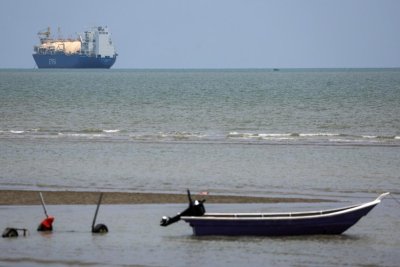
The United States is considering closing its consulate in Medan, Indonesia, which is near the highly strategic Strait of Malacca. File Photo by Fazry Ismail/EPA
Aug. 13 (UPI) — The Trump administration’s decision to close the U.S. Consulate in Medan, Indonesia, may save relatively little money. But it risks weakening American influence in one of the Indo-Pacific’s most strategically important regions at a time when Washington says competition with China is its foremost foreign policy priority.
The Medan consulate is small compared with the U.S. Embassy in Jakarta or major diplomatic posts elsewhere in Asia. Yet, its strategic value has long exceeded its size.
Situated on the island of Sumatra, the consulate serves roughly 60 million Indonesians across 10 provinces, supports U.S. commercial interests, advances educational and environmental partnerships and provides Washington with a permanent presence near the Strait of Malacca — one of the world’s busiest maritime corridors.
The proposed closure comes as the United States seeks to deepen its Comprehensive Strategic Partnership with Indonesia, Southeast Asia’s largest economy, the world’s largest Muslim-majority democracy and an increasingly influential G20 member.
Those ambitions sit uneasily alongside a shrinking American diplomatic footprint in one of Indonesia’s most important regions.
For years, U.S. officials have argued that competition with China extends beyond military deployments and naval exercises. It also depends on trade, investment, educational exchanges, environmental cooperation and people-to-people ties.
Those objectives require diplomats on the ground, particularly outside national capitals where many of today’s political and commercial relationships are forged.
“The administration should reconsider closing a strategically located consulate near the Strait of Malacca,” Patrick Cronin, chair for Asia-Pacific Security at the Hudson Institute, told UPI. “Recent tensions around the Strait of Hormuz remind us how indispensable the Strait of Malacca remains to global commerce.”
Sumatra is one of Indonesia’s economic engines, producing energy, palm oil, coffee, rubber and other commodities, while anchoring important shipping and trade routes across the Malacca Strait and the Indian Ocean.
The island accounts for a large share of Indonesia’s palm oil production, while its provinces are also major exporters of rubber, coal, agricultural products and manufactured goods.
North Sumatra recorded more than $3.5 billion in exports in 2025, while South Sumatra recorded $6.3 billion. American companies operating in energy, agribusiness, manufacturing and logistics therefore have commercial interests that extend well beyond Jakarta, including relationships with provincial governments, suppliers, ports, industrial estates and local business communities.
A diplomatic presence in Medan provides U.S. officials with a base for supporting those relationships, monitoring commercial conditions and helping American companies navigate regulatory and administrative issues in a region central to Indonesia’s trade and resource economy.
“It will reinforce the perception that the United States is shrinking its footprint in Southeast Asia,” Murray Hiebert, head of research at BowerGroupAsia, told UPI. “Closing Medan also removes the only permanent U.S. diplomatic presence near the Strait of Malacca.”
Unlike many countries where political authority is concentrated in one capital, Indonesia’s decentralized system gives provincial governments considerable influence over investment, environmental management and economic development. Relationships built through a regional consulate cannot easily be replicated through periodic visits from embassy officials based in Jakarta.
Indonesia also occupies a distinctive place in Washington’s Indo-Pacific strategy. It is neither a treaty ally nor a strategic adversary, but an independent regional power that has consistently pursued its long-standing “free and active” foreign policy. Jakarta has resisted choosing sides between Washington and Beijing, preferring to cultivate strong ties with both.
Ted Osius, former U.S. Ambassador to Vietnam, who also served as president and CEO of the U.S.-ASEAN Business Council, said Washington has spent years strengthening its partnership with Indonesia as both countries seek closer trade and defense cooperation.
“The annual cost of operating the U.S. Consulate in Medan, staffed by just two American diplomats serving an island of more than 60 million people, is roughly equivalent to one minute of Pentagon spending during the conflict with Iran,” Osius told UPI. “The modest savings from closing the post would come at a disproportionate strategic cost.”
China has long recognized that influence is built through sustained local engagement as much as national diplomacy. Over the past decade, Beijing has expanded its presence across Indonesia through infrastructure projects, mining investments, industrial cooperation and Belt and Road financing.
Chinese companies dominate Indonesia’s rapidly growing nickel-processing industry, while the Jakarta-Bandung high-speed railway has become Beijing’s flagship infrastructure project in Southeast Asia.
Chinese engagement extends well beyond Jakarta. Provincial governments across the archipelago work directly with Chinese companies, universities and local officials, allowing Beijing to deepen relationships through consistent local engagement rather than high-profile diplomatic initiatives alone.
Against that backdrop, reducing the American presence outside the capital risks reinforcing perceptions that Washington’s commitment is narrowing rather than expanding.
The implications extend beyond geopolitics. Sumatra contains some of the world’s richest tropical forests, including the Leuser Ecosystem, one of the few places where orangutans, elephants, rhinos and tigers still co-exist in the wild. These forests also rank among the world’s most important carbon sinks, making them central to global biodiversity and climate efforts.
“We should not be closing the U.S. Consulate in Medan,” Robert Blake, a former U.S. ambassador and now senior managing director at McLarty Associates, told UPI. “Despite its relatively small operating cost, the consulate punches well above its weight.
“It enables U.S. diplomats to engage with Sumatra’s 60 million people, promotes American business in a region rich in energy, palm oil and coffee, and supports Indonesia’s efforts to protect Sumatra’s unique biodiversity — a globally significant natural heritage and one of the world’s most important carbon sinks.”
That work has included support for conservation partnerships, scientific cooperation, educational exchanges and civil society initiatives. As climate change increasingly intersects with national security and economic policy, environmental diplomacy has become another arena in which countries build long-term influence.
The Medan consulate has served as a regional presence in North Sumatra, providing U.S. diplomats with direct access to local officials, business leaders, universities, civil society organizations and other institutions outside Indonesia’s capital.
Its location also gives Washington a base for monitoring developments across a strategically important part of the country, including trade, investment, maritime activity and regional ties.
Closing or consolidating that presence would shift more of those functions to the U.S. Embassy in Jakarta and other regional posts, potentially changing how frequently American officials engage with counterparts in Sumatra.
Supporters of consolidation argue that modern communications and periodic travel can substitute for permanent regional offices, particularly during a period of fiscal restraint. But diplomacy remains fundamentally relational. Trust develops through sustained interaction, familiarity with local institutions and networks that cannot be built through occasional visits.
Whether the closure ultimately proceeds is less important than what it signals. Throughout the Indo-Pacific, Washington contends that strategic competition with China will be won not only through military strength, but also through sustained economic, diplomatic and societal engagement. That strategy depends on people, institutions and local relationships built over decades — not only on high-level summits or defense agreements.
The annual savings from closing a small consulate in Medan are likely to be modest. The strategic cost may be harder to measure.
James Borton is a non-resident senior fellow at Johns Hopkins SAIS Foreign Policy Institute and the author of Harvesting the Waves: How Blue Parks Shape Policy, Politics, and Peacebuilding in the South China Sea. Borton is the editor-in-chief of the South China Sea NewsWire. The views and opinions expressed in this commentary are solely those of the author.