Texas Attorney General Ken Paxton, seen here in April 2024, celebrated an appeals court ruling on Tuesday in favor of Senate Bill 10, which mandates public schools to display the Ten Commandments in all classrooms. Pool File Photo by Justin Lane/UPI | License Photo
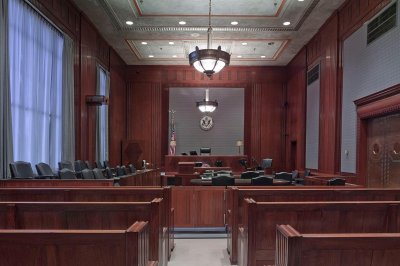
April 22 (UPI) — A U.S. appeals court has ruled that Texas can require schools to display a copy of the Ten Commandments, finding the legislation that mandates the Decalogue in classrooms does not require students to believe in the religious teachings.
The Tuesday ruling from the Fifth Circuit Court of Appeals is a victory for Texas conservatives and Christians who have fought to further include religion in public spaces. The decision is expected to be appealed to the Supreme Court.
“This is a major victory for Texas and our moral values,” the state’s Republican attorney general, Ken Paxton, said in a statement.
“The Ten Commandments have had a profound impact on our nation, and it’s important that students learn from them every single day.”
Texas Gov. Greg Abbottsigned Senate Bill 10 into law June 10, directing every classroom in all Texas public schools to display the Ten Commandments starting Sept. 1, but has been tied up in litigation since.
While proponents argue the Decalogue is foundational to American life, opponents state that mandating it in schools is an unconstitutional violation of the separation of church and state.
The American Civil Liberties Union, which represented multi-faith Texas families in the case, said it was “extremely disappointed” by the decision and expects the Supreme Court to reverse it.
“The court’s ruling goes against fundamental First Amendment principles and binding U.S. Supreme Court authority,” the ACLU of Texas said in a statement.
“The First Amendment safeguards the separation of church and state, and the freedom of families to choose how, when and if to provide their children with religious instruction. This decision tramples those rights.”
The appeals court on Tuesday ruled 9-7 to overturn a lower court’s preliminary injunction that found S.B. 10 likely unconstitutional.
In its ruling, the appeals court found S.B. 10 “looks nothing like a historical religious establishment.”
“S.B. 10 authorizes no religious instruction and gives teachers no license to contradict children’s religious beliefs (or their parents’). No child is made to recite the Commandments, believe them or affirm their divine origin,” the court said.
April 22 (UPI) — Federal prosecutors Tuesday evening announced an 11-count indictment against the Southern Poverty Law Center, accusing the non-profit of defrauding donors by using their money to pay informants within hate groups they were monitoring.
Acting Attorney General Todd Blanche announced the indictment from a Montgomery, Ala., grand jury during a press conference, alleging that between 2014 and 2023, the SPLC paid more than $3 million to informants in hate groups the organization had vowed to dismantle.
“As the indictment described, the SPLC was not dismantling these groups, but it was instead manufacturing the extremism it purports to oppose by paying sources to stoke racial hatred,” he said, alongside FBI Director Kash Patel.
The indictment, which was returned by an Alabama grand jury just minutes before the press conference, details payments to informants in groups such as the neo-Nazi National Alliance and the Ku Klux Klan, but does not detail extensive evidence that the money was “used to fund the leaders and organizers of racist groups.”
Federal prosecutors allege that the SPLC obtained money via donations by making “‘materially false representations and omissions about” what the money would be used for and utilized bank accounts linked to “fictitious entities” to covertly pay their field sources.
One SPLC informant is described in the court document as a member of the online leadership chat group behind the 2017 Unite The Right protest in Charlottesville, Va., where one person was killed when a car rammed counterprotesters.
This informant was paid more than $270,000 between 2015 and 2023, according to the indictment, which alleges that they attended the Unite the Right event “at the direction of the SPLC,” made “racist postings under the supervision of the SPLC and helped coordinate transportation to the event for several attendees.
Another SPLC informant described by federal prosecutors as being affiliated with the neo-Nazi National Alliance organization stole 25 boxes of documents from the headquarters of a violent extremist group, copied the materials for the SPLC and returned the originals. The court document alleges that the SPLC paid the informant more than $1 million between 2014 and 2023.
Blanche told reporters during the press conference that the informants were paid via pre-paid cards with funds from donors that were moved from bank accounts that the SPLC created for five fictitious organizations in order to shield the source of the funds.
“They attempted to hide their criminal activity from our financial banking network,” Patel said.
“They set up shell companies and entities around America so that the financial system that we rely on as everyday Americans were deceived into believing that money is not coming from the Southern Poverty Law Center in the perpetration of this scheme and fraud but rather fictitious entities they stood up to perpetuate this ongoing fraud.”
The indictment charges the SPLC with six counts of wire fraud, four counts of bank fraud and one count of conspiracy to commit money laundering.
Ahead of the press conference, SPLC CEO Bryan Fair announced in a video statement that the organization and its employees were the target of a federal investigation focused on its use of informants, though they had yet to know all the details.
He defended the SPLC’s use of informants as necessary to protect themselves and the public after decades of being “engaged in unprecedented litigation to dismantle the Klan and other hate groups.”
Information the SPLC gained from the informants was frequently shared with local and federal law enforcement, including the FBI, he said, adding that they did not broadly share their use of informants to protect their identities.
“While we no longer work with paid informants, we continue to take their safety seriously. These individuals risked their lives to infiltrate and inform on the activities of our nation’s most radical and violent extremist groups,” he said, vowing to fight the allegations.
“We will not be intimidated into silence or contrition, and we will not abandon our mission or the communities we serve.”
The SPLC has long faced criticism from some Republicans and conservatives, who say the prominent anti-hate nonprofit has drifted from its mission of fighting extremism and White supremacy by labeling several right-wing organizations as hate groups.
In October, Patel announced that the FBI severed ties with the SPLC, accusing it of having “long abandoned civil rights work and turned into a partisan smear machine.”
Democrats, SPLC supporters and critics of the Trump administration lambasted the indictment as politically motivated, with the American Civil Liberties Union calling it “another example of the Trump administration’s extreme attempts to silence its critics.”
“Let’s be clear about what’s happening here. This administration is using the full weight of federal prosecution to target an organization whose mission is rooting out violent extremism,” Sen. Cory Booker, D-N.J., said online.
“This is part and parcel of Trump’s assault on free speech, on nonprofits and on anyone who dares to disagree with him.”
House Majority Leader Hakeem Jeffries, D-N.Y., called the indictment “baseless and illegitimate.”
“These partisan hacks who continue to weaponize the criminal justice system against perceived opponents will never intimidate us,” he said.
WASHINGTON, April 22 (UPI) — The Supreme Court will hear arguments Wednesday whether immigration officers can place permanent residents charged with a crime on parole if they leave and then re-enter the country.
In immigration, parole is a temporary, discretionary permission granted by the Department of Homeland Security that allows a person to enter or remain in the United States, even though they are not formally admitted.
Parole does not cancel a person’s green card, but essentially gives the Department of Homeland Security time to decide whether the person should be admitted or deported based on how the issue is resolved.
The court is poised to hear oral arguments in Blanche vs. Lau, which would determine when immigration officers can demote a permanent resident’s status to parole, a temporary status that can be revoked and result in deportation.
Lau is Chinese immigrant Muk Lau, a permanent resident with a green card. Blanche is Todd Blanche, the acting U.S. attorney general and named defendant in the case.
Typically, permanent residents are allowed to leave and re-enter the United States as they wish, with a few exceptions. If these immigrants have committed certain kinds of crimes, for example, officers can have them placed on parole when they return to the country after going abroad.
The case stems from an event on June 15, 2012, when 69-year-old Lau, who had gained permanent residency five years earlier, landed in a New York-area airport after traveling to China.
He presented his green card and passport to border control. His entry triggered an FBI match because a month earlier, Lau was charged with third-degree trademark counterfeiting for selling nearly $300,000 of fake designer shorts.
“I was arrested at a warehouse that contained some merchandise I had stored there,” Lau told the Customs and Border Protection agent, according to court documents. “I went to the warehouse to retrieve the merchandise because I had not paid rent, and when I got there, the cops were there and arrested me.”
The agent declared Lau inadmissible as a returning permanent resident due to the crime exception, and decided to let him in on parole, instead. A year later, Lau pled guilty to the counterfeiting, and in 2014, the Department of Homeland Security began deportation proceedings against him.
At the time, the Customs and Border Patrol agent did not know whether Lau was guilty — just that he had been charged with a crime. The crux of Lau’s case is whether the CBP agent needed “clear and convincing” evidence of a crime when placing him on parole or whether just charges were enough without such evidence.
Immigrant advocates argue the agent erred.
“Mr. Lau was absolutely, unequivocally, at that time, admissible,” said Jonathan Weinberg, who worked on the American Immigration Lawyers Association’s brief to the court. “He just was. He hadn’t been convicted of a crime. There was nothing else that would render him inadmissible.”
After an immigration judge and the Board of Immigration Appeals sided with the government, Lau appealed to the U.S. 2nd Circuit Court of Appeals. The appellate court, agreeing with Weinberg’s reasoning, granted Lau’s petition in March 2025.
The Federation for American Immigration Reform, a nonprofit advocating for lower immigration rates, also submitted a brief to the court. It argued that the border patrol officer did the right thing by paroling Lau into the country, and that the clear and convincing standard was too high.
“If you’re going to say that the officer in an airport is supposed to have all this information, you’re assigning that individual with an impossible task,” FAIR spokesman Ira Mehlman said. “You have thousands of people coming through the airports every day, and these are decisions that have to be made on the spot.”
Mehlman also said that the decision “shouldn’t be a problem” for green-card holders without any criminal history.
“When you come to the United States as a non-citizen, you are here on a conditional basis,” Mehlman said. “Even if you’re a green card holder, you’re subject to removal if you violate the terms of your presence here in the United States.”
There are nearly 13 million legal permanent residents in the United States. Legal immigrants, including green card holders, commit crimes at lower rates than natural-born citizens, according to research by the Migration Policy Institute. However, Weinberg said the ultimate decision would impact all legal permanent residents, including those who have not been convicted of any crime.
“If the government can admit Lau on parole, then the government can basically admit any returning green card holder on parole if it chooses to,” Weinberg said.
Lau’s case joins several immigration-related issues, including birthright citizenship and temporary protected status, which have made their way to the Supreme Court this spring.
“The immigrant advocacy community is, I think, fighting an uphill battle,” Weinberg said. “But that doesn’t mean you don’t give it your best shot.”
April 21 (UPI) — Uncertainty over Iran peace talks put Vice President JD Vance’s trip to Pakistan on hold Tuesday, as Iranian officials were silent on whether they intend to take part in the talks at all.
The New York Times reported that talks could, however, restart at any time. Officials in Tehran were divided on whether to take part in negotiations while the United States held firm on its embargo on ports in Iran, Axios reported.
President Donald Trump said earlier in the day that he expects to reach a deal with Iran in negotiations to end the war on Tuesday, but if no deal is made, he is prepared to resume bombing.
The two-week cease-fire Trump agreed to is set to expire on Wednesday, with the Strait of Hormuz remaining a centerpiece to the conflict between the United States and Iran.
“What I think is that we’re going to end up with a great deal,” Trump said in an interview on CNBC on Tuesday. “I think they have no choice. We’ve taken out their navy. We’ve taken out their air force. We’ve taken out their leaders, frankly. It is regime change, no matter what you want to call it. Which is not something I said I was going to do but I’ve done, indirectly maybe, but I’ve done it.”
Trump said the United States’ blockade of the Strait of Hormuz has been a “tremendous success,” adding that “we totally control the strait.”
The president added that he does not want to extend the cease-fire, noting that negotiations will take place near the time the two-week cease-fire ends.
If a deal is not agreed to on Tuesday and Wednesday, Trump said, “I expect to be bombing,” and “we are raring to go.”
“We’re totally loaded up. We have so much of everything; much more powerful than it was four or five weeks ago,” Trump said. “We caught a ship yesterday that had some things on it, which wasn’t very nice. A gift from China perhaps, I don’t know.”
Trump claimed that Iran has executed 42,000 protesters in the last two months, a number that has not been verified, though former Iranian Supreme Leader Ayatollah Ali Khamenei said thousands were killed earlier this year.
On social media, Trump shared a post saying the Islamic Republic is “preparing to hang eight women.” Trump called on Iranian leaders to release the women.
“I would greatly appreciate the release of these women,” Trump wrote. “I am sure that they will respect the fact that you did so. Please do them no harm! Would be a great start to our negotiations!”
Secretary of Health and Human Services Robert F. Kennedy, Jr. speaks during a House Appropriations Subcommittee on Labor, Health and Human Services, Education, and Related Agencies hearing on the budget for the Department of Health and Human Services in the Rayburn House Office Building near the U.S. Capitol on Thursday. Photo by Bonnie Cash/UPI | License Photo
April 21 (UPI) — Retail sales rose by 1.7% in March mostly due to high gas prices from the ongoing conflict with Iran, the Commerce Department announced Tuesday.
Retail sales are seasonally adjusted but not for inflation. In March inflation rose by 0.9%, which was three times the February rate, according to the latest Consumer Price Index.
The war between the United States, Israel and Iran has caused gas prices to spike. The Strait of Hormuz, a critical transportation route for oil, has been closed to most traffic throughout the fighting. It has dramatically affected the price of gas in the United States and abroad.
Gas station sales jumped in March by 15.5% from February. Without gas station sales, retail rose 0.6% in March, which was at 0.7% in February.
Some categories were stronger. Furniture and home furnishing sales were up 2.2% in March.
Electronics and building materials held up well, too.
Gary Schlossberg, global strategist at Wells Fargo Investment Institute, said in commentary to investors on Tuesday: “Pressure on household budgets is being cushioned, for now, by sizable increases in tax refunds tied to last year’s legislation.”
Consumers adjusted their spending in other areas. Apparel sales were flat, and restaurant sales rose only 0.1%.
Gas prices likely caused that, said Dan North, Allianz Trade senior economist for North America.
“Gasoline is a thing you love to hate, because you have to buy it; there’s really no substitute,” North told CNN in an interview.
Eventually, consumers will deplete savings and tax refunds, and for lower-income Americans, it could be a struggle, North said.
“If we can wind this up, so to speak, in the next few months, the damage to the consumer and economy might not be so bad,” North said. “If you start stretching it out for months and months and toward the end of the year, then consumers and the rest of the economy get in trouble.”
April 21 (UPI) — The Southern Poverty Law Center announced via YouTube Tuesday that it is now the target of an investigation by the Department of Justice.
“Although we don’t know all the details, the focus appears to be on the SPLC’s prior use of paid confidential informants to gather credible intelligence on extremely violent groups,” said CEO Bryan Fair in the video. “This use of informants was necessary because we are no stranger to threats of violence. In 1983, our offices were firebombed, and in the years since, there have been countless credible threats against our staff.”
The Southern Poverty Law Center is a nonprofit advocacy and litigation organization that tracks White supremacist and other hate groups in the United States. Republicans have criticized the nonprofit for acting as a far-left entity that they say targets conservative organizations and people. It was founded in 1971 by Morris Dees, Joseph Levin Jr. and Julian Bond as a civil rights law firm in Montgomery, Ala.
The case is being led by the U.S. Attorney’s Office for the Middle District of Alabama, CBS News reported.
Fair said the probe is targeting the organization and its employees.
“For decades, we engaged in unprecedented litigation to dismantle the Klan and other hate groups. In light of that work, we sought to protect the safety of our staff and the public,” Fair said in the video. “We frequently shared what we learned from informants with local and federal law enforcement, including the FBI. We did not, however, share our use of informants broadly with anyone, to protect the identity and safety of the informants and their families.
“And while we no longer work with paid informants, we continue to take their safety seriously. These individuals risked their lives to infiltrate and inform on the activities of our nation’s most radical and violent extremist groups,” Fair said.
Fair said the organization will fight the allegations.
“We stood in the vanguard then, and we stand in the vanguard today,” he said. “We will not be intimidated into silence or contrition, and we will not abandon our mission or the communities we serve.”
Secretary of Health and Human Services Robert F. Kennedy, Jr. speaks during a House Appropriations Subcommittee on Labor, Health and Human Services, Education, and Related Agencies hearing on the budget for the Department of Health and Human Services in the Rayburn House Office Building near the U.S. Capitol on Thursday. Photo by Bonnie Cash/UPI | License Photo
Weekly insights and analysis on the latest developments in military technology, strategy, and foreign policy.
For the first time since at least the launch of Operation Epic Fury on Feb. 28, an Iranian-linked vessel was interdicted in the Indo-Pacific Command (INDOPACOM) region, the Pentagon confirmed to The War Zone. The boarding of the Botswana-flagged oil tanker M/T Tifani came just days after Joint Chiefs Chairman Gen. Dan Caine told reporters, including from The War Zone, that the U.S. would “actively pursue any Iranian-flagged vessel or any vessel attempting to provide material support to Iran” anywhere in the world. The move also follows the U.S. firing on and seizing the Iranian cargo ship Touska on Sunday in the Arabian Sea.
Meanwhile, as the clock ticks down toward the end of a fragile ceasefire between the U.S and Iran, the future of peace negotiations remains very much uncertain, which we will discuss later in this story.
“Overnight, U.S. forces conducted a right-of-visit, maritime interdiction and boarding of the stateless sanctioned M/T Tifani without incident in the INDOPACOM area of responsibility,” the Pentagon stated Tuesday morning on X. “As we have made clear, we will pursue global maritime enforcement efforts to disrupt illicit networks and interdict sanctioned vessels providing material support to Iran—anywhere they operate. International waters are not a refuge for sanctioned vessels. The Department of War will continue to deny illicit actors and their vessels freedom of maneuver in the maritime domain.”
The oil tanker M/T Tifani with a U.S. Navy Expeditionary Sea Base (ESB) ship in the background (Pentagon) A U.S. Navy MH-60S Seahawk helicopter hovers over the deck of the Tifani. (Pentagon)
Video released by the Pentagon shows about two dozen armed troops boarding two MH-60S Seahawk helicopters on a U.S. Navy Expeditionary Sea Base (ESB) ship. The video then cuts to the troops repelling onto the deck of the Tifani and searching that vessel.
Overnight, U.S. forces conducted a right-of-visit, maritime interdiction and boarding of the stateless sanctioned M/T Tifani without incident in the INDOPACOM area of responsibility.⁰⁰As we have made clear, we will pursue global maritime enforcement efforts to disrupt illicit… pic.twitter.com/EGwDe3dBI3
The Pentagon did not say where the incident took place, however, according to MarineTraffic.com, the Tifani was last located yesterday in the Indian Ocean, about halfway between Sri Lanka and Indonesia and some 2,000 miles southeast of Iran.
The Pentagon told us that “multiple agencies” played a role in seizing the ship. We have reached out for additional details.
Gregory Brew, Senior Analyst, Iran and Oil for Eurasia Group, stated on X that the Tifani departed from Iran’s Kharg Island on April 5 and that the ship appears to have continued sailing on after the boarding. We asked the Pentagon for more details about the ship’s disposition and they referred us to the White House, which sent us back to the Pentagon.
Tifani embarked from Kharg on 5 April, bound for Singapore.
FWIW this post suggests the ship was boarded and searched but not seized.
As of 3 hours ago, it was still en route to Singapore, though its course had shifted south, per Kpler. https://t.co/Em2P9ZRKrT
The ship was sanctioned under a 2018 executive order issued by President Donald Trump during his first term designed to counter Iranian malign activities and prevent it from obtaining a nuclear weapon.
UPDATES
The status of peace talks in Pakistan remains murky. While Vice President JD Vance and other top officials are expected to leave for the negotiations today, Iranian officials have yet to officially commit. The main sticking points remain the future of Iran’s highly enriched uranium, the Strait of Hormuz, the status of its ballistic missile inventory and support for proxies like Hezbollah in Lebanon and the Houthis of Yemen.
“A diplomatic source in Pakistan says no diplomatic delegation from Iran has been dispatched to Islamabad ‘so far,’” the official Iranian IRNA news agency stated on Tuesday. “In response to speculations about possible negotiations in Pakistan, a diplomatic source told IRNA on Tuesday that no delegation from Iran has arrived in the Pakistani capital.”
The source clarified that “neither official nor unofficial information has been received regarding any Iranian involvement in the negotiations in Islamabad.”
#BREAKING: #Pakistan Information Minister: .Formal response from #Iranian side about confirmation of delegation to attend Islamabad talks is still awaited .Pakistan made sincere efforts to convince Iranian leadership to participate in second round of talks, efforts continue… pic.twitter.com/cw9rPb1F6X
In a brief phone call, Trump told CNBC host Joe Kernan he thinks the U.S. is “going to end up with a great deal” with Iran to end the war, even as he said he does not expect to extend a ceasefire due to expire on Wednesday.
“I think they have no choice,” Trump said during an interview on CNBC’s “Squawk Box,” when asked what he expected to come out of a second round of peace negotiations with Iran. “We’ve taken out their navy, we’ve taken out their air force, we’ve taken out their leaders.”
President Trump breaks down ongoing negotiations with Iran on @SquawkCNBC 🎙️
“I think we’re in a very strong negotiating position to do what other presidents should’ve done… we had 47 years with these bloodthirsty people.” – President Donald J. Trump 🇺🇸 pic.twitter.com/X7nceyI622
The president added that he is ready to resume the conflict if a deal with Iran does not appear in the offing.
“Well, I expect to be bombing because I think that’s a better attitude to go in with – but we’re ready to go,” Trump answered when asked if he needs at least the prospect for a signed deal either today or tomorrow.
.@JoeSquawk: “You’re saying that you need at least the prospects for a signed deal today and tomorrow or else you would resume bombing Iran?”@POTUS: “Well, I expect to be bombing because I think that’s a better attitude to go in with — but we’re ready to go.” pic.twitter.com/vEmOfes6Er
Trump also said “I don’t want to do that,” when asked if he would extend the ceasefire beyond tomorrow if talks with Iran appear promising.
Iran is banking on “market meltdowns” and domestic economic pressures to get Trump to back down on his demands, Fox News reporter Trey Yingst suggested Tuesday morning.
“Iran sees this as a game of endurance. They believe that time is on their side and that ultimately the domestic pressure, when it comes to energy markets and the stock market, will force President Trump to make a deal that’s in their favor,” he explained. “That is not the truth. That is not the reality…The president and his counterparts in Israel have the ability to continue this operation for months if they need to.”
TEHRAN’S TACTICS: Senior regional intelligence source indicates that Iran is betting on a game of “endurance,” banking on market meltdowns and domestic distress to force President Trump into a deal.@TreyYingst: “Iran sees this as a game of endurance. They believe that time is… pic.twitter.com/HTMz1dVt8H
Trump is “misleading” the world about “conditions on the ground,” Iran’s top military operational commander claimed.
“Holding the upper hand, the Armed Forces do not allow the lying and delusional president of the United States to exploit the situation or fabricate false narratives about conditions on the ground, particularly regarding the management and control of the Strait of Hormuz, during periods of silence in military confrontation,” proffered Major General Ali Abdollahi, commander of Khatam al-Anbiya Central Headquarters, which is responsible for coordinating operations between the country’s Army and the Islamic Revolution Guards Corps (IRGC).
Abollahi added that the Armed Forces “will duly respond to any breach of commitments” by the “adversaries,” a reference to the U.S. firing on and seizing the Iranian cargo ship Touska on Sunday.
Iran’s Armed Forces Ready to Deliver Decisive Response to Any Enemy Breach
Major Gen. Ali Abdollahi, commander of Central Khatam al-Anbiya HQ, declared that Iran’s armed forces are fully prepared to deliver a decisive & immediate response to any breach of commitments by enemies. pic.twitter.com/KzP1sIlEL3
Though the status of the peace talks is unclear, Pakistan has emerged as a winner on the world stage. However, it is an unlikely mediator, The Washington Post notes.
“Pakistan does not formally recognize Israel, one of the key countries involved,” the Post posited. “It became a nuclear power in secret, as the U.S. and Israel have accused Iran of seeking to do. And it did not start off on the right foot with President Donald Trump, who in his first term said Pakistan had given Washington ‘nothing but lies and deceit.”
But over the past year, “a focused campaign to win Trump’s favor appears to have paid off,” the newspaper added. “For months, Pakistan’s leaders wooed the Trump administration with flashy deals and public praise.”
“We read him right,” said Mushahid Hussain Syed, the former chairman of the Pakistani Senate’s Defense Committee. He said Pakistan recognized Trump’s transactional approach to diplomacy early.
“We delivered, and we delivered big time,” Syed said. “We gave him the three C’s: crypto, critical minerals and counterterrorism.”
Pakistan, a nuclear-armed power that doesn’t recognize Israel, is hosting talks to end the Iran war despite not always getting along with President Trump.
The country improved ties with the U.S. through deals in crypto, minerals and counterterrorism. https://t.co/KQPjiNH2nN
Recent events in and around the Strait of Hormuz – including the IRGC opening then closing the narrow body of water, its attack on several foreign vessels and the U.S. seizure of an Iranian cargo ship – are creating further instability in the world energy markets, according to global market intelligence firm Kpler.
Hormuz reopening misread
The declaration that the Strait of Hormuz was open prompted a rapid market repricing, with #oil falling and risk assets rising. Yet the reopening was conditional, requiring IRGC-managed transit rather than offering free passage. A short-lived surge in… pic.twitter.com/srAFRnb9M7
Shipping giant Maersk is urging ships to avoid the region.
“Volatility persists in the situation,” the company stated. “In coordination with our security partners, we have assessed that as of now, transit through the Strait should be avoided. We will continue monitoring developments and provide updates as clarity improves.”
The International Maritime Organization is “working on an evacuation plan for hundreds of ships that have been stuck in the Persian Gulf since US and Israeli strikes on Iran began more than seven weeks ago,” Bloomberg News reports, citing Secretary General Arsenio Dominguez.
The plan can only be put into action when there are clear signs of de-escalation, Dominguez said on the sidelines of Singapore Maritime Week on Tuesday. The United Nations agency would also need to ascertain if mines had been laid in the strait before sending ships through, he said.
Around 800 ships remain stuck in the Persian Gulf after traffic through the Strait of Hormuz slowed to a trickle following the outbreak of the war. Tehran’s threats and attacks on vessels had made most shipowners too nervous to attempt a transit, although the Islamic Republic had been allowing some vessels that followed approved routes to exit, and demanding payment in some cases.
The U.S. blockade of Iranian ports on April 13 — aimed at depriving Iran of revenue for the war — has made the situation even more perilous.
Even if the war ended today and the Strait was reopened, it will likely take several months – and maybe even into next year – for U.S. domestic gasoline prices to drop back down to pre-war levels, Axios noted.
There is disagreement on this even in Washington. Energy Secretary Chris Wright told CNN Sunday that gas might not drop all the way down to the pre-war level — just under $3 per gallon — until next year. President Trump, for his part, appeared to contradict Wright in comments to The Hill Monday, seeing a faster drop.
However, researchers and analysts Axios interviewed “see slower price drops — pretty close to Wright’s prediction,” the outlet posited.
“Even in the most optimistic of these scenarios, in which flows through Hormuz recover quickly with no restrictions, U.S. retail gasoline prices are likely to face an uphill battle to return to pre-war levels until 2027,” Rob Smith, S&P Global director of refining and marketing, told Axios.
China is lowering domestic retail gasoline and diesel price caps, Reuters reported. This marks its first cut this year as global oil prices retreated from their peaks of the Iran war.
The price drop “will save a private car owner about $3.23 to fill a 50-litre tank of 92-octane gasoline,” the outlet noted. “High gasoline and diesel prices have sharply curbed retail consumption, leading to a surge in inventories at independent refineries and prompting widespread wholesale price cuts to clear stocks, Chinese consultancy Oilchem said.”
Iraqi militias backed by Iran launched dozens of explosive drones at Saudi Arabia and other Gulf states during more than five weeks of fighting, in what is becoming a shadowy war within a war pushing some of the world’s largest oil producers toward open conflict, according to The Wall Street Journal.
According to at least one Saudi assessment described by a person familiar with it, up to half of the nearly 1,000 drone attacks on the kingdom came from inside Iraq, the publication pointed out.
Iraqi militias backed by Iran launched dozens of explosive drones at Saudi Arabia and other Gulf states during more than five weeks of fighting, in what is becoming a shadowy war within a war https://t.co/16B5sxake9
April 21 (UPI) — Voters are heading to the polls in Virginia on Tuesday to vote on a new congressional map drawn by state lawmakers.
Polls are open until 7 p.m. EST., with nearly 1.4 million early ballots already cast on a constitutional amendment to change the congressional map. The result of Tuesday’s vote could have significant implications for the midterm elections in November.
If the map, drawn by Democratic lawmakers, is approved by voters, Democrats would be favored to win 10 of the state’s 11 congressional districts. Democrats currently hold six of the state’s 11 congressional seats and Republicans hold five.
Virginia is just the latest state to weigh redrawing its congressional map mid-decade after Texas approved a map that will favor Republicans last year. Four Republican-led states have approved new congressional maps.
Democrats and Republicans outside of the state have lent their voices to campaigns for and against Virginia’s redistricting plan. President Donald Trump and House Speaker Mike Johnson, R-La., voiced their opposition to the plan, with Trump calling it “unfair.”
House Minority Leader Hakeem Jeffries, D-N.Y., has joined Virginia lawmakers Sen. Mark Warner and Sen. Tim Kaine at rallies to support redistricting. Former President Barack Obama has also been involved, appearing in ad campaigns calling on voters to vote “yes.”
“We’re giving Virginians a chance to vote — which Republican states have not done — about whether they want to have a congressional delegation that will stand up against Donald Trump’s tyranny if he tries to interfere with our elections,” Kaine said in an appearance on Fox News on Sunday.
The Virginia Supreme Court allowed Tuesday’s election to move forward but may still weigh in on whether the new congressional map is legal or not.
Secretary of Health and Human Services Robert F. Kennedy, Jr. speaks during a House Appropriations Subcommittee on Labor, Health and Human Services, Education, and Related Agencies hearing on the budget for the Department of Health and Human Services in the Rayburn House Office Building near the U.S. Capitol on Thursday. Photo by Bonnie Cash/UPI | License Photo
The container vessel Touska, seen here off Hong Kong’s Ap Lei Chau islet in November 2017, was seized by the U.S. military on Sunday. Iran’s Foreign Ministry demanded Tuesday that the United States release the vessel. Photo by Jerome Favre/EPA
April 21 (UPI) — Iran on Tuesday demanded the United States release the Iranian-flagged container ship the U.S. military seized over the weekend, threatening to use “all its capacities” to defend itself as the cease-fire neared its end.
The U.S. military seized Touska on Sunday as it enforced a military blockade of Iranian ports and ships, raising already high tensions during a two-week cease-fire rapidly nearing its end that negotiators from both countries are to use to secure an end to the war.
U.S. warships intercepted Touska transiting the north Arabian Sea en route to Iran’s Bandar Abbas port city for allegedly violating the blockade.
Iran responded with accusations of violating the cease-fire and drone strikes targeting U.S. military vessels, according to state-run media, though U.S. Central Command has yet to comment.
Iran’s Foreign Ministry on Tuesday condemned the seizure of Touska as an “unlawful and savage act of the terrorist U.S. army,” saying the “act of maritime banditry and terrorism” terrified the ship’s passengers and crew, some of whose family members were onboard.
“The Islamic Republic of Iran, while warning of the very dangerous consequences of this unlawful and criminal act by the United States, emphasizes the immediate release of the Iranian vessel, its passengers, its crew and its families,” the ministry said in a statement.
The ministry said the seizure is a violation of international and the fundamental principles and rules of the U.N. Charter, and that it had informed the U.N. secretary general, the Security Council and maritime organizations.
“There is no doubt that the Islamic Republic of Iran will use all its capacities to defend Iran’s national interests and security and to safeguard the rights and dignity of its citizens,” the ministry statement said.
“It is obvious that full responsibility for the further complication of the situation in the region lies with the United States.”
The cease-fire is to end at midnight Tuesday.
Iran has accused Trump of ducking real negotiations on ending the war in favor of trying to exert the United States’ economic and military might to force it to capitulate.
“Trump, by imposing a blockade and violating the cease-fire, wants — in his view — to turn the negotiating table into a table of surrender, or else justify starting the war again,” Iranian Parliament Speaker Mohammad Bagher Ghalibaf said late Monday in a statement.
“We do not accept negotiations under the shadow of threats, and over thee past two weeks we have prepared to reveal new cards on the battlefield.”
Trump has continued to boast online that he was “winning” the war while defending himself from criticism and vowing the deal his administration is working on with Iran will be “FAR BETTER” than the landmark multinational Joint Comprehensive Plan of Action the United States, Iran and several other countries signed during the Obama administration.
“If a deal happens under ‘TRUMP,’ it will guarantee Peace, Security and Safety, not only for Israel and the Middle East, but for Europe, America and Everywhere else,” he said on his Truth Social media platform.
“It will be something that the entire World will be proud of, instead of the years of Embarrassment and Humiliation that we have been forced to suffer due to incompetent and cowardly leadership!”
Turkey, Iran’s neighbor and U.S. ally, has been among nations working to de-escalate tensions in the Gulf and seek an extension to the cease-fire as negotiations appear to be at a stalemate over Iran’s nuclear program.
Though public rhetoric is fiery, negotiations behind closed doors are progressing, Ankara’s foreign affairs minister, Hakan Fidan, said Sunday during a forum in southeastern Turkey’s Antalya.
“The good thing is this: both sides continue to negotiate with a very serious intention, sincerely, they have the will to continue,” Fidan said.
“Now, no one wants a new war to start again with the end of the cease-fire next week.”
Turkey hopes that under international pressure, the United States, Israel and Iran will extend the cease-fire to solve outstanding issues, he said.
“A two-week period is good for a cease-fire, but the file in front of them is so comprehensive that it will not be possible to solve all these issues in two weeks,” he said.
“Therefore, a new extension will be needed. I hope this extension will come. I am optimistic about that.”
April 20 (UPI) — A Southwest Airlines flight arriving at Nashville International Airport over the weekend was directed into the path of another Southwest flight that was taking off, causing them to pass within 500 vertical feet of each other.
A flight arriving from Myrtle Beach, S.C., on Saturday evening initiated a go-around before landing because it was facing “gusty winds” during it’s approach, but air traffic controllers directed the crew into the path of another flight, USA Today, WSMV and WTVF reported.
The other flight was departing NIA on a parallel runway, which caused the close call, and “both flight crews responded to onboard alerts” because the two aircraft were 500 feet apart, the Federal Aviation Administration said in a statement.
Five hundred feet is equivalent to 1 2/3 football fields, including the end zones, or two Boeing 747s lined up nose-to-tail, which is half the 1,000-foot distance the FAA requires aircraft to maintain.
The air traffic controller who gave the errant order recognized the mistake and corrected himself with both flight crews, who had already responded to alerts from their Traffic Collision Avoidance System, devices that are standard on all commercial aircraft.
“We are engaged with the FAA as part of the investigation,” Southwest said in a statement.
“Southwest appreciates the professionalism of its Pilots and Flights Crews in responding to the event,” the company said. “Nothing is more importing to Southwest than the Safety of our Customers and Employees.”
Secretary of Health and Human Services Robert F. Kennedy, Jr. speaks during a House Appropriations Subcommittee on Labor, Health and Human Services, Education, and Related Agencies hearing on the budget for the Department of Health and Human Services in the Rayburn House Office Building near the U.S. Capitol on Thursday. Photo by Bonnie Cash/UPI | License Photo
The FAA has grounded Blue Origin’s New Glenn rocket because although its launch was successful, one of the engines on its second stage did not fire properly when it got to space, which resulted in the spacecraft releasing a communications satellite in too low of an orbit to be useful. Photo by Joe Marino/UPI | License Photo
April 20 (UPI) — The Federal Aviation Administration grounded Blue Origin‘s New Glenn rocket after it botched the release of a satellite following its successful launch two hours earlier.
The third launch of New Glenn and second landing of its reusable booster stage “Never Tell Me The Odds” on a drone ship in the Atlantic Ocean was a success in those terms, but the spacecraft delivered AST SpaceMobile’s BlueBird 7 satellite to an orbit too low for it to operate properly.
Blue Origin said Monday that it is leading an investigation into one of New Glenn’s engines producing insufficient thrust to reach the mission’s target orbit.
“While we were pleased with the nominal booster recovery, we clearly didn’t deliver the mission our customer wanted, and our team expects,” Blue Origin CEO Dave Limp said in a post on X.
The FAA, NASA, the National Transportation Safety Board and the U.S. Space Force also have been monitoring the situation and will require Blue Origin to complete its investigation and report on the engine anomaly, the Orlando Sentinel reported.
“A return to flight is based on the FAA determining that any system, process or procedure related to the mishap does not affect public safety,” the FAA said in explaining why it grounded the rocket.
The New Glenn-3 rocket launched around 7:30 a.m. EDT on Sunday morning, nailing the flight and landing portion of its mission, and successfully released the BlueBird 7 satellite once it reached orbit.
Because one of the two BE-3U engines that power New Glenn’s upper stage didn’t produce sufficient thrust on its second engine burn, which is meant to boost the spacecraft to its target orbit above Earth, it never got there.
Although the satellite was released and powered on properly, the off-nominal orbit — which was too low for it to be useful — AST said it would be jettisoned.
BlueBird 7 is one of 45 satellites that AST SpaceMobile hopes to get in orbit by the end of 2026 as part of a satellite-based cellular network designed to operate with standard smartphones.
The satellite would have been the companies eighth to reach orbit, and it’s share price Feller by more than 6% on Monday, The BBC reported.
Limp said Blue Origin is analyzing data as it conducts the investigation and is “in steady communication with the team at AST SpaceMobile.”
“We appreciate their partnership, and we’re looking forward to many flights together,” Limp said.
NASA’s Orion spacecraft, with the four-member Artemis II crew aboard, is seen under parachutes as it lands in the Pacific Ocean off the coast of California on Friday after its nearly 10-day journey around the Moon and back. NASA Photo by Bill Ingalls/UPI | License Photo
South Korea’s Unification Minister Chung Dong-young speaks to reporters at the Seoul Government Complex on April 20. Photo by Asia Today
April 20 (Asia Today) — South Korea’s unification minister on Monday rejected reports of a rift with the United States over intelligence sharing on North Korea, warning against speculation that could harm bilateral relations.
Chung Dong-young said he was concerned about claims suggesting a crisis in ties between Seoul and Washington following reports that the United States had limited the sharing of satellite intelligence after his recent remarks.
“I explained policy to underscore the seriousness of North Korea’s nuclear issue, and it is deeply regrettable that this is being framed as a leak of classified information,” Chung told reporters at the Seoul Government Complex.
He said his comments referencing a suspected nuclear facility in Kusong, North Pyongan Province, were based on publicly available information and had been mentioned previously during his confirmation hearing in July.
Chung questioned the timing of the controversy, noting that the same reference had been made months earlier without issue.
He added that since taking office, he has not received any classified intelligence reports related to North Korea’s nuclear facilities from domestic or foreign agencies.
South Korea’s Unification Ministry also said the remarks were based on previously published material, including reports by the Institute for Science and International Security, the RAND Corporation and the Center for Strategic and International Studies.
Chung dismissed suggestions that internal divisions within South Korea over alliance policy were behind the issue, saying he did not believe such factors were at play.
In a separate social media post, he also criticized what he described as politically motivated speculation, calling claims of an intelligence leak “groundless.”
The comments come amid heightened scrutiny over information sharing between South Korea and the United States on North Korea’s nuclear program.
April 20 (UPI) — Two people were killed Monday in a shooting near a North Carolina middle school where two children agreed to meet for a fight, police said.
Law enforcement officials were alerted to a fight at Leinbach Park on Robinhood Road near Jefferson Middle School in Winston-Salem, N.C., at 9:52 a.m. EST. As officers were on the way to the scene, the call was upgraded to a shooting.
The Winston-Salem Police Department posted on Facebook that “two young individuals” met at Leinbach Park for a “planned fight.” When those individuals arrived, “the situation escalated significantly, leading to multiple people exchanging gunfire.”
The police department didn’t say how many people were injured in the shooting, but used a hashtag for “mass shooting” in its post on X.
“Several individuals — both victims and suspects — have been identified and located,” the Winston-Salem Police Department posted on social media. “Due to the number of people involved, efforts are ongoing to account for everyone. At this time, some of those involved in the incident are juveniles.”
Police advised that nearby schools were operating on a normal schedule, but community members were urged to avoid the area to allow emergency responders to operate safely at the scene. The park and two nearby roads were closed as officers processed the scene.
“This is an isolated incident and remains under active investigation,” the police department said.
VANCOUVER — Canadian Prime Minister Mark Carney said in a video address released Sunday that Canada’s strong economic ties to the United States were once a strength but are now a weakness that must be corrected.
In the 10-minute address, Carney spoke about his government’s efforts to strengthen the Canadian economy by attracting new investments and signing trade deals with other countries.
“The world is more dangerous and divided,” Carney said. “The U.S. has fundamentally changed its approach to trade, raising its tariffs to levels last seen during the Great Depression.
“Many of our former strengths, based on our close ties to America, have become weaknesses. Weaknesses that we must correct.”
Carney said tariffs imposed by President Trump have affected workers in the auto and steel industries. He added that businesses are holding back investments “restrained by the pall of uncertainty that’s hanging over all of us.”
Many Canadians have also been angered by Trump’s comments suggesting Canada become the 51st state.
Carney said he plans to give Canadians regular updates on his government’s efforts to diversify away from the U.S.
“Security can’t be achieved by ignoring the obvious or downplaying the very real threats that we Canadians face,” he said. “I promise you I will never sugarcoat our challenges.”
It’s not the first time Carney, who served as a central bank governor, first at the Bank of Canada and later with the Bank of England, has spoken about a shift in world power.
During a speech in January at the World Economic Forum in Davos, Switzerland, he received widespread praise for condemning economic coercion by great powers against small countries.
His remarks brought a rebuke from Trump.
“Canada lives because of the United States,” Trump said after the speech. “Remember that, Mark, the next time you make your statements.”
There was no immediate White House reaction Sunday to the address.
Carney’s comments came days after securing a majority government following special election wins and as the opposition Conservatives push him to deliver a U.S. trade deal, which was among his promises in last year’s election.
A review of the current version of the North American Free Trade Agreement among Canada, the U.S. and Mexico is scheduled for July.
In his address, Carney said he wants to attract new investments into Canada, double the size of clean energy capacity and reduce trade barriers within the country. He also emphasized Canada’s increased defense spending, reduction in taxes and efforts to make housing more affordable.
“We have to take care of ourselves because we can’t rely on one foreign partner,” he said. “We can’t control the disruption coming from our neighbors. We can’t control our future on the hope it will suddenly stop.
“We can control what happens here. We can build a stronger country that can withstand disruptions from aboard.”
Carney said simply hoping the “United States will return to normal” is not a feasible strategy.
“Hope isn’t a plan and nostalgia is not a strategy,” he said.
Carney said Canada has “been a great neighbor,” standing with the U.S. in conflicts including Afghanistan, plus two World Wars.
“The U.S. has changed and we must respond,” he said. “It’s about taking back control of our security, our borders and our future.”
A mother and her six children, ranging from 3- to 11-years-old, died in a fire in Clinton County, Pa., when their home exploded. File Photo by Bonnie Cash/UPI | License Photo
April 20 (UPI) — A mother and her six children, ranging from 3- to 11-years-old, died in a fire in Clinton County, Pa., when their home exploded.
On Sunday at about 8:42 a.m. EST., emergency response units from nearby Centre and Lycoming counties were alerted to a fire on Long Run Road in Lamar Township. The home of 34-year-old Sarah B. Stolzfus and her children was fully engulfed in flames when first responders arrived on the scene.
State police said the cause of the explosion is under investigation.
Stolzfus and her children, four boys ages 11, 10, 4 and 3, and two daughters, ages 8 and 6, were pronounced dead at the scene.
A propane leak inside the home is a potential cause for the explosion, state police said. There were propane tanks outside of the home that did not explode, nor were they involved in the fire.
Children race to push colored eggs across the grass during the annual Easter Egg Roll event on the South Lawn of the White House in Washington on April 21, 2025. Easter this year takes place on April 5. Photo by Samuel Corum/UPI | License Photo
April 20 (UPI) — The American Library Association released its list of the “Top 11 Most Challenged Books List of 2025,” including titles by John Green and Sarah J. Maas.
The list, part of the 2026 State of America’s Libraries Report, is based on data from the ALA’s Office for Intellectual Freedom, which tracked 4,235 unique titles challenged across 2025. The number was the second-highest ever documented by the ALA, after 4,240 books were challenged in 2023.
The 2025 challenges included 713 attempts to censor library materials and services through access restrictions, including 487 books.
The most challenged book of 2025 was Sold by Patricia McCormick, followed by The Perks of Being a Wallflower by Stephen Chbosky, Gender Queer: A Memoir by Maia Kobabe, and Empire of Storms by Sarah J. Maas.
There was a tie for fifth place between Last Night at the Telegraph Club by Malinda Lo and Tricks by Ellen Hopkins.
The seventh book on the list was A Court of Thorns and Roses by Sarah J. Maas, followed by a four-way tie between A Clockwork Orange by Anthony Burgess, Identical by Ellen Hopkins, Looking for Alaska by John Green and Storm and Fury by Jennifer L. Armentrout.
The challenged titles of 2025 included 1,671 representing the lived experience of LGBTQ people and people of color — about 40% of the total challenges.
The report was released to coincide with National Library Week
“Libraries exist to make space for every story and every lived experience,” ALA President Sam Helmick said in a news release. “As we celebrate National Library Week, we reaffirm that libraries are places for knowledge, for access, and for all.”
The ALA said less than 3% of the challenges came from individual parents, with 92 percent of the challenges coming from government officials and political pressure groups.
“In 2025, book bans were not sparked by concerned parents, and they were not the result of local grassroots efforts,” said Sarah Lamdan, executive director of ALA’s Office for Intellectual Freedom. “They were part of a well-funded, politically-driven campaign to suppress the stories and lived experiences of LGBTQIA+ and BIPOC individuals and communities.”
A total 5,668 books were banned from American libraries in 2025, and 920 others were censored through access restrictions.
Children race to push colored eggs across the grass during the annual Easter Egg Roll event on the South Lawn of the White House in Washington on April 21, 2025. Easter this year takes place on April 5. Photo by Samuel Corum/UPI | License Photo
The 965-foot-long Iranian container ship Touska, seen here in 2017 after it ran aground off Hong Kong’s main island, remained in the custody of the U.S. Navy on Monday after it was boarded and seized by U.S. Marines. File photo by Jerome Favre/EPA
April 20 (UPI) — Iran said that it carried out drone strikes on Monday against U.S. military vessels blockading its ports after the U.S. Navy attacked an Iranian-flagged container ship in the Gulf of Oman.
The state-run Tasnim News Agency said the Iranian military “launched drone strikes toward several U.S. military vessels in the area” in retaliation for the boarding and seizure of the Touska on Sunday night while it was en route to Iran from China.
“We caution that the Armed Forces of the Islamic Republic of Iran will soon respond to and retaliate for this act of piracy and armed aggression by the US military,” Khatam al-Anbia Central Headquarters, the Iranian military’s central command, said in a statement
Khatam al-Anbia Central Headquarters said the Iranian Armed Forces had held off from delivering “a decisive response” to “blatant aggression by U.S. terrorist commandos” due to concerns for the safety of family members of the ship’s crew who were on board the Touska.
“Iran’s operational action was delayed in order to protect their lives and security, which were in constant danger,” the statement added.
The U.S. military did not immediately comment on Iran’s claim it conducted drone strikes.
However, U.S. Central Command posted video of the guided-missile destroyer USS Spruance warning the Touska to “vacate your engine room” because it was about to open fire and, some time later, night-vision footage of helicopter-borne U.S. Marines from USS Tripoli conducting an amphibious assault operation to take over the vessel.
U.S. Marines depart amphibious assault ship USS Tripoli (LHA 7) by helicopter and transit over the Arabian Sea to board and seize M/V Touska. The Marines rappelled onto the Iranian-flagged vessel, April 19, after guided-missile destroyer USS Spruance (DDG 111) disabled Touska’s… pic.twitter.com/mFxI5RzYCS— U.S. Central Command (@CENTCOM) April 20, 2026
CENTCOM said the Spruance intercepted Touska as it was steaming toward the Iranian port of Bandar Abbas, issuing multiple warnings over a six hour period that it was in violation of the U.S. blockade. When it refused to stop, the Spruance fired several rounds from its 5-inch gun hitting the engine room and disabling the vessel.
U.S. Marines from the 31st Marine Expeditionary Unit later boarded the vessel and took control of the vessel, which remains in U.S. custody.
CENTCOM said U.S. forces had ordered 25 commercial vessels to turn back, or return to an Iranian port, in the week since the United States implemented its blockade of Iranian ports on April 13.
However, Sunday was the first time that the U.S. military is known to have opened fire on merchant shipping since the war started Feb. 28.
The escalation came after a rollercoaster weekend that began with Tehran declaring that the Strait of Hormuz was fully open to all commercial shipping for the remainder of the 14-day cease-fire currently in place, which is due to expire on Wednesday.
The move was welcomed by the United States, but the administration of U.S. President Trump made it clear its blockade would remain in place. That prompted Tehran to accuse the United States of violating the cease-fire and by Saturday it declared the strait closed again and at least one tanker was fired on by two Iranian gunboats as it attempted to enter the sea lane.
The developments have cast doubt over peace talks, which are due to resume in Islamabad, Pakistan, later Monday or first thing Tuesday.
Trump said in a post on his Truth Social platform that U.S. negotiators would arrive in the Pakistani capital on Monday night, with the White House later confirming that Vice President JD Vance would again head up the U.S. delegation, picking up from where he left off from in an initial round of talks on April 11 that failed to produce a breakthrough.
Tehran said Monday it had not yet decided whether it would attend.
“As of now, while I am speaking to you, we do not have a plan for the next round of negotiations, and no decision has been taken in this regard,” Foreign Ministry spokesperson Esmaeil Baqaei said at a press conference in Tehran.
Referencing the ongoing U.S. blockade and seizure of the container ship, Baqaei accused the United States of actions that “are in no way indicative of seriousness in pursuing a diplomatic process.”
However, the comments do not mean Iran will not show in Islamabad.
The Iranian side only confirmed participation in the first round of negotiations at the last minute.
Global oil prices, which fell sharply on Friday after Iran said the Hormuz Strait was open, rose again over the weekend but were holding steady in late morning trade in London where Brent crude for June delivery contract was changing hands at $95.24 a barrel and West Texas Intermediate for May delivery was changing hands at $88.89 a barrel.
Secretary of Health and Human Services Robert F. Kennedy, Jr. speaks during a House Appropriations Subcommittee on Labor, Health and Human Services, Education, and Related Agencies hearing on the budget for the Department of Health and Human Services in the Rayburn House Office Building near the U.S. Capitol on Thursday. Photo by Bonnie Cash/UPI | License Photo
April 20 (UPI) — Two employees of the U.S. Embassy in Mexico and two Mexican law enforcement officers were killed in a car crash over the weekend while returning from an operation to destroy laboratories in the northern state of Chihuahua, officials said.
The four people were traveling in a vehicle when they skidded off the road and into a ravine at about 2 a.m. Sunday, Chihuahua Attorney General Cesar Jauregui Moreno told reporters in a press conference.
He identified the deceased as Agency Director Pedro Roman Oseguera Cervantes and officer Manuel Genaro Mendez Montes of the Chihuahua State Investigation Agency and two instructor officers from the U.S. Embassy, whose names have not been made public.
“From here, we extend our deepest condolences and wish peace and resignation to the families of those who died in this unfortunate accident,” he said.
U.S. Ambassador Ronald Johnson to Mexico offered his condolences online.
“We honor their dedication and tireless efforts to confront one of the greatest challenges of our time. Our thoughts and prayers are with them and their loved ones,” he said in a statement.
“This tragedy is a solemn reminder of the risks faced by those Mexican and U.S. officials who are dedicated to protecting our communities. It strengthens our resolve to continue their mission and advance our shared commitment to security and justice, to protect our people.”
The incident occurred as they were returning from an operation that destroyed six clandestine laboratories in the municipality of Morelos, where Jauregui said synthetic drugs were being produced.
The site was located following a three-month investigation and destroyed on Friday and Saturday.
“It is one of the largest sites found in the country where chemical drugs were being produced,” Jauregui said during the press conference.
April 20 (UPI) — The U.S. military announced late Sunday that it has killed three men in its latest strike targeting a suspected drug-smuggling boat in the Caribbean.
Seventeen people have been killed in six strikes the U.S. Southern Command has carried out in little over a week, marking one of the deadliest publicly announced stretches of the Trump administration’s monthslong anti-drug smuggling operation.
As in previous strike announcements, SOUTHCOM released little information.
The attack occurred Sunday, targeting a boat operated by a designated terrorist organization in the Caribbean, SOUTHCOM said in a statement, without naming the organization or providing evidence.
“Intelligence confirmed the vessel was transiting along known narco-trafficking routes in the Caribbean and was engaged in narco-trafficking operations,” it said.
A 12-second, black-and-white clip of the strike posted to SOUTHCOM’s social media shows a boat moving across the ocean before disappearing in a large fiery explosion.
On April 19, at the direction of #SOUTHCOM commander Gen. Francis L. Donovan, Joint Task Force Southern Spear conducted a lethal kinetic strike on a vessel operated by Designated Terrorist Organizations. Intelligence confirmed the vessel was transiting along known… pic.twitter.com/yMtPhXBdNn— U.S. Southern Command (@Southcom) April 20, 2026
Since the first strike on Sept. 2, the U.S. military has killed at least 180 people, according to UPI’s tally of publicly released data. Fifty-five boats have been destroyed in the more than 50 strikes.
President Donald Trump argues that the use of deadly military force is warranted as the United States is in “armed conflict” with the 10 drug cartels and gangs he has designated as terrorist organizations since returning to the White House in January 2025.
The operation comes as the Trump administration seeks to expand its influence in the Western Hemisphere, including by using its military to dismantle what Trump has called “narco-terrorist networks.”
The strikes have been repeatedly condemned and their legality questioned by Democrats, rights groups, critics and United Nations experts, who accuse the Trump administration of violating international and maritime law over the use of the military to conduct law enforcement drug operations.
Last month, Ben Saul, the United Nations’ special rapporteur on counter-terrorism and human rights, lambasted the Trump administration over “its phony war on so-called narco-terrorism.”
“These serial extrajudicial killings gravely violate the right to life, which applies extraterritorially,” he said on March 13.
“The attacks were not in national self-defense, since the vessels were not engaged in any armed attack on the U.S. Drug trafficking is crime, not war.”
On Wednesday, the same day the U.S. military killed three people in a strike in the eastern Pacific, a group of Democrats, led by Rep. John Larson of Connecticut, filed six articles of impeachment against Defense Secretary Pete Hegseth, with one of the articles accusing him of violating the law of armed conflict over the strikes.
Larson accused Hegseth of abusing his position by ordering “our armed forces to strike boats in the Caribbean,” he said in a statement.
April 19 (UPI) — Citing steep tariffs imposed by U.S. President Donald Trump, Canadian Prime Minister Mark Carney said Sunday his country’s historically close trade and economic ties to the United States have become a “weakness.”
In a video statement posted to YouTube, the Canadian leader asserted the United States has “fundamentally changed its approach to trade, raising its tariffs to levels last seen during the Great Depression.”
This has meant that “many of our former strengths, based on our close ties to America, have become our weaknesses — weaknesses that we must correct.”
Carney’s comments as Trump’s trade war with Canada has disrupted decades of cross border cooperation, triggered in part by a broad 10% tariff slapped by Washington onto all goods not excluded under the Canada-US-Mexico free trade agreement known as CUSMA.
Significantly higher U.S. levies have also been imposed on key strategic sectors, including a 50% tariff on Canadian products that are almost entirely made of steel, aluminum or copper, and a 25% tariff on products that are “largely” made of those metals.
Many types of Canadian heavy equipment also face a 15% tariff upon entry into the United States.
Ottawa says the effect of these measures has been profound, “displacing workers, disrupting supply chains, forcing companies to rethink where they source their materials and products, and causing uncertainty that is curbing investment.”
Although Canada still has the best deal of any U.S. trading partner in an era when Trump has used the threat of tariffs and against both allies and adversaries for strategic and political ends, “we cannot rely on our most important trade relationship as we once did. We must build our strength at home,” Carney said.
“Workers in our industries most affected by U.S. tariffs in autos and steel and lumber are under threat,” he added. “Businesses are holding back investments restrained by the pall of uncertainty that’s hanging over all of us.”
Triggered by the U.S. trade actions and Trump’s oft-repeated desire to annex Canada as the “51st state,” Carney’s Liberal Party government in Januarymade a milestone deal with China to lower some of the tariffs imposed by one another on some of their trade goods.
Under that pact, China lowered its tariffs on Canadian agricultural products, while Canada slashed its tariffs on up to 49,000 electric vehicles that are made in China.
The deal was denounced by Trump, who threatened to impose a 100% tariff on all Canadian goods sent to the United States in response.
“China will eat Canada alive, completely devour it, including the destruction of their businesses, social fabric and general way of life,” the U.S. president asserted.
But Carney on Sunday again defended his expansion of trade away from the United States, saying, “We will attract new investment so we can build more for ourselves, striking new partnerships abroad so we can sell into new markets.
“It’s about taking back control of our security, our borders and our future.”
President Donald Trump meets with Canadian Prime Minister Mark Carney in the Oval Office of the White House in Washington on October 7, 2025. Photo by Shawn Thew/UPI | License Photo
April 19 (UPI) — U.S. Customs and Border Protection is expected to launch a website on Monday to process refund requests for some Trump administration tariffs, although there are limits to which ones will be processed.
The first phase of tariff refunds comes after the Supreme Courtruled in February that President Donald Trump could not use the International Emergency Economic Powers Act (IEEPA) to generate revenue by imposing tariffs.
Although Trump decided to use Section 122 of the Trade Act of 1974 to justify new tariffs after the Court’s decision, the administration still is required to refund duties collected under the now-nullified tariffs.
CBP has estimated that it owes about $166 billion in refunds, with the agency’s announcement of phase 1 expected to take care of the vast majority of expected claims, NPR reported.
The website is specifically aimed at letting businesses request refunds, and experts have said that consumers are unlikely to be affected by the refunds, CBS News reported.
“[The Consolidated Administration and Processing of Entries] is being deployed in phases, and CBP will launch the first phase of CAPE on April 20,” the agency said in an update last week.
“Phase 1 is limited to certain unliquidated entries and certain entries within 80 days of liquidation,” the agency said.
The refunds are linked to lawsuits filed in December by Costco and other companies — more than 50 companies brought filed suit for refunds — asking for duties to be returned to them if the Supreme Court ruled against the administration.
In March, CBP raised concern in court that it could not immediately handle refunding the duties based on 53 million entries from 330,000 importers who had paid tariffs as of March 4.
Secretary of Health and Human Services Robert F. Kennedy, Jr. speaks during a House Appropriations Subcommittee on Labor, Health and Human Services, Education, and Related Agencies hearing on the budget for the Department of Health and Human Services in the Rayburn House Office Building near the U.S. Capitol on Thursday. Photo by Bonnie Cash/UPI | License Photo
TWZ got a personal tour of a U.S. Army UH-60M Black Hawk utility helicopter by its pilot during the Dubai Air Show in November 2025. Sikorsky has built more than 5,000 examples of the Hawk family of helicopters for 36 nations worldwide. Together they’ve racked up more than 15 million flight hours, including five million in combat.
The UH-60M Black Hawk has a maximum gross weight of 22,000 pounds (9,979 kg) and can transport 12 fully-equipped troops (seated). The variant has also been missionized for various roles, including for U.S. special forces as the MH-60M.
Whether used by the National Guard to respond to disasters, delivering humanitarian aid across Europe, supporting relief operations in the Philippines, battling wildfires in the Firehawk version, or hoisting stranded hikers, the Black Hawk is a truly versatile multi-mission helicopter.
Sikorsky’s Black Hawk modernization efforts will enable more power, greater payload and extended range while reducing fuel consumption.
Furthermore, with a digital Modular Open-System Approach and autonomy for unmanned operations in its new U-Hawk variant, the Black Hawk will be able to support fast capability integration and enhanced survivability through uncrewed battlefield operations.
Check out the full walk-around video below:
U.S. Army UH-60M Black Hawk Tour And Mission Brief With Its Pilots