Brayan Rayo Garzon was distraught. Detained by Immigration and Customs Enforcement, he was on his fourth day of isolation in a Missouri jail as he battled the fevers and chills of COVID-19.
His request for mental health treatment had been put off, records show, and staff had forbidden Rayo from making his nightly call to his mother as a precaution intended to prevent the spread of illness.
He pleaded with his jailers in handwritten notes to arrange a conversation with her. “I feel in my heart that she’s very worried about me,” he wrote in Spanish.
A guard collected the note and walked away. Within an hour, jail records show, he was found unconscious in his cell. An autopsy determined he killed himself.
Rayo’s April 2025 death was the first suicide in a spike among ICE detainees that has alarmed public health officials and jail experts. They said the unprecedented number of suicide deaths is an indication that authorities are failing to properly oversee the detention of tens of thousands of immigrants swept up in the Trump administration’s aggressive deportation strategy.
An Associated Press investigation found that at least 10 detainees, all men, have died by suicide since President Trump took office in January 2025, a pace that far exceeds the growth in the detainee population, according to a review of ICE data, autopsy reports, coroners’ rulings and police records. Since October, seven deaths have been classified as suicides, a number that is already the most for any fiscal year in the agency’s history. ICE has usually recorded one or no such deaths annually.
“Something is going profoundly wrong from any kind of public health or mental health perspective,” said Dr. Sanjay Basu, a University of California-San Francisco epidemiologist who cowrote a study documenting the increase in mortality and suicide rates among ICE detainees. “This is one of those alarming, sudden increases.”
Nine of the deaths were of Hispanic men who had arrived in the U.S. from four countries, the AP found. One man was a Chinese citizen. Their average age was 32. While Trump has characterized those facing deportation as the “worst of the worst,” seven of the 10 had no record of violent crimes in the U.S.
The suicides account for nearly a fifth of the 51 deaths in ICE custody since January 2025. The majority of those deaths were from natural causes and experts say many of them would have been preventable with timely medical care.
Department of Homeland Security acting assistant secretary Lauren Bis said suicide deaths in ICE custody remain “extremely rare.”
Bis said detention staff follow protocols to protect detainees who show signs of self-harming and that ICE requires annual suicide prevention training. She said detainees receive comprehensive healthcare, including mental health services.
Reacting to AP’s investigation, Colombian President Gustavo Petro wrote Wednesday in a post on X that the country’s foreign ministry should issue a formal protest regarding Rayo’s death and that the U.S. government should “reflect on how its immigration policy is killing Americans and Latin Americans.”
Investigation finds violations of ICE detention standards
The reasons behind any suicide are complex, and each death often has multiple contributing factors, according to experts. ICE detainees report intense stress after being detained, fear of being returned to countries where their safety may be jeopardized, and frustration and loneliness over the inability to communicate due to language barriers.
Detainees can also feel helplessness because of the complexity surrounding immigration law. Unlike those in the criminal justice system, most detainees do not have lawyers and their detention on immigration violations is not meant to be punitive.
ICE becomes responsible for their well-being when they enter detention, and experts say well-run lockups should have few, if any, suicides. That’s because staff can take steps to mitigate the chances that detainees harm themselves by identifying those at risk, getting them care and monitoring them closely, the experts said.
AP’s investigation found that ICE detention centers have repeatedly fallen short in ways that violate ICE’s own standards.
An examination of the 10 suicide deaths found the men died across ICE’s detention network, including at centers long run by private contractors and county jails that recently became ICE partners. The AP found that staff in the facilities ignored signs of distress, delayed mental health treatment and failed to monitor detainees who were already deemed at risk. They also permitted detainees to have access to materials that could be used for self-harm, according to AP’s review of ICE inspection reports and death records.
In some cases, they jailed distressed detainees in isolation, which can exacerbate feelings of humiliation and helplessness, according to experts.
ICE has repeatedly asserted that it screens detainees within 12 hours of arrival for medical, dental and mental health conditions.
At least three of the nine facilities where ICE detainees died by suicide have struggled to meet that standard, according to ICE inspection reports and jail records.
Dr. Homer Venters, former chief medical officer of New York City jails who previously consulted with ICE on preventing detainee deaths, called the rise in suicides terrifying.
The increase “reflects failures in how the system’s being operated, and particularly failures in how the first stages of coming into detention are happening so that people aren’t being assessed adequately,” Venters said. “And then if that receiving screening picks up red flags, they’re not acted on in a way that reduces the risk of them having preventable death.”
From border crossing to detention
Among those who took their own lives was a 19-year-old from Mexico who had been detained following a misdemeanor traffic stop while riding his scooter.
Another was a 36-year-old restaurant worker who lost contact with his relatives in Nicaragua after ICE detained him in Minnesota and sent him to a crowded camp in Texas. A third was a 45-year-old who had repeatedly crossed the U.S.-Mexico border illegally and had a long criminal record.
Rayo, who took his own life after pleading to talk to his mother, was a veteran of the Colombian military who had worked as a street vendor in his home country. A week after he turned 26 in 2023, his family crossed the U.S. border in California. He was detained for three months before being permitted to settle with family in St. Louis, records and interviews show.
His mother, Adriana Garzon, said Rayo caught on quickly to life in the U.S., making friends easily and working as a housepainter and food delivery driver. He wanted to save money to hire a lawyer to help him stay in the country after a judge in 2024 ordered that he be sent back to Colombia, she said.
He was arrested in March 2025 by St. Louis police after being caught using a stolen credit card, which he had obtained from a friend, at a vape shop, court records show. ICE then took him into custody. An ICE record obtained by AP classified Rayo as a laborer who was a low risk to public safety.
ICE placed Rayo in the Phelps County jail in Rolla, Mo., about 100 miles from St. Louis.
Suicides reveal shortcomings across ICE’s detention network
The deaths have revealed holes in treatment and oversight across ICE’s system, where the detained population has spiked by 50% to 60,000 during Trump’s second term.
Five died in centers run by longtime ICE detention partners CoreCivic and the GEO Group. A sixth died at a camp operated by an inexperienced contractor that ICE has since replaced. Three died in jails run by sheriffs, and one at a federal prison.
“We are deeply saddened by and take very seriously the passing of any individual in our care,” CoreCivic spokesperson Brian Todd said.
GEO Group spokesperson Christopher Ferreira said the company trains staff on suicide prevention and seeks “to maintain a safe and secure environment in compliance with the standards and requirements set by the federal government.” Officials at the three jails either declined comment or didn’t return messages.
Leo Cruz Silva, a 34-year-old who had repeatedly illegally entered the country from Mexico, suffered an acute mental health crisis following his detention after an arrest for public intoxication last fall in a St. Louis suburb, records show.
For two nights in Missouri’s Ste. Genevieve County Jail, Cruz screamed, hid under his bed and reported hallucinations, according to an ICE report on his death. Yet he did not get help quickly.
A nurse ordered antipsychotic medications and planned to get him treatment the next week, the ICE report said.
On the third day, he was found dead in his cell.
Chaofeng Ge arrived in ICE custody last summer at a Pennsylvania facility run by the GEO Group in mental distress, having pleaded guilty to a minor gift card fraud and attempted suicide in state custody, said David Rankin, an attorney representing Ge’s family.
In five days at the facility, he did not get mental health treatment and was unable to communicate because no one spoke Mandarin, Rankin said. Ultimately, Ge went unmonitored before he was found hanged in a shower stall.
“It’s clear that ICE has taken very few steps to ensure the safety of these people,” Rankin said. “They appear to want to make this process as cruel and inhuman as possible. It’s completely unacceptable.”
At Camp East Montana in El Paso, Texas, 36-year-old Victor Diaz died by suicide in a medical holding room in January, according to an ICE report. He had been moved into isolation after reporting harassment by fellow detainees, the report said.
Days earlier at the same facility, Geraldo Lunas Campos died of asphyxia after ICE said guards restrained him following a suicide attempt. His death was ruled a homicide by a medical examiner and Trump administration officials said the FBI was investigating its circumstances.
ICE inspectors visited the facility in February, documenting 49 violations of detention standards at what was then ICE’s largest detention facility, according to their report.
The report found that staff did not record “required checks to prevent significant self-harm and suicide” while inspectors found tools and equipment unsecured and unaccounted for throughout the facility that could be used for harm. Calls to 911 show several other detainees had attempted suicide there.
At the time of the deaths and inspections, Acquisition Logistics was the contractor running the facility. ICE has since replaced Acquisition Logistics with another contractor. Acquisition Logistics did not return messages seeking comment.
Detainee spent final days sick and isolated
The Phelps County Jail had started taking ICE detainees a month before Rayo’s arrival. Sheriff Michael Kirn, a Republican in a county where voters overwhelmingly supported Trump’s reelection, told commissioners his department’s budget was hurting and partnering with ICE could generate millions in revenue.
Records show Rayo’s trouble started immediately. It took the jail 35 hours to conduct the initial medical screening ICE promises within 12 hours, according to jail records obtained by the AP under the open records law.
Rayo exhibited labored breathing and told a nurse he was anxious and wanted mental health treatment.
A nurse who didn’t speak Spanish used a “handheld translator” to assess Rayo, concluding he denied thoughts of suicide and depression, according to the documents compiled by the Missouri State Highway Patrol during an investigation into Rayo’s death.
She recommended him for the general population, listing his physical and mental condition as stable, records show. And she referred him for a routine mental health appointment.
Two days later, he reported head pain and body aches. Staff learned he was positive for exposure to tuberculosis bacteria. He was sent to a hospital, where he was diagnosed with COVID-19. He was returned to jail the following day.
The mental health appointment was scheduled but canceled due to “mental health clinic time and staff,” a jail record shows. Two days later, they again canceled his appointment, this time citing his coronavirus infection.
The delays violated an ICE standard requiring mental health treatment within a week of a referral.
Bis, the DHS spokesperson, said Rayo received “high-quality medical care during his time in ICE custody.”
To ease his anxiety, Rayo called his mother before bed to share a Catholic blessing. “I gave him strength,” said Garzon, whose first name, Adriana, was tattooed on her son’s arm.
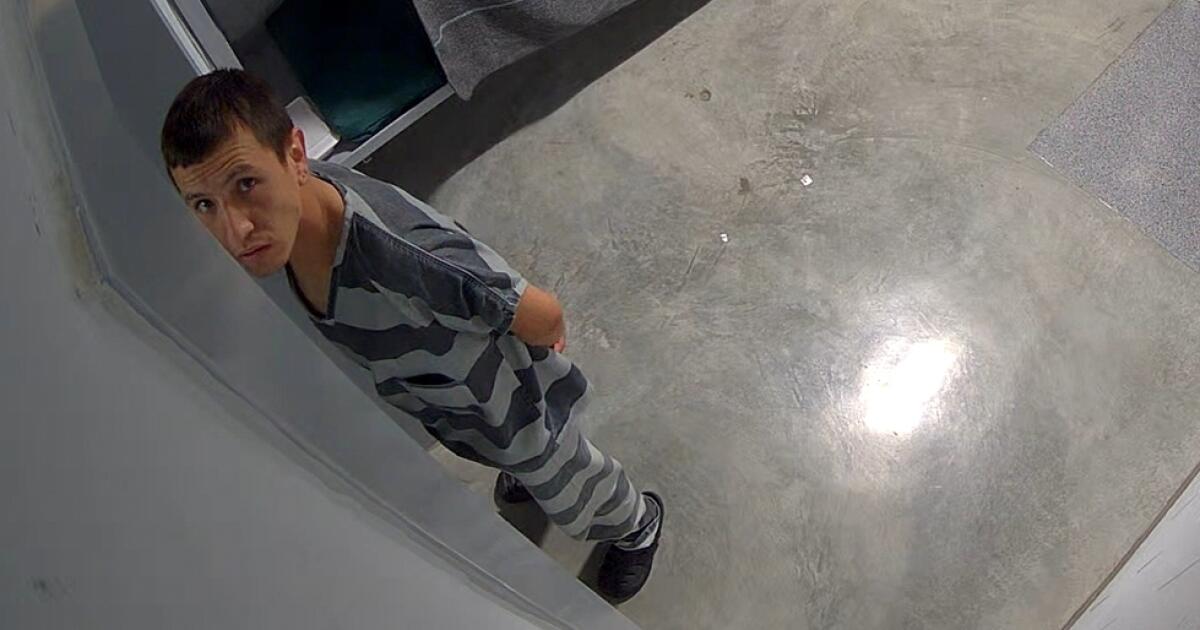
As Rayo grew sicker with nausea, chills and aches, staff moved him into a cinderblock isolation cell with a surveillance camera overhead for closer monitoring and to prevent the spread of disease. He was not allowed to call his mother.
On his fourth day of isolation, Rayo passed two notes under his door, begging guards to let him talk to his mom. In one, which was reviewed by AP, he appealed to the guard’s humanity. “I know you have family, and you know that they worry about us,” he wrote in Spanish. “God bless you.”
The English-speaking guard used a colleague’s phone to translate the notes and wrote in a report that he planned to follow up.
Within an hour, guards found Rayo unconscious on his bed with a sheet around his neck.
Emergency responders tried to revive him, transporting him to a hospital. That’s when an official called Rayo’s mother — to let her know her son was in very bad shape and would be flown to a St. Louis medical center. At the hospital, a doctor gave her the devastating news: Her son was dead.
Foley, Biesecker and Lee write for the Associated Press.