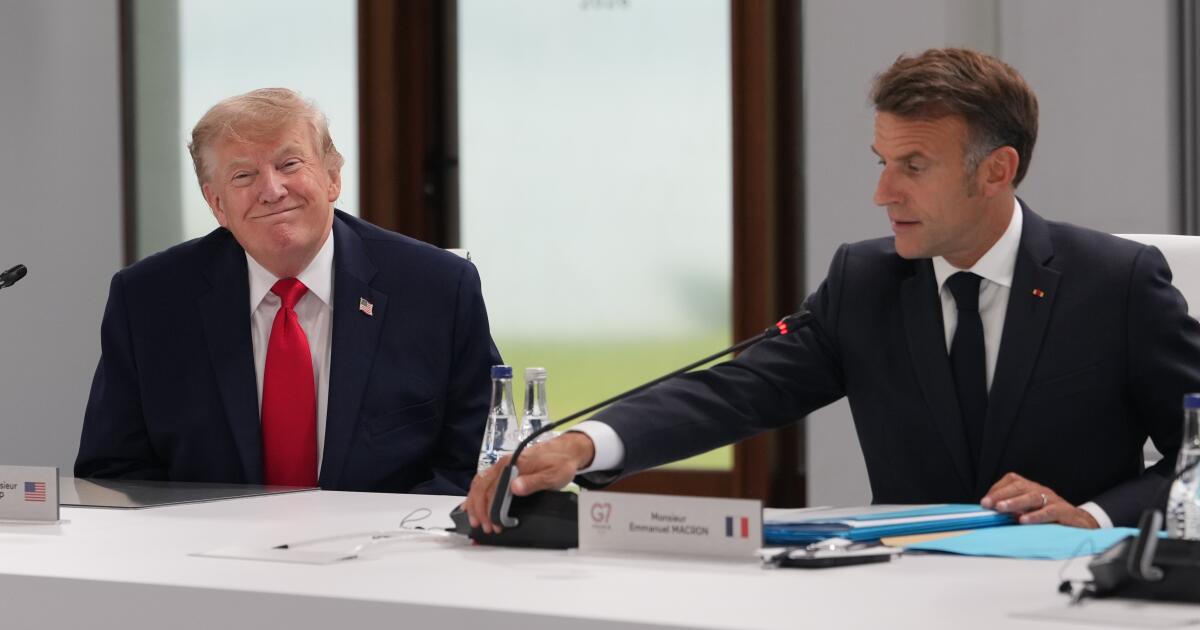
EVIAN-LES-BAINS, France — The United States could soon reimpose sanctions on Russian oil shipments after President Trump and fellow leaders at the Group of Seven summit of major industrialized democracies moved Tuesday to put the war in Ukraine back on top of their agenda, more than four years after Russia launched its full-scale invasion.
The Iran war has recently overshadowed Ukraine, but Trump said he wants to shift the focus following the announcement of an agreement to end the 3½-month-old conflict in the Gulf.
Trump said Iran will soon be “back in the rearview mirror.”
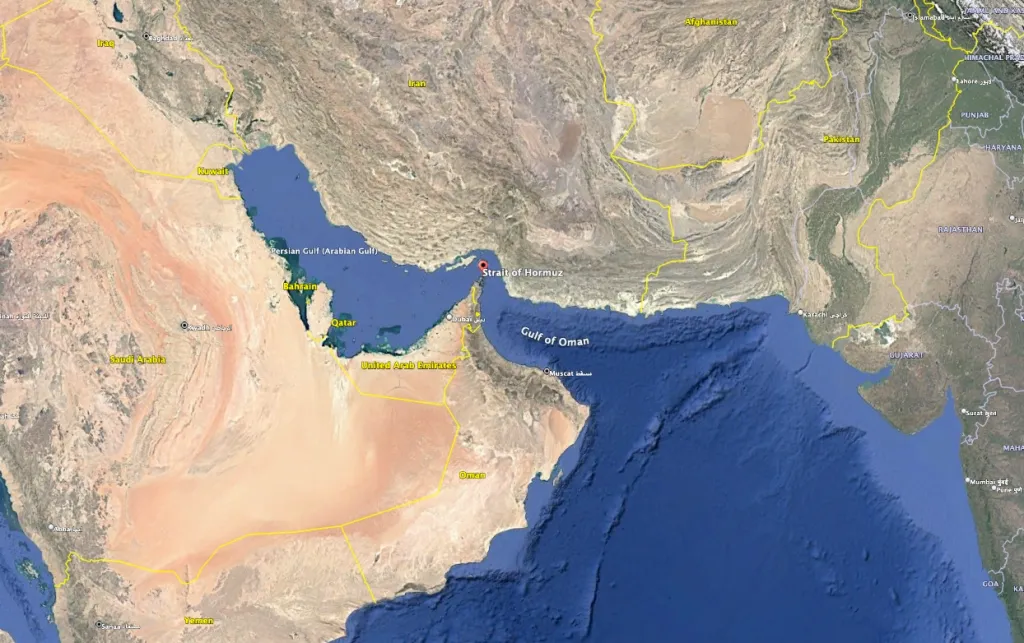
Trump said the sanctions on Russia that were eased during the Iran war to help lower oil prices can go back in place as more oil moves through the Strait of Hormuz.
“Soon we’ll be able to do that because the oil is now flowing,” Trump told reporters in Evian, the French spa town close to the Swiss border that is hosting the summit. “We’re in a position to do that soon.”
The U.S. in March temporarily eased some sanctions on some Russian oil shipments as crude prices sharply increased. The waiver has been extended.
Zelensky joins G7 leaders for talks
Ukrainian President Volodymyr Zelensky joined the G7 leaders for talks on the war in his country. They wrapped quickly, after just 75 minutes.
Zelensky said Ukraine is serious about peace while Russia toys with world leaders. “The entire ‘Seven’ supports Ukraine unanimously today,” he said.
Zelensky added that G7 leaders supported Ukraine’s need for more Patriot missiles and discussed how to increase production by licensing production. Patriot missiles are able to counter Russian ballistic missile attacks on Ukraine’s power grid and cities.
As the U.S. under Trump has cut back aid to Ukraine, France and its European allies are now the biggest providers of military and financial support to Kyiv.
Trump downplayed the impact of the Russia-Ukraine war on the U.S. but lamented the death toll.
“The whole thing is ridiculous,” Trump said. “So, yeah, I’m going to do whatever I can.”
Meanwhile, the U.K. announced new sanctions targeting the “shadow fleet ” Russia uses to ship oil and gas, and the finance networks used by Moscow to evade Western sanctions. The ships targeted include several recently purchased by Russia to transport liquefied natural gas from its sanctioned Arctic LNG 2 project.
Russia fires again at Ukraine’s biggest cities
Hours before the summit began Monday, Russia fired hundreds of drones and dozens of missiles at Ukraine’s biggest cities in a barrage that killed 11 people and set fire to a religious landmark.
The attacks came after Zelensky and Putin spoke separately by phone with Trump on Sunday, the U.S. leader’s 80th birthday.
While campaigning in 2024 for a return to the White House, Trump claimed he could end the Russia-Ukraine war within 24 hours of taking office. However, negotiations have faltered and Trump has acknowledged it has proved much harder than he thought.
Ukraine on Monday officially started European Union membership negotiations, launching a process that will require its government to commit to years of political reforms even as it fights the Russian invasion.
Ukraine sees EU membership as a security guarantee for a stable future once the war ends. Its best guarantee would be membership in the NATO military alliance, but the Trump administration insists that cannot happen, and others are wary of Ukraine joining while the war continues.
Trump says he may send Iran deal to Congress
The U.S.-Iran ceasefire deal got plenty of attention at Tuesday’s sessions, with Trump voicing his openness to sending the deal to Congress for review. The text has not been made public.
“I like the idea, send it to Congress please,” Trump said at the start of a meeting with United Arab Emirates President Sheikh Mohamed bin Zayed Al Nahyan on the summit’s sidelines. He added, “I mean who wouldn’t approve it?”
Republicans on Capitol Hill say they want Trump to provide more information about the agreement, with some expressing skepticism that the deal can deter Iran from pursuing a nuclear weapon.
Trump also met with the Emir of Qatar, Sheikh Tamim bin Hamad al-Thani. The Gulf nations are not part of the G7, but French President Emmanuel Macron extended invitations to their leaders at a fraught moment for their region.
Trump also expressed frustration over Israel’s continued hostilities with the Iranian-backed militia Hezbollah in Lebanon, telling reporters he’s “not happy with the way Israel has handled themselves with Lebanon and with Hezbollah.”
Trump said Israeli operations to target Hezbollah “should have been able to deal with them faster,” adding: “It just goes on forever. And when that happens, it throws a negative light on the big deal. And that’s the deal with Iran.”
Macron said France and other Western partners are “ready to take action very quickly” to help reopen the Strait of Hormuz peacefully to ease the economic impact of rising oil prices. France and the U.K. have championed a mission to restore maritime security there as soon as conditions allow.
The G7 comprises France, the United States, Canada, Germany, Italy, Japan and the United Kingdom. Other guest nations, including Brazil, India, Kenya and South Korea, were invited to participate in some discussions.
Superville, Corbet and Madhani write for the Associated Press. Madhani reported from Geneva. AP writers Jill Lawless and Samuel Petrequin in London, Collin Binkley in Washington and Illia Novikov in Kyiv contributed to this report.
Meanwhile, shipping companies, the U.N. and a maritime security company tell us they are taking a wait-and-see attitude before changing current operations or offering advice to do so. As Trump noted over the weekend, the Strait needs to be fully de-mined while Iranian officials say they will still impose fees for transit.
“The blockade is ongoing and is expected to remain in place until the signing [of the memorandum of understanding] on Friday,” the source, speaking on condition of anonymity to discuss operational details, told us.
The U.S. naval blockade of Iranian ports will remain in effect until a deal is signed on Friday, a source familiar with the process told us. (Google Earth)
The official declined to tell us whether that means the U.S. will fire on vessels trying to run the blockade or turn ships back, as they have in the past.
As of June 12, U.S. Central Command (CENTCOM) said it disabled nine vessels trying to run the blockade and redirected 139 others. You can read more about how those ships were disabled here.
U.S. forces continue to strictly enforce the blockade against Iran. CENTCOM has redirected 139 compliant commercial ships and disabled 9 non-compliant vessels since April 13. pic.twitter.com/Sl8x1fF2wM
Iran’s reopening of the Strait of Hormuz, combined with the U.S. ending the blockade that went into effect on April 13, is a major component of the U.S.-Iran agreement. Iran closed the Strait to most shipping after it was attacked by the U.S. and Israel on Feb. 28. As we have frequently reported, that had a cascading effect on the global economy, sending oil prices higher.
President Trump says a historic peace agreement is set to be signed Friday in Switzerland after more than 100 days of war. The deal is expected to reopen the Strait of Hormuz, allowing oil to flow again and, according to Trump, helping bring peace and security to the region.… pic.twitter.com/EUh0rSSyeV
During a press conference and in a message on Truth Social, Trump on Monday said the Strait of Hormuz was already “partially opened.”
“Ships are starting to move, many loaded up with Oil, out of the Strait of Hormuz,” the president said on his social media site. “They are going along the Southern ‘Highway,’ which is totally safe, secure, and pristine. There are other areas of travel, also!!!”
“Ships are starting to go out now,” Trump added later at a press conference in France. “By Friday it will completely opened.”
As we previously reported, ships had been transiting the Strait via a southern route close to the United Arab Emirates and Oman under the overwatch of the U.S. military. Last week, Trump revealed that the U.S. had enacted a secret plan to get hundreds of ships out of the Strait; however, that still pales in comparison to the number of ships transiting before the war broke out.
NOW: Trump on Iran:
The strait is already partially open… by Friday, it will be completely open.
As for the blockade, Iranian officials on Monday said it was their understanding it would be lifted right away.
“Under the agreements reached, the war and military operations on all fronts, including Lebanon, will come to an immediate and permanent end beginning tonight,” the Secretariat of Iran’s Supreme National Security Council stated early Monday morning EDT, according to Iran’s official IRNA media outlet. “Furthermore, the naval blockade against Iran will be lifted immediately and completely.”
Also on Monday, Iran’s Foreign Ministry Spokesman, Esmail Baghaei, said the country will continue to charge vessels transiting the Strait for services rendered.
“According to the MoU, Iran and Oman will be responsible for managing passage through the Strait of Hormuz,” he stated. “Iran is not seeking to impose tolls. However, in return for navigation services, environmental protection, insurances and other maritime services, Iran will collect the necessary fees.”
JUST IN: Iran’s Foreign Ministry Spokesman, Ismael Baqaei on the Strait of Hormuz:
“According to the MoU, Iran and Oman will be responsible for managing passage through the Strait of Hormuz.
Iran is not seeking to impose tolls. However, in return for navigation services,… pic.twitter.com/HrpmE9kKtc
A day earlier, Trump addressed the blockade in two statements on his Truth Social site.
“This Great Deal will bring Peace and Security to the whole Region. Many presidents have tried to make Peace with Iran, and all have failed before me,” the president said in the second of the two posts, issued at 6:27 P.M. EDT. “The Leaders of the Region have, for the first time, found a President who can help them achieve real Peace. With the opening of the Strait upon the signing of the Deal on Friday, for purposes of mine removal, oil will flow on both ends again for the Region, and the World!”
A little less than an hour earlier, Trump said he was authorizing “the immediate removal” of the blockade.
“The Deal with the Islamic Republic of Iran is now complete. Congratulations to all! I hereby fully authorize the toll free opening of the Strait of Hormuz, and, simultaneously herewith, authorize the immediate removal of the United States Naval blockade. Ships of the World, start your engines.”
We reached out to the White House for further clarification.
Though both Trump and Iranian officials have weighed in on this deal, much about it remains unknown, something Vice President JD Vance explained Monday morning.
Vance told CNBC’s “Squawk Box” program that though the U.S. and Iran struck a preliminary deal, there are “a lot” of details that remain to be ironed out, but he expressed confidence that America has “all the cards” in subsequent talks.
Vance told the network that Iran’s foreign minister Abbas Araghchi is expected to be involved in those upcoming discussions — as well as its parliamentary speaker, Mohammad Bagher Ghalibaf. He is a hard-liner, Squawk Box noted, whose participation could signal that the regime’s conservative faction is on board with the deal.
“The agreement reached Sunday would extend the U.S.-Iran ceasefire for 60 days and set up a framework for future negotiations about Tehran’s nuclear program and other key issues,” CNBC further explained. “The preliminary deal has yet to be signed and its text has not been released.”
The sides have given themselves “60 days to reach a technical agreement on how to down-blend Iran’s highly enriched uranium and both freeze and monitor its nuclear program going forward,” Axios reported. “That’s a tall order given how difficult it was to reach the much less detailed memorandum of understanding.”
The U.S. “insists Iran is incentivized to reach a final agreement because sanctions relief and access to frozen funds depend on progress on the nuclear front,” Axios added. “Some hawks in the U.S. and Israel worry there will never be a final deal and the war will end with the nuclear questions unresolved.”
Trump told the New York Times on Sunday afternoon that the agreement he had reached with Iran would ultimately assure that the Strait of Hormuz was “permanently toll-free,” a seeming sticking point with Iranian expectations as we discussed earlier in this story.
Trump also insisted that if Iran failed to reach a final nuclear accord with the United States, he would restart military attacks on Tehran or make the United States “the guardian of the Middle East” in return for 20 percent of the region’s revenues.
Given that the U.S. began building up forces in the region in January, many of the ships, aircraft and troops will have to retrograde out of the CENTCOM area of responsibility in the coming weeks. So exactly what the American footprint will be in the CENTCOM area of responsibility in two months is questionable.
There is also massive global and domestic political pressure to end the war, which, as we noted earlier, has created economic upheaval around the world. Moreover, the conflict has not been popular at home, and American voters go to the polls in November for the midterm Congressional elections with Trump’s Republican party struggling to maintain control. Starting the war again, especially knowing how it went this time around and failed to deliver a deal on top of it, would see these pressures magnify.
President Donald Trump tells the New York Times if Iran failed to reach a final nuclear accord with the United States, he would restart military attacks on Tehran. pic.twitter.com/kuCpXU3WUv
Regardless of the diplomatic breakthrough, shipping companies tell us that they are not changing course when it comes to transiting the region.
“The announced agreement is a welcome and positive development, but publicly available details are still limited, and it is too early to assess how it will impact logistics and maritime operations in the Middle East,” a spokesperson for Maersk told us. “At this stage, there are no changes to our operations in the region.”
A spokesperson for Hapag-Lloyd expressed similar sentiments.
“The latest developments give reason to hope that the security situation in the Strait of Hormuz will improve,” the spokesperson told us. “We are currently reviewing the information available and are in close contact with relevant authorities and our security partners. At this stage, our risk assessment remains unchanged and the Strait of Hormuz remains closed for Hapag-Lloyd transits until further notice. The safety of our crews and vessels, and the security of our customers’ cargo, remain our highest priority.”
The U.N.’s International Maritime Organization (IMO) told us that it too was waiting for further details to emerge before offering any concrete new advice to commercial vessels sailing in the region.
“Details of the agreement are due to be released, which will provide more clarity on how restoring full trade can return through the Strait of Hormuz,” IMO told us.
The organization “is working with relevant countries, particularly Oman, Iran and the rest of the coastal States, on the safe route to be used for the evacuation of seafarers on trapped vessels and for trade to resume,” IMO added. “We are assessing the feasibility for vessels to transit and conduct the trade safely and securely, avoiding possible hazards like mines as well as congestion which could lead to accidents.”
I welcome with great satisfaction the peace agreement reached. A first step to restoring safety in this vital corridor,particularly for our seafarers. And for IMO to advance the evacuation plan, which requires safety & security guarantees from all parties. https://t.co/uBCjkD84wypic.twitter.com/PoQH4Q1vlq
An official with the Ambrey maritime security company said there is still a long way to go before commercial vessels can navigate these waters securely.
“The proposed deal still requires meaningful implementation across multiple governments, which will take time,” Joshua Hutchinson, a former Royal Marine commando now serving as the company’s Managing Director of Risk and Intelligence, told us. “Furthermore, over 1,000 vessels remain in the Persian Gulf, and the threat of mines looms; clearing such a large number of vessels will take several months of coordination.”
In addition, “reports say that the agreement will allow the Iranian Maritime Authority to retain control of the Strait of Hormuz through a clearance system, and, for the time being, this will be one of the major concerns that ship operators and owners need to understand,” Hutchinson added.
Another factor in all this remains Israel. Officials in Jerusalem have stated that they will not withdraw from southern Lebanon and will continue to strike Hezbollah targets they deem necessary. The Israeli airstrike on a Hezbollah site in Beirut on Sunday reportedly almost derailed the announcement of the MOU, with an Iranian missile attack on Israel scrubbed at the last moment.
BREAKING: Israel won’t withdraw from land seized in Lebanon, Syria and Gaza, its defense minister says, hours after an interim Iran-U.S. deal was announced. Israel Katz’s remarks are the first official Israeli comments since the announcement. https://t.co/KdVpD2iaxq
Though the preliminary agreement marks the biggest diplomatic breakthrough since hostilities began, there is still a long way to go until Friday in a region known for its volatility. As we have previously reported, several rounds of tit-for-tat attacks between the U.S. and Iran threatened to derail the shaky ceasefire in the past.
Even if Friday’s milestone signing should be reached, questions still remain about whether peace will ultimately be achieved. Given everything at stake, the world awaits warily to see what happens next.
June 16 (UPI) — Voters are heading back to the polls in Georgia on Tuesday for primary election runoffs featuring one contest that pits President Donald Trump‘s endorsement against Gov. Brian Kemp‘s.
Among the key races that will be decided Tuesday is the race to see who will challenge Democratic Sen. Jon Ossoff in November’s midterm election. Trump has endorsed Rep. Mike Collins and Kemp endorsed Derek Dooley.
Kemp gave Dooley, a former college football coach, his endorsement in August. He reiterated his support in a social media post on Monday, asking voters to choose the “conservative fighter who will put Georgians first.”
Trump endorsed Collins on Friday after early voting ended. The president posted his endorsement on social media, calling Collins a “warrior and winner.”
Elsewhere on the ballot, Republican voters will choose their candidate for the state’s gubernatorial race. Kemp is a two-term governor and is in his last year serving in the office. He faced Democrat Stacey Abrams in the last two gubernatorial elections.
Lt. Gov. Burt Jones captured 38% of the vote in the primary election last month, falling short of the 50% threshold required to win. On the other side, billionaire Rick Jackson received 32% of the vote.
The winner of the Republican primary for the gubernatorial candidate will face Atlanta Mayor Keisha Lance Bottoms in November.
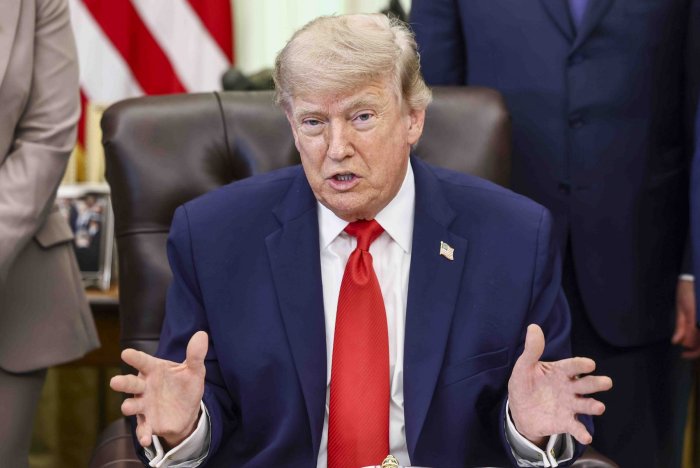
President Donald Trump speaks to reporters about restoring commercial fishing access to areas of the Pacific during a signing ceremony in the Oval Office of the White House on Thursday. Photo by Jim Lo Scalzo/UPI | License Photo
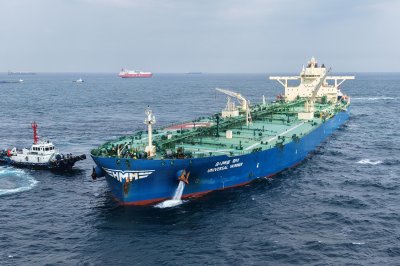
South Korea is consulting with the United States and Iran about navigation through the Strait of Hormuz, the Foreign Ministry said Tuesday. In this photo, the South Korean oil tanker Universal Winner arrives near Ulsan on June 10 after exiting the Strait. Photo by Yonhap
South Korea has begun consultations with the United States, Iran and other relevant countries regarding navigation through the Strait of Hormuz following the signing of a preliminary deal aimed at ending the monthslong war in the Middle East, the foreign ministry said Tuesday.
According to U.S. officials, President Donald Trump, Vice President JD Vance and Iran’s parliamentary speaker Mohammad Bagher Ghalibaf inked the memorandum of understanding (MOU) that would extend the countries’ ceasefire for 60 days, during which negotiations will take place to address nuclear and other issues to reach a final peace deal.
A large number of vessels, including two dozen South Korea-linked ships, have been stranded in the waterway, which Iran has effectively choked off with threats of missile and drone strikes amid the war.
“We are assessing the details related to maritime transit and have begun necessary communication with relevant countries, including the U.S. and Iran,” ministry spokesperson Park Il said during a regular press briefing.
According to Park, the government is closely monitoring a range of factors before making judgments on passage operations, including the presence of naval mines, the overall security situation in the strait and shipping traffic conditions.
He said the government will continue to prioritize the safety of South Korean vessels and sailors while working to ensure the smooth resumption of shipping.
Park added the government will also maintain close consultations with shipping companies in assessing developments in the region.
Copyright (c) Yonhap News Agency prohibits its content from being redistributed or reprinted without consent, and forbids the content from being learned and used by artificial intelligence systems.
WASHINGTON — While millions of soccer fans cheer or groan over World Cup matches spanning North America, health officials are on high alert for germs.
A heat wave may be the most obvious health threat. But infectious diseases can spread in a crowd, and experts are scrutinizing wastewater, hospital visits, even social media for any signs that an outbreak might be brewing.
Measles, one of the most contagious diseases, is among the top concerns, sparking a warning this week from the Pan American Health Organization, PAHO. With a nearly six-week stretch of packed stadiums, bars and tourist sites in 16 cities, officials are on the lookout for a long list of infections, from the stomach bug norovirus to mosquito-borne dengue fever.
“This is truly a marathon,” said Palak Raval-Nelson, Philadelphia’s health commissioner.
The mass gatherings come at a tense moment for budget-strapped health agencies in the U.S. The Centers for Disease Control and Prevention, hit hard by Trump administration staffing cuts, already was grappling with a growing Ebola outbreak in central Africa and a cruise ship hantavirus outbreak. While CDC officials have advised state and local health departments behind the scenes, it’s expected World Cup disease surveillance dashboard still was “in final development” days before games began, according to the Department of Health and Human Services.
“Our public health professionals are pretty stretched,” said global health specialist Rebecca Katz of Georgetown University, who is leading an unusual new hub to help.
At the Health Security Operations Center, a joint effort between Georgetown and MedStar Health, workers are analyzing data from around the country so they can alert health authorities, even emergency rooms, to any early signs of trouble. The center is issuing daily “situation reports” about disease trends around World Cup host cities and team base camps to several hundred local and federal public health groups, emergency management and hospital officials and others who’ve signed up.
“It’s important that we don’t become alarmist,” said MedStar emergency medicine specialist Dr. Shane Kappler. “We’re trying to be the insurance policy.”
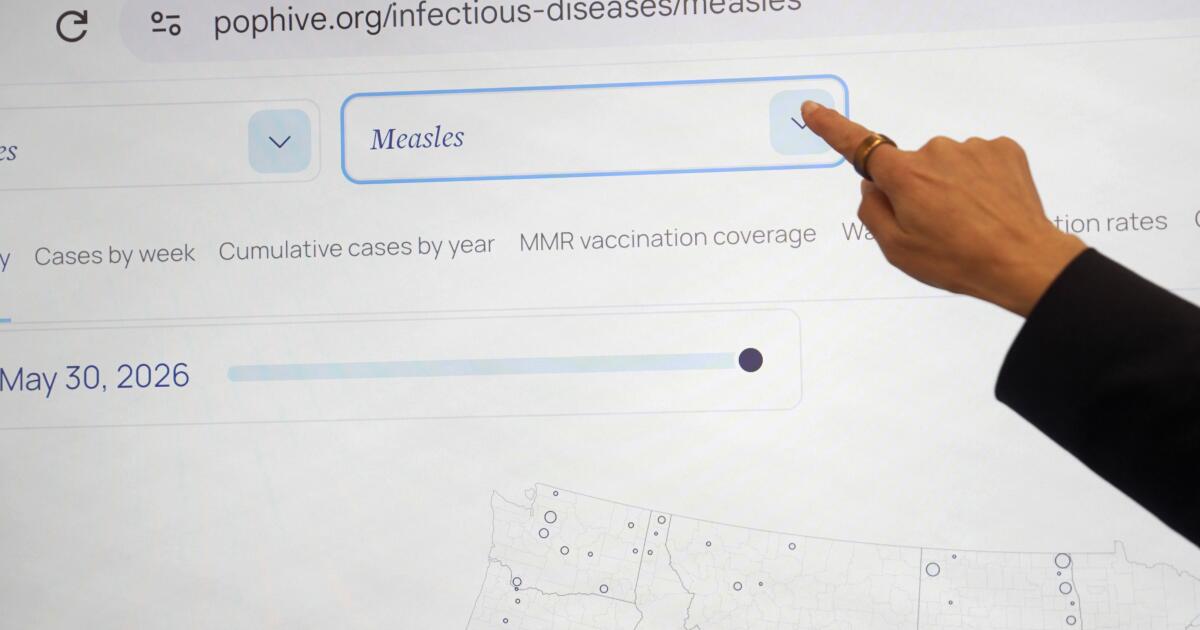
Measles is a top concern for potential World Cup spread
Already more than 2,000 people in the U.S. have come down with measles this year, nearly as many as during all of last year, according to the CDC. Patients can spread measles before the rash appears and they realize they’re sick. Not too long ago, the U.S. seldom saw measles except from international travel by unvaccinated people.
Now with frequent U.S. outbreaks, “actually a lot of our international partners are worried about measles being exported to them after the games,” said Georgetown’s Katz.
Measles is spreading in Canada, too, and has exceeded 11,000 cases in Mexico, according to PAHO. It’s urging soccer fans to be sure they’re vaccinated, with a health campaign saying a single measles patient can spread the virus to up to 18 unprotected people.
Is Ebola a concern at the World Cup?
Brown University’s Dr. Craig Spencer, who survived Ebola while working in the West Africa outbreak over a decade ago, said he’s repeatedly asked about the risk of Ebola during the World Cup — but “for me, Ebola is not the No. 1 or No. 2 or even No. 3 threat.”
“I am concerned about importation of measles, I am much more concerned about the importation of other infectious threats that may not seem as scary to us as Ebola,” Spencer said.
Many health experts agree that the risk of Ebola spreading in the U.S. is very low. That’s partly because of government travel screenings and restrictions on people recently in outbreak-affected areas. Moreover, Ebola spreads by contact with bodily fluids from someone showing symptoms, not through the air like measles or respiratory viruses.
“One fortunate thing about this virus is you’re most contagious when you’re really quite ill. It’s not like COVID, where you could be sitting next to someone who doesn’t even know they’re infected and perhaps contract the virus,” said Jennifer Nuzzo, director of Brown’s Pandemic Center.
How to spot brewing diseases
There’s precedent for germs invading major sporting events. Canadian scientists linked a community measles outbreak to the 2010 Olympics in Vancouver, and clusters of norovirus had to be contained during the Olympics this year in Milan and in 2018 in South Korea.
One way to detect signs of trouble: People with certain viral or bacterial infections shed genetic material that sophisticated testing of wastewater can spot. For example, measles can appear in wastewater days before an emergency room sees its first patients.
A recent surveillance reports from Katz’s center note that wastewater testing recently found diarrhea-causing rotavirus, hepatitis A and norovirus in some parts of the U.S., something to watch as soccer crowds arrive.
In Dallas, officials ramped up wastewater screening including at the international airport, casting a wide net rather than looking for specific illnesses, said Dr. Phil Huang, director of Dallas County Health and Human Services.
His team also is enhancing the usual mosquito testing, checking not just for West Nile virus that regularly spreads in the U.S. but for viruses more common in other countries like dengue and chikungunya.
Public health officials have been preparing for months, said Philadelphia’s Raval-Nelson, including with mock emergency drills and communications with counterparts around the country.
“I don’t want to send a message that there’s one key thing,” she said. “We have the frameworks in place to carry out what we need to.”
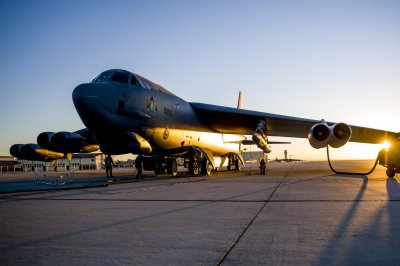
A B-52 Stratofortress assigned to the 419th Flight Test Squadron undergoes pre-flight procedures at Edwards Air Force Base in California in 2020. A B-52 Stratofortress crashed shortly after taking off from the base on Monday. Air Force File Photo by Giancarlo Casem
June 15 (UPI) — California’s Edwards Air Force Base said eight crew members are believed dead following the Monday crash of a B-52 Stratofortress.
The base confirmed the B-52 Stratofortress, which was carrying a crew of eight, crashed shortly after takeoff at 11:20 a.m. Monday morning.
“Initial indications are that the crash was not survivable,” the base said in a release posted to X.
Emergency response personnel were on scene working to account for all eight crew members.
“Our thoughts and prayers are with the families and unit members at this time,” the post said.
‼️ Official release regarding today’s B-52 crash at Edwards. Our thoughts and prayers are with the families and unit members at this time.
The airfield was closed following the crash and all incoming aircraft were diverted.
“All non-commercial visitor passes have been suspended until further notice to allow the installation to focus entirely on emergency response operations,” the base said in an earlier post.
Edwards Air Force Base, located about 100 miles north of Los Angeles, frequently hosts test flights for new and experimental Air Force and NASA aircraft.
The base said more information on the crash will be provided as it becomes available.
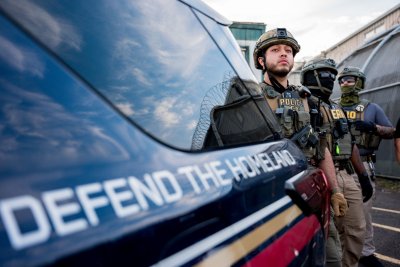
June 15 (UPI) — Police in New Jersey’s Stafford Township said an Immigration and Customs Enforcement agent fired his gun at a fleeing vehicle moments after being struck.
The Stafford Township Police Department said in a statement shared to social media that ICE was attempting to apprehend a suspect around 9:30 a.m. in Manahawkin when the person fled in a vehicle.
The suspect’s vehicle, which witnesses identified to News 12 New Jersey as a white van, struck an ICE officer, who then fired his gun at the vehicle.
Witnesses said the shot shattered the back window of the van, but the vehicle did not stop.
“The suspect fled the scene in the vehicle and has not been located at this time. The agent reportedly sustained unknown injuries and it is unknown if the suspect was injured at this time,” police wrote.
The department said police were not involved in the original ICE operation Monday morning. The department secured the crime scene and managed traffic while the Federal Bureau of Investigation was called in to investigate.
Police administered first aid to the injured ICE agent and “facilitated his transport for further treatment,” the statement said.
ICE provided a statement to NBC10 Philadelphia identifying the suspect as Friedrich Castillo-Ormeno, a Peru native who was ordered to leave the country by given an immigration judge on Jan. 30.
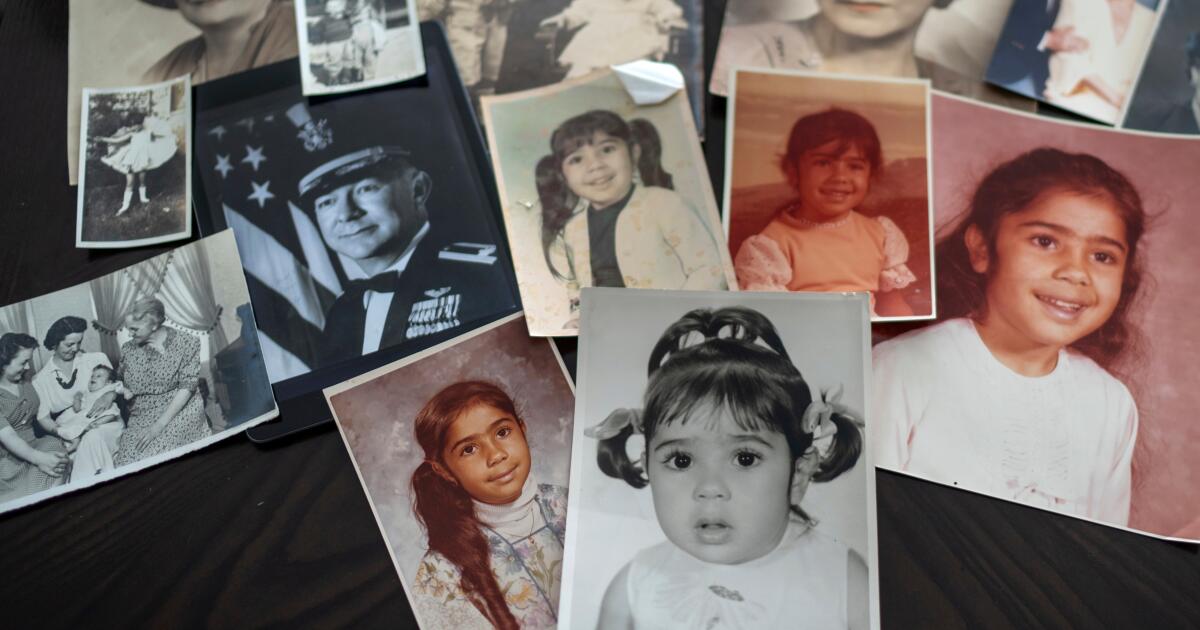
A federal immigration judge has granted asylum to a woman orphaned in Iran in the 1970s and adopted by an American war veteran, whom immigration officials threatened this year with deportation to the country with which the U.S. is now at war.
Judge Andrew Fishkin’s ruling probably ends a months-long ordeal for the California woman, one of thousands adopted from abroad who were never granted citizenship because of bureaucratic loopholes between adoption and immigration law.
The woman has lived in the United States since she was adopted by American parents as a toddler and has no criminal record. The Associated Press is not naming her because she worries her legal situation remains tenuous as the administration has time to appeal. A federal judge has allowed her to use a pseudonym, “Ms. S,” in her challenge to the government’s determination of her immigration status.
The woman received a letter from the Department of Homeland Security in February that ordered her to appear for removal proceedings, saying she is subject to deportation because she overstayed her visa in March 1974 at 4 years old.
The woman, 56, described what came next as a terrifying and humiliating few months.
She grew up in a Christian, military family on a farm in Wisconsin and was taught to be patriotic. But the documents she received from the government described her as an “alien;” some said she did not understand English, which is the only language she speaks.
Immigration officials told her she was being arrested, but was released and tracked with an ankle monitor. She bought new pants to try to hide it and taught herself not to cross her legs in work meetings, terrified it would threaten the corporate job in healthcare she’s held for almost two decades.
They fingerprinted her and took her DNA. She said she was obviously weeping in the mug shot they snapped of her.
She prepared herself to be detained: She put her bills on autopay and gave her friends a key to her home.
Her lawyer, Emily Howe, said the government had the power to agree she is an American citizen.
“Instead they treated her like a terrorist, like she was the worst of the worst criminals,” Howe said. “It felt very Big Brother, very Orwellian.”
The Department of Homeland Security declined to comment on the record on an individual case.
The Associated Press profiled the woman in 2024 as part of a story about how many international adoptees were left without citizenship because their American adoptive parents failed to naturalize them.
The woman’s parents were living in Iran, where her father was working for a U.S. government contractor, in the 1970s. He was retired from the Air Force as a lieutenant colonel. He’d been held for years a prisoner of war in Germany during World War II.
The couple found the toddler at an orphanage and returned to the U.S. with her in 1973 and soon completed the adoption. At that time, parents had to separately naturalize adopted children. The woman’s parents have since died.
She didn’t learn she hadn’t been naturalized until she applied for a passport at 38 years old. She still doesn’t know how the oversight happened. She searched her father’s papers and found a letter from a lawyer, dated 1975, that said he was working with immigration officials, “it appears this matter is concluded,” and billed her father for his services.
She filed a federal lawsuit this month trying to prohibit the government from removing her and forcing it to grant her citizenship.
She has long believed she should be considered a U.S. citizen: She has a Social Security card, and a driver’s license and has been legally allowed to work and pay taxes for decades. It’s only the immigration agency that denies she is a citizen. She suspects her paperwork was lost, probably when militants seized the U.S. Embassy in Tehran in 1979.
Fishkin seemed to agree: He wrote in his ruling that documents from that embassy are not available to her or to the U.S. government. He declared her a refugee, entitled to work in the U.S. His ruling puts the woman on a pathway to being recognized as a citizen.
She’d felt hopeful, she said, when she learned her court date before Fishkin was scheduled for her late father’s birthday. She always felt like she needed to protect not only herself but also her father’s legacy. He was a conscientious military official, she said, who would not have knowingly allowed such a glaring oversight that left his daughter in legal limbo.
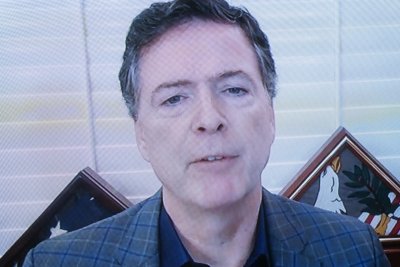
James Comey, former director of the Federal Bureau of Investigation, testifies via videoconference during a Senate Judiciary Committee hearing in Washington, D.C. on Sept. 30, 2020. The U.S. Supreme Court will not take up former Trump adviser Carter Page’s lawsuit against Comey, it decided Monday. File Pool Photo by Stefani Reynolds/UPI | License Photo
June 15 (UPI) — The U.S. Supreme Court will not take up former Trump adviser Carter Page’s lawsuit against former FBI director James Comey, it decided Monday.
Page sought to revive his lawsuit against Comey over errors and omissions made on warrant applications used to get permission to surveil him. The FBI wiretapped Page while it was investigating allegations against President Donald Trump‘s 2016 campaign colluding with Russia to interfere with the election.
Page’s lawsuit was dismissed by lower courts as they ruled he did not file his claims on time. Page alleges that the investigation into him harmed his reputation and cost him business opportunities.
The Trump administration paid Page $1.25 million in April to settle claims he made against the federal government.
The Justice Department said when announcing the agreement to settle with Page that the investigation into him was based on flawed information.
“No American should ever face covert and unlawful surveillance based on their political view,” a spokesperson for the Justice Department said in a statement.
Page has continued his attempts to sue Comey and seven others who served with the FBI during the investigation as individuals.
The Supreme Court released a list of cases it will and will not accept to its docket on Monday. The justices did not say why Page’s case has been denied.
SEATTLE — If a pregnant Nigerian woman had been allowed to board a plane 25 years ago, the U.S. team’s path through this summer’s World Cup may have unfolded much differently. Instead, a gate agent turned her away, insisting it wasn’t safe for her to fly from New York to London.
So Florence Balogun returned to Brooklyn, where she had been visiting relatives, and waited for her second son to be born. And when Folarin arrived a few weeks later, entering the world just hours before Independence Day dawned, he did so as an American citizen.
It was that quirk of fate that allowed Balogun, who lived just two months in the U.S., to represent the country on soccer’s biggest stage.
“I’m extremely proud my individual journey will come full circle now,” he said before the tournament started. “Especially the World Cup being here, the opportunity to represent my nation. It’s going to be something special for me.”
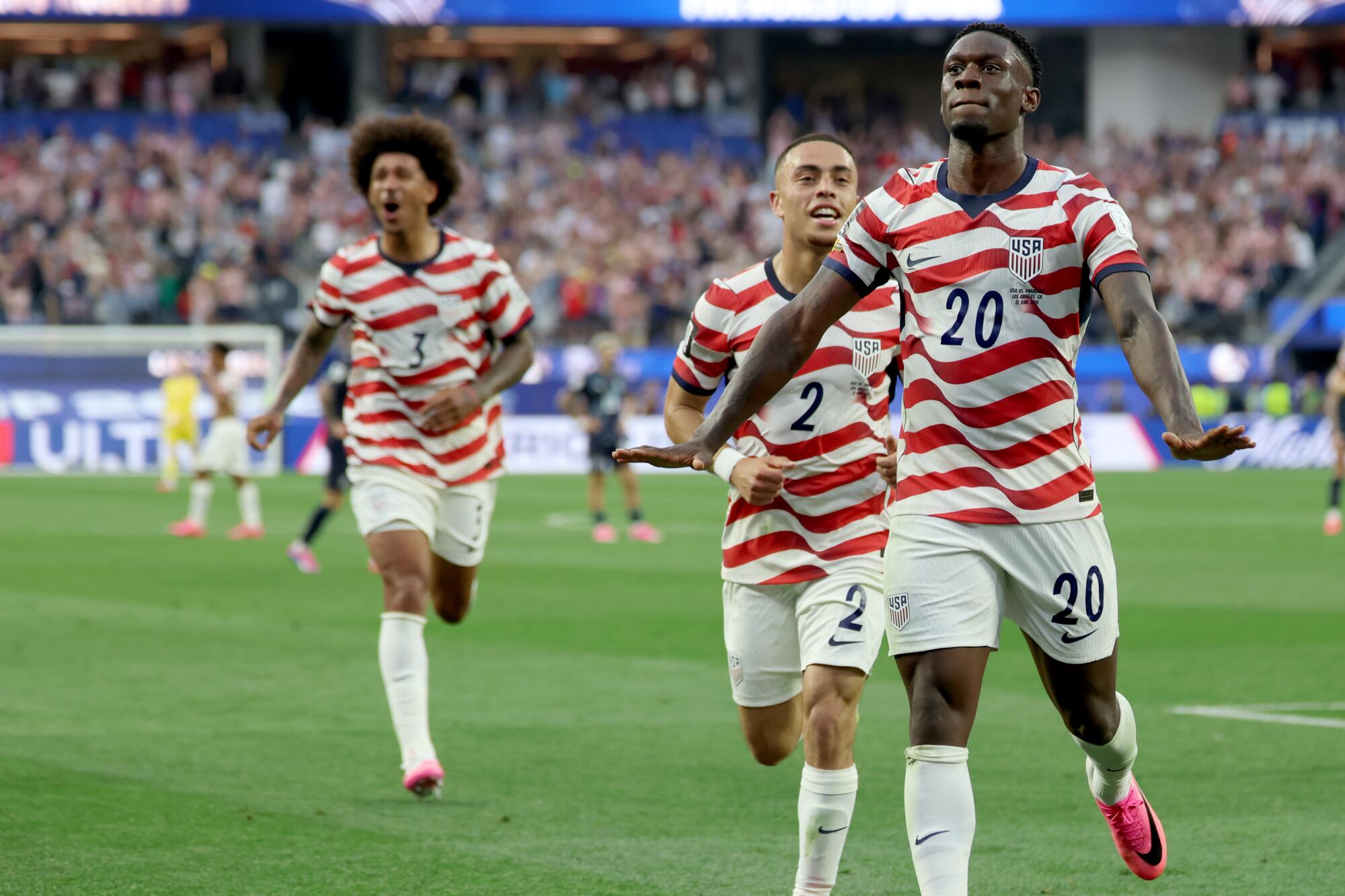
The first game certainly was, with Balogun scoring twice in the first half of a dominant 4-1 win over Paraguay, becoming the first American with multiple goals in a World Cup game in 96 years while introducing himself to a country that may have known his name, but not his unique talent.
“If you don’t know the type of player he is, you could see it today,” midfielder Weston McKennie said. “It’s the World Cup, everyone steps up to their maximum. In the past a lot of people maybe have not made him out to be a player like that.
“He showed everyone he’s willing to do the dirty work as well.”
Balogun once had his pick of countries to represent. His birth in Brooklyn made him eligible to play for the U.S., his longterm residency in London made him eligible to play for England and his parents’ nationality qualified him to play for Nigeria.
He picked the U.S.
And he’s not the only one on the American team who had a choice. Half the men on the World Cup roster — including Christian Pulisic, Gio Reyna and Malik Tillman, who each had a goal or an assist against Paraguay — are dual nationals, meaning they’re playing for the U.S. because they want to, not because they have to.
“You’re more American if you were not born over there because you had the choice to choose and you chose America,” Kenneth Dest, the Surinamese-American father of Dutch-born defender Sergiño Dest, said in an HBO Max documentary.
If America is a nation of immigrants, it only seems right that it should be represented in the World Cup by a team of immigrants. Like Tillman and Dest, who were born and raised in Europe, the sons of U.S. soldiers. Or forwards Tim Weah, the Brooklyn-born son of the former president of Liberia, and Alejandro Zendejas, who was born in Mexico but became a U.S. citizen at 13 after his father was naturalized.
U.S. forward Folarin Balogun, right, celebrates his goal with Sergiño Dest (2) and Chris Richards (3) against Paraguay.
(Robert Gauthier / Los Angeles Times)
The paternal great-grandmother of goalie Matt Turner fled religious persecution in Lithuania, with his Jewish ancestors changing their family name from Turnovski to Turner when they arrived at Ellis Island. The parents of midfielder Cristian Roldan came to the U.S. to escape civil wars in Central America, his father from Guatemala and his mother from El Salvador.
They didn’t wind up wearing the same uniform by accident, however. The recruitment of dual nationals dates to the 1980s under Hungarian-born manager Bob Gansler, who qualified the U.S. for the World Cup for the first time in 40 years with a team that included players born in Uruguay, Greece, Germany and El Salvador.
It really began to scale up about 15 years ago under Bob Bradley and his successor Jurgen Klinsmann. Gregg Berhalter then took it to another level, recruiting more than a dozen dual nationals — including Dest, Tillman, Balogun and Turner — in his five years as coach.
The practice isn’t limited to the USMNT. When France won the World Cup in 2018, 16 of the 23 players on the team came from families that recently immigrated from places like Zaire, Cameroon, Morocco, Angola, Congo or Algeria. More than half the players on Algeria’s team in this summer’s tournament were born in Europe while only seven men on Morocco’s roster are from Morocco.
Even Japan, famously homogeneous, has a Black goalkeeper who was born in Arkansas to a father from Ghana.
“Inclusion always pulls sport forward,” said Ronen Dorfan, a journalist and sports historian based in Budapest.
Still, Balogun’s journey is unusual — and not just because of the way it started.
He was two months old when he and his mother finally made it to London and eight years later he was good enough to enter Arsenal’s academy system. He made his junior international debut with England at 17, then three months later was invited to play four games for the U.S. U18 team.
But Balogun’s future appeared to be with England, especially after he scored seven times in 13 appearances with the U21 team, then followed that up with a career-high 21 goals for Reims in France’s Ligue 1 in 2022-23.
Yet neither performance earned him a call-up to a senior national team that was deep at forward.
So the U.S., which desperately needed a fast, technical, two-footed No. 9, pounced, getting Balogun to withdraw from England’s U21 training camp to make a secret visit to Florida. Once there, U.S. Soccer arranged for him to sit courtside at an NBA game, receive VIP passes to Universal Orlando, attend spring training with the Yankees and meet with a number of U.S. national team players.
With a schedule like this, his visit didn’t stay secret for long. After studying pictures Balogun had posted on social media, some U.S. fans determined he was in Orlando and began peppering his feeds with American flag emojis. Others found him at his hotel and urged him to commit to the U.S., a plea his parents, citing a quirk in fate, had been making for years.
You’re American, they argued. You were born there.
Six weeks later he did commit, with FIFA approving his request to switch allegiances from England to the U.S. A month after that, he scored his first senior international goal in the 2023 Nations League Finals and he’s never looked back. Because if Balogun, 24, felt overlooked in England, he’s felt looked after in the colonies.
“When I committed and throughout this whole cycle and the whole journey to me being at this point, I’ve always said the fans gave me so much motivation, showed me so much support,” said Balogun, who speaks in a pronounced London accent. “The most important thing has been to repay that.
“I just want to continue to show the fans I made the right decision. I want to continue to make the fans proud as well.”
He made a great start on that in his World Cup debut.
June 15 (UPI) — A judge who is turning 99 years old on Saturday is seeking to have her suspension lifted but the U.S. Supreme Court is passing on taking up her case.
The high court decided on Monday to decline Pauline Newman’s request for a hearing to lift her suspension. She is the oldest active federal judge but has been suspended for refusing to submit to mental fitness testing.
Newman argued that she is fit to serve, despite her age and the suggestion otherwise from her colleagues. She filed a lawsuit against her colleagues for suspending her with the U.S. Court of Appeals for the Federal Circuit, alleging that her suspension is unconstitutional.
“The petition presents questions concerning crucial constitutional and statutory aspects of lifetime tenure and judicial independence, especially the availability of judicial review for intra-branch infringements on judicial service,” Newman’s attorneys said in a filing to the Supreme Court.
Newman is indefinitely suspended from taking up new cases. She was suspended three years ago and told by the court’s chief judge, Kimberly Moore, that she may either retire or be given senior status, a type of semi-retirement for judges that reduces their caseload.
Newman has been on the bench for the U.S. Court of Appeals’ Federal Circuit since 1984. The Federal Circuit was established in 1982.
Newman has been called the “Great Dissenter” for writing more than 300 dissenting opinions throughout her career.
In her filing to the U.S. Court of Appeals for the Federal Circuit, Moore said Newman experienced health issues in 2021 that made her “unable to discharge the duties of an active circuit judge.” She adds that Newman fainted following an argument and was unable to walk in 2022. Newman then agreed to reduce her caseload.
After convening with a special committee of two Federal Circuit judges, Moore and the committee ordered Newman to undergo neurological and neuropsychological testing and for her to submit medical records.
Newman shared expert reports from two doctors but the committee recommended that she be barred from hearing any cases for one year, subject to renewal. In September 2023, the court approved the recommendation and she has remained under suspension since.
President Donald Trump speaks to reporters about restoring commercial fishing access to areas of the Pacific during a signing ceremony in the Oval Office of the White House on Thursday. Photo by Jim Lo Scalzo/UPI | License Photo
WASHINGTON — President Trump said Sunday that the United States and Iran have reached a framework agreement to end the war in the Middle East, a breakthrough in months of negotiations aimed at ending the conflict.
The deal, described by diplomats as a memorandum of understanding, commits Tehran to forgo the development or acquisition of nuclear weapons in exchange for helping reopen the Strait of Hormuz, and the paced release of its assets frozen overseas, upon the signing of the deal Friday in Switzerland.
Trump said he has also authorized “the immediate removal of the United States Naval blockade” on Iranian imports.
“Ships of the World, start your engines. Let the oil flow!” Trump wrote in a social media post Sunday evening. It was the president’s 80th birthday.
The full details of the agreement have not been released. Many details — including how Tehran would give up, destroy or dilute its fissile material, or whether Iran would continue treating the international strait as its sovereign waters — will continue to be negotiated in the coming days.
Pakistani Prime Minister Shehbaz Sharif said Sunday that mediators are planning to hold a series of meetings this week to “lay the foundation for the technical talks and the official signing ceremony.”
“We would like to thank the United States of America and the Islamic Republic of Iran for their commitment to finding a diplomatic solution to the conflict,” Sharif wrote in a post on X.
The Associated Press reported that negotiations on outstanding issues like Iran’s nuclear program would continue over the next 60 days, according to two senior Pakistani officials who spoke on condition of anonymity.
Vice President JD Vance told Fox News that the White House is “still figuring out the logistics” on whether he or Trump will attend the signing ceremony.
“What we know is that we have a lot of work to do, but a very big win for the American people tonight,” Vance said.”We are just going to keep on working at it, keep on driving energy prices down, keep on ensuring that region of the world is less than a basket case and finally, and most importantly, celebrate, that we can say with confidence Iran will never have a nuclear weapon.”
Iran’s deputy foreign minister, Kazem Gharibabadi, confirmed the agreement on state television but said Iran would not start implementing it until it was signed on Friday. He said the deal followed over 14 hours of talks in Tehran with a representative from Qatar, another mediator.
Iranian state TV showed a banner asserting: “US was forced to sign an agreement to end the war.”
Iran’s commitment to refrain from pursuing nuclear weapons would simply repeat a vow Iran has made several times before, including in its signing of the Nuclear Non-Proliferation Treaty and its nuclear deal brokered with international powers under the Obama administration over 10 years ago.
Iran has 972 pounds of uranium that is enriched up to 60% purity, a short, technical step from weapons-grade levels of 90%, according to the International Atomic Energy Agency. Under the 2015 international agreement with Iran abandoned by the first Trump administration, Iran’s uranium enrichment wascapped at less than 4%, monitored by IAEA inspectors.
The vagueness of the new agreement, the demand for further negotiations to flesh out its details, and the pacing of sanctions relief for Iran are all likely to draw criticism of the president, who launched his political career in 2015 by attacking President Obama’s newly signed nuclear deal as a historically bad agreement.
That deal, known as the Joint Comprehensive Plan of Action, followed two years of painstaking negotiations that were predicated on a similar, yet more detailed framework, called the JCPOA.
Defense Secretary Pete Hegseth said in a Sunday morning interview on CBS’ “Face the Nation” that the the difference between the JCPOA and how the Trump administration is handling negotiations is the “threat of military force.”
“The huge difference is we did this from a position of strength,” Hegseth said. “That military might will stay as long as necessary.”
And, as in 2015, Israeli leadership across the political aisle remains deeply skeptical of the agreement, pronouncing they will not be bound by a deal to which they are not a party.
“To be honest with you, he should be very thankful to us for doing this. Because if Iran had a nuclear weapon, Israel wouldn’t be around for two hours,” Trump said.
Since the U.S.-Israeli attacks on Iran that started the war Feb. 28, there have been 3,468 confirmed deaths in Iran,according to independent monitors. In addition, 13 U.S. service members have been killed, and the Israeli war with Hezbollah has killed 2,679 in Lebanon as well as 23 Israelis, including eight civilians.
The U.S. men’s soccer team isn’t only trying to win games in this World Cup. It is trying to win hearts and minds as well.
“We want the game to grow,” star midfielder Christian Pulisic said. “We want to get Americans excited to watch this game, to watch our team. That’s obviously a big goal of ours. And being successful would give that the best boost.”
The Americans certainly got a great start Friday, opening the second World Cup played on U.S. soil with a dominant 4-1 win over Paraguay. It was one of the most complete performances the American men have had on the sport’s biggest stage, with Folarin Balogun scoring twice, Pulisic setting up two goals, and just one momentary lapse on defense separating goalkeeper Matt Freese from a shutout.
The U.S. passed well, defended well and, most important, was clinical and dangerous in front of the net, finishing well.
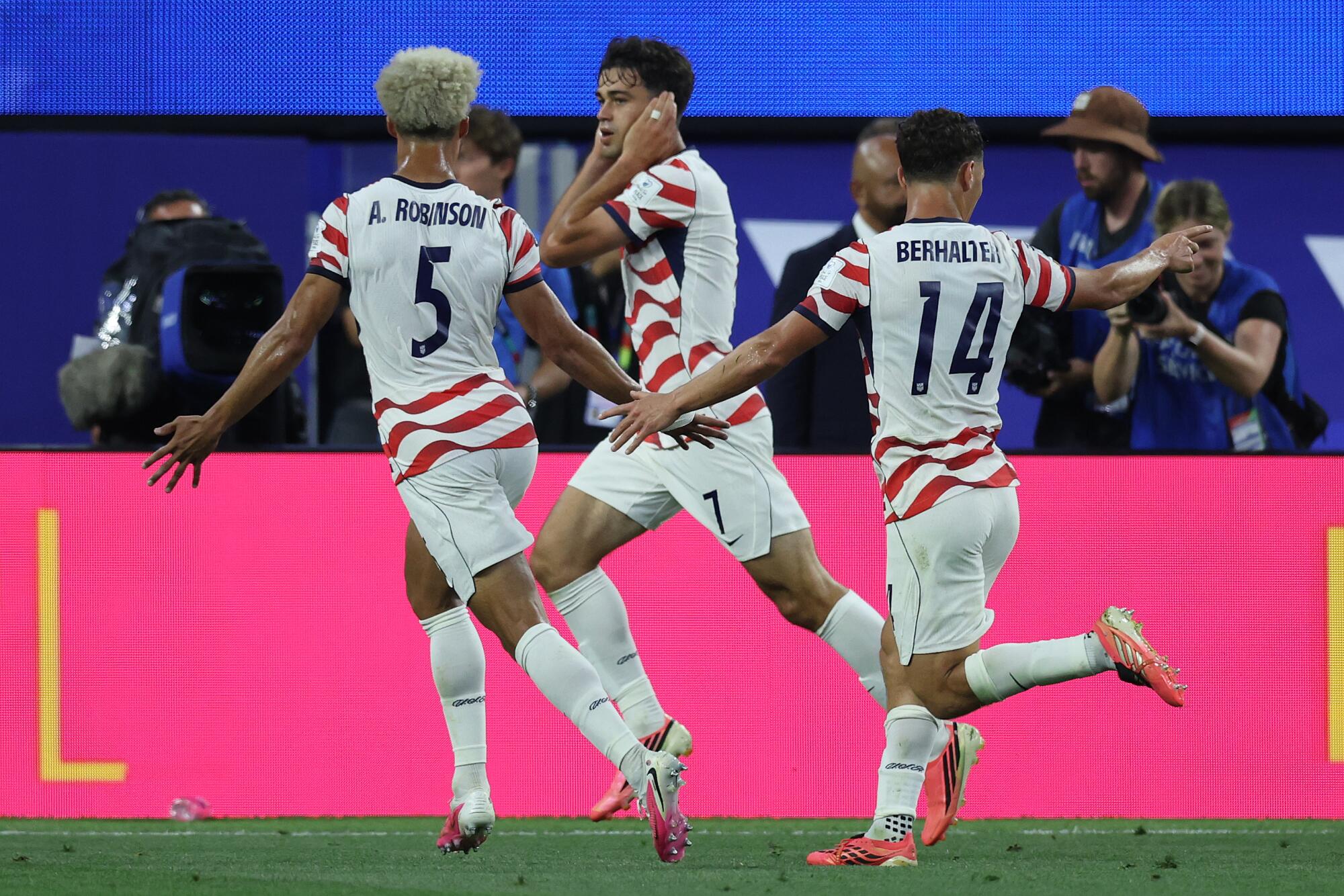
U.S. midfielder Giovanni celebrates with Antonee Robinson and Sebastian Berhalter after scoring against Paraguay.
(Robert Gauthier/Los Angeles Times)
“It was a real statement,” Balogun said. “And that’s what we wanted. I’m very delighted with the overall performance.”
The effort was warmly received by a sold-out crowd of 70,492 at SoFi Stadium, with record-setting crowds watching on TV throughout the country.
Fox Sports announced 15.99 million watched the win, making it the most-viewed U.S. World Cup match on English-language television.
And the Spanish-language broadcast drew a total audience of 8.9 million across Telemundo, Peacock and Telemundo’s streaming platforms. It was the most-watched U.S. World Cup match on Spanish-language television network platforms, harking back to the 1994 World Cup, the first played in the U.S. that also attracted record TV audiences.
At 38, captain Tim Ream is the only member of the team who was alive in 1994, but he and his younger teammates repeatedly have been reminded of the impact that tournament had on soccer in the U.S. That 1994 team won just one game, though, scored just two goals and didn’t make it past the round of 16.
This team is convinced it can do better — on and off the field.
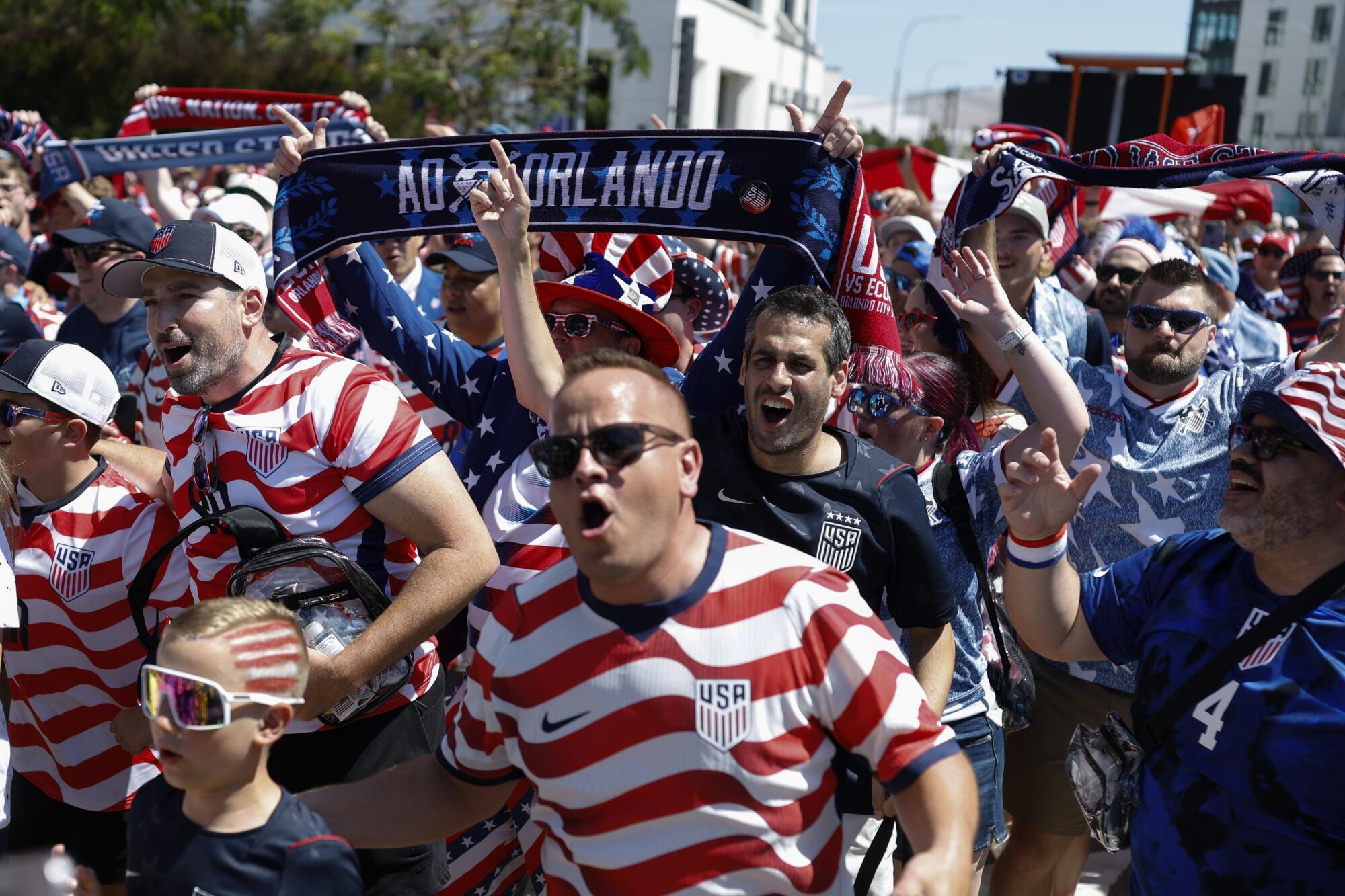
Fans cheer after U.S. beat Paraguay to open the World Cup Friday at SoFi Stadium.
(Kelvin Kuo/Los Angeles Times)
“It’s trying to be an inspiration for the next generation and grow the game,” midfielder Tyler Adams said. “I think we have the opportunity to do that.”
Part of that is kick-starting the kind of interest in soccer that briefly swept the country during the first U.S. World Cup 32 years ago. And this team certainly energized fans Friday.
“Having this crowd around us, seeing the red, white and blue, it’s awesome,” Pulisic said. “It’s really pushing us forward. We just hope it continues like that.”
It will if Pulisic and Co. continue playing like that.
The U.S. controlled the ball for nearly an hour of the 90 minutes, completed more than twice as many passes as Paraguay and took almost twice as many shots. It was a game that was as attractive and inviting as it was one-sided, one that might turn the most skeptical viewer into a fan.
It was, midfielder Weston McKennie said, the kind of game that could push the U.S. closer to becoming a proper soccer nation.
American midfielder Weston McKennie outruns two Paraguay defenders.
(Kelvin Kuo/Los Angeles Times)
“Because it’s a World Cup and it’s in America, people came out,” McKennie said. “We’re OK with that. There’s a lot of people that maybe have never come out to support us. But hopefully today, with this performance, they can connect with us.
“You feel this electricity in the stadium and the passion. That’s one thing that’s going to change soccer here.”
Pulisic and McKennie helped put the U.S. in front to stay in the seventh minute, although the goal was credited to Paraguayan midfielder Damián Bobadilla, who got his right foot in front of a McKennie pass intended for Balogun and deflected it into the net for an own goal. Pulisic made the whole sequence happen, however, pushing the ball between a pair of defenders before poking it on to McKennie in the center of the box.
Balogun scored twice in the final 20 minutes of the first half, one-timing a perfect pass from Pulisic in from the penalty spot in the 31st minute, then running on to a perfectly weighted through ball from Malik Tillman and avoiding two defenders to line a left-footed shot into the top left corner five minutes into stoppage time.
The brace was the first of Balogun’s international career and came in his World Cup debut before a crowd of family and friends, a cheering section he saluted from behind the goal line after scoring.
“I had to sort through a lot of ticket [requests.] It’s a dream night, you know? I’ve not been able to take it all in,” said Balogun, whose brace marked the first multigoal game by an American in the World Cup since 1930.
And that wasn’t the only history the U.S. made Friday. Defender Chris Richards, whose status for the opener was in doubt after he tore two ligaments in his left ankle a month ago, completed all 83 of his passes, the most without a miss in a World Cup game since 1966.
Mauricio pulled one of those goals back for Paraguay in the 73rd minute, before Gio Reyna closed the scoring with his first World Cup goal deep in stoppage time.
Pulisic, who said he took a kick to his left calf in the first half, was replaced by Sebastian Berhalter to start the second. Pulisic showed no signs of injury while talking with reporters after the match, and coach Mauricio Pochettino is hopeful the injury will not limit Pulisic during the next match Friday against Australia.
For the U.S., the commanding win over Paraguay was just the start. The best, the players promise, is yet to come.
Fans fill SoFi Stadium during the U.S. World Cup win over Paraguay on Friday.
(Kelvin Kuo/Los Angeles Times)
“Today was a great starting point for us,” McKennie said. “But we know that’s just a start and this is something we don’t want to over-celebrate. Because we want this to be the normal for us.
“We have two more games to go in the group. Hopefully we improve.”
Added Pulisic: “There’s so much more we want to accomplish.”
A judge on Friday permanently blocked President Donald Trump’s “anti-weaponization” fund because, despite administration officials’ statements that the fund will not be enacted, she does not believe them. Photo by Samuel Corum/UPI | License Photo
June 12 (UPI) — A federal judge on Friday extended an order to indefinitely block President Donald Trump‘s $1.776 billion “anti-weaponization” fund because she does not trust the administration’s word that it will not attempt to enact it.
The fund was announced last month and meant to compensate people the Trump administration alleged were targeted by the Biden administration, including people who were convicted for their actions during the Jan. 6, 2021, riots at the Capitol Building in Washington, D.C.
Judge Leonie Brinkema of the Eastern District of Virginia in her ruling blocked Acting Attorney General Todd Blanche, Associate Attorney General Stanley Woodward, Jr., and Treasury Secretary Scott Bessent from taking “any action to create or operate” the fund and that they not proceed with the concept “in any manner, or under any name.”
Brinkema’s ruling builds atop one from Washington, D.C., Judge Richard Leon that they do not believe the administration will not attempt to distribute money in the scheme.
Both judges indicated that they do not believe that the Department of Justice will back off from the plan because no officials from the agency have said they would do so while sworn in and under penalty of perjury.
“When the President of the United States says” that he wants something, referring to Trump, Brinkema said “that’s a pretty good indicator there will be an incentive and motive to make it happen,” CNN reported.
Even with the fund having been on hold for the last week, at least one person already has attempted to file a claim, to which the federal court responded that it is “not accepting applications”
President Donald Trump speaks to reporters about restoring commercial fishing access to areas of the Pacific during a signing ceremony in the Oval Office of the White House on Thursday. Photo by Jim Lo Scalzo/UPI | License Photo
The first three days of the 2026 FIFA World Cup are done, with the U.S. and Mexico each winning their group stage openers. However, most of the World Cup field is still looking to hit the competitive pitch for the first time.
Here’s everything you need to know about matches being played on Sunday, Monday and Tuesday in the 48-team tournament across the U.S., Mexico and Canada (all times Pacific).
Sunday’s Group E games:
Germany vs. Curacao
Germany’s Antonio Rudiger and Deniz Undav walk on the field before a friendly against the U.S. in Chicago on June 6.
The buzz: This is David vs. Goliath. Germany, a four-time champion ranked 10th in the world, against Curaçao, the smallest country to qualify for a World Cup. But remember David won that first battle, and Curaçao, with a roster full of Dutch-born-and-bred players and an experienced coach in Dick Advocaat, at 78 the oldest manager in the tournament, won’t be a pushover.
Ivory Coast vs. Ecuador
Ecuador’s Piero Hincapie controls the ball during a World Cup qualifier against Argentina in September 2025.
(Franklin Jacome / Getty Images)
Where: Lincoln Financial Field, Philadelphia Time: 4 p.m. TV: FS1, Telemundo
The buzz: Ecuador hasn’t lost since September 2024, a run that’s been fueled by the European-based back line of Willian Pacho (Paris Saint-Germain), Piero Hincapié (Arsenal), Pervis Estupiñán (AC Milan) and holding midfielder Moisés Caicedo (Chelsea). Ivory Coast is the youngest team in the World Cup, with an average age of 25.4 years, but it beat France in its final tournament tuneup. In three previous World Cups, the Elephants failed to advance out of the group stage.
Sunday’s Group F games:
Netherlands vs. Japan
Netherlands standout Frenkie de Jong looks on during an international friendly against Algeria on June 3.
The buzz: The eighth-ranked Dutch, arguably the best team never to win a World Cup, come into this tournament with a golden generation led by defenders Virgil van Dijk and Nathan Ake, midfielder Frenkie de Jong and coach Ronald Koeman. Japan’s only loss in the last 12 months came to the U.S. in a friendly last September; after that it beat fellow World Cup qualifiers England, Scotland, Ghana and Brazil and played Paraguay to a draw. The Dutch have lost just twice, to Algeria and Germany, in the last 23 months.
Sweden vs. Tunisia
Tunisia’s Hannibal Mejbri warms up before an international friendly against Belgium on June 6.
The buzz: Tunisia played in five of the last seven World Cups without getting out of group play, but this time it brings a roster that blends international veterans such as midfielders Hannibal Mejbri (Burnley) and Elias Achouri (Copenhagen) and young talent, including teenager Rayan Elloumi of the Vancouver Whitecaps, the ninth-youngest player in the tournament. Sweden beat Ukraine and Poland in a pair of UEFA playoff games this spring to grab a place in this tournament. Aston Villa defender Victor Lidelof is the most experienced player with 76 caps, including four World Cup appearances.
Monday’s Group G games:
Belgium vs. Egypt
Belgium’s Joaquin Seys, left, and Axel Witsel celebrate after defeating the U.S. in an international friendly on March 28.
The buzz: Belgium hasn’t lost in more than a year, but it also hasn’t played a top-10 team since 2024. It has a veteran core of four players — midfielders Axel Witsel and Kevin De Bruyne, goalkeeper Thibaut Courtois and forward Romelu Lukaka — with more than 100 international caps. Egypt, Africa’s oldest national team, is playing in a World Cup for the fourth time and is still looking for its first win. Liverpool forward Mohamed Salah, the team’s active leading scorer, is the only player on the roster with a World Cup goal.
Iran vs. New Zealand
Iran’s Amirhossein Hosseinzadeh plays the ball during an international friendly against Gambia on May 29.
The buzz: For the first time in World Cup history a tournament qualifier, Iran, will play in a country with which it is at war, the U.S. The Iranians, with the second-oldest roster in the tournament, are playing in their fourth straight World Cup. Only a 1-0 loss to the U.S. kept them from advancing out of group play in 2022. New Zealand, playing in its third World Cup, was winless the first two times — although it didn’t lose in its last visit in 2010, playing Slovakia, Italy and Paraguay to draws. The Kiwis are the only team this century not to lose in group play while also failing to advance.
Monday’s Group H games:
Spain vs. Cape Verde
Spain’s Ferran Torres scores during an international friendly against Iraq on June 4.
(Manu Fernandez / Associated Press)
Where: Mercedes-Benz Stadium, Atlanta Time: 9 a.m. TV: Fox, Telemundo
The buzz: Cape Verde is one of four nations making its World Cup debut and it will open against second-ranked Spain, a tournament favorite which has lost just once since March 2024. Every player on Spain’s roster plays for a top European team; four of them played in last month’s Champions League final.
Saudi Arabia vs. Uruguay
Uruguay’s Federico Valverde heads the ball past Brazil’s Joao Gomes during a Copa America quarterfinal match in 2024.
(Godofredo A. Vásquez / Associated Press)
Where: Hard Rock Stadium, Miami Gardens, Fla. Time: 3 p.m. TV: FS1, Telemundo
The buzz: Saudi Arabia, playing in its third straight World Cup, began its last visit by beating eventual champion Argentina in one of the most stunning upsets in tournament history. And the last time the World Cup was held in the U.S., in 1994, the Arabian Falcons became the first Arab-Asian team to reach the round of 16. Uruguay, a quarterfinalist in 2018, comes into this World Cup with an experienced roster led by Real Madrid midfielder Federico Valverde and Atlético Madrid defender José María Giménez.
Tuesday’s Group I games:
France vs. Senegal
France’s Kylian Mbappe works out with teammates in Waltham, Mass., on Friday.
The buzz: France, ranked third in the world by FIFA, played in the last two World Cup finals and is favored to make it back again this year. Its best player, captain Kylian Mbappe, holds the tournament record with four goals in World Cup finals, including a hat trick in Qatar four years ago. Senegal is led by former African player of the year Sadio Mane, the country’s all-time leader in goals. Senegal made the quarterfinals in 2002 and the round of 16 in Qatar.
Iraq vs. Norway
Norway’s Erling Haaland controls the ball during a World Cup qualifier against Moldova in March 2025.
The buzz: Norway is playing in the World Cup for the first time this century which means Manchester City‘s Erling Haaland will finally make his tournament debut. A three-time Premier League scoring champion, Erling has more goals for club at country at 25 than either Lionel Messi or Cristiano Ronaldo had at that age. Iraq has gone even longer between World Cups, making its only appearance in 1986 when it lost all three games. Iraq won its way back with a 2-1 victory over Bolivia in an inter-confederation playoff last March. The winning goal came from forward Aymen Hussein, the team’s active leader in goals and appearances among outfield players.
Tuesday’s Group J games:
Argentina vs. Algeria
Argentina’s Lionel Messi, fourth from left, practices with teammates in Kansas City, Kan., on Thursday.
The buzz: Top-ranked Argentina was upset by lowly Saudi Arabia in its World Cup opener four years ago, then ran the table to give Lionel Messi the one title he was missing. Argentina returns 17 players from its world championship team, among them Messi, the golden ball winner; goalkeeper Emiliano Martínez, the golden glove winner; and midfielder Enzo Fernández, the 2022 tournament’s best young player. Algeria is ranked 28th in the world, it best ranking in more than a decade, and has lost just twice in the last two years. Its roster features 16 players from first-division clubs in Europe.
Austria vs. Jordan
Mousa Al-Tamari of Jordan controls the ball during the international friendly match against Switzerland on May 31.
The buzz: Jordan played its first international match in 1953 but it hasn’t played in World Cup until now, finally qualifying by finishing second to South Korea in its Asian group. Its best player is captain Musa Al-Taamari, a dynamic winger known as the “Jordanian Messi” who leads active players with 91 international caps. Austria is playing in the World Cup for the first time this century and it hasn’t won a game here since 1990. Its best player in Real Madrid defender David Alaba, a four-time Champions League winner and 10-time Austrian footballer of the year.
1 of 5 | Construction workers build a scaffolding near the sign for the Donald J. Trump and John F. Kennedy Memorial Center for the Performing Arts in Washington, D.C., on Friday. The Kennedy Center board sought an emergency appeal to block a court order requiring the removal of Trump’s name from the Kennedy Center, but a judge denied their request. Photo by Aaron Schwartz/UPI | License Photo
June 13 (UPI) — Trump’s name has been completely removed from the John F. Kennedy Center for the Performing Arts, the executive director told the court Saturday.
Executive Director Matt Floca told the court in documents that the name was changed before the extended deadline of noon Saturday, CNN reported. The court had allowed an extension after the center missed the midnight Friday deadline due to thunderstorms, Justice Department attorneys said.
Workers began removing the name from the building early Saturday, and documents confirming the name change were filed around 11 a.m. EDT.
Since December, the center has been named the Donald J. Trump and John F. Kennedy Center for the Performing Arts, after the center’s board, whose members Trump installed, voted to rename the venue.
Trump claimed that naming the center after him was a surprise, but the name was added to the sign the next day.
Rep. Joyce Beatty, D-Ohio, filed a lawsuit on Dec. 23 against Trump and others alleging that renaming the center was illegal.
And on May 29, a judge agreed. U.S. District Judge Christopher Cooper ruled that the center’s board had overstepped its authority when it voted to add Trump’s name to the center.
“Congress gave the Kennedy Center its name, and only Congress can change it,” Cooper said.
On Friday, a court denied the center’s last-minute request to stop the name change while the case gets appealed.
President Donald Trump speaks to reporters about restoring commercial fishing access to areas of the Pacific during a signing ceremony in the Oval Office of the White House on Thursday. Photo by Jim Lo Scalzo/UPI | License Photo
June 13 (UPI) — Reality TV star-turned-Los Angeles mayoral candidate Spencer Pratt says he does not expect to advance to the general election after projections from primary voting suggest he will rank third behind incumbent Karen Bass and challenger Nithya Raman.
The Hills alum ran on a platform of making the city’s streets cleaner and safer, and speeding up the rebuilding of homes and businesses destroyed by wildfires in the Pacific Palisades more than a year ago.
Pratt, who lost his home in the blaze, released a 3-minute video Friday, stating the “campaign portion of my mission to save Los Angeles is coming to a close and I’m moving on to the next, more interesting phase.”
The spot already has gotten more than 8.6 million views on X.
It appears to be a mix of real and AI-generated footage, as well as movie clips.
In the video, Pratt said he plans to keep fighting to improve the lives of Los Angeles residents using the national social media following he has amassed in recent months.
He added that he has evidence that could damage one of the candidates as they head to the general election in November.
“We have some recordings of one of your exalted candidates doing and saying something that would make her resign in shame. I was saving it for the general election,” Pratt said.
“So, Karen, Nithya, ask yourself, ‘Is it possible that one of your employees may have a recording of you doing or saying something that would force you to resign in disgrace?’ Hope you sleep well at night over the next five months.”
The Los Angeles Times said the Bass and Raman campaigns have declined to comment on Pratt’s remarks.
According to the votes tallied Bass is in first place with 34 percent of the vote, Raman earned 29 percent and Pratt scored 26 percent.
If Pratt had won, he would have been the first Republican mayor of Los Angeles since Richard Riordan served two terms, ending in 2001.
Evacuated residents and those who lost their homes in the Eaton wildfire find supplies, resources and aid at the Clay House of Pasadena, which was turned into a donation center in Altadena, Calif., on January 12, 2025. Photo by Jim Ruymen/UPI | License Photo
June 13 (UPI) — One person is dead and 22 others injured when a large tent collapsed at an outdoor church service Friday evening in Virginia.
The accident happened at East Lake Community Church in Moneta, Va., in the western part of the state. Moneta is about 25 miles from Roanoke.
“Prior to the collapse, a severe storm cell moved through the area, bringing heavy rain, lightning, and strong winds,” Bedford County said in a press release. “The weather conditions caused the tent structure to fail.”
The tent had passed an inspection conducted by the Bedford County Division of Building Inspections on June 9, the county said.
The church was celebrating its 20-year anniversary.
Pastor Troy Keaton said in a statement that he had just walked to the stage to release congregants to their cars when a burst of wind lifted the tent.
“Sadly one of our dear brothers suffered a fatal injury,” Keaton said. “Our hearts are broken for his precious family.”
The man’s identity hasn’t been released.
“We would appreciate your prayers and your patience as we navigate this situation,” the church said. “We are trusting in the Lord for his care, strength and help.”
President Donald Trump speaks to reporters about restoring commercial fishing access to areas of the Pacific during a signing ceremony in the Oval Office of the White House on Thursday. Photo by Jim Lo Scalzo/UPI | License Photo
June 13 (UPI) — President Donald Trump and Pakistan have said that a memorandum of understanding extending the cease-fire between the United States and Iran will be virtually signed Sunday, though Iran has not confirmed the meeting.
Trump posted on Truth Social at 12:45 p.m. EDT Saturday: “The Deal is scheduled to get signed tomorrow, and immediately after it is signed, the Hormuz Strait is OPEN TO ALL.”
He also posted a screenshot of a Saturday morning tweet by Pakistani Prime Minister Shehbaz Sharif: “We are closer to a peace deal than ever before. With finalization expected in the next 24 hours, Pakistan is preparing for the electronic signing of the peace deal immediately after, followed by technical level talks next week.”
The Pakistani foreign minister confirmed that the signing was set for Sunday, Axios reported.
But Iran said there were no talks planned for Sunday. Iranian Foreign Ministry Spokesperson Esmail Baghaei said there were no plans for an Iranian negotiating team to travel to Geneva or elsewhere in the next day or two, according to IRIB, Iran’s state broadcaster, The New York Times reported. While Iran could also sign electronically, it’s unclear if the signing event will happen.
One of the main reasons the signing will be virtual is that Vice President JD Vance, who has been negotiating the peace deal, wouldn’t be able to go to the signings and be back in the United States before Trump leaves for the G7 summit in France Monday, Axios said.
Also, Sunday is the president’s 80th birthday and the day of the UFC fight on the White House lawn.
June 13 (UPI) — South Korea had a trilateral meeting with officials from the United States and Japan in Tokyo on North Korean affairs this week, the foreign ministry said Saturday.
The ministry said the talks took place Friday involving Kim Sang-il, head of the ministry’s North Korean Nuclear Affairs Policy Division; David Wilezol, U.S. deputy assistant secretary of state for Northeast Asia; and Kengo Otsuka, deputy director-general for Asian and Oceanian affairs at the Japanese foreign ministry.
The officials shared their views on recent affairs on the Korean Peninsula and in the rest of Northeast Asia, and also reaffirmed their commitment to denuclearize North Korea and to ensure the implementation of U.N. and autonomous sanctions, Seoul’s foreign ministry said.
“We explained our effort in easing tension and building trust in inter-Korean relations, and also exchanged views on trilateral cooperation in ensuring peace and security on the Korean Peninsula,” the ministry added.
In a press release issued Friday, the Japanese foreign ministry noted the three officials “expressed their serious concerns over North Korea’s nuclear and missile development.” They also agreed to work closely on the advancement of Russia-North Korea military cooperation and North Korea’s malicious cyber activities, Tokyo’s ministry said.
Also in Tokyo on Friday, the three countries held their trilateral secretariat managing board meeting. Wilezol and Otsuka were joined by Yi Won-woo, director-general for North American affairs at the South Korean foreign ministry.
These officials reviewed progress on three-way cooperation on issues such as security, the economy and technology, and discussed specific ways that can produce concrete outcomes, the ministry here said.
Consider it a save for the tournament, three points for soccer in America and maybe even a win for uniting the States.
The Americans on the pitch did all that, including making sure a sellout crowd of 70,492 fans got their money’s worth for their exorbitantly high-priced seats to watch football under Friday Night Lights at SoFi Stadium.
U.S. forward Folarin Balogun, right, celebrates with Sergino Dest and Chris Richards after scoring during a World Cup win over Paraguay on Friday at SoFi Stadium.
(Robert Gauthier/Los Angeles Times)
It was not a clean sheet. And it wasn’t an elixir for all the issues — visas, tickets, transportation — that ailed the tournament in its buildup.
But the opening statement by the United States confirmed what we thought might be true. Only one thing could save this soccer tournament: soccer.
The U.S. delivered a performance to change the conversation — for the next few weeks and maybe longer.
Making history to alter history.
The United States scored multiple goals in a World Cup first half for the first time since 2002.
It got two of them from Folarin Balogun, the Brooklyn-born, England-raised forward of Nigerian descent who became just the second USMNT player to score two goals in a World Cup game and the first since 1930.
Got a perfect match from Chris Richards, the afro-rocking defender with the long, loping strides, who was 83 for 83 on his passes. That’s better than any player at a World Cup since 1966.
And if possession is nine-tenths of the law of attraction, know that the Americans possessed the ball 71% of the first half, most in the first half of a World Cup game in the modern era.
Landon Donovan, star of the 2002 team that reached the World Cup quarterfinals — a record that still stands — posted on X: “From start to finish, that was the most enjoyable day of soccer I’ve ever experienced.”
That’s the stuff that will get the American people going. Get us invested, get us behind them. That could convert even devout casuals.
Americans love a good underdog story. We also want the best, the finest, the biggest — and this, with its expanded field of 48, is the biggest version of the biggest and best tournament in the world.
And the only thing we love more than winning is dominating. The United States did that Friday against a Paraguayan team that had allowed only 10 goals in 18 World Cup qualifying matches, and whom the United States beat 2-1 in a tense match in November.
Fans cheer during the U.S. win over Paraguay in their World Cup opener Saturday at SoFi Stadium.
“The fans, amazing,” said Pochettino, the team’s accomplished Argentine coach. “On behalf of the whole team, a massive thank you to the fans. Because the energy that they [gave] to the team was amazing. We can do amazing things if the fans are in this as well.”
Friday was so good for soccer in America.
And so good for America. The kind of butt-kicking that’s chicken soup for a nation’s soul.
Maybe it’s idealistic and naive, or apple-pie-in-the-sky wishful thinking, but I believe that they can win. (And by win, I mean make the quarterfinals again.)
There’s no removing politics from this World Cup, but wouldn’t it be fun to all rally behind a team together? Can’t you see the country coalescing behind the right wingers and left wingers on the pitch? Picture people celebrating the freedom inherent in Pochettino’s system? Cheering the all-for-one and one-for-all of this team of dual nationals and Americans raised abroad — or in Alabama?
Postmatch, Pochettino refused to single out any one player, instead giving reporters a recitation of his roster: “[Christian Pulisic] was amazing [setting up two goals]. Balogun was amazing, of course. Tim Ream was amazing, of course. Chris Richards was amazing, yes. Weston McKennie, he was amazing, amazing. Antonee Robinson, Alex Freeman, amazing. Sergiño Dest, amazing …”
The U.S. men’s national team made its first World Cup game on home soil in 32 years one to remember, defeating Paraguay 4-1 in front of a sold-out crowd at Los Angeles Stadium (SoFi Stadium) in Inglewood on Friday night.
Here’s a look at some of the best moments before and during the game as captured by the Los Angeles Times photography staff:
U.S. fans march to Los Angeles Stadium (SoFi Stadium) before the start of the U.S.-Paraguay World Cup match Friday.
(Ronaldo Bolanos / Los Angeles Times)
1
2
3
1.David Beckham, right, and Tom Cruise waves to fans before the World Cup group stage match.(Allen J. Schaben / Los Angeles Times)2.Katy Perry, right, and Tius Luka perform during the World Cup opening ceremony before the U.S.-Paraguay match.(Allen J. Schaben / Los Angeles Times)3.U.S. players, left, and Paraguay players enter the pitch before their World Cup group stage match.(Allen J. Schaben / Los Angeles Times)
U.S. forward Christian Pulisic, right, controls the ball in front of Paraguay defender Juan Jose Caceres during the first half Friday.
(Ronaldo Bolanos / Los Angeles Times)
U.S. defender Antonee Robinson, right, and Paraguay midfielder Diego Gomez battle for the ball during the first half. (Kelvin Kuo / Los Angeles Times)
U.S. midfielder Weston McKennie celebrates after a U.S. goal in the first half against Paraguay. (Kelvin Kuo / Los Angeles Times)
U.S. star Christian Pulisic celebrates after a goal in the first half of a 4-1 win over Paraguay at the World Cup on Friday at Los Angeles Stadium (SoFi Stadium).
(Kelvin Kuo / Los Angeles Times)
U.S. players and coach Mauricio Pochettino, center, celebrate after a 4-1 win over Paraguay in the World Cup at Los Angeles Stadium (SoFi Stadium) on Friday night.
(Allen J. Schaben / Los Angeles Times)
1
2
3
1.Paraguay midfielder Cristian Roldan heads the ball over U.S. striker Folarin Balogun during the second half.(Robert Gauthier / Los Angeles Times)2.Paraguay forward Julio Enciso jumps over U.S. defender Chris Richards during the second half.(Robert Gauthier / Los Angeles Times)3.A stage is placed for the opening ceremony before the start of the U.S. vs. Paraguay match at Los Angeles Stadium (SoFi Stadium) on Friday.(Robert Gauthier / Los Angeles Times)
Fans cheer during the United States’ 4-1 win over Paraguay at the World Cup on Friday.