turns

Arab News | Slovenia turns Israeli ally with new embassy

LJUBLIJANA: A chill has set in between much of Europe and Israel recently over its treatment of Palestinians, but the Alpine nation of Slovenia is bucking the trend.

Under nationalist Prime Minister Janez Jansa Slovenia is launching a diplomatic reset of its relationship with Israel, which will send its foreign minister to open its first embassy in Ljubljana on Wednesday.

It is an about-face from the policies of the previous centre-left government, which had been one of the EU’s most critical voices on Israel’s military offensive in Gaza, which it described as “genocide”.

And it comes a day after the United Kingdom and other European countries provoked Israeli fury by banning imports from settlements in the occupied West Bank — the latest move by European governments grappling with growing international condemnation of Israeli policies towards Palestinians.

But in Slovenia, Jansa – who took office for the fourth time earlier this year, and who is often at loggerheads with the European Union – has instead received Israeli accolades for defying the EU over the West Bank settlements.

“Thank you PM Jansa for your courage and clarity amidst EU hypocrisy,” Prime Minister Benjamin Netanyahu posted on X late last month, after Slovenia vetoed an EU statement condemning the settlements.

Under Jansa, Slovenia has also reversed its own ban on imports from the settlements, lifted its arms embargo on Israel and scrapped entry bans on Netanyahu and two of his ministers.

In his first official visit to the country, Israel’s top diplomat Gideon Saar will inaugurate the embassy Wednesday, with his ministry describing Jansa as a “friend of Israel”.

Jansa has said his government was “only normalising Slovenia’s foreign policy and fixing the damage” caused by liberal ex-prime minister Robert Golob.

“To fulfil its priority of improving the well-being of Slovenians, the government will carry out pragmatic policies,” Jansa said in another post earlier.

‘Instrument’

Not all Slovenians are on board, however.

A poll conducted by the daily newspaper Delo in June found that 56 percent of Slovenians opposed closer ties with Israel, while 14 percent supported them.

Several rights groups have announced protests against the embassy’s inauguration, which has also drawn sharp criticism from the opposition.

Golob’s party has described the new embassy as “a return of the favour” for Israel’s alleged support of Jansa during the March election.

The last days of campaigning ahead of the March 22 vote were overshadowed by claims of foreign interference, with authorities probing whether Israeli company Black Cube was behind secretly recorded videos alleging graft in Golob’s government.

Jansa – who faced accusations his party was linked to the videos – has admitted to having met a Black Cube official, but denied being behind the videos.

Daily Dnevnik’s columnist Darijan Kosir in a weekend commentary said Jansa was serving “as the US-Israel’s Trojan horse” in the EU, taking the place of Viktor Orban, Hungary’s long-time premier who lost April elections.

Former president Danilo Turk told AFP that Slovenia has “become an instrument of Israeli policy”.

“This is a very uncomfortable situation,” said Turk, an International Law professor at Ljubljana University.

Source link

Trump turns to a dual economic and military approach in latest attempt to squeeze Iran

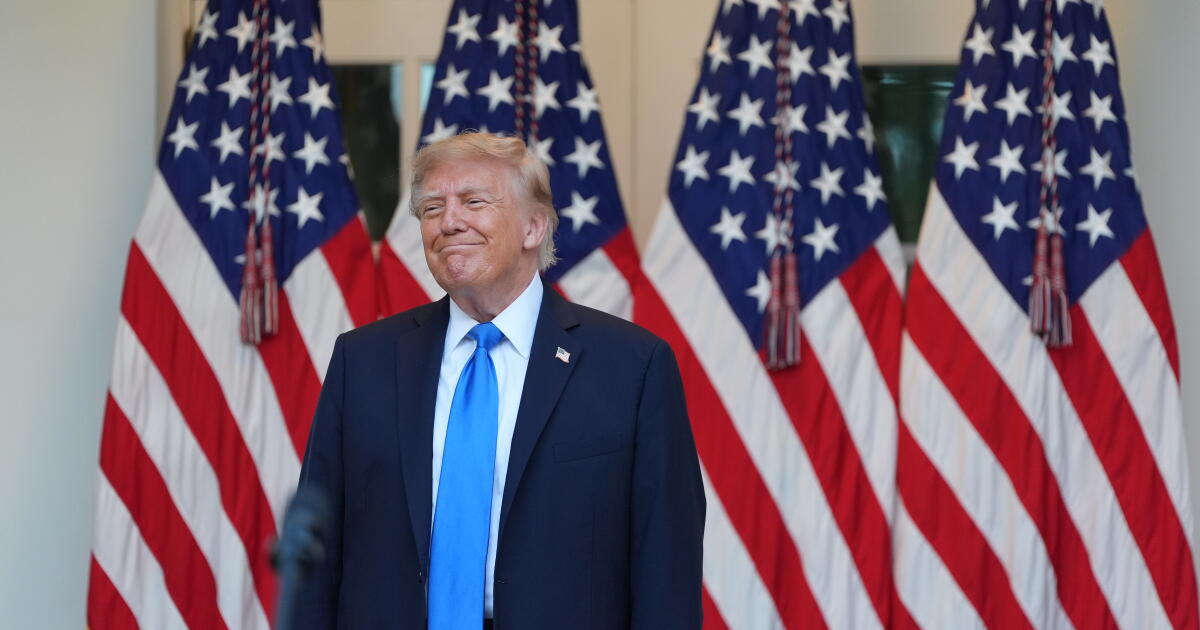
Confronted by an intransigent Iranian government that has refused to back down in the face of a massive military campaign, President Trump appears to have settled on a dual-prong approach that combines economic pressure with the potential of a devastating escalation in force.

Having launched “Operation Economic Outcast” just last week to try to isolate Iran from its remaining global trade partners, the Trump administration also resumed strikes in recent days, prompting Iranian retaliation that has renewed concerns of an all-out regional war.

However, the combination of already intense sanctions on Iran and an off-and-on bombing campaign since the war began more than six months ago has not bowed the Iranian leadership and has left the administration struggling to find a way to wind down the conflict. Tehran has dug in its heels — to Trump’s frustration — as energy prices rise, the global economy roils and poll numbers on the administration’s handling of the war dip ahead of November’s midterm congressional elections.

Trump said Wednesday that he didn’t think the conflict would last “much longer,” but he again shrugged off suggestions that its unpopularity and high gasoline prices resulting from Iran’s chokehold on the Strait of Hormuz would affect the elections for Republicans.

“It doesn’t matter. And I’m not affected by the election,” he told reporters. “I’m not running. But my party is running, and I’m going to help my party. But I think my party respects the fact that we’re not allowing Iran to have a nuclear weapon.”

A regional diplomat briefed on the matter described the current impasse between Tehran and Washington as reflective of both countries’ domestic priorities: the midterm elections for Trump and Republicans and the internal crises within Iran.

Domestic issues are critical reasons why neither side is willing to blink first, said the diplomat, who spoke on condition of anonymity to discuss sensitive negotiations.

The diplomat said negotiations, including those between Iran and Oman or even Iran and the U.S., will not go anywhere without addressing the initial catalyst of war: Israel. And the diplomat was skeptical of the Trump administration’s new sanctions plan, saying the threats require more explanation than what the U.S. has provided so far.

The Trump administration’s economic isolation of Iran is off to a slow start

The administration’s new push for Iran’s economic isolation was announced with great fanfare last week and a dire warning for all remaining countries to cut off financial and trade ties with Iran or face U.S. retaliation — but the campaign so far has fallen flat.

Just one branch of an Egyptian bank in the United Arab Emirates has been targeted so far. For actual sanctions to bite, experts agree that they must apply to Iran’s main trading partners: mainly China but also India and Russia. But Trump is loath to target China especially as he is preparing to host President Xi Jinping later this month.

Trump also insists that the U.S. has control over the Strait of Hormuz, where one-fifth of the world’s oil transited before the war began. The strategic waterway has been a key pressure point for Iran, and reopening it fully has become one of the prime goals for the U.S. administration.

Ship traffic through the strait is well below pre-war levels due to the risk of attack if vessels don’t comply with an Iranian vetting regime near its coastline, which is in sharp contrast to the unhindered navigation before the war. There were 102 transits last week and 126 the week before, according to shipping data company Lloyd’s List Intelligence, compared with 130 or more per day before the war.

“As President Trump said, the strait is open and all mines have been cleared,” White House spokeswoman Anna Kelly said Thursday. “The naval blockade remains in full force and effect, and Operation Economic Outcast is underway to sever every remaining economic lifeline sustaining the regime.”

The White House has repeatedly touted the economic impact that the sanctions have had on Iran, citing its rampant inflation and the massive loss in the value of its currency. U.S. officials have described Iran’s financial system as “one big house of cards.”

Going forward, Secretary of State Marco Rubio said “the price” Iran will pay will be primarily economic, “but we reserve the right … to take military action when necessary — not just to protect ourselves but to prevent them from being able to threaten others as well.”

“They’re going to continue to feel the squeeze,” he told Fox News host Brian Kilmeade in an interview that aired Wednesday.

Treasury Secretary Scott Bessent this week likened Iran to a snake that has been decapitated but whose body is still writhing.

“We are burying the head of the Iranian snake,” he said Tuesday. “The snake doesn’t know it’s dead yet, but it will stop wiggling when the sun goes down. And so the Iranian regime — they are in demise, and they will figure it out.”

Combining military force and sanctions on Iran ‘is the only option,’ one analyst says

Complicating things for the U.S., Iran’s leadership has shown signs of divisions between moderates more open to a diplomatic solution and hardliners who want to press ahead with a more confrontational approach.

President Masoud Pezeshkian is one of the most prominent voices still calling for a negotiated solution. But the hardliners appear to have gained the upper hand, and Iran shows no sign of backing down. Tehran continues to lash out at U.S. interests and allies around the region in response to military strikes.

“This kind of a hybrid approach — the combination of military force, blockade and economic pressure — that is the only option that seems to be available to the United States at this moment,” said Hamidreza Azizi, consulting senior Iran analyst for the International Crisis Group.

Still, he said, “it’s been for a long time, but now maybe more than ever, a battle of endurance between the two sides.”

Amr Hamzawy, director of the Middle East program at the Carnegie Endowment for International Peace, pointed to two main reasons for the deteriorating situation.

“One, none of the two parties is satisfied with the outcome — meaning that the current situation does not serve U.S. interests well, and it does not serve Iranian interests well,” Hamzawy said.

The other reason is how leaders from both sides are perceived at home.

“The Trump administration is afraid of being portrayed in the U.S. as an administration that failed to end a military campaign successfully, and that’s going to impact the midterm elections,” he said. “And the Iranians, especially the Revolutionary Guard, are quite afraid of appearing as if they are submitting to U.S. sanctions with no actions on their side, which might hurt them domestically.”

Lee, Magdy and Amiri write for the Associated Press. Magdy reported from Cairo. AP writers Will Weissert in Washington and David McHugh in Frankfurt, Germany, contributed to this report.

Source link

U.S. turns to South Korea to help close China’s shipbuilding gap

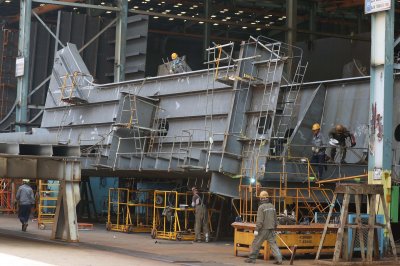
Workers weld at Okpo Shipyard of Daewoo Shipbuilding & Marine Engineering Co. in Geoje, South Korea, in 2022. File Photo by Yonhap/EPA

Sept. 3 (UPI) — South Korean shipbuilders are pouring investment, technology and expertise into a U.S. maritime industry struggling with shrinking capacity, worker shortages and competition from China, offering Washington a potential path to rebuild American shipyards without sending ship construction overseas.

The growing partnership also raises a difficult question: How much foreign participation is the United States prepared to accept in an industry considered essential to national security?

The issue has gained urgency following a White House directive aimed at increasing competition and capacity in the U.S. maritime industrial base. The administration’s plan allows greater use of foreign shipbuilding expertise under certain conditions, including investment in American shipyards, training U.S. workers, transferring production technologies and developing domestic supply chains.

Limited shipyard capacity and a shortage of skilled workers remain major obstacles to expanding the U.S. Navy fleet, according to Shelby S. Oakley, director of Contracting and National Security Acquisitions at the U.S. Government Accountability Office.

“The capacity of the existing yards and the size and skill level of the current workforce are certainly a limiting factor when it comes to the U.S. Navy’s ability to increase the size of the fleet,” Oakley told UPI.

Oakley said meeting Navy shipbuilding goals will require expanding existing yards or adding new ones, increasing the skilled workforce and making greater use of technology and automation. Without those changes, she said, the Navy will struggle to meet its fleet targets.

South Korea could provide part of that capacity.

Under a broader $350 billion U.S.-South Korea investment framework, Seoul has committed $150 billion specifically to shipbuilding cooperation, with another $200 billion intended for strategic investments in other sectors.

South Korea moved toward implementing the maritime portion in June when the Korea-U.S. Strategic Investment Corporation, Korean policy finance institutions and shipbuilders HD Hyundai Heavy Industries, Hanwha Ocean and Samsung Heavy Industries agreed to identify projects and coordinate financing.

The arrangement combines something Washington needs: capital and industrial expertise.

For decades, U.S. commercial shipbuilding has lost ground to Asian competitors. China now dominates global commercial ship construction, while South Korea and Japan retain substantial production capacity. The United States accounts for only a fraction of global commercial output.

President Donald Trump recently elevated shipbuilding capacity to a national security priority, directing his administration to look abroad for models that could help rebuild the U.S. maritime industrial base.

“I have determined that it is in the national security interest of the United States to increase domestic shipbuilding capacity,” Trump said in the memorandum, pointing to the October 2025 U.S. Finland Agreement on icebreaker construction as a model for cooperation with foreign companies.

China adds urgency to that effort.

China’s enormous civilian shipbuilding industry supports an expanding naval industrial base, allowing shipyards, suppliers and skilled workers to serve both commercial and military production. That industrial scale has made shipbuilding an increasingly important element of U.S.-China strategic competition.

The United States faces a different reality. The Government Accountability Office reported this year that Navy and Coast Guard shipbuilding programs have repeatedly exceeded budgets and fallen years behind schedule, while yards face skilled-worker shortages, capacity constraints and fragile supplier networks.

South Korea offers an alternative source of expertise. Its yards have decades of experience with modular construction, automation, digital design and high-volume production. Korean companies also build sophisticated naval vessels, including Aegis-equipped destroyers and submarines.

Hanwha has moved furthest into the U.S. market.

Hanwha Ocean and Hanwha Systems acquired Philly Shipyard for $100 million in 2024, giving the conglomerate a direct U.S. manufacturing foothold. Hanwha subsequently announced plans for billions of dollars in additional investment to expand the yard and introduce Korean shipbuilding technology.

Hanwha employs nearly 30,000 workers at Hanwha Ocean’s Geoje Shipyard in South Korea, where advanced manufacturing and automation help produce more than 40 ships a year.

“In the coming years, we will continue to bring trainers to develop our workforce at the Hanwha Philadelphia Shipyard as well as transfer technology to expand commercial and naval shipbuilding capacity,” Hanwha Defense USA spokesman James Hewitt told UPI.

Hanwha Ocean also completed a major overhaul of the Military Sealift Command dry cargo ship USNS Wally Schirra at Geoje in March 2025. The seven-month project was the first large-scale regular overhaul of a Military Sealift Command vessel awarded to a South Korean yard.

HD Hyundai Heavy Industries is pursuing a different route.

Rather than acquiring a U.S. yard, HD Hyundai has developed partnerships with American shipbuilders. The company and Huntington Ingalls Industries are cooperating on shipbuilding technology and production, including an August pilot program to expand automated welding at HII’s Ingalls Shipbuilding yard in Mississippi.

“The United States is a strong ally and a key business partner for us,” said Hannae Choi, Executive Vice President at HD Hyundai Shipbuilding and Offshore Engineering.

Such arrangements offer Washington a possible compromise: Korean companies can bring capital, technology, automation and production methods into American yards while training U.S. workers and developing domestic supply chains.

That distinction — foreign investment in U.S. shipbuilding rather than shifting construction overseas — has emerged as a key dividing line for the domestic industry.

The Shipbuilders Council of America supports foreign investment when it expands U.S. shipyard capacity but opposes sending construction abroad, said Danielle Hagen, the council’s executive vice president for communications.

“If South Korean capital and automation expertise flow into American facilities, employ American workers and produce American-built hulls, that model is consistent with our longstanding position,” Hagen told UPI.

“The SCA’s concern has never been the nationality of capital, but whether the work, the workforce and the industrial capability remain here in the U.S.,” she said.

Federal law has long restricted construction of U.S. naval vessels in foreign shipyards, while the Jones Act requires vessels operating in U.S. coastwise trade to be U.S.-built, U.S.-owned and U.S.-crewed.

“Any foreign partner needs to operate their U.S. yard as a genuinely American enterprise, with real decision-making authority here,” the council said, adding that foreign acquisitions should face national security scrutiny and continued congressional oversight.

Despite the backlog at U.S. yards, bipartisan opposition remains strong in Congress to building Navy vessels overseas. Rep. Jared Golden, D-Maine, a member of the House Armed Services Committee, has been among lawmakers seeking to preserve domestic construction requirements and prevent naval shipbuilding from migrating to foreign yards, including South Korea and Japan.

Those concerns extend beyond jobs. Modern warships contain classified systems, sensitive designs and specialized supply chains. Greater participation by even close allies raises questions about intellectual property, cybersecurity and control over technologies considered essential to U.S. military power.

Few U.S. allies, however, can match South Korea’s shipbuilding scale, speed and technical expertise. The emerging model seeks to use those capabilities to increase production in the United States rather than substitute foreign yards for American ones.

Whether that approach succeeds will depend not only on transferring Korean technology and manufacturing expertise into U.S. yards, but also on Washington’s ability to integrate those investments into a broader shipbuilding strategy.

Managing competing demands for Navy ship construction and repair requires such an approach, Oakley told UPI. A 2025 GAO report found that the Navy lacked a comprehensive strategy for managing the private shipbuilding and repair industry on which it depends, complicating efforts to coordinate investment, yard capacity and workforce needs.

The challenge is magnified by China. Its dominance of commercial shipbuilding has created a vast network of yards, suppliers and skilled workers that the United States cannot quickly replicate. South Korea cannot close that gap alone, but its capital, technology and expertise could help expand U.S. capacity as American yards modernize, train workers and rebuild supply chains.

For Washington, the central policy question is whether greater South Korean participation can strengthen U.S. shipbuilding capacity without creating a new dependence on foreign production.

Source link

Von der Leyen turns up pressure on China over trade deficit

Published on

European Commission President Ursula von der Leyen said on Thursday that if negotiations to reduce the record-high trade deficit with China did not produce a breakthrough, the EU should make use of all its trade defence mechanisms.


ADVERTISEMENT


ADVERTISEMENT

Tensions have remained high between Brussels and Beijing since the talks were launched last June. Over the summer, China moved to ban Chinese firms from participating in EU antitrust probes, while the Commission has continued opening trade defence investigations into the suspected dumping of Chinese products into the European market.

“Dialogue with China remains necessary. But it must produce results. And when dialogue is not enough, we must be ready to make full use of our instruments,” von der Leyen said in remarks to Medef, the French business organisation.

The EU is facing a wave of cheap imports coming from China, which have increased by 45% in five years, the Commission’s President added, pointing out that 30 trade defence investigations have been opened over the last year – “almost three times more than the historical average”.

“We are stepping up investigations significantly,” she said.

Von der Leyen’s remarks come as the EU’s trade deficit with China reaches €1 billion a day. The Commission has set October as a deadline to reach a deal with Beijing to rebalance the trade relationship.

“China is a key economic partner. And our approach is clear and consistent: derisking without breaking ties. But being a partner does not mean accepting permanent imbalances,” von der Leyen said.

Beijing and Brussels have been on the verge of a trade war in recent months, with China threatening several times to retaliate against proposed EU regulations that could reduce market access to Chinese firms.

On Thursday, von der Leyen recalled that all EU member states now record a trade deficit with China.

In June, EU leaders gave her a mandate to act to rebalance the relationship through dialogue as well as the use and review of defence mechanisms. Among these is the EU’s so-called anti-coercion instrument, which can be triggered in case of pressure from a foreign country on the EU to change its policies.

This tool, sometimes referred to as the “trade bazooka”, allows the EU to adopt strong measures such as restrictions on access to public procurement or the removal of intellectual property rights.

However, it requires the support of a majority of the bloc’s member states. It is unclear whether this could be achieved while EU countries continue trading with China on a bilateral basis, seeking access to its market or investments from Beijing.

Source link

Judge turns down Ghislaine Maxwell request to overturn conviction

Acting U.S. Attorney for the Southern District of New York Audrey Strauss speaks during a news conference in July 2020 to announce charges against Ghislaine Maxwell for her role in the sexual exploitation and abuse of multiple minor girls by Jeffrey Epstein. On Tuesday, a federal judge turned down an request by Maxwell to overturn her conviction and prison sentence. File photo by Jason Szenes/EPA-EFE

Aug. 25 (UPI) — A federal judge on Tuesday denied Ghislaine Maxwell’s attempt to overturn her conviction and prison sentence, slamming the petition as “demonstrably meritless.”

In the the ruling, U.S. District Judge Paul A. Engelmayer said the petition by Maxwell, a co-conspirator of the late sex offender Jeffrey Epstein, was “generally based on speculation, distortions and/or outright falsehoods.”

“There is no fact that Maxwell fairly puts in dispute that has any potential to disturb the outcome of her trial,” Engelmayer wrote.

Maxwell sought to overturn her five felony convictions on the stance that her due process rights were violated, claiming the documents released by the Department of Justice this year supported this. She also made claims of juror misconduct, inaccurate evidence and “selective prosecution” on the part of the Justice Department.

Engelmayer wrote that Maxwell’s claim “incriminates her or reinforces the correctness of the legal rulings Maxwell challenges.”

Maxwell was convicted in 2021 and sentenced to 20 years in prison in 2022. She had been found guilty of conspiring to lure underage girls for Epstein to sexually abuse. She is serving time in a minimum-security federal prison camp in Texas.

Epstein, already a convicted sex offender, was awaiting trial in 2019 when he died by suicide while in jail. Earlier this year, the Department of Justice released many documents related to Epstein’s activities under the Epstein Files Transparency Act, passed by Congress in November 2025.

The U.S. government has been criticized for the limited release of some of the files, in which names of alleged perpetrators were heavily redacted while many victim names were not.

Lisa Phillips, a survivor of Jeffrey Epstein and Ghislaine Maxwell, speaks out during a rally with other survivors on Capitol Hill in Washington on September 3, 2025. Photo by Anna Rose Layden/UPI | License Photo

Source link

‘Stamptown’s’ Jack Tucker turns late-night clown carnage into Netflix special

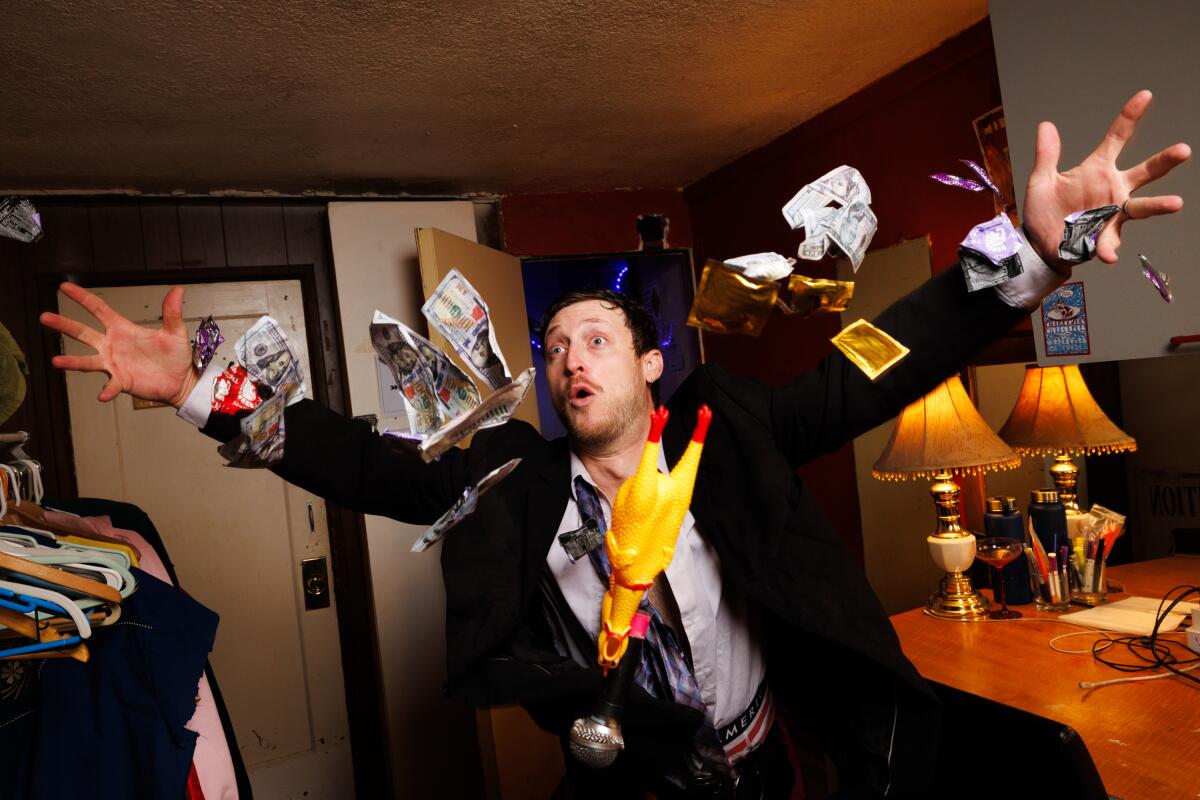
Jack Tucker descends from the rafters inside L.A.’s Montalbán Theatre like a kamikaze crash landing into his big moment. He’s flanked by fountain fireworks while a buff guitarist with a blond mullet and glittery spandex shorts wails on guitar to the tune of Lenny Kravitz’s cover of “American Woman.” With the garish gusto of a WWE wrestler, Tucker’s entrance as the ringleader of the show “Stamptown” electrifies the stage.

But the show truly starts when it falls apart with technical mishaps. Everything breaks, guns go off, an illusionist loses his clothes and jumps fully nude into the crowd — all within the first five minutes.

It’s a chaotic comedy world created by classically trained performers, including clowns, who’ve studied the art of physical humor and shredded the rule book. For more than 10 years the Stamptown troupe led by Tucker, the alter ego of comedian Zach Zucker, has created an insane asylum on stage — from Elysian Theater in Echo Park to the Edinburgh Festival Fringe in Scotland. The show’s comedy thrives on failure, interruption and never actually getting to the “script.” This week the madness leaps from the stage to the screen as Stamptown premieres its first Netflix special Tuesday.

“This is a lot of people’s first time being exposed to this,” Zucker said, cracking a mischievous smile while sitting in a red velvet chair inside the empty Elysian Theater where his crew has performed “Stamptown” for years. “I have seen a man light his penis on fire 45 times in my show. I forget that when it comes to comedy, most people are used to seeing a person with one microphone stand still and talk.”

Filmed over the course of three performances during Netflix Is a Joke Fest in May, the spliced together “Stamptown” special directed by Rachel Lee Goldenberg and edited by show co-creator Dylan Woodley captures the chaos of clowning mixed with a cerebral roast of traditional comedy and plenty of playful danger. The result isn’t a piece of art but rather “a pile of art,” Zucker said.

“Our strength is being a ‘you gotta see it to believe it’ type of performance, but if I really had to boil it down, it’s a modern day vaudevillian variety show that features any and all alternative performances … our ethos is, ‘against all odds, this show works,’ ” Zucker said.

 Zach Zucker tosses props in the air.

Zach Zucker tosses props in the air inside the Elysian Theater.

(Carlin Stiehl / For The Times)

On a recent afternoon, the lanky, mustachioed Zucker, wearing a T-shirt, ballcap and small hoop earrings, bears little resemblance to his comic alter ego who sports a tattered suit with gag props stuffed in every pocket. In real life, the New York native is a former baseball and basketball star athlete who went down an extremely different path to become “a bisexual traveling clown.” After enrolling in what he assumed would be an easy acting class during his senior year of high school, Zucker became obsessed with improv and comedy. His teacher advised him to check out the renowned improv troupe Second City. So he flew to Chicago to see the show “Spoiler Alert: Everybody Dies” featuring Tim Robinson, Sam Richardson, Timothy Edward Mason and more. “It changed my life,” he said.

After taking up comedy classes and street performances on the East Coast, Zucker quickly transitioned to working in theater and eventually moved to L.A. at 18 to pursue comedy, interning at Upright Citizens Brigade. He scrubbed toilets in exchange for free improv classes. It was at UCB where he first crossed paths with celebrated clown teacher Philippe Gaulier, whose former students include Sacha Baron Cohen, Rachel Weisz and Geoffrey Rush. The wily, frizzy-haired Frenchman with red-framed spectacles taught Zucker everything he knows about clowning.

Zach Zucker holds up a rubber chicken.

“Our strength is being a ‘you gotta see it to believe it’ type of performance, but if I really had to boil it down, it’s a modern day vaudevillian variety show that features any and all alternative performances … our ethos is, ‘against all odds, this show works,’” Zach Zucker said.

(Carlin Stiehl / For The Times)

“Philippe is by far my greatest influence,” Zucker said. “There’s not a day that goes by that I don’t think about him or that I’m not actively implementing all the lessons he taught me as a man and as an artist.”

One of those lessons became the ethos of “Stamptown”: “If you’re having fun, maybe we like you. If you’re not having fun, for sure we hate you.”

Inspired by his wisdom, Zucker moved to France for two years to study with Gaulier. It was there that he met his future “Stamptown” collaborator Jonny Woolley, a Canadian performer who became the show’s sound tech, adding to the menagerie of aural mayhem through sound effects that punctuate the show’s every move.

“There’s a lot of different ways of approaching clowning, but ultimately, for us, it’s more of a philosophical approach to making art than it is like a rigorous set of rules or styles. It’s just being a lovable idiot,” Woolley said.

The name “Stamptown” is a tribute to the place where they learned their artform: the town of Estampes (which loosely translates to “Stamp”) in France where they studied with Gaulier, who died this year before the special was filmed.

Though he‘s known for his offbeat humor, Zucker’s brain is firing on a perpetual metronome. He’s snapping his fingers incessantly during our interview while describing the comedic timing of each show, which grooves like a jazz band on stage.

”Sometimes there’s a few different rhythms that I’m balancing at once. I can really zone in on what is the most fruitful at the moment while still keeping these other balls in the air,” he said. “Thankfully we’re not always pushing a message. Sometimes it is just about entertaining the crowd at all costs.”

Before “Stamptown,” Zucker was performing with Norwegian friend and fellow clown Viggo Venn as “Zach & Viggo,” a side act in the original variety show Zucker started with his friends in 2017 in Melbourne called “Midnight Madness” that eventually turned into “Stamptown.”

Working with Venn, Woolley and Woodley, Zucker devised the show to include a rotating cast of clowns, and comedic performers from around the world, including L.A. Staples in the local clown community include the slapstick of clown kingpin Chad Damiani playing a janitor, comedic actor Natalie Palamides as a comedy nepo fetus birthed by Riki Lindhome of “Garfunkel and Oates” and the riotously robotic gyrations of Courtney Pauroso as fembot temptress Vanessa 5000.

“‘Stamptown’ is extraordinary; it’s finely calculated nonsense,” said actor Neil Patrick Harris, a longtime friend and supporter of Zucker who appears on the Netflix special, in a statement to The Times. “Each performance is unique — stand-ups colliding with circus artists, and improvisers swapping talents and fluids, even the stagehands’ utter chaos and running gags, a ridiculous fever dream … it’s absurdly genius.”

The international performers who have become part of the “Stamptown” universe run the gamut from jugglers to steel drum players to acrobats to pianists. Trans comedian Jordan Gray is extremely unafraid to bare it all, including her soul, when behind the piano. The physicality of the performances goes beyond regional references and punchlines that might get some laughs in one country but not in others. Venn says it’s clear that at their core people tend to share the same sense of humor.

“It was fascinating to us to see that in Australia and France and England and the U.S., they really laugh at the same things if it’s like a deeply human kind of failure,” Venn said. “That’s the beauty of this show.”

 Zach Zucker sits in a room illuminated with red light.

Zach Zucker sits inside the Elysian Theater in Los Angeles.

(Carlin Stiehl / For The Times)

A tangled web of masterfully timed sound effects has unintentionally become the heartbeat of “Stamptown” . With Woolley now living full time in London, the duties for the U.S. shows were recently passed down to fellow performer Jeremy Elder, who did the sounds for the Netflix special tapings. He says the show is at its best when they throw out the game plan for the night, even while filming for Netflix.

“I think it’s as soon as we went off script, the audience could feel that. In the final product, we planned so much, but once you’re in the room with people it’s a very clown-like sentiment to just roll with what the audience is feeling,” Elder said.

While traditional stand-up is Netflix’s bread and butter for comedy programming, this form of comedy is mostly a target for mockery in “Stamptown” to show how limiting it is compared with the physical comedy of clowning. The one caveat, Zucker says — a clown is by far the most embarrassing brand of comedian you can be.

“It’s not cool, you don’t do this to be cool,” he said, laughing. “The whole point is that with all the love and fantasy and pleasure of your life, you have to step in a bucket of s— over and over and over and enjoy it. ‘Isn’t it awesome how I humiliate myself for you?’ And you embrace it.”

Source link

Court ruling turns NFL into Lane Kiffin’s latest recruiting landscape

When Lane Kiffin dials a number, the person on the other end usually answers and takes the call.

Todd Monken crossed paths with Kiffin many times while both crisscrossed the country for decades, taking this job and that, as head coaches and assistants at top colleges and in the NFL.

Monken became an NFL head coach for the first time in January, taking over the Cleveland Browns. Kiffin is about to begin his first season as the Louisiana State head coach, so Monken didn’t know why Kiffin’s number popped up on his screen over the weekend.

“I wondered why Lane Kiffin reached out to me a week ago,” Monken told reporters Sunday. “Now I know. I didn’t call him back. I guess I should have.”

Kiffin called to tell Monken something the rookie NFL coach learned later in the day. Dae’Quan Wright, a tight end the Browns waived Sunday morning, plans to play for LSU if he clears waivers, his agents told ESPN.

Dae'Quan Wright reaches out to catch a football

Dae’Quan Wright of the Cleveland Browns warms up before a preseason game against the Buffalo Bills at Huntington Bank Field on Aug. 22.

(Nick Cammett / Diamond Images via Getty Images)

Wright, who went undrafted after playing for Kiffin at Mississippi, is believed to be the first player to have an agreement to return to college football after signing with an NFL team. He was with the Browns for fewer than two weeks after the Philadelphia Eagles signed him as an undrafted free agent and placed him on waivers in early August.

Although Wright didn’t play in the Browns’ two preseason games, he suited up Saturday against the Buffalo Bills because injuries to other players created a potential need. He never left the sideline.

Another NFL player being courted by Kiffin, however, saw action. . Tampa Bay Buccaneers rookie linebacker Jack Pyburn recorded two sacks in a preseason victory over the New York Jets on Friday.

Pyburn, who also went undrafted after playing three years at Florida and his senior year at LSU, can regain his college eligibility if he terminates his contract with the Bucs and repays earnings. Pyburn’s deal guaranteed him $115,000 and included a $15,000 signing bonus.

LSU could pay him an estimated $1 million for his NIL, exceeding the NFL full-season rookie minimum of $885,000.

“I’m kind of caught in the middle of a whirlwind,” Pyburn told the Athletic, “and I’m just trying to play football.”

Wright and Pyburn are two of about 30 athletes who filed a lawsuit in Louisiana and were granted a temporary restraining order to return to college for one more season.

The lawsuit challenges new NCAA eligibility rules that give athletes a five-year window to compete in college sports. The plaintiffs are 2022 high school graduates whose college eligibility expired last spring under the previous rules. The NCAA did not include them in implementation of age-based eligibility, prompting lawsuits.

Several state courts have ruled in the players’ favor, and they have eligibility in the upcoming school year until appeals are ruled on. Most of the plaintiffs are basketball players, but Wright and Pyburn are two of 16 football players benefiting from the temporary restraining order granted by Louisiana’s 19th Judicial District Court.

Source link

Prep talk: Cleveland turns to its Nigerian duo in football

Cleveland High football coach Mario Guzman loves the Nigerian connection of Oluwafemi Okelola and Moyosoreoluwa Odebunmi, both running backs.

Spelling their names might be the biggest challenge.

They should be major offensive contributors, joining quarterback Domenik Fuentes to fuel the Cavaliers’ attack.

Last season, Odebunmi rushed for 1,139 yards and 11 touchdowns. Okelola had 111 yards rushing and made 83 tackles and had two interceptions on defense.

The Cavaliers open their season on Friday against Narbonne.

This is a daily look at the positive happenings in high school sports. To submit any news, please email eric.sondheimer@latimes.com.

Source link

Trump turns to containing the fallout from setbacks in Iran

Approaching six months of war with Iran after predicting a six-week campaign, President Trump has few options before him to bring the conflict to a close. But some experts believe a new strategy emerging from his administration could avert a more consequential defeat.

The president has repeatedly flirted with broadening the assault, hoping yet another round of bombardment might force Iran to yield. Yet he has ultimately resisted, once again stepping back this month from options to expand strikes across Iran’s critical infrastructure and leadership. And he has refrained since the beginning of the war from ordering a ground operation that would expose U.S. troops to direct attack, faced with dwindling U.S. munitions stockpiles and an entrenched Iranian government willing to retaliate.

The result has been a U.S. campaign that has failed to achieve any of Trump’s stated war aims — of regime change in Tehran, the elimination of Iran’s ballistic missile and naval capabilities, and the end of its nuclear program — but has also avoided the costs of uncontrolled escalation, experts said.

In remarks Friday, Trump said the United States was still in the process of “defeating Iran, which is being very badly defeated.”

“We have the blockade. No ships get through,” he said. “They still have missiles, but not a lot. They still have drones, but just a fraction of what they had. But their manufacturing is largely gone.

“We’re winning big with the Islamic Republic of Iran,” he added. “Nobody has any idea how successful we are — they don’t want to write it. But they know. You know who knows how well we’re doing? Iran.”

In an interview published last week, Trump explained his decision not to proceed with expanded strikes, telling Axios, “we are low-keying it.”

“We are only semi-negotiating with them,” he said. “We are just watching Iran with its huge inflation and the fact they have no money.”

It is a shift from an instinctual posture to one of restraint uncharacteristic of a president who launched the war in February after consulting a mere handful of people, including Israel’s prime minister and fewer than a dozen of his closest aides.

The current approach — an economic choke hold on Iran — is being led by Treasury Secretary Scott Bessent, who was not involved in Trump’s prewar deliberations.

“The options are escalating militarily, conceding Iranian victory through a phony negotiation, or continuing the economic pressure we have in place. The president’s problem is that he can’t simply choose — the ayatollah gets a vote,” said Elliott Abrams, a veteran diplomat who served under Presidents Reagan and George W. Bush, as well as under Trump in his first term.

“Trump has to choose now between sticking to the blockade and the risks it brings — including high oil prices and a loss in the midterm elections — or accepting defeat by Iran and the risks that brings,” he added, “to our friends and allies and to his own reputation.”

White House officials are betting the risks to Tehran, from soaring inflation and a shortage of goods, are greater than the political costs Trump will incur at the ballot box in November during the midterm elections, with oil prices holding stable under $100 a barrel since mid-July.

“We have the ability to accept costs because our resources are great. Iran does not, because theirs are few,” said Barry Posen, a political science professor at MIT.

And while restraint may not end the conflict on Trump’s preferred terms, it could prevent the kind of open-ended escalation that pulled the United States deeper into costly quagmires in Vietnam and Iraq, said Michael O’Hanlon, director of research in the Brookings Institution’s foreign policy program.

“He has resisted that temptation so far,” O’Hanlon said. “In this regard, he is showing greater humanity and greater thoughtfulness than either of those two American presidents during the Vietnam War. And he has avoided the mistakes of George W. Bush in launching big ground wars without adequate planning or preparation.

“It’s troubling, and far from victory,” O’Hanlon added, “but also far from quagmire or defeat.”

Trump’s reluctance to escalate has so far averted a high U.S. casualty count in the war. According to the Pentagon’s Defense Casualty Analysis System, 18 U.S. service members have been killed and hundreds have been wounded since the start of operations against Iran.

But his reticence to deploy additional U.S. troops within striking distance of Tehran — and the need to protect those already stationed across the region — has forced the administration to rely on long-range weapons systems that cost tens of millions of dollars and require complex international supply chains to produce, leading to critical shortages of drones, missiles and defense systems as the conflict continues longer than planned.

“Even limited operations, such as the air wars over Kosovo and Libya, dragged on much longer than policymakers expected, and the U.S. ran short of critical precision guided weapons,” said Stacie Pettyjohn, director of the Defense Program at the Center for a New American Security. “What really differentiates the current situation with Iran is that Tehran can hold U.S. forces in the region at risk with its long-range missiles and drones.”

Karoline Leavitt, the president’s outgoing White House press secretary, said the United States has “more than enough firepower” to carry out any operation the president wishes to order.

But Defense officials acknowledged to The Times that a protracted campaign, and the risk of an escalation that prompts Iran to expand its targeting of U.S. assets and allies in the region, could further stretch weapons systems to dangerously low levels.

A “low-key” campaign will mitigate the threat of dwindling supplies and high casualties, without necessarily providing Trump with a path to victory, said Stephen Biddle, a professor of international and public policy at Columbia University.

“The issue with Iran isn’t how long the war has lasted, though it’s already lasted longer than the Trump administration apparently expected,” Biddle said. “The issue is how we’ll get out of it with our interests intact. The administration has no viable plan for doing that, and none is immediately obvious.”

Source link

Curvy Kylie Jenner flaunts her famous curves in revealing pink activewear as she turns up heat plugging new range

CURVY Kylie Jenner is hip to it as she promotes her new activewear range.

The US beauty mogul, 29, showed off her toned physique in a pink sports bra and matching leggings.

Kylie Jenner showed off her toned physique in a pink sports bra and matching leggings Credit: Alo/Mert & Marcus
The outfits are part of the Kylier’s Alo Yoga Pink Marshmallow collection Credit: Alo/Mert & Marcus

They are part of her Alo Yoga Pink Marshmallow collection — one more to add to the billionaire businesswoman’s portfolio.

Yet the mother-of-two is increasingly seeking privacy with actor boyfriend Timothée Chalamet, 30.

Reality star Kylie said: “Some of the most meaningful parts of my life happen when no one’s watching.”

She said: “Some of the most meaningful parts of my life happen when no one’s watching.

READ MORE ON KYLIE JENNER

NEXT JEN

Curvy Kylie Jenner ditches her clothes in steamy nude ad for her new Khy heels


MOODY MUSE

Kylie Jenner goes braless under sheer white dress on the beach for fragrance ad

“Those moments of stillness are what help me feel grounded and present, and I’ve learned to protect them.

“That’s what I love about this campaign – it reminds us that taking care of yourself starts with making space for the things that are yours alone.”

Mother-of-two Kylie is dating Dune actor Timothee Chalamet Credit: Getty
The reality star says the most meaningful parts of her life happen when nobody is watching Credit: AFP

Well, we’re watching now.

Kylie recently ditched her clothes in steamy nude ad for her new Khy heels brand.

Source link

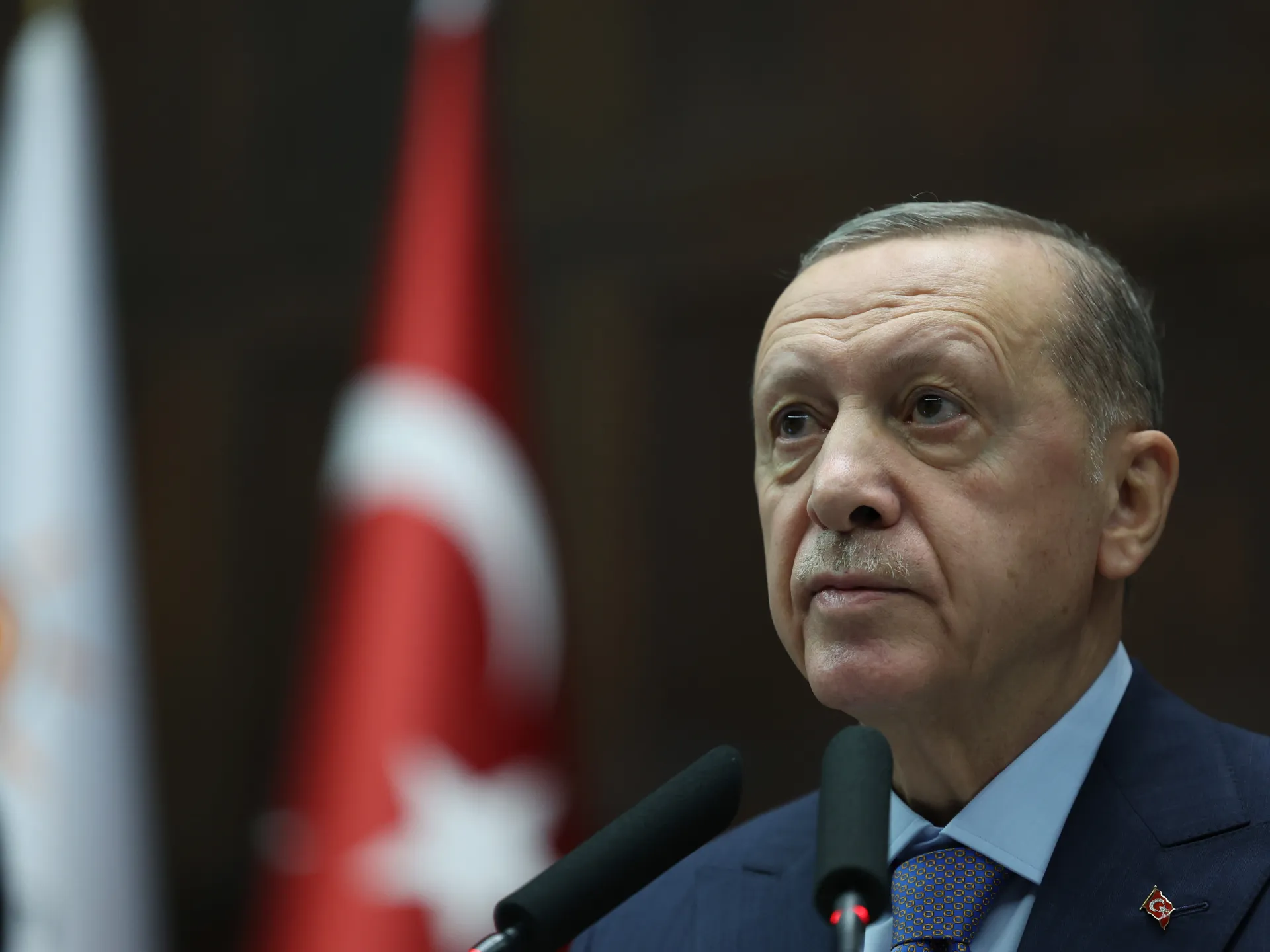
Turkiye’s AK Party turns 25: A journey of change and renewal | Opinions

The initial step taken on August 14, 2001 cannot be viewed merely as the submission of a political party’s founding petition within the annals of international political history; rather, it is the reincarnation of a millennium-old, deep-rooted civilisational vision on the modern world stage. Today, having left a quarter of a century behind, the AK Party is not merely a tale of national development within its borders, but an unparalleled 25-year epic of democracy on a global scale. Coming to power with immense public favour just 16 months after its founding, and steering the country with uninterrupted stability for a quarter of a century, this political movement has secured a highly exceptional place in world political history.

The greatest power behind this stability lies in the fact that this movement is not a rootless structure blown about by the wind. It carries on its shoulders, as a historical trust, the democratic struggle of the late Prime Minister Adnan Menderes and his companions, who sacrificed their lives for the nation’s beliefs during the arduous days of the single-party era. The mighty plane tree founded by our President and Chairman Recep Tayyip Erdogan – under whose shade our nation and oppressed geographies have drawn a breath of relief for 25 years – is the very embodiment of this tremendous historical legacy.

While the lifespans of political parties are generally measured by election results or their terms in government, the AK Party’s ability to overcome successive global and national crises with the continuous support of vastly diverse social segments over 25 years can be explained by a much more structural concept: Its “capacity for political translation”.

This capacity is the process of accurately hearing the expectations, needs, and objections within society, transforming them into viable party programmes, budgets, and public policies, and submitting the resulting outcomes back for societal evaluation. Social needs do not always arrive in politics as ready-made texts; it is here that the AK Party has established a colossal “translation” mechanism that turns seemingly disparate experiences into common problems and solutions. Indeed, for someone of a generation like mine – who grew up in a Turkiye shaped by the AK Party, took on responsibilities in its youth branches since childhood, and today serves as a member of parliament and the party’s secretary-general – this political ground is the very essence of that transformation.

To grasp the magnitude of this transformation, one must look back at the Turkiye of the 1990s. It is essential to read those years not just as an “era of a unipolar world and severe economic crises”, but as a colossal “age of political collapse and instability” that paralysed the state and deepened societal fault lines.

The 90s were a lost decade in which fragile coalitions lasting only months, political bargaining and recurring crises shook state authority. While unsolved murders and an escalating spiral of terror threatened citizens’ lives on the one hand, the heavy fist of tutelage brought down upon civilian politics via the February 28 post-modern coup explicitly usurped the nation’s will on the other. Even though voter turnout reached 87 percent in parliamentary elections during that era, this high public interest in politics could not translate into a stable and effective governing capacity, with no single party able to form a majority government.

The closure of the Refah Party in 1998 and the Fazilet Party in 2001 through judicial tutelage created a profound crisis regarding the continuity of legitimate channels of representation for the masses. Therefore, the year 2001 was a historical threshold – not merely a year of economic bankruptcy marked by cash registers being thrown in protest, but the absolute peak of political fragmentation, tutelary regimes, governance vulnerabilities, and constitutional rights remaining strictly on paper. Inheriting this multidimensional political and economic wreckage, the AK Party built the world’s most experienced cadres in every field, from security to economics, from foreign policy to social policies, establishing a “game-changing” political style.

At the core of this game-changing politics lies the dismantling of the “state commands its citizens” mentality, replacing it with the principle that “the state is the servant of the nation”. Believing that true change lies in execution rather than packaging, the AK Party tore down the cold walls built between the state and the nation, making the nation’s red lines the same as the state’s.

The silent majority, who for decades had been left disheartened like “tenants” in their own homeland, rose with self-confidence to become the true “landlords” of their country. Today, as the world’s largest and most dynamic school of politics with more than 12 million members, the AK Party conducts politics not by pontificating from television screens, but by directly sharing the burdens of the people and keeping a finger on the pulse of the streets. The secret behind these victories is hidden in these devoted organisations that hold the nation’s consent above all else, and in the vision of the leader of this great march, our President and Chairman Recep Tayyip Erdogan.

The party’s quarter-century has gone down in history not through noisy destructions and polarising conflicts, but through institutional “silent revolutions” woven stitch by stitch. The Health Transformation Program and national fighter jets and unmanned aerial vehicles (UAVs) produced in the defence industry are the building blocks of this revolution.

Moreover, Turkiye does not view technological transformation merely as instrumental progress; it presents a brand new vision. By openly opposing the algorithmic exploitation of global digital giants, it advocates for a value-oriented and ethical technological order that places human dignity, privacy, and the family at its centre. TEKNOFEST is not just a technology fair; it is a ceremony of institutional self-confidence where a generation – once intended to be manipulated in the streets during past coup eras – becomes the builder of this very moral and fully independent technological future.

The greatest outcome of this will for full independence is the historic struggle waged against the scourge of terrorism – which has made the nation weep blood – under the ideal of a “Terror-Free Turkiye”. Recipes dictated from the outside have been crumpled up and thrown away; terrorism has been dried up at its source, and the dirty corridors intended to be established at our borders have been shattered by the “Turkiye Model”. A Turkiye completely cleansed of terrorism has thwarted Israel’s expansionist ambitions built on dividing, weakening, and destabilising the region; it has become the greatest hope for the Palestinian cause, for Jerusalem, and for the oppressed in Gaza.

Viewing democracy not as a tool but as an unshakable value, this political mindset forever closed the dark parenthesis of tutelage opened on May 27, 1960, on the night of July 15, when the nation lay down in front of tanks and braved gun barrels. This democratic resilience achieved at home has today made Turkiye the vanguard of a global conscience movement abroad.

The objection raised by our President and Chairman Recep Tayyip Erdogan that “The World is Bigger Than Five!” has transformed into an “Erdogan Doctrine” that maps the conscience of humanity against those who fancy themselves masters of the globe. This quest for justice – embodied in the human tragedy in Gaza, in baby Aylan whose washed-up body shook the world, and in a little boy who recited the Quran with his last breath under the rubble – is the clearest indicator of Turkiye’s determination to defend the rights of the innocent in international diplomacy.

Today, moving far beyond being a passive ally in global politics, Turkiye has risen to the position of a subject that rewrites the rules of the international system, produces solutions to geopolitical crises, and personally steers diplomatic change.

Having long transcended artificial agendas and polemics in domestic politics, the AK Party’s true power in this multipolar world lies not only in the country’s economic and strategic capacity. It lies in the unshakeable democratic legitimacy behind our President and Chairman Recep Tayyip Erdogan – one of the most senior and experienced heads of state in world politics – and in the profound trust that all oppressed peoples across the earth place in Turkiye.

Our tremendous state experience over the past quarter-century is our most solid reference; yet, this political movement, with its face always turned towards the future, is determined to build the “Century of Turkiye” vision on the axis of justice, compassion, and sustainable global peace by blending it with the nation’s internal dynamics. In this new age marked by great trials that deeply affect humanity, under the leadership of our President and Chairman Recep Tayyip Erdogan – who shapes global politics with his unparalleled state experience and vision in the international arena – Turkiye marches forward with strong steps, shoulder to shoulder with our nation, as a playmaker towards new targets and a bright new quarter-century.

The views expressed in this article are the author’s own and do not necessarily reflect Al Jazeera’s editorial stance.

Source link