Several central neighbourhoods in Beirut have been attacked in a series of Israeli strikes. Al Jazeera’s Zeina Khodr has been at the scene of one attack that flattened a multi-storey residential building.
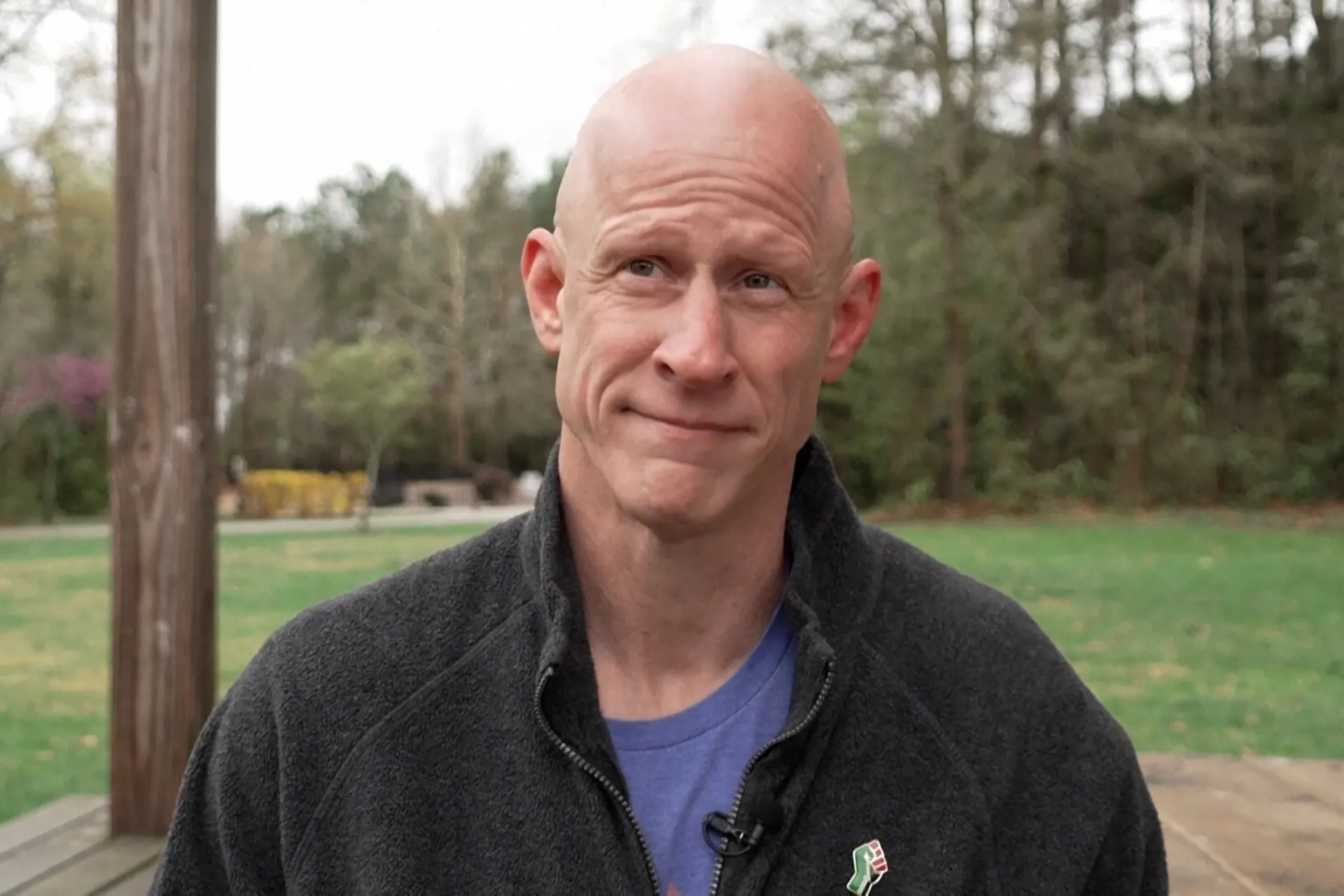
“Right is right, wrong is wrong, and Trump’s wrong.” Former Marine Brian McGinnis, whose hand was broken by police and a congressman earlier this month in a protest at the US Capitol, says Donald Trump is “wrong” when it comes to the joint US-Israeli war on Iran.
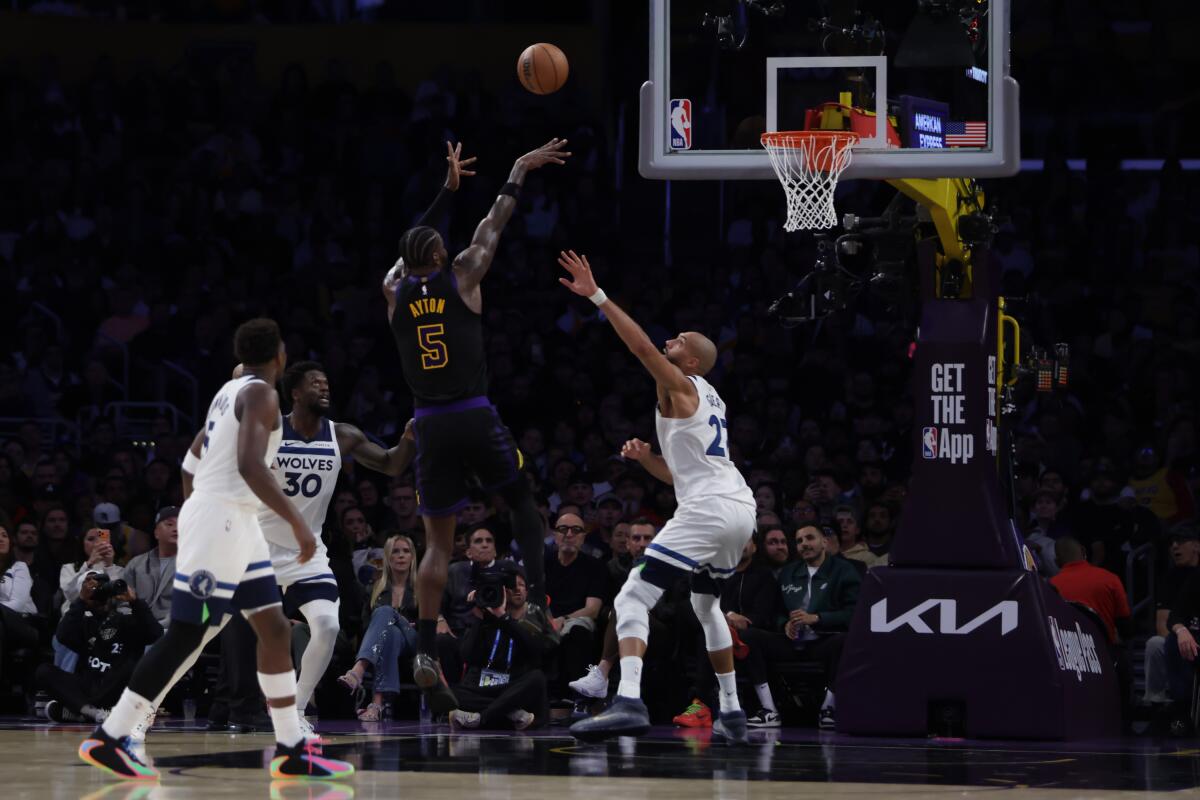
Lakers center Deandre Ayton shoots over the Timberwolves’ defense on Tuesday at Crypto.com Arena.
(Ethan Swope / Associated Press)
With 33 missed shots between both teams in the first quarter, Deandre Ayton certainly had plenty of opportunities for rebounds, and the 7-foot center made the most of them.
Ayton almost single-handedly kept the Lakers in contention in the first half, scoring 12 of his 14 points in the second quarter and had a first-half double-double with 11 rebounds.
Ayton, who was scoreless in the first quarter but had six rebounds, scored three of his first four baskets off offensive rebounds. The only exception came when Reaves drove in the lane, wrapped a pass around his back as he found Ayton cutting down the lane for a vicious two-handed dunk. The crowd roared.
“He was a monster,” said Reaves, who had 31 points and eight assists. “… He was the only person scoring for us efficiently and then just being high energy on the other end, just doing what he does. That’s what we need him to do. When he does that, we’re a different team and we’re thankful to have him.”
Ayton’s effort has waned throughout the season, sometimes resulting in him getting benched late in games. But he provided major lifts in marquee wins against the Knicks (six points, eight rebounds) and Timberwolves to earn the confidence and trust of his teammates.
The Lakers needed Ayton at his best after backup centers Jaxson Hayes (back soreness) and Maxi Kleber (lumbar back strain) were ruled out of the game about 15 minutes before tip-off. Hayes was starring in his reserve role in recent weeks, bringing much-needed energy off the bench and a seamless connection with Doncic, but hearing that Ayton would have to hold down the front line by himself gave the former No. 1 draft pick extra motivation.
“I know I’m the only big,” Ayton said, “so I try my best to stay out there as long as possible, especially down the stretch.”
She simply kept showing up for it anyway, through the long and often anonymous slog of the professional tour.
Now 32 and the oldest player in the top 10, Pegula is having her best season start yet.
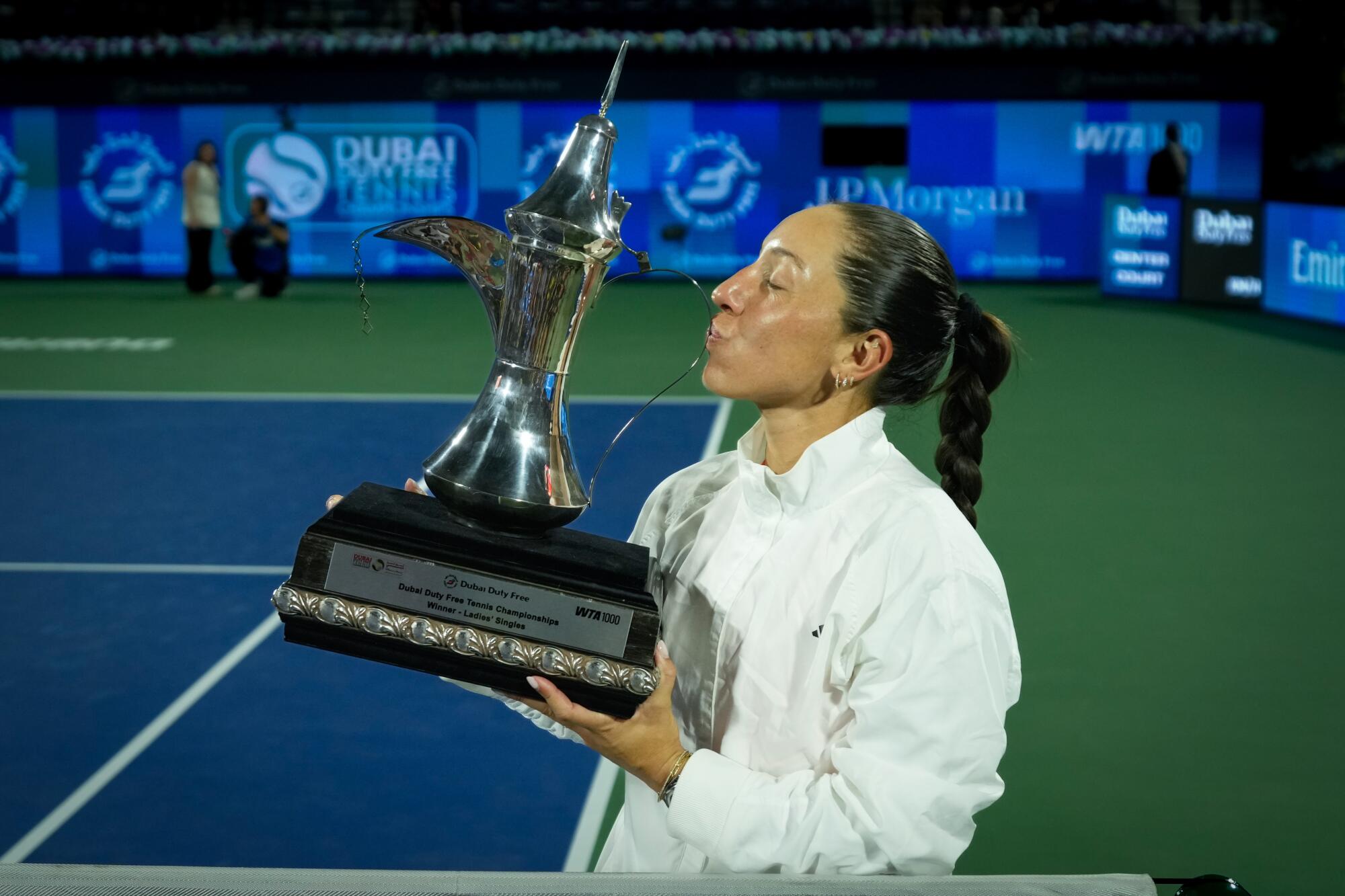
The fifth-ranked American reached the Australian Open semifinals for the first time in January, falling to eventual champion Elena Rybakina. She followed that by capturing the Dubai 1000-level tournament, just a rung below the majors.
She is 15-2 so far in 2026, tied with Victoria Mboko in match wins and second only to Ukraine’s Elina Svitolina (17-3), who she defeated 6-2, 6-4 in the Dubai final.
Pegula is guaranteed to emerge from this week’s BNP Paribas Open in Indian Wells as the top-ranked American, overtaking No. 4 Coco Gauff, if she reaches the final.
Jessica Pegula kisses the Dubai trophy after defeating Elina Svitolina in the finals on Feb. 21.
(Altaf Qadri / Associated Press)
First, she will have to get past No. 12-seed Belinda Bencic of Switzerland, her fourth-round opponent on Wednesday. Bencic has not dropped a set in four previous meetings with Pegula.
“That will be a challenge for me,” said the characteristically even-keeled Pegula after defeating former French Open champion Jelena Ostapenko in the third round on Monday.
A late bloomer, Pegula has taken the long road.
She failed to qualify for Grand Slam main draws in 12 of 14 attempts from 2011 to 2018, and didn’t reach the third round at a major until the 2020 U.S. Open at age 26. All three of her Grand Slam semifinal runs — along with her 2024 U.S. Open final — have come after she turned 30.
Pegula said this week that her patience and persistence stem from “always being a little more mature for my age even when I was younger.”
“I think as I’ve gotten older, your perspective changes as well,” she added.
Pegula, whose parents are principal owners of the NFL’s Buffalo Bills and the NHL’s Buffalo Sabres, acknowledges that her wealthy family background can cut two ways.
Financial security offers freedom to push through the sport’s early years on tour, when results are uncertain and the grind is relentless. That same cushion might make it easier to walk away if the climb becomes too frustrating.
Jessica Pegula plays a backhand against Donna Vekic during their match at the BNP Paribas Open at Indian Wells.
(Clive Brunskill / Getty Images)
Pegula says her motivation to pursue tennis came well before her family’s fortune grew.
“I’ve been wanting to be a professional tennis player and No. 1 in the world since I was like 7,” she said in a small interview room after beating Ostapenko this week.
“It’s a privilege, but at the same time I don’t want to do myself a disservice of not taking the opportunity as well,” she explained. “I’ve always looked at it that way.”
In the last few seasons, that maturity on the court has dovetailed with a growing leadership role off it.
Pegula has served for years on the WTA Player Council and was recently tapped to chair the tour’s new Tour Architecture Council, a working group tasked with examining the increasingly demanding schedule and structural pressures players say have intensified in recent seasons. The panel is expected to explore changes that could reshape the calendar and player workload in coming years.
Pegula said she hadn’t put up her hand to be involved but agreed after several players approached her to take the lead role — though she declined to say who they were.
“I think maybe as you mature … you realize how important it is to give back to the sport,” she said last week.
Life has also provided grounding and a wider lens.
The Buffalo native and Florida resident also married businessman Taylor Gahagen in 2021. Gahagen helps “holds down the fort” at home with the couple’s dogs and travels with her when possible. He is with her in Indian Wells.
“I have an amazing support system,” Pegula says.
Despite winning 10 WTA singles titles, achieving a career singles high of No. 3 in 2022 and the No. 1 doubles ranking, Pegula’s low-key demeanor means she flies a bit under the radar.
She’s not one for fashion statements, outlandish antics or attention-seeking initiatives, her joint podcast with close friend Madison Keys notwithstanding.
Instead, Pegula tends to go about her business quietly, relying on a calm temperament and a methodical style that wears opponents down over time.
She gets the job done — the Tim Duncan of the women’s tour.
“She’s just all about lacing them up and competing between the lines, and then trying to be as big an asset as she can to her peers off the court,” says Mark Knowles, the former doubles standout who has shared coaching duties with Mark Merklein since early 2024.
“I think one of her great attributes is she’s very level-headed,” Knowles adds. “She doesn’t get too high, doesn’t get too low.”
Her tennis identity echoes her steadiness.
Instead of bludgeoning opponents with power, the 5-foot-7 Pegula beats them with savvy, steadiness and tactical variety. A careful student of the game, she studies matchups and patrols the court with a composed efficiency that incrementally drains big hitters and outmaneuvers most rivals long before the final score confirms it.
Keys calls that consistency her “superpower.”
“She doesn’t lose matches that she shouldn’t lose,” the 2025 Australian Open champion said this week.
Because of injuries in the early part of her career, Knowles says Pegula might have less wear-and-tear than other players her age. And he and her team have prioritized rest and recovery, which included the decision to skip the tournament in Doha last month following her tiring Australian Open run.
On brand, there was no panic in Pegula after dropping the first set in her two matches so far at Indian Wells. As she’s done all season, she steadied herself to earn three-set wins.
Bucket-list goals remain, however. Chiefly, capturing a Grand Slam title.
Jessica Pegula returns a shot to Jelena Ostapenko during the BNP Paribas Open in Indian Wells on Monday.
(Matthew Stockman / Getty Images)
Pegula jokes that she briefly interrupted a run of American female success when she fell in the 2024 U.S. Open final to No. 1 Aryna Sabalenka. But seeing close friend and teenage phenom Keys capture her major in Melbourne last year — after many wondered if her window had passed — hit closer to home.
“I think Madison winning Australia just motivated me even more,” Pegula says.
Although Pegula believes she is among the best hardcourt players in women’s tennis, that confidence hasn’t translated into success in the California desert. She has reached the quarterfinals just once in 10 previous appearances in Indian Wells.
“Why not try and add that one to the resume?” says Knowles, noting that she had never won the title in Dubai until last month. “She’s playing still at a very high level.”
Pegula says the key to keeping things fresh is maintaining her love of the game by continuing to improve and experiment with new ideas, a process that keeps her engaged mentally and eager to compete.
“I’m not afraid to kind of take that risk of changing and working on different things,” she says, “which just keeps my mind working and problem solving.”
For a player who never needed tennis, she remains determined to see how much more it can give her.
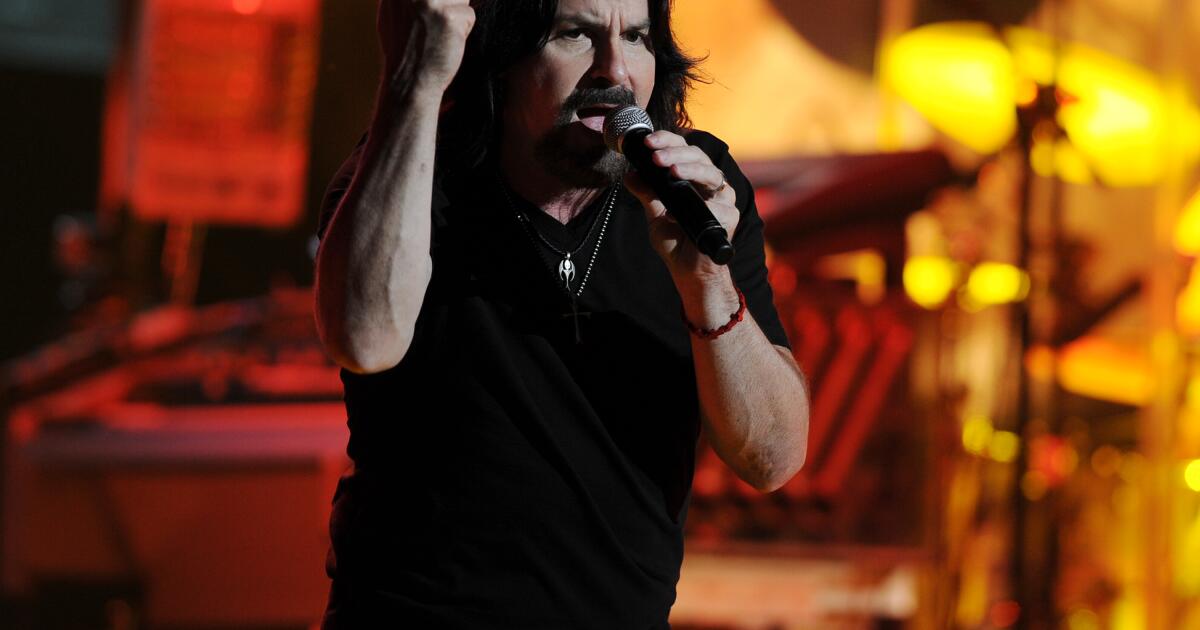
Tommy DeCarlo, a longtime fan of Boston who became the classic rock band’s lead singer in the late 2000s, has died. He was 60.
DeCarlo died Monday following a battle with brain cancer, his family announced on Facebook.
“[H]e fought with incredible strength and courage right up until the very end,” the family’s statement said. “During this difficult time, we kindly ask that friends and fans respect our family’s privacy as we grieve and support one another.”
Born April 23, 1965, in Utica, N.Y., DeCarlo said he first started listening to Boston — the 1970s rock band known for its instrumental overtures and hits including “More Than a Feeling,” “Don’t Look Back” and “Peace of Mind” — as a young teenager, according to the group’s website. The vocalist credited his love for Boston’s original frontman Brad Delp and his desire to sing along with him on the radio for helping to develop his own singing voice.
After Delp’s death in 2007, DeCarlo, then a manager at a Home Depot, sent a link to his MySpace page filled with Boston covers as well as an original song in tribute to Delp to the Boston camp, hoping for a chance to participate in a tribute show for the singer. They kindly turned down his offer.
But eventually, Boston founder and lead songwriter Tom Scholz heard DeCarlo’s cover of “Don’t Look Back” and invited the singer to perform a few songs with the band at the tribute. That tribute show would be DeCarlo’s first time ever performing with any band in front of a crowd, but it wouldn’t be his last. He continued to perform with the band at live shows for years, and even joined them on some tracks for their 2013 album, “Life, Love & Hope.”
DeCarlo also formed the band Decarlo with his son, guitarist Tommy DeCarlo Jr. In October, the singer announced he was stepping away from performing due to “unexpected health issues.”
“[P]erforming and sharing music with all of you around the world has been one of the greatest joys of my life,” DeCarlo wrote in his Facebook post. “I can’t thank you all enough for the incredible love, support, and understanding you’ve shown me and my family during this time. It truly means the world to us.”
A TRAILBLAZING 80s supermodel who starred alongside TV titan Larry Hagman in Dallas has died aged 62.
Annabel Schofield – once one of the defining faces of Britain’s style revolution – passed away on February 28 in Los Angeles following a battle with cancer, it has been confirmed.
Sign up for the Showbiz newsletter
Thank you!
She passed away on February 28 in LA following a battle with cancerCredit: GettyAnnabel Schofield has died aged 62Credit: GettyShe became internationally known in 1988 as Laurel Ellis in the US television series Dallas
The Welsh-born beauty became synonymous with the bold, rule-breaking glamour of 1980s London.
At the height of her fame, she was represented by London’s powerhouse Take Two Agency and became a cover girl sensation.
She fronted hundreds of fashion magazines and landing major campaigns for Yves Saint Laurent, Rimmel, Revlon and Boots No. 7.
Her international breakthrough came in unforgettable fashion – roaring through the desert in a black Ferrari for a Bugle Boy Jeans TV advert before delivering the now-iconic line: “Excuse me, are those Bugle Boy jeans you’re wearing?”
She later crossed into primetime television, playing Laurel Ellis opposite Larry Hagman in the hit US soap Dallas – cementing her place in pop culture history.
Melissa Richardson, former owner of London’s Take Two Agency, paid tribute in an emotional statement.
“She was one of David Bailey’s favorites and appeared in countless shoots for Italian Vogue. She was the forerunner of Take Two without her, we could never have made it as we did.
“We loved her because she was funny and real and beautiful and down to earth. She never changed from the sweet little 17-year-old Welsh girl I first met.
“She was directly loyal, caring, and above all, a raging beauty. She knew her craft. She was the best.”
Born on September 4, 1963 in Llanelli, Wales, Schofield was trained in the art of the silver screen.
Her father was British film production executive John D. Schofield – a powerhouse behind major box office hits including Romancing the Stone, Jerry Maguire and As Good as It Gets.
At the height of her modelling fame, Schofield made the bold move to Los Angeles – and swiftly landed a coveted role in 12 episodes of Dallas, playing Laurel Ellis opposite Larry Hagman’s legendary oil tycoon J.R. Ewing.
She starred as Alex Noffee in Solar Crisis alongside screen icon Charlton Heston, and went on to appear in Dragonard and Eye of the Widow.
In later years, she quietly built a formidable career behind the scenes, working in production on major films including The Brothers Grimm, Doom and City of Ember.
In 2010, she launched her own Burbank-based company, Bella Bene Productions, carving out a new chapter as an executive producer.
She developed commercials, music ventures and high-end fashion projects.
Schofield formed a creative partnership with director and graphic artist Nick Egan – famed for his work with music royalty including The Ramones, The Clash, Duran Duran and Oasis.
The beauty also collaborated with celebrated photographers Andrew McPherson, Ellen von Unwerth and Michael Muller.
She served as a producer alongside photographer Will Camden on the striking 3D Guerlain campaign starring Angelina Jolie.
She starred alongside Larry HagmanShe is best known for playing Laurel Ellis opposite Larry Hagman in the hit US soap DallasCredit: GettyIn later years, she quietly built a formidable career behind the scenes, working in production on major filmsCredit: Getty
A number of changes have been made to passport rules since Brexit, and while most of us have got to grips with the basics, there are still things that catch holidaymakers out year after year
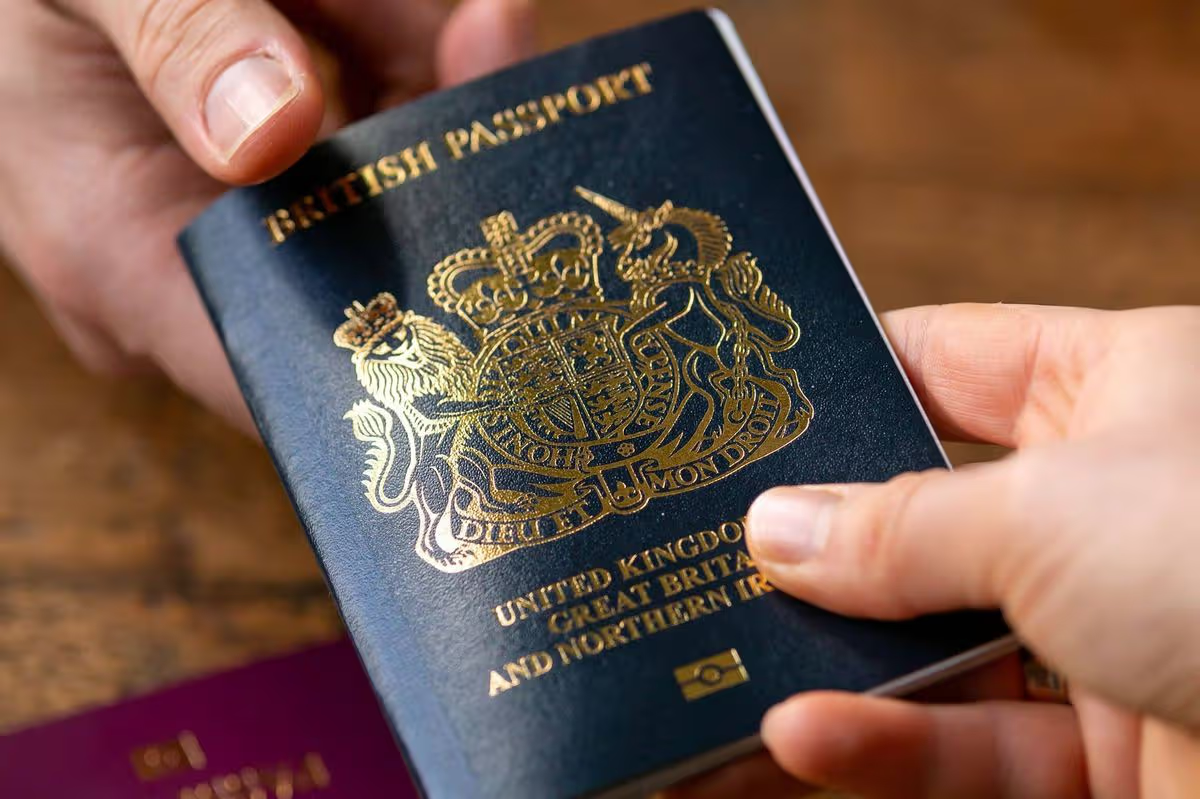
Check your passport before you book your holiday(Image: Getty)
Since Brexit, a raft of changes have been implemented to passport regulations, and whilst the majority of us have got our heads around the basics, there are still elements that trip up holidaymakers each year.
From ensuring your passport was issued within the last ten years, to verifying you have at least three months validity on your passport when entering the EU, there are several passport checks you should carry out before booking your getaway. Now is the prime time to scrutinise your passport, as renewing it at this point in the year helps you dodge the summer rush.
Whilst you may have double-checked details such as the dates and confirmed there’s no physical damage to your passport, one aspect many people overlook is the number of blank pages they have left, particularly given today’s digital age.
A standard UK passport contains 34 pages, and typically, you receive an entry and exit stamp when you go through passport control. This practice is likely to be phased out soon for holidaymakers visiting Europe due to the introduction of the EU’s Entry/Exit System (EES), but for the time being, you can assume most countries will continue adding their stamps.
Numerous countries have precise requirements regarding the number of blank pages needed for passport stamps. For EU nations, one to two pages is typically adequate, whilst destinations such as South Africa demand two, reports the Express.
Certain countries will also insist that the two blank pages are consecutive, as one page is used for the entry stamp, followed by one for departure.
Some nations that require visas for entry still utilise stickers, which are attached to blank pages, though these are generally being replaced by e-visas.
There are places that demand four pages, but the record belongs to Namibia, with reports that travellers can be required to present six blank pages upon arrival. Brits ought to verify requirements for their destination when organising their travels.
It’s important to note that not all pages can receive stamps. British passports contain an ‘observation page’ at the back reserved for official notes.
This may feature information about the holder’s dual nationalities or alternative names, but most often it remains empty. However, it doesn’t qualify as a blank page as it cannot be stamped.
So, what should holidaymakers do if they lack sufficient pages?
You’ll need to renew your current passport prior to your journey, as extra pages cannot be added. This means paying the standard passport renewal fee, which for an adult passport is £94.50 according to the UK government website.
If you’re a regular globetrotter, it’s worth considering a 54-page frequent traveller passport when you next apply. Whilst it costs slightly more at £107.50, it can prove more economical than renewing your passport in a couple of years simply because you’ve exhausted all the pages.
Children under 16 can also obtain a frequent traveller passport for the reduced price of £74.50. Frequent traveller passports for adults are additionally available through the one-day premium or one-week fast track services, though these cost £235 or £191 respectively.
Ensure our latest lifestyle and travel headlines always appear at the top of your Google Search by making us a Preferred Source. Click here to activate or add us as Preferred Source in your Google search settings