Trumps

How Trump’s immigration crackdown is affecting everyday Americans, according to a new AP-NORC poll

Most U.S. adults say the United States is no longer a great place for immigrants, according to a new AP-NORC poll, as about one-third of Americans report knowing someone impacted by the Trump administration’s aggressive immigration enforcement.

A new survey from The Associated Press-NORC Center for Public Affairs Research of more than 2,500 U.S. adults finds about 6 in 10 say the country used to be a great place for immigrants but is not anymore. About one-third of U.S. adults — and more than half of Hispanic adults — say that over the last year they, or someone they know, have started carrying proof of their immigration status or U.S. citizenship, been detained or deported, changed travel plans, or significantly changed routines, such as avoiding work, school or leaving the house, because of their immigration status.

The poll comes as the Supreme Court is considering whether the Trump administration should be allowed to restrict birthright citizenship, as well as following months of sweeping immigration enforcement and mass deportations of immigrants.

Missouri retiree Reid Gibson, an independent, is furious about the Trump administration’s treatment of immigrants. He hopes America eventually becomes more welcoming to immigrants again, but he worries “it may take many years to reverse the damage that the Trump administration has inflicted” with its policies.

The poll finds that many Americans know someone who has been affected by Trump’s approach. That includes Gibson’s stepdaughter, who he says started carrying her passport because of concerns that her darker skin would make her a target in immigration crackdowns.

“It’s just plain wrong,” Gibson, 72, added. “This is not a good country for immigrants anymore.”

Americans’ personal connections to immigration enforcement

Many U.S. adults have adapted their lives to heightened immigration enforcement over the last year, as Trump increased detentions and sought to conduct the largest deportation operation in American history.

Democrats are more likely than independents or Republicans to know someone affected, and those with a personal connection are more likely to say the U.S. is no longer a great place for immigrants.

Kathy Bailey, a 79-year-old Illinois Democrat, has seen the administration’s immigration policies seep into the small-town swim class she regularly attends. She said two women in the class — both naturalized U.S. citizens — have begun carrying their passports when they leave home. Bailey says one of the women, who is from Latin America, has been especially worried about sticking out in an overwhelmingly white community.

“She’s an American citizen now, but she’s so scared that she has to carry her passport,” said Bailey. “She’s just another sweet old grandmother swimming at 5 in the morning.”

About 6 in 10 Hispanic adults say they or someone they know has been impacted by immigration enforcement in this way, much higher than among Black or white adults.

“This is terrible for these women!” Bailey said. “I’m just stunned at what we are coming to.”

Most believe the U.S. used to be a great place for immigrants

Nick Grivas, a 40-year-old from Massachusetts, said his own grandfather’s immigration to the U.S. from Greece has made him feel the impact of the president’s policies. It’s part of why he believes the U.S. stopped being a promising place for people seeking a new life.

“We can see how we’re treating children and the children of the immigrants, and we’re not viewing them as potential future Americans,” Grivas said.

Roughly 3 in 10 U.S. adults say the U.S. is a great place for immigrants, according to the poll, while about 1 in 10 say it never was. The belief that America is no longer great for immigrants is more common among Democrats and independents, as well as among those born outside the U.S.

Grivas, a Democrat, worries that federal policies against immigration could stunt the country by discouraging new arrivals from investing in their local communities, especially if they don’t believe they will be allowed to remain.

“You’re less willing to commit to the project if you don’t think that you’re gonna be able to stay,” he said.

Most support birthright citizenship, but also hold nuanced views

The Supreme Court recently heard arguments in President Trump’s efforts to restrict birthright citizenship by declaring that children born to parents who are in the country illegally or temporarily are not American citizens.

About two-thirds of U.S. adults in the poll say automatic citizenship should be granted to all children born in the country, a view that most Democrats and independents back. Republicans are more doubtful: just 44% support birthright citizenship. The poll also shows that some people are conflicted, saying in general that they support birthright citizenship but also that they oppose it in some specific circumstances.

Among those who object to automatic citizenship is Linda Steele, a 70-year-old from Florida, who believes that only children born to American citizens should be granted citizenship. Steele, a Republican, does not believe foreigners living legally in the U.S. — whether for work or other reasons — should be able to have a child who automatically becomes a U.S. citizen.

“That shouldn’t be allowed,” she said. “They’re just here visiting or going to school.”

When asked about some specific circumstances, about 6 in 10 U.S. adults say they support birthright citizenship for children born to parents on legal U.S. tourist visas, while only about half support it for those born to parents who are in the country illegally. An even higher share, 75%, support automatic citizenship for children born in the U.S. to parents who are in the country legally on work visas, with much of that increased support coming from Republicans saying this was an acceptable situation.

Kevin Craig, a 57-year-old from Wilmington, North Carolina, does not believe citizenship should be automatically granted. Craig, who leans conservative, believes there should be “at least some opportunity for intervention by a human being who can make some sort of a judgment.”

But he added: “I think my personal opinion is that I can’t think of a situation where it would not be granted.”

Sanders, Sullivan and Catalini write for the Associated Press. Sullivan reported from Minneapolis. Catalini reported from Morrisville, Pa. The AP-NORC poll of 2,596 adults was conducted April 16-20 using a sample drawn from NORC’s probability-based AmeriSpeak Panel, which is designed to be representative of the U.S. population. The margin of sampling error for adults overall is plus or minus 2.6 percentage points.

Source link

Trump’s Indiana wins show his power over GOP with more primaries and redistricting debates ahead

Five months ago, President Trump was stinging from one of the first political defeats of his second term as Republican state senators defied him on redistricting in Indiana. Now he has proved he can still punish wayward party members after he endorsed a slate of challengers who defeated almost every one of those lawmakers he wanted to dislodge.

The results will likely bolster Trump’s confidence heading into upcoming Republican primaries where he wants to help oust more incumbents, including U.S Sen. Bill Cassidy of Louisiana and U.S. Rep. Thomas Massie of Kentucky.

Indiana’s primary also ratchets up the pressure on Republican lawmakers in other states to move aggressively to redraw congressional district boundaries before the November elections. Alabama and Tennessee have already begun special sessions that could limit Black voters’ strength in Democratic-leaning districts, and some of Trump’s allies in South Carolina want to follow suit.

State Sen. Linda Rogers, one of the Indiana lawmakers who voted against redistricting and lost her seat Tuesday, said the outcome “will probably discourage others in other states.”

“If someone is going to ask you to take a tough vote, you may think twice about your conscience and what’s best for your community and instead what’s best for you and your career,” she said.

Redistricting efforts began last year, when Trump saw an opportunity to give Republicans an additional edge, but they were supercharged last week when the U.S. Supreme Court gutted a provision of the Voting Rights Act that influenced how political lines are drawn.

Trump’s success in Indiana, aided by more than $8.3 million in campaign cash in races that usually see very little spending, reaffirmed the president’s continued strength within a Republican Party that he has dominated for a decade, despite his inevitable slide toward lame-duck status and his sagging poll numbers.

“Historic night for Indiana as Republicans stood with me and President Trump to nominate some great America First conservatives,” Gov. Mike Braun, R-Ind., posted on social media. “I look forward to winning big in November and serving Hoosiers with this team in the statehouse!”

Trump backed primary challenges against seven Republican state senators who rejected his redistricting plan in December. Five of the president’s candidates won, and another race remained too close to call.

Trump was relatively restrained on social media about the voting. He shared a series of photos celebrating the victories of candidates he endorsed in Indiana and Ohio, which also held primaries Tuesday. But he otherwise passed on boasting or renewing his attacks on Massie or Cassidy.

Massie has been among the members of Congress who frustrated the president by pressing for release of the Jeffrey Epstein case files. Cassidy was among the Republican senators who voted to convict Trump on 2021 impeachment charges after the Jan. 6 riot.

James Blair, one of Trump’s top political advisers, was more direct, posting an image from the movie “Gladiator” depicting Russell Crowe’s ancient Roman character Maximus exulting after a combat victory.

Rogers, the Indiana state senator, faced almost $670,000 in television advertising against her, funded by political action committees associated with Braun and U.S. Sen. Jim Banks, R-Ind.

She said she did not regret her vote against redistricting.

“It would have been easy for me to hit that ‘yes’ button,” she said. “To hear the number of people who asked me not to, then the number of people who thanked me, would mean I wasn’t representing them.”

Louisiana’s primary, in which Trump has endorsed U.S. Rep. Julie Letlow over Cassidy, is set for May 16. Kentucky, where Trump has endorsed Massie’s challenger, retired Navy SEAL Ed Gallrein, will hold its primary May 19.

Beaumont and Barrow write for the Associated Press.

Source link

GOP bill would fund $1 billion in White House security upgrades for Trump’s ballroom

Senate Republicans have added $1 billion in White House security upgrades to legislation that would fund immigration enforcement agencies, a proposed boost for President Trump’s ballroom project after a man was charged with trying to assassinate him at the White House Correspondents’ Assn. dinner last week.

The GOP bill released late Monday would designate the money for the U.S. Secret Service for “security adjustments and upgrades” related to the ballroom project, which Trump and Republicans have been pushing since Cole Tomas Allen allegedly stormed the April 25 media dinner at the Washington Hilton with guns and knives. The legislation says the money would support enhancements to the ballroom project, “including above-ground and below-ground security features,” but also specifies that the money may not be used for non-security elements.

White House spokesperson Davis Ingle praised Republicans for including the money for the “long overdue” project, saying it would “provide the United States Secret Service with the resources they need to fully and completely harden the White House complex, in addition to the many other critical missions for the USSS.”

The money is part of a larger bill to pay for Immigration and Customs Enforcement and Border Patrol, as Democrats have been blocking funds for both agencies since mid-February. Congress passed bipartisan legislation to fund the rest of the Homeland Security Department on April 30 after a record-long shutdown, but Republicans are using a partisan budget maneuver to push through the ICE and Border Patrol dollars on their own. The House has not released its bill yet, but the Senate is expected to start voting on its version of the legislation next week.

It is unclear exactly how the $1 billion would be used, and the amount far exceeds the proposed $400 million for construction of the ballroom. The White House has said in court documents that the East Wing project would be “heavily fortified,” including bomb shelters, military installations and a medical facility underneath the ballroom. Trump has said it should include bulletproof glass and be able to repel drone attacks.

The National Trust for Historic Preservation has sued to block construction of the project, but a federal appeals court said last month that it can continue in the meantime.

The White House has said that private money would pay for the construction but public money would be used for security measures. Some Republicans have suggested that public money pay for all of it, arguing the security breach at the dinner shows the president needs a secure place to host events.

“It would be insane” to hold the dinner at a hotel again, said Republican Sen. Lindsey Graham of South Carolina, who introduced a bill to pay for the ballroom’s construction with Sen. Katie Britt, R-Ala.

Democrats have said they will oppose any efforts to pay for the ballroom.

“While Americans are struggling to make ends meet as a result of President Trump’s failed policies, Republicans are focused on providing tens of billions of dollars for the President’s vanity ballroom project and cruel mass deportation campaign,” said Illinois Sen. Dick Durbin, the top Democrat on the Senate Judiciary Committee, which oversees the U.S. Secret Service.

Jalonick writes for the Associated Press. AP writer Darlene Superville contributed to this report.

Source link

Trump’s drugmaker deals may save economy $529B over 10 years, White House says

White House economists estimate that President Trump’s deals with pharmaceutical companies to drop some of their U.S. prescription drug prices to what they charge in other countries could save $529 billion over the next 10 years.

The analysis obtained by the Associated Press includes the first economy-wide projections behind a policy at the core of Trump’s pitch to voters going into November’s midterm elections for control of the House and Senate. Democratic lawmakers have been doubtful about the savings claimed by Trump and these new numbers are likely to trigger additional questions about the data.

Cost-of-living issues are at the forefront of voters’ concerns and higher energy prices tied to the Iran war have deepened the public’s anxiety. Trump has tried in part to address affordability concerns by focusing on his efforts to cut deals with companies so that the cost of prescription drugs in the U.S. would no longer be dramatically higher than in other affluent nations.

“Now you have the lowest drug prices anywhere in the world,” Trump said at a Friday rally before a crowd of seniors in Florida. “And that alone should win us the midterms.”

The analysis was done by administration officials for the White House Council of Economic Advisers. They also estimated that federal and state governments could save a combined $64.3 billion on Medicaid during the next decade because of what Trump calls his “most favored nation” policy on drug prices.

Few of the details of the deals struck by the Trump administration and 17 leading pharmaceutical companies have been made public, making it hard to independently verify the projected savings. The White House analysis sought to estimate the prospective savings as more medications come onto the market and fall under Trump’s framework — with one model in the report tallying the possible savings at $733 billion over a decade.

Trump and his Department of Health and Human Services have touted his drug-pricing deals as transformative and urged Congress to codify their principles into law. Democratic lawmakers have challenged the administration’s claims of savings. Senate Finance Committee Ranking Member Ron Wyden, D-Ore., and 17 Senate Democrats in April proposed a measure requiring the administration to disclose the terms of the agreements signed by pharmaceutical companies.

“If these deals are so great, why is the Trump administration afraid of showing them to the public?” Wyden said when announcing the measure. Health Secretary Robert F. Kennedy Jr. said his team would share details that didn’t include proprietary information or trade secrets.

The White House said it has not shared the text of the agreements because they include highly sensitive data that could move financial markets.

The potential savings estimated by the Trump administration would be substantial as Americans spent $467 billion on prescription drugs in 2024, according to the most recent government data available. The analysis is premised on the idea that foreign countries would also pay more for their prescription drugs, which would diversify drugmakers’ sources of revenue and preserve their ability to innovate with new treatments.

Outside economists have caveated that any savings might not flow directly to patients, many of whom already pay discounted prices for their drugs through their insurance coverage.

The Congressional Budget Office in October 2024 estimated that a plan similar to what Trump ended up adopting could reduce prescription drug prices by more than 5%, though the decrease “would probably diminish over time as manufacturers adjusted to the new policy by altering prices or distribution of drugs in other countries.”

The scope of the savings claimed by the Trump administration are likely to intensify the scrutiny by Democrats, who counter that any price reductions would be offset by higher costs for prescription drugs not covered by the “most favored nation” framework. One of their main critiques is that pharmaceutical companies have increased their profit margins while working with the administration.

In April, staff working for Sen. Bernie Sanders, I-Vt., released an analysis that looked at 15 of the companies that have agreed to this drug-pricing plan and found that their combined profits jumped 66% over the past year to $177 billion. The report noted that the tax cuts Trump signed into law last year “exempted or delayed many of the most expensive drugs” from price negotiations with Medicare.

The Trump administration has countered that they consider Sanders’ critique to be flawed, saying that it’s based on the list prices for pharmaceutical drugs instead of the actual price that patients pay.

Boak writes for the Associated Press.

Source link

Kimmel vs. Trump’s FCC: What a license review means for ABC’s stations

Federal Communications Commission Chairman Brendan Carr has shown an ability to make a lot of noise at the government agency known in recent years to be a little sleepy.

But his April 28 announcement that the Walt Disney Co.’s eight ABC TV stations will undergo an early review of their broadcast licenses is his loudest action yet taken on behalf of President Trump, who repeatedly threatened media outlets that he believes are critical of him.

Carr is calling for the review two years before any of the station licenses are up, citing the agency’s inquiry into Disney’s diversity, equity and inclusion policies and whether they violated federal anti-discrimination rules.

The timing of Carr’s move is raising eyebrows as it comes after First Lady Melania Trump’s call for the firing of ABC late-night host Jimmy Kimmel over his April 23 comedy bit on the White House correspondents’ dinner. A tuxedo-clad Kimmel called Melania Trump “beautiful,” saying she had “the glow of an expectant widow.”

The first lady’s remarks came after a man armed with a shotgun, handgun and several knives breached security at the Washington black-tie event on April 25. The suspect, Cole Tomas Allen of Torrance, was arrested and faces three criminal charges, including attempting to assassinate the president.

Kimmel’s gag became ammunition for right-wing commentators, who claim the left is stoking political violence.

The host said the joke was about the age difference between the 79-year-old president and his wife. Kimmel denied it was a call for violence and has continued to mock the president on his show.

Carr insisted at a Washington news conference last week that his demand for a review is not related to Kimmel’s remarks.

Although many are skeptical, Carr, who was at the April 25 dinner, told The Times there would be an action related to ABC coming soon. The conversation occurred hours before the shots were fired.

The investigation into Disney’s practices began in March 2025, part of a broader effort by the Trump administration to reverse DEI initiatives across private companies, federal agencies, universities and other organizations.

After the 2020 police killing of George Floyd in Minneapolis, which spurred the Black Lives Matter movement, companies such as Disney and NBC-owned Comcast aggressively promoted their diversity efforts.

But experts believe Carr is acting on ABC at the behest of Trump, as the chairman has often expressed support on social media whenever the president criticizes one of the broadcast TV news outlets.

“It might be the case that Disney can get some early relief by saying this should be dismissed because this is really a 1st Amendment issue,” said James Speta, a professor at the Northwestern University School of Law. “We all know what’s going on here — the administration doesn’t like the speech that’s coming out of the talent on the broadcasting airwaves.”

Disney is not commenting on Carr’s DEI investigation, but it earlier defended the record of its TV stations, which are ratings leaders in most markets. “We are confident that record demonstrates our continued qualifications as licensees under the Communications Act and the First Amendment and are prepared to show that through the appropriate legal channels,” the company said.

Here’s a primer on what to know and the challenges Disney may face.

Why are TV stations licensed by the government?

Government licensing regulates the spectrum allocated to broadcast channels, largely to prevent interference between TV signals. When renewals come up, the license holder must demonstrate that the station is serving the public interest by providing local news, program diversity and educational and informational shows for children. The procedure once occurred every three years, but deregulation efforts have extended that period to the current span of eight years.

When was the last time a TV station faced a significant license renewal challenge?

The most notable recent example was Fox Corp.’s Philadelphia station WTXF, which was up for a license renewal in October 2023. Activist groups filing the challenge said Fox was unfit to own the outlet after a judge ruled earlier that year that the company’s Fox News Channel had spread falsehoods about voter fraud in the 2020 election.

Fox paid $787 million to settle a defamation lawsuit filed by Dominion Voting Systems that alleged the cable news channel damaged the company’s reputation.

Fox News, which operates on cable and satellite and is therefore not subject to FCC control, has a different management team than the parent company’s local TV stations, which mostly cover their communities and do not typically present political commentary. The FCC rejected the renewal challenge in January 2025, noting that none of the false information on Fox News was heard on the Philadelphia station. WTXF was not cited in Dominion’s lawsuit.

Are there any other examples?

Yes. Other White House administrations have threatened to pull TV station licenses in response to negative news coverage. At the height of the Watergate scandal in the 1970s, Richard Nixon’s allies unsuccessfully attempted to challenge the TV licenses of three stations then owned by the Washington Post.

Has a company ever lost its broadcast license?

RKO General, a unit of the General Tire and Rubber Co., was the last company to lose broadcast TV station licenses in 1987, including Los Angeles outlet KHJ. The case was related to corporate malfeasance and not broadcast content on the stations.

The process to revoke the RKO licenses took seven years from the moment the FCC voted in favor of the move.

But isn’t this case different?

Yes. Although the rule Carr mentioned is legitimate, the FCC has rarely if ever acted on it, according to one veteran TV executive who was not authorized to speak publicly on the matter. If Disney or any other company was found to violate the nondiscrimination rule, they would in previous eras probably be subjected to a just a fine, not the denial of a license, which would be viewed by many as government censorship.

What happens in the event that ABC licenses are not renewed?

Nothing immediately, as the licenses are in effect through 2028 to 2032, depending on the outlet. If Disney had to sell the stations, the price would probably be depressed due to pressure to unload the properties.

But public communications attorney Andrew Jay Schwartzman told The Times last month that the bar for denying a renewal is high and any effort would be tied up in court on constitutional grounds.

“The law intentionally sets out a very steep burden for the FCC to deny a license renewal; the process takes many years, during which time the licensee continues to operate normally under ‘continuing operating authority,’” Schwartzman said.

Source link

Supreme Court leans in favor of Trump’s bid to end protections for Syrian, Haitian migrants

The Supreme Court’s conservative majority sounded ready Wednesday to rule that the Trump administration may end the temporary protection that has been granted to more than 1.3 million immigrants from troubled countries.

Congress in 1990 authorized Temporary Protected Status, or TPS, for noncitizens who could not safely return home because their native country was wracked by war, violence or natural disasters. If those people passed a strict background check, they could stay and work legally in this country.

But President Trump came to office believing too many immigrants had been granted permission to enter and stay indefinitely.

Last year, his Department of Homeland Security moved to cancel the temporary humanitarian protection for immigrants from 13 countries, including Venezuela, Haiti, Syria, Honduras and Nicaragua. Court challenges on behalf of Haitians and Syrians were consolidated into a single case, Mullin vs. Doe, which the justices heard Wednesday.

Immigrant-rights advocates challenged those decisions as political and unjustified, and they won orders from federal judges that blocked the cancellations.

But Trump’s lawyers filed an emergency appeal at the Supreme Court arguing the judges had overstepped their authority. They pointed to a provision in the 1990 law that bars “judicial review” of the government’s decision to end temporary protection for a particular country.

The justices ruled for the administration and set aside the lower court rulings in a series of 6-3 orders.

Faced with criticism over its brief and unexplained orders, the justices agreed to hear arguments on the TPS issue on the last day of oral arguments for this term.

But the ideological divide appeared to be unchanged.

Solicitor Gen. D. John Sauer said Congress had prohibited “judicial micromanagement” of these decisions, and none of six conservatives disagreed.

UCLA law professor Ahilan T. Arulanantham, representing several thousand Syrians, said the Homeland Security secretary had failed to consult the State Department, which says it is unsafe to travel there.

He said the government “reads the statute like it’s a blank check … to give the secretary the power to expel people who have done nothing wrong.”

Chicago attorney Geoffrey Pipoply, representing more than 350,000 Haitians, said the cancellations were driven by “the president’s racial animus toward non-white immigrants.”

The court’s three liberals argued the administration failed to follow the procedural steps required under the law. But that argument failed to gain traction.

Justice Amy Coney Barrett and her husband adopted two children from Haiti who are citizens. Like most of the conservatives, she asked few questions during the argument.

Source link

Kevin Warsh is one step closer to top job at the Fed after Trump’s pick approved by Senate committee

The Senate Banking Committee voted on party lines Wednesday to approve Kevin Warsh as the next chair of the Federal Reserve to replace Jerome Powell, a longtime target of President Trump’s insults for not cutting borrowing costs as far as the president wanted.

The vote was 13-11, with all Republican senators voting in favor and Democrats opposed.

Warsh is a former top Fed official but has also been a sharp critic of the institution and Powell’s leadership. He has called the inflation spike to 9.1% in 2022 the central bank’s biggest policy mistake in four decades. A vote on his nomination probably won’t take place until next month, but he could be confirmed by the time Powell’s term as chair ends May 15.

The Senate Banking vote is the first of two key events surrounding the future of the Fed’s leadership. Also Wednesday, Powell is presiding over what will probably be his last meeting of the Fed’s interest rate-setting committee. At a news conference Wednesday afternoon, Powell may indicate whether he will remain as a member of the central bank’s board of governors after his term as chair ends.

It would be unusual for Powell to stay, but doing so would deprive the Trump administration of an opportunity to appoint a new member to the board. Powell may choose to stay if he sees it as necessary to protect the Fed’s independence, which has become part of his legacy as its leader.

Sen. Tim Scott, a South Carolina Republican and chair of the committee, said Warsh is “battle tested” and added that, “It is incredibly important that we break the bind of Bidenomics on households across this nation.”

Sen. Elizabeth Warren, a Democrat from Massachusetts, criticized the banking panel for voting on Warsh’s nomination. Doing so “will bring the president one step closer to completing his illegal attempt to seize control of the Fed and artificially juice the economy,” she said, citing Trump’s effort to fire Fed governor Lisa Cook and investigate Powell.

The Fed on Wednesday is widely expected to leave its key rate unchanged at about 3.6% for its third straight meeting, defying Trump’s calls for lower rates.

Warsh has called for “regime change” at the Fed and could alter many of its practices, including the economics models it focuses on, how it communicates with the public, and how large its bondholdings will be in the long run.

Those changes could affect financial markets, but otherwise won’t necessarily be visible to the general public. But Warsh has also advocated for additional interest rate cuts, which could potentially lower borrowing costs for mortgages, auto loans, and business loans. He will face barriers to implementing those cuts anytime soon, however, largely because the Iran war has caused a spike in gas prices, pushing inflation to a two-year high of 3.3%.

The Fed typically keeps rates elevated, or even raises them, to combat worsening inflation.

Most of the other 11 members of the Fed’s rate-setting committee have indicated they would prefer to wait and evaluate where inflation and the economy are headed before making any changes to rates. It could take time for Warsh to build up enough influence to push for rapid rate cuts. He will also replace Stephen Miran, a member of the Fed’s rate-setting committee who was appointed by Trump last September and is the most consistent advocate for rate reductions at the central bank.

Warsh also faces questions about his independence from the White House, a key issue that dogged him during a Senate Banking hearing last week. On Wednesday, Warren said, “Mr. Warsh is a Trump sock puppet who is so cowed by the president that he could not even say that Trump lost the 2020 election.”

Last December, Trump called for much lower interest rates in a social media post, and added that “anyone who does not agree with me will never be Fed chair!” And just last week he told Fox Business that he expects rates to head lower, “when Kevin gets in.”

Warsh denied at his hearing, however, that Trump had ever pressured him directly to cut rates.

Rugaber writes for the Associated Press.

Source link

U.S. will issue commemorative passports with Trump’s picture for America’s 250th birthday

The State Department said that it is preparing a limited release of commemorative U.S. passports celebrating America’s 250th birthday that feature a picture of President Trump, who would be the first living president to be featured in the travel document.

The concept for the special passport, including a rendering of Trump’s stern-looking visage, had been under consideration for months before finally being approved late Monday and publicly announced Tuesday. Between 25,000 and 30,000 of the new passports will be available to applicants at the Washington passport office beginning shortly before July 4.

It’s the latest instance of Trump having his name and likeness added to buildings, documents and other highly visible tributes. There are efforts to put Trump’s signature on all new U.S. paper currency, also a first for a sitting president, as well as to include his image on a gold commemorative coin to celebrate the country’s founding.

The commemorative passport will be the default document for people applying in person at the Washington office, although those who want a standard passport will be able to get one by applying online or outside Washington, officials said.

“As the United States celebrates America’s 250th anniversary in July, the State Department is preparing to release a limited number of specially designed U.S. passports to commemorate this historic occasion,” State Department spokesman Tommy Pigott said.

“These passports will feature customized artwork and enhanced imagery while maintaining the same security features that make the U.S. passport the most secure documents in the world,” he said.

The limited release passport will feature Trump’s picture over a gold imprimatur of his signature to an interior page, while the cover will feature the words “United States of America” in bold gold print at the top and “Passport” at the bottom — a reversal of the standard cover.

In addition, a small gold laminate American flag, with the number 250 encircled by stars, will be at the bottom of the back cover.

The Bulwark reported earlier on the commemorative passports.

The only presidents featured in current U.S. passports are in a double-page depiction of Mount Rushmore in South Dakota — George Washington, Thomas Jefferson, Theodore Roosevelt and Abraham Lincoln.

Other depictions include the Statue of Liberty, the Liberty Bell and Independence Hall in Philadelphia, and scenes of the Great Plains, mountains and islands. Current passports also contain quotations from Martin Luther King Jr. as well as Presidents Washington, Jefferson, Roosevelt, John F. Kennedy and Dwight Eisenhower.

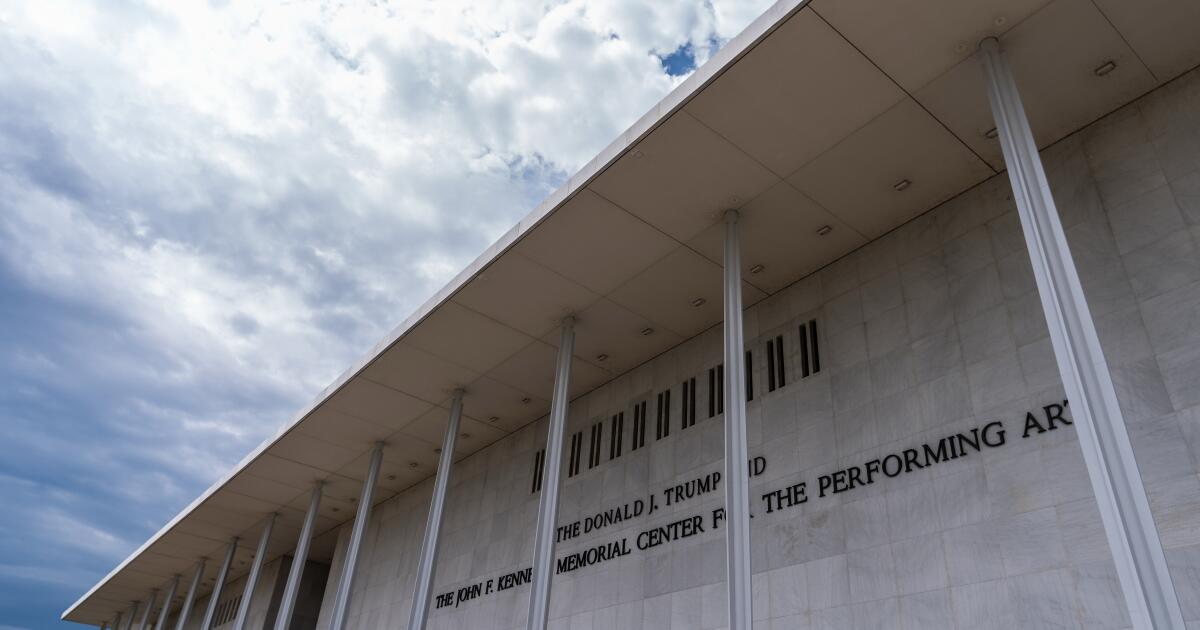
The addition of Trump’s picture and signature to the passport book is the newest step his aides have taken to increase the president’s visibility, including adding his name to the U.S. Institute of Peace building and the Kennedy Center performing arts venue.

Trump also has made waves with his plans for a new White House ballroom and a massive arch to be built at one of the entrances to Washington from Virginia.

Lee writes for the Associated Press.

Source link

US appeals court rejects Trump’s immigration detention policy | Donald Trump News

In a 3-0 ruling, court says Trump administration misread a decades-old immigration law to justify mandatory detention.

A United States federal appeals court has rejected the Trump administration’s practice of subjecting most people arrested in its immigration crackdown to mandatory detention without the opportunity to seek release on bond.

In a 3-0 ruling on Tuesday, a panel of the New York-based US Court of Appeals for the Second Circuit said the administration relied on a novel but incorrect interpretation of a decades-old immigration law to justify the policy.

Recommended Stories

list of 4 itemsend of list

Writing for the panel, US Circuit Judge Joseph F Bianco, a Trump appointee, warned that the government’s reading “would send a seismic shock through our immigration detention system and society”, straining already overcrowded facilities, separating families and disrupting communities.

Lawyers for the Trump administration say the mandatory detention policy is legal under the Illegal Immigration Reform and Immigrant Responsibility Act, passed in 1996.

But Bianco said the government had made “an attempt to muddy” the law’s “textually clear waters”, arguing that the administration’s interpretation “defies the statute’s context, structure, history, and purpose” and contradicts “longstanding executive branch practice”.

Under the Trump administration policy, the Department of Homeland Security last year took the position that non-citizens already living in the US, not just those arriving at the border, qualify as “applicants for admission” and are subject to mandatory detention.

Under federal immigration law, “applicants for admission” to the US are detained while their cases proceed in immigration courts and are ineligible for bond hearings.

The Department of Homeland Security has been denying bond hearings to immigrants arrested across the country, including those who have been living in the US for years without any criminal history, the Associated Press (AP) news agency reports.

That is a departure from the practice under previous US administrations, when most non-citizens with no criminal record who were arrested away from the border were given the opportunity to request a bond while their cases moved through immigration court, according to AP.

In such cases, bonds were often granted to people who were deemed not to be flight risks, and mandatory detention was limited to those who had just entered the country.

Amy Belsher, director of immigrants rights’ litigation at the New York Civil Liberties Union, said the appeals court ruling affirmed “that the Trump administration’s policy of detaining immigrants without any process is unlawful and cannot stand”.

“The government cannot mandatorily detain millions of noncitizens, many of whom have lived here for decades, without an opportunity to seek release. It defies the Constitution, the Immigration and Nationality Act, and basic human decency,” Belsher said in a statement.

Conflicting rulings set stage for Supreme Court review

The New York court’s decision comes after two other appeals courts ruled in favour of the Trump administration’s policy.

Acknowledging the opposing rulings, Judge Bianco said the panel was parting ways with them and instead aligning with more than 370 lower-court judges nationwide who have rejected the administration’s position as a misreading of the law.

The split among the courts increases the likelihood that the US Supreme Court will weigh in.

The latest ruling also upheld an order by a New York judge that led to the release of Brazilian national Ricardo Aparecido Barbosa da Cunha, who was arrested by immigration officials last year while driving to work after living in the US for more than 20 years.

“The court was right to conclude the Trump administration can’t just ⁠reinterpret the law at its own whim,” Michael Tan, a lawyer for Barbosa at the American Civil Liberties Union, said in a statement.

The Department of Justice, which is defending the mandatory detention policy in court, did not respond to a request for comment.

Source link

Trump’s “Transition” in Venezuela is Starting to Reek

One day Delcy Rodríguez calls for a reform to the justice system after announcing the sudden revocation of the amnesty law her brother sponsored. The other, rumors suggest she’ll reshuffle the country’s higher court without providing any indication of who the new magistrates are going to be. The central bank president she recently named prepares to disclose figures to the IMF for the first time in decades.

The public does little else than follow the news, as if things were normal. Futile debate has emerged on social media over whether the new US chief of mission in Caracas is more hawkish than his predecessor. Or if the opposition has racist tendencies because a singer (once popular in the 2000s) called Delcy an ape in the opposition’s largest rally in years.

The picture of the country in recent weeks is one of Delcy Rodríguez calling the shots with near-total freedom. She has been enjoying a clear head start over a potential presidential election, as she crisscrosses Venezuela on what amounts to an unofficial campaign tour. In Caracas, she keeps changing everything so that nothing really changes. She is intent on controlling government offices in the next four years through newly promoted loyalists and a clean inflow of petrodollars. The chavista elite has looked more confident in the meantime, touring with Delcy in sky-blue outfits, leading cartoonish chants for peace and national union as if the internal contradictions that surfaced two months ago were now less important, because the possibility of survival looks clearer.

Back in February, optimists would discuss the scope of Washington’s coercion capacity over the “caretaker” regime, the boundaries that (if crossed) would trigger a “second wave” of attacks, the disappearance of Alex Saab as a prelude of a broader purge against other “untouchables” that overtly normalized the commission of terror. Now, lunatics like Diosdado Cabello’s nephew, Alejandro Rondón, claim on social media that “the recess is about to end” the same day Delcy says the amnesty scheme ran its course and Cabello recounts an unlikely justice system crackdown.

What followed January 3rdwas a paradigm change with positive practical consequences for society that chavismo quickly learned to manage if not reverse.

Alejandro doesn’t look like the brightest dude. He’s another chavista nepo-kid working for the other Cabello uncle that controls Venezuela’s taxing authority, Jose David, though Alejandro made a name for himself with rage-baiting tweets that celebrated Maduro’s “victory” in 2024 and claimed the opposition were terrorists who falsified the official voting records (i.e. Diosdado’s talking points during the tun-tun operation).]

But an emboldened member of the Cabello Rondón clan is a troubling sign for those who fled the country after being placed on “treason” blacklists. It also undercuts the very notions of pluralism and national reconciliation that Marco Rubio invoked three months ago when outlining his vision for Venezuela’s democratic transition before US senators. Shortly thereafter, Rondón drove the point home by publicly wishing Donald Trump well after the shooting at the White House Correspondents’ Dinner. The message seems clear: the arrangement with Team Trump is comfortable enough that, however fraught the geopolitical backdrop, they can afford to be flippant—even in public. They remain, unmistakably, the bullies in town. 

The long wait for elections (or just a calendar?)

What followed January 3rd was a paradigm change with positive practical consequences for society that chavismo quickly learned to manage if not reverse. Allies of Maria Corina  Machado who spent the past two years jailed or hiding are back in the street, even providing testimonies about their imprisonment. The student movement has undergone a revival, liaising with human rights groups to set up carefully-controlled protests. Censorship isn’t what it used to be, so journalists have tried to take advantage of that opening. Pensioners and public workers have perhaps become the loudest actor in confronting Rodríguez, despite having to face colectivos and National Guards whenever they hit the streets.

Repression has become less intense, but the lack of a clear electoral calendar keeps the opposition on the sidelines, waiting for the arrival of Machado, which is no less paralyzing. The amnesty law passed on February 19 effectively funneled the release of political prisoners, shattering expectations of a “landmark outcome” that would speed up the process. 

Indeed, the statute’s contents make more than 180 supposed military rebels ineligible, although the release of a handful of FANB officers in recent days reinforces the idea that a law wasn’t necessary to get people out of jail. Nearly 300 civilians are still imprisoned, and we haven’t seen significant breakthroughs in the past few weeks.

According to figures from NGO Foro Penal (based on documented cases), the political prisoner population fell by 40% in the two months following the US military intervention—dropping from 863 detainees in late December to 526 by March 2. The pace has clearly slowed since then. Chavismo released 36 people between March and April, and 17 over the past 18 days (about 6% of the pre–January 3 total). The regime still resorts to sporadic arbitrary arrests and intimidation. Alexis Paparoni, an opposition figure in Mérida (and brother of Carlos Paparoni), was briefly detained while traveling and later released under precautionary measures. A similar incident occurred last weekend with a government employee in Guárico, who was detained for having a note on his desk bearing the now-infamous slur directed at Delcy.

“These prisoners are currently incarcerated because POTUShas chosen to appease and praise the perpetrators instead of supporting their victims,” Burelli recently told Senator Scott.

The White House appears satisfied with results so far. Venezuela is now subject to sweeping sanctions relief across oil, gas, minerals, and fertilizers, while OFAC has issued waivers allowing operations with public banks. Most notably, Delcy Rodríguez has been removed from the Specially Designated Nationals list—effectively unfreezing her US-based assets and clearing the way for financial dealings under American jurisdiction. 

The opposition leadership has largely stuck to its 2025 strategy of projecting trust and patience toward Donald Trump. María Corina Machado continues to argue that Trump is the head of state who has done the most to advance Venezuela’s liberation and maintains that the Rodríguez government is dismantling the Maduro-era “structures of corruption and repression.” However, she acknowledged last week that a bout of political instability cannot be ruled out. 

“The risk is that if people feel the path [toward freedom and democracy] is beginning to close, they may start to push back in a disorganized and potentially anarchic way,” she told esRadio hosts in Madrid. “That’s why a clearly defined electoral calendar is a guarantee of peace and stability. That would help people accept that this process will last a bit longer, as institutions must be strengthened and we need to take time to prepare for a truly impeccable election.”

Running out of patience

Criticism of the Trump administration’s handling in Venezuela continues to grow among groups of scholars and foreign policy observers, while opposition parties remain largely quiet and prefer to let Machado formulate their stance.

But in general, there’s a tense awareness that the waters are getting muddy. Some in journalism, and other opposition allies are starting to lose their patience.

Venezuelan journalist Sebastiana Barraez, an outspoken critic of chavismo and popular source on repression, told her audience that Venezuelan people have no guarantees about their future. Two days ago, she admitted the overthrow of Nicolás Maduro had raised hopes of a new democracy and true institutional recovery.

“It turns out none of that is happening,” Barráez said. “In Venezuela, Trump is promoting the interests of the United States. The problem is that those interests are not compatible with what we Venezuelans are looking for.”

Pedro Mario Burelli, an independent advisor for the opposition, is among the few figures to be pressing Washington over its ties with Delcy Rodríguez, calling Trump’s decision to elevate her an “incoherent strategy.” He has warned that doing business with Minerven makes the US an effective enabler of environmental crimes in Venezuela’s south. In March, he told The Atlantic that the remaining political prisoners now belong to Trump and Rubio.

“These prisoners are currently incarcerated because POTUS has chosen to appease and praise the perpetrators instead of supporting their victims. Constantly praising Delcy is disgraceful and an insult to the vast majority of Venezuelans”, Burelli told GOP Senator Rick Scott on Sunday.“Faulting her, as you and some of your colleagues do, is disingenuous. Venezuelans rightfully expect, and deserve, much more from democratically elected US officials.”

Source link

How Massie’s Kentucky primary may test Trump’s hold on the Republican Party | US Midterm Elections 2026 News

‘The great puzzle’

While Massie has long dominated elections in Kentucky’s 4th district, polling this year shows a tighter race than expected.

A Quantus Insights survey conducted from April 6 to 7 showed Massie leading Gallrein 46.8 percent to 37.7 percent.

Another survey conducted by Big Data Poll in early April had Massie ahead with 52.4 percent to Gallrein’s 47.6 percent.

The relatively close primary could be a bellwether for Republican voting trends nationwide, according to Stephen Voss, a political science professor at the University of Kentucky.

“Massie is an early opportunity to see what Republican voters will do when their pro-Trump leanings clash with their conservative leanings,” Voss said. “That is the great puzzle of this race.”

This is not the first time Trump has turned against Massie, though. In 2020, another election year, Trump famously petitioned to “throw Massie out of the Republican Party”.

But by 2022, Trump had reversed course, endorsing Massie over a challenger who questioned the congressman’s commitment to the president.

Still, the past year has widened the rift between Trump and Massie, leading the president to make his most aggressive moves yet to unseat the congressman.

The two Republicans clashed on a range of issues in 2025. Massie, for example, opposed the president on his tax and spending measures, fearing increases to the national debt.

That meant voting against Trump’s signature piece of legislation, the One Big Beautiful Bill Act, last July.

The Kentucky Republican also denounced Trump’s campaign of foreign intervention. Last June, NBC News reported that it was after Massie criticised Trump’s strikes on Iran that the president’s allies began laying the groundwork for a primary challenge.

Massie also led the charge to compel the Department of Justice to release all the files related to the investigation into Jeffrey Epstein, the late financier and convicted child sex offender.

Shortly thereafter, Trump gave his stamp of approval to Gallrein, posting on his Truth Social site, “RUN, ED, RUN.”

By that point, Gallrein, a military veteran and fifth-generation farmer, had yet to enter the race. Four days later, on October 21, he launched his bid.

Critics argue Gallrein’s platform does not offer much of a distinction from Massie’s. His campaign website lists his priorities as cutting taxes, reducing government spending, protecting gun rights and opposing abortion — issues Massie also supports.

“I don’t think he’s offering any kind of alternative, except for being the selection of Donald Trump,” Kahne said. “I think that’s it. That’s the only thing he has to offer.”

But Gallrein has drawn heavily from Trump’s endorsement, using it as a badge of loyalty and authenticity.

“You deserve an authentic, true Republican conservative that stands shoulder to shoulder with our president and the Republican Party,” Gallrein declared at the Trump rally in March.

Trump, meanwhile, told the crowd he had grown so frustrated that he just wanted “somebody with a warm body to beat Massie”.

Source link

Supreme Court will hear Trump’s bid to end legal protection for up to 1.3 million immigrants

The Supreme Court will hear arguments this week over whether the Trump administration may revoke temporary protected status for about 350,000 Haitian and 6,100 Syrian immigrants.

TPS allows people who are already in the United States to legally reside and work here if they are unable to safely return to their home country because of a sudden emergency such as war or a natural disaster. The humanitarian program, enacted by Congress in 1990, has since been used by Republican and Democratic administrations alike.

Since President Trump returned to office last year, his administration has terminated such protections for immigrants from 13 countries. Court challenges on behalf of Haitians and Syrians have been consolidated into a single case, Mullin vs. Doe, which the justices will hear Wednesday.

The high court’s ruling could eventually have sweeping repercussions for all 1.3 million immigrants from the 17 countries that were designated for TPS at the start of this administration. That’s because the federal government is arguing that decisions regarding the program are almost entirely immune from review by courts.

“Temporary means temporary and the final word will not be from activist judges legislating from the bench,” a Department of Homeland Security spokesperson, who did not provide their name, wrote in response to a request for comment.

Lower courts have repeatedly deemed the administration’s actions improper.

“We’re seeing clear gamesmanship from government to insulate all TPS decision-making from any oversight,” said Emi MacLean, a senior staff attorney at the American Civil Liberties Union of Northern California, who is counsel in the case for Syrians and in other cases challenging five of the terminations. “They’ve created a farce of a process to justify the ends that they sought, which was to strip humanitarian protections from over a million people.”

In the Trump administration’s appeal, Solicitor Gen. D. John Sauer argued that Congress gave the Homeland Security secretary the power to grant or end the temporary protected status for troubled countries and barred judges from intervening.

He pointed to a provision that says: “There is no judicial review of any determination of the [secretary] with respect to the designation, or termination or extension of a designation, of a foreign state.”

Citing this hands-off provision, Trump’s lawyers won brief emergency orders last year that allowed the administration to strip legal protections from about 600,000 Venezuelans. In that case, then-Homeland Security Secretary Kristi Noem had quickly reversed an extension granted by the Biden administration three days before Trump was sworn in.

The circumstances surrounding the Syria and Haiti cases are different. Advocates for the immigrants argue that the administration failed to conduct the required process to properly evaluate each country’s conditions.

They point to emails in July from a Homeland Security official to a State Department official. The Homeland Security official listed TPS designations coming up for review — Syria, South Sudan, Myanmar and Ethiopia. In response, the State Department official wrote: “I confirm that State has no foreign policy concerns with ending these TPS designations.”

State Department travel advisories for both countries warn people against traveling to either because of the risk of terrorism, kidnapping and widespread violence. U.S. citizens are advised to prepare a will.

For Syria, the advisory cites active armed conflict since 2011. For Haiti, it says the country has been under a national state of emergency since March 2024.

But Federal Register notices announcing the terminations said country conditions had sufficiently improved. The notice for Syria, for example, says “the Secretary has determined that, while some sporadic and episodic violence occurs in Syria, the situation no longer meets the criteria for an ongoing armed conflict that poses a serious threat to the personal safety of returning Syrian nationals.”

If the government loses, Homeland Security officials would have to reevaluate the TPS decisions in consultation with the State Department and make a decision based entirely on the country conditions themselves.

The government could start over, in that case, and still find that TPS is no longer warranted — if the process bears that out.

In a friend-of-the-court brief led by immigration law scholars at Georgetown and Temple universities, they explained that before TPS existed, similar forms of humanitarian relief were determined by the executive branch “without reference to any statutory criteria or constraints, and with little if any explanation for why nationals of certain countries received protection while others did not.”

With TPS in 1990, Congress sought to end that “unfettered discretion,” they wrote. Instead, the statute requires the Homeland Security secretary to terminate TPS if the review finds that conditions justifying the designation no longer exist. Otherwise, the law states, it “is extended.”

“The point of the TPS statute was to depoliticize humanitarian decisions,” said MacLean, the ACLU attorney. “Secretary Noem in all of her TPS decisions has completely undermined that fundamental goal.”

Ahilan Arulanantham, who is arguing for the Syria case on Wednesday, added that if the government wins, “it also means they could probably grant TPS to countries that don’t deserve it.” Arulanantham, co-director of the Center for Immigration Law and Policy at UCLA, has represented the National TPS Alliance in separate litigation during this administration and Trump’s first.

Top Homeland Security and State Department officials from the George W. Bush, Obama, Trump and Biden administrations filed a brief arguing that the Trump administration’s terminations of TPS for Syria and Haiti were “not based on evidence and sharply departed from past inter-agency practices.”

Haiti was originally designated for TPS in 2010 after a massive earthquake devastated the country and redesignated because of subsequent natural disasters and gang violence. In November, Noem announced that she would terminate TPS for Haiti, effective Feb. 3. She wrote in the Federal Register that “there are no extraordinary and temporary conditions in Haiti” that prevent Haitians from safely returning.

But even if there were, she continued, “termination of Temporary Protected Status of Haiti is still required because it is contrary to the national interest of the United States.”

The Homeland Security spokesperson said TPS for Haiti “was never intended to be a de facto amnesty program, yet that’s how previous administrations have used it for decades.”

Syria, meanwhile, “has been a hotbed of terrorism and extremism for nearly two decades,” the spokesperson wrote, “and it is contrary to our national interest to allow Syrians to remain in our country.”

In the Federal Register notice for Syria, Noem added that maintaining its TPS designation would “complicate the administration’s broader diplomatic engagement with Syria’s transitional government” by undermining peace-building efforts.

The Supreme Court will take up the question of whether the Homeland Security secretary can use national interest as a reason to revoke TPS. Attorneys for the TPS holders believe any decision to revoke TPS must come down to the country conditions alone.

Syria and Haiti are among the countries for which the Trump administration has also paused processing all immigration benefits. If their TPS protections expire, those immigrants would become vulnerable to detention and deportation even if they are eligible for other forms of relief.

U.S. Solicitor Gen. D. John Sauer attends a press briefing at the White House.

U.S. Solicitor Gen. D. John Sauer argued that Congress gave the Homeland Security secretary the power to grant or end the temporary protected status for troubled countries and barred judges from intervening.

(Aaron Schwartz / Getty Images)

Attorneys for the TPS holders say the terminations were also driven by racial animus. They point to various statements by Trump over the years, including his false claim that Haitians were eating the pets of people in Springfield, Ohio, that they “probably have AIDS” and that Haiti is among the “shithole countries” from which he would permanently pause migration.

Among those affected is a 35-year-old Haitian woman who has lived in the U.S. since 2000 and is raising her four U.S. citizen children in a Southern state. The woman requested to be identified by her middle and last initials, B.B., out of concern for her immigration case.

After graduating high school, B.B. got into nursing school but couldn’t attend because she didn’t qualify for financial aid. She said later getting TPS allowed her to become a certified nursing assistant, and she now works as a medical coordinator while owning a nail salon and three real estate properties.

Though B.B.’s TPS remains active because of the court proceedings, her driver’s license expired Feb. 3 and she has since had to rely on friends and rideshares to get around while repeatedly requesting a renewal.

She said she worries most about her children. If she were deported back to Haiti, she said, she would leave them in the U.S. for their own safety.

“It’s like planning your death,” she said. “I’m 35 and I already have a will — not because I’m going to die but because of the situation.”

On a call with reporters, attorneys and advocates, a Syrian man said he earned his master’s degree in the U.S. and now works in the healthcare industry. The man, who was identified by a pseudonym, said he and his wife are afraid of what their future will look like.

“TPS gave us something we had not had in years: a place to settle and a moment to grieve,” he said, later adding that “telling Syrians to go back right now is not a policy — it’s abandonment.”

Among the public, there is broad support for TPS and other humanitarian programs. According to a poll conducted last month by the firm Equis Research, 68% of Latino and 65% of non-Latino voters support fighting to give back legal protection to those who have lost their temporary protected status or asylum protections as a result of the current administration’s actions.

Earlier this month, the House voted in favor of a bill that would require new Homeland Security Secretary Markwayne Mullin to redesignate Haiti for TPS. Among those who crossed the political aisle to support it were 10 Republicans and Rep. Kevin Kiley, an independent from Rocklin, Calif., who caucuses with Republicans. The measure faces an uphill battle in the Senate.

In an interview with The Times, Kiley said his vote was about common sense and being humane.

“It’s particularly dangerous for people that would be returning where the gangs that are ravaging the country are just lying in wait outside the airport in Port-au-Prince,” he said, referring to the Haitian capital.

And because most won’t return willingly, Kiley added, “really all you’d be doing is removing work authorization from 350,000-some people who are going to mostly remain in the country, who will not be able to work anymore and may end up being more reliant on public assistance in states where they’re eligible.”

At the same time, Kiley said, the TPS system hasn’t worked as intended because most so-called temporary designations drag on.

“The system needs to be reformed,” he said. “But that’s all separate and apart from what we do with the folks who were already given this designation.”

Times staff writer David G. Savage in Washington contributed to this report.

Source link

White House Correspondents’ Dinner Shooting Puts Trump’s Security Back in the Spotlight

The shooting of a Secret Service agent at the White House Correspondents’ Association dinner on Saturday night has raised concerns about the safety of political leaders amid rising political violence. Despite hundreds of agents from various law enforcement agencies being assigned to secure the event, a suspect armed with a shotgun and other weapons was able to approach just one floor above where prominent figures, including President Donald Trump, Vice President JD Vance, and several cabinet members, were dining.

The alleged gunman, who carried a shotgun, a handgun, and knives, was reportedly staying at the Washington Hilton hotel, where the dinner took place. Trump’s remarks following the incident highlighted the dangers of his role, noting the hotel is “not particularly a secure building. ” This vulnerability is concerning given recent assassination attempts against him during the 2024 presidential campaign.

Attendees had to pass through metal detectors at the ballroom, but only needed tickets to access the hotel, which was open to other guests. Many attendees faced demonstrators protesting the Trump administration’s policies. Video footage showed the gunman rushing past a security checkpoint before shooting the agent, after which he was tackled and arrested by officials.

Inside the ballroom, guests were dining when gunshots were heard. Secret Service agents quickly acted to protect Trump and Vance, while security responses varied for other officials, with some agents forming shields and others reacting differently. The timing for evacuating protectees differed, with some leaving almost immediately and others remaining longer. Trump, who has faced close calls with violence in the past, later acknowledged that carrying on with the event was not feasible after the attack.

With information from Reuters

Source link

Will Trump’s reclassifying of medical marijuana have any effect on criminal justice reform?

The Trump administration’s historic move to reclassify state-licensed medical marijuana as a less-dangerous drug was cheered by some advocates but for others, it fell far short for the thousands still incarcerated on federal cannabis-related convictions.

The executive order, which acting Atty. Gen. Todd Blanche signed Thursday, does not address current penalties for possessing and selling marijuana or those jailed with yearslong sentences.

“While this is a victory, the fight is far from over,” said Jason Ortiz, director of strategic initiatives for the Last Prisoner Project, a nonprofit focused on cannabis criminal justice reform.

Proponents of legalizing marijuana as well as overhauling prison sentencing say this order, which does not completely decriminalize the drug, benefits only cannabis researchers, growers and others in Big Weed. Meanwhile, thousands — many of whom are people of color — are stuck serving harsh sentences for marijuana-related offenses. Or they have served their time but having a conviction on their record has made life difficult.

Now, advocates are calling on Congress and state lawmakers to take concrete steps to ensure those with marijuana-related convictions receive fair treatment or be forgiven altogether.

Prisoners and their families look for hope

Blanche’s order reclassifies state-licensed medical marijuana as a less-dangerous drug. The major policy shift, which both Presidents Obama and Joe Biden had considered, means cannabis won’t be grouped with drugs like heroin.

But it does not legalize marijuana for medical or recreational use. It shifts licensed medical marijuana from Schedule I — reserved for drugs without medical use and with high potential for abuse — to the less strictly regulated Schedule III. This will likely give licensed medical marijuana operators and cannabis researchers a major tax break and less stringent barriers to doing normal business.

Virtually no one imprisoned at the federal level is there solely for marijuana possession. But many are there for large-scale possession, trafficking offenses or both.

Hector Ruben McGurk, 66, has been serving life without the possibility of parole since 2007 for transporting thousands of pounds of marijuana and money laundering. He is currently imprisoned in Beaumont, Texas, over 800 miles from his son’s El Paso home. His incarceration has been hard on his son, said McGurk’s daughter-in-law, Ferna Anguiano. And the distance makes visits logistically difficult.

So it’s tempting to see this order as a glimmer of hope, given that the family believes McGurk’s punishment far outweighs his crimes. But Anguiano has no idea how to navigate lobbying for his release.

“His release date is death,” Anguiano said. “I mean, we see all this stuff on the news — bigger cases, fatal cases — and people are going in and out of prison and coming out to their families.”

They try to keep in touch through phone calls and a prison texting service. They’re concerned about McGurk’s health and his diabetes management. It would be a dream come true for him to come home.

“He deserves a second chance,” Anguiano said. “Yes, it was a poor decision he did in his lifetime. He was younger. But he is not a bad person. I think it’s fair to say he has served enough time for it.”

It’s not clear whether punishments would be different had marijuana always been scheduled differently, drug policy experts say.

“In addition to schedule-specific penalties, there are marijuana-specific penalties that have nothing to do with the schedule,” said Cat Packer, director of drug markets and legal regulation at the nonprofit Drug Policy Alliance. “Even if marijuana were to be moved to Schedule V, those criminal penalties would still exist and there are mandatory minimums for simple possession.”

Racial disparities exist in convictions and Big Weed

Destigmatizing marijuana has long been an issue for both political parties. Obama commuted the sentences of about 1,900 federal prisoners, almost all of whom were incarcerated for nonviolent drug crimes. Biden pardoned 6,500 people convicted of use and simple possession of marijuana on federal lands and in the District of Columbia. President Trump’s administration has taken far fewer drug clemency actions and does not have an overarching policy directing such actions.

“What many people on the right and the left would like is to move marijuana from this ‘just as bad as heroin’ category and to just sort of de-schedule it entirely,” said Marta Nelson, director of sentencing reform at the Vera Institute of Justice. “Regulate it like you do alcohol or tobacco.”

Studies show Black Americans are roughly 3.7 to 4 times more likely to be arrested for marijuana possession than white Americans, despite usage rates being roughly the same across racial groups. Federal-level marijuana cases are pretty small today, but those serving sentences for federal drug offenses are overwhelmingly Hispanic and Black, according to Justice Department and Bureau of Justice Statistics data.

The racial disparity with drug convictions is reminiscent of 2010 legislation Obama signed reducing the gap between mandatory sentences for crack cocaine versus powder cocaine. In 2018, Trump made it apply retroactively.

Because business owners with state medical marijuana licenses are predominantly white, the tax relief created by the rescheduling will also likely give a leg up to mostly white businesses, Packer said. A lot of equity programs won’t apply.

“This is going to, in my mind, widen the gap, the financial disparities, the business disparities that currently exist between Black and brown, Latino and white owners in the cannabis industry because licenses were not distributed equitably,” Packer said.

Possible next steps for marijuana convictions

In theory, Trump could issue a blanket pardon like he did for Jan. 6 rioters. But Nelson thinks that is highly doubtful.

“Having marijuana convictions on the record for things like mass immigration enforcement is helpful to the administration,” Nelson said.

An impactful next step would be for Congress to outline very comprehensive legislation addressing existing marijuana-related convictions, expungements and industry regulations, she added.

The Last Prisoner Project and other organizations are planning to renew a dialogue with federal lawmakers, including the Congressional Cannabis Caucus, which includes Democratic Rep. Ilhan Omar of Minnesota and Republican Rep. David Joyce of Ohio. They will also continue to lobby for Trump to conduct a large-scale act of commutation and clemency.

Advocates are also hoping Trump’s order will prompt every state to rethink their marijuana classification and penalties.

“It is imperative that every state review their situation, as a lot of their controlled substances at the state level are tied to the federal government,” Ortiz said. “We’re gonna see other states that are going to need a little help from the public to remind them what the right thing to do is.”

Tang writes for the Associated Press.

Source link

Appeals court says Trump’s asylum ban at the border is illegal, agreeing with lower court

An appeals court on Friday blocked President Trump’s executive order suspending asylum access, a key pillar of the Republican president’s plan to crack down on migration at the southern border of the U.S.

A three-judge panel from the U.S. Court of Appeals for the District of Columbia Circuit found that immigration laws give people the right to apply for asylum at the border, and the president can’t circumvent that.

The panel concluded that the Immigration and Nationality Act doesn’t authorize the president to remove the plaintiffs under “procedures of his own making,” allow him to suspend plaintiffs’ right to apply for asylum or curtail procedures for adjudicating their anti-torture claims.

“The power by proclamation to temporarily suspend the entry of specified foreign individuals into the United States does not contain implicit authority to override the INA’s mandatory process to summarily remove foreign individuals,” wrote Judge J. Michelle Childs, who was nominated to the bench by Democratic President Biden.

The White House didn’t immediately respond to a request for comment.

ACLU attorney Lee Gelernt said in a statement that the appellate ruling is “essential for those fleeing danger who have been denied even a hearing to present asylum claims under the Trump administration’s unlawful and inhumane executive order.”

Judge Justin Walker, a Trump nominee, wrote a partial dissent. He said the law gives immigrants protections against removal to countries where they would be persecuted, but the administration can issue broad denials of asylum applications.

Walker, however, agreed with the majority that the president cannot deport migrants to countries where they will be persecuted or strip them of mandatory procedures that protect against their removal.

Judge Cornelia Pillard, who was nominated by Democratic President Obama, also heard the case.

Source link

US appeals court rejects Trump’s ban on asylum seekers, teeing up appeal | Migration News

Judges say Trump’s order for swift removal at the border ‘cast aside federal laws affording’ right to seek asylum.

An appeals court has ruled that President Donald Trump’s ban on asylum applications in the United States is unlawful, dealing a setback to the administration’s immigration crackdown.

In a decision released on Friday, a three-judge panel from the US Court of Appeals in Washington, DC, found that existing laws — namely the Immigration and Nationality Act (INA) — give people the right to apply for asylum at the border.

Recommended Stories

list of 3 itemsend of list

Trump had issued the asylum ban in a proclamation on January 20, 2025, on the first day of his second term.

But the appeals court questioned whether suspending asylum unilaterally was within the president’s power.

“Congress did not intend to grant the Executive the expansive removal authority it asserts,” the ruling said.

“The Proclamation and Guidance are thus unlawful to the extent that they circumvent the INA’s removal procedures and cast aside federal laws affording individuals the right to apply and be considered for asylum or withholding of removal protections.”

The decision validated a ruling by a lower court. While the judges blocked Trump’s order, it is unclear what its immediate impact will be. Already, the White House has signalled it plans to appeal.

Trump made immigration a major pillar of his 2024 re-election campaign, pledging to repel what he describes as an “invasion” of migrants by shutting down the southern border of the US.

Asylum in the US can be granted to people facing “persecution based on race, religion, nationality, political opinion, or membership in a particular social group”. Such protections have been recognised as a fundamental human right under international law.

But unauthorised border crossings reached record levels during the administration of President Joe Biden, which had itself imposed asylum restrictions.

Millions of migrants — many suffering from gang violence and political persecution in Central and South America — have claimed asylum upon reaching the US.

Nearly 945,000 filed for asylum in 2023, according to the Department of Homeland Security.

In his January 2025 decree, Trump suspended “the physical entry of aliens involved in an invasion into the United States across the southern border”.

The proclamation was quickly challenged in court, as other measures in Trump’s immigration crackdown have been.

But the appeals court panel concluded that the INA does not authorise the president to remove the plaintiffs under “procedures of his own making”.

Nor does it allow him to suspend the plaintiffs’ right to apply for asylum or curtail procedures for adjudicating claims of torture and persecution.

“The power by proclamation to temporarily suspend the entry of specified foreign individuals into the United States does not contain implicit authority to override the INA’s mandatory process to summarily remove foreign individuals,” wrote Judge J Michelle Childs, a Biden appointee.

The Trump administration will likely appeal the ruling to the full appellate court and subsequently to the Supreme Court.

The White House stressed after the court’s decision that banning asylum is part of Trump’s constitutional powers as commander-in-chief.

“We have liberal judges across the country who are acting against this president for political purposes. They are not acting as true litigators of the law. They are looking at these cases from a political lens,” White House spokesperson Karoline Leavitt told reporters.

Source link

Iran dismisses Trump’s claim of leadership rift, says nation is ‘one soul’ | US-Israel war on Iran News

Several Iranian officials have stressed that their country is united, rejecting United States President Donald Trump’s claims of a rift in the leadership in Tehran.

Iran’s President Masoud Pezeshkian, Foreign Minister Abbas Araghchi and Parliament Speaker Mohammad Bagher Ghalibaf all issued statements rejecting the United States president’s assertion.

Recommended Stories

list of 3 itemsend of list

Pezeshkian and Ghalibaf joined the Supreme National Security Council in posting the same message on X.

“In Iran, there are no radicals or moderates,” it said.

“We are all ‘Iranian’ and ‘revolutionary’, and with the iron unity of the nation and government, with complete obedience to the Supreme Leader of the Revolution, we will make the aggressor criminal regret his actions.”

Mohammad Reza Aref, Iran’s first vice president, also shared the statement, adding another note in English.

“Iran is not a land of rifts, but a stronghold of unity,” Aref said. “Our political diversity is our democracy, yet in times of peril, we are a ‘Single Hand’ under one flag. To protect our soil and dignity, we transcend all labels. We are one soul, one nation.”

Iranian Supreme Leader Mojtaba Khamenei has not made a public appearance since replacing his father, Ali Khamenei, who was killed by US-Israeli strikes on February 28.

US officials have said that the younger Khamenei was wounded and “disfigured” in the strike that killed his father.

The New York Times reported on Thursday, citing unidentified Iranian officials, that Khamenei is gravely wounded but remains “mentally sharp”.

Trump and his aides have been reiterating daily over the past week that there are major disagreements among Iranian leaders.

The US president claimed that Iranians are “having a very hard time figuring out who their leader is”, alleging that there is “crazy” infighting between “moderates” and “hardliners” in Tehran.

Citing the supposed rift by Trump could serve to justify the extension of the ceasefire while also putting the blame on Iran for the stalled diplomacy.

Tehran, however, has stressed over the past days that the talks – previously scheduled to take place in Pakistan – are not happening due to the US blockade on its country’s ports.

On Thursday, Araghchi dismissed allegations that the Iranian military is at odds with the political leadership.

“The failure of Israel’s terrorist killings is reflected in how Iran’s state institutions continue to act with unity, purpose, and discipline,” he wrote on X.

“The battlefield and diplomacy are fully coordinated fronts in the same war. Iranians are all united, more than ever before.”

diplomatic impasse with the US, with Trump suggesting that he is comfortable with the status quo of blockading Iran’s ports to inflict economic pain on the country without resuming the war or rushing towards a conclusive deal.

“Iran’s Navy is lying at the bottom of the Sea, their Air Force is demolished, their Anti-Aircraft and Radar Weaponry is gone, their leaders are no longer with us, the Blockade is airtight and strong and, from there, it only gets worse — Time is not on their side!” Trump said on social media on Thursday.

“A Deal will only be made when it’s appropriate and good for the United States of America, our Allies and, in fact, the rest of the World.”

But the truce under the status quo remains tenuous. Air defences were activated over Tehran earlier on Thursday, but there has been no official confirmation of an attack against the country.

Earlier on Thursday, Trump said the US military will “shoot and kill” Iranian laying mines in the Strait of Hormuz, which could spark a response

And oil prices are once again rising due to the uncertainty and the double blockade in the Gulf – Iran closing down Hormuz and the US naval siege on Iranian ports.

Israel also appears ready to rejoin the war. Defence Minister Israel Katz said on Thursday his country is awaiting the green light from Trump to return Iran to the “age of darkness”.

“Israel is prepared to renew the war against Iran. The [Israeli military] is ready in defence and offence, and the targets are marked,” Katz said, according to the Times of Israel newspaper.

Source link

How Trump’s Iran war is driving military dissent | US-Israel war on Iran News

From protests to quiet resistance, dissent is rising inside the United States military over the US-Israel war on Iran.

As the US expands its war with Iran, opposition is growing – not just among the public, but inside the military itself. Some service members are questioning orders, exploring conscientious objection, and speaking out. What’s driving this shift, and how far could it go?

In this episode: 

  • Mike Prysner (@MikePrysner), Executive Director of the Center on Conscience & War

Episode credits: 

This episode was produced by Marcos Bartolomé, Tamara Khandaker, and Sarí El-Khalili with Spencer Cline, Tuleen Barakat, and our host, Malika Bilal. It was edited by Tamara Khandaker and Noor Wazwaz. 

Our sound designer is Alex Roldan. Our video editors are Hisham Abu Salah and Mohannad al-Melhem. Alexandra Locke is The Take’s executive producer.

Connect with us:

@AJEPodcasts on XInstagramFacebook, and YouTube


Source link

Trump’s US Fed nominee Warsh vows independence, says he’s no ‘sock puppet’ | Banks News

Kevin Warsh, United States President Donald Trump’s pick to lead the Federal Reserve, has addressed concerns about his independence pending his appointment to the bank amid fears that Trump could sway his decisions on monetary policy.

On Tuesday, Warsh — who served on the central bank’s Board of Governors from 2006 to 2011 — faced waves of criticism during a confirmation hearing of the Senate Banking Committee where Democrats voiced concerns about the Fed’s independence should he be appointed to lead the organisation.

Recommended Stories

list of 4 itemsend of list

Senator Elizabeth Warren of Massachusetts, the ranking Democrat on the committee, questioned Warsh’s independence, alleging that he would be a “sock puppet” for Trump, concerns he pushed back against and addressed in his opening testimony.

“I do not believe the operational independence of monetary policy is particularly threatened when elected officials — presidents, senators, or members of the House — state their views on interest rates,” Warsh said.

“Monetary policy independence is essential. Monetary policymakers must act in the nation’s interest . . . their decisions the product of analytic rigour, meaningful deliberation, and unclouded decision-making.”

Warsh, 56, also called for “regime change” at the US central bank, including a new approach for controlling inflation and a communications overhaul that may discourage his colleagues from saying too much about the direction of monetary policy.

Warsh blamed the central bank for an inflation surge after it slashed interest rates to nearly zero in the wake of the COVID-19 pandemic, a move that continues to hurt US households.

Concerned by the implications of artificial intelligence for jobs – expected to increase productivity – and prices, he said he would move quickly to see if new data tools could provide better insight on inflation, and would also discourage policymakers from saying too much about where interest rates might be heading.

“What the Fed needs are reforms to its frameworks and reforms to its communications,” the former Fed governor said. “Too many Fed officials opine about where interest rates should be … That is quite unhelpful.”

Warsh has also long been an advocate for shrinking the Fed’s $6.7 trillion balance sheet. In the Tuesday hearing, he said any such plans would take time and must be publicly discussed well in advance.

Jai Kedia, a research fellow at the Center for Monetary and Financial Alternatives at the libertarian Cato Institute, told Al Jazeera that there were many “encouraging” signs in Warsh’s candidacy.

“Warsh is presenting himself as a regime change candidate at a time when the Fed needs serious reform,” Kedia noted. “Particularly encouraging was his understanding of the negative effects of QE and his focus on reducing the balance sheet. He also correctly criticised mission creep and acknowledged that the Fed did better when it kept its focus on the dual mandate [of keeping inflation at 2 percent and increasing employment].”

Quantitative easing or QE is an unconventional monetary policy under which a central bank lowers interest rates, among other measures, to boost the economy, a step taken by central banks in several developed countries during the pandemic.

Warsh’s private investments, at well over $100m, are also under scrutiny. Among them are two holdings in the Juggernaut Fund LP, apparently part of his work advising for the Duquesne Family Office, the private investment firm of Stanley Druckenmiller.

Warsh’s nearly 70-page financial disclosure also showed that his other holdings include investments in Elon Musk’s SpaceX and the prediction trading platform Polymarket.

“I agreed to divest virtually all of my financial assets, the large majority of which will be divested” before taking office, Warsh said without giving any details.


Warsh noted that selling his holdings comes with challenges. He said that when that process is completed, he would have “virtually no financial assets” and “we’ll be sitting in something like cash”.

Warren, however, questioned him about the divestment plan. “Do we have any way to verify that, in fact, these sales will occur if we have no idea what’s in them?” she asked.

Political hurdles

The hearing quickly turned contentious, and the pace of Warsh’s confirmation process through the Senate remained in doubt.

He would not directly say that Trump lost the 2020 election – a statement of fact that Senator Warren said was a litmus test of Warsh’s independence from the Republican president who nominated him for the top Fed job.

Yet even amidst the focus on independence, Warsh needs 13 votes to clear the 24-member Senate Banking Committee.

North Carolina Senator Thom Tillis said he would vote against Trump’s nominee and join Democrats, which would create a 12–12 split. The committee has 13 Republican members and 11 Democrats.

Tillis said he would not vote for any Trump nominee until an investigation into current Fed Governor Jerome Powell, whose term ends May 15, is either concluded or called off. Last month, federal prosecutors said they found no evidence of wrongdoing. But Jeanine Pirro, the US Attorney for the District of Columbia, has not indicated that the investigation will be dropped.

Tillis said on Tuesday that he would support Warsh’s nomination once the probe into Powell is dropped.

“Today’s confirmation hearing underscored that Warsh is aiming for independence with guardrails,” noted Selma Hepp, chief Economist of Cotality, a market analytics company. “He rejected being a political ‘sock puppet’ and argued the Fed protects its autonomy by ‘staying in its lane.’ He offered no pre-commitment on rates, while emphasising inflation discipline, a large balance sheet, and a desire for clearer Fed communication.”

Noel Dixon, senior macro strategist at State Street, said that with Warsh, the US would have a “dovish-leaning Fed”.

“When a senator asked him if he would lower rates to 1 percent – I guess Trump had indicated that he would like to have rates below 2 percent – Warsh didn’t really say no to that,” Dixon noted. “He didn’t say that it would increase prices. He kind of leaned on it and said there would be a lagged effect, and he was just very noncommittal to that. So it’s almost like – just reading between the lines – he’s giving himself space to maintain possible justification for rate cuts by the end of the year.”

Trump has continued to pressure the central bank.

On Tuesday, he said he would be “disappointed” if the Fed did not lower interest rates.

Tuesday’s remarks follow comments in December, when the US president said he would not appoint anyone to lead the central bank unless they agreed with him.

“The public needs to know whether Mr. Warsh will have the courage of his convictions or if he’s willing to compromise his independence and accommodate more Wall Street deregulation,” Graham Steele, an academic fellow at the Rock Center for Corporate Governance at Stanford University, told Al Jazeera in an email.

Warsh has praised the administration for its push for increased bank deregulation. In a November 2025 op-ed for the Wall Street Journal, Warsh claimed that Trump’s “deregulatory agenda” is “the most significant since President Ronald Reagan’s”.

Source link

Cuba confirms talks with US officials, wants end to Trump’s energy blockade | Donald Trump News

A Cuban Foreign Ministry official said the exchange with Washington was ‘respectful and professional’ and devoid of threats.

The Cuban government has confirmed that it held recent talks in Havana with officials from the United States, as tensions remain high between the two countries over Washington’s energy blockade of the Caribbean country.

Alejandro Garcia del Toro, deputy director general in charge of US affairs at the Cuban Ministry of Foreign Affairs, said on Monday that the US delegation included assistant secretaries of state, and the Cuban delegation included representatives at the level of deputy foreign minister.

Recommended Stories

list of 4 itemsend of list

Garcia de Toro said that the US delegation did not issue any threats or deadlines as had been reported by some US media outlets.

“The entire exchange was conducted with respect and professionalism,” he said.

In comments reported by Cuba’s Communist Party newspaper Granma, Garcia del Toro emphasised that ending the three-month-old US oil blockade was “a top priority” for the Cuban government in the talks, and accused Washington of “blackmail” for threatening countries that export oil to Cuba with tariffs.

“This act of economic coercion is an unjustified punishment for the entire Cuban population,” he said.

“It is also a form of global blackmail against sovereign states, which have every right to export fuel to Cuba, in accordance with the principles of free trade,” he added.

US news outlet Axios reported on Friday that officials from US President Donald Trump’s administration held multiple meetings in Havana on April 10, including with Raul Guillermo Rodriguez Castro, grandson of former President Raul Castro. The meetings marked the first time that American diplomats had flown into Cuba since 2016 in a new diplomatic push.

According to reports, US officials laid out several conditions for negotiations with Cuba to continue, including the release of prominent political prisoners, an end to political repression, and liberalising the island’s ailing economy.

The Reuters news agency said that US proposals for Cuba also include allowing Elon Musk’s Starlink internet terminals into the country and providing compensation for Americans and US corporations for assets confiscated by Cuba after the 1959 revolution. Washington is also concerned about the influence of foreign powers on the island, a US official told the news agency.

Trump has hinted at military intervention in Cuba and warned of tariffs on any country that sells or supplies oil to Cuba. The fuel blockade has aggravated Cuba’s economic and energy crisis, leading to warnings of a humanitarian disaster.

Cubans have also braced for a possible attack following Trump’s repeated warnings that the country will be “next” after his war on Iran and the US military’s abduction of Venezuela’s President Nicolas Maduro in January.

Last week, Cuban President Miguel Diaz-Canel said that his country was prepared to fight if the US carried through on its threats.

The leaders of Mexico, Spain and Brazil on Saturday voiced concern over the “dramatic situation” in Cuba and urged “sincere and respectful dialogue”.

German Chancellor Friedrich Merz said on Monday there was no evident justification for the US to attack Cuba.

“The ability to defend oneself does not mean the right to intervene militarily in other states when their political systems do not match what others might have in mind,” he said.

Source link

Trump’s Labor Secretary Lori Chavez-DeRemer latest to leave administration | Donald Trump News

Chavez-DeRemer is the third high-profile female official to leave the Trump administration after recent departures of Kristi Noem and Pam Bondi.

US Secretary of Labour Lori Chavez-DeRemer will be leaving her post in the administration of President Donald Trump, the White House has said.

Chavez-DeRemer is the third woman to leave the Trump administration since March, when the president fired Homeland Security Secretary Kristi Noem in the wake of federal immigration raids in Minnesota that led to the deaths of two protesters. Trump also ousted Attorney General Pam Bondi earlier this month.

Recommended Stories

list of 4 itemsend of list

Chavez-DeRemer has done a “phenomenal job” protecting American workers and is set to “take a position in the private sector”, White House Director of Communications Steven Cheung said in a post on X late on Monday, announcing the labour secretary’s departure.

“Keith Sonderling will take on the role of Acting Secretary of Labor,” Cheung added, referring to the current deputy labour secretary.

While Cheung did not give a reason for Chavez-DeRemer’s departure, the New York Post reported in January that she was under investigation for “pursuing an ‘inappropriate’ relationship with a subordinate” and drinking in her office during the work day.

Al Jazeera was unable to independently verify the allegations.

From the beginning of her tenure, Chavez-DeRemer had some notable differences with other members of Trump’s inner circle.

She had voiced support for the pro-union Protecting the Right to Organize Act (PRO Act), earning support for her nomination from some Democrats.

Her appointment was also seen as favoured by Sean O’Brien, the president of the International Brotherhood of Teamsters, who notably spoke in support of Trump’s re-election campaign at the Republican National Convention in July 2024.

However, as the labour secretary, Chavez-DeRemer’s positions have more closely aligned with the Trump administration’s overall anti-regulatory policies, according to US media outlets. During her tenure as secretary, the Labor Department stalled on responding to calls for limits on silica exposure from Appalachian coal miners suffering from the occupational black lung disease.

Chavez-DeRemer is not the first top official to leave the Labor Department during Trump’s second term.

In August 2025, Trump fired the director of the Bureau of Labor Statistics (BLS), Erika McEntarfer, who was appointed by previous President Joe Biden, after a report showed that hiring had slowed in July and was worse in May and June than had previously been reported.

Chavez-DeRemer had supported the president’s move at the time.

“I support the President’s decision to replace Biden’s Commissioner and ensure the American People can trust the important and influential data coming from BLS,” Chavez-DeRemer said in a post on X following McEntarfer’s removal.

Source link