Trump-GCC Summit in New York: What does each side want? | GCC News
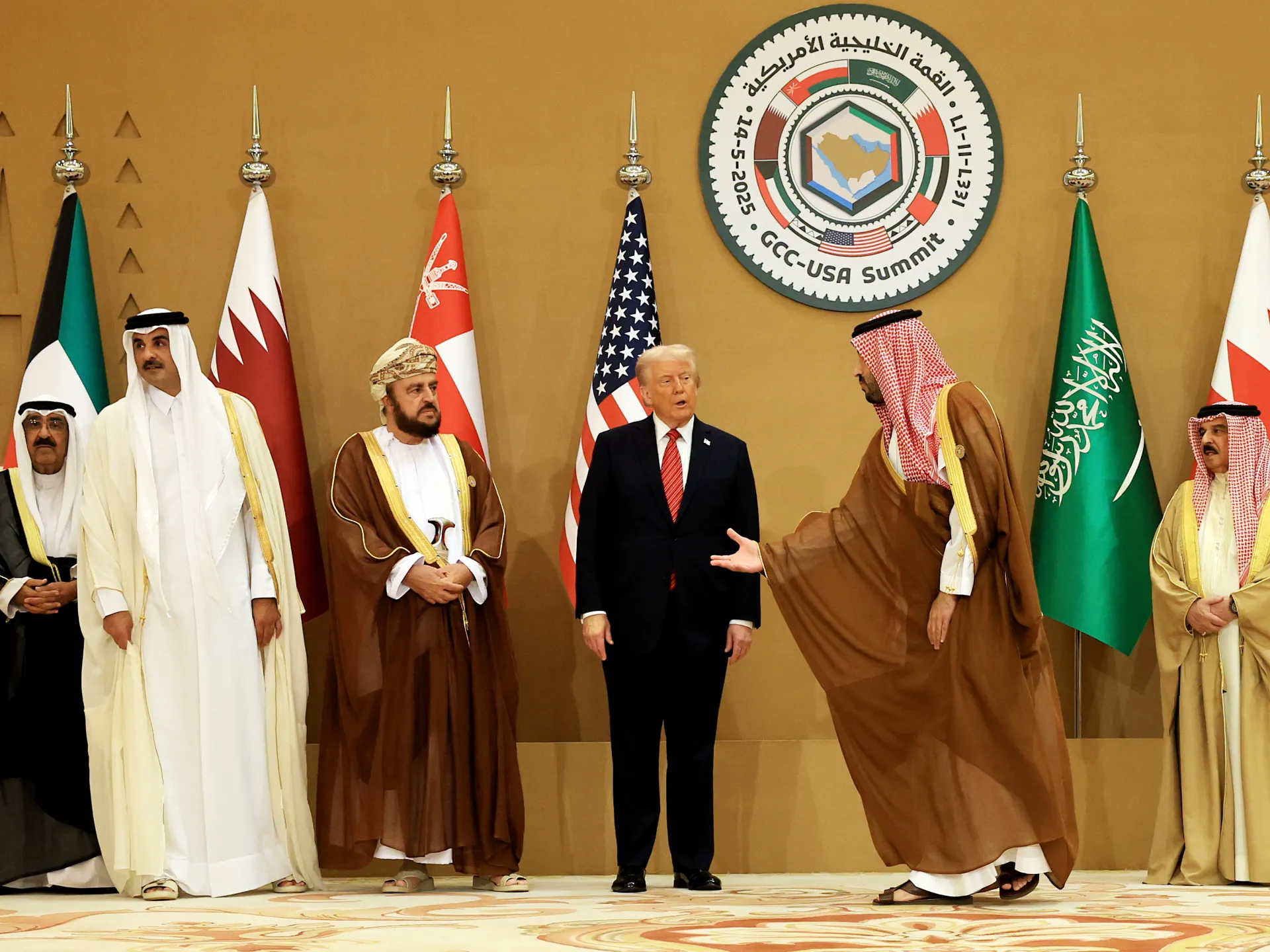
Leaders of the six Gulf Cooperation Council (GCC) states are set to meet United States President Donald Trump in New York on Tuesday, as the US-Israel war on Iran nears seven months.
The meeting, to be held on the sidelines of the United Nations General Assembly (UNGA), brings together countries that have borne much of the fallout from a war they did not start.
Recommended Stories
list of 4 itemsend of list
Since the war began on February 28, Iran has repeatedly struck US bases across the Middle East as well as airports, energy facilities and hotels. The war has particularly hit the Gulf nations hard, as their oil and gas exports – the mainstay of their economies – have been disrupted, causing a global energy crisis.
A June memorandum of understanding (MoU) briefly raised hopes of an end to the war, but it collapsed last month amid disputes over navigation through the Strait of Hormuz, which remains effectively closed.
These talks come as Trump says he faces a “big decision” on the war, and as Iran’s president and foreign minister are also in New York for the UNGA.
So what is on the table and what might come out of the talks? Here is all you need to know:
What do we know about the GCC-Trump meeting?
Trump is set to meet the leaders from Bahrain, Kuwait, Oman, Qatar, Saudi Arabia and the United Arab Emirates, which form the GCC, on the sidelines of the UNGA.
Trump told US media outlet Axios on Thursday that he wanted to meet the GCC leaders as he faced a “big decision” on the war and wanted to speak with them directly.
Experts say there are two interconnected issues – the US-Israel war on Iran and the conflict between Houthi rebels and the Saudi-backed government forces in Yemen.
What do the GCC countries want from the meeting?
Broadly, experts say, the GCC nations share a common goal for the meeting.
The GCC has “shared positions on the main principles of regional security and de-escalation”, Luciano Zaccara, a researcher with the New Ground Research think tank in Doha, Qatar, told Al Jazeera.
“With Trump recently threatening to ‘wipe out’ Iran, I expect the six GCC states, or at least most of them, to convey to the US president their grave concerns about the likely consequences of another round of intense US military strikes on Iran,” Giorgio Cafiero, CEO of Gulf State Analytics, told Al Jazeera.
“They will probably seek to underscore their own vulnerabilities to a renewed cycle of all-out fighting between the United States and Iran,” he said, adding that they will try to persuade Trump into making certain concessions to Tehran.
Cafiero said they will look to develop an arrangement that builds on the MoU and which “offers the most viable path toward winding down the crisis”.
Chief among their common concerns is freedom of navigation through the Strait of Hormuz and the Red Sea, according to Ahmed Helal, managing director for the Gulf region at The Asia Group.
‘Divergent’ goals
Despite common goals, the Gulf states have still experienced “divergent” outcomes from the war and will also look to persuade Trump to address their particular predicaments, Helal said.
The UAE, he explained, has been able to keep exporting oil by pipeline to its port of Fujairah, which bypasses the Strait of Hormuz, although not at the volumes it would like.
But fellow GCC member Qatar, whose gas exports depend on the strait, has seen its LNG shipments severely curtailed and wants to avoid any renewed escalation that could see its energy infrastructure targeted again, Helal said.
Speaking at an event in New York, US, on Sunday, Qatar’s Prime Minister Sheikh Mohammed bin Abdulrahman bin Jassim Al Thani described the economic fallout from the US-Israel war on Iran as an “earthquake”.
Saudi Arabia has another problem, as it is now under “enormous pressure” as the Houthis gain ground in Yemen, and has been “intensifying their lobbying” for US strikes on the group, he said.
What does Trump want from the meeting?
Predicting what the US president plans has been difficult since the outbreak of the US-Israel war on Iran, experts say.
“It could be possible that the US is expecting a more direct GCC engagement against Iran in exchange for a direct US intervention to stop the Houthi attacks against Saudi Arabia, but without the GCC leaving the main role in defending themselves”, Zaccara told Al Jazeera.
“Regarding Iran, Trump has not ruled out another major military escalation. At the same time, the administration seems to be open to exploring diplomatic options,” he said, adding there are rumours of a possible indirect US-Iran meeting on the sidelines before Iranian President Masoud Pezeshkian’s speech on Wednesday.
Helal said the administration’s focus is domestic, with the midterm elections weeks away and Trump’s approval ratings at a record low; there is “immense pressure” to lower petrol prices.
While Trump has threatened further military action, he remains politically sensitive to an “escalatory ladder” that could spike oil prices, Helal said.
The talks are unlikely to produce a breakthrough, he added, with the best-case scenario an agreement to return to negotiations potentially brokered by Qatar or Pakistan.