trump

‘Fourth world nation’: Trump slams Somalia, Ilhan Omar | Migration

NewsFeed

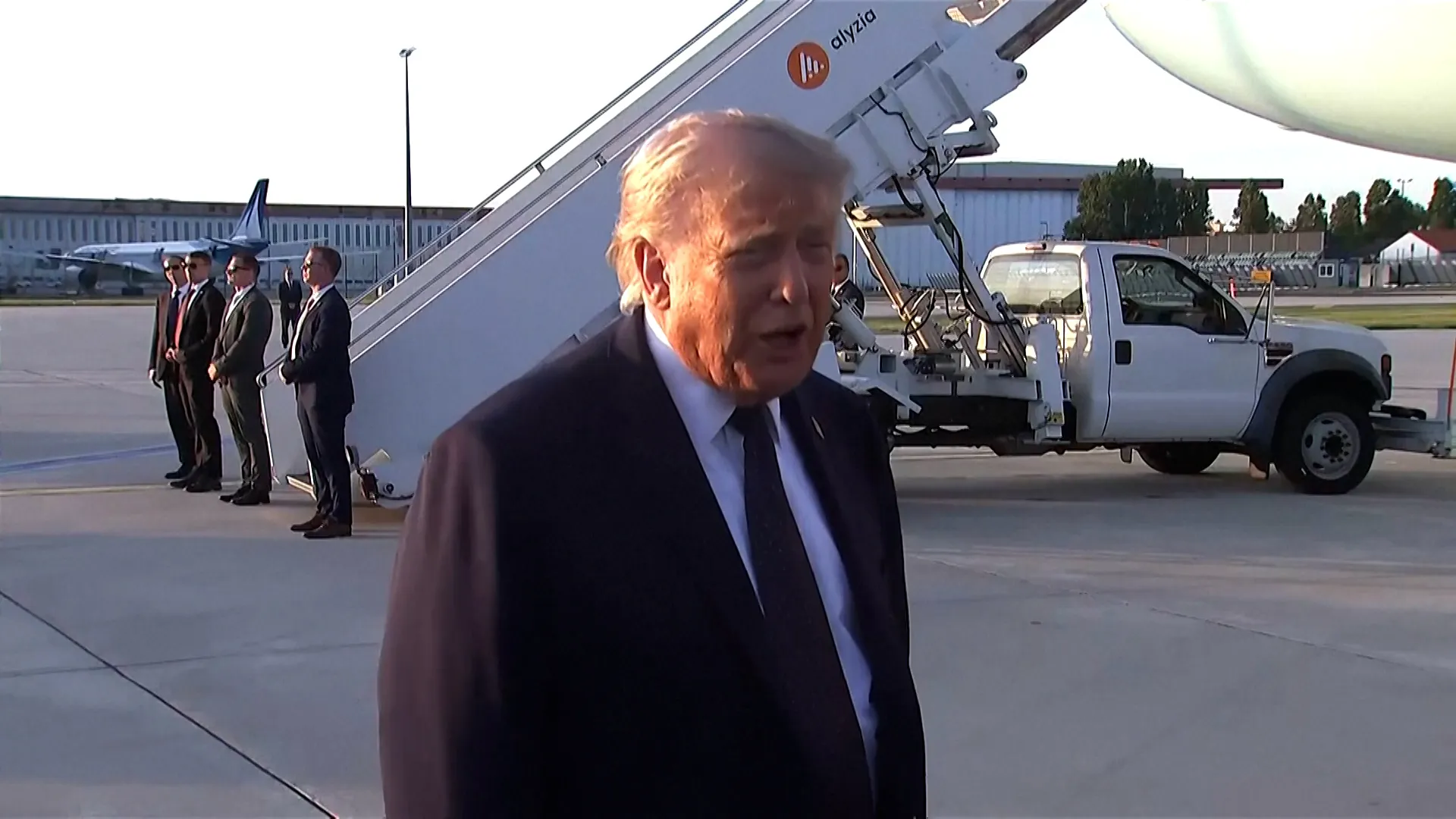
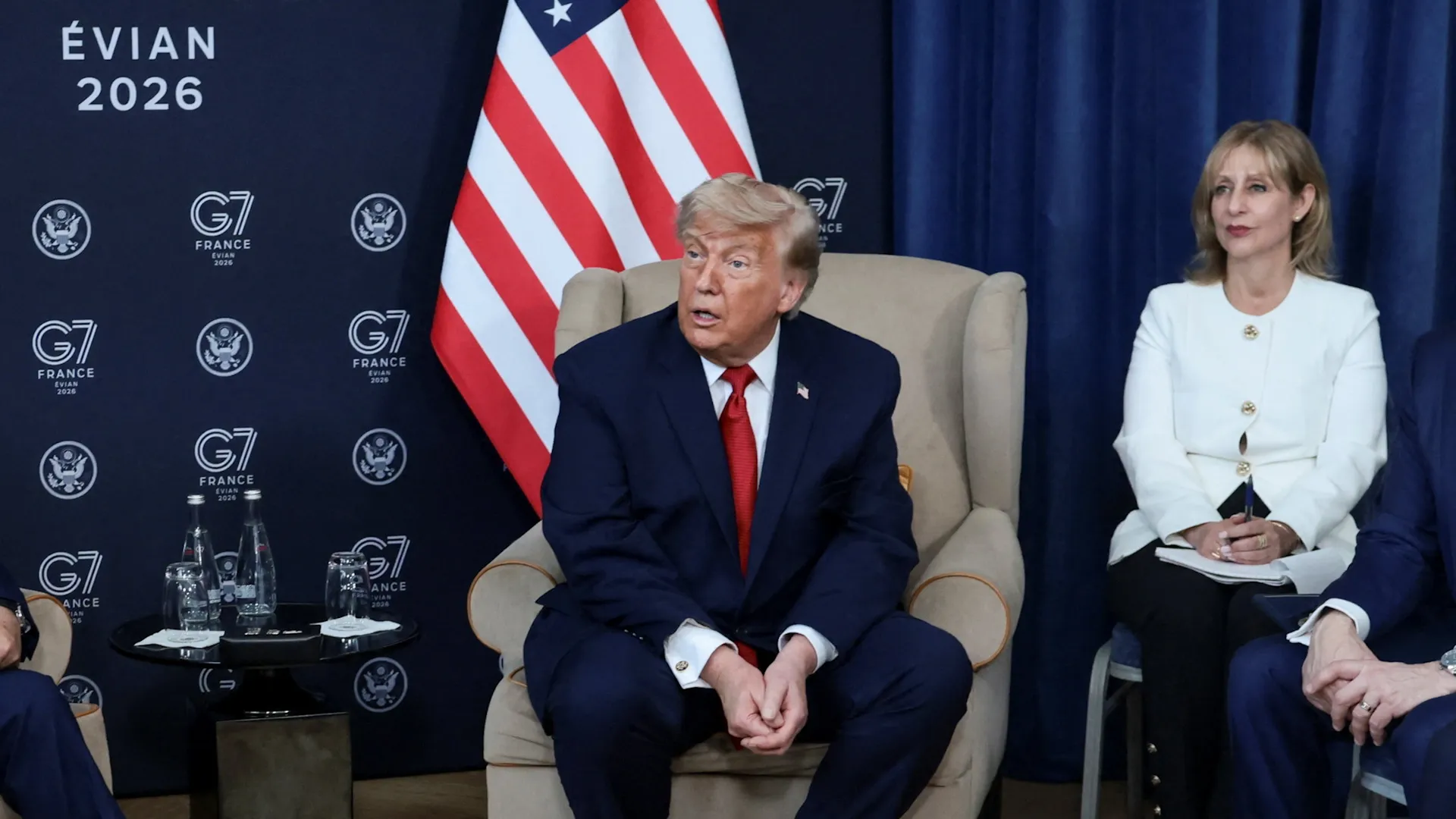
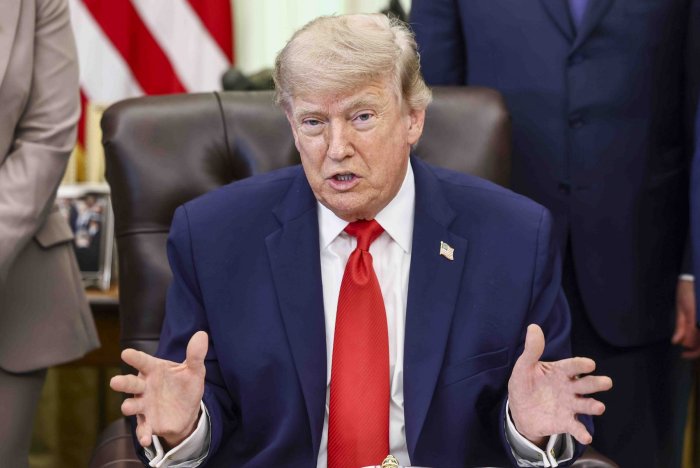
Speaking at the Oval office, US President Donald Trump stated that Somalia is a “fourth world nation” while repeating claims without evidence that Congresswoman Ilhan Omar had illegally entered the country by marrying her brother. Omar has consistently denied the “sick” allegations.

Source link

California, other states sue to block Trump effort to roll back fair housing protections

California and a coalition of other states sued the Trump administration Monday over its efforts to roll back fair housing rules that bar certain types of discrimination by landlords, including against LGBTQ+ people.

California Atty. Gen. Rob Bonta said a U.S. Department of Housing and Urban Development rule change threatening funding for states that offer housing protections for LGBTQ+ and other marginalized individuals who are not explicitly covered by federal law is illegal, undermines state efforts to combat discrimination and would push vulnerable people onto the streets.

“In effect, the Trump administration is attempting to roll back civil rights enforcement in housing at the federal level, and pressure states to weaken their own protections as well,” Bonta said during a news conference Monday. “That’s not just bad policy, it’s unlawful.”

Representatives from HUD and the White House did not immediately respond to a request for comment.

The federal Fair Housing Act explicitly bans discrimination based on seven traits: race, color, national origin, religion, sex, familial status and disability. Under rules set forth during the Obama administration, the U.S. Department of Housing and Urban Development has for years interpreted the law as banning discrimination based on sexual orientation and gender identity.

Many states, including California, also have adopted laws explicitly banning discrimination against LGBTQ+ people and other marginalized groups not mentioned in the federal law, with California also banning discrimination based on marital status, ancestry, source of income and veteran or military status.

In September, HUD issued new guidance threatening to decertify state housing agencies — stripping their federal funding and ability to investigate discrimination claims — if they provide anti-discrimination protections other than those spelled out in the Fair Housing Act. The guidance also barred state agencies from using federal funds to “promote gender ideology,” “fund or promote elective abortions” or promote illegal immigration, according to the lawsuit.

The guidance followed that of HUD Secretary Scott Turner, a former NFL player and Trump loyalist, who announced last year that HUD would no longer adhere to a 2016 Obama-era rule protecting transgender people from housing discrimination, which Turner said “tied housing programs, shelters and other facilities funded by HUD to far-left gender ideology.”

“We, at this agency, are carrying out the mission laid out by President Trump on January 20th [2025] when he signed an executive order to restore biological truth to the federal government,” Turner said in a statement, referring to Trump’s order calling on federal agencies across the government to rescind protections for transgender Americans.

“This means recognizing there are only two sexes: male and female,” Turner said. “It means getting government out of the way of what the Lord established from the beginning when he created man in His own image.”

Among other things, the administration said rules barring discrimination against transgender people allowed “biological men to enter shelters intended for women impacted by trauma, domestic abuse and violence.”

LGBTQ+ advocacy groups condemned the move, noting that transgender Americans face heightened discrimination in a slate of areas — including housing — and need protections. They also contended that HUD’s new policies violate a 2020 U.S. Supreme Court decision barring employment discrimination based on gender or gender identity.

Bonta said the Fair Housing Act “set a floor, not a ceiling, for protections against discrimination,” which means that states “have the authority to go further and protect more people,” as California has endeavored to do.

He said HUD has supported the state’s anti-discrimination work for decades through the Fair Housing Assistance Program, which provides funding to state and local agencies to investigate and enforce laws against housing discrimination. HUD’s new guidance “threatens to undermine that system” by demanding an end to state protections not just for LGBTQ+ people, but for military veterans, immigrants as well as women receiving abortions and other reproductive healthcare, he said.

“Families across California are already struggling to find homes they can afford, and the last thing they need is for the federal government to make it harder,” Bonta said. “At its core, this lawsuit is about protecting a fundamental civil right: the right to rent, buy, or live in housing without discrimination.”

Bonta said California interprets the Fair Housing Act’s ban on sex discrimination as protecting LGBTQ+ people, but the Trump administration doesn’t agree — making the state’s more explicit protections important.

He said about $3 million in federal funding is currently at stake for California, with millions more at stake in other states.

Illinois Atty. Gen. Kwame Raoul, who is helping lead the lawsuit and spoke alongside Bonta Monday, said states with robust antidiscrimination laws “will not go backwards and we will not give in to threats” from the Trump administration.

“These actions are part of a broader, ongoing pattern by this administration to subvert the legal protections our country has put in place to combat discrimination, and to tear down the hard fought progress we have made for civil rights,” Raoul said. “It is also just the latest page in the president’s illegal playbook to use funding and programs created by Congress to try to strong arm states into adopting Trump’s preferred policies.”

The states allege that HUD’s targeting of state antidiscrimination policies comes after it downsized its own workforce and significantly reduced its ability to investigate housing discrimination complaints and enforce fair housing laws. They say the new guidance violates multiple federal laws, including laws that govern federal spending and rule changes, and are asking the federal court to immediately invalidate the guidance as unlawful.

Bonta and Raoul are joined in the lawsuit by the attorneys general of Arizona, Colorado, Connecticut, Delaware, the District of Columbia, Hawaii, Maine, Maryland, Massachusetts, Michigan, New Jersey, Rhode Island, Vermont and Washington.

Source link

As Trump pushes deportations, immigration data becomes harder to find

The Trump administration likes to promote its immigration enforcement agenda through numbers, with ambitious goals to deport 1 million people, report zero releases at the U.S.-Mexico border and arrest thousands of alleged gang members.

For all the boasting, the administration has been releasing less reliable, carefully vetted data than its predecessors on a signature policy that has become one of the most contentious of Trump’s second term.

The gap in information and a loss of figures from an office that has tracked immigration data back to the 1800s have left researchers, advocates, lawyers and journalists without important statistics to hold the Republican administration to account.

“They aren’t publishing the data,” said Mike Howell, who heads the conservative Oversight Project, an advocacy group pushing for more deportations. Instead, Howell said, the Department of Homeland Security has put out numbers in news releases “that purport to be statistics with no statistical backup and the numbers have jumped all over the place.”

With mass deportations a priority, new restrictions and increased enforcement have led to a surge in immigration arrests, detentions and deportations.

But finding the metrics that once measured those changes can be hard. It is an extension of earlier administration moves to limit the flow of government information by scrubbing or removing federal datasets or by the firing last year of the top official overseeing jobs data.

Important data is no longer publicly available

The Office of Homeland Security Statistics is responsible for publishing figures from Homeland Security agencies, including removals and the nationalities of those deported, to provide a comprehensive picture of immigration trends at the border and inside the United States.

Originally known as the Office of Immigration Statistics, it tracked such data since 1872. In its current form, created under the Biden administration, it also started publishing monthly reports that allowed researchers to track developments almost in real time.

But key enforcement metrics on its website have not been updated since early last year. A note on the page where the monthly reports were says it “is delayed while it is under review.”

“It’s the most timely data. It’s the most reliable data,” Austin Kocher, research professor at Syracuse University who closely follows immigration data trends, said about the monthly reports. “It has the most omniscient view of immigration enforcement across the entire agency.”

An interactive dashboard launched by U.S. Immigration and Customs Enforcement in December 2023 once let users examine whom the agency was arresting, their nationalities, criminal histories and removal numbers. ICE called it a “new era in transparency.”

Though intended for quarterly updates, the latest data is from January 2025. The agency’s annual report, typically released in December, had not been published as of mid-March.

Other agencies also publish data that touches on immigration, and parts of it do continue to roll out, such as U.S. Customs and Border Protection statistics detailing border encounters or data from the Department of Justice’s immigration courts.

But experts say other data has slowed.

The State Department’s most recent visa issuance data is from August. Key statistics from U.S. Citizenship and Immigration Services have not been updated since October.

The now-missing data had helped researchers study the effects of different policies. Lawyers could cite the figures to support their litigation. Journalists saw in them a powerful tool to hold the government to account on public claims or to report on important trends.

“We’re all a little bit in the dark about exactly how immigration enforcement is operating at a time when it’s taking new and unprecedented forms,” said Julia Gelatt, associate director of the U.S. Immigration Policy Program at the Migration Policy Institute.

DHS did not respond to detailed questions about why it was no longer releasing specific data.

“This is the most transparent Administration in history, we release new data multiple times a week and upon reporter request,” the department said in a statement.

Researchers contend with a patchwork of numbers

Figures the administration has released are inconsistent and unverifiable.

In a Jan. 20 news release, DHS said it had deported more than 675,000 people since Trump returned to the White House. A day later, in a second release, the department put the figure at 622,000. In congressional testimony March 4, Homeland Security Secretary Kristi Noem said the figure was 700,000.

But ICE, an agency within DHS, also releases figures on how many people it has removed from the country, part of a large data release mandated by Congress. An Associated Press analysis of the figures put that number at roughly 400,000 over Trump’s first year.

DHS has said 2.2 million people who were in the U.S. illegally have gone home on their own, but the department has given no explanation for the count. Experts have questioned the source of that figure, saying this was not something that DHS historically has tracked.

The department did not respond to questions about where that data came from.

With key sources of data halted, researchers, advocates and others have had to rely on information the administration is obliged to report or that has come to light through legal action.

The publication of ICE detention figures — how many people are detained, for how long and whether they have committed a crime — is required by Congress and is generally released every two weeks. But the figures’ release has faced some delays and its data gets overwritten with every new publication, complicating the work of people who need access to it.

The University of California, Berkeley’s Deportation Data Project, a research initiative, successfully sued through the Freedom of Information Act to access data about ICE arrests including nationalities, conviction status and whether arrests occurred at jails or in the community.

Graeme Blair, co-director of the project, said every administration has struggled with transparency in immigration enforcement, and given the Trump administration’s ambitious enforcement goals, the team wanted to secure and verify information that the government might not publicly release.

“Given the scale of what they were talking about doing, it seemed really important to be able to understand, to be able to double check those numbers,” he said.

But there are limitations, he said. The data obtained through the lawsuit only runs through Oct. 15. It does not cover recent operations such as the Minneapolis enforcement surge, when federal immigration officers fatally shot two protesters, leading to widespread demonstrations and scrutiny of enforcement tactics.

The absence of data is one of the few issues that has drawn bipartisan criticism.

“We deserve to know the numbers, just like we deserve to know who’s in our country and who needs to leave,” Howell said.

Santana writes for the Associated Press.

Source link

BBC asks U.S. court to dismiss Trump’s $10 billion defamation lawsuit

The BBC filed a motion Monday asking a U.S. court to dismiss President Trump’s $10 billion lawsuit against it.

The British national broadcaster said that the Florida court where the case is expected to be heard does not have jurisdiction over it. It also argued that Trump could not show that it intended to misrepresent him.

Trump filed a lawsuit in December over the way a BBC documentary edited a speech he gave on Jan. 6, 2021. The claim seeks $5 billion in damages for defamation and a further $5 billion for unfair trade practices.

Last month a judge at the federal court for the Southern District of Florida provisionally set a trial date for February 2027.

The BBC argued that the case should be thrown out because the documentary was never aired in Florida or the U.S.

“We have therefore challenged jurisdiction of the Florida court and filed a motion to dismiss the president’s claim,” the corporation said in a statement.

In a 34-page document, the BBC also argued that Trump failed to “plausibly allege facts showing that defendants knowingly intended to create a false impression.”

Trump’s case “falls well short of the high bar of actual malice,” it added.

The documentary — titled “Trump: A Second Chance?” — was aired days before the 2024 U.S. presidential election.

The program spliced together three quotes from two sections of a speech Trump made on Jan. 6, 2021, into what appeared to be one quote, in which Trump appeared to explicitly encourage his supporters to storm the Capitol building.

Among the parts cut out was a section where Trump said he wanted supporters to demonstrate peacefully.

The broadcaster’s chairman has apologized to Trump over the edit of the speech, admitting that it gave “the impression of a direct call for violent action.” But the BBC rejects claims it defamed him. The furor triggered the resignations of the BBC’s top executive and its head of news last year.

Source link

Trump says chief of staff Susie Wiles has breast cancer but will keep working through treatment

White House chief of staff Susie Wiles has been diagnosed with early stage breast cancer but will continue working during her treatment, President Donald Trump said in a social media post on Monday.

Trump said Wiles’ prognosis is “excellent” and described her as “one of the strongest people I know.” He said Wiles plans to begin treatment immediately but made no suggestion she was pulling back on her work as one of his closest advisers.

“During the treatment period, she will be spending virtually full time at the White House, which makes me, as President, very happy!” Trump said on his Truth Social platform. “She will soon be better than ever!”

It comes as the Republican president confronts mounting challenges on global and national fronts, from the war in Iran and soaring oil prices to this fall’s midterm elections and American’s concerns over affordability.

Wiles, 68, is a longtime Trump ally who rose from his campaign co-chair to his closest adviser and counsel. The first woman to become White House chief of staff, Wiles spent decades as a lobbyist and political operative in Florida and led Trump’s 2016 effort in the state.

Binkley writes for the Associated Press.

Source link

Trump calls for naval coalition to open Strait of Hormuz: Can it work? | Explainer News

United States President Donald Trump has called for a naval coalition to deploy warships to secure the Strait of Hormuz, through which one-fifth of world oil shipments transit, as oil markets reel from supply disruptions caused by the US-Israeli war with Iran.

What is essentially the closure of the Strait of Hormuz by Iran in response to the attacks by the US and Israel has sent oil prices soaring to more than $100 per barrel.

Iran’s new supreme leader, Mojtaba Khamenei, has promised to keep the maritime artery closed while another top official in Tehran warned that oil prices could shoot up beyond $200 per barrel.

Trump said he hoped a naval coalition could secure the vital waterway, which connects the Gulf to the Gulf of Oman and the Arabian Sea. Iran has struck more than a dozen ships trying to sail through the narrow waterway since the hostilities started two weeks ago.

But will Trump’s solution work?

hormuz
A tanker sits at anchor in Port Sultan Qaboos in Muscat, Oman, as oil shipments through the Strait of Hormuz have plummeted [File: Benoit Tessier/Reuters]

What has Trump said?

The US president has been facing domestic pressure over starting the war alongside Israel with no endgame or off-ramps in sight.

“On the strait of Hormuz, they had NO PLAN,” US Democratic Senator Chris Murphy wrote in a post on X. “I can’t go into more detail about how Iran gums up the Strait, but suffice it [to] say, right now, they don’t know how to get it safely back open.”

After threatening to bomb Iran more, Trump called on China, France, Japan, South Korea and the United Kingdom to send warships to secure the strait.

Trump claimed “100% of Iran’s military capability” had already been destroyed but added that Tehran could still “send a drone or two, drop a mine, or deliver a close-range missile somewhere along, or in, this waterway”.

“Hopefully China, France, Japan, South Korea, the UK, and others, that are affected by this artificial constraint will send ships to the area so that the Hormuz Strait will no longer be a threat by a nation that has been totally decapitated,” Trump wrote in a post on his Truth Social platform.

“In the meantime, the United States will be bombing the hell out of the shoreline, and continually shooting Iranian Boats and Ships out of the water. One way or the other, we will soon get the Hormuz Strait OPEN, SAFE, and FREE!”

Not long after, Trump returned to the keyboard, extending the invitation to all “the Countries of the World that receive Oil through the Hormuz Strait” to send warships, adding that the US would provide “a lot” of support to those who participated.

trump
Israeli soldiers walk by a billboard commissioned by the evangelical Christian group Friends of Zion during the US-Israel war on Iran in Tel Aviv, Israel [File: Nir Elias/Reuters]

What has Iran said?

Alireza Tangsiri, commander of the Islamic Revolutionary Guard Corps Navy, said in a statement that claims by the US about destroying Iran’s navy or providing safe escort for oil tankers were false.

“The Strait of Hormuz has not been militarily blocked and is merely under control,” he said in a statement.

Iranian Foreign Minister Abbas Araghchi later doubled down on this, saying the strait remained open to international shipping except for vessels belonging to the US and its allies.

“The Strait of Hormuz is open. It is only closed to the tankers and ships belonging to our enemies, to those who are attacking us and their allies. Others are free to pass,” Araghchi said.

Khamenei – son of the late Supreme Leader Ali Khamenei, who was killed on the first day of the US-Israeli strikes – suggested in his first statement since taking power that the Strait of Hormuz would remain closed to provide leverage for Iran during the conflict.

iran
F-18 combat aircraft are parked on the deck of the USS Abraham Lincoln aircraft carrier in the Gulf of Oman near the Strait of Hormuz during a 2019 deployment [File: Ahmed Jadallah/Reuters]

What are the challenges in the Strait of Hormuz?

The strait, which is just 21 nautical miles (39km) wide at its narrowest point, is the only maritime passage into the Arabian Gulf (known as the Persian Gulf in Iran). Shipping lanes in the waterway are even narrower and more vulnerable to attacks.

It separates Iran on one side from Oman and the United Arab Emirates on the other.

In brief, there is no way in or out by sea when the Strait of Hormuz is closed.

Alexandru Hudisteanu, a maritime security expert who served 13 years in the Romanian navy, told Al Jazeera that in the type of coalition that Trump is hinting at, “interoperability is the biggest hurdle.”

“That’s the ability of cruises to work together or with different units and different doctrine when basic communication would be an issue,” he said.

Then, there is the geography of the Strait of Hormuz: “a very unforgiving environment to sail with this type of wartime threats”, Hudisteanu said. “Especially difficult under missile threats and these asymmetric potential mines or unmanned systems that could damage or destroy ships.”

Providing escorts to ships would be a costly option, and it would pose risks to participating foreign warships from possible Iranian attacks, which would likely further drag more countries into the ongoing war.

From Iran’s point of view, “the fact that the shoreline is so close and the actual maritime passage is highly congested and confined is an advantage by default,” Hudisteanu added. Geographically, Iran keeps it as a gauntlet, with no way out for the ships unless Tehran allows it.

Another major challenge for any naval coalition trying to secure the passage would be the timeline of any operation.
”The security of the strait could be achieved. It’s just a matter of how much time you need and how many assets you need,” the analyst said. Rushing through it “could have negative implications for the security of the mission and the region”.

Smoke rising from a ship after an attack.
Smoke rises from the Thai bulk carrier Mayuree Naree near the Strait of Hormuz after an attack on March 11, 2026 [Handout/Royal Thai Navy via AFP]

How have countries responded?

No country has so far publicly agreed to Trump’s call to send warships to secure the Strait of Hormuz.

London said it is “intensively looking” at what it can do to help reopen the maritime passage. British Energy Secretary Ed Miliband said: “We are intensively looking with our allies at what can be done because it’s so important that we get the strait reopened.”

Chinese Ministry of Foreign Affairs officials said Beijing is calling for hostilities to stop and “all parties have the responsibility to ensure stable and unimpeded energy supply.”

Japan said the threshold is “extremely high” to send its warships on such a mission. “Legally speaking, we do not rule out the possibility, but given the current situation in which this conflict is ongoing, I believe this is something that must be considered with great caution,” said Takayuki Kobayashi, policy chief of Japan’s ruling Liberal Democratic Party.

France also confirmed that it will not send ships. The Ministry for Europe and Foreign Affairs said in a statement on Saturday: “Posture has not changed: defensive it is,” in reference to President Emanuel Macron’s assertion that France will not join the war against Iran.

South Korea, which imports 70 percent of its oil from the Gulf, said it was “closely monitoring” Trump’s statements and “comprehensively considering and exploring various measures … to ensure the safety of energy transport routes”.

INTERACTIVE - Strait of Hormuz - March 2, 2026-1772714221
(Al Jazeera)

Are countries negotiating with Iran?

Some countries have been negotiating with Iran to secure passage for their petroleum shipments.

Two Indian-flagged tankers carrying liquefied petroleum gas (LPG) have sailed through the Strait of Hormuz. New Delhi depends on this passage for 80 percent of its LPG imports.

The war on Iran has caused a critical shortage of cooking gas for India’s 333 million households. New Delhi has long had ties with Iran, but the government of Prime Minister Narendra Modi has not condemned the killing of Ali Khamenei. It has condemned Iran’s retaliatory attacks on Gulf countries, where millions of Indian citizens work and send $51bn in remittances home every year.

Iran’s ambassador to India, Mohammad ⁠Fathali, said Tehran had allowed some Indian vessels to pass through the Strait of Hormuz in a rare exception to the blockade but did not confirm the number of vessels.

A Turkish-owned vessel was similarly granted permission last week after Ankara negotiated passage directly with Tehran. Fourteen more Turkish vessels are awaiting clearance.

France and Italy also reportedly opened talks with Iranian officials to negotiate a deal to allow their vessels through the strait, but there has been no official confirmation yet.

“Iran is affecting maritime supply,” Hudisteanu said. “It’s affecting the maritime security of the region and the entire ecosystem and bringing the entire world to the table as the global price for oil and gas increases.”

Source link

How Congress became an afterthought in the war with Iran

Secretary of State Marco Rubio had some explaining to do when he arrived on Capitol Hill for a classified briefing with lawmakers in early March.

Members of Congress wanted to know why, two days earlier on Feb. 28, the United States and Israel had attacked Iran and killed its supreme leader — without notifying them first. After the briefing, Rubio told reporters the U.S. preemptively struck Iran to get ahead of an Israeli attack. A day later, he tried to clarify his remarks.

“The bottom line is this: The president determined we were not going to get hit first,” Rubio said. “It’s that simple, guys.”

For members of Congress, the moment underscored how marginal a role Congress has been able to play in a war that, two weeks in, has spread into more than a dozen neighboring countries, led to the deaths of at least 13 American service members and cost billions of dollars.

In the two weeks since the war began, Congress has largely been sidelined. Lawmakers have cycled through classified briefings, TV interviews and hallway scrums with reporters, but have taken little formal action related to Trump’s war efforts — just two unsuccessful votes aimed at limiting the conflict.

Most of the debate has taken place online, where some GOP lawmakers have drawn rebukes from colleagues for saying America “needs more Islamophobia” and other Islamophobic rhetoric about Iran and its people.

At the same time, Trump has pressed Congress to focus instead on a controversial voting law, signaling to the Republican-led Congress that he wants their focus on the election rather than a historic moment abroad. The president, meanwhile, has offered shifting explanations on how much longer he intends to be at war in the Middle East, telling Fox News’ Brian Kilmeade on Friday that he will conclude the hostilities when “I feel it in my bones.”

Taking Trump’s statements at face value, Democrats and some Republicans have begun to worry that more American troops could be deployed inside Iran to complete the mission — and lawmakers are still trying to understand the war’s threat to the global energy markets as fighting encroaches on the Strait of Hormuz and Americans face soaring gas prices.

The Republican majorities have for the most part rallied behind President Trump, and have blocked measures in both the House and Senate that would have halted the war against Iran and forced him to seek congressional approval for additional hostilities.

House Speaker Mike Johnson (R-La.) likened efforts to rein in Trump’s war efforts to siding “with the enemy.” Sen. Lindsey Graham (R-S.C.) was even more effusive, arguing there is a precedent for presidents using military force without congressional authority.

“The norm in this country is not to declare war by Congress, but for the military to be used by the commander in chief. Sometimes authorization from the Congress is requested, sometimes it is not,” Graham said during a Senate floor speech. “More than not, it is not requested.”

Presidents have frequently used military force without a formal declaration of war — including in Korea, Vietnam and Iraq — but experts argue there is a difference between bypassing a formal declaration and sidelining Congress altogether.

Former Defense Secretary Leon Panetta, who served under President Obama, pointed to the 2011 raid that killed Osama Bin Laden, the mastermind behind the Sept. 11, 2001, attacks, as an example of how the process once worked.

Even though it was a covert Special Forces operation, Panetta said, he personally briefed key congressional leaders before Bin Laden’s killing took place.

That kind of consultation, he said, no longer happens. Instead, lawmakers learn about military operations the same way ordinary Americans do — by watching the news — and then demand to be briefed, he said.

“By that time, the country is pretty much committed to war,” Panetta said.

Presidents of both parties have expanded their power to wage war unilaterally, but Panetta said he believes Trump has crossed a new threshold by dispensing not just with congressional approval but with the courtesy of a briefing.

“It’s not good for our democracy. It’s not a good process,” he said. “It’s not what our forefathers would have wanted.”

Rubio, however, has argued the administration has kept congressional leaders apprised. He told reporters there is no legal requirement to notify all members of Congress and that he briefed the Gang of Eight — a group made up of the top Republicans and Democrats in the House and Senate, as well as the leaders of the respective intelligence committees — within 48 hours of the attack against Iran.

“We notified congressional leadership,” Rubio said. “The law says we have to notify them 48 hours after beginning hostilities. We’ve done that.”

In the statement issued Friday, the White House defended the president’s approach to the war in relation to how its involved Congress, adding that Trump and administration officials “continue to keep bipartisan lawmakers in Congress apprised of the operation as the United States continues to dominate.”

“Past presidents have talked about this for 47 years — but only President Trump has had the courage to do something about it,” White House spokesperson Olivia Wales said.

Democrats say they’re ‘flying blind’

Democratic lawmakers, including some who have been included in classified briefings, have accused administration officials of keeping them “in the dark” and are beginning to demand public congressional hearings.

“I want this administration to testify in public, under oath, regarding a bunch of questions we have in order for the American people to see for themselves,” said Rep. Jimmy Gomez (D-Los Angeles). “I do believe this administration has lied to the American public and Congress.”

Gomez, a member of the House Permanent Select Committee on Intelligence, said he never expected that he would have to spend so much time trying to discern if the administration is lying to lawmakers.

“I think it’s that’s what makes the job harder,” he said.

Democrats, who are in the minority, have limited power to call those briefings, but have continued to put pressure on the administration in a public way.

Senate Democrats last week sent a letter to Defense Secretary Pete Hegseth, demanding answers by Wednesday about reports that a U.S. airstrike hit an Iranian elementary school.

Iranian officials said the explosion killed at least 175 people, most of them children. The U.S. has not taken responsibility for the attack, and Hegseth has said the matter is under investigation. Trump, without providing evidence, has claimed Iran was responsible for the attack.

Seeking answers has been a common theme among Democrats since the start of the war. Sen. Richard Blumenthal (D-Conn.), for instance, said after a classified briefing last week that he had “left with more questions than answers” and a real concern about the possibility of deploying American troops to Iran.

Power of the purse

If the war continues, Congress still retains some leverage.

Under the War Powers Resolution passed by Congress in 1973, unauthorized deployments into hostile situations must end after 60 days unless Congress votes to declare war or passes legislation authorizing the use of the military.

Rep. Brad Sherman (D-Sherman Oaks), who sits on the House Foreign Affairs Committee, said he has told Hegseth and Rubio that if they violate that provision it will be like “stealing money” for actions that are not approved by Congress and warned they could be held civilly liable.

The 60-day deadline will be a key moment for Congress to step in, Sherman said; otherwise there will be growing concern about Trump having “unchecked power.”

So far, he thinks Republicans in control view their job as “butler to the president,” and that the Constitution already gives Trump “too much power over the military.”

“If Congress is controlled by people who want to be servants to the president, it’s going to do an incredibly bad job of being a check on the president,” he said.

Beyond the War Powers Resolution, lawmakers also have power over the appropriations process and could deny the administration’s request to boost military funding.

“The Congress can stop military action by cutting off funding. If you don’t like the war in Iran, say we won’t pay for it. We have the constitutional power of the purse,” Graham said in a Senate floor speech early in March.

The Trump administration’s war with Iran cost $11.3 billion during its first six days, according to the Associated Press.

But Rep. Mike Levin (D-San Diego), who sits on the House Appropriations Committee, says he is aware of the figure only because of news reports — not because the Pentagon has been transparent.

“We are flying blind in the sense that we just don’t know. We don’t know how much is being spent or what it’s being spent on,” Levin said.

Levin says the military will probably need to bolster its munitions stockpile at the rate the conflict is going.

If the Pentagon does request more money, Levin said, he would try to ensure that “not one more dollar goes toward any of this without clear answers and a clear plan.”

Source link

Trump’s delay of wheelchair rule frustrates disabled flIers

Seth McBride’s life was forever changed on a snowy mountainside in British Columbia.

McBride was — and is — a thrill-seeker. Growing up in Juneau, Ala., with the untamed outdoors as his stomping ground, he loved to rock climb, mountain bike and, especially, strap on his skis and fly, soaring headlong off heart-pounding cliffs, crags and cornices.

A few months before his senior year in high school, McBride was at a terrain park at Whistler Blackcomb resort. He was 17. He launched a maneuver he’d completed many times before, a back flip off a steep jump. Only this time, he over-accelerated, over-rotated and came down on his neck. Right away he knew something was wrong.

“As soon as I landed,” McBride recalled more than 25 years later, “I lost all sensation in my legs and my lower back.”

The prognosis was grim; doctors told McBride he probably would never walk again, and he hasn’t.

But that’s scarcely slowed him down.

Views of the 47th president, from the ground up

Before they had kids, McBride and his wife biked 6,500 miles — McBride using a special, hand-cranked cycle — from Portland, Ore., to the southern tip of Argentina. He’s traveled the world as a wheelchair rugby player, winning gold, silver and bronze medals at Paralympic Games in Beijing, Rio de Janeiro and London.

McBride — adventurer, daredevil — appears unflappable. Until it comes to air travel.

It’s not the hassles and aggravation that most people put up with. Every trip requires McBride, 43, to undergo a special regimen, dehydrating himself so he won’t have to use the bathroom in flight. Every excursion includes the likelihood of being uncomfortably jostled or, worse, dropped as he’s being transferred to his seat. He can never be certain his wheelchair, his lifeline, won’t be damaged or missing once his plane lands.

“There are very few places or in my life that I feel less independent” than an airport, said McBride, who still plays competitive rugby at the club level. “None of the systems are set up for wheelchair users to be able to manage things on their own.”

Wheelchairs at Portland International Airport in Oregon

Wheelchairs at Portland International Airport. The all-purpose equipment can’t serve the various needs of disabled travelers.

(Will Matsuda / For The Times)

For a time, as the Biden administration was winding down, it looked as though that was about to change somewhat. The federal government issued a set of regulations that would require airlines, among other things, to assume liability for damaged and delayed wheelchairs and improve training for staff working with passengers facing mobility issues.

But the Trump administration, which has made deregulation one of its highest imperatives, put those requirements on hold while a trade association and several major airlines sue to keep the changes from taking effect.

For McBride and others like him, it’s a disappointing setback that follows years of pressing Washington to make air transit just a bit more decent and humane.

“It sucks,” McBride said of the dignity-deflating status of a wheelchair traveler. “I know quite a few people who simply won’t fly anymore.”

::

When the Biden administration published new airline regulations in the Federal Register, it spelled out its reasoning.

Passengers forced to surrender their wheelchairs “must rely on airline staff and contractors to properly handle a wheelchair or scooter and return it in a timely manner in the condition it was received. Advocates have stressed … that, when an individual’s wheelchair or scooter is damaged by an airline, the individual’s mobility, health and freedom are impacted until the device can be returned, repaired or replaced.”

What’s more, “Advocates note that wheelchairs are often custom fitted to meet the needs and shapes of each user. Spending time in an ill-fitting chair can cause serious injury, such as pressure sores, and even death because of a subsequent infection.”

The Department of Transportation estimated that, in 2024, 1 of every 100 wheelchairs or scooters placed on a domestic flight was lost, damaged or delayed. Which may not seem like a terribly large number, unless you’re the person whose well-being, and even survival, depends on their wheelchair or scooter being at the ready and operational upon arrival.

Mia Ives-Rublee directs the Disability Justice Initiative at the Center for American Progress, a left-leaning think tank. She said airlines, which cater to luxury travelers and treat everyone else like sardines, have long put profit and expedience ahead of the needs of their disabled passengers.

“We’ve seen this tension continue to build as disabled people become more active and the world becomes more accessible. They want to travel, or have jobs that require travel,” said Ives-Rublee. While discrimination is plainly illegal, “Airlines aren’t doing enough to protect our devices,” which has the effect of making it “very difficult for disabled people to travel.”

Ives-Rublee has had nearly a half dozen wheelchairs broken by airlines in the last 20 years, which can be costly as well as life-threatening. A manually operated wheelchair can run as much as $2,000, Ives-Rublee said. A mechanized wheelchair can cost as much as a used car.

Travelers at Portland International Airport in Oregon

McBride mainly travels from Portland’s airport. “There are few places in my life” he feels less independent.

(Will Matsuda / For The Times)

(McBride said he’s suffered nicks and scrapes on his “everyday chair.” Worse, was the damage done to wheelchairs he uses in rugby competition, which “is obviously a big deal” when he’s traveling for a match.)

In their lawsuit opposing the rules change, airlines and their trade group said the Biden administration overstepped its authority and the new requirements were too burdensome. Strict liability for wheelchair damage also could expose air carriers to “unreasonable financial risk,” the suit claimed.

The wheelchair rules were supposed to take effect just before Biden left office. The Trump administration postponed them until March 2025, then pushed implementation to August 2025. Now, the Department of Transportation says it will issue a new rule this coming August, with a 60-day comment period to follow — meaning no change will come until at least 2027.

Ives-Rublee hasn’t much hope for relief.

“Given the nature of the administration right now, I doubt they’re putting much effort into protecting” the Biden-era regulations, she said

::

The last thing McBride wants is anyone feeling sorry for him. He’s no victim.

“It was something s— that happened to me,” he said of the accident that left him paralyzed. “But s— stuff happens to people all the time. What matters is how you move forward and what you can do with your life after that happens.”

McBride was seated at the kitchen table of his custom-built home, two miles above the Columbia River in rural Washington state. The house — one level, bright and airy, with concrete floors to smooth the path of his wheelchair — perches at the end of a steep dirt road. A forest in the backyard gives his children, ages 4 and 8, the same freedom to romp through nature he enjoyed growing up in Alaska. There’s also a climbing wall in his son’s bedroom.

Working remotely, McBride writes for New Mobility, a magazine for wheelchair users, and heads communications and marketing for the United Spinal Assn., a nonprofit advocacy group.

His politics run to the left side of the spectrum. (On a cold, drizzly morning, McBride wore a black Oregon Ducks hoodie, honoring his alma mater, the University of Oregon, and its home in liberal Eugene.) Yet while he’s no Trump fan, McBride doesn’t consider making life easier for wheelchair users to be a partisan issue. After all, he pointed out, it was a Republican president, George H. W. Bush, who signed into law the landmark Americans
With Disabilities Act.

“We’ve made a lot of progress as a community working with Republicans, working with Democrats,” he said, as the sun made a brief appearance, illuminating the Douglas firs outside his door. “The basic issues of people being able to access the same services and the same experiences as everyone else shouldn’t be political. … It’s a safety thing.”

He’s not unalterably opposed to deregulation, per se.

“I think it’s a huge issue within systems when it’s overly complex for companies or people to do anything,” McBride said. “But lots of time regulations are there for a reason. It’s when private companies aren’t necessarily doing a good enough job protecting the safety or the rights of all people within a society.”

Given a chance to address Trump or the head of his Transportation Department, Sean Duffy, McBride would say this: Come, let’s take a plane ride.

“Go on a trip with my rugby team and see what it’s like when you have multiple wheelchair users on the same plane,” he said, “and how difficult it is and why we feel like regulations are needed so we can have a modicum of safety and dignity when we’re flying.”

The cost of accommodation might take away some from the airlines’ bottom line. But certain things can’t be priced in dollars and cents.

Source link

Trump seeks to close $1.6-trillion revenue gap with new tariffs

The Trump administration is stepping up its ambitious effort to replace about $1.6 trillion in lost tariff revenue that was eliminated by the Supreme Court’s decision to strike down a range of the president’s import taxes.

Recovering that lost revenue, which the White House was counting on to help offset the steep, multitrillion-dollar cost of its tax cuts, is possible but will be challenging, experts say. The administration has to use different legal provisions to impose new import taxes, and those provisions require longer, complex processes that U.S. companies can use to seek exemptions. It could be months or more before it is clear how much revenue the replacement tariffs will yield.

“I wouldn’t bet against this administration being able to get back on paper the same effective tariff rate they had before,” said Elena Patel, co-director of the Urban-Brookings Tax Policy Center. But the new approach will “make it easier for people to contest the tariffs, which is going to put a big asterisk on the revenue until all that is settled.”

On Wednesday, U.S. Trade Representative Jamieson Greer said the administration will investigate 16 economies — including the European Union — over whether their governments are subsidizing excessive factory capacity in a way that disadvantages U.S. manufacturing. The investigation will also cover China, South Korea and Japan, Greer said.

In addition, he said, there would be a second investigation of dozens of countries to see whether their failure to ban goods made by forced labor amounts to an unfair trade practice that harms the United States. That investigation will also cover the EU and China, as well as Mexico, Canada, Australia and Brazil.

Both investigations are being conducted under Section 301 of the 1974 Trade Act, which requires the administration to consult with the targeted countries, as well as hold public hearings and allow affected U.S. industries to comment. A hearing as part of the factory capacity investigation will be held May 5, while a hearing on the forced labor investigation will occur April 28.

It’s a far cry from the emergency law that President Trump relied on in his first year in office, which allowed him to immediately impose tariffs on any country, at nearly any level, simply by issuing an executive order.

Moments after the Supreme Court’s ruling, Trump imposed a 10% tariff on all imports under a separate legal authority, but that duty can only last for 150 days. The president has said he would raise it to 15%, the maximum allowed, but has yet to do so. Some two dozen states have already challenged the new taxes. The administration is aiming to complete its Section 301 investigations before the 10% duties expire.

The effort underscores the importance that the Trump White House has placed on tariffs as a revenue-raiser at a time when the federal government is facing huge annual budget deficits for decades into the future. Previous administrations, by contrast, used tariffs more sparingly to narrowly protect specific industries.

Erica York, vice president of federal tax policy at the Tax Foundation, noted that the first investigation covers roughly 70% of imports, while the second would cover nearly all of them.

“That breadth suggests the goal isn’t to address the issues at hand, but instead to re-create a sweeping tariff tool,” she said.

Trump portrays tariffs as a way to force foreign countries to essentially help pay the cost of U.S. government services, even though all recent economic studies find that American companies and consumers are paying the duties, including analyses by the Federal Reserve Bank of New York and economists at Harvard University. In his State of the Union address last month, Trump even touted his tariffs as a potential replacement for the income tax, which would return the United States’ tax regime to the late 19th century.

Trump also wants tariffs to help pay for the tax cuts he extended in key legislation last year. The tax cut legislation is expected, according to the most recent estimates by the nonpartisan Congressional Budget Office, to add $4.7 trillion to the national debt over a decade, while all Trump’s import taxes, including ones not struck down by the court, were projected to offset about $3 trillion — or two-thirds of that cost.

The high court’s ruling Feb. 20 that he could no longer impose emergency tariffs eliminated about $1.6 trillion in expected revenue over the next decade, according to the CBO.

Some of Trump’s import taxes remain place, including previous tariffs on China and Canada that were imposed after earlier 301 investigations. The administration has also imposed tariffs on some specific products, including steel, lumber and cars. Those, combined with the 10% tariff for part of this year, should yield about $668 billion over the next decade, the Tax Foundation estimates.

“It’s going to take a really big patchwork of these other investigations to make up for the [lost] tariffs,” York said.

The administration’s efforts are also unusual because they reflect an overreliance on tariffs to bring in more government revenue. Trump has also said the import taxes are intended to return manufacturing to the United States — manufacturing jobs, however, are down since he returned to office — and he has used the tariffs to leverage trade deals.

“What makes this really different,” said Kent Smetters, executive director of the Penn Wharton Budget Model, “it is really the first time tariffs have been mainly used as a revenue raiser.”

Patel, meanwhile, argues that raising revenue can be done more reliably and straightforwardly by Congress. Laws like Section 301 are traditionally intended to be used to address specific trade policy concerns in particular countries.

“It’s not supposed to be there to raise revenue,” she said. “If we want to raise revenue through tariffs, then Congress should impose a broad based tariff.”

Rugaber writes for the Associated Press.

Source link

Trump’s war rhetoric is coarse. It’s also heard differently, depending on the audience

In one of his latest missives on social media, President Trump complained that he wasn’t getting enough credit for “totally destroying the terrorist regime of Iran, militarily, economically, and otherwise.”

“We have unparalleled firepower, unlimited ammunition, and plenty of time,” he wrote of a war that has crippled the global supply of oil, sharply increased gas prices, cost U.S. taxpayers billions, left thousands dead and wounded, and so far defied Trump’s own “short term” timetable.

“Watch what happens to these deranged scumbags today,” Trump added. “They’ve been killing innocent people all over the world for 47 years, and now I, as the 47th President of the United States of America, am killing them. What a great honor it is to do so!”

Again and again in recent days, Trump and other top officials in his administration — notably Secretary of Defense Pete Hegseth — have projected confidence and power in Iran in a coarse and triumphant tone that is unprecedented for U.S. wartime presidents and their Cabinet members, according to experts in presidential rhetoric and propaganda.

They have consistently described the war in terms of how hard the U.S. is hitting Iran, rather than why it must do so. They’ve talked of destroying the Iranian navy and air force, wiping out its leadership and making the U.S. “more respected” globally than it has ever been, including by showing no mercy.

“This was never meant to be a fair fight, and it is not a fair fight. We are punching them while they’re down, which is exactly how it should be,” Hegseth said.

Missing is the solemnity of past wartime leaders facing dead U.S. soldiers, a recalcitrant enemy and a precarious tactical position, replaced by a message of U.S. mercilessness — of contempt for Iran rather than concern for its civilians or a focus on the American ideals that U.S. presidents have long tried to rally the world around, especially in times of war.

“At a time when people can see the effects of the war when they fill up their gas tank, and when there have been American casualties, the triumphalist tone is just not something a president normally does,” said Robert C. Rowland, a professor of rhetoric at the University of Kansas and author of the book “The Rhetoric of Donald Trump: Nationalist Populism and American Democracy.”

“Many presidents wouldn’t have that tone for personal moral reasons,” Rowland said, “but they also know that it can backfire when things don’t go well.”

James J. Kimble, a communication professor and propaganda historian at Seton Hall University, said U.S. presidents have “by and large” struck a respectful tone in wartime, though there are some exceptions. President Truman, justifying dropping atomic bombs on Japan, wrote that “when you have to deal with a beast, you have to treat him as a beast,” while the U.S. produced World War II posters designed to “demonize and dehumanize the German enemy,” he noted.

Still, Trump’s messaging — including his “expressing glee at the death of foreign combatants” — has been “much coarser,” Kimble said.

“It’s moving beyond the idea of defeating the enemy on the field of battle, and more into a kind of defeat as humiliation — intentional humiliation,” he said. “It’s schoolyard bullying, along with the physical violence.”

Asked about Trump’s rhetoric, Anna Kelly, a White House spokeswoman, said Trump “will always be proud to recognize the incredible accomplishments of our brave service members.”

“Under the decisive leadership of President Trump, America’s heroic war fighters are meeting or surpassing all of their goals under Operation Epic Fury,” she said. “The legacy media wants us to apologize for highlighting the United States military’s incredible success, but the White House will continue showcasing the many examples of Iran’s ballistic missiles, production facilities, and dreams of owning a nuclear weapon being destroyed in real time.”

Trump has built his political career around blunt rhetoric, and his messaging on Iran has drawn applause from his supporters. Polling has shown the public is heavily divided on the war — drawing far less public support than past wars, but broad support from Republicans.

White House Press Secretary Karoline Leavitt has accused the media of ignoring “clear” objectives that the president and others have set for the war effort, including wiping out Iran’s missile systems, preventing it from developing a nuclear weapon and stopping what Trump had a “feeling” was a coming attack on the U.S.

However, Trump and Hegseth have themselves strayed from that framework with their brash rhetoric, and their focus on the killing of Supreme Leader Ayatollah Ali Khamenei and other Iranian leaders.

Trump has dismissed reports that the U.S. bombed an Iranian school full of children by suggesting that Iran may actually have been responsible, despite reported findings by U.S. intelligence that it was an American attack.

Hegseth has added to concerns about careless U.S. bombing by expressing disdain for wartime rules designed to limit civilian casualties, calling them “stupid rules of engagement.”

“Our war fighters have maximum authorities granted personally by the president and yours truly,” Hegseth said. “Our rules of engagement are bold, precise and designed to unleash American power, not shackle it.”

The White House has also pushed out a wave of wartime propaganda on social media, often striking the same irreverent, bullish tone, experts noted.

One video interspersed movie clips of superheroes and soldiers with real footage of Iranian targets getting blown up, under the words, “JUSTICE THE AMERICAN WAY.” The clip drew condemnation, including from the actor Ben Stiller, who objected to the inclusion of footage from his film “Tropic Thunder,” saying, “War is not a movie.”

Hegseth’s bravado has also been caricatured on “Saturday Night Live,” which opened two weeks in a row with a satirical portrayal of him as angry, dimwitted and hyped up on the violence of war.

All of it has come against a backdrop of Islamophobic remarks from members of Congress on X, with Rep. Andy Ogles (R-Tenn.) writing that “Muslims don’t belong in American society” and Sen. Tommy Tuberville (R-Ala.) posting a picture of the 9/11 terrorist attack next to an image of New York City Mayor Zohran Mamdani, who is Muslim, and writing “the enemy is inside the gates.”

Certainly Iranian leaders have expressed similar contempt for the U.S. for years. Khamenei, killed at the start of the war, was known for stoking anti-American sentiment, speaking to crowds amid chants of “death to America.”

However, U.S. presidents have traditionally spoken with more reserve. They have slammed U.S. enemies, but often by drawing a contrast between them, the U.S. and the values the U.S. purports to defend globally. They have expressed confidence in past U.S. missions, but been wary of taking a celebratory or triumphant tone — especially at the start of a war, amid intense fighting, as American troops are still dying.

Not so with Trump, who on Wednesday said, “You never like to say too early you won. We won. We won … . In the first hour, it was over.”

He also said, “Over the past 11 days, our military has virtually destroyed Iran,” and “they don’t have anything.”

On Thursday, six U.S. service members were killed when a refueling aircraft crashed in Iraq. On Friday, the U.S. military announced it was sending 2,500 Marines and an additional U.S. warship to the conflict.

Kimble said there are several ways to view Trump’s war rhetoric. One is “through the lens of PSYOPS, or psychological operations” — or intentional messaging aimed at discouraging the enemy, akin to the U.S. dropping leaflets in World War II telling foreign combatants that they must surrender or die. In that view, Trump is speaking directly to the Iranians, trying to get them to “perceive victory as impossible.”

Another is to view Trump and Hegseth as projecting a tough image for their MAGA base, their Democratic rivals and any other nations they might be preparing to challenge, such as Cuba.

Rowland said Trump “always has to be the big dog in the room,” and his war messaging should be viewed in that context.

“A lot of the rhetoric is performative cruelty,” Rowland said. “It’s more about him coming across as dominant than it is about making a case that the war has been good for the U.S. and the region and the West and the world.”

Source link

Trump is searching for an endgame to the Iran war

After two weeks of war with Iran, the Trump administration is being forced to temper its expectations of a swift end to the conflict, with U.S. intelligence and defense officials expressing doubt it can achieve the overthrow of Iran’s government and the destruction of its nuclear program through military means.

It was an outcome forewarned by analysts at the State Department, the CIA and the Pentagon, who together alerted the administration to the pitfalls full-scale war with Iran would bring before President Trump decided to proceed, two U.S. officials told The Times, granted anonymity to speak candidly.

Certain military goals of Operation Epic Fury laid out at the start of the war are still seen as achievable at the Pentagon, with U.S. and Israeli strikes making steady progress degrading Iran’s ballistic missile infrastructure, its drone program and its navy.

But a prewar U.S. intelligence assessment, that an air assault was unlikely to topple the Islamic Republic, still holds, with the intelligence community now casting doubt the assault had any more political effect than to radicalize a government already devoted to the destruction of Israel and harming the United States.

The casket of Ali Shamkhani, Iran's slain influential security adviser, proceeds during a military procession at his funeral

A military procession in Tehran carries the casket of Ali Shamkhani, political advisor to Iran’s last Supreme Leader Ayatollah Ali Khamenei, who was also killed in U.S.-Israeli attacks.

(Atta Kenare / AFP/Getty Images)

Concern has only grown that Iran’s new government will make the fateful strategic decision to build a bomb after the war, unless Trump decides to escalate the conflict with a perilous ground invasion. And the White House now contends with a new mission imperative, created by its decision to launch the war itself, of reopening the Strait of Hormuz to vital shipping traffic that carries 20% of the world’s daily oil and liquid natural gas supply.

The foreign policy strategy Trump publicly laid out as his playbook for the conflict — to come down hard on the government, decapitating its leadership, and hope the remnants would seek mercy — has not worked, with Tehran looking for new ways to expand the war and maximize pain for the U.S. administration.

Trump has minimized the conflict as an “excursion” that would end “very soon,” while also calling it a war, vowing to take the time he needs to “finish the job.” He says it will conclude whenever he decides to end it.

It remains possible that a declaration from Trump that the fighting is over results in a ceasefire, as it did in June of last year, when Trump demanded an end to 12 days of war between Iran and Israel. But the Iranians have a vote, too — and senior leadership in the Islamic Republic have made plain they plan to continue fighting this time whether Trump likes it or not.

On Friday, the Pentagon announced that an additional expeditionary unit of 2,500 Marines was being deployed to the region to support the effort.

“Starting wars is an easy matter,” Ali Larijani, secretary of Iran’s Supreme National Security Council, wrote on social media. “Ending them does not happen with a few tweets.

“We will not leave you until you admit your mistake and pay its price,” he added.

It is a sore lesson for a president whose decade in public life has been distinguished by an exceptional ability to warp reality to his liking.

“The White House has created a dilemma for America: If it declares victory and ends the war, it leaves in place a weakened Iranian government with the means and renewed motivation to pursue nuclear weapons,” said Reid Pauly, a professor of nuclear security and policy at Brown University.

“If it presses on with the war,” Pauly added, “it risks the kind of mission creep that may eventually find American boots on the ground.”

In a news release last week, the White House said that, “from the opening hours of this historic campaign, the objectives were clear: obliterate Iran’s ballistic missile arsenal and production capacity, annihilate its navy, sever its support for terrorist proxies, and ensure the world’s leading state sponsor of terrorism will never acquire a nuclear weapon.”

Yet, at the start of the operation, Trump issued a promise to the people of Iran that, at the end of the U.S.-Israeli campaign, Iran’s military and paramilitary infrastructure would be so badly hobbled that a rare, generational opportunity would emerge for them to take their government back.

“To the great proud people of Iran, I say tonight that the hour of your freedom is at hand,” Trump said. “Stay sheltered. Don’t leave your home. It’s very dangerous outside. Bombs will be dropping everywhere. When we are finished, take over your government. It will be yours to take. This will be probably your only chance for generations.”

Trump said in the days that followed he would need to have a say over the next ruler, after assassinating the country’s longtime supreme leader, Ayatollah Ali Khamenei. But the Iranian system of clerics and militants defied the president, selecting in Khamenei’s son a man viewed as even more hostile to the West than his father was.

Israeli leadership, too, set out regime change as a goal of the war. Yet even their officials now say that a substantial leadership change in Tehran is an unlikely result.

Trump would go on to insist on the “unconditional surrender” from the Iranian government, a demand that he later said would be satisfied by the incapacitation of Iran’s military.

Repeating his conviction that the war will end soon, Trump told Fox News’ Brian Kilmeade in an interview Friday that he would order an end to the fighting “when I feel it. When I feel it in my bones.”

“The problem with the administration’s approach is that it has constantly shifted its goals. Some are achievable, such as degrading Iran’s conventional force. Others are not, such as picking the next leader of Iran,” said Ray Takeyh, a scholar on Iran at the Council on Foreign Relations.

“The mixed messages have led to confusion at home,” Takeyh added, “and lack of planning for oil shortages and getting the Americans out of the region shows that process and personnel can actually matter.”

Mark Dubowitz, CEO of the Foundation for Defense of Democracies, said the joint U.S.-Israeli campaign was always designed to unfold in three phases: degrading Iran’s ability to wage war, reducing Iran’s ability to repress democratic forces inside the country, and finally, encouraging the Iranian people to rise up.

“The president controls the strategy, but no president fully controls the endgame because the regime gets a vote,” Dubowitz said. “The endgame is not a scripted political transition directed from Washington. It is a regime under simultaneous military, economic, and internal pressure — to strip of its war-making and repression capabilities — and whether that produces succession, fracture, or collapse will ultimately be decided in Tehran.”

Whether the conflict will achieve the destruction of Iran’s nuclear program is an equally grave question in Washington, where officials are debating over a list of stark options on how to physically destroy, bury or retrieve the fissile material that Tehran could use to build a nuclear weapon — a threat seen as only more grave under the stewardship of an angry and vengeful government.

“The war was publicly justified, to the extent it was justified at all, in terms of destroying Iran’s nuclear program. Very few strikes have been directed against nuclear-related targets, however — almost certainly because those that survived last June’s attacks are invulnerable to air attack,” said James Acton, co‑director of the nuclear policy program at the Carnegie Endowment for International Peace.

“Unless the U.S. and Israel attempt high-risk special forces operations or a ground incursion,” he added, “Iran will end the war with its surviving nuclear infrastructure largely intact and greater incentives to build the bomb.”

Pauly agreed it is unrealistic to expect the United States and Israel can destroy Iran’s nuclear program through air power alone. The U.N. International Atomic Energy Agency believes Iran has roughly 440 kilograms — about 970 pounds — of 60% highly enriched uranium, possibly spread across multiple facilities.

“Securing this material will require either U.S. ground troops or, after some coercive bargain is reached, international inspectors,” Pauly said.

In an exchange with reporters last week at the Pentagon, Defense Secretary Pete Hegseth had few details to offer on what U.S. options were to remove or eliminate an accessible uranium stockpile, enriched to near weapons grade, that had been buried in a U.S. operation last year intended on obliterating the nuclear threat.

Diplomacy, he suggested, might be required to secure the material.

“I will say we have a range of options, up to and including Iran deciding that they will give those up,” he told reporters, “which of course we would welcome.”

Source link

Trump: Affected countries to help open Strait of Hormuz back up

March 14 (UPI) — President Donald Trump on Saturday said that a coalition of nations affected by Iran choking off the Strait of Hormuz will send warships to open it back up.

Trump said that although the United States and Israel have “destroyed 100% of Iran’s military capability” in its war in Iran, its attempt to close the strait — by attacking ships and possibly laying mines along the shipping route — is affecting global trade.

Iran started to limit traffic in the strait since the war started two weeks ago and on Thursday, Iran’s new supreme leader, Mojaba Khamenei, said it would remain closed as a tactic to pressure the United States and Israel to end their attacks on the country.

The Strait of Hormuz is a significant global trading route, and sees roughly 20% of the global oil and fuel supply pass through it every day.

“Many countries, especially those who are affected by Iran’s attempted closure of the Hormuz Strait, will be sending War Ships, in conjunction with the United States of America, to keep the Strait open and safe,” Trump said in a post on Truth Social, Axios and The Guardian reported.

“Hopefully China, France, Japan, South Korea, the UK, and others, that are affected by this artificial constraint, will send Ships to the area so that the Hormuz Strait will no longer be a threat by a Nation that has been totally decapitated,” Trump said.

On Friday, several news organizations confirmed with the Department of Defense that the USS Tripoli, an amphibious assault ship that was operating in the Philippine Sea, is headed to the Middle East.

The Tripoli brings with it 2,500 Marines of the 31st Marine Expeditionary Group, along with 2,500 more sailors, after U.S. Central Command requested additional military options for the conflict.

The 31st MEU can conduct ground operations, which the Trump administration has not ruled out in Iran, but Joint Chiefs of Staff Chair Gen. Dan Caines told reporters at a press conference that the Pentagon plans to go after Iran’s mine-laying capability and its ability to attack commercial vessels.

An Iranian man raises a portrait of new supreme leader Mojtaba Khamenei during a rally on Revolution Street in Tehran on March 9, 2026. Photo by Hossein Esmaeili/UPI | License Photo

Source link

Trump administration threatens news outlets over critical coverage of Iran | US-Israel war on Iran News

The administration of President Donald Trump has warned that news outlets could have their broadcasting licences revoked over critical reporting on the war against Iran, accusing the media of “distortions”.

Federal Communications Commission Chairman Brendan Carr said in a social media post on Saturday that broadcasters must “operate in the public interest”, or else lose their licences.

Recommended Stories

list of 3 itemsend of list

“Broadcasters that are running hoaxes and news distortions — also known as the fake news — have a chance now to correct course before their license renewals come up,” Carr wrote.

The warning was the latest apparent threat from Carr, who has repeatedly attracted scrutiny for statements that appear to pressure broadcasters to conform with Trump priorities.

Last year, for instance, Carr called on the channel ABC and its distributors to “find ways to change conduct, to take action” on comedian Jimmy Kimmel, whose late-night show had been critical of the president.

“We can do this the easy way or the hard way,” Carr said of Kimmel on a podcast. ABC temporarily suspended Kimmel’s show in the aftermath of those comments.

Carr’s latest statement prompted swift condemnation from politicians and free-speech advocates, who likened his remarks to censorship.

“This is a clear directive to provide positive war coverage or else licenses may not be renewed,” Senator Brian Schatz of Hawaii wrote.

“This is worse than the comedian stuff, and by a lot. The stakes here are much higher. He’s not talking about late night shows, he’s talking about how a war is covered.”

Aaron Terr, the director of public advocacy at the Foundation of Individual Rights and Expression (FIRE), likewise denounced Carr for seeking to silence negative war coverage.

“The First Amendment doesn’t allow the government to censor information about the war it’s waging,” Terr said.

Trump denounces war coverage

Carr’s latest statement came in response to a social media post from Trump, accusing the “fake news media” of reporting that US refuelling planes had been struck in an Iranian attack in Saudi Arabia.

“The base was hit a few days ago, but the planes were not ‘struck’ or ‘destroyed’,” Trump said in a Truth Social post. “Four of the five had virtually no damage, and are already back in service.”

He added that reporting to the contrary was intentionally misleading. “Lowlife ‘Papers’ and Media actually want us to lose the War,” he wrote.

The president and his allies have faced accusations that they use the power of the state to penalise dissent and critical news coverage, raising concerns about press freedom.

Polling shows that the war, launched by the US and Israel on February 28, is largely unpopular in the US.

A recent Quinnipiac poll found that 53 percent of voters oppose the military action against Iran, including 89 percent of Democrats and 60 percent of independent voters.

The war has also been condemned by legal experts as a clear violation of international law, which prohibits unprovoked attacks.

Trump, however, has offered shifting rationales as to why he believes Iran posed an imminent threat to US security.

He has also asserted that the war is proceeding successfully, despite ongoing Iranian attacks on US forces across the region and the shutdown of the Strait of Hormuz, a key trade artery.

“We’ve won. Let me tell you, we’ve won,” he told a rally this week in Kentucky. “In the first hour, it was over.”

His administration, meanwhile, has blamed the news media for turning public opinion against the war.

“Yet some in this crew, in the press, just can’t stop,” Secretary of Defense Pete Hegseth said during a briefing on Friday.

A former Fox News host, Hegseth called for “patriotic” reporters to write more optimistic headlines instead. He denounced TV banners that read, for example, “Mideast war intensifies.”

“What should the banner read instead? How about ‘Iran increasingly desperate’? Because they are. They know it, and so do you, if it can be admitted,” Hegseth said.

He criticised the news outlet CNN, in particular, for a report asserting that the Trump administration had underestimated the chances of Iran closing the Strait of Hormuz.

Hegseth quipped that he hoped a prospective deal would soon place CNN under the control of David Ellison, son of close Trump ally and tech executive Larry Ellison.

“The sooner David Ellison takes over that network, the better,” he added.

Source link

Trump says we need a government shutdown. Here’s what’s happened in the past

It’s a political gambit that President Trump seems to think will pay off: Let the federal government grind to a halt.

“Our country needs a good ‘shutdown’ in September to fix mess,” he tweeted last week.

The unconventional proclamation from the unconventional president raised concern from both sides of the aisle.

His comments came as lawmakers agreed to a $1-trillion bipartisan budget bill that funds the federal government through September, which means another battle and potential government shutdown looms this fall.

Under a shutdown, thousands of federal employees would go without pay and national parks would close, among other things. In short: It will upset a lot of people.

Here’s a look at the key players and fallout from recent government shutdowns.


October 2013

How it happened

It’s simple — the battle over healthcare closed the government.

That year, House Republicans, angered by President Obama’s Affordable Care Act, repeatedly offered resolutions during budget negotiations that would have defunded the healthcare law. These resolutions were rejected by the Democratic-controlled Senate, which led to a budget impasse.

The government shut down for more than two weeks after Congress was unable to agree on a budget for the new fiscal year, leaving nearly 800,000 federal employees out of work without pay.

On the political front, the ramifications went both ways.

Members of the bipartisan budget conference Sen. Jeff Sessions (R-Ala.), Rep. Paul D. Ryan (R-Wis.), Sen. Patty Murray (D-Wash.) and Rep. Chris Van Hollen (D-Md.) speak to the media the day after Congress voted to ending a 16-day government shutdown. (Win McNamee / Getty Images)

Members of the bipartisan budget conference Sen. Jeff Sessions (R-Ala.), Rep. Paul D. Ryan (R-Wis.), Sen. Patty Murray (D-Wash.) and Rep. Chris Van Hollen (D-Md.) speak to the media the day after Congress voted to ending a 16-day government shutdown. (Win McNamee / Getty Images)

(Win McNamee / Getty Images)

Winners

Sen. Harry Reid (D-Nev.)

WASHINGTON, DC - OCTOBER 16: U.S. Senate Majority Leader Sen. Harry Reid (D-NV) (2nd L) speaks as Majority Whip Sen. Richard Durbin (D-IL) (R), Sen. Charles Schumer (D-NY) (L), and Sen. Patty Murray (D-WA) (3rd L) listen during a news conference after a vote October 16, 2013 on Capitol Hill in Washington, DC. On the 16th day of a government shutdown, the Senate has approved a bill to reopen the government until January 15 and raise the nation's debt ceiling until February 7, 2014. (Photo by Alex Wong/Getty Images) ORG XMIT: 185146633 ** OUTS - ELSENT, FPG, TCN - OUTS * NM, PH, VA if sourced by CT, LA or MoD **

(Alex Wong / Getty Images)

The then-Senate majority leader was a vocal Democratic critic of Republican-led efforts to defund President Obama’s healthcare bill. He relentlessly castigated Republicans for their tactics to defund Obamacare, which ultimately led to the shutdown.

“You know with a bully you cannot let them slap you around, because they slap you around today, they slap you five or six times tomorrow. We are not going to be bullied,” Reid told reporters.

In the end, Reid came out of the shutdown with a bolstered reputation as a fighter of Democratic causes and earned plaudits from Obama.

Obamacare

(Gary Friedman/Los Angeles Times)

At the time, the botched rollout of the healthcare law drew daily headlines. Web sites for healthcare exchanges didn’t work and the administration had few answers. Still, the healthcare law was able to remain intact and public scorn focused on Republicans as the government remained shuttered for 16 days and federal employees nationwide stayed home. Republicans thought their efforts would prove fruitful.

Sen. John McCain (R-Ariz.)

WASHINGTON, DC - MARCH 19: U.S. Sen. John McCain (R-AZ), talks with reporters on his way to the weekly Senate Republicans policy luncheon on March 19, 2013 in Washington, DC. The Senate is expected to pass a revised continuing resolution and send their edits back to the House in order to prevent a government shutdown next week, but any action in the Senate may be delayed until later in the week. (Photo by T.J. Kirkpatrick/Getty Images) ORG XMIT: 164200606

(T.J. Kirkpatrick / Getty Images)

In the months and weeks leading to the shutdown, McCain served as a voice of reason for the Republicans. He insisted that it would be unwise for the party to allow a shutdown over Obamacare.

“I campaigned in 2012 all over this country for months: ‘Repeal and replace Obamacare.’ That was not the mandate of the voters. If they wanted to repeal Obamacare, the 2012 election would have been probably significantly different,” he said at the time.

Ultimately, his efforts faltered as Republicans charged ahead with efforts to defund Obamacare and the government shutdown.

Losers

House Speaker John A. Boehner (R-Ohio)

WASHINGTON, DC - OCTOBER 16: U.S. Speaker of the House Rep. John Boehner (R-OH) walks to the House Chamber for a vote October 16, 2013 on Capitol Hill in Washington, DC. On the 16th day of a government shutdown, the House has passed a bill to reopen the government until January 15 and raise the nation's debt ceiling until February 7, 2014. (Photo by Alex Wong/Getty Images) ORG XMIT: 185146633

(Alex Wong / Getty Images)

He failed to rein in the most conservative grassroots wing of his party. Boehner was the middle man of sorts in negotiations between Democrats, moderate Republicans and conservative activists. Two years later, he resigned because of the strong opposition he faced from the Republican caucus.

Sen. Ted Cruz (R-Texas)

WASHINGTON, DC - OCTOBER 16: Sen. Ted Cruz (R-TX) answers questions from the media after meeting with Republican senators regarding a bipartisan solution for the pending budget and debt limit impasse at the U.S. Capitol October 16, 2013 in Washington, DC. The Senate announced that it had reached a bipartisan deal on funding the federal government and the extending the nation's debt limit after 16 days of a government shutdown. (Photo by Andrew Burton/Getty Images) ORG XMIT: 185146633 ** OUTS - ELSENT, FPG, TCN - OUTS * NM, PH, VA if sourced by CT, LA or MoD **

(Andrew Burton / Getty Images)

While Cruz raised his national profile as a staunch critic of Obamacare, he also made a lot of enemies. Weeks before the shutdown he delivered a 21-hour talkathon on the Senate floor, assailing the health care law — a move that drew scorn from Democrats and Republicans alike. Cruz’s vocal opposition to the law helped establish him as a force within the GOP grassroots and set him up for a presidential run in 2016.

Debbie Wasserman Schultz (D-Fla.)

(Carolyn Kaster / Associated Press)

(Carolyn Kaster / Associated Press)

(Carolyn Kaster / AP)

Public opinion polls consistently showed that Republicans were blamed for the government shutdown. Even so, the former Democratic National Committee chairwoman was unable to turn that into victory in the 2014 midterm. Many Democrats fault her leadership as a factor in the party’s sweeping losses in the midterm election.


November/ December 1995 and January 1996

How it happened

This battle over funding Medicare, public education and environmental initiatives pitted President Clinton against Republican House Speaker Newt Gingrich. It turned into the longest government shutdown in the country’s history. The shutdown came in two phases, with government services being shuttered from Nov. 14-19, 1995; then from Dec. 16 until Jan. 6, 1996. In total, the government closed for 27 days.

President Clinton and bipartisan leaders meet at the White House on Dec. 30, 1995, for talks on the federal budget. (Greg Gibson / Associated Press)

President Clinton and bipartisan leaders meet at the White House on Dec. 30, 1995, for talks on the federal budget. (Greg Gibson / Associated Press)

(GREG GIBSON / AP)

Winner

President Clinton

(Marcy Nighswander / Associated Press)

(Marcy Nighswander / Associated Press)

(Marcy Nighswander / AP)

He stood firm in his battle with the Republican-controlled Congress. Clinton wanted a budget that increased expenditures on, among other things, Medicare and public education, but Republicans wanted to slow government spending. This led to months of negotiations — the government closing, opening, then closing again — and through it all, Clinton’s public approval ratings dipped only slightly. He easily won reelection in November 1996.

Loser

House Speaker Newt Gingrich (R-Ga.)

(J. Scott Applewhite / Associated Press)

(J. Scott Applewhite / Associated Press)

(J.SCOTT APPLEWHITE / AP)

After sweeping gains in the 1994 midterm election, Republicans were emboldened and ready for a showdown.

“He can run the parts of the government that are left, or he can run no government,” Gingrich told reporters weeks before the first shutdown. “Which of the two of us do you think worries more about the government not showing up?”

News reports at the time also noted that Gingrich was open to a shutdown after Clinton made him exit the rear of Air Force One after the two attended the funeral of slain Israeli leader Yitzhak Rabin. The comments made the Republican leader appear petty. In the end, after weeks of a shutdown, Republicans ultimately conceded to Clinton and Democrats.


May 2017

What’s happening now

Last week Congress passed a $1-trillion budget that funds the federal government through September. However, the budget bill does not allocate funds for Trump’s much-promised border wall. It’s the first bipartisan piece of legislation of the Trump presidency and funding for his signature proposal is nowhere to be found. The bill, however, does have funding for border security and increases to defense spending — both of which were touted as wins by the Trump administration.

Senate Majority Leader Mitch McConnell (R-Ky.), flanked by Sen. Cory Gardner (R-Colo.), Sen. John Barrasso (R-Wyo.) and Sen. John Thune (R-S.D.), speaks to the media about the recent spending bill that averted a government shutdown. (Aaron P. Bernstein / Getty Images)

Senate Majority Leader Mitch McConnell (R-Ky.), flanked by Sen. Cory Gardner (R-Colo.), Sen. John Barrasso (R-Wyo.) and Sen. John Thune (R-S.D.), speaks to the media about the recent spending bill that averted a government shutdown. (Aaron P. Bernstein / Getty Images)

(Aaron P. Bernstein / Getty Images)

Key players

President Trump

It’s clear Trump does not like to lose and does not like bad headlines. By all accounts, Trump and his policies did not come out on top in the budget deal.

Trump blamed the Senate rules, which require 60 votes to pass most legislation, for the exclusion of key priorities from the spending bill.

This has in turn led some conservatives to push for Trump to support a government shutdown if Congress does not heed his policies this fall. Trump has always trusted his gut instinct in politics — so far it’s seemed to benefit him — and his comments will be closely watched this fall.

House Speaker Paul D. Ryan (R-Wis.)

FILE - In this April 4, 2017 file photo, House Speaker Paul Ryan of Wis. pauses during a news conference on Capitol Hill in Washington to talk about the failed health care bill. From cancer to addiction, doctors and patient groups are warning that the latest Republican health care bill would gut hard-won protections for people with pre-existing medical conditions. Some GOP moderates who may seal the legislation’s fate are echoing those concerns. (AP Photo/J. Scott Applewhite, File)

(J. Scott Applewhite / Associated Press)

He’s often had to stake out a position when Trump tweets. Indeed, this time was no different. Ryan alluded to Trump’s qualms with Senate rules.

“Look, we’ve got a long ways to go between now and September, but I share the president’s frustration,” Ryan told reporters. “What a lot of people in America don’t realize is appropriations bills, they take 60 votes to pass. They can be filibustered. So, all appropriations bills therefore have to be bipartisan because Democrats can always filibuster an appropriations bill. Having said all that, I feel very good about the wins that we got with the administration in this bill.”

Senate Minority Leader Charles E. Schumer (D-N.Y.)

Senate Minority Leader Chuck Schumer of N.Y. speaks with reporters about his opposition to Supreme Court nominee Neil Gorsuch on March 21, 2107, on Capitol Hill.

(J. Scott Applewhite / Associated Press)

He’s Trump’s chief critic in Congress and warned the president that a government shutdown is not wise.

“The president’s threat to shut down the government in September is just a very, very bad idea because it would hurt so many average folks,” Schumer said recently. “I strongly urge my colleagues, and they have already … said they have no desire to shut down the government. That is not the way to govern. That is not the way to come up with bipartisan compromise.”

Voters

Public opinion is not on Trump’s side when it comes to talk about a government shutdown.

In a Politico/Morning Consult poll released in April, 65% of voters said that Congress should “take all necessary steps to avoid a government shutdown.”

Other polls show similar disapproval among voters toward a government shutdown.

kurtis.lee@latimes.com

Twitter: @kurtisalee


Source link

Where are City Atty. Hydee Feldstein Soto’s text messages?

Good morning, and welcome to L.A. on the Record — our City Hall newsletter. It’s Noah Goldberg, with an assist from David Zahniser and Melissa Gomez, giving you the latest on city and county government.

Former Deputy City Atty. Michelle McGinnis wants to know why she was escorted out of City Hall in front of her colleagues, forced to turn in her work computer and placed on administrative leave in April 2024.

In her search for answers, a separate issue has arisen: whether her former boss is withholding or deleting text messages.

In a lawsuit against the city, McGinnis subpoenaed text messages about her between City Atty. Hydee Feldstein Soto and one of her top deputies, Denise Mills.

But according to a new petition that McGinnis filed in Los Angeles County Superior Court, Feldstein Soto produced zero text messages between her and Mills, and Mills produced just three with Feldstein Soto. The subpoena also asked for messages on Signal and other apps.

McGinnis’ lawyer, Caleb Mason, said the lack of texts strains credulity and probably means that some were deleted or withheld. McGinnis, who headed the criminal branch of the City Attorney’s Office, was fired in January 2025.

“It is obviously relevant and critical … to see what Ms. Feldstein [Soto] and Ms. Mills were saying to one another about Ms. McGinnis … that led to the extraordinary and unprecedented action of escorting a Branch Chief out of the building,” Mason wrote in a Feb. 23 brief.

A deputy city attorney representing Feldstein Soto and Mills disputed Mason’s claims in court filings, calling the new petition “uncomprehensible [sic]” and asserting that the two officials complied with the subpoenas. The attorney also sent 2,061 pages of documents to Mason.

Feldstein Soto, in a declaration, said that she “diligently searched for any documents” and shared them with her lawyer.

Mills said she did the same. In an effort to “retrieve any backup text messages,” she performed a factory reset of her phone on Jan. 30. McGinnis said the subpoenas were served on Dec. 15.

McGinnis’ lawyer said that was tantamount to spoliation — or destruction of evidence.

“Every court and every attorney in the country knows that ‘performing a factory reset’ means erasing information from a phone,” he wrote.

“It is reckless or negligent to reset a device when you know the opposing party is seeking that info,” said Laurie Levenson, a professor of law at Loyola Law School.

Still, Levenson said, politicians and lawyers often prefer speaking in person or on the phone to avoid their communications being exposed in a lawsuit. So it’s possible that the two didn’t exchange many text messages.

Feldstein Soto said in a statement that she has turned over all text messages about McGinnis. “There is nothing new here,” she said. “Ms. McGinnis was terminated, for cause. We remain confident in that decision.”

The city has argued that McGinnis “routinely opposed” Feldstein Soto’s policy and prosecutorial decisions.

McGinnis was placed on administrative leave due to a “pattern of insubordination and failure to meet minimal job requirements,” the city wrote in a legal filing in 2024.

The lawsuit that McGinnis filed against the city in 2024 alleged that Feldstein Soto retaliated against McGinnis and made prosecutorial decisions based on “personal relationships” or “perceived political gain.” The lawsuit also accused Feldstein Soto and Mills of “inappropriate alcohol consumption” in the office.

Other local politicians have also coughed up remarkably few text messages in response to public records requests.

Mayor Karen Bass came under scrutiny following the Palisades fire over the fact that her text messages auto-delete after 30 days, destroying potentially critical information about her decisions surrounding the devastating blaze. The Times sued the city after Bass’ counsel argued that her texts were “ephemeral” and not subject to public records requests. L.A. County Supervisor Kathryn Barger also said she auto-deletes messages after 30 days — and sometimes manually deletes them.

City Council President Marqueece Harris Dawson, meanwhile, turned over zero texts, emails, Signal and WhatsApp messages in response to a Times public records request for his communications with Bass from Jan. 6 to Jan. 16, 2025 — before, during and after the Palisades fire.

Harris-Dawson’s office said it had “conducted a search and found no responsive records for this request.”

You’re reading the L.A. on the Record newsletter

State of play

— IDK, VOTERS SAY: A majority of Angelenos have not made up their minds about the June 2 mayoral primary, according to a poll released this week. Bass had the most support at 20%, while reality TV star Spencer Pratt had 10% and Councilmember Nithya Raman had 9%, the poll found.

— HOMELESS DEATHS DROP: For the first time in the decade that homeless mortality has been tracked in Los Angeles County, fewer people have died on the streets and in shelters than the year before, the Department of Public Health reported Tuesday. A sharp decrease in overdose deaths drove a decline of 10% in the rate of homeless deaths from all causes in 2024, the most recent data analyzed by the county.

LAST-MINUTE MEMO: The City Council was set to vote on a $177-million contract for the Legal Aid Foundation of Los Angeles to continue representing tenants for the next three years, with other groups providing related services. But the night before the March 3 vote, Feldstein Soto sent a confidential memo to council offices recommending that council members “reconsider the award of such a large contract to a frequent litigant against the city.”

The council approved the contract, with changes, a week later.

CAMPAIGN REVELATION: Community organizer Jordan Rivers, who is running against incumbent Tim McOsker to represent Council District 15, said he will continue his campaign after a report surfaced that he stabbed a neighbor when he was 12. Rivers, now 22, stabbed the 8-year-old boy in the neck and shoulders, inflicting “severe and life threatening physical and emotional injuries,” a lawsuit said. On Monday, Rivers said it was an “accident” that happened a decade ago.

“I do not believe that past situations or indeed past mistakes define or determine who a person is or what they are,” he said.

— LAPD REFORMS: A series of proposed changes to the city’s charter — essentially its constitution — could give elected leaders in Los Angeles more oversight over the Police Department and enable the police chief to fire problem officers. The changes, recommended by the city’s Charter Reform Commission, have long been sought by advocates and are likely to face fierce opposition.

— SUPE SPEAKS: Embattled Los Angeles schools chief Alberto Carvalho made his first public statement since the FBI raided his home and district office on Feb. 25. He denied any wrongdoing and asked to return to his duties.

“While the government’s investigation remains ongoing, no evidence has been presented by prosecutors supporting any allegation that Mr. Carvalho violated federal law,” the statement said.

— A WEEK OF WIPEOUTS: With city officials finalizing the list of candidates for the June 2 election, a number of hopefuls failed to gather enough signatures to qualify for the ballot. They include community leader Eddie Ha, publicist Dory Frank and entrepreneur Jeremy Wineberg on the Westside; residential connectivity specialist Rosa Requeno on the Eastside; neighborhood council member Jon Rawlings in the San Fernando Valley; and neighborhood council president Adriana Cabrera, civil rights attorney Chris Martin and social worker Michelle Washington in South L.A.

— REWORKING ULA (TAKE 3): The City Council voted Wednesday to create an ad hoc committee to look at potential changes to Measure ULA, the tax on high-end property sales passed in 2022. City leaders have made two previous moves to rewrite the measure, neither of which succeeded.

— VOTING OLYMPIC VALUES: The council voted Friday to “express concern” about LA28 Olympics committee chairman Casey Wasserman, saying his appearance in the Epstein files poses a “potential conflict” with the values of the Olympic movement. Several elected officials at City Hall, including Bass, had already called for Wasserman to step down.

— MEETING OF MAYORS: On Friday, about 20 mayors and city council members from across L.A. County, including Bass, came together to discuss the impact that immigration raids have had on their communities. Many raised concerns about the role of local law enforcement in allowing federal agents to act with what they described as impunity.

One mayor suggested that all the cities that contract with the L.A. County Sheriff’s Department should get together to demand accountability for deputies in their interactions with immigration agents.

QUICK HITS

  • Where is Inside Safe? The mayor’s signature program went to Washington and Lincoln boulevards in Councilmember Traci Park‘s district, bringing more than 20 people inside, according to a mayoral spokesperson.
  • On the docket next week: The Los Angeles chapter of the Democratic Socialists of America will meet on Saturday, March 21, at Immanuel Presbyterian in Koreatown. Members are expected to vote on whether to make an endorsement in the mayoral primary.

Stay in touch

That’s it for this week! Send your questions, comments and gossip to LAontheRecord@latimes.com. Did a friend forward you this email? Sign up here to get it in your inbox every Saturday morning.

Source link

President Donald Trump says U.S. ‘totally obliterated’ military targets on Kharg Island

March 14 (UPI) — President Donald Trump announced that U.S. forces “totally obliterated” every military target on Iran’s Kharg Island, a key port that exports the vast majority of Iran’s oil.

In a post on Truth Social on Friday evening, Trump described the attack as “one of the most powerful bombing raids in the History of the Middle East.”

He said he directed U.S. Central Command to carry out the bombings after Iran halted ships’ passage through the Straight of Hormuz. About 20% of the world’s crude oil passes through the strait.

“For reasons of decency, I have chosen NOT to wipe out the Oil Infrastructure on the island,” Trump wrote.

“However, should Iran, or anyone else, do anything to interfere with the Free and Safe Passage of Ships through the Strait of Hormuz, I will immediately reconsider this decision.”

Kharg Island is about 15 miles south of the Iranian mainland through which about 90% of the country’s oil exports pass, The Washington Post reported. It’s a critical piece of Iran’s economy and a full attack on the oil infrastructure there could hinder Iran’s ability to pay its military.

Iranian officials said the site was “proceeding normally” after the U.S. attack.

In response to Friday’s bombings on Kharg Island, Iran threatened its own attack on key oil infrastructure in the United Arab Emirates, CNN reported.

Oil has been a key factor in the war in Iran, which began Feb. 28 with surprise U.S. and Israeli airstrikes on dozens of Iranian sites. AAA reported Saturday that the average price of a gallon of gasoline was $3.68 in the United States, up 23% since the start of the war.

This could, in turn, have a dramatic impact on other aspects of the U.S. economy, including food prices, jet fuel and fertilizer.

An Iranian man raises a portrait of new supreme leader Mojtaba Khamenei during a rally on Revolution Street in Tehran on March 9, 2026. Photo by Hossein Esmaeili/UPI | License Photo

Source link

All signs point to Russia in cyberattack, but Trump points to China

Contradicting his secretary of State and other top officials, President Trump on Saturday suggested without evidence that China — not Russia — may be behind the cyberattack against the United States and tried to downplay its impact.

In his first comments on the breach, Trump scoffed at the focus on the Kremlin and minimized the intrusions, which the nation’s cybersecurity agency has warned posed a “grave” risk to government and private networks.

“The Cyber Hack is far greater in the Fake News Media than in actuality. I have been fully briefed and everything is well under control,” Trump tweeted. He also claimed the media are “petrified” of “discussing the possibility that it may be China (it may!).”

There is no evidence to suggest that is the case. Secretary of State Michael R. Pompeo said late Friday that Russia was “pretty clearly” behind the attack.

“This was a very significant effort and I think it’s the case that now we can say pretty clearly that it was the Russians that engaged in this activity,” he said in the interview with radio talk show host Mark Levin.

Officials at the White House had been prepared to put out a statement Friday afternoon that accused Russia of being “the main actor” in the hack, but were told at the last minute to stand down, according to one U.S. official familiar with the conversations who spoke on condition of anonymity to discuss private deliberations.

It is not clear whether Pompeo got that message before his interview, but officials are now scrambling to figure out how to square the disparate accounts. The White House did not immediately respond to questions about the statement or the basis of Trump’s claims.

Throughout his presidency, Trump has refused to blame Russia for well-documented hostilities, including its interference in the 2016 election to help him get elected. He blamed his predecessor, Barack Obama, for Russia’s annexation of Crimea, has endorsed allowing Russia to return to the Group of 7 of nations and has never taken the country to task for allegedly putting bounties on U.S. soldiers in Afghanistan.

Pompeo in the interview said the government was still “unpacking” the cyberattack and some of the details would likely remain classified.

“But suffice it to say there was a significant effort to use a piece of third-party software to essentially embed code inside of U.S. government systems and it now appears systems of private companies and companies and governments across the world as well,” he said.

Though Pompeo was the first Trump administration official to publicly blame Russia for the attacks, cybersecurity experts and other U.S. officials have been clear over the past week that the operation appears to be the work of Russia. There has been no credible suggestion that any other country — including China — is responsible.

Democrats in Congress who have received classified briefings have also affirmed publicly that Russia, which in 2014 hacked the State Department and interfered through hacking in the 2016 presidential election, was behind it.

It’s not clear exactly what the hackers were seeking, but experts say it could include nuclear secrets, blueprints for advanced weaponry, COVID-19 vaccine-related research and information for dossiers on government and industry leaders.

Russia has said it had “nothing to do” with the hacking.

While Trump downplayed the impact of the hacks, the Cybersecurity and Infrastructure Security Agency has said it compromised federal agencies as well as “critical infrastructure.” Homeland Security, the agency’s parent department, defines such infrastructure as any “vital” assets to the U.S. or its economy, a broad category that could include power plants and financial institutions.

One U.S. official, speaking Thursday on condition of anonymity, described the hack as severe and extremely damaging.

“This is looking like it’s the worst hacking case in the history of America,” the official said. “They got into everything.”

Trump had been silent on the attacks before Saturday.

Deputy White House Press Secretary Brian Morgenstern told reporters Friday that national security advisor Robert O’Brien has sometimes been leading multiple daily meetings with the FBI, the Department of Homeland Security and the intelligence agencies, looking for ways to mitigate the hack.

He would not provide details, “but rest assured we have the best and brightest working hard on it each and every single day.”

The Democratic leaders of four House committees given classified briefings by the administration issued a statement complaining that they “were left with more questions than answers.”

“Administration officials were unwilling to share the full scope of the breach and identities of the victims,” they said.

Pompeo, in the interview with Levin, said Russia was on the list of “folks that want to undermine our way of life, our republic, our basic democratic principles. … You see the news of the day with respect to their efforts in the cyberspace. We’ve seen this for an awfully long time, using asymmetric capabilities to try and put themselves in a place where they can impose costs on the United States.”

What makes this hacking campaign so extraordinary is its scale: 18,000 organizations were infected from March to June by malicious code that piggybacked on popular network-management software from an Austin, Texas, company, SolarWinds.

It’s going to take months to kick elite hackers out of the U.S. government networks they have been quietly rifling through since as far back as March.

Experts say there simply are not enough skilled threat-hunting teams to identify all the government and private-sector systems that may have been hacked. FireEye, the cybersecurity company that discovered the intrusion and was among the victims, has already tallied dozens of casualties. It’s racing to identify more.

Many federal workers — and others in the private sector — must presume that unclassified networks are teeming with spies. Agencies will be more inclined to conduct sensitive government business on Signal, WhatsApp and other encrypted smartphone apps.

“We should buckle up. This will be a long ride,” said Dmitri Alperovitch, co-founder and former chief technical officer of the leading cybersecurity firm CrowdStrike. “Cleanup is just Phase 1.”

Florida became the first state to acknowledge falling victim to a SolarWinds hack. Officials told the Associated Press that hackers apparently infiltrated the state’s healthcare administration agency and others.

SolarWinds’ customers include most Fortune 500 companies, and its U.S. government clients are rich with generals and spymasters.

If the hackers are indeed from Russia’s SVR foreign intelligence agency, as experts believe, their resistance may be tenacious. When they hacked the White House, the Joint Chiefs of Staff and the State Department in 2014 and 2015 “it was a nightmare to get them out,” Alperovitch said.

The Pentagon has said it has so far not detected any intrusions from the SolarWinds campaign in any of its networks — classified or unclassified.

Source link

Trump Demands “Unconditional Surrender,” Iran Says Bring On The Ground Invasion (Updated)

U.S. President Donald Trump says there “will be no deal” with Iran unless it surrenders unconditionally, a day after Iran’s Foreign Minister said the country was prepared to stand up to a ground invasion. Trump has also said that any new leadership of the country would have to be “acceptable” to the United States. This follows what has now been seven days of heavy U.S.-Israeli bombardment, including a new major wave of strikes by Israel targeting Iranian leadership in Tehran overnight.

You can catch up with our past coverage of ongoing operations against Iran here. Latest updates on the war are down the page of this article.

Trump’s statement was made via a post on his Truth Social social media network.

“There will be no deal with Iran except UNCONDITIONAL SURRENDER!,” he wrote. “After that, and the selection of a GREAT & ACCEPTABLE Leader(s), we, and many of our wonderful and very brave allies and partners, will work tirelessly to bring Iran back from the brink of destruction, making it economically bigger, better, and stronger than ever before. IRAN WILL HAVE A GREAT FUTURE. “MAKE IRAN GREAT AGAIN (MIGA!).”

BREAKING: Trump on Iran:

There will be no deal with Iran except UNCONDITIONAL SURRENDER!

After that, and the selection of a GREAT & ACCEPTABLE Leader(s), we, and many of our wonderful and very brave allies and partners, will work tirelessly to bring Iran back from the brink of… pic.twitter.com/6Q6TqyHTbt

— Clash Report (@clashreport) March 6, 2026

Trump has increasingly talked about changing the regime in Tehran in recent days, and his desire to be personally involved in that process. This comes despite pushback from other U.S. officials about regime change being an explicit goal of what has been dubbed Operation Epic Fury.

“We want to go in and clean out everything,” Trump told NBC News in a phone call on Thursday. “We don’t want someone who would rebuild over a 10-year period.”

“We want them to have a good leader,” the president added. “We have some people who I think would do a good job.” 

Trump declined to offer any names, but said he was taking steps to make sure the people on his list make it through the war alive.

EXCLUSIVE: Trump says he wants Iran’s leadership structure gone and wants to ensure his own list of possible leaders survive the war. https://t.co/KRwAmgz2tN

— NBC News (@NBCNews) March 6, 2026

Trump acknowledged that Khamenei’s son, Mojtaba Khamenei, is the most likely successor, but finds that outcome unacceptable and insists he play a role in determining Iran’s next leader, Axios reported.

“They are wasting their time. Khamenei’s son is a lightweight,” Trump told Axios. “I have to be involved in the appointment, like with Delcy in Venezuela.”

Trump was referring to the Venezuelan Vice President Delcy Rodriguez, who took over after the capture of dictator Nicolas Maduro in a dramatic U.S. operation in January.

🚨 EXCLUSIVE: Trump says he must be involved in picking Iran’s next leader.

He said that Mojtaba Khamenei, son of assassinated supreme leader Ali Khamenei, is the most likely successor — and finds that unacceptable.https://t.co/73b4PVOLW2

— Axios (@axios) March 5, 2026

Trump had also called for Iran’s unconditional surrender during the 12 Day War between Israel and Iran last year, before helping broker a ceasefire agreement between the parties.

The last time Trump demanded Iran’s “unconditional surrender” was during the 12-Day Israel–Iran war (June 13–24, 2025).

Trump twice demanded Iran’s “unconditional surrender” back then.

The conflict ended with a U.S.-brokered ceasefire as Washington increased pressure and… https://t.co/Dr3ljXiPQD pic.twitter.com/awcFeHiAEE

— Clash Report (@clashreport) March 6, 2026

Before Trump made his unconditional surrender demand, U.S. Navy Adm. Brad Cooper, commander of U.S. Central Command (CENTCOM), laid out how destructive Epic Fury has been to Iran’s military.

“Over the last 24 hours of the operation, compared to where we were at the start, ballistic missile attacks have decreased by 90%, drone attacks have decreased by 83% since day one,” he told reporters, including from The War Zone, during a press conference at CENTCOM headquarters in Tampa, Florida, on Thursday evening. Cooper added that these attacks have also wiped out a large chunk of Iran’s Navy, destroying 20 ships so far.

U.S. Admiral Brad Cooper gives update on Iran: “We are now starting our sixth day of a historic mission to eliminate Iran’s ability to threaten America. The president and Secretary Hegseth have been crystal clear in their expectations and we are at a high level of execution.” pic.twitter.com/Acr4WpQJpc

— CSPAN (@cspan) March 5, 2026

Overnight, the Israeli Defense Forces (IDF) said it carried out a massive 50-jet raid on Tehran, targeting an underground bunker complex intended for use by Supreme Leader Ali Khamenei and other top leaders. Khamenei was killed elsewhere in the opening phase of what the IDF called Operation Roaring Lion.

The bunker “spanned multiple streets in the heart of Tehran and contained numerous entrances and meeting rooms” for senior Iranian leaders, the IDF explained. It was intended to be used by Khamenei as “a secure emergency command center,” but after his death, “the compound continued to be used by senior Iranian regime officials,” the IDF claimed.

הבונקר התת-קרקעי, נבנה מתחת למתחם והיה נכס חירום מאובטח לניהול הלחימה על ידי המנהיג, שחוסל טרם הספיק להשתמש בו במבצע ‘שאגת הארי’. לאחר חיסול ח’אמנהאי, המתחם המשיך לשמש את בכירי המשטר האיראני.

לאורך שנים, המשטר השקיע את מאמציו להקמת המתחם התת-קרקעי, במטרה לבסס עבורו מקום לקידום… pic.twitter.com/LlPmHSFlR7

— Israeli Air Force (@IAFsite) March 6, 2026

The “senior commander” targeted by these Israeli air strikes was Asghar Hijazi, Times of Israel military correspondent Emanuel “Mannie” Fabian reported on X, citing Israeli defense sources.

“Hijazi is said to be the acting head of the supreme leader’s office, following the killing of Ali Khamenei,” Fabian added.

The “senior Iranian commander” targeted in an Israeli airstrike in Tehran a short while ago is Asghar Hijazi, according to Israeli defense sources.

Hijazi is said to be the acting head of the supreme leader’s office, following the killing of Ali Khamenei. https://t.co/7T58UKmkLp

— Emanuel (Mannie) Fabian (@manniefabian) March 6, 2026

Videos emerging from Tehran showed multiple explosions and ensuing fireballs rising in the distance. Local residents described the attack as “the worst, strongest, and most horrifying ever.”

For their part, Iranian officials have been publicly rejecting the possibility of new talks and/or a ceasefire with the United States and Israel amid the ongoing conflict. Iran’s Foreign Minister Sayed Abbas Araghchi also said yesterday that his country was prepared for a ground invasion.

“Relying on its defensive capabilities and the support of the Iranian nation, the Islamic Republic defends the country’s national sovereignty and territorial integrity within the framework of its inherent right to legitimate self-defense and will respond decisively to any aggressive act,” Araghchi told his Cuban counterpart today.

Significant pressure is clearly being put on the regime in Tehran to capitulate, at least to some degree. Top Iranian leadership figures are being actively targeted, as are individuals who could step in to fill the resulting voids. What the U.S. government, as well as its Israeli allies, may actually be willing to accept in order to bring the conflict to an end remains to be seen.

We have concluded our rolling coverage in this piece.

UPDATE: 5:33 PM EST –

After a meeting with major defense contractors called as the U.S. continues to burn through munitions during Epic Fury, Trump said they were boosting weapons production.

“They have agreed to quadruple Production of the ‘Exquisite Class’ Weaponry in that we want to reach, as rapidly as possible, the highest levels of quantity,” the president proclaimed. “Expansion began three months prior to the meeting, and Plants and Production of many of these Weapons are already under way.”

In his post, Trump again asserted that there is “a virtually unlimited supply of Medium and Upper Medium Grade Munitions, which we are using, as an example, in Iran, and recently used in Venezuela. Regardless, however, we have also increased Orders at these levels.”

Air Force Chief of Staff Gen. Ken Wilsbach posted a message on X praising airmen for their efforts during Epic Fury.

U.S. Treasury Secretary Scott Bessent said “tonight will be our biggest bombing campaign” against Iran.

“We will do the most damage to the Iranian missile launchers and the factories that built them.”

INTERESTING: U.S. Treasury Secretary Scott Bessent on Iran:

Tonight will be our biggest bombing campaign.

We will do the most damage to the Iranian missile launchers and the factories that build the missiles. pic.twitter.com/zCYvaytdeC

— Clash Report (@clashreport) March 6, 2026

UPDATE: 4:31 PM EST –

Videos have emerged on social media claiming to show attacks across Iraq.

Some purport to show an attack on Camp Victory, a facility housing U.S. forces near Baghdad’s international airport. You can see explosions followed by fireballs and smoke in the video. It is not clear who is attacking.

🇮🇶🇮🇷🇺🇲‼️ FEROZ BOMBARDEO IRANÍ: REPORTAN QUE LA BASE CAMPO VICTORIA (EEUU) EN BAGHDAD ESTARÍA EN LLAMAS POR ATAQUE CON 2 MISILES Y DRONES pic.twitter.com/a7VAMWrBpv

— (FRAPP) ANTIFASCISTA #AntiKast #OrgullosoDel42% (@Informa3Chile) March 6, 2026

Another video shows a claimed strike by U.S. helicopters on an Iranian-backed militia group in Mosul. We cannot independently confirm any of these claims and have reached out to CENTCOM for more information.

US helicopters struck at least twice a Kataeb Seyyed a-Shuhadaa’ HQ in al-Rashidiya, Mosul, tonight. KSS is an Iranian-backed militia that has carried out attacks against Iraqi Kurdistan & US interests in Iraq under the facade group Awliyaa’ a-Damm. pic.twitter.com/JdG9u5nqWt

— Elizabeth Tsurkov (@LizHurra) March 6, 2026

There is also a video claiming to depict an Iranian drone strike on energy facilities in Basra.

Iranian drone strikes hit energy infrastructure in Burjesia/Basra, including a Baker Hughes facility, the Rumaila oil field, and Basra airport. pic.twitter.com/CeeHpKKFSk

— Clash Report (@clashreport) March 6, 2026

The IRGC offered a threatening response to Trump’s order to have U.S. Navy vessels escort commercial ships through the Strait of Hormuz. Iran has previously claimed it had shut down the Strait, and the IRGC said it welcomes these escorts, with a reference to the American supertanker Bridgeton, which hit a mine in the Persian Gulf while being escorted by U.S. Navy warships in 1987. That incident took place in the so-called “Tanker War” that took place during the Iran-Iraq War.

IRGC Spox:

Iran strongly welcomes US’ willingness to escort oil tankers and the claim of the presence of US forces for passage through the Strait of Hormuz, and in fact, the IRGC is waiting for their presence.

IRGC says it recommends that before making any decision, the… pic.twitter.com/sPTYBdDTKQ

— Arya – آریا (@AryJeay) March 6, 2026

Amid all the turmoil, the French aircraft carrier Charles de Gaulle has passed through the Strait of Gibraltar and is now in the Mediterranean.

France’s aircraft carrier Charles de Gaulle has passed through Gibraltar into the Mediterranean Sea and is moving toward the Middle East. pic.twitter.com/TCK9Wuv5i6

— Defense Intelligence (@DI313_) March 6, 2026

UPDATE: 3:32 PM EST –

CENTCOM released its latest Epic Fury graphic update showing targets hit and assets deployed. So far, more than 3,000 targets have been hit, including 43 Iranian ships that have been destroyed or damaged, according to the command.

(CENTCOM)

The aircraft carrier USS Gerald R. Ford has transited the Suez Canal and is now in the Red Sea, according to the Navy. Images posted on the Pentagon’s video and image distribution site show the carrier and one of its escorts, the Arleigh Burke class guided missile destroyer USS Bainbridge in the canal.

The world’s largest aircraft carrier, USS Gerald R. Ford (CVN 78), transits the Suez Canal, March 5, 2026. (U.S. Navy photo)
The world’s largest aircraft carrier, USS Gerald R. Ford (CVN 78), transits the Suez Canal, March 5, 2026. (U.S. Navy photo) U.S. Central Command Public Affa
Arleigh Burke-class guided-missile destroyer USS Bainbridge (DDG 96) transits the Suez Canal, March 5, 2026. (U.S. Navy photo)
Arleigh Burke class guided-missile destroyer USS Bainbridge (DDG 96) transits the Suez Canal, March 5, 2026. (U.S. Navy photo) U.S. Central Command Public Affa

A Chinese satellite image emerged of the Ford and two of its escorts crossing through the canal. This move makes sense considering that the ballistic missile threat against Israel that the carrier strike group was helping defend against has diminished. Being in the Red Sea would provide assets needed to defend against any attacks from the Houthis of Yemen should that Iranian proxy decide to get into the fight.

The Pentagon also released photos of B-52 Stratofortress bombers that took part in Epic Fury.

Aircrew members board a B-52H Stratofortress prior to taking off in support of Operation Epic Fury, March 4, 2026. (U.S. Air Force photo)
Aircrew members board a B-52H Stratofortress prior to taking off in support of Operation Epic Fury, March 4, 2026. (U.S. Air Force photo) U.S. Central Command Public Affa

There are claims that Iran struck a Patriot air defense site in the UAE, however we cannot confirm this. We reached out to CENTCOM for more details.

UPDATE: 2:18 PM EST –

Israel estimates that “Azerbaijan will soon attack Iran,” Israel’s Kan News reported

“There may be other countries to join action against Iran and its interests in the region,” the outlet noted.

These claims come days after Azerbaijani officials vowed they would retaliate for an Iranian drone strike on their territory that wounded four people.

We cannot confirm that, however, video emerged earlier today showing Azerbaijani military equipment being moved closer to that nation’s border with Iraq.

The U.K. Defense Ministry (MoD) issued its latest update on operations in the Middle East.

Iran’s intelligence ministry said on Thursday that “separatist terrorist groups” planned to enter the country from its western borders and carry out attacks in urban and border areas, taking advantage of wartime conditions, Iran International reported. “A joint preemptive operation by the intelligence ministry and the Islamic Revolutionary Guard Corps destroyed a significant portion of the groups’ positions and capabilities and inflicted heavy losses,” the ministry said in a statement.

UPDATE 1:07 PM EST –

White House Press Secretary Karoline Leavitt offered an explanation of what Trump means by his unconditional surrender demand on Iran.

“When Trump, as Commander in Chief, determines that Iran no longer poses a threat to the US and the goals of Operation Epic Fury have been fully realized, then Iran will essentially be in a place of unconditional surrender, whether they say it themselves or not,” she explained.

Karoline Leavitt on Iran:

When Trump, as Commander in Chief, determines that Iran no longer poses a threat to the US and the goals of Operation Epic Fury have been fully realized, then Iran will essentially be in a place of unconditional surrender, whether they say it themselves… pic.twitter.com/RMQpAJxx4E

— Clash Report (@clashreport) March 6, 2026

The Army in recent days abruptly canceled a major training exercise for the headquarters element of the 82nd Airborne Division at Fort Bragg, North Carolina, according to The Washington Post. 

“This is fueling speculation within the Defense Department that soldiers specializing in ground combat and a range of other missions may be sent to the Middle East as the conflict with Iran widens,” the publication posited.

SCOOP: The Army in recent days canceled a training exercise for the headquarters element of the 82nd Airborne Division, fueling speculation among soldiers that they may be called upon for a still undefined mission as the war with Iran widens.

— Dan Lamothe (@DanLamothe) March 6, 2026

Ukraine is in talks with the U.S. and Gulf allies about replicating Kyiv’s acoustic detection network to counter Iranian attack drones, Financial Times is reporting, citing people familiar with the matter. Consisting of thousands of acoustic sensors across Ukraine, this system helps detect and track incoming Russian kamikaze drones, alert traditional air defenses in advance, and also dispatch ad hoc drone hunting teams to shoot them down.

In 2024, we reported that the U.S. Army was considering acquiring this system.

New: Ukraine is in talks with the US and several Gulf states about replicating Kyiv’s acoustic detection network to counter Iranian attack drones, according to people familiar with the matter.
w/ @fabrice_deprez https://t.co/ME2ErGPq8X

— Christopher Miller (@ChristopherJM) March 6, 2026

Air Force Gen. Dan Caine, chairman of the Joint Chiefs of Staff, posted a message on X honoring six soldiers killed in Kuwait by an Iranian drone on March 1.

“It is with profound sadness that we mourn the loss of six American heroes from the 103rd Sustainment Command U.S. Army Reserves out of Des Moines, Iowa,” Caine noted. “Major Jeffrey R. O’Brien, Captain Cody A. Khork, Chief Warrant Officer 3 Robert M. Marzan, Sergeant First Class Nicole M. Amor, Sergeant First Class Noah L. Tietjens, and Sergeant Declan J. Coady.”

A message from the Chairman of the Joint Chiefs of Staff Gen. Dan Caine:

It is with profound sadness that we mourn the loss of six American heroes from the 103rd Sustainment Command U.S. Army Reserves out of Des Moines, Iowa: Major Jeffrey R. O’Brien, Captain Cody A. Khork,…

— The Joint Staff 🇺🇸 (@thejointstaff) March 6, 2026

Secretary of State Marco Rubio told Arab foreign ministers in a series of phone calls Thursday that the war is expected to last several more weeks, Axios is reporting, citing “sources with direct knowledge of the conversations.”

Rubio said the current military focus is on Iran’s missile launchers, stockpiles and factories, the outlet reported, adding that the secretary “told the ministers the U.S. goal is not regime change — while simultaneously making clear Washington wants different people running the country.”

U.S. Secretary of State Marco Rubio told Arab foreign ministers in calls Thursday that the war with Iran is expected to last several more weeks, according to sources familiar with the conversations. Rubio said the current military focus is on Iran’s missile launchers, stockpiles…

— Faytuks Network (@FaytuksNetwork) March 6, 2026

At least one B-1B Lancer bomber landed at RAF Fairford in the U.K. today. This is part of an ongoing buildup of U.S. forces as Epic Fury drags on.

UPDATE: 12:58 PM EST –

“The Iranian terrorist regime has attacked 12 different countries and continues to deliberately target civilians through the Middle East,” CENTCOM commander Adm. Brad Cooper has said in a new statement. “Last night, Iranian forces fired seven attack drones at civilian, residential neighborhoods in Bahrain. This is unacceptable and will not go unanswered. We will continue work with regional partners to address this threat to innocent people across the region.”

There are as-yet unconfirmed reports that U.S. B-1 bombers are headed to RAF Fairford in the United Kingdom, and that they will begin flying strikes on Iran from that base. In a press conference late yesterday, Secretary Pete Hegseth and Adm. Cooper both talked about the continued flow of U.S. forces, including bombers, to support Operation Epic Fury.

USAF B-1B bombers from Dyess AFB are expected to deploy to RAF Fairford in the near term.

Their arrival would significantly increase the tempo of long-range strike operations against targets in Iran. The B-1B carries one of the largest conventional payloads in the U.S. arsenal,…

— GMI (@Global_Mil_Info) March 6, 2026

Restricted airspace around RAF Fairford for the next month (at least) shows the USAF will be deploying bombers to the airfield shortly. Note: NOTAMs are on the www. Credit JS below. https://t.co/i0qiHSGs0m

— Saint1 (@Saint1Mil) March 6, 2026

French authorities have denied that U.S. aircraft are using bases in the country to support operations over Iran, but are instead operating from them to aid in “the defense of our partners in the region.”

✖️No U.S. assets deployed on French bases in the Middle East.

✔️Yes: U.S. assets accepted on Istres Airbase (France) as part of a routine NATO procedure. They are not involved in U.S. operations in Iran but strictly supporting the defense of our partners in the region. https://t.co/NcZ1TyWc8z

— French Response (@FrenchResponse) March 6, 2026

It has now been reported that the U.S. Navy submarine that torpedoed the Iranian frigate IRIS Dena in the Indian Ocean was the Los Angeles class USS Charlotte. Separately, another Iranian ship has now sought refuge in India. This is in addition to the IRIS Bushehr, which is now impounded in Sri Lanka.

7th Fleet Los Angeles-class fast-attack sub USS Charlotte (SSN 766) fired the single Mk 48 torpedo that sunk Iranian frigate IRIS Dena (75), @JimLaPorta reports.

One of 30+ Iranian vessels destroyed this week and the first enemy ship sunk by a U.S. sub since WW2. Periscope view: pic.twitter.com/gAGc9I7BjY

— Ian Ellis (@ianellisjones) March 6, 2026

BREAKING: Iranian Navy warship IRIS Lavan docked in Kochi with its 183 member crew on March 4, the same day that IRIS Dena was torpedoed. The ship had requested accommodation on Feb 28 and received permission on March 1. The crew is being accommodated in Indian Navy facilities. pic.twitter.com/yLVwPvu54L

— Shiv Aroor (@ShivAroor) March 6, 2026

Breaking

First pictures of Iran vessel IRINS Bushehr.

The vessel requested entry into Sri Lankan waters on March 4 citing mechanical issues, hours after U.S. forces sank companion vessel IRIS Dena off Galle, killing almost 100 Iran sailors https://t.co/T1wF2qvz2I pic.twitter.com/13ljHDPTn7

— Sidhant Sibal (@sidhant) March 6, 2026

The satellite image below is said to show the aftermath of an attack on an Iranian underground ballistic missile facility.

The video below is said to show an Iranian ballistic missile attack on Prince Sultan Air Base in Saudi Arabia, though it is currently unconfirmed.

Video footage purported to show an Iranian ballistic missile strike on Prince Sultan Air Base in Al-Kharj, Saudi Arabia, with the missile impacting very close to several U.S. servicemembers, thankfully said to have resulted in only minor injuries to personnel at Prince Sultan. pic.twitter.com/Nlju8TCZ22

— OSINTdefender (@sentdefender) March 6, 2026

Pictures and videos showing Iranian ballistic missiles with cluster munition payloads being employed continue to appear online. Images of the submunitions themselves have also now been emerging following the use of these missiles.

The Ministry of Defense of the United Arab Emirates (UAE) says the country’s forces intercepted another nine ballistic missiles and 109 drones fired by Iran today. UAE authorities say they have now intercepted 190 ballistic missiles, eight cruise missiles, and 1,110 drones since the conflict began.

UAE air defences intercept 9 ballistic missiles, 109 drones

The UAE Ministry of Defence announced that the country’s air defence systems detected 9 ballistic missiles today (6th March 2026), all of which were intercepted and destroyed.

The ministry also reported the detection… pic.twitter.com/E9WHz7AEpC

— وزارة الدفاع |MOD UAE (@modgovae) March 6, 2026

MS NOW‘s “Morning Joe” is reporting that authorities in the UAE have now frozen billions of dollars in Iranian assets held in the country.

BREAKING NEWS: #morningjoe has learned that the UAE has frozen billions of dollars in Iranian assets. The move will likely have crippling effects on an already weakened Iranian economy. https://t.co/Da41RisQqY

— Joe Scarborough (@ScarboroughNow) March 6, 2026

What is said to be the first U.S. State Department-facilitated evacuation flight from Israel has arrived in Greece, according to JewishInsider.

New from me: The first State Department evacuation flight from Israel landed in Athens on Friday afternoon, where its passengers were greeted on the tarmac by U.S. Ambassador to Greece Kim Guilfoyle.https://t.co/ICBx7NpaHH

— Haley Cohen (@HaleyCohen19) March 6, 2026

UPDATE: 12:10 PM EST –

U.S. Central Command (CENTCOM) has now released a video showing a strike on the Iranian ‘drone carrier’ Shahid Bagheri, an unusual ship you can read more about here. At a press conference late yesterday, U.S. Navy Adm. Brad Cooper, head of CENTCOM, said an unnamed “Iranian drone carrier ship, roughly the size of a World War II aircraft carrier” had been targeted in “just the last few hours.” In a post on X on March 2 denying claims of an attack on a U.S. carrier, CENTCOM said “the only carrier that has been hit is the Shahid Bagheri.” It remains unclear whether the Shahid Bagheri was struck multiple times.

U.S. forces aren’t holding back on the mission to sink the entire Iranian Navy. Today, an Iranian drone carrier, roughly the size of a WWII aircraft carrier, was struck and is now on fire. pic.twitter.com/WyA4fniZck

— U.S. Central Command (@CENTCOM) March 6, 2026

A video clip, taken from the shore, has now also emerged that is said to show the Shahid Bagheri on fire following a strike. The U.S. military has made clear that the destruction of Iran’s naval capabilities is a core objective of Operation Epic Fury.

U.S. Central Command continues to release other footage from ongoing strikes on targets in Iran.

Iranian targets are being decimated by U.S. forces, paving the way for continued delivery of overwhelming American military firepower. pic.twitter.com/wQUER9cXWw

— U.S. Central Command (@CENTCOM) March 6, 2026

Satellite imagery shows runways have cratered at Iran’s Hamadan and Dezful Air Bases in the course of ongoing U.S.-Israeli strikes.

The runways and taxiways at Hamadan Airbase were bombed on March 4. The airbase is probably out of service until they are repaired.

Thanks to our friends @planet for the imagery! pic.twitter.com/ZdoCQUthTQ

— Michael Duitsman (@DuitsmanMS) March 6, 2026

Online flight tracking software indicates that additional U.S. Air Force aerial refueling tankers have deployed to Ben Gurion Airport in Israel. U.S. officials have now repeatedly said that additional forces are still heading to the region. A U.S. tanker force had already been positioned at Ben Gurion in the lead-up to the current conflict.

More Tankers on the way! #FreeIran
— Operation EPIC FURY / ROARING LION —

At least 6 more tanker aircraft have left the US heading towards the Middle East overnight, comprising:

KC-135R “RCH240” 63-8043 #AE05AD
KC-135R “RCH169” 63-8017 #AE07C1
KC-135R “RCH177” 57-2599… pic.twitter.com/temJeBJ1l5

— DefenceGeek 🇬🇧 (@DefenceGeek) March 6, 2026

✈️⛽️ Additional USAF Tankers (6) heading to Ben Gurion airport/airbase, Tel Aviv.

There were around 30 of them already parked there yesterday. Their role is to refuel different fighter jets in the region attacking Iran. pic.twitter.com/YJ6yBr6mRJ

— MenchOsint (@MenchOsint) March 6, 2026

The Israel Defense Forces have shared a video taken in the cockpit of a fighter flying over Iran.

The Israeli Air Force publishes footage from the cockpit of IAF fighter jets flying over Iran.

“We continue to fight, as required around the clock, and feel your support all the time. We wish you, Israeli citizens, a safe and quiet Shabbat,” a pilot is heard saying in a… pic.twitter.com/cvljwuAJ02

— Emanuel (Mannie) Fabian (@manniefabian) March 6, 2026

Deputy Prime Minister of the United Kingdom David Lammy has said the country would be within its rights to take “defensive action” in response to Iranian threats, including taking “down sites [Iran] that are anticipating attacking our people.” There are no indications that British forces have struck targets in Iran yet.

Publicly available data continues to show a decline in the number of Iranian ballistic missiles and drones launched in retaliatory attacks over the course of the conflict so far.

Day 8 👇

Iran Missile launches during the first 8 days of conflict:

🚀 Ballistic Missiles:
🔴 Day 1 — 350
🔴 Day 2 — 175
🔴 Day 3 — 120
🔴 Day 4 — 50
🔴 Day 5 — 40
🔴 Day 6 — 32
🔴 Day 7 — 28
🔴 Day 8 — 15

🛸 Drone Swarms:
🟢 Day 1 — 294
🟢 Day 2 — 541
🟢 Day 3 — 200
🟢 Day 4… pic.twitter.com/SmSk8dWkWL

— World Insights (@World_Insights1) March 6, 2026

CBS News has reported that quadcopter-type drones may have conducted surveillance of U.S. facilities in Kuwait ahead of an attack that killed six American servicemembers.

Iranian intelligence utilized various means to track service members after they left the base.

➡️ In anticipation of the offensive and expected retaliation to include strikes on Camp Arifjan, the Tactical Ops Center (TOC) was moved to the same facility at the port used during… https://t.co/R8VcPGIESm

— TheIntelFrog (@TheIntelFrog) March 6, 2026

Qatari authorities say an Iranian attack struck facilities housing its naval personnel in Bahrain.

Qatar Condemns Iranian Attack on Buildings in Bahrain Housing Qatari Amiri Naval Forces Personnel

Doha | March 06, 2026

The State of Qatar condemns, in the strongest terms, the Iranian attack that targeted buildings in various areas of the sisterly Kingdom of Bahrain housing… pic.twitter.com/9Zd8lihCEi

— Ministry of Foreign Affairs – Qatar (@MofaQatar_EN) March 6, 2026

The Washington Post has reported that Russia may be providing Iran with information to help with targeting American forces in the Middle East, citing unnamed officials.

Exclusive: Russia is providing Iran with targeting information to attack American forces in the Middle East, the first indication that another major U.S. adversary is participating — even indirectly — in the war. https://t.co/SfBeKxq7zC

— The Washington Post (@washingtonpost) March 6, 2026

The video below is said to show the remains of an Iranian ballistic missile and its transporter-erector-launcher inside a structure following a strike.

A ballistic missile launcher concealed inside a hay storage site was struck today by U.S. and Israeli aircraft.

The boy who filmed the aftermath wrote: “It doesn’t matter where the launchers are, the Americans and Israelis will find them and target them heavily. Kudos to them.” pic.twitter.com/swI0PvEH6a

— Open Source Intel (@Osint613) March 6, 2026

The videos below are said to show strikes on targets in the Iranian city of Ilam.

The satellite imagery below is said to show the aftermath of Iranian attacks earlier this week on facilities in Fujairah in the United Arab Emirates (UAE).

🇦🇪 Satellite images of oil facilities in Fujairah, UAE.

❗️UAE is considering freezing billions of dollars in Iranian assets held in the country and possibly seizing Iranian ships, – WSJ

🇶🇦 Qatar says the ongoing war could force Gulf countries to stop energy exports if it… pic.twitter.com/K5U49eikL0

— MAKS 25 🇺🇦👀 (@Maks_NAFO_FELLA) March 6, 2026

South Korea’s Chosun newspaper has reported that 1,000 guidance kits for Paveway-series laser-guided bombs were moved from storage at Osan Air Base in December, possibly in support of preparation for Operation Epic Fury. However, the sourcing for the story is unclear, and it says that officials in the country have declined to comment.

The U.S. moved 1,000+ Paveway guided-bomb kits from Osan Air Base to the U.S. in Dec 2025, possibly later used in strikes on Iran.

Seoul says the transfer happened without prior consultation.

Source: Chosun pic.twitter.com/s4GvYprgmn

— Clash Report (@clashreport) March 6, 2026

South Korean media outlets are also reporting that the Cheongung-II surface-to-air missile system, which is in service in the UAE, has made its combat debut, citing members of the country’s National Assembly and unnamed military officials.

S Korea’s Cheong-Gung air defense system in service since 2015.

It made its combat debut with UAE air defense forces, successfully intercepting several Iranian ballistic missiles on 3 March 2026. pic.twitter.com/OT3Pzj1UVk

— Christopher Wipper (@SGTWipper1Each) March 5, 2026

Pro-Iranian Iraqi militants claim to have launched kamikaze drones aimed at Jordanian military bases.

#USA / #Iraq / #Jordan 🇺🇸🇮🇶🇯🇴: Iraqi group “Rijal Al-Bas Al-Shadid” (Men of Great Strength) carried out attacks on Jordanian military bases.

Group seemingly launched several #Iran-made 🇮🇷 X-Tail “Shahed-101” Kamikaze Drones (OWA-UAVs) towards Jordan. pic.twitter.com/QT2ERJ7IJL

— War Noir (@war_noir) March 6, 2026

There are reports that ships continue to come under attack in and around the Strait of Hormuz. Maritime traffic through this highly strategic waterway continues to be at a virtual standstill due to the ongoing conflict.

While MOST vessels are waiting out the situation at the Strait of Hormuz, the Cook Islands flagged bitumen tanker PUSHPAK just sailed right through with AIS active. pic.twitter.com/FHiP76R8E9

— TheIntelFrog (@TheIntelFrog) March 5, 2026

Qatari Energy Minister Saad Sherida Al Kaabi has warned that all Gulf energy producers could halt production “within weeks and drive oil to $150 a barrel” if the ongoing conflict continues unabated in an interview with the Financial Times newspaper. Some oil fields are already cutting back production as available storage capacity in the country fills up as exports slow, according to The Wall Street Journal.

“Qatar expects all Gulf energy producers to shut ​down exports within weeks and drive ‌oil to $150 a barrel, the country’s Energy Minister Saad al-Kaabi told the Financial Times in an ​interview published on Friday.
“Everybody that has ​not called for force majeure we expect…

— Amena Bakr (@Amena__Bakr) March 6, 2026

Kuwait has begun cutting oil output at some fields after storage tanks filled up due to disruptions to exports through the Strait of Hormuz.

The country may soon reduce production further to levels needed only for domestic use.

Source: WSJ pic.twitter.com/iFDm3bQpCE

— Clash Report (@clashreport) March 6, 2026

The U.S. government is reportedly easing sanctions on Russian oil exports to India amid disruption in global markets as a result of ongoing operations against Iran, the Financial Times has also reported.

The US is temporarily easing sanctions on Russian oil sales to India to address supply shortages and reduce the impact of the surge in prices in the wake of US and Israeli attacks on Iran. The decision to ease sanctions represents a major shift in policy:https://t.co/v5X5lhptE4

— max seddon (@maxseddon) March 6, 2026

The U.S. Embassy in Baghdad has issued a new alert saying U.S. nationals are “strongly encouraged to depart as soon as they are safely able to do so” and advising them to use overland routes given regional airspace closures. The Embassy has suspended regular consular services.

Security Alert – U.S. Embassy Baghdad, Iraq – March 6, 2026 – Update 1
Location: Iraq
Event
The U.S. government cares about your safety and will continue to share information you need to make informed decisions about your security. The U.S. government is assessing all options to… pic.twitter.com/MbEhCFSmGj

— U.S. Embassy Baghdad (@USEmbBaghdad) March 6, 2026

The Japan Self-Defense Forces will deploy a transport aircraft to the Republic of Maldives in the Indian Ocean as part of an effort to aid Japanese nationals in departing the Middle East.

“The Ministry of Foreign Affairs has reported that, with regard to supporting the departure of Japanese nationals, transportation for those staying in Kuwait, Bahrain, Qatar, and the United Arab Emirates will be carried out sequentially starting as early as tomorrow onward. In light of this, the Ministry of Defense is proceeding with preparations for the Self-Defense Forces as a precaution, in preparation for unforeseen circumstances such as the inability to operate civilian charter flights,” Japanese Defense Minister Shinjiro Koizumi wrote on X, according to a machine translation of the post below. “The one Air Self-Defense Force transport aircraft moving to and positioning in the Republic of Maldives will be operated by pilots, maintenance personnel, and others from the Air Support Command (the Air Self-Defense Force unit that conducts air transport of supplies and air traffic control), with medical officers also on board.”

中東情勢が緊迫の度合いを高めている中、本日(6日)、外務大臣から私宛に自衛隊法84条の4に基づく邦人輸送のための準備行為依頼がありました。これを受け、私から統合作戦司令官に対し、自衛隊の輸送機をモルディブ共和国まで移動・待機させることを命じました。… https://t.co/bxmFSbbR47

— 小泉進次郎 (@shinjirokoiz) March 6, 2026

Sri Lankan authorities have released a video showing Iranian sailors from the frigate IRIS Dena being rescued after it was torpedoed by a U.S. submarine in the Indian Ocean earlier this week.

New video released by the Sri Lankan navy shows Iranian sailors being rescued after a US submarine attack sank their ship in international waters. pic.twitter.com/LnbsLxlMWB

— Al Jazeera English (@AJEnglish) March 6, 2026

Reuters has reported that U.S. officials are increasingly of the view that American forces were responsible for a strike on a primary school for girls in Mindab, Iran, but that the investigation is ongoing. Iranian officials have said that 150 students died as a result. The school directly abuts an Islamic Revolutionary Guard Corps (IRGC) facility in Mindab, which is believed to have been the target of the strike.

The girls’ school in Minab, in southern Iran, was hit on Saturday during the first day of U.S. and Israeli attacks on the country. Iran’s ambassador to the U.N. in Geneva, Ali Bahreini, said the strike killed 150 students. Reuters could not independently confirm the death toll.

— Idrees Ali (@idreesali114) March 6, 2026

At a presser Wed morning, SecDef Pete Hegseth said that the U.S. investigating. “”All I know, all I can say, is that we’re investigating that,” Hegseth said. “We, of course, never target civilian targets.”

The Pentagon has not yet responded to an additional request for comment.

— Geoff Brumfiel (@gbrumfiel) March 4, 2026

Contact the author: howard@thewarzone.com

Howard is a Senior Staff Writer for The War Zone, and a former Senior Managing Editor for Military Times. Prior to this, he covered military affairs for the Tampa Bay Times as a Senior Writer. Howard’s work has appeared in various publications including Yahoo News, RealClearDefense, and Air Force Times.


Joseph has been a member of The War Zone team since early 2017. Prior to that, he was an Associate Editor at War Is Boring, and his byline has appeared in other publications, including Small Arms Review, Small Arms Defense Journal, Reuters, We Are the Mighty, and Task & Purpose.


Source link

Trump adviser banned by Lula from visiting Brazil

March 13 (UPI) — A State Department official was barred Friday from going to Brazil because of a proposed visit to jailed former Brazilian President Jair Bolsonaro, who is in prison for plotting a coup four years ago.

The official, Darren Beattie, was approved for a visa to attend a critical minerals summit next week, but his visa was pulled because the meeting with Bolsonaro was determined to be outside his diplomatic authorization, Brazil’s Supreme Court ruled Thursday, Bloomberg and The Guardian reported.

After the ruling, current Brazilian President Luiz Inacio Lula da Silva ordered his government to revoke Beattie’s visa entirely, at least partially because U.S. President Donald Trump denied Brazilian health minister Alexandre Padilha a visa and revoked visas held by his wife and daughter.

“That American guy who said he was coming here to visit Bolsonaro, he’s been barred from visiting and I have forbidden him from to Brazil so long as they don’t free up the visa of my health minister, which has been blocked,” Lula said Friday.

Bolsonaro is serving a 27-year prison sentence after he was convicted for plotting a coup after losing the 2022 election to Lula.

The charges were based on Bolsonaro’s supporters storming government buildings in January 2023 — a plan that had started in 2021, before the 2022 election — in an effort to prevent Lula from taking office.

Brazilian Foreign Minister Mauro Vieira said that although Beattie’s visa application included the minerals summit and meetings with other Brazilian officials, he only asked for the other meetings after asking for the Bolsonaro visit.

Trump and many within his administration, including Beattie, have been critical of the Brazilian Supreme Court and the country’s officials for jailing Bolsonaro on the coup charges.

“It should be noted that a visit by a foreign state official to a former president in an election year may constitute undue interference in the internal affairs of the Brazilian state, Vieira told the Supreme Court.

Lula and Flavio Bolsonaro, who is the son of the former president, are currently locked in a close race for Brazil’s presidency after a poll found them tied for the first time with 41% of participants, which would lead to a runoff election.

The Brazilian presidential election is scheduled for Oct. 4, and a runoff would be Oct. 25.

President Donald Trump speaks during an event celebrating Women’s History Month in the East Room of the White House on Thursday. Photo by Bonnie Cash/UPI | License Photo

Source link