trump administration

U.S. will offer expedited visa interviews at select embassies for $750

The State Department will offer a “premium” expedited service for foreigners seeking business or tourist visas to come to the United States that will set applicants back $750 — on top of the initial fee of $185.

In a notice to be published in the Federal Register this week, the department will unveil a pilot program that will allow visa applicants to pay the $750 to schedule an appointment for an interview within 10 days of the payment at select U.S. embassies and consulates.

The pilot program will run from July 1 to Dec. 31, according to internal documents obtained by the Associated Press and a State Department official, who spoke on condition of anonymity because the program has not yet been announced.

The move is a potential effort to ease conditions caused by the Trump administration’s push to make entering the United States more difficult. The administration has cracked down on most forms of migration for foreigners — demanding that bonds of up to $15,000 be paid for visa processing in some, mainly African, countries and requiring years of personal history, including social media accounts, to be vetted.

The new requirements have caused delays in visa processing around the world, prompting complaints.

Wait times for visa interviews for citizens of countries that are not part of the Visa Waiver Program can be several months if not longer. But paying the fee for the “optional premium add-on service” does not guarantee that a visa will be issued.

The embassies and consulates at which the expedited service will be available are to be announced before the program takes effect July 1. The pilot program will run through the end of the year but could be extended depending on demand.

Lee writes for the Associated Press.

Source link

Judge halts Trump plan to link USDA SNAP funds to gender, immigration

A federal judge sided with California and other Democratic states on Friday in a preliminary injunction that blocked the Trump administration’s attempt to condition food benefits on compliance with the president’s policies on gender and immigration.

Twenty states and the District of Columbia filed a lawsuit in March against the Trump administration in U.S. District Court in Massachusetts, arguing that the “unlawful” and “unconstitutional” funding requirements are vague and designed to force policies on states.

Billions in federal funding are ultimately at stake, including money for school lunch programs that provide meals to 30 million children nationwide and food stamps that support about 40 million Americans living in low-income households.

“As the Trump Administration tries to use essential programs and billions in funding as leverage to advance their hateful, discriminatory agenda, California continues to fight to uphold the law and ensure that our communities can continue to access the funding they need to thrive,” said California Atty. Gen. Rob Bonta in a statement.

The policy shift from the United States Department of Agriculture marks another effort by the president to force left-leaning states to submit to his positions on hot-button political and cultural issues to receive government funding. California’s current budget relies on $174.5 billion in federal dollars, or roughly one-third of the overall state budget funds.

Last year, the Trump administration canceled a sexual education grant to California after the state declined to remove gender identity from sexual education curriculum. The administration is also restricting federal funds in an attempt to force states to ban transgender athletes from competing in women’s sports.

The funding conditions from the USDA relate to gender ideology, women and girls’ sports and immigration, according to the lawsuit.

States argue that the conditions do not explain what activities are prohibited for entities that receive grants. The USDA did not cite any law allowing the organization to impose anti-discrimination policies that go beyond federal law, the suit states.

The states that joined the lawsuit contend that they are left with the “unlawful” choice of adhering to the conditions or risk losing up to $74 billion in collective federal assistance from the USDA.

U.S. District Judge Myong Joun approved a preliminary injunction Friday and is expected to issue a memorandum later explaining the decision, according to the Associated Press.

Source link

Senate rejects an initial attempt to ban Trump’s $1.8-billion ‘anti-weaponization’ fund

Initial efforts in the Senate failed Thursday to block the $1.8-billion fund that the Trump administration has sought to establish to pay people who claim the government wronged them, though further attempts were likely to come Thursday afternoon.

Republicans narrowly voted down a Democratic amendment to ban the payout fund and then Democrats killed a Republican amendment, which would have prohibited the use of federal money for the fund but would have sent $1.7 billion to the Justice Department’s fraud division.

It was the second effort in Congress to rebuke President Trump in two days, following the House vote Wednesday to rein in Trump’s war powers in Iran.

The dueling amendments were proposed by Senate Minority Leader Chuck Schumer (D-N.Y.) and Sen. Thom Tillis (R-N.C.). They were attached to the reconciliation bill that would fund Immigration and Customs Enforcement and the Border Patrol, a high priority for Republicans.

The votes came as the Senate began a “vote-a-rama,” during which lawmakers were expected to propose a stream of amendments to the immigration bill on various topics.

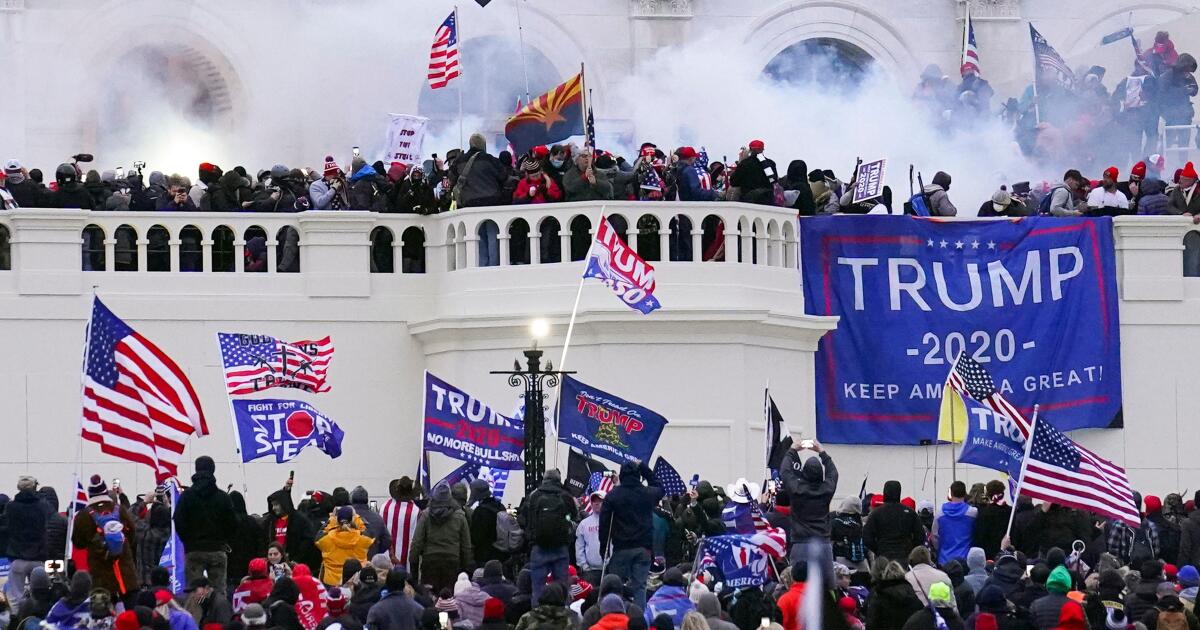
The Trump administration’s plan for the payment fund — widely seen as a way for Trump to compensate his political allies, including those who participated in the Jan. 6, 2021, attack on the Capitol — set off particular ire from some GOP lawmakers.

The plan has fueled growing unrest within parts of Trump’s party over his governance, compounded by the president’s endorsement of primary challengers to Sens. John Cornyn (R-Texas) and Bill Cassidy (R-La.), as well as Rep. Thomas Massie (R-Ky.), which angered some Republican senators.

Cassidy, who lost his primary and has since voiced strong opposition to Trump’s $1.8-billion fund, became a key player in the Thursday votes, voting down Schumer’s amendment but supporting Tillis’.

On Wednesday, Cassidy joined with Sen. Cory Booker (D-N.J.) to argue in a court filing that the $1.8-billion fund circumvents Congress’ authority and violates the Constitution’s spending and appropriations clauses.

“It is an unconstitutional attempt to spend the People’s money without Congressional approval,” Cassidy and Booker wrote in an amicus brief filed in the federal court case challenging the fund.

The fund was created by the Justice Department to settle a lawsuit brought by Trump against the Internal Revenue Service over the leak of his tax returns. Trump and his sons agreed to drop their personal lawsuit against the government in exchange for the creation of the $1.776-billion fund. Critics immediately questioned the plan, and it drew a rare backlash from Republicans.

In late May, GOP senators derailed plans to vote on the immigration bill over their displeasure with the payout fund and with Trump’s desire to use taxpayer funds for his planned White House ballroom. Senate Republicans removed the ballroom funding from the immigration package Wednesday, another setback for Trump.

The Trump administration sought to back away from its plans for the fund this week, following bipartisan outcry and a federal court ruling that temporarily blocked any payouts from the fund. Acting Atty. Gen. Todd Blanche said Tuesday the administration would end its plans to move ahead with the concept.

But Trump on Wednesday told reporters he didn’t know whether the fund was dead, calling it “a beautiful thing.”

After Schumer proposed the first amendment to ban the fund Thursday morning, the Senate came to a standstill as three key Republican senators deliberated. Schumer framed his effort to ban the fund Thursday as a way to force a referendum on Trump’s plan.

The amendment “offers Republicans a choice: Do you support Donald Trump’s $2 billion taxpayer-funded slush fund, or do you want to protect the American people and their paychecks?” Schumer said on the Senate floor before the vote.

Sen. Bernie Moreno (R-Ohio) urged Republicans to reject the amendment, saying Democrats were planning to “play so many games” on Thursday during the marathon session.

“We are going to fund immigration enforcement and border patrol, and I urge my Republican colleagues to stay united on that singular mission,” Moreno said.

The amendment failed after Cassidy voted against it. Republican Sens. Susan Collins of Maine, Jon Husted of Ohio and Dan Sullivan of Alaska voted in favor.

Schumer’s amendment was uniformly supported by Democrats, including California Sens. Adam Schiff and Alex Padilla.

Tillis, who also voted against Schumer’s amendment, immediately proposed his amendment. Sen. Jeff Merkley (D-Oregon) urged Democrats to oppose it, saying that the proposal would create “a new slush fund” by giving the money to the Justice Department.

“We heard over the last 48 hours that the acting attorney general said that this fund’s not moving forward. All this amendment does is codify what I believe the policy of the DOJ is,” Tillis said on the floor before voting began on his amendment. “This [fund] is unpopular, this administration has said they’re not moving forward with it; this is an opportunity for us to put it to bed.”

Responded Merkley: “Taking one slush fund and eliminating it and then creating a new slush fund still under control of the attorney general is not the way to go. The way to go is to get rid of these slush funds altogether.”

Trump has faced a recent string of failures, including the House vote Wednesday, a court ruling to remove his name from the Kennedy Center and a record-low approval rating among Americans as concern rises about economic issues, gas prices and Trump’s war with Iran.

On Wednesday, Trump lashed out against the four Republicans who backed the House war powers resolution, calling it “an unpatriotic thing” to do and calling the vote “meaningless.”

“They’re GRANDSTANDERS! They should be ashamed of themselves. MAGA!!! President DJT,” Trump wrote.

Times staff writer Ana Ceballos, in Washington, contributed to this report.

Source link

Rubio is optimistic on eventual Iran nuclear talks despite congressional skepticism

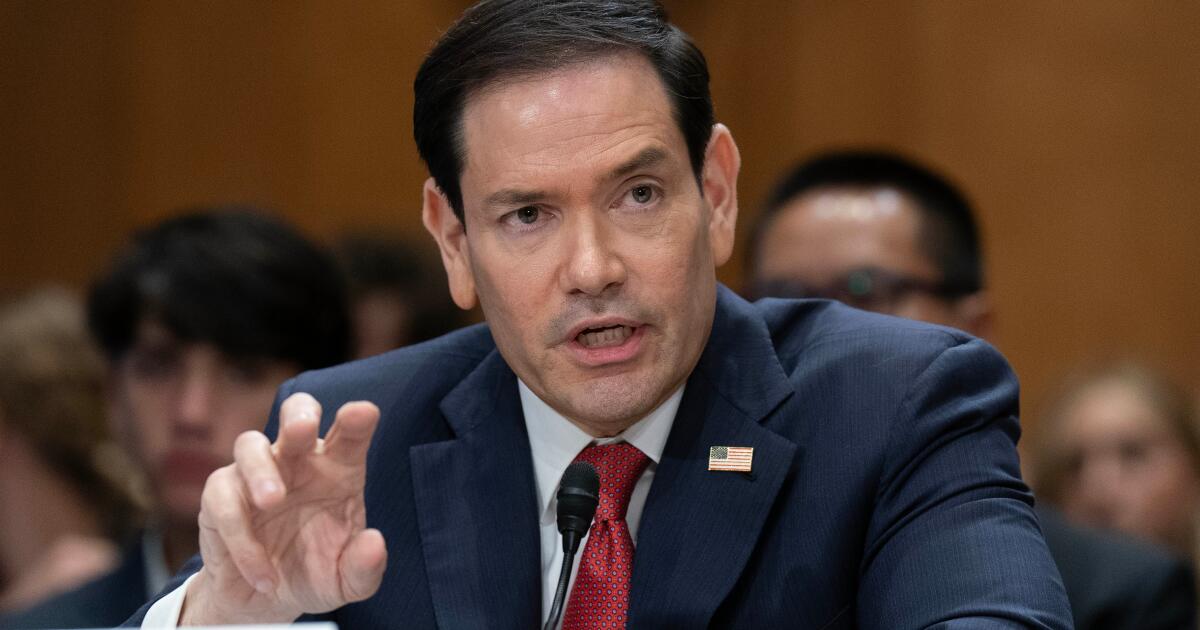
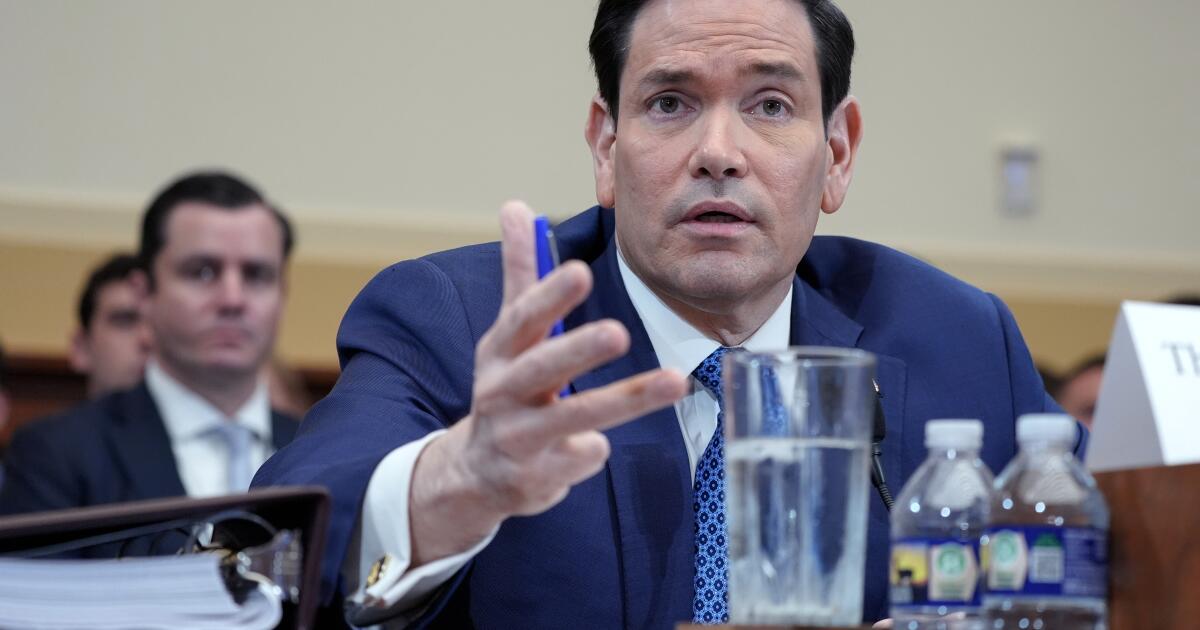
Secretary of State Marco Rubio said Tuesday that he is optimistic about the potential for a resumption in nuclear talks with Iran despite a shaky ceasefire in the war that is looking increasingly in doubt.

Rubio defended the Trump administration’s approach to Iran and other global hot spots in back-to-back hearings before the Senate Foreign Relations Committee and a House Appropriations subcommittee. He was briefly disrupted by protesters at each session.

In his first public testimony since the Iran war began at the end of February, Rubio said the Iranians have agreed to negotiate on nuclear points that they had not been willing to address in the past but would not offer an assessment on what those talks might produce.

“They have agreed to negotiate aspects of their nuclear program that just a month ago, just a year ago, they were refusing to even mention,” Rubio told the Senate. He noted, however, that there was no guarantee “it will lead to a deal that’s acceptable” and that negotiations have been made difficult by the instability of Iran’s leadership.

Rubio’s optimism ran counter to pessimistic reports from two semiofficial Iranian news agencies that Iran has stopped communicating with mediators after Israel threatened to bomb Beirut as it fights the Hezbollah militant group. President Trump disputed that Iran has cut off communication with mediators, calling Iranian reports of a cessation in talks “false and erroneous.”

Democrats criticize Trump administration’s approach to Iran, and Rubio defends it

Rubio’s wide-ranging testimony was met with fierce objections from Democrats, including tough questions about the status of U.S. foreign assistance to respond to diseases such as the Ebola outbreak in Africa. Rubio insisted that the dismantlement of the U.S. Agency for International Development had not affected Washington’s ability to assist with global humanitarian responses.

Sen. Chris Van Hollen (D-Md.) blasted Rubio and Trump for foreign aid cuts and overseas intervention. Van Hollen specifically took aim at the U.S. and Israeli decision to strike Iran, accusing the Republican president of entering the war on behalf of Israel.

Israeli Prime Minister Benjamin Netanyahu “said he’s been waiting 40 years to do this,” Van Hollen said. “It turns out he finally found a president who was both stupid and reckless enough to join him. Let’s face it, Mr. Secretary, the Trump foreign policy has become a dumpster fire.”

Rubio’s testimony, which was taking place as Israel and Lebanon began a new round of political talks at the State Department with the situation between Israel and Hezbollah still uncertain, did not provide definitive answers on any of the main questions of the day.

He said Iran is not guaranteed a massive payout for reopening the Strait of Hormuz, the crucial waterway for global oil shipments, and would have to commit to further concessions on its nuclear program to get significant sanctions relief.

“The more they give, the more they would get,” he said, later adding, “They’re not going to get it as a signing bonus.”

Rubio also said there are indications that Iran’s new supreme leader, Mojtaba Khamenei, is taking a bigger part in the discussions despite not being seen publicly since the war began.

“I think there are indications out there that he is increasingly engaging at some level, although all of his communications have been in writing and through intermediaries,” he said.

Democratic senator says drugs being on boats isn’t a targeting criterion for U.S. strikes

On other issues, Rubio dismissed questions about the legality of Pentagon strikes against dozens of alleged drug-smuggling vessels in the Caribbean Sea and the eastern Pacific Ocean, which have killed more than 200 people since early September.

Sen. Tim Kaine (D-Va.) said the military’s targeting criteria for those strikes does not include drugs being present on the boat. He called it “odd” but said he could not share much more because the criteria are classified.

Rubio pushed back, saying every strike has a legal officer who makes a determination on whether a strike is legal. He also said the U.S. military has “walked away from strikes” multiple times because they did not meet the targeting criteria.

The Trump administration says the U.S. is at war with drug cartels, while many Democrats have questioned the legality and effectiveness of the strikes.

The Republican former senator faces a second congressional hearing Tuesday and a pair of others Wednesday about the State Department’s annual budget request, though questions have mostly focused on top foreign policy issues.

Rubio wades into Taiwan arms sales opposed by China

Rubio acknowledged that the Trump administration is holding up a new potential $14-billion arms sale to Taiwan but said it remained under consideration and would not be canceled. He noted that the U.S. recently sold arms to Taiwan in December worth $11 billion.

He said the deal is not under review because of pressure from China, although he said the Chinese bring up the issue in discussions with the United States. Trump also has described it as a great negotiating chip.

“They are constantly talking about Taiwan arms sales, but that in no way is what is holding up our decision-making or the White House’s decision-making,” Rubio said. “It is something the president will have to decide on the timing of when and how that is executed on.”

Protesters chant at Rubio about Cuba

Rubio, the son of Cuban immigrants, also was questioned about the Trump administration’s escalatory behavior toward Cuba, as Trump has hinted that the small island country could be the next U.S. target after operations in Iran are wrapped up.

He faced chants from protesters who urged him to “stop killing Cubans” when he entered the Senate briefing room. The protesters were quickly pulled from the room. Their chants also included “Let Cuba live!”

Rubio defended the administration’s approach to Cuba and said it would remain focused on changing the Cuban government’s policies.

“I really don’t believe this system is capable of reform unless new people take over or a new mindset takes hold,” he said.

Despite a series of meetings between U.S. and Cuban officials, Trump and Rubio have renewed threats against the island’s government, which take on greater weight following the administration’s announcement of criminal charges against former President Raúl Castro.

Over his congressional career and now as America’s top diplomat, Rubio has maintained that Cuba is a national security threat due to its ties to U.S. adversaries, and that Trump is intent on addressing it.

Amiri, Lee and Finley write for the Associated Press. Amiri reported from New York.
Source link

Blanche says Trump administration is scrapping $1.8B fund meant to compensate president’s allies

Acting Atty. Gen. Todd Blanche said Tuesday that the Trump administration was scrapping plans to create a $1.8 billion fund meant to compensate allies of the Republican president after widespread political backlash and setbacks in the courts.

“We are not moving forward with the fund, period,” Blanche said in response to questions at a House hearing on the Justice Department budget.

““Not moving forward, ever?” asked Rep. Grace Meng, a New York Democrat.

The blunt declaration marked an extraordinary turnabout for a Trump Justice Department that just two weeks ago had pronounced the fund as essential to make up for what officials insist was weaponized law enforcement during President Biden’s Democratic administration. Since then, though, the idea has faced mounting pressure from Republicans who demanded reassurances that plans for the fund were off the table before they would move forward with legislation funding President Trump’s immigration enforcement agencies.

Blanche said the Justice Department was not abandoning an element of a settlement with the IRS that gave Trump and his family immunity from tax audits.

The hearing before a House Appropriations subcommittee was scheduled for discussion of the Justice Department’s budget, but lawmakers quickly focused their questioning on the creation of a fund that has provoked outrage over the mere possibility that violent pro-Trump rioters who stormed the U.S. Capitol on Jan. 6, 2021, could be eligible for payouts.

Signs for the retreat surfaced Monday when a person familiar with the matter said the Republican president was now reconsidering whether to move forward with the fund established to resolve his lawsuit against the Internal Revenue Service over the leak of his tax returns. The Justice Department also said Monday it would comply with a Virginia court temporarily blocking the administration’s “Anti-Weaponization Fund,” effectively agreeing to pause the plan for at least two weeks.

Another judge in Florida raised the prospect of reopening the IRS lawsuit because of “grievous allegations” of improper dealing made against the administration by settlement critics.

The Trump administration has defended the fund as an appropriate measure to make up for what officials insist was a weaponized Justice Department during President Joe Biden’s Democratic administration, a claim the Biden administration strongly denied. Though some Trump supporters, including participants in the Capitol riot, have celebrated the announcement, the reaction among Republicans in Congress has been decidedly more hostile, forcing Blanche to try to assuage a GOP constituency that generally operates in close alignment with the administration.

The furor has especially complicated matters in the Senate, where Republicans defiantly left town 10 days ago without passing legislation to fund Trump’s immigration enforcement agencies. Republicans who returned to Washington on Monday said they won’t have the votes to pass the Homeland Security spending bill until the White House works with them to place parameters on the fund. Many have pushed the administration to impose limits or scrap the idea altogether.

At a Senate budget hearing last month, Blanche refused to rule out the possibility that those who carried out violence on Jan. 6 could be eligible for payouts and has repeatedly said in interviews that anyone who feels persecuted by the criminal justice system is free to apply. Payouts will be decided by a five-member commission appointed by Blanche.

But he has apparently struck a more conciliatory tone in private when confronted by Republican anger.

Blanche encountered a groundswell of opposition last month at a tense private meeting with GOP senators, with more than half raising concerns, including by shouting at the Justice Department’s top official, Republican Sen. Ted Cruz of Texas said in a recent episode of his podcast.

“There were fireworks at an epic level — and I’ve got to say, it’s one of the roughest meetings I’ve seen in my entire time in the Senate,” Cruz said.

Behind closed doors, Blanche was “adamant” that no one who assaulted police at the Capitol would receive compensation, according to Cruz.

“He said not just ‘no,’ but ‘hell no,’” the senator recalled.

Tucker and Richer write for the Associated Press.

Source link

’60 Minutes’ veteran Scott Pelley rips CBS News bosses, saying they are ‘murdering’ the program

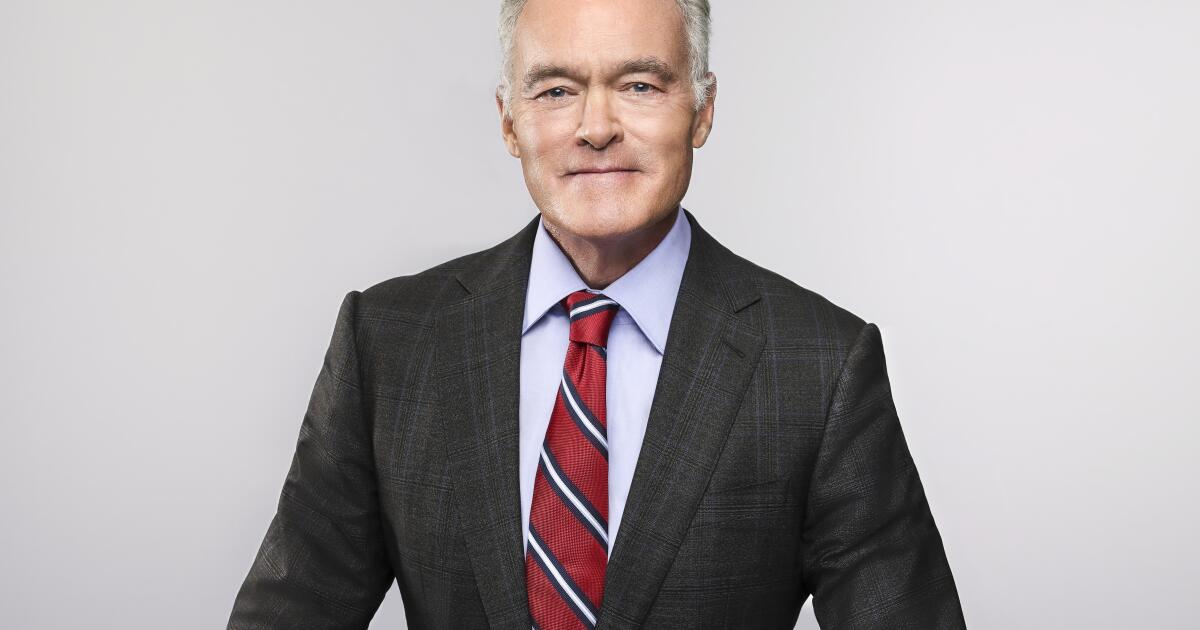
Nick Bilton, the new executive producer of “60 Minutes,” received a hostile welcome Monday from the CBS News program’s most respected correspondent Scott Pelley as the staff is still reeling over last week’s firings.

In the first staff meeting since Bilton was named last week, Pelley accused CBS News Editor-in-chief Bari Weiss of “murdering” the country’s most-watched news program, which recently finished the TV season with a 9 percent ratings increase. Recordings of the meeting were circulated to journalists.

“She is murdering ‘60 Minutes,’” Pelley said. “She does not love this place. She was brought in to kill it, and she’s been doing exactly that.” Pelley also attacked the credentials of Bilton, a former New York Times tech reporter and documentary filmmaker who like Weiss has no previous experience running a TV news operation.

Bilton was named to replace Tanya Simon on Thursday, an unexpected move that also came with the firing of correspondents Sharyn Alfonsi and Cecilia Vega. The moves were enacted by Weiss, who has targeted the prestigious program for changes since she arrived at the network last fall.

David Ellison, chief executive of CBS News parent Paramount, brought in Weiss — a skeptic of legacy media — with a mandate to move the division more to the political center. But many critics have seen the move as an attempt to placate the Trump administration while Ellison seeks regulatory approval for his deal to acquire Warner Bros. Discovery,

“60 Minutes,” has long been in Trump’s cross hairs. The president sued the program last year over the editing of an interview with his 2024 opponent former Vice President Kamala Harris. The suit was settled just ahead of the Federal Communications Commission clearing the way for Ellison’s Skydance Media takeover of Paramount.

One person close to “60 Minutes” said attendees at the meeting in the Manhattan West Side offices described it as something they had never witnessed in their careers. The confrontation — and the applause Pelley received from his colleagues during the meeting — also demonstrates how CBS News management may have underestimated the staff’s devotion to the program, now closing in on its sixth decade, that has long been considered the most powerful and respected platform in TV journalism.

A representative for CBS News declined comment on the meeting.

Pelley is held in especially high stature at the network due to his work over the years in dangerous war zones. When he was anchor at the “CBS Evening News,” he displayed photos of CBS News journalists who have died in the line of duty for the network going back to George Polk, who was killed during Greece’s civil war in 1948.

People close to CBS News management said both Bilton and Weiss reached out to Pelley last week to discuss the changes and their plans for the program’s future but he did not respond.

One CBS News veteran said the tense meeting “reads like Scott wants to be fired.”

Weiss has maintained she is committed to expanding the “60 Minutes” brand so it generates viewing and revenue outside of its Sunday night broadcast. But she has also clashed with producers and correspondents over the handling of stories such as Alfonsi’s report on the Trump administration’s use of harsh El Salvador prisons to hold undocumented Venezuelan migrants.

Alfonsi’s message to colleagues saying the segment was held for political reasons led to her dismissal from the program.

Vega posted a message last week claiming she had been facing pressure to insert political bias into her stories. “I very much fear what comes next for … the future of the legendary broadcast,” Vega said in a social media post on Thursday, referring to “60 Minutes.”

A CBS News representative said last week that Vega’s claims “are not based in reality.”

Bilton has tried to reassure veterans at the program that he remains committed to the program’s mandate to provide tough, investigative journalism. The words he’s used in several meetings are that next season will not be much different than the successful year the program just completed.

“He’s very much committed to continuing and extending the kind of journalism that ’60 Minutes’ has been known for.” said one person close to Bilton.

Source link