ROMA, Texas — Standing on a high bank of the Rio Grande, Army Lt. Col. Ray Richards points to a stretch of river that was, until recently, one of the busiest spots for illegal border crossings from Mexico.
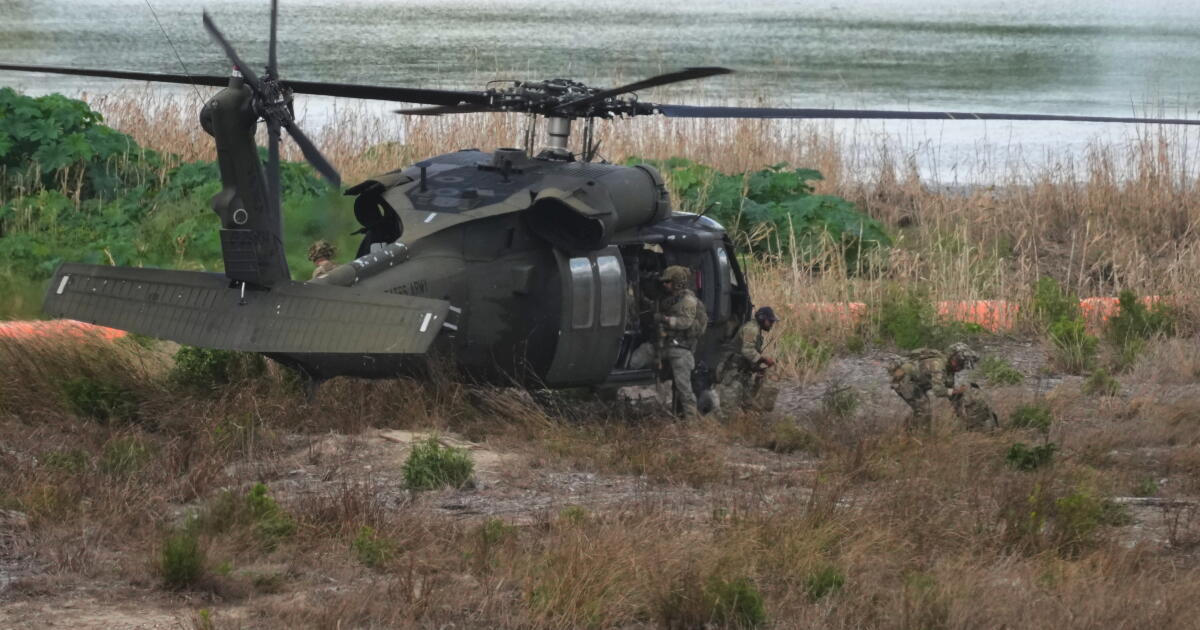
But on a recent afternoon, the area is quiet. American soldiers gather at a border monitoring post in Roma, Texas, where an infantry vehicle with camouflage netting sits between houses. A Blackhawk helicopter drops soldiers onto an island in the river, while U.S. Border Patrol agents breeze by on fan-propelled boats.
“At any given time, there would be multiple rafts full of people trying to get to this side,” Richards said of the area before U.S. forces made it a priority last year.
The Army has been inviting reporters to the Rio Grande Valley as it deploys hundreds more soldiers to the region this month by shifting some of the thousands of troops already serving along the 2,000-mile border. U.S. officials said the troop surge follows signs of elevated activity from drug cartels and has been accompanied by increased cooperation from the Mexican military. The U.S. Coast Guard said it recently encountered gunfire from the Mexican side of the river, prompting the Americans to fire back.
In this small patch at the southern edge of the United States, a slow saga is playing out — a curious mix of policing, policy and politics.
Some question a troop surge just weeks before midterm elections
While Republicans face increasing headwinds because of President Trump’s unpopularity, persistently high prices and the fallout from the war in Iran, border security has remained a relative bright spot in Trump’s polling numbers, with about half of Americans saying they approve of his performance there.
But some experts have questioned the need for such a large military presence. They suggest it’s less about effective strategy and more about political theater.
Illegal crossings have plummeted due in large part to asylum restrictions that began before Trump returned to the White House. Meanwhile, a large percentage of the fentanyl, cocaine and heroin seized along the border was being smuggled in cars and trucks passing through checkpoints, not the areas in between.
David Shirk, a University of San Diego political science professor, said the Trump administration wants to remind voters it’s been very aggressive on border security.
“I don’t dispute there’s some benefit to having personnel in areas at risk for people smuggling and drug trafficking,” Shirk said. “But the vast majority of that is now happening at ports of entry.”
Dessa Bergen-Cico, a professor of public health at Syracuse University who studies drug trafficking, said street prices for cocaine and fentanyl are still low, suggesting the drug flow remains unimpeded.
But Army Maj. Gen. Curtis Taylor, who commands the military’s southern border task force, said the work has been vital and effective, particularly for targeting human trafficking.
The moral argument for the Army’s mission is “dismantling this marketplace of human trafficking that is bringing people into the border,” Taylor said. “An added benefit of that is there’s an awful lot of drugs moving with that human trafficking.”
Efforts to secure a former epicenter of illegal crossings
Roma, a city of about 10,000 people, lacks a border wall in some places because homes sit close to the steep slopes along the Rio Grande. Directly across the water is Miguel Alemán, a town in the Mexican state of Tamaulipas that’s been plagued by decades of cartel violence. From Roma, it’s a football field’s distance across the river at best and much less in some places.
In 2021, Roma became a center of illegal crossings when thousands of families and unaccompanied children arrived each day to seek asylum. Border crossings fell sharply after President Joe Biden introduced severe asylum restrictions in 2024 and dipped after Trump suspended asylum at the border.
After Trump returned to the White House in January 2025, the Army and Coast Guard expanded operations to back up the Border Patrol, which remains the lead agency for border security. The Army now commands some 8,000 U.S. troops along the entire border, while the U.S. Coast Guard and Texas law enforcement have brought in more personnel.
Army officials said people still try to cross into Roma despite multiple obstacles. A barrier of strung-together buoys, each the size of a hay bale, stretched along the river. Concertina wire lined the U.S. river bank, while a surveillance blimp hung in the sky. A river island was recently cleared of trees that hid people trying to cross.
Army Sgt. Nathaniel Decker said he recently saw people on three rafts set out from the Mexican side at dusk. He reported to Border Patrol that one group had cleared the buoys. They were eventually caught by a house in Roma.
Mexico also has sent more troops
The U.S. has stopped many of the drones used by the cartels to surveil the border and ferry drugs, by electronically jamming or capturing them or shooting them down with a laser.
The U.S. has gotten better at tracking them and coordinating with Mexican officials to locate the drones’ operators. But some still get across.
“We have reduced a lot of the flights,” said Richards, the Army lieutenant colonel, who has deployed with the Massachusetts Army National Guard. “But in the middle of the night, those drones can fly into the U.S. airspace, and that’s a true threat to any soldier on the ground.”
Under pressure from Trump, Mexican President Claudia Sheinbaum has cracked down more heavily on crime than her predecessors. Mexico this month sent 500 National Guard and military officers to Tamaulipas as part of a coordinated effort with the U.S. to prevent drug and human trafficking.
Mexico’s deployment “is based on intelligence gathered regarding the movements of criminal groups,” a federal official in Mexico told The Associated Press, speaking on condition of anonymity because he was not authorized to comment on the matter.
As part of the operation, the Mexican Army is using two UH-60 helicopters, drones and anti-drone equipment.
The U.S. Coast Guard has also boosted patrols on the Rio Grande, bringing in more than 300 personnel in October of last year. While assisting Border Patrol in trying to apprehend someone attempting to enter the U.S. illegally, the Coast Guard encountered gunfire from the Mexican side of the water near Garceno, Texas, the service said in a statement. The Americans returned fire. None were hurt.
U.S. Coast Guard Cmdr. Jeff Miller wouldn’t give additional details about the exchange of gunfire, except to say the personnel are “working in a very challenging environment” and are authorized to use force to protect themselves.
On a recent patrol, the scene along the river was quiet. A Coast Guard boat armed with machine guns motored along the greenish water. Two men fished from a small boat. A privately funded border wall, made from galvanized steel, lined the American side. In Mexico, there was a park with soccer goal posts, homes and a woman waving.
A Coast Guardsman driving the boat, who declined to give his name, said he’s seen kids on the Mexican side get excited as if a fire truck were passing. Others have offered the Americans cold beer. Some have reacted with offensive gestures.
Joel Garcia, Border Patrol’s acting deputy chief patrol agent for the Rio Grande Valley, said the agency has proof that U.S. operations have been effective based on the amount of drug seizures, the number of people apprehended and decreasing traffic within certain areas.
“Border security, when done right, if we have truly secured the line, should be boring,” he added. “It should look as if no one is crossing and nothing is happening.”
Finley writes for the Associated Press. AP writers Fabiola Sánchez and Megan Janetsky in Mexico City contributed to this report.
Ethiopian government forces entered Adigrat in northern Tigray after rebel fighters withdrew, heightening tensions with neighbouring Eritrea. The two neighbours cut off diplomatic ties last week. Al Jazeera’s Hamza Mohamed reports.
Eritrea dismisses allegation as Ethiopia’s pretext for more war.
Published On 7 Oct 20267 Oct 2026
Eritrean soldiers have been seen driving through a northern town inside Ethiopia, witnesses tell the Reuters news agency, days after the neighbouring countries severed ties.
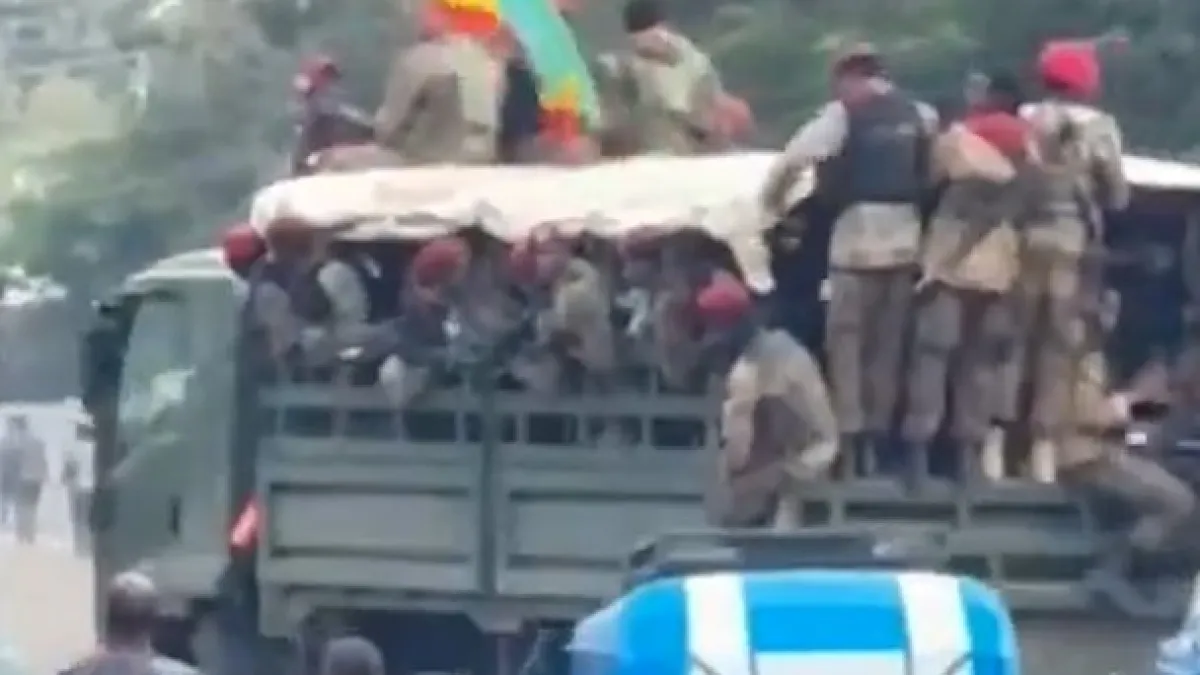
At least two witnesses told Reuters they saw “dozens” of Eritrean soldiers drive through Adigrat in two trucks on Wednesday. The town is located 25km (15 miles) south of the border with Eritrea.
The witnesses said they could identify the soldiers as Eritrean by their off-white camouflage uniforms.
Another Adigrat resident who was not in town at the time said family members had told him they had also seen Eritrean troops, according to Reuters, which could not independently verify their accounts.
“The Eritrean army has entered Tigray in uniform, equipped with heavy weaponry,” said Gebreigziabher Beyene, commander of the Tigray Peace Force, a pro-government militia that has fought alongside the federal army.
“This force is being struck by drones,” he said, adding Eritrea was “deliberately deploying its forces so that the fighting takes place inside Tigray rather than spilling into Eritrea”.
Last week, the chief administrator in Ethiopia’s northeastern Afar region said Eritrean troops were fighting in the area, but Reuters was unable to confirm the claim.
In a statement on X, Eritrea’s Information Minister Yemane Meskel did not deny that troops had crossed the border, but said Ethiopia’s government was creating “a fallacious narrative of ‘self-defense’ to rationalise and camouflage its war of aggression”.
If confirmed, it would mark the first time Eritrean forces have been seen inside Ethiopia since the renewal of fighting between Ethiopian forces and a seven-group armed alliance, including the Tigray People’s Liberation Front (TPLF), on September 23.
Ethiopia has accused Eritrea, as well as Egypt and Sudan of backing the armed alliance which is fighting to remove the government. All three countries have denied involvement.
Eritrea announced it was severing ties with Ethiopia on Thursday after Addis Ababa announced it would close its embassy in Asmara and expel 10 Eritrean diplomats.
In a statement, Eritrea’s Ministry of Foreign Affairs said Ethiopia’s actions had left it with “no option but to reciprocate in kind and sever all diplomatic ties with Ethiopia”.
Members of the Ethiopian pro-government Tigray Peace Force (TPF) give a thumbs up to residents after Ethiopian federal and allied forces entered the Tigray capital of Mekelle on October 4, 2026 [AFP]
On Monday, Ethiopian forces captured Tigray’s regional capital Mekelle, days after the TPLF confirmed that it had withdrawn from the city and moved its regional administration “temporarily” to another location.
It happened as Ethiopia’s Prime Minister Abiy Ahmed was sworn in for another five-year term, during which he insisted that his landlocked country must have access to the Red Sea.
On the same day, Eritrea joined Somalia, Sudan and Egypt in issuing a joint declaration calling for a political and peaceful solution to the war in Ethiopia.
The declaration appeared to push back against several policies pursued by Ethiopia in recent years, highlighting widening rifts between Addis Ababa and its neighbours.
Ethiopia’s government forces say they’ve seized Mekelle from Tigray fighters after a week of intense battles. The fighting has reignited fears of a full-scale war that could draw in neighbouring countries.
WASHINGTON — The U.S. military is dispatching roughly 9,000 troops aboard a group of ships to the Middle East, a U.S. official said Thursday. The bolstering of the American military presence comes as President Trump warned anew that new strikes against Iran could be on the horizon.
He also said early indications suggest that Iran is linked to the co-pilot who stabbed his captain and tried to crash an Israel-bound flight on Wednesday.
In an exchange with reporters at the White House, Trump raised the connection when asked by a reporter if there were any links between the pilot behind the attack and Tehran.
“I would say the answer, based on what I’m hearing, is ‘yes,’ but we’re working on it right now,” Trump said, without offering details.
Trump also warned that if the link is established to Iran, the United States would retaliate.
“Oh they’ll be hit, very hard, don’t worry,” Trump said. “You just ask them. They know what happened. They’ll be hit very hard.”
Meanwhile, the group of ships now en route to the Middle East together carry over 7,000 sailors and 2,000 Marines.
It includes the USS Theodore Roosevelt carrier strike group, which recently deployed with the cruiser USS Chosin, and the USS Makin Island amphibious readiness group, which includes the USS John P. Murtha and USS Anchorage amphibious landing ships.
It could mean that three carriers are in the region as early as the end of October, according to the U.S. official who spoke to the Associated Press on condition of anonymity to discuss sensitive military operations.
Given the personnel already in place in the Middle East, the move would bring the U.S. naval presence to an unusually high number of more than 20,000 sailors and Marines and hundreds of aircraft. The Navy previously had three carrier strike groups in the Middle East in April for the first time since 2003.
The carriers USS George H.W. Bush and the USS George Washington are in the region now, along with the USS Boxer amphibious readiness group. The Washington is typically deployed to Pacific Ocean but it was moved to the Middle East to relieve the USS Abraham Lincoln, whose arduous deployment resulted in the crew being at sea for more than 260 days straight.
Trump, in a Time magazine interview published Thursday, also raised the prospects of new strikes, saying it is “possible” that he will ramp up bombing in Iran after the Nov. 3 elections in the United States.
When pressed, Trump said he could not go further in detailing his strategy.
“I can’t tell you that because look, you know, you’re asking, where are you going to bomb?” Trump said.
He said in the interview, conducted Monday, that he rejected the latest ceasefire proposal from Iran because “things that I wouldn’t have approved a year ago I wouldn’t have today.”
Trump cited as an example an offer from Iran to “open up” the Strait of Hormuz, the key energy shipping corridor, but said the overall proposal was “not good enough.”
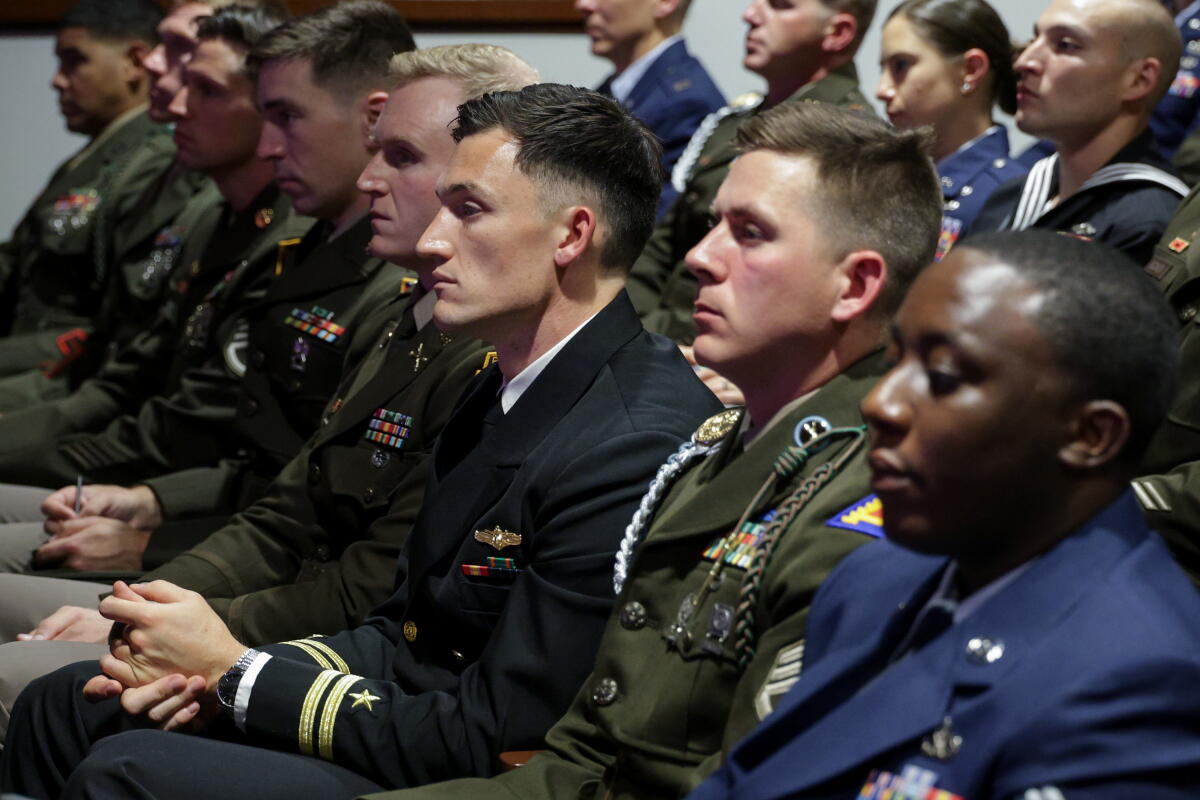
Members of the military listen as Defense Secretary Pete Hegseth gives a State of the Force address at Marine Corps Base Quantico.
(Alex Wong / Getty Images)
Asked if the increasingly unpopular war would threaten Republican Party chances in November, Trump at first responded, “It’s possible.” But then he added, “It should help, because Iran will not have a nuclear weapon.”
The president said “100% of the people” oppose Iran having nuclear attack capabilities “including worldwide.”
“So, when you say it that way, It would help,” Trump added. “If you don’t say that, it could hurt.”
Toropin and Price write for the Associated Press. AP writers Seung Min Kim, Will Weissert and Aamer Madhani contributed to this report.
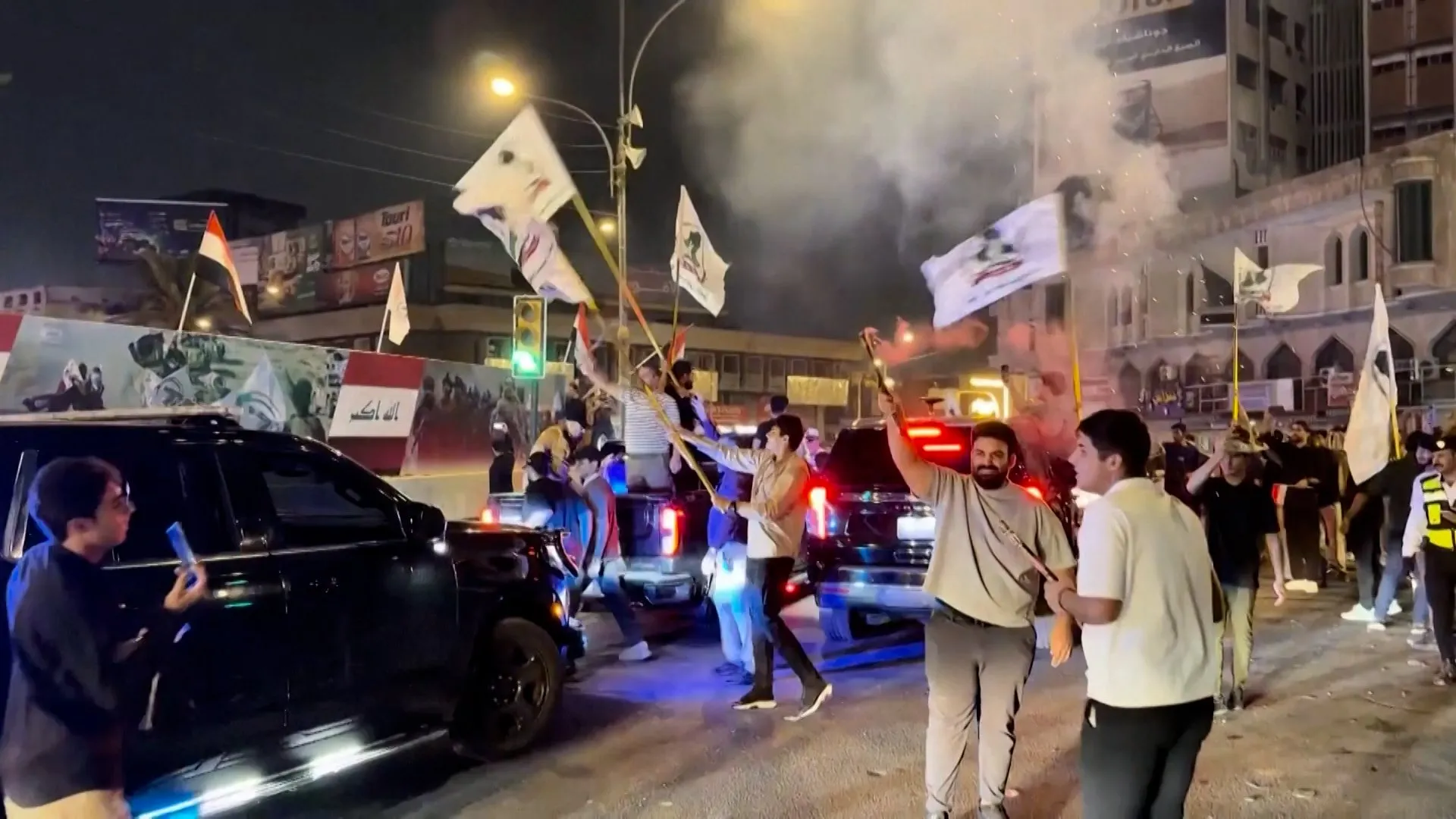
Night time celebrations filled the air as Iraqis observed the start of a four-day holiday to mark the withdrawal of US troops and international forces after more than a decade in the country fighting ISIL.
South Korea has accused North Korea of planting mines that caused an explosion in the Demilitarized Zone last week, injuring two South Korean personnel and violating the armistice agreement that ended the Korean War.
South Korean Defence Minister Kang Shin-chul told a parliamentary committee on Tuesday that the mines were North Korean and appeared to have been planted as part of Pyongyang’s efforts to strengthen its border defenses near the Military Demarcation Line that divides the DMZ.
Kang said the incident warranted a response from Seoul, although he declined to specify what measures the South Korean military might take.
Seoul Blames North Korea for the DMZ Explosion
“The responsibility lies with North Korea, so we will take corresponding measures,” Kang said, adding that the military had several response options and would implement them in stages.
Stay ahead of the geopolitical week.
MD Briefing delivers expert analysis across five global fronts — the Indo-Pacific, energy, geoeconomics, European security, and the Middle East — every Monday morning. Free.
He said a key question was whether North Korea had planted the mines knowing that South Korean troops could enter the area and potentially be injured.
The South Korean Joint Chiefs of Staff said an investigation conducted jointly with the United Nations Command had also uncovered another North Korean resin anti personnel mine close to the site of the September 21 explosion.
The newly discovered mine was different from those believed to have caused last week’s blast.
Another Mine Found South of the Military Line
JCS Vice Chairman Kwon Dae-won said the mines did not appear to have drifted into the area where they were discovered.
The United Nations Command assessed that the additional mines were clearly located south of the Military Demarcation Line, according to South Korean officials.
The findings have heightened concerns about the dangers created by North Korea’s ongoing efforts to fortify its side of one of the world’s most heavily militarized borders.
The DMZ has remained a highly sensitive area since the 1953 armistice, with even limited incidents carrying the potential to trigger a broader military confrontation.
A New Mine Incident Revives Memories of 2015
The latest blast has echoes of a 2015 confrontation, when North Korean mines seriously injured South Korean soldiers inside the DMZ.
South Korea responded by restarting loudspeaker broadcasts aimed at North Korea across the border. Pyongyang condemned the broadcasts, and tensions escalated into a military standoff before the two sides reached a high level agreement.
The current incident is unfolding under different political circumstances, however, as Seoul is simultaneously attempting to reopen dialogue with Pyongyang.
South Korea’s Dialogue Push Faces a Fresh Challenge
South Korean President Lee Jae Myung has sought to encourage North Korea to return to dialogue after years of worsening relations.
Pyongyang has instead moved in the opposite direction, declaring South Korea an enemy state and abandoning its previous policy goal of peaceful reunification.
That shift has made military incidents along the border increasingly sensitive.
For Seoul, the challenge is to respond to the alleged mine deployment while avoiding measures that could further damage its efforts to restore communication with Pyongyang.
North Korea Remains Silent as Seoul Warns of a Response
North Korean state media has not publicly commented on the explosion or South Korea’s accusations.
North Korea’s mission to the United Nations and its embassies in Beijing and Singapore also did not immediately respond to requests for comment.
With the South Korean military warning that it will take corresponding measures, the incident could become another source of confrontation between the two Koreas.
The immediate priority is preventing further injuries and dealing with the mines around the Military Demarcation Line. But the larger concern is whether the latest explosion will trigger another cycle of military responses at a time when relations between Seoul and Pyongyang are already deeply strained.
The blast therefore carries significance beyond the two injured personnel. It has placed South Korea’s attempt to pursue dialogue with North Korea alongside the more immediate question of how Seoul responds to what it considers a violation of the armistice.
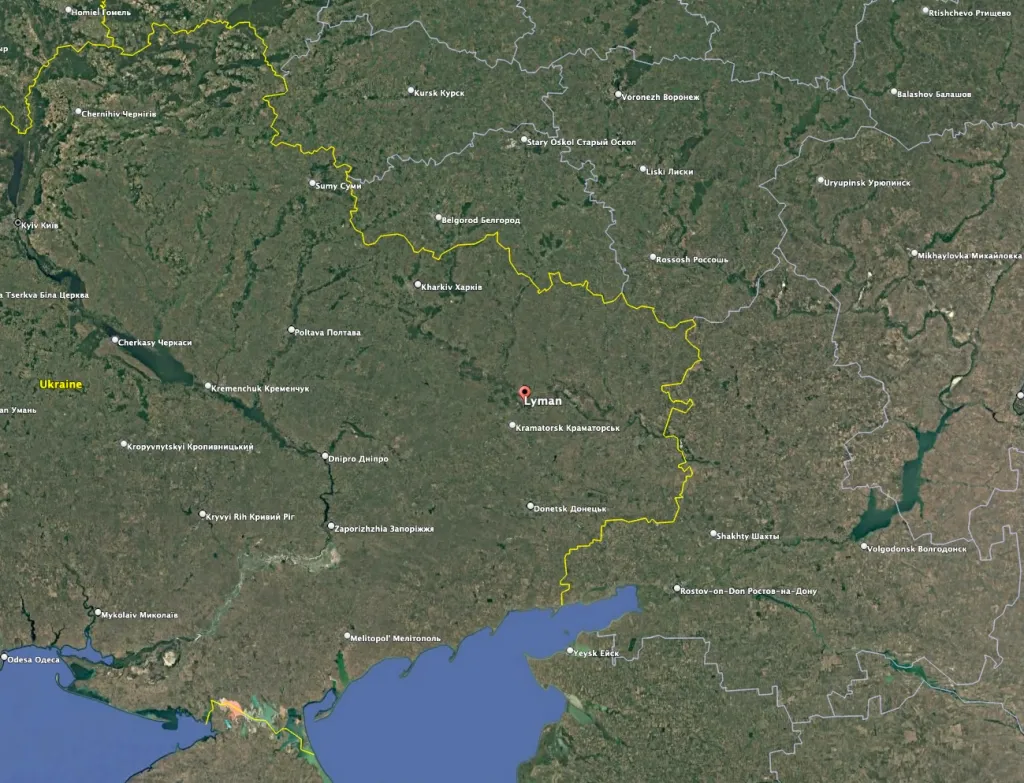
Ukraine claims it has recently regained about 125 sq. km. of territory near the town of Lyman in the eastern Donetsk region during what has been dubbed Operation Vivaldi. Rodion Kudryashov, a Ukrainian colonel and deputy commander of the Third Army Corps, offered some insights into this offensive and what made it different.
Though the operation is still ongoing, the success of Vivaldi began long before any troop movements, Kudryashov explained in an editorial he published in Ukrainian Pravda.
Ukraine is making advances near the town of Lyman, located in the Donetsk region. (Google Earth)
“After the Third Army Corps was formed, we changed the command system of its subordinate units,” he noted. “Some brigades came to the corps after very heavy fighting, with losses, manning problems and, most importantly, eroded trust in their leadership.”
Third Army Corps Commander Brig. Gen. Andriy Biletsky “then set out one of our key principles: a commander must be responsible for the entire cycle, from training a soldier to the result on the battlefield,” Kudryashov pointed out. “In some places that meant replacing a commander. In others it meant restructuring a staff or strengthening the NCO chain. In some cases we had to build, almost from scratch, processes that on paper should have been working long ago.”
At issue was changing the culture from a more rigid Soviet-era model, with a cumbersome chain of command, to a modern, more flexible one better suited for the current conflict.
“A modern commander has to handle an enormous flow of information and make decisions quickly,” the deputy commander proffered. “He has to understand what unmanned systems, logistics, reconnaissance and adjacent units can do, while not smothering initiative at lower levels with endless approvals. An army where every decision takes hours to travel up and down the chain loses to an army that makes the same trip in minutes.”
Once those changes were put in place, the Third Army Corps had to first stop Russian advances in the sector before it could move forward.
VIVALDI 🎼🎶
GoPro footage from Ukrainian assault troops who took part in the Vivaldi counteroffensive, which resulted in the liberation of five settlements in the Lyman direction. pic.twitter.com/2SVXSKlEX0
“When the corps took over its area of responsibility, our first task was not an offensive,” the officer said. “We had to stop the situation from deteriorating and stabilize the forward edge.”
“The enemy was pressing. In some sectors our combat formations were losing cohesion,” he underscored. “The Russians were actively using infiltration tactics: small groups seeped between positions, massed in our rear, threatened logistics and gradually eroded the defensive line.”
“We had to stabilize the forward edge and stop the infiltration,” Kudryashov said. “We had to rebuild command, put in commanders capable of making decisions, form new teams and reconstitute units. We had to set up the surveillance-and-strike system and sustain the front line. We had to stockpile ammunition, drones and other resources, understand the enemy, and plan the next step before the previous one was finished. Only after that could we move forward.”
By June, the corps was able to secure the front “in the sector from Borova to Lyman and eliminate the enemy’s infiltration zones,” Kudryashov continued. “That sounds less impressive than the word ‘offensive,’ but no offensive ever happens without it.”
“You cannot plan a complex operation if you don’t know where your forward edge will be tomorrow,” the deputy commander extrapolated. “You cannot build up forces if your logistics are constantly under threat. And you cannot form a strike group if your units are always forced to patch new breaches. So the first phase of ‘Vivaldi’ was not an advance at all. It was creating the conditions that made an advance possible in the first place.”
Once the front was stabilized, the next step was shaping the battlefield for the offensive. The corps’ unmanned systems units went to work against Russian logistics, striking a pipeline and depots. That forced the enemy to change its fuel and lubricant supply routes.
Ukraine’s 3rd Army Corps released new footage of search-and-strike operations on the Lyman front. FPV drone operators from the 60th Mechanized Brigade’s FATUM unit targeted Russian armored vehicles, a Grad multiple rocket launcher and personnel. #Ukrainepic.twitter.com/1iNG7z2N1c
“The operation also involved the corps’ brigades, its reconnaissance and unmanned units, and attached forces from the SSO (Special Operations Forces), GUR (Defense Intelligence) and DPSU (State Border Guard Service),” the deputy commander said. “To counter infiltration, a joint headquarters was set up to coordinate special and reconnaissance units at the tactical level under a single concept.”
“In my view, this is one of the main characteristics of modern war,” he further stated. “It is not 10 strong units that each fight well on their own. It is 10 different elements that start working as one system at the right moment.”
An interesting new detail from Ukraine’s 3rd Army Corps about Operation Vivaldi on the Lyman axis.
The Corps says Ukrainian forces carried out a flanking maneuver and, for the first time, airlifted unmanned ground vehicles behind Russian lines, while also suppressing Russian… https://t.co/ZEq8C75bN4pic.twitter.com/KgKcZ0Zs2P
The influential, Kremlin-connected Rybar Telegram channel has acknowledged Ukrainian gains in this sector.
“In the first half of summer, Russian units gradually advanced in Lyman,” Rybar wrote this morning. “However, in August, the enemy launched counterattacks and, by the first week of September, regained some positions, and also began attempts to recapture Shandryholovo and Zarechnoye.”
“The enemy did not inflict significant losses on Russian troops, as the concentration of units of the West group of forces in the salient remained relatively low,” Rybar added. “However, later, the UAF deployed reserves to launch an offensive towards Zherebets in order to align the front along the water barrier and return it to the configuration of the end of 2025.”
rybar now saying the 144th division is still falling back. the 3rd corps is still advancing and destroying an entire army group as they move. this is historic. pic.twitter.com/2jOa8KR9oA
Though the battle is still in flux, Kudryashov said there are lessons the rest of the Ukrainian military should heed.
“Winning one battle is not yet winning the war,” he said. “The enemy is learning too. He changes tactics, looks for weak spots and tries to scale what works for him.”
“So our task is to be faster, not only in physically moving forward but also in our ability to see, think, decide and put into practice what delivers results,” the deputy commander avowed. “And to do everything possible so that our soldiers pay the lowest possible price for every next kilometer of Ukrainian land.”
The Latest
On the battlefield, in addition to the gains Ukraine has made near Lyman, it has also largely been able to hold off Russian advances across the front lines. Here are some key takeaways from the latest Institute for the Study of War assessment of frontline operations:
Sumy: Russian forces recently conducted an infiltration mission east of Sumy City, and they continue to conduct glide bomb strikes against frontline settlements in northern Sumy Oblast to set conditions for future offensives.
Kharkiv: Russian forces continued offensive operations in northern Kharkiv Oblast and in the Borova, Kupyansk and Velykyi Burluk directions on Sept. 21 and 22 but did not advance.
Donetsk: Ukrainian forces reportedly continue counterattacks in the Lyman direction, including southeast of Lyman, as Russian forces are attempting to use redeployments to stabilize the area. Russian forces continued offensive operations east and southeast of Slovyansk near Rai-Oleksandrivka and toward Mykolaivka and Fedorivka Druha on Sept. 21 and 22 but did not advance. During this period, they also tried to advance in the Novopavlivka and Oleksandrivka directions but made no gains, as Ukrainian forces counterattacked in both areas.
Zaporizhia: Ukrainian forces recently advanced or maintained positions in western Zaporizhia Oblast.
Kherson: Neither Russian nor Ukrainian forces reported ground activity in the Kherson direction on September 22.
Russian Offensive Campaign Assessment, September 22, 2026: The Russian Ministry of Defense (MoD) falsely claimed that Russian forces have encircled Dobropillya — an intensification of the Kremlin’s cognitive warfare campaign alleging encirclements across various sectors of the… pic.twitter.com/yMoAcyVIme
In his speech to the U.N. General Assembly this afternoon, Ukrainian President Volodymyr Zelensky called for Russia to end its war and said it was paying a heavy price — and exacting a terrible toll — for little territorial gain.
“This ridiculous and never-ending war with Ukraine must be ended,” the Ukrainian leader urged. “I do not know a single world leader who would say otherwise. I do not know anyone who is openly for this war, except one man.”
He was referring to Russian President Vladimir Putin.
“Ladies and gentlemen, for almost five years now, Russian generals have been trying to carry out Putin’s crazy order to seize our eastern land, the Donetsk region,” Zelensky continued. “And just this year, from January through August, the Russian army lost 248,964 people on the battlefield in Ukraine in eight months. Twenty-one countries in the world have smaller populations… than the number of Russian troops lost in just eight months.”
‘Patient Zero’ Putin, Russia-Ukraine war & Trump: Zelensky addresses UN
“It’s madness, but they still keep going there to die because that is what Putin wants,” Zelensky suggested. “After losing so many people, Russia managed to capture just over 1,000 square kilometers of our land this year, and we have already liberated a significant part of it. Russia is a country that already has 17 million square kilometers of its own land without any Ukrainian territory, by the way. So to add another 1,000 square kilometers, Putin is paying with 248 people for every kilometer. Does anyone still think that he is reasonable? And moderate?”
“Russia’s leader, Patient Zero, the man from whom this war began and spread into the world, becoming the largest war in Europe since World War II, will inevitably leave this war,” Zelensky proffered. “But the longer Putin is able to wage war, the more evil he will leave behind in this world. Today, nothing in war works the same way it did, by the way, in 2022, except the courage of people.”
Russian missile and drone barrages have “caused damage, but they didn’t break us,” the president proclaimed. “We build our defense. What is really difficult for us now is Russian ballistic missiles and their new jet-powered Shaheds — Iranian technologies.”
Residential buildings stand against the backdrop of smoke from a Russian attack on Kyiv. (Photo by Bohdan Diev/Global Images Ukraine via Getty Images) Tatyana Kudel’s’ka
“Just imagine this: since the beginning of this year, Russia has already used more than 2,100 missiles of different types again against us, against Ukraine, our people and our children,” Zelensky stated. “More than 950 of them were ballistic missiles. In eight months of this year, Russia used 63,000 attack drones of different types against Ukraine, our people, and more than 7,700 of them were jet-powered Shaheds, truly destructive and very dangerous weapons. Just think about it. The Russians launch jet-powered Shaheds every hour, every hour, against our cities, our economy, our infrastructure. Our combat aircraft are fighting them 24/7, and this is part of Russia’s strategy to create a new threat every hour, to make life harder for the economy and to disrupt people’s lives, and to stop children from being able to study, to study at school.”
Speaking at the Sixth Summit of the International Crimea Platform in New York on Wednesday, Zelensky said the return of Crimea is a condition for any return to normal relations with Russia.
“Disrespect for international law began in 2014, when Russia entered Crimea,” the Ukrainian leader stated. “There can be no full return to normality without Crimea, the restoration of security, the protection of people and lives, the release of prisoners held by Russia, and a return to the fundamental principles of international law. Territorial integrity matters, state sovereignty matters, and human lives matter. And Russia must learn this.”
Участь Володимира Зеленського в шостому саміті міжнародної Кримської платформи
Tuesday, Zelensky met with U.S. President Donald Trump.
Among the topics of their three-hour meeting were a path to end the war and a renewed discussion about the licensing of Patriot air defense interceptors so they can be built in Ukraine. The country is struggling to defend against Russian ballistic missiles because of the dearth of these munitions.
“Just had a positive and productive meeting with President Trump on the sidelines of the UN General Assembly,” the Ukrainian leader stated on X. “Both the United States and Ukraine want this senseless Russian war to end before winter. We discussed possible de-escalation steps that could pave the way to diplomacy.”
“I am grateful that, in parallel with this, our teams continue to work on launching the production of Patriot interceptor missiles in Ukraine,” Zelensky noted. “This is exactly what will help protect lives if Russia rejects negotiations and continues to rely on ballistic terror against our people this winter and beyond. We also discussed other bilateral and multilateral issues, including the winter air defense package for Ukraine. Thank you to President Trump, his team, and all the American people for their support.”
I just had a positive and productive meeting with President Trump @POTUS at UNGA. Both the U.S. and Ukraine want to see this senseless Russian war ended before winter. We discussed potential de-escalatory steps that can open up the way to diplomacy. I am grateful that in the… pic.twitter.com/Ayvsj9It3m
— Volodymyr Zelenskyy / Володимир Зеленський (@ZelenskyyUa) September 22, 2026
For his part, Trump said negotiations about Patriots are ongoing but offered no commitments.
“We’re talking about that,” Trump stated. “We’ll be talking about that now. If you would have come in at the end, we would have had an answer. But we’ll be talking about that. I mean, we talk about it all the time. Very capable people, really amazingly capable people.”
This isn’t the first time the two leaders have talked about a Patriot licensing deal. The issue came up back in July. As we noted at the time, such a deal faces big challenges.
First of all, it could face bureaucratic and regulatory hurdles, like getting congressional approval. Major security concerns exist, not just by having license production of a very sensitive weapon in Ukraine but also having to do with whatever facility will perform the work, which would become a top target for Russia. Even if they got the clearance to move forward, delivery of new weapons will still take years due to the time it takes to build the facility and to source long-lead components.
Even Lockheed Martin, one of the world’s biggest arms makers, currently produces only about 650 PAC-3 MSE interceptors a year, or just shy of two per day. However, under a contract with the Pentagon inked in January, Lockheed is committed to boosting Patriot PAC-3 MSE annual production to 2,000 in the years to come.
You can read more about the headwinds a Patriot licensing deal would face, even if it were to come to fruition, in our initial story here.
A Patriot interceptor. (DOW) Department of Defense
Ukraine’s president also confirmed that “Kyiv is ready to agree to an energy truce on the condition that Russia does not attack its energy, electricity and heating infrastructure as well as its water supplies,” CNBC reported. “Trump has previously called on Ukraine to stop targeting Russian oil refineries with drone strikes, which he says are ‘hurting the world’ as fuel supply disruptions from the Ukraine and Iran wars propel U.S. diesel prices to a record high.”
Ukraine’s repeated attacks on Russian oil infrastructure is having a major impact.
“Russian refinery throughput fell to 3.8 mb/d, its lowest level in more than 20 years and roughly 30% below a year earlier,” according to a recent report by the International Energy Agency (IEA). “Reported gasoline output is down by 20% compared with 2025 levels, while diesel production is estimated to have fallen by nearly 30%, prompting the government to restrict fuel exports to protect domestic supplies.”
Amid the U.N. General Assembly meeting, strikes by both sides continued.
“At least 16 people were killed and 59 others injured in Russian attacks across Ukraine over the past day, as Russia launched several waves of ballistic missiles at Kyiv overnight,” the Kyiv Independent reported, citing local authorities.
“Two people were killed and eight others injured in Kyiv, where Russian ballistic missiles struck the capital in three waves overnight,” the publication added. “Residential buildings, a maternity hospital, energy, and logistics infrastructure were among the sites damaged, according to President Volodymyr Zelensky.”
“Russia launched 282 attack drones of various types overnight, including jet-powered drones, as well as Zircon anti-ship missiles and Iskander-M, S-400, and KN-23 ballistic missiles,” the news outlet stated, citing the Ukrainian Air Force. “Ukrainian air defenses shot down 227 aerial targets, including 219 drones, four Zircon missiles, three ballistic missiles, and one Banderol munition. Strikes were recorded at 13 locations, while debris from downed targets fell at 10 locations.”
A difficult night for Ukraine as Russia continued attacking our civilians, launching a ballistic missile attack on Kyiv, and attacking Kyiv and other Ukrainian regions with drones. The air raid alert in Kyiv was turned on at 3:28 a.m. and hasn’t turned off since.
Ukraine’s strikes on Russian energy infrastructure continued.
“Over the past 24 hours, two oil refineries were hit – one in Bashkortostan and one in the Samara region. There were also strikes in the Black Sea,” the Ukrainian Defense Ministry stated on X. “We are taking the war back to where it came from. We are bringing peace closer for Ukraine. I thank the units involved for their precision.”
I thank our warriors for the results they achieve every day in carrying out Ukraine’s long-range sanctions. Over the past 24 hours, two oil refineries were hit – one in Bashkortostan and one in the Samara region. There were also strikes in the Black Sea.
In an effort to defend against Ukrainian attacks, Russia continues to use netting to protect its energy facilities. You can see a recent example in the video below.
After more frequent Ukrainian strikes on Russian oil refineries and fuel depots, Moscow and the Moscow region decided to cover potential targets with anti-drone nets.
Finland’s President Alexander Stubband Zelensky this morning “signed an Agreement on Enhanced Defense and Security Cooperation under the Drone Deal format,” the Finnish Defense Ministry said in a statement. “It will enable defense materiel cooperation between the two countries.”
“The agreement will enable Finland and Ukraine to transfer technology and knowledge, pursue research, development and innovation cooperation and promote joint manufacturing and drone technology development between their industries,” the MoD stated. “Another objective is to simplify administrative processes, for example regarding the granting of export authorizations, to make the transfer of defense materiel and technologies between the two countries as efficient as possible.”
Finland and Ukraine take their defence cooperation to the next level
Today, we signed a drone deal with @ZelenskyyUa. The agreement enables, among other things, the joint production of defence materiel. Defence sector companies in Finland are ready, and the joint effort can now… pic.twitter.com/UUh2kZPPpk
With electronic warfare interfering with how drones controlled by radio frequencies operate, Ukraine is testing a new system of small radio beacons placed on the ground that allow drones to navigate without GNSS — including missions deep inside Russia. While many systems might not need this fix, some of the lower-end drones might.
Ukraine is testing and scaling this technology as part of a layered navigation system designed to keep drones autonomous in heavily jammed environments.
“The concept is quite simple,” the BBC wrote. “If the enemy jams the signal coming from above—specifically from GNSS (Global Navigation Satellite System) satellites, which determine the precise coordinates, speed, and time of any object on Earth—then specific points must be created to provide that same signal from below.”
The idea is to guide the drones by triangulating their location.
“To achieve this, special small devices—radio beacons—are either installed on the ground or air-dropped across a specific area. Their coordinates are known; thus, when a drone flies through the area, it receives coordinate data and signal transmission timing from several beacons. From there, it is a matter of basic geometry: the UAV calculates its own spatial position using data on the distance to the beacon and its altitude above the ground.”
GPS can be jammed. Ukrainian drones still need to fly.
A new beacon network is helping solve that problem.
Small radio beacons placed on the ground allow drones to navigate without GNSS or a constant communications link — including missions deep inside russia.
In the age of robots, uncrewed ground vehicles (UGVs) are playing a larger role in combat. The following video shows one UGV rescuing another one by pushing it back on its wheels.
A Ukrainian logistics UGV comes to the rescue of its overturned teammate, helping get the stranded ground robot back on its wheels. pic.twitter.com/q7d5I2tyOe
The Pentagon publicly lists 18 US military deaths since the Iran war began. But, The Washington Post has cited six unnamed Pentagon officials who say the toll is at least 22. The Pentagon has declined to explain the discrepancy and Pete Hegseth has called the report ‘a complete lie’.