Trends

One of the UK’s biggest villages to become a new town

A QUAINT village on the outskirts of Oxford has become a town – nearly 40 years after first applying.

Kidlington, which is one of the largest villages in England and sits close to the Cotswolds, first attempted to change into a town in 1988, although this was voted against at the time.

Oxford Canal runs through Kidlington village, which will soon become a townCredit: Alamy

According to the BBC, the recent decision behind the status update comes after the government made changes to the National Planning Policy Framework and National Policing Guarantee last year.

As a result of those changes, towns can get extra protections, especially when it comes to both planning and policing.

Now as a town, Kidlington is also looking to build new houses that could see it rise from 13,600 residents to between 30,00 and 40,000.

The new town weirdly became a tourist attraction back in 2016, when floods of Chinese tourists flocked there.

Read more on travel inspo

CHEAP BREAKS

UK’s best 100 cheap stays – our pick of the top hotels, holiday parks and pubs


FEB-ULOUS TIME

February half term days out for UNDER £10, including free and £1 attractions

Baz Daniels, a resident for more than 20 years, said at the time: “Kidlington is apparently being marketed by Chinese tourist agencies as a beautiful English village on the way to Bicester Village shopping centre.

“Many of the visitors live in cities and love to see things like the hanging baskets and little flowers in people’s gardens.”

When it comes to visiting nowadays, the quaint village-now-town boasts a 13th century church with a 220-foot spire and a number of pubs, such as The Black Horse, The Jolly Boatman and The Turnpike.

In one pub, The Black Bull, you can grab two cocktails for a tenner or head to monthly bingo events.

One visitor said: “The Black Bull is the best pub in Kidlington by far.

“Always such a good atmosphere – if you’ve not visited yet I would highly recommend you do.”

The Oxford Canal, which was completed in 1790, also runs through the village.

From south Kidlington to the canal’s end in Oxford, it runs alongside the River Cherwell making it a scenic walk in the village.

In in the surrounding area, just a nine-minute drive away, you will find Blenheim Palace as well, which is the birthplace of Sir Winston Churchill.

The palace is surrounded by 2,000 acres of gardens to explore and inside the palace itself, visitors can explore the State Rooms and a Churchill exhibition.

Tickets cost £43.50 per person to visit Blenheim Palace.

Of course, the picturesque university city of Oxford is just down the road too, where you can explore historic buildings such as the Bodleian Library or head to the thriving Covered Market.

And the village is just a nine-minute drive from Blenheim PalaceCredit: Alamy
The village features a church with a 220-foot spireCredit: Alamy

The Parish Council had previously tried to get town status in 1988, but residents voted for it to stay a village.

But this time round, Councillor Melanie Moorhouse asserted the decision “doesn’t mean that anyone has to start calling it a town – people can still say they’re going to the village”.

She added: “Our hope is very much that it will not change our community – it will in fact secure our very much community identity.”

Councillor Susan Brown, leader of Oxford City Council added: “Our proposal aims to better tailor services to meet the needs of local residents, and empowering town and parish councils across Oxfordshire and West Berkshire is an important part of that.”

Despite this, some locals are still not happy about the change.

One person commented on Facebook: “To me as an oldie and lived here all my life it will always be a village.”

Another added: “I will never call it a town!”

In other UK village news, here are five pretty English villages that will make you feel like you’re in The Holiday with cosy pubs and cottages.

Plus, the picturesque UK village named the world’s most beautiful – but locals are not happy.

The city of Oxford is nearby as wellCredit: Alamy

Source link

Furious Las Vegas visitors charged $180 for two cocktails and two bottles of water

CUSTOMERS who visited a bar in Las Vegas were astounded that they were charged up to $180 for four beverages.

No one expected the cost to be so astronomically high, with additional hidden fees only making it higher.

Las Vegas Strip at night, featuring brightly lit hotels, the Eiffel Tower replica, and the High Roller Ferris wheel.
The price of drinks at the Dolby Theater on the Las Vegas strip has left customers shocked

One concertgoer visited the Las Vegas Strip bar in the Dolby Theater and purchased two cocktails and two bottles of water.

But due to hidden “admin fees” he found himself $180 out of pocket.

The surprise fees added an extra $26 to his bill, which he’s said is “hurting the city” in a social media post online.

He continued: “It’s the “Vegas is expensive” problem that this receipt highlights.

“I have the financial means to buy what I want, but even I was shocked. MGM is taking it too far.

“We always stay at the Encore tower suits and this hotel is not cheap, but they never price gouge.”

Others had similar experiences, with two more Sin City visitors revealing they found themselves charged $100 for the four drinks they ordered.

Fans sharing their experiences are hoping that posting their stories will help future Vegas visitors to make more informed decisions.

In addition to product prices in Vegas, admin fees as well as gratuity are often automatically added to help cover staffing, transaction costs and credit-card processing fees.

These extra fees are often discreetly hidden until the point of purchase.

Source link

New ‘Skynook’ economy seat that feels more like business class with private sliding door

A NEW economy seat has been revealed but it isn’t your normal limited leg-room option.

Dubbed the ‘SkyNook’, there’s a new economy seat that could offer passengers a “semi-private” retreat when flying.

SkyNook is a new economy seat that offers a more private experienceCredit: aerospaceglobalnews

The seat would feature at the back of a plane, transforming the underutilised space into an area that could host families, travellers with service animals or pets, travellers with sensory sensitivities or even someone flying with either a bulky or fragile item that cannot go into hold.

The reason the seat would feature at the back of a plane, is because widebody aircraft often taper inwards at the back – which means a triple row of seats cannot fit.

Instead, two seats are usually put in this area, but there is still some extra room between the side of the plane and the window seat.

The SkyNook would fill this space so that a secure car seat would fit or a pet carrier or service animal.

Read more on travel inspo

ALL IN

I found the best value all inclusive London hotel… just £55pp with free food & booze


HOL YES

I’m a travel editor & mum-of-3… my favourite family holidays from just £3pp a night

Mock-ups of the cabin show how the armrest of the seat nearest the window could lay flat to be used as a table or to sit a baby carrier on.

A bassinet could also be fitted into the space and secured onto the armrest.

Travellers in this seat could also make use of a privacy divider which is designed to reduce cabin noise and separate the seats from the aisle, which can often fill with people waiting for the toilet.

The screen could be particularly useful for passengers who want to feed children, for example.

Created by Collins Aerospace, an RTX business, the seat is up for a 2026 Crystal Cabin Award in the Passenger Comfort category.

The award recognises innovation, excellence and creativity in aircraft cabin interior design.

The winner of the award will be announced on April 14.

Another concept that has been named a finalist is Airbus’ new Airspace A350-1000 first class cabin concept.

The new first class cabin experience would be similar to flying in a private jet and would feel more like an apartment.

A master suite would be in the middle of the cabin of the aircraft and for two travellers with a double bed, a private toilet, a changing area and a bar.

The seat utilises the extra space for either having a service animal, baby carrier or just extra spaceCredit: aerospaceglobalnews

And to make the experience not feel claustrophobic, there are virtual panoramic windows that wrap around the suite which stream images from outside the aircraft.

So, essentially, you will always have a view.

Another finalist is Spaceframe, which is another take on an economy seat.

The seat would have a mesh backrest with foam to make it more comfortable for longer journeys and they would also slide forwards, to recline, which would mean they don’t invade the passenger’s space behind.

The seats would also have integrated power, lighting and wireless charging.

Some airlines are already well-known for their economy seats, such as Emirates.

The Sun’s Head of Travel Lisa Minot recently flew in economy with Emirates and said: “Even in economy it’s easy to see how Emirates is in a different league to other long haul airlines.

“Launching their first London flights back in 1991, the next year they were the first ever airline to install in flight entertainment screens in all seats across every class.

“And as the first airline to order the game-changing Airbus A380 and I was among the first to travel on the two-deck leviathan capable of holding up to 615 passengers.

“The in-flight catering always feels generous compared to other airlines and while the seats may not be any more generous than our flag-carrier, the plush padding makes it much more comfortable over a long flight.

“And unlike the service I’ve received on some American airlines over the years, the Emirates crew have been faultless on every trip I’ve been on.”

In other aviation news, here’s the airline with the best economy seats in the world – and you can even book private beds.

Plus, the UK airline with the comfiest Economy seats revealed.

It even has a screen that passengers can pull across to make the row more privateCredit: aerospaceglobalnews

Source link

U.S. Military Spending Trends and Impact from WWI to Present

Key Takeaways

  • U.S. military spending accounted for nearly 40% of global military expenditures in 2023.
  • Adjusted to 2024 dollars, WWII was the costliest U.S. war, totaling $5.74 trillion.
  • Military spending as a percentage of GDP is projected to decrease in coming years.
  • The DOD has requested $850 billion for 2025, representing about 3% of GDP.
  • U.S. military spending is expected to increase by 10% over the next decade.

Get personalized, AI-powered answers built on 27+ years of trusted expertise.


The United States spends more on its military than any other country. Military spending by the U.S. made up almost 40% of the total military spending worldwide in 2023, according to a report by the Stockholm International Peace Research Institute (SIPRI). When adjusted to 2024 dollars, the U.S. spent $5.74 trillion on WWII alone. That’s more than WWI, Vietnam, Korean, or the post-9/11 Iraq and Afghanistan wars.

U.S. military spending is expected to increase by 10% over the next decade. Congress approved and signed the Department of Defense’s (DOD) new budget into law for fiscal year 2024, which included $841.4 billion in funding for the Air Force, Navy, Army, Marine Corps, National Guard, and more.

According to projections by the Congressional Budget Office (CBO), military expenditures will reach $922 billion (in 2024 dollars) by 2038. Almost 70% of that increase will be for the operation and maintenance of military personnel. The DOD requested $850 billion for 2025 to spend on the military. That’s about 3% of the GDP and relatively low compared to other times in U.S. history. The financial methods used to fund these expenditures will include increasing taxes and the national debt.

This level of military spending has national and global impacts and affects the economy.

Analyzing U.S. Military Spending from WWI to Post-9/11

Looking at military spending by war can show us how wars and defense spending affected the U.S. economy, factors that influenced military spending, and trends in defense spending over the years.

The total amount spent on each major U.S. war has been inflation-adjusted to 2024 dollars. All estimates are of the costs of military operations only and do not reflect the costs of veterans’ benefits, interest on war-related debt, or assistance to allies.

WWI (1917 – 1918): $466.91 Billion

The total cost of World War I was about $466.91 billion in 2024 dollars. When WWI began in 1914, the U.S. was in a recession. However, the economy began to recover and boom after European demand for U.S. goods increased during the war. 

This only intensified when the U.S. entered WWI in 1917, causing a massive increase in federal spending due to shifting the economy from peacetime to wartime production. Entering the war also created new manufacturing jobs and left more jobs open in the labor force, as many young men were drafted into the military. The government also funded the war by increasing taxes and selling Liberty bonds to Americans, who were later paid back the value of their bonds with interest. 

Funding WWI increased the U.S. national debt to over $25 billion by the war’s end. However, the U.S. emerged from WWI as an economic world power. Going into the 1920s, the national debt decreased, the government had a budget surplus, and stock market returns increased. The effect lasted until the economy crashed in 1929, the beginning of the Great Depression.

WWII (1941 – 1945): $5.74 Trillion

The U.S. spent nearly $6 trillion on World War II in 2024 dollars. In the peak year of spending, WWII expenditures made up 35.8% of the national GDP. Federal government spending on WWII was unprecedented.

The U.S. had one of the most significant periods of short-term economic growth between 1941 and 1945, largely fueled by government spending on WWII. The government-funded WWII mainly by increasing taxes and taking on debt. Government debt grew to more than $258 billion by the end of WWII. Tax rates also increased sharply, resulting in even families in poverty having to pay taxes. The average tax rate for top incomes rose up to 90% as well.

Important

To better understand how much the U.S. spent on WWII, if you spent $1 million per hour, 24 hours a day, for a year, it would take about 576 years to spend as much as the U.S. during WWII.  

War-time production also boomed during this time, with over 36% of the estimated GDP solely dedicated to producing war goods. Over this short period, the U.S. produced 17 million rifles and pistols, over 80,000 tanks, 41 billion rounds of ammunition, 4 million artillery shells, 75,000 vessels, and about 300,000 planes, among other equipment and services needed for the war. However, with so many resources going into war production, it became harder for families to purchase household items like washing machines, irons, water heaters, and food that had to be rationed.   

When the U.S. entered WWII, it was reeling from the effects of the Great Depression, the most severe and prolonged recession in modern world history, from 1929 to 1941. Many attribute government spending on WWII to the end of the Great Depression. However, this broken window fallacy challenges the notion that going to war is good for a nation’s economy.

The theory also suggests that a boost to one part of the economy can cause losses in another part. While WWII reduced unemployment from the Great Depression as many were enlisted or worked in factories, the standard of living declined because of rationing and high taxes. Private sector jobs and production fell, along with overall consumption and investment.

Korean War (1950 – 1953): $476.69 Billion

The U.S. spent about $476.69 billion on the Korean War in 2024 dollars. While it was technically a civil war between the two opposing sides of the Korean peninsula, the U.S. and the United Nations joined in 1950 to support South Korea in a clash over democracy versus communism.

The U.S. funded the Korean War by implementing higher tax rates, contrasting funding by debt as in WWII. To do this, the government enacted the Revenue Act of 1950, increasing income tax rates to WWII levels. Individual and corporate taxes were raised again in 1951.

This was a financially turbulent time as the government had to implement price and wage controls to respond to the inflation created by additional government spending. Consumption and investment, two key factors contributing to the GDP, slowed down during this time and did not go back to pre-war levels.

Vietnam War (1962 – 1973): $1.03 Trillion

The U.S. spent about $1 trillion on the Vietnam war between 1962 to 1973. Military operations for the Vietnam War ramped up more slowly than WWII and the Korean War, with troop deployments starting in 1965. However, the U.S. had been providing aid and military training to South Vietnam since 1954 when Vietnam split into communist North Vietnam and the democratic South.

President John F. Kennedy expanded military aid in Vietnam as the conflict escalated between the North and the South, and President Lyndon B. Johnson continued that trend after Kennedy’s assassination. Escalating U.S. involvement in Vietnam was, in part, due to fears of the domino theory—the belief that if communism took over in Vietnam, it would spread through all of Southeast Asia.

The U.S. funded the war effort mainly by increasing taxes and advancing an expansive monetary policy that eventually led to high inflation in the mid-70s. Non-military spending was also very high during this time (unlike in previous wars, where military spending was significantly higher than non-military spending), largely due to President Johnson’s Great Society social programs, which included domestic policy initiatives such as work-study, Medicare, Medicaid, increased aid to public schools, and more.
Financing the war through increasing taxes and expansionary monetary policy left a lasting effect on the economy. It fueled inflation and caused the market to stagnate, which eventually turned into stubborn stagflation.

Afghanistan and Iraq Wars (2001 – 2021): $3.68 Trillion

The U.S. spent a total of $3.68 trillion in 2024 dollars on the Afghanistan and Iraq Wars over two decades. Military spending reached record levels under President George W. Bush, who launched the war in Afghanistan and the War on Terror in response to the September 11, 2001 attacks and the Iraq War in 2003.

The Afghanistan and Iraq Wars began in weak economic conditions owing to the recession from 2001 to 2002 after the Dotcom Bubble burst. Since this was the first time in U.S. history when taxes were cut during a war, both of these wars were completely funded by deficit spending. The government used an expansionary monetary policy that included low interest rates and fewer bank regulations to help stimulate the economy, but it was unsustainable in the long term for the U.S. government’s finances. The Federal Reserve Board increased interest rates again in 2006 and 2007 to help curb the housing bubble before the Great Recession in 2008. 

Military spending on operations in the Middle East peaked at nearly $964.4 billion in 2010, although it decreased in 2012 after the Budget Control Act of 2011, which was enacted in part to limit military spending to help bring down the growing national debt. However, annual caps on military spending were removed as of 2021. The Iraq War ended in 2011 under President Barack Obama, while the Afghanistan War ended in 2021 under President Joe Biden.

Key Drivers Behind U.S. Military Spending

Breakdown of U.S. Military Spending Components

Every year, the U.S. Department of Defense (DOD) proposes a total budget and its specific allocations, which then go through Congress for approval. 

Military spending includes many different categories. The largest category is generally operation and maintenance, including military training and planning, maintenance of equipment, and a majority of the military healthcare system. In 2023, $318 billion was spent on military operation and maintenance.

The next biggest spending category is military personnel, which goes toward pay and retirement benefits for service members. About $184 billion was spent on military personnel in 2023. Other military spending categories include acquiring weapons and systems, research and development of weapons and equipment, and smaller categories such as building military facilities and family housing.

Influences on U.S. Military Expenditure

Military spending can be influenced by several factors, such as wars, international tensions, and government expenditures. For example, military spending dropped significantly during the 1990s after the end of the Cold War before increasing again in the 2000s because of the War on Terror and wars in Iraq and Afghanistan.  

A shift in government priorities can affect military spending. After the Budget Control Act of 2011 was passed, military spending decreased, placing annual limits on defense spending—although these limits no longer exist.

Due to the U.S.’s involvement in other countries’ economic and political landscape, humanitarian aid and development in other countries can further affect future military spending decisions. 

Advancements in science and technology influence military spending, too. Developments in medical research, artificial intelligence, and new technologically advanced military systems affect defense spending. The Defense Appropriations Act for FY 2024 approved $21.43 billion in funding for science and technology, about $3.6 billion above the budget requested by the DOD. The bill also included more than $100 million over the requested amount for adopting artificial intelligence.

Economic Impact of U.S. Military Spending

The U.S. government has historically used a combination of methods to help fund wars including increasing taxes, pulling back on non-military spending, debt, and managing the money supply. All of these methods have affected the economy in various ways.

For example, WWII and the post-9/11 wars were largely funded by debt, whereas the Korean and Vietnam wars were financed by increasing taxes and inflation. One common thread between the wars, however, is that they increased pressure on inflation. Though inflation can be useful for reducing debt, the overall effects harm the economy and cause issues such as eroding purchasing power and reducing international competitiveness.

Military spending can also spur technological growth and innovation, creating demand and new jobs. However, some argue that defense spending on military research can divert talent away from other industries. High levels of military spending during WWII helped end unemployment and even increased income distribution. However, consumption and investment decreased because of resource redirection to the war effort. 

While military spending has had some positive effects over the years, the macroeconomic effects of military spending on major U.S. wars have been largely negative, according to an analysis by the Institute of Economics and Peace. War financing through debt, taxation, or inflation puts pressure on taxpayers, reduces private-sector consumption, and decreases investment.

U.S. Military Spending Relative to GDP

It’s important to note that while current U.S. military spending is higher than at any point of the Cold War (when adjusted for inflation), it is still low when considering defense spending as a percentage of the country’s GDP. The DOD has requested $850 billion in spending for 2025, which is about 3% of the GDP—that’s relatively low compared to other times in U.S. history. Looking at military spending in terms of GDP reveals that the U.S. economy has generally grown faster than military spending, so its share of the GDP has been lower. Military spending in the U.S. increased by 62% between 1980 and 2023, from $506 billion to $820 billion after adjusting for inflation. However, military spending still trails behind overall federal spending, which increased 175% over the same period.

What Country Spends the Most on the Military?

The United States spends the most on the military. In 2023, the U.S. accounted for about 40% of military spending worldwide, according to a report by the Stockholm International Peace Research Institute (SIPRI).

What Percentage of Tax Dollars Go to Military Spending?

In 2023, the U.S. federal government spent $6.1 trillion. Of that, 13% of the budget, or $820 billion, was spent on military spending, including operations and maintenance, military personnel, weapons procurement, research, testing, and development.

What Was the Most Expensive War for the U.S.?

World War II was the most expensive war for the U.S. so far, costing nearly $6 trillion total in 2024 dollars. In the peak spending year, WWII expenditures accounted for 35.8% of the U.S. GDP.

The Bottom Line

The U.S. spends more on its military than any other country. The government has financed major wars by increasing taxes and debt and adjusting the money supply. Although military spending has reduced unemployment and has led to new developments in technology, the financing methods have increased inflationary pressures, causing negative long-term effects such as decreased purchasing power.

The larger macroeconomic consequences of large-scale military spending have included issues such as higher taxes, inflation, and larger government budget deficits.

Source link

Outrage over plans to shut ‘vital’ UK tourist attraction that’s a ‘staple’ of iconic seaside town’s history

PLANS to permanently close a historic seaside cliff lift have sparked backlash from local groups.

Campaigners have criticised the proposal, arguing the historic significance of the lift as well as its role in providing disability access to the seafront area.

The future of a 90-year-old tourist ‘staple’ in Whitby, North Yorkshire remains up in the airCredit: Alamy
The Whitby Cliff Lift was first opened in 1931 before closing due to damage in 2022Credit: Alamy

Whitby’s Cliff Lift was first opened in 1931, transporting beachgoers down a vertical shaft for over 90 years.

The lift, located on the town’s North Terrace, became a “staple of the town’s history” before shutting temporarily in 2022 due to corrosion and water damage.

Now North Yorkshire Council has outlined plans to permanently close the attraction after estimating repair costs would total around £5.5 million.

Campaigners have met the plans with backlash, emphasising the continued need for the lift.

Read More On Seaside Towns

WAVE BYE

Beach lido in the UK’s trendiest seaside town – that you can’t swim in


TOWN & OUT

We live in seaside town voted ‘most depressing’… but tourists can’t get why

Alison Hume, MP for Scarborough and Whitby called for the council to backtrack restore the lift to its former use.

“The Whitby Cliff Lift is part of Whitby’s identity as well as providing vital access to the beach from the West Cliff,” she said.

“This is a good opportunity to invest in a town which brings so much value to the county as a golden tourism goose.”

And campaigner Andy Jefferson told the BBC that the beach could risk losing its blue flag accessible beach award if the lift was permanently scrapped.

He described the access route as “imperative” to the beach’s status and warned of the “significant” detriment its loss posed to the area’s tourism.

A spokesperson for the Whitby Community Network shared similar concerns when speaking to The Yorkshire Post.

“Setting aside the fact that the Cliff Lift building is actually a non-designated heritage asset and so should be proportioned a level of protection, it has a critical importance,” they said.

“That is, providing access to Whitby sea wall to many elderly and disabled people who either live in the town or visit – the town has double the national average of over-60s and the visitor age profile is not seen as so dissimilar.”

North Yorkshire Council’s corporate director of environment, Karl Battersby, said: “We understand how important access to the seafront in Whitby is for residents and visitors alike. The cliff lift has been a staple of the town’s history, and we are not taking a decision lightly.

“For the lift to be brought back into use, there would be significant costs for repairs and ongoing maintenance, and there remains uncertainty surrounding the need for waterproofing the shaft.

“We have listened to the views of the local community and our executive members will discuss its future on March 17, considering how many people used it and making an informed decision that ensures we use taxpayers’ money wisely.”

The scenic town of Whitby is built into the side of a sea cliff, with 199 steps from top to bottomCredit: Alamy
The local council has estimated the Whitby Cliff Lift will cost around £5.5 million to repairCredit: Alamy

Source link

Seven new train stations are coming to UK under £14billion plans

SEVEN new train stations are coming to the UK under the Government’s £14billion rail funding promise.

Sir Keir Starmer said the commitment to rail infrastructure improvements was an “investment for the long term”.

A Transport for Wales commuter train at Llandaff North station.
Seven new train stations are coming to the UK under the UK Government’s £14billion rail funding promiseCredit: Alamy

The seven new stations will be built at Magor and Undy, Llanwern, Cardiff East, Newport West, Somerton, Cardiff Parkway and Deeside industrial park.

A Welsh government source told the BBC it was “the biggest day in devolution”.

The government already announced £445m for rail projects in Wales last year and it has now revealed that money will go towards building each of the seven stations.

These new stations mean workers will find it easier to commute into Cardiff and Newport.

SEA YOU

One of Britain’s favourite seaside towns to bring back historical Edwardian lift


CHEAP AS CHIPS

I stayed at the budget hotel on the edge of the Cotswolds

Work will begin on five of the south east stations later this year, with construction on two of them beginning in 2029.

No timescales have been announced, but it is thought that Magor and Undy will be the first station to be completed.

The UK government believes Cardiff Parkway in east Cardiff could serve 800,000 passengers every year and support around 6,000 jobs.

Cardiff Central Station is also being upgraded with work due to begin this spring.

The Transport for Wales vision plan also outlines dozens of projects to boost the rail network in Wales.

It includes “Cardiff crossrail” extensions, direct services between Cardiff and Liverpool, a station at St Clears, services between west Wales and Bristol, and more trains to Pembroke Dock.

According to the UK government, Transport for Wales estimates the total cost of all the schemes under consideration to be “up to £14bn”.

An image collage containing 1 images, Image 1 shows Art Deco interior of Cardiff Central railway station with evening commuters
Cardiff Central Station is also being upgraded with work due to begin this spring

Source link

Abandoned Victorian lido turned into a bingo hall to be demolished after 90 years under plans

A POPULAR lido that opened in the 1930s with its own sunbathing solarium could be demolished to make way for new homes.

The building was used as a bingo hall in recent years but has been vacant since 2023.

Closed-down bingo hall with a rusty security shutter and faded red "BINGO" sign.
Sale Lido was recently used as a bingo hallCredit: mrdoomits

Opened to the public on July 10, 1935, Sale Lido also boasted shops and restaurants.

Its main feature was a 130-ft long swimming pool, which could be covered over to form a dancefloor during the winter months.

Now, plans have been submitted jointly by McCarthy Stone and Built Development Ltd which, if approved, would see most of the building in Trafford, Greater Manchester, torn down. 

The developers claimed Mecca, which recently operated a bingo hall on the site, had pulled out due to its “state of disrepair”.

WAVE BYE

UK seaside town’s beachfront lido to stay closed with fears it will never reopen


MAKE WAVE

UK seaside town plans to bring back beachfront lido after 50 years

Developers said this has led to water leaking into the building and has affected its structure, reported the Manchester Evening News.

Just the lido’s facade would remain under the scheme proposed by the two companies, with two new blocks of flats constructed on adjacent land.

In a Facebook post, residents urged Trafford Council to refuse planning permission.

One wrote: “The Lido’s a Sale landmark, knocking it down would be a stupid decision – even if the facade is kept!

“Is there any kind of form to sign that’s against this happening?” 

Another person posted: “More lovely architecture replaced by grey boxes. Why can’t they keep the building?”

A third person said: “Please keep this iconic building. It’s part of Sale.”

A spokesperson for Trafford Council said: “An application has been submitted at the site of the former Sale Lido for a housing development of 40 retirement apartments and 39 affordable homes.

“The application is under consideration by the Council and will be determined in due course.”

The exterior of the former Majestic Cinema in Staines-upon-Thames, now used for storage.
The main feature of Sale Lido was a 130-ft long swimming poolCredit: Unknown

Source link

UK holiday park with its own shopping village, theatre and golf course plunges into administration

A POPULAR UK holiday park has gone into administration after nearly 20 years.

The future of the resort, which features a retail village, golf course, and theatres, currently remains uncertain.

The future of Stonham Barns remains uncertain after it filed a notice to appoint administratorsCredit: Supplied
The park is famous for hosting niche events such as historic re-enactments and classic car showsCredit: Alamy

Stonham Barns Park, based in the Suffolk countryside, filed the notice on Monday, February 16.

David Hudson and David Hinrichsen of FRP Advisory have been appointed as joint administrators following a period of financial pressure on the business”.

The administrators confirmed they are focused on continuing to trade the site while seeking a buyer, with the aim of securing the park’s future as a going concern.

All existing holiday bookings will be honoured, and the site will continue to take new bookings, with all facilitiesoperating as normal throughout the administration process. 

Read More On Holiday Parks

PITCH UP

Best £9.50 Holiday parks for families & how to travel on a budget – by our expert


PARK UP

Travel expert reveals best UK holiday parks from £13 a night… & Center Parcs dupe

David Hudson, joint administrator and partner at FRP, told The Sun: “We are very much focussed on business as usual and want to reassure guests with existing bookings that these are unaffected.

“Anyone considering booking a visit can make one with confidence too.  

“We are actively marketing the site for sale and would welcome bidders who see the opportunity here with a well-established and popular caravan park.” 

Located conveniently on the A1120 tourist route, Stonham Barns Park was first opened in 1987, with the current management taking over in 2001.

Stonham Barns eventually evolved into a multi-facility destination, offering fun for all the family for 362 days of the year.

The park is famous for hosting niche enthusiast shows, including historic re-enactments of the Viking era, as well as classic car shows and darts tournaments.

Visitors can also enjoy countless onsite attractions, including an indoor soft play area, a pirate-themed adventure golf, a vibrant shopping village, an owl sanctuary and Meerkat castle, fair rides, and fishing lakes.

The park is also popular with golf enthusiasts, offering a nine hole golf course, simulator bays, a street golf driving range, a chip n putt course, golf darts, and foot golf.

Stonham Barns Showground is also located within the park, hosting numerous events throughout the year, including an annual dog show and a Christmas spectacular.

Visitors can also rent or buy holiday homes on-site, including luxury lodges situated around the scenic lake.

In December, the HMRC issued the park with a Winding Up Petition, a last‑resort enforcement tool when other collection options have been exhausted.

A deadline was reported for the end of January, with no official amount disclosed.

At the time of issue, company directors publicly stated that the park was fully in funds to meet the obligation and that there was no risk to the ongoing operation of the resort and its on‑site businesses.

The Sun has reached out to Stonham Barns for comment.

The Suffolk Owl sanctuary is one of the many attractions located at Stonham Barns ParkCredit: Alamy
Vintage tractor displays are one of the many niche events hosted by the holiday parkCredit: Alamy

Source link

All the UK theme parks re-opening for February half-term

HALF-TERM is officially here and if you’re looking for a way to keep your little ones occupied, we have just the thing.

The UK’s favourite theme parks are once again opening their gates this week, with a variety of events on offer.

Alton Tower will also welcome visitors this half-term, with areas such as Mutiny Bay and CBeebies Land opening for the occasion

Whether your child is a thrill-seeker or K-pop fan, there’s something for everyone this half-term.

Enjoy a well-deserved break with your family at discounted prices this off-season.

Scroll down to read all about the offers currently available at your favourite theme parks.

Alton Towers

Visitors can enjoy access to select areas of Alton Towers this February half-term as the Pirate Takeover Returns.

ROLLING ON

UK’s ‘largest free-entry theme park’ WILL reopen despite liquidation last week


RIDE ON

I went to the European theme park where you ‘travel through time’

Whether you join Captain Black’s motley crew for an exciting pirate adventure in Mutiny Bay and Towers Street, or venture into CBeebies Land, there’s something for everyong this half-term.

There will also be live entertainment, with pre-booked tickets starting from just £34, another 50 per cent saving.

Alton Towers will then re-open fully on March 14, with the brand new Bluey Ride in operation.

Legoland Windsor

Celebrating its 30th birthday, Legoland Windsor will welcome guests from February 14 to 23 before its official re-opening on March 14.

Advanced bookings start from £32, saving you half the price as on-the-day tickets.

With a variety of special events planned throughout the year for the park’s anniversary, fans can start with February’s Brick Days, which are “designed to unleash your imagination” and “immerse you in a world of creativity”.

Chessington World of Adventures

Chessington World of Adventures will be opening select rides this half-term ahead of its daily re-opening in springCredit: Alamy

While the Zoo and Sea Life section of Chessington World of Adventures is open year-round, visitors will have access to select rides and attractions this half-term.

Enjoy wild rides and up-close animal talks as part of the fun activities this February.

The full theme park will re-open on March 20, including its a brand new Paw Patrol-themed land.

Visitors can pre-book online for £34, offering a 48 per cent saving compared with on-the-gate prices.

Drayton Manor

Drayton Manor will be hosting a K-pop takeover this half-term, with live performances and themed entertainmentCredit: Alamy

 Select rides at Drayton Manor will be open throughout half-term, including a K-pop takeover with live performances and themed entertainment.

The full park, including the soft play, train rides, and zoo, will be open on weekends from March 14 and then daily from April 1.

Online tickets start from £27.50, and £15 for those aged two to three, saving you nearly 40 per cent compared with on-the-door prices.

Paultons Park

Select rides at Paultons Park will be open this week to mark the February half-termCredit: Alamy

Already re-opened for weekends, Paultons Park will welcome visitors on select rides this half-term.

Peppa Pig World will be open all week, offering “nine oinktastic rides and a giant indoor playzone”, making it ideal for all kinds of weather.

It will them open daily for the full season from March 25, with access to its new themed land Valgard: Realm of the Vikings beginning in May.

Advanced bookings start from £46.75, saving you more than 30 per cent per person.

Gulliver’s Land Theme Park

Gulliver’s Land Theme Park will also open to customers this half-term breakCredit: Alamy

And Gulliver’s Land Theme Park will also host a half-term opening beginning on February 14.

Previously only indoor attractions have been open, but now select rides will also be available to customers.

Visitors can get a taste for the park’s Spring Specatular event, with early bird tickets starting from just £17 per person right now.

Other promotional offers are available for families during the off-season, with prices for a group of four starting from just £39.

Source link

Major UK train station shuts for 9 DAYS for ‘once in generation’ overhaul worth £8million

A MAJOR UK train station has closed for nine days as planned upgrades get underway.

Rail passengers can expect disruptions as the bustling travel hub undergoes a “once-in-a-lifetime overhaul”.

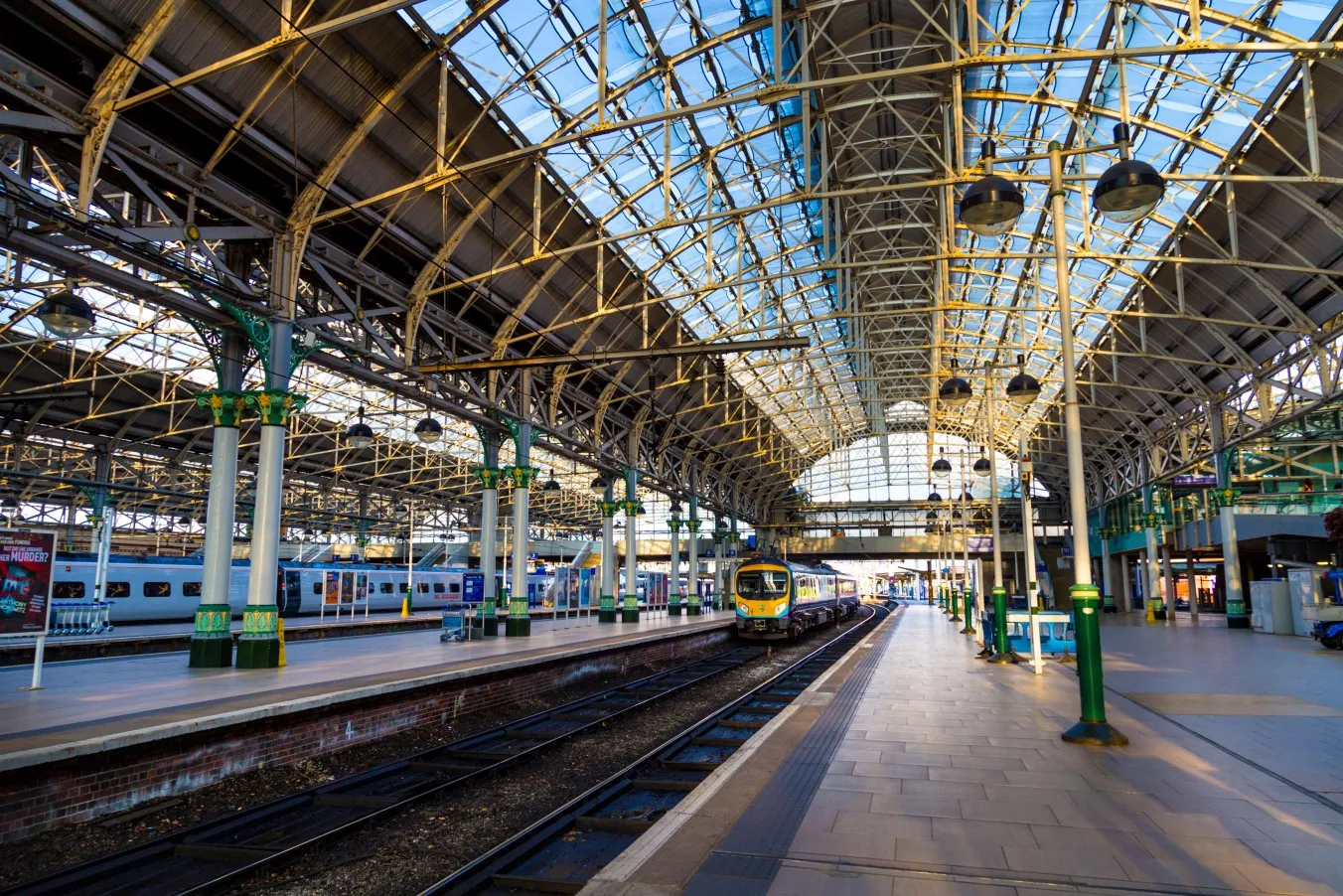
Two trains stopped at Manchester Piccadilly mainline railway station, with passengers on the platforms and a wide shot of the station's roof architecture.
Select services at Manchester Piccadilly will be disrupted as planned works get underway during the half-term breakCredit: Getty

Network Rail is investing £8 million in an upgrade to Manchester Piccadilly train station in an effort to reduce future service disruptions.

Track and signalling upgrades are scheduled to take place from Saturday, 14 February to 22 February.

The southern approach to station, which was built in the 1980s, will see significant upgrades to a stretch of track.

Network Rail previously explained that issues with its outdated infrastructure can disrupt all trains running in and out of Manchester.

ON TRACK

UK’s busiest train station FINALLY gets go ahead for £1.2billion expansion


AISLE GO

UK railway line to launch new trains with free water refills and reclining seats

This amounts to around 400,000 trains into the station every year.

Manchester Piccadilly has advised passengers that no trains from the south and east of the city will run into the station over the half-term break.

Some trains from across the north will also be impacted as well as direct connections to Manchester Airport station, which were impacted by a signal failure earlier this week.

Services normally running to and from Manchester Piccadilly will terminate at other stations, including Stockport, over the next nine days.

Platforms 1-12 will be closed but the concourse will remain open to the public, while there will be a limited service westbound from platforms 13 and 14.

Julien Dehornoy, Network Rail’s North West & Central deputy regional managing director, said: “Once the job is done, we will have a better, more reliable railway. 

“The major overhaul over six railway lines can only take place during a full railway closure and we are working closely with train operators, TfGM and Manchester City Council on alternative travel plans to keep people on the move.”

Source link

Trains axed to major UK airport with ‘all lines blocked’ sparking hours of delays

RAIL services to and from a major UK airport are currently down, sparking travel chaos.

Passengers are facing major disruptions and delays due to a points failure on the line.

Two trains stopped at Manchester Piccadilly mainline railway station, with passengers on the platforms and a wide shot of the station's roof architecture.
Train services are currently down between Manchester Picadilly and Manchester AirportCredit: Getty

All trains between Manchester Piccadilly and Manchester Airport are currently cancelled.

Trains are currently unable to run in either direction, with Northern, TransPennine Express, and Transport for Wales services all affected by the issue.

The points failure has occurred near Heald Green, approximately half way between the two stations, according to National Rail.

Passengers are advised to use the Metrolink or buses to travel between Manchester city centre and the airport this afternoon.

OFF THE RAILS

Brazen Brit fare dodger spared jail after owing over £30K in unpaid tickets


ON TRACK

UK’s busiest train station FINALLY gets go ahead for £1.2billion expansion

National Rail said “major disruption” is expected until at least 5pm today.

Network Rail confirmed it is “on site to investigate and resolve the issue”.

Failure to operate points correctly creates difficulties in safely switching tracks and avoiding rerouting trains.

One broken part can trigger larger, systemwide service outages.

The disruption comes ahead of planned engineering works on rail lines in the area scheduled to begin this weekend.

Anyone planning to travel should should check real-time updates through the official websites and apps of the applicable rail operators and consider alternative routes. 

Source link

Fury as two MORE airports hike their drop-off parking fees to £7 in ‘national disgrace’

TWO more UK airports have raised the price of their drop-off charges, in what is becoming an increasingly common trend for drivers.

Glasgow and Aberdeen airports have announced they are increasing their fees to £7 for up to 15 minutes, with Glasgow rising by £1 and Aberdeen up from £5.50.

Aerial view of cars and other vehicles outside Terminal 3 in London Heathrow  Airport
Glasgow and Aberdeen airports are increasing terminal drop-off fees to £7 for up to 15 minutes, citing rising costs and pointing drivers towards free long-stay alternativesCredit: Getty
Sign to the Pickup spot, and short and main stay car parks.
Airport ‘kiss-and-fly’ charges continue to climb across the UK, with several major hubs now charging £7 or more for short staysCredit: Getty

AGS Airports, which operates both sites, said the increases reflect higher running costs and that the extra income will help the airports remain competitive and attract new routes.

It acknowledged the decision would not be popular, while some critics have described the wider rise in airport drop-off fees as “price gouging” and “a national disgrace”, as reported by Travel Tomorrow.

AGS has stressed that drivers have a free alternative at both airports, with up to one hour’s free parking in long-stay car parks and an on-demand shuttle service to and from the terminal.

They said: “It is important to keep in mind that there is always a free alternative where customers can park for up to one hour.

TAKING ITS TOLL

Another UK city weighs up daily congestion charge in blow for drivers


LENGTH OFFENCE

Seven car models are BANNED from car parks for being too long

“This is located in our long-stay car park, and passengers can use a free, on-demand shuttle service to and from the terminal.

“The pick-up and drop-off area is intended for short visits of up to 15 minutes only.

“We would encourage anyone who thinks they may be longer to use the free alternative or our short-stay car park.

“Valid Blue Badge holders continue to receive 30 minutes free in our Short-Stay Car Park.”

The increases also reflect a recent pattern across the UK, with airports such as Edinburgh having raised prices previously as well as other hubs charging comparable or higher rates.

These include Leeds, Luton, Heathrow and Stansted at £7, London City charging £8, Bristol at £8.50 and Gatwick increasing to £10 for 10 minutes.

London City introduced its charge for the first time at the start of the year, while Gatwick, Heathrow and Bristol also increased their fees.

Opponents, including Clive Wratten of the Business Travel Association, have argued that outside London, public transport is often not a practical substitute, meaning higher kerbside fees can simply shift costs onto passengers, workers, businesses and the taxi trade rather than changing behaviour.

There have also been calls for clearer, more transparent pricing, as well as proposals such as a cap – for example, £3 per drop-off – as well as a single daily charge to avoid people being hit by charges twice.

UK pricing has also been compared to several large European airports, including the Paris Charles de Gaulle and Frankfurt airports, where short drop-offs can be free for limited periods.

Source link

New 1,000-acre British safari with bears, lynx and wolves is revealed in plans for top tourist spot

A MAJOR new safari park could be coming to the East Midlands.

The “ambitious” planning proposal would see bears, wolves, and even lynxes arriving to a 1,000-acre woodland.

Illustration of the proposed Wild Rutland attraction site showing farmland, parkland, and woods between Oakham bypass, Rutland Water, and Burley Wood.
The site would hold bears, wolves, and reptilesCredit: Gillespies

Wild Rutland Partnership hopes to open a new nature conservation and wildlife park in Rutland, near Leicester.

If given the green light, Wild Rutland would house Eurasian brown bears, lynxes and wolves inside holding pens, with animal lovers able to see the mammals from various different viewing platforms.

The proposed safari park would be built on a huge site stretching from Burley Wood to Oakham bypass.

A barn already on the land is expected to be refurbished to house small reptiles and insects.

PLENTY OF EGRETS

I went on Britain’s most unusual safari with whales, porpoises and swifts


ROAR & SNORE

English safari lodges where you can sleep with LIONS gets green light

Plus, Wild Rutland is also seeking approval of its Visitor Village.

This would consist of a main reception area with a shop, a café, a restaurant, an indoor play area, as well as an education and exhibition building.

There will also be 22 self-catering guest lodges and a communal dining area for visitors who wish to stay the night.

A decision by the council is expected to be made in May.

CEO of Wild Rutland, Hugh Vere Nicoll, said: “Wild Rutland aspires to be an exemplar model of conservation-led ecological-tourism – one that restores heritage landscapes, reconnects people with nature and sets a benchmark for sustainable land management in the UK.

“Wild Rutland is driven by a team with a deep knowledge and respect for the site and the local area, working with experts in the fields of restoration, conservation, education, tourism, attraction development and management.”

Illustration of the proposed Wild Rutland attraction with buildings, boardwalks, and people in a natural landscape.
Planning permission has been requested to build a 1,000 acre safari parkCredit: Gillespies

Source link

Understanding the value of gold: Prices, global reserves, and market trends | Business and Economy News

Interest in gold has skyrocketed in recent weeks, with the price of one ounce hitting an all time high of $5,600 on January 29 before settling back to just under $5,000 on Sunday.

As economic conditions fluctuate and geopolitical tensions rise, more individuals are seeking gold as a secure investment.

In this visual explainer, Al Jazeera breaks down how gold value is determined, the prices of gold coins in different markets, and the countries holding the largest reserves.

How is the value of gold measured?

Understanding the value of a gold item requires knowing its weight in troy ounces alongside its purity in karats.

INTERACTIVE - How is gold value measured-1770547787
(Al Jazeera)

Weight (in troy ounces)

The weight of gold and other precious metals like silver and platinum is commonly measured in troy ounces (oz t). One troy ounce is equal to 31.1035 grammes.

At $5,000 per troy ounce, 1 gramme of gold is worth about $160, and a standard 400-troy-ounce (12.44kg) gold bar costs $2m.

Troy ounces are different from regular ounces, which weigh 28.35 grammes and are used to measure everyday items including foods.

Purity (in karats)

Karat or carat (abbreviated as “K” or “ct”) measures the purity of a gold item. Pure gold is 24 karats, while lower karats such as 22, 18, and 9 indicate that the gold is mixed with less expensive metals like silver, copper, or zinc.

To determine the purity of gold, jewellers are required to stamp a number onto the item, such as 24K or a numeric value like 999, which indicates it is 99.9 percent pure. For example, 18K gold will typically have a stamp of 750, signifying that it is 75 percent pure.

Some typical values include:

  • 24 karat – 99.9% purity – A deep orange colour, is very soft, never tarnishes and is most commonly used for investment coins or bars
  • 22 karat  – 91.6% purity – A rich orange colour, moderate durability, resists tarnishing and most often used for luxury jewellery
  • 18 karat – 75% purity – A warm yellow colour, high durability, will have some dulling over time and most often used in fine jewellery
  • 9 karat – 37.5% purity – A pale yellow colour, has the highest durability, dulls over time, used in affordable jewellery

Other karat amounts such as 14k (58.3% purity) and 10k (41.7% purity) are often sold in different markets around the world.

When you buy jewellery, the price usually depends on the day’s gold spot price, how much it costs to make, and any taxes.

If you know the item’s exact weight in grammes and the gold’s purity in karats, you can calculate the craftsmanship cost on top of that.

You typically cannot negotiate the spot gold price, but you can often haggle over the craftsmanship costs.

The price of gold has quadrupled over the past 10 years

Gold has been valued for thousands of years, serving various functions, from currency to jewellery. The precious metal is widely regarded as a safe haven asset, particularly in times of economic uncertainty or market volatility.

Up until 1971, the United States dollar was physically defined by a specific weight of gold. Under the classical gold standard, for nearly a century, from 1834 until 1933, you could walk into a bank and exchange $20 for an ounce of gold.

In 1933, amid the Great Depression, the price was raised to $35 per ounce to stimulate the economy.

In 1971, under President Richard Nixon, gold was decoupled from the dollar, and its price began to be determined by market forces.

Over the past 10 years, the price of gold has quadrupled from $1,250 in 2016 to around $5,000 today.

INTERACTIVE - Timeline of price of gold-1770547790
(Al Jazeera)

How is the price of gold determined in different countries?

Gold is priced globally based on the spot market, where one troy ounce is traded in US dollars on exchanges such as London and New York. Local prices vary as the dollar rate is converted into domestic currencies, and dealers add premiums for minting, distribution and demand.

Taxes and import duties further influence the final cost: India adds 3 percent GST, while the United Kingdom and United Arab Emirates impose none on gold investments.

Different countries produce unique gold bullion coins and bars, each with its own distinct features and cultural significance. Notable examples include the Gold Eagle from the US, the Gold Panda from China, and the Krugerrand from South Africa.

INTERACTIVE - The gold price in different countries-1770551461

Which countries have the most gold reserves?

The US leads global gold reserves with 8,133 tonnes, nearly equal to the combined total of the next three countries. Germany is in second place with 3,350 tonnes, and Italy comes in third with 2,451 tonnes.

The graphic below shows the top 10 countries with the largest gold reserves.

INTERACTIVE - Which countries have the most gold-1770549820
(Al Jazeera)

Source link

Inside the peculiar European island that changes nationality every 6 months

An image collage containing 2 images, Image 1 shows A river flows between a tree-covered island and a town with mountains in the background, Image 2 shows Aerial view of Behobia, Irun, and Hendaye with the Bidasoa river mouth and Pheasant Island, on the Spanish-French border

A TINY, curious European island changes nationality every six months – despite being completely uninhabited.

Governed by two different countries, Pheasant Island is the site of a very special historical event.

Pheasant Island is an uninhabited isle on the Bidasoa RiverCredit: Alamy
The island can sometimes be reached on foot from the Spanish side at low tideCredit: Alamy

At only 200 metres long and 40 metres wide, it sits within the Bidasoa river.

Just 10 metres from Irun, Spain and 20 metres from Hendaye, France, Pheasant Island is jointly governed by both countries.

Despite it’s name, you won’t be able to find any pheasants on the island – just green crested mallards and migratory birds.

But at its centre lies an important piece of history.

HOLIDAY TRAGEDY

Brit dad dies after falling from sixth-floor balcony ‘as wife & kids slept’


HOLI-YAY

Top travel mum influencer reveals her best cheap, family-friendly hotels

On Pheasant Island sits a monolith commemorating where the negotiations of the Treaty of the Pyrenees took place in November 7, 1659.

The monolith’s inscription is in Spanish on one side and French on the other.

This was a monumental moment as it marked the end of the Franco-Spanish War which had been raging on for over 24 years.

The occasion was also marked a year later by the marriage of French King Louis XIV and the daughter of King Philip IV, Maria Theresa of Spain.

This helped establish an agreed upon border between the two nations.

As a symbolic gesture of peace, the island is governed by Spain from February 1 to July 31, and by France from August 1 to January 31.

During the formal handover, both sides perform military dress parades around the monolith before peacefully switching governance.

Visitors are not allowed on the island, apart from during a few days, but this is limited to military personnel.

It’s only 200 metres long and 40 metres wideCredit: Alamy
On Pheasant Island sits a monolith commemorating the negotiations of the Treaty of the Pyrenees in 1659Credit: Alamy

It does open occasionally on heritage open days although these are rare.

The island can sometimes be reached on foot from the Spanish side at Bidasoa’s low tide.

Recently, a growing number of migrants have been using the Bidasoa river to illegally cross from Spain to France.

Migrants have been spotted swimming across the river with some reportedly drowning due to the unpredictable currents in the tidal channel.

According to figures from Irungo Harrera Sarea, Irun’s NGO, an estimated 30 migrants arrive every day seeking passage north into France.

Talking to the BBC, Pía Alkain Sorondo, a local archaeologist, said: “This is still a place of new hope for so many, but it is also a death trap.”

Source link

Major European airport SHUTS with all flights grounded as snow, freezing rain and black ice sparks chaos

TRAVELLERS are facing major disruption as one of Europe’s busiest airports was forced to shut today due to freezing rain and black ice.

The shutdown has left passengers stranded and flights grounded as crews battle to make runways safe amid worsening winter conditions.

Passengers in front of check-in counters at Berlin Brandenburg Airport.
Berlin Brandenburg Airport was forced to close due to adverse weather conditionsCredit: AP

According to FlightAware, around 170 flights at Berlin Brandenburg Airport have been cancelled in the last 24 hours.

Operations came to a sudden standstill on Thursday at 6pm CET, with the airport saying on its website: “Due to weather conditions, no take-offs or landings are currently possible.”

The airport remains closed today as adverse weather conditions continue to disrupt transport across north Germany.

Berlin Brandenburg Airport said in a statement: “We currently have freezing rain and black ice and cannot yet predict when takeoffs and landings will be possible.

SUPER SAVER

See Super Bowl 2027 in Los Angeles with this once-in-a-lifetime travel deal


LEAGUE OF THEIR OWN

Premier League Darts is almost sold out with ticket packages from £125

“Passengers need to be patient and expect significant delays and cancellations.”

British Airways and EasyJet cancelled some of their morning services from London airports to Berlin.

Lufthansa also scrapped a number of flights in and out of the city.

German weather service DWD warned of “significant slipperiness” caused by icy conditions spanning Berlin to the Baltic Coast and Polish border.

Forecasters were uncertain about when travel disruptions might ease, with the cold snap anticipated to continue across northwest Europe into next week.

Germany’s national railway operator Deutsche Bahn said train service between Berlin and Hanover have also been affected by the icy weather.

Source link

Britain’s busiest station hit by string of closures for entire MONTH sparking chaos for millions

BRITAIN’S busiest station will be hit by a string of closures which will impact millions of passengers for the whole of next month.

Network Rail explained the closures will enable vital maintenance, renewals and repairs to be undertaken.

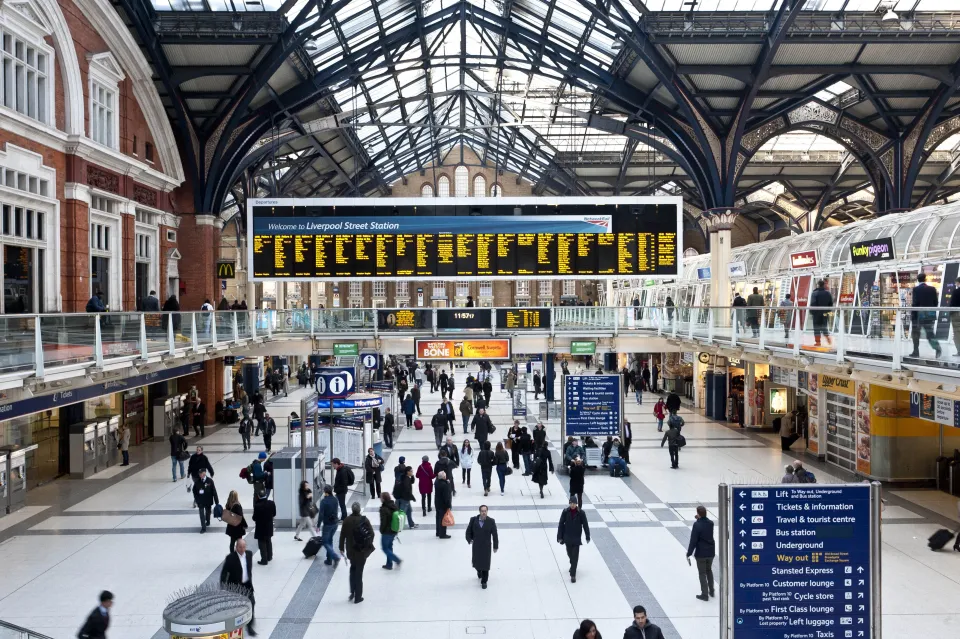
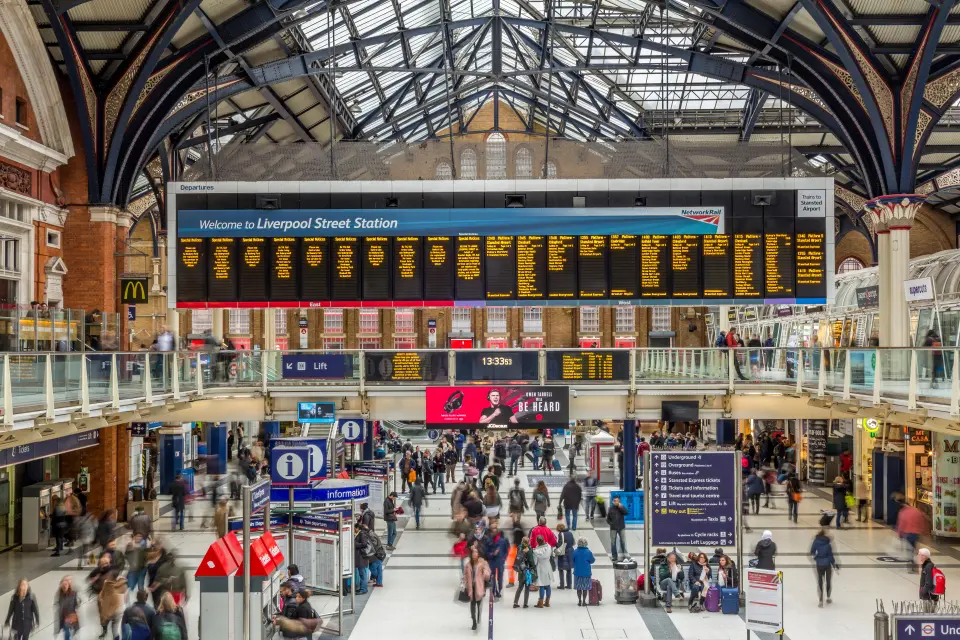
The concourse of Liverpool Street Station with many blurred people walking by and a large departure board overhead.
Liverpool Street station in London is to be hit by a string of closures for the entire month of MarchCredit: Alamy

Rail bosses have revealed plans for an entire month’s worth of major disruption at Liverpool Street Station.

All routes and services to and from the station will be impacted by works throughout the month of March.

Liverpool Street’s mainline station along with its concourse will close for a total of five days but these will be spaced out throughout the month.

The closures will impact Elizabeth line, London Overground and National Rail services, including Greater Anglia and c2c.

DRINK IT IN

The beautiful village pub you can spend the night in with hearty Yorkshire food


PARK UP

Travel expert reveals best UK holiday parks from £13 a night… & Center Parcs dupe

However, the closures are planned for the weekends only and should not affect week day journeys.

On March 15th the whole station will be closed and London overground services will run from London Fields.

There will therefore be no access to the main concourse. but the Elizabeth line services will be running.

On March 21-22, the Elizabeth line services will again be running, but again there will be no access to the main concourse as the station will be closed.

There will be no Overground Weaver line trains on both of these days and on March 22 there will be no Elizabeth line trains.

The whole station including the concourse will be closed once more during March 28-29 and there will be no Overground Weaver line trains on both days.

Although the Elizabeth line trains will continue to run – there will be no access to the station on those dates.

Last year it was confirmed that Liverpool Street is the busiest train station in the UK.

The weekend closures at Liverpool Street Station

March 15: whole station closure
* London Overground services will instead run from London Fields
* Elizabeth line services will be running, though no access to the main concourse
March 21-22: whole station closure
* On March 21 Elizabeth line services will be running, no access to the main concourse
* On March 22 no Elizabeth line trains
* No Overground Weaver line trains on both days
March 28-29: whole station closure
* Elizabeth line services will be running, no access to the main concourse
* No Overground Weaver line trains on both days

An image collage containing 1 images, Image 1 shows Tourist in Liverpool Street Station checking the departure timetable
The closures are planned for the weekends only and should not affect week day journeys

Source link

Padel craze and astronomy lead summer travel trends for Brit holidaymakers

easyJet’s new travel report shows dark sky tourism, padel holidays and Gen Z trends are dominating summer bookings to Spain and beyond

Dark skies tourism is set to be one of the top travel trends this summer, driven by a growing fascination with astronomy and astrophotography, according to The Great British Holiday Audit by easyJet and easyJet Holidays. The report highlights a surge in bookings for Spanish hotspots like Valencia, Palma Mallorca, and Ibiza, particularly around August 12th, as travellers aim to combine sun-soaked breaks with catching the solar eclipse.

These locations are perfectly situated in the eclipse’s path and benefit from long, clear summer days. And the trend is especially popular among Gen Z and has been amplified by TikTok, following a wave of interest sparked by the Northern Lights visibility in the UK in 2025.

Beyond astronomical events, longer short-haul flights of five to six hours are also becoming the “new norm”. For example, Tunisia saw a 12% increase in easyJet flights, particularly to the island of Djerba. Meanwhile, Tbilisi, Georgia is gaining traction as a popular city-break destination.

And travel to longer-leisure hotspots such as Morocco, Turkey, and Cyprus has seen a 21% rise.

Travel writer Nigel Thompson, who co-authored the report, said: “We’re seeing travellers plan around passions and purpose – whether that’s spirituality, culture, sport or nature.

“It looks like 2026 is about meaning as much as mobility, but value remains a key factor.”

‘Gen P’ travellers (those in their formative educational years during the pandemic) are embracing European pilgrimage routes like Santiago de Compostela and Lourdes.

Also, the return of hit TV shows like The White Lotus to Europe is expected to drive interest in destinations across the south of France as part of a ‘screen-led’ travel.

Similarly, ‘canon country tourism’—visiting locations made famous in literature and modern retellings, such as Verona (Shakespeare) and Pamplona (Hemingway)—is on the rise, with 28% of holidaymakers choosing a destination based on TV, books, or film.

What’s more, the padel phenomenon is fuelling sports-focused holidays, particularly in Spain, where the sport has surpassed tennis in popularity. The research found 10% of holidaymakers are now trying padel or pickleball while on holiday.

Additionally, many fans are opting to travel to European fan zones to soak up the atmosphere of events like the World Cup, saving time and money compared to travelling across the Atlantic.

While these trends take off, travellers are also adapting their booking and holiday habits, with many holidaymakers increasingly using vlogs and VR to explore destinations before making a booking.

As for parents with pre-school children, they are maximising flexibility and travelling more before term-time restrictions begin. While on the other end of the spectrum ‘Home Alone’ Parents (those without adult children or pets) are rediscovering the freedom to travel.

Garry Wilson, CEO at easyJet Holidays, summarised the findings: “In 2026, there’s a clear desire to make holidays count… people are prioritising connection, wellbeing and memories that last, not just time away.”

THE 15 TRENDS THAT WILL DEFINE HOW BRITS TRAVEL IN 2026:

  1. Longer short haul – Bringing destinations that blend distance with convenience into easy reach
  2. Try before you fly – Utilising immersive technology like VR, or short-form video platforms to experience the destination first through someone else’s eyes
  3. Translation Exploration – Embracing adventure and veering off the beaten track with the confidence of strong language translators including AI instant translate
  4. Pre-School’s Out – Parents with younger children cram holidays in before term time constraints take their toll
  5. Dark sky tourism – European dark sky spots to enjoy their day in the sun as Gen Zer’s travel to pursue newfound interests in astronomy and astrophotography
  6. Take your pickle… or padel – Booking holiday destinations based on new sporting activities on offer, including pickleball, padel or paddleboarding.
  7. Wardrobe wanderlust – selling clothes on sites such as eBay, Vinted or Depop to put towards travel budgets, decluttering at the same time
  8. The White Lotus effect – set to return to Europe in 2026, travellers will look to replicate the luxury seen on the silver screen
  9. Canon country tourism – Visiting historic towns and landscapes rediscovered through classic literature or their modern retelling, from Shakespeare’s Verona to Hemingway’s Pamplona.
  10. Sun – without – screen – Exploring inventive or classic ways to reduce screentime whilst on holiday, but prioritising an analogue way of life
  11. Community influence – Taking the online travel community off-line by joining on group travel trips organised by travel content creators, experts in their own rights
  12. Wealth of experience – Prioritising experiences within travel, culture and personal enrichment over assets
  13. Home alone – Taking more holidays as a parent of adult children with a live-in house or pet-sitter (your adult children)
  14. Gen-P – Exploring historic religious pilgrimages as a reason to travel, from Santiago de Compostela to Lourdes
  15. Putting the world in cup – Using major tournaments like the 2026 World Cup as a reason to travel to teams’ home countries, watching iconic matches surrounded by local fans

Source link

Major airline confirms it’s axing all long-haul flights at UK airport from next MONTH with hundreds of jobs at risk

A MAJOR airline has confirmed it is axing all long-haul flights from a UK airport – starting next month.

The airline will cancel its long-haul transatlantic routes to the US and the Caribbeans.

Aer Lingus Airbus A320
Aer Lingus will cease all of its transatlantic flights from ManchesterCredit: Getty

Aer Lingus will stop flying from Manchester to New York JFK from February 23.

The operator will then cease its flights to Orlando and Barbados from March 31.

In order to re-accommodate impacted passengers who were scheduled to travel to the Caribbean island from Manchester, the airline will run a service from Dublin to Barbados in April and May.

The affected customers have already been contacted and given options for a refund or rebooking.

EGG-STRA

I tried Britain’s most expensive £100 breakfast – how it compared to a £10 fry up


ROCK ON

Shock as top UK beach turns from pebbles to sand OVERNIGHT

The airline said that the developments will not affect Aer Lingus or Aer Lingus Regional services between Ireland and Manchester.

A spokesperson told The Sun:

An airline spokesperson told The Sun: “Aer Lingus informed staff and their representatives at its Manchester base today that the airline’s Manchester transatlantic operations will fully cease as of and from 31st March 2026.

“Manchester-New York operations will cease from 23rd February 2026 and Aer Lingus plans to operate a service from Dublin to Barbados (subject to receipt of necessary approvals) during the months of April and May to reaccommodate affected customers.

“There is no impact to Aer Lingus or Aer Lingus Regional (Emerald Airlines) flights between Manchester and Ireland. Customers are being informed directly of the cancellation of flights and provided with reaccommodation and refund options.

“Aer Lingus will continue to engage with staff representative groups to discuss the phased reduction in operations, redeployment opportunities and the terms of a severance package at the Manchester Base.

“Aer Lingus acknowledges that this is a very difficult time for colleagues based in Manchester and will seek to ensure that colleagues are kept informed and supported as discussions evolve during the next phase of the consultation.”

In the past, the airline has said that its long-haul routes from Manchester had an operating margin that “significantly lags behind” that of Ireland.

About 200 employees at the base, which Aer Lingus launched in 2021, could be impacted if the closure goes ahead.

Source link

Iconic 90s rockstar ‘blows away’ fans with surprise appearance on stage in remote Cornish town

A MUSIC legend shocked fans on Saturday by appearing out of nowhere on stage at a gig.

The appearance was totally unannounced, and the venue’s owner didn’t even know they were going to walk out.

Two musicians performing on stage in front of a pink and white backdrop that says "The Cornish."
Damon made a surprise appearance, shocking the crowd and venue staff

Musician Afel Bocoum was performing his set at The Cornish Bank when Blur and Gorillaz frontman Damon Albarn sent the crowd into a frenzy.

He then performed a surprise set with Afel’s band.

Speaking to CornwallLive about the impromptu visitor Rufus Maurice, owner of The Cornish Bank, said: “Thought you might be interested in our surprise guest last night.

“No one knew he was in the room till he jumped on stage and did a melodica set with the band.”

LEGEND LOST

Reggae legend who played with Bob Marley, Madonna & Rolling Stones dies aged 73


SLAYING IT

Sarah Michelle Gellar, 48, has barely aged since Buffy as she stuns at premiere

Fans of the singer were heard blurting out, “That’s Damon Albarn, it f*****g is!!,” in the crowd.

Damon is said to have described Cornwall as a “lovely place”.

He lives along the coast of South Devon, but is rumoured to be recording projects near Falmouth.

This isn’t the first time Damon has surprised crowds by suddenly hopping out on a stage.

In 2006 he did the same thing with his Blur bandmates at the Marlboro Club in Ilfracombe.

Silhouettes of a crowd with hands raised and a singer performing on a brightly lit stage.
He’s the frontman of Blur and co-creator of GorillazCredit: Getty

Source link

Mega £8.72m ride that’s ‘tallest of its kind’ in UK edges closer to launching in iconic seaside theme park

A GIANT new theme park ride that’s the “tallest of its kind” in the UK has taken a major step forward.

The iconic amusement site is gearing up for a massive landmark moment as engineers have now installed the ride’s giant gondola.

The huge new £8.72 million ride is being built at Blackpool Pleasure BeachCredit: SWNS

Structural work has begun on the £8.72m mega attraction, with steel frameworks now emerging on site.

Blackpool Pleasure Beach Resort is currently busy installing its newest ride – a record-breaking gyro-swing called Aviktas.

When everything is finished, the mega ride will officially be the tallest of its kind in the UK.

The scream machine will carry 40 people at a time, swinging them through a massive 120-degree arc that reaches 138ft above the promenade.

GOING UNDER

UK travel company forced to close after 30 years – with all holidays cancelled


GO GOLDEN

All of the UK holiday resort and theme park takeovers this half term

Riders’ legs will dangle giving them the feeling of flying.

With its gigantic pendulum finally hanging in place, the structure is starting to look like a finished ride.

Frames are popping up to create the loading area where the first brave riders will eventually wait for their turn.

The latest crowd-pleaser will drastically change the way the seaside resort’s coastline will look.

While an exact opening date has not yet been confirmed, the ride is expected to welcome its first passengers later in 2026.

Amanda Thompson OBE, CEO of Pleasure Beach Resort previously teased: “This ride will be colossal, daunting, exhilarating and an incredible addition to the town.”

The Aviktas will be the tallest of its kind in the UKCredit: SWNS
The mega-ride is set to tower over similar rides across the country by almost double their heightCredit: SWNS
The £8.7million ride will open later this year at Blackpool Pleasure BeachCredit: Alamy

Source link