traveler

Delta strips perks from premium seats as flyers chase first-class deals

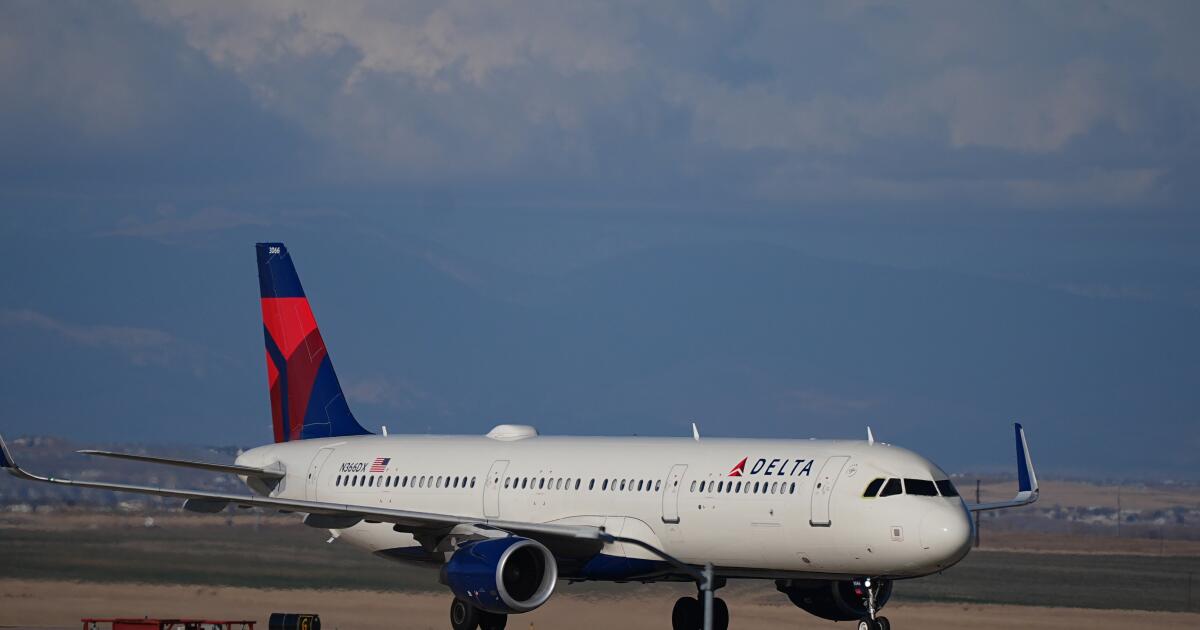
Delta Air Lines Inc. Chief Executive Ed Bastian said travelers care more about their seat than extras like lounge access or limousine shuttles often thrown into costly tickets, as he defended a stripped-down premium product that has irked some customers.

“Consumers want different value decisions to take,” Bastian said in a Bloomberg Television interview on Monday. “If you can give people the opportunity to sit in first class, they may not want different elements and they may not need to go in the lounge.”

Delta is bringing the basic-economy playbook to Delta First, Delta Premium Select and Delta One, offering passengers the same onboard seats, meals and service at a lower price in exchange for fewer benefits. Depending on the product, restrictions can include reduced mileage earnings, lower checked-bag allowances, fees for changes or cancellations and limits on lounge access and advance seat selection.

“What consumers care more about than anything is the seat,” Bastian said. “All the other things are nice, but it’s the seat and the comfort of the seat that’s most important.”

Bastian’s comments contrast Delta’s recent investments in its ground amenities. The airline has spent years opening and expanding swanky Sky Clubs and Delta One lounges, which remain in such high demand that crowding and lines have prompted tighter access rules.

Delta last month opened the first phase of a second Delta One Lounge at Los Angeles International Airport, a 4,000-square-foot space with table-service dining, showers and a premium bar. By 2028, Delta plans to operate four lounges at LAX spanning 60,000 square feet and seating more than 1,000 guests, part of a global network that now includes five Delta One Lounges and more than 50 Sky Clubs.

“One of the things we’re disappointed about is the continued segmentation of the fare structure,” Jefferies analyst Sheila Kahyaoglu said in an interview with Bloomberg Television, referring to how Delta has refined its premium offering into different, sometimes hard-to-follow groups. “You could accidentally get locked out of a lounge if you don’t pick that main business fare.”

Delta last week reported second-quarter earnings that beat Wall Street expectations despite recording the highest quarterly fuel expense in its history. The airline earned an adjusted $1.56 a share, topping analysts’ estimate of $1.51, while revenue rose 14% from a year earlier and capacity increased just 1%. Delta also reaffirmed its full-year profit guidance.

Bastian said strong demand for premium, corporate and international travel helped offset the surge in fuel prices caused by fighting in the Middle East. Although fuel costs eased as the war in Iran appeared to be winding down, renewed US military strikes have raised the risk of another escalation and kept energy markets volatile.

The CEO reiterated that Delta would continue pricing tickets to recover those higher costs and did not expect airfares to decline. The new basic premium fares give the airline another way to appeal to price-conscious travelers without broadly discounting its most valuable seats.

The strategy also allows Delta to widen the pool of passengers who can afford premium cabins while still charging more to corporate travelers and frequent fliers who value flexibility, loyalty benefits and lounge access. It reflects how airlines are increasingly selling each component of the travel experience separately.

But it risks alienating premium and loyalty travelers by introducing complexity or making it seem harder to get the same level of access.

“Delta’s change to its premium-seating offerings suggests competition is weighing on pricing at the front of the cabin, a negative for earnings,” Bloomberg Intelligence analyst George Ferguson said.

Taylor and Abramowicz write for Bloomberg.

Source link

‘The Odyssey’ and why we’re obsessed with travel disasters

Lost luggage? Tarmac delays? Rental-car blues? No whining about measly travel headaches with the mother of all bad-trip sagas looming on the big screen.

“The Odyssey,” Christopher Nolan’s epic take on the Trojan War’s fallout, debuts July 17. Spoiler alert, if you somehow avoided Homer in community college: Nobody, save biblical Job, has had more misery hurled at them.

Outflanked by cruel and fickle gods at every turn, legendary Greek hero Odysseus outsmarted a one-eyed giant, suffered through the bewitching Sirens’ song and braved the Underworld’s dead denizens. He battled oversize cannibals, outmaneuvered a witch and lost scores of men at every turn. Then made it back to Ithaca after 10 years only to find his home overrun by suitors wooing his wife.

It’s a tale packed with bad decisions, failure, heartbreak and death. Perfect story fodder, given how much we love bad-trip stories. We consume lists of the worst airports and wonder at accounts of illness-plagued cruises. We scroll through videos starring unruly passengers or mangled bags, and read about the last resting place for lost luggage.

Hollywood has created a whole franchise around road trips gone wrong. Think of “The Hangover” or “Sideways” or “Little Miss Sunshine.” Screenwriter-director John Hughes perfected the big-screen comedic treatment of travel gone south with classics such as “Home Alone,” “National Lampoon’s Vacation” and “Planes, Trains and Automobiles.”

Let’s not even talk about the “three-hour tour” that left Gilligan and friends stranded on a deserted island for 98 episodes, or how Jack Dawson’s voyage ended aboard 1997’s “Titanic.”

A significant body of evidence even indicates that travel makes us sick. Trip-related problems are so common, in fact, that consumer advocate Christopher Elliott has stitched an entire career out of resolving them — from timeshare scams to horrible airline customer service and beyond.

Still, we keep buying tickets and packing our bags to sail into the great unknown, across Homer’s wine-dark sea. Why? Elliott attributes it to what he terms “traveler’s amnesia.”

“It amazes me that travelers are not up in arms about the way they get treated,” he said. “They take a trip, have a terrible experience, and forget about everything that went wrong and only remember what went right.”

He suggests that avoiding a bad trip starts with choosing companies noted for strong customer service. He cited some name-brand examples: Marriott for hotels, Alaska Airlines, and Enterprise Rent-A-Car. He avoids cruises as much as possible.

Which is funny, because when I think about cruising, I don’t revisit the miserable 36 hours that norovirus confined us in our cabin. I instead recall coasting past a flotilla of icebergs in Alaska’s Glacier Bay.

When I think about Mexico, I don’t wallow in memories involving Montezuma and his gastrointestinal revenge. But I do cherish thoughts of snorkeling with playful sea lion pups.

And when I consider airports, I blot the memory of the woman next to me at Gate 66 who insists on blaring a video call at maximum volume. Instead, wielding my noise-canceling earbuds, Odysseus-like, I plan to smother this screeching sound to preserve my sanity. But before I can insert them, a voice speaks to me.

To all of us, to be technically correct, since it emanates from the speakers of Los Angeles International Airport’s Terminal 6.

“It’s time to play TSA’s favorite game!” says the voice, mimicking a game-show host’s hustle. “You lost it, we found it!”

The speaker explained that someone had left a laptop computer at a checkpoint. The two were reunited moments later, which set my feet in motion, wondering whose voice it was. There at the checkpoint I met Carl Revis, a TSA supervisory officer with a penchant for comedy.

“You don’t have to be a jerk to get things done,” he told me. “I think reaching people through comedy is a lot easier than screaming and yelling at them.”

Taken together, my trip recollections probably qualify me as living proof of Elliott’s traveler’s amnesia theory. The final diagnosis should be clear soon. I’m retiring from full-time work this year, and people inevitably ask what’s next.

It’s not completely clear, I tell them. But I’ll definitely have more time to travel. Maybe sail across the Aegean … what could go wrong?

Source link

Travelers are flocking to Ashland, Ore. — thanks to William Shakespeare

Just 16 miles north of the California border, enchanting Ashland, Ore., has drawn theater fans for more than 90 years. The city owes its modern tourism economy in large part to William Shakespeare.

The Oregon Shakespeare Festival runs from spring to fall annually, attracting many of the 350,000 annual visitors to the city of 21,000 residents. Locals and travelers gather to watch live productions in venues like the Allen Elizabethan Theatre — modeled after a 1599 London playhouse, with a three-story Tudor facade — where for one magical evening, they’re transported to Shakespeare’s heyday.

While it’s hard to escape the Bard’s reach in the downtown core, Ashland and environs offer much more than theater. Its outdoor wonderland especially is well worth exploring. Or as Shakespeare once put it: “One touch of nature makes the whole world kin.”

Within a short drive await wineries, hiking, cycling and white-water rafting on the magnificent Rogue River. Crater Lake National Park is about a two-hour drive, and the destruction of dams on the Klamath River reopened scenic rafting there last year for the first time in more than a century. As a designated Tree City USA community, Ashland is steeped in greenery. Parks abound. Lovely Ashland Creek meanders through the town.

Founded as a farm town in the 1850s, Ashland incorporated as a city in 1885 after rapid growth fueled by the railroad’s arrival. Many buildings in the downtown historic district date to the turn of the 20th century. Today, Ashland is home to a variety of shops — a couple of favorites include Bloomsbury Books with its ecology rack right out front and Mountain Provisions for high-quality outdoor gear. And with more than 100 restaurants, Ashland’s food and beverage scene runs the gamut from casual (try the porkstrami at Sammich) to inventive (check out the unique Alsatian menu at Nous).

These days, a cautious optimism prevails throughout Ashland, which had been hit hard by the pandemic and simultaneous wildfires. At downtown’s Village Baker, the scent of baking bread hints at the 1,400 loaves produced daily. They start at 4 a.m. and deliver for miles around. That broad reach, co-owner Gerardo Gutierrez says, has helped them weather challenging times.

“We’re coming back from the ashes,” he said.

Source link

No World Cup for Somali referee Omar Artan suspected of terrorist ties

Somali referee Omar Abdulkadir Artan was denied entry into the United States for the World Cup after enduring an 11-hour interrogation in Miami, according to media reports. Andrew Giuliani, head of the White House Task Force on the World Cup, indicated Artan was suspected to having ties to a Somali militant group.

“We want to make sure we are not going to allow a soccer tournament to be the opportunity for terrorists to potentially get in the country or anybody who is actually talking to them,” Giuliani told the British Broadcasting Corporation.

The New York Times reported that Artan’s name is similar to that of a man identified as linked to Al Shabab, a group that has been the target of U.S. government sanctions.

“I am very, very disappointed,” Artan told the Times from Istanabul, where he stopped on his way back to Somalia. “I’m just simply a referee who’s trying to live his dream, the biggest dream of my life, to come to the World Cup.”

Safety was purportedly the concern with Artan, whose interrogation was conducted by the U.S. Customs and Border Protection.

“During processing, the traveler underwent additional inspection, a routine part of CBP’s inspection process when officers need to verify information or determine admissibility,” CBP said in a statement. “Following inspection, the traveler, a referee for the FIFA World Cup, was determined to be inadmissible due to vetting concerns and was denied entry.”

Somalia is on the U.S. list of banned countries for immigration, although exceptions can be made. Artan is considered one of the best referees in Africa, having officiated in the Somali national football league championship and at the African Cup of Nations.

“Despite the circumstances, I am in a positive mood and focused on the next challenges in my refereeing career,” Artan said in a statement. “I would like to thank FIFA and [the African federation] for all their support and I promise to keep my refereeing levels up as I concentrate on the future.”

Artan, Africa’s Referee of the Year in 2025, was greeted Wednesday at Aden Adde International Airport in Somalia by government officials and hundreds of well-wishers.

“I want to thank FIFA for supporting me all the way, and for Somali people also,” he told Al Jazeera. “So I am very grateful for FIFA and for CAF also. This is what I have to say.”


Source link

With Highway 1 open, Big Sur braces for its busiest summer in years

On a 75-mile cliff-hugging stretch of highway in California, traffic is way up, despite soaring gas prices. And locals expect the busiest summer in years.

The road is Highway 1 in Big Sur, which reopened in January after three years of repair and reconstruction following a pair of landslides. Drivers can once again embark on the state’s most famous road trip, covering the 100 miles between Cambria to the south and Carmel to the north without leaving the two-lane coastal highway. And they’re heading out in big numbers.

Caltrans estimates that as of May, Big Sur restaurant and retailer guest counts are up 40% from last year, and that northbound traffic at Ragged Point, the southern gateway to Big Sur, has risen 900% year-over-year.

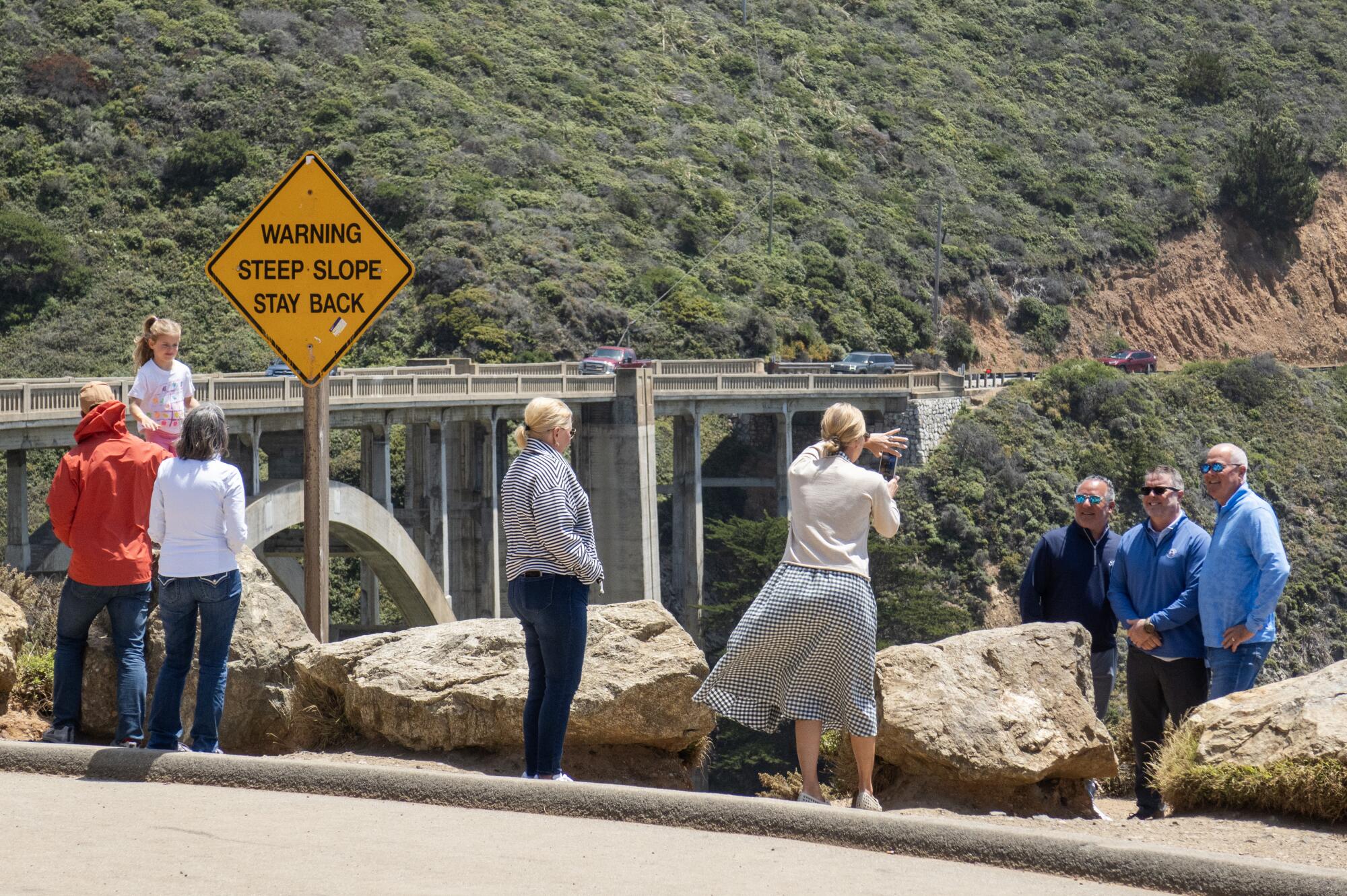
People pose for photos near Bixby Bridge.

People pose for photos near Bixby Bridge. Monterey County’s Board of Supervisors voted to explore a 12-month ban on parking around the bridge.

Safety cones prevent parking along Coast Road near the Bixby Bridge.

Safety cones prevent parking along Coast Road near the Bixby Bridge.

“Take your time,” said Kirk Gafill, co-owner of the popular Nepenthe restaurant and president of the Big Sur Chamber of Commerce, offering advice to travelers. “You’re going to be sharing the road with a number of people.”

As travelers rediscover the road, the cost of driving has been shooting skyward. California’s average gas price ($6.11 per gallon as of May 26) is up 26% from the year before. In early April, rates hit $9.99 at the isolated gas station in the Big Sur community of Gorda.

For spring and summer travelers, these numbers would seem to pose a stark question: Stay home and save money, or head for the coast because the road is finally open and it’s still cheaper than flying?

So far, the latter answer is winning big.

Fog lingers off the coast of Highway 1.

Fog lingers off the coast of Highway 1.

“We are definitely seeing a huge uptick in our reservations,” said Megan Handy, assistant general manager at the upscale Treebones resort. She estimated that bookings are 30% or more ahead of last year, and rates are unchanged since then. But “it’s still not feeling super crowded, which is nice. Everything still feels kind of calm.”

But added traffic has raised some anxiety. On May 19, Monterey County’s Board of Supervisors voted to explore a 12-month ban on parking at Bixby Bridge, one of the region’s top photo spots.

Over the years, the number of cars parking near the bridge — often illegally, sometimes impeding emergency vehicles — has risen. The proposed parking moratorium won’t take effect until the supervisors discuss it further.

  • Share via

Busy as things are, several business owners pointed out that many international travelers have not yet returned — perhaps because most make their plans more than six months ahead, perhaps because of global politics, perhaps a little of each.

The biggest challenge for businesses during this resurgence? “Restaffing and retaining,” said Handy at Treetops.

At Nepenthe, Gafill said his business has seen a 45% boost in guest volume since the road’s reopening. Gafill said he would have expected a 35% pickup, “simply by virtue of reopening the highway.” The additional 10%, he said, might be “all that pent-up demand,” aided by “a very beautiful and very dry winter,” followed by a mild spring.

A lunch crowd dines at popular restaurant Nepenthe.

A lunch crowd dines at popular restaurant Nepenthe.

Another possible factor: Nobody can be sure how long the road will remain open.

To cope with the influx of people, Gafill said, “everybody is trying to recruit and retain their existing staff.”

At the Ragged Point Inn, where rates dropped as low as $149 nightly last fall, rates are back over $200 and staffers are suggesting that customers book at least six months ahead. The inn has reopened its snack bar for the first time since early 2023, and management is investing in capital upgrades and staging live music on weekends throughout the summer.

Business “is up over 100%,” said Diane Ramey, whose family owns the inn. “I know not all of our neighbors are having the same lift, but everybody is doing better.”

Traffic approaching Bixby Bridge.

A visitor poses in an oversized chair at Big Sur River Inn.

A visitor poses in an oversized chair at Big Sur River Inn.

Even at the New Camaldoli Hermitage, a Benedictine monastery above Lucia, the road’s reopening and coming summer season have made a difference. Bookings are up an estimated 30% at the hermitage, which rent rooms and cottages (for two nights or more) to visitors who agree to its requirement of silence.

Big Sur business owners advise visitors to travel on weekdays for less traffic and the best hotel rates, and to get on the road as early as possible.

Since its opening in 1937, the highway has been vulnerable to landslides and shifting ground, operating on a longstanding cycle of landslide, closure, repair, reopening and then another landslide, or sometimes a fire. The U.S. Geological Survey has identified the Big Sur coastline as one of the most landslide-prone areas in the western United States. The 2023-2026 closure was the longest in the highway’s history.

Over time, road crews have used increasingly sophisticated strategies. In the most recent efforts, Caltrans said, it used drones to help survey the slopes and remotely operated bulldozers and excavators to reduce risks to workers.

During the closure, no traffic was allowed on 6.8-mile span from just north of Lucia until about a mile south of the Esalen Institute. Drivers detoured inland by way of U.S. 101.

Source link

Iran war’s effects on costs jeopardize travel to tourism-dependent countries in Asia

With summer around the corner, soaring prices and other complications from the war with Iran are straining the tourism-dependent economies of Cambodia, Thailand, Vietnam and other countries in Southeast Asia.

The region’s peak tourist summer season is at risk as elevated jet fuel costs coupled with ceasefire uncertainties prompt flight cancellations and higher ticket prices.

Tourism in Asia has yet to fully recover from the COVID-19 pandemic. Now, many countries are coping with the war’s repercussions on global energy supplies and prices, which hit Asia first and hardest. Some families are pulling back on travel as gas and groceries get more expensive worldwide. Crowds have thinned at some places once synonymous with travel.

“With gasoline prices rising and tourism declining, how can we make money?” asked Siv Pech, a 58-year-old rickshaw driver in Siem Reap, home to Cambodia’s centuries-old Angkor Wat temple complex.

Tourism is an economic lifeline for many developing nations. It contributes nearly 13% of gross domestic product in Thailand and nearly 9% in Vietnam, and it underpins millions of jobs in Cambodia. Travelers bring in much-needed foreign currency for import-dependent economies such as the Philippines and Nepal.

Those tourism dollars are more crucial than ever as war-driven spikes in oil prices push up the cost of fuel imports, especially for parts of the world that relied on the Strait of Hormuz off Iran’s coast as a conduit for much of their oil and gas. Iran essentially shut down the strait to commercial traffic after the U.S. and Israel launched the war more than three months ago.

The war will determine which tourism businesses can survive long enough to benefit from the eventual return of travelers, said Jitsai Santaputra of the Lantau Group, an energy industry consulting firm. “This, happening within five years of each other, first the pandemic and now the war, is horrible for the tourism industry,” she said.

Travel costs

Jet fuel shortages and surging costs have led Vietnam Airlines, the Malaysia-based AirAsia group, Hong Kong’s Cathay Pacific and other carriers to cut flights or otherwise adjust schedules.

European carriers face a squeeze for similar reasons.

Airspace closures across the Persian Gulf early in the war and the intermittent closures of certain Persian Gulf airports cut off key layover locations for Asia-bound flights or forced commercial airplanes to take longer, costlier routes.

Airfares have jumped, with airlines such as Air India and Cathay Pacific implementing sharp increases in fuel surcharges.

Cathay Pacific’s fuel surcharge for medium-haul flights has jumped to $80, up from $34 before the war. For long-haul flights, it increased to $174, up from $73.

“Jet fuel prices remain at highly elevated levels” and have increased cost pressures, said Lavinia Lau, Cathay’s chief customer and commercial officer. Travelers are booking closer to their departure dates, she said, indicating growing unease.

Sandra Awodele, a freelance travel writer in the Washington area, often plans year-round international trips and hoped this summer would be when she finally crossed off Asia from her bucket list.

In March, she began planning a long-awaited vacation to Thailand, envisioning one to two weeks of exploring. Her plans hit a wall when she checked airfares.

“I looked at flight options and that’s where it ended,” Awodele said.

On the ground, rising fuel costs in tourism-dependent Southeast Asia are squeezing taxi and ride-hailing app drivers.

Pech, the Cambodian rickshaw driver, said he used to earn up to $20 a day toting tourists around Siem Reap. That’s plummeted to about $5 a day.

His gas bill eats half of that. The rest goes to food. “Some days, I don’t earn even a cent,” he said.

Slow summer expected

Tourism is vital for many regional economies, accounting for nearly 11% of economic activity in the Assn. of Southeast Asian Nations in 2019, according to the World Travel and Tourism Council.

An analysis by Moody’s Analytics estimated effects from the war would probably reduce economic growth across the Asia-Pacific region by 0.1 to 0.4 percentage points in 2026.

“The conflict will weigh on growth mainly through higher production costs and consumer prices, along with weaker external demand from trade and tourism,” said Albert Park, chief economist at the Asia Development Bank.

Higher airfares and weaker travel confidence can quickly spill over into household livelihoods and public revenues in economies where visitor arrivals are a major source of jobs, income and foreign exchange, according to a recent report by the United Nations Development Program.

Travel is often the first expense people cut when the economy worsens, said Le Tuyet Lan, who runs bed-and-breakfast properties in Vietnam’s Hanoi and Ho Chi Minh City.

In times of crisis, luxury travelers tend to shift toward mid-range options, mid-range travelers move toward budget hotels, and the cheapest tier of the market becomes the most vulnerable.

“This will disrupt the whole industry,” she said.

‘We are feeling it’

Tourism in Thailand is “a big industry and we are feeling it,” said Santaputra with the Lantau Group in Bangkok, one of Southeast Asia’s most visited cities.

The number of visitors to Thailand fell 7% year-on-year in April, while European arrivals fell almost 16% and Middle Eastern arrivals sank 57%, according to the Ministry of Tourism and Sports.

In neighboring Cambodia, Sokha Sambo, owner of the popular Sambo Khmer & Thai Restaurant in Siem Reap, said the rising price of liquefied petroleum gas used for cooking has strained her budget, hindering her ability to dish out her signature green curries.

“I’m worried about gas and goods inflation. It makes the business less profitable and difficult to cover employees’ salaries,” said Sambo, who has 14 staff members.

In the first four months of 2026, the number of recorded international and domestic visitors to Siem Reap dropped by 37.5% compared with the same period last year, according to the province’s tourism department.

“This has greatly affected all of us,” Sambo said.

Delgado and Chan write for the Associated Press and reported from Bangkok and Hong Kong, respectively. AP writers Aniruddha Ghosal in Hanoi and Rio Yamat in Las Vegas and freelance journalist Sinorn Thang in Phnom Penh, Cambodia, contributed to this report.

Source link