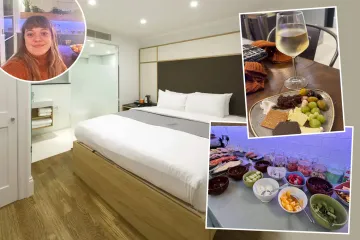
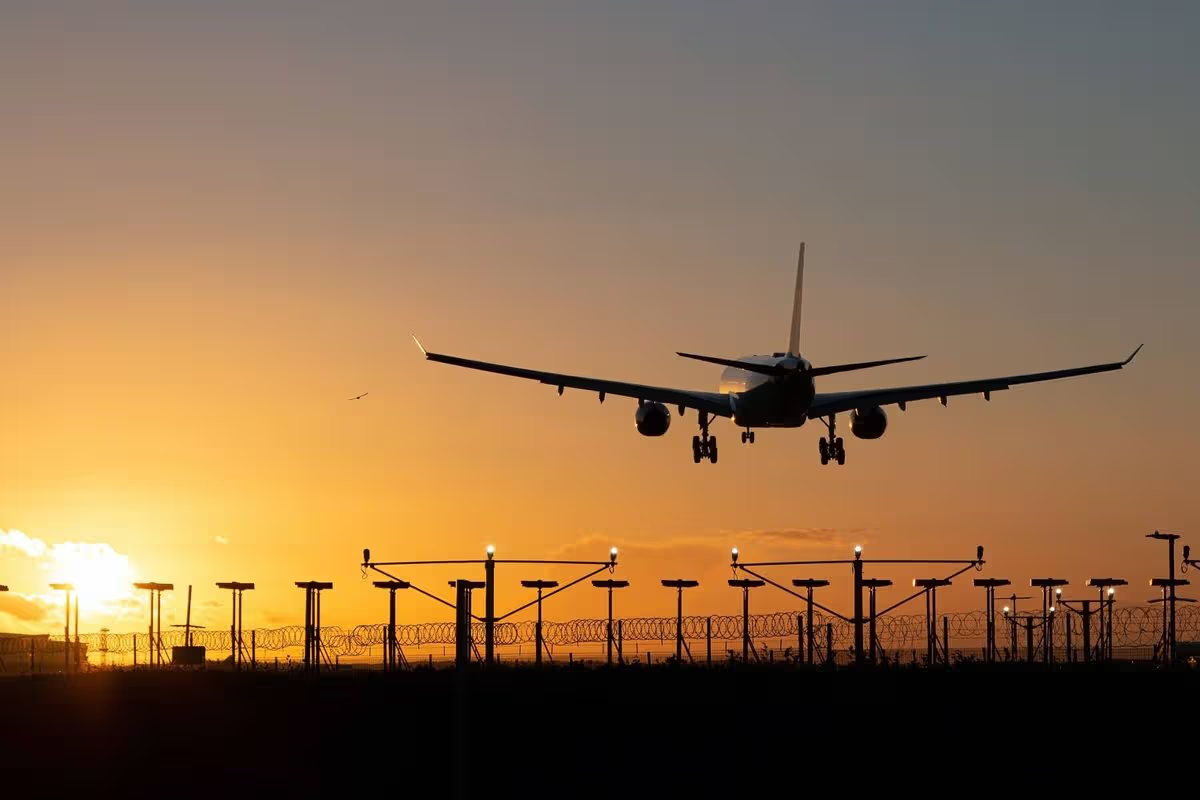
A travel lover who tried a £99 mystery holiday bargain soon regretted it when it ‘turned into a nightmare’. Lauren Kirby and her friend each paid £99 for a trip, plus an extra £20 to change from Venice to Malta and then an extra £12 for a city centre hotel.
On top of that, there was another €3 tourist tax and €100 for transfers and food. But despite the extra outlay, they say the destination was ‘not worth it’. Lauren, 22, from Maidstone, Kent, says she will think twice before doing it again.
“We bought our ticket in August 2025 and went on the trip in January 2026,” she said. “We didn’t expect a five-star hotel for £99 but we did expect a basic level of customer service, which we don’t believe we received.
“Initially, we got Venice and paid £20 each to upgrade to Malta as we had been to Venice before, but hadn’t been to Malta. We changed this when we found out there was an option to do so and were really excited.
“But when they rang us to confirm the booking, that’s when the problems started. We were told we couldn’t go to Malta, even though we paid specifically to go there and then we were told we could go to Prague or Venice instead but wouldn’t get the £20 back.
“Which didn’t make sense when we’d already paid £20 not to go to Venice. After a lot of toing and froing and swapping agents, it was reluctantly agreed that we could still go to Malta. But after that point, my trust in them disappeared.
“The hotel itself was OK and the hotel staff were very nice. But we had paid £12 each on top of the £20 we already paid to stay in the city centre. “And our hotel turned out to be located a 30-minute drive away from the centre.
“Not what we paid for. It would have been significantly cheaper to book it ourselves. On top of this, the travel agents asked us for our login details to easyJet to be able to complete the booking – we were told that we could change the password afterwards.
“I think a reputable travel service would be able to do that themselves without needing to log into our accounts. The whole thing was highly disappointing as it was not what we had paid for. There wasn’t anything within walking distance apart from a corner convenience shop, so we were very annoyed that we had paid extra but didn’t feel we received anything for it.
“I don’t think I would do it again. So in future if I want a mystery holiday, I’d prefer putting a list of destinations in a hat myself and doing it that way.”
The Mirus website states: “Designed for airlines operating short to medium-range flights of around 5 hours in standard specification, but available in ‘Enhanced Comfort’ specification to comfortably open up longer routes — the Kestrel transforms travel for passengers through unbeatable levels of legroom.”
They’re set to be rolled out across the Airbus A320neo and A321neo fleet in 2028.
David Morgan, chief operating officer, said: “The additional legroom and enhanced comfort these seats will provide will also deliver an improved onboard experience for our customers which we know they’ll love.”
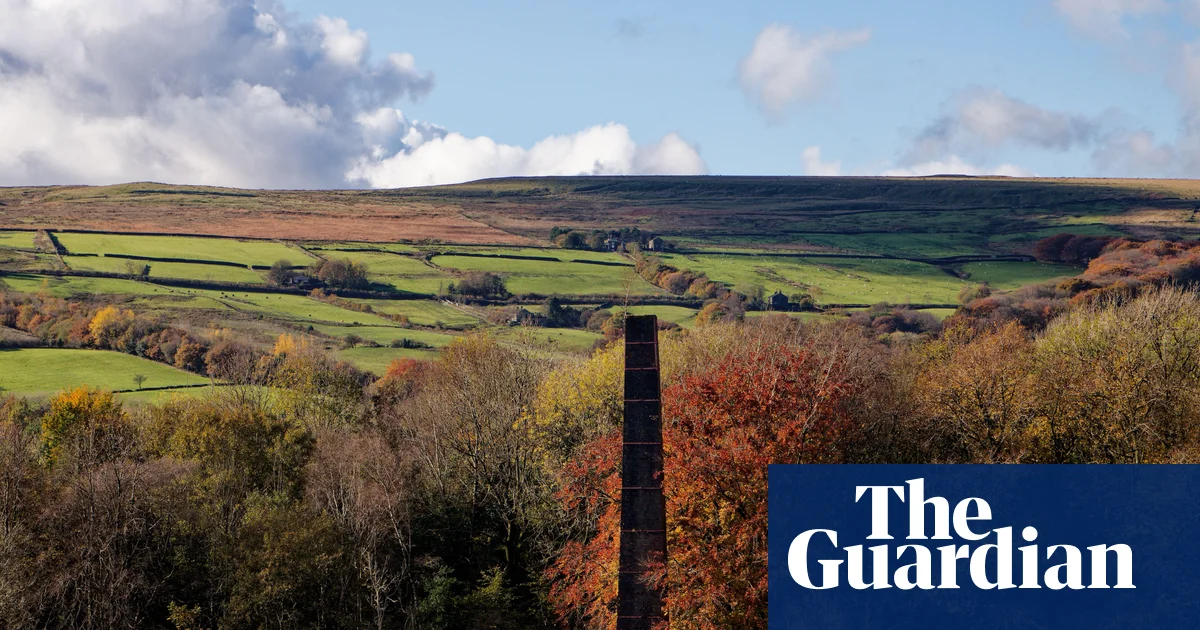
There’s a massive hole in the ground at the top of Whinney Hill – a shale quarry that once supplied raw materials for Accrington’s famous Nori brickworks (as used in the Empire State Building and Blackpool Tower). It’s fitting, as there’s a chasm-wide gap in history when it comes to this unprepossessing spot on the edge of the West Pennine Moors.
On the morning of 24 April 1826, about 1,000 weavers met on the hilltop to plan their day and, no doubt, get the lie of the land and the weather before setting off. A banking crisis in December of the previous year – dubbed the Panic of 1825 by historians – had hammered the cotton industry. Lancashire’s weavers, who had already suffered years of declining wages and living standards, faced destitution and even starvation.
Desperate, they decided to carry out large-scale breakages of power looms to send a symbolic message to their employers and the government. On that fateful April day, the first of four days of action, they would split into groups to walk many miles to Clitheroe, Oswaldtwistle and Blackburn – mill towns where they were met by soldiers, cavalry and yeomanry with guns and swords. By the end of their protest marches, at least six people had lost their lives.
The views, once you get past the fencing around the old quarry, now a landfill, are extensive – especially on such a pin-sharp winter’s day as I had when I recced one of the weavers’ walks with local guide and historian Nick Burton, who is leading this year’s remembrance walks for the Weavers Uprising Bicentennial Committee (WUBC) charity. Eight guided walks, taking place across Lancashire between March and August, will follow the routes used by the 1826 protestors as closely as ipossible.
We could make out the moorlands around Darwen to the south, Burnley to the east and Pendle Hill in the north. Behind and below us was Accrington Stanley’s Wham Stadium, which has a terrace named after Whinney Hill.
We opted for the Clitheroe route, as it would take us near to home. Like the weavers, we began on the old turnpike road, now the A680, which is dotted with Victorian and earlier properties. I spotted several Mill Lanes, old access points to workplaces now turned into housing estates. There were also plenty of Moor Lanes. We passed through Clayton-le-Moors – best known for its fell running team, once presided over by the legendary Ron Hill – and Great Harwood, another textile hub, and birthplace of printing and dyeing innovator John Mercer.
James Spencer’s the Powerloom Riots in the Whitaker museum shows weavers smashing power looms in the Whitehead family’s mill in Rawtenstall. Photograph: The Whitaker
Things got greener around the Grade II-listed Martholme (former) railway viaduct, where we looked down on the River Calder. I was on familiar ground, having learned to drystone wall in the shadow of this 10-arched beauty. The Calder takes wild meanders here, as it approaches the River Ribble. We followed what was probably an old limers way (packhorse routes used by traders to carry lime) before climbing to a shoulder of the Nab, a prominent, wooded hill above Whalley, with its stirring Cistercian abbey ruins and Lancashire’s longest viaduct. With views all the way back to Whinney Hill and dramatic wintry shadows, it was time for tea and a butty. We were soon at the summit and with even bigger vistas north. As the sun crept away, it turned chilly. We more or less raced across the last few fields to get to Low Moor, where there was one final disappeared mill and clash between unarmed weavers and soldiers to note – whence to the New Inn in Clitheroe for a warming ale.
A total of 415 power looms were broken on the first day of the uprising. It wasn’t the first time workers had smashed technologies, many of which had been invented and developed in Lancashire. The spinning jenny was invented in Oswaldtwistle; Blackburn and Manchester were testbeds for the power loom. But the workers had been pushed to the limit; after tramping 10 miles or more, sometimes encountering resistance, they had to hike all the way home.
My second walk, a week later – on a colder, even crisper day – started and finished at blue plaque sites. It began in Haslingden, this time heading south. The first plaque, on the former New Inn, recorded that on 25 April 1826, handloom weavers were arrested for destroying 100 power looms in nearby Helmshore. They were charged with riot but released when an angry crowd protested. Some were transported to Australia for life. A bystander called Mary Hindle was sentenced to death, later commuted to transportation.
This route – taken by the weavers on the third day of the uprising – passed some pitstops for coffee and culture, including the Whitaker museum and art gallery, which has a social history collection featuring a painted panel capturing the moment handloom weavers smashed power looms in the Whitehead family’s mill in Rawtenstall. They destroyed 96 looms in just half an hour. A new commemorative WUBC banner, Rise Up!, by textile artist James Fox is on display. On 16 April, a newly commissioned sound and film installation by Blackburn-based artist Jamie Holman, responding to the original painting, will be unveiled.
The viaduct at Whalley, (known locally as Whalley Arches), from the grounds of Whalley Abbey. Photograph: Alamy
From the windows of the gallery you can see Hardman’s Mill, with its 49-metre (161 foot) high chimney, which postdates the uprising. Before it was bought by self-made textile magnate Richard Whitaker, the grand mansion containing the museum was the home of George Hardman. It’s said he liked to be able to see the mill from the windows.
The weavers took action at Hoyle and Ashworth’s Mill at New Hall Hey, and Longholme Mill – a site now occupied by an Asda. A lot of east Lancashire’s textile buildings have been razed, but you can see traces of foundations or old walls in some places, as well as repurposed mills used as offices or carpet shops. Wherever you see a big supermarket, it’s worth checking the old Ordnance Survey maps on the excellent National Library of Scotland website. There’s a good chance that a supermill once stood where now we buy groceries.
In the centre of Rawtenstall, we passed the famous Mr Fitzpatrick’s temperance bar (where I always take a pint of blood tonic) and a vintage chippy called Old Man Greenwood’s, which has been serving splits (chips and mushy peas) and babby’s yeds (steak and kidney pudding)since 1932 (it also sells fresh fish). After passing the terminus for the East Lancashire heritage railway, underneath the aforementioned chimney, and through a small industrial estate, we were on a path running along the side of the River Irwell (all the way to central Manchester if you’re so inclined). The busy A56 wasn’t far away, but it was peaceful and pastoral, with herons and mallards, and lots of songbirds; the all-day frost made the scene bewitching.
At the border with Greater Manchester, on Plunge Road, we went down into the woodland beside Dearden Brook. All that remained of the mill here were crumbling stone walls, draped, Angkor Wat-style, in a century of undergrowth. From Edenfield, we had distant views over the valley to Musbury Tor – a sort of miniature Pendle Hill, its pronounced profile standing out clearly amid the level moortops.
Valley of the Dearden Brook, Rossendale, Lancashire. Photograph: Martin Moss/Alamy
A hard-to-read small blue plaque on a house in Chatterton, bearing the specious title The Chatterton Fight, informs passersby that handloom weavers “were fired on by soldiers of the 60th Foot. Four men and one woman was killed. A fifth man, an onlooker, was also later shot dead.” The local magistrate, William Grant, had read the Riot Act, giving a green light to the violence. Soldiers fired 600 bullets into a crowd of 3,000 people over a period of 15 minutes. You can listen to actor Maxine Peake reading their names out loud here, on behalf of the WUBC.
Lancashire historians believe the significance of the April 1826 rising, and the Chatterton Massacre, have been unjustly overlooked. But the events of those four days – brave and tragic – are a historical bridge between the Luddite risings, Peterloo and Chartism. In the heartfelt words of Dr David Gordon Scott, founder and chair of the WUBC – who began organising remembrance walks in 2022 – “walking in the protesters’ footsteps and feeling the solidarity that arises by participating in their journey, deepens our understandings and sense of empathy with those courageous souls who 200 years ago risked their lives in a desperate attempt to ensure that their loved ones had enough to sustain them in the bleakest of times”.
See weavers-uprising.org.uk for more information on the history of the Weavers’ Uprising, plus dates and booking information for the guided walks
Chris Moss is the author of Lancashire: Exploring the Historic County that Made the Modern World, published by Old Street Publishing (£25). To support the Guardian order your copy at guardianbookshop.com. Delivery charges may apply
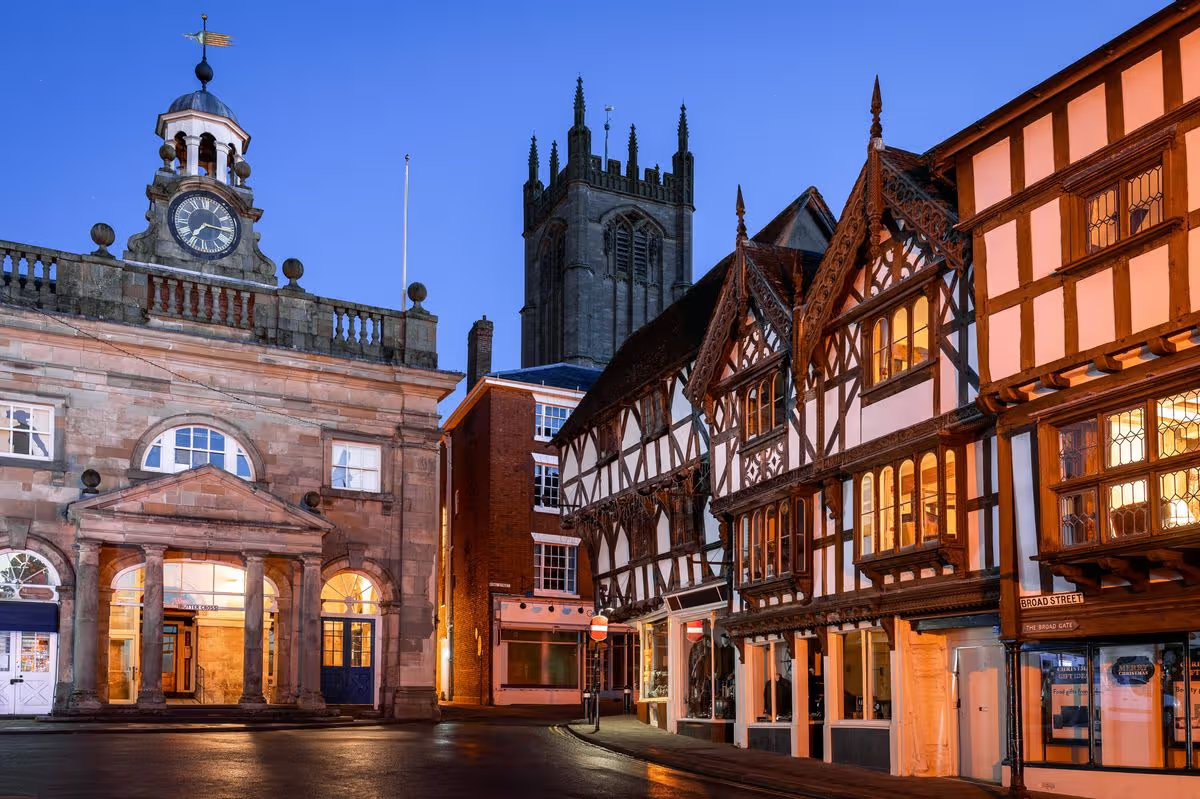
This historic Shropshire market town is bursting with history and has more than 500 listed buildings to explore, plus a vibrant food scene and festivals
The town has over 500 listed buildings(Image: joe daniel price via Getty Images)
Brimming with heritage, this charming market town makes for the perfect weekend escape, boasting over 500 listed buildings to discover and its renowned culinary scene.
Numerous visitors flock to Ludlow for its closeness to excellent hiking and cycling spots, while history enthusiasts adore it for its ancient churches, castles and mediaeval landmarks.
As the town has developed through the years, it now provides a lively atmosphere with its own market, independent retailers and regular festivals showcasing local talent.
Ludlow is situated along the River Teme, with its most ancient area being the mediaeval walled town, tracing as far back as the 11th century.
This section of the market town lies on the eastern bank of the river, whilst the castle perches on a hill and the remaining streets slope downwards towards the water.
Best holiday cottage deals in Wales
This article contains affiliate links, we will receive a commission on any sales we generate from it. Learn more
Wales is renowned for its stunning mountains, picturesque coastline and rich Celtic history. Sykes has a wide and varied collection of holiday cottages, houses and apartments across the country. Prices start from £35 per night with current deals.
Ludlow Castle
As one of the primary tourist draws in the region, Ludlow Castle stands as an uninhabited, partly ruined medieval fortification. Its origins are traced as far back as 1066 – subsequently, it became the residence of Prince Edward from 1473 to 1483, and for centuries it remained under the care of the crown.
By 1760, the government had contemplated demolishing the structure but, owing to substantial costs, opted instead to lease it, and thus the Earl of Powis started his residency in 1711.
From that point onwards, the magnificent castle started to draw tourists, with their appreciation for the picturesque style, and walking routes were established exploring the grounds and neighbouring areas.
Following the success of this venture, the Earl acquired the castle in 1811, and it has remained under the guardianship of the Trustees of the Powis Castle Estate ever since, who hold ownership on behalf of the family.
One visitor commented on TripAdvisor: “Lovely morning exploring the castle; so much to wander around even though it was very cold. The views were amazing from the top of the towers. You could feel the history come alive whilst walking around.”
Another said: “The main attraction in Ludlow – a site of enormous historical significance. The castle covers a very extensive area with amazing views from the top. In the castle shop do go upstairs to the gallery; it has some very interesting information.”
The fortress, perched proudly atop that very same hill, continues to welcome the public to discover and understand its significance to the town. Opening hours may fluctuate, though the castle can generally be expected to be accessible from 10am until 4pm daily.
Admission tickets can be purchased upon arrival – though advance booking online is usually recommended. Adult admission costs £10, whilst a child ticket is £5 and family tickets are £28.
Stokesay Castle
The remarkable buildings don’t end there, as Stokesay’s magnificent manor house continues to captivate passers-by with its timber-framed features.
Constructed like a fortress, though in reality it is a mansion, completed in 1291, and with minimal signs of alteration or modernisation ever since.
Owned by English Heritage, the protected structure has been meticulously maintained to reflect its original state and provides guided tours for those eager to discover more.
The property was originally established by Laurence of Ludlow, a celebrated wool merchant, actually one of the finest in the nation, and it stayed within his family until the 16th century.
The building’s architecture and design offer valuable insights into the period and continue to serve as a portal to the past. It welcomes visitors from Thursday to Sunday, 10am to 4pm, with adult admission priced at £9 and children’s tickets at £5.40.
One guest commented: “The castle that is not a castle! Thoroughly enjoyed our visit. The audio guide provided us with an amazing amount of useful information. A must-visit whilst in the area.”
Dining options
Ludlow boasts a strong reputation as a haven for food lovers, frequently dubbed the culinary capital of Shropshire. It’s earned this accolade through its excellent range of local produce, with countless independent suppliers and premium artisan food, all highlighted at the yearly food festival.
Taking place over one weekend in September, this year on 11-13, the festival features a vibrant programme of live events, including culinary demonstrations, workshops, talks and, naturally, showcases produce you can purchase to take away.
Naturally, the area also boasts numerous pubs and restaurants that garner considerable acclaim in their own right. Topping the rankings on TripAdvisor is The Blue Boar, a beautifully restored Grade II listed pub located on Mill Street.
A recent visitor commented: “Wonderful cosy, homely, friendly pub. Called twice on our little getaway, food was excellent, service was professional and friendly, and we would definitely recommend it to all our friends and family. Can’t wait for our next trip to Ludlow just to visit here again.”
Additional dining establishments include The French Pantry, Old Downton Lodge, The Queens, and the Michelin restaurant, known as The Charlton Arms Restaurant.
WHILE most Brits are busy planning their summer holidays right now, the clever ones are thinking further ahead.
Club Med has just launched its Winter 2026/27 Sale, and all you’ll need to pay right now is a £150-per-person deposit – but you’ll need to act fast.
Sign up for the Travel newsletter
Thank you!
Club Med is offering savings of up to 20% across holiday packages in South Africa, the Dominican Republic and other top destinations
Club Med Winter 2026/7 Sale: Pay £150pp deposit
The Club Med sale, which runs until midnight on Friday (27th March), offers tiered discounts across a huge range of sunny destinations for departures between November 2026 and May 2027.
Nobody can be blamed for not thinking ahead to next winter: we’re barely out of the last one, after all.
But this is a great chance to guarantee some much-needed winter sunshine and – just as crucially – futureproof your next big holiday against the rising costs that have been predicted amid surging prices and cancelled flights.
Club Med tends to run very short-term deals on its packages; the last one we spotted was back in February, on ski holidays in the Alps.
In this new flash sale, you can save up to 15% on Superior rooms, while Deluxe rooms, Suites and Villas are slashed by 20%.
It is particularly good news for families, with kids under six staying for free and the largest discounts applied to high-capacity villas.
There’s also a brand-new South Africa resort available to book, where thrill-seekers can surf the waves or fly over sugarcane fields on a trapeze.
You can even add a safari at the Vikela Safari Lodge to spot Africa’s legendary Big Five game animals (lions, leopards, rhinos, elephants and buffalo).
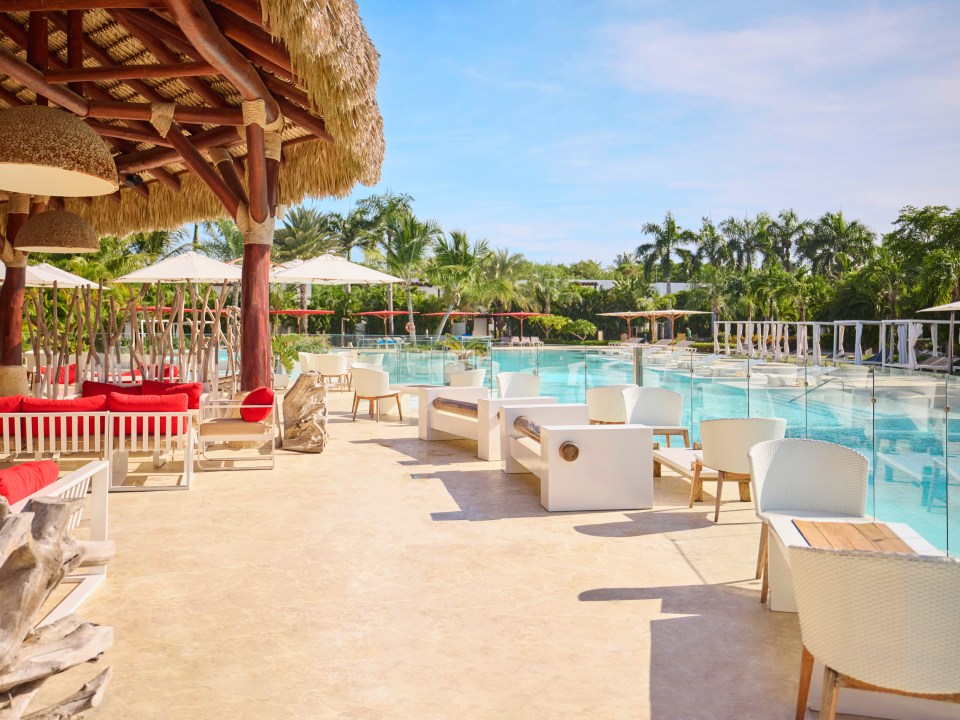
Families looking for a tropical paradise may prefer Punta Cana in the Dominican Republic, which features a dedicated acrobatics playground and white-sand beaches.
Parents can even treat themselves to the Tiara space, where free Champagne is served every evening from 6 pm.
Couples can escape to Marrakech La Palmeraie, tucked away in Morocco’s oldest palm grove, with tranquil courtyards and top-tier food.
If you want to dodge the noise of the city’s souks, the Riad Luxury Space offers a private oasis for an intimate getaway.
Best of all, you don’t need a huge layout to secure these rates.
A low deposit of just £150 per person locks in the current price, protecting your 2027 holiday budget against future price increases.
Club Med Sun resorts on sale this week
From gorgeous Caribbean islands to bustling desert retreats, there’s a massive selection of world-class resorts included in Club Med’s sale.
The UK’s ‘holiday park of the year’ has been revealed and it has everything including cosy glamping pods, beautiful beaches on the doorstep and incredible stargazing opportunities
The park offers eco-friendly accommodation in a natural setting(Image: Tranwell Farm Holidays.)
An eco-friendly holiday park close to Morpeth in Northumberland was named the best in the region at last night’s (March 19) Destination North East England Tourism Awards.
At the annual ceremony, now in its 24th year, Tranwell Farm Holidays was named the winner in the Camping, Glamping and Holiday Park of the Year category. The site is on a farm that has been cared for by the family for over 60 years, and since 2022 it has offered a range of unique glamping experiences.
Accommodation options include grass pitches, where you can camp surrounded by beautiful meadows, or you can bring your own caravan or campervan. There’s a cosy shepherds hut for two, a comfortable camping pod, and two woodland lodges surrounded by trees which come with a private log-fired hot tub.
Guests can also enjoy some unique experiences while they stay on the farm. There are sessions where they can meet the park’s rare breed lambs, and you may even get to bottle feed one or witness a birth. The park is also set in an area with an official ‘dark sky’, meaning it’s an incredibly spot for stargazing.
Guests can hire a stargazing kit including binoculars, hot water bottles, and a rug, and can even hire a telescope to help them explore the cosmos from Earth.
Less than a 10-minute drive away is Morpeth, a historic market town with the River Wansbeck running through its centre. It has a traditional high street with a mix of chains and independent shops, as well as the indoor Sanderson Arcade where you’ll find upscale boutiques.
Stroll along the riverfront Carlisle Park and spot historic buildings such as Morpeth Court. Once the town’s court and gaol, it now houses a colourful antiques centre and café, as well as holiday apartments. The Morpeth Chantry is another unique place to visit. This medieval chantry house, which once held church services, is now home to a bagpipe museum which often has live performances.
Northumberland is known for its long, beautiful and unspoilt beaches, and there are a few that can be explored nearby. About half an hour away is Blyth Beach, a sand and shingle beach that has a long promenade and colourful beach huts. Its waters have been rated as ‘excellent’ by the council, so you can take a dip or surf if the conditions are right.
Cambois Beach is also just a short drive away and this sandy beach has pretty sand dunes and footpaths among the sandy dunes. It’s a quieter spot with fewer facilities, but perfect for a peaceful walk and popular with dog walkers. You may even share the beach with a few people who are fishing, as it’s a great spot to catch flounder and cod.
Have a story you want to share? Email us at webtravel@reachplc.com
Time Out has ranked the 51 most beautiful places in the world, and the top spot goes to Spain’s Picos de Europa mountain range that’s just a two-hour flight from the UK with Ryanair
The Picos de Europa is in Spain and located just over 12 miles from the coastline(Image: Manuel ROMARIS via Getty Images)
The world is brimming with extraordinary destinations to discover, and pinpointing the most stunning is no easy feat, but Time Out has tackled the task.
The publication recently unveiled a list of the 51 most beautiful places in the world, featuring everything from lakes to beaches, National Parks, libraries, vineyards, and historic towns. Yet, claiming the number one position is a breathtaking mountain range that provides remarkable hiking opportunities, and it’s merely a two-hour flight from the UK.
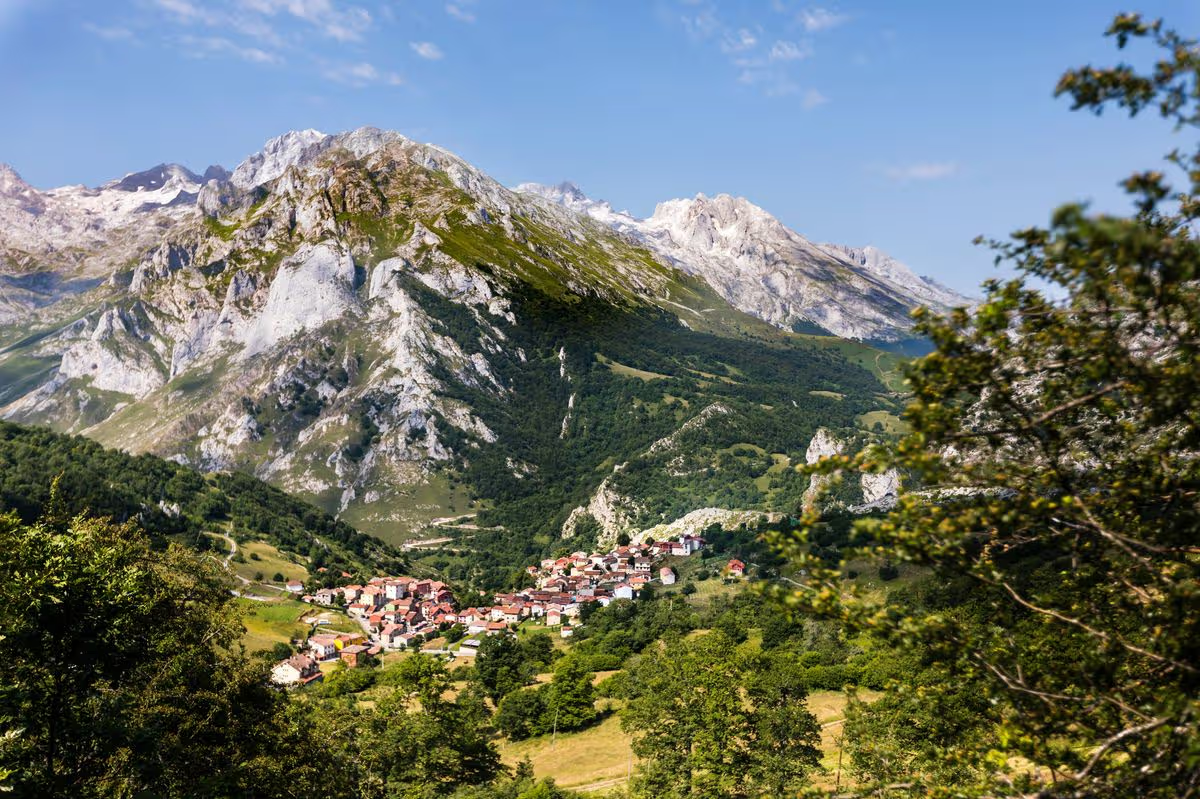
The Picos de Europa in Spain is a striking, rugged limestone mountain range that soars to a height of 2,650 metres. Located just over 12 miles from the coastline, the mountains ascend steeply, forming deep gorges to discover, reports Express.
One route, the Cares Trail, ranks among the most sought-after walks in Spain, tracing a canyon and passing through craggy peaks and cascading waterfalls.
Spanning 13 miles in total, it’s not suitable for novices, though its gentle inclines make it achievable for walkers who can manage the distance. A straightforward choice is to board the Fuente Dé cable car, whisking you up the mountainside in moments and letting you relax and admire the verdant landscape below.
Upon reaching the summit, you can also explore additional hiking trails, including some demanding, steep climbs that provide spectacular vistas.
The mountains form part of the broader Picos de Europa National Park, and this region features the Lakes of Covadonga. These glistening blue waters are encircled by peaks and vegetation and resemble landscapes you’d encounter in Scotland or the Lake District, making it difficult to believe you’re in Spain.
This protected national park is abundant with wildlife, including brown bears, wolves, vultures, and eagles, and you’ll probably encounter mountain goats and vibrant butterflies amongst the limestone surroundings.
At the foot of the mountains, you can discover towns like the medieval Potes, brimming with centuries-old stone and half-timbered buildings and cobbled streets that lend it a rustic allure.
The town’s centrepiece is the Torre del Infantado, a 15th-century tower once the residence of medieval royalty, now a museum with a rooftop terrace providing sweeping views of the town.
Arenas de Cabrales on the park’s periphery is another favoured spot to stay. It’s renowned for producing Cabrales cheese, and has evolved into a gastronomic hotspot due to its plethora of acclaimed restaurants serving Northern Spanish cuisine.
Don’t expect to find paella on the menu. In this region, the dishes are hearty and rustic, such as bean stews and grilled meat, with ingredients sourced locally from the mountains.
The Picos de Europa is just under two hours from Santander Airport, and is serviced by airlines including Ryanair. Routes from the UK to Santander operate year-round from Edinburgh and London-Stansted, and seasonal flights operate from Birmingham and Manchester. Flights start from just £15 one-way and take 2 hours from the UK.
Got a story you’d like to share? Drop us an email at webtravel@reachplc.com
It’s time to discover the timeless charm of Türkiye’s Aegean Coast, where you can find sun-drenched olive groves encircling ancient cities, scenic wine routes dotted with Michelin-starred restaurants and buzzing beach clubs…
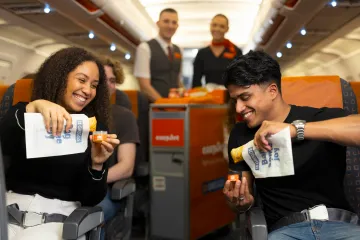
GREGGS sausage rolls are seriously taking off — as easyJet is serving free ones on board for the first time.
The budget airline is dishing out the popular flaky pastries to mark the opening of a base in the heart of Greggs country.
Sign up for the Travel newsletter
Thank you!
easyJet is serving free Greggs on board flights for the first timeCredit: PAThe collaboration celebrates the launch of easyJet’s new hub at Newcastle International AirportCredit: PA
And passengers can dip them in a range of new sauces inspired by destinations around the world, including kebab.
The collaboration celebrates the launch of easyJet’s new hub at Newcastle International Airport — 75 years after Greggs’ first shop was opened in the city.
Holidaymakers flying from there yesterday were treated to a free sausage roll, and all week punters can scoff one from a special easyJet service landing in the city centre.
They will also be offered limited-edition dips, such as Turkish-style kebab, with aromatic choices of lemon, vinegar and smoky paprika.
There is also Tunisian– inspired harissa ketchup, or Italy’s silky affogato flavour, with hints of deep-roasted coffee, cocoa and vanilla.
Flyers tucked into their favourites yesterday.
Easyjet’s new Tyneside base is the airline’s 11th in the UK, and will offer more than 80 flights a week to 22 destinations.
It will also support around 1,200 jobs, including 140 direct roles for pilots and cabin crew.
Garry Wilson, CEO for its holidays business, said: “This is a major milestone for us, so partnering with Greggs, a true Geordie icon and one of the city’s most famous exports, felt like the perfect way to celebrate our arrival.”
Greggs director Hannah Squirrell added: “This is a fantastic opportunity for the local community, and we can’t think of a better way to celebrate than with a sausage roll.”
John Gregg founded the bakery in Newcastle in 1939, and its first outlet opened in the city’s Gosforth in 1951.
There will also be limited-edition dips, such as Turkish-style kebab, servedCredit: PA
Best hot and sunny holidays in April including hotspots less than 4 hours from UK – The Mirror
Need to know
From Spain to the Caribbean, there are plenty of warm and sunny destinations perfect for April holidays – we take a look at the destinations you won’t want to miss.
There are plenty of hot and sunny destinations in April(Image: Getty Images)
Need to know: Seven hot destinations less than four hours from UK perfect for April getaways
April offers brilliant destinations less than four hours from the UK where temperatures start heating up.
Morocco delivers 25C days in Agadir and Marrakech, perfect for exploring markets and dining al fresco.
Malta offers flights from £30 and boasts Valletta, dubbed the ‘best city in the world’. The island features stunning landmarks and Game of Thrones filming locations.
Spain’s cities become ideal in April, with Seville hitting 24C and Madrid reaching 18C. It’s perfect weather for sightseeing and enjoying “a cheeky sangria in the sunshine!”
The Canary Islands offer 18-24C temperatures, ideal for hiking and nightlife as resorts come alive.
Greek islands like Santorini and Crete start opening up without summer crowds.
For serious heat, Thailand delivers 34-37C in dry conditions, perfect for poolside lounging in Phuket.
The Caribbean also offers great deals while avoiding monsoon season, with Barbados and Jamaica providing white sand beaches and adventures.
A new play area has opened at Crystal Palace Park and it is free to visitCredit: kiddoadventures / FacebookThe park features a number of slides, swings and climbing framesCredit: kiddoadventures / FacebookMany of the different elements of the playground are also accessibleCredit: HTA Design
The park features “hands-on play” with a “world shaped by scales, skeletons and stories from deep time”.
There are a number of pathways to explore with dinosaur-details as well as a few different shaped slides on the embankment.
A huge dinosaur-like skeleton also offers kids the chance to climb and hide, with the curving tail forming a play trail.
In the sandpit, which is shaped like a dinosaur’s footprint, young children can also dig and discover fossils.
The new playground replaces an old one that had become rundown over the years.
After enjoying the new play park, make sure to head on the dinosaur trail to see around 30 Grade-I listed statues scattered across the park.
These are the world’s first life-sized prehistoric animal sculptures which were all inspired by fossils found by Victorian palaeontologists over 170 years ago.
Many of the dinosaurs look rather different to how we imagine dinosaurs now and that is because the statues were created from the scientific information Victorians had at the time.
It is free to visit the park as well as the sculptures, which can be found across islands and lakes in the park.
And by this summer, there will be a new £17.75million Visitor Centre.
There’s even a climbing frame and trail that looks like a dinosaur skeletonCredit: kiddoadventures / FacebookAcross Crystal Palace Park you can also see 30 Grade-I listed dinosaur sculpturesCredit: Alamy
It will be a single-storey and will have an ‘Interpretation and Activity Room’ which will showcase the park’s history and future through a number of displays, objects and information panels.
The park’s Grand Centre Walk is also being restored to create more space for events, with the path becoming wider and a new entrance being built at Penge Gate.
In total, the park’s revamp is expected to cost around £52million.
WITH new travel requirements in action at airports across Europe, EES is set to cause travel chaos this summer.
While you’re likely to be caught up in the chaos and lengthy queues, there are a few ways to make it more manageable.
Sign up for the Travel newsletter
Thank you!
If you’re heading on holiday – you might get caught up in EES delaysCredit: AlamyThere have been reports of queues up to four-hours long to get through passport controlCredit: Alamy
With many Brits yet to register for EES, it’s predicted that those heading abroad for the summerholidays will be privy to delays.
Some destinations even out of season have reported queues of up to four hours.
These include airports at Brussels, Lisbon, Prague and Lanzarote.
So while you might not beat the queues – here are some tips from Sun Travel to make your next trip easier.
So if you get an early flight, there’s less likely to be a backlog.
Whereas if you’re travelling in the early evening, there could still be passengers being processed who are plenty ahead of you.
Anticipate delays
If you are taking a connecting flight, we’d advise to anticipate delays.
Of course this varies from airport to airport, but some travellers might find it will take longer to get through because of the EES requirements.
Similarly, if someone’s collecting you perhaps give them a bit more time – especially if they’re in one of the pick-up zones that costs money.
Queues at Lanzarote Airport were up to 3-hours long for one Sun Travel reporter
Go for a bigger airport
If you can go to a bigger airport and take a longer road transfer, it could be worth it.
At a larger airport there’s likely to be more EES machines than at one of the smaller ones.
For example, Assistant Travel Editor Sophie Swietochowski found there were plenty more of the machines in Spain‘s Alicante Airport than in Austria‘s Salzburg.
So if you can fly into to a main hub and then continue from there, it could make your journey through the airport quicker.
Bring entertainment
If you have children, or are generally just bored of queues (and who can blame you?) – think about entertainment.
It could be worth setting the kids up with an iPad or something that will keep them occupied.
Also, bring a reserve of snacks because standing in line means no access to the airport’s cafes and shops.
Get into the priority lane
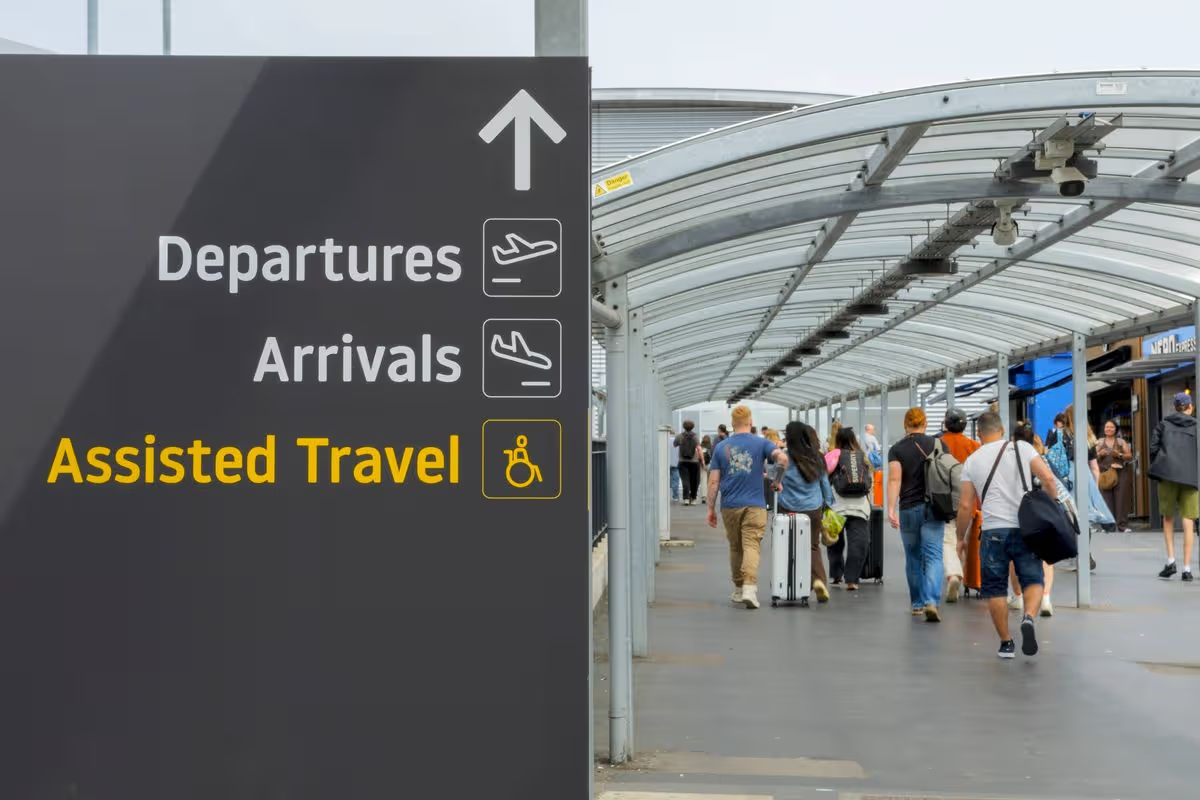
For those who are disabled, make sure to let the airline know in advance as you would usually.
After landing, staff should escort you straight through to the front of border control queues.
Many major airports offer priority family lanes at passport control for families with young children (usually under 12 years old).
Use the plane facilities
Quite simply, if you are going to be waiting in line for yours, then you want to be comfortable.
So before landing, go to the toilet on the plane.
If you’re queueing along corridors before heading into border control, then the chances are there won’t be access to toilets.
Here’s what you should expect to find when you get to an EES machine…
Select your language
Put your passport into the machine
Place your fingers onto the scanner
Look into the camera
Answer series of short questions about the trip e.g. where you’ll be staying, if you have a return journey booked and confirmation of travel insurance
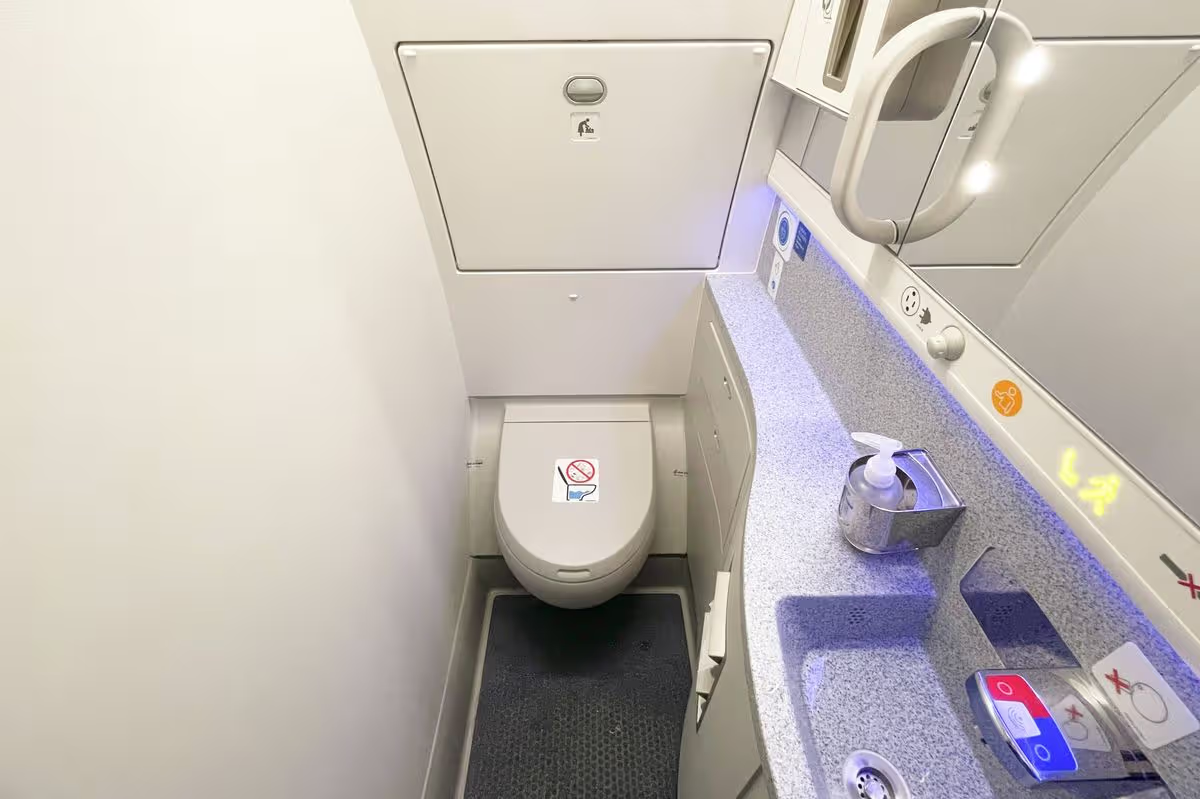
A woman who found a secret compartment in a plane toilet was left gobsmacked by what she found inside – as some said other public toilets should do the same
The woman found something amazing in the plane bathroom (stock photo)(Image: kool99 via Getty Images)
Your next flight might be concealing some vital items in a “secret compartment” within the toilet. We’re all aware that air travel can be an uncomfortable affair. You’re squeezed onto an aircraft alongside a host of strangers and informed you can only bring a small bag containing all your essentials – and you’re likely to overlook something important.
While nothing will truly enhance the experience unless you splash out thousands of pounds for first class, one woman on social media has revealed that a hidden door in the bathroom could hold something which at least makes the journey tolerable for some passengers.
Rhonda Abdalla, from Florida, US, was travelling on a Southwest Airlines service from Tampa to Houston, Texas, en route to Las Vegas, when she unexpectedly started her period. She consulted a flight attendant who pointed her towards a small compartment in the aircraft toilet, which was stocked with tampons and sanitary towels.
The woman admitted she had no clue the compartment existed, and suspected other women would be equally unaware, so she turned to Threads to share the discovery and spread awareness.
She posted: “I’m a girls’ girl, so I have to share. Ladies! Did you know there’s a secret compartment in the airplane bathroom that has tampons and pads if you need them?! Because nobody wants to be caught off guard at 35,000 feet.”
Speaking to Newsweek, Rhonda revealed the flight attendant instructed her to take as many tampons as required, and even thoughtfully disclosed she had additional supplies if the stock in the lavatory proved insufficient.
Rhonda detailed that whilst the compartment does feature a sign indicating it can be opened, it “isn’t very noticeable”, so she believes she never would have considered looking there had the flight attendant not informed her about it.
Southwest Airlines has confirmed that sanitary products are something they ensure are stocked on all aircraft for any passenger who might require one urgently.
They told Newsweek: “Sanitary products are available on all Southwest aeroplanes in all lavatories. These items are supplied in case a customer needs one. Whilst we do supply them, they are not a relatively high-use item.”
Both flight attendants and passengers have reacted to Rhonda’s social media post, with numerous people expressing gratitude for her sharing the information, whilst others mentioned they always carry spare tampons for circumstances like hers.
One flight attendant commented: “The amount of times someone has come up to me in tears because on top of a stressful travel day, they started their period and all their products are in their checked bag. Baby, I got you. Tampons, chocolate and a glass of wine will be brought to your tray table immediately.”
Another contributed: “And if you don’t find them in the lavatory, ask a flight attendant. We always have some on board!” One grateful passenger responded: “That’s actually a really useful travel tip! Appreciate you sharing that with everyone.”
Rhonda later expressed her satisfaction at the positive feedback to her post, as she believes it’s important for everyone to be aware of the resources available to them when needed.
She stated: “The response has been really positive, and I’m glad it’s helping spread awareness. Getting your period mid‐flight is already stressful, so knowing there are resources available makes a big difference.”
However, it’s worth noting that some airlines may not stock sanitary products in their lavatories. You can always enquire with a flight attendant who may be able to assist, but it’s advisable to always carry a few emergency tampons or pads – either for your own use or to help someone else in need.
An expert has explained all(Image: John Lamb via Getty Images)
Holidaymakers are being made aware they may face additional expenses due to continuing unrest in the Middle East. With flight cancellations, disrupted travel routes and official advisories now in effect, many with travel plans remain uncertain about their financial position should trips be delayed or cancelled entirely.
Alicia Hempstead, Travel Insurance Expert at MoneySuperMarket, has addressed a series of questions concerned travellers may be asking. She explained: “Unfortunately, there is no guarantee that travel insurance will cover travellers affected by the current situation in the Middle East.
“Most standard policies will not allow claims resulting from events that fall under standard exclusions like war and civil unrest. This means any claims for costs linked to disruption, such as cancelled trips, lost items, emergency accommodation, or medical treatment resulting from the conflict are unlikely to be covered.”
Foreign Office guidance
“In serious crises, such as the current situation in the Middle East, which has prompted updated Foreign, Commonwealth and Development Office (FCDO) warnings, the FCDO will usually coordinate support and evacuation efforts. However, this assistance is not guaranteed and does not replace travel insurance. Depending on the circumstances, travellers may still be responsible for some costs, even if they receive help from the FCDO.”
Can I get my money back if my flight is cancelled?
“As flights are being cancelled and significantly delayed, airlines have legal obligations under UK and EU passenger rights rules to offer either a full refund or to re-route at no additional cost. Once services resume, carriers must also offer re-routing options. Passengers’ first point of call should be to check directly with their airline for the latest updates, as policies may vary by departure location and the specific disruption.
“For those due to travel in the coming weeks or months, refunds are not automatic simply because the FCDO advises against travel. However, many airlines and tour operators may offer refunds or flexible rebooking options if the FCDO formally advises against all travel to a destination. Travellers should check the terms and conditions of their booking carefully, and contact their airline or travel provider if they are unsure.
“Be aware that operators may be experiencing high volumes of enquiries, so refunds or rebooking arrangements may take several days or weeks to process and you may need to be prepared for longer waiting times on the phone or online.”
Can I get specialist insurance?
“Travellers who knowingly travel to high-risk areas typically require specialist high-risk or conflict-zone insurance that explicitly covers war-related incidents. These policies tend to be more expensive and come with strict conditions, but they are the only way to secure cover for conflict-related risks.
“For instance, Dubai has previously been a very popular destination, and travellers who have holidays booked may find their hotel costs aren’t covered because their standard policy excludes war-related incidents.
“It’s always a good idea to check directly with your hotel, or if you’re on a package holiday, with your provider, to understand what might be refundable or rebookable if your plans are affected.”
Cancel for any reason (CFAR) option
“A future option to ensure you’re always as protected as possible is to opt for Cancel for Any Reason (CFAR) travel insurance, which can offer reimbursements of around 50-75% of non-refundable, prepaid trip costs. However, these premiums come at a higher price and aren’t offered by all UK insurers.
“If you don’t have specialist cover in place, your best first step is to speak directly to your airline, hotel, or tour operator to understand what flexibility or refunds they may be able to offer before assuming your travel insurance will pay out.”
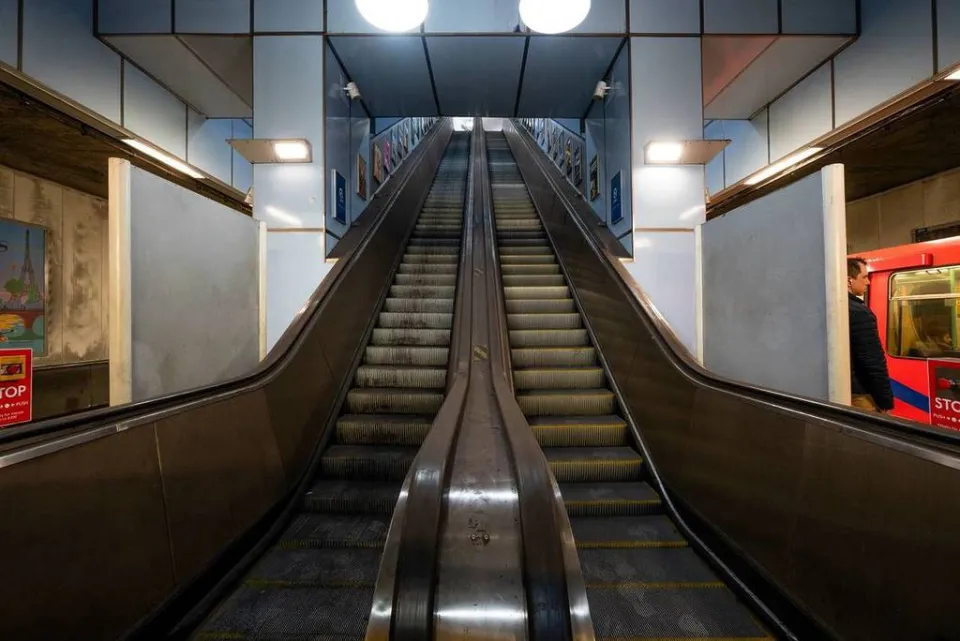
The shiny new escalators will be up and running from today – eight days earlier than TfL had announced – and should last the station 30-40 years.
The station is also much brighter as the escalators have rows of lights and the area has been whitewashed.
The pale blue panels have been replaced with white panels, which reflect light much better and have a noticeable effect on the station’s appearance.
A new lift has also been installed as well as energy-efficient lighting, upgraded safety features, local artwork, and a new raised ceiling.
Seb Dance, Deputy Mayor for Transport, told The Sun previously that it was “fantastic” the major upgrade at Cutty Sark DLR station could be delivered earlier than expected.
Before it closed, Cutty Sark was the third busiest station on the Docklands Light Railway (DLR), after Canary Wharf and Limehouse.
Thousands of passengers were forced to take the 121 station steps at Cutty Stark due to faulty escalatorsCredit: Alamy Stock Photo
THRILLING stunts, tough challenges, eager contestants and the stars of the ITV show themselves, the Gladiators Live Tour is returning.
Tickets go on sale in a matter of days for the 28 brand-new shows across the country.
Sign up for the Travel newsletter
Thank you!
Gladiators Live Tour will return in 2026 with tickets on sale soonCredit: GladiatorsTVFans of the TV show will get to see Gladiators and contestants return to take on challengesCredit: BBC
Based on the popular TV show on ITV, Gladiators Live will be making a return to the stage this year after making its debut in 2025.
The show originally launched back in the 90s and is currently in its third revival.
On the show, contenders compete against Gladiators in a series of challenges to earn points – and soon, you’ll be able to watch it live.
There will be 28 shows across the UK at various venues from Aberdeen, to Glasgow, London, Manchester, Newcastle, Liverpool and Birmingham.
Legendary Gladiators will storm back into the arena to face fearless contenders from previous seasons.
Fan-favourite challenges that are likely to take place during the live shows are Duel, Hang Tough, The Wall and The Eliminator.
The description of the event teases “iconic fan-favourite events, breathtaking stunts, epic head-to-head battles and the unforgettable Eliminator finale.
“With non-stop action, heroic showdowns and moments guaranteed to have the entire arena on its feet, Gladiators Live delivers edge-of-your-seat entertainment for the whole family.
“Audiences can expect a truly immersive, high-octane experience, as arenas are transformed into modern gladiatorial battlegrounds complete with purpose-built sets, spectacular lighting and cinematic staging.”
One reviewer to last year’s live tour called it ‘ultimate family entertainment’ and an audience member added “it was a great show! Felt like I was inside the tv.”
Another said it took them to being a “kid back in the 90s”.
The presale kicks off on March 26 at 9am with general sale on March 27, 2026.
Prices are yet to be confirmed, but tickets for the Liverpool show start from £48.45.
If you want even more of a Gladiators experience and would rather step up to the challenge yourself – you can.
It will essentially become a gladiator training facility with all the classic challenges you’d expect plus some extras.
In the Vault, visitors will be able to see behind the scenes of the TV show.
There’s also a shop where fans can buy exclusive merchandise.
Dom Bird, senior vice president at MGM Alternative Television said: “Now, fans young and old will get one step closer to walking in the footsteps of their heroes, as we announce our brand new Gladiators Experience.
“Based at the NEC Birmingham, everyone finally has the chance to test their skills on the iconic games – from Duel and Hang Tough, to The Wall, and of course the legendary Travelator.
“Come and see if you’ve got what it takes!”
There are separate tickets depending on if you want to have a go or not.
For contenders, tickets start from £39.50, and spectators from £17.50.
ONE of the UK’s biggest free museums has been named the most popular attraction in the UK.
The Natural History Museum in London has knocked off the British Museum from the top spot of most guests, with the Association of Leading Visitor Attractions (ALVA) revealing 7.1million people visited last year.
Sign up for the Travel newsletter
Thank you!
The Natural History Museum is the UK’s most popular attractionCredit: Alamy
This marked the best year in terms of visitors for the free attraction, with a 13 per cent rise compared to the previous year.
The attraction happens to be one of Travel Reporter Alice Penwill’s favourite free attractions in London.
She said: “Having been to the Natural History Museum recently, I’m not surprised it’s the UK’s most popular tourist attraction.
“Other London attractions are impressive, but you won’t ever forget walking in to see the skeleton of an 82-foot Blue Whale in the entryway.
“There’s something for everyone, whether you’re interested in fossils, reptiles and birds.
“My favourite part is The Vault where there are some of the most valuable treasures like diamonds, amethyst and gold crystals.
“There’s lots of green spaces outside too, and I saw lots of children enjoying the Evolution Garden with dinosaurs like a bronze Diplodocus that was installed a few years ago.”
Over the next couple of years, the Natural History Museum is also working on new openings.
A new Human Nature pop-up display will open in September 2026, inside a gallery that has been closed for 80 years.
Inside, visitors will be able to discover stories about human history and the natural world, with a number of specimens and historical objects on display that haven’t been seen before.
There will also be a prototype of one of the Crystal Palacedinosaurs, a monk seal called Jenny ‘the talking fish’ and a handaxe that was discovered alongside the remains of a woolly mammoth in 1859.
Later in 2027, there will be a new permanent gallery specifically for young children.
It will be designed for four to seven-year-olds with lots of hands-on interactive experiences about the natural world.
London, UK – February 15 2025: Visitors admire Dippy the iconic dinosaur skeleton situated in front of the grand Romanesque Revival architecture of the Natural History Museum in LondonCredit: Getty
Doug Gurr, director of the Natural History Museum, said: “We are thrilled to be the UK’s most popular visitor attraction, smashing all previous records for the sector!”
London has a load of free attractions as well, including some right by the Natural History Museum.
One of Sun Travel’s Deputy Travel Editor Kara Godfrey’s favourite free attractions in the city is just down the road.
She said: “Having started my career in fashion, it’s no surprise that the museum I’ve been to the most in London is the V&A.
“The museum itself is fantastic – not only for being free to visit, but because it’s the largest museum on arts and design in the world.
“Also the second largest in the UK (behind the British Museum), my favourite area is the Asian corridor, with insanely detailed artwork and sculptures.
The V&A museum is also in South Kensington and is free to visitCredit: GettyThe Science Museum is also close to the Natural History MuseumCredit: Getty
“There’s loads of free events coming right now, including one on Women Printmakers and one on iconic American Photographs.
“Make sure to save time for the cafe too. It’s also the oldest of its kind in the world and is a stunner.”
And Sun Travel’s Head of Travel (digital) Caroline McGuire also loves the Science Museum nearby.
She said: “The Science Museum in South Kensington is perfect for kids of all ages, I’ve been taking my child there since he was a one-year-old, as the interactive ‘Garden’ in the basement is perfect for toddlers and pre-schoolers.
“There are plenty of excellent free exhibitions around the museum – one of our favourites being the Space section – but the most popular (and deservedly so) is the paying Wonderlab, an interactive gallery featuring numerous experiments that will fascinate children aged 3-14.
Caroline shared: “Until I visited the Outernet, I thought it was all hype.
“Now, my son and I will make a 25-minute detour to spend even 20 minutes there, when we’re in central London.
“The huge multi-screened space on Tottenham Court Road screens artist-made short films throughout the day, and you can walk in from the street and spend as little or as much time there as you want.
“With screens covering the sides and ceiling, you really do feel like you are inside the films.”
The Southbank Centre has lots of free activities each school holidaysCredit: Getty
“We’ve done free kids raves, free doodling workshops, free crafts sessions and free DIY sessions where my six-year-old was given a hammer and saw and encouraged to help build a Moomin House overlooking the River Thames.
“Oh, and the free Jeppe Hein: Appearing Rooms fountains are one of the best places to take a kid for a splash around during a summer heatwave.”
Or you could head to a number of galleries including the Tate Modern, Tate Britain or National Portrait Gallery.
Alice said: “When I head to London, I make a beeline for the galleries.
“Getting to see walls upon walls lined with famous artwork for absolutely nothing is something we take for granted – and there are plenty to see in the city.
“There’s the Tate Modern and Tate Britain, The National Portrait Gallery, the National Gallery where you can see one of my favourite portraits, The Ugly Duchess.
“Not to mention lots of these venues have pretty cafes and even bars if you fancy taking a weight off your feet after exploring.”
Here are some other spots to visit across London that are free to visit.
London also has a number of free galleries including the Tate ModernCredit: GettyMinaLima features different items that are in the Harry Potter filmsCredit: Alamy
MinaLima
Elsewhere in London, you could head to one of Travel Reporter Cyann Fielding’s favourite spots – MinaLima.
Found in Soho, MinaLima is a shop and attraction that features the graphic designs from the Harry Potter films.
Named after Miraphora Mina and Eduardo Lima, who are responsible for most of the designs you see in the films including the Daily Prophet, the Advanced Potion Making textbook and Bertie Bott’s Every Flavour Beans, the destination features themed items for sale as well as prints of their designs.
Make sure to spend time exploring as there are also items from the films, and speak to the staff, who really know their stuff.
London parks
There are also a number of amazing outdoor places to visit in London including Kara’s favourite, the commons in south west London.
She said: “I spent the best part of a decade living in south London, with two years of that in and out of the Covid lockdowns.
“To stop myself from going insane, this meant lots of walking around my local parks.
“And from Balham you can easily walk three of the best in one day.
“I recommend starting at Clapham Common, one of the more open parks of the three with ponds and a Victorian bandstand that often has live concerts.
Clapham Common has ponds and a Victorian bandstandCredit: Getty
“Go down to Wandsworth Common, and you can walk along the train tracks or across the pond.
“Then nip through Balham (with a coffee at The Apple Blue Patisserie or Insta-famous Milk) and end in Tooting Bec Common, with a much more leafier and interesting park to explore.
“Need to cool down? Finish with a swim at Tooting Bec Lido as well, the biggest freshwater lido in the UK (£9.40 for adults or free for locals).”
Travel Reporter Jenna Steven’s favourite free spots also make good walks.
She said: “London has over 3,000 parks to explore, but St James’s Park is one of my favourites.
“This is mainly because I’m a big fan of the unique Duck Island, an aptly-named nature reserve on the east of St James’s Park Lake.
“The island has its own cottage, which is surrounded by vibrant greenery and blooming flowers in the springtime, looking like something out of a fairy-tale story book.
“Plus there’s scenic picnic spots by the bandstand, and several kiosks serving cold drinks and sandwiches to enjoy when the sun comes out – save those crusts for the birds!”
Or head to Lisa Minot’s favourite – Primrose Hill.
She said: “For fabulous FREE views across the whole of London, head to Primrose Hill in North London.
“First opened in 1842 as an open space for Londoners, it was originally part of Henry VIII’s hunting grounds.
“Today it offers fantastic panoramic views of the capital and is popular at sunrise and sunsets.
“It is one of six protected viewpoints in London, its highest point more than 63 metres above tree level.
“Trees are also kept low so as not to obscure the view.”
Covent Garden Piazza
If you fancy something a little more urban, venture to Covent Garden Piazza.
Jenna added: “There’s plenty of both branded and independent shops to browse, traditional cafes and bars, plus there’s always a pop-up giving away tasty treats of some kind.
“Here you’ll hear live music rising from the lower level that makes your stroll through the building even more beautiful.”
In the city centre, head to Covent Garden Piazza where you can browse shops including well-known brands and independent shopsCredit: GettyBorough Market is also a great spot to explore, though you will need to spend a bit of money if you want some foodCredit: Getty
She said: “From the viral strawberries in melted chocolate to endless street food options, traders have been operating from London’s Borough Market for more than 1,000 years.
“Today’s unique Victorian arcades, built in 1850, are home to stands offering premium quality speciality foods as well as plenty of grab-and-go options from oysters and paella to burgers and fish and chips.
“While you don’t have to pay to wander the busy pathways of Borough Market, the tempting foods on offer will mean you will not be able to resist parting with some of your cash!”
In other attraction news, there’s a new UK attraction which has been named among the best places to visit in the world – but it’s not for everyone.
The issue of overtourism in certain parts of the Spanish costas and islands has made headlines in recent years but the country offers so much to travellers who are prepared to explore a little off the beaten track. We’d love to hear about your favourite Spanish discoveries, whether it’s a perfect beachfront cafe, an overlooked city, an underrated museum or gallery, a beautiful walk or a back to nature experience.
The best tip of the week, chosen by Tom Hall of Lonely Planetwins a £200 voucher to stay at a Coolstays property – the company has more than 3,000 worldwide. The best tips will appear in the Guardian Travel section and website.
Keep your tip to about 100 words
If you have a relevant photo, do send it in – but it’s your words we will be judgingfor the competition.
We’re sorry, but for legal reasons you must be a UK resident to enter this competition.
The competition closes on Monday 30 March at 10am BST
ONE town in Wiltshire has been named one of the best places to live in the UK – and it was once very popular with royalty.
Malmesbury in Wiltshire sits just outside of the Cotswolds border with a pretty high street, stone cottages and it is home to what is considered England‘s oldest hotel.
Sign up for the Travel newsletter
Thank you!
Malmesbury is a small market town in WiltshireCredit: AlamyIt was just was named one of the best places to live in the UK by The TimesCredit: Alamy
They added: “Our room was a delight, dominated by a vast, comfy bed covered in a rainbow of soft throws and cushions, while a menagerie of monkeys and peacocks danced across the wallpaper.
“The helpful team at The Old Bell can arrange a guided tour of the King’s gardens in nearby Highgrove House, a visit to Westonbirt Arboretum or paddleboarding at Cotswold Water Park.
“However, it’s just as nice to potter around Malmesbury.”
If you want to explore out of the town, a 22-minute drive away from Malmesbury is Cotswold Country Park and the UK’s biggest inland beach.
Along with swimming, there’s an AquaVenture inflatable course and boat hire.
On land there is more to do with mini golf, playgrounds and lake walks.
It opens for the new season on March 27, 2026.
The town is also close to Castle Combe Race Circuit, Lake 32 Outdoor Centre and Brinkworth Golf Course.
These are the top 10 places to live in the UK…
The Times revealed the top 10 places to live in the country…
“It’s a destination that truly has it all, world class cuisine, stunning architecture, hidden natural gems and a unique mix of tradition and innovation.”
Seven-night holidays with direct flights can be found for around £1,100pp, with flights from London Heathrow, London Gatwick and Manchester.
Singapore is often named one of the world’s best cities, coming sixth in this year’s ‘World’s Best Cities’ report.
While it is often used a stopover by Brits heading to other destinations in Asia and Oceania, it is also the best place or a holiday in itself.
It is 30C all year round, so you are guaranteed to get some warmth no matter the month (although December is the wettest so perhaps avoid this time).
I visited the city a few years ago and squeezed a lot into just a few days – and wished I had more time.
There is the famous sidecar tours of the city, where drivers take you around some of the best spots including the artwork of ‘Singapore’s Banksy‘, Yip Yew Chong.
Fantastic bars are aplenty, with my favourite being Jigger & Pony (on the best bars list nearly every year) and Raffles Hotel’s Long Bar, home to the famous Singapore Sling.
Not only that, but it has some of the cheapest Michelin star restaurants in the world.
At Chinatown Complex Market is Liao Fan Hawker Chan, the world’s first Hawker stall to win the coveted star.
For £2 (yes, really) I gorged on the tastiest soy-sauce chicken noodles, smothered in a spicy sauce.
Near here is the Michelin Guide-recommended Hill Street Tai Hwa — where for £5 you get a huge portion of juicy noodles with tender pork liver and crispy pieces of plaice on top.
Need some green space? Singapore is also called City in the Garden for its luscious environment, so make sure to visit Gardens by the Bay.
And for some beach time, head over to Sentosa Island for stretches of white sand.
It’s here you’ll also find Resorts World Sentosa, home to huge waterparks, and a Universal Studios theme park.
Make sure to save some time for the airport too – Changi is often named the best in the world with huge waterfalls, butterfly gardens and swimming pools.
Also in Singapore are white sand beaches found at Sentosa IslandCredit: GettyThere is even the Universal Studios Singapore theme park at Resorts World SentosaCredit: GettyDirect flights from the UK are from London Heathrow, London Gatwick and ManchesterCredit: Alamy
A crucial 50-mile airspace route through Azerbaijan has become vital for European travellers as Middle East airspace restrictions impact millions of passengers
Jetting away on holiday is getting a bit trickier (Image: Getty Images/iStockphoto)
The flight corridor that dictates whether vast numbers of passengers can reach their destination is getting narrower.
32,432. That’s the number of Middle East flights that have been scrapped since Israel and the US began bombing Iran at the end of February. The tally of affected passengers now runs well into the millions.
Whilst the daily cancellation figure has now dropped considerably to 11% per day, according to analytics firm Cirium, the knock-on effects of the disruption are still being experienced and will continue for some time.
One way the conflict has and will continue to affect travel is by constricting flight corridors. Now, many European holidaymakers are dependent on a roughly 50-mile route spanning three countries.
The flight corridor over Azerbaijan is one that numerous commercial aircraft have been using to travel from Europe to Asia since early March, when the country closed portions of its airspace following drone strikes the Azerbaijani authorities claim had been launched from Iranian territory, reports the Express.
Prior to the Iran war, the Azerbaijan path was 100 miles wide at its narrowest points, owing to the Russian invasion of Ukraine to the north. It is now 50 miles wide, with airspace to the south closed off by the Azerbaijan authorities.
Almost three weeks into the Iran war, this route through Azerbaijan, Georgia and Turkey is one of just two available for a majority of long-haul flights between Europe and Asia. The alternative route passes through Saudi Arabia and Egypt. The shortage of accessible airspace is fuelling rivalry amongst airlines competing for routes. It is also rendering air travel more costly and environmentally harmful.
Prior to 2022, flights linking much of Europe and Asia travelled over Russia, via the “Siberian Corridor.” That was regarded as one of the most direct ways to connect the two continents.
Following Russia’s invasion of Ukraine, Western airlines were denied access to the airspace. Now a flight from northern Europe, which would have passed directly over Russia, must take a lengthier route either over the North Pole or around the Black Sea. This can tack on roughly three hours to a nine-hour journey, consuming thousands of pounds more jet fuel and emitting dozens of tonnes more CO2e into the atmosphere.
The alternative route from Europe to Asia that is presently available takes passengers south, via Egypt, Saudi Arabia and the United Arab Emirates. Whilst it is returning to capacity following weeks of disruptions and cancellations, the escalating conflict in Iran means its viability in the long or medium term remains uncertain.
Dubai International Airport is typically one of the globe’s busiest travel hubs, averaging approximately 1,200 departures and landings daily. It, like numerous airports in the region, is still functioning considerably below its standard capacity. This is partly due to the aerial battles taking place overhead. On Friday, the UAE government reported that it had intercepted 338 ballistic missiles, 15 cruise missiles, and 1,740 drones since February 28, Forbes reports. Despite these efforts, at least eight people have been killed in the UAE, and over 150 have been injured.
Ian Petchenik, the communications director for the flight-tracking site FlightRadar24, fears that the narrowing of flight corridors and the uncertain status of major travel hubs is driving up the cost of plane tickets. He told the New York Times: “At some point, we get to the point where airlines have to make the decision: Is this route still economically viable? Is this a route that we can continue to operate long term within these parameters?”
Mr. Petchenik characterises the flight corridor above Azerbaijan as “a very narrow strip of land.”
To increase the number of planes that can fly on a restricted flight corridor, air traffic controllers instruct aircraft to fly at varying altitudes – effectively spreading them out.
However, according to Graham Wild, a senior lecturer of aviation science and technology at the University of New South Wales in Australia, this can trigger other problems. Planes flying at lower altitudes are more vulnerable to weather and turbulence and also consume more fuel, as the air is denser. Extended flight times and the potential for diversions also present staffing challenges for pilots and flight crews.