transportation

Azerbaijan deepens ties with Germany beyond oil and gas

Azerbaijan’s relationship with Germany is shifting beyond energy, with the two countries deepening ties across industry and logistics as Europe works to diversify its supply chains away from Russia.


ADVERTISEMENT


ADVERTISEMENT

“Azerbaijan is gradually ceasing to be perceived by Germany solely as an energy supplier and is increasingly becoming part of a new Eurasian industrial and logistics architecture,” said Orkhan Yolchuyev, director of the CASPIA Analytical Center.

Bilateral trade between the two countries reached around €1.7 billion in 2025, driven by German exports of industrial equipment, machinery and transport systems, Yolchuyev said.

Over 250 German companies now operate in Azerbaijan, spanning manufacturing, construction, logistics and energy.

The shift has accelerated since Azerbaijan began supplying gas directly to Germany and Austria in early 2026, part of a wider European push to reduce dependence on Russian energy following Moscow’s full-scale invasion of Ukraine.

Beyond energy

The real change, Yolchuyev said, is not in the trade figures but in what they represent.

“[They] indicate that bilateral relations are evolving toward a higher level of industrial cooperation,” he said, pointing to Germany’s need for new export markets and more resilient supply networks.

German companies already active in Azerbaijan could soon be drawn into its reconstruction programmes and expanding industrial zones, particularly in engineering, transport, renewable energy and advanced manufacturing.

Much of this shift runs through the Middle Corridor, the transport route linking China and Central Asia with Europe via the Caspian Sea, Azerbaijan, Georgia and Turkey.

Russia’s war in Ukraine has given the route new urgency, as European firms hunt for alternatives that insulate their supply chains from disruption.

Azerbaijan sits at its logistical centre, with sea and rail links increasingly central to the transcontinental route.

Yolchuyev said the corridor’s value lies less in cargo volumes than in what it carries.

“The higher the share of high value-added products, such as automotive components, industrial machinery, electrical equipment, electronics or chemical products, the greater the economic efficiency of the route,” he said, pointing to the expansion of the Port of Baku and the Alat Free Economic Zone as drivers of new manufacturing and logistics investment.

Energy still at the core

Energy remains central despite the widening scope of cooperation. Azerbaijan has positioned itself as a dependable gas supplier and, since early 2026, has been sending gas directly to Germany and Austria.

Farid Shukurlu, a non-resident fellow at the Research Institute for European and American Studies, said Russia’s invasion marked a turning point.

“Traditionally, economic relations between Azerbaijan and Germany were concentrated in a limited number of sectors, including heavy machinery, automobiles and pharmaceuticals,” he said.

“However, Russia’s full-scale invasion of Ukraine fundamentally reshaped the bilateral economic relationship.”

Within five months of Azerbaijan’s first crude shipment to Germany, the country had exported 360,300 tonnes of crude oil and petroleum products worth approximately $210.9 million (€196mn), Shukurlu said.

He believes Azerbaijan could eventually become a transit route for Kazakh oil and Turkmen gas bound for Germany and other European markets.

Germany’s shift carries weight given its past reliance on Russian gas. Italy remains the largest European buyer of Azerbaijani gas via the Trans Adriatic Pipeline, but Germany is now moving in the same direction.

Manfred Scherer, mayor of the Verbandsgemeinde Sprendlingen-Gensingen, a collective municipality in Germany’s Mainz-Bingen district, recalled meeting Azerbaijan’s current energy minister, Parviz Shahbazov, during his time as ambassador to Germany.

“Economic relations between Germany and Azerbaijan have developed positively in recent years. There is strong potential to further strengthen cooperation,” Scherer said.

“I have fond memories of the visit of the current minister of energy, Parviz Shahbazov, to our municipality during his time as ambassador of Azerbaijan to Germany,” he continued.

“At that time, we discussed opportunities to deepen our relations through a municipal partnership and to strengthen cooperation between our regions.”

A wider European shift

Germany’s pivot fits a broader European turn toward the South Caucasus and Central Asia, partly in support of the Armenia-Azerbaijan peace process, which could unlock further energy diversification and regional connectivity.

The high-level visits have piled up. European Commission President Ursula von der Leyen said the partnership with Azerbaijan “matters greatly to the European Union” and had “real momentum”.

European Council President António Costa travelled to Baku for talks on deeper EU re-engagement, while EU foreign policy chief Kaja Kallas visited in May.

Italian Prime Minister Giorgia Meloni and Slovak President Peter Pellegrini have also held high-level talks with President Ilham Aliyev.

Source link

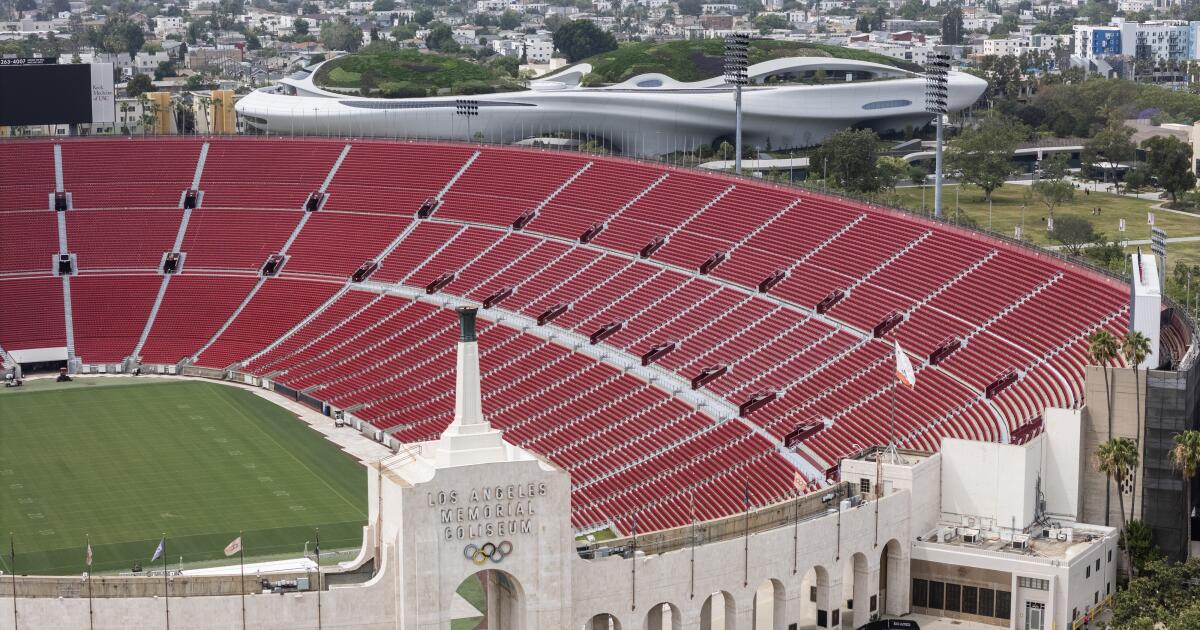
After uncertainty, a good sign for 2028 Games transportation funding

The House Appropriations Committee has approved $875 million to fund public transportation for the 2028 Olympic Games, a positive sign for LA28 after the exclusion of Olympics transit funding from President Trump’s fiscal year 2027 budget request this spring.

The funding must be passed by Congress in a future spending bill — part of a lengthy 2027 budgeting process that is underway now — but its approval in committee last week is a crucial signal of investment from Washington after weeks of uncertainty.

“We are encouraged by the House Appropriations Committee’s action,” spokesperson Maya Pogoda of the Los Angeles County Metropolitan Transportation Authority said in a statement, “and we look forward to continuing to work with the Senate and the White House to make America’s Games the best ever in history.”

LA Metro has sought $2 billion in federal funding for the planned transit service for the Games, which includes leasing buses, hiring drivers and building temporary depots. With the clock ticking to start projects that require significant lead time to be completed before the Games, the absence of any funding in Trump’s budget request in April had raised concerns among lawmakers and other stakeholders.

In recent weeks, the transit authority, the city and LA28 had publicly pressed for federal funding; LA28 Chief Executive Casey Wasserman reportedly met with lawmakers on Capitol Hill in April.

“The House Appropriations Committee’s most recent transportation bill is another positive signal of the continued bipartisan support in Congress to provide federal transit money for the Games,” LA28 spokesperson Jacie Prieto Lopez told The Times.

The inclusion of the funding in the bill conveyed bipartisan support for the Games, an event that Trump — who places an outsize importance on displays of patriotism — is likely to want to see go well during his tenure.

“This is on the American stage,” said former Los Angeles County Supervisor Zev Yaroslavsky, who was on the City Council during the 1984 Olympic Games. “The success of the Games are the success of the country.”

The Olympics item was included in the fiscal year 2027 transportation funding bill approved by the House Appropriations Committee last week. In its report, the committee noted that the funding is intended for all host cities, including those outside California.

“The 2028 games will put our nation on center stage, and this investment will help ensure that we are prepared to meet the moment and showcase why the United States is the best country in the world,” Rep. Steve Womack (R-Ark.), who chairs the subcommittee that put forth the bill, said in a statement.

The Games in Los Angeles are expected to draw massive crowds and will be the first Summer Olympics held in the United States since Atlanta hosted in 1996. More than 4 million tickets were sold during LA28’s first ticket release; a second ticket drop is coming in August.

The massive event requires federal involvement not just on funding but also on issues including athlete visas and the import of Olympic horses.

LA Metro has planned to lease 1,700 buses from transit agencies across the country, build three temporary transit depots and create dedicated traffic lanes for athletes, officials and others as required by the International Olympic Committee. Metro estimates that 1 million additional trips per day will be taken during the 16-day Games.

It’s crucial for federal funding to come through in a timely manner, Yaroslavsky said, particularly given the scope of the security and transportation considerations for the sprawling Games.

“The city and the LA28 committee need to know that this money is going to be made available,” Yaroslavsky said. “This has to be in place long before the Games start.”

Source link

Amid backlash over World Cup parking, LA Metro offers a solution

Ticket prices are just the start of the soaring expenses many fans will face while trying to watch World Cup games this summer.

NJ Transit is charging $150 for round-trip tickets from Manhattan to the Meadowlands (the regular price is $12.60) for the World Cup final, while host committee shuttle buses will cost $80.

The Massachusetts Bay Transportation Authority is demanding $80 to ride one of the 14 express trains on the 30-mile trip from downtown Boston to Foxborough for games at Gillette Stadium. That’s more than three times the normal price.

Parking in Kansas City, meanwhile, will set you back by as much as $900, depending on the game and lot.

In Southern California, however, it will cost $1.75 to get to SoFi Stadium on a combination of buses or trains from as far away as Claremont and Simi Valley. That’s also what it costs to get to the Inglewood venue on any other day of the year; only two of the 11 World Cup cities in the U.S. are offering less expensive public transportation.

“We’re trying to make things convenient,” said Conan Cheung, the chief operations officer for the Los Angeles County Metropolitan Transportation Authority, or LA Metro, the second-largest transit agency in the country, servicing more than 305 million riders in 2025.

That’s a marked departure from the experience fans have reported ahead of this summer’s World Cup, which was marked by complaints over difficulty getting access to buy tickets, high ticket prices, shifts in seat locations after they were purchased, high fees and expensive game-day transportation.

“There’s no standardized fare set across the board,” Cheung said of World Cup transportation. “We’ve made a commitment to keep our system accessible. The way we’re planning the entire program is to ensure that we support people from the minute they decide to come to L.A. for the World Cup.

Workers are getting SoFi Stadium ready to host World Cup matches this summer.

Workers are getting SoFi Stadium ready to host World Cup matches this summer.

(Eduard Cauich / Los Angeles Times )

“We also want to make sure that your excitement and your experience for the World Cup starts and ends on Metro.”

LA Metro has been able to hold costs down in part because it received $9.6 million in funding from the $100 million Congress gave the Federal Transit Administration to support transportation to and from World Cup stadiums. LA Metro is adding about 300 buses to its regular fleet to handle the additional demand, with shuttles servicing nine direct routes to SoFi and various fan zones.

Roughly 200 of those buses will lent to LA Metro from 11 regional transit agencies. Additional security officers also will be added.

“I feel prepared,” Cheung said, “but you never know what’s going to happen. We’ve done enough major special events to know that you can do all the planning in the world, but you need to make sure that you have contingencies in place and you’re prepared to pivot at a moment’s notice.”

A case in point: when Game 3 of last fall’s World Series went into extra innings, LA Metro immediately extended the operating hours for Metro buses and trains, ensuring people had rides home when the game ended just shy of midnight.

“Part of our preparedness is going through tabletop exercises,” he said. “The point is to ensure that the flow from the parking, from the transit connection and walking up made sense and was intuitive and easy to follow.”

Since Metro trains don’t run directly to SoFi, Cheung has added shuttle buses to take fans from the stations to the stadium. Portable restrooms and hydration stations will be available. And nine park-and-ride sites will be set up around L.A. and Orange counties. Reserve and pay for a parking space and everyone in your car can ride to the stadium for free. (Be sure to bring a lot of friends since the parking fees range from $59 to $102 for the June 12 opening match.)

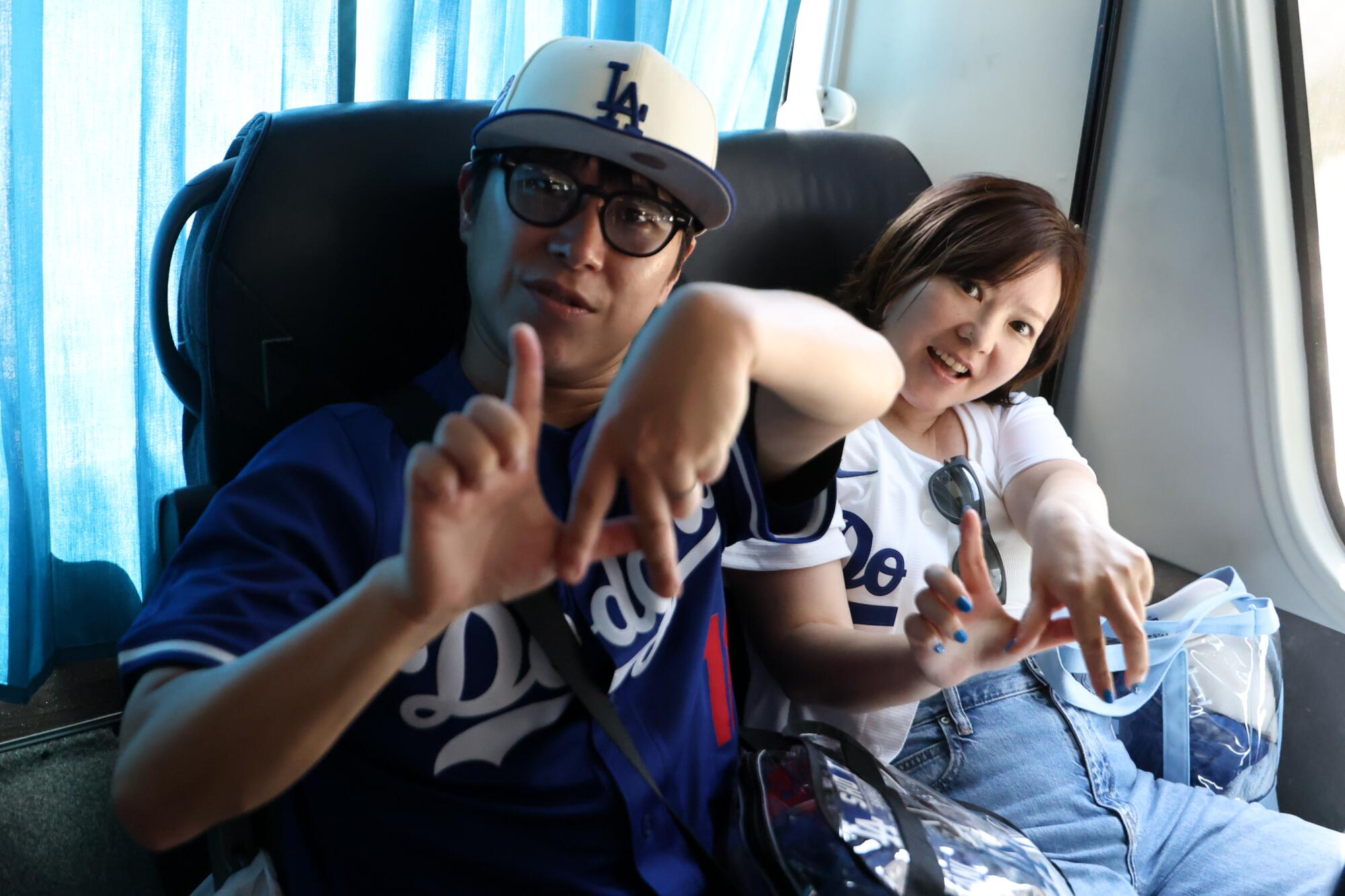
A pair of visitors from Japan rush to catch a Metro bus, one of them under the shield of an umbrella.

A pair of visitors from Japan rush to catch a Metro bus in March.

(Genaro Molina / Los Angeles Times)

Cheung said LA Metro has been preparing for the World Cup almost as long as some of the players. When Taylor Swift brought her Eras tour to SoFi in the summer of 2023, LA Metro used that as something of a dress rehearsal for the World Cup, expanding late service and adding free shuttles from nearby train stations.

That increased ridership by 25%, which meant less traffic on the roads and freeways leading to the stadium. A repeat of that could be crucial during the World Cup since five of the eight games played at SoFi are scheduled to start at noon local time.

And just as the Taylor Swift concerts prepared LA Metro for the World Cup, now the World Cup will help inform preparations for the 2028 Olympics.

“A lot of the strategies that we’re doing now — the process for working with not only local jurisdictions, state and federal agencies, as well as the other transit agencies in the regions — we’re setting up ways that are going to help not only for the Olympics and Paralympics, but anytime we need to pull together to support our communities for special events [or] natural disasters.”

For more information on LA Metro services in and around the World Cup, go to www.metro.net/riding/world-cup

You have read the latest installment of On Soccer with Kevin Baxter. The weekly column takes you behind the scenes and shines a spotlight on unique stories. Listen to Baxter on this week’s episode of the “Corner of the Galaxy” podcast.

Source link