translation

Joyce Carol Oates slams Emily Wilson over viral ‘Odyssey’ takedown

Days after a classicist who translated Homer’s “The Odyssey” in 2017 eviscerated the Christopher Nolan film based on the poem, Joyce Carol Oates has entered the debate.

She’s Team Nolan.

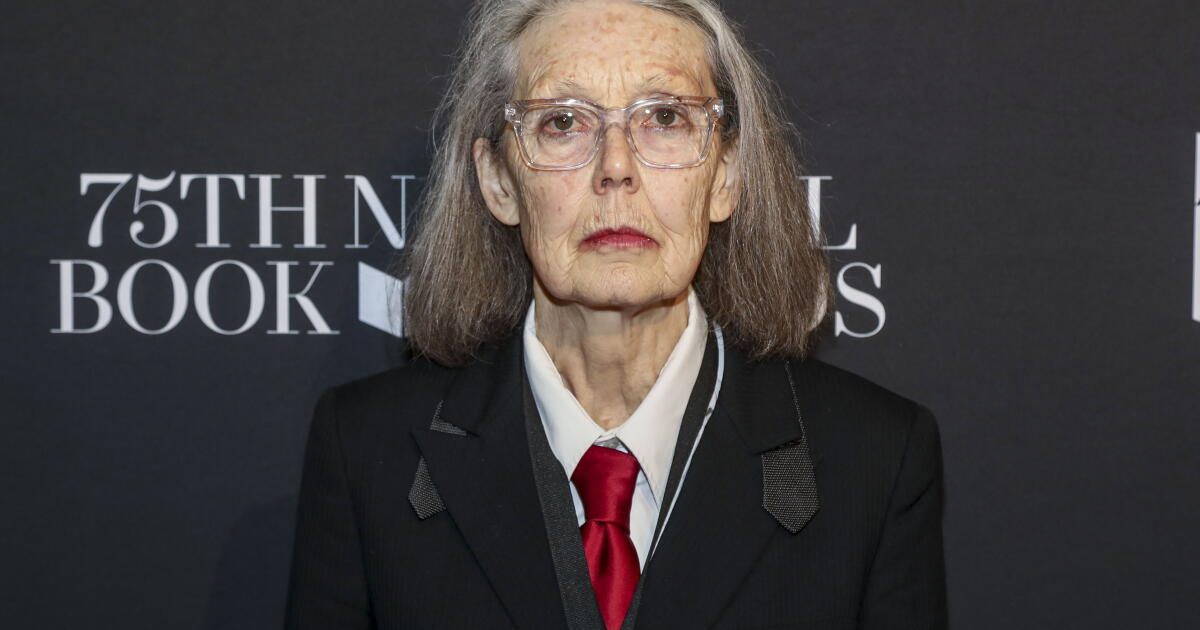
The National Book Award-winning author is known for her (sometimes controversial) hot takes on social media, and on Wednesday, she stepped up to the plate in opposition of translator Emily Wilson’s brutal takedown of Nolan’s big-screen adaptation of “The Odyssey.” Nolan had previously said Wilson’s translation inspired him in making the film. But Wilson wrote that she would be ashamed to have written any part of the script.

“Her tone of dismissal & haughty superiority strike a sour note,” Oates said of Wilson’s review in a post on X. “Rather than disagreeing with interpretations of Homer in a collegial manner, this person, who has benefited enormously from Nolan’s film, speaks in the crude language of MAGA folks attacking someone with ideas that differ from hers.”

Wilson’s biting missive, published in the London Review of Books this week, went so viral that it reportedly crashed the outlet’s website for a few hours Monday. The British American classicist’s take on the film was especially notable because, last fall, Nolan quoted Wilson’s translation when telling Empire magazine why he was drawn to the story. “I think it’s the Emily Wilson translation that begins, ‘Tell me about a complicated man,’” he said.

Wilson’s version of “The Odyssey” subsequently spiked in sales. A representative for Audible told The Times on Wednesday that, year over year, purchases of Wilson’s “Odyssey” translation were up by more than 600% across Audible’s U.S., U.K. and Canadian marketplaces. Daily global title sales rose nearly sixfold during the week the movie premiered. And in the nine days following wide release, daily global sales averaged around 20 times more than the rate before the premiere, showing sustained demand for Wilson’s translation.

Oates, who penned the Pulitzer Prize-nominated “Blonde,” said that, within the world of translators, Wilson’s review “seems all the more surprising since all translations are, presumably, subjective & not equivalent to the original text.”

“One would expect a translator, of all people, beholden to a text, in service to a text, to be just a wee bit more thoughtful & respectful of others who are acting in good faith just as (she would claim) she is,” Oates wrote.

In separate posts on the social platform, Oates said she highly recommended Nolan’s adaption and that she wasn’t a fan of Wilson’s translation. “What I’d read of Emily Wilson’s translation was not for me,” she wrote, adding that she assumes it was “deliberately written to appeal to an audience comfortable with YA (young adult) directness & spareness of vocabulary — that is, with the intention of being marketable, adopted by high school classes.

“With a more poetic, elevated speech, you are naturally limiting your audience,” continued the author, who further noted that there was nothing wrong with a direct, commercial approach. “Why not profit from a classic work not protected by copyright?”

In the viral review by Wilson, who also translated Seneca and Euripides, as well as Homer’s “Iliad,” she likened Nolan’s nearly three-hour epic to Peter Jackson’s “Lord of the Rings” trilogy and “Game of Thrones.”

Her sharpest critiques were aimed at Nolan’s rendering of Homer’s female characters, of which she said there were more than in his other films “thanks to the source material” but that, in contrast to the poem, none of them “had much to say.” Wilson said Nolan’s race-neutral casting was essentially a wash as “[m]ost of the non-white actors — Zendaya, Lupita Nyong’o, Himesh Patel, Corey Antonio Hawkins, Travis Scott — play versions of the Black best friend, whose only role in the drama is to provide aid to the white protagonist.”

And don’t get her started on the whole point of the poem — the cost of war — of which Wilson quipped, “We are not shown that war or killing are bad, only that good men sometimes feel bad about it — a very different point.”

Source link

‘Odyssey’ translator Emily Wilson rips apart Nolan’s film adaptation

Emily Wilson, whose translation of Homer’s “The Odyssey” published in 2017 served as inspiration to Christopher Nolan when crafting his blockbuster adaptation of the nearly 2,800-year-old poem, has some thoughts on the film.

In a biting missive for the London Review of Books, the British American classicist dissected Nolan’s work with a scalpel so sharp that he may need to borrow some of Matt Damon’s armor to read it all the way through. Last fall, the acclaimed director quoted Wilson’s translation when telling Empire magazine why he was drawn to the story. “I think it’s the Emily Wilson translation that begins, ‘Tell me about a complicated man,’” he said. “The genius of the character, the cleverness, the inventiveness of him, that was a huge part of what interested me. He’s not just a soldier. He’s an amazing strategist, a very wily person.”

Wilson, although admittedly “humbled” by the nod from the filmmaker, wrote: “But I would be ashamed to have written any part of this script.”

A professor of classical studies at the University of Pennsylvania, Wilson has also translated Seneca and Euripides, as well as Homer’s “Iliad.” In her takedown of the film, she likens Nolan’s nearly three-hour epic to Peter Jackson’s “Lord of the Rings” trilogy and “Game of Thrones” and says that, by the end, she “almost expected everyone to break into Elvish.”

Earlier this month, The Times’ film critic, Amy Nicholson, wrote that “Nolan has sacrificed Odysseus himself to serve his own needs, scrapping the character’s prickly personality to Trojan-horse a message about how empires collapse. … Aghast at the ways of men, he’s dug his own Circe-like fingers into Homer to manipulate the tale into a moralistic ‘Oppenheimer’ prequel.”

Wilson appears to share the sentiment.

“Unlike some of Nolan’s other films,” she wrote, “‘The Odyssey’ is not boring, thanks to the source material, which is impossible to mess up entirely. It’s a family-friendly audiovisual spectacle, like an elaborate Fourth of July fireworks display — and with about the same level of narrative and emotional depth.”

When casting was announced for the film, it was no surprise that culture wars broke out over the choice of Oscar-winning actor Lupita Nyong’o to play Helen of Troy, with Elon Musk leading the charge.

Nolan responded, telling the Telegraph earlier this month before the film hit theaters, “These conversations that happen before people see the film — they’re always irrelevant, because no one having them knows what the film actually is yet.”

According to Wilson, Nolan’s race-neutral casting had “nothing progressive about it.”

“Most of the non-white actors — Zendaya, Lupita Nyong’o, Himesh Patel, Corey Antonio Hawkins, Travis Scott — play versions of the Black best friend, whose only role in the drama is to provide aid to the white protagonist,” she wrote.

Wilson zeroes in on the portrayal of Homer’s female characters in another major critique: “There are more female characters than in most Nolan movies, thanks to the source material. But none of them has much to say, in contrast to the [characterizations] in the poem.”

Where Charlize Theron’s Calypso ought to have been angry, funny, skilled in rhetoric and libidinous, according to Wilson, she’s “an unpaid therapist.” On Anne Hathaway’s Penelope, Wilson writes that the script “gives her nothing to do except yearn for Matt Damon, for reasons unknown.” And Zendaya’s Athena “turns out to be a vulnerable victim of war, or perhaps a projection of Odysseus’ conscience — not a scheming and bloodthirsty war goddess.”

And then there’s the human cost of war — the central theme of the film, and one that Wilson says contradicts Homer’s poem.

“The representation of Odysseus as a reluctant warlord makes a nonsense of the movie’s imagined world,” she writes. “We are not shown that war or killing are bad, only that good men sometimes feel bad about it — a very different point. Any serious depiction of violence, ancient or modern, must show the perspectives of the victims as well as the perpetrators, and the Homeric poems easily clear the bar — but Nolan doesn’t.

“The film asks us both to be horrified at war and to celebrate the action-movie sequences in which the reluctant warrior finally gets his hands on his bow and the blood starts flowing.”

Since Nolan announced “The Odyssey” back in December 2024, various versions of the poem have been in high demand at bookshops and libraries — especially the only English version written by a woman: Wilson’s 2017 translation. Louise Brockett, spokeswoman and head of communications at W.W. Norton, told USA Today that domestic sales of Wilson’s translation surpassed a million copies this year.

Concluding her critique of Nolan’s “Odyssey,” Wilson says the release of the movie is “still an event to celebrate.”

“In what we are told is the streaming era, this epic is bringing audiences back to cinemas. In what we are told is a time of declining literacy and the ‘death of the humanities,’ translations of The Odyssey, including mine, are flying off the shelves.”

Nolan spent $250 million making “The Odyssey,” and on opening weekend the film brought in a total of $264.1 million worldwide, according to studio estimates.

Source link