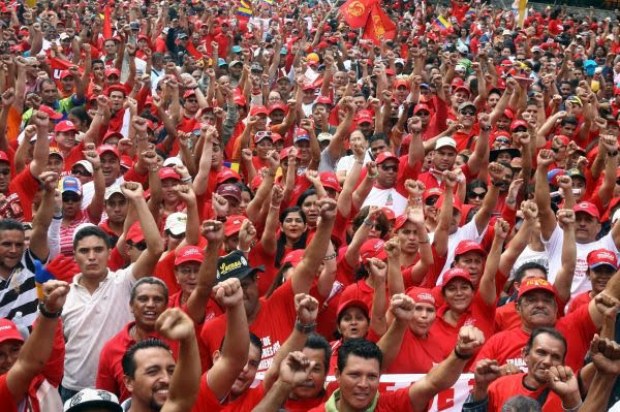
Merida, May 10th 2013 (Venezuelanalysis.com) – Venezuela’s new Labour Law for Workers (Lottt) came into effect this week, guaranteeing shorter working hours, longer maternity leave and pensions for all Venezuelans.
Described by the Venezuelan government as the “most advanced labour law in the world”, the Lottt reduces the working week from 44 hours to 40, and requires that employers provide two consecutive days a week off.
When the law came into effect on Tuesday, labour minister Maria Iglesias stated that the new working hours are part of the process towards a “just distribution of wealth”.
The following day, Carabobo state labour affairs committee president Jose Joaquin Vargas hailed the law as an important part of the transition from “capitalism to socialism”, while last week vice president of the National Federation of Public Sector Workers Franklin Rondon described it as “historic”.
“We are in a historic moment, in 14 years the achievements we have obtained for workers are numerous; we have achieved much more than in the last forty years,” Rondon told VTV on 5 May.
Vargas also urged workers to ensure their employers and unions act in accordance with the Lottt.
For the next six weeks, the government will be inspecting workplaces to ensure employers adhere to the new requirements. Although employers were informed earlier in the year that they would need to make any necessary changes prior to 7 May, on Tuesday Iglesias stated that inspections over the next six weeks will be “corrective in nature”. The minister warned that penalties will be imposed on employers who fail to adhere to the Lottt after 15 June.
However, workers are already reporting breaches of the new laws. In Miranda state, employees of processed meat manufacturer Industrias Alimenticias de Corralito (Inacor) have denounced their employer. A worker spokesperson, Peggy Serrano, alleged that management made a series of surprise changes to the timetable that could result in employees being forced to work overtime.
A Decade in the Making
Along with establishing new working hours, the Lottt prohibits unfair dismissal, outsourcing, guarantees the right to work for both women and people with disabilities and increases maternity leave.
Under the Lottt, Venezuela now has the world’s third longest maternity leave. Mothers are entitled to six weeks pre-natal leave, and twenty post-natal. Fathers are also entitled to two weeks paternal leave. Under the law, the same conditions apply to parents who adopt a child under three years of age.
All workers are also now entitled to retirement pensions, including full time mothers and the self employed.
The Lottt is the result of nearly a decade of discussions in both the national assembly and the labour movement.
When he approved the law last April, former president Hugo Chavez stated that, “In more than 200 years of republican history I am absolutely positive that there has never been a work law….that has been debated so much as this one.”
Venezuela is once again debating a renewal of its institutions, as if the problem could be solved simply by replacing the people in office. This remains the crucial question: what would have to change among those who wield power so that new rules are respected, even when doing so is inconvenient for them?
We are talking about rebuilding the State, restoring judicial independence, or recovering institutional integrity, often attributing agency to structures that, in practice, operate through human decisions. Behind every appointment, court ruling, or agreement are individuals driven by interests, convictions, fears, and power dynamics. No reform can overlook them.
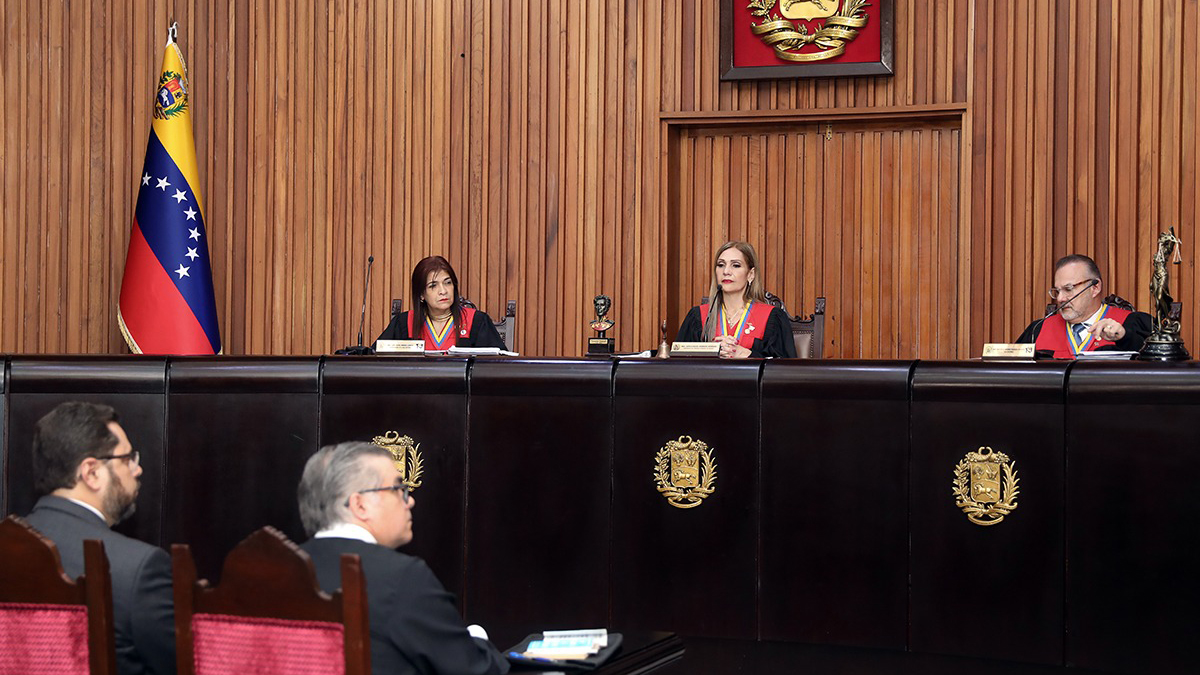
When a future Supreme Court (TSJ) justice faces the uncomfortable decision of ruling against the interests of those who made their appointment possible, they will recall that the Constitution guarantees their independence; yet, they will also realize that their decision hinges on the safeguards available to them and the personal consequences of challenging those in power.
Individuals who uphold institutions
Following the fall of the Pérez Jiménez dictatorship on January 23, 1958, key political leaders realized that democratic survival required agreements that predated any constitutional framework. Rómulo Betancourt, Rafael Caldera, and Jóvito Villalba represented the parties that signed the Pact of Puntofijo in October of that year. The 1961 Constitution came later, built upon a foundation of compromises reached by former adversaries who had experienced the failure of 1945–1948. The agreements preceded the rules they were meant to uphold.
Those agreements, however, were not all-encompassing. The Communist Party was excluded from the pact, and the system of elite conciliation studied by Juan Carlos Rey ultimately revealed significant limitations regarding representation. Moreover, civilian consensus does not guarantee military obedience. In May and June 1962, the uprisings known as the Carupanazo and the Porteñazo put the Betancourt government to the test.
The 1999 Constitution already provided a Judicial Nominations Committee with civil society participation—much like the one we now expect—yet its operations ultimately became subordinate to political control.
Democracy survived because key sectors of the Armed Forces remained loyal to the constitutional order, even though their defense of it was accompanied by restrictions and repressive measures. Institutions require individuals willing to uphold them against those seeking to tear them down.
Institutions that sustain individuals
Four decades later, Venezuela embarked on another institutional transformation. The 1999 Constitution promised to expand citizen participation and strengthen rights, yet its existence did not prevent the progressive concentration of power. In 2004, the Organic Law on the Supreme Tribunal of Justice (TSJ) expanded the court from 20 to 32 justices, facilitating political control over the body. In the presidential elections of July 28, 2024, the National Electoral Council (CNE) declared Nicolás Maduro the winner without publishing the disaggregated results backing its announcement. The electoral fraud exposed a fundamental contradiction: the body charged with guaranteeing the popular will ended up proclaiming a result contrary to the available electoral evidence.
The problem was not simply the gap between a sound Constitution and poor leaders. Over the years, relationships of dependency were built that made it possible to subordinate formally autonomous institutions. Consequently, public offices, judicial decisions, and oversight mechanisms increasingly served the preservation of a political project. The result was that an institution could retain its name, legal powers, and procedures while losing the actual capacity to constrain those in power. The rules remained, but those charged with defending them lacked the independence to do so.
US influence on the process also raises questions about the extent to which agreements reflect the priorities of the Venezuelan people.
In 2026, the debate resurfaces under different circumstances. Following Maduro’s removal on January 3, the government of Delcy Rodríguez is negotiating the renewal of the branches of government. Dinorah Figuera, president of the National Assembly elected in 2015, announced a schedule that seeks to revamp the Supreme Court of Justice (TSJ) by November and complete work on the National Electoral Council (CNE) by December. These are announced political timelines that remain subject to negotiation.
But who is actually negotiating, and to whom are they accountable? US influence on the process also raises questions about the extent to which agreements reflect the priorities of the Venezuelan people. Furthermore, any given concession can be instantly interpreted on social media—by polarized audiences—as either a victory or a betrayal, thereby raising the political cost of negotiation.
The broader audience watching this process is not solely in Venezuela. Millions participate from abroad in public conversations about the country’s future and will also play a role in defending the institutions that may eventually be rebuilt. Institutional reconstruction must incorporate both the Venezuelans who remain in the country and those who have had to build their lives elsewhere. The experience of exile, diverse life paths, and political differences should not become obstacles to participating in defining our shared future. After so many years of division, the challenge also lies in recognizing ourselves as part of the same society, one in which no one is considered expendable in the effort to rebuild democracy.
Added to this is an issue that no agreement between civilians can sidestep: the continued existence of a military and security structure formed under chavismo. The conduct of those who control the weapons will be a decisive test for any new institutional order.
Society vs. institutional boundaries and agreements
The answer to the initial question (“what must change among those in power so that new rules are respected, even when doing so is inconvenient for them?”) requires concrete guarantees. For a judge to rule independently, the processes of selection and tenure must be shielded from those who expect obedience in exchange for the appointment. The 1999 Constitution already provided a Judicial Nominations Committee with civil society participation—much like the one we now expect—yet its operations ultimately became subordinate to political control. However, the 2024 election also taught us that when the CNE failed in its duty of transparency, citizens and organizations gathered and preserved the tally sheets that allowed the official results to be challenged.
Venezuelan society demonstrated that it can generate evidence and demand accountability, even when an institution fails.
Reconstruction therefore demands reforms capable of altering the incentives for those in power, guarantees for those who have suffered persecution, and oversight mechanisms that do not rely on the goodwill of those governing. Yet, it also requires a society capable of upholding those boundaries. The armed forces also need to find a place within that balance. Transparent rules for promotion and retirement, professionalization, and subordination to civilian authority could offer an alternative to personal loyalty. Their incorporation into the new order cannot imply impunity; distinguishing individual responsibilities and ensuring independent investigations will be essential to prevent inclusion from merely reproducing the privileges of the past.
The experience of the 2024 vote tallies offers a concrete possibility: transforming that capacity for civic organization into permanent oversight of the new authorities.
That capacity also depends on a democratic culture that recognizes the value of disagreement. A democracy is not built among equals, but among people who think differently yet still find reasons to reach compromises. Alterity—understood as recognizing the other in their difference—allows for the acceptance that an adversary also has the right to participate in shaping shared rules. Agreements require this disposition not only to emerge but also to endure and be revised when circumstances change.
For Venezuelans abroad, such participation requires more than just invitations to return: it demands guarantees for exercising political rights, effective mechanisms for participation, and conditions that allow their skills and capabilities to be linked to the country’s reconstruction. Within Venezuela, the experience of the 2024 vote tallies offers a concrete possibility: transforming that capacity for civic organization into permanent oversight of the new authorities, with access to public information and spaces to demand answers.
Institutional frameworks cannot remain static, either. Rules that once facilitated coexistence may require adjustments in the face of new social demands and political transformations. The contemporary challenge lies in the speed of these changes, which demands a greater capacity for understanding from those who govern and better tools for evaluating consequences from society. A democratic civic culture must allow institutions to evolve without becoming subject to the will of whoever happens to hold power at the time.
Domestic and international economic and financial sectors also need reasons to commit to this order. Legal certainty, transparent public contracts, and independent courts would allow informal influences to be replaced by relationships governed by established rules. However, such a commitment requires abandoning advantages gained through discretionary practices. An economy capable of long-term investment needs institutions that protect legitimate activity without relying on personal proximity to power.
Venezuela can overhaul its courts, appoint new electoral officials, and even draft another Constitution. None of that, on its own, will resolve the power dynamics that enabled authoritarianism. Institutions require rules that protect those who enforce them, as well as citizens capable of defending them when their own leaders seek to disregard them. Legitimacy is neither imported from Washington nor decreed from Caracas; it is built through the decisions of those who wield power and a society’s capacity to hold them accountable for those decisions.
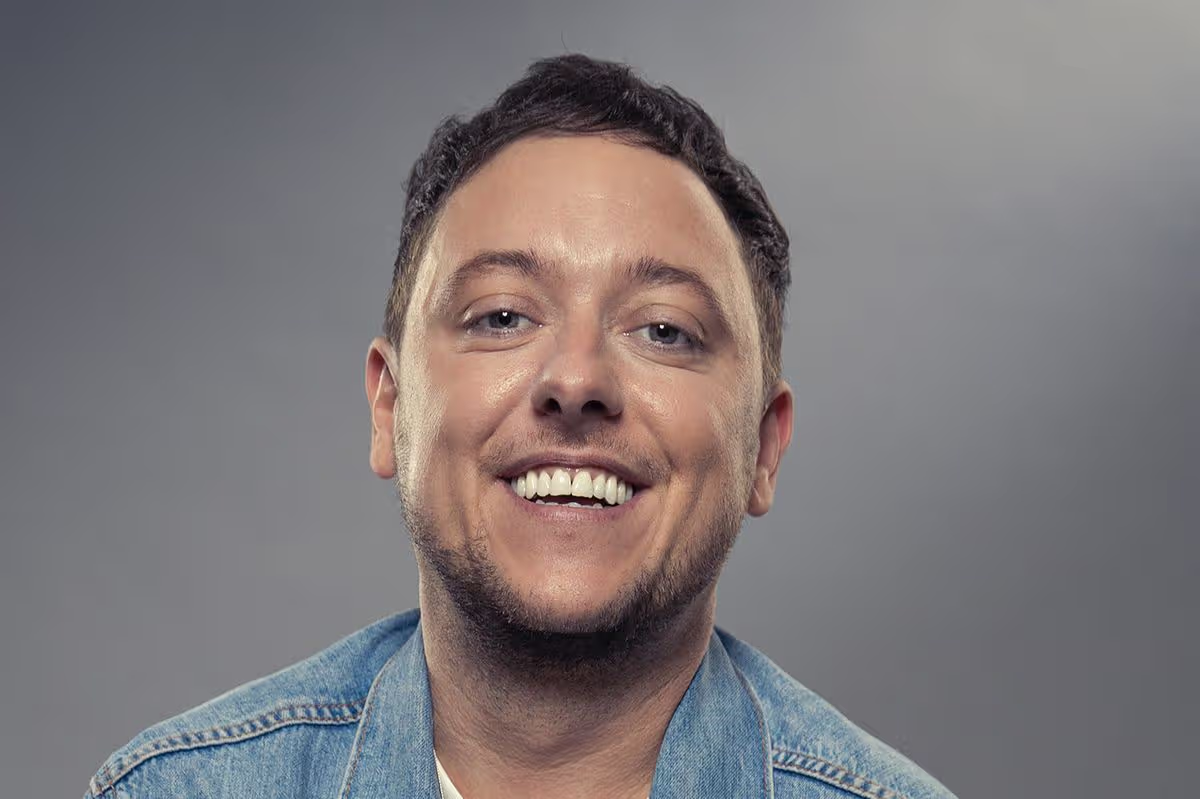
Away from Emmerdale, Matty Barton star Ash Palmisciano is loved-up with his partner and went through a heartbreaking loss a few years back
Emmerdale Matty star’s life from transition to rarely-seen partner he’s ‘lucky to have’s
Ash Palmisciano has become a firm favourite on Emmerdale playing Matty Barton – but what do we know about his real life?
The actor made his debut on the ITV soap back in 2018, as the son of soap legend Moira (Natalie J. Robb). And it’s fair to say he has played a part in several big storylines.
From a shock prison stint to his adorable marriage to Amy (Natalie Ann Jamieson), who died last year, his time in the Dales has not been short of memorable.
But who is actor Ash’s real-life partner? And what heartbreaking loss has he suffered? Here’s everything we know about the Matty Barton star.
Ash on his transition
In 2018, he got his big break on Emmerdale when he was cast as Matty Barton. Ash was originally brought in to advise soap bosses on their new transgender character, via the charity All About Trans.
Upon finding out Ash is an actor, Emmerdale bosses asked him to audition and soon cast him as Matty. The actor described his casting as a “big thing” and branded his character “groundbreaking”.
The 36-year-old has previously spoken about his own real-life transition, revealing to The Mirror that it differed hugely from Matty’s in Emmerdale. While Matty went through his transition alone, Ash said he was surrounded by family and support.
“My life is unlike Matty’s. I had family around me from the start, so it is definitely different. Matty’s story might not be the same as mine, but it has helped having that insight into how he might feel,” the actor said.
Ash on horrific abuse he faced in street
In 2024, Ash bravely opened up about the senseless abuse he faces just for his identity, but highlighted how many Emmerdale fans got in touch when he joined the soap. He told The Mirror: “I’ve experienced trolling. I’ve heard horrific language and had disturbing threats.
“But actually, when I joined Emmerdale, I was shocked by how many people wanted to talk and share their own experiences. I keep one letter in my bag that’s so touching about the difference the character made to someone, and to their family.”
Recalling one incident, he shared: “One time, a guy had clearly had a lot of alcohol, he was angry and aggressive and came up to my face and told me, ‘No matter how hard you try, you’ll never be a man.
“I know he’d had a lot to drink, but surely he must have known how hurtful that can be?”
Ashley’s family heartbreak
Ash sadly suffered his own personal grief in 2022 after the death of his beloved mum aged 60, after reported complications from long-term rheumatoid arthritis. He told The Mirror: “Mum was the most important person in my life.”
He then expressed his gratitude that Shea was able to meet his mum before she died. Ash revealed: “I’m glad Mum got to meet her a few times before she died.
“We’ve been through a lot in a short space of time. I believe lockdown taught us all that you know straight away if something’s meant to be, though.”
Ash’s romance with girlfriend
Away from the soap, actor Ash is in a relationship with his girlfriend Shea Rowan. The couple went Instagram official on New Year’s Eve as they rang in 2022 together.
Ash has previously spoken about Shea and gushed over his girlfriend for all of her support. He told OK! in 2024: “She’s really proud, and I’m very lucky to have her. She’s very level-headed and chilled-out.”
However, Ash quipped, “Shea was a bit annoyed that I got married in the show. She helps me learn my lines and really helps me with the wedding stuff.
“We’re good mates with Natalie [Ann Jamieson] and her partner too – we live quite close to each other, so we all hang out together.”
Emmerdale airs Monday to Friday at 8:00pm on ITV1 and ITVX
Is it a good idea to begin the transition through the Supreme Court (TSJ)? Perhaps. In any case, it is the path charted by Secretary of State Marco Rubio, who—following January 3rd—wields enormous influence over Venezuela’s interim authorities and all opposition players, including María Corina Machado.
Marco Rubio himself stated this on October 9, with Dinorah Figuera by his side: “To achieve a peaceful transition—which is what we desire, a peaceful transition toward a permanent and lasting democracy— a great deal of hard work must be done, along with some patience, and free and fair elections. But beyond mere free and fair elections, there will be a need for institutions that not only uphold democracy but also sustain stability, progress, prosperity, and freedom for the people of Venezuela for the foreseeable future.”
Those institutions are, fundamentally, the Supreme Court of Justice (TSJ) and the National Electoral Council (CNE). In that order.
The argument is simple yet very powerful. We have seen in Venezuela that it is possible to win an election (such as the National Assembly vote in 2015 and the presidential election in 2024) and yet have that victory yield no practical effect: in 2015, the election’s impact was nullified via the TSJ, and in 2024, via both the CNE and the TSJ.
Rubio knows this well, as he has been monitoring Venezuelan politics for many years and has surely heard the explanation of how the regime stripped those election results of their meaning through the TSJ and the CNE. In all likelihood, he heard those explanations from Machado herself. This is the path currently being pursued by the negotiating table comprising the interim authorities and the delegation from the 2015 National Assembly. So far, there have been three results. First, Article 65 of the Organic Law of the Supreme Tribunal of Justice (TSJ) was reformed to improve the balance between lawmakers and civil society representatives within the Judicial Nominations Committee—a body for which 127 candidates have already been proposed. Next, a council was appointed to verify the credentials of TSJ nominees; this council includes four of Venezuela’s most serious and respected legal experts. Third, civilian organizations were invited to put forward members for the Judicial Nominations Committee.
This week, both the Judicial Nominations Committee and the verification council are being formally established. The subsequent step is to call upon legal experts to apply for positions on the TSJ.
Given the current circumstances, it is to be expected that the negotiating table and the Trump administration will exert influence over the entire process, just as they have been doing. In fact, Juan Miguel Matheus—a member of the opposition team at the negotiating table—told El Pitazo that the 12 civil society members who will sit on the Nominations Committee will be selected through that table.
With a transition process in mind, why would having a competent TSJ in place within a couple of months be significant?
For a fundamental reason: under the state model established by the 1999 Constitution, the TSJ holds the final institutional say regarding any decision made by the Venezuelan state. The TSJ has the power to strike down laws passed by the National Assembly, declare presidential decrees null and void, annul acts of the National Electoral Council (CNE), and review rulings from any court in the country.
Therefore—and drawing on Venezuela’s past experience—if we aim to hold free elections, it is far better to approach them with a competent TSJ already in place. A capable Supreme Court of Justice could play a robust role in defending elections based on standards of electoral integrity.
Therefore, initiating the transition through a new Supreme Court is a good idea.
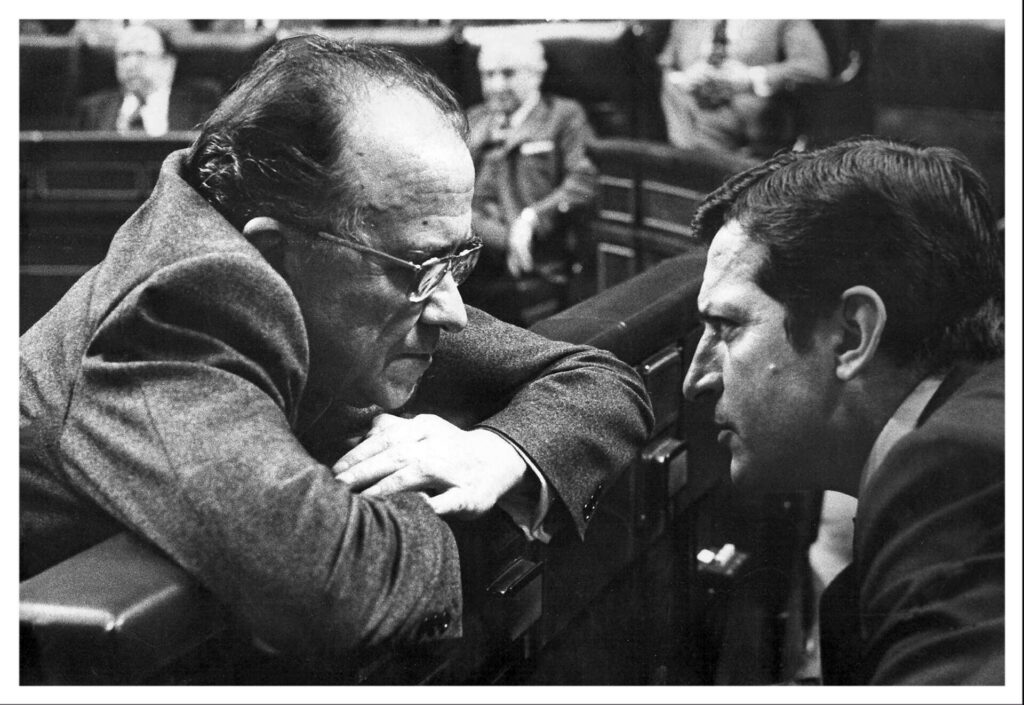
King Juan Carlos I summons party leaders after the failed 1981 coup. From left to right: Santiago Carrillo (Communist Party), Agustín Rodríguez Sahagún (Defence Minister), Adolfo Suárez (Prime Minister), Juan Carlos I, Felipe González (PSOE) and Manuel Fraga (People’s Alliance, later PP).
(“Gosh, no! Not another hyper-comparative article about two distant political conflicts…” Apologies. We’ll try to make it a fun read).
More often than not, our intellectual circles have felt tempted to look at alien historical episodes in a never-ending search for resolute answers that shed light on our present. In 2023, when Maduro flirted with attacking US-supported Guyana, some revisited the Falklands War as a sign that a serious military incursion would be a fatal mistake that would lead to the dictatorship’s downfall. Then came the road to the 2024 presidential election; many feared (rightfully, in the end) that the country would plunge into the “Nicaragua scenario” if the dictator refused to recognize his defeat. Others momentarily wondered if enough external pressure could give way to a Guatemala-style transfer of power and a weak transition government.
The days of terror seem to be behind us, yet there’s no progressive reformer like Raúl Alfonsín steering the wheel of justice. Instead, Donald Trump gave us the Pizza Hut scenario. Here, Delcy Rodríguez has become the poster girl of the MAGA international franchise. Here, too, US geopolitical ambitions and business interests at times seem to be competing with the need for free elections and a democratic regime.
Is Rodríguez our Mikhail Gorbachev, trying to open the economy and political system just enough while attempting to save the chavista State from outright collapse? What if chavismo is already dead and she’s the Yeltsin of the Caribbean, the feeble leader who will give away the country’s riches to oligarchs in an arbitrary fashion, laying the ground for a new form of autocracy?
Or might Delcy be the chavista version of Adolfo Suárez, the not-so-brilliant and obscure but highly charismatic Francoist insider? Suárez finished the job after a remarkable run, surviving a period of meagre political support, declining approval rates and a coup d’etat that could have killed him. The comparison now sounds like an insult to the Spaniard. Like Gorbachev in today’s Russia, Suárez has become a sort of mythical statesman abroad while Spanish right- and left-wing critics dispute his legacy.
Suárez and Santiago Carrillo developed a close working relationship during the transition.
There are genuine similarities between the process currently unfolding in Caracas and the outset of Spain’s democracy, as well as room for gross contrasts. While 2026 has been insane for Venezuelans, Spain exactly fifty years ago was astonishing due to the speed at which Suárez acted in unilaterally dismantling the regime from within the regime. The dictator was finally gone, and as soon as he had the chance, the new King ordered a politician without strong ideological convictions to establish a full parliamentary democracy.
Suárez took office in June 1976. The Law for Political Reform, meant to pave the way for a new democratic legislature (with the King acting as a key enforcer), was through six months later. Spain held general elections within a year. That was just the start. What followed was a sequence full of the raw materials that tend to feed these history-making episodes: secret meetings and grand bargains between rivals and strange bedfellows, journalists acting like hinges, political violence, and leaders who soon become overwhelmed by their own decisions and actions.
How the transition worked out
When scholars praise the atmosphere of consensus that defined Spain in the 1970s, they generally speak of the close cooperation between regime reformers and opposition moderates in devising broad agreements that fastened democracy, fundamental rights and regional autonomy with the recognition of the monarchy. In doing so, these figures refused to address legal and moral responsibilities for the violence left by the Civil War and four decades of military rule (more on this later).
The spirit of the Transición is best encapsulated by the political partnership between Suárez and Santiago Carrillo, leader of the Communist Party (PCE) and the most prominent figure in a scattered opposition. Much like María Corina Machado this year, Carrillo was a key veto player in the transition’s inception. Suárez had the power; democracy just couldn’t be without the legitimacy carried by Francoism’s utmost rival. The government legalized the PCE only after it abandoned Marxist-Leninist doctrine and Republican (“anti-Spain”) symbols. As Javier Cercas recounts in the brilliant Anatomy of a Moment, the duo protected each other’s backs amid hardline pressures, in a climate of growing economic hardship and political violence where ETA and Far Right violence threatened to destabilize their project.
In Spain’s first elections since 1936, Suárez won and the renewed PSOE of a young Felipe González managed to eclipse the old-looking communists. Once the new democratic parliament was settled, Suárez and representatives from major parties signed the Moncloa Pacts, then framed as a national agreement to save the economy. Parallels with Venezuela’s Puntofijo Pact are there: the political class came together on monetary policy and wage regulation; welfare and public spending; and fundamental freedoms for citizens, workers and members of the press. An amnesty for political prisoners followed. In 1978, Spanish voters overwhelmingly voted to approve a new consensus constitution.
Suárez and Felipe González share a smoke during the Moncloa Pacts negotiations. By Gustavo Catalán Deus.
As is only natural during these processes, the position of Suárez before Francoist remnants in the State became untenable. Time exposed the true nature of his goals: he eventually crossed all the red lines of the inmovilistas, wiping out Franco’s ultra-conservative and nationalist institutions. Far Right groups, elites, the military and even newspapers plotted to jeopardize the transition and restrain its main characters. However, much of the groundwork for political action and breakthroughs was laid by domestic and outside backers who had an unequivocal pro-democracy stance.
In the Francois legislature, King Juan Carlos appointed his personal tutor and advisor, Torcuato Fernández-Miranda, as president. In the diplomatic arena, regional leaders and international actors favored Spain’s democratization and European integration. Willy Brandt, Francois Mitterrand and even Carlos Andrés Pérez encouraged PSOE’s social-democratic turn and the rise of González. Meanwhile, Carrillo had the endorsement of fellow Eurocommunists that had broken with the Soviet Union.
However, royal and international support were neither constant nor salient enough in the Spanish case. Domestic variables and the consequences of political opening made Suárez grow weaker in 1979, and his government could have fallen apart. In Venezuela, where the level of tutelage in place is more decisive than in Spain back then, the approach of the United States remains gradual and its supervision restrictive for opposition actors. The speed of reforms also seems to be contingent on the diverse interests of the Trump administration. Unlike in Spain at this stage, elections don’t appear to be around the corner, and new policies and initiatives are either limited in scope or yet to show results.
The transition’s key omissions
When comparing the Spanish transition with the Venezuelan process, significant details reveal mistakes whose lessons should serve to prevent their repetition. The transitional justice model, the control of the security forces, and the polarization that affects public opinion after decades, are some of the aspects that can be adjusted to learn from what Spain did well. However, we must keep our eyes open regarding the issues left unresolved.
Six years after Franco’s death and following many important reforms, the Spanish government did not have control of its security apparatus. As a result, a group of Guardias Civiles led by Antonio Tejero, stormed the Congress of Deputies on February 23, 1981, taking Suárez, Carrillo and the entire government hostage while tanks occupied the city of Valencia. The coup failed, but it became clear that the nascent democracy was fragile and that military, police and political elements were able to undermine it. Just like Venezuela in the early sixties.
A change in government, even one negotiated and backed by the US, does not guarantee control over the Venezuelan armed forces. During the transition process, the loyalty of the military must be built and put to the test. There is no guarantee that Venezuela will not experience an episode like Spain’s 23-F; the only way to ensure otherwise is to include representatives of the military high command at the negotiating table from the very beginning.
During the 23-F coup attempt, Suárez, Carrillo, and Deputy Prime Minister Manuel Gutiérrez Mellado were the only ones to refuse Tejero’s orders to throw themselves to the floor. In the picture, Gutiérrez Mellado confronts the rebel Civil Guards.
Then we have the famous Pact of Forgetting. As the opposition basically got everything it wanted, la Transición did not establish any special justice mechanisms. Reconciliation was built on a pacto del olvido, an implicit agreement between regime reformers and a large part of the opposition that consisted of not judging the past, not establishing truth commissions, and adhering to a logic of equivalency between the Two Spains: the Republican Left and the Nationalist Right, the losers and the winners of the Civil War.
The “pact of forgetting” is far from what we Venezuelans aspire to. The victims of Francoism were unable to access mechanisms for reparations during the first 25 years of democracy. Later, the Ley de Memoria Histórica (Historical Memory Law, LMH) and the Ley de Memoria Democrática (Democratic Memory Law, LMD) were enacted to fill that void. The reality is that justice came too late, was biased, and failed to meet international standards on truth, memory, and non-repetition.
One only needs to take a close look at the 1977 Amnesty Law. It passed almost unanimously; its original intent was a genuine desire to bring closure. However, the same law granted amnesty to those who were politically persecuted as well as to “authorities, civil servants, and law enforcement officers” for violations against the rights of Spanish citizens. To an extent, these are the same flaws that have been criticized in the Venezuelan amnesty law enacted in January 2026.
In January 1977, in the space of three days, far-right gunmen killed three students and four labor lawyers linked to the Communist Party. The events became known as Madrid’s Semana Negra and remain a symbol of the injustices that marred the transition.
Forgetting and silence created wounds in Spain that were not fully healed and vulnerable to political manipulation throughout this century. A 2008 study found that 55.7% of those surveyed stated that the victims of the dictatorship had not received the recognition they deserved. That sense of injustice has fueled the narrative promoted by the Spanish Left that the transition was a “deal” between elites rather than a pacted rupture with the regime.
Venezuela’s amnesty law bears the same risk and exacerbates it by ordering the destruction of records and criminal histories. Erasing the evidence that will one day be needed to reconstruct the patterns of repression is the opposite of reconciliation. The construction of memory is the only thing that can guarantee that in 2050, Venezuelans will not be having the same disputes that Spain continues to have about Franco. For our process to move toward transformation, we must establish special justice mechanisms that include both reparations and forgiveness. Without this, at best, the next generations will be prone to forgetting.
Coming to terms with post-chavismo
It’s important to make a clarification regarding our case. Today, chavismo is not a force that polarizes the country, capable of winning elections like Suárez did, but a political elite that faces widespread rejection. That does not mean it will disappear from the political landscape. On the contrary, the mere fact that chavismo continues to rule may hint that it will remain part of public life. Eventually, the heirs of chavismo could try to reframe the legacy of Chávez, “saving” him from the discredit brought on by Maduro-era atrocities. The Maduro-Flores faction and a few other figures will likely be erased from chavismo’s new narratives. They will be portrayed as a deviation from chavismo’s original ideas. They will try to bring in new faces, and perhaps Diosdado Cabello will hand over the PSUV to some new figure, such as Héctor Rodríguez and a crop of young, “converted democrats.”
Yet the suffering caused by the chavista project cannot be so easily erased from the memories of millions of Venezuelans who endured hunger, exile, repression and imprisonment.
The wounds that remain fresh among Venezuelans can be as deep as those borne by the older generations in Spain, who faced the destruction and trauma of armed conflict. Like Franco, Chávez and Maduro spent two decades trying to build a “new man” through the military and partisan occupation of public life. However, the nature of the crimes and mismanagement in 21st-century Venezuela is different from that in Francoist Spain, where thousands of dissidents were systematically persecuted and killed. Like in Cuba and the USSR, economic and social devastation has been so severe that it led to mass starvation and exodus. Our remaining task and the lesson learned from what was lacking in the Spanish transition, is to build a historical memory focused on ensuring that anything resembling that does not happen again, and that whoever wants to enter the political arena can do so according to the rules of democracy.
Bonus: Delcy vs. Suárez
Adolfo Suárez became prime minister in 1976, having emerged from the very structures of Francoism and State-owned media. He was certainly not a reformer, much less a democrat until Juan Carlos appointed him to lead the transition. Suárez eventually acted on his own volition, seeing the process through to the end. Delcy, as Maduro’s “Super Minister” and his last vice president, has been a far more prominent figure in the chavista State, and also more deeply involved with the repressive apparatus than Suárez was, as UN reports can attest). In the case of Delcy, US military intervention has pushed her to change certain policies, cool down repression and engage with a sector of the opposition, part of a strategy for political survival where her regime needs to balance Washington’s demands with avoiding chavismo’s downfall. That has nothing to do with a “democratic” conversion.
The comparison is still vague, but Venezuelan historians can re-assess if this process leads to its much-needed destination.
Timeline (optional read)
1973: A decrepit Franco steps down as PM, separating the headship of state and the presidency of government for the first time. He names his loyal right-hand man, Admiral Luis Carrero Blanco, as Prime Minister, with jurist Torcuato Fernández-Miranda as Deputy PM and conservative Carlos Arias Navarro at Interior. The global oil shock strikes Spain, ending fifteen years of economic boom (the Spanish Miracle) and unleashing severe inflation. In December, ETA assassinates Carrero Blanco in Madrid. Arias Navarro succeeds him with the backing of Franco’s family.
1974: Knowing that Franco’s death was imminent, the regime starts to split between moderates and hardliners while ETA consolidates as a lethal enemy of Madrid. Arias Navarro promises freedom of association, but under pressure from hardliners, the proposal ends up being a sham. The opposition favours gradual reform away from Francoism. European leaders encourage PSOE’s social-democratic turn, appointing a young Felipe González as Secretary General. Communist Party (PCE) leader Santiago Carrillo and other exiled figures call for a peaceful, democratic rupture with the regime.
1975: Franco dies in November. King Juan Carlos I is crowned head of state and reinstates Arias Navarro as PM, maintaining an impossible cabinet of both regime hardliners and moderate reformers like Manuel Fraga. ETA and left-wing terror groups step up attacks, while public strikes and protests demand amnesty and democracy. González enters Spain; Carrillo remains abroad.
1976: Arias Navarro’s sluggish reforms cause political deadlock and social unrest. Pressured by the King, he resigns in July. Juan Carlos appoints Fernández-Miranda as President of the Cortes and Torcuato’s former pupil, Adolfo Suárez, as PM. Suárez promises elections for 1977 and skilfully passes the Law for Political Reform through the Francoist parliament, dismantling the regime from within. Suárez tries to build democratic credibility by engaging with González. The more prominent Carrillo remains sidelined, leading the Communists from clandestinity, until he forces the regime to briefly arrest and release him.
1977: Carrillo and Suárez negotiate a pact in person. Suárez legalizes trade unions and, in a risky move during Holy Week, legalizes Carrillo’s PCE. The Communists abandon its Marxist-Leninist doctrine and traditional Republican symbols. In June, Spain holds its first free general election since 1936: Suárez’s UCD wins, closely followed by the renewed PSOE of González. Major parties sign the Moncloa Pacts to stabilize the economy. An Amnesty Law releases political prisoners.
1978: Parliamentary committees draft a consensus constitution guaranteeing fundamental rights, regional autonomy, and a constitutional monarchy. In December, Spanish voters overwhelmingly approve the new Constitution in a national referendum, formally ending the Francoist State and establishing Spain as a modern parliamentary democracy. The government discovers that some security officials are plotting a coup against Suárez, including Guardia Civil Lieutenant Colonel Antonio Tejero, but the main conspirators receive minor penalties.
1979: Spain holds its first elections under the new Constitution: UCD wins again but fails to secure an absolute majority. Regional autonomy statutes pass in Catalonia and the Basque Country. Economic trouble, internal UCD infighting, and rising ETA violence create growing political instability and unrest within the military.
1980: Suárez faces worsening economic crises, mounting regional tensions, and a vote of no confidence tabled by the PSOE. Suárez survives the vote, but his authority inside the UCD collapses as cabinet ministers and faction leaders publicly break ranks, making his government increasingly untenable.
1981: Exhausted by political crisis and plots, Suárez resigns in January. During the parliamentary vote to appoint Leopoldo Calvo-Sotelo as his successor on February 23, Lt. Col. Antonio Tejero leads an attempted military coup (23-F). King Juan Carlos rejects the coup on national television, securing army loyalty and saving the young democracy.
1982: Calvo-Sotelo navigates Spain into NATO despite widespread public opposition. Disintegrating from internal factionalism, the ruling UCD collapses. In the October general elections, Felipe González leads the PSOE to a historic landslide victory, marking the first peaceful transfer of power to a left-wing government and consolidating Spanish democracy.
1983: The newly inaugurated PSOE government launches major economic restructuring and industrial modernization plans to prepare Spain for European integration. Simultaneously, the State initiates decentralisation by establishing the final Autonomous Communities, completing Spain’s territorial map under the 1978 Constitution.
Just a few months ago, amidst the avalanche of uncertainties surrounding the kidnapping of Nicolás Maduro by the US military in collusion with Venezuelan forces, we identified six indicators pointing to a clear political reality: the remaining chavista leadership was successfully adapting to the new board under conditions of vassalage to the invading power.
Since then, the core underlying conditions have not changed—the government continues to prevail over the conflict—but new windows of opportunity have opened for the opposition, and new situations have arisen that put this new, Rodríguez-led neochavismo in a tight spot.
Alex Saab has a substitute
The first sign of chavismo’s remarkable capacity for subservience was the sacrifice of some of its own key figures in exchange for US validation. Handing over Alex Saab was a well-calibrated move by the interim government. The primary financial operator of late chavismo had transformed into the manager of an opaque economy, eventually elevating himself into a political actor and a banner of anti-imperialism. Yet his fall came with a successor, a new financial lobbyist bearing the same signature of corruption, but who does not answer solely to chavismo: Alejandro Betancourt is a hinge operator, a pragmatic and elastic figure whose nature allows him to serve multiple partners with conflicting interests at the same time. Thus, the ideological flexibility of chavismo’s newest protagonists aligns perfectly with its broader mutation from a political project into a commercial consortium.
Rising social demands
In our previous analysis, we identified supervised economic liberalization as the government’s biggest gamble to buy time. Accelerating economic recovery was seen as a critical opportunity to relieve political and social pressure. However, the expected results have failed to materialize on schedule. No matter how many headlines trumpet investments in the oil, energy, and mining sectors, and regardless of the photos documenting memorandums of understanding with international capital, the revival of the economy remains a fantasy—just as it has been for the past twenty years. If Venezuelans are accustomed to anything, it is chavismo’s delusions. Today, the government faces a scenario in which the domestic economy and access to basic public services deteriorate at the exact same rate that rejection of foreign tutelage grows. Simply put: the strategy of accelerating economic recovery to defuse political pressure has been a complete failure.
In the electricity sector alone—one of the main triggers of protests and street pressure in recent weeks—there is a stark divide between grand announcements and actual binding agreements. Throughout 2026, investment announcements in Venezuela’s electrical grid were measured in megawatts, nearly all framed as recovery agreements with state-owned Corpoelec. In April, talks with Siemens and General Electric were announced to address the crisis in Zulia, but to date, no public contract exists with either company, and the situation remains critical: blackouts lasting between 5 and 12 hours (or more) persist.
On one hand, we see the return of exiled politicians who were persecuted for years. On the other, isolated attempts at arrests.
To date, no agreement has disclosed financial amounts or funding sources. Furthermore, megawatt figures vary depending on the source, and it remains unclear how INSA and Impsa are dividing the work at the Tocoma hydroelectric plant. All of this is unfolding against a backdrop of undeniable social demands that cannot be pacified by press headlines and investment promises. The timeline for economic relief is slipping away, while the timeline for public demand is accelerating.
The repressive apparatus doesn’t wane, it just loosens its grip
Ten months later, we can affirm that the relaxation of the repressive system and the amnesty law were purely symbolic gestures directed at Trump, carrying no real dismantling of the persecution apparatus. That tactic of erecting façade after façade regarding human rights has been maintained. Repression cooled down and political prisoners were released—some only partially—during these months under foreign tutelage. However, based on several statements from Washington detached from reality, the interim government confirmed that human rights are simply not on the US agenda. In that sense, there have even been small trial balloons replicating the repression of past months, testing American indifference. The Trump administration is not dismantling the repressive apparatus in Venezuela because its own government is also repressive—one that, in many cases, shares victims with chavismo: Venezuelans on US soil.
Nevertheless, a novel phenomenon is taking place that sends contradictory signals. On one hand, we see the return of exiled politicians who were persecuted for years. On the other, isolated attempts at arrests. This tension within the security apparatus has yet to show a clear trend and will ultimately be defined by the political force deployed by the actors involved.
Ambiguity toward China
In the initial months of US tutelage, the most dramatic shift in the interim government’s foreign policy—and the clearest sign of its ability to mutate to survive—was severing its alliance with Cuba. That move brought an alarming deterioration to the island’s economic situation, which had depended on Venezuelan oil for more than two decades. Remaining Chavismo did not hesitate to drop its oldest ideological partner when the cost of sustaining it became Washington’s disapproval. In that sense, it was primarily an existential rupture: one that demonstrated their capacity to sacrifice even their own founding narrative to guarantee the continuity of power.
In Venezuela, China is not competing in the short term. Instead, it is waiting for its window of opportunity to open.
With the discursive framing of the divorce from Cuba settled, this new period in international affairs—beyond the relationship with the US—is marked by the positioning and balancing act required regarding China, particularly concerning its oil assets amidst U.S. penetration into the sector. Unlike Cuba, China is not an ally that can be abruptly discarded without consequences. It is the country’s primary creditor following years of loans repaid with crude oil, and it holds stakes in joint ventures across the Orinoco Petroleum Belt.
For now, the interim government operates in the realm of pure pragmatism: avoiding any signal of alignment with China that might irritate the US, while simultaneously leaving existing Chinese investments untouched. That balance can hold only as long as Washington refrains from directly targeting Chinese assets in the country. Should that happen, Rodriguez-led Neochavismo would find itself trapped between its tutor and its creditor, with no room left to manage ambiguity. China, for its part, is in no rush. Its strategy in the region has long been defined by patience and long-term calculation: it is not competing in the short term; instead, it is waiting for its window of opportunity to open. And under a government that has proven its loyalties are entirely negotiable, that window will open sooner or later.
The alliance with Trump consolidates
The other major successful mutation for chavismo coming into view this year has been the dissolution of its anti-imperialist rhetoric. For over two decades, confrontation with the United States served as the narrative anchor of the movement’s project, the story that justified shortages, explained sanctions and failures, unified the militant base, and gave chavismo a distinct place on the international map. Today, that story is entirely untenable for a government cooperating directly with those who kidnapped its president and bombed its country: chavismo can no longer posture as a fortress against empire.
This shift carries heavy political costs. Internally, it opens deep fractures: segments of the rank-and-file and mid-level cadres trained on that narrative watch as their leadership cuts deals with the very enemy they were taught to fight for years, eroding the loyalty that the narrative once guaranteed. Externally, it means losing international alliances that relied precisely on that shared identity. Chavismo can no longer offer its former partners the epic tale of resistance.
The opposition’s challenge lies in constructing a vision of its own—one capable of appealing to an exhausted society that has watched both the revolutionary narrative and promises of a swift transition collapse.
Yet the dissolution of anti-imperialism also poses a serious dilemma for the opposition. For years, the opposition built its moral standing in direct opposition to a regime that simultaneously claimed the anti-imperialist mantle, violated human rights, and destroyed the economy. Now, with chavismo falling in line with Washington, that contrast becomes blurred. The opposition can no longer define itself solely by its antagonism to chavismo, nor can it present alignment with the U.S. as its own unique banner, because the interim government occupies that exact same space.
This forces the opposition to transform, which brings its historical weakness to the surface: its limited capacity for transformation. The Venezuelan opposition has proven effective at resisting, denouncing, and mobilizing during high-tension moments, but it has struggled immensely to renew its discourse, leadership, and strategies when the political terrain shifts. On this new board, its challenge is no longer to prove that chavismo is illegitimate, but to construct a vision of its own. A vision capable of appealing to an exhausted society that has watched both the revolutionary narrative and the promises of a swift transition collapse. If it fails to do so, it risks remaining trapped in a political language aimed at a chavismo that no longer exists.