A new train service has created the world’s longest train journey, allowing passengers to travel across 13 countries
08:49, 31 May 2026Updated 08:50, 31 May 2026
Travellers will be able to travel across multiple borders as part of a new connecting service(Image: Alexander Spatari via Getty Images)
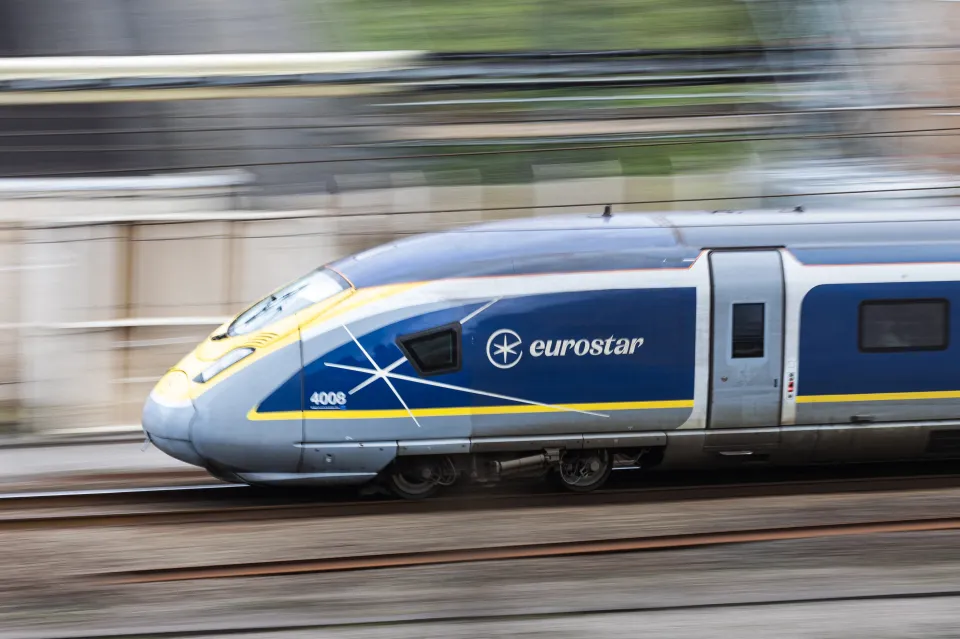
The launch of a brand-new rail service has created the world’s longest train journey, spanning 21 days and passing through 13 countries.
A new rail link between Laos and China now allows travel from Portugal to Singapore entirely by rail.
The epic route covers a staggering 11,600 miles and is operated by multiple railway companies throughout.
Travellers can cross numerous borders while making several spectacular stops along the way.
The mammoth trip offers passengers stunning countryside scenery between the major destinations along the route.
Departing from Lagos in Portugal, the journey concludes in Singapore, reports the Express.
It’s a truly one-of-a-kind adventure, crossing from the western to the eastern hemisphere entirely by train.
From Lagos, the service heads to the Portuguese capital, Lisbon, before stopping at the next stop in the Basque region of Spain.
The train then winds its way through France, Russia, China, Vietnam, and Thailand before finally rolling into Singapore.
Along the way, the service stops at some of the world’s most iconic cities, including Paris, Moscow, Beijing, and Bangkok.
The lengthiest leg of the trip is a gruelling 40-hour stretch from Paris to Moscow.
Despite this marathon section, the journey features 11 stops, giving passengers plenty of opportunities to stretch their legs.
Travellers can also enjoy overnight stays at destinations en route, stepping off the train to explore.
To complete the full journey, passengers must obtain seven separate visas. The overall fare is approximately £1,006, comparable to the cost of a flight from Portugal to Singapore.
Nevertheless, the trip requires considerably more planning than a flight and involves numerous additional stops.
In some areas, passengers must make bus connections to continue their train journey.
These included the stretch from Vietnam to Cambodia, and from Malaysia to Singapore.
The longest journey has only been made possible by the introduction of the Laos-China railway.
It is expected to boost Laos’ economy by allowing it to transport people from China.
The previous longest train journey ran from London to Singapore.
HOLIDAYMAKERS are to get twice as many trains to one of Britain’s busiest airports after the country’s largest rail operator was taken into public ownership.
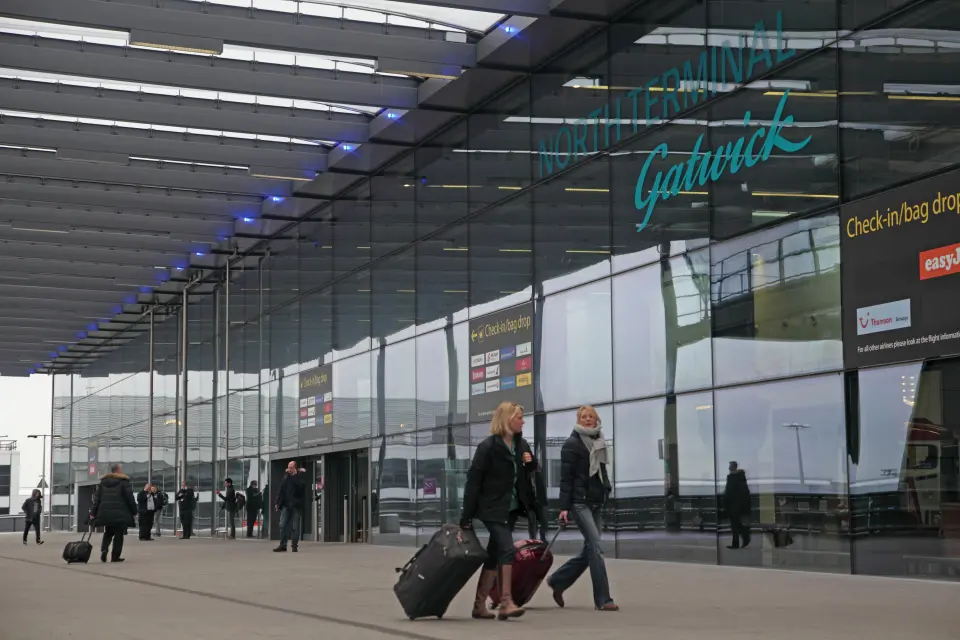
The Government has pledged to double the frequency of Gatwick Express services between London Victoria and Gatwick Airport from December, as Govia Thameslink Railway (GTR) became the latest train company to be nationalised today.
Sign up for the Travel newsletter
Thank you!
Transport Secretary Heidi Alexander hailed it as “a defining moment in our reform of the railway”, with GTR’s four brands – Southern, Thameslink, Great Northern and Gatwick Express – carrying one in six of all train journeys made across Britain.
As well as the boost for Gatwick passengers, more early morning services on Saturdays and Mondays will be introduced from this summer.
The Government also pledged to crack down on graffiti in Thameslink train toilets, upgrade signalling between Farringdon and Blackfriars to cut delays, and deploy 110 new travel safe officers to tackle anti-social behaviour across the network.
Ms Alexander said millions of passengers across the South East and East of England would now be “travelling on rail services back in public hands — run for the public good, not private profit.”
She added the nationalisation gave the Government “an opportunity to tackle the bread and butter issues people want, like driving down cancellations and improving the frequency of services to Gatwick Airport.”
GTR chief operating officer John Whitehurst said the railway “carries millions of people to work, to school, and to see friends and family every single day,” adding that public ownership “gives us the chance to go further to deliver the railway that millions of people across the South East deserve.”
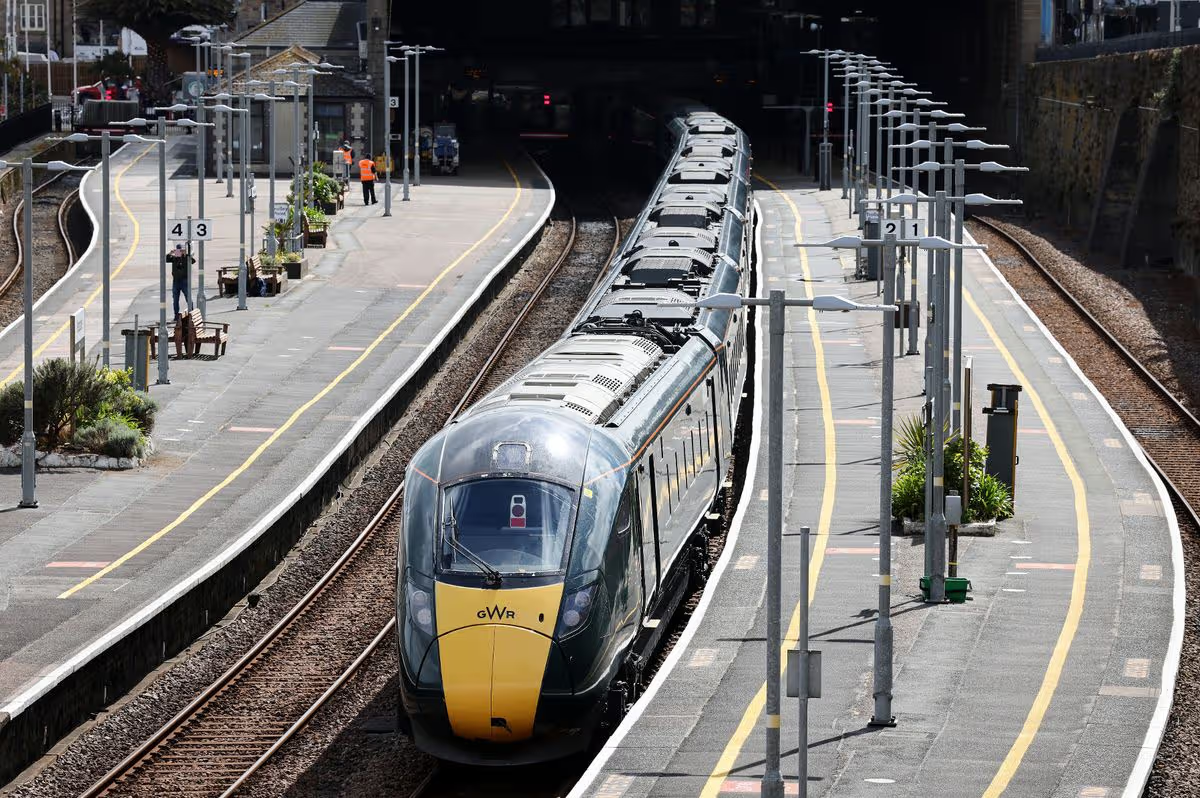
GTR is the fifth operator to be nationalised under the current Government, joining c2c, Greater Anglia, South Western Railway and West Midlands Trains. LNER, Northern, Southeastern and TransPennine Express had already been brought into public hands before Labour came to power.
The nationalisation is part of a sweeping overhaul of Britain’s railways, with a new body called Great British Railways (GBR) set to bring responsibility for both tracks and trains under a single roof for the first time since privatisation in the mid-1990s.
Legislation to create GBR was included in the recent King’s Speech, and the first train carrying its branding — a Southern service — was unveiled in Brighton earlier this month.
Chiltern Railways is next in line to be nationalised on September 20, followed by Great Western Railways on December 13, with the full programme expected to be completed by the end of next year.
GTR’s takeover into public hands comes years after Southern became notorious for chronic delays and cancellations.
At its worst, the 7.29am Brighton to London Victoria service failed to arrive on time during any of its 240 runs throughout 2014.
The operator blamed high demand and congestion, though it was also hit by a bitter industrial dispute with drivers and conductors over staffing, including a row over who should operate train doors.
A UK train line will be closed for three days this weekend as the station undergoes major works.
Travellers are advised to plan their journeys in advance as there will be no trains running on the busy West Midlands line.
Sign up for the Travel newsletter
Thank you!
A major UK train line between Birmingham and Lichfield will be closed this weekendCredit: AlamyPassengers are advised to plan their journeys in advance while the major works take placeCredit: Alamy
Between May 29 and May 31, there will be no trains running between Birmingham New Street and Lichfield Trent Valley Station.
Network Rail has announced that the closures will be in place to allow for the installation of a new viaduct.
The planned work will take place over the weekend and services are expected to return to normal on Monday, June 1.
For those travelling southbound on the Cross City line, services will be continuing as normal between Birmingham New Street and Redditch/Bromsgrove.
The “complex” installation work will also affect services between Birmingham New Street and Tame Bridge Parkway, to ensure all works are carried out safely.
Passengers affected by the disruption will be able to travel on rail replacement buses, running from Birmingham New Street to both Lichfield Trent Valley and Tame Bridge Parkway
For those travelling to Rugeley Trent Valley, the services will be diverted and journeys are expected to take longer than usual, so passengers are advised to allow extra time for possible delays.
The major works comprise of the installation of a 150-metre-long viaduct, located near the new Curzon Street Station, that will transport HS2 trains over an existing Victorian viaduct between Duddeston and New Street.
Director for On Network Works at Network Rail and HS2, Patrick Crawley, said: “We’re reminding passengers to plan ahead for a three-day closure on the Cross City line between Birmingham and Lichfield to enable the safe installation of a new HS2 viaduct over the existing railway.
“This is a significant milestone in the delivery of HS2 at Curzon Street, and while there will be some disruption, we’ve worked closely with partners to keep people moving and minimise the impact as much as possible.”
Customer experience director for West Midlands Railway, Jonny Wiseman, added: “We want to thank passengers for their patience while this major piece of engineering work is carried out and the northern section of the Cross City Line is closed.
“Rail replacement buses will be running during the closure, and passengers are encouraged to check their travel before setting out.”
PASSENGERS are facing travel chaos this bank holiday following a signalling issue impacting routes to Heathrow Airport.
There are major delays on the Elizabeth Line and Heathrow Express trains wreaking havoc for those trying to reach the airport today.
Sign up for the Travel newsletter
Thank you!
A signalling failure in the London Paddington area has meant there’s a reduced service on the Elizabeth Line and Heathrow Express trainsCredit: AlamyThese delays are expected to last until the end of the dayCredit: Getty
Earlier this evening, customers travelling to Heathrow Airport have been hit with severe delays to their journey.
A signalling failure in the London Paddington area has meant there’s a reduced service on the Elizabeth Line and Heathrow Express trains.
Trains running between London Paddington and Heathrow Airport or Reading may be cancelled, delayed by up to 45 minutes or revised.
These delays are expected to last until the end of the day.
According to Heathrow Express’ website, there are delays in both directions with only two trains departing every hour.
Meanwhile, the Elizabeth Line has reported severe delays between Paddington and Heathrow Terminals while a signal fault in the Southall area is fixed.
The service is also severely reduced, with some stations currently not being served.
On the National Rail site, they advise those travelling from the east to change at Whitechapel for service to Heathrow Terminal 4.
At the moment, services for Heathrow Terminal 5 will terminate before reaching Heathrow, so passengers are advised to arrive at Heathrow and use the free terminal transfers available at the airport.
Transport for London have said that tickets are being accepted on London Underground.
But for those travelling to Heathrow, the Underground doesn’t offer much of a solution.
This bank holiday the Piccadilly Line is undergoing planned engineering works, with no service from Hyde Park Corner to Uxbridge or Northfields.
However, tickets are being accepted by Great Western Rail and local bus services in order to get passengers to Heathrow Airport.
A spokesperson for Great Western Rail said: “Network Rail are currently investigating a signalling issue affecting the relief lines just outside of Paddington.
“To help keep trains running, some services are being reduced – and we’re advising customers travelling to or from Paddington to check before they travel.”
TfL said: “The Elizabeth line services are currently impacted by signalling issues in the Hayes & Harlington area.
“There is a severely reduced service, with some stations not being served, though we are currently looking to increase services.
“There is alternative ticket acceptance with GWR and local bus services.”
The West Highland Line has been named the world’s most beautiful railway, but does Scotland’s iconic 164-mile train journey truly live up to the hype? I boarded the train through the Scottish Highlands to find out.
The West Highland Line has it all (Image: Gordie Broon Photography via Getty Images)
“I think this is the most beautiful train line I’ve ever been on.”
Those words genuinely escaped my mouth as my wife and I rattled through the Scottish Highlands, skirting the edges of glistening lochs, weaving between ancient mountains, and crossing hauntingly stark yet stunning moorland.
“You’ve been on it before,” she kindly reminded me. Thankfully, my tendency to experience something and then completely forget about it doesn’t diminish its beauty one bit.
The legendary West Highland Line departs Glasgow and plunges deep into the west coast, steaming alongside the Clyde to Helensburgh, before heading north via Garelochhead and Loch Long towards either Oban or Mallaig. Shortly after escaping Scotland’s largest city, the undulating, wind turbine-topped hills begin to swell as the Highlands draw near.
The railway carries you northward along the coastline, passing through the Loch Lomond and The Trossachs National Park. At Crianlarich, the track divides, continuing either past Loch Awe towards Oban, or climbing high up to Rannoch Moor.
The line traverses the moorland for 23 miles, ascending to over 400 metres and offering unrivalled vistas of one of Europe’s last remaining wild places: an enormous expanse of blanket bog, lochans, rivers, and rocky outcrops where curlews, grouse, roe deer, and red deer roam freely.
The Moor captured near-national fascination during the Victorian period, when initial fear and mild disgust at its wild and forbidding character transformed into devotion. Among the early travellers were the poet William Wordsworth and his sister Dorothy, who visited in 1803 and tentatively described the place as “desolate and extensively wild”.
Just seven years later, Scotland’s greatest champion, Sir Walter Scott, published his celebrated poem The Lady of the Lake. The work showcased Loch Katrine in the Trossachs, south of Rannoch Moor, thrusting it into the spotlight. Inspired visitors descended on the region to witness how “Summer dawn’s reflected hue to purple changed Loch Katrine blue” for themselves.
Travelling north to the Highlands and back again a few days later, we experienced both faces of this remarkable landscape. During our night journey, the glens and Munros loomed against the train window, making our tiny illuminated carriage feel insignificant as it rattled along. On the bright, sunny return trip, the breathtaking vistas — sparkling lochs nestled beneath sheer mountains capped with lush greenery — felt more reminiscent of Switzerland or Austria than bonny Scotland.
Without doubt, the most iconic spot along the route is the Glenfinnan Viaduct, immortalised in the Harry Potter films as the path of the Hogwarts Express. Passengers cross this magnificent structure en route to Mallaig, the terminus of the 164-mile line.
However, spending an afternoon at the viaduct may be worth reconsidering. During my visit, a persistent drizzle dampened the spirits of the crowds of Potter enthusiasts, many of whom appeared rather deflated by what was on offer: two pipers playing sombrely and some railway infrastructure. Add to that the fact that the locals of the 100-person village are fed up with the crowds, and the choice to give it a miss seems straightforward.
Mallaig is a far superior option, boasting excellent whale-watching excursions that provide frequent sightings of the cheerful minke pods inhabiting the waters.
There are numerous other attractions to discover along the route.
Corrour, Britain’s highest-altitude railway station, draws Trainspotting enthusiasts due to its prominent appearance in the film. It is equally picturesque and captivating. There are no roads here, so visitors head directly onto the walking trails via a quick meal at the Corrour Station House.
Another gem is Tyndrum. This former mining settlement is now the smallest location in Britain to boast two railway stations. They enable travellers to branch off, climbing steeply up the glen towards the north or west.
For me, the town marks the final stop in the Lowlands, the spot where you pause before heading across the Moor and into the mountains. Such adventures require fuelling up on fish and chips or curry at the superb Green Welly Boot Stop while watching its wonderful collection of birds.
The West Highland Line is far more than just a train journey. Step aboard and you’ll find yourself rubbing shoulders with forestry workers heading to work, mountain bikers, walkers, local schoolchildren, and railway enthusiasts eager to discover whether a route once crowned the world’s most beautiful truly lives up to its reputation. It’s a living tapestry of Scotland at its finest: mountains, moorland, lochs, wildlife, and history, all rolling out before you at a gloriously unhurried pace.
TRAINS will run through the night to one of the UK’s busiest airports from today.
Commuters will be able to catch eight new timetabled services that offer more reliable journeys.
Sign up for the Travel newsletter
Thank you!
Eight new overnight services will run between Manchester Piccadilly and AirportCredit: tpexpress.co.ukThe new schedule hopes to improve Manchester’s busy nighttime economyCredit: aboutmanchester.co.uk
All-night rail services between Manchester Piccadilly and Manchester Airport will run from today, in a major new boost to the city’s nighttime economy.
TransPennine Express has scheduled trains to run hourly through the night, every day of the week, with eight new overnight services included.
Greater Manchester residents have shared their excitement, with one saying it is “good to see these services reinstated after all these years,” and others calling it “unbelievable.”
The new schedule hopes to improve airport access, as well as offering better commuting services for hospitality workers and passengers travelling in the early hours of the morning.
Trains from Manchester Piccadilly to Manchester Airport are generally faster than driving, with the journey taking between 15 and 20 minutes, and a drive taking up to 30 minutes.
This schedule adds to the already simplified train travel system in Manchester, which only sells anytime or off-peak tickets, making services more affordable.
Andy Burnham, Mayor of Greater Manchester, said: “We’re proud of our thriving night-time economy, and we’re looking to back it with transport that matches how people live and work.
“These all-night trains will help people get to where they need to be – whether that’s catching an early flight, getting home after a late shift, or travelling into town to enjoy everything our night-time economy has to offer.
Nicola Buckley, people director at TransPennine Express, echoed Burnham: “These all‑night services are about supporting the people and businesses that keep Greater Manchester going 24 hours a day.
“By improving overnight connections to Manchester Airport, we’re making rail a more practical option for workers and passengers alike, while helping to strengthen the region’s night‑time economy.”