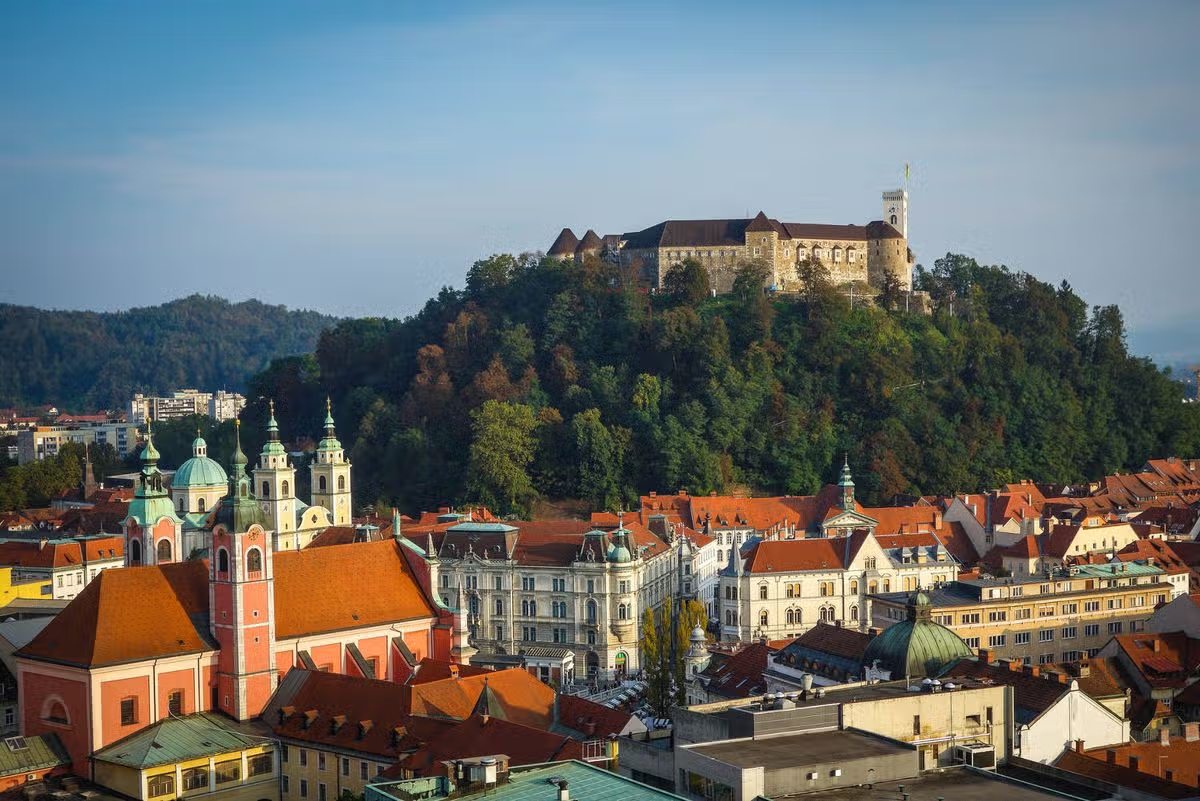
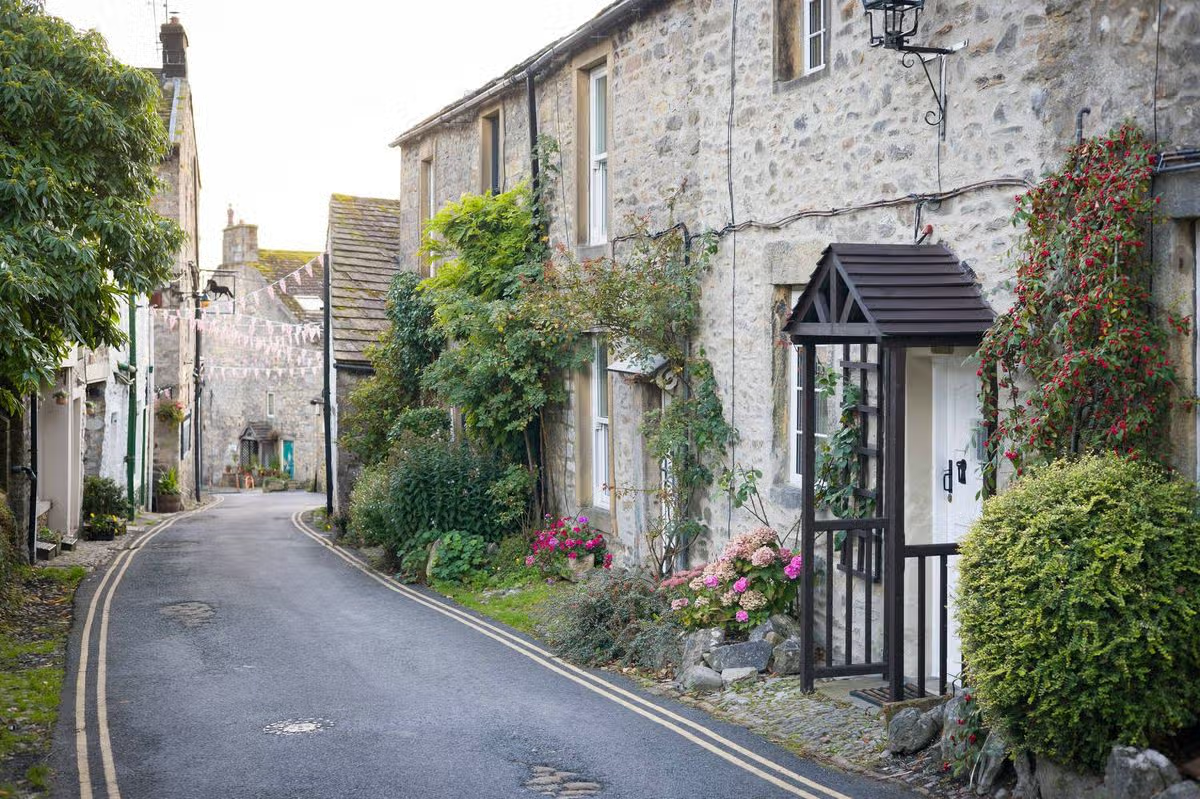
This historic Shropshire market town is bursting with history and has more than 500 listed buildings to explore, plus a vibrant food scene and festivals
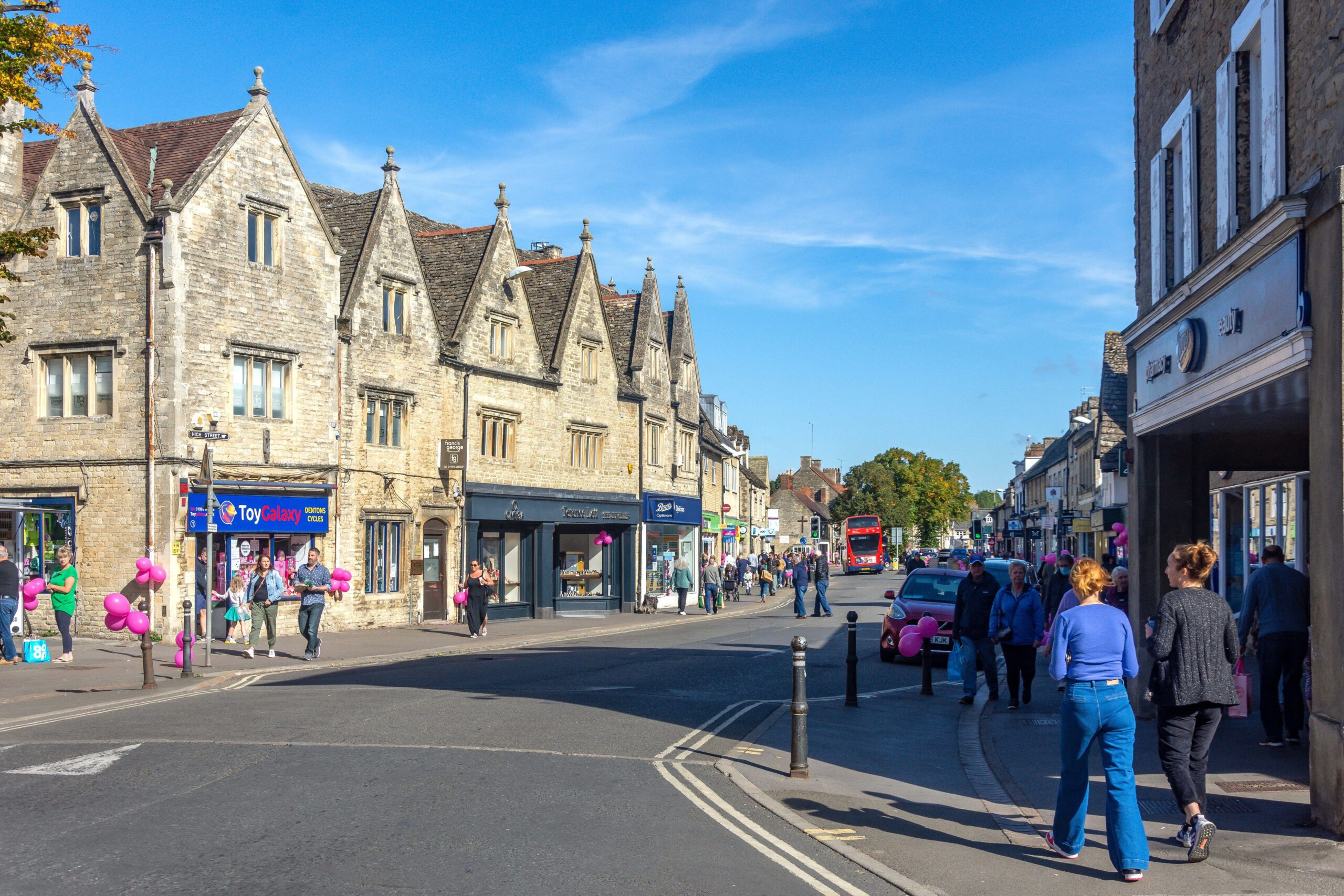
The town has over 500 listed buildings(Image: joe daniel price via Getty Images)
Brimming with heritage, this charming market town makes for the perfect weekend escape, boasting over 500 listed buildings to discover and its renowned culinary scene.
Numerous visitors flock to Ludlow for its closeness to excellent hiking and cycling spots, while history enthusiasts adore it for its ancient churches, castles and mediaeval landmarks.
As the town has developed through the years, it now provides a lively atmosphere with its own market, independent retailers and regular festivals showcasing local talent.
Ludlow is situated along the River Teme, with its most ancient area being the mediaeval walled town, tracing as far back as the 11th century.
This section of the market town lies on the eastern bank of the river, whilst the castle perches on a hill and the remaining streets slope downwards towards the water.
Best holiday cottage deals in Wales
This article contains affiliate links, we will receive a commission on any sales we generate from it. Learn more
Wales is renowned for its stunning mountains, picturesque coastline and rich Celtic history. Sykes has a wide and varied collection of holiday cottages, houses and apartments across the country. Prices start from £35 per night with current deals.
Ludlow Castle
As one of the primary tourist draws in the region, Ludlow Castle stands as an uninhabited, partly ruined medieval fortification. Its origins are traced as far back as 1066 – subsequently, it became the residence of Prince Edward from 1473 to 1483, and for centuries it remained under the care of the crown.
By 1760, the government had contemplated demolishing the structure but, owing to substantial costs, opted instead to lease it, and thus the Earl of Powis started his residency in 1711.
From that point onwards, the magnificent castle started to draw tourists, with their appreciation for the picturesque style, and walking routes were established exploring the grounds and neighbouring areas.
Following the success of this venture, the Earl acquired the castle in 1811, and it has remained under the guardianship of the Trustees of the Powis Castle Estate ever since, who hold ownership on behalf of the family.
One visitor commented on TripAdvisor: “Lovely morning exploring the castle; so much to wander around even though it was very cold. The views were amazing from the top of the towers. You could feel the history come alive whilst walking around.”
Another said: “The main attraction in Ludlow – a site of enormous historical significance. The castle covers a very extensive area with amazing views from the top. In the castle shop do go upstairs to the gallery; it has some very interesting information.”
The fortress, perched proudly atop that very same hill, continues to welcome the public to discover and understand its significance to the town. Opening hours may fluctuate, though the castle can generally be expected to be accessible from 10am until 4pm daily.
Admission tickets can be purchased upon arrival – though advance booking online is usually recommended. Adult admission costs £10, whilst a child ticket is £5 and family tickets are £28.
Stokesay Castle
The remarkable buildings don’t end there, as Stokesay’s magnificent manor house continues to captivate passers-by with its timber-framed features.
Constructed like a fortress, though in reality it is a mansion, completed in 1291, and with minimal signs of alteration or modernisation ever since.
Owned by English Heritage, the protected structure has been meticulously maintained to reflect its original state and provides guided tours for those eager to discover more.
The property was originally established by Laurence of Ludlow, a celebrated wool merchant, actually one of the finest in the nation, and it stayed within his family until the 16th century.
The building’s architecture and design offer valuable insights into the period and continue to serve as a portal to the past. It welcomes visitors from Thursday to Sunday, 10am to 4pm, with adult admission priced at £9 and children’s tickets at £5.40.
One guest commented: “The castle that is not a castle! Thoroughly enjoyed our visit. The audio guide provided us with an amazing amount of useful information. A must-visit whilst in the area.”
Dining options
Ludlow boasts a strong reputation as a haven for food lovers, frequently dubbed the culinary capital of Shropshire. It’s earned this accolade through its excellent range of local produce, with countless independent suppliers and premium artisan food, all highlighted at the yearly food festival.
Taking place over one weekend in September, this year on 11-13, the festival features a vibrant programme of live events, including culinary demonstrations, workshops, talks and, naturally, showcases produce you can purchase to take away.
Naturally, the area also boasts numerous pubs and restaurants that garner considerable acclaim in their own right. Topping the rankings on TripAdvisor is The Blue Boar, a beautifully restored Grade II listed pub located on Mill Street.
A recent visitor commented: “Wonderful cosy, homely, friendly pub. Called twice on our little getaway, food was excellent, service was professional and friendly, and we would definitely recommend it to all our friends and family. Can’t wait for our next trip to Ludlow just to visit here again.”
Additional dining establishments include The French Pantry, Old Downton Lodge, The Queens, and the Michelin restaurant, known as The Charlton Arms Restaurant.
This seaside town has been named the best in the country and has a resort pedigree that stretches back well over 150 years, but it also has plenty of modern day challenges
This article contains affiliate links, we will receive a commission on any sales we generate from it. Learn more
Blackpool in winter: grey skies, bright spirit
Everyone has a story to tell about Blackpool. Usually a bad one.
Whether it’s tales of optimistic family holidays that turned into washouts, hotels mysteriously burning down, or stag-dos that bump into far-right protests, it’s the kind of place that people enjoy dunking on.
“What’s going on around here?” I asked the bartender of one town centre pub on my first evening in town.
“F*** all!” he said joyfully, before handing over my £3 pint.
In one, quite literal way, he was onto something. Blackpool has a big problem with emptiness. Specifically, empty shops. Wander five minutes down the road from the Tower, and there are rows of crumbling units with boarded-up windows, clearly long vacated. Others seem occupied but shuttered against the winter winds and lack tourists. It’s a jarring experience, walking from the flashing lights and boinging sounds of the mega-arcades into a deserted lot piled with rubble.
The statistics don’t make for good reading. The town of 144,000 has the third-highest rate of empty shops in the country, according to the Centre for Cities, with 17.6% closed. In some areas, like Central Drive, the figure is 30%. Blackpool also has the second-most abandoned buildings, with one for every 45 people.
Some, such as the £7.6m easyJet Hotel on the prom that never materialised, or the vast, long-empty Odeon, are particularly annoying for residents. And for the newly elected Labour MP for Blackpool North, Chris Webb, who beat Tory Scott Benton partly by promising to tackle the problem.
“I am greatly concerned about it. There are far too many empty properties in the town,” he told the Mirror.
“Once you go past South Pier, you get to Bloomfield. It is the most deprived place in the county. The boarded-up shops there have an impact on whether people travel further out to great places like Waterlow Road and Bond Street.”
While a lot needs to be done, progress is being made. When I visited, builders were hammering away inside the Odeon building, which was adorned with a ‘Coming Soon – June 2026’ banner promising a family entertainment megaplex. An ‘Empty Properties Task Force’ was launched last month to target landlords of long-term vacant properties with Compulsory Purchase Orders, while cash is being splashed on modern retail units and green spaces in Central Drive. Under the new ‘High Street Rental Auctions’ initiative, the council can now sell off five-year leases for shops that have remained empty for over a year, which should help to inject a bit of life into the harder-hit areas.
As much as a lick of paint and Pride of Place funding won’t fix all of Blackpool’s deeply rooted deprivation issues or significantly lower its crime rate, it could help to bring the two versions of the town closer together.
In the summer, Blackpool is the same buzzing pleasure resort that has been enthralling millions of beach-dwelling, rock-chomping Brits since the Victorian age.
In the winter, however, it is a different story.
As soon as I stepped off the train on a dark February afternoon, a frosty gust of wind doused me in the famous North West precipitation. Somehow, I’d arrived in the only part of the country that wasn’t enjoying the first sunny shoots of Spring.
The combination of crumbling properties and miserable weather creates a stark vibe, utterly different from the sandcastle-and-donkey-rich summer months.
“It’s dead quiet out,” the Holiday Inn hotel receptionist remarked as we watched a few hunched raincoated figures push through the wind. For a town that relies on tourism to bring in £2 billion a year and support 30% of its jobs, becoming a relative winter wasteland is a big problem. And one that Blackpool might finally be answering.
Trainline data show that Blackpool is at the beginning of an off-season popularity boom.
Sajjad Motamed, the firm’s UK country manager, explained: “We’ve seen winter rail trips to Blackpool rise by more than 90% compared to last year, with particularly strong demand for weekend breaks. What’s striking is that the growth isn’t just coming from the North West – we’re seeing demand from right across the UK, for example, bookings from Edinburgh have more than tripled year-on-year. It suggests people nationwide are rediscovering classic seaside destinations outside of the traditional summer season, whether for a short getaway or to explore somewhere they may not have previously considered.”
Although the particular Thursday afternoon I’d turned up on was grim to the point that everyone sensible decided to stay inside, the spike in train bookings to a town recently named the country’s best by the Telegraph is borne out by official council figures. In 2023, Blackpool welcomed a record 21.5million visitors, a 5.3% rise in just a year. There are high hopes that 2024 and 2025 will increase the numbers further, once the stats are in.
So why are people coming in the winter?
One reason is cost. Blackpool was recently crowned the UK’s cheapest seaside resort, thanks to delights such as £1 burgers at Higgitt’s Las Vegas Arcade, £3.90 fish and chips at Bentley’s on Bond Street, and £6 breakfasts at Peekaboos. Come winter, room rates are slashed as hotels fight to fill the thousands of rooms in a town with the third cheapest property prices in England and Wales, according to Land Registry data.
Another is the growing selection of off-season activities.
I dropped into the 2024 opened Showtown Museum, which tells the story of Blackpool’s entertainment history through highly interactive exhibits and tapdancing staff members. Until April, a fascinating exhibition is telling the story of little people in the entertainment industry. It is difficult to imagine today, but the Blackpool Tower’s skygardens were once converted into a miniature village “populated” by little people.
Now visitors to the town can stop off at Showtown before heading up the Tower and down into the dungeons on the same Blackpool BIG Ticket that delivers 50% savings and costs £31
Throughout the year, there are plenty of free exhibitions on show at the listed Central Library, home to the Grundy Art Gallery.
After soaking up a bit of culture, you can head to the town’s iconic, year-round Coral Island. I’d bet a tub of 2ps that there is no bigger, more impressive or absurd arcade in the country. Stretching across a good number of football pitches’ worth of lurid carpeting, Coral Island is packed with one-armed bandits, coin droppers, the latest VR tech, and an indoor rollercoaster that wheels over the heads of the gamblers below.
Who cares if the Pleasure Beach is shut for the winter when you’ve got that?
As much as Mr Webb insists the town’s “reputation for stag and hen dos is greatly diminished”, it’s hard to argue that Blackpool isn’t a booze town. Whatever the season, across its 166 bars and pubs, you’ll find dozens of drinks deals cheap enough to make any Up From Londoner swoon. For a quiet but affordable pint, the Churchill is a good bet. For something a bit more late-night and rowdy, the Galleon delivers live music and a great atmosphere most nights.
For Mr Webb, the “missing piece” to the winter tourism slump puzzle would be an all-purpose indoor arena, designed for expos and eSports. Its arrival is uncertain and some way off yet, but talks with the owners of a Premier League football club are promising, the MP says.
This seems like a natural step for a town with a deep-rooted entertainment pedigree. From Strictly to George Formby, people have long come to Blackpool for a show. When I visited, Derren Brown was at the Grand as part of his Only Human tour. At the start of the performance, he uncorked several big cannisters of laughing gas into the auditorium to lull the crowd into a pliable state before having his mystifying, merry way with us.
Whether the gas was real or not, what wasn’t fake was the uproarious laughter of the audience throughout his two-hour set. Lancastrians are a friendly bunch. Whether it’s the charming staff in Stefani’s Pizza joint, a smily mum who stopped her pram for an impromptu chat, or the jovial reaction of an audience member publicly outed as a thief by Brown, there’s a good chance Blackpool will offer you a warm welcome, however miserable the weather.
Kountry Wayne likens the dream he’s currently living to an old sitcom that has made the world laugh for decades. “I feel like I’m the new version of ‘Beverly Hillbillies,’” he says. “I’m in Hollywood — I’m here, but I’m still not here, so I just think that’s the most country thing about me.” To his point, the comedian born DeWayne Colley has definitely hit the big time after getting his start in comedy in 2014 (trying his skills as a rapper before that) by working on his stage craft and cooking up Southern-fried viral skits inspired by his small-town Georgia roots. Fast-forward 12 years and his growing empire includes independent movies (including his upcoming film “That’s Her,” which he financed himself), a flood of both dramatic and comedy-driven short skits featuring a wide range of actors, a debut Netflix special (2023’s “A Woman’s Prayer”) and now his latest hour, “Nostalgia,” premiering Monday on Prime Video.
By spending a new hour looking back at a bygone period, specifically the ’90s, when Wayne grew up, the 38-year-old comedian is bringing a fresh approach to the Def Comedy Jam era that he hopes resonates with comedy fans of his generation and younger fans who found him through TikTok and had no idea he even did stand-up. As someone whose comedy career has skyrocketed over the last several years, Wayne’s sights continue to be set toward future opportunities to bring relatable humor to the masses who have that country cousin who walks, talks and jokes just like him.
This interview has been edited for length and clarity.
What does the word “Nostalgia” mean to you?
A good feeling. It means bringing people together through laughter like the good old shows back in the day — “Saved by the Bell,” “Family Matters.” It just is that feeling, whatever that feeling was that we couldn’t put in a jar, I wanted to bring that in my special to just make everybody laugh and forget about the stuff that’s always gonna be here — bills and drama and violence. Just take a break, have fun, and take the breaks we used to take when we used to watch those TV shows in the ’90s.
By the shows you mentioned, I know we’re about the same age. We grew up with the same TV sitcoms and yet still valued being outside, which feels like a foreign concept today.
Yeah, it’s that feeling of all those movies. Man, “Clueless,” when I see that movie, to this day, I still got crushes on all [those girls]. I always wanted to go to the high school in “Saved by the Bell.” So I just want to give that feeling that I felt, because a lot of the new generation didn’t get to experience those shows and those feelings. So even for the younger generation, I want them to be able to experience that through my special.
What was small–town life in Millen, Ga., like for you as a funny kid growing up?
I was so poor, it wasn’t nothing really funny. The town was so small — one [stop]light, the elementary school, high school, all in one school. You had to joke your way to make you think that you weren’t there. You kind of had to escape through jokes. So I just made people laugh wherever I was. No matter how serious the situation is, I can’t do anything about it. I might as well laugh. I remember the lights went off one time when we were eating cereal. I was like, “Mama, hey, come on. I can’t see — I can’t see the milk, the cereal, the bowl. And you’re telling me I need to do my work. I think you need to go to work.” In a small town, you had to laugh because there was nothing else, there was no opportunity.
“In a small town, you had to laugh because there was nothing else, there was no opportunity,” Kountry Wayne said about growing up in Millen, Ga.
(Christina House / Los Angeles Times)
You gravitated to music early in life, becoming a rapper before you did stand-up. What was it about performing that helped you forget about the troubles that were going on around you?
I always felt like I was onstage already, so by the time I actually got onstage, the lights never did nothing to me, or the fame and all of that. Because I’m just so thankful to be able to do stand-up and have people come and watch me do it. I never had time to really feel the fame and all of that. So I just think everything I went through in that small town helped me. Everything is a small town to me. Hollywood is still a small town to me, because whoever I know, that’s who I know; whoever I don’t know, I just don’t know ’em. Because in that small town, you were so far away from the big cities like Atlanta, New York, L.A. I was three hours from Atlanta [growing up], so I think that really helped me to get where I’m at today to do comedy the way I do it.
Just keep it “kountry.”
Yeah, keep it kountry. Man, oh, that’s the next [title of a new special].
What do you feel like is the most country aspect of you as someone who’s now a popular comedian?
My family — all my family around me. You come to my house. It’s an uncle, daddy, a sister, brother, kids everywhere. I feel like I’m the new version of “Beverly Hillbillies.” I’m in Hollywood, I’m here, but I’m still not here, so I just think that’s the most country thing about me. If you meet my family, you understand. They don’t say shrimp, we say “scrimps” or “o’er dere” [instead of] “over there.” With my accent, imagine it’s 10 times worse with my family. So I think I remind people that everybody in L.A., New York got a cousin somewhere in Mississippi, because a lot of us are from the South anyway. So I just think I remind people of simple, country people.
With the Southern flavor you bring to comedy, I kind of liken it to hip-hop, when it comes to the regional styles of different comics. How does that play into creating a special that brings the South to the world?
It’s crazy that you say that [you] think about hip-hop when I do that. I’m gonna be me so much that people who don’t know me are gonna be interested in me, because it’s different than everybody else. I feel like I’m a really country person with that Southern drawl or the way I talk. I talk like them uncles and all of that. So I just feel like it’s gonna make everybody feel at home. I didn’t try to switch it up. I’m gonna be me because I feel like, deep down, everybody knows [someone like] me somewhere. They’re gonna relate to me in some kind of way, and it feels safe because I’m being me. I’m not out there being fake, this how I talk. I’m a country boy. I’m not from the big city, and this is what I’m giving the world. And those who love it, I appreciate it. Those who don’t love it, I still love you.
“I think I remind people that everybody in L.A., New York got a cousin somewhere in Mississippi, because a lot of us are from the South anyway,” said Kountry Wayne.
(Christina House / Los Angeles Times)
Being a dad to 10 kids is something that’s been a part of your storyline in comedy and that people have gravitated to. How does your ability to survive and make it all work play into your comedy?
Child support would really make you very, very funny. It actually plays a lot into it, because if it wasn’t for those kids, I don’t think I’d stand out as much as I am. Because we’ve heard every joke, everybody’s been funny. Come on, man, we’ve seen Jim Carrey, we’ve seen Eddie Murphy, we’ve seen Dave Chappelle. Funny has already been done. So I think what helps me stand out is my story with my kids and my family. It’s funny, but it’s still OK. This is a different perspective than we see with all those kids, the mothers, you know, but he’s not with the mothers, but he’s there with the kids, and you take care of the mothers. It’s so much of a unique situation that I think that’s what makes it stand out.
Who’s your funniest kid?
[My daughter] Honest. Honest is the funniest person in my life. Her name’s Honest, but she lies — she makes up all these stories about what happened at school. [She’ll say,] “I got arrested today.” I’ll be like, “Honest, you did get arrested?” [She’ll say,] “Well, they was about to arrest me, but they didn’t.” She reminds me of me, but she is just a little bit more witty because she don’t got no trauma like I did. I come from poverty. She’s rich. She goes to this Christian school full of white people, and she thinks she’s a white baby now. The white girls have this clip they put on their hair. She bought her clip. Now her hair not floating like theirs. Her hair is definitely stiff. I’m like, “Honest, you don’t need that clip!” She’s in dancing. She don’t go to practice. When she goes to the dance recitals, it’s clear that she can’t dance and we always ask her, “Do you know the dance?” Every time she gets there, she says, “Yeah,” but she gets there and she’s always watching the other kids. She was the only one [who’s] off.
She is so funny. I put her in the skits. She says the wittiest things. She asked me one day — I got a lot of kids — and she said, “Daddy, which one of your kids you love the most?” She said, “Do you love all your kids?” I said, “Yeah, I love all of y’all.” She said, “Well, come here. Let me talk to you right quick.” She took me to a picture I had in my man cave, “She said, ‘Well, why all of us [not in the picture]?’”… She’s my comedian.
Speaking of the skit-producing pipeline/network you‘ve developed over the last several years, how has that been instrumental to your comedy career, and also your career as sort of a producer in developing content?
I think that content helped me more [with] being known as a producer and a filmmaker and an actor. So I think it helped my acting career, the first part of my life, and all the skits helped my comedy because it was just me being funny, but the skits I put out now help people look at me more as a businessman, an entrepreneur and an actor. And it’s crazy, some people now even know me from the skits. And when they come to the [stand-up] show, they’re going to be shocked. A lot of my fans who met me when I started writing the storylines, when they see this [“Nostalgia”] special they’re like, “He never showed us that!” Because that person I am onstage, I don’t be that on social media anymore, so you have to go watch me on stand-up to give that energy that I give. But my Day 1 fans met that guy. These fans I’ve made over the last four or five years were probably equivalent to my Day 1 fans. It’s a large fan base but they don’t even know that I could [do] stand-up like that.
Comedian Kountry Wayne holds up his gold neck chain with his mom’s face on it.
(Christina House / Los Angeles Times)
That’s nostalgic in a way. I’m thinking of a TV dad like Bob Saget, who was so different when you saw him do stand-up. You’re like, “Wow, Danny Tanner is filthy!” That’s great that you can kind of separate the two personas. What do you feel is next for you in comedy?
To bring that to the big screen, for sure. All my talents and gifts that I worked on, in a way, [have] gotten better. I put the work in, I’m ready to show it on the screen. I think it’s happening organically, like the special [on] Amazon, that’s organic. I had one on Netflix now they wanted me to do one at Amazon, and I just want to show the world what I’ve been working on, and the time, energy I put into a broader scale … So I’m just excited, and I feel like a kid again, because I got so many responsibilities and kids I take care of. It took a while for me to get back to this point where I could just be an artist. Because I wanted to be an artist, but then I had a lot of kids, so I had to be a provider. But now I’m in a position where all that is handled, so I feel like a kid again when it comes to the art.
A pretty UK town packed with independent shops, cosy tearooms and acres of green space, has been named as the ‘most welcoming’ destination, and after a visit, you might never want to leave
This pretty UK town has been named as the ‘most welcoming’(Image: Getty Images)
There’s a list of beautiful UK towns that offer an idyllic day out, whether that’s taking a stroll along their meandering rivers or exploring their cobbled streets lined with medieval architecture.
Yet there’s one that’s been named the ‘most welcoming town’ of them all, thanks to warm charm you’ll struggle to find anywhere else.
Harrogate, in North Yorkshire, is a Victorian spa town known for its mineral springs, 200 acres of green space at The Stray park, cosy tearooms, independent boutiques, and, famously, the home of Yorkshire Tea. It has often been hailed as one of the happiest places to live and has once again secured the title of the most welcoming town in the UK.
Thanks to its warm and friendly atmosphere, hospitality, and repeat visitors, Harrogate was named the UK’s most welcoming destination in Booking.com’s 2026 Traveller Review Awards. It’s even thought that its tea heritage and charming tearooms could have something to do with its ranking, as a quarter of Brits associated a visit to the Yorkshire town with a cosy cup of brew.
Whether it’s a warming cuppa in one of their tearooms, cafés, hotels, or even pubs, the town’s history can’t be ignored, as it’s where the black tea blend of Yorkshire Tea has been produced by the Bettys & Taylors Group since 1977. It’s also home to the delightful Bettys Café Tea Room, offering afternoon tea in the imperial room of freshly baked scones and, of course, their signature tea.
But that’s not the only tearoom in this town. There’s also Jenny’s Tea Shop, Mama Doreen’s Emporium, and another Bettys Café Tea Room, just on the outskirts of the town.
Yet, away from its brews, streets are lined with boutiques, with Montpellier Quarter boasting more than 50 independent shops, bars, restaurants, antique shops, and art galleries. There’s also Cold Bath Road, which offers more eateries and shops, all while paying homage to the town’s spa heritage.
Harrogate is known as the ‘English Spa’ thanks to its mineral springs, which were discovered in the 16th century. It quickly became known as a wellness destination, thanks to its open green spaces, spa treatments, fresh air, and famed waters.
Today, there are original Turkish Baths for a relaxing treatment and the Royal Pump Room Museum for a closer look into the town’s spa heritage. Harrogate has remained known as a spa town and continues to attract visitors seeking to unwind from the stress of everyday life.
The town is characterised by Victorian and Georgian buildings, some of which make up its collection of hotels, and there are plenty of B&Bs available in the area. That’s when you can tear yourself away from the ample green spaces, with its position on the edge of the Yorkshire Dales National Park, a haven for avid walkers.
With acres of pristine landscapes, Harrogate is home to beautiful parks and tranquil gardens that offer scenic strolls during the warmer months. One of its most popular attractions, which welcomes around three million visitors a year, is the Grade II-listed Valley Gardens, featuring various areas to admire.
Whether you’re looking for a day out away from the city or a weekend escape, you might just feel at home in Harrogate. Plus, it’s nestled just over a 20-minute train journey from Leeds and half an hour from York, making it even more convenient.
Ryan Pearson, regional manager for UK and Ireland at Booking.com, said: “Booking.com’s Traveller Review Awards celebrate destinations that consistently deliver exceptional hospitality, and Harrogate has earned recognition as one of the UK’s most welcoming towns for this specific reason.
“Guests frequently praise the town’s friendly, attentive hosts and genuinely warm atmosphere, which makes visitors feel instantly at home. While Harrogate charms with its historic spa buildings, elegant streets, and beautiful surrounding countryside, it’s the town’s authentic, personable hospitality that inspires repeat visits and rave recommendations from travellers.”
Do you have a travel story to share? Email webtravel@reachplc.com
It’s the perfect place if you like a combination of adventures and chilling out, taking in the gorgeous scenery.
Portia Jones Senior Journalist and Nicola Roy Multimedia content creator
12:54, 17 Mar 2026
This article contains affiliate links, we will receive a commission on any sales we generate from it. Learn more
There are plenty of great pubs and restaurants in the town too(Image: Fine & Country West Wales, Aberystwyth)
A historic market town in the UK is definitely worth a visit this spring, as there’s so much to see and do there. It’s ideal for adventure seekers, and those who just want to walk around, eat good food and chill out.
Tregaron is one of Wales’s oldest market towns. It’s home to independent retailers, coffee shops, and the elegant Y Talbot, a grade II-listed hotel, pub, and restaurant, positioned right in the town square’s centre.
From here, you can embark on an exhilarating road trip along a former drover’s track that showcases hairpin turns through wild terrain.
The Abergwesyn Pass is a 20-mile single-track route stretching from Llanwrtyd Wells to Tregaron. Along this isolated road, you’ll encounter a notorious stretch called “The Devil’s Staircase”, reports Wales Online.
This appropriately named portion of the Abergwesyn Pass features hairpin curves and sharp climbs that aren’t suited to anxious motorists.
For adventurous drivers, you’ll love tackling one of Wales’ most isolated countryside regions, encountering sheep, gnarled trees and rocky formations along the way. It’s extremely steep, reaching a maximum gradient of 20.1%, and cuts through thick woodland towards miles of expansive, barren valleys, providing a descent that will push your brakes to their absolute limits.
Drive carefully and enjoy the scenery as you meander through the wilderness of the Cambrian Mountains, where you could potentially encounter nobody throughout your entire journey. You can also tackle this route by bicycle if your legs are ready for the test.
As well as the Abergwesyn Pass, Soar y Mynydd, Wales’ most isolated chapel, is worth the detour. This modest, whitewashed church was constructed in 1822 to minister to an extremely dispersed community of farmers.
Wandering through this tranquil location, you could easily assume the chapel has been deserted for years. Actually, visiting preachers travel from across Wales to hold services in Welsh.
It’s a serene spot for a picnic, as there’s often nobody else there.
Llyn Brianne Reservoir also deserves a stop to witness an enormous dam. You might be surprised to learn that this striking stone-built dam is Britain’s tallest, rising 91 metres (300 ft) above the River Tywi.
Containing an incredible 64 million cubic metres of water at almost 300 metres (990 ft) above sea level is a remarkable engineering achievement. Building work began in October 1968, with the dam constructed from crushed rock, larger stone, and clay sourced from the surrounding area.
After dark, it becomes a stargazing hotspot in the Cambrian Mountains, making it an excellent location for astrophotography.
Further south, beyond Llyn Brianne reservoir, lies the amazing RSPB Gwenffrwd-Dinas reserve. The reserve encompasses vital habitats of oak woodland, wet alder woodland, and scrubland, all defined by heavy rainfall and swift-flowing rivers.
These conditions are ideal for woodland birds, whilst also offering the perfect environment for significant lichens and bryophytes. Whether you begin or finish the route at Tregaron, you should make time to discover this small Welsh-speaking town. Here, you’ll discover a livestock market, the Tregaron Red Kite Centre and Museum, and locally sourced food and cask ales in a beautifully converted 16th-century Welsh inn.
Y Talbot is an independently owned hotel and Michelin Guide-listed restaurant with 2 AA Rosettes. This charming boutique hotel radiates a ‘cosy country inn’ atmosphere with its slate floors and inglenooks.
The location is said to be the final resting place of a circus elephant which perished in 1848 and lies beneath what is currently Y Talbot’s beer garden.
The establishment, run by head chef Dafydd, who trained under Marco Pierre White, showcases regional ingredients, including lamb, beef, and cheeses sourced from the Teifi Valley, fish from Milford Haven, and shellfish from Cardigan Bay.
Close by, you’ll also discover a neglected Welsh abbey where princes lie buried. Strata Florida Abbey near Tregaron is a remarkable location in Wales where history, royalty, and spirituality meet.
Established in 1201 by white-robed Cistercian monks, this hallowed ground was formerly among medieval Wales’s most vital religious and cultural hubs.
It also serves as the burial site of numerous Welsh princes, including the renowned Llywelyn the Great, who famously convened a council here to guarantee his son Dafydd’s position as the legitimate successor to the Welsh throne.
The Abbey was established as a major institution serving the indigenous population of Wales and Western Christianity through its affiliation with the pan-European Cistercian Order of Monasteries.
The carved west doorway into the Abbey remains standing in isolation and provides an eternal vista down the nave towards where the high altar formerly stood.
You can still see some of the decorated tiles that would have adorned the church floors, along with elaborate carvings throughout the site.
I was one of the first to visit the UK’s biggest beach saunaSea Scrub Sauna is on Folkestone’s main beachThere are two saunas to choose from, including the 10-person shepherds hut
According to the British Sauna Society, the number of public saunas in the UK has increased 1,200 per cent in the last three years – from 48 in 2023 to more than 600 today.
And as one of the newest, Sea Scrub Sauna is set to be a huge attraction for tourists visiting the seaside town.
Its co-founder, Robin Bartlett, said: “We’re seeing an exciting shift in the UK from exclusive, high-end spa, to more accessible, communal, and ‘wild’ sauna experiences and it’s brilliant to be part of this.
“We can’t wait to welcome new faces and grow a community of sauna enthusiasts in Folkestone, from regular locals to intrepid day trippers and holidaymakers.”
The fourth of its kind by the company – with others in Margate, Whitsable and Faversham – the complex is certainly the fanciest as well.
As I entered the reception, the smell of new wood hit me as I was handed a glass of prosecco.
There’s a full menu of wines and beers (although perhaps save them for after the session to avoid any woozy heads).
Floor to ceiling glass windows meant I had full views of the sea, which on a clear day can sometimes even include seeing France.
What sets this sauna apart is the extra facilities. There’s men’s and women’s changing rooms, a HOT shower, and onsite bathrooms.
But onto the sauna experience.
The site has two saunas to choose from – the 16-person Scandinavian sauna, and the smaller Shepherds Hut Sauna, for up to 10 people.
I recommend the one on the right if visiting in the evenings, for some of the best orange sunsets over the beach.
I settle in on my towel, embracing feeling the warmth after months of the freezing winter.
Ten minutes in, and I’m drenched in sweat. We’re all playing a silent game of chicken to see who can last the longest in here.
I bail out first, sliding off the wooden bench and fleeing for the chilly air.
It’s over to plunge pools in the middle, with the steamy hot tub calling me.
But first, a cold plunge. My breath is taken from me as I slowly lower myself into the 7C tub, focusing on my breathing as I was told.
This is where the health benefits kick in, with everything from improved circulation and reduced muscle aches to better sleep and mood levels.
The Scandinavian sauna can fit up to 16 peopleBoth of the saunas were perfect for warming up in
My overheated skin prickles as it goes from too hot to too cold.
Yet I last barely a minute, much to the enjoyment of my friend who is already submerged.
My relief is loud as I sink into the much warmer pool right next to her, letting my body temperature heat back up again.
And its not just saunas and pools that you can enjoy there too, with experiences such as silent sessions and even Aufguss rituals, a German sauna ceremony with fragranced oil infused water.
I try the latter, and the heat is waved over me with a fan as smells of lemongrass and eucalyptus clear my chest.
After all that, I’m on a high, but ravenous.
And the sauna has you covered there too, with warming bowls of ramen to take the edge off. As well as a second glass of fizz…
Even better, the Harbour Arms is right next door so you can pop over for drinks and dinner there afterwards as well.
It costs £20 for an hour-long session, and can be booked from 8:30am to 8:30pm.
I imagine the early sessions will be popular with sea swimmers, although you can also rent it out for private sessions – perfect for birthdays or hen dos.
My bowl of ramen and prosecco was needed after my hour-sessionSafe to say I chose the warmer pool over the cold plunge…
Though if you want to head to a seaside town without the crowds, the Croatian Tourism Board recommends visiting Komiza on the island, which according to the board is where fishing on the eastern coast of the Adriatic was born.
The town dates back to the 12th century and is surrounded by pretty villages to discover as well.
Stiniva Beach is just an 18 minute drive from the town and is the number one thing to do on the island of Vis, according to TripAdvisor.
The cove has crystal clear waters and pebbles, like many other beaches across the island.
From the road, it is about a 20 minute hike down to the beach, though many visitors note it isn’t easy, so sturdy shoes are recommended.
Boat tours go to the beach too, though, which is probably a better option for the more elderly.
One recent visitor said: “Stiniva Beach is hands down the most beautiful beach I’ve ever seen in my life.
“Tucked away in a secluded cove with crystal-clear water and beautiful high cliffs surrounding you, it feels like stepping into a hidden paradise.
“The atmosphere is peaceful and almost surreal, especially in the early morning when the light is soft and the crowds haven’t arrived yet.”
If you want to head to a more accessible beach, opt for Gusarica Beach which is right by the town centre.
The beach features small pebbles and it is a great spot to go paddleboarding.
The island and Komiža more specifically, was also used as a filming destination for Mamma Mia! Here We Go Again.
The area was also used to film parts of Mamma Mia! Here We Go AgainCredit: Alamy
In the second film, Harry and Bill have dinner in a Greek tavern.
In reality, the tavern is a restaurant called Jastožera and does have the amazing view that you see in the film.
The restaurant is located by a 15th century fortress that connects two cliffs and created an open air sea pool used for lobster breeding.
Since 1883, the restaurant has been owned by the Komizan family Marinkovic-Mestrezane and today you can visit to try fresh lobster dishes.
Komiža is a great base for visiting the Blue Cave on Bisevo island as well, which is an even smaller island.
The “island of peace and purity”, according to BlueCave-Bisevo.com, is known for its Blue Cave, which was revealed by Viennese painter Eugen Baron Ransonnet in 1884.
Since, tourists flock to the cave which has since become protected as a geomorphological natural monument.
What makes the cave so special is that it captures an unusual light phenomenon which gives everything in the cave a blue glow.
In 2019, research revealed that the blue glow is created by morning light hitting the yellow sandy bottom and illuminating the interior of the cave.
Nearby, you can also explore Blue Cave, which ‘glows’Credit: Alamy
Visitors can only head to the cave on an organised trip, which are available between April 1 and November 1.
Tickets to the cove can be purchased in the gift shop in Mezuporat Cove, near the cave entrance.
They cost 75 Croatian kuna (£8.67) per adult and 35 kuna (£4.05) for children, but in the peak season rise to 100 kuna (£11.56) per adult and 50 kuna (£5.78) per child.
If you book a Blue Cave tour from Split, your entrance will be included in your ticket.
The best way to get to Komiža is by flying to Split, with flights usually costing from £24 one-way.
Once in Split, hop on the ferry to Vis which usually costs between €6.50 (£5.66) and €26 (£22.63) per person.
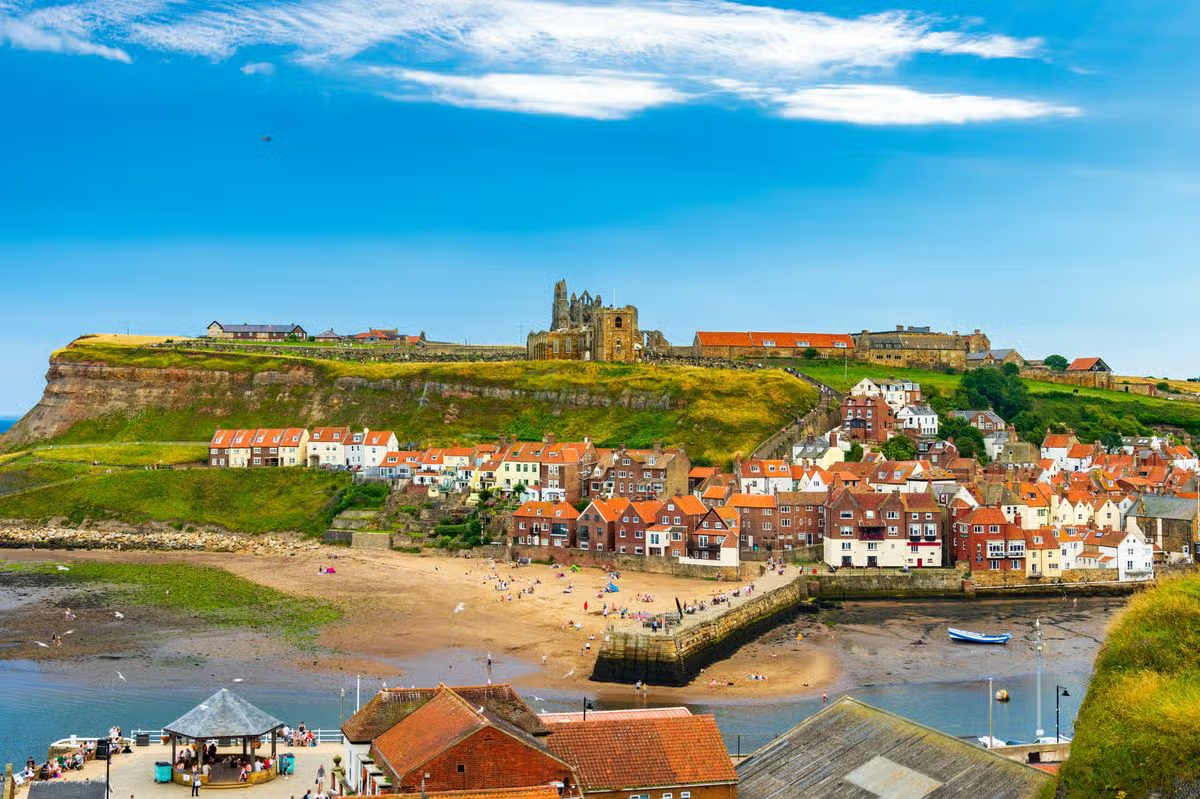
In this picturesque North Yorkshire town, famed for its seafood and imposing abbey, I indulged in fish and chips, admired the views, and enjoyed a walk up a particularly famous set of steps
I paid a visit to a picturesque North Yorkshire harbour town
(Image: Matt Davies)
A seaside town with award-winning fish and chips, friendly locals, and a literary claim to fame can be summed up in one word. In an enviable assignment last weekend, I paid a visit to the picturesque North Yorkshire harbour town of Whitby, famed for its imposing Gothic abbey ruins, prominent links to Dracula and Captain Cook, and, of course, its nationally renowned fish and chips.
As I drove into town on a bright Saturday morning in March—one of the first truly sunny days of the year—I couldn’t help but notice a sign proclaiming Whitby as the “Home of Scampi” (or words to that effect), which immediately raised my expectations for the day’s task.
Whitby’s reputation for seafood is well known, with an abundance of chippies to choose from. Among them is Trenchers on New Quay Road – the proud winner of this year’s Best Restaurant at the prestigious National Fish and Chip Awards.
In what was perhaps a testament to Trenchers‘ recent culinary acclaim, I was surprised to find a long queue already forming outside the restaurant when I arrived at around 10.30am.
Accompanied by my excitable cocker spaniel, Luna, I opted for Trenchers’ takeaway next door, where I found myself in the company of just one other patron, who was quick to praise the quality of Whitby’s seafood.
Opting for cod, chips, mushy peas and a side of curry sauce for £16 in total, I sat on a bench opposite the eatery and took in the seaside scene, where market traders catered to the busy foot traffic at pop-up stalls.
Quickly polishing off my chippy lunch, a delicious serving of fish with light, crispy (albeit slightly pale) batter and golden chips, I found myself hard-pressed to find anything to criticise, mentally awarding the meal a comfortable 8.5 out of 10.
Having disposed of the rubbish, I decided to take a stroll into the harbour area towards Whitby Swing Bridge over the River Esk, so I could access the other side of the town and the looming abbey on the hillside.
As I breathed in the sea air and admired the views across the water, my attention was drawn to an impressive ship, which I later discovered was The Whitby Endeavour restaurant.
Luna and I set off on a walk to the bridge, only to discover that it was temporarily closed. It meant that I had to walk some distance around to reach the other side, according to some friendly locals, but I was keen to walk off my meal, so we set off.
As I crossed a larger bridge, I was offered spectacular views over the entire town, the river flowing beneath me and many boats resting on the bank next to the train tracks awaiting their next outing.
I eventually worked my way around to the other side and passed the Tolkien-themed Middle Earth Tavern as I entered the narrow, shop-filled Church Street. There, I found myself ogling the many books, trinkets and baked goods on display.
Next, I made my way to the famous 199 Steps on Whitby’s East Cliff, which lead up to St Mary’s Church and the breathtaking 7th-century Whitby Abbey beyond.
In Bram Stoker’s Dracula, the titular vampire takes the form of a dog and bounds up the steps to the church. In similarly exuberant fashion, Luna hauled me up all 199; though, in my case, it was likely a blessing for my fitness.
Stopping for several photos along the way, I couldn’t help but be left awestruck by how beautiful Whitby is; it’s something that you really notice as you ascend the steps, each level revealing a different angle of the town.
Once you arrive at the church, its distinctive Gothic atmosphere is palpable – dozens of gravestones overlook the town below, while a sharp sea breeze envelops you as you admire the coastal vistas.
Whitby Abbey is also a sight to behold, a majestic ruin that’s sure to inflame the imagination of any visiting history buffs, and to top it all off, there was a dog-friendly café nearby.
After a quick latte and a Twix – while Luna enjoyed some water and a few meaty dog treats – we made our way back down the steps, just as the crowds began to gather in the early afternoon.
In a surprising but touching twist that may offer some insight into the beauty of the town, I even spotted a man going down on one knee and proposing to his girlfriend outside the church.
Once we were safely back in the car, I ultimately found myself wishing that I could have stayed longer. Whitby has found itself a lifelong fan, one who will most definitely be returning.
And, if I had to sum it up in one word, although this is a hard task with a place I like so much, it would probably have to be stunning.
DID YOU know that the word ‘spa’ comes from a European town by the same name that actually is responsible for wellness traditions?
Spa in Belgium is a small town sat in a valley of the Ardennes Mountains and is often known as the Pearl of the Ardennes.
Sign up for the Travel newsletter
Thank you!
Spa in Belgium is often dubbed the Pearl of the ArdennesCredit: Alamy
It’s one of Belgium‘s most popular tourist destinations and with good reason, because the town is full of natural mineral springs.
Perhaps you also know the name of the town due to the racing Circuit de Spa-Francorchamps, which hosts the annual Formula One Belgian Grand Prix.
But Spa’s spa history dates back a lot longer than the noise of a motor engine…
Way back in the 16th and 17th centuries, the town became known for its iron-rich mineral springs that people used to think could heal them of injuries and illnesses.
The original experience in the town was ‘drinking therapy’, where people would drink a large amount of the iron-rich water, rather than bathe in it.
Then in 1717, Peter the Great of Russia visited and drank the water for a month and miraculously, was ‘cured’ of his severe health issues including liver and digestive problems.
This was the start of mass tourism heading to the town, with international visitors flocking to Spa for its healing waters.
This trend continued into the 18th century when Spa became a fashionable resort town known as the ‘Cafe of Europe’.
Many elite members of society would travel to Spa to treat health conditions but also participate a number of other activities including gambling.
Then in the 19th century, there was more of a focus on bathing as the town opened new thermal baths.
It’s because of the town’s long history and fame, that the word ‘spa’ was adopted into the English language and used widely as a term for a resort with therapeutic water.
Finally, in 2021, Spa was recognised as part of UNESCO World Heritage Site’s the Great Spa Towns of Europe.
Today, visitors can still relish in the benefits of Spa’s water.
One of the top spots for visitors today is Thermes de Spa – a resort which overlooks the town with peat baths, traditional copper baths, outdoor pools and relaxation experiences.
The town is full of natural mineral springs that are still used todayCredit: Alamy
The spa experience includes a 70C sauna and a 40C to 45C hammam.
For those who want to embrace naturism, there is an area for this with a panoramic sauna, a hammam, a 36C hot tub, a 38C bath, a 20C cold bath and three foot baths.
There are a number of relaxation areas too including a red light therapy area and a blue light room, which if you spend 20 to 30 minutes in, it is equivalent of a day high in the mountains.
And of course, there are a number of baths as well.
The water for all of the spa comes from the Marie-Henriette Spring, which is the oldest of Spa’s waters dating back over 400 years.
If you fancy learning more about the history of the town, head to the Museum of the City of Water.
Inside, visitors can learn about four centuries of history in the town.
You can also venture into one of the first casinos in the world, which opened in 1763.
The town even has a Museum of the City of Water to learn more about the natural springsCredit: Alamy
Many European royals used to visit Casino de Spa and visitors can still head there today.
For those who love being in the outdoors, there’s RAVeL trails, which are converted railway lines and a great way of seeing the Ardennes and its historic villages including Stavelot and Francorchamps.
Or if you prefer a bit of adrenaline, make sure to check out SpaForest, which is an adventure park with tree-climbing courses, ziplines and rope bridges.
When it comes to choosing somewhere to stay in the town, obviously a lot of the options include wellness facilities.
You could stay at the four-star Van der Valk Hotel Spa with direct access to Les Thermes de Spa thermal Baths.
A room costs from £80 per night.
Or you could decide to stay at the Radisson Blu Balmoral Hotel, costing from £97 per night.
It is surrounded by dense forest, features suites with separate living areas and has an indoor pool, sauna and a Turkish bath.
And the town is home to one of the oldest casinos in the worldCredit: AlamyAnd of course, the famous Formula One race circuitCredit: Alamy
The easiest way to get to Spa from the UK is by flying to Brussels, which costs from £28 return.
From there, you can jump on a train which takes less than two hours to reach Spa, costing from £13.64 a-way.
Alternatively, you could get the Eurostar to Brussels and switch trains to reach Spa.
You can’t help rooting for Colleen Hoover heroines, bless their bruised hearts. The bestselling novelist specializes in women who have been kicked around by life. She’s the new name brand of tragic romance, picking up where Nicholas Sparks’ terminal diseases left off.
“Reminders of Him,” directed by Vanessa Caswill, is the third film based on a Hoover book in three years and the first that the author herself has adapted alongside co-screenwriter Lauren Levine. Like the others, its lead suffers heartily before falling in love with a hunk. The previous two, “It Ends With Us” and “Regretting You,” were about, respectively, domestic abuse and adultery. “Reminders” adds more tarnish to the poor dear: She’s an ex-convict who served six years for killing her boyfriend in a DUI.
Finally freed from prison, Kenna (Maika Monroe) has returned to Laramie, Wyo., the hometown of her dead lover, Scotty (Rudy Pankow). From what we see of Scotty in flashbacks, he was a buoyant blond goofball — exactly the kind of guy that the apparently friendless and family-less Kenna would have clung to like a life preserver. But she’s not here to lay flowers at his grave. In a salty touch, the first thing Kenna does is remove his roadside cross, claiming he hated memorial shrines.
But Kenna is desperate to meet their 5-year-old daughter, Diem (Zoe Kosovic), who was born months into her incarceration. The girl’s name comes from carpe diem, as in Kenna’s vow to seize the child she never got to hold, but the script has the restraint not to make a big standing-on-a-desk speech about that. Nevertheless, the kid’s grandparents, Grace and Patrick (Lauren Graham and Bradley Whitford), who never liked Kenna to begin with, consider a restraining order in fear that Kenna might actually kidnap Diem.
The stakes are plain: Can Kenna prove herself worthy to be Diem’s mother? Her only tentative ally is Scotty’s childhood friend, Ledger (Tyriq Withers), who thinks she’s hot and intriguing until he realizes who she is. Then he wants Kenna gone too.
Caswill sets the mood with a shot of a snow-capped mountain range, fitting for a movie that proceeds at a glacial pace. (The book moves faster, with Kenna and Ledger hooking up immediately and then discovering their unfortunate connection.)
The first stretch of the movie is strong, with Kenna, who is too broke for a car or even a phone, hoofing it around town in search of any job willing to hire a broke girl with a criminal record. A grocery store manager sends her away coldly after nattering on in corporate-speak about the importance of treating people with respect — an exchange that feels so real it gives you the shivers — but his beleaguered assistant, Amy (country singer Lainey Wilson in her promising, but brief, film debut), steps in and treats Kenna like a person. “What’s your trauma?” Amy asks her and somehow Wilson delivers that line with a lilt that keeps it from sounding corny.
These female strangers share a moment of such sincere human connection that I would have happily watched a dozen more scenes of the two women leaning on each other while they endure their hard-luck lives. Alas, these nice detours don’t last long; the movie has a preordained higher parental purpose that’s bigger than anything else onscreen, from the Wyoming skies to the bond between Kenna and Ledger that’s the main reason an audience has bothered to come.
Where this is all going is as unavoidable as the fact that Scotty died on what seems to be only road in and out of town. As the title declares, there are traces of him everywhere, including Diem’s giggle.
To get anywhere with the film, you have to settle into the idea that Kenna and Ledger must slowly build trust in each other while spending most of the baggy running time talking about a little girl who is rarely around. (When Kosovic is, she’s charming.) Cinematographer Tim Ives snatches his rare opportunities to shoot the beautiful scenery, but most of the pair’s encounters take place in or near Ledger’s orange pickup truck, a totem from the book. Visually, these car chats get stagnant. At least Monroe and Withers generate decent chemistry, eyes shiny and gleaming as they try their hardest to put gas in this love story’s tank.
Ledger calls Kenna “the saddest girl in the world.” True, but the glumness of said world is central to Hoover’s zeitgeisty appeal — a point she underlines a few beats later, Kenna insisting that the radio only ever plays depressing songs. To prove her wrong, Ledger flips it on anyway and to his dismay, it plays one bummer after another, station after station, until finally, the two of them share a much-needed laugh. (Meanwhile, Tom Howe’s acoustic country score is adamantly winsome, even intercut with Coldplay covers.)
Hoover is a strong world-builder. When she writes about small towns with shuttered bookstores or dive bars with fetid pots of coffee, you feel that she truly knows these places and has made a principled choice to set her hard-earned happy endings there. Caswill gets it, keying into credible, lived-in details, like Kenna’s tiny glance at the price tag on a stuffed animal that she’s considering for Diem.
Monroe’s Kenna couldn’t be farther from the cliché romantic diva, usually a high-heeled glamazon who runs a cupcake boutique. Even her hair really does look like she fixed it in the squalid bathroom of the only apartment she can afford. The complex is called Paradise, an on-the-nose irony. The owner (Jennifer Robertson) cuts Kenna a deal if she promises to take a free kitten. (I never saw Kenna get a litter box, but the kitten’s pretty cute.)
Ledger is the fantasy: a former NFL player whose hobbies include babysitting Diem, wearing tight shirts and building himself a hilltop dream cabin that will someday belong in Architectural Digest. (He owns that dive bar but the cast stays Mormon-sober.) Withers, a former wide receiver at Florida State University, also played a football jock in the gorgeously made but narratively screwy horror film “Him,” and it’s a treat to see an actor who moves like a genuine athlete and has that “Yes, coach” politeness that comes from being humbled in a locker room. You don’t totally buy his character exists in reality, but Withers believes in it enough to get the job done.
Another Paradise tenant, Lady Diana (Monika Myers), a headstrong teenager with Down syndrome, is the closest thing the film has to comic relief. Bursting into Kenna’s quarters seemingly at will, she raids her near-empty fridge while bluntly shouldering much of the exposition. “Why are you so poor?” Lady Diana asks, following that up by wondering, “Why are you so sad?”
“Reminders of Him” could use a little more swooning, a little less of the endless middle stretch of driving and talking, interrupted by wet sprints through thunderstorms. The rain pours down so often that you can’t help but snort when the film cuts to Whitford’s granddad angrily watering his lawn.
Eventually, even the film itself seems over all of the dilly-dallying. It takes a narrative shortcut to wrap things up, leaving behind not much other than a few worthwhile scenes: Kenna and Scotty’s meet-cute at a dollar store, her and Ledger pushing through their morning-after guilt, and a powerful moment shortly after Diem’s birth when a fellow inmate gives her a friendly but stern pep talk that sums up everything this film takes nearly two hours to say.
‘Reminders of Him’
Rated: PG-13, for sexual content, strong language, drug content, some violent content, and brief partial nudity
A SEAFRONT attraction has taken a major step closer to being restored to its former glory.
The seaside town of Worthing is looking to save its lido – but it could come at a cost of £4.5million.
Sign up for the Travel newsletter
Thank you!
The former lido sits on the beachfront at Worthing in West SussexCredit: AlamyThe lido was popular when it opened in 1957 up until its closure in the 1980sCredit: Alamy
Worthing Lido sits right on the front of the town’s beach minutes from its popular art deco pier.
It was once a popular seawater swimming pool between 1957 and 1988.
And it might be making a comeback as the local council has said it will commit £1.29million towards the first step of its redevelopment.
Councillor Sophie Cox, leader of the council, said: “The community has made it clear how much the lido means to them and that they want us to invest in it for the decades to come.
“Using more than £1m from the Community Infrastructure Levy shows our commitment to turning plans into action, but we know that more is needed to cover even the least expensive substructure solution.”
The funding marks the first time ever that a cash sum has been set aside for the former lido.
While the £1.29million will cover initial works, there are predictions that the work will cost at least £4.5 million.
The lido on Worthing Beach was originally built as a bandstand in 1925 and was used as a performing space for 30 years.
In 1957, the space was converted into an unheated swimmingpool.
It was a popular spot for swimmers up through into the 1980s.
In 1988, Worthing Lido was even used as a temporary home to dolphins from Brighton Sealife Centre.
The dolphins were relocated to the lido while their permanent enclosure at the Sealife Centre was undergoing renovations.
In 1989 the pool was covered over and the site transformed into an entertainment centre.
It’s now home to a cafe, arcade, and is occasionally used as an event space.
For years, Magaluf has been a go-to party resort for Brits seeking fun in the sun. But a darker side to the tourist spot has emerged, with reports of spiked drinks, sexual assaults, and rape
09:03, 11 Mar 2026Updated 09:09, 11 Mar 2026
Magaluf has long been a party destination for Brits(Image: AFP via Getty Images)
With the promise of sun, sand, booze, and parties, Magaluf is a major party resort – but beneath it hides a dark underbelly. Popular amongst a younger demographic, it’s been seen to epitomise a typical ‘lads holiday’ or girls’ trip abroad, with tens of thousands of British 18 to 30-year-olds flocking there each summer.
Dubbed ‘Shagaluf’, alcohol-sodden tourists descend on the ‘strip’ in their droves, lured through the promise of cheap accommodation, cheap booze, and no-strings sex. However, it hides a seedier scene where vulnerable young girls are being exploited – duped into drinking too much and pressured into sex acts.
In 2014, viral mobile phone footage showed a British 18-year-old giving oral sex to 24 men on a Carnage Magaluf pub crawl, egged on by a DJ who called her a ‘slag’. The ‘prize’ was a free drink. In the horrifying video obtained by our newspaper, the vile music host is seen shouting: “This is Carnage and this is what we do” as a no-holds-barred sex act takes place in the middle of a bar. When the girl appears to stop, the DJ – who has a Geordie accent – bellows: “You little sl*g, stop f****** about. This is Carnage and this is what we do. We need to see someone get b*nged here don’t we? Who wants to see someone get sh**ged?”
And this week, eight men were jailed after a British teenager was filmed being gang-raped at a hotel in Magaluf. The accused, seven French nationals and one man from Sweden, subjected the 18-year-old to a sickening attack in at the BH Mallorca Resort on August 14, 2023.
The men agreed to plead guilty in exchange for reduced sentences. The five rapists accepted jail terms of nine to 11 years for sexual assault, with three receiving higher prison sentences because they repeated their crimes. The three men who didn’t take part in the sex attack but filmed it were handed prison sentences of two years and three months.
Reports at the time said three of the suspects had met the girl hours earlier while partying in Magaluf. After sexually attacking her, one went out into the hotel corridor to encourage strangers returning from their own night out to have ‘free sex’ with her.
“There, the accused men, during approximately half an hour, aware of the semi-conscious state the young woman was in and at one point seeing she had fallen in a state of unconsciousness, and taking advantage of the closed room she had been taken into, stripped her naked leaving her with only her bra on,” a 14-page indictment laying out the public prosecution case read.
“They then carried out different sexual acts on her, acting by common consent and without her consent.” The indictment further detailed how the woman had been raped, spat on, and “hit and smacked”.
“The accused men, each one with a mobile phone, throughout the actions previously described, recorded several videos focusing on the young woman’s private parts in which they appeared forcing her to to carry out sexual acts,” it added. One of the suspects was accused of filming 14 videos lasting 170 seconds, and another of filming five videos lasting 142 seconds.
Sadly, it’s not an unusual story. The dark underbelly of Magaluf was explored in the 2024 Channel 4 documentary Magaluf Undercover: Predators and Parties. It followed journalists Ellie Flynn and Emily Birtley as they went undercover for three nights, posing as drunk or vulnerable tourists to expose the predatory behaviour on the strip, in clubs, and on the beach.
In one instance, footage saw Ellie pretend to be drunk and slump on a sun lounger before being approached by two men. One asks: “Are you good? Do you want to talk for a little bit?” When she replies, “I’m good”, he continues to bombard her, saying: “You are my last chance, do you want to kiss a little bit?”
Ellie tells him “No”, and secret cameras, hidden around the lounger, show the man walking away. But instead of leaving, he goes to recruit another man. “She’s completely wasted,” he tells him in Spanish, before calling out “Let’s go for it.” A third man then moves in beside Ellie on the sun lounger saying: “If you want, I can keep you company.”
Reflecting on the encounter, Ellie said: “The arrival of the third male startled and genuinely scared me. I had seen the first two together, but the sudden appearance of another – and having no idea at the time if they were together – was enough for me to signal security to get me out.
“I leave the beach upset and frightened, feeling like I’ve experienced an orchestrated attempt to target drunk women alone on a night out in Magaluf. Shockingly, this was not an isolated incident, but a pattern that emerged across my three nights in the resort town.”
Another young woman, meanwhile, said she ended up alone on the beach after her drink was spiked. “I just started to feel worse and worse. I could barely speak, I could barely walk,” she said.
We spoke to Ellie about the latest arrest of the eight men – and the dangers that women can face abroad. She told the Mirror: “It’s just so horrifying, isn’t it? I guess first impressions are just, I’m so, so sorry for that girl, what she’s been through.
“I think having been on these holidays when I was younger myself – I went to Magaluf when I was younger – and similar places, I think I really understand some of the problematic culture there.
“I think that these holidays, unfortunately, can create a breeding ground for this kind of behaviour, because you have young people who are particularly vulnerable, perhaps away from home for the first time, with their friends, trying to have a good time, drinking, trying to party.
“And unfortunately, there are predatory people there who are looking to take advantage of those vulnerabilities. I think what’s so shocking about this case [is that] it’s not even the first or the only one of these kind of horrific group rapes. It says so much, I think, about this toxic culture that eight people got involved with that.”
Dr Charlotte Proudman, a barrister and academic who specialises in women’s rights, echoes these concerns, and believes the problem has been fuelled by the so-called ‘manosphere’ – an online space that often champions masculinity to the extreme. The online space includes content creators with huge followings, such as HS Tikky Tokky, who promote the ideals of masculinity – and even misogyny – via YouTube videos and podcasts.
“What we are seeing in places like Magaluf is the collision of toxic online misogyny with a holiday culture of excess, where alcohol, group dynamics and anonymity embolden some men to act with shocking entitlement towards women’s bodies,” she tells The Mirror.
“The influence of the ‘manosphere’ has normalised the dehumanisation of women and the idea that sexual aggression is a form of male bonding or status,” Dr Proudman explains. “The fact that some perpetrators even film these attacks is profoundly disturbing; it shows that for some men, sexual violence is not only committed but performed for an audience for entertainment.
“This is not about lowered inhibitions on holiday, it is about a culture that still allows misogyny and sexual violence to be trivialised, excused and, in some cases, celebrated.”
Indeed, an independent survey undertaken as part of the documentary exposed disturbing levels of predatory behaviour and sexual abuse – primarily toward women – on party holidays. The survey, which asked over 500 men and women aged 18 to 35 about their experience on party holidays, revealed:
Almost of quarter of those surveyed said they’d experienced sexual assault with almost 1 in 10 women reporting experience of a sex act – including rape – without consent
Nearly 35 percent of women reported unwanted sexual touching whilst on a party holiday
1 in 5 of the men surveyed admitting to touching a stranger in an intimate area without their consent
More than 30 percent of the men surveyed admitted they had kissed someone without their consent during a night out on holiday
Nearly a quarter of men believed that someone dancing or standing alone indicated they were looking for a sexual partner
33 percent of the women reported they had been followed whilst on holiday
Nearly 40 percent of women surveyed felt that they had been taken advantage of whilst being alone on a party holiday
More than 1 in 4 of the men believed that someone chatting to them on a night out meant that person wanted to be sexually intimate with them
In an effort to take control back on the streets of Magaluf, the government passed a new law in January 2020 to target “tourism of excesses and for the improvement of quality in tourist zones”.
At the time of the approval of the decree, Balearic tourism minister Iago Negueruela stated that it represented “one more commitment to a sustainable tourism of quality” and that it was part of “the fight against anti-social behaviour caused by excessive consumption of alcohol”.
Key rules include a six-drink limit per day for all-inclusive guests, a ban on shop alcohol sales between 9:30 PM and 8 AM, and prohibitions on pub crawls. There are also fines for being topless and naked in public, and the police presence has increased.
Ellie added that “it’s really hard to imagine and it’s horrifying” that one of the men went into the corridor and offered ‘free sex’ with the teenager, saying: “It’s almost difficult to um comprehend that anybody would respond to that in any way other than calling the police.
“I think it’s really symptomatic of how dangerous these holidays or these kind of environments can be, not just for women but you know mostly for young women.
“What I find the most shocking about it is the fact that they were, it’s such a bleak fact that this group of men who did not know each other, thought that this was something they would get involved in and I think that it shows how pervasive this kind of this culture of abuse of women is because you know in that environment people were willing to get involved in the most horrific crime.
“There’s something about these holidays, I think, where hedonism and abuse, the lines become so blurred and I think that people kind of go in with these attitudes of wanting to have sex, wanting to meet people, and unfortunately what we see in a society where, like, women are systematically abused and often used for kind of male gratification is this blurring of lines between sort of hedonism and trying to have fun and then really really serious abuse.”
When making her own documentary and surveying holidaymakers, Ellie noted, “a huge percentage of the men that we surveyed thought that someone standing near you was an indication that they might be interested in sex”. She added, “it was so shocking and I think there is this assumption that if you are on these holidays, if you’re out with your friends having a good time, having a drink that somehow that that makes you you know constantly available for sex – you know even if you’re unconscious”. Een if someone is “showing no signs at all that is what you want, there are people out there who will take advantage of the fact that you that you were just there”.
She added, “That was what really shocked me about the documentary,” pointing out that some people responded to the documentary in bizarre ways, “there were people who were replying to me on Instagram who were like, ‘Well you know, why would you go somewhere like Magaluf if you weren’t prepared to experience something like that?’ And I think it shows that we have such a long way to go in terms of actually stopping Violence against women and girls.”
Discussing the algorithmic silos that see totally different conversations about gender, sexual violence, and abuse taking place at once, Ellie said: “We’ve never seen a further divide between young men and young women and their views and their experiences.
“And there was a period in time where I think it felt like things were moving in the right direction. You know, we were taking women seriously, and we were listening to their stories and we were, saying all the right things to try and combat violence against women and girls and stop this kind of insidious abuse, but you know at the same time you have the rise of, you know, certain influencers and the manosphere and this kind of narrative that young boys are isolated and don’t know how to treat girls and are scared of kind of making any approaches, and and we have these kind of two conversations happening simultaneously and taking people down in completely different directions and I think that is where things are now particularly concerning.”
She added that “on one side you have young men,” hearing one message and “almost being justified in some cases in the abuse of women and in this mistreatment of women and in degrading women, because there are people, there are high profile figures, who have made them feel like it’s okay to do that.”
Ellie continued, “It’s clear that we need to be having conversations that include both sides of this argument.” She adds, “I have two sons and I don’t want them to grow up feeling like they are inherently bad because they are male, that’s not true, and I think that somewhere along the way that’s a narrative that some young boys have learned to believe, and so things have gone wrong in a sense that things have gone that way, but also ignoring the very real epidemic of violence against women and girls and highlighting those issues isn’t the answer. We should be able to do both at the same time.”
PLANS have been revealed to turn an abandoned attraction into a new leisure spot in a popular seaside town.
The Kursaal in Southend-on-Sea has stood empty for six years and during that time has fallen into disrepair.
Sign up for the Travel newsletter
Thank you!
The Kursaal – a historic entertainment venue in Southend-on-Sea will get a new lease of lifeCredit: AlamyStar Amusements, which owns an arcades venue near the pier, will take over the buildingCredit: Alamy
But now, the once thriving attraction that had a circus, arcades, a ballroom, a dining hall and even a zoo, will be transformed into a new leisure destination.
Though the details of what the attraction will be have not been announced yet, Daniel Cowan, Council leader at Southend-on-Sea City Council, said: “The Kursaal is woven into the story of Southend and for too long the Kursaal’s future has been uncertain.
“Today we can say it has a credible local operator, a leisure vision for the building and a clear path to reopening,” reports the BBC.
The Kursaal – which translates to ‘cure hall’ and usually refers to the main hall of a spa town – opened back in 1901 and hosted famous musicians such as Queen, Black Sabbath, Rod Stewart and AC/DC.
Former attractions included bumper cars, a ski jump, a ghost train and a figure-of-eight rollercoaster.
Under the plans to reopen the historic venue that currently sits on the list of neglected sites, essential repairs will be carried out first.
Currently managed by the property group AEW, the Grade-II listed venue’s lease will be handed over to Star Amusements by the end of this summer.
Star Amusements already runs a number of attractions along the seafront, including an arcades venue close to Southend Pier.
Bayo Alaba, the Labour MP for Southend East and Rochford, said that the Kursaal is “a building of historical significance and architecture“.
He added: “Great-grandparents met in the ballroom, children have grown up laughing in its arcades and bowling alleys, and countless memories made here connect generations across our city.”
Nick Singer, the operations director at Star Amusements also shared that the new attraction would be “high quality” and that whilst there is a lot of work to do, they are “ready to move forward”.
When the venue opened over 100 years ago, it was one of the world’s first purpose-built amusement parks.
And to date, several distinctive features remain such as a dome which was even featured on a Royal Mail stamp in 2011.
Between 1919 and 1934, the Kursaal was also home to Southend United F.C.
It is unclear what the building will reopen as but previously the Kursaal had arcades, a bowling alley and a ballroomCredit: AlamyThe Kursaal is about a two-minute walk from Southend-on-Sea’s Golden Mile beachCredit: Alamy
Most of the building was then closed down in 1973, before it fully closed in 1986.
It reopened in 1998 but closed again in 2020, with just a small Tesco Express remaining open on the ground floor.
The Kursaal is about a two-minute walk from Southend-on-Sea’s Golden Mile beach and promenade, where you will find amusement arcades, cafes, and entertainment venues.
Taking to social media, many people have expressed their excitement about the news with one person commenting: “Please have ballroom facilities there to host dance competitions!”
Technical director Colin Calderwood has been put in charge on an interim basis, assisted by Ian Sampson, both ex-Northampton managers.
“We will always be grateful to Kevin for his hard work here, he helped keep us up last season and we enjoyed a strong first half of this season,” chairman Kelvin Thomas said in a statement., external
“But since Christmas the sequence of performances and results have led us to believe a change is in the best interests of all concerned.
“We are fortunate to have someone of Colin’s experience, supported by Ian Sampson and the rest of the staff to look after matters on an interim basis.”
Nolan’s departure came on the 129th anniversary of Northampton’s formation and they are the 10th League One club out of 24 to part company with their boss this season.
Kidlington in Oxfordshire was declared a town last month after almost 40 years, and boasts scenic walks, cosy pubs and is the perfect base for visiting Blenheim Palace and Harry Potter locations
The UK has a new town(Image: Tom Wren/SWNS)
Britain has officially gained a new town, boasting welcoming pubs, a delightful tearoom, picturesque riverside strolls and a vibrant community spirit.
Located to the north of Oxford, Kidlington features a busy high street and an expanding population. However, until recently, it held the distinction of being one of Britain’s largest villages.
The Oxfordshire settlement is home to nearly 14,000 people and exceeds the size of several of England’s more established towns. Kidlington previously sought to upgrade its designation from village to town status back in 1988, though the bid was unsuccessful at that time, with locals continuing to embrace their preferred classification.
Yet after nearly four decades, Kidlington was officially granted town status last month, after Parish Council members backed the move unanimously. The council highlighted that it possesses the “population, services, and infrastructure of a town”, with the reclassification bringing certain advantages.
Under the government’s revised National Planning Policy Framework and National Policing Guarantee introduced last year, towns benefit from enhanced safeguards, especially concerning planning and policing matters. The settlement has ambitions to construct additional housing and increase its population beyond 30,000, reports the Express.
Yet, some locals remain unconvinced about its elevated status as a town, with one resident telling the Metro: “I would prefer it to be a village – it just got more of a community feel to it. A town to me seems something that it’s not. I don’t know what it represents, being a town.”
They continued: “I can’t see by being a town it’s going to improve.” Meanwhile, others feel disappointed about losing its claim as one of Europe’s largest villages.
However, politics aside, Kidlington boasts a stunning location, close to the beautiful Cotswolds, nestled between the River Cherwell and the Oxford Canal. The town offers numerous picturesque walks, and sits conveniently less than half an hour’s drive from Oxford city centre.
It serves as a perfect base for Oxford commuters, with the neighbouring Parkway railway station providing access to the city in less than 10 minutes. For those exploring the town itself, there’s the 13th-century church featuring an impressive 220-foot spire, and the high street, brimming with shops and welcoming pubs, including The King’s Arms and The Boat Inn, positioned along the river.
Making the most of its setting, visitors can find the Thrupp Canoe and Kayak Hire Centre for leisurely river trips, followed by a visit to the delightful Annie’s Tea Rooms. There’s also the Thrupp Community Forest providing woodland walks, and close by sits Willowbrook Farm for days of adventure.
The town is also in close proximity to the market town of Bicester, renowned for its popular outlet village, offering discounted brands. Meanwhile, less than 10 minutes away lies Blenheim Palace, the distinguished birthplace of Sir Winston Churchill and home to acres of tranquil grounds to explore.
Nearby is also the iconic Harry Potter tree, featured in the franchise films, which is definitely worth a visit after a wander around Kidlington.
YouTuber Danny from the Honest Places channel visited different boozers in Rhyl in North Wales — a former tourist hotspot now dubbed one of Britain’s worst seaside resorts
Liam McInerney Content Editor
06:30, 09 Mar 2026
Danny and his pal walking through Rhyl(Image: Honest Places/YouTube)
A YouTuber who travelled to one of the so-called worst seaside resorts in Britain claimed he felt completely at ease there, where traditional boozers brimming with character were packed with locals enjoying affordable pints.
Danny, who operates the Honest Places channel, was visiting Llandudno and Rhyl in NorthWales, with the latter having earned the nickname “Costa Del Dole”.
The resort is littered with abandoned buildings and establishments which have closed down permanently. Despite once being a magnet for holidaymakers, the pier, funfair and shopping centre have long since faded into memory.
The Telegraph listed it amongst the worst seaside resorts in Britain three years ago and described it as “Blackpool after a neutron bomb”. Danny, however, labelled it “Britain’s saddest seaside town” in his YouTube headline before speaking about it affectionately upon arrival.
He commented: “We have come to Rhyl because I felt a bit too out of place (in Llandudno). I feel actually at home in Rhyl.
“This is the front — it is such a contrast to Llandudno. I know people say British seaside towns have gone to s***. But they have been s*** for ages. This is a real British seaside town. Most of them are s*** and that is a real seaside town.
“So Whitby is a seaside town but it’s not a real British seaside town because the real ones are the ones that are like this, like Blackpool.
“But the main reason I came here, I didn’t want to go to another pub in Llandudno because it is just a bit tepid really.”
He continued: “There are some proper tasty pubs I went into last time where the barman and bar staff were just shouting at the customers and stuff like that.”
The first establishment he and a friend visited was Victory Club on Queen Street which has been welcoming drinkers for more than 70 years.
He wasn’t particularly taken with his pint of Caffrey’s Stout but remarked: “The gaff is alright though isn’t it?” His companion responded: “Yeah, tidy and reasonably cheap.”
Yet, if they considered paying £4 a pint reasonable value, they were in for a pleasant shock at their next destination.
They were drawn to The Bodfor and after hearing the booming music from within, Danny chuckled: “It does look good in there, doesn’t it? It reminds me a bit like Benidorm!”
He continued: “People will watch this back and say you should have went in but I’ve got a better boozer for you.”
Danny then headed towards the Imperial Hotel pub and described it as being like stepping into somebody’s front room.
Whilst at the bar, he announced that he had never sampled a pint of Fosters in his life, before deciding to try one.
And staring at his drink, he commented: “That head is beautiful! I don’t think I’ve had better head.”
After taking a gulp, he then remarked it was “fitting” to have a Fosters in Rhyl, before his friend responded: “Absolutely, for what it is, it’s a good pint. You want a fizzy, cold, tasteless pint. That’s what you get.”
Danny then admitted he was enjoying it more than anticipated before he enquired how cheap it was. After discovering the pint was just £2.70, he enthused: “Granted, it’s Fosters. But at that price, you can’t kick off. That’s got to be a 10/10.”
His friend then suggested that one could have a smashing night out in Rhyl with just a tenner and some loose change.
Stepping outside post-pints, Danny remarked: “We got some nice little tasty pubs, we saw Rhyl, it hasn’t changed. I don’t think it will change.”
Last year, reports suggested that Rhyl, which boasts four beaches, would undergo transformation thanks to £200million invested over the past decade, as per Denbighshire County Council.
The town also benefited from a £20million injection from the government’s Levelling Up fund three years ago.
WITH a mile-long golden beach and an annual film festival bringing in A-list movie stars – you might think this spot was on the French Riviera.
But actually, this destination is miles away on the northern coast of France – and it’s a place called Deauville.
Sign up for the Travel newsletter
Thank you!
The seaside town of Deauville in Normandy has a sandy beach over a mile longCredit: AlamyIt’s been visited by lots of A-listers thanks to its American film festivalCredit: Alamy
The seaside town is a classic Norman resort with a huge beach, seaside casino and pulls in celebrity visitors every year.
Most of the famous faces will visit during September when it hosts the American Film Festival.
And even when they leave, a piece of them remains as their names are adorned on beach huts called Les Planches – which have become an attraction in themselves.
This year, it will be held between September 4-16.
The town is also known for fashion as designer Coco Chanel opened up her very first boutique there in 1913.
The shop closed in 1939 after the outbreak of World War II but you can still see where it once was at 13 Rue Lucien Barrière.
Another pull to the seaside town is to see its horse racing events.
Deauville has a long history of horse breeding and racing, as it’s home to the Deauville-La Touques Racecourse.
The race track is extremely famous and is considered a world-class venue for horse racing, especially in the summer.
The biggest event which is a held throughout August is the Barrière Deauville Meeting which has Group 1 races.
On the beachfront is the town’s huge Casino Barrière Deauville which has 300 slot machines as well as classic roulette and blackjack tables.
Inside, there’s also a cinema, theatre and a night club.
Deauville is known for its horse racing – and you might see some on the beachCredit: AlamyVilla Strassburger is a beautiful Norman home that’s open to the public for guided toursCredit: Alamy
When the sun shines, a must-do in Deauville is to head to the beach.
Plage de Deauville is around 1.2miles long and is scattered with around 450 multicoloured umbrellas.
While they might look like you’re classic beach parasol, you won’t find these anywhere else as they are actually made in Deauville workshops.
It’s a popular spot amongst tourists and locals with some calling it ‘one of the best beaches in France‘, another called it ‘sensational’.
The beach is also open to horse riders before 10am in the morning and after 7pm in the evening.
There are also 22 beach-front shops and bars, a seawater Olympic swimmingpool, riding school and tennis club all within walking distance.
Dotted around Deauville are the tall Norman villas with half-timbered frames and pitched roofs.
And Villa Strassburger is one of the most beautiful properties in the town and was designed by local Caen architect, Georges Pichereau.
It was built for horse racing enthusiast Baron Henri de Rothschild in 1907, later on in 1975, it was declared a national historic monument.
You can go inside the house in the summer months, but only as part of a guided tour.
You can get to Deauville on the train if you take the Eurostar to Paris – tickets start from £39.
Then take a direct train from Paris Saint Lazare (10 minutes by Metro from Gare du Nord) to Trouville-Deauville which station takes just over two hours.
This particular area is famous for its crepes, so we made it our mission to sample as many as possible — with chocolate, ice cream and seafood.
“The humble lemon-and-sugar will no longer get a look-in at my house on Shrove Tuesday. Given its Channel-front location, the town is also very big on moules — we even spotted a pizza piled high with them.
“Keen to assimilate with the locals, or possibly just excited about using shells as cutlery, even my son tucked into a bowl at one of the town’s best restaurants, Le Central, opposite the fish market.
“I’m also keen to live like a local, so sampled as much of the local wine and Calvados brandy as possible, for shockingly low prices.”
Travel expert Simon Calder has shared one of his favourite destinations for an autumn escape and it’s perfect for pensioners
Simon Calder recommends walkable and ‘absolutely magical’ town that’s perfect for pensioners (Image: Marco Bottigelli via Getty Images)
Travel expert Simon Calder revealed one of his top picks for an autumn getaway: the picturesque seaside town of Cassis, located in the south of France. Simon highlighted that there are numerous budget-friendly flights from UK airports and mild temperatures in spring and autumn.
Cassis is also an extremely walkable town, making it ideal for pensioners seeking an inexpensive destination that’s also straightforward to explore.
The travel expert stated: “I just came back from Côte d’Azur on Friday, and it was absolutely magical, particularly the lovely town of Cassis. Beautiful port, very close to St Tropez. It’s just a gorgeous place, the food is great!”
“You can even take a bus from Marseille that costs £3 and takes you around one of the greatest drives in the world.”
Travel expert Sam wrote on her blog theblondescout that Cassis was “one of the nicest surprises” during her time living in France.
“This small fishing town is colourful, quaint and next to one of the most extraordinary landscapes I have ever witnessed: the dramatic limestone inlets that make up the Calanques between Cassis and Marseille.”
She noted that Cassis is a compact town, so it is “very walkable and easy to get around”.
“All of the streets are picture-perfect and have that colourful French Riviera vibe! Our favourite little square was at the bougainvillaea-filled Place Baragnon.”
Other locations suggested by travel expert Simon Calder include the Algarve, in southern Portugal, a stunning and “very affordable” coastal destination that’s not overly busy at this time of year.
It has a beautiful harbour and visitors should pop into the tiny cafe that sits just above the water.
The family-run Ebbcarrs Cafe serves up fresh local seafood, homemade bakes and local ales – which can all be enjoyed whilst watching the boats bob up and down.
One visitor wrote on Tripadvisor: “The café itself is a delight. Think crusty baguettes overflowing with fresh seafood, a glass case brimming with homemade cakes, and prices that make you grin instead of wince.”
Another simply added: “Lovely cafe, in an equally lovely village.”
For those who want to head into the city, Edinburgh is an hour’s drive north of Eyemouth.
15-minutes south of Eyemouth and across the border is the small town of Berwick-upon-Tweed which is the happiest place to live in the UK.
The Guardian, who conducted the study,called Berwick an “overlooked jewel” and added “yet people who know it, adore it – it is a great place to live with community spirit in bundles.“
Berwick is at the top end of the Northumberland coastal path so it’s easy to explore the pretty coastline and see castles at Bamburgh, Dunstanburgh and Warkworth.
The market town is one that has had a run of bad luck, but has plenty to be excited about, including cheap houses, an excellent art gallery and a local fish and chip delicacy
There’s a market town in England lined with grand terraced houses that regularly sell for £100,000. In fact, many go for just £50,000.
Head to Rightmove or a local estate agent and you’ll find two and even three-bedroom homes selling for half or even a third of the nation’s average. But it’s a place that’s got a lot more than just cheap houses.
The dazzling glassware, worth tens of millions, was sent from the US in 1933 by local lad-done-good Joseph Briggs. They then sat gathering dust for four decades before their brilliance was finally recognised.
Accrington — where the collection now shines in the Haworth Art Gallery atop the town’s hill — is much the same: a hidden gem, long overlooked beyond Lancashire, but, I’d argue, ready to dazzle.
It’s about time, because Accrington has had its share of misfortune.
The town is probably best recognised (at least by those Fifa fans who have needed a willing team to drub) for its amusingly named football club, Accrington Stanley. Back in 1888, the club was one of an elite 12 that helped found the Football League, only to tumble out mid-season 88 years later, bankrupt and in chaos. As miserable fans drifted off to Blackburn and Burnley, the 15,000-seat stadium was binned and replaced with one a third of the size.
Far more tragic is the story of the Accrington Pals. In 1914, 5,000 striking mill workers were locked out by machinists Howard & Bullough amid a big industry downturn. Desperate for wages, many enlisted, making Accrington the smallest town in England to raise a battalion. On the first day of the Somme, 580 of the 720 Accrington Pals were mown down within half an hour.
There’s a cruel irony, too, in the town’s legacy as a brickmaking powerhouse — its super-strong ‘Noris’ bricks underpinning the Empire State Building and Blackpool Tower — and the relative cheapness of its homes. With an average house price of £148,714, and terraces £110,381, Accrington is officially the cheapest place in England or Wales to buy property.
But as advertising whizz and Amazing Accrington chair Murray Dawson tells me on a tour of the town: “Accrington needs to focus on the future, not the past.”
Certainly, the people I met are determined to do just that. Happily, there’s a lot to focus on.
Take Accrington Stanley. A decade ago, the Owd Reds were £1.2 million in debt, playing in a cowshed stadium with a pitch so waterlogged that six consecutive matches were postponed. Then along came Jack Holt, a Burnley lad who grew up on “the Shameless estate”. Since taking over in 2015, he has invested around £9 million of his plastics fortune into the club.
When I turned up, chief executive Warren Eastham paused his work on the club’s merchandise website to show me the gleaming corporate lounge running alongside the new artificial, puddle-free pitch — a set-up befitting a mid-table League Two side now punching above its weight, after years in the doldrums of football’s seventh tier.
After admiring the near-complete Stanley mural made by the paint-splattered Paul Curtis, Murray and I headed to the Haworth Art Gallery to meet curator Gillian Berry, who looks after the town’s Tiffany treasures.
The buzzing gallery looks out across the valley to Pendle Hill, recently climbed by a group of wig-wearing Jeanette Winterson superfans retracing the steps of the Oranges Are Not the Only Fruit author.
In 1960, Winterson was brought to the town by her adoptive, evangelical Christian parents, who only allowed her to read six books and burned her secret literature stash when they discovered it. The town’s cathedral-like public library, funded by Andrew Carneiege and bathed in sunlight filtered through great stained glass windows, provided a refuge and supply of illicit literature for Winterston.
The Whitbread Prize winner is not the town’s only notable daughter. There is also Lydia Becker, the pioneering suffragist who led the movement in the North West. Having spent years overshadowed by the likes of her protege Emmeline Pankhurst, she is now being celebrated at the new Accrington Dome, part of an ambitious town-centre regeneration stretching across several floors and shopfronts.
Soon, traders such as Steve Hatt will move his 150-year-old family fishmongers into the renovated Victorian Market Hall, and temporary market stalls that block off the grand town centre will be cleared away, as part of a £20 town centre revamp.
In an Amazon-dominated world, this seems as good a way as any to breathe life into a dying high street, hollowed out by online shopping and two huge supermarkets on the edge of town.
Another project that has successfully done just that is the Oswaldtwistle Mills. Having clung on as a working mill until the early 1990s, the two-century-old weaving centre was then transformed into a vast and hugely successful shopping complex, packed with everything from plants and dresses to children’s toys and butter pies. It is independently owned by Peter Hargreaves, whose relative, James (somewhat ironically) invented the Spinning Jenny, which mechanised milling and became a symbol of industrialisation for the homespinners it rendered obsolete.
Competing with Ozzie Mills in the size and shiny newsness stakes is the Raza Jamia Masjid Mosque. It is a vast building that regularly attracts 4,500 worshippers from across Lancashire.
It is the £9.5million passion project of Jawid Hussain, another local lad, who made his £110million fortune as the founder of toilet paper giant Accrol Papers. Today, he lives across from the mosque in a sprawling house with a Lamborghini-studded driveway.
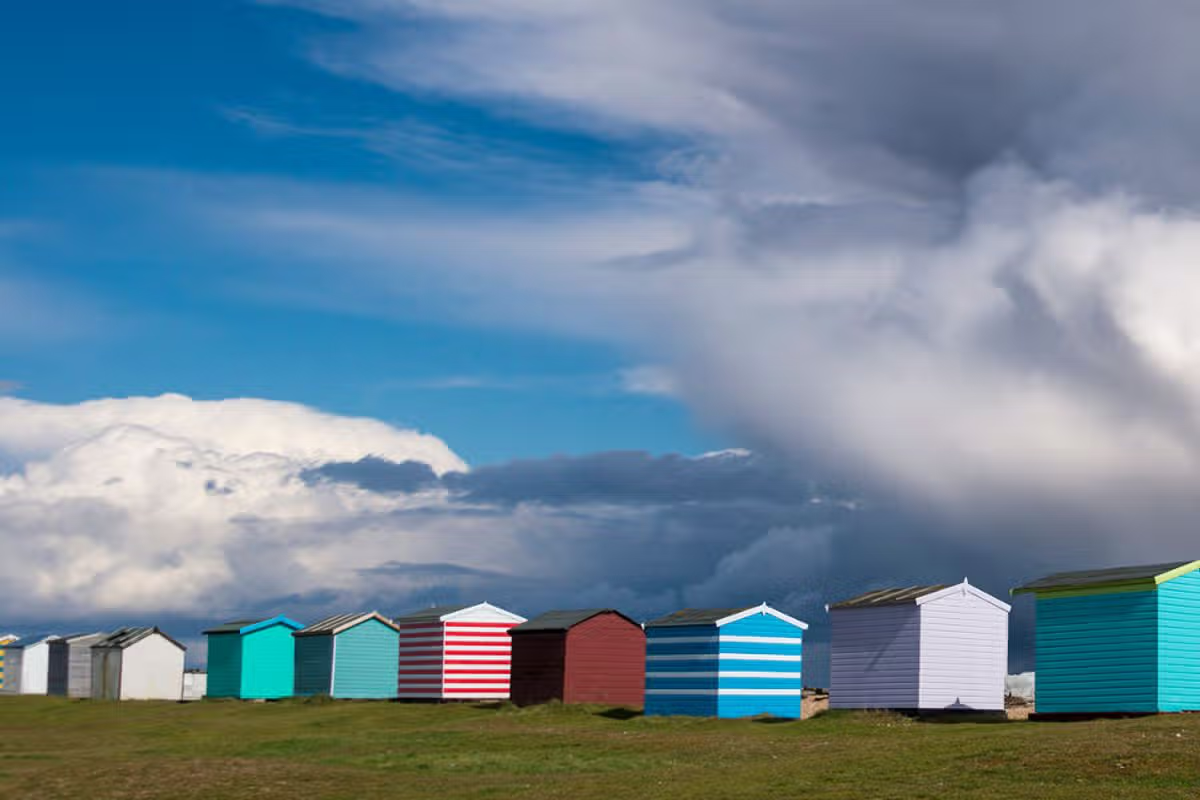
I had discovered by that point in the day that the warmth of the welcome I received there, and the enthusiasm of the mosque’s caretaker-turned-impromptu-tour guide Manzoor Hussain, is typical of Accrington. It’s the kind of place where chippy owner Dianne wanders around the square after dealing with the lunch rush, armed with salt and vinegar, to make sure her regulars don’t need an extra shake.
The kind of place where so many random people kept chatting to Murray and me, our half-day tour ran over by hours. It’s also the kind of place that made national headlines back in 2024 when anti-racism protesters marched into the town centre in response to the Southport Riots.
As the woman behind the Heritage Dome, Hannah Saxton, tells it: “People were coming out of the pubs to shake their hands and hug them.”
Accrington’s challenges are undoubtedly real. It’s a town where its main industry has been hollowed out and has suffered years of underinvestment. But what is also real is its resolve. In its bricks, its glass, its football club and its faith, the town feels less like a relic of industrial Britain and more like a place quietly rewriting its future.
Enchanting little town with friendly locals, colourful buildings and thriving independent shops is like stepping back in time
The River Ashburn runs through the town (Image: Katie Oborn)
A charming and picturesque town nestled on the fringes of untamed moorland lies just a stone’s throw from where I’m based, yet I’d only recently ventured there for the first time. There’s nothing quite like discovering somewhere new – and I’m fortunate to have an abundance of options, given the wealth of distinctive towns dotted around Plymouth in Devon.
Ashburton isn’t far from my Plymouth home, so a friend and I recently made our way towards Dartmoor to discover what this town had to offer. The appealing destination is celebrated for its independent retailers and quintessentially Devonian charm – both of which thoroughly impressed me during our visit.
We caught the bus from Plymouth (the number 38) and the trip was smooth and enjoyable, weaving through stunning countryside, towns and delightful villages en route.
In an era when we’re constantly bombarded with news of shop closures and struggling town centres, stumbling upon Ashburton, with its collection of independent businesses to browse, felt genuinely uplifting.
The streets here remain untouched by modernity – you could easily picture bygone eras as you stroll through the town – and every local we encountered was incredibly welcoming, reports the Express.
There are numerous pubs, tearooms and cafes alongside distinctive establishments, including antique dealers, plus a bakery with customers spilling out onto the pavement – and what really caught my eye was how, despite the drizzle, Ashburton radiated colour thanks to its vibrantly painted properties. The atmosphere feels wonderfully crisp in this town, encircled by rolling countryside and the stunning vastness of Dartmoor National Park, lending the area a peaceful, almost timeless quality.
Browsing through one vibrant independent gift shop called PAD proved delightful – and I ended up purchasing a few quirky bits and bobs that you simply won’t find elsewhere.
There’s also the attractively laid-out Ashburton Fish Deli along one of the principal streets, offering delicious locally-sourced seafood, Mediterranean-inspired products and various other intriguing finds.
All told, I reckon you could probably track down everything you’d require in this town, from top-notch clothing available in various independent boutiques to bargain-hunting opportunities in the small selection of charity shops.
We paused for a late breakfast at Diablo’s Diner, which had a welcoming neighbourhood feel and delicious grub. I’m particularly picky when it comes to bacon, but this little cafe delivered the finest – superb quality, crispy (as I’d requested) – and the prices were extremely fair.
As a Devonian myself, I’m astonished that I’d not discovered this gorgeous town until now, but I’ll definitely be returning soon – in fact, there’s a fascinating festival happening in Ashburton from late April through early May.
The Dartmoor Tors Festival is “bringing together walkers, thinkers, creatives who are interested in natural landscapes and how we relate to them”, the festival website explains. This festival is set to be “a celebration of the power and beauty of places seen as wild and ancient around Britain, and an exploration of why and how they provoke a response”.
THE quiet town of Burnham-on-Crouch in Essex is set to be a TV star.
ITV presenter Josie Gibson was seen filming at the pretty destination on the Dengie Peninsula last week known for its top-tier sailing scene and fresh seafood.
Sign up for the Travel newsletter
Thank you!
Burnham-on-Crouch sits on the River Crouch in EssexCredit: AlamyIt’s nicknamed ‘Cowes of the East Coast’ thanks to its popular sailing sceneCredit: Getty Images/iStockphoto
Josie, along with a film crew, were seen at various different spots in Burnham-on-Crouch, which sits on the River Crouch.
The town that is just an hour outside of London was called “wonderfully understated” by The Telegraph and it even questioned whether it’s “the most peaceful town in England.”
While it might be quiet on land, Burnham-on-Crouch has a busy harbour, as well as a quayside, boat-building yards, listed buildings and sailing clubs.
Thanks to its location and popularity within the sailing circle, Burnham-on-Crouch is nicknamed ‘Cowes of the East Coast’.
This is after the world-renowned Cowes on the Isle of Wight which is the “Yachting Capital of the World”.
Throughout the year are sailing events, but what Burnham-on-Crouch is most famous for is Burnham Week.
The major sailing regatta is held every year at the end of August with plenty of competitive racing for various yacht and dinghy classes.
This year it will kick off on August 29 until September 5, 2026 – and it is a major week in the sailing calendar.
Last week though, the TV crew were spotted on dry land filming outside The Cabin Dairy on the High Street.
The cafe has been in operation since the 1990s, serving up breakfast, brunch, sandwiches, toasties, tea, coffee and ice cream.
Another spot that was seen in front of the camera was The Quarterdeck restaurant.
The seafood restaurant and bistro bar sits on the waterfront, serving dishes like the seafood board with Maldon cured smoked salmon, crevettes, pickled roll mops and anchovies.
Of course you can pick up fish and chips too, as well as a Sailor Sandwich with fish goujons, and oysters.
For oyster fans, check out Burnham Seafood and Oyster Bar which is a fish stall open on Fridays, Saturdays and Sundays.
Here, locals can pick up top quality seafood from lobsters to crab, and of course, oysters.
Seafood is a big part of the town’s history as it used to be a thriving oyster port.
In the 19th century, the River Crouch was filled with oyster beds, which were then harvested and traded into London and across Europe.
Josie Gibson and was seen filming in EssexCredit: WireImageThe Cabin Dairy is a popular cafe and has been open since the 1990sCredit: Facebook
Next door to The Quarterdeck is Harbour Delights, an American retro diner that serves up tasty drinks and desserts.
You can choose from ice cream sundaes, Belgian waffles, bubble tea, milkshakes, and enjoy a coke float.
One place the crew weren’t seen filming at, but is a Burnham hotspot is the Jolly Fryer.
The fish and chip shop in previous years was voted as the Best Chippy in Essex.
You can pick up a medium cod for two with large chips and either curry sauce or mushy peas for £21.99.
As for what’s nearby, from certain points in the town you can see across the river to Wallasea Island which has been turned into a nature reserve.
Visitors can visit by ferry, which will cost around £5 each way, to see wading birds as well as rare butterflies.
For wine fans, head to family-run Clayhill Vineyard which makes Bacchus (often referred to as England’s answer to Sauvignon Blanc) and chardonnay.
10-minutes drive away is the pretty Clayhill VineyardCredit: Unknown
One Sun Writer who visited said: “I particularly loved theEnglishsparkling wine and at £19 per bottle it’s much cheaper — and in my opinion nicer — than champagne.“
The vineyard has views of the River Crouch, and has a small cafe for lunch, tea and cake – and you can taste its wine here too.
For train enthusiasts, head to nearby Mangapps Railway & Museum which is a working railway and museum on a farm in Burnham-on-Crouch.
It has a three-quarter mile passenger line with restored stations, signal boxes, and visitors can go on as many train rides as they like with their ticket.
One visitor on Tripadvisor wrote: “Nice little museum. Lots of different trains and even a well-kept, older station where you can enjoy a small ride on an old train.”
It’s open on weekends between 11.30AM to 5PM. Ticket prices are £15 per adult, £8 per child and under three’s go free.
For anyone who is a fan of The War of the Worlds by H.G. Wells, then you might want to head up to Tillingham.
Fans of the book will know that village is where the narrator’s younger brother escapes to when London is invaded by Martians.
Burnham-on-Crouch is served by the Crouch Valley branch line.
From London Liverpool Street, it can be reached in just over an hour with one transfer at Wickford.
This Essex town has been called a ‘Cotswolds alternative’…
She said: “Its Saturday market is often a place to spot TV chef Jamie Oliver. We admired the great artisan stands, but sadly didn’t spot Jamie.
“Coffee in hand, we took a stroll to St Mary’s Church, which dates to Norman times and is still the tallest building in Essex with its spire topping out at 193ft. Then it was on to Bridge End Gardens and its maze – before a pint at the Cross Keys Hotel, also known for its great food.
“The fun continued with a visit to one of Essex’s Tiptree tea rooms. I knew Tiptree as the makers of tasty jams, often served in little jars at posh hotels.
“We got the day off to the best of starts at Tiptree’s Courtyard tea room in Saffron Walden with their traditional breakfast, a Full English complete with tasty local sausages, bacon, egg and even some traditional Tiptree brown sauce.”