European capitals continue to be beloved getaway destinations for countless Britons looking for a quick break from daily life. With straightforward access by plane or train, these cities are perfect for long weekend trips. Yet an increasing number of locations are gaining notoriety amongst travellers for being hostile, dirty and dangerous.
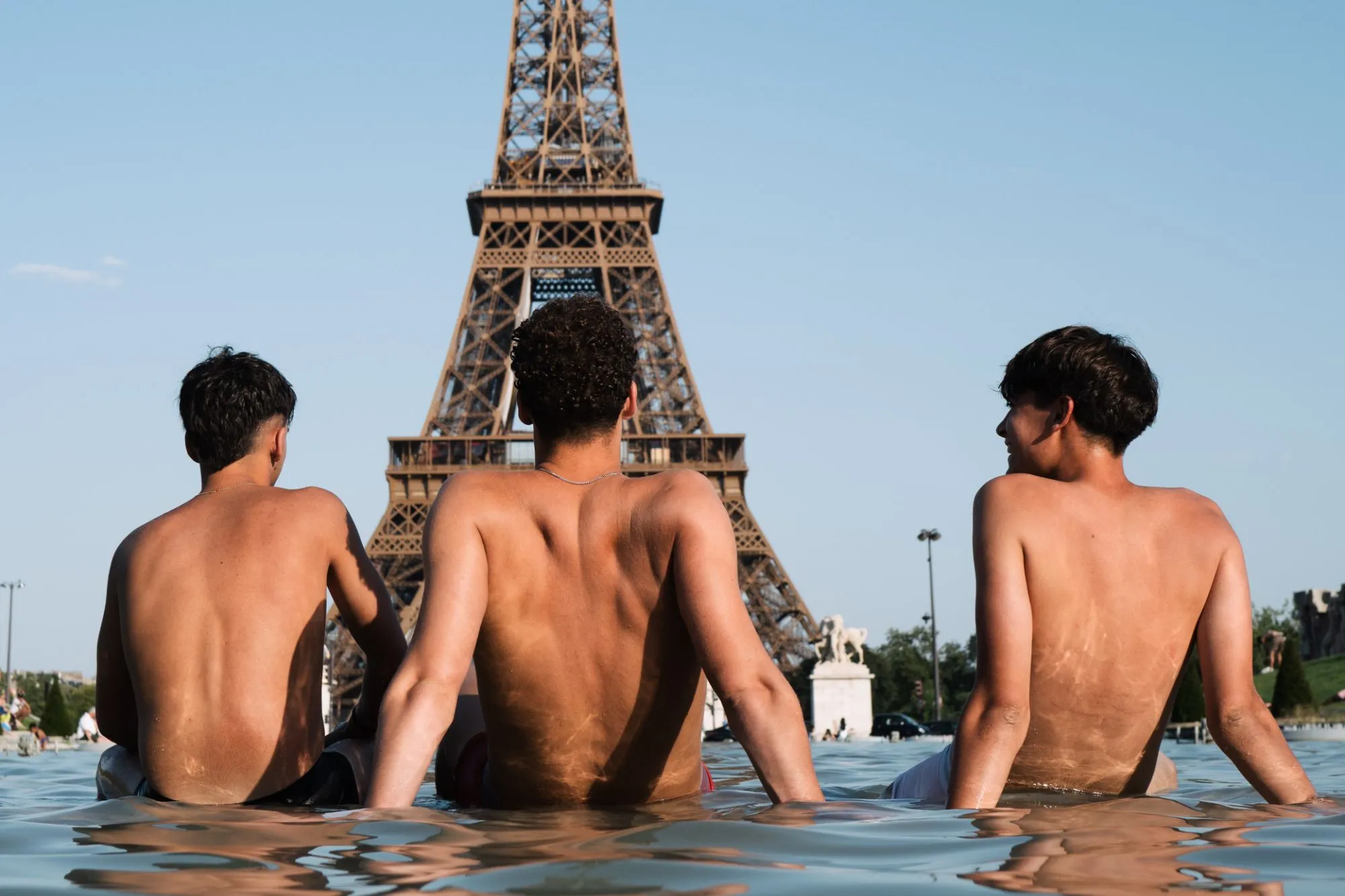
One city in particular has been singled out as a place to avoid, according to recent reviews from British visitors. Long considered the ultimate destination for a romantic retreat, Paris has faced significant backlash, reports the Express.
In a Reddit thread, one user branded the city as grimy and said locals were “unbelievably rude”.
ExplanationWorried14 wrote: “I said ‘merci’ when someone actually stopped at a crossing and he looked angry and shrugged like I was an idiot.
“Some school girls sang a song about me being an English w****, despite me wearing a long, flowing hippie dress that in no way revealed any flesh, and I felt unsafe.”
“Got followed by two men near the Louvre. Would never go back. I don’t know why people say it’s romantic… I guess those people are into some weird stuff.”
Another commenter pointed to rampant criminal behaviour and mentioned that the French capital came with a steep price tag.
Mister Pink said: “Lots and lots of crime is very visible all around in the form of pickpockets and con artists. Very expensive, and the Parisians generally were pretty rude.
“At least when you go to the nicer bits of London for food, the area tends to be quite nice to match the outrageous prices.”
Other well-known European cities fared little better in the eyes of the Reddit users, who were equally ruthless in their verdicts.
Berlin was branded as a city overrun with rude locals.
Philosophyguilty wrote: “Old school Berliners are vicious. If you live in Berlin for any length of time, you will have a tale or two about them.”
Softwarepanda agreed, writing: “Never been in a place with so much grumpiness.”
Brussels was labelled as having a “pretty grim vibe”, while Rome — a city forever synonymous with La Dolce Vita — was alleged to be crawling with “scammers and gropers”.
When you go abroad, there are all sorts of travel rules people need to follow but a certain guideline is considered crucial. It’s vital to know if you want to avoid delays at airport security
11:16, 18 May 2026Updated 11:16, 18 May 2026
UK tourists have been advised to follow the rule (stock image)(Image: Anadolu, Anadolu via Getty Images)
All travellers have been urged to take note of a crucial airport rule, as ignoring it could lead to significant hold-ups at security. It’s well worth bearing in mind as the travel season is already well under way, with scores of Brits eager to head off on their holidays for some hard-earned sunshine and relaxation.
The rule was recently highlighted on TikTok by a travel agent named Jake, who regularly shares straight-talking tips online, and it’s something you may never have previously considered. It’s well worth familiarising yourself with this particular rule, as it could have a real impact on how long you end up waiting in the security queue.
Jake said: “This is the number one reason for delays at airport security in the UK right now, and almost everyone has one in their bag. But, there’s one thing that’s catching everybody out.
“It’s these. Reusable, stainless steel water bottles because, while the 100ml rule has been scrapped, and for some airports you can take up to two litres of liquids with you, these still need to be emptied.
“That’s purely because the machines can’t check the liquid that’s in these bottles. So, if you do have one in your bag and it’s got liquid in, then you’re going to have your bag pulled aside.
“You’re going to have that embarrassing moment on the belt where you see your bag go down a different aisle. So, as you’re heading to security, make sure you empty these.
“The good news is though, if you do forget and you have your water bottle in there with liquid in, they’re not going to make you throw your expensive water bottle away. They’re just going to pour out the liquid that’s in there.
“So this is just going to cause further delays for you getting through duty-free and being able to relax before you get on your flight.”
Content cannot be displayed without consent
It might seem like a straightforward tip, but it’s certainly one worth bearing in mind. Sticking to the rule could help you sidestep a major headache that’s easily avoidable.
What you need to know
What you might not realise is that you must fully empty your reusable water bottle before passing through airport security. While the 100ml liquid limit may not apply to the container itself, any liquid left inside is banned and could lead to your bottle being seized.
Even if your local airport permits larger liquid containers or doesn’t require you to remove electronics from your bag, metal or insulated bottles (such as Hydro Flasks or Yetis) typically need to be drained. The sophisticated scanners are unable to “see” through double-wall insulation, so it pays to stay one step ahead.
As Jake highlighted, certain airports now permit passengers to carry containers holding up to two litres of liquid in their hand luggage. However, this is entirely dependent on the specific airport you’re departing from, as it requires state-of-the-art 3D scanning technology.
For this reason, it’s always wise to check the regulations for your particular airport ahead of your journey. At major hubs including London Heathrow, London Gatwick, Birmingham and Edinburgh, you’re allowed to take containers holding up to two litres each.
That said, this rule only applies at select airports. If you’re in any doubt, always confirm with your airport before you travel.
Greggs, which was founded in Newcastle in 1939, has more than 2,500 locations across the UK, but now wants to “test spreading [its] wings” abroad with this new branch
00:47, 12 May 2026Updated 00:49, 12 May 2026
Greggs has more than 2,500 branches in the UK(Image: SWNS)
Greggs is set to open its first overseas branch — in Tenerife.
The bakery chain says it will offer British tourists arriving on the island “a slice of home” with the shop, which will be tailored to the local setting, serving Spanish Omelette Rolls and freshly squeezed orange juice. The store will also feature seating for up to 92 customers.
British holidaymakers are known for taking familiar comforts abroad, from teabags to tins of baked beans. Soon, travellers heading through Tenerife will not need to pack their own sausage rolls though, as the branch will open at Tenerife South Airport later this month.
Greggs, which has more than 2,500 locations across the UK, described the airport as “the ideal location to test spreading our wings in an overseas setting.” It follows in the success of Wetherspoons, which opened its first pub in continental Europe — Castell de Santa Bàrbera — in Alicante-Elche Miguel Hernández Airport last December.
Tenerife South Airport sees around 13 million passengers each year, with roughly half travelling to and from the UK. Greggs’ outlet there will target tourists with its best-known baked goods and sweet treats, including sausage rolls and doughnuts.
Greggs chief executive Roisin Currie said the airport’s large number of British and international visitors made it the perfect place to trial the brand overseas. She added that the company was excited to bring “a slice of home” to the Canary Islands and believed its affordable range would prove just as popular in Spain as it is in Britain.
Located in the departures area, the bakery is intended to give travellers a final taste of home before flying back to the UK. Greggs said it would offer customers “the perfect way to round off a trip without breaking the bank.”
The branch is opening in partnership with Lagardère Travel Retail, which operates more than 5,000 stores worldwide. Lagardère chief executive Javier Cagigal said the company was pleased to bring such a well-loved British brand to Tenerife. He said the new store would provide passengers with a familiar and comforting option before their journey home, whether they wanted a quick snack, a final treat or a place to relax before boarding.
A UNUSUAL temporary ban is being rolled out in days at a popular vacation hotspot.
The law will impact all residents, tourists, and even cruise lines.
Sign up for the Travel newsletter
Thank you!
The mass 10-hour ban will impact all residents, tourists, and even cruise lines (stock)Credit: AlamySome Royal Caribbean cruise ship passengers are outraged by the booze ban (stock)Credit: Alamy
Alcohol sales will be completely banned across all islands in the Bahamas due to the general election, officials have confirmed.
Polls open on May 12 and between the hours of 8am and 6pm, no alcohol will be available for purchase, per a government notice.
This includes even on private islands that are owned by cruise lines.
Royal Caribbean said it will be abiding by the local laws at Coco Cay, it’s private island in the Bahamas.
“Royal Caribbean is respecting and complying with all local laws and regulations, as we do with every destination we visit,” a Royal Caribbean spokesperson told PEOPLE.
Both the Wonder of the Seas and the Oasis of the Seas ships will be visiting the island on that day.
It’s beach bars Perfect Day and Royal Beach Club Paradise Island will still be open, the cruise line confirmed, and noted that passengers will still be able to get alcohol on board the ships.
Despite this, passengers are fuming about the sudden announcement.
“We scheduled a trip with stops in the Bahamas for our 40th anniversary,” one customer wrote on X.
“We are going with 26 of our friends. Planned activities at CocoCay and Nassau.
“The general election has banned all alcohol for the two days we are there. And we find out only two days before we leave? Not a way to treat customers who cruise four times a year.”
These fees are legally required, and few people are exempt from paying up
13:37, 09 May 2026Updated 13:38, 09 May 2026
People going to popular tourist spots in Europe will have to budget for these ‘taxes’(Image: gece33 via Getty Images)
Holidaymakers planning a trip abroad in 2026 should ensure they set aside funds for an additional levy that visitors are anticipated to pay when travelling to parts of Europe. Certain popular cities could hit travellers with an extra €16 per night during their stay.
Dozens of destinations across the globe already impose a ‘tourist tax’ to help maintain the areas that both residents and visitors enjoy. These charges are typically applied on a nightly per-person basis, or as a percentage of the overall accommodation costs.
Such taxes are generally settled at check-in or checkout directly with the accommodation provider. The majority of tourists are legally required to pay these charges (children and those with disabilities are ordinarily exempt) or risk having their hotel reservations cancelled.
Consumer group Which? has recently published a summary of sought-after holiday destinations that people commonly flock to throughout the summer months. Some opt for short city breaks, while others may spend longer periods at holiday resorts, but most will need to factor in an arrival tax when budgeting.
Spain and Portugal have charges ranging from €2 to €25, while certain locations in France could levy up to €16 per night at some accommodation providers. Italy remains a firm favourite for those seeking a quick city break, yet hotels in some areas could charge as much as €10 per night, reports the Mirror.
Popular EU cities and what they charge in tourist taxes: From July 2026, tourists visiting Edinburgh, Scotland, will be required to pay a levy of “5% of the cost of the accommodation of [the] first five nights’ stay”. Wales is set to follow in 2027 with a charge of £1.30 “per night” in areas where local councils opt to bring it in.
While it’s not officially classed as a ‘tourist tax’, UK visitors will need to fork out a £17 visa fee from late 2026 to enter 30 European countries. This would come on top of any local tourist levies.
The European Travel Information and Authorisation System (ETIAS) is a compulsory digital travel authorisation launching in late 2026 for visa-exempt nationals (including UK, US, Canada, Australia) visiting 30 European countries. The ETIAS is a one-off, separate payment needed to enter the Schengen Area of Europe. Once purchased, it remains valid for three years. The countries that will require this ‘e-visa’ include:
AFTER five years of being shut-off, one small island off the coast of Montenegro is set to reopen, as is its luxury resort.
Called Sveti Stefan, the pretty spot has been closed for half a decade due to backlash from locals.
Sign up for the Travel newsletter
Thank you!
The island of Sveti Stefan has been closed since 2021Credit: AlamyThe luxury retreat on the island will reopen its doors in JulyCredit: Aman
Follow The Sun’s award-winning travel team on Instagram and Tiktok for top holiday tips and inspiration @thesuntravel.
A few miles away from Montenegro‘s town of Budva is the small and beautiful island of Sveti Stefan which is home to a luxury resort, Aman Sveti Stefan.
The hotel is accessible only to its guests who have to walk across a small strip of land which connects it to the mainland.
But the hotel closed back in 2021 due to a dispute between the property operator and locals over access to its public beaches.
When the hotel first opened in 2009, it made its surrounding beaches including Miločer Beach (King’s Beach) and Queen’s Beach accessible to its guests only.
Access for locals was made difficult with the luxury resort charging high fees around €200 (£172.63) for sunbeds and umbrellas.
However, these had historically been free for all to enjoy with space for locals to lay down a towel.
Restriction of the beaches caused a lot of backlash and there were even protests back in 2021.
The dispute between locals and the hotel ended up with the temporary closure of the resort which stretched on for five years.
Sveti Stefan is connected to the mainland via a small strip of landCredit: Alamy
In 2023, Europa Nostra, the European Voice of Civil Society committed to Cultural Heritage, said: “The Montenegro State has almost half privatised this national treasure and disenfranchised its own citizens from their own public domain.
“Public access to Sveti Stefan old town and other parts of the site has been forbidden, even during winter months when the hotel is closed, making it impossible for locals and non-hotel guest tourists to enjoy this cultural landscape.”
Five years on and the hotel operator, Aman,has confirmed the island retreat in Montenegro will be reopen on July 1, 2026.
The luxury resort still looks like a small village, and is made up of hand-restored stone cottages and suites all updated with modern furnishings.
The resort is made up of hand-restored stone cottages and suitesCredit: Aman
Some of the more luxurious suites even have private swimming pools, courtyards and terraces.
Stays include a daily breakfast, in-room refreshments and access to snorkelling equipment and paddle boards.
A stay in the Deluxe Cottage which is based on an original island home starts from €2,973 (£2,566.12) per night.
The resort has a mainland retreatcalled Villa Miločer, that and its Aman Spa will welcome guests back on May 22, 2026.
As for its surrounding beaches, these are open to the public once more with free access – but there are no shower, changing cabins or toilets.
For anyone who wants a glimpse of Sveti Stefan, the nearest airport is Tivat which is a three-hour direct flights from the UK and as little as £38 each way with easyJet.
The Koh Phi Phi islands in Thailand deliver some of the most breathtaking scenery you’re ever likely to see, but they’ve also struggled with overtourism issues since featuring in Danny Boyle’s The Beach
The island can become incredibly crowded during the summer (Image: INTERNET)
An alarming crowd scene on the shores of one of the world’s most famous coastlines has raised overtourism concerns.
The Koh Phi Phi islands in Thailand deliver some of the most breathtaking scenery you’re ever likely to see. Sat in the Andaman Sea, they’re made up of dramatic limestone cliffs and white sand bays surrounded by turquoise waters filled with tropical fish.
The islands have long been popular among tourists, but particularly so since they starred in Danny Boyle’s The Beach.
The success of the film has been a disaster for the pristine, idyllic beach that gives the flick its name. Each year huge numbers travel to Koh Phi Phi’s Maya Bay, where it was shot, to bask in its impossibly blue waters and sunbathe on the golden sands.
Today, the reality of the Thai destination could not be further from the slice of paradise at the heart of the film.
A recent video from Koh Phi Phi shows a crowd of hundreds of sunseekers, packed shoulder to shoulder. They appear to be close to the dock, not yet having arrived at Maya Bay.
The video has been met with negativity on Reddit, where it was posted. “Nothing about that looks fun,” one user wrote. Another added: “Absolutely not worth going. I went last month and it was so crowded it just wasn’t fun. At all.” A third wrote: “What a nightmare.”
Koh Tours, which offers trips around the archipelago, recently wrote a blog post about the situation there, explaining that efforts to tackle overtourism had proved difficult.
“Koh Phi Phi Leh — the smaller, uninhabited island with Maya Bay — was famously closed for three years after The Beach tourism wrecked the coral and stressed out the blacktip reef sharks,” the post reads.
“They reopened it in January 2022 with timed entries, boat limits, no overnight stays, no sunscreen allowed in the water. It’s genuinely better than it was in 2018. But it’s not quiet. A ‘boat limit’ of a couple of hundred visitors at a time still means a couple of hundred people standing in the same shallow bay.
According to Koh Tours, the archipelago’s other main island, Koh Phi Phi Don, also suffers from crowds.
“Koh Phi Phi Don is genuinely crowded. Not ‘it gets a bit busy in peak season’ crowded. Actually crowded. The village on Tonsai Bay — which is basically the whole flat part of the island between the two bays — packs in more foot traffic per square metre than most Thai cities,” the post continues.
Jub Yata is a destination manager at Intrepid Travel, a firm which specialises in sustainable tourism.
“Right now, you just walk around, you take the photos, then you have to leave. Everyone wants to see the beach from the DiCaprio film. It is beautiful, I can’t deny, but there are too many people,” she said of Maya Bay.
Jub works with Intrepid to take tourists to Thailand in a more responsible way that doesn’t overwhelm the most popular destinations. In recent years, this has meant visits to Koh Thap, Koh Poda, and Koh Khai.
Koh Thap is one of the most popular offshore islands around Krabi – a region in the west of Thailand, just across from Phuket. Most island-hopping tours come here to witness and photograph the amazing parting of the seas.
At low tide, a stretch of sand emerges from the waters, linking the larger landmass known as Chicken Island to Koh Mor and Koh Thap. The phenomenon is commonly referred to as Talay Waek, which means divided sea.
Koh Poda is a particularly quiet and tranquil place. One Intrepid traveller said that the island “felt like a completely deserted Robinson Crusoe island”.
Meanwhile, Koh Khai in Phuket is the most built-up and well-visited of the three islands included in the Intrepid tour. Made up of three small islands – Khai Nok, Khai Nai and Khai Nui – it is easy to hop from one island to the next, even in the space of just half a day. Khai Nai is the biggest of the three and has spectacular views and a white sandy beach which makes it perfect for snorkelling and swimming.