A picturesque Northumberland seaside village has secured a coveted spot in Time Out’s top 10 best UK seaside towns for 2026, outranking popular destinations including Bamburgh and Berwick
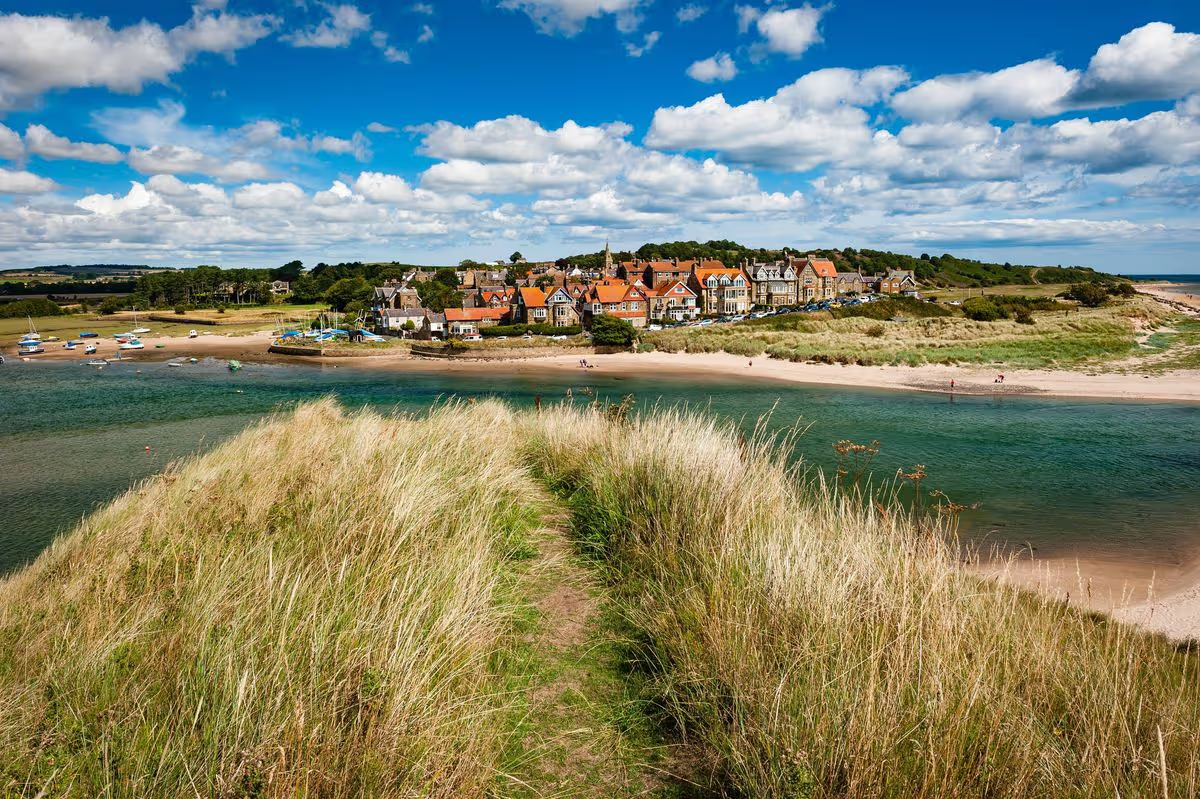
The town is finally getting the credit it deserves (Image: by Marc Guitard via Getty Images)
The Northumberland coastline is grabbing attention this summer as holidaymakers hunt for wallet-friendly getaways, and with the newly opened King Charles III Coastal Path, the entire UK shoreline can now be explored on foot.
Thanks to the coastal path encircling the whole country, enthusiastic walkers and adventurers are scouting their next staycation, and this peaceful village offers an ideal starting point.
Time Out unveiled their ranking of the finest UK seaside towns to visit in 2026, and an overlooked treasure in Northumberland secured a spot in the top 10. Alnmouth is celebrated for its wild natural beauty and soft sands, discreetly positioned along the coastline, sitting between Newcastle and Edinburgh.
Outranking some of the nation’s most beloved seaside resorts, including St Ives and Brighton, and climbing above its nearby neighbours Bamburgh and Berwick, it’s evident that Alnmouth is one to keep an eye on this year.
The beach
Alnmouth lies within one of Northumberland’s Areas of Outstanding Natural Beauty, and consequently, it brims with unspoilt corners and abundant wildlife. Alnmouth Beach is precisely one of these treasured locations, cherished by both tourists and locals for its expansive stretch of sand, providing a delightful day by the sea.
One recent visitor shared on TripAdvisor: “Nice wide sandy beach with convenient shops and cafes nearby. Parking right behind the beach. Not over-commercialised.”
Another visitor added: “Really lovely beach! Was nice and quiet when we went so was so peaceful. Great place to chill on a day out. Good fun wading in the water! Would definitely return!”
The beach warmly welcomes four-legged friends, making it a brilliant destination for the whole family. It’s divided into three sections, offering ample room to spread out and have fun.
Many visitors choose to arrive via the Northumberland Coast Path, making their way from neighbouring towns and villages while taking in the stunning coastline in its entirety.
Restaurants
According to TripAdvisor reviews, the top spot for a hearty meal in the village is Bistro 23, which serves up brunch and coffee during the day alongside evening dining in the bistro.
One delighted diner left a glowing review: “Wonderful food and super service at this amazing restaurant. We have visited a number of times and have never been anything other than delighted.”
For a touch of elegance, the delightful Whittling House is a country restaurant that prides itself on using locally sourced produce packed with flavour. It also boasts 10 guest rooms, making it the perfect base for a full weekend away, with their exceptional food and drink keeping you going throughout your stay.
For something a little more traditional, The Red Lion — which also operates as a bed and breakfast — offers an extensive pub grub menu. Well-behaved dogs are made to feel at home in the bar and beer garden, where you can enjoy a pint while soaking up views of the boats.
Art Gallery
Celebrating the work of local talent, The Old School Gallery makes for a wonderful pit stop during a day spent exploring the coastline, nestled inside a charming period school building. It boasts an accessible collection of inspiring artwork from artists across Northumberland and beyond, all of which can be enjoyed alongside a delicious coffee from their very own in-house café.
One reviewer wrote: “Very friendly staff with a warm welcome. The gallery is varied to suit all tastes and budget. We only went for a coffee and ended up buying a print by a local artist.”
Another visitor added: “A lovely old English school turned into a gallery and café, what couldn’t you love about this? The food is great and they have an amazing gift shop.”
Whether you’re wrapping up for a bracing winter stroll along the shore or seeking out a tranquil spot to soak up the summer sun, the quaint village of Alnmouth is the perfect place to take a breather and drink it all in.
HAVANA — Spanish hotel chain Meliá has joined a growing list of companies with a long-standing presence in Cuba that are withdrawing or limiting their operations on the island after the U.S. announced new sanctions while upholding an oil embargo.
Meliá will cease operations at 15 of the 34 hotels it manages on the island, according to state website Cubadebate, dealing a blow to Cuba’s vital tourism sector, which has plummeted since its 2018 peak.
The report on Wednesday stated that Meliá’s decision was based on “a sense of corporate responsibility and external factors that have significantly affected the operation, legality and security of these establishments.”
The decision was announced May 26, just weeks after President Trump signed an executive order expanding sanctions against the island. Most of the sanctions targeted Grupo de Administración Empresarial S.A., a business conglomerate operated by the Cuban Revolutionary Armed Forces, with the U.S. asserting it was a threat to its national security.
The executive order freezes the assets of foreign companies, seizes their accounts in the United States and prohibits travel by their shareholders, investors and employees— virtually eliminating their activity in the U.S. financial system.
GAESA, a Cuban conglomerate created in the 1990s, owns a wide range of businesses, from car rentals and retail stores to transportation companies. It is Meliá’s partner in hotel management through one of its subsidiaries, Gaviota.
Meliá deals new blow to Cuba’s crumbling tourism sector
Meliá is one of Cuba’s most important partners in its vital tourism sector. Until its partial withdrawal, it operated some 14,000 rooms.
Spanish and Canadian firms are the biggest investors in Cuba’s hotel sector, noted Lee Schlenker, a research associate at the Quincy Institute’s Global South program, a Washington think tank.
“With the lack of international tourism, the fuel shortages, and just the broader decline since COVID…I’m sure that these companies will be rethinking their operations in Cuba with major implications for the people of Cuba, not just GAESA,” he said. “There are thousands of Cubans who work in these hotels.”
Several of the hotels that Meliá abandoned in idyllic destinations like the resorts of Varadero, Cayo Santa María and Jardines del Rey “were already closed and inactive due to energy problems and the drop in demand in Cuba,” according to Cubadebate.
Cuba’s government has blamed the U.S. energy blockade for prolonged blackouts, water shortages, supply problems, deficiencies in the healthcare system and disruptions in all aspects of daily life.
Those who work in Cuba’s crumbling tourism sector lamented Meliá’s announcement.
“It’s going to affect us, our families, and everyone involved in tourism. Our pay and income depend on this,” said Erich López, a driver of a green 1950s Dodge who has been driving for two decades to support his family.
For Carlos Luis Carbonel, a 62-year-old parking attendant who works in front of the giant Meliá Cohiba hotel in Havana, the situation “is going to be a blow.”
“This is terrible for everyone: for tour guides, for parking attendants, for hotel workers, for everyone,” he said.
Other major hotel chains including Canadian-owned Royalton and Spain’s Iberostar have limited or suspended operations in Cuba in the past week.
Tourism in Cuba, which reached a peak of 4.3 million visitors in 2019, saw a significant drop in the number of tourists arriving in the first quarter of this year, 48% lower than in the same period in 2025.
Only 298,000 tourists arrived in Cuba in January, February and March, compared to 573,300 international visitors during the same period last year, according to government data.
Cuba struggles to breathe
On Wednesday, the enormous and iconic sign of the Royalton Paseo del Prado hotel at the entrance of Old Havana was removed, as confirmed by The Associated Press during a visit. Meanwhile, the 500-room Iberostar Selection — also known as Tower K — the most modern and luxurious of the hotels slated to open in 2025, standing over 490 feet tall, has remained closed for days.
Airlines including World2Fly, Air France and Iberia have canceled flights to and from Cuba.
Also on Wednesday, Cuba’s Central Bank announced that Visa and MasterCard operations on the island would be suspended following the termination of relationships between foreign entities and FINCIMEX S.A., a Cuba-based agency affiliated with GAESA.
Last month, Canadian miner Sherritt International Corp. signed a non-binding agreement with Gillon Capital LLC, a family office linked to a former Trump adviser, to sell its stake in a mining business in Cuba.
In late January, Trump threatened tariffs on any country that sells or supplies oil to Cuba, as his administration pressures for a change in its political system and government. The move has deepened a crisis caused by seven decades of U.S. sanctions.
While U.S. and Cuban officials held talks earlier this year, tensions have risen. In late May, former President Raúl Castro was charged in a U.S. indictment for his alleged role in the downing of two civilian aircraft operated by Miami-based exiles in 1996 in Cuban waters.
THE release of Rivals series two has thrust the Cotswolds into the spotlight once more.
Brits are seeking out the pretty scenery of Rutshire with its stone cottages, rolling countryside and delightful pubs in beautiful villages like Kemble.
Sign up for the Travel newsletter
Thank you!
Kemble has a ‘vintage’ train station with Victorian featuresCredit: AlamyThe village pub is called the ‘Tavern Inn’ and is considered a ‘gem’ by visitorsCredit: Google maps
Data from Trainline revealed that since Rivals returned on May 18, passengers to Cotswolds ‘gateway stations’ have risen by an average of 22 per cent.
That includes the tiny town of Kemble which is a 12-minute drive away from Cirencester.
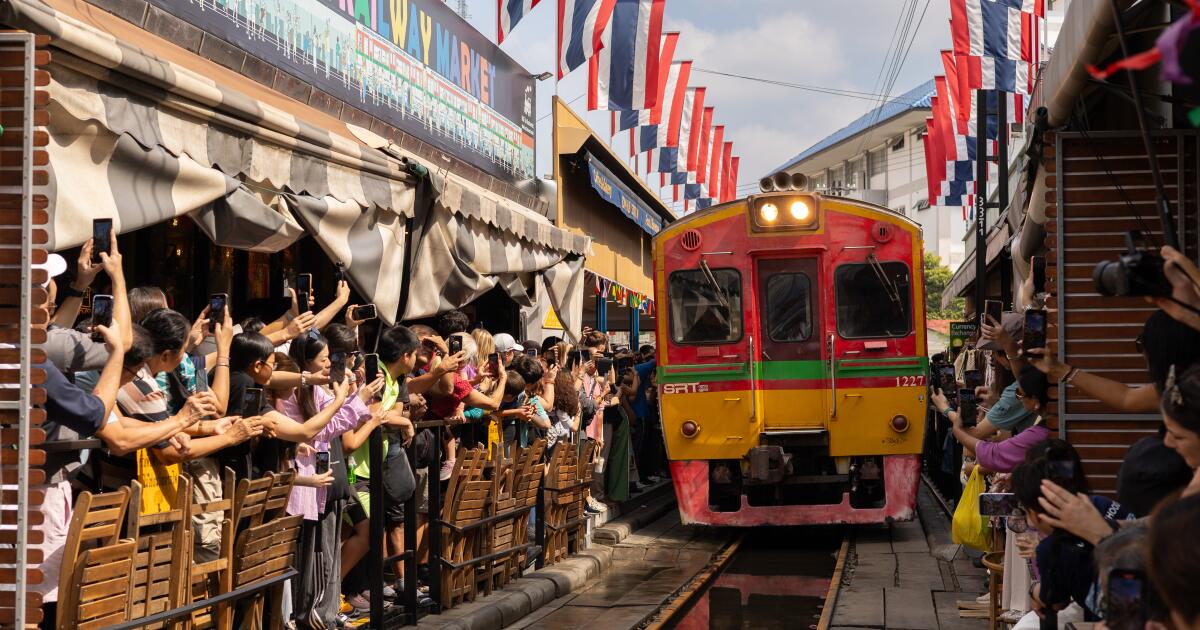
Kemble is considered a ‘rail gateway’ for the southern Cotswolds as it’s one of the smaller spots that actually has a train station and a direct link to London.
With Great Western Railway, visitors can get from London Paddington to Kemble in just over an hour.
For those who want a great view of the runway, the airport has its own restaurant called AV8 where visitors sit on the terrace and look out over the airfield.
Other villages in the Cotswolds that have seen an increase in visitors since the release of series two of Rivals are Moreton-in-Marsh and Charlbury.
BANGKOK — With summer around the corner, soaring prices and other complications from the war with Iran are straining the tourism-dependent economies of Cambodia, Thailand, Vietnam and other countries in Southeast Asia.
The region’s peak tourist summer season is at risk as elevated jet fuel costs coupled with ceasefire uncertainties prompt flight cancellations and higher ticket prices.
Tourism in Asia has yet to fully recover from the COVID-19 pandemic. Now, many countries are coping with the war’s repercussions on global energy supplies and prices, which hit Asia first and hardest. Some families are pulling back on travel as gas and groceries get more expensive worldwide. Crowds have thinned at some places once synonymous with travel.
“With gasoline prices rising and tourism declining, how can we make money?” asked Siv Pech, a 58-year-old rickshaw driver in Siem Reap, home to Cambodia’s centuries-old Angkor Wat temple complex.
Tourism is an economic lifeline for many developing nations. It contributes nearly 13% of gross domestic product in Thailand and nearly 9% in Vietnam, and it underpins millions of jobs in Cambodia. Travelers bring in much-needed foreign currency for import-dependent economies such as the Philippines and Nepal.
Those tourism dollars are more crucial than ever as war-driven spikes in oil prices push up the cost of fuel imports, especially for parts of the world that relied on the Strait of Hormuz off Iran’s coast as a conduit for much of their oil and gas. Iran essentially shut down the strait to commercial traffic after the U.S. and Israel launched the war more than three months ago.
The war will determine which tourism businesses can survive long enough to benefit from the eventual return of travelers, said Jitsai Santaputra of the Lantau Group, an energy industry consulting firm. “This, happening within five years of each other, first the pandemic and now the war, is horrible for the tourism industry,” she said.
Travel costs
Jet fuel shortages and surging costs have led Vietnam Airlines, the Malaysia-based AirAsia group, Hong Kong’s Cathay Pacific and other carriers to cut flights or otherwise adjust schedules.
European carriers face a squeeze for similar reasons.
Airspace closures across the Persian Gulf early in the war and the intermittent closures of certain Persian Gulf airports cut off key layover locations for Asia-bound flights or forced commercial airplanes to take longer, costlier routes.
Airfares have jumped, with airlines such as Air India and Cathay Pacific implementing sharp increases in fuel surcharges.
Cathay Pacific’s fuel surcharge for medium-haul flights has jumped to $80, up from $34 before the war. For long-haul flights, it increased to $174, up from $73.
“Jet fuel prices remain at highly elevated levels” and have increased cost pressures, said Lavinia Lau, Cathay’s chief customer and commercial officer. Travelers are booking closer to their departure dates, she said, indicating growing unease.
Sandra Awodele, a freelance travel writer in the Washington area, often plans year-round international trips and hoped this summer would be when she finally crossed off Asia from her bucket list.
In March, she began planning a long-awaited vacation to Thailand, envisioning one to two weeks of exploring. Her plans hit a wall when she checked airfares.
“I looked at flight options and that’s where it ended,” Awodele said.
On the ground, rising fuel costs in tourism-dependent Southeast Asia are squeezing taxi and ride-hailing app drivers.
Pech, the Cambodian rickshaw driver, said he used to earn up to $20 a day toting tourists around Siem Reap. That’s plummeted to about $5 a day.
His gas bill eats half of that. The rest goes to food. “Some days, I don’t earn even a cent,” he said.
Slow summer expected
Tourism is vital for many regional economies, accounting for nearly 11% of economic activity in the Assn. of Southeast Asian Nations in 2019, according to the World Travel and Tourism Council.
An analysis by Moody’s Analytics estimated effects from the war would probably reduce economic growth across the Asia-Pacific region by 0.1 to 0.4 percentage points in 2026.
“The conflict will weigh on growth mainly through higher production costs and consumer prices, along with weaker external demand from trade and tourism,” said Albert Park, chief economist at the Asia Development Bank.
Higher airfares and weaker travel confidence can quickly spill over into household livelihoods and public revenues in economies where visitor arrivals are a major source of jobs, income and foreign exchange, according to a recent report by the United Nations Development Program.
Travel is often the first expense people cut when the economy worsens, said Le Tuyet Lan, who runs bed-and-breakfast properties in Vietnam’s Hanoi and Ho Chi Minh City.
In times of crisis, luxury travelers tend to shift toward mid-range options, mid-range travelers move toward budget hotels, and the cheapest tier of the market becomes the most vulnerable.
“This will disrupt the whole industry,” she said.
‘We are feeling it’
Tourism in Thailand is “a big industry and we are feeling it,” said Santaputra with the Lantau Group in Bangkok, one of Southeast Asia’s most visited cities.
The number of visitors to Thailand fell 7% year-on-year in April, while European arrivals fell almost 16% and Middle Eastern arrivals sank 57%, according to the Ministry of Tourism and Sports.
In neighboring Cambodia, Sokha Sambo, owner of the popular Sambo Khmer & Thai Restaurant in Siem Reap, said the rising price of liquefied petroleum gas used for cooking has strained her budget, hindering her ability to dish out her signature green curries.
“I’m worried about gas and goods inflation. It makes the business less profitable and difficult to cover employees’ salaries,” said Sambo, who has 14 staff members.
In the first four months of 2026, the number of recorded international and domestic visitors to Siem Reap dropped by 37.5% compared with the same period last year, according to the province’s tourism department.
“This has greatly affected all of us,” Sambo said.
Delgado and Chan write for the Associated Press and reported from Bangkok and Hong Kong, respectively. AP writers Aniruddha Ghosal in Hanoi and Rio Yamat in Las Vegas and freelance journalist Sinorn Thang in Phnom Penh, Cambodia, contributed to this report.
The Canary Islands are experiencing a tourism crisis, with activists warning the coastline is unsustainable as locals say the ‘land is being destroyed and speculated on’
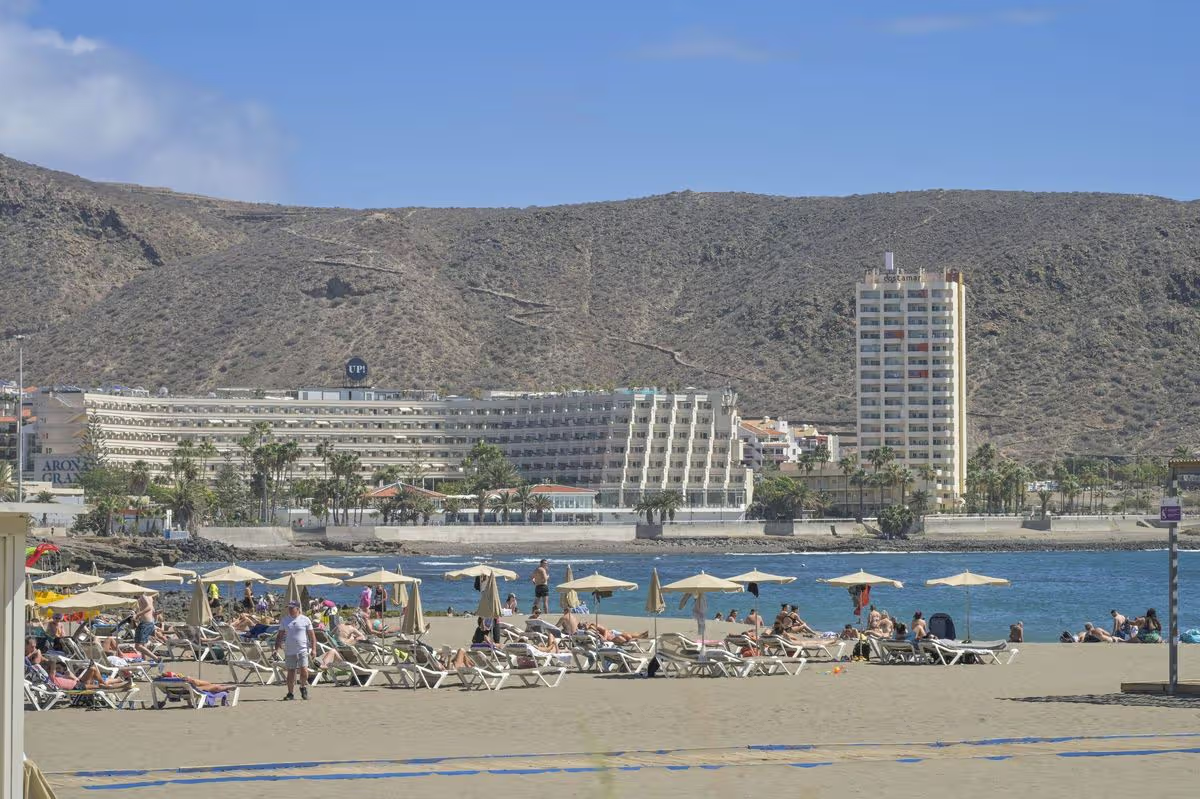
Loopholes in planning regulations have enabled the destruction of miles of coastline(Image: Getty)
The Canary Islands have witnessed mounting demonstrations in recent years. Frustration has been building amongst residents, who argue the surge in tourism to the sun-soaked Spanish archipelago is unmanageable. They point to outdated regulations that allow property speculators to purchase land for hotels and holiday flats, while paying only minimal tax.
Consequently, Canarians claim they receive the lowest average salaries in Spain and face difficulties securing affordable accommodation. Yet now they have a further complaint against holidaymakers. The islands are suffering coastal erosion at an alarming pace. Campaigners say the Canary Islands’ coastline is on the brink of disaster.
Each year, based on a report from SOS Costas Canarias, approximately 21⁄2 miles of coastline disappears. Anne Striewe, the foundation’s director, states that hotels, apartment blocks, housing estates and marinas, amongst other structures, are being constructed on this “lost” territory.
The organisation cautions that throughout the eight islands, roughly 18% of the territory within the first 500 metres from the sea has already been developed. Beyond protected natural areas (PNAs), this figure skyrockets: it surpasses 40% on multiple islands and coastal sections, reaching 43% in Lanzarote and Gran Canaria.
Nearly 20% of the living space on the Canary Islands is dedicated to tourism – in comparison to around 4% on the Spanish mainland. Five municipalities on the Canaries possess more tourist beds than permanent inhabitants: Yaiza (Lanzarote), Pájara (Fuerteventura), Mogán (Gran Canaria), San Bartolomé de Tirajana (Gran Canaria) and Adeje (Tenerife).
Ms Striewe highlights that, beyond holiday accommodation, there is a vast array of tourist-related infrastructure including access roads, golf courses and desalination plants, which fail to show up in hotel occupancy figures yet remain part of the same problem.
Sharon Backhouse, director of GeoTenerife, told Sky News that the Canary Islands are a “biodiversity jewel in the Atlantic,” yet local authorities provide minimal protection for the islands’ natural habitats.
She warned that each year more “beautiful landscapes are cemented over” to make way for new tourist resorts.
She added: “The problem with these resorts is that we just don’t have enough resources in terms of water, what happens to all the rubbish, how is it all recycled.”
Carmelo Javier León, director of the UNESCO Chair in Tourism and Sustainable Economic Development at the University of Las Palmas de Gran Canaria (ULPCG), describes a conflict between those who wish to protect the islands’ natural beauty and “the development of ever more accommodation options.”
The authors of the SOS Costas Canarias report are demanding an immediate halt and the scrapping of planning permissions for undeveloped coastal land.
They argue that the seemingly relentless construction not only obliterates irreplaceable natural habitats and undermines the very scenic beauty that attracted tourists to the islands in the first place, but also dramatically heightens the risk of localised flooding. Approximately 80,000 inhabitants are already vulnerable to coastal flooding risk, yet almost half of flood-susceptible territory has already been designated for housing.
Irma Ferrer, a lawyer for Urban Planning Transparency and Civic Action Against Corruption, highlights that this demonstrates the institutions are failing to operate properly. “In urban planning and environmental matters, legislation is not enacted to defend the public interest,” she complains.
She added that the islands now possess an economy which is essentially “based on the destruction of the land and on speculation.”
The Cotswolds is famous for its beautiful scenery, charming market squares and iconic stone houses. However, a common issue keeps springing up when the sun is shining
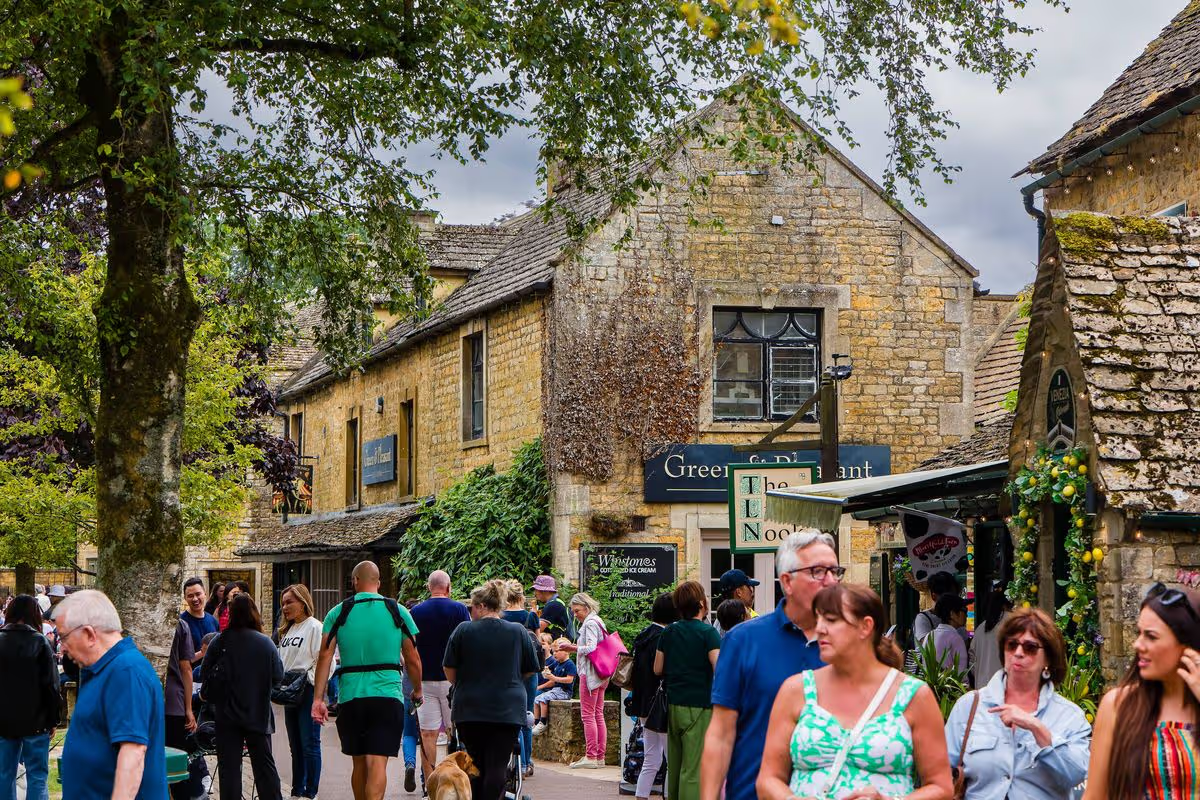
The Cotswolds can get very overcrowded when it’s sunny(Image: WhitcombeRD via Getty Images)
This Bank Holiday weekend promises glorious sunshine, and plenty of us will be seizing the opportunity to venture out on day trips.
Britain boasts an array of stunning destinations right on our doorstep – the Cotswolds among them. The region hasn’t just served as a backdrop for films, it’s also become a social media sensation, drawing visitors from across the globe.
Countless people relish wandering through the lush countryside, picturesque stone cottages and bustling market squares. They also descend in their thousands upon the wealth of pubs, independent shops, farm outlets and tearooms.
Yet the storybook villages aren’t always quite so perfect in reality. That’s because many have been hit by overtourism in recent years.
Traffic jams, parking disputes and pressure on local amenities are among the problems that have emerged. In fact, residents are so fed up they’re urging people to stop going altogether.
Content cannot be displayed without consent
Illustrating the effect on both locals and tourists alike, a visitor named Chloe recorded footage in Bourton-on-the-Water this month. The stunning Gloucestershire village is renowned for its river and distinctive bridges.
On quieter days, it feels wonderfully tranquil to settle beside the water and absorb the surroundings. Yet it becomes extremely busy during peak season and on sunny weekends, with bottlenecks forming on the bridges and along the riverbank.
Following her visit on a sunny day, Chloe cautioned: “What should have felt peaceful was packed and overwhelming.
“The sheer amount of tourism must keep local businesses thriving – but it was hard not to feel like the charm is being worn down in this quaint, rural village. Visit with caution and maybe at 6am in the morning to beat the crowds.”
Chloe’s video struck a chord with many, racking up more than 13,100 likes alongside a flood of comments from frustrated locals struggling to go about their everyday lives.
One resident pleaded: “Please stop coming here, I’m just trying to get to work.” Another sympathised, writing: “My mum lives there and says it’s a battle just to get to the shops for some milk. I couldn’t do it!”
A third added: “I live here and genuinely don’t remember the last time I took my kids down to the river or even for an ice-cream on a nice day because it’s just too overwhelming. I’ve never seen traffic like it. It’s taking some people over an hour to get from one end of the village to the other just to get home.
“It’s a pretty village, yes, but other residents and I feel something needs to be done with how stupidly busy it gets.”
Nevertheless, some offered helpful tips for those planning a trip. Visiting during the off-season is widely recommended as the best way to soak up the surroundings without the mayhem.
One commenter suggested: “I prefer visiting the Cotswolds during autumn and winter because it’s much calmer. It’s mostly spring and summer that is so busy. The Cotswolds can be very quiet when it’s colder – and in my opinion the atmosphere is so much better on colder days.”
A second visitor agreed, adding: “We went in March. Had the place to ourselves. We had been before in summer and it was hell, so learnt our lesson!”
Visitors to one Italian destination say it’s “incredible”, but it was once a place shunned by many
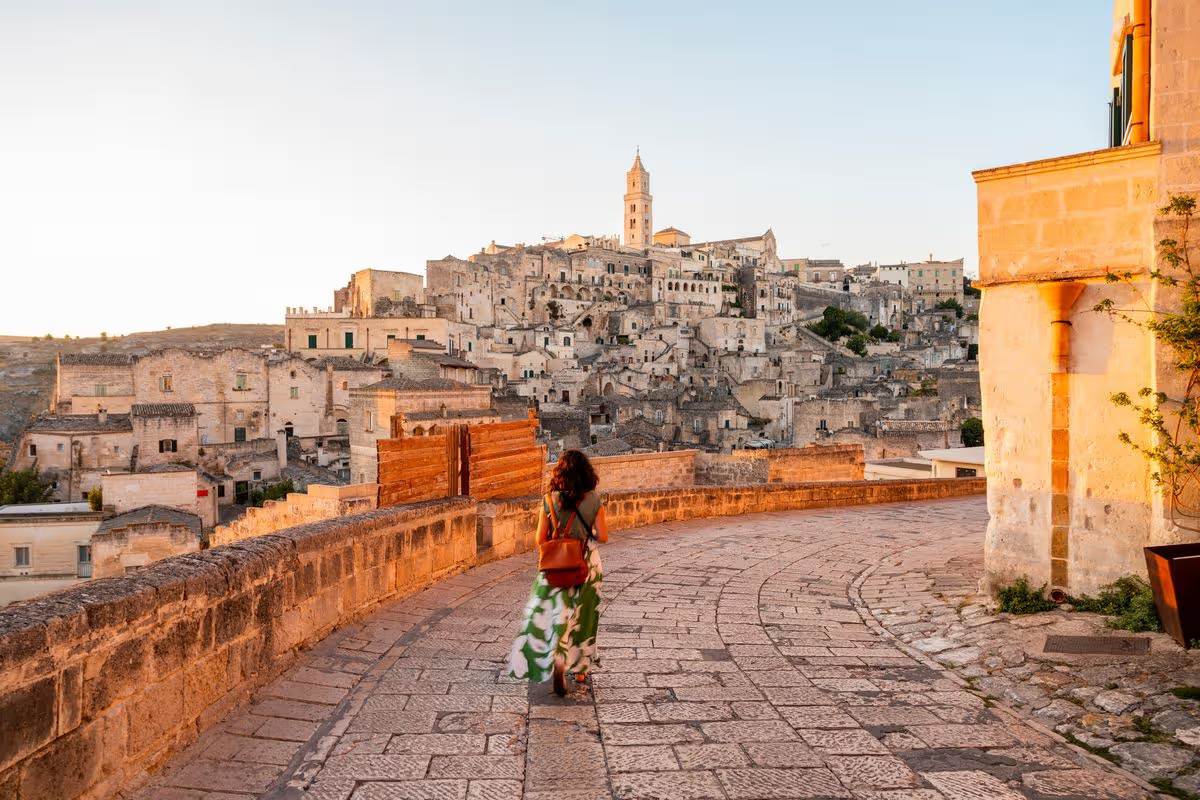
Once a ‘national disgrace’ this Italian destination is now ‘incredible’(Image: Marco Bottigelli via Getty Images )
Italy is a beautiful country with each province very different from the next – and each Italian area has its own identity and culture. While holidaymakers typically flock to the Amalfi Coast, cities such as Florence or Rome or Lake Garda or Lake Como, there’s a lesser-known spot that has left visitors speechless with delight.
Once famous for being the ‘shame of Italy’, Matera, a city based high on a rocktop in the southern Basilicata is now a luxurious tourist getaway. Here, a collection of old cave dwellings forged into the mountains in an area called Sassi offer a peaceful inland holiday infused with history.
The cave dwellings were evacuated by the Italian government in the 1950s, hailed as slums at the time with poor living conditions. Thousands of residents were transferred into modern housing and Prime Minister Alcide De Gasperi, of the time, described Matera as a “national disgrace”.
It’s likely that not all the locals wanted to leave their Matera homes at the time, but the spot was deemed a health hazard with no ample sewage system or electricity – and it was poverty-stricken.
One former Matera resident once described living conditions as “brutal,” with “families of maybe nine or 10 children, sleeping next to mules and pigs”.
“We were dying of hunger”, said Luigi Plasmati recalling his family’s life in Matera several years ago, when he was 89-years-old.
These days things have really turned around – and several Airbnb cave-style accommodation stays are described as “exceptional” by those who visit.
Sassi di Matera covers two districts, with the city of Matera situated on a mountain top.
One TripAdvisor review by a guest staying in Pietragialla, which looks across to the city of Matera, described their cave stay as an “incredible experience”.
The cave stay reviewer wrote: “I am speechless for how good we felt. It was an incredible experience and everything was unbelievable. The room is fantastic. The bathroom is the best bathroom I’ve ever been and the bath tub is from another planet. But the most incredible thing is the silence.”
The visitor went on to describe “pure sleep” they experienced in the cave due to the peacefulness and darkness as the cave has “no windows”.
Breakfast, they went on, was already prepared the previous night so you “can have it at any time” and it included fresh fruit, juices, marmalades, fresh local bread, almonds and even almond milk.
The TripAdvisor reviewer added: “Once you leave the room you have in front of you the whole city centre, it looks like a fairy tale. Pietragialla is an experience that needs to be done once in life at least.”
The Sassi district boasts museums such as the Cave House in the Sassi of Matera, which show visitors what peasant life was like in the region just a few decades ago.
There are also churches made of rock that date back to the 13th-century, with St. Lucia alle Malve (a Catholic church in Matera) being described as the “most beautiful” with its ancient mosaics dating back centuries.
Beer lovers prayers have been answered as this Coach firm has just launched a 250-mile-long pub crawl starting early at 9:15am from Dolgellau and taking in many famous Spoons along the way
The 12-hour ‘Spoons Pilgrimage’ will pull up at six pubs(Image: WALES NEWS SERVICE)
Nobody loves an organised pub crawl more than the Brits – but this one may have just topped them all.
While some make pilgrimages to a significant place or worship or set out on a journey to deepen their spirituality, this particular tour will have travellers doing less thinking and more drinking.
Lloyd’s Coaches has launched the ultimate ‘Spoons Pilgrimage’, a 250-mile round journey visiting a whole load of JD Wetherspoon pubs throughout North Wales, and venturing slightly beyond the border as well. The route begins and ends in Dolgellau.
It’s such a brilliant idea that other travel companies are likely kicking themselves, wondering why they didn’t come up with the scheme first. Yet the concept is pretty simple.
For the very reasonable price of just £20, not including any drinks bought along the way, passengers can embark on a day trip like no other.
Departing nice and early from Dolgellau, Wales at 9.15am, the coach will head towards the inaugural Spoons in Oswestry, known as the Wilfred Owen. It’s expected that the coach arrives at noon, with attendees given a 45-minute stop to knock back a pint or two.
Then it’s time to get back on board and head on towards The Castle Hotel in Ruthin, under an hour’s drive away. Here they’ll have another 45-minute stop, before carrying on to The Picture House in Colwyn Bay, a further 45-minute drive.
It’s shaping up to be a long day on the road already, but fortunately, it’s a shorter drive this time around to the Palladium in Llandudno: the most impressive of all the establishments on the route. At this point, six county boundaries have been crossed, but there’s still plenty more to go.
Perhaps feeling a little bit giddy from all of the drinking thus far, punters will head to Tafarn y Porth in Caernarfon, then Pen Cob in Pwllheli for 7.30pm, for the final drinking stop.
Lloyds Coaches announced in a statement: “Ready for a legendary day out without the ‘who’s driving?’ debate. Grab your mates and hop aboard for the Lloyds Coaches Wetherspoons Tour. We’re hitting some of the most iconic pubs across North Wales and the border. Whether you’re in it for the affordable ales, the legendary breakfasts, or just to check the carpet patterns, this is the trip for you!”
The never-before-seen Wetherspoons Tour is set to be held on Saturday, June 27, and with the initial Facebook post gaining so much traction, who knows, it could go on to be a regular event.
Full of excitement, the travel firm later added: “We’re filling up faster than a pint of Ruddles on a Tuesday. At this rate, we’re seriously asking ourselves: ‘Do we need to add another coach’.”
On Wednesday afternoon, Lloyds Coaches added a second coach on the same day, after the first sold out.
It was once owned by William the Conqueror and is one of the few privately owned villages left in the UK.
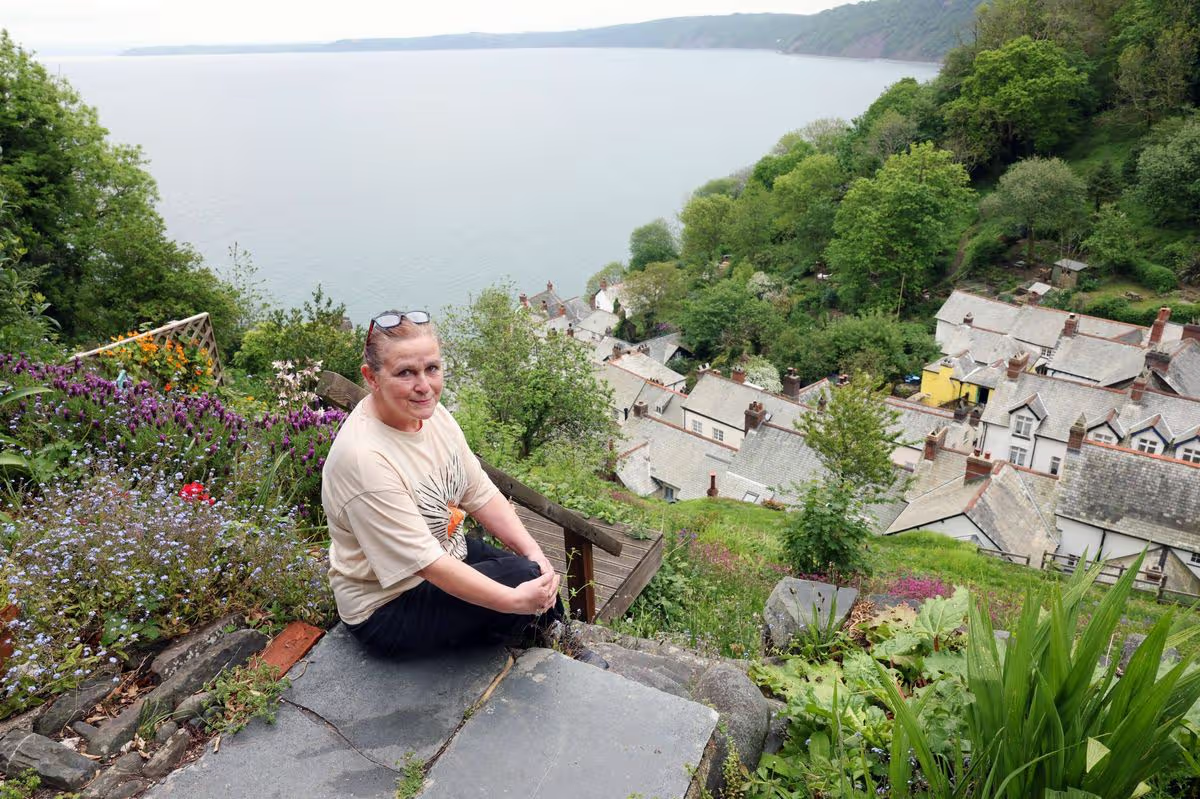
‘It’s like time has stood still, like going back to 1950s Britain’ says village resident Cassandra McFarlane, who has stunning sea views from her cottage(Image: Jonathan Buckmaster)
The honourable John Rous has a proud smile on his face as he tells me: “The village is built on a 400ft cliff overlooking a gorgeous bay with a living community, there’s nothing else like it.”
Mr Rous inherited the privately owned village of Clovelly on the North Devon coast from his mother, Countess Mary Rous, in 1983 and has since continued to develop and preserve what is one of the UK’s most unique destinations. Clovelly was recorded in the Domesday Book in the 11th century as the property of William the Conqueror. The estate was later inherited by his wife, Matilda of Flanders, England’s first crowned queen, before being purchased in 1738 by the Hamlyn family for £9,438.
Today, Clovelly remains one of the few privately owned villages in the UK and is now owned by the Hamlyns’ descendants, the Rous family. It continues to function as a thriving community, with around 250 residents living in 80 cottages throughout the car-free village, while also being a popular tourist destination that welcomes around 150,000 visitors each year.
When you arrive in Clovelly, you must pass through a visitor centre, where admission costs £10.90 for adults and £6.25 for children aged seven to 16. After taking over the estate in 1983, Mr Rous explains how there was a backlog of repair work that needed to be done. In order to pay for the work and maintain the upkeep of the village, he decided to create a visitor centre where all of the money raised would be redistributed into the village.
“We put together a plan to create the visitor centre and the money created there helps the maintenance of the whole village which is great,” Mr Rous, 75, said. “Fortunately, it all worked out financially and we’re still here today.”
After passing through the visitor centre, visitors can stroll down The Hobby Drive before reaching the cobbled High Street which leads down to Clovelly’s harbour 120m below. Cassandra McFarlane moved to the village from South East London in 2021 and now lives at the top of the High Street in a cottage she describes as “the best in the village”.
“I’ve been here around five years now and absolutely love it,” she says. “It’s like time has stood still in Clovelly, it’s like going back to 1950s Britain. Everyone talks to you, everyone’s polite, you don’t get anti-social behaviour. It’s just a blissful place to live. It’s so peaceful.”
She adds: “It’s very, very safe here. There’s no cars or noise and you have these amazing views. It’s beautiful. You go to sleep at night and hear the owls hooting and you wake up to birdsong or the village woodpecker. It’s just an idyllic place to live and visit.”
While Mr Rous has focussed on developing a tight-knit living community, he also understands the importance of tourism to keep Clovelly intact. The village attracts up to 150,000 people every year, with the majority of them visiting for just a day.
Ms Mcfarlane says: “People sometimes ask me if I get fed up with the tourists and I say: ‘Don’t bite the hand that feeds you’. We’re very lucky they still want to come and see the village because all of the money they spend to get in here is reinvested in the cottages.
“But also, I meet such lovely people who visit. Most people come here for a day and arrive at 10am and are gone by 4pm. Then it’s back to just the 250 of us.”
Mr Rous adds: “We’re quite fortunate to have a number of day visitors. They arrive after 10am, enjoy the village, and then are mostly gone by 5pm. The village then returns to its sleepy self. We do have people staying in the hotels obviously but they always appreciate and respect the village.”
As well as boosting tourism numbers, the decision to charge an entrance fee to Clovelly, rather than a car park charge, has allowed for a renovation of the historic cottages. Some of the properties date back to the 15th century and require regular maintenance throughout the wetter and windier months.
The regular income has also allowed Clovelly to maintain its policy of having no second homes or absentee landlords. Mr Rous, who lives on the estate which also includes 700 acres of woodland, three large farms and a sawmill, acts as the landlord for every cottage in the village and maintains a close relationship with the tenants.
“I say to people that if you love a traffic-free area or have always wanted to live by the sea, but you can stand visitors, Clovelly will be perfect for you,” Mr Rous explains. “We advertise for the properties but do like to speak with more than one applicant to see who fits the village best.
“We have some families that have been here for generations but also have new ones coming in which is great. The older people give stability to the village while the youngsters give it vitality. It’s the best of both.”
Another feature that makes Clovelly a truly unique village is its use of sledges, which largely replaced donkeys by the 1970s, to transport groceries, laundry and furniture up and down the 400ft cobbled high street. While the sledges might seem like a gimmick to visitors, they perfectly represent how the community has adapted to modern times while preserving its 1,000-year-old past.
“Everyone has their own sledge and they go past every day. I’ve even seen someone take a grand piano down the hill! It’s truly unique,” Ms McFarlane explains.
As there are no chain supermarkets in the village, locals order their groceries to be delivered. When the delivery drivers see “Clovelly” on the address, they give the customers a 15-minute warning so they have time to head to the top of the High Street with their sledge.
Ian Roberts, the manager of The New Inn located half-way down the High Street, is one of 70 staff who are employed to work on the estate throughout the year.
“The New Inn is around 500 years old and remains steeped in history. We [the village] have been here since the days of William the Conqueror and try to keep some of that history,” the 62-year-old says. “There’s so much history in Clovelly, it’s a very unique place. Visiting here is a great opportunity for people to see real history.”
The New Inn has also benefitted from a sympathetic restoration in recent years, preserving its character and enduring charm. The hotel once hosted Charles Dickens who wrote of the cobbled streets and cliffs in “A Message to the Sea”.
Likewise, Charles Kingsley, the 19th-century novelist and poet, lived in the village as a child. After his wife visited Clovelly for the first time in 1854, he wrote: “Now that you have seen the dear old Paradise you know what was the inspiration of my life before I met you.”
“It really is unique here. Places like this are very difficult to find in the UK now,” Mr Roberts, who manages The New Inn with his wife Theresa, adds. “It’s well worth a visit and the views alone are stunning – it’s Instagramable!
“People come here to eat, sleep, rest, relax and enjoy themselves. They come here to get away from the real world and refresh themselves.”
According to the hotel manager, Clovelly can become flooded with visitors over the warmer summer months, including coach loads of day-trippers from across the UK. Two of those tourists are David, who has visited Clovelly once before, and Margaret Herbertson, who is visiting for the first time.
“We didn’t know much about Clovelly before we got here,” Margaret, 75, says. “We obviously Googled it, and did a bit of research, and it looked amazing so we thought we’d come for a visit.”
While standing at the top of the High Street, overlooking the historic 14th-century harbour, David, 78, adds: “Yes, we’ve read about the donkeys going up and down with sledges to transport items. I found that interesting. It’s just a beautiful and peaceful place. I’ve been here once before when I was younger and it doesn’t look like it’s changed much.
“Where we’re stood now overlooking the sea it’s amazing. I don’t think there are many places like it around.” Margaret adds: “It’s unique, isn’t it? What I love is how quiet it is. There’s no cars and no rush.”
While Clovelly is a tranquil fishing village with just 250 inhabitants, there is still plenty to do for visitors. As well as soaking up the sweeping coastal views out the Atlantic, visitors have access to the South West Coast Path, which includes a hike to Mouth Mill Beach.
Ms McFarlane adds: “There’s also loads to do here which people don’t always realise. You can take the ambience in, you can go for walks in the area, we’ve got a museum, we’ve got a few nice little shops, the beautiful harbour, blissful gardens.”
The Clovelly Court Gardens, located at the top of the village, are a perfect spot to relax while visitors can also learn about local history at the Fisherman’s Cottage and the Kingsley Museum and Shop. The village is also the proud host of a number of festivals every year, including the Seaweed Festival in May, the Maritime Festival in July, the Lobster and Crab Feast in August and the Herring Festival in November.
“Around 120 years ago, Clovelly was just a fishing village with a lot of fishing a little bit of tourism. Now, it’s a little bit of fishing, which I’m keen to preserve through a number of festivals like the Lobster and Crab Festival, and a lot of tourism,” Mr Rous adds.
“We’ve maintained a living community while avoiding becoming a seaside village full of holiday lets. It’s such a welcoming place and the people are so proud to be associated with the village.”