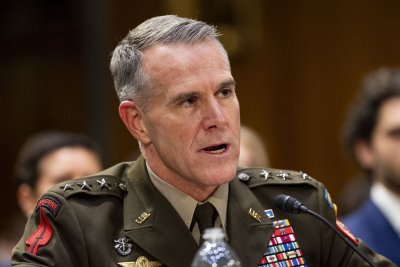
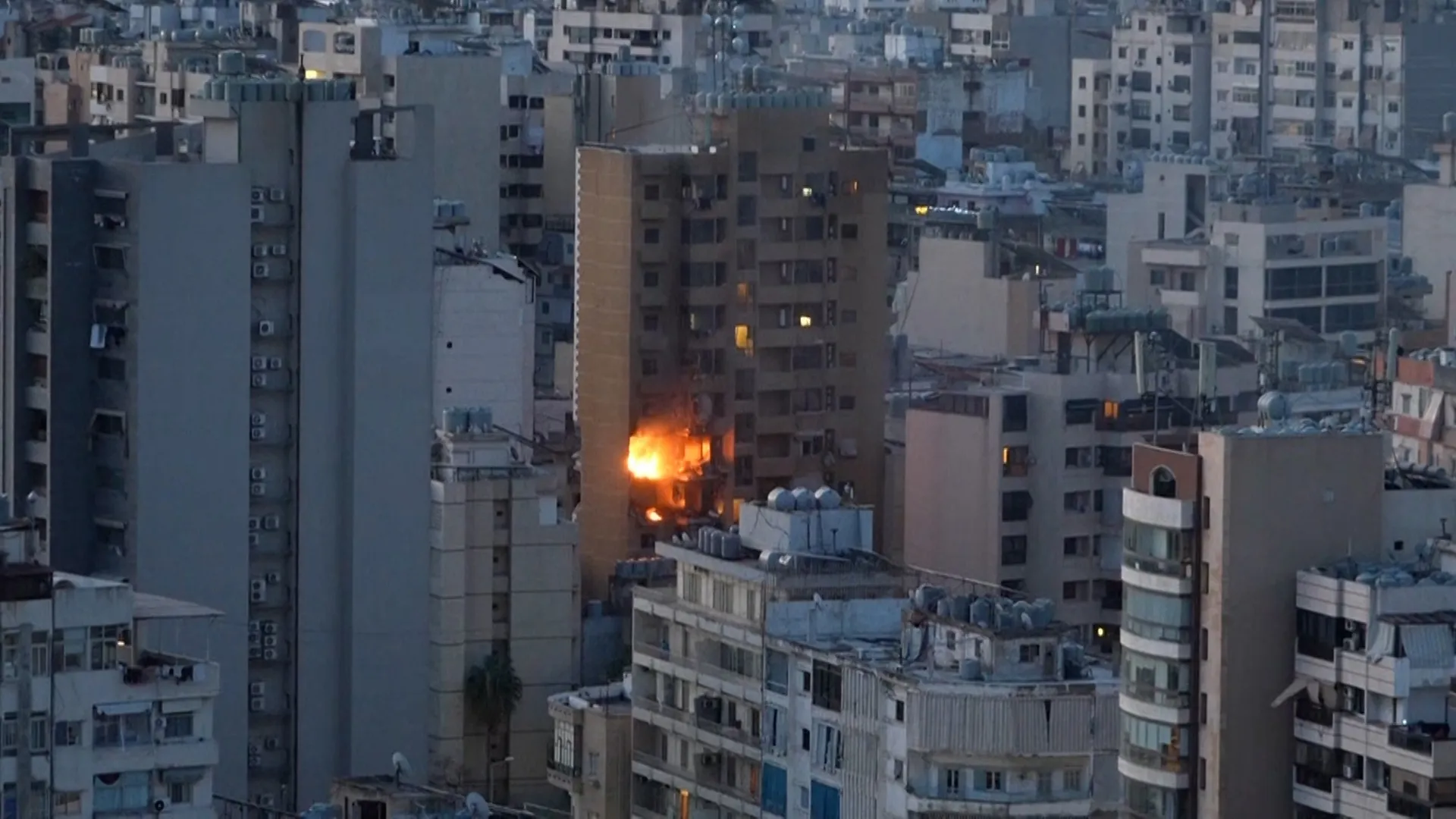
March 11 (UPI) — Gen. Joshua Rudd was confirmed by the Senate to lead the National Security Agency and U.S. Cyber Command Tuesday.
Rudd is already the deputy chief of the U.S. Indo-Pacific Command. The Senate voted to confirm him in a 71-29 vote.
Sen. Ron Wyden, D-Ore., voiced his objections to Rudd because he doesn’t have cybersecurity experience. He had put a procedural hold to block Rudd’s confirmation but the chamber was able to get around it.
“He is not qualified for this job,” Wyden wrote in a letter addressed to President Donald Trump that was submitted to the Congressional Record. “And, when it comes to the cybersecurity of this country, there is simply no time for on-the-job learning. The threat is just too urgent for that. For these reasons, I oppose the nomination.”
The position of NSA director had been vacant since April, when retired Gen. Timothy Haugh and his civilian deputy Wendy Noble were ousted.
Lt. Gen. William Hartman has been acting head and plans to retire when Rudd is sworn in. No date has been announced yet.
“General Rudd is a war hero with a lifetime of service to our nation. He is the right choice to lead the protection of our nation from cyberattacks by Iran, Russia and China,” Sen. Tom Cotton, R-Ark., said in a statement.
During nomination hearings before Senate committees, Rudd defended Section 702 of the Foreign Intelligence Surveillance Act, a data-collection law that is set to expire in April.
Los Angeles Unified School District Superintendent Alberto Carvalho interacts with students in a classroom at Marlton School, a public special school for the deaf and hard of hearing students in Los Angeles. File Photo by Etienne Laurent/EPA-EFE
March 11 (UPI) — A superintendent in Los Angeles whose home and office was raided by the FBI last month released a statement Wednesday denying any wrongdoing.
Attorneys for Alberto Carvalho, the superintendent who is on administrative leave following the raid, said in the statement that they hope he is reinstated promptly. Carvalho is the superintendent of the Los Angeles Unified School District
“Mr. Carvalho remains confident that the evidence will ultimately demonstrate that he acted appropriately and in the best interests of students,” the law firm Holland & Knight said in a statement. “Mr. Carvalho respects the rule of law and the investigative process and has always acted in the best interest of students and within the bounds of the law.”
The attorneys and FBI have not clarified why Carvalho’s home and office were raided or what sparked the investigation into the superintendent.
“While the government’s investigation remains ongoing, no evidence has been presented by prosecutors supporting any allegation that Mr. Carvalho violated federal law,” the statement said.
The Los Angeles Unified School District is scheduled to hold its first regular school board meeting since the raid on Tuesday. It will be a closed session meeting. The agenda for Tuesday’s meeting includes a discussion about labor agreements.
Former teacher, principal and superintendent Andres E. Chait is serving as acting superintendent.
Medical device maker Stryker is experiencing a “global network disruption” Wednesday from a cyberattack by a group of pro-Iranian hackers. File Photo by Sascha Steinbach/EPA
March 11 (UPI) — Medical device maker Stryker is experiencing a global tech issue Wednesday from a cyberattack by a group of pro-Iranian hackers.
Employees found their work devices locked up with the symbol of the hacker group Handala displayed on their screens. It is being described as a “wiper attack,” not meant to extort money but to cause maximum damage to Stryker’s systems.
Handala has claimed responsibility for the cyberattack in a social media post, writing that it is retaliation for the deadly strike on the Shajareh Tayyiba girls school in Minab, Iran.
“We announce to the world that, in retaliation for the brutal attack on the Minab school school and in response to ongoing cyber assaults against the infrastructure of the Axis of Resistance,” the post reads. “In this operation, over 200,000 systems, servers, and mobile devices have been wiped and 50 terabytes of critical data have been extracted.”
The cyberattack has not only impacted employees in the United States but also employees in Ireland.
“Stryker is experiencing a global network disruption to our Microsoft environment as a result of a cyberattack,” Stryker said in a statement. “We have no indication of ransomware or malware and believe the incident is contained. Our teams are working rapidly to understand the impact of the attack on our systems. Stryker has business continuity measures in place to continue to support our customers and partners.”
Stryker is headquartered in Portage, Mich., and employs 50,000 people worldwide, including about 1,000 at its headquarters. It manufactures an array of medical equipment including orthopedic implants, surgical instruments and imaging systems. It is one of the largest medical technology manufacturers in the world.
The headquarters closed for the day on Wednesday with signs posted on its doors warning workers not to access Stryker’s network, use its devices or connect to its WiFi.
The UN Security Council has passed a resolution put forward by Gulf Cooperation Council members calling on Iran to halt its attacks on Gulf countries. The measure was adopted with 13 votes in favour and two abstentions, while no member states voted against it.
March 11 (UPI) — The British Cabinet Office has released files from its investigation into former ambassador to the United States Peter Mandelson on Wednesday as it digs into his ties to deceased sex trafficker Jeffrey Epstein.
The first batch of documents revealed that Mandelson may have been briefed on classified information before being given security clearance when he was appointed as ambassador. They also show that he requested a large government payout when he was terminated last year.
Mandelson was arrested and then released last month in London over suspicion of misconduct in public office. The allegation stems from emails released in the Epstein files in which Mandelson appears to be sharing market-sensitive confidential information with Epstein.
Documents released by the Cabinet Office share some details after his appointment as ambassador in December 2024. Within days of his being appointed, the Foreign, Commonwealth and Development Office offered to brief Mandelson on highly classified information while he was still being vetted.
Emails about the briefing were shared Dec. 23, 2024, about three days after the announcement of Mandelson’s appointment. It was not until Jan. 30, 2025, that Mandelson received an email confirming that he had cleared the vetting process.
It was in this email that he received a formal offer of employment.
When Mandelson was terminated from his position in September, he requested to be paid the full amount on his contract — more than 500,000 euros or $578,625. Instead, he was paid 75,000 euros or $86,793.75 to terminate the contract.
“As the documents show regarding his severance payment, Peter Mandelson initially requested a sum that was substantially larger than the final payment, not just two or even three times, but more than six times the final amount,” said Darren Jones, chief secretary to the prime minister at the Cabinet office.
“Despite the fact that he was withdrawn from Washington because he had lost the confidence of the prime minister, the government obviously found that to be inappropriate and unacceptable.”
March 11 (UPI) — A bipartisan group of senators penned a letter to the Government Accountability Office on Wednesday calling for an investigation into the Justice Department over its handling of the Jeffrey Epstein files release.
The letter accuses the Justice Department of noncompliance with the Epstein Files Transparency Act, the bipartisan law overwhelmingly passed by both chambers of Congress last year. The lawmakers shared concern that the department has still not released all of the files it is required to by the law, despite a December deadline.
Sens. Dick Durbin, D-Ill., Ben Ray Lujan, D-N.M., Jeff Merkley, D-Ore., and Lisa Murkowski, R-Alaska, signed the letter. They also shared concerns about the files that have been released, including victims’ names not being redacted and alleged coconspirators’ names being redacted.
The Government Accountability Office is an independent and nonpartisan agency in the legislative branch. Its purpose is to operate as a watchdog over the federal government, with the authority to investigate and perform audits.
“Contrary to Congress’s explicit directive to protect victims, these records included email addresses and nude photos in which the names and faces of publicly-identified and non-public victims could be identified,” the letter said. “But when it came to information identifying powerful business and political figures who are alleged coconspirators or material witnesses, DOJ appears to have heavily redacted those.”
The senators are requesting that Comptroller General Orice Williams Brown reviews the department’s process it used to review, redact and release the files. They specify that they want the Government Accountability Office to investigate whether the release of the files “has serve to cover up child sexual abuse.”
The Epstein files have continued to be a source of contention between lawmakers and the Trump administration more than two months after the Justice Department was required by law to release the files.
Lawmakers have pushed for answers about the delayed and mistake-filled release from Attorney General Pam Bondi, leading to fiery exchanges in a House Judiciary Committee hearing last month.
The House Oversight Committee issued a subpoena for Bondi’s testimony last week. Five Republicans joined all of the Democrats in the committee in voting for the subpoena.
“This horrific scandal is one where powerful, wealthy men groomed, abused, and raped young women, men, and children,” the letter from the senators reads. “It is critical to understand what led to DOJ’s failure to redact the victims; information and re-victimize those individuals while violating the Epstein Files Transparency Act in its redactions of information related to their alleged abusers.”
Irish rapper Liam O’Hanna welcomes ruling in case he says was ‘never about any threat to the public, never about terrorism’.
Published On 11 Mar 202611 Mar 2026
Share
British prosecutors have lost an appeal seeking to reinstate a “terrorism” charge against a member of Irish rap group Kneecap accused of waving a Hezbollah flag during a gig in London.
London’s High Court on Wednesday rejected prosecutors’ attempts to challenge a lower court’s decision to throw out the case against Liam O’Hanna in September due to a technical error.
Recommended Stories
list of 3 itemsend of list
The decision means the case will not proceed. In a statement, the Crown Prosecution Service said the High Court had “clarified how the law applies” to such cases and that it accepted “the judgement and will update our processes accordingly”.
O’Hanna – also known as Liam Og O hAnnaid (his name in Gaeilge, the Irish language) and by the stage name Mo Chara (“My Friend”) – was charged in May of last year with displaying a Hezbollah flag during a November 2024 concert in London, in violation of the United Kingdom’s 2000 Terrorism Act.
Kneecap’s members – who rap in Gaeilge and English and have been outspoken in their condemnation of Israel’s genocide against Palestinians in the Gaza Strip – have called the attempted prosecution a “British state witch-hunt”.
Liam O’Hanna (Liam Og O hAnnaid) welcomed the ruling during a news conference in Belfast, Northern Ireland [Charles McQuillan/Getty Images]
O’Hanna welcomed the ruling on Wednesday, saying during a news conference in Belfast that the case was “never about me, never about any threat to the public and never about terrorism”.
“It was always about Palestine, about what happens if you dare to speak up, about what happens if you can reach large groups of people and expose their hypocrisy, about the lengths Britain will go to cover up Israeli and US war crimes,” he said.
Cheered by supporters at the event, O’Hanna was joined by Kneecap bandmates JJ O Dochartaigh and Naoise O Caireallain – better known by their respective stage names, DJ Provai and Moglai Bap.
“Your own High Court ruled against you,” O’Hanna added, addressing the UK government.
“The pathetic thing about this whole process is that you falsely tried to label me a terrorist when it is the British government ministers that are arming and assisting a genocide in Gaza, the destruction of Lebanon, and the senseless slaughter of schoolkids in Iran.”
The executive director of the International Energy Agency Fatih Birol said he is glad to see IEA’s 32 member countries unanimously agree to release 400 million barrels of oil from its emergency stockpile.. File Photo by Ole Berg-Rusten/EPA-EFE
March 11 (UPI) — The International Energy Agency agreed to take emergency action and release 400 million barrels of oil into the market, the coalition announced Wednesday.
The 32 members of the IEA unanimously agreed to tap into their emergency reserves in response to the strain on the oil market from the war in Iran.
“The oil market challenges we are facing are unprecedented in scale, therefore I am very glad that IEA member countries have responded with an emergency collective action of unprecedented size,” Fatih Birol, IEA executive director, said in a statement.
“Oil markets are global so the response to major disruptions needs to be global too. Energy security is the founding mandate of the IEA, and I am pleased that IEA members are showing strong solidarity in taking decisive action together.”
The IEA said oil will be released to the market “over a timeframe that is appropriate to the national circumstances of each member country.”
The release of emergency reserves is the sixth in the coalition’s history since being founded in 1974.
Japanese Prime Minister Sanae Takaichi said Wednesday that Japan plans to begin releasing oil from its stockpile possibly next week. Japan is an IEA member.
Oil prices soared after the United States and Israel launched military operations against Iran. Iran has threatened vessels traveling through the Strait of Hormuz, a critical route in the oil trade, in response.
About 25% of the world’s seaborne oil is transported through the Strait of Hormuz.
The IEA has an emergency stockpile of more than 1.2 billion barrels of oil, There are 600 million additional barrels obligated by member governments.
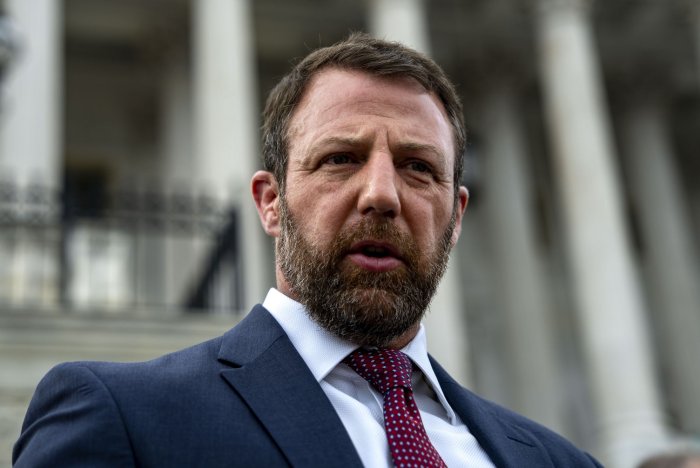
Sen. Markwayne Mullin, R-Okla., speaks to the press outside the U.S. Capitol on Thursday. Earlier today, President Donald Trump announced Mullin would replace Kristi Noem as Secretary of the Department of Homeland Security. Photo by Bonnie Cash/UPI | License Photo
Warning comes as 400 million barrels of oil are being released from global reserves during waterway’s closure.
Published On 11 Mar 202611 Mar 2026
Share
Iran’s Islamic Revolutionary Guard Corps (IRGC) says it will not allow “a litre of oil” through the Strait of Hormuz as the closure of the key Gulf waterway continues to roil global energy markets during the US-Israeli war on Iran.
A spokesperson for the IRGC’s Khatam al-Anbiya Headquarters said on Wednesday that any vessel linked to the United States and Israel or their allies “will be considered a legitimate target”.
Recommended Stories
list of 3 itemsend of list
“You will not be able to artificially lower the price of oil. Expect oil at $200 per barrel,” the spokesperson said in a statement. “The price of oil depends on regional security, and you are the main source of insecurity in the region.”
Global oil prices have fluctuated wildly this week during continued US-Israeli attacks against Iran, which has retaliated by firing missiles and drones at targets across the wider Middle East.
The closure of the Strait of Hormuz, through which about one-fifth of the world’s oil supplies transit, and production slowdowns in some Gulf countries have raised concerns of further disruptions.
Concerns around the duration of the war, which began on February 28 and has shown no sign of abating, are also adding to uncertainty, sending oil prices soaring.
On Wednesday, three ships were hit by projectiles in the Strait of Hormuz, maritime security and risk firms said, including a Thai-flagged cargo vessel that came under attack about 11 nautical miles (18km) north of Oman.
Release of oil reserves
World leaders, including members of the Group of Seven (G7) and the European Union, have been mulling what action to take in response to the war’s impact on global economies.
Christian Bueger, a professor of international relations at the University of Copenhagen and an expert in maritime security, said Europe will be facing “a major energy supply crisis” if the Strait of Hormuz is not reopened.
“For the shipping industry right now, it’s impossible to go through the Strait of Hormuz,” Bueger told Al Jazeera. “And if there are not stronger signals in the near future that they can at least try to go through the strait, then we are looking at a major shipping crisis, which can last weeks if not months.”
On Wednesday, the International Energy Agency (IEA) announced that its 32 member countries had unanimously agreed to release 400 million barrels of oil from their emergency reserves to try to lower prices.
“This is a major action aiming to alleviate the immediate impacts of the disruption in markets,” IEA Executive Director Fatih Birol said during an address from the agency’s headquarters in Paris.
“But to be clear, the most important thing for a return to stable flows of oil and gas is the resumption of transit through the Strait of Hormuz,” he added.
The reserve supplies will be made available “over a timeframe that is appropriate” for each member state, the IEA said in a statement without providing details.
German Economy and Energy Minister Katherina Reiche said earlier in the day that the country would comply with the release while Austria also said it would make part of its emergency oil reserve available and extend its national strategic gas reserve.
Meanwhile, Japan’s Ministry of Economy, Trade and Industry said it would release about 80 million barrels from its private and national oil reserves.
Japanese Prime Minister Sanae Takaichi said the country, which gets about 70 percent of its oil imports through the Strait of Hormuz, would begin releasing the reserves on Monday.
March 11 (UPI) — The United States resumed Global Entry, a program that allows trusted travelers to quickly get through U.S. customs, on Wednesday after a short break.
The service began again at 5 a.m. EDT Wednesday, the Department of Homeland Security said.
“We are working hard to alleviate the disruptions to travelers caused by the Democrats’ shutdown,” a DHS spokesperson said in a statement.
The program was suspended to preserve staff and resources during the partial government shutdown that began Jan. 31. When it was announced, the department said it would also suspend TSA PreCheck, which allows low-risk travelers to speed through Transportation Security Administration checkpoints, but quickly reversed course on that decision.
Geoff Freeman, president and CEO of the U.S. Travel Association, said the organization was pleased with the decision.
“Over the last two weeks, the travel industry has been clear about the role programs like Global Entry and TSA PreCheck play in both security and efficiency,” Freeman said in a statement. “Through outreach to members of Congress and administration officials, collaboration across the travel sector and strong public engagement, we highlighted a simple reality: Trusted Traveler Programs enhance security while keeping travel moving.”
Travelers at airports have seen long lines for TSA checkpoints, some lasting several hours with lines stretching out onto sidewalks.
The DHS, which includes TSA, is shut down because Congress couldn’t agree on a funding bill for the department. Democrats don’t want to fund it until guardrails are put on the agency, and Republicans haven’t agreed to Democrats’ demands.
Because of this, TSA workers got a partial paycheck on Feb. 28 and will miss their first full check Saturday. There have been more work absences while staff are not getting paid, which slows the TSA lines at major airports.
Sen. Markwayne Mullin, R-Okla., speaks to the press outside the U.S. Capitol on Thursday. Earlier today, President Donald Trump announced Mullin would replace Kristi Noem as Secretary of the Department of Homeland Security. Photo by Bonnie Cash/UPI | License Photo
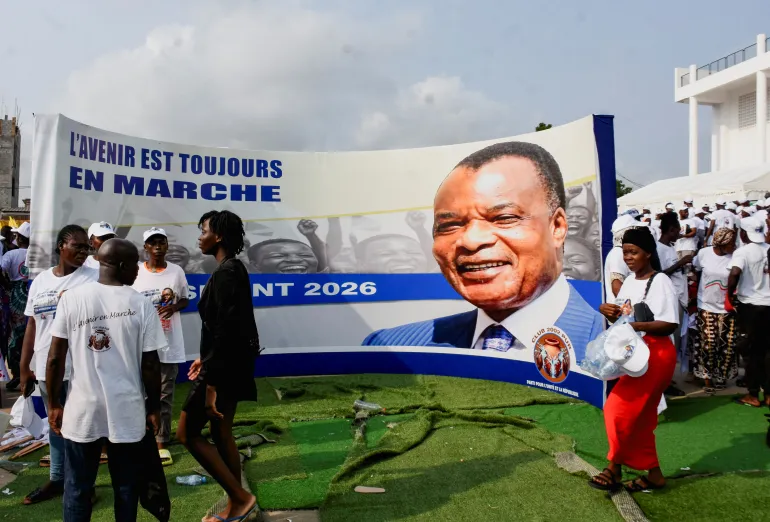
Brazzaville, Republic of Congo – On main roads and public squares across the Congolese capital, posters are up featuring the seven main candidates vying for president.
But at the Moukondo Market in Brazzaville’s fourth district – between lively discussions, people jostling for space and saleswomen trying to attract customers – many voters are less than enthusiastic about this weekend’s election.
Recommended Stories
list of 3 itemsend of list
Fortune, a 27-year-old unemployed university graduate who did not want to give his last name, said he does not expect much to come from the polls.
“When you see how money is spent during the campaign, you wonder if those in power really care about the living conditions of the population,” he said.
While Congo is the third largest oil producer in sub-Saharan Africa, about half the country’s population of about six million people live below the poverty line.
A few metres away, Gilbert, 44, shared similar sentiments. The civil servant explained that his salary is not enough to cover all his household expenses.
“I do odd jobs to supplement my income. At my age, believing that these elections will change our daily lives would be almost suicidal,” he said.
“I’ve known practically the same leader all my life,” Gilbert added. “Some call it stability. Others say that nothing changes.”
It’s a sentiment shared by many in the country: That after 40 years under a single leader, political continuity has become the norm.
President Denis Sassou Nguesso, 82, who is once again standing in the election, first came to power in Congo in 1979. After a period of political transition in the early 1990s, he returned to the presidency in 1997 after a civil war and has ruled the country without interruption ever since.
Two major constitutional revisions have marked his political trajectory. The 2002 constitution and the one adopted in 2015 notably changed certain eligibility requirements, allowing the head of state to continue to run for office.
For Nguesso’s supporters, this political longevity is primarily attributed to the stability the country has managed to maintain in a region often marked by conflict.
Congo’s neighbours include the conflict-racked Central African Republic; Gabon, which witnessed a coup in 2023; and the Democratic Republic of the Congo, where the government is facing armed groups, most notably M23.
In official discourse, peace and institutional continuity are regularly presented as the main achievements of the Nguesso government.
However, several foreign observers painted a more nuanced picture of the political situation. The pro-democracy organisation Freedom House classified Congo as a “not free” country while the Ibrahim Index of African Governance highlighted limited progress in democratic participation and political accountability.
Supporters of Nguesso, who is running for re-election, take part in a campaign rally in Brazzaville before the March 15, 2026, presidential election [Roch Bouka/Reuters]
‘Asymmetrical political competition’
In the last presidential election in 2021, the official results gave Nguesso more than 88 percent of the votes cast with a reported voter turnout of 67 percent.
Nguesso is widely expected to win again when the country goes to the polls on Sunday.
Some analysts said the president’s political longevity can be partly explained by the country’s political structure.
Charles Abel Kombo, a Congolese economist and public policy observer, described the political system as a hybrid model.
“The Congolese political system combines formally pluralistic institutions – elections, political parties, parliament – with a high degree of centralisation of executive power,” he explained. “Nguesso’s political longevity can be explained in part by the structure of the institutional apparatus and the predominant role of the executive branch in the management of the state.”
According to him, the continuity of power is also linked to perceptions of stability in a country marked by the conflicts of the 1990s.
“In this historical context, this continuity can be seen as a factor of stability. But it is also accompanied by asymmetrical political competition.” In other words, political change remains theoretically possible but politically difficult.
For the economist, however, the issue goes beyond political change alone.
“The central challenge remains the ability of political actors to propose a credible plan for economic transformation. Countries dependent on natural resources need a strategic state capable of diversifying the economy and guiding productive transformation.”
Other observers took a more critical view of this political longevity.
For economic and political analyst Alphonse Ndongo, the stability often touted by the authorities must be examined with caution.
“There is indeed a stabilising regime because it has succeeded in maintaining peace. This is what is being sold today as the main recipe for success: There is no war, so the country is at peace. But this peace also allows those in power to remain there. We are in a kind of democratic illusion where elections often resemble a deal,” he said.
According to him, the current political architecture makes a change in leadership unlikely in the short term.
“It is difficult for the institutions responsible for managing elections to produce a result that differs from what everyone already expects. Everything is structured, from voter registration to the organisation of the ballot. Under these conditions, a surprising result seems unlikely,” he said.
A campaign billboard touts candidate Uphrem Dave Mafoula in Brazzaville [Roch Bouka/Reuters]
‘Political alternatives exist’
As the debate continues in Congolese society over whether the country’s political continuity is a mark of stability or a system that is hard to change, the opposition appears fragmented and weakened.
Some established parties are boycotting the vote while some prominent potential candidates are in prison or exile.
In June, the party of opposition leader Clement Mierassa was removed from the official list of recognised political parties.
For him, the conditions for a truly democratic election are not in place.
“We have always called for essential reforms: a truly independent national electoral commission, reliable voter rolls and a law regulating campaign spending,” he said. “Without these guarantees, it is difficult to talk about free and transparent elections.”
Other political actors, however, have chosen to run in the election.
Christ Antoine Wallembaud, spokesperson for candidate Destin Melaine Gavet, said participation remains a way of defending the political space.
“The electoral system has flaws, but that does not mean that those who participate in it condone fraud. Participating also serves as a reminder of the need for reform and shows that a political alternative exists.”
For many observers, access to the media is also a key issue during election campaigns.
“Access to public media remains a recurring problem for opposition candidates. The ruling party candidate always gets the lion’s share even though the High Council for Freedom of Communication has established a list of appearances on state media so that all candidates can present their programmes,” said a Congolese journalist who requested anonymity.
Faced with these difficulties, opposition candidates often turn to private media outlets to spread their messages.
Congolese authorities, for their part, insisted that civil liberties are fully guaranteed for all.
The prime minister and spokesperson for Nguesso, Anatole Collinet Makosso, recently said freedom of opinion and expression “is doing very well”.
“Freedom of expression is alive and well in Congo. The proof is the multitude of foreign journalists here to cover this election. No journalist has been arrested because of their work or prosecuted,” he said.
For the government, this international media presence is evidence of the transparency of the electoral process and the ability of the media to work freely in the country.
However, some press freedom organisations paint a different picture. In its World Press Freedom Index, Reporters Without Borders regularly highlights the difficulties faced by local journalists, particularly in terms of access to public information, political pressure and economic constraints.
People shop at a market in the Republic of Congo days before the 2026 presidential election [Al Jazeera]
Adapting to circumstances
In the working-class neighbourhoods of Brazzaville, reactions to Sunday’s election range from resignation to pragmatism.
In Bacongo, a young man on the street explained that he has learned to adapt to circumstances.
“When the country goes left, we go left. When it goes right, we go right. Doing the opposite can be dangerous,” he said while refusing to give his name.
Beyond the political debate, economic concerns remain central.
The Congolese economy is heavily dependent on oil, which accounts for about 70 percent of its exports and nearly 40 percent of its gross domestic product (GDP), according to the World Bank. This dependence exposes the country to fluctuations in international energy prices.
Public debt has also reached high levels in recent years, exceeding 90 percent of the GDP before being partially restructured under agreements with international creditors.
In this context, several economists said the electoral stakes go beyond the single issue of political change.
Diversifying the economy, creating jobs for a predominantly young population and improving public services are major challenges in the years ahead.
But many Congolese aren’t hopeful that Sunday’s election will make a difference to their material reality because political and economic power will likely remain in the same hands.
“We all understand the system in this country,” Fortune said. “The [economic] crisis doesn’t affect everyone, nor does poverty.”
First troops touch down nearly a month after President Ramaphosa said organised crime threatened country’s democracy.
Published On 11 Mar 202611 Mar 2026
Share
Soldiers have been deployed on the streets of South Africa’s biggest city nearly a month after the president announced the army would work alongside the police to tackle high levels of crime.
President Cyril Ramaphosa said in his annual State of the Nation address on February 12 that organised crime was the “most immediate threat” to South Africa’s democracy and economic development.
Recommended Stories
list of 3 itemsend of list
On Wednesday, troops touched down on the streets of Eldorado Park, a working class suburb in the country’s economic capital, Johannesburg, that has high levels of crime and gang violence.
Local media published pictures of armoured vehicles rolling into the area, and the Independent Online reported that local councillor Juwairiya Kaldine welcomed their arrival.
Soldiers were also seen in the Johannesburg suburb of Riverlea. Media reports said the soldiers were searching door-to-door.
South Africa’s national police service and the Department of Defence, which oversees the military, did not immediately provide details on the deployment. But the president said last month that the army will help the police service fight gang violence and illegal mining.
South African soldiers search a building during a patrol operation in Riverlea, near Johannesburg [AFP]
Ramaphosa said in a notice to the speaker of parliament that 550 soldiers would be involved in an initial deployment in Gauteng province, which includes Johannesburg, to help combat crime and preserve law and order.
That deployment would last until the end of April, he said.
The government plans a wider deployment in five of its nine provinces, according to details submitted by police to parliament.
The deployment will focus on illegal mining in the Gauteng, North West and Free State provinces, and gang violence in the Western Cape and Eastern Cape provinces.
Parts of the national deployment could last more than a year, police officials said.
South Africa has high rates of violent crime. Police reported 6,351 homicides from October to December 2025, an average of nearly 70 a day in a country of about 63 million people.
However, not all residents of crime-affected communities are pleased about the plan to deploy the army.
In the Cape Flats, an impoverished area of the Western Cape with high levels of gang violence, where troops will also likely deploy, people told Al Jazeera last month that the military will not help fix the root causes of the violence or the social ills that make it easy to recruit people into gangs.
“It’s a very dangerous thing to bring the army because there’s an impatience with the fact that the police are not doing their job,” Irvin Kinnes, an associate professor with the University of Cape Town’s Centre for Criminology, told Al Jazeera at the time, calling the move “political”.
“It’s to show that the political leaders have kind of heard the public. But the call for the army hasn’t come from the community. It’s come from politicians,” he said.
Police in western Switzerland are investigating the deaths of six people killed in a fire that gutted a bus in the town of Kerzers, near Bern. Photo courtesy Fribourg Cantonal Police/EPA
March 11 (UPI) — At least six people were confirmed killed and several were injured after a fire tore through a bus in a town in western Switzerland.
At least three people were taken to a hospital after the incident, which took place at around 6.25 p.m. on Tuesday in Kerzers, around 12 miles west of Bern, police said.
An investigation into the cause was underway, including looking into reports the blaze was started by a passenger dousing himself in gasoline and setting himself on fire, although police and authorities in the canton of Fribourg said they did not believe it was an attack or terrorism.
“At the moment, no element highlights” a terrorist act, Fribourg Police communications head Martial Pugin told Swiss breakfast radio on Wednesday.
Pugin’s comments were echoed by Fribourg State Security and Justice Councillor Romain Collaud who also ruled out a technical fault with the bus, which was operated by PostBus Switzerland.
“It was a diesel bus, not an electric one. A bus catching fire like that surprises everyone. We’re still somewhat in shock. I think it’s important to reassure the public. The public is safe. The investigations and inquiries are ongoing,” Collaud said.
However, he warned that the process of identifying those killed could take several days.
PostAuto, of which PostBus is a subsidiary, said in a social media post that it was deeply saddened by the incident, saying it was a “terrible tragedy,” and vowing to do everything possible to aid in the police investigation.
“All the employees of PostAuto and the post office are shocked and affected like I am,” said CEO Stefan Regli.
“On behalf of the Board of Directors and the entire group management, I express our deep condolences to all of them. Our thoughts are with the victims and their families. The Fribourg Cantonal Police, under the direction of the Fribourg prosecutor, is responsible for the investigation of the fire. PostAuto is in close contact with the authorities and is doing everything in its power to solve this terrible incident.”
Swiss President Guy Parmelin said it pained and upset him that fire had claimed the lives of yet more people in Switzerland.
“It distresses and saddens me that once again people in Switzerland have lost their lives in a severe fire. The circumstances are being investigated. To the relatives of the deceased from Kerzers, I extend my condolences. And I think of the injured and the rescue workers,” he wrote on X.
Tuesday’s incident comes less than six weeks after 41 people were killed in a blaze that broke out in the early hours of New Year’s Day at a bar in the Swiss ski resort town of Crans Montana.
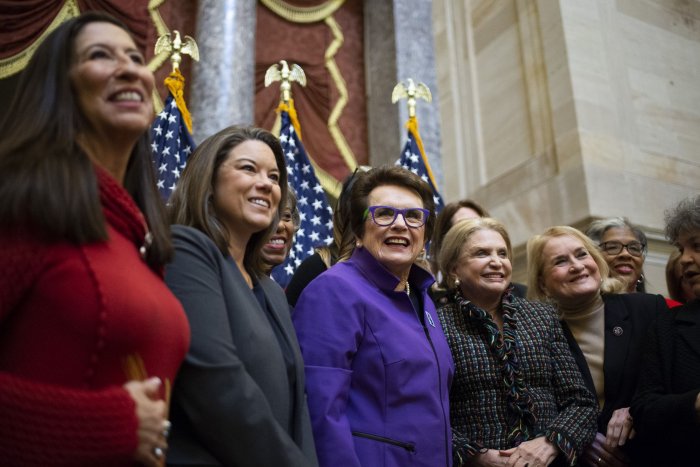
Founder of the Women’s Tennis Association and tennis great Billie Jean King (C) smiles with representatives after speaking during an annual Women’s History Month event in celebration of the 50th anniversary of Title IX in Statuary Hall at the U.S .Capitol in Washington on March 9, 2022. Women’s History Month is celebrated every March. Photo by Bonnie Cash/UPI | License Photo
For years, Iran’s leaders believed time was on their side.
After the United States withdrew from the 2015 nuclear agreement, known as the Joint Comprehensive Plan of Action (JCPOA), Tehran effectively adopted what later came to be described as a “strategic patience” approach. Rather than immediately counter-escalating, Iran chose to endure economic pressure while waiting to see whether diplomacy could be revived.
The logic behind the strategy was simple: eventually, Washington would recognise that confrontation with Iran was against its own interests.
Today, that assumption lies shattered.
The collapse of diplomacy and the outbreak of war have forced Iran’s leadership to confront a painful reality: their belief that the US would ultimately act rationally may have been a profound miscalculation.
If Iran survives the current conflict, the lessons Iranian leaders draw from this moment may motivate them to pursue a nuclear deterrent.
The strategy of waiting
After the first Trump administration withdrew from the JCPOA and launched its “maximum pressure” campaign in 2018, Tehran initially avoided major counter-escalation. For nearly a year, it largely remained within the deal’s limits, hoping the other signatories, particularly Europeans, could preserve the agreement and deliver on the promised economic benefits despite US sanctions.
When that failed, Tehran began gradually increasing its nuclear activities by expanding enrichment and reducing compliance step by step while still avoiding a decisive break.
The pace accelerated after Iran’s conservative-dominated parliament passed a law mandating a significant increase in nuclear activities, in the wake of the assassination of top nuclear scientist Mohsen Fakhrizadeh. The shift was reinforced further by the 2021 election of conservative President Ebrahim Raisi.
The ultimate goal was to rebuild negotiating leverage, as Tehran believed that broader geopolitical and regional trends were gradually shifting in its favour. From its perspective, China’s rise, Russia’s growing assertiveness, and widening fractures within the Western alliance suggested that Washington’s ability to isolate Iran indefinitely might weaken over time.
At the same time, Iran pursued a strategy of reducing tensions with its neighbours, seeking improved relations with Gulf states that had previously supported the US “maximum pressure” campaign. By the early 2020s, many Gulf Cooperation Council countries had begun prioritising engagement and de-escalation with Iran, culminating in moves such as the 2023 Saudi-Iran rapprochement brokered by China.
Against this backdrop, even as tensions rose, Tehran continued to pursue diplomacy. Years of negotiations with the Biden administration aimed at restoring the JCPOA ultimately produced no agreement. Subsequent diplomatic efforts under Trump’s second presidency also collapsed.
Underlying this approach was a fundamental assumption: that the US ultimately preferred stability to war. Iranian officials believed Washington would eventually conclude that diplomacy, rather than endless pressure or a major war, was the most realistic and least costly path forward.
The joint US-Israeli assault on Iran has now exposed how deeply flawed that assumption was.
The return of deterrence
While Tehran based its strategy on mistaken beliefs about the rationality of US foreign policy, Washington, too, is misreading the situation.
For years, advocates of the maximum pressure campaign argued that sustained economic and military pressure would eventually fracture Iran internally. Some predicted that war would trigger widespread unrest and even the collapse of the regime.
So far, none of those predictions has materialised.
Despite the enormous strain on Iranian society, there have been no signs of regime disintegration. Instead, Iran’s political base — and in many cases broader segments of society — has rallied in the face of external attack.
Furthermore, Iran spent years reinforcing its deterrence capabilities. This involved expanding and diversifying its ballistic missile, cruise missile and drone programmes and developing multiple delivery systems designed to penetrate sophisticated air defences. Iranian planners also drew lessons from the direct exchanges with Israel in 2024 and the June 2025 war, improving targeting accuracy and coordination across different weapons systems.
The focus shifted towards preparing for a prolonged war of attrition: firing fewer but more precise strikes over time while attempting to degrade enemy radar and air defence systems.
We now see the results of this work. Iran has been able to inflict significant damage on its adversaries. Retaliatory attacks have killed seven Americans and 11 Israelis, placing a growing strain on US and Israeli missile defence systems, as interceptors are steadily depleted.
Iranian missile and drone strikes have hit targets across the region, including high-value military infrastructure such as radar installations. The closure of the Strait of Hormuz has sent global energy markets into turmoil.
Apart from the immense cost of war, the US decision to launch the attack on Iran may have another unintended consequence: a radical shift in Iranian strategy.
For decades, Supreme Leader Ali Khamenei maintained a longstanding religious prohibition on nuclear weapons. His assassination on the first day of the war may now motivate the new civilian and military leadership of the country to rethink its nuclear strategy.
There may now be fewer ideological reservations about pursuing nuclear weapons. The logic is simple: if diplomacy cannot deliver sanctions relief or permanently remove the threat of war, nuclear deterrence may appear to be the only viable alternative.
Iran’s actions in this conflict suggest that many leaders now see patience and diplomacy as strategic mistakes. These include the unprecedented scale of Iranian missile and drone attacks across the region, the targeting of US partners and critical infrastructure, and political decisions at home that signal a harder line, most notably the appointment of Mojtaba Khamenei as supreme leader.
The choice of Khamenei’s son breaks a longstanding taboo in a system founded on the rejection of hereditary rule and reflects a leadership increasingly prepared to abandon previous restraints.
If a more zero-sum logic of deterrence takes hold across the region, replacing dialogue as the organising principle of security, the Middle East may enter a far more dangerous era in which nuclear weapons are viewed as the ultimate form of deterrence and nuclear proliferation can no longer be stopped.
The views expressed in this article are the author’s own and do not necessarily reflect Al Jazeera’s editorial stance.
North Korean leader Kim Jong Un (R) oversaw the test-fire of strategic cruise missiles from the naval destroyer Choe Hyon, state-run media reported Wednesday. In the photo, Kim watches the launch via video feed with his daughter Kim Ju Ae. Photo by KCNA/EPA
SEOUL, March 11 (UPI) — North Korean leader Kim Jong Un oversaw the test-firing of strategic cruise missiles from a naval destroyer, state media reported Wednesday, as the United States and South Korea began a large-scale joint military exercise this week.
The North’s Choe Hyon destroyer launched the missiles at island targets in the Yellow Sea on Tuesday, the official Korean Central News Agency said, with Kim watching via a video feed. The missiles flew for roughly two hours and fifty minutes before striking their targets, KCNA said.
Pyongyang described the weapons as “strategic,” a term it typically uses for systems capable of carrying nuclear warheads.
The launches came days after North Korea conducted a similar cruise missile test from the destroyer ahead of its commissioning.
The test also coincided with the start of the allies’ annual Freedom Shield exercise on Monday, an 11-day program of command-post simulations and field training drills.
North Korea has long condemned the joint exercises as rehearsals for invasion. On Tuesday, Kim Yo Jong, the powerful sister of Kim Jong Un, warned that the drills could destabilize the region and lead to “unimaginably terrible consequences.”
After observing the launch, Kim praised the “superiority of the destroyer’s integrated combat system,” according to KCNA.
“The components of our war deterrent are now being included in the very sophisticated operational system … and the country’s nuclear forces have made a switch to the phase of multifaceted operation,” Kim said.
Images released by state media showed Kim watching the test alongside his daughter Ju Ae, who has appeared frequently with her father at major events. South Korea’s spy agency said last month that Ju Ae, believed to have been born in 2013, appears close to being designated as Kim’s successor.
Pyongyang launched the Choe Hyon, its first 5,000-ton destroyer, last April as Kim called for strengthening the country’s naval capabilities. North Korean reports say the vessel carries a range of weapons, including nuclear-capable cruise missiles and tactical ballistic missiles.
Photos released by state media show the ship’s missile and radar systems resembling those found on Russian vessels, prompting speculation Pyongyang may have received technical assistance from Moscow.
North Korea has deployed troops, artillery and weapons to support Russia’s war in Ukraine and is believed to be receiving financial support and advanced military technology in return.
A second destroyer, the Kang Kon, suffered an accident during its launch ceremony last year that left it listing on its side before it was repaired and relaunched in June.
Kim has ordered another 5,000-ton destroyer completed by Oct. 10, the anniversary of the founding of the ruling Workers’ Party of Korea.
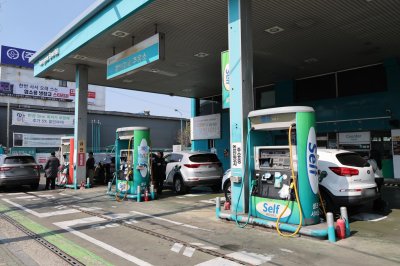
South Korea is in discussions with the IEA over the agency’s proposal to release strategic oil reserves, Seoul officials said Wednesday. This photo, taken Mar. 10, shows a gas station in Seoul. Photo by Yonhap
The South Korean government is “closely involved” in discussions with the International Energy Agency (IEA) over the agency’s reported proposal to release strategic oil reserves to help stabilize soaring oil prices, Seoul officials said Wednesday.
Officials at the Ministry of Trade, Industry and Resources confirmed Seoul’s participation in the reported IEA discussions to Yonhap News Agency, following media reports saying that the IEA has proposed the largest-ever release of oil reserves to its 32 member countries, including South Korea.
According to the report by the Wall Street Journal, IEA members are expected to soon decide on the proposal in an extraordinary meeting.
“South Korea is closely involved in discussions over a coordinated release of strategic oil reserves by the IEA,” a ministry official said.
The country currently holds around 1.9 billion barrels of oil reserves, which is enough to last more than 200 days.
“We have yet to decide how much oil will be released from our reserves with the IEA’s decision,” a ministry official said.
The Seoul government has released its strategic oil reserves on five occasions since 1990, all through international coordination.
The occasions included the 1991 Gulf War, the 2011 Libya crisis and the outbreak of the Russia-Ukraine War in 2022.
Copyright (c) Yonhap News Agency prohibits its content from being redistributed or reprinted without consent, and forbids the content from being learned and used by artificial intelligence systems.
South Korea’s defense posture against North Korea will not be hindered by the shift of U.S. military assets to the Middle East, a senior presidential official said Wednesday. In this photo, taken Tuesday, air defense launchers are seen being dismantled at a U.S. THAAD base in Seongju. Photo by Yonhap
The deterrence posture against North Korea will not be hindered regardless of a potential shift of military assets owned by the U.S. military stationed in South Korea, a senior official at Cheong Wa Dae said Wednesday, amid media reports that the U.S. Forces Korea (USFK) has shipped out some of its air defense assets from the Korean Peninsula.
“Given our level of military capability, defense spending, defense industry capacity and the high morale of our troops, there is no problem with deterrence against North Korea regardless of whether some USFK assets are relocated overseas,” the official said.
The official, however, declined to comment on media reports that parts of a Terminal High Altitude Area Defense (THAAD) system and other air defense units owned by the USFK were moved from South Korea amid a raging war in the Middle East.
“It is not appropriate for our government to comment on military operations between Korea and the U.S.,” the official said.
The official said South Korea and the U.S. have remained in close coordination to maintain a robust combined defense posture.
“Korea and the U.S. will maintain a robust combined defense posture to contribute to peace and stability on the Korean Peninsula and in the region,” the official said. “To that end, the two countries will continue close communication and coordination.”
Copyright (c) Yonhap News Agency prohibits its content from being redistributed or reprinted without consent, and forbids the content from being learned and used by artificial intelligence systems.
Star NBA players like LeBron James take to social media to praise the Miami player’s incredible scoring achievement.
Published On 11 Mar 202611 Mar 2026
Share
Miami Heat centre Bam Adebayo’s 83-point performance against the Washington Wizards on Tuesday – the second-highest scoring game in NBA history – was a historic statistical line no one saw coming.
The Heat star shot 20-43 from the floor and was 7-22 from beyond the three-point line. Thirty-six of his 83 points came from the free-throw line (36 of 43).
Recommended Stories
list of 4 itemsend of list
Entering the game, Adebayo was averaging just 18.9 points per night this season, placing him outside the top 40 scorers in the league.
Now, the 28-year-old only trails the legendary Wilt Chamberlain for most points scored in a single NBA game after he passed the late Kobe Bryant’s 81-point masterpiece against the Toronto Raptors, set in 2006.
Post-game, Adebayo spoke of the significance of passing Bryant, who he idolised growing up.
“To be 83 and passing [Bryant], in my mind, it’s like, what would he say to me? Because I’ve always wanted to have a conversation with him,” Adebayo said. “He’ll probably say, ‘Go do it again.’
“Just a surreal moment being in the company with somebody that you idolised growing up.”
Here is some reaction to the Miami big man’s incredible scoring feat from some of the biggest names in the NBA:
“BAM BAM BAM ,” wrote LeBron James, the NBA’s all-time career leading scorer, on X.
Former Miami Heat legend Dwayne Wade wrote: “83 for Cap”
Houston Rockets star Kevin Durant, who was asked about Adebayo’s achievement in a post-match news conference on Tuesday, said:
“I couldn’t believe it when I was hearing about it in real time. He got 30 in the first quarter … Congratulations to Bam. I know how much work he puts in.
“I looked at the statsheet, and it’s pretty crazy, 40 shots, 40 free throws, 20 threes, that takes a lot of stamina man, that takes a lot of energy to not only go out there to put those shots up, but also make them to set the record to surpass Kobe [Bryant] as the second-highest scorer in the history of the game,” Durant added.
WNBA player A’ja Wilson, left, and Adebayo embrace after he scored a career-high 83 points [Megan Briggs/Getty Images via AFP]
South Korean President Lee Jae Myung speaks during a Cabinet meeting at the presidential office Cheong Wa Dae in Seoul, South Korea, 10 February 2026. Photo by YONHAP / EPA
March 10 (Asia Today) — President Lee Jae-myung said Tuesday the government may prepare an early supplementary budget to cushion the economic impact of rising energy prices linked to the Middle East conflict.
Speaking at a Cabinet meeting in Seoul, Lee said additional fiscal measures could be necessary to support small businesses, struggling companies and vulnerable households if global energy shocks continue.
“To provide fiscal assistance and support for small business owners and vulnerable firms, we may inevitably need an early supplementary budget,” Lee said.
Lee also called for targeted support for lower-income households rather than a blanket reduction in fuel taxes as oil prices surge.
The president instructed officials to accelerate additional financial and fiscal measures, including a petroleum price cap system, adjustments to energy taxes and direct assistance to consumers.
“We must mobilize all national capabilities to minimize the impact of external shocks on people’s livelihoods, the economy and industry,” Lee said.
Deputy Prime Minister and Economy Minister Koo Yoon-cheol said the government could potentially finance the supplementary budget without issuing new government bonds.
He cited improving conditions in the semiconductor industry and increased fiscal resources linked to stronger activity in the stock market.
Lee also addressed concerns over reports that United States Forces Korea may remove some air defense assets from the country amid the regional conflict.
“If you ask whether this seriously undermines our deterrence strategy against North Korea, the answer is no,” Lee said.
He acknowledged that South Korea had expressed opposition to the partial withdrawal of air defense systems but noted that the United States may reposition some assets based on its broader military needs.
Foreign media have reported that systems such as the Terminal High Altitude Area Defense system and Patriot missile batteries could be redeployed.
Lee emphasized that South Korea’s defense spending remains among the highest in the world and said the country’s military readiness remains strong.
A group of Democrats in the United States Senate is demanding public hearings on the country’s war against Iran after receiving a series of classified briefings from officials in President Donald Trump’s administration.
Lawmakers say the White House has not clearly explained why the US entered the conflict, what its goals are, or how long it may last.
Republicans currently hold a narrow, 53-47 Senate majority, which gives them the power to control what legislation comes to the floor for debate.
Some Democrats have expressed frustration after the latest closed-door briefing. Trump has not ruled out sending US ground troops into Iran.
“I just came from a two-hour classified briefing on the war,” Senator Chris Murphy from the state of Connecticut said on Tuesday. “It confirmed to me that the strategy is totally incoherent.
“I think this is pretty simple: if the president did what the Constitution requires and came to Congress to seek authorisation for this war, he wouldn’t get it – because the American people would demand that their members of Congress vote no,” he added.
Here is what we know:
What has happened so far?
Since the US and Israel launched attacks on Iran on February 28, senior officials, including Secretary of State Marco Rubio and Defense Secretary Pete Hegseth, have held several closed-door meetings to brief Congress members on the military campaign and its progress.
Because the meetings are classified, lawmakers are restricted in what they can publicly disclose about the information they received.
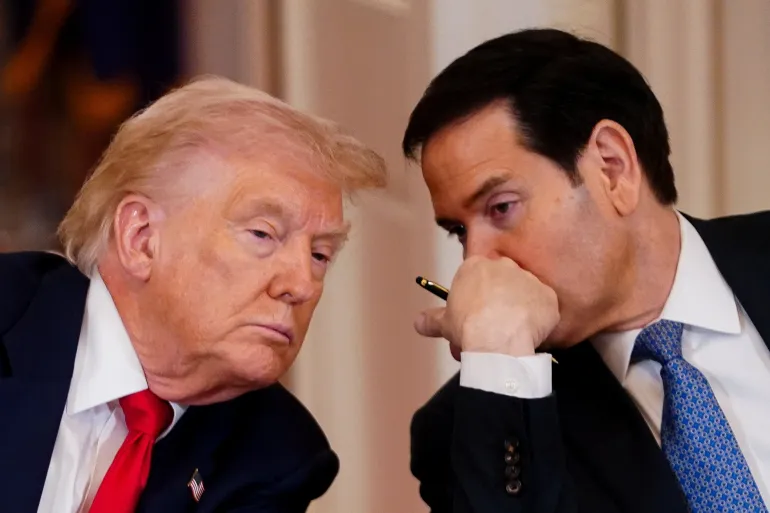
US President Donald Trump listens to Secretary of State Marco Rubio [File: Nathan Howard/Reuters]
What are Democrats saying?
Several Democratic senators have said they left the briefings frustrated, arguing that the administration had not provided clear answers about the war’s objectives, timeline or the long-term strategy guiding their approach to the conflict.
Earlier this week, six Democratic senators also called for an investigation into a strike on a girls’ school in Minab, in southern Iran. Reports indicate the attack, which investigators say involved US forces, killed at least 170 people, most of them children.
“There seems to be no endgame,” Democratic Senator Richard Blumenthal said. “The president, almost in a single breath, says it’s almost done, and at the same time, it’s just begun. So this is kind of contradictory.”
Senator Elizabeth Warren from Massachusetts raised concerns about the cost of war.
“The one part that seems clear is that while there is no money for 15 million Americans who lost their health care, there’s a billion dollars a day to spend on bombing Iran,” Warren said on Tuesday.
“The one thing Congress has the power to do is to stop actions like this through the power of the purse,” she added.
Others seem worried that a ground deployment could take place.
“We seem to be on a path toward deploying American troops on the ground in Iran to accomplish any of the potential objectives here,” Blumenthal, of Connecticut, told reporters after Tuesday’s classified briefing.
“The American people deserve to know much more than this administration has told them about the cost of the war, the danger to our sons and daughters in uniform and the potential for further escalation and widening of this war,” he added.
Democratic Senator Richard Blumenthal of Connecticut [File: Ben Curtis/AP]
What are Republicans saying?
Republicans, who have slim majorities in both houses of Congress, have almost unanimously backed Trump’s campaign against Iran, with only a handful expressing doubt about the war.
Some Republican leaders say the strikes are necessary to curb Iran’s military capabilities, missile programme and regional influence.
They have also argued that the operation is limited in scope and designed to weaken Iran’s ability to threaten US forces and allies in the region.
Republican Representative Brian Mast of Florida, chairman of the House Foreign Affairs Committee, last week publicly thanked Trump for taking action against Iran, saying the president is using his constitutional authority to defend the US against the “imminent threat” posed by Tehran.
But some Republican members of Congress have voiced concerns.
Representative Nancy Mace from South Carolina said she did “not want to send South Carolina’s sons and daughters into war with Iran”, in a post on X.
Rand Paul, a Republican senator from Kentucky, accused the Trump administration of changing its narrative and rationale for the war on a daily basis.
“We keep hearing new reasons for war with Iran—none convincing,” he wrote on X. “‘Free the oppressed’ sounds noble, but where does it end? We’ve been told for decades Iran is weeks from a nuke. War should be a last resort, not our first move. A war of choice is not my choice.”
Why does the debate matter?
The dispute has revived a long-running debate in Washington, DC, about the limits of presidential war powers.
Under the US Constitution, Congress has the authority to declare war, but modern presidents have frequently launched military operations without formal congressional approval, often citing national security or emergency threats.
The law allows the president to deploy US forces for up to 60 days without congressional authorisation, followed by a 30-day withdrawal period if Congress does not approve the action.
Some lawmakers and legal experts say the war on Iran highlights the need for stronger congressional oversight of military action.
“In the 1970s, we adopted something called the War Powers Resolution that gives the president limited ability to do this,” said David Schultz, a professor in the political science and legal departments at Hamline University.
“And so, either you could argue that what the president is doing violates the Constitution by… not [being] a formally declared war; or b, it exceeds his authority, either as commander-in-chief or under the War Powers Act,” he added.
“And therefore, you could argue that domestically, his actions are illegal and unconstitutional,” Schutlz said.
The Trump administration has argued that the February 28 strikes were justified as a response to an “imminent threat”, a rationale often used by presidents to justify military action without prior congressional approval.
However, US intelligence agencies had themselves said before the start of the war that they had no evidence of an imminent Iranian threat to the US or its facilities across the Middle East.
March 10 (UPI) — President Donald Trump posted on social media that the United States has destroyed 10 inactive mine-laying vessels on the Strait of Hormuz while the White House cleared up a claim by another administration official.
White House press secretary Karoline Leavitt said Tuesday that the U.S. Navy did not escort an oil tanker through the Strait of Hormuz after Energy Secretary Chris Wright claimed it did on social media.
Leavitt said President Donald Trump may consider using Navy escorts for oil tankers on the strait but that has not happened yet.
“The U.S. Navy has not escorted a tanker or vessel at this time,” Leavitt told reporters during a press briefing Tuesday.
Earlier in the day, Wright posted that the U.S. Navy “successfully escorted an oil tanker through the Strait of Hormuz to ensure oil remains flowing to global markets.”
Leavitt said she was “made aware of this post,” but had not spoken with Wright about it.
The post was later taken down.
The price of crude oil fell below $80 per barrel briefly following Wright’s post. It climbed again after the post was deleted.
Iran has taken measures to close the Strait of Hormuz, a critical oil trade route, since the United States and Israel launched strikes on Feb. 28.
To combat the impact the military conflict with Iran will have on the global oil market, the United States has discussed plans to escort oil tankers through the Strait of Hormuz. However, retaliatory strikes by Iran have demanded more military resources, Wright previously said.