LIVE: Wounded Palestinians prepare to leave Gaza as Israel opens Rafah
Rafah crossing will reportedly operate for six hours a day and allow only 150 patients to exit into Egypt for care.
Source link
Rafah crossing will reportedly operate for six hours a day and allow only 150 patients to exit into Egypt for care.
Source link

Feb. 1 (UPI) — One police officer was killed and another wounded in a shooting Sunday at a suburban Atlanta hotel, according to authorities, who said the gunman has been arrested.
The shooting occurred Sunday morning in Stone Mountain, located northeast of Atlanta, the Gwinnett County Police Department said in a statement.
Two officers with the Gwinnett County Police Department were responding to a fraud call at the Holiday Inn Express on 1790 E. Park Place Boulevard shortly before 8 a.m. EST. After the officers made contact, the subject opened fire, striking both Gwinnett County officers.
The suspect, who has since been identified as 35-year-old Kevin Andrews of Decatur, Ga., was struck by return fire, sustaining non-life-threatening injuries.
Officer Pradeep Tamang died from injuries sustained in the shooting, the Gwinnett County Police Department said, adding that the other officer, David M. Reed, underwent surgery at a hospital where he remains in critical but stable condition.
“Our hearts are with the families of Officer Pradeep Tamang and with MPO David Reed, their loved ones and the entire Gwinnett County Police Department during this incredibly difficult time,” Nicole Love Hendrickson, chair of the Gwinnett County Board of Commissioners, said in a statement.
“We are deeply grateful for their continued dedication, and we stand united with our officers, their families and all of you as we navigate this challenging time together.”
Tamang joined the Gwinnett County Police Department in July 2024. Reed, a master police officer, has been with the force since September 2015.
Andrews, the suspect, will be transported to Gwinnett County Jail once he is released from the hospital, authorities said.
The Georgia Bureau of Investigation, which is investigating the shooting, said in a statement that the officers were called to the hotel in response to a South Carolina individual stating their credit card had been fraudulently used there.
The hotel desk manager advised Tamang and Reed that the room in question was being rented to Andrews, whom they spoke to about the alleged fraudulent use of the credit card.
After learning Andrews had an active warrant for failure to appear in DeKalb County, Tamang and Reed attempted to arrest the man, who allegedly pulled out a handgun and fired on the officers.
Andrews has been charged with one count each of malice murder, felony murder and possession of a firearm by a convicted felon and two counts of aggravated assault upon a public safety officer.
“Today, we join @GwinnettPD in mourning the loss of a brave officer and are praying for the swift recovery of another,” Georgia Gov. Brian Kemp said in a statement on X.
“This is the latest reminder of the dangers law enforcement face on a daily basis, and we are grateful for every one that puts themselves in harm’s way to protect their fellow Georgians.”
United States President Donald Trump has announced plans to close the John F Kennedy Memorial Center for the Performing Arts for two years for renovations starting in July.
Trump’s announcement on Sunday follows a wave of cancellations by leading performers, musicians and groups since the president ousted the previous leadership and added his name to the building.
list of 3 itemsend of list
Trump made no mention in his post of the recent cancellations.
“I have determined that the fastest way to bring The Trump Kennedy Center to the highest level of Success, Beauty, and Grandeur, is to cease Entertainment Operations for an approximately two year period of time,” he said in a post on his Truth Social platform.
“The temporary closure will produce a much faster and higher quality result!”
The closure will start on July 4, to coincide with the 250th Independence Day celebration.
The decision, Trump said, will be subject to approval of the board, which he handpicked upon taking over as chairman.
The president added that the facility’s various entertainment events – concerts, operas, musicals, ballet performances, and interactive arts – would impede and slow the construction and renovation operations, and that a full temporary closure would be necessary.
“The Trump Kennedy Center, if temporarily closed for Construction, Revitalization, and Complete Rebuilding, can be, without question, the finest Performing Arts Facility of its kind, anywhere in the World,” he said.
“America will be very proud of its new and beautiful Landmark for many generations to come.”
There was no immediate comment from the Kennedy Center.
The complex began as a national cultural centre, but was renamed by Congress as a “living memorial” to former President John F Kennedy in 1964, in the aftermath of his assassination.
Opened in 1971, it operates year-round as a public showcase for the arts, including the National Symphony Orchestra.
After Trump took over as chairman of the centre’s board, several entertainers and performers withdrew their performances in protest of the president’s policies.
Among them were the producers of the award-winning musical Hamilton, and international operatic soprano Renee Fleming.
The Washington National Opera recently announced that it would leave the Kennedy Center, its home since the centre’s opening.
Renowned composer Philip Glass also announced on Wednesday the withdrawal of a symphony orchestra performance for Abraham Lincoln, saying that “the values” of the centre “today” are in “direct conflict” with the message of his piece.
Trump had criticised some of the programmes of the once non-partisan centre as too “woke”.
In recent days, the Kennedy Center hosted the premiere of First Lady Melania Trump’s documentary, which saw a record weekend at the box office, but drew mostly negative reviews from film critics.
The extent of the “complete rebuilding” mentioned by Trump is unclear, but he has described the structure as dilapidated and needing a facelift.
In a post on X, Maria Kennedy Shriver, a niece of the slain former president, criticised Trump’s decision without naming him. She suggested that the closure and renovation were made to distract Americans, as “no one wants to perform there any longer”.
Trump’s rebuilding plans for the centre follow a series of measures to reshape US historical and cultural institutions.
He demolished the East Wing of the White House and launched a massive $400m ballroom project, is actively pursuing the building of a triumphal arch on the other side Arlington Bridge from the Lincoln Memorial, and has plans for the Washington Dulles international airport.

Harold Rogers, interim CEO of Coupang Corp., arrives at the Seoul Metropolitan Police Agency’s headquarters in Seoul, South Korea, 30 January 2026. Rogers is to be questioned about allegations of evidence destruction in connection to a massive data breach at the company. File. Photo by YONHAP / EPA
Jan. 31 (Asia Today) — Harold Rogers, interim chief executive of Coupang Korea, was questioned for more than 12 hours by police over allegations that the company destroyed evidence during an internal probe into a massive personal data leak.
Rogers arrived at the Seoul Metropolitan Police Agency at about 2 p.m. Thursday and left around 2:22 a.m. Friday. He declined to answer reporters’ questions, including whether he acknowledged the evidence destruction allegations, how the company determined that about 3,000 users were affected, and why he had not appeared for questioning earlier.
Before entering police headquarters, Rogers said Coupang had “fully cooperated with all government investigations and will continue to do so,” adding that the company would also cooperate with the police probe.
Police are investigating whether Coupang conducted an unauthorized “self-investigation” after the data breach and destroyed evidence in the process. The company allegedly analyzed a suspect’s laptop without prior consultation with authorities and publicly announced its own findings, including the estimated scope of the leak.
Investigators reportedly questioned Rogers about Coupang’s actions, including allegedly contacting the data leak suspect in China without police knowledge, retrieving the laptop, and conducting forensic analysis independently.
Attention has also focused on whether Rogers will leave South Korea. Police applied for a travel ban against him after his entry on Jan. 21, but prosecutors rejected the request. Rogers previously left the country earlier this month after completing a two-day schedule of National Assembly hearings.
— Reported by Asia Today; translated by UPI
© Asia Today. Unauthorized reproduction or redistribution prohibited.
Original Korean report: https://www.asiatoday.co.kr/kn/view.php?key=20260131010014003

Kim Jeong-kwan, South Korea’s minister of trade, industry and energy, speaks to reporters upon arrival at Incheon International Airport after returning from tariff talks in Washington. Photo by Yonhap News Agency
Feb. 1 (Asia Today) — South Korea’s efforts to head off a proposed 25% U.S. tariff increase stalled after trade talks in Washington ended without agreement, prompting the auto industry to accelerate investment plans in the United States.
Trade, Industry and Energy Minister Kim Jeong-kwan returned to South Korea after two days of discussions with U.S. Commerce Secretary Howard Lutnick on President Donald Trump’s proposed reciprocal tariff hike. The talks, held Wednesday and Thursday in Washington, concluded without concrete results, the ministry said.
During the meetings, Kim stressed that South Korean companies were prepared to expand U.S. investment and said the government was coordinating with the National Assembly to swiftly pass a special law aimed at supporting large-scale Korean investment in the United States.
The proposed legislation is intended to reduce uncertainty for Korean firms and institutionalize strategic economic cooperation between the two countries. Seoul argued that the bill would boost U.S. job creation and economic growth.
U.S. officials, however, reportedly questioned whether the Korean government’s position would translate into concrete action, signaling that legislative intent alone would not be sufficient.
The stalled talks have heightened concerns in South Korea’s auto industry. Hyundai Motor Group, a major exporter to the U.S., is expected to adjust its existing investment strategy to accelerate the pace of spending.
Hyundai Motor President José Muñoz told The Wall Street Journal on Friday that he believes President Trump understands Hyundai’s commitment to the U.S. market and said the company is focused on speeding up its investment plans.
Hyundai previously announced plans to invest $26 billion (about 37.7 trillion won) in the United States by 2030, with a goal of locally producing 80% of the vehicles it sells there.
Industry analysts expect uncertainty surrounding the proposed tariff hike to continue until at least mid-March, as South Korea’s National Assembly plans to process the U.S. investment bill in late February or early March.
Democratic Party policy chief Han Jeong-ae said the bill would first be reviewed by the National Assembly’s finance and economy committee, adding that passage is likely within that timeframe.
The Trump administration has previously indicated it would not discuss tariff reductions until the legislation is approved, suggesting that negotiations on easing the proposed 25% tariff may resume only after the bill’s passage.
Some experts described the tariff threat as a temporary pressure tactic. Kim Pil-soo, a professor of automotive engineering at Daelim University, said the move appears aimed at showcasing policy achievements ahead of U.S. midterm elections, adding that continued investment and passage of the bill could eventually lead to a resolution.
— Reported by Asia Today; translated by UPI
© Asia Today. Unauthorized reproduction or redistribution prohibited.
Original Korean report: https://www.asiatoday.co.kr/kn/view.php?key=20260201010000191
BREAKINGBREAKING,
Peter Mandelson says he is stepping down to avoid causing further embarrassment to the governing party.
Peter Mandelson, the United Kingdom’s former ambassador to the United States, has resigned from Prime Minister Keir Starmer’s Labour Party following further revelations of his links to the late sex offender Jeffrey Epstein, UK media have reported.
Mandelson, who was removed as London’s top representative in Washington last year after the emergence of emails detailing his associations with Epstein, said he had resigned to avoid causing further embarrassment to the governing party, the reports said on Sunday.
“I have been further linked this weekend to the understandable furore surrounding Jeffrey Epstein and I feel regretful and sorry about this,” Mandelson said in a letter reported by the BBC and The Guardian.
Mandelson said he believed that reports over the weekend that he had received several payments from Epstein in the early 2000s were false, but that he needed to investigate them, the reports said.
“While doing this I do not wish to cause further embarrassment to the Labour Party and I am therefore stepping down from membership of the party,” Mandelson said, according to the reports.
More to follow…
Israel has killed more than 500 Palestinians since agreeing to end its genocidal war under a US-brokered ‘ceasefire’, which has been a truce in name only. Here are some of their stories.
Published On 1 Feb 20261 Feb 2026
Share
Feb. 1 (UPI) — After adjusting its timeline for the last remaining tests of the Artemis II space launch system and Orion capsule because of freezing cold temperatures in Florida, NASA is now pressing ahead in preparation for its launch to the moon.
NASA had planned to start the fueling phase of the wet dress rehearsal for the rocket’s launch cadence on Saturday night, but a blast of Arctic air reached all the way down to Kennedy Space Center in Florida making it too cold to load propellants into the ship’s fuel tanks.
As a result, the fueling tests were pushed back to Monday — and launch will now happen no earlier than Feb. 8 — as the agency held off on powering up the SLS rocket’s core stage until Sunday morning.
“NASA continues to press ahead through the countdown for the Artemis II wet dress rehearsal,” NASA said in a statement. “Teams monitored all systems throughout the overnight hours [Saturday] during cold temperatures and high winds.”
The wet dress rehearsal is a test of the full launch team and the series of complex steps involved in a space launch, which includes engineers in Florida, at Mission Control at Johnson Space Center in Houston and at other NASA facilities.
The tanking phase of the wet dress rehearsal involves loading more than 700,000 gallons of liquid oxygen and liquid hydrogen, as will happen before the actual launch.
The test involves filling, topping off and replenishing the tanks over a series of loading milestones.
Engineers also will start preparing to charge the Orion space capsule’s flight batteries and the core stage battery, in addition finishing preparations of the umbilical arms and a walk down at the launch pad, NASA said.
Tanking operations require an overall outdoor temperature above 41 degrees, and cannot dip below 40 for more than 30 consecutive minutes, during both the rehearsal and actual launch.
The full wet dress rehearsal is a complete countdown simulation — the wet dress countdown started Sunday at minus-39 hours and 30 minutes — and will end with a simulated launch window on Monday around 9:00 p.m. EST, NASA said.
Artemis II’s launch window is currently set for Feb. 8 to Feb. 11, but NASA has previously said that if the rocket is not ready to launch next week that additional launch windows in March and April have been identified.

Email sent to US sex offender Jeffrey Epstein in 2011 outlines what the sender described as financial and legal opportunities in Libya.
Published On 1 Feb 20261 Feb 2026
Share
A newly released document shows that an associate of late US financier and convicted sex offender Jeffrey Epstein had outlined plans to pursue access to Libya’s frozen state assets, including seeking potential support from former British and Israeli intelligence officials.
The tranche of documents released by the United States Department of Justice on Friday included an email sent to Epstein that outlines what the sender described as financial and legal opportunities linked to political and economic uncertainty in Libya at the time.
list of 4 itemsend of list
The email dated July 2011 was sent several months after a NATO-backed uprising against then Libyan President Muammar Gaddafi began. Gaddafi was killed by Libyan rebels in October of the same year.
According to the email, about $80bn in Libyan funds were believed to be frozen internationally, including roughly $32.4bn in the US.
“And it is estimated that the real number is somewhere between three to four times this number in sovereign, stolen and misappropriated assets,” the email states, adding that “if we can identify/recover 5 percent to 10 percent of these monies and receive 10 percent to 25 percent as compensation we are talking about billions of dollars”.
The sender also said certain former members of Britain’s foreign intelligence service, MI6 and Israel’s external intelligence agency, Mossad, had expressed a willingness to assist in efforts to identify and recover “stolen assets”.
The email also referenced expectations that Libya would need to spend at least $100bn in the future on reconstruction and economic recovery.
“But the real carrot is if we can become their go-to guys because they plan to spend at least $100 billion next year to rebuild their country and jump start the economy,” the email said.
The email characterised Libya as a country with significant energy reserves and strong literacy rates, factors it said could be advantageous for financial and legal initiatives.
It also stated that discussions had been held with some international law firms about working on a contingency-fee basis.
Feb. 1 (UPI) — The Rafah border crossing between Egypt and Gaza reopened on Sunday morning to limited traffic for the first time in more than two years.
Israeli officials announced that after a trial operation of the crossing it will officially reopen on Monday, first for people leaving Gaza for medical attention and then others will be permitted to leave and enter, a process that will include intense scrutiny of Palestinians who use the crossing, Al-Jazeera reported.
“The Rafah crossing has reopened for movement of people only,” the Israeli Coordinator for Government Activities in the Territories said in a post on X. “The movement of residents in both directions, entry and exit to and from Gaza, is expected to begin tomorrow.”
Rafah Crossing – UPDATE:
The Rafah crossing has reopened for movement of people only.
Today, a pilot is underway to test and assess the operation of the crossing.
The movement of residents in both directions, entry and exit to and from Gaza, is expected to begin tomorrow. pic.twitter.com/m0SFdAUXbj— COGAT (@cogatonline) February 1, 2026
Israel seized the Rafah crossing in May 2024 after officials alleged that Hamas had been using it to move terrorist operatives and materials in the area.
The seizure also made it more difficult to move supplies and aid into Gaza during Isarel’s war against Hamas after the group’s Oct. 7, 2023, terror attacks in Israel.
Reopening the crossing was part of the cease-fire agreement between Israel and Hamas in October, but Israel had held off on reopening it until it all hostages taken by the terrorist group on Oct. 7 were returned — a process that was not completed until last week.
Israel has said the people leaving or entering Gaza would have to undergo intense screening about what they were doing and why, with 150 people permitted to leave and 50 permitted to enter, an Israeli security official told CNN.
Among those returning, Israeli officials said that Palestinians who left Gaza during the war will also be allowed to return home after they have undergone additional screening.
Although Israel had said that only people would be permitted to use the crossing, NBC News reported that trucks with humanitarian aid were photographed entering Gaza from Egypt’s side of the crossing.
Hospitals and ambulances on the Egyptian side of the crossing have been preparing to receive sick and injured Palestinians, who will be the first people given clearance to leave.

Israeli occupation authorities have intensified their campaign of forced displacement across the occupied West Bank, issuing expulsion orders to an entire Bedouin community east of Ramallah and escalating demolition policies in occupied East Jerusalem.
The measures come amid a surge in settler violence targeting educational institutions in the Jordan Valley and residential homes in Qalqilya, further shrinking the living space for Palestinians under military occupation.
On Sunday morning, Israeli forces raided the Abu Najeh al-Kaabneh Bedouin community in al-Mughayyir village, east of Ramallah.
Local sources confirmed to the Wafa news agency that soldiers delivered a military order requiring the community’s 40 residents to dismantle their homes and leave the area within 48 hours. The army declared the site a “closed military zone”, a tactic frequently used to clear Palestinian land for settlement expansion.
During the raid, Israeli troops arrested three foreign solidarity activists attempting to document the eviction order.
The expulsion order is part of a widening campaign of ethnic cleansing in the region. It follows the complete displacement of the Shallal al-Auja community north of Jericho, which concluded on Saturday. After years of systematic harassment, the last three families of the community were forced to leave, marking the erasure of a presence that once included 120 families.
In occupied East Jerusalem, Israel’s municipal policies of urban restriction continued to displace Palestinians.
On Sunday, Yasser Maher Dana, a Palestinian resident of the Jabal Mukaber neighbourhood, was coerced into demolishing his 100-square-metre (1,076-square-foot) home. The structure, located in the al-Salaa district, housed four family members.
Israeli authorities routinely force Palestinians in East Jerusalem to execute their own demolition orders to avoid paying exorbitant fees charged by municipal crews and forces if they carry out the destruction themselves. These demolitions are justified by a lack of building permits, which rights groups say are nearly impossible for Palestinians to obtain in the city.
Simultaneously, in Silwan, south of Al-Aqsa Mosque, the municipality issued a demolition order for a residential room belonging to the al-Taweel family, granting them a 10-day deadline. This follows notices issued three days before demolishing two homes belonging to brothers in the Wadi Qaddum neighbourhood.
Tensions also rose at the Al-Aqsa Mosque compound, stormed by dozens of Israeli settlers under heavy police protection. According to the Jerusalem governorate, the incursion included a provocative “wedding blessing” ritual performed by settlers for a bride in the courtyards, a violation of the site’s status quo.
In the northern Jordan Valley, Israeli settlers, backed by the military, disrupted the school day at the al-Maleh School.
Azmi Balawneh, the director of education in Tubas, reported that settlers blocked teachers from reaching the school, which serves children from the vulnerable Bedouin communities of al-Hadidiya, Makhoul, and Samra.
This harassment coincides with the establishment of a new illegal settlement outpost in the al-Maleh area just a week ago. In the nearby Khirbet Samra, settlers erected a new tent on Sunday morning to seize more pastoral land.
Meanwhile, in the village of Faraata, east of Qalqilya, settlers from the illegal “Havat Gilad” outpost attacked the home of Hijazi Yamin.
Yamin told Wafa that settlers pelted his house and unleashed an attack dog on his family, trapping his wife and seven children inside.
“We live in a constant state of insecurity,” Yamin said, noting this was the second attack in a week. “I am afraid to leave my wife and children alone or let them go to school.”
Israeli forces conducted multiple raids across the West Bank on Sunday, arresting at least four Palestinians. In Hebron, two brothers were arrested following a raid on their family home. More arrests were reported in the village of Duma, south of Nablus, and in the town of al-Ubeidiya, east of Bethlehem.
In the northern city of Jenin, military vehicles stormed the city centre and the Jabel Abu Dhuhair neighbourhood. During the incursion, troops deliberately destroyed street vendors’ carts at the Cinema Roundabout, targeting the local economy.
Movement restrictions also tightened significantly. For the second consecutive day, the Israeli army closed the main entrance to Turmus Aya, north of Ramallah, and blocked the Atara military checkpoint since the early morning hours, severing connections between northern and central West Bank cities. According to the Colonization and Wall Resistance Commission, Israel now operates 916 military checkpoints and gates throughout the West Bank.
Feb. 1 (UPI) — Another blast of Arctic winter weather froze the East Coast, as temperatures farther north dropped below zero, the Carolinas were blanketed with snow and freeze warnings were issued as far south as Miami.
North and South Carolina were hit especially hard with nearly two feet of snow expected over the weekend and wind chills expected to be below zero from Virginia south to Georgia, but most of the Northeast region of the country will see its normal cold winter temperatures, the New York Times reported.
In addition to blizzard conditions in North Carolina, two major highways in Mississippi have remained closed because of icy conditions, power is out in some places and 16 people have died, while in Nashville tens of thousands of people were waiting for their electricity to be turned back on as a result of the massive winter storm.
In Florida, decades old records were broken as temperatures dropped below the 30s nearly everywhere in the state, WPLG reported.
According to weather reports, temperatures were as low as 30 degrees in parts of Miami-Dade County, Pembroke Pines in South Florida saw a wind chill of 24 degrees, Orlando broke a 90-year-old record as temperatures dipped below 30 degrees and snow flurries were seen as far south as Tampa.
The extended period of winter weather in places that normally do not expect it will continue into this week, although the Northeast — New York, New Jersey and Massachusetts, specifically — will see bitter cold continue but the chance for snow is expected to increase.

Files published by the US Department of Justice included flirtatious emails between Casey Wasserman and Epstein associate Ghislaine Maxwell.
Published On 1 Feb 20261 Feb 2026
Share
Los Angeles 2028 Olympics chief Casey Wasserman has apologised for communicating with convicted sex trafficker Ghislaine Maxwell more than 20 years ago, after the publication of a series of personal emails between the two.
New files related to late financier and sex offender Jeffrey Epstein, Maxwell’s former boyfriend, published by the United States Department of Justice on Friday, included flirtatious email exchanges between Wasserman, who was married at the time, and Maxwell dating from 2003.
list of 4 itemsend of list
Maxwell is serving a 20-year prison sentence after being found guilty in 2021 by a jury in New York on charges including sex trafficking of a minor. Epstein died in jail in 2019 while awaiting trial.
“I never had a personal or business relationship with Jeffrey Epstein,” Wasserman said in a statement on Sunday.
“I am terribly sorry for having any association with either of them.”
Maxwell was arrested in 2020 after being accused by federal prosecutors of recruiting and grooming girls for sexual encounters with Epstein between 1994 and 2004.
“I deeply regret my correspondence with Ghislaine Maxwell,” said Wasserman, adding that it took place before her and Epstein’s crimes “came to light”.
The International Olympic Committee, which works very closely with Wasserman in preparation for the Summer Olympic Games, refused to comment on the matter.
“I believe Mr Wasserman has put out his statement and we have nothing further to add,” IOC President Kirsty Coventry said in a press conference before the start of next week’s Milano-Cortina Olympics.
Asked whether the Wasserman emails were a distraction shortly before the Milano Games, Coventry said there had been past Olympics that were dogged by stories prior to their start, such as the Zika virus before the Rio de Janeiro 2016 Olympics.
“Anything that is distracting from these Games is sad,” Coventry said.
“But we have learned over the many years … there has always been something that has taken the lead, leading up to the Games. What is keeping my faith alive is when the opening ceremony happens … suddenly the world remembers the magic and spirit the Games have,” she said.
Wasserman is a sports and entertainment executive who has been leading the LA28 Olympic project from the bidding phase and currently serves as chairman of the organising committee, which is due to deliver a progress report to the IOC session on Tuesday.
The 2028 Summer Olympics were awarded to the city in 2017.
Tarazona freed after four years in prison on ‘terrorism’ and conspiracy charges.
Published On 1 Feb 20261 Feb 2026
Share
Venezuelan rights activist Javier Tarazona has been freed in a prisoner release, his family says, more than four years since he was arrested.
“After 1675 days, 4 years and 7 months, this long-awaited day has arrived. My brother Javier Tarazona is free,” Jose Rafael Tarazona posted on X on Sunday. “One person’s freedom is everyone’s hope.”
list of 3 itemsend of list
Legal rights group Foro Penal said several other prisoners had been released with Tarazona from the Helicoide detention centre in Caracas. The group said it has verified more than 300 political prisoners freed since the government announced a series of releases on January 8.
Venezuelan interim President Delcy Rodriguez on Friday unveiled a proposed “amnesty law” covering hundreds of prisoners and said the Helicoide prison – long condemned by rights groups as a site of prisoner abuse – will be transformed into a sports and social services complex.
Translation: Today, #1Feb, after 1675 days, 4 years and 7 months, this long-awaited day has arrived. My brother Javier Tarazona is FREE. THANKS BE TO GOD ALMIGHTY. Thank you to everyone who made this moment possible. One person’s freedom is everyone’s hope. #FreeToLiberate
Tarazona is the director of FundaRedes, which tracks alleged abuses by Colombian armed groups and the Venezuelan military along the countries’ border. He was arrested in July 2021 and accused of “terrorism” and conspiracy.
Government officials – who deny holding political prisoners and say those jailed have committed crimes – have given a much higher figure for the releases, saying there have been more than 600, but have not been clear about the timeline and appear to be including releases from previous years. The government has never provided an official list of how many prisoners will be released or who they are.
Families of prisoners said the releases have progressed too slowly, and Foro Penal said more than 700 political prisoners remain jailed, an updated count including prisoners whose fearful families had not previously reported their detentions.
Families and rights advocates have long demanded the charges and convictions against detainees who are considered political prisoners be revoked.
Opposition politicians, journalists and rights activists have long been subject to charges like “terrorism” and treason, which their families have called unjust and arbitrary.
The proposed amnesty law could affect hundreds of detainees who remain behind bars in the South American country as well as former prisoners who have already been conditionally released.
The releases were announced as the top United States envoy for Venezuela arrived in the Venezuelan capital, Caracas, to reopen a US diplomatic mission seven years after ties were severed.
Last month, the US abducted Venezuelan President Nicolas Maduro from the presidential palace in Caracas on the orders of US President Donald Trump.
Maduro was then taken to a prison in New York and is facing drug trafficking and “narcoterrorism” conspiracy charges.
Second round of talks to follow negotiations last month that appeared to make little progress on key issue of territory.
Ukrainian President Volodymyr Zelenskyy says a second round of trilateral talks on ending the war with Russia will take place in Abu Dhabi this week as the fate of a temporary energy ceasefire hangs in the balance.
Zelenskyy, whose country’s energy system has come under relentless attack in one of the coldest winters in years, said envoys from the United States, Russia and Ukraine would meet in Abu Dhabi on Wednesday and Thursday.
list of 3 itemsend of list
“Ukraine is ready for a substantive discussion, and we are interested in ensuring that the outcome brings us closer to a real and dignified end to the war,” he said on Sunday amid continuing US pressure to reach a deal with Russia after almost four years of war.
The first round of trilateral negotiations took place in late January but appeared to make little progress on the vital question of territory. Moscow still is demanding Kyiv cede a fifth of the Donetsk region that it still controls, which Zelenskyy’s government is refusing to do. The next round had been scheduled to take place on Sunday but may have been delayed because of the US-Iran crisis.
US President Donald Trump, who has said he wants to be remembered as a “peacemaker”, has repeatedly said a deal to end the Ukraine war is close and on Thursday announced that Russian President Vladimir Putin had agreed to stop strikes on energy targets for a week due to cold weather.
The terms of his agreement with Putin were not clear, but the Kremlin said on Friday that it had agreed to halt strikes on energy infrastructure until Sunday. Ukraine appeared to believe the suspension was supposed to last until the following Friday.
Meanwhile, US envoy Steve Witkoff said on Saturday that he held constructive talks with Russian envoy Kirill Dmitriev in Florida.
US Treasury Secretary Scott Bessent, Trump’s son-in-law Jared Kushner and White House senior adviser Josh Gruenbaum also attended the talks. Witkoff said afterwards that he was “encouraged by this meeting that Russia is working toward securing peace in Ukraine”.
On Sunday, former Russian President Dmitry Medvedev praised Trump as a “peacemaker”, telling the Reuters news agency that Russia would “soon” achieve a military victory in the Ukraine war.
“But it is equally important to think about what will happen next. After all, the goal of victory is to prevent new conflicts. This is absolutely obvious,” said the hawkish former president, who now serves as deputy chairman of Russia’s Security Council.
Neither Ukraine nor Russia have reported major strikes on their energy infrastructure in recent days although Zelenskyy said Russia was trying “to destroy logistics and connectivity between cities and communities” through air attacks.
In southeastern Ukraine, two people were killed overnight in a drone strike on a residential building in the city of Dnipro, and six people were wounded in an attack on a maternity hospital in Zaporizhzhia, regional officials said.
BREAKINGBREAKING,
This is a breaking news story, more details to follow.
Pakistan’s cricket team has been cleared to participate in the ICC T20 World Cup 2026 but will not play its game against India, the government of Pakistan said in a statement.
“The Government of the Islamic Republic of Pakistan grants approval to the Pakistan Cricket Team to participate in the ICC World T20 2026, however, the Pakistan Cricket Team shall not take the field in the match scheduled on 15th February 2026 against India,” the statement said on Sunday.
list of 2 itemsend of list
The T20 World Cup, co-hosted by India and Sri Lanka, features 20 nations and begins on Saturday.
Pakistan are drawn in Group A along with India, Namibia, Netherlands and US, and are playing all their matches in Sri Lanka. Pakistan’s first match on Saturday is against Netherlands at the Sinhalese Sports Club Cricket Ground in the Sri Lankan capital, Colombo.
If Pakistan boycotts their match against India, they will forfeit two points.
More to follow…
Carlos Alcaraz has rewritten tennis history by becoming the youngest man to complete the career Grand Slam with his victory over the great Novak Djokovic in the final of the Australian Open 2026 in Melbourne.
Alcaraz, 22, overcame a first-set loss to complete a 2-6, 6-2, 6-3, 7-5 triumph over the 24-time Grand Slam champion at the Rod Laver Arena on Sunday. In the process, he denied the 38-year-old a chance to become the only player with 25 Slam titles.
While the world number one later admitted his “legs were shaking” as he served for the title, he seemed to have the upper hand as the match wore on and finished after three hours and two minutes.
The top seed now has an Australian Open trophy to add to his two French Open, Wimbledon and US Open titles each, also making him the youngest to garner seven Slams.
Djokovic, from Serbia and a 10-time champion in Australia, was the quicker of the two out of the blocks and broke his younger rival twice to swiftly claim the opening set.
But Alcaraz, of Spain, didn’t waste time in pulling back and claiming the second set with the same scoreline in a display of speed, power and finesse.
In breaking the career Slam record, Alcaraz surpassed his idol and compatriot Rafael Nadal – who watched from the stands and who was two years older when he did the same.
It was a first defeat for Djokovic in a Melbourne final after he won all 10 previously, leaving him still searching for a landmark 25th major to better Australia’s Margaret Court, who was also watching on.

Both men battled through five long sets in their semifinals, Alcaraz against Alexander Zverev and Djokovic against Jannik Sinner, and recovery was always going to be key after their physical struggles.
But they showed few signs of fatigue in another gladiatorial contest.
They both opened with comfortable holds before a double fault and netted forehand presented the first break point chance for Djokovic at 2-1.
Alcaraz saved it, but the aggressive fourth seed kept pressing and converted on his third, then consolidated for a 4-1 lead.
Djokovic was reading Alcaraz’s serve well, and once he got in the rallies, he was authoritative, with a sensational forehand winner earning him two set points.
He claimed the set in a statement 33 minutes after a ninth unforced error from the top seed, having dominated the big moments.
It was vintage Djokovic, but Alcaraz came storming back, upping the tempo to break for 2-1 in the second set, pumping his fist when he saved a break point and held in the next game.
Djokovic put drops to his eyes and began rubbing them, unable to tame a now rampant Alcaraz, who broke again for 5-2.
There were some sensational rallies that had the crowd on their feet in set three, which went with serve until Djokovic slapped a forehand wide under pressure to slip 2-3 behind.
He gamely saved four set points at 3-5, but, with his energy level dropping, was unable to save a fifth as the Spaniard took control.
On the back foot, Djokovic then saved six break points in an 11-minute opening service game in set four to stay alive and kept fighting hard.
But Alcaraz ground him down and pounced as Djokovic served to stay in the match to seal a maiden Australian championship.
It ensured he remained world number one and Sinner two, with Djokovic moving up a place to three ahead of Zverev.

Despite his heartbreaking loss, Djokovic was gracious in defeat as he walked around the net to congratulate Alcaraz on his side of the court.
Plenty of pats on the back and smiles were exchanged in a passing-of-the-baton moment between the two tennis icons.
Afterwards, Alcaraz told the host broadcasters that his legs were shaking as he served for the championship.
“I was telling myself, at least put it [the serve] in and then let’s see what happens,” the champion said with a laugh.
The man from Murcia, southeastern Spain, said the elusive win in Australia was something he had been working hard for.
“It means the world to me and shows that all the hard work paid off,” he said.
Alcaraz’s seventh Slam put him alongside John McEnroe and Mats Wilander and one behind Andre Agassi, Jimmy Connors and Ivan Lendl.
However, the young champion was quick to dismiss talk of overtaking his heroes Nadal and Djokovic, and said 22 or 24 titles were “too far away” at the moment.
“I know how difficult it is to win a Grand Slam,” he said. “I know what it takes, so I just want to enjoy each one because I don’t know if it’s going to be my last one.
“I want to keep going and working hard to feel this emotion again.”
Meanwhile, Djokovic did not make any explicit statements on his career but did admit he’s not sure whether he will return to Melbourne for next year’s Australian Open.
“I tried to give it back with good tennis over the years. This is my 22nd year coming to Australia,” he said at the presentation ceremony.
The Serb said he didn’t think he’d be “standing on a Grand Slam final podium again”.
“God knows what happens tomorrow, let alone in six or 12 months,” the 2023 champion said.
“It has been a great ride, and I love you guys.”

As the Rafah crossing reopens, there are concerns over how restricted exits and particularly re-entries will be for Palestinians. Dr Mohammed Tahir, a trauma surgeon who volunteered in Gaza, says people fear that opting for medical treatment abroad may mean they will never return.
Published On 1 Feb 20261 Feb 2026
Share
Modi’s government presents annual budget, focusing on sustaining growth despite volatile financial markets and trade uncertainty.
Indian Prime Minister Narendra Modi’s government has unveiled its annual budget, aiming for steady growth in an uncertain global economy rocked by recent tariff wars.
Finance Minister Nirmala Sitharaman presented the budget for the 2026-2027 financial year in Parliament on Sunday, prioritising infrastructure and domestic manufacturing, with a total expenditure estimated at $583bn.
list of 3 itemsend of list
India’s economy has so far weathered punitive tariffs of 50 percent imposed by United States President Donald Trump over New Delhi’s imports of Russian oil. The government has sought to offset the impact of those duties by striking deals, such as its trade agreement with the European Union.
Despite the past year’s challenges, the Indian economy has remained one of the world’s fastest growing.
The budget for the new financial year, which starts on April 1, projects gross domestic product (GDP) growth in the range of 6.8 to 7.2 percent, according to the government’s annual Economic Survey presented in Parliament. It is a shade softer than this year’s projected 7.4 percent but still outpaces estimates by global institutions such as the World Bank.
To keep growth strong, the government said it will spend 12.2 trillion rupees ($133bn) on infrastructure in the new fiscal year, compared with 11.2 trillion rupees ($122bn) last year. It will also aim to boost manufacturing in seven strategic sectors, including pharmaceuticals, semiconductors, rare-earth magnets, chemicals, capital goods, textiles and sports goods while stepping up investments in niche industries like artificial intelligence.
Despite plans to prop up growth with state spending, the government is aiming to bring down the federal government debt-to-GDP ratio from 56.1 percent to 55.6 percent in the next financial year and the fiscal deficit from its current projected level of 4.4 percent of GDP to 4.3 percent.
Sitharaman offered no populist giveaways, saying New Delhi would focus on building resilience at home while strengthening its position in global supply chains, marking a departure from last year’s budget, which wooed the salaried middle class with steep tax cuts.
Before the budget presentation, Modi on Thursday said the nation was “moving away from long-term problems to tread the path of long-term solutions”.
“Long term solutions provide predictability that fosters trust in the world,” he said.
Modi’s government has struggled to raise manufacturing from its current level of contributing under 20 percent of India’s GDP to 25 percent to generate jobs for the millions of people entering the nation’s workforce each year.
It has also seen a sharp decline in the value of the rupee, which has recently weakened to all-time lows after foreign investors sold a record amount of Indian equities. Those sales have added up to $22bn since January last year.
“Overall, this is a budget without fireworks – not a big positive, not a big negative,” Aishvarya Dadheech, founder and chief investment officer at Mumbai-based Fident Asset Management, told the Reuters news agency.
From farmers protesting in Europe against a trade agreement between the European Union and the South American bloc Mercosur to deadly attacks in Pakistan’s Balochistan province that killed nearly 200 people and demonstrations in Cuba opposing threats by the United States, here is a look at the week in photos.
Move comes after a European Union decision to label the Islamic Revolutionary Guard Corps a ‘terrorist organisation’.
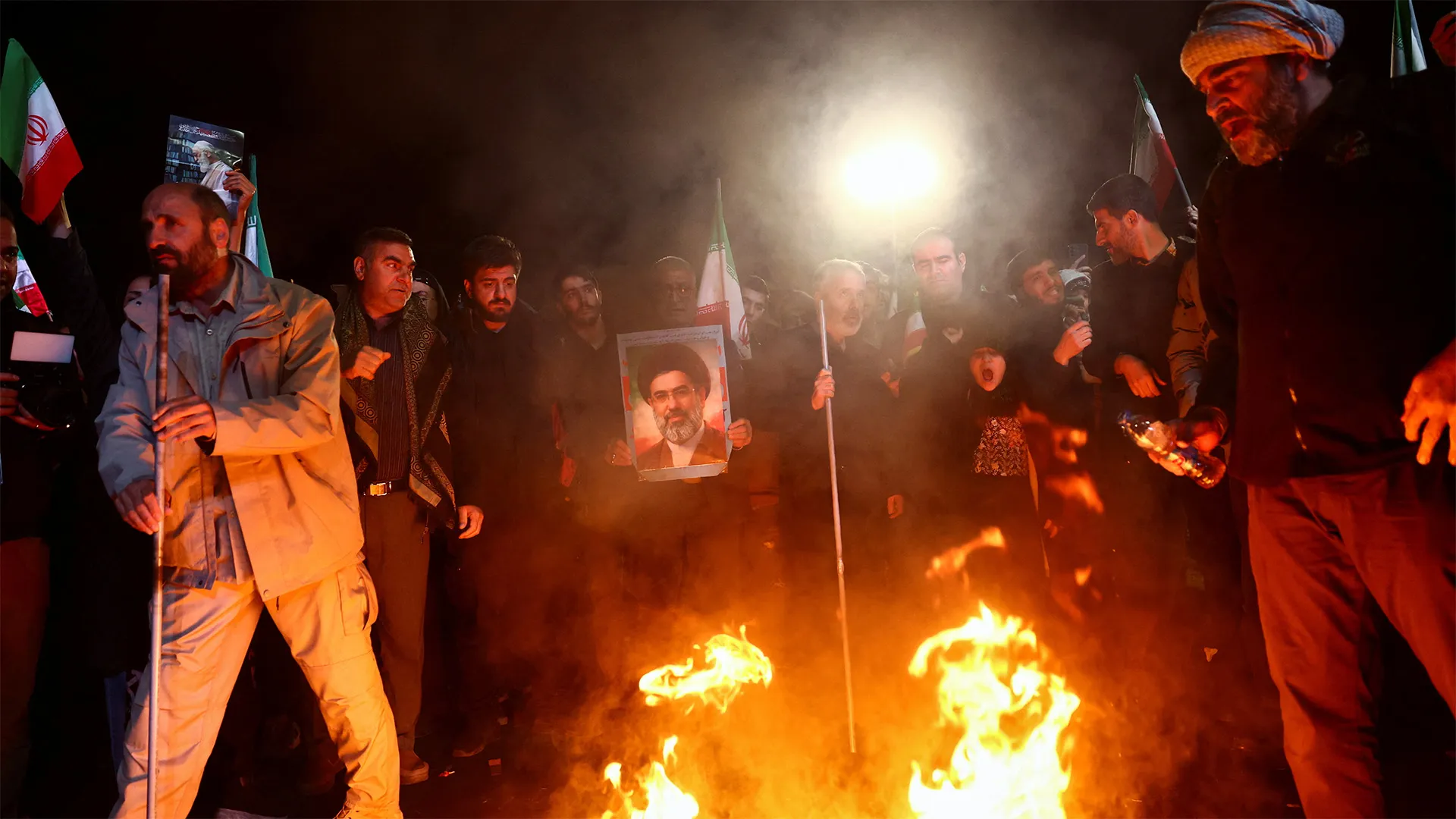
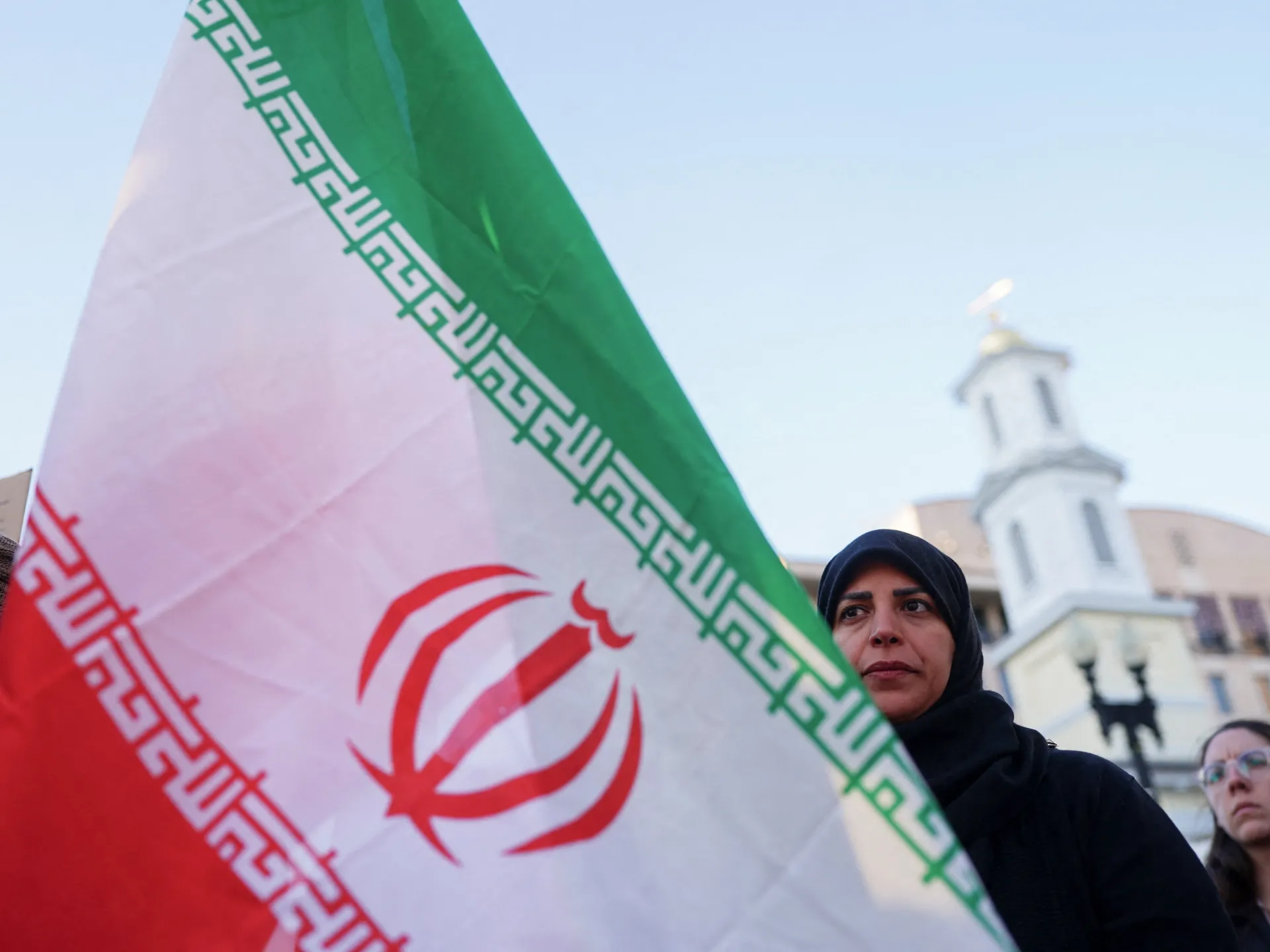
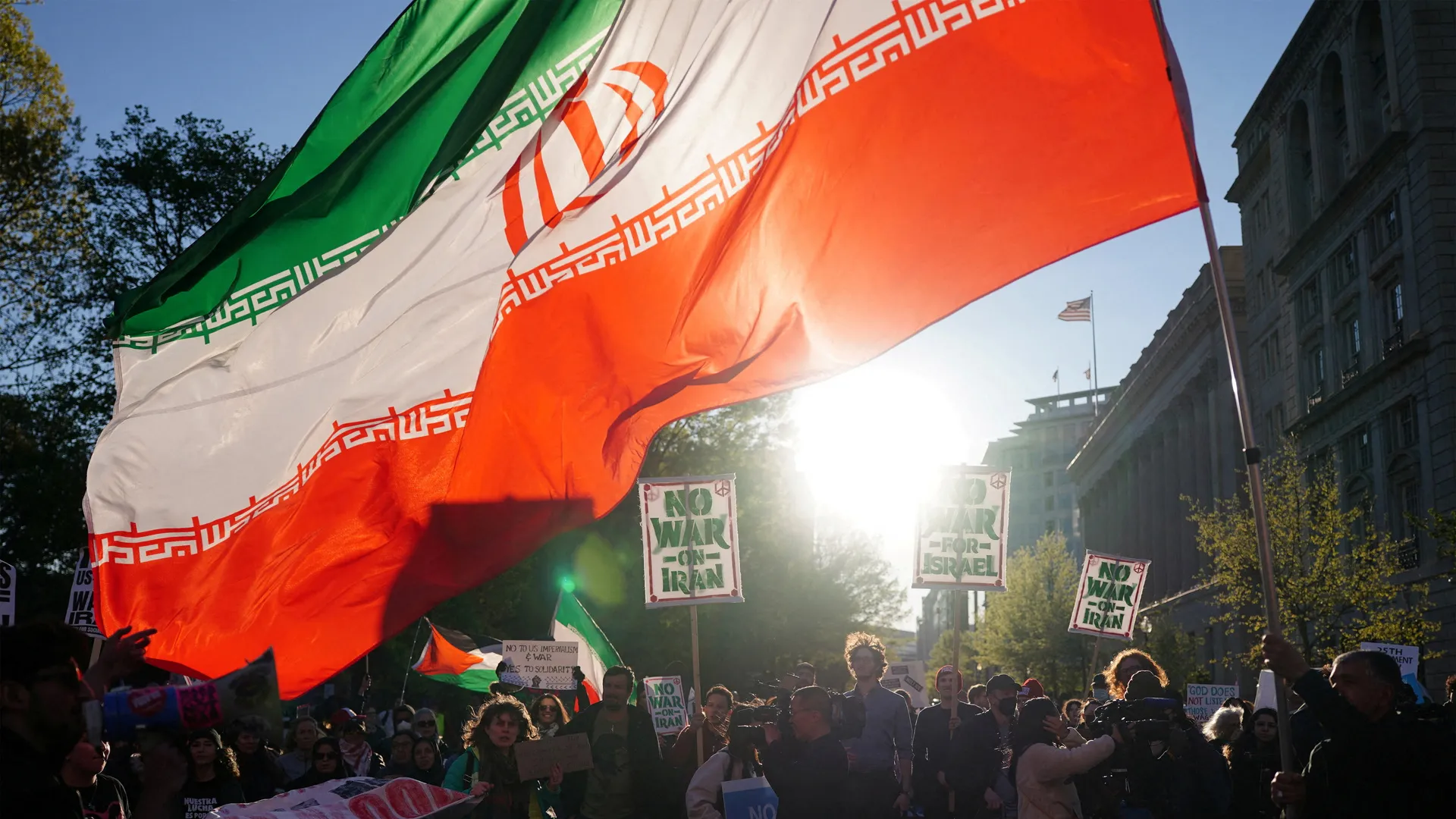
Iran has declared European armies “terrorist groups” after a European Union decision to apply the same designation to the Islamic Revolutionary Guard Corps (IRGC) over a bloody crackdown on recent protests.
Parliament Speaker Mohammad Bagher Ghalibaf said on Sunday the decision was made under “Article 7 of the Law on Countermeasures Against the Declaration of the IRGC as a Terrorist Organisation”.
list of 3 itemsend of list
“Europeans have in fact shot themselves in the foot and, once again, through blind obedience to the Americans, decided against the interests of their own people,” Ghalibaf said.
EU foreign policy chief Kaja Kallas announced the bloc’s designation of the IRGC on Thursday, saying repression could not “go unanswered”.
“Any regime that kills thousands of its own people is working toward its own demise,” she wrote on social media.
The United States-based Human Rights Activists News Agency says it has confirmed 6,713 deaths during the nationwide protests that began on December 28 over economic grievances but soon evolved into a serious challenge to the government.
Iranian authorities have not announced any official arrest numbers, but said at least 3,117 people were killed during the protests, including 2,427 described as “innocent” protesters or security forces.
Internet and mobile access were cut off by the state across Iran on the night of January 8, during the height of the protests.
The IRGC is a branch of Iran’s military, established after the 1979 Iranian revolution. Operating alongside the regular armed forces, it answers directly to Supreme Leader Ayatollah Ali Khamenei and plays a central role in Iran’s defence, foreign operations, and regional influence.
Iran’s retaliatory move came amid weeks of rising tensions, with US President Donald Trump repeatedly threatening military strikes and building up its naval presence in the Middle East. Trump, however, said on Saturday that Iran was “seriously talking” with the US, hours after Iran’s top national security official said arrangements for negotiations were progressing.
Iranian officials have warned that any attack would draw a “comprehensive” response. Tehran has also planned a live-fire military drill for Sunday and Monday in the strategic Strait of Hormuz, the narrow mouth of the Gulf through which a fifth of all oil traded passes.
Meanwhile, the country’s Supreme Leader Ayatollah Ali Khamenei on Sunday said if the US attacked Iran, it would become a regional conflict.
“[Trump] regularly says that he brought ships […] The Iranian nation shall not be scared by these things, the Iranian people will not be stirred by these threats,” Khamenei said.
“We are not the initiators and do not want to attack any country, but the Iranian nation will strike a strong blow against anyone who attacks and harasses them.”
Feb. 1 (UPI) — On this date in history:
In 1790, the U.S. Supreme Court convened in New York City for its first session. Only three of the six justices were present so there was no quorum.
In 1861, Texas seceded from the United States.
In 1865, U.S. President Abraham Lincoln signed the 13th Amendment, which abolished slavery.
In 1896, Giacomo Puccini’s opera La Boheme premiered in Turin, Italy.
In 1946, Norwegian Trygve Lie was selected to be the first U.N. secretary-general.
In 1947, members of the Jewish underground launched pamphlet bombs throughout Tel Aviv, warning British military authorities to expect further retaliation against its drive to suppress violence in the Holy Land.
In 1951, the Defense Department, responding to needs to effectively execute its Korean War strategy, ordered drafting of 80,000 men during April for assignment to the U.S. Army.

File Photo by Kevin Dietsch/UPI
In 1960, four Black students, later known as the Greensboro Four, staged the first of a series of non-violent protests at a Woolworth lunch counter in Greensboro, NC.
In 1968, the communist Viet Cong began a major offensive in the Vietnam War with a fierce attack on the South Vietnamese city of Hue.
In 1978, famed director Roman Polanski escaped to France after pleading guilty to charges of having sex with an underage girl.
In 1991, South African President F.W. De Klerk announced he would seek repeal of key laws on which the apartheid system was based.

File Photo by Brian Kersey/UPI
In 2003, the space shuttle Columbia broke apart during its descent over the southwestern United States. All seven astronauts aboard were killed.
In 2004, Janet Jackson had a “wardrobe malfunction” in her appearance with Justin Timberlake during the halftime of Super Bowl XXXVIII.
In 2009, Iceland swore in its first female prime minister, Johanna Sigurdardottir.
In 2011, Egyptian President Hosni Mubarak, with hundreds of thousands of protesters demanding his departure after a reign of nearly 30 years, announced he wouldn’t seek re-election.
In 2012, at least 73 people were killed and 200 hurt in a fight between fans and players at a soccer match in Port Said, Egypt.
In 2021, the Myanmar military took control of the government and announced a nationwide state of emergency hours after detaining leader Aung San Suu Kyi and other high-ranking elected government officials in a coup.
In 2023, seven-time Super Bowl champion Tom Brady announced his re-retirement from the NFL after 23 seasons in the league.

File Photo by Jim Ruymen/UPI