top news

Russia-Ukraine war: List of key events, day 1,440 | Russia-Ukraine war News

These are the key developments from day 1,440 of Russia’s war on Ukraine

Here is where things stand on Tuesday, February 2:

Fighting

  • The ‍Ukrainian ‍capital, Kyiv, came under attack early on ⁠Tuesday morning from ​Russian missiles, ‍Tymur Tkachenko, head of the city’s ‍military administration, ⁠said on the Telegram messaging app.
  • Tkachenko said several apartment ​buildings ‌and an educational establishment had been damaged. Reuters news agency ‌witnesses reported ‌loud explosions ⁠in the city.
  • A father and a son have been killed, and two children and their mother were wounded after Russia struck an area in the front line of the Donetsk region, according to regional authorities.

  • A coal mining site in Ukraine’s Dnipropetrovsk region was attacked for the second time in 24 hours, according to the private energy producer DTEK. There were no immediate reports on casualties or damage to infrastructure.

Diplomacy and politics

  • Russia has largely observed a ceasefire on Ukraine’s energy infrastructure, Ukrainian President Volodymyr Zelenskyy said in his nightly video address on Monday, as Kyiv prepared for the next round of trilateral talks with the US and Russia, expected to begin on Wednesday.

  • In a separate post on social media, Zelenskyy added that a recent “de-escalation” with Russia – an apparent reference to a brief ceasefire in attacks on energy facilities – was helping to build trust in the negotiations.

  • Zelenskyy said in separate remarks that it was realistic to achieve a dignified and lasting peace, in advance of the next round of peace talks with Russian and US officials in the United Arab Emirates. He added that a deal on US security guarantees for Ukraine post-war is now “complete”.

  • US President Donald Trump’s special envoy, Steve Witkoff, will travel to Abu Dhabi for the talks with Russia and Ukraine on Wednesday and Thursday, a White House official said.
  • Russia would regard the deployment of any foreign military forces or infrastructure in Ukraine as foreign intervention and treat those forces as legitimate targets, the Ministry of Foreign Affairs in Moscow said, citing Foreign Minister Sergey Lavrov.

  • Dmitry Medvedev, the deputy chairman of Russia’s Security Council, said that a proposal by European powers to deploy NATO-member troops in Ukraine as part of a proposed security guarantee and peace deal was unacceptable for Russia.
  • German authorities detained at least five people suspected of operating a network that exported goods to Russian defence companies, contravening EU sanctions imposed after Moscow’s invasion of Ukraine, federal prosecutors announced.

Sport

  • FIFA President Gianni Infantino said he supports the reinstatement of Russia in the football federation and called for an end to the country’s four-year exclusion from international tournaments, including the World Cup in Qatar and the qualifying matches for the 2026 World Cup.
  • Sport federations that claim sport is separate from politics should not include armed conflicts in that definition, because “war is a crime, not politics”, Ukrainian Minister of Sports Matvii Bidnyi said in an interview with the AFP news agency in advance of the Winter Olympics.

Energy

  • Indian oil refiners will need a wind-down period to complete Russian oil deals before imports from that country can be halted, Reuters reported after Trump announced a trade agreement with India that included a halt to oil purchases from Russia.

  • Ukraine’s electricity imports jumped by 40 percent in January 2026 compared with December 2025, hitting a record 894 gigawatt hours amid constant Russian attacks on the Ukrainian energy system, which have left millions of people without power and heating, Reuters reported, citing analysts.

  • The EU’s decision last week to ban Russian gas imports was “100 percent legally sound”, the bloc’s energy commissioner, Dan Jorgensen, told reporters in Portugal’s capital, Lisbon, adding it would prevent Russia from weaponising energy amid its war on Ukraine.

Source link

UN envoy meets vice ministers in Lee administration during Korea visit

Elizabeth Salmon, the United Nations (UN) special rapporteur on the human rights situation in North Korea, speaks during her meeting with Unification Minister Kim Yung-ho (not pictured) during their meeting at the government complex in Seoul, South Korea, on 11 September 2023. File. Photo by YONHAP / EPA

Feb. 2 (Asia Today) — Elizabeth Salmon, the United Nations special rapporteur on human rights in North Korea, began a five-day visit to South Korea on Monday, meeting vice minister-level officials under the Lee Jae-myung administration, a shift from ministerial-level meetings held during the previous government.

The visit, which runs from Feb. 2 to 6, marks Salmon’s third official trip to South Korea since assuming the post and her first since September 2023.

During earlier visits in 2022 and 2023, Salmon met with ministers and vice ministers from the Ministry of Foreign Affairs and the Ministry of Unification, discussing broad cooperation on improving human rights conditions in North Korea. This time, her meetings with the South Korean government are limited to vice minister-level officials, reflecting differing policy approaches between the former Yoon Suk Yeol administration and the current Lee government.

The Foreign Ministry said Salmon met Monday with Vice Foreign Minister Kim Jin-ah to discuss the current state of North Korean human rights.

Kim praised the rapporteur’s efforts to raise international awareness of human rights abuses in North Korea and expressed hope that her work would contribute to tangible improvements for North Korean citizens. She also commended Salmon for focusing her report to the 61st session of the UN Human Rights Council on the Universal Periodic Review process and urged continued engagement.

Salmon said she would explore technical assistance to help North Korea implement recommendations it accepted through the review process and support efforts to promote dialogue and engagement.

She is scheduled to meet Vice Unification Minister Kim Nam-joong on Wednesday, as well as officials from other government bodies including the Ministry of Justice, according to officials.

During her first official visit in 2022, Salmon met with then Foreign Minister Park Jin, then Vice Foreign Minister Lee Do-hoon, Ambassador for International Cooperation on North Korean Human Rights Lee Shin-hwa, and then Unification Minister Kwon Young-se. On her second visit in 2023, she also met with former peace negotiations chief Kim Gun and former Unification Minister Kim Young-ho.

During this visit, Salmon is also meeting with North Korean human rights groups and defector organizations to hear their assessments and recommendations. She plans to hold a news conference on Thursday to outline the results of her trip.

Salmon will reflect the findings from the visit in her annual reports on North Korean human rights to the UN Human Rights Council in March and the UN General Assembly in September.

— Reported by Asia Today; translated by UPI

© Asia Today. Unauthorized reproduction or redistribution prohibited.

Original Korean report: https://www.asiatoday.co.kr/kn/view.php?key=20260202010000760

Source link

Police believe ‘TODAY’ anchor’s mother was kidnapped

Feb. 2 (UPI) — The 84-year-old mother of NBC anchor Savannah Guthrie, reported missing in Arizona over the weekend, appears to have been abducted from her home, police said on Monday evening.

Nancy Guthrie has not been seen since Saturday night at about 9:30 to 9:45 p.m. MST, outside of her Tucson home, Sheriff Chris Nanos of the Pima County Sheriff’s Department said.

She was reported missing at about noon on Sunday.

At a Monday afternoon press conference, Nanos did not share many details of the disappearance but said that police are treating her home as a crime scene, NBC News reported.

“We do in fact have a crime scene,” Nanos said. “We do in fact have a crime. She did not leave here on her own. We know that.”

Nancy Guthrie is described as about 5-feet, 5-inches tall and weighing about 150 pounds. She has brown hair and blue eyes.

Homicide detectives processed the scene at Guthrie’s home, which is not standard protocol, and Nanos said some details at the scene raise concern. He did not share what was found.

“This one stood out because of what was described to us at the scene and what we found and located just in looking at the scene,” Nanos said.

Guthrie is “sharp as a tack” and this is not a dementia-related episode, Nanos said, but that she also is “not of good physical health” an it is unlikely that she left her home in the way that it appeared.

Savannah Guthrie, a co-anchor on the TODAY Show, did not anchor on Monday morning and NBC later announced that she would be pulling out of her host role for the Winter Olympics in Milan, Italy, which start later this week.

She shared a statement thanking people for their “thoughts, prayers and messages of support.”

“Right now our focus remains on the safe return of our dear mom,” the statement said. “We thank law enforcement for their hard work on this case and encourage anyone with information to contact the Pima County Sheriff’s Department at: 520-351-4900.”

Picketers hold signs outside at the entrance to Mount Sinai Hospital on Monday in New York City. Nearly 15,000 nurses across New York City are now on strike after no agreement was reached ahead of the deadline for contract negotiations. It is the largest nurses’ strike in NYC’s history. The hospital locations impacted by the strike include Mount Sinai Hospital, Mount Sinai Morningside, Mount Sinai West, Montefiore Hospital and New York Presbyterian Hospital. Photo by John Angelillo/UPI | License Photo

Source link

Online shopping tops $188B as Korea’s retail divide widens

People crowd an indoor shopping mall in South Korea on 25 January 2026. Photo by YONHAP / EPA

Feb. 2 (Asia Today) — South Korea’s online shopping market surpassed 270 trillion won (about $188 billion) in 2025, hitting a record high and underscoring a growing divide between fast-growing digital platforms and stagnant offline retailers.

According to the “December 2025 and Annual Online Shopping Trends” released Monday by the National Data Service, online shopping transactions reached 272.3 trillion won (about $188 billion), up 4.9% from a year earlier. Mobile shopping accounted for 211.1 trillion won (about $145 billion), a 6.5% increase. Both figures were the highest since data collection began.

Online shopping growth has been fueled by the rapid expansion of mobile consumption and logistics innovations such as early-morning and same-day delivery. Transaction volumes rose from 94.1 trillion won (about $64.9 billion) in 2017 to more than 100 trillion won (about $68.9 billion) the following year, exceeded 200 trillion won (about $137.7 billion) in 2022 and continued climbing steadily into the 270-trillion-won range (about $188 billion) last year.

The strongest growth came from automobiles and auto-related products, which posted annual transactions of 7.5 trillion won (about $5.22 billion), up 30.5% year-on-year. The increase was driven largely by online sales of electric vehicles, particularly from Tesla, which operates a direct online ordering system. Tesla’s domestic sales reached 59,916 units in 2025, more than double the previous year’s total.

Food-related categories also expanded sharply. Online food service transactions rose 12.2% to 41.4 trillion won (about $28.6 billion), while online food and beverage purchases increased 9.5% to 37.8 trillion won (about $26.0 billion), reflecting consumers’ growing reliance on delivery platforms.

By contrast, offline retail channels showed little momentum. Data from the Ministry of Trade, Industry and Energy showed that sales at 26 major retailers rose 6.8% in 2025, but growth was heavily skewed toward online platforms. Online retail sales jumped 11.8%, while offline sales edged up just 0.4%.

Large supermarkets saw sales fall 4.2% from a year earlier, while convenience store sales grew only 0.1%, effectively stagnating. These sectors, closely tied to everyday household consumption, were hit hardest as shoppers shifted spending online.

Industry analysts attribute the decline to the rapid spread of mobile shopping and fast delivery services, which have reduced foot traffic and average transaction values at brick-and-mortar stores. The traditional “one-stop shopping” advantage of large supermarkets has weakened, while convenience stores have lost their proximity edge to quick-commerce and delivery platforms.

Rising fixed costs, including rent, labor and electricity, combined with weaker consumer demand amid high interest rates and inflation, are further eroding profitability. As a result, the gap between online and offline retail is increasingly seen as a structural shift rather than a temporary trend.

— Reported by Asia Today; translated by UPI

© Asia Today. Unauthorized reproduction or redistribution prohibited.

Original Korean report: https://www.asiatoday.co.kr/kn/view.php?key=20260202010000592

Source link

‘False narrative’: Families challenge Trump’s 75-country US visa suspension | Donald Trump News

Washington, DC – A group of United States citizens and immigrant rights groups has launched a lawsuit seeking to challenge the sweeping suspension of immigrant visa processing for 75 countries by the administration of United States President Donald Trump.

The lawsuit filed on Monday argues that the Trump administration has relied on a false narrative to justify the visa processing suspension, one of the most substantial restrictions on legal immigration in the country’s history.

Recommended Stories

list of 3 itemsend of list

The lawsuit charges the policy “constitutes an unlawful nationality-based ban on legal immigration and a new set of discriminatory, unlawful public charge rules that strips families and working people of the process guaranteed by law”, according to a case overview by the National Immigration Law Center, which is among the groups supporting the legal challenge.

The sprawling 106-page complaint further alleges that the administration relies “on an unsupported and demonstrably false claim that nationals of the covered countries migrate to the United States to improperly rely on cash welfare and are likely to become ‘public charges’”.

The State Department has described the action, announced in mid-January, as a “pause” on immigrant visa processing on “countries whose migrants take welfare from the American people at unacceptable rates”.

The department has not revealed the criteria it used to determine which countries were added to the list, which comes amid a wider effort to constrict legal immigration pathways into the US and to deport undocumented citizens from the country.

The affected countries include Afghanistan, Bangladesh, Mongolia, Brazil, Colombia, Cambodia, the Democratic Republic of Congo, Ethiopia, Nigeria, Senegal, Ghana, Somalia and Russia.

The list also includes Kuwait, Jordan, Lebanon, Tunisia, Iraq, Syria, and Yemen, as well as several Caribbean, Pacific Island, and Eastern European countries.

Non-immigrant visas, including business and tourist visas, remain exempt.

“The freeze will remain active until the US can ensure that new immigrants will not extract wealth from the American people,” the State Department said in January.

‘Arbitrary, unlawful, and deeply harmful’

More than a dozen organisations and individuals named as plaintiffs in Monday’s lawsuit, as well as the seven legal organisations supporting them, argue the administration’s policy misuses the so-called “public charge” ground for inadmissibility laid out in the Immigration and Nationality Act (INA).

The provision, they argue, is meant to be a determination made on an “individualised” basis that a person risks becoming “primarily and permanently dependent on government for subsistence” if they are granted immigration status.

In turn, they said the administration is violating another provision of the INA, which says “no person shall receive any preference or priority or be discriminated against in the issuance of an immigrant visa because of the person’s race, sex, nationality, place of birth, or place of residence”.

It further argues that the administration has adopted an overly broad interpretation of what constitutes a “public charge”.

The plaintiffs include US citizens who had petitioned and been approved for their family members, including children and spouses, to join them in the US, a process known as “family unification”. Other plaintiffs included foreign nationals approved for immigrant visas through their specialised employment.

Hasan Shafiqullah, immigration supervising attorney at The Legal Aid Society, called the State Department policy “arbitrary, unlawful, and deeply harmful to families who have followed the rules and are simply seeking to reunite with their loved ones”.

Other lawyers supporting the case underscored that the policy disproportionately affects people from Africa, the Middle East, South and Central Asia and Eastern Europe.

Baher Azmy, the legal director of the Center for Constitutional Rights, accused the administration of relying on “obviously pretextual tropes about nonwhite families undeservedly taking benefits”.

“Congress and the Constitution prohibit white supremacy as grounds for immigration policy.”

The lawsuit further points to “arbitrary and disparaging” statements made by Trump and administration officials about immigrants being likely to receive public benefits.

It notes that most immigrants are ineligible for most government assistance programmes, yet are required to pay local, state, and federal taxes.

The State Department did not reply to a request for comment on the new legislation from Al Jazeera. US agencies typically do not comment on pending litigation.

Chances of success

The odds of success for the new lawsuit, which comes amid a deluge of legal challenges, remained unclear.

Plaintiffs have won at least temporary pauses on several key immigration issues, particularly related to Trump’s use of the Alien Enemies Act of 1798 to swiftly deport alleged gang members and his effort to end birthright citizenship, as lawsuits make their way through the legal system.

Many more long-term decisions remain elusive.

Meanwhile, in 2018, a 5-4 ruling by the conservative-dominated US Supreme Court upheld Trump’s visa-processing ban on several Muslim-majority countries, including Iran, Syria, Yemen, Libya and Somalia.

In the 2018 ruling, most justices ruled that the president had broad discretion to limit the entry of individuals into the US.

At the time, the Trump administration cited “national security” concerns rather than the “public charge” argument it has used in the most recent suspension.

Source link

Trump to launch $12 billion rare earth mineral stockpile ‘Project Vault’

Feb. 2 (UPI) — President Donald Trump plans to launch a $12 billion stockpile of rare earth minerals to curb U.S. dependence on China.

The project is called Project Vault and it will be funded by a $10 billion loan from the U.S. Export-Import Bank and about $1.67 billion in private capital.

Trump’s plan seeks to procure and store rare-earth minerals that are critical to the automotive, defense, and tech industries. Minerals would be stored for use by U.S. manufacturers.

Some critical minerals that are of interest to tech companies and electric vehicle manufacturers include cobalt, lithium, titanium, silicon, nickel and graphite.

Rare earth minerals have been a focus of Trump’s during his second term. The White House said the United States was reliant on imports of minerals in 2024. Trump has since used mineral acquisition as a key point of international negotiations.

The president has also eyed Greenland for its mineral deposits. He recently alluded to invading Greenland and raising tariffs but walked back that rhetoric at the World Economic Forum last month.

Some companies that are expected to be involved in the Project Vault stockpile include General Motors, Stellantis, Boeing and Google.

Source link

Royal Caribbean projects on Mexico’s Caribbean coast draw fire

Royal Caribbean wants to construct two clubs in Mexico, which will could emulate this one that opened in December on Paradise Island in the Bahamas. Photo courtesy of Royal Caribbean

Feb. 2 (UPI) — A network of environmental organizations warned about environmental and social risks two megatourism projects promoted by Royal Caribbean could generate on the island of Cozumel and in the coastal town of Mahahual, and urged federal authorities to deny environmental permits for both.

The projects, known as Royal Beach Club in Cozumel and Perfect Day in Mahahual are under review by the Secretariat of Environment and Natural Resources after the company submitted its Environmental Impact Statements between December and January.

According to the organizations, both projects are based on a large-scale tourism model intended to concentrate massive flows of visitors over very short periods.

For Mahahual, a community of fewer than 3,000 residents, Royal Caribbean plans to receive more than 21,000 tourists per day, which the groups say would place disproportionate environmental pressure on fragile coastal ecosystems.

The warning came from Grupo Gema del Mayab, Selvame MX, Territorios Diversos para la Vida, the Mexican Civil Council for Sustainable Forestry, the Citizen Collective of Cozumel Island, the Salvemos Mahahual Collective, Alianza para la Defensa Ambiental A.C., Defendiendo el Derecho a un Medio Ambiente Sano A.C., Futuros Indígenas and Greenpeace México A.C.

The organizations argue that the Perfect Day megaproject poses a direct threat to the mangroves of Mahahual, considered key to coastal protection and ecological balance, as well as to species such as the jaguar and to sea turtle nesting areas.

They also warn of potential impacts on the Mexican Caribbean reef and restrictions on public access to beaches.

One of the issues described as “highly concerning” is that the company is allegedly promoting both projects as if they already had environmental authorizations, even though the administrative procedures have not been completed.

On Thursday, a District Court in Quintana Roo granted a provisional suspension as part of a lawsuit filed by Defendiendo el Derecho a un Medio Ambiente Sano A.C. against actions by municipal and state authorities that approved land-use changes on more than 264 acres in Mahahual for the Perfect Day project.

The organizations argue that the experience in northern Quintana Roo — in areas such as Cancun — shows that intensive tourism has caused irreversible environmental damage, de facto privatization of the coastline and economic benefits concentrated in a few actors, while local communities bear the social and ecological costs.

They stress that the projects cannot be evaluated in isolation, as the Yucatan Peninsula faces cumulative pressures stemming from accelerated urban growth, other large infrastructure projects and the effects of climate change.

The groups called on the secretariat to guarantee a “strict and transparent” environmental evaluation process, with effective participation by local communities and application of the precautionary principle established under Mexican law. They also requested that no project be authorized if it puts the natural heritage of the Mexican Caribbean and the Maya Forest at risk.

“The Maya Forest is not an amusement park,” the organizations said, insisting that the region must be prioritized for the country’s environmental and cultural conservation.

Source link

Bondi announces 2 more arrests from Minnesota church protest

Feb. 2 (UPI) — U.S. Attorney General Pam Bondi announced the arrest of two more people on Monday in relation to an anti-ICE protest at a church in Minnesota last month.

Ian Davis Austin and Jerome Deangelo Richardson are the latest to be arrested for protesting during a church service at Cities Church in St. Paul, Minn., on Jan. 18. They are among nine people that the Justice Department has indicted for the protest.

“If you riot in a place of worship, we will find you,” Bondi posted on X.

U.S. code describes a riot as a “public disturbance involving an act or acts of violence by one or more persons part of an assemblage of three or more persons.”

The indictment of the protesters does not describe any acts of physical violence but mentions protesters “intimidated the church’s congregants and pastors by physically occupying most of the main aisle and rows of chairs near the front of the church.”

The protesters are charged with conspiracy against the right of religious freedom at a place of worship and conspiracy to injure, intimidate or interfere with the exercise of religious freedom at a place of worship.

On Thursday, federal officials arrested journalists Don Lemon and Georgia Fort who were at the scene covering the demonstration. Both have been released from custody.

Protesters interrupted the church service in response to the ongoing immigration raids by federal agents in the Minneapolis area. Two U.S. citizens were killed by federal agents in Minneapolis last month, Renee Good and Alex Pretti, both 37 years old.

Cities Church was the site of this demonstration due to its pastor, David Eastwood, being an acting field office director for U.S. Immigration and Customs Enforcement.

President Donald Trump referred to the church protesters as “agitators and insurrectionists” in a social media post last month.

President Donald Trump poses with an executive order he signed during a ceremony inside the Oval Office of the White House on Thursday. Trump signed an executive order to create the “Great American Recovery Initiative” to tackle drug addiction. Photo by Aaron Schwartz/UPI | License Photo

Source link

The next stage of the Gaza genocide has begun | Gaza

Jamal’s nine-year-old body is paralysed. He experiences constant, uncontrollable, violent spasms. He cannot sleep through them. Nor can his mother. To keep the spasms under control, a drug called baclofen is required. It relaxes the muscles and stops the shaking. Suddenly halting the use of baclofen can have serious health consequences.

Jamal’s mother, my cousin Shaima, wrote to me from the family’s tent in al-Mawasi displacement camp in Gaza a week ago. It was her son’s seventh day without the medicine. The violent, neurological spasms that seize Jamal’s limbs leave him screaming out in pain.

Baclofen is unavailable anywhere in Gaza: not in hospitals, not in clinics, not in Ministry of Health warehouses, and not even through the Red Cross. Shaima has searched all of them. It is one of the many medicines blocked by Israel, along with painkillers and antibiotics.

Jamal now endures dozens of spasms each day. There is no alternative medication or substitute. There is no relief, only pain.

Jamal’s story is not to be told, if the likes of former US Secretary of State Mike Pompeo are to have their way.

a photo of a little boy smiling to the camera in a green t-shirt
Nine-year-old Jamal is suffering from debilitating seizures in Gaza, where medication for his condition is blocked by Israel [Courtesy of Ghada Ageel]

Speaking at the United States-based, Israel-focused MirYam Institute last month, he said, “We need to make sure that the story is told properly so that when the history books write this, they don’t write about the victims of Gaza”. At this line, the audience applauded.

Pompeo went on to say that every war has civilian casualties, but the true victims in this case are the Israeli people. His concern is that October 7th and the war in Gaza would be remembered “incorrectly”.

It seems Pompeo wants to argue that the people of Gaza are just “collateral damage” in Israel’s war.  They are to remain nameless, faceless, forgotten. He wants their stories erased from the pages of human history.

His remarks reflect the next phase in Israel’s genocide. Dissatisfied with its progress in eliminating Gaza’s people, their mosques, their schools and universities, their cultural institutions, economy and land, Israel and its Christian-Zionist allies like Pompeo have now embarked on the erasure of memory and martyrdom.

The campaign is evident both inside and beyond Gaza. The United Nations Relief and Works Agency for Palestine Refugees (UNRWA) – an institution that has long preserved the status of the Palestinian refugee population and safeguarded their right of return under international law – is being systematically undermined and dismantled. TikTok – one of the few social media platforms where Palestinian voices have had a bit more freedom to speak – is now shadow banning and restricting pro-Palestinian accounts, after being taken over by an Israel-friendly conglomerate.

In the US, United Kingdom, and elsewhere, local laws are weaponised to come after pro-Palestinian youth, with scores being detained for using what should be their protected right to free speech. Laws are even passed at the state level in the US to shape what can be taught at schools about Israel and Palestine.

But what Pompeo – and those like him who misread biblical verses to justify their support for Israel and its genocide – do not understand is that Palestinians have faced erasure before and have overcome it. We will do so again.

In thinking about memory and bearing witness, the word “martyr” comes to mind. “Martyr” comes from the Greek word “martus”, meaning “witness”, and features prominently in the Bible. Similarly, the word “shaheed” in Arabic is derived from the root of the word for “witness” or “witnessing”. As the word evolved, it also took on connotations of violent suffering due to one’s beliefs, and even a sense of heroic steadfastness due to the scale of one’s sacrifice.

I can think of no better word than “shaheed” to describe Jamal and the people around him: they are living martyrs. Jamal’s little body has witnessed immense suffering; it has been pounded with the violence of the war, and he – like his mother – pushes on because of his overwhelming desire to live.

All around Jamal and Shaima’s tent are thousands of other tents. Day and night, each of them is pierced by the sound of Jamal’s screams. Inside the tents, cold and often wet from the recent floods, are thousands of other people who require urgent and important medical evacuation to hospitals.

The pain and suffering are immense, yet the likes of Pompeo continue to justify the ongoing and historically rooted process of the elimination of the Palestinian people.

The Palestinian people are also poets at heart. And what Pompeo – who devalues language, memory and history – will never understand is that the poet is a witness.

As Palestinian poet Mahmoud Darwish wrote in one of his verses:

Those who pass between fleeting words

Take your names with you and go

Rid our time of your hours, and go

Steal what you will from the blueness of the sea and the sands of memory

Take what pictures you will so as to understand

That which you never will:

How a stone from our land becomes the ceiling of our sky.

The Palestinian people will keep memory alive, just as we have kept alive the pain of Beit Daras, Deir Yassin, Jenin, Muhammad al-Durrah, Anas al-Sharif and the roots of every olive tree ripped from its soil. The Palestinian people, and millions in solidarity around the world, witnessed Israel’s destruction of Gaza. In defiance of Pompeo and honouring the living martyr Jamal, each of us will take the stones of Gaza and build a new sky.

The views expressed in this article are the author’s own and do not necessarily reflect Al Jazeera’s editorial policy.

Source link

Trump and Petro clash over how best to uproot Colombia’s cocaine crops | Donald Trump News

All about the numbers

The Petro administration has also continued to target criminal networks that traffic in cocaine through arrests and the seizure of shipments.

In November, Petro announced the Colombian government had made its largest drug bust in a decade, with law enforcement nabbing nearly 14 tonnes of cocaine.

Gloria Miranda was appointed by Petro in 2024 to lead Colombia’s Directorate for the Substitution of Illicit Crops, the agency overseeing the voluntary eradication efforts.

She believes that the Petro administration’s efforts have been mischaracterised as ineffective.

“There’s been a narrative that Colombia isn’t doing anything in the fight against drug trafficking,” she told Al Jazeera.

“But we’ve seized 276,000 kilogrammes [608,500 pounds] of cocaine, destroyed 18,000 laboratories, arrested 164,000 people, and are replacing more than 30,000 hectares [about 74,100 acres] of illicit crops.”

But critics — including Trump — argue Petro’s measures have yet to translate into results. Coca cultivation and cocaine production remain stubbornly at record levels.

According to the latest United Nations figures, coca cultivation rose in Colombia by about 10 percent in 2023. Potential cocaine output also jumped 53 percent to about 2,600 tonnes.

Gloria Miranda stands next to Gustavo Petro at an event
Gloria Miranda, second from right, stands next to President Gustavo Petro at a government event [Catherine Ellis/Al Jazeera]

Petro has questioned the accuracy of those numbers, though. Last week, ahead of Petro’s meeting with Trump, his government announced it would no longer use the United Nations figures, arguing that they rely on an “obscure statistical method”.

Michael Weintraub, the director of the Center for the Study of Security and Drugs (CESED) at the University of the Andes, told Al Jazeera that some of Petro’s pushback is political.

But he added that there is a genuine basis for questioning the UN’s methodology.

“The ‘potential cocaine production’ measure has a lot of baked-in assumptions that make it very difficult to trust,” Weintraub said.

It predicts coca production from selected plots, but yields vary by region and season. The UN itself has admitted there are limitations in its method.

Despite these concerns, coca cultivation in Colombia has trended upward for decades.

Analysts note one overriding factor: demand. Consumption in North America and Europe remains strong, and new markets have emerged in Asia, Africa and South America.

“Coca can only grow in limited places due to climate, soil and elevation,” Weintraub said. “So Colombia is likely to remain a major producer for the foreseeable future.”

Source link

Modi to Kevin Rudd: How Epstein files set off a storm far beyond the US | Explainer News

New Delhi, India – The latest release of documents related to the US Justice Department investigation into the crimes of convicted sex offender Jeffrey Epstein has set off political infernos around the globe for featuring the names of world leaders.

The tranche of files, which includes more than three million pages of documents, was released on Friday. This is the largest release since US President Donald Trump’s administration passed a law last year to force the release of the documents.

Epstein was convicted in 2008 of sex offences but avoided federal charges – which could have seen him face life in prison – by doing a deal with prosecutors. Instead, he received an 18-month prison sentence, which allowed him to go on “work release” to his office for 12 hours a day, six days a week. He was released on probation after 13 months.

In 2019, he was arrested again on charges including the sex trafficking of minors. But he died by suicide in a Manhattan jail cell in 2019 before his trial could commence.

With this latest disclosure of documents and emails linked to the cases against him, yet more has been revealed about the disgraced financier’s sexual abuse of young girls and his interactions with wealthy and powerful figures from the United Kingdom, Australia, Norway, Slovakia and India.

Simply being named in Epstein documents or emails does not mean a person is guilty of criminal wrongdoing, and, so far, no charges have been brought against individuals named in connection with the sex offender.

However, the new documents show communications between high-profile figures in the US, including Trump, former President Bill Clinton, and business tycoons such as Bill Gates and Elon Musk.

Here is what we know about some of the powerful men (and one woman) from other countries who have featured in these documents.

A man holds a sign demanding release of the Epstein files
Demonstrator Gary Rush holds a sign before a news conference on the Epstein files in front of the US Capitol, November 18, 2025, in Washington, DC, the United States [AP Photo/Mariam Zuhaib]

Narendra Modi, Indian prime minister

Documents released on Friday reveal conversations between Anil Ambani, the billionaire chairman of Reliance Group who is close to Prime Minister Narendra Modi, and Epstein. All the conversations took place in the years following Epstein’s first conviction for sex offences in 2008.

The two emailed each other about a range of issues, from sizing up incoming US ambassadors to India to setting up meetings for Modi with top US officials.

Ambani is the elder brother of India’s richest man, Mukesh Ambani, who is also close to PM Modi.

ambani
Anil Ambani, chairman of India’s Reliance Communications, attends a news conference in Mumbai, India, June 2, 2017 [Shailesh Andrade/Reuters]

On March 16, 2017, two months after Trump was sworn in for his first term as president of the US, Ambani sent an iMessage to Epstein, saying “Leadership” was asking for his help to connect with senior figures in Trump’s circle, including Jared Kushner and Steve Bannon.

Ambani also asked for advice from Epstein about a possible visit by Modi to meet Trump “in may (sic)”, before setting up a call in the messages.

In another iMessage exchange two weeks later, on March 29, Epstein wrote to Ambani: “Discussions re israel strategy dominating modi dates (sic).” Two days later, Ambani informed Epstein that Modi would visit Israel in July and asked the disgraced financier: “who do u know fir track 2”.

On June 26, Modi met Trump in Washington on his first visit since Trump became president.

Then, on July 6, 2017, Modi became the first-ever Indian prime minister to visit Israel. He snubbed the Palestinian Authority, prompting condemnation from Palestinian officials.

That year, New Delhi became the largest buyer of Israeli weapons, amounting to $715m worth of purchases. The defence partnership between the two countries has since continued despite Israel’s genocidal war in Gaza.

This marked a sharp change from India’s history of advocating for the Palestinian cause. It only opened up formal diplomatic ties with Israel in 1992. Before that, Indian citizens had been barred by India from travelling to Israel since the country’s creation in 1948.

After Modi’s visit on July 6, Epstein emailed an unidentified individual he referred to as “Jabor Y”, saying: “The Indian Prime minister modi took advice. and danced and sang in israel for the benefit of the US president. they had met a few weeks ago.. IT WORKED. !”

modi israel
Indian Prime Minister Narendra Modi shakes hands with Israeli Prime Minister Benjamin Netanyahu as they wave to the crowd during a reception for the Indian community in Tel Aviv, July 5, 2017 [Ammar Awad/Reuters]

Ambani Reliance Defence Ltd also entered a joint venture with an Israeli state defence group last year in a deal valued at $10bn over a decade.

Shortly after Modi’s visit to Israel, Larry Summers, former Harvard University president and former secretary of the US Treasury, asked Epstein if he still thought Trump was a better president than rival candidate Hillary Clinton would have been. Epstein responded affirmatively, stating, “yes, defintley India israel. for example great and all his doing (sic).”

In another conversation revealed in the latest document drop, Epstein offered to arrange a meeting between Modi and former White House chief strategist Steve Bannon just hours after Modi had won a thumping majority in the Indian national election in 2019.

In an iMessage to Bannon on May 19, 2019, Epstein wrote, “modi sending someone to see me on thurs,” referring to Ambani.

That Thursday, May 23, Epstein met Ambani in New York and his calendar for that day shows no other meeting scheduled.

After the meeting with Ambani, Epstein wrote to Bannon: “really interesting modi meeting. He won [the 2019 parliamentary elections] with HUGE mandate. His guy said that no one in wash speaks to him however his main enemy is CHINA!   And their proxy in the region pakistan. They will host the g20 in 22.. Totally buys into your vision.”

Epstein then messaged Ambani: “I think mr modi might enjoy meeting steve bannon, you all share the china problem.” And Ambani wrote back: “sure.”

Epstein then wrote back to Bannon: “modi on board.”

It is not immediately clear if Ambani was authorised to approve such decisions on behalf of the Indian government. There is no public record either of a meeting between Bannon and Indian officials that summer.

Hardeep Singh Puri, Indian politician

Another major Indian name featured in the Epstein files is Hardeep Singh Puri, who retired from the Indian Foreign Service to join Modi’s Bharatiya Janata Party in 2014.

In the documents are email exchanges between Puri and Epstein that began in June 2014, with the sex offender writing to Puri about Reid Hoffman, co-founder of LinkedIn, and arranging a visit by Hoffman to India.

Following an exchange of emails, Puri wrote a detailed pitch for investment opportunities in India to Epstein and Hoffman, laying out economic plans in India under the newly elected Modi government, and urging Hoffman to visit. Documents also show Puri met Epstein at his Manhattan townhouse on at least three occasions: February 4, 2015; January 6, 2016; and May 19, 2017.

Puri told Indian media on Sunday that his visits and interactions with Epstein were strictly business-related.

In December 2014, Puri wrote to Epstein again by email. “Please let me know when you are back from your exotic island,” he wrote, asking to set up a meeting in which Puri could give Epstein some books to “excite an interest in India”.

puri
US House of Representatives Oversight Committee Democrats/Handout


How has the Indian government responded?

India has dismissed the references to Modi in the Epstein files.

“Beyond the fact of the prime minister’s official visit to Israel in July 2017, the rest of the allusions in the email are little more than trashy ruminations by a convicted criminal, which deserve to be dismissed with the utmost contempt,” External Affairs Ministry Spokesperson Randhir Jaiswal said on Saturday.

However, the opposition, led by the Congress Party, has demanded answers about the latest disclosures – particularly those relating to Israel relations.

The Congress Party’s general secretary in charge of organisation, KC Venugopal, wrote in a post on X: “The reports of the new batch of Epstein Files are a huge wake-up call about the kind of monsters who have access to PM Modi, and how susceptible he is to foreign manipulation. The Congress demands that the Prime Minister personally come clean on these disturbing disclosures that raise serious questions.”

rudd
Former Australian Prime Minister Kevin Rudd, left, attends the Munich Security Conference in Munich, Germany, February 16, 2018 [Michaela Rehle/Reuters]

Kevin Rudd, former Australian prime minister

Australian diplomat Kevin Rudd, who served as the country’s prime minister from 2007 to 2010 and again in 2013, has also been named in the Epstein files.

Rudd’s name appeared on Epstein’s daily meeting schedule for June 8, 2014, at 4:30pm. On that day, Epstein flew to New York from his private island, Little Saint James in the US Virgin Islands, for several meetings, including with Rudd.

Rudd, who is currently serving as Australia’s ambassador to the US, claims he did not visit Epstein and denies any friendship with him.

But the newly released files show that two days before the scheduled appointment, Epstein emailed his assistant, Lesley Groff, on June 6, 2014 to ask for non-vegetarian food to be made available at the upcoming Sunday lunch “as now kevin rudd is also coming”. Rudd was not in government at the time.

Just seconds later, Epstein follows up in another email to Groff: “Kevin Rudd might also stop by former prime minister austrailia [sic].”

peter
US President Donald Trump shakes hands with the United Kingdom’s ambassador to the United States, Peter Mandelson, after announcing a trade deal with the UK, in the Oval Office at the White House in Washington, DC, the US, May 8, 2025 [Leah Millis/Reuters]

Peter Mandelson, UK politician

The name of Peter Mandelson, a former UK cabinet minister and life peer, had appeared in tranches of Epstein files previously made public. But he resigned from his membership of the UK’s ruling Labour Party on Sunday after yet more links to Epstein surfaced in the latest dump.

Mandelson was sacked as the UK’s ambassador to the US last year over his connections to Epstein.

The latest documents reveal that Epstein made $75,000 in payments to Mandelson in three separate transactions in 2003 and 2004.

In his resignation letter to Labour’s general secretary, Mandelson wrote: “I have been further linked this weekend to the understandable furore surrounding Jeffrey Epstein and I feel regretful and sorry about this.”

He said he had “no recollection” of the payments, however.

The latest documents also show that Mandelson discussed with Epstein by email a campaign against Rudd’s proposed mining tax, which would have taxed “super profits” reaped by mining companies at 40 percent, while Rudd was still prime minister.

norway
Norway’s Crown Prince Haakon, Princess Ingrid Alexandra, and Crown Princess Mette-Marit attend the Nobel Peace Prize award ceremony in Oslo, Norway, on December 10, 2025 [Ole Berg-Rusten/NTB/via Reuters]

Mette-Marit, Norway’s crown princess

The latest disclosures from the US Justice Department have embroiled Norway’s crown princess, Mette-Marit, in the Epstein scandal, as they reveal her years of extensive contact with the sex offender.

Mette-Marit, who is married to Crown Prince Haakon, the heir apparent to the Norwegian throne, appears nearly 1,000 times in the Epstein files, with scores of emails sent between the two.

In the emails, Mette-Marit told Epstein, “you tickle my brain”, and called him “soft hearted” and “such a sweetheart”. In another, she thanked Epstein for flowers he had sent when she was feeling unwell, signing off with “Love, Mm”.

In 2012, Mette-Marit told Epstein he was “very charming” and asked if it was “inappropriate for a mother to suggest two naked women carrying a surfboard for my 15 yr old sons wallpaper?”

The revelations come at a tricky time for Norway’s royal family, with Mette-Marit’s son, Marius Borg Hoiby – who was born before her marriage to Crown Prince Haakon – set to go on trial for rape later this week. Hoiby has been accused of 38 crimes, including the rapes of four women as well as assault and drug offences.

slovakia
Jeffrey Epstein and Miroslav Lajcak, a Slovak politician, diplomat, and former president of the United Nations General Assembly, appear together in this undated image from Epstein’s estate released by Democrats on the US House of Representatives Oversight Committee on December 18, 2025 [House Oversight Committee Democrats/Handout via Reuters]

Miroslav Lajcak, Slovakian national security adviser

The new tranche of Espstein files has also prompted the resignation of Slovakia’s national security adviser, Miroslav Lajcak.

Photos and emails released with the documents reveal that he met with Epstein several years after the sex offender was released from jail and exchanged text messages about women in 2018 during his second spell as foreign minister.

On Sunday, Slovakia’s Prime Minister Robert Fico accepted Lajcak’s resignation, and wrote on Facebook that the government was losing “an incredible source of experience and knowledge in foreign policy”, adding that the former minister had “categorically denied and rejected” the allegations made against him.

Source link

Iran’s economy falters as internet shutdown hits people, businesses hard | Business and Economy News

Tehran, Iran – Iran’s economic outlook appears increasingly grim more than three weeks after the start of what became one of the most comprehensive and prolonged state-imposed internet blackouts in history, impacting a population of more than 90 million people.

Iranian authorities abruptly cut off all communications across the country on the night of January 8, at the height of nationwide protests that the United Nations and international human rights organisations say were suppressed with the use of deadly force.

Recommended Stories

list of 3 itemsend of list

Most of Iran’s internet bandwidth, local and international phone calls and SMS text messages have been restored over recent days. But most of the country is still unable to freely connect to the global internet amid heavy filtering by the state.

The increased bandwidth allows more people to circumvent state restrictions using a variety of proxies and virtual private networks (VPNs), but solutions are often costly and temporary.

Last week, Information and Communications Technology Minister Sattar Hashemi told reporters his ministry estimates that the Iranian economy suffered at least 50 trillion rials (about $33m at the current exchange rate) in damages on a daily basis during the blackout.

But the minister admitted that the true toll is likely much higher, and said that other ministers and economic officials have privately offered heftier estimates that he did not expand upon.

‘Can’t do anything without the internet’

The government of President Masoud Pezeshkian has said the decision to fully block connectivity was taken outside of its control by the Supreme National Security Council.

Pezeshkian, who had made scaling back internet filtering a main campaign promise, has refrained from talking about Iran’s largest internet blackout to date, instead focusing on economic reforms and cash subsidies.

The administration has promised to offer online businesses financial support, but the losses have already been sudden, acute, and too heavy to bear for many.

Simin Siami, a travel agent working in Tehran, told Al Jazeera that her company lost most of its income and had to lay off a number of employees.

“Most international flights were cancelled, and there was no way to purchase tickets or compare existing flights,” she said, adding that her company was also unable to book hotels for customers, who were initially even unable to renew their passports.

“Unfortunately, that limited our services to selling tickets for local flights and booking local hotels, and cancelled all our previous international tickets and bookings.”

Saeed Mirzaei, who works at an immigration agency in the capital, said 46 employees at his company had to go on mandatory leave for weeks amid the shutdown.

He told Al Jazeera that they suddenly lost all contact with foreign counterparts, were unable to get updated information from embassies, and missed deadlines to apply for universities on behalf of their customers wishing to leave a heavily sanctioned Iran for better opportunities.

“We can’t do anything without the internet because our work deals directly with it,” Mirzaei said.

National internet a ‘bitter joke’

During the blackout, Iran’s theocratic establishment even struggled to sustain basic services using the so-called National Information Network, a limited nationalised intranet.

The connection to the intranet was slow and patchy, many companies remained disconnected from it, and those that were allowed to connect retained only a fraction of their customer base amid general economic stagnation across the country.

Hashemi, the communications minister, said a demand by hardliners within the establishment to move away from using the international web in favour of a domestic connection was a “bitter joke” that is not feasible to enforce.

He said his ministry estimates that the country’s online businesses could survive under a blackout for roughly 20 days, signalling that the state had no choice this week but to gradually restore internet bandwidth.

Figures for economic damages incurred by the blackout published by officials reflect only the visible costs and do not account for hidden losses, according to Abazar Barari, a member of Iran’s Chamber of Commerce.

“In the import and export sector, processes are heavily dependent on the internet from the very initial stages – such as price negotiations, issuance of pro forma and other invoices – to coordination with transportation companies and the verification of documents. As a result, the internet shutdown effectively disrupted foreign trade,” he told Al Jazeera.

“During this period, customer attrition also occurred, with the damage being particularly severe in certain food commodities, as many countries are unwilling to tie their food security to unstable supply conditions.”

‘They have no right to do this’

In a tumultuous country with one of the highest inflation rates in the world, numerous Iranians who tried to make money online to stay afloat are now deeply anxious as well.

From owners of small online businesses to teachers, chefs, crypto traders, gamers and streamers, people are taking to social media to ask others for extra support after the gradual reconnect this week.

Mehrnaz, a young video editor in Tehran, said she only went back to work this week after her company put her on forced leave without pay from the start of the protests in the city’s business district in late December.

“I was on the verge of having to move back to my parents’ house in another city. I’m only 25, and I hit near-zero for the second time this year. There might not be another time,” she said, pointing out that the first time was during the 12-day war with Israel and the United States in June.

Iran’s National Post Company announced on Sunday that postal deliveries experienced a 60-percent fall at the height of the blackout, mainly damaging small and home-based businesses that depended on mailing their products.

But beyond livelihoods, many in Iran are also angered by the fact that the state can cut off communications on command, violating the people’s right to benefit from the internet.

“They had the nerve to create a tiered internet and decide which type of use is ‘essential’,” said a woman who asked not to be identified for safety reasons.

“My child wants to search about his favourite animation movies, my mom wants to read news on Telegram, and my dad wants to download books. I want to go online and write that they have no right to do this.”

Source link

‘Regavim’: Israel’s new Rafah border site carries coded annexation message | Israel-Palestine conflict

Name of Israeli military facility at Gaza crossing with Egypt linked to Zionist anthem and pro-settler NGO, signalling a shift, analysts say. from security control to West Bank-style land grab and dehumanisation of Palestinians.

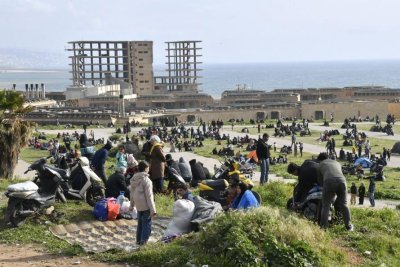
The Rafah border crossing between Gaza and Egypt has reopened partially for a few Palestinians after an 18-month closure in tandem with an added restriction to control the movement of returnees. The Israeli army has set up a checkpoint called Regavim in an area under its control outside the crossing for those entering Gaza from Egypt.

As the first trickle of humanity passed through the gates on Monday, official Israeli military documents gave it a name that indicates the facility is no longer being treated as a border crossing but as an operation for population control.

In an official statement published on its website on Sunday, the Israeli army announced the completion of what it called the “Regavim Inspection Nekez”.

While the Israeli military frames this technical language as routine, analysts told Al Jazeera that the choice of the words “Regavim” and “Nekez” indicates Israel’s long-term intentions.

Al Jazeera spoke to Israeli affairs experts who argued that these terms reveal a dual strategy: invoking Zionist nostalgia to claim the land while using engineering terms to dehumanise the Palestinian people.

Historical code: ‘Clod after clod’

For analyst Mohannad Mustafa, the name Regavim is not random; it is a deliberate ideological trigger intended to resonate with the Israeli government’s far-right base.

“In Hebrew, Regavim means ‘clods of earth’ or patches of arable land,” Mustafa explained. “But it is not just a word. It is a trigger for the Zionist collective memory of land redemption.”

The term is inextricably linked to the Zionist children’s song and poem Dunam Po Ve Dunam Sham (A Dunam Here, a Dunam There) by Joshua Friedman, which was an anthem for the early settlement movement. The lyrics celebrate the acquisition of land: “Dunam here and dunam there/Clod after clod (Regev ahar regev)/Thus we shall redeem the land of the people.”

“By officially naming the Rafah corridor Regavim, the army is sending a subliminal message,” Mustafa said. “They are framing their presence in Gaza not as a temporary security mission but as a form of ‘redeeming the land’ identical to the ideology of the early pioneers.”

Political code: The ‘West Bank model’

Beyond the historical nostalgia, the name has a direct line to the present-day architects of Israel’s annexation policies: the Regavim Movement.

This far-right NGO, cofounded in 2006 by Finance Minister Bezalel Smotrich, has been the primary force behind the expansion of Israeli control in the occupied West Bank. A 2023 investigation by the Israeli newspaper Haaretz detailed how the organisation essentially became the “intelligence officer” for the state, using drones and field data to map and demolish Palestinian structures in Area C, the 61 percent of the occupied West Bank under full Israeli control.

Mustafa argued that applying this name to the Rafah crossing signals the transfer of the “civil administration” model from the West Bank to Gaza.

“It suggests that Gaza is no longer a separate entity but a territory to be managed with the same tools used to prevent Palestinian statehood in Judea and Samaria,” Mustafa said, using the Israeli terms for the West Bank.

Operational code: A ‘political brand’ and a ‘drain’

Analyst Ihab Jabareen takes the name Regavim a step further. He argued it has evolved beyond its linguistic meaning into a modern “political brand” for the settlement right and is being used to normalise a long-term Israeli presence.

However, Jabareen said the use of the term Nekez in the Israeli military statement portends even more danger.

“While Regavim operates as a political brand, Nekez reveals the cold, engineering mindset of the military,” Jabareen told Al Jazeera. “A Nekez is a drainage point. It is a hydraulic term used for managing sewage, floodwaters or irrigation – not for processing human beings.”

Jabareen argued that describing a human border crossing as a “drain” reflects three chilling assumptions now formalised in military doctrine:

  1. Dehumanisation: “The Palestinian is no longer a citizen. They are a ‘fluid mass’ or a ‘flow’ that must be regulated to prevent overflow,” Jabareen said.
  2. The end of negotiations: “You do not negotiate with a drain. Rafah is no longer a political border subject to sovereignty. It is an engineering problem to be managed.
  3. Infrastructure, not a border: “Security is now being managed like a sewage system – purely technical, devoid of rights.”

“This is colder and more dangerous than standard settlement rhetoric,” Jabareen warned. “It converts the political issue of Gaza into a permanent technical function.”

A formula for ‘quiet control’

Both analysts agreed that the official adoption of these two terms points to a reality that is neither a full withdrawal nor declared annexation.

“It is a formula for ‘quiet control’,” Jabareen explained. “Israel doesn’t need to declare immediate settlement to control the territory. By treating the land as ‘Regavim’ (soil to be held) and the people as a ‘Nekez’ (a flow to be filtered), they are establishing a long-term reality where Gaza is an administered space, never an independent entity.”

Mustafa concurred: “The name ‘Regavim’ tells the settlers: ‘We have returned to the land.’ And the official designation ‘Nekez’ tells the security establishment: ‘We have the valve to turn the human flow on or off at will.’”

INTERACTIVE - Proposed Rafah crossing Gaza plan February 1
(Al Jazeera)

Source link

Hana Financial Group Seeks ‘Balanced Growth’ With Non-Bank Turnaround

South Korean man walks in front of the Hana Financial Group headquarters in Seoul, South Korea, 23 November 2010. Hana Financial Group said on 1 February 2026 it will accelerate efforts to boost performance at its non-bank affiliates year 2026, marking a pivotal shift toward more balanced growth as its banking unit continues to dominate earnings. File. Photo by JEON HEON-KYUN / EPA

Feb. 1 (Asia Today) — Hana Financial Group said Sunday it will accelerate efforts to boost performance at its non-bank affiliates this year, marking a pivotal shift toward more balanced growth as its banking unit continues to dominate earnings.

Last year the group posted a record net profit of 4 trillion won (about $2.9 billion), up 7.1% from a year earlier, driven primarily by strong results at Hana Bank. But performance at securities, insurance and card units lagged, dragging the non-bank contribution to overall profit down to about 12% from nearly 16% the previous year.

“We expect the normalization of performance for the group’s non-bank subsidiaries to begin in earnest starting this year,” the group said, calling 2026 the first year of “non-bank normalization.”

Under Chairman Ham Young-joo, Hana has set a target of raising non-bank profit share to 30% by 2027. But with the sector’s recent weak showing, he has emphasized to employees that “the non-banking sector cannot continue as it is.”

Hana Securities saw net profit fall nearly 6% last year to 212 billion won (about $147 million), while Hana Card’s profit slipped about 2% to 217.7 billion won (about $151 million). Hana Insurance’s deficit widened to 47 billion won. Hana Life Insurance did return to profit, posting 15.2 billion won (about $32.5 million) after a 7 billion won loss (about $4.8 million) the prior year, but its contribution remains limited.

To strengthen non-bank performance this year, the group said it is laying groundwork to secure profitability-focused growth engines and improve asset quality. Chairman Ham said non-bank results will be “key to improving the group’s return on equity,” projecting an 11-12% ROE if sufficient returns can be generated relative to capital.

Moves already under way include a newly launched commercial paper issue by Hana Securities, laying the foundation for broader venture capital supply, and plans to contribute about 18 trillion won (about $12.44 billion) this year to productive finance, including direct corporate investments.

Hana Card is also poised to play a role in a planned stablecoin consortium, with its distribution and payment functions seen as essential to linking stablecoins with the real economy. Last year, the card unit signed agreements with partners including EQBR and TravelWallet to explore stablecoin-based payment and settlement services.

In the insurance sector, the group is exploring acquisitions to build scale. It participated in due diligence for Lotte Insurance and recently submitted a letter of intent to acquire Yebyeol Insurance, potentially expanding its insurance portfolio.

A financial industry insider said Hana’s push to create synergies across its wealth management and capital markets divisions could help its non-bank units evolve into top-tier players – a shift that could help lift group net profit beyond the 5 trillion won (about $3.46 billion) mark over time.

— Reported by Asia Today; translated by UPI

© Asia Today. Unauthorized reproduction or redistribution prohibited.

Original Korean report: https://www.asiatoday.co.kr/kn/view.php?key=20260202010000254

Source link

Trump threatens to sue Trevor Noah over Epstein Island joke at Grammys

Feb. 2 (UPI) — President Donald Trump has threatened to sue Trevor Noah over a joke the comedian made while hosting Sunday night’s Grammy Awards.

“It looks like I’ll be sending my lawyers to sue this poor, pathetic, talentless dope of an M.C., and suing him for plenty$,” Trump said Sunday night in a statement on his Truth Social media platform.

Trump frequently pursues lawsuits against critics and media organizations over comments he says damaged his reputation, drawing criticism from opponents who accuse him of trying to silence dissent.

Noah, a South African comedian who has hosted the Grammy Awards since 2021, attracted the ire of the American president with a joke about Trump’s relationship with the convicted sex offender and disgraced financier Jeffrey Epstein.

After awarding singer Billie Eilish the song of the year award, Noah remarked: “That is a Grammy every artist wants — almost as much as Trump wants Greenland, which makes sense, I mean, because Epstein’s island is gone he needs a new one to hang out with Bill Clinton.”

There is no verified evidence that either president visited Epstein’s Little Saint James Island, which has been linked to sex crimes committed by Epstein against minors.

“Noah said, INCORRECTLY about me, that Donald Trump and Bill Clinton spent time on Epstein Island. WRONG!!!” Trump said in his statement.

“I can’t speak for Bill, but I have never been to Epstein Island, nor anywhere close, and until tonight’s false and defamatory statement, have never been accused of being there, not even by the Fake News Media.”

Trump and Epstein, who died in jail by apparent suicide in 2019 while awaiting trial for sex-trafficking charges, were friends dating back to the 1980s. The American president said in July that they had a falling out in the early 2000s after Epstein “stole” spa staff from his Mar-a-Lago resort including Epstein accuser Virginia Giuffre, who died by suicide in April.

On Friday, the Justice Department released millions of pages from its investigation into Epstein. Included in the documents were unverified claims and allegations submitted to the FBI that mention Trump in connection with alleged sex crimes involving minors.

Trump has denied wrongdoing. Justice Department Deputy Attorney General Todd Blanche told CNN’s State of the Union on Sunday that allegations included in the documents against Trump and others were “very quickly determined to not be credible.”

Source link

Seoul stocks dip over 5 pct on Fed chair nomination, drop in gold prices

The closing benchmark Korea Composite Stock Price Index is seen on a screen inside the dealing room of Hana Bank in central Seoul on Monday. Photo by Yonhap

South Korean stocks nosedived by more than 5 percent Monday, due largely to a risk-averse sentiment following the nomination of the new Federal Reserve chair, and a sharp decline in silver and gold prices. The Korean won plunged against the U.S. dollar.

The benchmark Korea Composite Stock Price Index (KOSPI) tumbled 274.69 points, or 5.26 percent, to close at 4,949.67, snapping a four-session winning streak.

The country’s main bourse operator, the Korea Exchange (KRX), issued a sell-side circuit breaker for 5 minutes around noon.

Trade volume was heavy at 568.8 million shares worth 32 trillion won (US$21.9 billion). Losers outnumbered winners 795 to 116.

Foreign and institutional investors offloaded a net 2.5 trillion won and 2.2 trillion won, respectively. Retail investors, on the other hand, went bargain hunting and snapped up a net 4.6 trillion won.

Local stocks came under selling pressure following the nomination of Kevin Warsh, seen widely as a hawkish figure, as Fed chair, and sharp declines in silver and gold prices, according to Lee Kyoung-min, an analyst from Daishin Securities.

“A sharp drop in precious metals triggered the liquidation and margin call of derivatives holding them. This in turn led to the forced liquidation of other assets, as investors went to preserve margins, further amplifying the stock market’s decline,” Lee said.

International gold prices have experienced a sharp decline of over 10 percent in the past few days, while sliver prices plunged over 30 percent.

The local gold market was affected, too, with gold traded on the KRX falling to its lowest permissible limit of 10 percent Monday. It marked the first time KRX gold prices fell to the floor since the market opened in March 2014, according to the bourse operator.

“There is a possibility the benchmark KOSPI could take a breather, considering its sharp gains recently, but a daily decline of 4 to 5 percent seems excessive,” Han Ji-young, a researcher at Kiwoom Securities, said.

Shares closed lower across the board.

Market top-cap Samsung Electronics declined 6.29 percent to 150,400 won, while its chipmaking rival SK hynix tumbled 8.69 percent to 830,000 won.

Top car marker Hyundai Motor retreated 4.4 percent to 478,000 won, bio firm Celltrion lost 3.33 percent to 203,000 won, and defense giant Hanwha Aerospace closed down 4.69 percent to 1,239,000 won.

Financial shares were among the few winners.

Hana Financial Group added 3.2 percent to 103,300 won, and Meritz Financial Group inched up 0.69 percent to 117,400 won.

The Korean won was quoted at 1,464.3 won against the U.S. dollar at 3:30 p.m., down 24.8 won from the previous session.

Bond prices, which move inversely to yields, closed lower. The yield on three-year Treasurys rose 1.4 basis points to 3.152 percent, and the return on the benchmark five-year government bonds rose 1.2 basis points to 3.448 percent.

Copyright (c) Yonhap News Agency prohibits its content from being redistributed or reprinted without consent, and forbids the content from being learned and used by artificial intelligence systems.

Source link

Mexico to send humanitarian aid to Cuba amid Havana-Washington tensions

Mexican President Claudia Sheinbaum, seen speaking in a November 2024 press conference, announced on Sunday plans to send humanitarian aid to Cuba. File Photo by Isaac Esquivel/EPA-EFE

Feb. 2 (UPI) — President Claudia Sheinbaum of Mexico announced over the weekend plans to send humanitarian aid to Cuba amid rising tensions between Havana and Washington.

Since President Donald Trump oversaw last month’s U.S. military seizure of Venezuela’s authoritarian leader, Nicolas Maduro, he has focused on Cuba, warning that the nation is on the precipice of failing. Last week, Trump declared a national emergency in relation to Cuba and announced a mechanism to impose sanctions against any nation that provides the island nation with oil.

In the southwestern city of Guaymas, Sonora, on Sunday, Sheinbaum said Mexico plans to send food, household goods and essential supplies to Cuba through the Secretariat of the Navy while seeking to address the shipment of oil to the Caribbean island via “diplomatic channels,” according to a readout from her office.

“We are already doing all the work necessary to send humanitarian aid that the Cuban people need — other household items and supplies,” Sheinbaum said.

“That is important.”

Commenting on whether she has addressed Trump about the issue of shipping Mexican oil to Cuba, Sheinbaum said her secretary of Foreign Affairs, Juan Ramon de la Fuente, has discussed it with his American counterpart, Secretary of State Marco Rubio.

“And as I’ve said, we are exploring all diplomatic avenues to be able to send fuel to the Cuban people, because this is not a matter of governments but of support to prevent a humanitarian crisis in Cuba,” she said.

“In the meantime, we will send food and other important aid to the island.”

Mexico is an important supplier of fuel to Cuba, and even more so since the Trump administration cut off oil Venezuelan oil exports.

Last week, Sheinbaum paused oil shipments to Cuba, but said it was “a sovereign decision.”

Trump and Sheinbaum spoke on the phone for about 40 minutes Thursday and had what the American president called “a very productive conversation” about border-related issues, drug trafficking and trade.

On Thursday night, Trump declared a national emergency in relation to Cuba and the threat of tariffs, heightening uncertainty over Washington’s next steps toward the socialist island nation.

Sheinbaum was reportedly taken by surprise by this announcement, telling reporters during a Friday press conference that “We did not touch on the topic of Cuba,” directing her secretary of Foreign Affairs to get more information from the U.S. State Department.

“The imposition of tariffs on countries that provide oil to Cuba could create a far-reaching humanitarian crisis.”

The United States already enforces a decades-old embargo against Cuba that restricts most industries, while secondary sanctions penalize foreign companies that do business with Havana.

Source link

Russian drone strike on civilian bus kills 12 miners

Feb. 2 (UPI) — A Russian drone strike in Ukraine’s southeastern Dnipropetrovsk region has killed at least 12 miners and injured eight more, according to officials who are accusing the Kremlin of attacking unarmed civilians.

DTEK Group, Ukraine’s largest private energy company, said a Russian drone struck a bus transporting staff from its Dnipropetrovsk mine, resulting in at least 20 casualties.

“The bus was hit as it was taking miners home after their shift,” the company said in a statement.

The strike was part of a large-scale Russian assault on DTEK’s mining facilities in the region, the company said as it extended its condolences to the families and loved ones of those killed.

Maxim Teimchenko, CEO of DTEK, accused Russia of conducting “an unprovoked terrorist attack on a purely civilian target.”

“This attack marks the single largest loss of life of DTEK employees since russia’s full-scale invasion and is one of the darkest days in our history,” he said.

“Their sacrifice will never be forgotten.”

Serhii Berskresnov, a Ukraine Defense Ministry adviser, identified the weapon used in the attack on Telegram as an Iran-made Shahed drone.

Using a MESH radio modem, the drone pilot deliberately attacked the bus after spotting it on the road, he said.

The drone struck near the bus, with its blast wave forcing the driver to lose control and crash into a fence, he said, adding that as the injured were exiting the vehicle, a second Shahed drone struck.

“The operators operating from the territory of Russia 100% saw and identified the target as civilian, saw they were not military and made a conscious decision to attack,” he said.

“This is yet another act of terrorism. I have no words.”

Russia has been widely accused of committing war crimes in its nearly 3-year-old war in Ukraine. From indiscriminate attacks on civilians to executions, torture and forced deportations, Russia has been repeatedly denounced for alleged war crimes that it denies.

The International Criminal Court has formally opened a war crimes and crimes against humanity investigation into Russia’s invasion of Ukraine and has issued arrest warrants for Russian officials, including its authoritarian president, Vladimir Putin.

The strike was one of numerous Russian attacks across Ukraine on Sunday, with Ukrainian President Volodymyr Zelensky stating on X that people throughout the country were without heat and electricity. Railway infrastructure was hit in the Sumy region, he said.

During the month of January, Russia launched more than 6,000 attack drones, 5,550 guided aerial bombs and 158 missiles at Ukraine, Zelensky said.

“Virtually all of it targeted the energy sector, the railways and our infrastructure — everything that sustains normal life.”

On Saturday, Russia bombed a maternity hospital in Ukraine’s southern city of Zaporizhzhia, injuring six people, according to Prime Minister Yulia Svydenko.

“This is the nature of Russia’s war,” she said.

The attacks occurred during a cold February that has seen the temperatures drop well below freezing, according to the country’s hydrometeorological center.

The strikes come despite U.S. President Donald Trump stating last week that Putin promised him that Russia would refrain from hitting Ukraine for a week.

“I personally asked President Putin not to fire into Kyiv and the various towns for a week, and he agreed to that,” he said during a cabinet meeting without making clear which towns, cities and regions that the Russian leader had agreed not to attack.

“We’re very happy that they did it.”

Trump has been pushing since before he returned to office to end the war, which he vowed to do during his first 24 hours back in the White House.

Zelensky confirmed Sunday that dates for the next trilateral meetings for a cease-fire between the United States and Russia have been set for Wednesday and Thursday in Abu Dhabi.

“Ukraine is ready for a substantive discussion, and we are interested in ensuring that the outcome brings us closer to a real and dignified end to the war,” he said.


Source link

One officer killed, another wounded in suburban Atlanta hotel shooting

Feb. 1 (UPI) — One police officer was killed and another wounded in a shooting Sunday at a suburban Atlanta hotel, according to authorities, who said the gunman has been arrested.

The shooting occurred Sunday morning in Stone Mountain, located northeast of Atlanta, the Gwinnett County Police Department said in a statement.

Two officers with the Gwinnett County Police Department were responding to a fraud call at the Holiday Inn Express on 1790 E. Park Place Boulevard shortly before 8 a.m. EST. After the officers made contact, the subject opened fire, striking both Gwinnett County officers.

The suspect, who has since been identified as 35-year-old Kevin Andrews of Decatur, Ga., was struck by return fire, sustaining non-life-threatening injuries.

Officer Pradeep Tamang died from injuries sustained in the shooting, the Gwinnett County Police Department said, adding that the other officer, David M. Reed, underwent surgery at a hospital where he remains in critical but stable condition.

“Our hearts are with the families of Officer Pradeep Tamang and with MPO David Reed, their loved ones and the entire Gwinnett County Police Department during this incredibly difficult time,” Nicole Love Hendrickson, chair of the Gwinnett County Board of Commissioners, said in a statement.

“We are deeply grateful for their continued dedication, and we stand united with our officers, their families and all of you as we navigate this challenging time together.”

Tamang joined the Gwinnett County Police Department in July 2024. Reed, a master police officer, has been with the force since September 2015.

Andrews, the suspect, will be transported to Gwinnett County Jail once he is released from the hospital, authorities said.

The Georgia Bureau of Investigation, which is investigating the shooting, said in a statement that the officers were called to the hotel in response to a South Carolina individual stating their credit card had been fraudulently used there.

The hotel desk manager advised Tamang and Reed that the room in question was being rented to Andrews, whom they spoke to about the alleged fraudulent use of the credit card.

After learning Andrews had an active warrant for failure to appear in DeKalb County, Tamang and Reed attempted to arrest the man, who allegedly pulled out a handgun and fired on the officers.

Andrews has been charged with one count each of malice murder, felony murder and possession of a firearm by a convicted felon and two counts of aggravated assault upon a public safety officer.

“Today, we join @GwinnettPD in mourning the loss of a brave officer and are praying for the swift recovery of another,” Georgia Gov. Brian Kemp said in a statement on X.

“This is the latest reminder of the dangers law enforcement face on a daily basis, and we are grateful for every one that puts themselves in harm’s way to protect their fellow Georgians.”

Source link