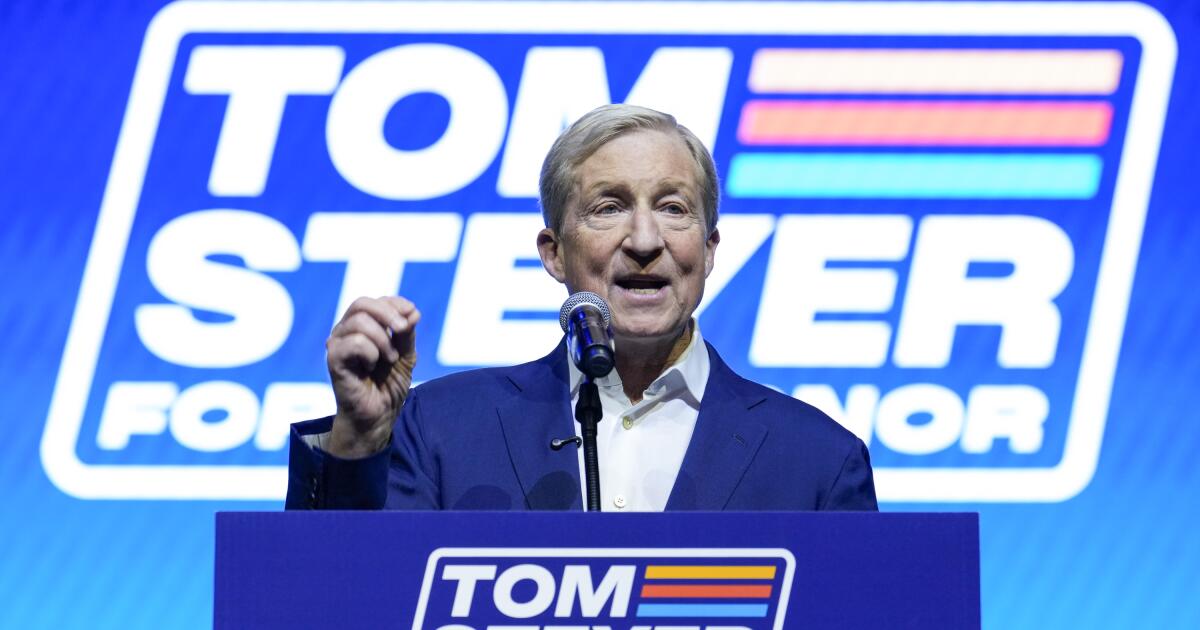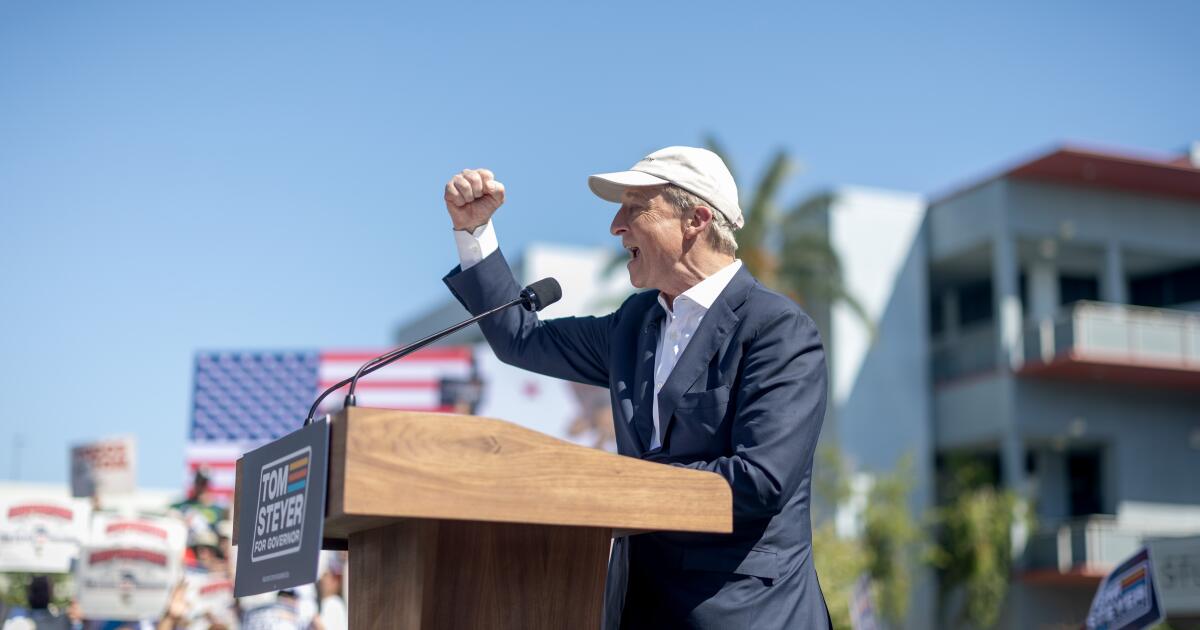
tom steyer

Winners, losers of the CNN California gubernatorial debate

For the third time in as many weeks, the leading candidates for California governor met on the debate stage Tuesday night.

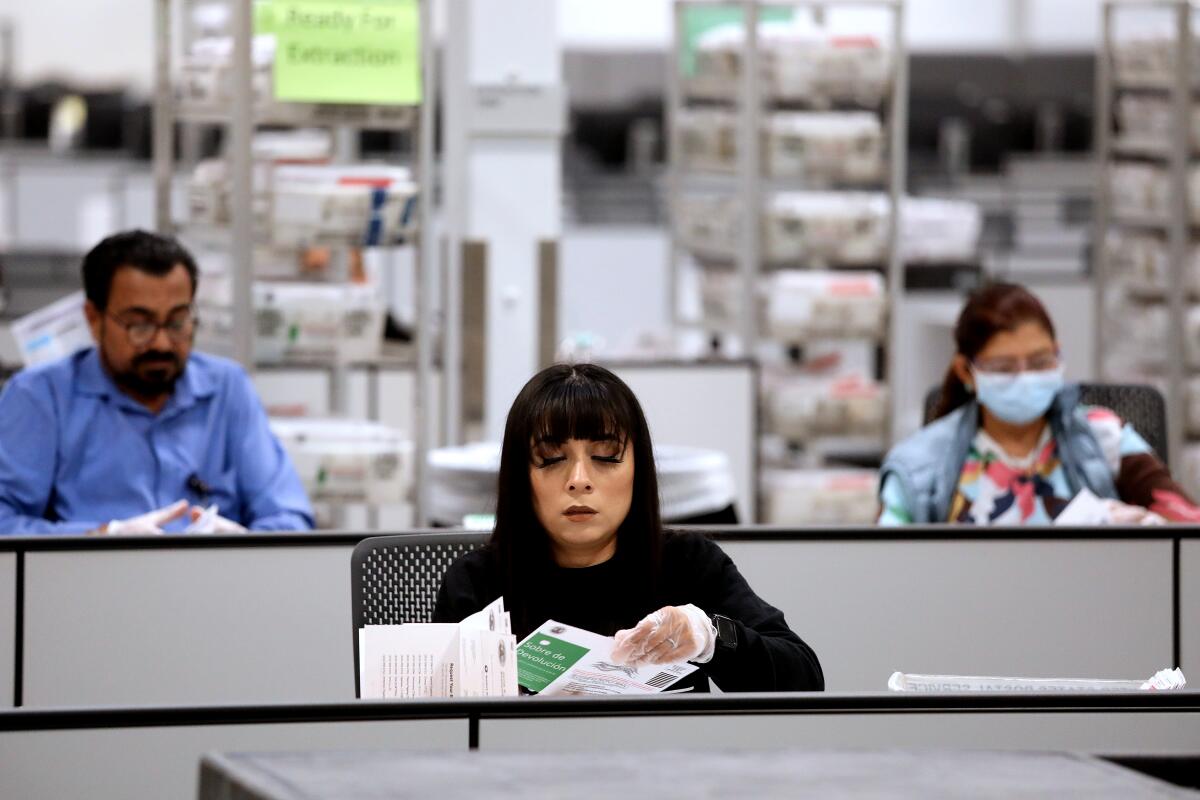
The latest installment was a two-hour session, hosted and carried live from Monterey Park by CNN. The debate marked the first time the candidates appeared before a national audience and came as mail ballots have begun arriving in homes throughout the state.

Columnists Gustavo Arellano, Mark Z. Barabak and Anita Chabria took in all 120 minutes, absorbed every zinger — scripted and otherwise — and dutifully observed each parry and thrust. Here’s what they took away:

Arellano: Antonio Villaraigosa finally rises above his gubernatorial rivals. Is it too late?

I wrote my thoughts about this debate while writing my next columna on … something, stopping to pay attention only when issues in my bailiwick like immigration and the failure of the Democratic Party were the subject of discussion. The rest of the time, what the candidates said came off as one giant shout-fest straight out of the studios of the late, great Wally George, with everyone playing true to form.

Chad Bianco raged, Steve Hilton tried to mask his MAGA-ness with his British accent. Katie Porter scolded, Tom Steyer channeled Bernie. Xavier Becerra did his best impression of the old Bunsen character from “The Muppet Show.” Matt Mahan was just … there.

You know who sounded the best? Antonio Villaraigosa.

Anyone who really knows the former L.A. mayor has always seen him as Chicano Prince Hal, someone who doesn’t take himself as seriously as he should. His infidelities effectively killed his political career after his mayoral years; his consulting for the nutritional supplement company Herbalife made Villaraigosa a walking joke among too many Latinos I know.

He has spent the last decade effectively embodying Marlon Brando’s famous quote in “On the Waterfront”: He coulda been a contender. Even his gubernatorial run, announced way before many of his opponents, has mostly had the air of a has-been — that’s one of the reasons why Villaraigosa has polled so low through most of the race to the point he was excluded from many of the early debates.

But that hangdog Villaraigosa was nowhere to be seen tonight.

His wisecracks were kept to a minimum. He stayed mostly within his time limits and didn’t interrupt much. He hammered Hilton over his refusal to admit that President Trump lost the 2020 presidential election and his dismissal of undocumented immigrants.

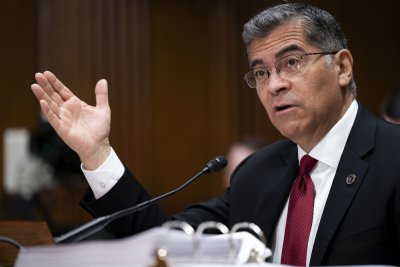
Villaraigosa especially went hard on his forever frenemy Xavier Becerra on everything from his time as President Biden’s health secretary to how former staffers have been charged with stealing millions of dollars from his campaign funds. (Becerra has not been accused of any wrongdoing.)

When CNN co-moderator Elex Michaelson asked Villaraigosa if he would cancel California’s much-maligned high-speed rail project, the candidate’s emphatic “No” thundered down like a Lebron James dunk. He called out the waste on the multibillion-dollar project, said he revived L.A.’s subway to the sea, and spoke with a passionate gravitas that Becerra could only dream of doing.

“When I make a mistake, I’m accountable,” Villaraigosa said at the end of the debate. This sounded like a candidate who can win — and now he has a month to make a comeback worthy of his political mentor, the late, great Gloria Molina.

Four weeks to prove them wrong, Antonio.

Barabak: It was a no-hitter.

No startling breakthrough. No game-changing moment. No candidate so irresistibly charming he or she knocked the race akimbo and stamped themselves as the far-and-away front-runner in the slowly consolidating contest.

By now, the candidates are plowing well-furrowed ground.

To anyone who has watched each of the debates — and there may not be a great many of those viewers out there — it was all quite familiar.

What is new, and what may have been the draw for those just tuning in, is a sense the race is finally taking a coherent shape, with Xavier Becerra unexpectedly emerging as the candidate to beat.

A month ago, Eric Swalwell was a leading contender in the dozy contest and Becerra was an afterthought, being urged to quit for the sake of his dignity and the good of the Democratic Party. (Fears of a Democratic shutout in the June 2 primary have greatly receded.)

When Swalwell left the race and vacated his congressional seat amid allegations of sexual assault and other potentially illegal misconduct, it was widely assumed much of his support would move to either Steyer or Porter, the two other leading Democratic contenders.

But Becerra has been the clear-cut beneficiary and his new status was evident Tuesday night as he faced repeated attacks. He didn’t particularly dazzle, but that’s not his appeal. It’s his steadiness and seeming unflappability in a time of great upheaval and stress, and that was again evident.

With less than four weeks to election day — and voting already underway — time is waning for another dramatic shake-up like the one that took place between Swalwell’s implosion in April and Becerra’s surge in May.

It seems, however, as though little to nothing will change, with Becerra steadily gaining ground, Hilton consolidating GOP support and the remainder of the field looking for something — or someone — to drastically shake up the race one more time.

Chabria: I don’t know about a winner, but the debate definitely had a biggest loser: Bianco. The Riverside County sheriff, to his credit I guess, didn’t try for a hot second to hide who he really is — a conspiracy-loving immigration hardliner with ties to an extremist group.

Bianco sort-of said he was a member of the Oath Keepers, a far-right organization best known for some of its members participating in the Jan. 6, 2021, storming of the Capitol. He threw out election fraud theories, even suggesting state Atty. Gen. Rob Bonta could be involved. He made it clear that undocumented folks are breaking the law by existing in the state.

Maybe some MAGA voters will stick by that shtick, but I’m guessing independents and more moderate Republicans will find Hilton, the Trump-endorsed Republican, even more appealing after Bianco’s ragey ramblings. Hilton may well be sending his opponent a thank-you note and a bottle of bubbly for that performance.

As for winners, a couple of the Democrats had their moments. Porter spoke with clarity and force on issues including single-payer healthcare (she supports it) and resisting Trump’s immigration policies in this state of immigrants.

But she also directly addressed the criticism of her having a bad temper in a way that I think may haunt her.

As her male opponents bickered back and forth, taking swipes at each other, Porter said that given all the “shouting” and “disrespect” onstage, she was shocked that “anyone wants to talk about my temperament.” It’s a pushback she tried out earlier in the week with a new advertisement that sought to make a punchline out of the criticism.

I get her point and I don’t think a male candidate would face the same scrutiny for yelling at a staffer as she has, but also — what’s more unappealing to voters than an angry woman? A complaining one. That moment of resistance against the narrative may not land the way she intends with voters.

I agree with Gustavo that Villaraigosa had a good night, and that Steyer had Bernie energy — which may be good.

Steyer was the most lively and direct he’s been in a debate, landing a few punches and making points with clarity (far less wonky than he’s been in the past). He’s owning his far-left politics, and labeling himself the “change-maker.”

Steyer has been trailing Becerra in the polls, but Becerra again had a steady if less-than-thrilling appearance. For fed-up Democrats, Steyer may be looking better all the time.

Source link

Tom Steyer gets little payoff for millions spent on green issues

Environmentalists had something in their arsenal for Tuesday’s election they never did before: a billionaire benefactor willing to empty his pockets of tens of millions of dollars to bring climate change to the forefront of political debate and elect candidates committed to fighting global warming.

But California hedge fund titan Tom Steyer’s $74-million bet — most of it from his own wallet — yielded little payoff. On Tuesday, voters elected the most hostile Congress environmentalists have faced in years.

The Republicans who won control are already making plans to roll back President Obama’s signature emission reduction efforts, green-light the controversial Keystone XL pipeline that would transport Canadian tar sands oil to the U.S. Gulf Coast, and cancel subsidies for renewable energy.

Steyer says he has no regrets.

“I feel great,” he said by phone from his organization’s San Francisco office. “We set out to put climate on the ballot in a bunch of states, to build an organization and to build a relationship with a bunch of voters.”

He argued that all of that happened, pointing to hundreds of thousands of climate-minded voters newly enlisted in his organization, NextGen Climate, the emergence of global warming in the debate in several races, and the retreat by various GOP candidates from a platform of outright denial of climate science.

He chalked up Tuesday’s results to “that part of the world we don’t control.” Steyer said there was no approach that would have overcome the Republican tide that gave the party control of Congress and defeated several of the candidates NextGen backed.

But the election results raise new questions about the approach deep-pocketed, green-minded donors are taking toward electoral politics. Despite their best efforts, and the huge amount of money invested, they are failing to get voters to set aside other concerns and cast their ballots on environmental issues. This time out, the president’s record and the economy were the forefront issues, with all others receding.

“The take-away here is this was not a successful strategy,” said Josh Freed, vice president for clean energy at Third Way, a group that seeks a middle path between the two warring parties. “Candidate positions on climate do not move the overwhelming majority of voters to pull the lever for or against them. I hope these organizations take a step back and come up with a different approach.”

Steyer’s group saw its candidates victorious in U.S. Senate races in Michigan and New Hampshire, and in state legislative races, including in Oregon. But candidates they backed lost in hotly contested Senate races in Colorado and Iowa. NextGen also failed to unseat the governors of Florida and Maine, targeted by the organization for their outspoken skepticism of climate science.

The unpopular GOP governor of Pennsylvania, Tom Corbett, which Steyer’s group campaigned against, lost. But even in that race — won by NextGen’s candidate, Democrat Tom Wolf — global warming hardly was a factor, according to G. Terry Madonna, who directs the Franklin & Marshall College Poll in Lancaster.

Steyer’s impact was “Zero. None. Zero,” he said. Climate change “was not an issue at all. It has literally no salience with voters. It didn’t ever come up.”

University of New Hampshire pollster Andrew Smith said much the same with regard to the Senate race in his state, which Democratic incumbent Jeanne Shaheen won. “I don’t think anybody paid any attention to global warming this election,” he said.

In part that is because much of Steyer’s money was spent airing ads on issues his organization thought were more likely to turn out the Democratic faithful. But that too sometimes backfired.

In Colorado, independent pollster Floyd Ciruli suggested Steyer’s heavy TV advertising, which seized on a Democratic theme emphasizing abortion rights, may have actually hurt Democratic Sen. Mark Udall, who lost to GOP Rep. Cory Gardner.

“It was probably a net negative,” Ciruli said. “It turned out to be one of those things that threw Udall on the defensive. He was being parodied and mocked for it and criticized for it.”

Even Steyer’s strategists acknowledge that climate change is not a top-tier issue now. The question is whether it ever will be. Advocates such as Freed say the push seems to be futile, and well-funded green political groups should shift their strategy to more narrowly focused efforts with bipartisan appeal. They might start, he said, by being more open to such GOP-favored options as nuclear energy.

The green campaign efforts instead focus on getting Congress back to where it was in 2010, when it almost passed a California-style law that would have capped greenhouse gas emissions nationwide.

NextGen officials say they are confident in their strategy — and persistent. “This is a multi-cycle effort,” said Chris Lehane, Steyer’s lead political strategist. “If it was easy, it already would have been done…. Social change like this is not like switching on a light bulb.”

The GOP takeover of the Senate occurs as the science of climate change has grown more definitive and the predictions of widespread effects more detailed and dire. On Sunday, a panel of hundreds of climate scientists convened by the United Nations warned that climate change driven by the burning of fossil fuels was already affecting life on every continent and in the oceans and that the window was closing rapidly for governments to avert the worst damage expected later this century.

Yet skepticism of climate science remains Republican orthodoxy. North Carolina Sen.-elect Thom Tillis said in a primary debate that climate change is not “a fact.” Sen. James M. Inhofe of Oklahoma, who is expected to take the helm of the Senate Environment and Public Works Committee, has called climate change “the greatest hoax ever perpetrated on the American people” and dismissed the U.N. science panel “as a front for the environmental left.”

Obama moved to cut greenhouse gas emissions by issuing new rules for power plants and the nation’s vehicle fleet. The GOP-run Congress will not be able to nix the rules outright. But it could so thoroughly weaken or delay them through riders to key legislation that they’d be rendered ineffective, analysts said. Deeper cuts to the nation’s emissions would probably require congressional action, and the current GOP position on climate change makes such action improbable.

Sierra Club Executive Director Michael Brune acknowledged there was a “copious amount of bad news” in Tuesday’s election. But he says there was “significant good news” as well.

“Candidates who formerly denied climate science are now saying they are not scientists and instead talk about clean energy and associate themselves with it,” he said.

“The money from Tom Steyer made a difference in elevating climate science and pushing all these lawmakers to move off a denial platform,” Brune said.

evan.halper@latimes.com

mark.barabak@latimes.com

Halper reported from New Orleans, Barabak from Los Angeles. Times staff writer Neela Banerjee in Washington contributed to this report.

Source link

Commentary: 90 minutes, 6 gubernatorial candidates, zero big moments — but some differences that matter

Two of our esteemed gubernatorial candidates, the cowboy and the dilettante, apparently could not find ties for the first debate Wednesday night, showing up with dress shirts casually unbuttoned.

Mr. Middleground sported a scruffy sorta-beard, apparently unable to pay for a razor in the midst of California’s affordability crisis. It’s a trademark look that always makes me think if this doesn’t work out, he’ll opt to live on a boat in some not-too-expensive slip by the Bay.

The billionaire wore Nikes instead of dress shoes, a sartorial nod perhaps to his bid to be the outsider-fighter. Or maybe his feet just hurt.

The last two contenders were remarkably unremarkable.

Why start with fashion? Honestly, it might be the most interesting, and telling, bit of insight that came from this first (of three) chances for our next governor to let us know who they are and what they’re made of. If the debate showed us anything, it’s that none of these candidates are hiding follow-me charisma or an excitement-inducing political vision for our collective future.

Yes, there were a few decent jabs here and there about Tom Steyer’s money, Katie Porter’s temper, Matt Mahan’s tech ties and Chad Bianco’s far-right world view. But even those were predictable.

Still, in between the yawns, there were a couple of answers worth noting, ones that might actually give us insight into how the Democratic candidates differ (Despite all the hype, it seems increasingly unlikely that two Republicans will come out of the primary, and even more unlikely that in a Democratic vs. Republican race, the Democrat would lose in blue California.)

I’ll start with a surprising place where I agreed with Steve Hilton, the Republican endorsed by President Trump.

The candidates were asked if they would support a ban on social media for kids under age 16. This is a quickly accelerating idea not beloved by tech companies. Australia and Indonesia already have bans in place. Other countries, including France and Portugal, have them in the works. Florida banned children under 14 from opening social media accounts on their own last year.

And a Los Angeles jury last month dealt a blow to Meta and YouTube when it found the platforms had damaged the mental health of a young woman with their addictive features.

Hilton took the ban question a step further, saying it “misses the point.” He has long argued that it isn’t just social media that is the problem, but having kids staring at a digital device for hours a day instead of interacting in the real world. It was one of the most genuine answers of the night.

“We’ve got to get to the heart of the problem, and that’s the devices and the screens,” he said. “I think that every parent in their heart knows that it’s wrong.”

While Steyer and Xavier Becerra, the former California attorney general, both said they would support such a ban, the remaining three candidates hedged or said they would not. Porter said no to a ban under age 16, but said she “might consider a different ban,” without being specific.

Mahan, who is backed by significant tech money, and Bianco both said they believed requiring parental consent was the way to go (though Mahan said he would ban devices in schools).

As Becerra pointed out, “kids have died as a result of their use of social media,” so it’s a place where policy matters. And if a candidate doesn’t see government’s role in controlling the dangers of social media, what will happen with artificial intelligence?

The candidates also had differences in how they would handle homelessness and the related crisis of housing affordability, though the devil was often buried in the details.

At least for Democrats. For Bianco, the difference was stark.

“We are not dealing with homeless. So stop calling it homeless,” he snapped at the moderators. “It has nothing to do with homes. This is drug- and alcohol-induced psychosis, mental illness.”

Of course, this is wrong. Last year, the UC San Francisco Benioff Homelessness and Housing Initiative released the results of the state’s most comprehensive survey of homeless people. It found that for most people living on our streets, “the cost of housing had simply become unsustainable.” It also found an increasing percentage of those folks were older — almost half were over the age of 50 — and had become homeless after a hardship such as an illness or a job loss.

“It’s also families who are fleeing intimate partner and domestic violence,” Porter said. “It’s people who are double and tripled up. It’s people who are living in their cars on our college campuses. Homelessness comes in a lot of different forms.”

Most of the Democratic candidates seemed to understand this and embraced the increasingly popular idea of putting more money into helping people stay housed after a hardship, instead of trying to get them housed after they lose their place.

“How can I help you keep your home?” Becerra said. “Because it costs me so much more money to pick you off the streets, provide you with the assistance in the shelter, than it does to keep you in the home.”

But the issue of homelessness is also where daylight emerged between the candidates. Steyer said he and his wife had helped finance low-barrier homes, not just shelter spaces, where people do not need to be addiction-free and where they can bring pets — two issues that are common hindrances for moving folks off sidewalks voluntarily.

Mahan, the mayor of San José, who often touts his city’s success at moving people indoors, agreed that emergency and interim housing was critical, but also voiced support for forcing folks to accept help. Last year, San José passed an ordinance he backed that some say criminalizes homelessness — a person can be cited twice for refusing shelter, and a third refusal within 18 months can lead to an arrest.

“When shelter was available, we required that people come indoors,” Mahan said, adding, “We have to be able to mandate treatment.”

It’s a controversial position, but also one that is increasingly popular. Gov. Gavin Newsom has backed mandated treatment, in a lighter form, with his CARE Court (which is technically voluntarily). And the movement to require people to accept a shelter space or face arrest is growing on the right and even the Democratic-middle.

But there is a fine and dangerous line with mandated treatment and shelter requirements that is often pushed further and further to the side in favor of the clean, safe streets argument. Whenever we start locking folks up — whether it’s in mental wards or immigration detention centers or jails — we should be careful that expediency isn’t trumping ethics.

Of course, the debate would not be complete without the Democratic candidates’ position on our president, speaking of ethics.

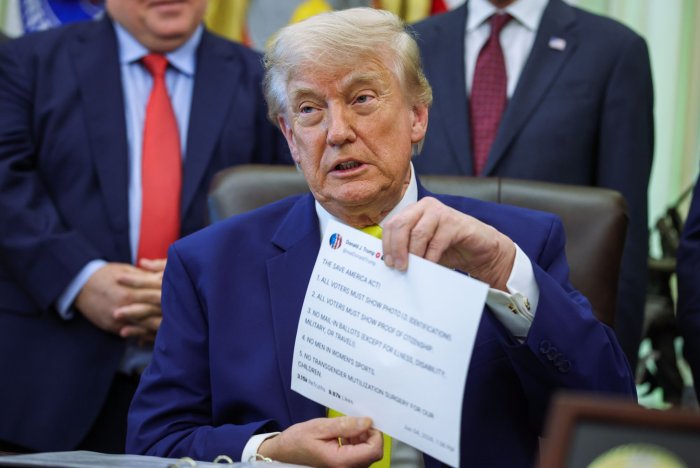
Steyer was gleeful that Trump has come after him on social media, a point of pride that he is a relevant figure in the fight against MAGA. He also said he would abolish Immigration and Customs Enforcement if he could, which he can’t.

Becerra highlighted his many lawsuits as California’s attorney general during Trump’s first term, and pledged to keep fighting. Porter leaned into her time in Congress and her efforts to help Democrats in other races win.

Mahan took a different route, pledging to fight when necessary, but adding, “We need a partnership, and we need to find common ground with this administration on certain issues.”

Newsom learned the hard way that common ground is what Trump says it is, and shifts without warning or reason.

So what’s the takeaway from all this?

Boring dad; feisty mom; rich do-gooder; striving newcomer; MAGA one; MAGA two.

None of them hit it out of the park, but no one struck out. Maybe next time.

Source link

Governor’s race wildly unpredictable two weeks before Californians receive ballots

The most unpredictable California governor’s race in recent history took another set of dizzying turns on Monday, with former Health and Human Services Secretary Xavier Becerra surging after former Rep. Eric Swalwell dropped out in the face of sexual assault and misconduct allegations, and former state Controller Betty Yee ending her bid.

The race to replace termed-out Gov. Gavin Newsom is the first in a quarter of a century with no clear front-runner and a sprawling field of candidates who have been jockeying for the attention of Californians, who are just beginning to pay attention to the campaign two weeks before ballots arrive in their mailboxes.

“I certainly could not have imagined the twists and the disturbing turns that this race has taken,” Yee said as she announced she was dropping out. “But through it all, my values and my vision for California has never wavered.”

A poll released Monday by the state Democratic Party — its first since Swalwell (D-Dublin) dropped out — showed Becerra’s support jumped nine points to 13%, placing him in a tie with Tom Steyer, the billionaire hedge fund founder turned environmental warrior. Former Rep. Katie Porter of Orange County saw a slight bump to 10% from 7%, while the remaining Democrats in the contest were mired in the low single digits.

The party began the surveys out of concern that Democrats could be shut out of the governor’s race because of California’s unique primary system, where the top two vote-getters in the June 2 primary move on to the November general election regardless of political party.

“I continue to believe there are too many Democrats in the field,” California Democratic Party Chairman Rusty Hicks told reporters Monday. “My call for candidates to honestly assess the viability of their candidacy and campaigns still stands, especially if you are stalled in the single digits, seeing financial resources dry up and/or are failing to pick up additional support.”

Hicks and other party leaders and allies had unsuccessfully urged low-polling candidates to reconsider their candidacies before the filing deadline in an attempt to cull the field and avoid splintering the Democratic vote. Though most did not name candidates who they thought should think about their viability, Yee was widely believed to be among them.

Yee became emotional as she said on Monday that she decided to withdraw from the race because she wasn’t able to raise the resources necessary to compete in the state. She also said her message of competency and experience wasn’t resonating among voters who were seeking a fiery foil to President Trump, not “Boring Betty,” as she dubbed herself. Yee said she would assess the field before making an announcement on whether she would endorse one of her fellow Democrats.

Becerra was another candidate believed to be a target of party leaders’ efforts to shrink the field. But he held on and apparently benefited from Swalwell’s downfall.

“I’m not the richest candidate, I’m not the slickest candidate, but I am the guy that’s got you,” Becerra said, rallying supporters in Los Angeles on Saturday.

The audience was filled with members of labor groups backing the longtime politician, and Becerra told them he’d serve as a “union man” in the governor’s office.

Pro- and anti-Becerra forces tussled outside the town hall after two people, who declined to identify whom they were working for, passed out fliers highlighting critical media investigations of the U.S. Department of Health and Human Services during the migrant crisis when the agency was led by Becerra.

Pro-Becerra attendees grabbed the fliers and told the men to go away, prompting a security guard to intervene.

The question is whether Becerra, who also served as state attorney general, a member of Congress and a state Assembly member, can raise the funds necessary to compete in a state with some of the nation’s most expensive media markets. And he was tied in the state party poll with a billionaire who dumped an additional $12.1 million of his own money into his campaign last week.

Steyer’s total investment in his bid reached $133 million, according to the California secretary of state’s office. He also received the endorsement of Our Revolution, a progressive political organization founded by U.S. Sen. Bernie Sanders (I-Vt.).

“We’ve never endorsed a billionaire — but Tom Steyer is using his position to upset the system,” the group posted on X on Monday. “As Our Revolution executive director Joseph Geevarghese told @theintercept, ‘He’s been a partner in the movement. Most billionaires have used their wealth and privilege to lock in the status quo. Tom is doing the opposite.’”

San Jose Mayor Matt Mahan, who is also running for governor, accused Steyer of hypocrisy for the hedge fund he founded profiting from investments in private prisons being used to house ICE detainees, and Steyer calling for the abolishment of ICE.

Steyer got “rich investing off the ICE infrastructure he now wants to abolish,” Mahan posted on Instagram.

Steyer, who sold his stake in the hedge fund in 2012, has said he ordered the company to divest from the private prison company and has repeatedly expressed remorse about his former firm’s ties with the detention company.

Mahan also appeared Monday at a Hollywood production lot to announce his proposal for a special fund to lure sporting events, concerts and other productions to California as part of his plan to help the struggling film and television industry.

An independent effort supporting Mahan has also raised roughly $11 million since Swalwell left the race.

Mehta reported from Los Angeles and Nixon from Sacramento. Times staff writer Dakota Smith contributed to this report.

Source link

Yes, a Republican could be next governor of California. And a recall would begin immediately

Once upon a time in California, I went to the Orange County fairgrounds to watch Arnold Schwarzenegger give the signal for a wrecking ball to drop onto a vehicle.

The audience went wild, and Schwarzenegger went on to become governor and deliver on his promise to roll back a car tax increase, thereby blowing a $4-billion hole in the state budget.

I think it’s fair to say that in the current gubernatorial campaign season, the excitement level is several decibels below what we experienced in 2003. But once again, it’s fair to say we’ve not seen anything quite like this year’s derby.

“There’s no historical precedent in modern California history for a governor’s race with such a large field or such an amorphous field of candidates,” said longtime political observer Dan Schnur. “Unless you’re paying very close attention, it feels like a big multi-headed political blob.”

To break that down, eight Democrats and two Republicans are running in the primary, and here’s the craziest thing about that:

The two Republicans could be the top two vote-getters because the Democrats have arranged themselves into a circular firing squad. While the Dems scramble for votes in the June 2 primary, the two Republicans lead in the polls because they’re splitting the GOP vote, and under the rules of the top-two primary, they could face off in the November election.

That means that California, which is one of the bluest states in the country and has nearly twice as many registered Democrats as Republicans, could end up with a Republican governor, which would be like having a Dodgers manager who wears a Yankees jersey in the dugout.

And by the way, if it happens, the Republican would be able to shuffle regulatory boards, attempt to squeeze budgets and create a bit of chaos, but still not get much accomplished because of Democratic super-majorities in the Senate and Assembly.

And he would be targeted for recall even before he takes office. (More on that in a minute.)

There is a way for the Democrats to avoid this humiliation, but they can’t seem to agree on anything at the moment. Party leaders have all but asked the candidates at the bottom of the polls to bow out, but understandably the response has been, “Why me? I’m no worse than the others.”

USC decided to host a debate night, a simple enough proposition, but then flubbed the deal by leaving four candidates off the invitation list — four candidates of color. A kerfuffle followed, and the debate was dumped, and an attempt to let everyone into the party fell apart.

So now what?

It’s possible the Dems will huddle around one or two candidates who then move up in the polls and remove the threat of the unthinkable — two Republicans head-to-head. That would be Riverside County Sheriff Chad Bianco going against former Fox TV host Steve Hilton.

It’s also possible the Dems will play dirty and either spend money to promote one of the two Republican candidates or torpedo one of them. All they want, at the moment, is for a Democrat to make it past the primary, because that would all but ensure victory in November, given voter registration advantages.

And then, if that doesn’t work, there’s the recall scenario.

“You could shut it down probably within five or six months,” said Mike Madrid, a longtime California GOP political consultant.

“It would surely happen,” said Rob Stutzman, a GOP strategist who helped Schwarzenegger knock Gov. Gray Davis out of office, and take his job, in the 2003 recall.

A wealthy Democratic donor could bankroll the recall campaign, Stutzman said. Or public employee unions might put up the money, given that a Republican winner is likely to create a state version of Elon Musk’s ham-handed attempt to fire nearly everyone on the federal payroll.

“The pitch,” Stutzman said of the recall strategy in an email, would be that “Trump still looms and CA must resist, and a GOP gov is a fluke of weird election law. Difficult to imagine it wouldn’t succeed.”

I thought of one more approach the Democrats could use to make sure at least one of them is on the ballot in November. Tom Steyer, a leader for many years on one of the most critical issues in California and the world, climate change, has already spent tens of millions of dollars on TV ads that run about every two minutes, promoting him as the best candidate for governor.

They’re so repetitious, you can’t help but tune them out.

But everyone would pay close attention if Steyer instead ran ads offering incentives for either Bianco or Hilton to leave the state. Steyer could offer $10 million cash for Bianco to move to Hawaii, and maybe throw in a beach house. He could buy a private jet for Hilton to take him back to his native Britain. Every day, there could be new ads upping the ante until one of them leaves the Golden State.

Wouldn’t that be a better use of Steyer’s money? It might even get him elected.

To be honest, having some honest pushback against Democratic authority in California wouldn’t be a terrible thing. It’s not as if Gov. Gavin Newsom and other Democrats are winning the battle against homelessness, housing shortages, affordability and other big challenges, and voters understandably want more — way more — for their tax dollars.

An experienced, no-nonsense, sensible, fiscally conservative GOP candidate would do the state good.

The problem is that the two Republicans in the running, Bianco and Hilton, are Trump toadies.

In an embarrassingly amateurish political stunt, Bianco blew the president a kiss and all but begged for an endorsement by seizing 650,000 ballots from last November’s election to determine whether they were fraudulently counted.

Hilton recently said in an interview with ABC’s Eyewitness News 7 that he believes “everybody supports” Trump’s immigration policies.

Hilton might have missed the news that U.S.-born residents are carrying their passports in case they’re targeted by skin color. That Californians by the thousands have joined the resistance. That despite claims, most deportees don’t have criminal records. And that even some of the state’s GOP lawmakers have begged Trump to stop raiding industries that rely on immigrant help (and are often owned by Republicans).

And by the way, is this a smart time for a GOP candidate in California to be doing his best Trump impression?

The president’s popularity is down, consumer prices are up, he’s shamelessly pardoned drug lords and Jan. 6 barbarians, he thinks the presidency is a game of Battleship after promising to keep us out of wars, gas prices are sky high, he just said he was glad that Vietnam War hero and former FBI Director Robert Mueller had died, and he’s playing golf all day as if everything’s hunky dory.

Like I said, there’s not a big-name character like Schwarzenegger in the race, but that doesn’t mean there aren’t good options. If you like Bianco or Hilton, so be it. Otherwise I suggest you read up on the other eight:

Steyer, Supt. of Public Instruction Tony Thurmond, former L.A. Mayor and legislative leader Antonio Villaraigosa, former Rep. Katie Porter, former state attorney general and U.S. Health and Human Services Secretary Xavier Becerra, former State Controller Betty Yee, San José Mayor Matt Mahan, and U.S. Rep. Eric Swalwell.

And you better act fast.

The primary is less than 10 weeks away.

steve.lopez@latimes.com

Source link