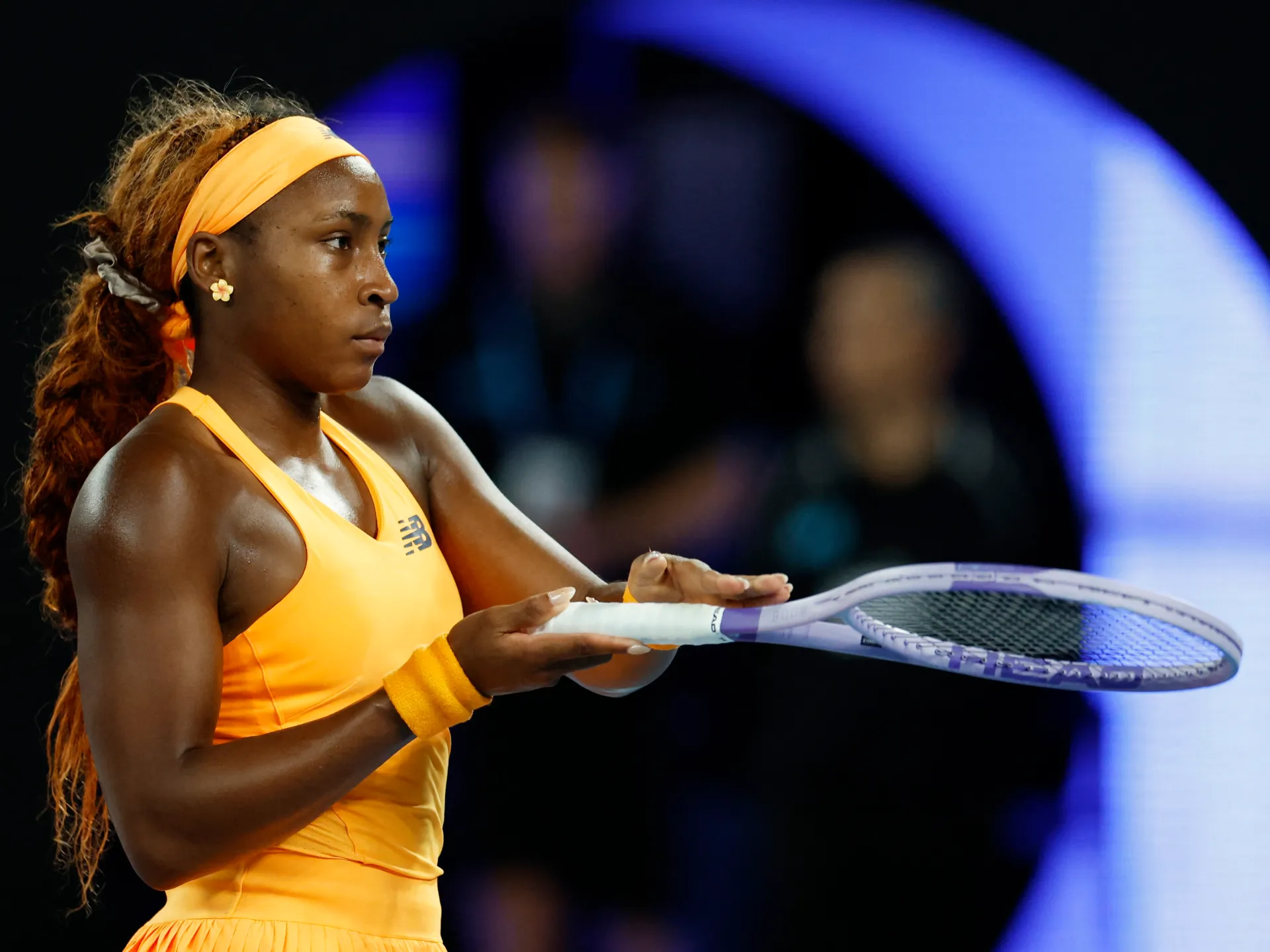
Coco Gauff, who lost to Elina Svitolina in the quarterfinals of the Australian Open, was filmed smashing her racket.
Published On 27 Jan 202627 Jan 2026
Share
Coco Gauff looked for a place without cameras to channel her frustration after a straight-sets loss to Elina Svitolina in the Australian Open quarterfinals, but was unhappy to find out that a video of her smashing her tennis racket on the floor was broadcast to viewers worldwide.
Twice Grand Slam winner Gauff was visibly upset with her performance on Tuesday, as she committed 26 unforced errors and lost the match 6-1 6-2 in 59 minutes.
Recommended Stories
list of 4 itemsend of list
The American third seed went behind a wall near the match call area inside the venue, where a camera caught her hitting the racket repeatedly against the floor.
“I tried to go somewhere where there were no cameras,” the 21-year-old told reporters.
“I kind of have a thing with the broadcast. I feel like certain moments – the same thing happened to Aryna [Sabalenka] after I played her in the final of the US Open – I feel like they don’t need to broadcast.”
World number one Sabalenka, who will take on Svitolina in the semifinals, had smashed her racket in a training area after losing to Gauff in the 2023 US Open final, and video of the incident was also made public.
“I tried to go somewhere where they wouldn’t broadcast it, but obviously they did. Maybe some conversations can be had, because I feel like at this tournament the only private place we have is the locker room,” Gauff added.
“I think for me, I know myself, and I don’t want to lash out on my team. They’re good people. They don’t deserve that, and I know I’m emotional,” Gauff said.
“I just took the minute to go and do that. I don’t think it’s a bad thing. Like I said, I don’t try to do it on court in front of kids and things like that, but I do know I need to let out that emotion.
“Otherwise, I’m just going to be snappy with the people around me, and I don’t want to do that, because like I said, they don’t deserve it. They did their best. I did mine. Just need to let the frustration out.”
Whoever is nominated from the two Kurdish parties still needs the approval from the Shia and Sunni blocs in the parliament.
Published On 27 Jan 202627 Jan 2026
Share
Iraq’s parliament has postponed the election for the country’s next president to allow for more consultations between the two Kurdish parties to agree on a candidate.
The Iraqi News Agency (INA) said the parliamentary vote scheduled for Tuesday was delayed at the request of the Kurdistan Democratic Party (KDP) and the Patriotic Union of Kurdistan (PUK).
Recommended Stories
list of 4 itemsend of list
Iraq follows a sectarian quota system, according to which the post of the prime minister goes to a Shia, the parliament’s speaker is a Sunni, and the largely ceremonial presidency goes to a Kurd.
Usually, in an agreement between the two main Kurdish parties, a PUK member holds the presidency. In contrast, the president and regional leader of the semi-autonomous Kurdish region are selected from the KDP.
However, in this instance, the KDP announced its own candidate, Foreign Minister Fuad Hussein, for the election.
Reporting from the capital, Baghdad, Al Jazeera’s Mahmoud Abdelwahed said whoever is nominated from the two Kurdish parties still needs the approval from the Shia and Sunni blocs in the parliament.
After the election, the new president will have 15 days to appoint a prime minister, who is widely expected to be the former leader, Nouri al-Maliki.
Al-Maliki, 75, has already served as Iraq’s prime minister for two terms from 2006 to 2014 before he quit under pressure from the United States. He is seen as being close to Iran.
On Saturday, the Coordination Framework, an alliance of Shia parties which holds a parliamentary majority, endorsed Maliki. The next day, the US Secretary of State Marco Rubio warned against a pro-Iranian government in Iraq.
An Iraqi source close to the Coordination Framework told the AFP news agency that Washington had conveyed to it that it “holds a negative view of previous governments led by former Prime Minister Maliki”.
In a letter, US representatives said that while the selection of the prime minister is an Iraqi decision, “the United States will make its own sovereign decisions regarding the next government in line with American interests”.
Another Iraqi source confirmed the letter, adding that the Shia alliance had still moved forward with its choice, confident that Maliki could allay Washington’s concerns.
Iraq has long been a proxy battleground between the US and Iran, with successive governments negotiating a delicate balance between the two foes.
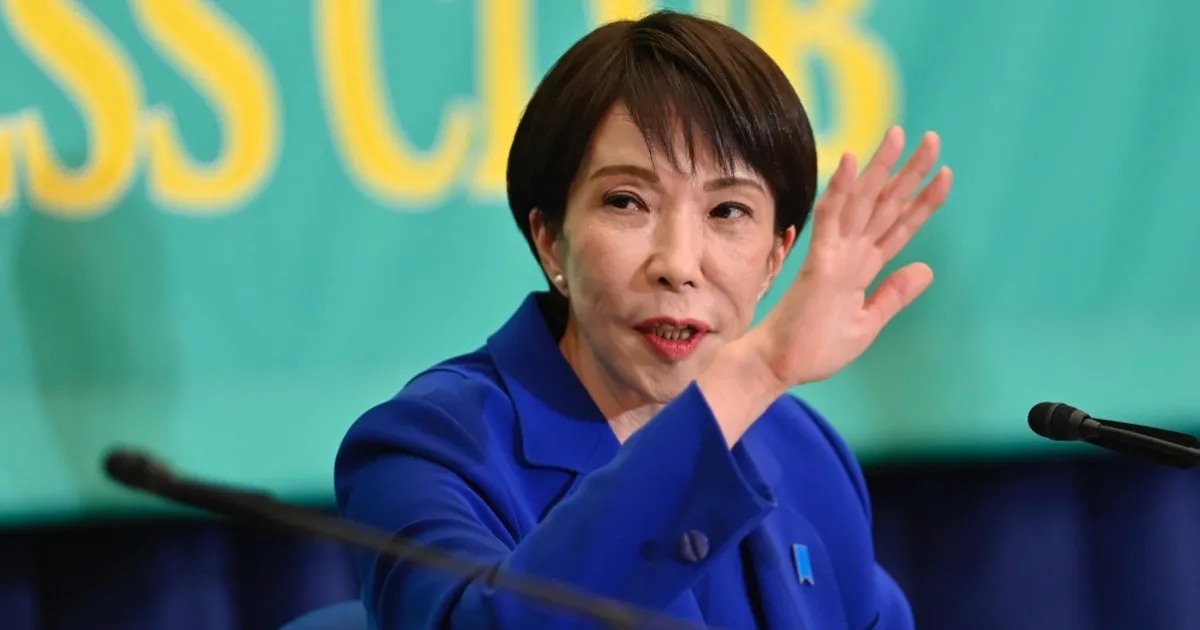
Japanese Prime Minister Sanae Takaichi’s tax and spending pledges in advance of snap elections next month have sent jitters through global markets.
Japanese government bonds and the yen have been on a rollercoaster since Takaichi unveiled plans to pause the country’s consumption tax if her Liberal Democratic Party wins the February 8 vote.
Recommended Stories
list of 4 itemsend of list
The market turmoil reflects concerns about the long-term sustainability of Japan’s debt levels, which are the highest among advanced economies.
The volatility has extended beyond Japan, highlighting broader fiscal sustainability worries in an era in which the United States and other major economies are running huge deficits.
What has Takaichi promised on the economy?
Takaichi said last week that she would suspend the country’s 8 percent consumption tax on food and non-alcoholic beverages for two years if her government is returned to power, following her dissolution of the House of Representatives.
Based on Japanese government data, Takaichi’s plan would result in an estimated revenue shortfall of 5 trillion yen ($31.71bn) each year.
Takaichi, a proponent of predecessor Shinzo Abe’s agenda of high public spending and ultra-loose monetary policy, said the shortfall could be made up by reviewing existing expenditures and tax breaks, but did not provide specific details.
Takaichi’s tax pledge comes after her Cabinet in November approved Japan’s largest stimulus since the COVID-19 pandemic.
The package, worth 21.3 trillion yen ($137bn), included one-time cash handouts of 20,000 yen per child for families, subsidies for utility bills amounting to about 7,000 yen per household over a three-month period, and food coupons worth 3,000 yen per person.
Why have Takaichi’s pledges unnerved markets?
Japan’s long-term government bond yields soared following Takaichi’s announcement.
Yields on 40-year bonds rose above 4 percent on Tuesday, the highest on record, as investors exited from Japanese government debt en masse.
Bond markets, through which governments borrow money from investors in exchange for paying out a fixed rate of interest, are closely watched as a gauge of the health of countries’ balance sheets.
While typically offering lower returns than stocks, government bonds are seen as low-risk investments as they have the backing of the state, making them attractive to investors seeking safe places to park their money.
As confidence in a government’s ability to repay its debts declines, bond yields rise as investors seek higher interest payments for holding riskier debt.
“When Prime Minister Takaichi announced a planned reduction in consumption taxes, this made existing bond-holders of Japan’s debt uneasy, requiring a higher compensation for the risk they bear,” Anastassia Fedyk, an assistant professor of finance at the Haas School of Business of the University of California, Berkeley, told Al Jazeera.
“As a result, bond prices dropped and yields rose. And yes, this is a general pattern that applies to other countries, too, though Japan has an especially high level of debt, making its position more vulnerable.”
Japan’s debt-to-GDP ratio already exceeds 230 percent, following decades of deficit spending by governments aiming to reverse the country’s long-term economic stagnation.
The East Asian country’s debt burden stands far above that of peers such as the US, UK and France, whose debt-to-GDP ratios are about 125 percent, 115 percent and 101 percent, respectively.
At the same time, the Bank of Japan (BOJ) has been scaling back bond purchases as part of its move away from decades of ultra-low interest rates, limiting its options for interventions to bring yields down.
“Bond investors reacted because her headline package looks like large, near-term fiscal loosening at exactly the moment the BOJ is trying to normalise policy,” Sayuri Shirai, a professor of economics at Keio University in Tokyo, told Al Jazeera.
How does all this affect the rest of the world?
The sell-off in Japanese bonds reverberated through markets overseas, with yields on 30-year US Treasuries rising to their highest level since September.
As Japanese bond yields rise, local investors are able to earn higher interest payments at home.
That can incentivise investors to offload other bonds, such as US Treasuries.
As of November, Japanese investors held $1.2 trillion in US Treasuries, more than any other foreign group of buyers.
In an interview with Fox News last week, US Treasury Secretary Scott Bessent expressed concern about the impact of Japan’s bond market on US Treasury prices and said he anticipated that his Japanese counterparts would “begin saying the things that will calm the market down.”
Japan’s long-term bond yields fell on Monday amid the expectations that Japanese and US authorities would step in to prop up the yen.
On Friday, The New York Times and The Wall Street Journal reported that the Federal Reserve Bank of New York had inquired about the cost of exchanging the Japanese currency for US dollars.
“Japan matters globally through flows. If Japanese government bond yields rise, Japanese investors can earn more at home, potentially reducing demand for foreign bonds; that can nudge global yields and risk pricing,” Shirai said.
“This is why global-market pieces have framed Japan’s bond move as a wider rates story.”
Higher bond yields in Japan, the US and elsewhere raise the cost of borrowing and servicing the national debt.
In a worst-case scenario, a sharp escalation in interest rates can lead to a country defaulting on its debts.
Masahiko Loo, a fixed income strategist at State Street Investment Management in Tokyo, said that the reaction of international investors to Takaichi’s plans reflects growing sensitivity to fiscal credibility in highly indebted economies.
“Yes, Japan may be the spark, but the warning applies equally to the US and others with large structural deficits,” Loo told Al Jazeera.
Is Japan on the verge of a financial crisis?
Probably not.
While Japan is more indebted than its peers, its fiscal position is more sustainable than it might appear due to factors specific to the country – at least in the short to medium term – according to economists.
The vast majority of Japan’s debt is held by local institutions and denominated in yen, reducing the likelihood of a panic induced by foreign investors, while interest rates are far lower than in other economies.
“The debt situation is more manageable than a lot of people think,” Thomas Mathews, head of markets for Asia Pacific at Capital Economics, told Al Jazeera.
“Net debt-to-GDP is on a downward trajectory, and Japan’s budget deficit isn’t all that big by global standards.”
Loo of State Street Investment Management said that the turmoil surrounding Japan had more to do with a “communication gap around fiscal sustainability and policy coordination” than the country’s solvency.
“That said, markets are likely to continue testing the feasibility of the agenda, as even fiscally sanguine countries have, at times, been disciplined by market forces,” Loo said.
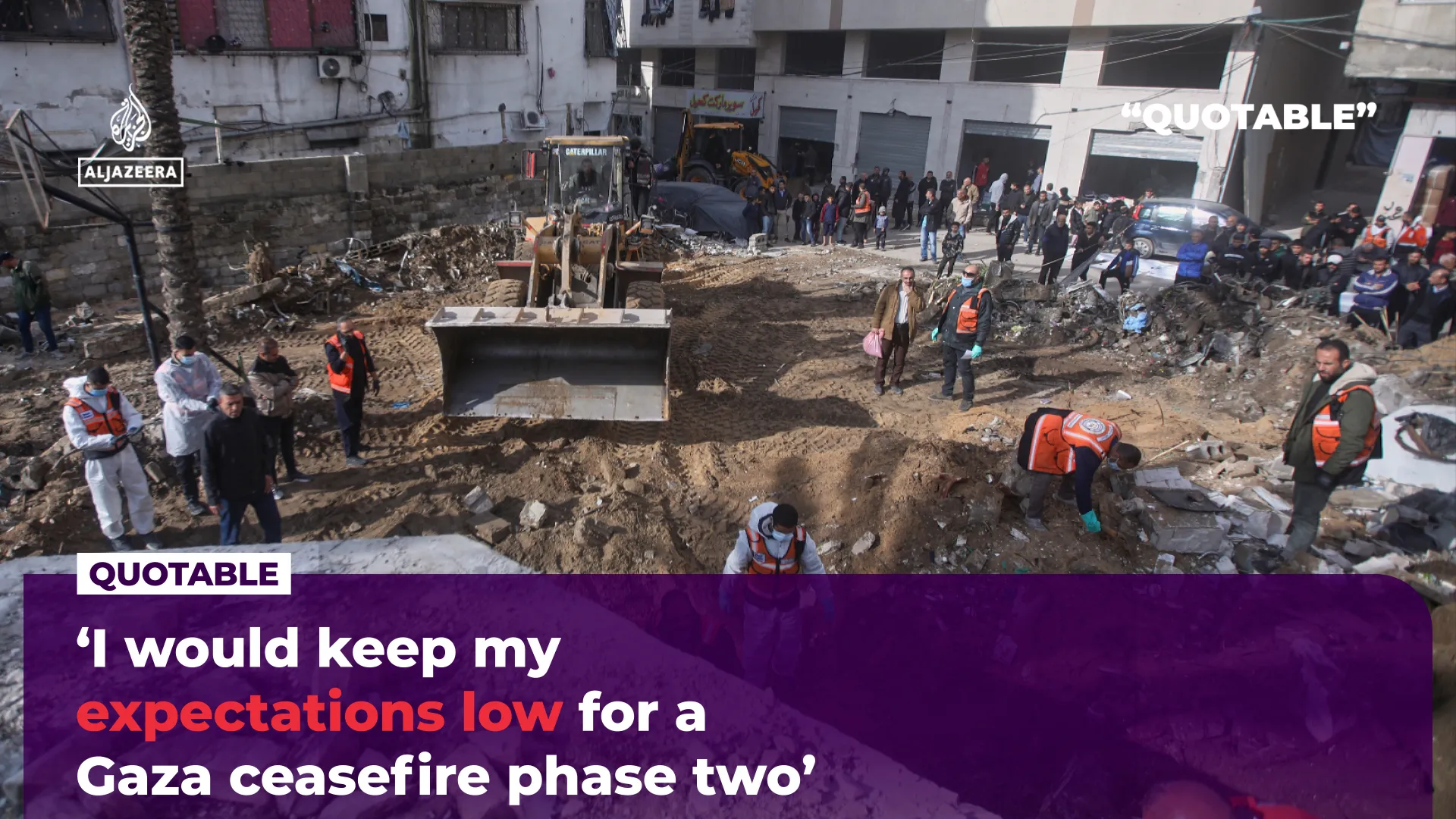
Aaron David Miller, former US senior adviser on Palestinian-Israeli negotiations, says Benjamin Netanyahu’s emphasis on Hamas’s demilitarisation will be a challenge for the next phase of the Gaza ceasefire.
Dilling, a key route for supply lines, had under the paramilitary group’s control for nearly two years.
Published On 27 Jan 202627 Jan 2026
Share
Sudan’s military says it has broken a nearly two-year siege by the paramilitary Rapid Support Forces (RSF) on a key town in the Kordofan region, gaining control over major supply lines.
In a statement late on Monday, the military said it had opened a road leading to South Kordofan province’s Dilling town.
Recommended Stories
list of 4 itemsend of list
“Our forces inflicted heavy losses on the enemy, both personal and equipment,” the statement said.
There was no immediate comment from the RSF, which has been at war with the army for control of Sudan for nearly three years.
Dilling lies halfway between Kadugli – the besieged state capital – and el-Obeid, the capital of neighbouring North Kordofan province, which the RSF has sought to encircle.
Al Jazeera’s Hiba Morgan, reporting from the Sudanese capital Khartoum, described the army’s takeover of Dilling as a “very significant gain” that may lead to more advances in the province.
“The army is trying to make use of this momentum to take territory not just from the RSF, but also from its ally, the SPLM-N, led by Abdel Aziz al-Hilu, which controls territory and has forces in South Kordofan,” Morgan said.
Paramilitary troops were likely to fight back and attempt to retake the lost territory by relocating fighters from el-Obeid and Kadugli, according to Morgan.
Morgan added that the humanitarian situation in Dilling would likely improve as the army will now be able to bring in medical supplies, food and other commercial goods that had been prevented from entering during the RSF’s siege.
Displaced people ride an animal-drawn cart in the town of Tawila, North Darfur, Sudan [Reuters]
After being forced out of Khartoum in March, the RSF has focused on Kordofan and the city of el-Fasher, which was the military’s last stronghold in the sprawling Darfur region until the RSF seized it in October.
Reports of mass killings, rape, abductions and looting emerged after el-Fasher’s paramilitary takeover, and the International Criminal Court launched a formal investigation into “war crimes” by both sides.
Dilling has reportedly experienced severe hunger, but the world’s leading authority on food security, the Integrated Food Security Phase Classification, did not declare famine there in its November report because of a lack of data.
A United Nations-backed assessment last year already confirmed famine in Kadugli, which has been under RSF siege for more than a year and a half.
More than 65,000 people have fled the Kordofan region since October, according to the latest UN figures.
The conflict has killed tens of thousands of people and created what the UN describes as the world’s largest displacement and hunger crisis. At its peak, the war had displaced about 14 million people, both internally and across borders.
Over the past year, United States President Donald Trump has pursued “peace-making” all across the world. A prominent feature of his efforts has been the belief that economic threats or rewards can resolve conflicts. Most recently, his administration has put forward economic development plans as part of peace mediation for Israel’s genocidal war on Gaza, the war in Ukraine and the conflict between Israel and Syria.
While some may see Trump’s “business” approach to “peace-making” as unique, it is not. The flawed conviction that economic development can resolve conflicts has been a regular feature of Western neoliberal peace initiatives in the Global South for the past few decades.
Occupied Palestine is a good example.
In the early 1990s, when the “peace process” was initiated, Israeli Foreign Minister Shimon Peres started advocating for “economic peace” as part of it. He sold his vision of the “New Middle East” as a new regional order that would guarantee security and economic development for all.
The project aimed to place Israel at the economic centre of the Arab world through regional infrastructure — transport, energy and industrial zones. Peres’s solution for the “Israeli-Palestinian conflict” was Palestinian economic integration. The Palestinians were promised jobs, investment, and improved living standards.
His argument was that economic development and cooperation would foster stability and mutual interest between Israelis and Palestinians. But that did not happen. Instead, as the occupation continued to entrench itself after the US-brokered Oslo Accords and the establishment of the Palestinian Authority (PA), anger in the Palestinian streets grew and eventually led to the outbreak of the second Intifada.
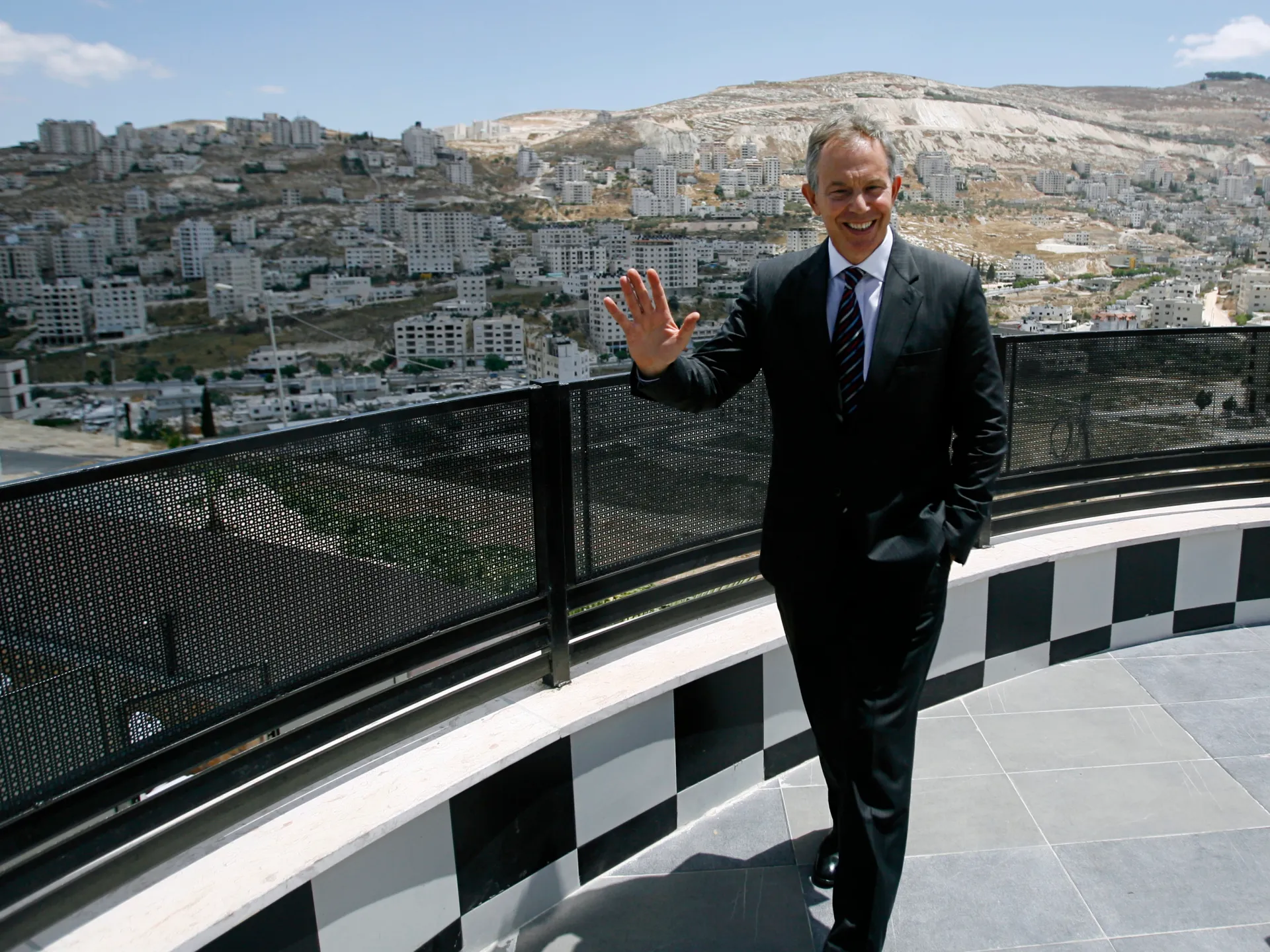
This neoliberal approach was tested again by the Quartet – consisting of the United Nations, the European Union, the US and Russia – and its envoy Tony Blair in 2007. By then, the Palestinian economy had collapsed, losing 40 percent of its gross domestic product (GDP) in eight years and plunging 65 percent of the population into poverty.
Blair’s “solution” was to propose 10 “quick impact” economic projects and fundraise for them in the West. This went hand-in-hand with the policies of then-Palestinian Prime Minister Salam Fayyad, in what came to be known as “Fayyadism”.
Fayyadism was sold to Palestinians as a pathway to statehood through institution-building and economic growth. Fayyad focused on generating short-term economic gains in the occupied West Bank while simultaneously rebuilding the Palestinian security apparatus to meet Israeli security demands.
This model of economic peace never addressed the root cause of Palestinian economic stagnation: the Israeli occupation. Even the World Bank warned that investment without a political settlement ending Israeli control would fail in the medium and long term. Yet the approach persisted.
There were Palestinians who benefitted from it, but they were not common Palestinians. They were a narrow elite: security officials who gained privileged access to financial institutions, contractors tied to Israeli markets, and a handful of large investors. For the wider population, living standards remained precarious.
Rather than preparing Palestinians for statehood, Fayyadism replaced liberation with management, sovereignty with security coordination, and collective rights with individual consumption.
This economic approach to conflict resolution merely gave Israel time to entrench its colonial enterprise by expanding its settlements on Palestinian land.
The latest economic plan for Gaza, presented by Trump’s adviser and son-in-law Jared Kushner, is unlikely to bring economic prosperity to the Palestinians either. The project reflects two deeply contradictory dynamics: it foregrounds opportunities for investment and profit for global and regional oligarchies while systematically ignoring the fundamental national and human rights of the Palestinian people.
Security is framed exclusively around the needs of the occupying power, while Palestinians are compartmentalised, securitised, and surveilled — reduced to a depoliticised labour force stripped of social and national identity.
This approach views people as individuals rather than as nations or historically established communities. Under this logic, individuals are expected to acquiesce to oppression and dispossession once they obtain jobs and improve their living standards.
These strategies are failing to build peace not just in Palestine.
In the Israeli-occupied Golan Heights, the US has proposed expanding the demilitarised zone and converting it into a joint economic zone, featuring a ski resort. The US approach seems designed not only to pressure Syria to relinquish its sovereign rights over the territory, but also to recast it as a security project in ways that primarily benefit Israel. Under this framework, the US would act as the security guarantor. Its close alliance with Israel, however, puts its impartiality and true intentions in doubt.
In Ukraine, the US has proposed a free economic zone in parts of the Donbas region, from which the Ukrainian army would have to withdraw. This would allow Moscow to expand its influence without direct military confrontation, creating a buffer zone favourable to Russian security interests.
The Donbas has historically been one of Ukraine’s industrial bases, and transforming it into a free economic zone would deprive Ukraine of a critical economic resource. There are also no guarantees that the Russian army would not simply advance after the Ukrainian withdrawal and take the whole region.
These neoliberal “solutions” to the conflicts in Gaza, the Donbas and the Golan Heights are doomed to fail just like the economically-driven peace initiatives of the 1990s and 2000s in occupied Palestine.
The main problem is that the US cannot really provide credible guarantees that the areas would remain stable, so investors can secure returns on their investments. That is because no solid political settlement would be in place, given the fact that these proposals ignore the political, cultural and most importantly, national interests of the people living in these regions. As a result, no serious or independent investor would commit capital to such an arrangement.
Nations are not made up of consumers or labourers; they are made up of people with a common identity and national aspirations.
Economic incentives should follow, not precede, a political resolution that secures the self-determination of indigenous peoples. Any conflict-resolution framework that ignores collective rights and international law is therefore bound to fail. Political settlements must prioritise these rights, a requirement that stands in direct opposition to the logic of neoliberalism.
The views expressed in this article are the author’s own and do not necessarily reflect Al Jazeera’s editorial policy.
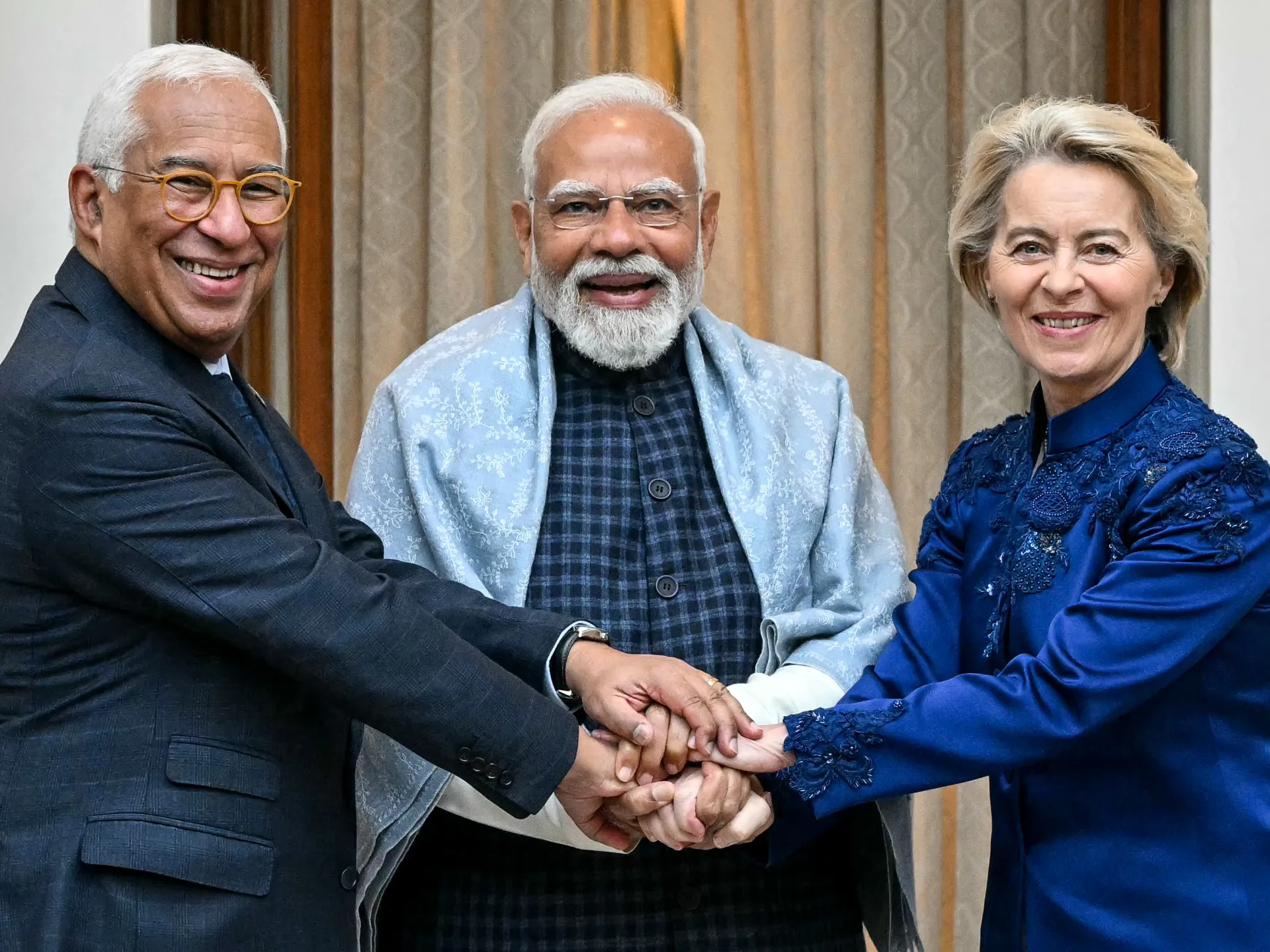
India and the European Union have agreed on a huge trade deal creating a free trade zone of two billion people, European Commission President Ursula von der Leyen and Indian Prime Minister Narendra Modi have said.
In a post on X during her visit to New Delhi on Tuesday, von der Leyen said the two parties were “making history today”.
Recommended Stories
list of 4 itemsend of list
“We have concluded the mother of all deals. We have created a free trade zone of two billion people, with both sides set to benefit,” she added.
Modi said the landmark agreement, following nearly two decades of on-and-off negotiations, had been reached, hailing its benefits before a meeting with von der Leyen and European Council President Antonio Costa.
“This deal will bring many opportunities for India’s 1.4 billion and many millions of people of the EU,” he said.
The deal will cover about 25 percent of the global gross domestic product (GDP), Modi said, adding that India will get a boost in sectors including textiles, gems and jewellery, and leather goods.
It will pave the way for India, the world’s most populous nation, to open up its huge, protected market to free trade with the 27-nation EU, its biggest trading partner.
The EU views India as an important market for the future, while New Delhi sees Europe as an important potential source of technology and investment.
The formal signing of the deal will take place after legal vetting, expected to last five to six months, the Reuters news agency reported, quoting an Indian government official aware of the matter. The official said the deal was expected to be implemented within a year.
EU exports ‘expected to double’
The EU said it expected its exports to India to double by 2032 as a result of the deal.
Bilateral trade between India and the EU in goods has already grown by nearly 90 percent over the past decade, reaching 120 billion euros ($139bn) in 2024, according to EU figures. Trade in services accounts for a further 60 billion euros ($69bn), EU data shows.
Under the agreement, tariffs on 96.6 percent of EU goods exports to India would be eliminated or reduced, EU officials said. The deal would save up to 4 billion euros ($4.74bn) a year in duties on European products, officials said.
Among the products that would have tariffs all or mostly eliminated were machinery, chemicals and pharmaceuticals.
Tariffs on cars would gradually reduce to 10 percent with a quota of 250,000 vehicles a year, officials said, while EU service providers would gain privileged access to India in key areas such as financial and maritime services. Tariffs on EU aircraft and spacecraft would be eliminated for almost all products.
Tariffs would be cut to 20-30 percent on EU wine, 40 percent on spirits, and 50 percent on beer, while tariffs on fruit juices and processed food would be eliminated.
“The EU stands to gain the highest level of access ever granted to a trade partner in the traditionally protected Indian market,” von der Leyen said on Sunday. “We will gain a significant competitive advantage in key industrial and agri-good sectors.”
Last-minute talks on Monday had focused on several sticking points, including the impact of the EU’s carbon border tax on steel, sources familiar with the discussions told the AFP news agency.
Talks on the India-EU trade deal were launched in 2007, but for many years made little progress. However, Russia’s full-scale invasion of Ukraine led to the relaunch of talks in 2022, while United States President Donald Trump’s aggressive tariff policy spurred rapid progress in negotiations.
India and the EU also announced the launch of a security and defence partnership, similar to partnerships the EU has with Japan and South Korea, as von der Leyen said Brussels and New Delhi would grow their strategic partnership further.
The moves come as India, which has relied on Russia for key military hardware for decades, has tried to reduce its dependence on Moscow by diversifying imports and pushing its domestic manufacturing base, while Europe is doing the same with regard to Washington.
The EU-India deal comes days after Brussels signed a key pact with the South American bloc Mercosur, following deals last year with Indonesia, Mexico and Switzerland. During the same period, New Delhi finalised pacts with the United Kingdom, New Zealand and Oman.
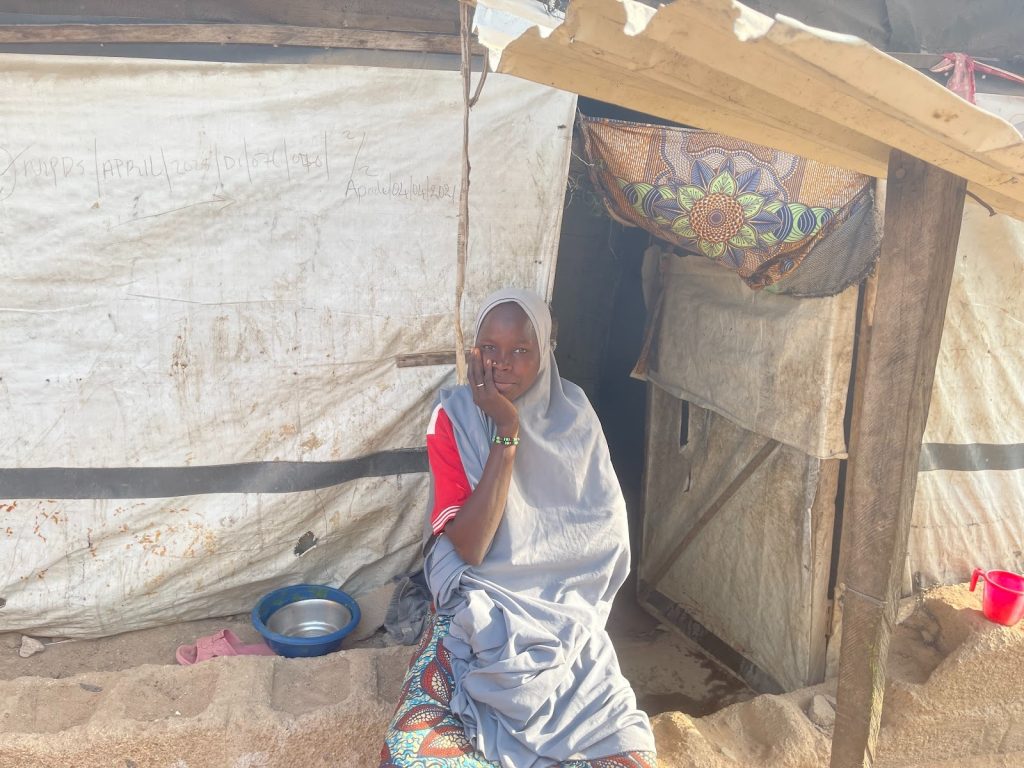
Fatima Abdullahi stands beside a group of children with a bowl balanced in her hands. As the children rally around her, she tries to give them instructions. “The pap is small, so you must be patient and take turns,” she tells the children, who are each holding a plastic spoon.
The 30-year-old mother of five then places the bowl on the ground, and the children swing into action, scooping and scraping. Inside is pap made of corn flour and plain water.
“It was never this bad,” Fatima tells HumAngle, glancing at the children whose spoons were colliding in the wooden bowl. “There was a time when each child had their own bowl, and the pap had sugar in it, but things got worse.”
In 2015, Fatima and her family fled the Boko Haram insurgency that ravaged her hometown in Gwoza Local Government Area, Borno State, in northeastern Nigeria, and claimed the lives of over 350,000 people and displaced millions of others. They were transported by the Nigerian Army to Malkhohi, a displacement camp in Yola, the Adamawa State capital.
Like Fatima and her family, most of the over 360 people living in the camp were displaced from communities in Borno State, such as Gwoza, Askira Uba, and Damboa.
Back at home, she was an entrepreneur who sold akara and chin-chin, earning money to support her family. Fatima’s husband was an accomplished farmer. Their displacement halted all of these efforts, but things were better when they arrived in Malkhohi. At first, many structures were put in place to make life easier for residents.
Each family was provided with a tent, mosquito nets, blankets, and sufficient food. Donations in cash and kind were made regularly. Fatima said there was a United Nations Children’s Fund (UNICEF)-run clinic, and the Red Cross was always on the ground to address emergency health needs. Local civil society organisations were also available to offer support.
“There were organisations that came from time to time with food,” she recounts. “Some of them came and taught us different skills.”
However, things eventually began to change.
Fatima Abdullahi sits in front of her tent at the Malkhohi IDP camp. Photo: Saduwo Banyawa/HumAngle.
When the aid stopped
UNICEF was the first agency to exit the Malkhohi IDP camp in 2023, a move that led to the closure of the camp’s clinic. A few months later, the Red Cross also withdrew. In 2024, the International Organisation for Migration (IOM) closed its office at the camp.
It was at this point that residents began to realise the gravity of their situation.
The departure of these agencies that had provided healthcare and other essential services to the IDPs significantly affected the community, with conditions worsening steadily over time.
That decline deepened in 2025, when other local organisations providing aid in the camp, particularly those dependent on USAID funding, also began to leave, shortly after the US government suspended foreign aid.
For families in the camp, the impact has been tough.
“Before, my children had regular three square meals, but now they eat depending on how available food is. Sometimes, it’s breakfast and nothing till the next day. Other times, we go to bed like that,” Fatima said. She noted that starvation has made her children aggressive. “Whenever they see food lately, they start fighting over it, each wanting the largest share.”
As food became scarcer, meals grew more basic.
“These days, I mostly make pap for them with just plain water and corn flour, and sometimes, we make tuwo with the corn flour and eat without soup,” she added.
The UNICEF-run IDP clinic in the Malkhohi displacement camp remains abandoned following UNICEF’s exit from the camp in 2023. Photo: Saduwo Banyawa/HumAngle.
The withdrawal of aid also disrupted services beyond food. In addition to basic healthcare, UNICEF had played a key role in education, with about 285,000 Borno children reportedly trained in numeracy and literacy after being orphaned by the Boko Haram insurgency.
With the clinic closed, access to medical care has become increasingly difficult.
“We used to access free medicines and other healthcare services until the camp’s clinic closed,” Fatima told HumAngle. “If our children get sick these days, we go to the nearest clinic inside Malkhohi village. They charge a lot.”
Get our in-depth, creative coverage of conflict and development delivered to you every weekend.
Subscribe now to our newsletter!
She explained that private clinics require an upfront deposit of about ₦6000 before examining a sick child, a sum many families cannot afford. “If we are paying for malaria drugs, then it’s ₦6000, but if the child requires a drip, then it is ₦9000 and above,” she added.
Although there is a primary healthcare centre in Malkhohi, IDPs say it is far from the camp and difficult to access during emergencies, often taking hours to reach on foot.
“So when there is a health emergency, we just go to the private clinic closer to us,” Fatima said.
Living conditions in the camp have also worsened. Salome Ijarafu, the women’s leader at Malkhohi IDP Camp, told HumAngle that there are only a few standard toilet facilities in the camp.
“Sometimes, we have to wait till it is dark so that we can go and take our bath outside in the bushes because the bathrooms are not in good condition. Even then, we have to queue up and wait for others to get out before we make use of the good ones,” she said.
A section of the dilapidated toilets at the Malkhohi IDP camp in Yola. Photo: Saduwo Banyawa/HumAngle
Following a rise in vaginal infections at the camp, some women don’t use the toilets; they now relieve themselves in nearby bushes.
“Our toilets and bathrooms are all worn out. We rely on the few in better condition, but there are a lot of us relying on them, so it gets messy all the time. Before, we used to receive soaps, detergents, and Izal from the organisations, but since the aid stopped, we just clean the floors with water,” Fatima said.
The women’s leader also noted that pregnant women in the camp have become increasingly vulnerable since the closure of the UNICEF clinic, as access to antenatal care and delivery services is no longer readily available.
“When women want to give birth, there is no way it can be done here, so they have to be rushed to the distant primary health care, and sometimes when the primary healthcare centre can’t handle it, we have to look for a means to transport them to Yola town,” Salome said.
Beyond healthcare, women in the camp are also grappling with rising costs of sanitary materials.
“Sanitary pads are expensive now, so we use rags during our period. Before, we used to receive donations of sanitary pads, but we no longer get them,” she said.
‘We hustle to survive’
Buba Ware, Chairperson of the residents at Malkhohi displacement camp, told HumAngle that the Adamawa State government ceased communication with the camp five years ago, bringing an end to the donations from the State Emergency Management Agency (ADSEMA), but the IDPs didn’t feel much of that impact until the international agencies began to exit, followed by local humanitarian organisations. By the end of 2025, no organisation remained in the camp.
The IOM office lay deserted following the organisation’s exit from the camp. Photo: Saduwo Banyawa/HumAngle.
It has made it difficult for residents to renovate their tents, a responsibility that was carried out by IOM. “They fixed the leakages on our tents and replaced old structures, but now that they are gone, our tents are collapsing,” Buba said. “Even the local NGOs that came before no longer come, and that is why we go out and hustle so we can take care of ourselves.”
For many parents, that hustle has become a daily struggle to feed their children.
Forty-five-year-old Jummai Ali, a displaced person from Gwoza, has lived at the camp for the past decade. With seven children to care for, she has intensified her efforts to find food, especially now that aid is no longer forthcoming.
Every morning, Jummai joins other women in the camp to search for leftover grains on harvested farms. The women leave the camp at 6 a.m.. Each of them carries a basin, a broom, a sack, a hoe, and a small gallon of water.
Jummai Ali on her way to pick grains. Photo: Saduwo Banyawa/HumAngle.
“We don’t have a destination or specific location,” she said. “We just keep walking, scouting for farms where work has already been done. We pluck out grains that farmers have mostly overlooked during harvest. Some of them are bad, and sometimes it’s just husk, but we sieve out and try to gather the ones that are edible.”
The women, Jummai said, walk in groups and stop at certain fields. When work at one site is done, they move to the next field until they have gathered enough. They mostly labour on rice farms because that’s where they can collect more grains.
“When we return, we sieve out the grain, work on it and cook. It’s not easy. There are times we walk for three hours to get to certain communities where there are large farms and then walk back to the camp when we are done,” she added, stressing that the search for food has become increasingly exhausting.
In addition to foraging, some women in the Malkhohi IDP camp prepare local foods such as akara, groundnuts, and moi moi, which they hawk in neighbouring communities to earn an income. According to Salome, the women’s leader, most of what the women earn from petty trading goes into buying medicines, especially during the harmattan season, when many children in the camp suffer from colds.
“We catch colds all the time. Our blankets are worn out. We’ve been using the same ones for the last ten years. Since the tent floor is not plastered, it’s easier for the sand to get cold and penetrate our mats,” Fatima said.
As women struggle to cope, many men in the camp have also turned to risky forms of labour.
HumAngle learned that a growing number of men have taken up logging. With the Malkhohi IDP camp located on the outskirts of Yola and surrounded by dense forest, the men venture into the bush to cut down trees, chop them into pieces, and sell the wood to survive.
Adam Agalade, one of the loggers, said hardship in the camp pushed him into the trade. Formerly a businessman and farmer back home in Gwoza, Adam said he had never swung an axe until last year.
“Sometimes, we spend days in the bush, trying to gather enough timber for sale,” he said. “We stopped during the rainy season but resumed in December.”
Once the trees are chopped, the men transport the wood in wheelbarrows into Malkhohi, where it is stacked along the roadside and sold to households and local food vendors.
“We sell some batches for ₦1000 while some for ₦2000,” Adam said.
While the trade has helped him support his family of ten, he noted that the income is uncertain. “There are days when we spend the whole day without selling anything,” he said.
Adam Agalade still lives in Malkhohi IDP camp. Photo: Saduwo Banyawa/HumAngle
Adam is currently injured after a log fell on his leg while he was cutting a tree in the forest. With his leg swollen, he said his life has come to a standstill as he is unable to join other loggers in the forest.
The rain will come
Beyond daily survival, residents say they fear what lies ahead.
Some IDPs told HumAngle they are particularly anxious about the approaching rainy season, given the deteriorating condition of their tents. “All these planks supporting our tent have stayed for 10 years and have been eaten by termites. When the wind blows, the tents start to shake because the planks supporting them are worn out,” Adam said.
According to Buba, the camp chairman, most tents are leaking and require urgent repairs or replacement. IOM used to handle the maintenance, but they have left. While IDPs have made temporary fixes using sandbags to stabilise the structures, they say these measures are unsustainable.
“Once it is the rainy season, we get scared because of the condition of the rooms,” he said.
A worn-out tent at the Malkhohi IDP camp in Yola. Photo: Saduwo Banyawa/HumAngle
Buba added that heavy rains often cause tents to flood, forcing families to vacate them and seek shelter under trees until the storms subside. He recalled instances where tents collapsed on families, causing injuries, though no deaths were recorded.
Waiting for a way out
For years, residents of the Malkhohi displacement camp have waited for clarity on what comes next.
While the Borno State Government began closing displacement camps across Maiduguri in 2021, a move aimed at reducing long-term aid dependency, restoring dignity, and reviving local economies, those efforts have not reached displaced persons from Borno living outside the state.
Some IDPs within Borno were relocated to homes around their ancestral towns, but families in Malkhohi say they have been left behind. Still, even those in Borno who have been resettled complain of insecurity in their new location, lack of government support, and an absence of basic amenities.
However, for displaced persons from Borno living outside the state, such as those in Malkhohi, talks of resettlement have not reached them. The residents of the camp told HumAngle they no longer wish to remain there, but the lack of alternative shelter holds them back.
According to the camp chairperson, the IDPs have had no contact with the Borno State Government since their evacuation from the state over a decade ago. “They have never checked up on us. Our closest means to the government is the ADSEMA, but we have lost touch with them for more than five years now,” he said.
He added that the displaced persons had written several times to the Adamawa State government about the prevailing hardship in the camp, particularly the dilapidated condition of their tents, but had received no response to date.
“If the government will carry us back to where they took us from, then we are ready, because it’s not our wish to live here,” the camp chairperson added. “Alternatively, if the government can give us a place outside the camp or maybe build houses for us, we would prefer that, because once we have our homes, our struggles will reduce, and we will focus on providing food and other basic needs for our families.”
HumAngle reached out to the Adamawa and Borno Ministries of Humanitarian Affairs for comments, but received no response at the time of filing this report.
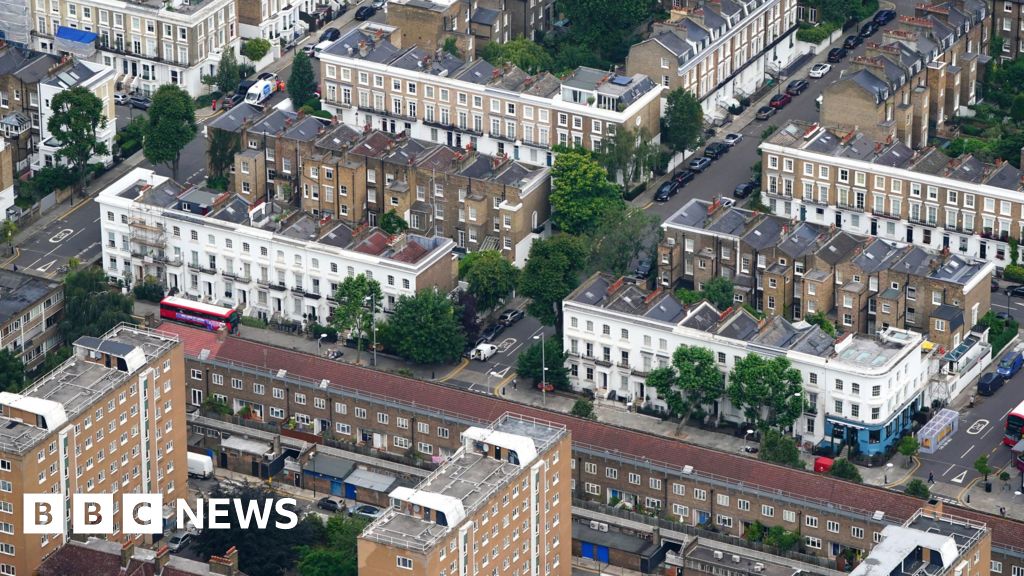
The government will announce a cap on ground rents paid by leaseholders in England and Wales on Tuesday morning, the BBC understands.
Labour’s 2024 election manifesto promised to “tackle unregulated and unaffordable ground rent charges”.
However, there had been suggestions the government could retreat from its pledge due to concern about the potential impact on pension funds.
The government has not yet confirmed where it will set the cap, but campaigners have said they believe £250 a year is likely.
Earlier this month, former Housing Secretary Angela Rayner had urged the government to stick to its manifesto pledge on ground rents.
There are around five million leasehold homes in England and Wales, where people own the right to occupy a property via a lease for a limited number of years from a freeholder.
Leaseholds is the default tenure for privately-owned flats, and the Land Registry estimates that 99% of flat sales in 2024 in England were leasehold.
Ground rents were abolished for most new residential leasehold properties in England and Wales in 2022, but remain for existing leasehold homes.
The English Housing Survey has estimated that in 2023/24, leasehold owner-occupiers reported paying a median annual ground rent of £120 a year.
In 2024, when Labour were in opposition, the current Housing Minister Matthew Pennycook said his preference was for ground rents to be capped at effectively zero.
Recent reports have suggested that the Treasury and the housing department have been at loggerheads over the issue, with concerns over how a cap would impact pension funds which own freeholds.
Last week, former Labour minister Justin Madders told the BBC that the prime minister could face a “mass rebellion” if the government abandoned its pledge on a ground rent cap.
He said setting the limit at a peppercorn rate would be his preferred choice but that he could accept a £250 cap due to the “risk of elongated legal challenge”.
A spokesperson for the Residential Freehold Association has previously said that capping ground rents “would be an unprecedented and unjustified interference with existing property rights, which would seriously damage investor confidence in the UK housing market”.
Harry Scoffin, founder of the Free Leaseholders campaign group, has said: “At the election, Labour promised to end the feudal leasehold system and if they backtrack on reducing ground rates to a peppercorn or zero financial value they’re not ending the leasehold scam.”
Social media influencer Sammy Yahood is known to spread Islamophobic content online.
Published On 27 Jan 202627 Jan 2026
Share
Australia has cancelled the visa of an Israeli social media influencer who has campaigned against Islam, saying it will not accept visitors to the country who come to spread hatred.
Australian Minister for Home Affairs Tony Burke said in a statement on Tuesday that “spreading hatred is not a good reason to come” to Australia, hours after influencer Sammy Yahood announced that his visa was cancelled three hours before his flight departed from Israel.
Recommended Stories
list of 3 itemsend of list
People who want to visit Australia should apply for the correct visa and come for the right reasons, Burke said in a statement to the AFP news agency.
Just hours before his visa was cancelled, Yahood had written on X, “Islam ACCORDING TO ISLAM does not tolerate non-believers, apostates, women’s rights, children’s rights, or gay rights.”
He also referred to Islam as a “disgusting ideology” and an “aggressor”.
Australia tightened its hate crime laws earlier this month in response to a mass shooting at a Jewish celebration at Sydney’s Bondi Beach, which left 15 people dead.
In a recent post, Yahood, a native of the UK and a recent citizen of Israel, had also advocated for the deportation of United States Representative Ilhan Omar, a Somali-American, who is Muslim.
In another, he ridiculed the United Nations agency for Palestinian refugees, UNRWA, which is responsible for coordinating relief for Palestinians and Palestinian refugees in the occupied West Bank, Gaza, Jordan, Syria and Lebanon.
Israel began bulldozing UNRWA’s headquarters in occupied East Jerusalem last week, a move strongly condemned by the world body and Palestinian leaders, who said the flattening of the site marked a “barbaric new era” of unchecked defiance of international law by Israeli authorities.
Despite the cancellation of his visa to Australia, Yahood said he flew from Israel to Abu Dhabi, but was blocked from getting his connecting flight to Melbourne.
“I have been unlawfully banned from Australia, and I will be taking action,” he wrote on X.
“This is a story about tyranny, censorship and control,” he added in another post.
Yahood’s visa was reportedly cancelled under the same legislation that has been used in the past to reject people’s visas on the grounds of disseminating hatred.
Sky News Australia reported that Minister Burke previously revoked the visitor visa of Israeli-American activist and tech entrepreneur Hillel Fuld over his “Islamophobic rhetoric”, as well as the visa of Simcha Rothman, a lawmaker with Israel’s far-right Mafdal-Religious Zionism party and a member of Netanyahu’s governing coalition, amid concerns that his planned speaking tour in the country would “spread division”.
The conservative Australian Jewish Association, which had invited Yahood to speak at events in Sydney and Melbourne, said it “strongly condemned” the visa decision by Prime Minister Anthony Albanese’s government.
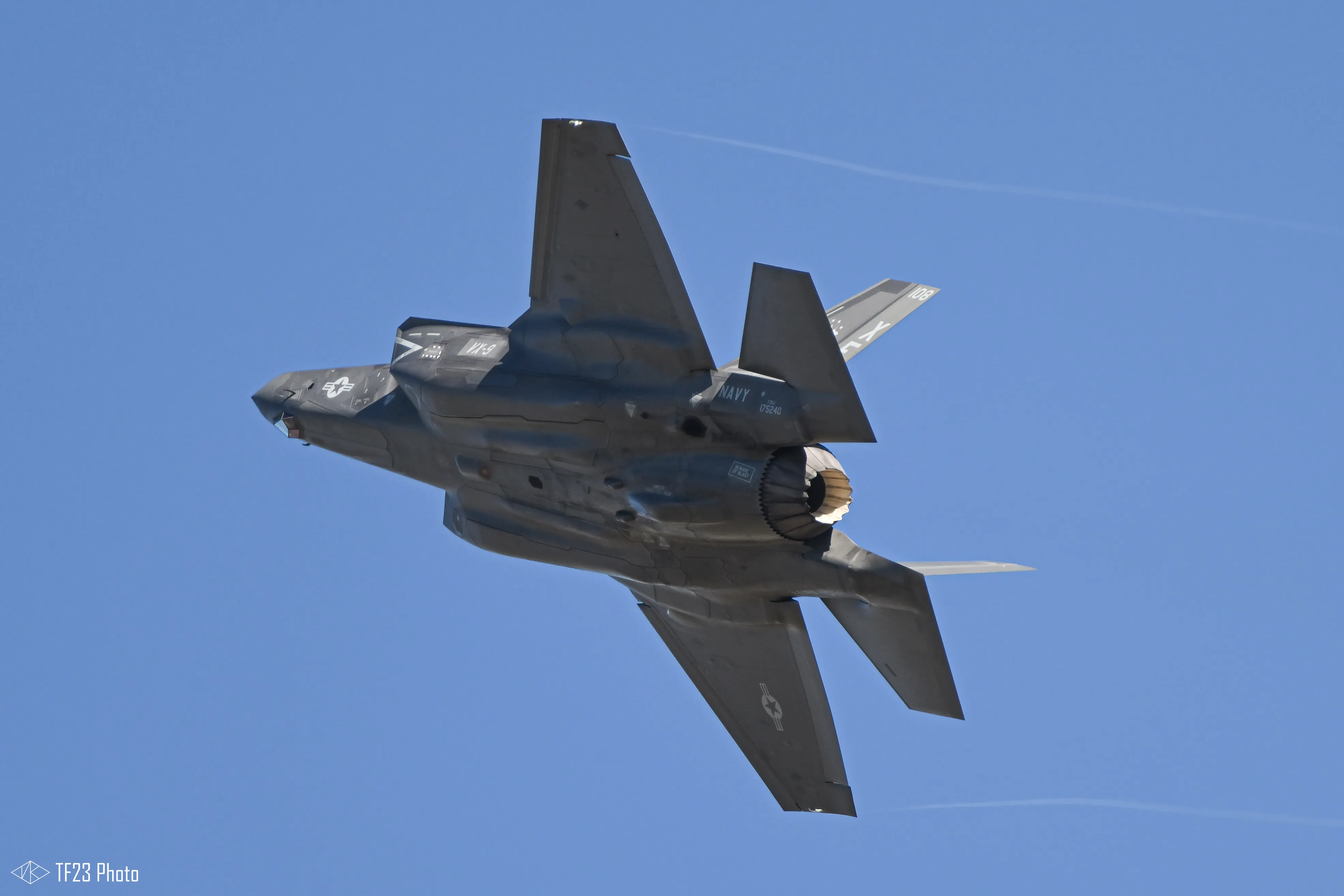
The news that the seagoing service is operating the A model of the Joint Strike Fighter came from aviation photographer @Task_Force23, who captured the VX-9 F-35A as it did a low-approach at Mojave Air and Space Port on January 23rd. He was kind enough to share his photos with our readers.
TASK_FORCE23
The aircraft in question was 17-5240, an F-35A that had previously served in a test capacity with the USAF’s 422nd Test and Evaluation Squadron based at Nellis Air Force Base. As for how the jet ended up being flown by the USN, the F-35 Joint Program Office (JPO) tells us:
“We have a service agreement whereby the Air Force can loan the Navy an aircraft and they have done that before.”
We have asked additional questions about the arrangement to the JPO, we will update this post when we hear back.
Regardless, it makes sense that Navy can pull from the Air Force’s much larger F-35A fleet for test and evaluation duties, the activities of which often benefit both services due to the joint nature of the F-35 program. The entire F-35C production target for the Navy and Marines is 273 aircraft (as of 2024), and many of those aircraft are yet to be ordered and delivered. In comparison, the USAF had well over 500 F-35As in its inventory at the start of fiscal year 2025. That number has only grown.
The F-35C that the Navy flies has much larger wings than the A, allowing it to approach the carrier at lower speeds. It also has a beefier landing gear for carrier operations, a robust tail hook, and it carries more fuel, among other tweaks. While the two fly similar and conversion from F-35C to A is likely relatively seamless, the C model is restricted to 7.5Gs compared to the A’s 9Gs. Due to the big wing and G restriction, they perform different in areas of the envelope, such as turns. High speed performance is also a bit different due to the big wings on the C. But those differences are fairly minimal, especially for test duties of a relatively mature aircraft that often have more to do with avionics, software, and weapons integration than raw performance and flying qualities. There are other use cases VX-9 could have for F-35As, as well, but generally this would be a capacity issue.
F-35 variants compared, from left to right: C, B, A.
Still, it is certainly… different… seeing an F-35A emblazoned with NAVY on its side and VX-9’s iconic bat on its tail.
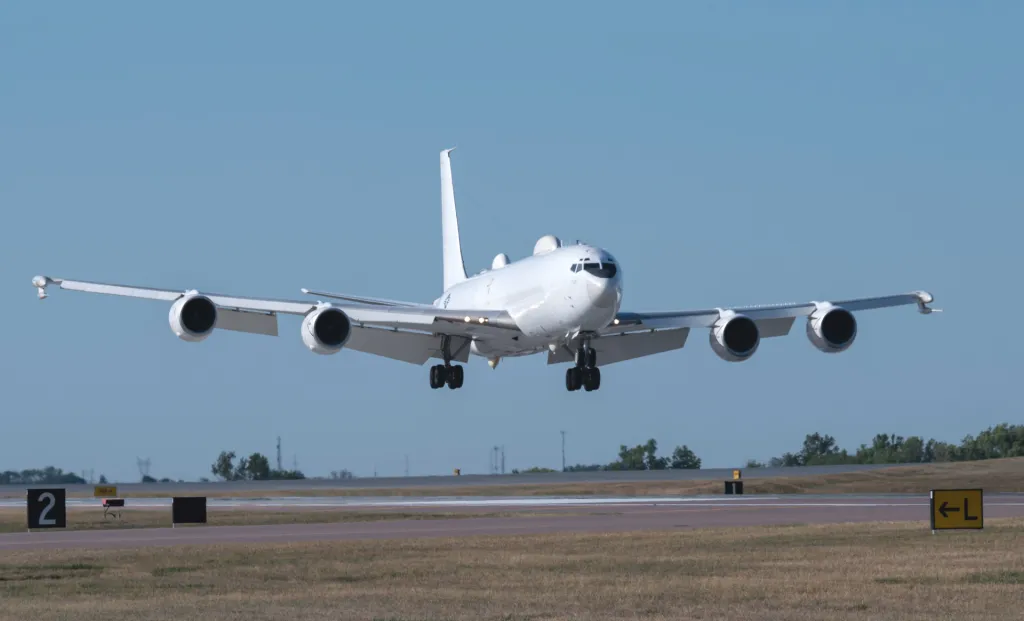
Air Force Gen. Stephen Davis, head of Air Force Global Strike Command (AFGSC), talked about the future of Looking Glass and the E-4C during an exclusive interview with TWZ‘s Howard Altman. The U.S. Navy is separately working to retire its fleet of Boeing 707-based E-6B Mercury jets that currently serve in the Looking Glass role with joint crews that include Air Force personnel. The E-6Bs also perform the Navy’s Take Charge And Move Out (TACAMO) mission, which entails the ability to relay orders to Ohio class nuclear ballistic missile submarines, even if they are submerged. The Navy’s replacement E-130J Phoenix II aircraft will only be configured for the TACAMO mission.
An E-6B Mercury jet. USAFA rendering of the Navy’s future E-130J Phoenix II. Northrop Grumman
This is Davis’ first interview since taking up his current post last November. He also discussed ongoing work on the B-21 Raider and other areas of interest for his command.
“In terms of the Looking Glass platform, we did get recently assigned, the Air Force did, that mission [and] that will come to Global Strike,” Davis said. “We’re currently developing the capabilities documents, the requirements for that.”
“No decision has been made on if that will be a separate platform, or that might be collocated or brought into the SAOC program,” Davis added. “So, no decision on that at this point.”
The E-4Cs are set to supplant the Air Force’s current fleet of four E-4B Nightwatch aircraft, also known as the National Airborne Operations Center (NAOC). Three of those planes started their careers in the 1970s as E-4A Advanced Airborne Command Posts (AACP) before being upgraded to the E-4B standard. The fourth E-4B was acquired separately in the 1980s. The E-4Bs are all based on the older 747-200 models that have become steadily more difficult to operate and maintain. Boeing shuttered the 747 production line entirely in 2022. As such, the Sierra Nevada Corporation (SNC) is converting newer 747-8is acquired second-hand from Korean Air into E-4Cs.
A stock picture of an E-4B. DOD
The E-4Bs and future E-4Cs are both also described as ‘doomsday planes,’ but are also capable of acting as larger and more robust flying command centers than the E-6Bs.
For the Looking Glass mission, the current E-4Bs do lack a key feature: the Airborne Launch Control System (ALCS). With the ALCS, the E-6Bs can directly command the launch of Minuteman III missiles while in flight. This creates an additional obstacle to any adversary that might seek to prevent the use of these silo-based intercontinental ballistic missiles with a first strike targeting ground-based command and control links. It is worth noting here that the main purpose of the Minuteman III force is as a ‘warhead sponge’ that would require an opponent to expend substantial resources on trying to neutralize it in any nuclear exchange.
One E-4B was test-fitted with ALCS in the past, at a time when the Air Force envisioned those aircraft taking over the Looking Glass mission from EC-135Cs used in that role at the time. The service subsequently decided it was too expensive to use the NAOCs for that mission. Looking Glass passed to the Navy’s E-6s after the EC-135Cs were retired in the late 1990s.
The prospect now of using the E-4C in this role raises similar cost, as well as capacity questions. As noted, the SAOCs will be configured from the outset as more capable flying command centers for use by top U.S. officials, including the President of the United States. Looking Glass has somewhat similar, but different mission requirements, including when it comes to aircraft that have be available at all times.
All that being said, the SAOC fleet is set to be larger than the NAOC fleet. AFGSC’s Gen. Davis confirmed in the interview that the Air Force is looking to acquire six E-4Cs, at a minimum, and potentially up to eight of the jets. Previously released U.S. Army Corps of Engineers contracting documents had already discussed plans for improvements at Offutt Air Force Base in Nebraska to accommodate as many as eight SAOC jets. Offutt is currently home to the E-4B and E-6B fleets.
A slide from a US Army Corps of Engineers briefing on planned construction at Offutt Air Force Base to accommodate an E-4C fleet of between six and eight aircraft. US Army
The Air Force could still look to other platforms to perform the Looking Glass mission. Last year, Congress pushed to have the service report back on whether a C-130 Hercules-based design like the one the Navy is now pursuing for TACAMO could be another option. A business jet might be another starting place. It is even possible that part of the mission could migrate in another direction entirely with the help of space-based communications capabilities.
“The LG-N program is aimed at recapitalizing missions currently executed on the E-6B,” according to the notice. “The Government is seeking information on industry’s ability to deliver a complete weapon system to include aircraft, mission systems, training systems, system integration lab, training, and ground support systems.”
Whether or not the E-4Cs end up being part of the LG-N solution, and what other aircraft might serve in this role in the future, remains to be seen. Regardless, the Air Force is now well on its way to taking back control of the Looking Glass mission.
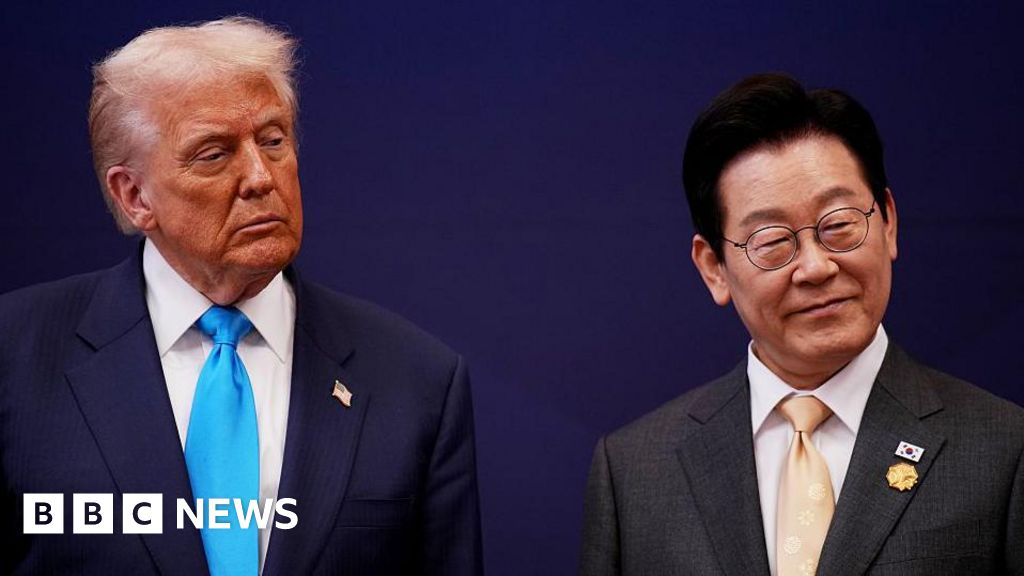
US President Donald Trump has announced he is raising tariffs on South Korean imports to 25% after accusing Seoul of “not living up” to a trade deal reached last year.
In a post on social media, Trump said he would increase levies on South Korea from 15% across a range of products including automobiles, lumber, pharmaceuticals and “all other Reciprocal TARIFFS”.
Trump said South Korean lawmakers have been slow to approve the deal while “we have acted swiftly to reduce our TARIFFS in line with the Transaction agreed to”.
South Korea says it had not been given official notice of the decision to raise tariffs on some of its goods, and wanted urgent talks with Washington over the issue.
It added that South Korea’s Industry Minister Kim Jung-kwan, who is currently in Canada, will visit Washington as soon as possible to meet US Commerce Secretary Howard Lutnick.
South Korea’s benchmark Kospi stock index fell on Tuesday morning but was trading about 1.8% higher later in the day as shares in major exporters recovered.
Seoul and Washington reached a deal last October, which included a pledge from South Korea to invest $350bn (£256bn) in the US, some of which would go to shipbuilding.
The following month, the two countries agreed that the US would reduce tariffs on some products once South Korea started the process to approve the deal.
The agreement was submitted to South Korea’s National Assembly on 26 November and is currently being reviewed. It is likely to be passed in February, according to local media.
Tariffs are paid by companies who import products. In this case, US firms will pay a 25% tax on goods they buy from South Korea.
Trump has frequently used tariffs as leverage to enact foreign policy during his second term in the White House.
On Saturday, he threatened Canada with a 100% tariff if it struck a trade deal with China.
On Monday, Chinese officials said its “strategic partnership” agreement with Canada is not meant to undercut other countries.
Canadian Prime Minister Mark Carney has said his country was not pursuing a free trade deal with China and has “never” considered it.
He added that Canadian officials have made their position clear to their American counterparts.
Before that, Trump said he would impose import taxes on eight countries – including the UK – who opposed US plans to seize Greenland, an autonomous territory in the Kingdom of Denmark which is a member of Nato.
He later backed down from the tariff threat over Greenland citing progress towards a “future deal” over the island, but the episode strained US relations with Denmark and other Nato allies.
Fallout following the decision to block Andy Burnham from standing in a forthcoming by-election has continued, with the Mail reporting a growing rebellion among government officials. It reports that 50 MPs have signed a letter protesting against the decision, noting that pressure on Prime Minister Sir Keir Starmer has “intensified”.
The Times says that senior Labour figures have “privately conceded” that they expect to lose the Gorton & Denton by-election as a result of the Burnham block. The paper says the fight for the seat is “likely to be deeply divisive”, with the Greens and Reform UK “set to pile pressure” on Sir Keir. The prime minister has defended his decision regarding Burnham, insisting that allowing him to run for the seat would “divert our resources” from “very important” campaigns in May’s elections.
Several papers picture former Man United footballer Sir David Beckham and his family at an award ceremony in Paris, after Lady Beckham became a Knight of the Order of Arts and Letters. Under the headline “Clan united”, the Sun calls it a “show of solidarity”, noting it is the first time that the family have been seen together following the row with Brooklyn, the eldest son, on Instagram last week. The couple were joined by their other three children – Romeo, Cruz and Harper.
“You are my everything” declares the Star, pairing the photo of the family in Paris with a quote from Lady Beckham’s Instagram post to mark her acceptance of the knighthood.
Though the Beckhams are also front and centre of the Guardian, the paper’s headline reads: “Tories face backlash after ‘mental health’ jibe over Braverman’s exit”. It reports that the Conservative Party had to correct the record after they initially said Suella Braverman had defected to Reform UK because of “mental health” issues. In a fresh statement, the party said the original had been a draft version sent out in error.
A beaming Braverman and Reform UK leader Nigel Farage are splashed across the Mirror, paired with the headline “Reform’s latest con”.
The i Paper says the statement regarding Braverman comes amid a growing Conservative party exodus. The front page also features Farage saying the Tories face a “cataclysm” in May’s elections.
“More January transfer deals!” declares the Metro, marking both the defection of Braverman and an updated cast for The Great British Bake Off. It confirms that Nigella Lawson with replace Prue Leith in the forthcoming series of the beloved television show.
The price of gold is leading the Tuesday edition of the Financial Times, after it hit $5,000 per troy ounce for the first time. The paper says Monday also saw the US dollar sink to a four-month low, amid fears of another government shutdown.
The Telegraph says China has been hacking the mobile phones of senior officials in Downing Street for “several years”, as part of an operation that the paper understands “compromised senior members of the government”. Previous claims of phone hacking were dismissed by China as “baseless”.
Holocaust survivor Eva Clarke, 80, has given an interview to the Express to mark Holocaust Memorial Day, telling the paper that she is still hopeful for a better future if people can stand up to prejudice and tackle rising antisemitism.
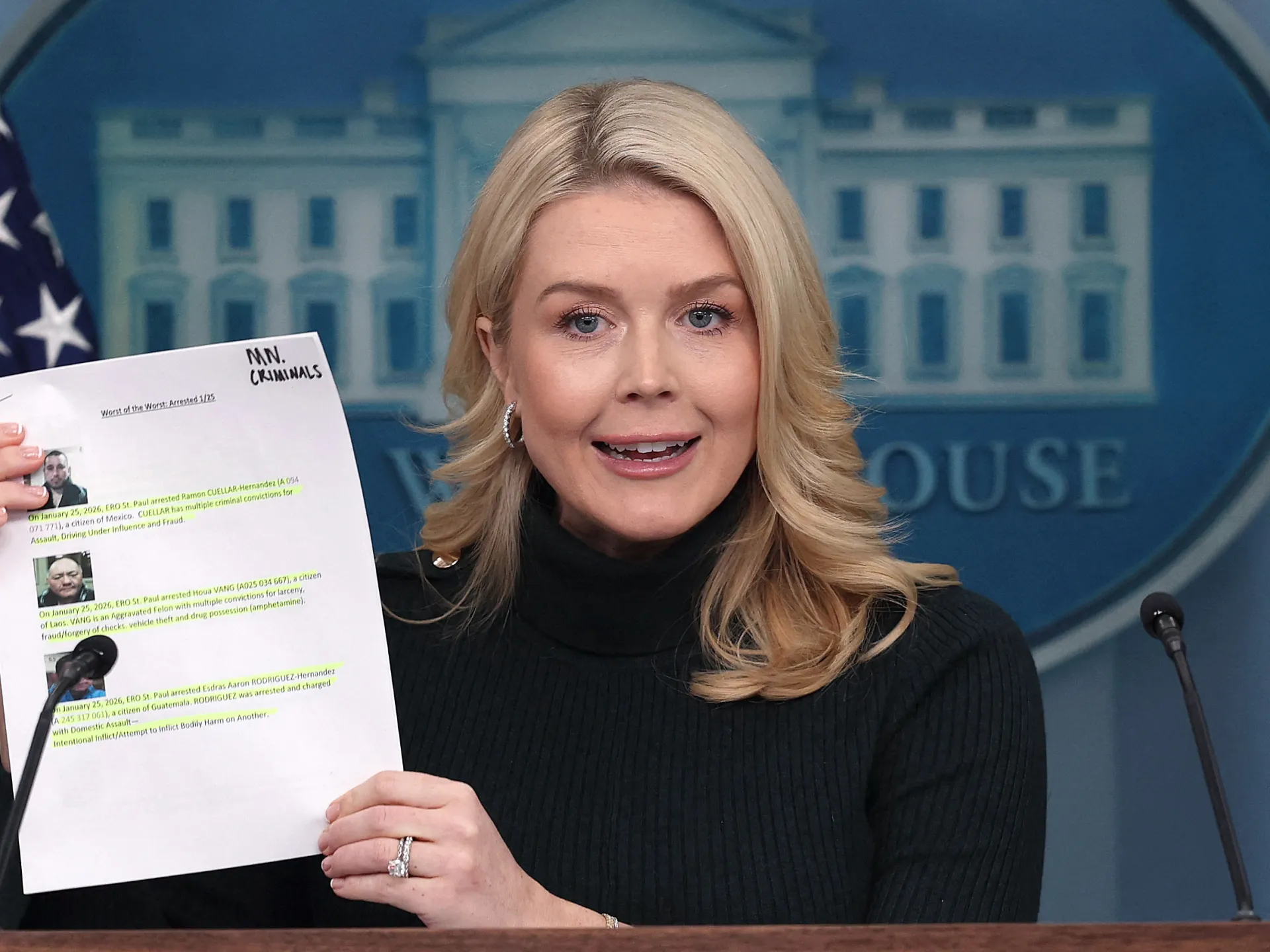
A writer for a right-wing website asked the White House spokesperson a leading question about the killing of Alex Pretti by immigration agents in Minnesota, prompting an attack on the “liberal biased media.”
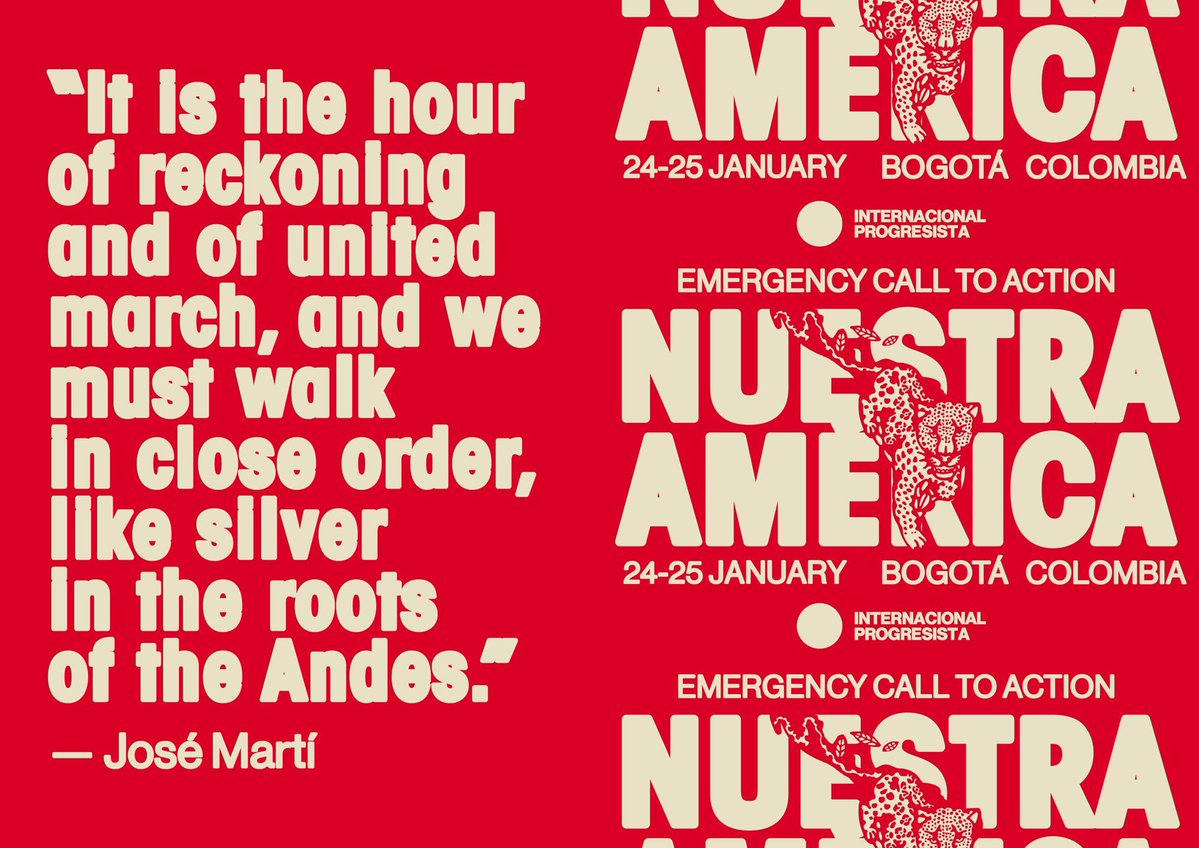
Poster from the “Nuestra América” summit with a quote from Cuban independence hero José Martí. (Progressive International)
Mérida, January 26, 2026 (venezuelanalysis.com) – Delegates from governments, parliaments, and social movements across the globe gathered in Bogotá, Colombia, on January 25 for the inaugural “Nuestra América” summit.
Convened by the Progressive International at the San Carlos Palace, the emergency congress aimed to establish a unified strategy against what participants described as a “rapidly escalating assault” on Latin American sovereignty.
The high-level meeting, featuring 90 people from more than 20 countries, took place against a backdrop of heightened regional tensions and the Trump administration’s express intent to impose its dictates in the Western hemisphere.
The summit was triggered by the events of January 3, when US forces launched “Operation Absolute Resolve,” involving targeted bombings in Caracas and surrounding areas. The attacks killed over 100 people and drew near-universal condemnation from progressive forces who blasted the operation as a flagrant violation of the UN Charter.
The military incursion saw special forces kidnap Venezuelan President Nicolás Maduro and First Lady Cilia Flores. The pair will face trial in New York on charges including narco-trafficking conspiracy, to which both pleaded not guilty during the arraignment hearing on January 5. Venezuelan officials have repeatedly denounced the kidnapping and demanded Maduro and Flores’ release and return.
The “San Carlos Declaration,” adopted at the close of the Bogotá summit on Sunday, characterized the current moment as a “new age of colonial violence” driven by a “revived Monroe Doctrine and a new ‘Trump Corollary’”.
The text asserted that “the defense of sovereignty in the hemisphere is inseparable from the defense of international law at the global level,” calling for a “coordinated international solidarity” to halt US coercive actions.
“We, the delegates at the inaugural convening of Nuestra América in Bogotá, Colombia, affirm the shared horizon of: a hemisphere that governs itself, defends its peoples, and speaks in its own voice,” the document read. Delegates committed to a “common strategy” to “project Nuestra América as a force for sovereignty and solidarity.”
The gathering featured high-level bilateral exchanges, as well as working groups led by grassroots movements. The final statement emphasized the importance of popular power to defend working-class interests and build international solidarity.
In the coming weeks, the “Nuestra América” movement plans to intensify its diplomatic activity, with a second major meeting already scheduled to take place in Havana, Cuba.
Code Pink’s Latin America coordinator Michelle Ellner attended the Bogotá summit and told Venezuelanalysis that it is urgent to confront a US project of “hemispheric domination that combines military intervention, lawfare, and repression.”
“No country or movement alone can confront the US military and financial apparatus,” she argued. “But together, states, peoples and social movements can continue building an anti-imperialist movement that can sustain those who are currently fighting politically.”
Ellner noted that progressive movements have historically been fractured but that they need to go from “reaction to action.” The Venezuelan-US organizer explained that Code Pink and allied groups are coordinating legislative pressure and mobilizations within the US to challenge the “normalization of intervention.”
Acting government promotes “coexistence and peace”
According to Rodríguez, the initiative seeks to “heal the fractures” caused by political violence and “eradicate expressions of hate” that threaten national stability in the wake of the US’ recent attacks and threats.
The program is overseen by a diverse committee led by Minister of Culture Ernesto Villegas alongside several other cabinet members, former business leader Ricardo Cusanno, and various social activists.
The acting president emphasized the need for political dialogue among different Venezuelan political forces without meddling from Washington and other foreign actors. The government announced plans to present a new law to the National Assembly to institutionalize the initiative.
In recent weeks, Venezuelan judicial authorities have likewise released opposition agents, some of them having been accused of treason and terrorism, as well as people accused of involvement in the unrest that followed the July 2024 presidential elections. Caracas has reported 626 released and invited the UN High Commissioner for Human Rights to accompany the process.
A 2024 simulation found US civil war could be triggered by clashes between state and federal law enforcement.
US federal immigration raids continue in Minnesota, and the operation has set the stage for a standoff between state officials and the federal government. Governor Tim Walz has readied Minnesota’s national guard, while the Pentagon has ordered troops to be on standby. A 2024 University of Pennsylvania simulation warned that similar state-federal standoffs could escalate into broader armed conflict.
In this episode:
Claire Finkelstein (@COFinkelstein), Center for Ethics and Rule of Law, University of Pennsylvania
Episode credits:
This episode was produced by Chloe K. Li and Melanie Marich, with Phillip Lanos, Spencer Cline, Tamara Khandaker, Sonia Bhagat and our guest host, Manuel Rapalo. It was edited by Kylene Kiang.
The Take production team is Marcos Bartolomé, Sonia Bhagat, Spencer Cline, Sarí el-Khalili, Tamara Khandaker, Kylene Kiang, Phillip Lanos, Chloe K. Li, Melanie Marich, and Noor Wazwaz. Our host is Malika Bilal.
Our engagement producers are Adam Abou-Gad and Vienna Maglio. Andrew Greiner is lead of audience engagement.
Our sound designer is Alex Roldan. Our video editors are Hisham Abu Salah and Mohannad al-Melhem. Alexandra Locke is The Take’s executive producer. Ney Alvarez is Al Jazeera’s head of audio.
Verified videos emerging from Iran show bodies piled up in a hospital, snipers stationed on buildings and CCTV cameras being destroyed, following the unprecedented crackdown on protests earlier this month.
BBC Verify has been tracking the spread of protests across Iran since they first erupted in late December, but the near total internet blackout imposed by the authorities has made it extremely difficult to document the scale of the state’s deadly crackdown on protesters.
The US-based Human Rights Activists News Agency (HRANA) says it has confirmed the killing of nearly 6,000 people, including 5,633 protesters, since the unrest began at the end of December. It says it is also currently investigating another 17,000 reported deaths received despite an internet shutdown after nearly three weeks.
Another group, the Norway-based Iran Human Rights (IHR), has warned that the final toll could exceed 25,000.
Iranian authorities said last week that more than 3,100 people were killed, but that the majority were security personnel or bystanders attacked by “rioters”.
The latest videos to emerge from the country are understood to have been filmed on 8 and 9 January, when thousands of people took to the streets following a call for nationwide protests from Reza Pahlavi, the exiled son of the late Shah.
They are thought to be the deadliest nights for protesters so far and these newly verified videos show how Iran’s security forces have been violently cracking down on protesters.
Multiple clips analysed by BBC Verify and BBC Persian show bodies piled up inside a mortuary at Tehranpars hospital in east Tehran. We verified the location of the hospital by matching its interior to other publicly available images and videos of the building, and counted at least 31 bodies in just one video. Another clip shows seven body bags laid on the ground outside the hospital’s entrance.
Hundreds of people are seen protesting on a highway in west Tehran in another video before multiple rounds of gunfire can be heard and people begin to scream.
Protesters have also been seen trying to evade Iran’s heavy surveillance infrastructure by disabling CCTV cameras. Footage we verified shows one person in the capital climbing up a post and hitting a surveillance camera several times in an attempt to disable it. A huge crowd of protesters can be seen on the ground and heard cheering as the camera is damaged.
We have tracked the spread of the anti-government protests across 71 towns and cities in Iran, though the true number of areas where demonstrations have taken place is likely far higher.
In the south-eastern city of Kerman a video taken from high up in a building shows several armed men in military uniform walking down a road firing their weapons continuously, though it is not clear who they are shooting at. A small fire burns in the middle of the road while the sound of protesters chanting can be heard in the background.
Snipers have also been recorded on the roofs of buildings. In the north-eastern city of Mashhad verified video shows two men dressed in black on a rooftop of a building in daylight. One man is standing next to a large rifle that is lent against a wall and speaking on the phone. The other man crouches on the floor while smoking.
For most people there has been an almost-total internet blackout since 8 January, but some have managed to briefly access the internet using methods such as SpaceX’s Starlink satellite internet and virtual private networks (VPNs).
More videos are likely to emerge in the coming days as the country’s economy has struggled during the blackout.
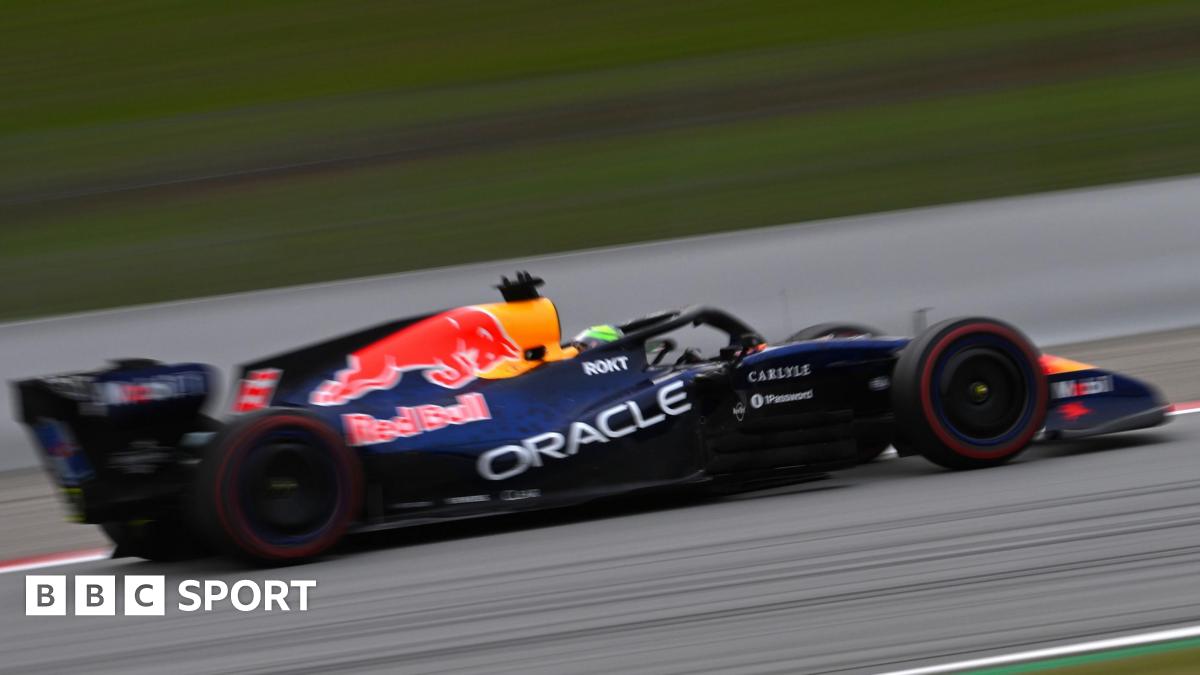
Seven of the 11 teams were running on Monday – Red Bull, Mercedes, Racing Bulls, Haas, Alpine and the new Audi and Cadillac teams.
McLaren said last week that they would not take their car on to the track until after day one as a result of trying to maximise design time. Ferrari, after an initial test at their factory last week, had also announced they would not run on Monday.
Aston Martin have said their new car will not be ready until Thursday, and Williams are missing the test entirely after delays to their design and production programme.
No times were issued, and all teams ran into at least some technical issues as they learned about their new cars.
Rival teams were impressed by the amount of mileage the two Red Bull teams managed considering it was the first full day of running with their new in-house engine, which has been developed in conjunction with new partner Ford.
Before the test started, McLaren and Red Bull revealed images of their 2026 cars for the first time.
McLaren, who won the drivers’ and constructors’ championship double last year for the first time since 1998, showed the car in the one-off testing livery it will run in this week.
Red Bull showed studio shots of their car, carefully chosen to disguise key design features.
Russell added: “We are pleased with our day, but I’ve also been impressed by several other teams.
“The Red Bull power unit has completed a lot of laps which, given that it’s their first engine they’ve built, means they’ve clearly done a good job.
“Haas also managed a similar amount of running to ourselves, so the Ferrari power unit has also put together plenty of mileage. It’s not quite how it was in 2014! The sport has evolved so much since then and the level, in every single aspect, is so high now.”
Audi have taken over the Sauber team for the German car company’s first entry into F1. They suffered a reliability issue that prevented Bortoleto driving in the afternoon.
Team principal Jonathan Wheatley said: “We had a technical issue, spotted it and decided to switch the car off. Plenty of testing this year and wanted to really understand the problems, see what the weather conditions are and decide whether we run tomorrow.”
Rain is forecast for Tuesday’s second day of the test, during which teams are permitted to run on a maximum of three of the available days.
Bortoleto said: “The cars are very different. I feel these are going to be slower but it’s very cool to have the power unit being 50% electric – you go out of the corner and you have so much speed being deployed and you can see how strong the engine is.
“You need to adapt but it’s still a racing car.”
Racing Bulls’ Lawson said: “[The car is] very different to drive and I haven’t got my head around it fully yet. We will keep learning. It feels like there is a lot more we can do as drivers to make a difference, potentially, but right now it’s very early days, very hard to know where we are for now just trying to optimise the car.
“[The power unit] feels good. But it’s very hard to tell – the main thing is reliability at the moment.
“We have done a good amount of laps today and the only issues we had today were safety precautions, not actual issues. But hard to know where we’re at compared to everyone else.”
Weekly insights and analysis on the latest developments in military technology, strategy, and foreign policy.
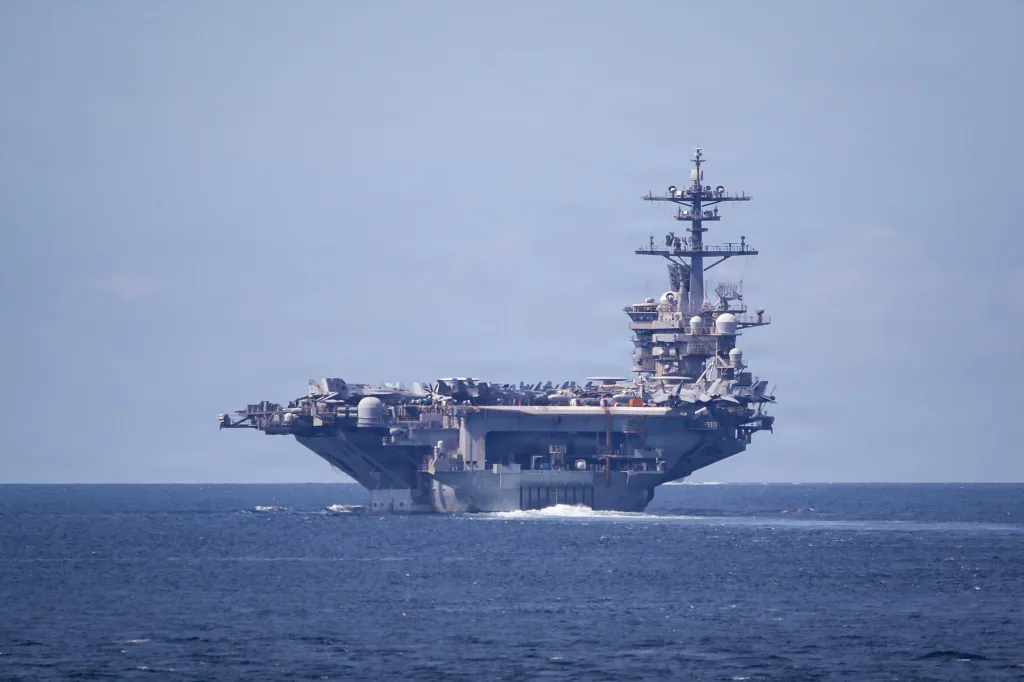
The U.S. military buildup for a possible attack on or from Iran took another step forward Monday as the USS Abraham Lincoln Carrier Strike Group (CSG) entered the U.S. Central Command region, a U.S. official confirmed to The War Zone Monday morning. Meanwhile, Iran on Monday said it was “prepared to defend itself against any new aggression” while its proxies in Yemen and Iraq have vowed to enter the fight on Tehran’s behalf. The Houthis on Monday released a video suggesting an attack on the Lincoln. More on that later in this story.
Elements of the Lincoln CSG were dispatched to the region from the South China Sea by U.S. President Donald Trump, who has repeatedly threatened to strike Iran over its brutal crackdown on anti-regime protests, resulting in thousands killed. The carrier, along with three Arleigh Burke guided missile destroyers escorting it (and usually a fast attack nuclear submarine), is currently located in the Indian Ocean, a U.S. Navy official confirmed to The War Zone.
The aircraft carrier USS Abraham Lincoln is now in the U.S. Centcom region amid rising tensions with Iran. (U.S. Navy photo by Mass Communication Specialist 3rd Class Christian Kibler) Petty Officer 2nd Class Christian Kibler
The arrival of the Lincoln CSG to the region follows a U.S. Air Force Central (AFCENT) announcement on Sunday that it will be conducting Agile Spartan, “a multi-day readiness exercise to demonstrate the ability to deploy, disperse, and sustain combat airpower across the U.S. Central Command area of responsibility.” AFCENT told us that Agile Spartan is “part of its regular exercise schedule and not in response to current tensions.” However, the optics of the timing are hard to avoid.
All these moves come amid a large surge of offensive and defensive assets to the Middle East. As we have previously reported, at least a dozen additional F-15E Strike Eagle fighters have been deployed to Muwaffaq Salti Air Base in Jordan, along with cargo jets and aerial refueling tankers across the region. In addition, online flight tracking indicates the movement of new air and missile defense systems to the Middle East as well. As we projected, the U.S. is sending additional Patriot and Terminal High Altitude Area Defense (THAAD) systems to the Middle East for increased protection from any Iranian attack, The Wall Street Journal reported.
#USAF United States Air Force – Middle East Activity 26 January 2026 – 1045z
Traffic is primarily focused on bases housing air defence systems like THAAD from Fort Hood. As the weather conditions don’t appear to have improved, the level of traffic is still fairly low. I’ve… https://t.co/INuCDdgv5spic.twitter.com/PQ9fchMiMf
Despite the buildup, it remains unclear what orders Trump will issue. Aside from threatening to strike Iran, Trump on Jan. 13 also promised those taking to the streets that help was on its way.
Regardless of his intent, the influx of additional assets to the region will give Trump a greater range of potential action and allow for the ability to defend against an Iranian attack, whether in response to U.S. military actions or not.
The Lincoln CSG would boost U.S. striking power in the region. Its embarked CVW-9 Carrier Air Wing consists of eight squadrons flying F-35C Lightning II, F/A-18E/F Super Hornets, EA-18G Growlers, E-2D Hawkeyes, CMV-22B Ospreys and MH-60R/S Sea Hawks. Its escorts, the Arleigh Burke class guided-missile destroyers USS Frank E Petersen Jr., USS Michael Murphy, and the USS Spruance of Destroyer Squadron (DESRON) 21 bring a large number of missile tubes that could be used to strike Iran. These vessels could also be used in the defense of U.S. and allied targets during a reprisal.
The Arleigh Burke class guided missile destroyer USS Michael Murphy is part of the Lincoln Carrier Strike Group.. (U.S. Navy photo by Ensign Joshua A. Flanagan/Released) Joshua A Flanagan
The presence of Strike Eagles in the region, especially those coming from RAF Lakenheath, is in itself not new. These jets have maintained a steady presence at Muwaffaq Salti Air Base in Jordan for nearly a decade, and their recent arrival in the Middle East was largely expected due to the current instability and saber-rattling. F-15Es played a key role in defending against multiple Iranian drone and cruise missile barrages on Israel and they are now more capable of that mission than ever. Beyond its offensive capabilities, if Iran were to launch a major attack on Israel and/or U.S. assets in the region, preemptive or in retaliation, the F-15Es would play a key part in defending against those attacks.
In addition to U.S. assets, the Royal Air Force’s “joint Typhoon squadron with Qatar, 12 Squadron, has deployed to the Gulf for defensive purposes, noting regional tensions as part of the UK-Qatar Defense Assurance Agreement, demonstrating the strong and enduring defense relationship between the U.K. and Qatar,” the U.K. Defense Ministry (MoD) announced on Thursday.
RAF Typhoon jets have deployed to Qatar in a defensive capacity.
The UK and Qatar have been close defence partners for decades. This deployment builds on that relationship, supporting regional stability and keeping us secure at home and strong abroad. pic.twitter.com/83FkaBPJng
While these are significant additions to the standing force posture in the region, more fighter aircraft would be expected for a major operation against Iran. We have not seen evidence of those kinds of movements just yet, although some movements are not identified via open sources.
Beyond tactical combat aircraft in the region, the U.S. can fly bombers there from the continental United States, as was the case when B-2 Spirits attacked Iran’s nuclear facilities during Operation Midnight Hammer last June. However, satellite imagery observed by The War Zone shows that no aircraft have arrived for a sustained operation in the Middle East.
As U.S. assets pour into the region, the U.S. Embassy in Baghdad highlighted a warning Trump delivered to Iran last week.
“We have a big flotilla going in that direction, and we’ll see what happens,” Trump told reporters Thursday afternoon aboard Air Force One. “We have a big force going toward Iran. I’d rather not see anything happen, but we’re watching them very closely.”
Israel, for its part, is preparing for both offensive and defensive actions toward Iran, its longtime archenemy.
IDF Northern Command chief Maj. Gen. Rafi Milo said Sunday that the military is preparing for the possibility that a US strike on Iran could trigger Iranian retaliation against Israel, according to Israeli media.
“We don’t know where this is heading,” Milo said in remarks broadcast by Channel 12 News, as tensions continue to mount,” the Times of Israel noted. “We see the force buildup the Americans are carrying out, both in the Persian Gulf and throughout the Middle East.”
Milo said the military is on heightened alert for any escalation, should the US decide to attack Iran.
“We are prepared and ready so that if the U.S. decides to strike Iran, we understand it could affect Israel, with part of the Iranian response possibly reaching here,” he said.
Israeli forces remain on high alert for an attack on or from Iran. (IAF) IAF
“The IDF is preparing for a possible American strike this coming weekend,” a high-ranking IDF official told us on Monday. “But again, there is no certainty.”
“Everything depends on the mind of one man,” he added, referring to Trump.
In another sign of a potential new conflict, Israel’s civil authority has told foreign airlines that Jan. 31 and Feb. 1 could be a period of security sensitivity, a likely reference to a U.S. military strike on Iran. If Israeli airspace is closed, foreign airlines will be given priority of exit.
Israel civil air authority tells foreign airlines that 31 January & 1 February might be the start of a period of security sensitivity (hinting at possible US military strikes on Iran). If Israeli airspace is closed, foreign airlines given priority of exit. https://t.co/HStZIOjwtN
CENTCOM commander Adm. Brad Cooper was recently in Jerusalem to talk about regional security issues. Israel’s Channel 14 news, a right-wing outlet closely aligned with Prime Minister Benjamin Netanyahu, claimed that Cooper and IDF officials have yet to come up with an attack date, that the U.S. “will need time to build up a significant force,” but will strike immediately if needed.
The U.S., according to the news outlet, wants “a clean, swift, and inexpensive operation” to “focus on those who harmed civilians and protesters. America is “ready to replace the regime in Iran,” Channel 14 added.
The War Zone could not independently verify these claims. Neither CENTCOM nor the IDF put out official statements on these conversations.
Summary of the meeting between CENTCOM commander Brad Cooper and senior IDF officials:
— No date for an attack on Iran
— The Americans will need time to build up significant force
Iranian officials maintain that they are prepared to fight both the U.S. and Israel.
Iran’s Defense Ministry spokesperson Gen. Reza Talaei-Nik warned Israel and the U.S. over any potential attack, saying it would “be met with a response that is more painful and more decisive than in the past.” Talaei-Nik was likely referring to the limited response Iran took in June 2025, attacking Al Udeid Air Base in retaliation for the Midnight Hammer strike.
“Iran is fully prepared to defend itself in the event of any renewed aggression,” said First Vice President Mohammad-Reza Aref. He stressed that “comprehensive forecasts have been made and a structured economic plan has been designed to confront a potential future war.”
Spokesperson of the Iranian Foreign Ministry:
“We face daily threats from the U.S. and Israel, as they aim to undermine regional security.”
“If we are subjected to any aggression, Iran’s response will be comprehensive.”
Any U.S. or Israeli military action would come without the tacit support of the United Arab Emirates.
“The UAE affirms its commitment to not allowing the use of its airspace, territory, or waters in any military operations against Iran,” the UAE Foreign Affairs Ministry announced on X. “The Ministry of Foreign Affairs affirmed that the UAE is committed to not allowing the use of its airspace, territory, or waters in any hostile military operations against Iran, and not providing any logistical support in this regard. It renewed its affirmation of the UAE’s belief that enhancing dialogue, reducing escalation, adhering to international laws, and respecting state sovereignty represent the optimal foundations for addressing current crises, emphasizing the UAE’s approach based on the necessity of resolving disputes through diplomatic means.”
الإمارات تؤكد التزامها بعدم السماح باستخدام أجوائها أو أراضيها أو مياهها في أي أعمال عسكرية ضد إيران
أكدت وزارة الخارجية أن دولة الإمارات تلتزم بعدم السماح باستخدام أجوائها أو أراضيها أو مياهها في أي أعمال عسكرية عدائية ضد إيران، وعدم تقديم أي دعم لوجستي في هذا الشأن.
Iran is not the only threat facing the U.S. and Israel. Iranian proxies like the Lebanese Hezbollah, the Houthis of Yemen and Iraq’s Kataib Hezbollah paramilitary group have all vowed to respond to any strike on Iran.
The Houthis, who waged a campaign against U.S. and allied military and commercial shipping from Nov. 2023 to May 2025, released a new video on Monday suggesting a missile and drone strike on the Lincoln.
The Israeli Air Force is stepping up attacks on Hezbollah targets in Lebanon, partly to blunt the group’s ability to join any Iranian retaliation. Hezbollah is already a shadow of prior self after Israel executed a protracted campaign to decimate the group.
IDF says it killed Hezbollah artillery chief Muhammad al-Husseini in southern Lebanon
Separately eliminated Jawad Basma, a Hezbollah operative linked to weapons manufacturing pic.twitter.com/hs307ZbY6T
The death toll from the unrest that began in Iran on Dec. 28 over rising prices, devalued currency that saw the rial crater now to basically nothing, a devastating drought, and brutal government crackdowns may be in the tens of thousands.
“As many as 30,000 people could have been killed in the streets of Iran on Jan. 8 and 9 alone,” TIME reported, citing two senior officials of the country’s Ministry of Health. “So many people were slaughtered by Iranian security services on that Thursday and Friday, it overwhelmed the state’s capacity to dispose of the dead. Stocks of body bags were exhausted, the officials said, and eighteen-wheel semi-trailers replaced ambulances.”
As U.S. military assets continue to flow into the region, this remains an increasingly tense situation that could erupt without notice. We will continue to monitor it and provide updates.
At least 80 people, including 19 members of an elite marine force, are missing and feared buried in a landslide in Indonesia’s West Bandung. The death toll has risen to 17. A massive search operation is underway including thousands of rescue workers.
Sheraz Malik was convicted by a jury at Birmingham Crown Court
An asylum seeker has been found guilty of two counts of raping an 18-year-old woman in a park in Nottinghamshire.
A trial at Birmingham Crown Court heard the woman had been drinking at Sutton Lawn park in Sutton-in-Ashfield when she was attacked by Sheraz Malik, shortly after being raped by another man he was with, who has yet to be identified.
Malik, 28, had claimed the sex was consensual, but the jury returned unanimous guilty verdicts on two counts of rape and a not guilty verdict on a third.
It can be now reported that Malik is an asylum seeker who was born in Pakistan and lived in Italy, Germany and France before coming to the UK.
Judge Simon Ash KC adjourned the case for a mention hearing on 6 February so a date for sentencing Malik – who lived at an address in Bath Street in Sutton-in-Ashfield at the time – could be fixed.
A reporting restriction was put in place at Nottingham Crown Court in September last year, preventing any mention of the defendant’s immigration status until the trial had concluded.
Police said another suspect was still being “relentlessly” sought in relation to the case.
After highlighting the suspect’s background on his Facebook and X accounts, demonstrators gathered in the town to demand tighter rules on immigration.
Counter-protesters also turned out, but Nottinghamshire Live reported these were outnumbered.
Protests related to the case were held last summer
Warning: This article includes details that some readers may find distressing
Prosecution counsel Nicholas Corsellis KC previously told the court the woman had been drinking at the park with a male friend, and was drunk when she met Malik and a group of other men, who she had never seen before.
Her friend asked the group to “look after” her while he went to meet another friend and one of Malik’s associates took the woman to an isolated area of the park so she could go to the toilet, the court heard.
Corsellis said: “The first man forcibly raped her before bringing her back to the group.
“The defendant then decided he wished to have sex with her and took his turn to take her to a secluded spot, where he physically struck her while raping her.”
The jury were told Malik had grabbed her by the neck and hair as he raped her, and afterwards she sent a Snapchat message to a friend saying “please help me”.
“The one you told to look after me tried to rape me… and the one with the black T-shirt,” the message said.
“Please help, I can’t cope, I feel like killing myself.”
Corsellis told the jury that the complainant was “alone, drunk and was obviously a vulnerable person”.
Google
The woman told police she was attacked in Sutton Lawn park in Nottinghamshire
Malik, who gave evidence in English during the trial, said he had been playing cricket with a group of other men and smoking cannabis in the park before the attack.
He denied he had slapped her at any point and claimed the woman had told him “I really like you” and “I really enjoyed it”.
Later in his evidence, Malik was asked why a different name had been used to book him a coach ticket to leave the Nottinghamshire area after the attack.
He said a friend had booked the ticket for him, adding that the Home Office was “giving me £50 for every week”.
Addressing Malik in the dock, the judge said: “You have been convicted of very serious charges and I will need to sentence you in due course.
“The case will next be listed on 6 February to fix a sentence date.
“I have ordered a pre-sentence report to assess the level of dangerousness. You must engage with the probation service when they seek to engage with you.
“You will be remanded into custody at this stage.”
In a statement after the sentencing, Nottinghamshire Police confirmed Malik was a Pakistani national who followed proceedings through a Pashto interpreter.
The force said the investigation remained a priority.
Det Insp Nicole Milner said: “As is always the case for investigations of this nature, there are many people involved and they have all played a part to bring Malik to justice.
“I particularly want to acknowledge the work of Det Con Malgorzata Kacprzycka and Det Sgt Barry Haines, who have been crucial in bringing Malik to justice.
“Above all, I also want to acknowledge the bravery and resilience of the victim.
“She has shown great courage throughout and helped us to build a very strong case against Malik, whose version of events lacked credibility from the start.
“As a result of her evidence, the jury was able to see through his lies and to convict him on three counts of rape.”