WASHINGTON — House Republicans will look to get nearly $70 billion for immigration enforcement over the finish line Tuesday, enough to fund a pair of Homeland Security agencies through the next three years and the rest of President Donald Trump’s time in office.
Speaker Mike Johnson will need near perfect attendance and unity on his side to complete weeks of action on the bill. The legislation got sidetracked when Republicans sought to include $1 billion for enhanced security on the White House grounds, including for Trump’s new ballroom, and the Trump administration tried to create a nearly $1.8 billion fund to compensate allies of the president who claim they have been unjustly investigated and prosecuted. Those proposals proved politically toxic and were scrapped.
Now, the bill is focused entirely on immigration enforcement, a topic that Republicans have treated as a defining issue between the two major political parties and one they hope will carry them to victory in this year’s midterm elections. The bill provides $38 billion for Immigration and Customs Enforcement, $26 billion for the Border Patrol and another $5 billion to cover unforeseen costs, fueling Trump’s deportation agenda.
“It’s long overdue,” said Johnson, R-La., of the bill. “We have to fund border security and immigration enforcement, and it’s sad that Republicans have to do it on our own.”
Funding accelerates Trump’s deportation agenda
The funding comes on top of the nearly $140 billion that the Republican-controlled Congress gave ICE and Customs and Border Protection last year as part of Trump’s tax and spending cuts bill.
Democrats objected to giving the agencies more money without significant changes in the way they operate after the deaths of Alex Pretti and Renee Good in Minneapolis. For example, Democrats insisted that agents be required to display their ID badges during enforcement operations and that they get a judicial warrant before entering private property. Instead, the funding will come with virtually no strings attached.
House Democratic Leader Hakeem Jeffries vowed his party would oppose the package.
“We believe that taxpayer dollars should be used to make life more affordable for the American people – not give ICE another $70 billion blank check so that they can unleash brutality on American citizens and violently target law-abiding immigrant communities,” said Jeffries of New York.
Homeland Security faced longest shutdown in history
The package is the result of a monthslong standoff in Congress after Democrats refused to fund the Department of Homeland Security in the wake of the immigration enforcement actions in Minneapolis and other American cities, leading to the longest shutdown in agency history.
Negotiations had been underway with the White House to alter ICE operations as Democrats were demanding. When those negotiations failed, Republicans turned to a complicated procedural maneuver to get around the filibuster and pass the immigration funding with no Democratic votes.
If approved, the package would next go to Trump for his signature, all but assuring an essentially uninterrupted flow of funds for his immigration enforcement and deportation agenda into 2029.
The Senate completed its work on the legislation last week during an all-night session that extended into the early morning hours Friday. The final 52-47 vote on the bill was nearly party line, with Sen. Lisa Murkowski of Alaska the only Republican to oppose it.
Money comes at pivotal time for immigration agenda
The money will come at a pivotal time for the Department of Homeland Security, which is under new leadership after Trump replaced Kristi Noem with new Secretary Markwayne Mullin in March.
While Mullin has vowed to keep the department out of the headlines, the administration is under pressure from anti-immigration advocates to deliver on Trump’s campaign promise of the largest deportation operation in American history.
So far, the administration has not hit its goal of 1 million deportations a year, but Trump’s border czar, Tom Homan, has promised more to come, including hinting at immigration enforcement actions in New York, the nation’s biggest city, which is heavily Democratic.
At the same time, the administration is making it more difficult for legal immigrants to remain in the U.S. by working to end Temporary Protective Status, changing the processes for obtaining green cards and leaving some Dreamers — the young people who were brought illegally to the U.S. as children — reporting delays in renewing their status, which allows them to stay and work.
Tight vote ahead
On the House side, Johnson has little margin for error. Republicans can afford to lose only a couple of votes if every lawmaker is present. GOP leadership opted to avoid any hiccups and sent lawmakers home last week rather than take up the bill early Friday once the Senate had completed its all-nighter.
The bill is just a slim package, without the hundreds of pages of details and directives that typically come from Congress when it provides funding for agencies.
Leading up to the vote, Democrats portrayed DHS as an agency that has used its new resources to buy private jets for its leadership, warehouse immigrants in deplorable conditions and attack U.S. citizens.
“To give these rogue agencies another $70 billion now when they still have $100 billion in the bank from last year would implicate all of us in the escalating corruption and shameful actions of this department,” said Rep. Jamie Raskin of Maryland, the ranking Democratic member on the House Judiciary Committee.
Republicans countered that they were fulfilling their duty to safeguard the nation and support the men and women charged with enforcing the law.
“Democrats can say whatever they want, but what it’s about is public safety. What’s it about is keeping Americans safe,” said Rep. Michelle Fischbach, R-Minn.
Freking and Mascaro write for the Associated Press.
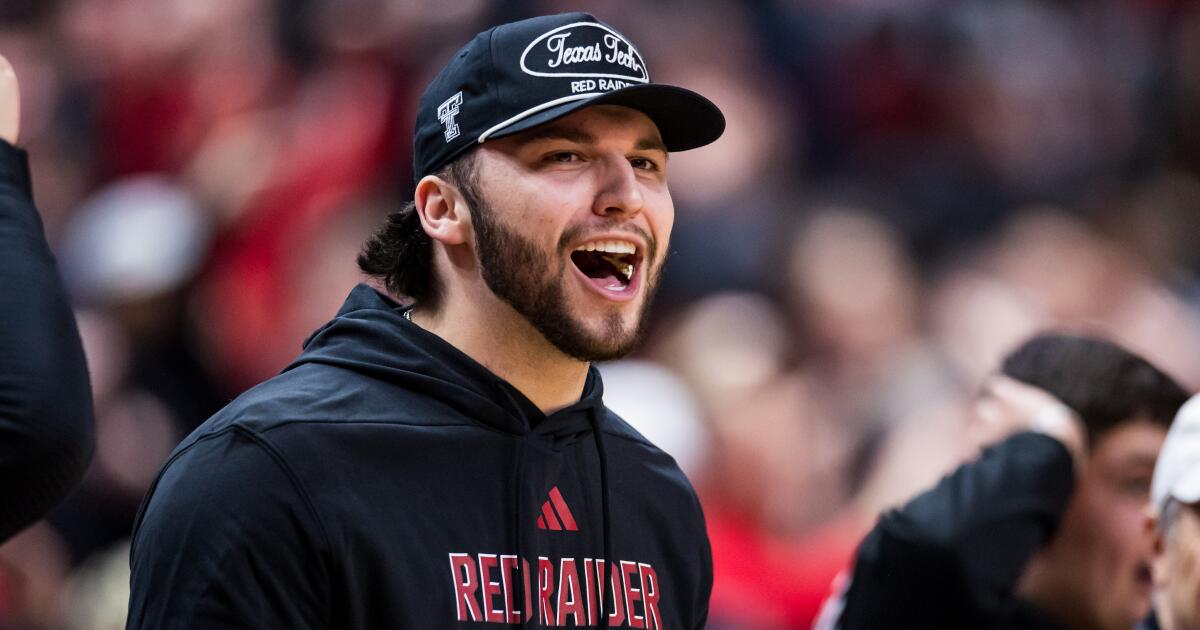
Texas Tech quarterback Brendan Sorsby has been granted a temporary injunction that allows him to practice and play with the Red Raiders in 2026 despite having been permanently banned by the NCAA for wagering on college sports.
Texas judge Ken Curry ruled Monday that the NCAA cannot block Sorsby’s final year of eligibililty. The Cincinnati transfer will have to miss the first two games of the season as one of the conditions of the ruling.
In his ruling, Curry stated that Sorsby would “suffer a probable, imminent and irreparable injury” without the injunction by missing out on the “elite coaching, training resources, camaraderie, and regimen that only being a member of a Division I college football team can provide.”
“I’m very grateful for the endless support I have received throughout this entire process. I am also grateful for the chance to rejoin my teammates,” Sorsby wrote in a statement posted Monday on Instagram. “This opportunity comes with the responsibility to remain focused on my personal growth, the ability to learn from this experience, and to be able to use my situation to help others going forward.”
The NCAA can appeal the injunction but did not immediately indicate its next steps in the matter. It is unclear how long such a process would take. Texas Tech’s season starts Sept. 5, with Sorsby first eligible to play when the Red Raiders host Houston on Sept. 18.
“The NCAA strongly disagrees with the court’s ruling in Sorsby’s case and is deeply concerned about the damaging, far-reaching and broadly destabilizing ramifications of this outcome — which undermines and corrupts the integrity of sports,” the association said in a statement.
“The NCAA is committed to supporting student-athlete mental health but must continue to aggressively defend against actions that defraud college athletics and threaten competitive integrity, such as betting on one’s own sport.”
Last month, Sorsby’s attorneys filed a lawsuit in Lubbock County District Court requesting that he be declared eligible for all team activities because the NCAA “failed to comply with its contractual commitments” to him as a student athlete and therefore “is precluded from enforcing its gambling bylaws against Mr. Sorsby to deny or withhold his reinstatement.”
Sorsby spent two years at Indiana and two at Cincinnati before transferring to Texas Tech this offseason for a reported multimillion-dollar deal. In late April, he and Texas Tech jointly announced that he had entered a residential treatment program for gambling addiction and would be away from the team for an indefinite period of time.
According to court records, Sorsby has admitted to betting at least $90,000 during his time as an NCAA student athlete, including 40 bets on Indiana football games he was not participating in as a freshman backup with the Hoosiers in 2022.
NCAA guidelines state that student athletes who bet on their own games or on other sports at their school could “potentially face permanent loss of collegiate eligibility.” Texas Tech was informed of an NCAA investigation into Sorsby’s gambling activity in March, according to court records, and declared him ineligible according to the association’s bylaws.
The NCAA has since denied two petitions from Texas Tech to have Sorsby’s eligibility reinstated.
“As we have said before, we do not believe that the circumstances of Brendan’s case warranted permanent ineligibility,” Texas Tech athletic director Kirby Hocutt said Monday in a statement. “As he returns to our football program, we remain committed to supporting Brendan’s recovery and ensuring his compliance with the court’s order. A comprehensive support structure, including clinical care, monitoring, and compliance checks, will remain fully in place for the duration of Brendan’s time as a student at Texas Tech.”
Georgia athletic director Josh Brooks, a member of the NCAA Football Oversight Committee, told Yahoo Sports that there should “be serious conversations about not playing Texas Tech in any sports” as a result of Monday’s decision.
“This is not about Texas Tech. It’s about protecting our own locker room,” Brooks said. “We cannot in good conscience put our student-athletes on a field where the competitive integrity of the contest is compromised and overridden by the courts.
“All [Football Bowl Subdivision] schools should only take the field against programs operating under a uniform, trustworthy standard of fairness. We’ve officially reached the point of no return.”
Other options include pub classics in the Beachcomber and American-style burgers in The Diner, as well as wraps from the Firehouse Grill.
To make the most of the summer offer, you must already be booked onto one of the dining plans for your break such as the Food Court, Premium and Hotel Dining Packages.
Alex Meyer, Head of Product and Proposition at Butlin’s, said: “The new Lunch Add-On is an exciting extension of our hugely popular All Inclusive offerings across our family breaks.
“This add-on allows guests to know their food costs upfront before arriving on holiday, giving peace of mind that breakfast, dinner and now lunch are sorted.
“We’re all about offering incredible value for money, a family of four on a four-night break can pre-book their lunchtime meals from just £48.
“This new addition to our All Inclusive range moves us closer to offering our family guests a fully All Inclusive break.”
Other dining options include the all-inclusive food and drink package from £28 per person, which includes breakfast and dinner, as well as alcoholic drinks, soft drinks, tea and coffee.
Alternatively, there is the Food Court Dining Package which costs from £25.95 per adult, £15.50 per child aged six to 14 and £7.25 per child aged two to five – including unlimited breakfast and dinner at the food court.
Welcome back to the Times of Troy newsletter, where USC baseball’s charmed season came to a devastating end in the bottom of the ninth of a decisive Super Regional matchup with North Carolina on Sunday. But no matter how brutal it may have been in the moment — with black-stained tears streaming down Trojan cheeks in Chapel Hill — the fact that USC was in position to have its heart broken at all is a testament to what Andy Stankiewicz has built in his four seasons at the helm.
Fight on! Are you a true Trojans fan?
Get our Times of Troy newsletter for USC insights, news and much more.
By continuing, you agree to our Terms of Service, which include arbitration and a class action waiver. You agree that we and our third-party vendors may collect and use your information, including through cookies, pixels and similar technologies, for the purposes set forth in our Privacy Policy such as personalizing your experience and ads.
It was barely a year ago that I sat with Stankiewicz in an unfinished concrete dugout at new Dedeaux Field, discussing the importance of building a foundation for a program that had lacked one for so long. The metaphor wrote itself at the time. His team was on the cusp of clinching its first NCAA berth in a decade, just as its new stadium was finally rounding into form. But as triumphant as that tournament invite would be when it finally happened, Stankiewicz was already thinking bigger.
“We want to build this thing for the long haul,” he said then. “And to build a home, you have to build a strong foundation so it can withstand the weather. The same thing applies here. I want to be here for a long time. This is where I grew up. This is where I’d love to be.”
A year later, the foundation hasn’t just been built. The house is finished. The front door is open. All that’s left is for the Trojans to walk through it.
They had their chance Sunday in Chapel Hill. Andrew Johnson twirled another postseason gem. The Trojan bats, again, delivered in big moments, with clutch solo shots from Kevin Takeuchi and Andrew Lamb. Through 8.2 innings, USC had given up just a single run.
But the bullpen, which had been one of the Trojans’ few weak points all season, couldn’t finish the job. Sax Matson came in for just a single pitch and was pulled. Adam Troy faced three batters, walked one who scored and was pulled in the middle of a 3-0 count for another. Chase Herrell faced four batters after that, walked one and gave up two other hits, including the walk-off winner.
Just two outs stood between the Trojans and a trip to Omaha. At one point, all they had to do was catch a fouled pop fly to send the game to extras.
“That was a tough one,” Stankiewicz said after. “As best we can, we’re gonna move forward. But again, I got some disappointed young men in our dugout. As the head coach, you think, ‘Dang it, what could I have done differently?’”
Surely, the Trojans coach might be thinking all season about how close his team was to reaching that next rung as a program. The truth, though, is it’s a wonder they got here this fast in the first place. USC won 48 games, its most in a quarter century. It had to climb its way back from the loser’s bracket in its regional, then, on the road in Chapel Hill, it took one of the national title favorites to the brink.
Not only that, but USC rose to that level in a still-unfinished stadium, without anything resembling the NIL firepower that other college baseball teams, particularly in the SEC and ACC, are wielding. USC has tried to make up for that by funding more scholarships, but when other teams are handing kids hundreds of thousands more in NIL offers, it makes competing with the Joneses especially difficult.
Stankiewicz has managed to make it work, anyway. And as more talent rolls into Troy, there’s every reason to believe that we’ll look back on this moment, not as a devastating end, but the start of something particularly special for USC baseball.
“We got to the finals of the Regional last year. Now the finals of a Super Regional,” Stankiewicz said. “We’re not going away.”
Calling all questions …
With the summer here and college sports now on hold for the next two months, it’s a perfect time to answer any questions you have about the upcoming year at USC. So please send anything on your mind about Trojan sports to ryan.kartje@latimes.com. When the newsletter returns in a couple of weeks, I’ll answer the best ones in this space.
USC pitcher Andrew Johnson.
(Laura Wolff / For The Times)
—A standing ovation for Johnson, whose pitching performance through the postseason was nothing short of Herculean. Johnson spent most of the season as the Trojans’ forgotten No. 3 option in the rotation, with Mason Edwards and Grant Govel ranking among the best pitchers in the nation. But it was Johnson who came up the biggest in the postseason. Twice he pitched well in relief, only to throw seven-plus innings two days later. This felt like a breakthrough moment for Johnson, who should pair with Govel to give USC an outstanding 1-2 punch on Fridays and Saturdays next season.
—There’s been talk about alternate jerseys at USC over the last several years. The conversation about alternates actually dates back to before Jennifer Cohen took over as athletic director. But as was the case before, the conversation has been tabled for the time being. Athletic departments are always looking for added revenue these days, but the juice just hasn’t been worth the squeeze to date, considering the many fans that would surely be offended by changes to the Trojans’ classic uniforms.
Olympic sports spotlight
After going on a tear to close out the season, USC women’s golf was on the precipice of snagging the school’s second national title this year … before it ran into a buzzsaw in No. 1 Stanford.
But an NCAA runner-up finish is still a great result for a program that hasn’t won an NCAA title since 2013. The Trojans have now finished second six times in their past 38 seasons, which is to say they’ve been the runner-ups basically 15% of the time over the last four decades.
That’s a lot of years being the bridesmaid, not the bride. But there’s no reason to think that Justin Silverstein, the Big Ten’s Coach of the Year in 2026, shouldn’t have this program back in the mix as soon as next season.
What I’m Watching This Week
Matthew Rhys and Stephen Root in “Widow’s Bay.”
(Apple)
If you’re in the mood for something creepy, boy do I have the content for you. “Widow’s Bay” on Apple TV follows Mayor Tom Loftis, played by Matthew Rhys, who’s desperate to revive his struggling island community of Widow’s Bay. But the locals on the island are convinced the town is cursed, and don’t necessarily approve of bringing tourists into the mix.
As you might imagine, the locals appear to be right. And Loftis finds himself in some horrifying situations. Enough to convince me that maybe this isn’t the best show to be watching alone, late at night. But if that’s in your wheelhouse, then this is as good as it gets.
That concludes today’s newsletter. If you have any feedback, ideas for improvement or things you’d like to see, email me at ryan.kartje@latimes.com, and follow me on X at @Ryan_Kartje. To get this newsletter in your inbox, click here.
The Sidemen’s Josh Bradley has revealed he’s set to become a dad for the first time as his wife is expecting baby boyCredit: InstagramThe streamer took to Instagram to share a series of sweet snaps and captioned them: “Mum and Dad for real this time”Credit: Instagram
In the snaps, Josh and his wife Freya Nightingale brimmed with happiness as they shared their joyous news with their followers.
After smashing a pink and blue gender reveal cake, the delighted couple shared they were having a baby boy.
The happy pair also posted a sweet image of their baby scan to their family and fans.
Fans flocked to comment and one wrote: “Announcement & gender reveal in one. YUPPPPP love you both so muuuuchhhh. Coolest parents.”
The loved up couple also shared an image of their baby’s scanCredit: InstagramThe excited parents shared their gender reveal with their family and fansCredit: InstagramJosh and his wife were overjoyed with the news that they were having a baby boyCredit: InstagramIn bombshell news the Britain’s Got Talent judge revealed he had recorded his last video with his matesCredit: The Sidemen/Instagram
Another said: “Yes!!! Congrats!!!”
A third added: “Amazing news.”
A fourth wrote: “Oh my god!!! Huge congratulations to you both. This is the most amazing news.”
While a fifth said: “KSI left and now Josh and Freya are having a baby, the good news can’t stop coming.”
The Sidemen put up a long post on their social media which seemed to criticise the way in which KSI did it.
They wrote: “Ideally, we would have loved the opportunity to give JJ the send off he deserved, a proper farewell video, time for everyone to process it, and a chance to celebrate everything we’ve built together.
“Unfortunately JJ released the news before we had agreed on a mutual way of letting our audience know.”
In the video KSI posted he said: “This is honestly the hardest video I’ve ever had to make in my life.
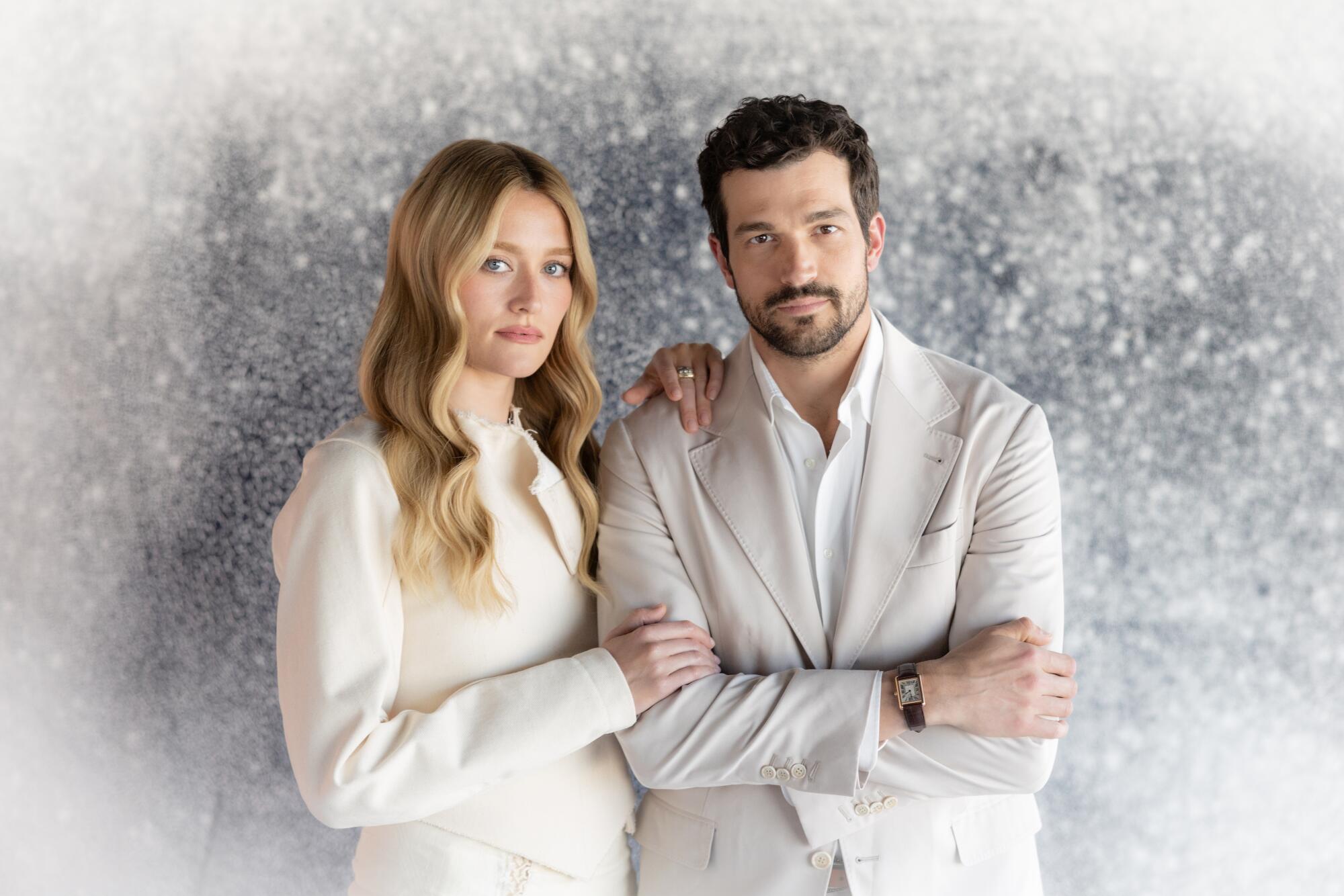
In this week’s episode of The Envelope podcast, “Love Story” stars Paul Anthony Kelly and Sarah Pidgeon open up about inhabiting John F. Kennedy Jr. and Carolyn Bessette — and creating a cultural moment of their own.
Kelvin Washington: Welcome to the next episode of The Envelope, Kelvin Washington alongside Yvonne Villarreal; we got Mark Olsen as usual. And so you, my friend, had a chance to speak with stars of “Love Story” — Ryan Murphy, of course, tackling love with this. So it got me thinking, give me some real-life love stories that you’d like to see portrayed, maybe next season. Some love stories you always found interesting.
Villarreal: This one doesn’t have a tragic ending, and that’s why I want it. And that is Ina and Jeffrey Garten. “Barefoot Contessa”!
Olsen: I didn’t know that there was a great romance in her life.
Villarreal: Mark. You’ve never heard of Jeffrey? You don’t know Ina and Jeffrey. OK, this is why we need it. That man adores Ina and anything that she makes. Chicken, anything. This is a love story I need to see get the full display. I’ve read it in her book, but I need —
Olsen: So like “Julie & Julia.” Julia Child and her husband.
Villarreal: But cuter, sweeter, more adoring.
Washington: Loving the food theme here.
Villarreal: She’ll make anything and he thinks it’s delicious, and she laughs at everything he says, and I just want more of it, and I’m very curious what a Ryan Murphy take on Ina and Jeffrey would be.
Olsen: But see, that’s the thing. A Ryan Murphy take on that would ruin it for you.
Washington: That would be dramatic and spicy. Salacious.
Villarreal: Nothing could ruin it for me.
Washington: You got one?
Villarreal: Yeah, what’s yours?
Olsen: Well, I have two. One is because the sort of the ’90s vibes of “Love Story.” So you would obviously do Kurt Cobain and Courtney Love. And that one would be very exciting and dramatic and very ’90s-ish. But I think for more of a torn-from-the-headlines [version], Taylor Swift and Travis Kelce.
Villarreal: It’s too current.
Olsen: That’s why though.
Villarreal: How about you?
Washington: So I’m gonna stay with your ’90s. Instead of the pop grunge. I’m going to go R&B pop. I’m going to go Bobby and Whitney.
Olsen: I mean, that’s gold right there.
Washington: I’m just saying. You got love, you got fame, you got tragedy. You’ve got stuff that we didn’t know about behind the scenes.
Villarreal: Maybe he could hire us as head writers for each of these seasons and we can all have our say.
Washington: We can all have our own season. So as I mentioned, Yvonne, you had a chance to sit down with Paul Anthony Kelly and Sarah Pidgeon of “Love Story.” How’d that chat go?
Villarreal: They play John F. Kennedy Jr. and Carolyn Bessette, respectively, and it sort of looks at this seven-year tumultuous relationship and what they both endured navigating the spotlight and what that did to them, how they each felt about it. So it was interesting to get the take from Paul and Sarah about how they’re also navigating the spotlight, because I feel like social media fame is quite different than what John and Carolyn were navigating back then. And I was curious to see what it was like for them. So yeah, it was an interesting conversation.
Washington: All right, let’s get into that conversation now.
Sarah Pidgeon and Paul Anthony Kelly, the breakout stars of FX’s “Love Story.”
(Jason Armond / Los Angeles Times)
Villarreal: I imagine doing this series has been a sort of singular experience. What do you want to remember about this moment that you’re in?
Kelly: All of it’s so fun, it’s exciting. It’s definitely, for me, a new muscle that I’m learning to use and explore and stretch and flex. And I get to hang out with her a little bit more. It was wonderful.
Pidgeon: I think it’s just really hard to contextualize what this [is] — [to Kelly] I don’t know if you feel this way too — because there hasn’t been a ton of space from even the show having all the episodes come out. I don’t think I totally understand how this fits into the story of my life. I recognize that we’re experiencing something very exciting. And I think I speak for both of us that we feel really grateful and so honored to have taken on these roles and that it’s resonated and has excited people. But being out and about in New York and someone stops you and says, like, “Are you that girl from that show?” … When you’re making something, it can feel so insular. I remember when I started, I had a freak out sort of midway through like, “Oh, this is actually going to come out. It’s not just about the making of it. People will see it.” I had a huge heat rash. [To Kelly] Remember when we were in Hyannis Port? I just haven’t totally had that perspective. It’s just been very full-on in the most exciting, lovely, happy way.
Kelly: It’s all unfolded in succession. There’s been no period of time to really process. I can’t believe I did it, still. It’s out and it’s exactly the same thing … people are like, “Hey, you’re the guy in that thing, right?” I’m like, “Yeah.”
Villarreal: Has it happened in an awkward way?
Kelly: No, no, it’s all been overwhelmingly positive. I guess that’s best-case scenario, but I still try to walk around with a mustache and glasses and a hat and they’re still like, “Hey …!”
Villarreal: You didn’t try to go to the [JFK Jr.] look-alike contest in New York?
Kelly: Oh, my gosh, no.
Pidgeon: He would have won. That wouldn’t have been fair.
Kelly: It’s too many people. I got the show, so I think I already won.
Villarreal: A big theme of the series is exploring the heavy ramifications of fame on privacy. And aside from the great opportunities that come with doing the press or other things that come along with this, what has it been like adjusting your life to this experience?
Pidgeon: That idea was on both of our minds when we were filming. And we were filming in New York, so apart from the scenes and subject material we were exploring, we actually experienced it in real life as well. You have even more characters in a scene when you’re shooting on the streets of Tribeca and people stop and watch. And there was a lot of interest from the public while we were filming. I’ve been marinating on that idea. Maybe not marinating, but meditating. [Or] a little bit of both. Through our characterization of Carolyn and John, I think we felt those extremes. I haven’t felt anywhere close to that. But I don’t know about you [Kelly], but I feel like I’ve been quite busy going different places, coming on podcasts and things like that where my downtime hasn’t really been spent walking the streets so much. It’s been kind of going home and taking a shower and going to sleep.
Kelly: Same. I haven’t really had much time to go out and just be in the public, which I think has been kind of a gift. I recently had a child, so I have no time between the show and being dad. It’s been really great to live within that little privacy bubble I have at the moment. I’m going to New York for the first time in a little while tomorrow.
Villarreal: Has living in their story made you more conscious of what types of boundaries you do want to set?
Kelly: Absolutely. That was a really great gift of the show. And exploring the exponential setting of what privacy means to people, certainly those two individuals. But now I’ve adopted that within my own life, and it’s like, “OK, yeah, I like to be a private person.”
Villarreal: What about you, Sarah?
Pidgeon: So much, at least for Carolyn, was she was constantly battling this sense of how she was being perceived. And I really admire her ability, whether or not she felt the pressure [to do so] — she never spoke on the record and never had to correct the record despite, in my mind, a lot of those allegations being false in the stories about her. That sense of sort of self-possession is quite admirable and, again, this is so new for the both of us. Being able to embody her, that approach and attitude towards it, is something that’s quite interesting to me. And I mean, it definitely has a lot of self-restraint attached to it, so who knows if I possess that as well.
Villarreal: The love story between John and Carolyn, as well as their fateful flight, generated a lot of media attention. And I know you, Sarah, were a toddler, at the time of their deaths; and you, Paul, were a young boy — and you’re a Canadian. What was your image of them in terms of the lore that surrounded them before making the series?
Kelly: Growing up in Canada, I was familiar with who he was. I became even more familiar with them after living in the States for a while. I was a model before, and I had been told I looked like him, so after being told that, you kind of do a little bit of research. Who is this guy? And I was like, “I don’t look anything like JFK.” But then I realized [they meant] JFK Jr. “OK, maybe; yeah, I do look like him a little bit.” So I became more aware of them after that. But growing up, it definitely wasn’t in my cultural zeitgeist, whatever you want to call it.
Pidgeon: I knew that Carolyn worked at Calvin Klein. I knew they were married. I knew their story. I was such a young child when they passed, but they remained so in the cultural conversation because, especially in 1999, they represented such hope in politics. And they’re such a modern couple, sort of breaking the rules of what those norms are, especially coming from such a storied family that has such legacy in the States.
Villarreal: There’s an overwhelming amount of source material from the Kennedy side, but less so on Carolyn. What proved to be most useful to you? What were the things that you turned to to study or figure out who she was?
Pidgeon: That was such a mystery. [I was] taking these still photographs, mainly paparazzi images — and now that I’ve had a few photos taken of myself, you hold yourself differently when you know someone’s taking a photo of you that you also don’t know. That plus videos of her, very few in which she was speaking. And some of the candid photos, mainly from when she was younger. I sort of laid those on top of each other and then used as many books that I could find and interviews that people would give who knew her. But there’s scarcity in terms of that information. That at times felt arresting, but at other times … there’s a lot of freedom in that. And I think that’s what was so interesting about playing this character that is so well known and yet very enigmatic. Finding her walk and thinking about how that changes over the course of nine episodes and six-and-a-half, seven years. How this woman with so much freedom and anonymity — 26 years old, living in New York City, barreling down these streets in the East Village — then changes when she’s the most photographed woman in America. How that perception changes you physically.
Villarreal: Her walk was very striking for me, because I’m like, I can’t move that way.
Pidgeon: Yes you can. You can get a pair of Manolos.
Villarreal: It won’t look as elegant as you, Sarah, but talk to me about finding that walk because, like you said, it shifts from when the onslaught happens. Did you work with a movement coach? Was that all you?
Pidgeon: Julia Crockett is so incredible. There’s not enough hours in the day to sing her praises. We started with a lot of what I just mentioned, the quotes that people said of how she moved. She spoke with her hands. She could be a fast walker — most people who live in New York are. If there was a video of what I was doing in these hotel rooms, they’d think I was absolutely crazy. Rolling around on the floor, isolating different parts of my body, making it as dramatic as possible, and working it into a circle of attention that felt real. And understanding we were both 5-10, which helps. I think tall women carry themselves in a certain way. But understanding that my body is still my body, and our production I don’t think was particularly interested in doing huge physical transformations in terms of prosthetics or things like that. But getting the shoes, walking around in my spare time in New York in heels, which Carolyn does in the show and Sarah Pidgeon does not. That really changes you and it changes how you feel. And just always having that through line of, “What were the touchstones of Carolyn as a young woman, and where did I want her to end up physically?” You can see it through so many different versions in these different photographs — her hair changes, how she dresses changes, the red lip. I [was] always remembering that there was a journey that I was going on: “How can the world close in on her? What does that feel like?” Also, not only putting it into my body first, but feeling it in my body, imagining that. And what are the images that come up? We thought about [her as a] mossy ball; very tactile, just rolling down these hallways in the Roosevelt Hotel in Hollywood.
Villarreal: Paul, you had about three weeks from when you got cast and when production started. And there’s ample stuff to sift through. How did you figure your way out through the noise? What was the thing that really helped you lock in to who he was?
Kelly: He narrates his father’s book, “Profiles in Courage,” and that for me was a great asset. I had to learn how to use my tongue in a different way than I’ve ever spoken before. His speech patterns are different. I worked with a dialect coach. I would listen to that all day, every day — amongst ’90s alt music, some Nine Inch Nails and stuff because that’s what John would do.
Villarreal: Was that what he was into?
Kelly: I think so. One of my favorite photos of him is a candid photo, and he’s wearing a Nine Inch Nails shirt. I’m like, “My guy! Here we go. I can relate.” I watched a lot of his interviews just to see how he kept his cool and composure. He was a very relaxed individual under extreme stress situations. The Larry King interview was a great one; I relied on [it] a lot. I also looked at a lot of images and saw how he moved through the world. I was a model before so I’m pretty good at understanding how my body moves and how to move it; I also worked with Julia pretty briefly, but she gave me some really great tips and I took those throughout the entire duration of filming and just ran with it.
Villarreal: Are you someone that takes bike as your transportation often?
Kelly: Oh yeah. Four wheels moves the body, two wheels moves the soul.
Villarreal: How is it doing it with the suit on?
Kelly: It’s hot.
Pidgeon: Yeah, you did a lot of that in July during a heat wave.
Kelly: Oh, my gosh, when we started filming, the first scene where John is introduced on the bicycle, we shot that on a Sunday and it was like 103 degrees outside and I’m in a ’90s wool suit. It was great … And a hat. And a backpack. There’s a photo where there’s several hands coming at me with fans and spritzer.
Villarreal: How about finding John and Carolyn together? What did that look like for the two of you, figuring out who they were as a couple?
Kelly: I feel like it happened organically. We had like this unspoken bond and trust with each other from the moment we met and it was just like, “OK, we both understand the assignment.” Then we get to step into these shoes and we understand what that was like, I guess, but just going through it together [helped]. It’s also so well written and it is easy to fall into that. It’s very easy to fall in love with this one every day and then fight.
Pidgeon: Oh, you flatter me.
Villarreal: Because you both were so young at the time that they were a couple, were there modern-day couples of your generation that you looked to in terms of how they dealt with the spotlight? Was there someone you were looking to, to help you understand it?
Pidgeon: I think they were pretty singular, especially considering so much of how we view them as a couple was the time in which they existed. I don’t think I can really point to a couple … obviously there’s a comparison with [Princess] Diana, but I can’t really I put my finger on a couple that had the same essence of John and Carolyn, or the same challenges and obstacles of being a couple in public life. [To Kelly] Can you think of anyone?
Kelly: Not really, no.
Pidgeon: It was also that we were coming in on this advent of paparazzi. Obviously coming from such an important family, there was — and I want to speak for you [Kelly] in terms of how you felt about your characterization of JFK Jr. — but there was so much investment in them as a couple because America, and really the world, had watched him grow up. So of course there is this heightened interest in who America’s son marries. And again, that hope that they were this modern couple, one that we’ve never seen before, and what will they become in this new millennium? In terms of finding them together, what was so wonderful about the writing of the show was they were — granted, it happened in about three or four episodes [for the show’s purposes] — but as we were getting to know each other, so were Carolyn and John. They were falling in love with each other and figuring out what that dynamic was and having those misfirings and miscommunications and moments of intensity and questioning. The amount of times I’ve used the word “meta” while talking about the experience of making this show, that sort of mirrored life in a way. I was able to just absolutely give over to Paul and trust him and be excited working with him every single day and be so curious about who John and Carolyn were that day on set. No one better than Paul Anthony Kelly.
Kelly: Oh, you flatter me.
Villarreal: There are a lot of scenes that are stuff that we’ll never know whether they actually happened. But then there are the moments that were played out in tabloids — one of them is the Bryant Park episode. What can you tell me about what that was like shooting on the streets of New York? What do you remember about that experience?
Kelly: What was it, the Nextdoor app called?
Pidgeon: Citizen.
Kelly: The Citizen app. They called it [a] “domestic dispute” … so we were obviously doing our job correctly. It was interesting. Shooting in New York is a very interesting experience because you have all these outliers just watching and gawking. Everyone’s got phones and cameras and what have you. And we’re so in it and doing it and then to have like this blowup argument over and over and again, take after take, angle after angle.
Pidgeon: I wonder if someone reported us just to be like, “Make it stop!”
Kelly: Yeah, exactly. Nobody tried to save you in the moment. Maybe that was them trying to save you [by posting it in the app].
Pidgeon: That was always something to contend with or accept, really, at a certain point. This is an expectation of working in the city. And what I really liked about that scene was that — considering there was such little videography of her, especially because that was a private moment that was unfortunately caught on tape — they both had less inhibitions. I found it [to be] a really amazing exercise as an actor to finally be able to really take something and mimic it exactly and find how the words that Connor [Hines] had written [aligned with it]; it felt like such a great sign when it felt the writing really matched what I physically knew to be true. Because our interest in the story is what happens behind closed doors, as you said. But in those few moments that we did re-create, the real-life [moments], it felt very reassuring as an actor to feel like the words that we were speaking matched the physical footage. I just found it such an exciting way to go about it, to have it really be this outside-in approach. You take this physicality and vocal pattern that I had developed as Carolyn, but then really have some proof for that to be the jumping-off point. I love that we had that scene; we had when they take their first photo after their wedding; we had, in Episode 9, the [Newman’s Own/George Awards] event. Remember that clip that we watched? We’re in the exact same outfits, and I think it’s the Newman’s Own event. I always appreciated those moments. It felt like a different way in to a character that I had really started to get to know at that point.
Villarreal: Whenever I watch something based on a true story or people that were like historical figures, I can’t help but Google to see if something really happened. Is there something you Googled in the process of making the show where you were like, “Did this really happen?”
Pidgeon: There’s a bit of speculation as to how they met. There’s a couple of different stories. Considering this couple was so well known, the fact that there’s still a mystery into how they even met for the first time I think is quite interesting.
Villarreal: I Googled — and I will say I clearly am not the only one that thought this because there was a whole story of it — “Did they really eat KFC chicken?”
Pidgeon: They did.
Kelly: Fine dining.
Pidgeon: You didn’t eat any chicken.
Kelly: Noooo. I got secondhand chicken. That chicken, oh my gosh.
Pidgeon: They did warm it up a bit, but it was pretty cold, you know.
Villarreal: We can’t talk about this show without talking about the wardrobe, the costumes. It’s such a key piece to the storytelling here. Tell me about that collaboration and what the clothes said to you about who Carolyn is and then who John is.
Pidgeon: Yes, clothes are incredibly important to the story and to how most of the public knows and remembers Carolyn. Working with Rudy Mance was so incredible. What he was able to source, while we’re not necessarily sure if they were pieces that Carolyn herself wore, they were the exact pieces of the exact same collection. The very few pieces we weren’t able to source, they were impeccably re-created. Just the attention to detail, I had never really experienced something like that. It was just really watching a master at work, and the rest of our crew as well; not a detail was ever overlooked. The mystery that we really tried to solve in the beginning was: Wow, there’s so many photos of her [from] ’95, ’96 and beyond; there are far fewer photos of what she looked like when she was working at Calvin Klein. And we’re in that space and that time for quite a while. From the photos that we do have of her living in this time in her life, and then how we know she will dress, what are the through lines? What are the pieces she repeats? I don’t think I wore much Prada in the first two, three episodes, which makes sense, because she was just starting out at Calvin Klein. We [had her wear] a lot of Calvin pieces. What was so insightful to playing her was her sartorial choices and her understanding of how, especially since she never spoke on the record, [and] what she can communicate through fashion and how in those initial fittings, even before I really spoke the words of those episodes, how it immediately changed how I held myself as Carolyn was growing and getting older. I keep referencing this quote about Yohji Yamamoto, a designer whom she wore frequently. He liked making the association with his clothing to armor. I just thought that was such a great way into her sort of mental state and how she approached clothing. It was very her, she wore the clothes. That was something that I had to remember, that if I was going to try and embody her, I had [to] feel like I was wearing the clothes because that’s what really stuck out. You always saw her first, despite her wearing some incredibly beautiful clothing. Carolyn was No. 1.
Kelly: John had such great style. Sometimes it was pretty kooky. I also loved that too because it just is such a sense of him. Working with Rudy was a dream. He and his team were incredible. They were able to source so many things. And if they couldn’t find it, it was a direct re-creation, like exact copy of what it was. I remember even just like those shorts with the Knicks logo that he wears playing football. I remember seeing a comment, “John would never wear those.” [Sighs.] “OK, sure.” There’s something about getting into those outfits that it just was this whole other transporting layer of becoming. You hold yourself differently in these things and it just made it feel more real and you’re like, “OK, cool,” and you just live in it and it feels good and you get slouchy and whatever. It was really nice.
Villarreal: How does your style compare? Did they influence your style now?
Kelly: Honestly, it’s a little different, but it’s not that far off. I feel pretty good in a suit. I like to wear suits a lot. I’m the suited heavy metal guy.
Pidgeon: You also have that cool factor about you too. I think there’s something in that with John. He looked great in a suit, he looked great in a tux, but then there was a bit of an edge to him. There was bit of a realness, I think, that you guys share.
Villarreal: Everyone’s trying to emulate it. So many TikToks of people trying to re-create it. Sarah, do you feel like you can never go back to brunette now? Like this is your thing now? You have to stick with it?
Pidgeon: The blond seems to be working. I like being a different hair color. I don’t think I’ll be blond forever. Simply too much time [involved]. It’s so much work. My colorist is amazing — Kari Hill. Cannot sing her praises enough. And Alex Pardoe, who does extensions. It’s been really interesting to find how I [am as a blond] — so much of my time being blond was embodying Carolyn. [Paul and I] would both sleep on the weekends. We wouldn’t do anything while we were shooting. So I didn’t really get a chance to take a walk in this new hair. And when I started dressing again, to go out, I would put on my favorite clothes from when I was brunette. It’s like, “Oh, it just doesn’t hit.” It’s been cool to see how I present and how color theory is crazy. But we’ll see, I guess it depends on how much time I have on my hands.
Villarreal: The series really grapples with the media invasion that swirled around them. What do you say to the critics that feel that a show like this either reignites that craze or contributes to it? What do you want the takeaway of a show like this to be?
Pidgeon: Thinking about one of the first questions you asked — how are we now dealing with with being potentially recognized — I think the intensity of interest in famous people, famous couples, celebrity, actors, musicians, you name it, artists, it’s changed shape, but it has never gone away. Our intention in making this show was, again, what we know about their lived reality, but what can we infer might have happened behind those closed doors. To the general public, [they were] sort of two-dimensional … I knew very little about Carolyn, but I ingested so many photos of her far before this project was ever on my radar. While I recognize this may have contributed to reigniting interest in them, I hope that that interest feels like there’s a more intimate understanding of these people; that they weren’t just figures, that they were people with very full lives, feelings, a profound sense of privacy, intense relation to each other, very, very human. I guess that would be my answer to that. I hope that this is also a bit of a lens or a mirror that, again, if that intensity hasn’t changed, how might we [change it] in the future?
Ben Gibbard remembers late 2023 as a time of competing realities.
Onstage, the frontman of Death Cab for Cutie and the Postal Service was thriving as his two bands toured together to mark the 20th anniversaries of Death Cab’s “Transatlanticism” and the Postal Service’s “Give Up.”
Behind the scenes, Gibbard’s personal life was in shambles.
“I was getting off phone calls — very difficult phone calls — 20 minutes before going on in an arena,” he says. The singer and his wife, photographer Rachel Demy, were in the middle of an agonizing breakup that would eventually lead to divorce. Yet audiences in the thousands were turning up nightly to see Gibbard reanimate the peak-millennial classics that made him one of indie rock’s defining stars.
“I’d just tell myself, You’re a professional — you’re gonna go out there and do it, and no one’s gonna know,” he recalls. “It was all waiting for me when I got offstage, of course. But for two hours I was able to disconnect and be a performer, which was incredibly …” Gibbard, 49, trails off into a laugh.
“I don’t know if it was healthy,” he says. “But it was helpful.”
Two and a half years later, that split-screen experience — “this idea of how we compartmentalize our pain or our grief or our trauma,” as Gibbard puts it now — forms a through line of Death Cab’s ruminative new album, “I Built You a Tower.” Due Friday from Anti Records, where the group landed after leaving its longtime home of Atlantic amid a corporate shake-up, the LP sets thoughts of broken fences and never-ending storms against tuneful arrangements that can churn, shimmer or chime.
“I pledge myself to your misery / I kneel at its throne,” Gibbard sings in his still-boyish tenor over the sleek new wave groove of “Trap Door,” “Respecting your proclivity / To languish on your own.” In the fuzzed-out “Envy the Birds,” the frontman recounts an argument between two lovers “spraying bullets of grievances”; the driving “Riptides” is narrated by a guy “too tired to end the war.”
“This record is definitely the result of a divorce,” Gibbard says plainly during a recent visit to Los Angeles from his home in Seattle. “But I didn’t want to make a score-settling record or an angry record. This wasn’t an opportunity to defame someone or make this about how I’d been wronged. People drift apart — relationships don’t work. And I think how that’s affected me at almost 50 is a very different mindset than I found myself in when I was 33 or whatever the last time it happened.”
Gibbard means his first divorce, in 2012, from the actor and singer Zooey Deschanel — a split that inspired Death Cab’s 2015 album “Kintsugi,” on which one song asks, “Was I in your way when the cameras turned to face you?” and another chides an unnamed celebrity: “You’ll never have to hear the word ‘no’ if you keep all your friends on the payroll.”
“There’s some gnarly stuff on that record,” says Gibbard, who’d moved to L.A. to be with Deschanel then promptly left as soon as their marriage collapsed. “It’s not exactly a kind album.”
Bassist Nick Harmer, who formed Death Cab with Gibbard in the late ’90s after the two met as students at Western Washington University, agrees that “I Built You a Tower” represents a shift in perspective. “There’s so much more self-examination — and so much more self-indictment,” he says. (Death Cab’s other members are drummer Jason McGerr, guitarist Dave Depper and keyboardist Zac Rae.)
Which isn’t to say that Gibbard entirely resists placing blame. In “Trap Door” he sings about “a trap door in your heart and a button on your desk well-worn from being pressed.”
The frontman says that in recent years he’d “tried to get away from using the word ‘heart’ because that had been a touchstone for so many of our early records.” Yet this line seemed worth holding onto when it came to him.
“I Googled it to see: Did I already write this?” he says, laughing. “Or is there a very popular song called ‘There’s a Trap Door in Your Heart,’ and now I’m just rewriting it? We’ve made a lot of songs at this point — you gotta check your work.”
Indeed, “I Built You a Tower” is Death Cab’s 11th studio LP. After the band’s previous album, 2022’s “Asphalt Meadows,” fulfilled its deal with Atlantic, Death Cab reupped with the major label for one more record, Gibbard says, based on its strong relationship with the company’s then-CEO, Julie Greenwald.
“Julie was our shepherd and our protector the whole time we were there,” the singer says of Death Cab’s nearly two-decade run at Atlantic, which began with 2005’s Grammy-nominated “Plans.” Yet just days after they reached an agreement for “Tower,” Greenwald was fired and replaced by a new leader, Elliot Grainge, about whom the band felt less than optimistic.
Ben Gibbard
(Cielito Mercado Vivas / For The Times)
“We weren’t given the impression that Elliot had spent a lot of time with ‘Transatlanticism’ in college,” Gibbard says of the 32-year-old exec, who made his name signing rappers like Ice Spice and Trippie Redd. With Greenwald’s help, Gibbard says, Death Cab negotiated an exit from Atlantic with ownership of the new album.
Did Grainge try to persuade the band to stay?
“Never heard a word,” Gibbard says.
In an email, Grainge (whose father is Universal Music Group Chairman and Chief Executive Lucian Grange) said that Death Cab’s music “has meant a great deal” to him.
“Working together may not have been in the cards for us; however, that does not lessen my enthusiasm for the band,” he wrote. “They have delivered an impressive body of work over their decades-long career, and I am looking forward to their new music.”
Death Cab’s Harmer says he and his bandmates “talked for half a beat” about putting out “Tower” on their own before thinking better of the idea.
“We’re not businesspeople,” Gibbard says. “Music is the only thing we know how to do.”
At a friend’s wedding in 2024, the frontman had been seated next to the musician Allison Crutchfield, who was then heading up Anti’s A&R department; early this year, Death Cab announced that it had signed to the indie label, whose other acts include Fleet Foxes and Madi Diaz.
This summer, the band will tour behind “I Built You a Tower,” including two shows in August at L.A.’s Greek Theatre. After the “Transatlanticism”/”Give Up” anniversary outing — not to mention a subsequent tour on which the group looked back at “Plans” — Gibbard is “very ready to play some new material,” he says.
Doing the hits was fun. “But at a certain point,” he adds, “it’s really about moving ahead.”
Vegas Golden Knights defenseman Brayden McNabb was forced to leave Game 2 of the Stanley Cup Final on Thursday after taking a puck to his face on a slap shot midway through the first period.
The 14-year veteran, who played for the Kings from 2014-2017, did not return to the game. ESPN is reporting that McNabb was taken from Lenovo Center in Raleigh, N.C., to a hospital for evaluation.
Vegas coach John Tortorella did not have an update on McNabb’s status after his team’s 4-3 overtime loss to the Carolina Huricanes, and the Golden Knights had not provided one as of early Friday morning.
McNabb was defending in front of the net with 9:08 remaining in the first period when a blistering shot by Carolina winger Nikolaj Ehlers hit him in the facial area. Slow-motion replays show the puck may have struck the protective visor on McNabb’s helmet near his eyes.
After crumpling to the ice, McNabb immediately climbed to his feet, skated off the playing area and headed down the tunnel while holding a hand over his nose and mouth.
“It’s a scary play,” Vegas forward Brett Howden said after the game. ”You never want to see that. Just hope he’s doing all right. We haven’t seen him yet but hope he’s doing OK.”
Knights defenseman Noah Hanifin said: “Any time you see that happen to a teammate, especially to a guy like Nabber who is a huge part of this team, a leader, it’s tough. It’s hard to see that happen to any guy on the ice. We’re just hoping for the best for him.”
Born in Davidson, Canada, McNabb was selected by the Buffalo Sabres in the third round of the 2009 entry draft. He played in 37 games for the Sabres and was acquired by the Kings on March 5, 2014. Los Angeles also received Jonathan Parker and a pair of draft picks in exchange for Hudson Fasching and Nic Deslauriers.
McNabb had six goals and 36 assists in three seasons with the Kings before being selected by Vegas in the 2017 expansion draft. This is his third Stanley Cup Final with the Golden Knights, who won the championship in 2023.
In Vegas’ 5-4 Game 1 victory against Carolina on Tuesday, McNabb had three assists for the first time in his career. Ben Hutton and Kaedan Korczak are possible options to take McNabb’s spot if he can’t play in Saturday’s Game 3 in Las Vegas.
A few hours after Lionel Messi and the Argentine World Cup team checked into their training base in Kansas City, a series of thunderstorms pounded the area, knocking out power, felling trees and bringing flood and tornado warnings.
Hardly ideal conditions for the world’s biggest soccer tournament. Yet that’s likely just the opening salvo of a disruptive weather system that could affect the 38-day competition, which kicks off next week with games in Mexico, Canada and the U.S.
“It’s pretty safe to say climate change is going to have a mark on this World Cup,” said Kaitlyn Trudeau, a senior research associate of climate science for Sacramento-based Climate Central. “With climate change we know it’s not just going to be hotter, but it’s also going to increase the humidity as well.”
And that could make this summer’s World Cup one of the last of its kind. Tournament soccer in June and July has been a tradition dating to the first World Cup in 1930, but since then global temperatures in June have warmed by 1.89 degrees, according to the U.S. National Oceanic and Atmospheric Administration. That may not sound like a lot, but it takes many days and nights of extreme heat to move the needle that much.
“It can be a very dangerous situation,” Trudeau said.
As a result, FIFA President Gianni Infantino has already begun discussions on moving the start of the tournament from June to March or October after 2030. In the meantime, early kickoffs, cooling breaks, air-conditioned stadiums and regular weather-related delays will necessarily become common features of the tournament, according to “Pitches in Peril,” a detailed report on the impact of climate change on global soccer, released in the run-up to the World Cup.
“Football’s all of a sudden starting to reckon with the new climate realities,” said Elliot Arthur-Worsop, founding director of Football For Future, a pioneering U.K. nonprofit and co-publisher of “Pitches in Peril.”
“Extreme weather events are becoming more unpredictable,” he said. “The players, the spectators and the officials, they’re all at risk here, especially when it comes to extreme heat. How can we future-proof the game?
“Adaptation looks like moving the entire tournament to another time of year to deal with the extreme weather. Short term it could be moving the kickoff times, it could be introducing more drink breaks, having more heat protocols and safety regulations.”
Some climatologists fear summer events like the World Cup and Olympic Games are just one heatwave away from a major weather-related tragedy. In fact, Arthur-Worsop said his group’s study found that this men’s World Cup, the first held in North America in 32 years, will likely be the last played here.
“By the time the cycle of awarding the hosting rights would possibly come back, our climate projections show that the tournament in its current form would be unplayable due to extreme weather events,” he said. “Not only heat, but other compounding threats such as extreme wind and flooding and wildfires.”
Trudeau worries that whatever adaptations are eventually adopted won’t keep pace with a rapidly warming planet.
“We are basically pushing ourselves to a limit,” she said. “I’m not saying we’re going to absolutely lose the World Cup. But we are making it so much harder to find time to safely enjoy these kinds of events.
“This is not a safe environment and we should not be putting people’s lives at risk just to watch a game.”
FIFA did move the 2022 World Cup, pushing the start of the tournament in Qatar from June to November. Even then the games had to be played in air-conditioned stadiums, though. Three of the 16 venues to be used this summer — in Atlanta, Houston and Arlington, Texas — are domed and climate-controlled.
But the next World Cup, to be held in 2030, will be played mostly in Spain, Portugal and Morocco, where June and July temperatures frequently top 95 degrees. And just one of the likely venues is climate-controlled.
As for this summer’s tournament, a 2025 study published in the International Journal of Biometeorology found that conditions in 14 of the 16 World Cup host cities are likely to exceed the extreme Wet Bulb Globe Temperature (WBGT) threshold, an advanced index used to measure how the human body experiences heat stress.
A weather delay interrupts a Club World Cup match between Auckland City FC and Boca Juniors in Nashville in June 2025.
(Alex Grimm / Getty Images)
But you don’t have to do complicated math to know it’s hot because there’s also the “feels like” index, which registers how your body feels the heat. That can be vastly different from the reading on a thermometer. In Miami, for example, where seven World Cup games will be played, humidity will make an air temperature of 90 degrees “feel like” 109 degrees.
Under those conditions, it becomes more difficult for the body to cool itself.
“We talk about temperatures all the time, but that is only one part of the equation. It’s not including the amount of heat that you might feel from humidity,” Trudeau said. “It’s so important because once it gets too humid, then our body’s main cooling mechanism, sweating, is no longer possible.
“These are the kinds of situations where you have to be really careful. Not just players, but also people who maybe work at the stadiums, people who are watching the matches. It can be a very dangerous situation.”
Playing games in the cooler evening hours could alleviate that but FIFA, in a nod to TV viewers in Europe, scheduled 40 of the tournament’s 104 games, including the majority of games in the knockout rounds, to kick off at 3 p.m. or earlier local time. And though mandatory three-minute hydration breaks midway through each half have been added, Trudeau questions their impact.
“That’s kind of silly to be like, ‘Oh, we’re going to give an extra water break. But we’re going to be doing it at the hottest time of the day,’” she said. “It kind of sends mixed messages, right? What is the main priority of FIFA here? Is it to get the most views and the most revenue and the most whatever? Or is it to actually protect these players?
“We should not be having these in the hottest parts of the world at the hottest times of day,” she continued. “It’s just common sense.”
Chelsea’s Benoit Badiashile puts water on his face before a Club World Cup match against Esperance de Tunis in Philadelphia in June 2025.
(Francois Nel / Getty Images)
FIFA defended the schedule, saying in a statement that climate-related risks are assessed as part of overall tournament planning and managed in close coordination with the host cities, stadium authorities and national agencies.
“Building on experience from recent tournaments, a tiered heat-mitigation model will apply,” the statement continued. “When forecasts indicate elevated temperatures, venues will activate additional cooling capacity, including shaded areas, misting systems, cooling buses and expanded water distribution. Work-rest cycles for staff and volunteers are adapted accordingly, and first-aid readiness is reinforced with clear triage and escalation pathways for suspected heat illness. These measures scale dynamically based on real-time conditions before and during each event.”
Last summer’s FIFA Club World Cup, a 63-game tournament played in the U.S. as a kind of dress rehearsal for this year’s event, gives an indication of the problems ahead. That tournament was plagued not just by high heat and humidity, but also by thunderstorms and lightning that paused or delayed a half-dozen matches in Orlando, Fla.; Nashville; Cincinnati; Charlotte, N.C.; and East Rutherford, N.J.
“The heat is incredible,” said Argentine midfielder Enzo Fernandez, who played in last summer’s tournament with Chelsea. “I got a bit dizzy during a play. I had to lie down on the ground because I was really dizzy.
“Playing in this temperature is very dangerous.”
But if health risks are the primary concern of summer sporting events on a warming planet, they aren’t the only ones. The weather also affects the quality of play, said Norwegian defender Julian Ryerson, who played for Borussia Dortmund in last summer’s club tournament.
“Football is different when you play in this humidity and heat,” he said. “It is really tough. You take some precautions. That’s the only way to go about it.”
As the planet continues to bake, there are also increasingly fewer ways of going about staging a World Cup. You can play it nontraditional times and in nontraditional places. You can play it indoors in air-conditioned stadiums.
Or you can not play it at all.
“We’re running out of options,” Trudeau said. “We have to understand that unless we are going to address human-caused climate change, you’re going to start losing these things that are culturally important to us or economically important.
“We cannot keep doing these things at the rate we’re doing them and the times that we’re doing them in the ways that we’re doing them while we also continue to warm the planet.”
SARATOGA SPRINGS, N.Y. — One thing about the Triple Crown: Fans do not get cheated, at least when it comes to the number of races on the big day.
Just as Churchill Downs did for the Kentucky Derby and Laurel Park did two weeks later for the Preakness, Saratoga Race Course has scheduled 14 races Saturday, highlighted by the Belmont Stakes. It’s the third and final year the Belmont will be run at the upstate New York track while Belmont Park is being rebuilt.
While Laurel started its card at 7:30 a.m. PDT, the Saratoga card follows Churchill’s schedule and begins at 8 a.m. PDT, or 11 a.m. on the East Coast. And, just like the other two headline races, the Belmont is scheduled to start at 4:04 p.m. PDT, or 7:04 p.m. EDT.
It will be the 13th race of the day, with official post time listed at four minutes past the hour.
The biggest difference Saturday from the Derby and Preakness is where fans can watch the races. Fox, not NBC, has the rights to the Belmont.
The first seven races can be seen on FS2 as part of the New York Racing Assn.’s regular “America’s Day at the Races” program, which starts at 7:30 a.m. PDT and continues until noon. The eighth race, at 12:25 p.m. PDT, also will be covered by that crew but will air on Fox.
The network’s official Belmont show begins at 1 p.m. and continues until 4:30. Curt Menefee again is the host, with analysts Tom Amoss and Richard Migliore, plus handicappers Jonathan Kinchen and Chris Fallica, with other contributors such as Charissa Thompson and Tom Rinaldi.
Thompson also will host an alternate telecast geared for horseplayers from 1-4:30 on FS1.
The last of Belmont’s 14 races is set to begin just past 5 p.m. PDT, or 8 p.m. in the East. But don’t worry … FS2 will carry that and it won’t interrupt the Belmont Stakes post-race coverage.
The exact scene in front of me is so famous it even stars on the packet of feta cheese that I bought from the supermarket before sitting down to write this piece.
Yes, Santorini is actually five islands (I didn’t know either).
It was once one larger patch of land, but thousands of years ago a volcano erupted so aggressively that it collapsed in on itself, sinking into the ocean and splitting the area into five fragments.
Known as a caldera, the volcano’s crater sits 400m below the water’s surface — deep enough for giant cruise ships to sail over.
The high perches of Oia, on the main island of Thera, offer a great vantage point for admiring the vastness of this watery pit and the village is also on the right side of the island for catching the most spectacular sunsets.
It gets busy, though, and sadly you can’t just wander to any old bar or viewpoint without booking first or arriving extremely early.
That was the huge perk of my Tui Musement excursion — which also included a visit to local wineries earlier that day.
At the end of my village tour I had a seat waiting for me at one of the most sought-after sunset bars, Sun Spirit, where I drank in clear views of fiery pinks and oranges melting into the horizon.
This same group of seats always remains reserved for customers on this specific Tui tour — as good a reason as any to book.
But before we settled down, tour guide Kim took the experience to new heights, guiding our group to not only the key sights but also the best spots for those all-important pictures, away from the overly busy areas where you’ll have to queue (yes, really) to get your shot.
Crowds are the only downside to Santorini. Its beauty is so widely known that it can attract hordes of tourists, especially on days the cruise ships sail into town.
Lap up the waves at Blue MeltemiThe Sun’s Sophie Swietochowski soaks up the viewCredit: Supplied
That’s why visiting early or late in the season is best — it’s cheaper then, and the heat is more manageable.
Luckily, I had ample opportunity to cool off at my hotel when temperatures soared.
The 5* Tui Blue Meltemi, is set mere yards from the beach in the laidback region of Perissa and is a great spot for lazing.
Even the most basic rooms here come with a whirlpool bath, some inside and others outside.
Plus, there are three outdoor pools, framed by sunloungers and palm trees.
All stays are half-board, meaning you only need to shell out for lunch — but with such plentiful breakfast and dinner buffets, you may not even fancy a midday meal.
Also included in every stay is one dinner at The Culinarium, the hotel’s fancy a la carte restaurant where I opted for a Greek tasting menu that knocked my socks off.
Over several hours, while the sun set, I gorged on creamy orzo, fava bean hummus and a simple salad of cherry tomatoes, an ingredient Santorini produces in abundance.
They are also a staple in Santorini’s must-try tomato fritters.
You can learn to master this traditional recipe, along with other local classics, at a cooking class (£87pp).
Or if you’re more of a sunbathing sort, you won’t regret booking a catamaran cruise that sails through the belly of the caldera to beaches that can’t be reached on foot.
Our talented skippers delivered me cocktails and beer while I soaked up the rays from the wide nets at the front of the boat, admiring the rocky landscape of the islands from a distance.
Forget what I said earlier. It turns out I’ve already found heaven.
GO: SANTORINI
GETTING/STAYING THERE: Seven nights’ half-board at the 5T Tui Blue Meltemi is from £1,091.30pp, including flights from Gatwick on September 30. See tui.co.uk.
OUT & ABOUT: A catamaran cruise is from £131 per adult, including lunch.
A Santorini Wine Lovers’ Tour with sunset is from £96pp.
Tui Musement experiences can be booked via tuimusement.com, at a Tui store or with the Tui rep at your hotel.
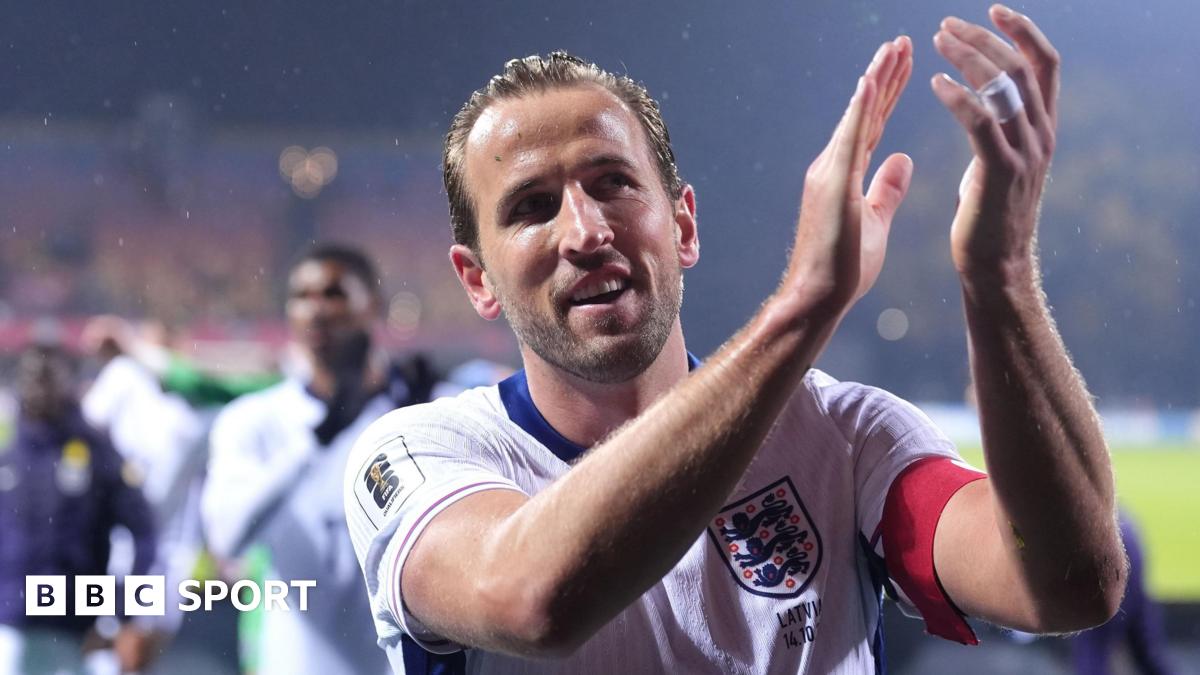
Harry Kane’s final task of the finest season of a magnificent career is to attend to unfinished business as England’s World Cup captain.
Kane is England’s ‘Mr Irreplaceable’ – as proved when Thomas Tuchel’s side were ominously toothless when drawing with Uruguay then losing to Japan in March friendlies at Wembley.
The 32-year-old’s fitness will be Tuchel’s biggest concern as they prepare to start their World Cup campaign against Croatia in Dallas on 17 June, not simply because of his status as England’s all-time record scorer with 78 goals in 112 games, but also because they have no-one remotely in Kane’s class.
If Kane stays fit, and in the remarkable form that brought him 64 goals in 56 games for Bayern Munich this season, England’s hopes will soar.
If not, the reverse applies.
As former England striker Chris Sutton told BBC Sport: “Harry Kane is so important that if he announced his international retirement this afternoon, everyone would instantly view England’s World Cup chances in a different, more pessimistic light.”
Silverware has come late in Kane’s career after barren years at Tottenham Hotspur, when even his stunning goalscoring numbers could not bring glory.
He is now making up for lost time by winning a second successive Bundesliga with Bayern Munich, then scoring a hat-trick as they beat Stuttgart 3-0 in the German Cup final.
And Kane now has his sights set on delivering the biggest prize of all as he leads England on their latest quest to end the search for men’s success stretching back to the 1966 World Cup win.
England’s countdown to their opening World Cup game continues when they play New Zealand in a friendly at Raymond James Stadium in Tampa, Florida, on Saturday (21:00 BST).
Kane has suffered the disappointment of losing successive European Championship finals with England to Italy and Spain, as well as a World Cup semi-final defeat by Croatia in 2018 and a quarter-final loss to France in Qatar.
Now Kane’s stellar form and fitness suggest the time might be right for England and their talisman to overcome the barrier that has brought 60 years of pain.
It’s Broadway’s time to shine Sunday when the 79th Tony Awards take New York City.
Broadcast live from Radio City Music Hall, the night promises plenty of onstage drama and hopefully some real-life intrigue. The number of new Broadway productions this year — 30 — shrunk from last year’s 42, but there are still some standout shows and performances to watch out for, from flashy revivals like “Cats: The Jellicle Ball” to Laurie Metcalf’s stunning turns in both “Death of a Salesman” and “Little Bear Ridge Road.”
Grammy Award winner Pink is hosting for the first time, and though the pop star lacks direct Broadway roots, her songs have been featured in the jukebox musicals “Moulin Rouge!” and “& Juliet.”
Here’s everything else you should know about this year’s ceremony, including how to tune in.
How can I watch?
The three-hour awards ceremony will air live on CBS on Sunday at 5 p.m. Paramount+ premium-level subscribers can also stream it on the app, while those with other membership tiers can watch the show on-demand after it airs.
The annual pre-show, “The Tony Awards: Act One,” will stream live on free service Pluto TV at 3:35 p.m. that same day. It is hosted by Tony Award nominee Laura Benanti and actor Tituss Burgess and includes the first round of Tony Award presentations.
Who is performing?
This year’s opening number, a show-stopping Tonys tradition, will feature more than 170 Broadway performers. It’s choreographed by Sarah O’Gleby and written by Benj Pasek, Justin Paul and Mark Sonnenblick.
As always, casts from the productions nominated for best musical — “The Lost Boys,” “Schmigadoon!,” “Titaníque” and “Two Strangers (Carry a Cake Across New York)” — and for best revival of a musical — “Cats: The Jellicle Ball,” “Ragtime” and Richard O’Brien’s “The Rocky Horror Show” — will perform during the ceremony.
Rachel Zegler will pay tribute to “A Chorus Line” and Tony Award winner Leslie Odom Jr. will perform “Without You” from “Rent” to honor the show’s 30th anniversary as well as those in the theater community who have died this year.
The “Chicago” revival will also celebrate its 30th anniversary on Broadway with a performance from stars including Queen Latifah, who was nominated for an Academy Award for her portrayal of Matron Mama Morton in the show’s 2002 film adaptation, and Tony Awards host Pink. The entire original cast of “The Book of Mormon,” including Tony Award nominees Josh Gad, Andrew Rannells and Rory O’Malley and Tony winner Nikki M. James, will also perform in celebration of the show’s 15th anniversary on Broadway.
Who is presenting?
Notable stars of stage, screen and music presenting awards include Grammy Award winner Megan Thee Stallion, who made her Broadway debut this year in “Moulin Rouge!”; Nicole Scherzinger, who won a Tony last year for her performance in the revival of “Sunset Boulevard”; and Academy Award winner Adrien Brody.
You can find the star-studded presenter lineup here.
What is nominated?
“Schmigadoon!” and “The Lost Boys,” both nominated for best musical, lead the pack with 12 nominations each going into Sunday’s awards ceremony. The “Ragtime” revival trails with 11 nominations, and lauded revivals “Death of a Salesman,” “Cats: The Jellicle Ball” and “The Rocky Horror Show” are each nominated for nine awards.
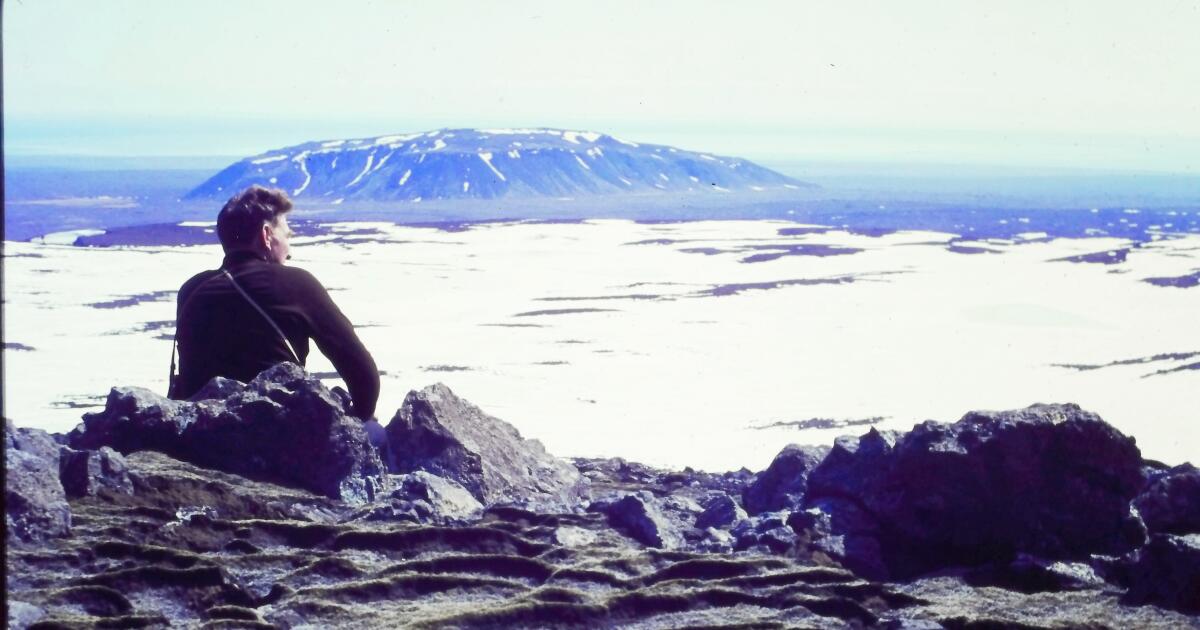
Glaciers aren’t stationary. Immense and imposing, formed through the downward trajectory of water from mountains as it collects and freezes, they have always moved. Now, however, they’re leaving. The demise of glaciers is a fact inherent in all the bad news about the effects of climate change on what once seemed permanent. But for Icelanders, whose connection to glaciers is ancient and mythic, our human epoch has become an extended hospice for the landscape of their lives.
Somehow, though, Sara Dosa’s documentary on this matter, “Time and Water,” avoids playing like a funeral in waiting. Built around Icelandic writer Andri Snær Magnason’s voiced lamentations on a vanishing frozen world, along with archival footage of his family, it’s no simple howl of grief, even when it takes us to a publicly held memorial in 2019 for Iceland’s Ok glacier, the first such “death” diagnosis in the country’s history. Rather, Dosa’s film is a meditation on change — both the kind that we accept with a heavy heart and something more general. “Time and Water” is a curiously vibrant elegy, teeming with appreciation for the intimate majesty that is all life, generational and geologic.
Dosa has finessed this emotional-meets-elemental space before in her Academy Award-nominated 2022 documentary “Fire of Love,” about married volcanologists Katia and Maurice Krafft. That was a wonderfully eccentric romance forged in molten lava. Here, she’s in a collaboration of sorts with her subjects, both human and elemental. Magnason’s opening narration over spectacular footage of glaciers — up close and from far away — gently informs us that we’re watching a time capsule, one where the bonds of family and environment are intertwined.
We learn how Iceland’s glaciers, essentially rivers of varying pace, begat their unique ecosystems, but also how they provided the breathtaking terrain upon which Magnason’s grandparents Hulda and Árni fell in love. (Grandma Hulda was the first woman to fly in Iceland, itself a very cool fact.) The onset of dementia in Árni spurs his grandson to consider what’s lost when the markers of memory depart. “Time and Water” touches on the epic verse called rimurs, passed down via chanted song by Icelandic women, their descriptive, sorrowful tales like dispatches from previous ages.
“Tone poem” is an overused term in cinema, but the humbling “Time and Water,” graced with a playful, atmospheric Dan Deacon score, earns that distinction. Naturally, it helps that you can never tire of all the air-crisped glacier imagery, captured digitally and in 16mm. Folded into the cozy slide-show vibe of Magnason’s home videos and the carefully chosen archival footage, the movie plays like a scrapbook portrait in which home just happens to boast the grandest of backyards.
How much longer will Icelanders enjoy it? The glaciers are predicted to be gone within 200 years. That’s an eternity or a drip, depending on whose survival we’re talking about. Still, “Time and Water” collapses the notion that we are somehow separate from these ancient, essential formations: an encouraging hello to the future from inside a sobering goodbye.
‘Time and Water’
In English and Icelandic, with subtitles
Rated: PG, for some thematic elements, smoking and brief language
Running time: 1 hour, 33 minutes
Playing: Opens Friday, June 5 at Laemmle Royal and Laemmle Glendale
When Nick Antosca was a kid, he didn’t like having good dreams.
“With good dreams, I’d wake up and think, ‘Well, that didn’t happen’ and be disappointed,’” he recalled in a recent video interview. “But with a nightmare I’d wake up with my pulse racing and think, ‘I’m OK, I survived.’ I loved nightmares.”
Chasing that excitement and “healthy” catharsis in his daily life, Antosca has built a career on telling crime and horror stories: “Channel Zero,” “The Act,” “Brand New Cherry Flavor,” “Candy” and “A Friend of the Family.”
His newest project is a 10-episode remake of “Cape Fear” for Apple TV, starring Javier Bardem as Max Cady along with Amy Adams and Patrick Wilson as Anna and Tom Bowden.
“I think everything I’ve done is kind of a psychological horror story about the characters and their relationships,” he says, noting that this is true of the best horror tales like “Rosemary’s Baby,” “The Shining” and “Cape Fear.”
Antosca was a fan of both the original 1962 “Cape Fear” starring Robert Mitchum and Martin Scorsese’s 1991 remake starring Robert De Niro. But he felt it was time for a modern revision, a Southern Gothic fever dream that reflects the complexities of life today.
“The terror in ‘Cape Fear’ is about the destruction of the family,” he says. The story was originally about Cady, a rapist released from prison stalking Sam Bowden, who had interrupted his crime and testified against him. In Scorsese’s version, Bowden had been Cady’s defense attorney who, knowing Cady was guilty, had hidden evidence about the victim’s promiscuity to ensure a conviction and long sentence.
The original features “an all-American archetype of a virtuous family pitted against a monster,” while Scorsese depicted a “broken and dysfunctional family and the monster is even more extreme, he’s like a swamp creature.”
“The previous versions of ‘Cape Fear’ are pretty cut and dry,” Antosca says.
The Bowdens are portrayed by Amy Adams as Anna, Patrick Wilson as Tom and Lily Collias as daughter Natalie.
(Apple)
The new iteration features a sexting scandal, social media eruptions and drones — “there’s more ways to terrorize a family in 2026 and the world is scarier today than it was before” — but that’s not what makes it feel different.
“In our version the truth is more complicated, the past is more mysterious and both the family and the monster are more complicated,” he says. “The truth is murkier and that feels current.”
In this adaptation, Anna Bowden had been Cady’s defense attorney, and he’s no longer an illiterate rube but a successful restaurateur who was convicted of murdering his wife and unborn son. After the trial, Anna scandalously married Cady’s prosecutor Tom; he became stepfather to her newborn daughter Natalie (Lily Collias) and they later had a son Zack (Joe Anders).
“The foundation of their happiness is Max’s suffering,” he says, adding that while the crime was local in the previous versions, Cady’s conviction had been a national sensation in this one.
On the surface, the Bowdens are a perfect family, but cracks are rippling with increasing intensity just beneath, a fragility that will soon be exploited by Cady.
“In the first episodes, the family is permeable and a threat could be coming from anywhere,” he says. “Even if in your gut you think it’s Max Cady, it feels like it’s seeping into the family from all different directions.”
When Cady is suddenly exonerated and set free, he shows up to insinuate himself in the Bowdens’ life. Anna, ironically, works for a nonprofit that seeks to exonerate the wrongly convicted.
“All the versions ask, ‘What would you do to protect your family?’ but this also asks, ‘If an injustice was done to somebody, then what are they justified doing in return,’” he says. “I don’t want the audience rooting for Max, necessarily, but I want to trick them into having sympathy for somebody they didn’t expect to have sympathy for.”
To pull that off, “Cape Fear” needed a star as charismatic as Mitchum and De Niro.
Antosca always dreamed of Bardem as Cady: “When I’d pitch networks before there was a script, I’d say, ‘Picture Javier Bardem in this role.’” But this time, his dream came to vivid life.
The two developed the character together, everything from the explanation for Cady’s Spanish background to his exposure to Santería and prison and his “mutated version of the real religion” to the tattoos adorning Cady’s body to an early scene with a panther and the idea of the “psychological jungle,” which inspired Bardem to incorporate a panther’s physicality into his movement and his eyes.
Antosca always dreamed of Javier Bardem as Max Cady: “When I’d pitch networks before there was a script, I’d say, ‘Picture Javier Bardem in this role.’”
(Apple)
“Javier also asked questions about Max’s emotional history that was useful in shaping his character,” he says. “We wanted to show a little more authentic vulnerability, which we see very much in the previous versions intentionally.”
To make this series, Antosca first approached Scorsese and Steven Spielberg, who had initially developed the 1991 version. “They were incredibly generous and quite involved,” Antosca says. “They encouraged us to forge our own path.”
The one place they urged some fidelity to the past versions was in the score. “They said the Bernard Herrmann score is part of the DNA and feels like a character in both movies,” says Antosca, noting that Elmer Bernstein adapted the original in Scorsese’s version and Jeff Russo used the same starting point this time around.
Scorsese discussed episodes over FaceTime and Zoom, spending time dissecting a vicious fight scene while Antosca was editing it; shot in color but shown in black-and-white, the blood splattering may make you think of “Raging Bull,” but Antosca says the visceral violence was meant to call up “Casino’s” vise scene.
It may be nearly too much to handle, but Antosca is from New Orleans and says he found it easy to exploit the Southern Gothic sensibilities. “Everything is heightened in the Deep South and we were going for that energy, where something is adjacent to the real world but more saturated, sweatier, more feverish,” he says, noting that while the first episode is “cinematically pretty grounded and traditional, when the family gets shocked out of their comfort zone, things get a little crazy.”
That meant handheld cameras, flares, saturated colors, distortions, negative imagery and odd angles to reflect the growing sense of terror. Antosca promises that in the back half of the series, the show will get even wilder and more destabilizing.
“It just feels like there’s violence in the humidity in the South,” he says.
Subconsciously hearkening back to his childhood sleep experiences, he adds, “I wanted this story to feel like a nightmare that just keeps getting worse and worse and worse and worse.”
This is San Diego’s backyard, a condensed, flatter version of Griffith Park, but with more historic buildings, more museums and a zoo with a global following. If you’re a Balboa Park rookie, start with the San Diego Zoo, which may take your entire day. (Admission: $68-$74 per adult, $58-$64 per child age 3-11.) If you’ve already done that, well, it’s lucky for you that the zoo is less than 10% of Balboa Park’s 1,200 acres, and the park’s other institutions have been growing and changing.
The park’s emblematic 1914 Botanical Building is open again after major reconstruction that ended in late 2024. The Mingei International Museum, which focuses on global folk art, won Michelin praise in 2023 for its eclectic restaurant, Artifact at Mingei (which serves lunch Tuesday through Sunday, dinner Thursday and Friday).
The park’s museums and other institutions cover art (fine, folk, contemporary and photographic), natural history, anthropology, flight, model railroading and all the imagined worlds that come with Comic-Con (which opened its museum here in 2021).
The Old Globe theater complex includes three stages. The big lily pond between the promenade and the Botanical Building may be the most wholesome over-the-counter tranquilizer in town. The Centro Cultural de la Raza, housed in an enormous former water tank, covers Chicano, Latin and Indigenous culture. The park’s Japanese Friendship Garden & Museum fills 12 acres with greenery, koi ponds and bonsai displays.
If you’re planning to hit several museums over a couple of days, look into a park Explorer Pass, which might save you money.
About parking: In January, after years of free parking, the city imposed a fee system charging non-residents $10-$16 per day and residents slightly less. San Diegans rose in outrage, and in late May city officials announced a plan to end the parking fees by Jan. 1, 2027.
More than 20 years after Michael Jackson was acquitted on charges of child molestation — and two months since the global superstar’s record-breaking biopic skirted any mention of abuse allegations — a new Netflix docuseries brings his trial and the aftermath to the foreground.
“Michael Jackson: The Verdict,” a three-part documentary directed by Nick Green and released Wednesday, chronicles his 2005 trial in Santa Maria that began with a search raid of the pop star’s sprawling Neverland Ranch and ended with a jury finding him not guilty on 10 counts, including four counts of child molestation. At the center of the case was Gavin Arvizo, a then-15-year-old cancer survivor from Los Angeles.
Because recording was not allowed in the courtroom, the documentary relies heavily on archival footage from media surrounding the trial and firsthand accounts of key figures involved, including prosecutor Ron Zonen, Jackson family attorney Brian Oxman, journalist Diane Dimond, two trial jurors, and friends and supporters on both sides of the case.
The episodes also delve into the 2003 documentary “Living With Michael Jackson,” in which the pop star is interviewed by British journalist Martin Bashir, that sparked questions about his behavior, leading to the charges against Jackson. Jackson’s historically questionable relationships with children, the media circus surrounding the trial and the effect it had on fans, the family at its center and Jackson himself are explored, too.
Here are six key takeaways from “The Verdict.”
Jackson allegedly had his personal assistant order child pornography
One of the docuseries’ most revealing interviews came from Vincent Amen, a former Jackson associate who worked at Neverland Ranch from 2002 to 2003. He said he was put in charge of taking care of the Arvizo family during their stay at the property following media backlash from Gavin Arvizo’s appearance in “Living With Michael Jackson.”
At that time, Amen said, he “wholeheartedly” believed in Jackson’s innocence, especially because Jackson’s friend Frank Tyson, also known as Frank Cascio, a member of the family who filed a lawsuit against Jackson’s estate in April detailing alleged sexual abuse, vouched so strongly for him. Cascio, who met Jackson when he was 5 years old and later became his personal assistant, told Amen, “Michael would never do this with a child.”
Amen’s conviction shifted, however, after he discovered a disturbing magazine that apparently belonged to Jackson in Cascio’s possession.
“Frank cleaned out his house of anything that came from the Neverland Ranch. And he hands me a Nike bag,” Amen said in the docuseries. “I took the bag and I’m driving home, and I felt, ‘Something’s a little suspicious.’ And I said, ‘Let me take a look in this bag.’ I start taking videos to document this. I open the bag. I start looking, and I see a magazine.”
The series shows shaky footage of Vincent apparently finding a nudist magazine called “Naturally.” He flips to a video ordering section with titles circled in black marker, including videos called “Nudist Youth Weekend” and “Euro-Nudist Family.”
“I confronted Frank, I said, ‘Frank, what is this magazine? Because, you know, there’s circles around videos with naked children,’” Amen recounted. “He said, ‘That’s just a phase that Michael and I went through. He circled the videos that he wanted, I ordered them, and it was a phase that we went through.’ They watched them together.”
The Arvizo children called Jackson ‘daddy’ and had their own bizarre nicknames
Along with footage of the nudist magazine, Amen held on to other evidence of his time with Jackson and the Arvizo family, including a set of Polaroid pictures featuring Gavin’s mom, Janet, and younger brother, Star.
In one, Star points directly into the lens. It’s captioned, “You my daddy Michael.” Another photo of a smiling Janet and Star includes a handwritten caption from Janet that says, “Dearest loving Michael, we appreciate you being our family. What God brings together, no man can undo. We love you.”
Under a photo of Star with a cross-eyed expression, he wrote, “I love you, my daddy Michael. Your son, Blowhole.”
“These are the nicknames that Michael would give these young boys,” Amen said.
Bashir documentary marked a pivotal shift in the perception of Jackson
Martin Bashir in “Michael Jackson: The Verdict.”
(Netflix)
Though the first allegations of child molestation against Michael Jackson emerged in 1993, it was footage from Bashir’s “Living With Michael Jackson” that ignited public concern about Jackson’s relationship with Gavin.
In a pivotal scene from the 2003 documentary, Jackson brings Gavin in as an example of a child with cancer that he helped. Gavin, 13 at the time, leans his head on Jackson’s shoulder and holds his hand. Jackson tells Bashir that the two often share a bed at the Neverland Ranch, though in another scene he stresses that it’s not sexual.
“I realized that we had something that was hugely significant, but I didn’t realize the extent of the bombshell until the broadcast,” Bashir recalled in “The Verdict.”
“You can see it. You can look at that moment in the Martin Bashir documentary and you can actually pin the end of his life to that very moment,” J. Randy Taraborrelli, Jackson’s childhood friend and biographer, said in the docuseries.
Given Jackson’s stardom, news and tabloid media swarmed the scene of the trial along with droves of dedicated fans (and a much smaller contingent of detractors). And the archival footage from “The Verdict” shows the extent to which fandom and media frenzy influenced the proceedings.
Jackson’s fans stationed themselves throughout the route he’d take to the Santa Maria courthouse with signs showing their support, sometimes standing and shouting and other times driving alongside him and honking. Jackson had his director of security, Kerry Anderson, film these drives while he waved and engaged with supporters.
As many as 1,000 fans showed up on the first day of the trial, and many would line up starting at 5 a.m. for raffle tickets that would allow them to enter the courtroom. One fan interviewed for the docuseries, Sheree Wilkins, said she quit her job as a preschool teacher to move to Santa Maria for the trial. When the “not guilty” verdicts were announced, she fainted and had to receive medical attention.
TV news stations from around the world, including Taiwan, Japan and Mexico, sent crews to cover the trial.
Even inside the courtroom, where cameras were not allowed, enthusiasm for Jackson’s music could not be contained. Attendees recalled everybody, from the jury to the judge and even the prosecution, “swaying in their seats” when songs played as part of an evidence display.
“I remember me moving in time to his music,” prosecutor Ron Zonen said. “At one point Tom [Sneddon, the District Attorney leading the prosecution] jabbed me and said, ‘Would you stop moving your foot?’ ”
Jackson’s mental and physical health deteriorated
Mark Geragos briefly served as Jackson’s defense attorney.
(Netflix)
According to numerous interviews in “The Verdict,” Jackson’s substance use was problematic before and during the trial.
Jackson was not at Neverland during the raid that predated his charges. According to journalist Dimond, her sources said he was in Las Vegas “having wild parties.”
“There were cigarette burns in the leather couches and chairs. There were empty liquor bottles on every table. And this is where Michael Jackson had been for several days, entertaining young teenage boys, who all spoke German,” she said.
Later, Jackson’s well-publicized physical pain became the catalyst for controversy when he was hospitalized overnight, where he was allegedly given enough pain medication “to tranquilize an elephant,” and failed to show up on time for court the next day. The judge threatened to issue a warrant for his arrest if he didn’t make it to the courthouse within the hour, leading Jackson’s team to speed there at 90 mph.
Throughout the trial, stress took an enormous toll on Jackson, defense attorney Mark Geragos said in the docuseries.
“I watched him just disintegrate, literally disintegrate. The ingestion of substances was just astronomical. There was a time when I actually saw him in the fetal position on the floor, and I thought, ‘What do we do?’ I mean, you don’t want his death to be on your hands because you took some inaction,” he said. “We had genuine concerns whether he could even withstand a trial — physically, mentally.”
The prosecution’s case fell apart at the hands of key witnesses
“The Verdict” lays out, step by step, how the trial ended in Jackson’s full acquittal. One major contributor, the docuseries seems to argue, is the downfall of the prosecution at the hands of its own witnesses.
Defense attorney Tom Mesereau was an expert at discrediting witnesses, subjects told the filmmakers, but certain key witnesses, like Janet Arvizo, struggled to connect with the jury on their own.
“I called her Janet from another planet,” admitted juror Melissa Herard. “Sorry, but that’s just how she acted.”
Jackson’s ex-wife Debbie Rowe was meant to take the stand as a smoking gun for the prosecution but instead revealed no new information and came to Jackson’s defense.
The prosecution also partially hinged its case on past allegations of child sexual abuse against Jackson, but conflicting testimony caused these efforts to backfire. A former Neverland employee claimed to witness Jackson molest Wade Robson when he was a child, but Robson took the stand and denied anything happened.
“It’s hard to convince a jury when the subject of the act itself said it didn’t happen,” Zonen said.
In 2013, Robson reversed his stance and filed a lawsuit against the Jackson estate alleging sexual abuse. His allegations, along with those of James Safechuck, were the subject of the 2019 documentary “Leaving Neverland.”
A day after California’s primary election, President Trump took to social media with baseless claims of election fraud — predictable, but also dangerous.
“Look what’s happening in California, the Dumocrats, right before our very eyes, are stealing the Vote,” Trump wrote in one post.
“There’s BIG cheating by the Dumocrats in California,” he wrote in another, apparently enamored of his latest juvenile slur.
California has once again become the main dish on Trump’s buffet of bull-hockey as he continues to undermine democracy and consolidate authoritarian power, using this disingenuous and patently untrue narrative that American elections are rigged by shadowy Democratic forces working in collusion with illegal immigrants.
The twist this time is that Hilton, the man who wants to represent all Californians, seems to be jumping on the election fraud conspiracy train with the president. I get it, there’s the MAGA base to feed, and it’s a base that feasts on outrage and fakery. Serving up resentment glazed with lies and propaganda has been the MAGA playbook for years under Trump, a strategy that no one can deny has been heartbreakingly effective.
But Hilton is a smart man and must certainly know that voter fraud is rare, to the point of being inconsequential to election outcomes. Hilton by his own admission understands voting patterns, and that in this cycle, Republicans have voted early and often by mail, despite Trump’s claims that all vote-by-mail should be suspect. So Hilton understands that early votes have skewed his way, and that later vote tallies will likely favor Democrats.
And Hilton is definitely intelligent enough to expect that in a state where Democrats outnumber Republicans nearly three to one, he will not keep the top spot in this primary, and a slim chance remains that he will not make it into the top two. That’s just simple math.
So if Hilton truly seeks to represent this state as its top elected executive, now is the time to renounce election fraud myths and stand up to Trump’s lies. If Hilton can’t say that he believes our recent election was free and fair, then he has no business being our governor.
Unfortunately, that doesn’t seem to be the path he’s taking, even as it seems increasingly likely that he will advance to the general election.
This week, speaking with far-right podcaster and former Turning Point USA creative director Benny Johnson (who was allegedly duped into working for a Russian influence operation), Hilton said that while “so far we’re not seeing any signs” of cheating, “we’re going to be all over it. We’re not going to let them do that.”
Hilton was responding to a question from Johnson on whether Hilton will sue over “cheating.”
On a post-election appearance with Laura Ingraham, the conservative Fox News host who has repeatedly promoted the Great Replacement Theory, Hilton delved into more conspiracy.
“Just to really underline the point that you made about the corruption,” he told Ingraham an anecdote about supposed fraud in a previous election cycle when a “whistleblower” at the post office told him that they were instructed that a handwritten postmark was acceptable when sorting ballots to deliver to the county registrar.
“It’s just unbelievable, and of course, that’s why so many people don’t believe the results, but it just undermines confidence,” he told Ingraham, certainly knowing that the post office forwarding a ballot on to a county registrar in no way means it will be certified or counted. Would we really want the USPS deciding which ballots to deliver? Disingenuous on Hilton’s part at best.
“The whole thing is a joke,” Hilton went on to say of California elections, which of course, is absurd.
Thursday, when I asked Hilton’s team to speak with him about his views on voter fraud, they sent back a response that focused on the slowness of the California vote count; voter rolls Hilton has described as “wildly inaccurate,” which is a wildly inaccurate claim; and two instances of actual fraud with voter registration — not examples of votes that were counted.
To be sure, all those items are important. Any malfeasance should be punished, and the system should always strive to improve.
But how hard is it to simply be against fraud, while accurately acknowledging that it is rare and our current system provides accurate results?
I am against voter registration fraud. I am against vote fraud. I am absolutely pro-democracy, including policies such as mail-in voting that increase participation.
I do not believe that there is widespread fraud in the California primary, or in American elections in general, because the evidence does not support that conspiracy. I do not believe that Democrats are running a decades-long, nationwide conspiracy to replace white voters with votes from Black and brown undocumented immigrants, because that is both false and racist.
Pretty basic stuff, and statements in line with the values and common sense of the majority of Californians Hilton says he will represent.
If Hilton can’t come out and clearly say that Trump is wrong — about fraud and about the Great Replacement Theory — can he really be trusted to represent the values of the Golden State?
To the surprise of few, President Trump has once again claimed without evidence that Democrats are somehow cheating to win California’s primary elections — writing on social media late Wednesday that federal prosecutors in Los Angeles are investigating the matter.
“The Dumocrats are at it again! They are trying to STEAL THE GOVERNOR OF CALIFORNIA PRIMARY, AND THE MAYOR OF LOS ANGELES, PRIMARY, AWAY FROM TWO GREAT REPUBLICAN CANDIDATES. Here we go with the very late and massive numbers of MAIL IN BALLOTS,” Trump posted to his social media platform Truth Social.
“There’s BIG cheating by the Dumocrats in California. Votes are all tied up. May not be in for weeks. Under investigation by the U.S. Attorney’s Office in Los Angeles,” he wrote in a second post. “Why the vote counting DELAY???”
A spokesperson for the U.S. attorney’s office in Los Angeles — run by Trump loyalist First Assistant U.S. Atty. Bill Essayli — declined to comment Thursday morning on Trump’s claims of an investigation.
California Secretary of State Shirley Weber’s office also did not immediately respond to a request for comment.
Gov. Gavin Newsom’s office responded directly to Trump late Wednesday with its own social media post, writing, “Trump is lying about California again — time to take the phone away from grandpa and put him to sleep.”
On Thursday morning, Newsom’s office wrote that there “is a lot of misinformation floating around about California’s election — including from the President,” and recommended people watch a CNN video about California’s election process. It concluded that delays in vote counting in the state are essentially a result of state leaders deciding that providing voters with “last minute options” for casting ballots is more important than a quick count.
“And yes, for the record: we wish the votes were counted faster, too,” Newsom’s office wrote — a nod to the fact that the issue isn’t new.
In an email, Brandon Richards, Newsom’s deputy director for rapid response, said Trump’s claims are part of “a tinfoil hat level conspiracy theory that has been debunked repeatedly.”
The president’s claims of cheating were predicted before the election by both elections experts and Democratic leaders in California, who dismissed them in advance as more baseless bluster from a president beset by low approval ratings.
A worker puts ballots in a counting machine at the Los Angeles County Ballot Processing Center on Wednesdayin City of Industry.
(Kayla Bartkowski/Los Angeles Times)
Those same experts and Democratic leaders acknowledge that California’s system for counting votes takes a long time and should be quickened, but stress that is not because of anything nefarious. Rather, it is because California allows voters to cast ballots by mail up until election day — and then has to count those ballots, which can number in the millions and are subject to manual signature verification.
Trump has long dismissed such explanations. An election denier since he first entered politics more than a decade ago, Trump has pushed skepticism about elections he and his party lose time and again since — most notably when he claimed, again without evidence, that the 2020 election he lost to Joe Biden was stolen.
Trump even challenged Biden’s victory in court, but his claims were rejected completely because neither he nor his attorneys could produce any evidence substantiating them.
He has combined his tactic of targeting undocumented immigrants for political gain with his skepticism of election integrity by claiming, again without evidence, that such immigrants somehow vote in large numbers, particularly in big blue states such as California, despite experts saying there is no evidence of that.
He has alleged that mail ballots — such as those used by the majority of California voters — are a particularly rich source of voter fraud, despite again having no basis for the claim and it being disputed by experts.
A consistent feature of his election fraud claims is that they arise and target races only when Republicans lose or lose ground.
And, he has tried to use the power of his administration to make sweeping changes to election laws to bar mail ballots and require strict voter ID and proof of citizenship measures, despite the control of elections and their rules being constitutionally given to the states.
Those efforts have prompted a wave of litigation between the Trump administration and California and other blue states, with multiple cases pending in the courts over voter ID, proof of citizenship, mail balloting and the role that the U.S. Postal Service may be allowed to play in processing such ballots.
Trump’s latest remarks came as additional vote counting on Wednesday narrowed the advantage of Republican Steve Hilton over his Democratic challengers in the California governor’s race and closed the gap in the L.A. mayoral race between the MAGA-aligned candidate Spencer Pratt, currently running second, and City Councilmember Nithya Raman, who is running third.
The trend was anticipated. Elections experts warned before vote counting began of the potential for a “red mirage,” wherein earlier voting among Republicans and late voting among Democrats — many of whom were unsure of whom to vote for in the two high-profile races — would create an early illusion of Republican victories despite large volumes of liberal votes from major population centers still to be counted.
It is a trend that has played out repeatedly in past elections, and one that does not come as a surprise to careful elections watchers.
Elections officials in California knew such claims were going to be made, as they’ve been made in the past. Some local elections officials made a point of preparing their staffs for baseless claims of election fraud in advance of this year’s primaries. State officials made repeated efforts to explain the reasons why California elections take time, precisely to undercut claims amid counting that the delays were the result of fraud.
But those claims have come regardless, and not just from Trump.
Above an X post Wednesday suggesting Pratt was losing ground to Raman as more counts came in, Florida Gov. Ron DeSantis wrote, “California keeps dumping votes. Odds are shifting because the vote dumps always seem to go one way. Count until you get the result you want?”
Above another X post Wednesday noting that the California count would take time, Katie Miller, a former Trump administration official and conservative podcaster married to Trump’s top advisor Stephen Miller, wrote, “The Democrats are about to steal the LA mayoral race once again using mail-in voting.”
Both of the posts that DeSantis and Miller were responding to were from Polymarket, a prediction market where people can bet on the outcomes of political races, pop culture events and a slew of other subjects.
Such emerging financial markets, which process billions of dollars in bets, are causing rising concerns about political meddling for profit — including by campaign staffers and other individuals with insider knowledge of polling and other campaign information, or by politicians and their operatives, whose public remarks about politics can swing those markets.
Katie Price has revealed details of her last phone call with husband Lee AndrewsCredit: Katie Price / BackgridLee is said to be in Al Awir prison over a civil matterCredit: Instagram
But after she spoke to him, it emerged he “needs a six-figure sum” instead.
And now Katie has shared her fears for Lee, saying she was worried he would not be released anytime soon.
Revealing details of her last phone conversation with Lee, Katie said: “I’m absolutely knackered, it’s the second morning because I spoke to Lee yesterday and he wants me to go to the Al Awir prison because he’s given me permission to get all his phones, his belongings.
Katie said Lee’s given her permission to ‘get all of his phones and belongings’Credit: wesleeandrews/InstagramKatie said she was exhausted as she continues to fight to get Lee out of jailCredit: Instagram/@wesleeeandrews
“So I’m going there now.
“I still need to hear back from his lawyer if I can get a visit to see him.
“It’s Wednesday and I go on Friday… time is running out.”
Katie admitted she was now able to reach her husband because she had a Dubai number for him in prison.
“I’m feeling knackered today, I’m excited, but excited for what? Because I don’t know if I’m seeing Lee but at least I now know he can ring me, I’ve got the Dubai number so at least I know he can ring me,” she added.
“So let’s go to the prison again.”
The previous day, Katie posted a clip while at a hair salon in Dubai as she told fans she was “all glam, just to go to bed and chill”.
She said: “The time is half five, I’m going to go back to the hotel, get in bed and watch telly all night until tomorrow morning.
“That’s so bad, coming to Dubai and I’m going to bed at half six in the evening, that’s shocking.
“I could go and party, have a drink, but I’m happy to go back to the hotel for a cup of tea in bed.”
Acclaimed German director Wim Wenders announced he was withdrawing his 1975 film, “Wrong Move,” from distribution due to a scene featuring then-13-year-old actor Nastassja Kinski topless.
Kinski played Mignon, a mute acrobat and street performer, in the film. In the controversial scene, she is featured lying on the bed topless as she tries to seduce her 30-something co-star Rüdiger Vogler, who plays Wilhelm.
Wilhelm enters the room, removes most of his clothing and gets into bed with her, slaps her, pushes her away and then caresses her face and cradles her.
In a 1997 USA TV interview, she was candid about wishing some of her work could be scrubbed from the screen permanently, saying, “I’ve done quite a lot of movies, a lot of movies that I want to just go and burn someplace. You always calculate ‘how much would that cost? How would I do that?’ and just know it’ll exist forever. It won’t be showing all that much, but just the fact that it’s there and it’ll exist.”
She told W Magazine the same year, “If I had had somebody to protect me or if I had felt more secure about myself, I would not have accepted certain things. Nudity things,” Kinski said. “And inside it was just tearing me apart.”
Per the Hollywood Reporter, Wenders received a lifetime achievement award at the German Film Awards last week and addressed the “Wrong Move” issue in his speech, saying that he would not shoot the scene today. He also said that he knew that keeping it in the film had continued to cause Kinski pain.
“I can’t blame the 29-year-old young man I was then, 50 years ago, who made a film of his time; wanting, in a way, to capture the zeitgeist,” he added before calling on the members of the German Film Academy to debate the issue and aid him in finding a resolution.
On Wednesday, the “Perfect Days” director issued a statement that was posted on social media saying that he would withdraw the film from all current forms of distribution.
“As the only person responsible at the time for Wrong Move who is still here, I recognize that Nastassja Kinski should have been better protected back then. For that, I apologize to you, Nastassja, unreservedly, no ifs and buts.”
Wender said that “the many reactions, comments, and conversations of recent days” had a played role in shifting his perception of the issue but that society must find appropriate ways of dealing with controversial film works from the 20th century.
“Only after that process has taken place — even if it takes considerable time — and once we have been able to present a mutually agreed solution, which will include Nastassja Kinski, will we make the film available again.”
Kinski commented on Wenders’ statement on Wednesday. The following has been translated from German:
“Wim, after all that, all those years, only because the public has now commented in so many newspapers, as well as colleagues, and now because thousands — even though I asked for so long — only now because of the public, do I read THESE words from you, W. Wenders: ‘Nastassja, back then 13 in the first film, Wrong Move.’ ”
Nothing could possibly generate a headline Tuesday night when the worst American League team — the Angels — played host to the perhaps the worst National League team — the Colorado Rockies.
Except. . .
This.
A fly ball conked Angels right fielder Jo Adell on the head and bounced over the fence for a home run, reminding fans of José Canseco’s similar gaffe 33 years ago.
The ball caromed back into the outfield and Rumfield momentarily stopped at second base. But the umpires confirmed the home run, coupling Adell with Canseco in numerous social media posts.
Canseco, the steroids-fueled, defensively challenged left fielder of the Texas Rangers, made a similar blunder on May 26, 1993, when a ball hit by Cleveland’s Carlos Martínez bounced off his head and over the wall.
Mike Trout presumably has witnessed every possible blooper, blunder and boo-boo in 16 seasons with the woeful Angels. The center fielder stood only a few feet from Adell when this one occurred and did not make himself available for comment afterward.
To his credit, Adell faced reporters.
“It looks like I’ve never played in the field before, which is disappointing, because it’s beyond the truth,” he said. “I’m the only one that really knows what happened. I was out there, and it happened to me, so it is what it is.
“It was kind of the icing on the cake, because I was [expletive] all the way around the whole day today.”
Adell was hitless in four at-bats, striking out twice, in the 8-2 loss that dropped the Angels to 23-39, the worst record in the AL.
The play was emblematic of Adell’s seven-year career with the Angels, who made him a first-round draft pick in 2017. At first blush, his lifetime Wins Above Replacement of 0.3 would indicate that he’s little better than the fictional minor league “replacement player” to which MLB players are compared in calculating the statistic.
Yet Adell’s physical tools and occasional highlights scream stardom. He shouldn’t be an ordinary Jo. The antithesis of the embarrassing episode Tuesday night came less than two months ago when he robbed the Seattle Mariners of three home runs in one game.
“It was the Jo Show,” Angels manager Kurt Suzuki said at the time. “This guy works as hard as anybody I’ve ever been around. His work ethic, attention to detail, his desire to improve every single day. To see him do that, I don’t believe you’ll see that again.”
Suzuki, who was Adell’s teammate in 2021 and 2022, likely never thought he would see a fly ball bounce off the outfielder’s head and into the stands, the Jo Show shifting to Oh, No!
“I saw the play, but for me, Jo’s made great strides defensively from when I played with him,” Suzuki said Tuesday. “And obviously, he had the night he robbed three home runs. It was a tough play tonight, but at the same time, the strides that he’s made defensively have been great.”
Adell was considered a defensive liability early in his career and was saddled with a four-base error in 2020 when a fly ball hit his glove and went over the fence. But he steadily improved and became a Gold Glove Award finalist in 2024.
That didn’t stop the “Tarps Off” throng of shirtless fans at Angel Stadium from chanting Adell’s name after the gaffe against the Rockies. For his sake, they likely will revert to imploring Angels owner Arte Moreno to “sell the team” soon enough.
Adell might have to stay away from social media forever, but he would like to forget the ball bouncing off his head as soon as possible.
“That’s what we have to do,” he said. “I mean, there’s really no other way around it. Let it fester and tumble over, but these are plays I’ve made hundreds and thousands of times. I’ve got to just keep going, and as a team, we’ve got to keep going.”