Latvia is not expected to shift its pro-Europe and pro-Ukraine trajectory, but coalition negotiations could be complex.
Published On 3 Oct 20263 Oct 2026
Polls have opened in Latvia for an election taking place against the backdrop of perceived security threats from Russia and a nationwide cost-of-living squeeze.
Saturday’s vote is the first electoral test for Prime Minister Andris Kulbergs after coming to power in May this year when his predecessor resigned due to a backlash from stray drone incursions from Ukraine.
Recommended Stories
list of 3 itemsend of list
Kulbergs, whose right-wing United List party is currently polling at about 20 percent, is expected to hold onto his position, but the decline of two allies in his current coalition means he is set for a complicated negotiation over the makeup of any future government.
Polls opened at 05:00 GMT and will close at 17:00 GMT. The results are not expected to change Latvia’s pro-European and pro-Ukrainian course.
A woman holds an election campaign leaflet of the Latvia First party with a picture of the party’s leader, Ainars Slesers, before the general election [File: Ints Kalnins/Reuters]
About 1.5 million people are eligible to vote in the country’s 11th parliamentary election since independence from the Soviet Union in 1991.
Latvian politics are highly fragmented, with parties rarely seeing above 20 percent vote share and coalitions being the norm.
This year, 14 electoral lists are contesting the election, but polls indicate only seven are likely to enter parliament, with the rest expected to fail to meet the minimum 5 percent vote threshold.
Rising living costs, low wages, strains on the healthcare system and long-term population decline have all featured prominently in campaign debates.
Fragmented political parties
Most parties in Latvia are pro-Ukraine; however, the populist Sovereign Power party – which says it wants Ukraine to win but argues money spent supporting Kyiv would be better spent at home – looks likely to become the country’s second-biggest party, with more than 9 percent of the vote. Most other parties have ruled out forming a coalition with Sovereign Power.
Latvia First, a pro-Ukraine and populist nationalist party currently polling at about 9 percent, could be a potential coalition partner for PM Kulbergs.
The Progressives, a pro-European social democratic party, are polling at 6 percent.
Ethnic Russians make up roughly one in four Latvian citizens, but their vote, which has traditionally been cast along identity-based lines, looks set to be made according to economic and social issues.
Latvia is the poorest of the Baltic states, and it has sharply increased its defence spending since Russia invaded Ukraine, now allocating nearly 5 percent of its gross domestic product (GDP) to defence.
The Trump administration has warned France and Germany to release emergency diesel reserves to help lower global fuel prices or risk facing a potential US ban on diesel exports, according to people familiar with the discussions.
The warning represents a sharp escalation in Washington’s pressure on European allies as President Donald Trump looks for ways to increase fuel supplies and bring down prices ahead of the November midterm elections.
US officials have become increasingly frustrated with France and Germany, which Washington believes have not fully acted on earlier commitments to release emergency oil and petroleum reserves as global fuel markets face mounting disruptions.
“It is in Europe’s best interest to work with the United States as we pursue multiple pathways to boost the supply of refined products and lower costs for consumers,” a US official told Reuters.
Stay ahead of the geopolitical week.
MD Briefing delivers expert analysis across five global fronts — the Indo-Pacific, energy, geoeconomics, European security, and the Middle East — every Monday morning. Free.
A second source familiar with the discussions said the United States had asked the European Union to release 120 million barrels of diesel over the next six months.
The demand highlights the growing importance of Europe’s fuel reserves at a time when disruptions to major energy-producing regions are tightening global supplies.
Washington Raises Pressure on Europe
The US administration’s warning comes as Trump considers restricting US diesel exports as part of a broader effort to increase domestic supplies and reduce fuel prices for American consumers.
The approach creates a difficult balance for Washington. Limiting exports could increase the amount of diesel available inside the United States, potentially putting downward pressure on domestic prices. But it could simultaneously reduce supplies available to international markets, particularly Europe, which has become increasingly dependent on imported refined fuels.
US Energy Secretary Chris Wright said on Wednesday that the administration expected European countries to announce additional diesel supplies soon.
“We’ve lost some diesel exports from the Middle East, although we’re restoring those, and we’ve lost diesel exports from China,” Wright told reporters.
The disruptions have exposed the vulnerability of global refined fuel markets to geopolitical conflicts and changes in trade flows.
Germany’s economy ministry did not immediately respond to a request for comment, while France’s energy ministry declined to comment.
The White House’s pressure also appears to have become a broader diplomatic issue among Western allies.
An official at the French presidency said Trump and French President Emmanuel Macron did not discuss the issue when they met on the sidelines of the UN General Assembly in New York last week.
Macron, however, plans to convene a video conference of G7 leaders to address rising fuel prices and the availability of refined petroleum products.
The discussions are expected to include coordination over the release of emergency reserves in cooperation with the International Energy Agency.
Why Europe Matters to the Fuel Market
Europe’s position in the global fuel market has changed substantially since Russia’s invasion of Ukraine.
European countries previously relied heavily on Russian crude oil and refined petroleum products. The subsequent sanctions and restrictions on Russian energy imports forced European governments and companies to find alternative suppliers.
The result has been greater dependence on imports from countries including the United States and suppliers in the Middle East and Asia.
That dependence has become more significant as the conflict involving the United States, Israel and Iran has disrupted energy flows from the Middle East.
The loss or reduction of refined fuel exports from major suppliers can quickly affect diesel markets because refining capacity cannot always be shifted between regions immediately.
Diesel is particularly important because it powers much of Europe’s commercial transport, heavy industry, agriculture and logistics sectors. Sustained shortages can therefore affect the broader economy rather than simply increasing prices at fuel stations.
The US Faces Its Own Fuel Dilemma
For Trump, the issue also has a strong domestic political dimension.
Fuel prices are highly visible to American consumers, making gasoline and diesel costs politically sensitive ahead of the November midterm elections.
The administration is therefore examining multiple ways to increase available supplies and reduce costs.
But a potential US diesel export ban could have consequences beyond America’s borders.
The United States has become an important supplier of refined petroleum products to international markets. Restricting those exports could tighten supplies elsewhere, potentially pushing international prices higher even if American prices fall.
That creates a difficult policy tradeoff for Washington.
The administration wants to protect US consumers from high fuel costs while maintaining sufficient supply in global markets. European governments, meanwhile, face pressure to use their own emergency reserves even as they seek to maintain energy security following the loss of Russian supplies.
Europe Seeks a Coordinated Response
France appears to be pursuing a broader G7 response rather than treating the issue as a bilateral dispute with Washington.
Macron’s planned meeting would allow the world’s major industrial economies to discuss the availability of refined products and potentially coordinate emergency stock releases through the International Energy Agency.
Such coordination could help prevent individual countries from taking measures that unintentionally worsen shortages elsewhere.
But disagreements over how much fuel should be released, when reserves should be used and who should bear the cost could complicate the process.
Emergency reserves are designed primarily to protect countries against severe supply disruptions. Releasing large quantities can provide temporary relief, but it also reduces the buffer available if another disruption occurs.
That makes Europe’s response particularly consequential at a time when energy markets remain exposed to geopolitical shocks.
A New Test for Transatlantic Energy Relations
The dispute illustrates how the global energy system has become increasingly intertwined with broader geopolitical and trade relationships.
Europe needs reliable fuel supplies after cutting its dependence on Russian energy, while the United States is attempting to use its position as a major energy producer and exporter to address domestic price pressures.
Trump’s warning to France and Germany adds another layer to that relationship by linking European reserve policy to continued access to US diesel exports.
Whether Europe ultimately releases the amount of diesel Washington has requested will depend on national assessments of market conditions, domestic energy security and the risks of further supply disruptions.
For now, the dispute signals that the energy consequences of conflicts in the Middle East are reaching far beyond the region itself.
As the United States and its European allies try to contain fuel prices, they face a common problem but increasingly different pressures over how the burden of stabilising global energy markets should be shared.
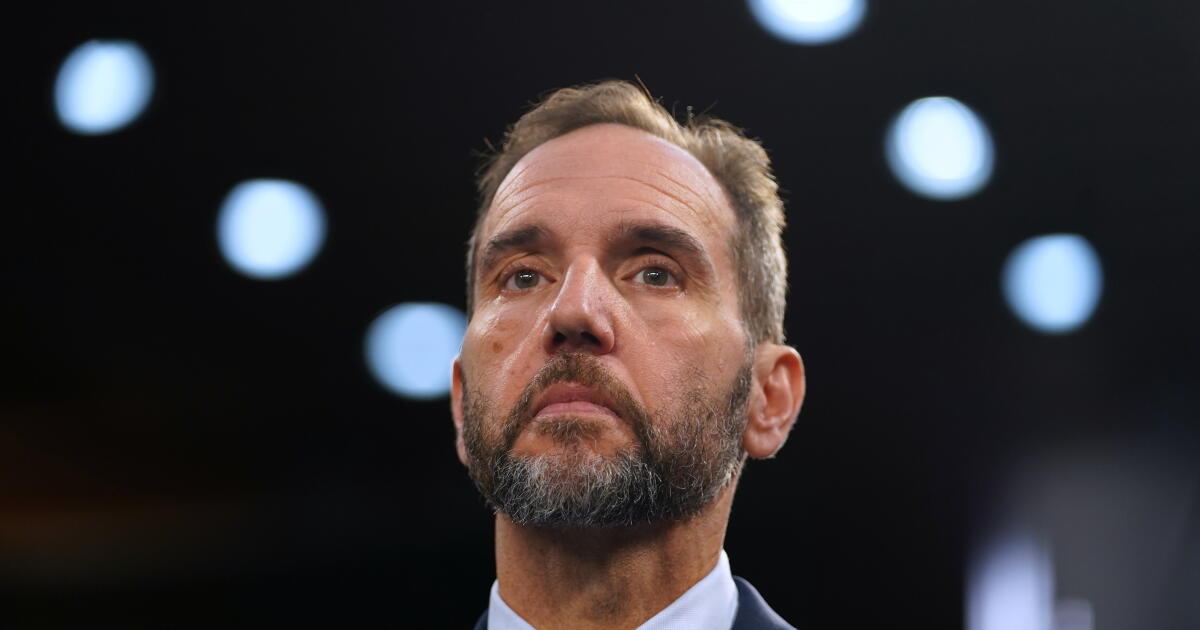
WASHINGTON — Former Justice Department special counsel Jack Smith, who brought two federal indictments against President Trump, told lawmakers on Tuesday that he “will not be silenced by continued threats of prosecution” from the Trump administration and that he believes the rule of law is being threatened like never before.
Smith also told the Senate Judiciary Committee that he stands behind the criminal cases he brought against Trump, a Republican, and that he and his team acted without regard to politics.
“I made those decisions without regard to President Trump’s political association, activities, beliefs or candidacy in the 2024 presidential election,” Smith said. “Our investigation developed proof beyond a reasonable doubt that President Trump engaged in serious crimes against our nation. If asked whether to prosecute a former president today based on the same facts, I would do so regardless of whether that president was a Republican or a Democrat.”
Republicans sought to cast the prosecution as a political fishing expedition, accusing Smith of bending ordinary procedures in an overzealous pursuit of the president.
“The Smith election case ultimately wasn’t just about Trump,” said Republican Sen. Chuck Grassley of Iowa, the chairman of the committee. “It was about partisan agents and prosecutors mapping out the Republican apparatus.”
Sen. Dick Durbin of Illinois, the top Democrat on the committee, accused Republicans of spreading “baseless conspiracy theories” about Smith’s investigations as part of an effort to “whitewash” the history of Trump’s 2020 election loss and the Jan. 6, 2021, attack by a mob of Trump’s supporters on the U.S. Capitol.
“President Trump demonstrated a wanton disdain for the laws of the United States, the will of the people and our national security,” Durbin said. “The aspersions cast on Mr. Smith, nonstop, are petty, personal and political. They are nothing but a smoke screen to distract from the president’s own clear, unlawful conduct.”
The hearing is expected to focus on subpoenas for phone records
Even as Smith defends his investigations, he is expected to be pressed anew by Republican senators about his team’s access to the phone records of GOP lawmakers as prosecutors investigated Trump’s efforts to overturn his loss to Democrat Joe Biden.
In previous testimony, Smith has stood behind subpoenas that prosecutors issued for the phone records of Republican members of Congress who were in touch with Trump when violent supporters of the president rioted inside the U.S. Capitol on Jan. 6, 2021. He has said that such subpoenas are a “common practice” in investigations and were necessary in this instance to understand the “scope of the conspiracy” between Trump and his Republican allies.
Nonetheless, the revelation that Smith’s team secretly obtained the phone records during his investigation has animated some Republican lawmakers, who point to it as proof of overreach by the Biden administration Justice Department and a hard-charging prosecutor.
In July, the Republican chairman of the House Judiciary Committee, Rep. Jim Jordan of Ohio, referred Smith to the Justice Department for potential prosecution on allegations that he lied at a previous hearing about his collection of the records — something Smith’s attorneys have vigorously disputed.
“I stand by my testimony before the House of Representatives,” Smith said. “I will not be silenced by the continued threats of prosecution from the president or others.”
Grassley, the Senate committee chairman, first disclosed last year that Smith’s prosecutors had obtained what’s known as “toll records” — data that reveals the date, length and time of phone calls between two parties but not the content of the communications.
Smith has repeatedly justified the move as necessary to document any contact that Trump or surrogates may have had with lawmakers on Jan. 6, 2021, as the president beseeched his supporters to halt the certification of the election results.
“My office didn’t spy on anyone,” Smith said during a hearing in January.
Smith is the subject of a criminal referral from Republicans
Smith was appointed in 2022 by then-Atty. Gen. Merrick Garland to take over investigations into Trump’s efforts to reverse his election loss and Trump’s retention of classified documents at his Mar-a-Lago estate in Palm Beach, Florida. Both investigations resulted in felony indictments, but Smith abandoned the cases after Trump won back the White House in 2024, citing longstanding Justice Department opinions that say sitting presidents cannot be federally indicted.
Smith has remained a top target of retribution for Trump and his administration, which last year announced that it would revoke the security clearances of the lawyers representing the former special counsel. The Office of Special Counsel, an independent watchdog agency responsible for enforcing a law against partisan political activity by federal employees, also announced last year an investigation into Smith.
Jordan’s referral to the Justice Department centers on a December 2025 exchange in which Smith was asked about subpoenas that prosecutors had issued for the toll records.
Smith said the records he requested did not include the content of the communications. But Jordan maintains that answer was misleading in light of records released by Grassley showing that Smith had obtained the contents of 44 lawmakers’ text messages in a separate subpoena to the National Archives and Records Administration that sought the communications of various Trump advisers and aides.
In response, Smith’s lawyers called his answers “unimpeachably truthful” and noted that he was responding to questions explicitly about toll records, which did not include the contents of any text messages.
The once simple message, “Get out the vote,” now has a corollary: “Protect the vote.”
That message was hammered home Saturday for dozens of voting rights groups, community organizations and unions attending a rally to recruit and train poll watchers for the November election.
Organizers for several groups brought together under the banner of Love Powers L.A. offered scenarios of the threats that could materialize on Nov. 3 — from ICE raids to intimidation by the Proud Boys — and detailed strategies to counter them.
Their goal was to raise a cadre of volunteers for a Neighborhood Vote Protection Program to observe 650 polling places throughout the 11 days of voting and to turn fear and confusion sought by election deniers into a celebration of the right to vote.
“We want to make it a season of excitement,” said Jeremy Payne of the social justice group Catalyst California.
1
2
1.David Gutierrez right, of Inner City Struggle, signs up Jocelyn Elizalde, 22, and Manuel Becerra, 19, from left, to help with outreach, during an event held by Love Powers LA, representing dozens of community groups and labor unions, provide education and training to Angelenos on how to protect their vote and respond to threats of election interference at East Los Angeles College on Saturday, September 26, 2026. (Christina House/Los Angeles Times)2.Participants including Evelyn Gonzalez, right, attend a workshop for activist dance and street activation during an event by Love Powers LA, representing dozens of community groups and labor unions, providing education and training to Angelenos on how to protect their vote and respond to threats of election interference, at East Los Angeles College on Saturday, September 26, 2026. (Christina House/Los Angeles Times)
The event kicked off with multicultural music by Native American, Korean and West African drum ensembles.
“L.A. is a target for retribution and spectacle,” said John Lee, also of Catalyst California. “When they try to steal an election, it is a sign they know they are losing.”
Godfrey Plata of L.A. Forward, left, and Jung Hee Choi of We Are California present skits on how to talk to neighbors about voting during the event Saturday.
(Christina House / Los Angeles Times)
The event, involving numerous nonprofit organizations, stayed away from endorsements or political messages aimed at the coming election. But speakers didn’t hold back on their views of President Trump.
“Trump is a chicken and a loser,” said Jung Hee Choi, of the umbrella group We Are California.
Choi described two personality types, skeptics and frozen, that the group is targeting.
She urged volunteers to hold ballot parties in their homes to move skeptics “from the couch to the poll” and routine voters from the “frozen mode to the fight mode.”
“We need people out at the polls,” she said. “You are the greatest tool to fight back and grow our movement.”
The groups held their event just a day after Trump’s latest move in his attempt to reshape voting in America.
The Supreme Court upheld Trump’s expanded use of government data to search for noncitizens who are registered to vote. The impact of the decision is likely to be limited, other than to highlight Trump’s distrust of elections and his unproven claims that a large number of illegal voters are casting ballots.
Love Powers L.A., representing dozens of community groups and labor unions, provides education and training to Angelenos including Azenith Morales, Marise Roxas, and Liezl Japona, from left, of the Filipino Workers Center, on how to protect their vote and respond to threats of election interference.
(Christina House/Los Angeles Times)
Breakout sessions covered how to plan a ballot party, activist dances and street activations.
Attendee Joe Pugh, who works for the community services organization ATAP, said she planned to host a block party to push the importance of voting in South-Central.
“They’re always talking about ‘my vote doesn’t count,’” she said.
During the poll monitoring session, Emma Olson Sharkey, a partner at the Political Law Group, outlined what poll watchers should look for and what they should do about it.
Their role, she said, is not to engage. They will observe and report any attempt to intimidate voters or poll workers.
The organization provides an online report form to report incidents.
“We hope it is boring,” Payne said. “In most cases, nothing will happen.”
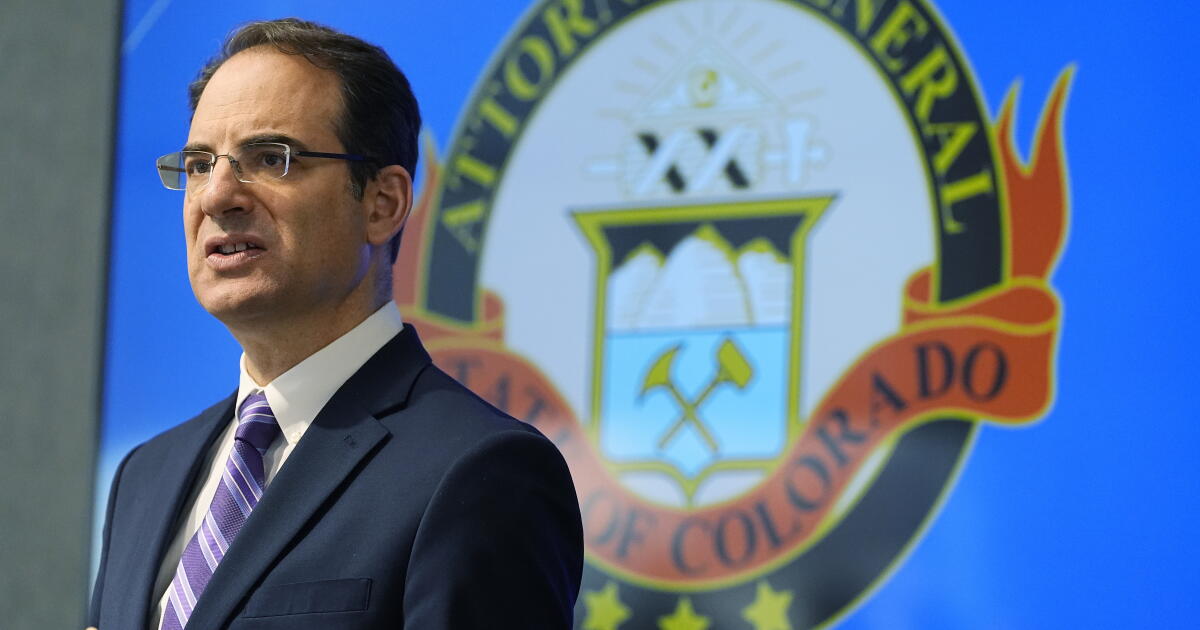
DENVER — The office of Colorado’s attorney general is a perch 10 stories above downtown Denver. From his aerie, Phil Weiser has a sweeping view of the city skyline, the gold-domed Capitol and, occasionally, a red hawk on the wing.
But looking toward November, Weiser sees something darker.
“With this administration what we have seen is it’s important that we not limit our imagination to what … type of harm could happen,” Weiser said during a sunny noon hour in the Mile High City.
For that reason, Colorado’s attorney general and his Democratic peers around the country have spent more than a year strategizing — by phone, via Zoom, sometimes in person — on ways to Trump-proof the midterm election.
They’ve researched history and the law, war-gamed what-ifs, divvied up responsibilities and drafted emergency lawsuits and temporary restraining orders so they can be hurried into court at a moment’s notice.
“We have prepared for a range of contingencies … so that we’re ready to act,” Weiser said.
“We’re not going to be reacting in real time” or pulling all-nighters, he added. “We are going to be following through on plans we’ve made, having looked at what’s possible.”
The efforts of Weiser, California’s Rob Bonta and more than 20 other Democratic attorneys general are part of a mass mobilization aimed at thwarting Trump’s unprecedented efforts to pervert and subvert November’s midterm balloting.
It’s remarkable that kind of man-the-barricades action is needed to preserve and protect the voting franchise in this, the land of the free and home of the brave. But having weighed the threats, Weiser said his greatest fear of election interference comes not from a bad overseas actor or some terrorist group, but rather our own federal government “and what this administration might do.”
So here we are.
To fend off that threat from within, state Democratic parties across the nation are aiming to recruit 10,000 volunteers to guard polling places in the event armed federal agents show up.
Various sponsors have launched education campaigns to explain election rules and offer hotlines for voters who have trouble casting their ballot.
Civil rights groups and democracy-defending organizations have staged their own tabletop exercises brainstorming and rehearsing various scenarios. A group of Democratic U.S. senators has done the same.
“What we’re doing is preparing for the fact that Donald Trump, in 2020, lied about the election in advance, lied about it in the aftermath, went to court … and then he instigated a violent insurrection in this very building,” Marc Elias, a Democratic elections attorney, told MS NOW in a July interview at the Capitol. “So I think we need to take these threats in the 2026 midterm run-up … both seriously and literally.”
In a more courageous, less heedlessly partisan world, Republicans would be working with Democrats to keep the power-drunk Trump in check. (The House and Senate supposedly comprise a separate and equal branch of government, with its own power, prerogatives and such.)
But, as Weiser noted, this Republican-led Congress “has been lacking in backbone, lacking in the role of checks and balances. That has left it to state attorneys general to fill that vacuum, going to court and essentially playing the role of a check on a lawless and often bullying president.”
The nation’s 24 Democratic attorneys general have filed more than 125 lawsuits in Trump’s second term alone, fighting his moves on trade and tariffs, energy and immigration policies and efforts to gut or eliminate programs and whole government agencies. They’ve prevailed in the overwhelming majority of cases that have been adjudicated or settled.
Even before Trump was elected again, some attorneys general began conferring on ways to fight the excesses they anticipated in a second administration. Anyone who didn’t see them coming wasn’t paying attention, said Weiser, who, most likely, will be elected Colorado’s next governor on Nov. 3.
(His victory in Colorado’s Democratic primary stemmed in good part from Weiser’s record battling Trump in court.)
Trump is constitutionally (small “c”) incapable of acknowledging the result of any election he didn’t win. He’s openly urged supporters to “cheat like hell.” Thus, one can only assume malign intent when the president tries to wantonly purge voter rolls, hijack the U.S. Postal service to gum up mail balloting and override the Constitution (capital “c”) by federalizing November’s election.
Some might call such fears melodramatic, or overblown.
Trump’s refusal to accept the outcome of elections “is historic,” the attorney general said. “It is unique. It’s a threat. And it’s why we have to stand our guard.”
Vote, to bring this rogue president to heel. Stay vigilant, to make sure that vote counts.
WASHINGTON — President Trump’s AI-fueled vision for a drone port he intends to install atop the new White House ballroom includes missile-bearing unmanned aerial vehicles and gun-toting troops, ostensibly to protect the 18-acre complex and the nation’s capital.
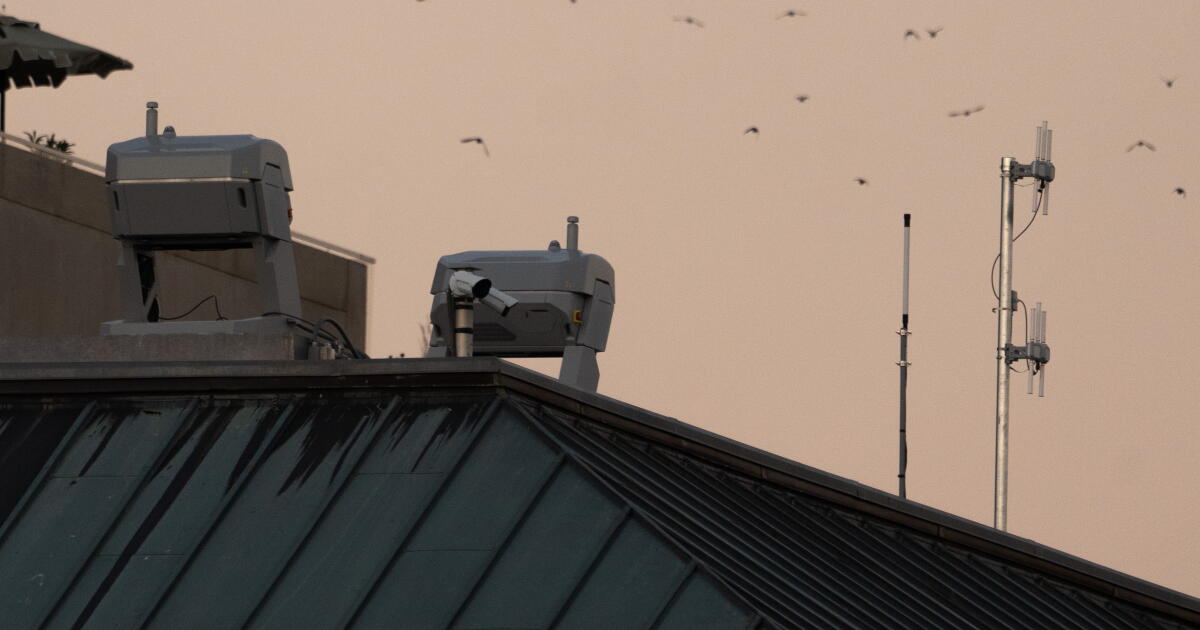
A few hundred feet away, a drone port, run by the U.S. Secret Service and not the military, is already quietly operational. Equipped with cameras and sensors to scope out potential threats from a bird’s-eye view, the small UAVs stand on alert in four gray weatherproof boxes until deployed at officers’ commands.
The agency is using a model known as “drone as first responder,” deploying speedy unarmed drones from outdoor stations to serve as flying cameras. That model has been adopted by hundreds of police agencies across the U.S., often powered by AI software to help dodge obstacles or track targets.
The existence of the surveillance drones on a Treasury Department building adjacent to the White House complex has not been previously reported, and could undercut Trump’s legal claims that the ballroom construction is necessary “to protect the White House and surrounding region from aerial attacks.” The need for the drone port underpinned Trump’s national security defense for the construction project — a justification he is now citing for the construction of a massive arch outside the gates of Arlington National Cemetery.
The installation is thus far markedly less imposing than the vision outlined by Trump, with its rows of futuristic attack drones, apparently modeled after those used in U.S. military strikes, that drone experts describe as outlandish.
“To be honest, if a drone was so close to the White House that it needed interdiction, it’s already gotten too far,” said Matt Sloane, co-founder of SkyfireAI, which makes software for drones used by public safety agencies.
It would be more realistic for the White House to build something akin to what the Secret Service is using next door, Sloane said: “The drone takes off and does some type of perimeter sweep or whatever, and then puts itself back in the box.”
The White House did not comment for the story. The Secret Service declined to comment on the specifics of its drone operations but said the new docks are separate from Trump’s ballroom drone port.
The details of Trump’s ballroom drone port remain murky
Security of the president and the White House complex is generally the domain of the Secret Service, which works in close concert with the White House Military Office and other military elements when needed.
Trump has said the drone port came at the request of U.S. military officials. Speaking to reporters in May, he said the building’s plans were expanded to meet the request: “They wanted more drone capacity,” he said. On social media, he boasted that the drone port might end up being the “most sophisticated” in the world.
What Trump is ultimately aiming to build, and how far it goes beyond what has already been installed, remains unclear. Beyond Trump’s AI images, some of which he filed in his appeal to the U.S. Supreme Court to lift lower courts’ blocks on the construction, the White House has not disclosed what kinds of drones will be used or for what tactical purpose.
The Secret Service is using smaller surveillance drones that are a fraction of the size of the attack drones depicted in Trump’s AI images. The U.S. Air Force bought similar drones from Skydio in April to protect bases across the Middle East. The company also supplied drones to help protect World Cup matches this year.
The Secret Service has been building out its drone- and counter-drone programs for years. But work has accelerated since the 2024 attempted assassination of Trump at a campaign rally in Butler, Pa., when the agency failed both to take action against a drone used by the shooter to scout out the attack and to fly one of its own to provide overwatch of the event.
In the weeks that followed, tethered and untethered surveillance drones became commonplace at campaign rallies and large events at the White House complex.
In an online video released by the agency highlighting their deployment, the Secret Service said the Skydio drones are used to provide “real-time situational awareness” and “aerial overwatch.”
“It allows you to see the threat before it becomes an issue, and to task assets accordingly,” Dustin Talbott, of the Secret Service’s Aviation and Airspace Security Division, said in the video. “We no longer wait for the threat to reveal itself. We find it first.”
Skydio did not provide comment for this story.
Trump’s drone port vision would face logistical hurdles
Trump has made it a priority to build a stronger drone presence around the White House, responding to an increase in political violence and the evolution of drone warfare.
Paul Eckloff, a former supervisor of the Secret Service’s presidential protection division, said the Russia-Ukraine war has highlighted the risks posed by drones, even off-the-shelf models that can cause massive damage. Drones now represent one of the largest emerging threats the White House must defend against, he said.
During Trump’s first term, conversations about drones often centered on their use in places like Iraq and Syria, said Javed Ali, who served on the National Security Council during at that time and now teaches national security at the University of Michigan. Since then, it has become a matter of domestic security, he said.
Yet there would be major logistical hurdles involved in putting a busy drone port on top of the White House, he said. “There’s a whole host of questions, like who is responsible for overseeing it, and how would there be any de-confliction with commercial airspace?” he said.
Complexities around federal oversight were laid bare this year when the U.S. military used a laser to shoot down a drone near El Paso, Texas, only to find it belonged to Customs and Border Protection. The mishap briefly led the FAA to close nearby airspace.
A drone hub at the White House would navigate crowded and complex airspace around Washington, not far from Reagan Washington National Airport and flight paths shared by other military aircraft.
Opponents say the White House is becoming a fortress
Trump started talking about the drone port in May, weeks after a federal judge halted ballroom construction but allowed work on security components to continue. Trump later went on to refer to the ballroom as a “military complex,” leaning on that security role as a legal justification.
The Supreme Court in August cleared Trump to continue construction as the legal challenge moves ahead.
Opponents say the president is going too far in his hardening of the White House, turning it into something closer to a fortress. Edward Lengel, a former chief historian for the White House Historical Assn., said Trump has militarized the White House at a scale that’s at odds with its legacy as “the people’s house.”
“It turns it into a big giant porcupine that has its spines pointing out against the people and against the world,” Lengel said.
Trump has argued that the White House was in “very bad condition” when he returned to office, saying it had become vulnerable to modern threats.
At times, he has expressed concerns about his own safety and the risks posed by drones and other air threats. Speaking at a Rose Garden dinner for law enforcement officials in May, Trump quickly glanced up from the lectern as a low bird flew overhead.
“I thought that was a drone,” Trump said, bringing laughs from the crowd. “They make them in all different sizes nowadays — they can be very destructive, as you’ve probably heard.”
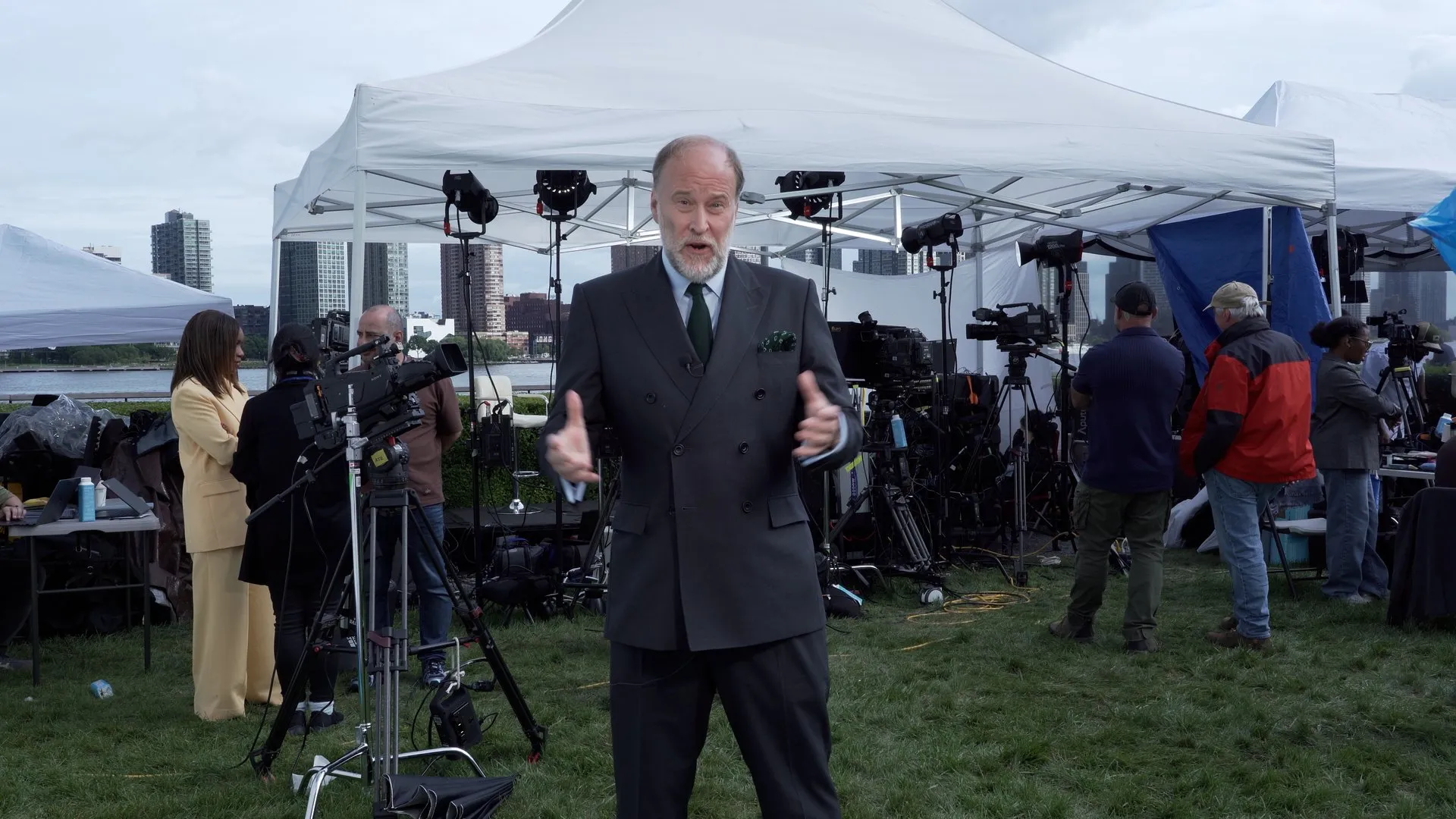
The 81st UN General Assembly opened with US President Donald Trump threatening to ‘annihilate’ Iran. Despite the threat, US and Iranian officials met for three hours on the sidelines of UNGA. Al Jazeera’s Diplomatic Editor James Bays reports.
WASHINGTON — Thousands of people joined outside the John F. Kennedy Center for the Performing Arts on Friday evening to protest President Trump’s plans for the facility, lending their voices to a chorus of organizations and individuals who have been horrified that he might make good on his threat to close and tear down the storied institution.
The crowd streamed in from the nearest subway stop, crowding streets in the Foggy Bottom area of Washington and locking down traffic as they walked, many carrying signs, as they joined in an event dubbed “Hands Around the Kennedy Center.” At one point some held hands, forming a human chain around the center.
Chris Raleigh, co-founder of Hands Off the Arts, which set up the gathering, said in an interview that he hoped it would show that people are willing to fight to keep Trump’s plans for the building at bay.
One of the most iconic buildings on the Potomac River waterfront, the Kennedy Center has been a focus of Trump’s remake of Washington since 2025, when he began installing his loyalists on its governing board. Late last year, he had his named placed on the center in front of that of President Kennedy. A judge ruled that Trump’s name was illegally added and ordered it removed.
The Kennedy Center board, which remains aligned with the president, voted Tuesday to close the center indefinitely for repairs hours after U.S. District Judge Christopher Cooper blocked their plans to return Trump’s name to the building. On Thursday, the judge ordered the Kennedy Center to provide 30 days’ notice before making any major physical changes to the building, including demolishing it.
Raleigh said he, like others, is concerned that Trump could take the step without notifying the court. “Look at the East Wing,” he said, referring to the demolished portion of the White House. “We got up one morning and there was a giant hole there.”
Raleigh said the Kennedy Center is more in the public eye than the East Wing was. He added that he doesn’t believe the president fully understands why people are so upset, “but that’s our job, right? This may be the line that no one expected, but this is where the line is going to be.”
Protesters talked about the importance of the center as the pinnacle of the nation’s performing arts world.
Bud Wilkinson, a local member of the arts community, set up a chalkboard with Trump’s name written on it hundreds of times. Protesters flocked to him to erase the names and replace them with hearts.
“The Kennedy Center is vital to the arts in Washington. We need it. We need this,” Wilkinson said. “This is not just about putting the president’s name on the Kennedy Center. It’s about censoring the performances and the programming. That’s what started all this. So that’s what the nitty-gritty really is about this. So I want to replace all of this with love. That’s why there’s a heart.”
Alina Baciu talked about the opportunities and relationships that students at the Duke Ellington School of the Arts have with the center and how those relationships might be affected by what’s going on.
Her daughter had opportunities to take advantage of all the center had to offer as a student at the Ellington school, she said. “I mean, they borrowed the beautiful costumes and the beautiful dresses from the Washington National Opera for their performances at Duke Ellington,” she said. They also performed on the center’s Millennium Stage.
“All of those things have gone away because of this craziness. And it just hurts my heart,” Baciu said.
Laura Steinberg, a volunteer for the last 10 years, said the loss of performances has already been heart-wrenching. “This reminds me of that picture from Tiananmen Square, where that young man stood in front of the tank,” she said of the throngs present. “This was my visceral response to this. I’ll stand in front of the wrecking ball if it’s going to come to that. My guess is many of these people would come down because we saw what he did to the East Wing. Nobody thought he would actually do it. So I think the shock has mobilized people.”
Friday’s event followed a tumultuous week in federal courts in Washington, where filings and counter-filings flooded the courts as the administration continues pushing for the president’s vanity projects. The administration has made substantive steps to begin work on a number of projects, despite the fact they are still being litigated. Such projects include Trump’s triumphal arch and the administration’s takeover of East Potomac Golf Links and the U.S. Institute of Peace.
Speaking from the Oval Office, Trump said he was willing to save the center, which he said was losing money. He did not address a question about demolishing it.
“We have a lot of people working very hard on it to save it,” he said. “I can save it easily, but why should we be doing that and then raise money for the rest of our lives to keep it afloat? Because that’s what you have to do, if we get no recognition. I think the Trump administration should be recognized as having saved the Kennedy Center.”
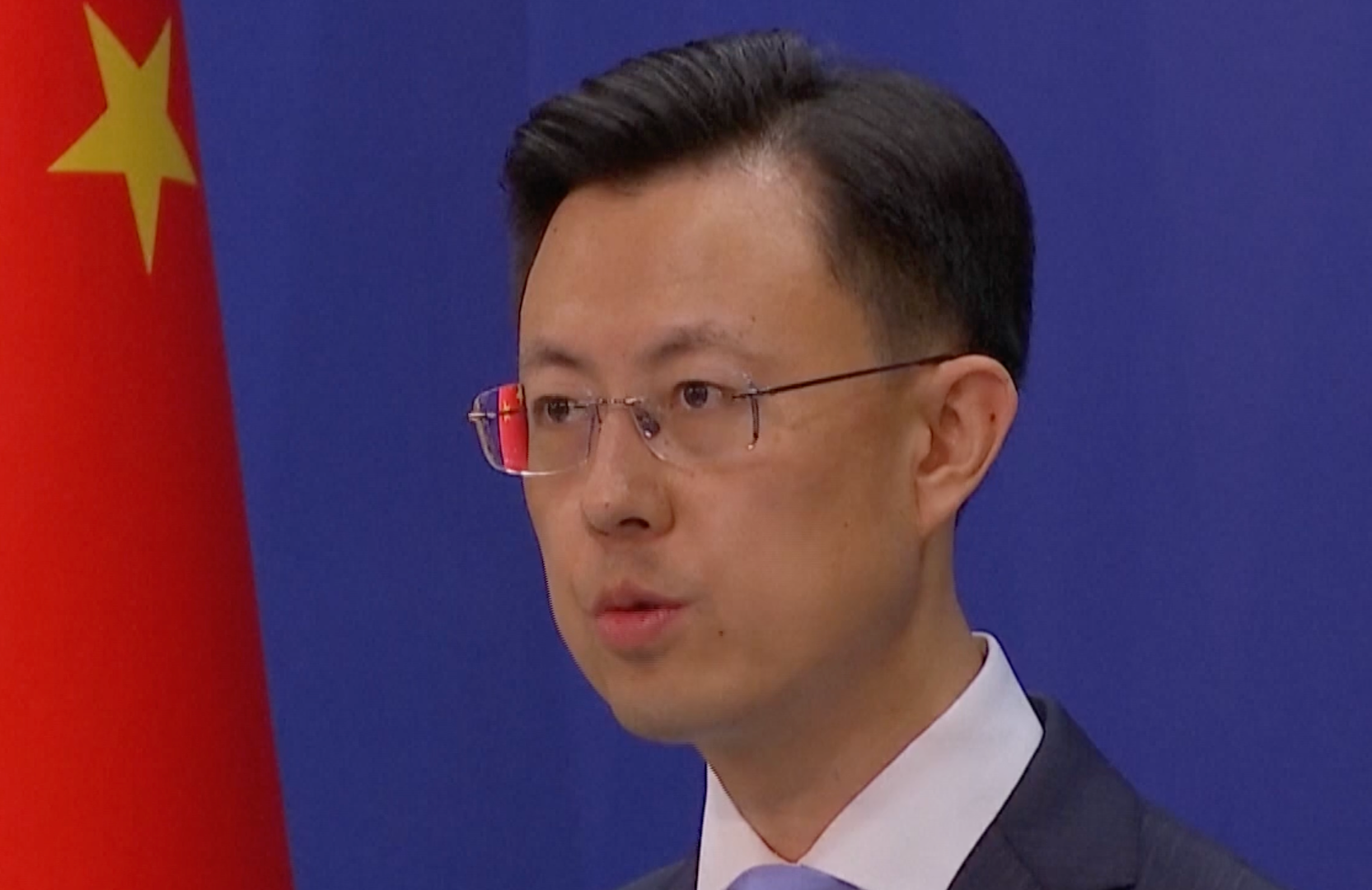
China called for international cooperation on artificial intelligence, warning that “threat narratives” could disrupt global AI governance. The comments follow Anthropic CEO Dario Amodei’s call for AI firms to slow model development over safety and national security concerns.
In a summary of its 100-page report, external, the JCHR points out that AI has been responsible for numerous abuses of human rights.
It cites as examples the use of AI to create sexualised images of women and girls and scanning people’s faces without their consent.
The JCHR advocates the creation of a “single, independent AI oversight body… on a statutory basis”.
It argues that the current legal framework which applies to AI is “fragmented and difficult to navigate”, “leaving gaps in protection”.
“The AI Bill should establish a regulatory regime that classifies different risk levels and mandate more demanding obligations for higher risk AI systems and models,” it says.
“Obligations should be placed on all stages of the AI lifecycle, ensuring those responsible in the supply chain for designing, amending and utilising AI systems are aware of their obligations and they are effectively addressed.
“Some uses of AI should be prohibited outright because they are incompatible with human rights. Potential areas for action include subliminal techniques, and inappropriate use of profiling or biometric data.”
“AI is heralded as an unprecedented era of technological development with the potential to transform our lives for better or for worse,” said Sobel.
“It is moving with such speed and complexity that its impact is hard to accurately predict. What is clear is that at present we are unprepared to deal with its consequences however potentially dire they may be.”
The JCHR’s 12 members are drawn from both Houses of Parliament and they currently include MPs and peers from the Labour, Conservative and Liberal Democrat parties.
Monday’s report comes amid growing general anxiety over the challenges AI poses.
Jacob Coxon, an AI researcher who quit Anthropic, told the BBC this weekend that staff developing the systems were “genuinely frightened” for the future of humanity.
An Anthropic spokesperson told BBC News that it was building “models with some of the strongest safeguards in the industry”.
“Communists.” “Islamists.” Republican speakers portrayed Democrats as a threat to America on night two of their midterm convention in Dallas. Al Jazeera’s Emma Withrow reports on how they’re turning questions of national identity and events in the Middle East into campaign ammunition.
MANILA: Philippine Vice President Sara Duterte’s legal team on Friday secured a postponement of her arraignment on charges of making grave threats against President Ferdinand Marcos Jr, the first lady and the House Speaker, in a new legal battle that could derail her bid for the presidency in 2028.
Lawyer Paul Lim told a crowd of reporters and Duterte’s supporters outside the court that the defense had filed a motion to postpone the arraignment, which the court granted. In a text message to Reuters, Lim said Duterte had not entered a plea in the case. “Arraignment deferred pending resolution of our motion,” he said.
Last Saturday, Duterte had posted bail after a court had ordered her arrest over the charges.
The case against Duterte, an ally and running mate of Marcos before the two had a bitter fallout, stems from her remarks at an online press conference in 2024, when she said she had told an assassin to kill the president, his wife, and his cousin, former speaker Martin Romualdez, in the event she herself were killed.
Duterte, the 48-year-old daughter of mercurial former President Rodrigo Duterte, has denied making the threats and said her remarks were taken out of context. She faces up to six months in prison if convicted.
The allegations of grave threats are also part of an impeachment complaint against Duterte, who is currently on trial at the Senate, which is sitting as an impeachment court with its members as jurors.
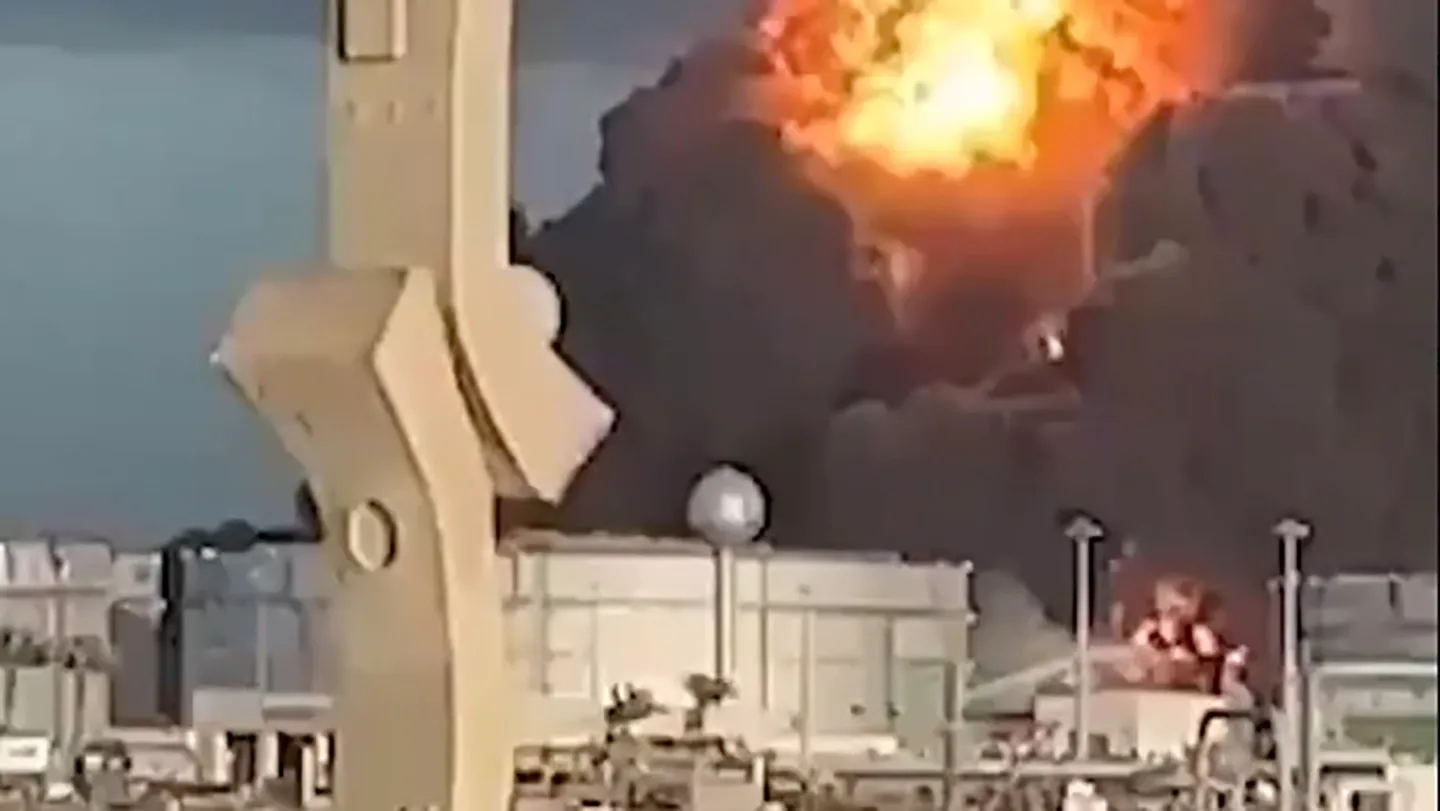
Just hours ago, the Saudi Aramco refinery at Jazan on the Red Sea was engulfed in flames after a Houthi missile and drone attack. Strikes at the heart of the Saudi’s energy infrastructure on the Red Sea, which acts as the remaining primary lifeline of energy exports out of the region, threaten to drastically impact global oil prices further, a concern we have been raising for some time. In the wake of the attack and additional fighting in the Persian Gulf, oil prices surged toward the $100 per-barrel mark.
“The Yemeni Armed Forces carried out a qualitative, large-scale military operation, targeting the Aramco company in Abha, Najran and the Economic City, Aramco in Jizan, and Khamis Mushait Air Base with dozens of ballistic missiles and drones,” Houthi spokesman Brig. Gen. Yahya Saree stated on Telegram. “The strikes were precise, by God’s grace, and direct, causing major damage to those facilities.”
Saree claimed that the strikes were “in response to the Saudi aggression that targeted our people and our country with 121 air strikes over the past three days.”
Saudi officials confirmed Houthi attacks and said they would retaliate.
“The terrorist Houthi Militia’s senseless attacks, the latest of which targeted civilian and economic sites in the cities of (Abha, Khamis Mashait, Jazan and Najran) resulting in injuries to (73) civilians, including women and children, constitute a blatant violation of the Kingdom’s sovereignty and a direct threat to the security and safety of its citizens and residents,” anti-Houthi coalition spokesman Maj. Gen. Turki Al-Maliki stated on X.
“The Joint Forces Command of the Coalition will take all necessary operational measures to deter this Terrorist Militia and resolutely confront its hostile approach, in defense of the Kingdom’s sovereignty, the preservation of its national assets and the safety of its citizens and residents,” Al-Maliki added. “The Command will also take all necessary measures and actions to respond to the sources of the threat and neutralize its danger.”
“…several energy sector facilities and installations in the southern region of the Kingdom were targeted this morning,” the Saudi Ministry of Energy stated on X. The attacks “caused fires at several locations, leading to a temporary halt in some operations,” the ministry added. “Specialized field teams have begun containing the fires, securing the sites and assessing the damage.”
Videos on social media this morning showed the Saudi Aramco facility still burning after the attacks.
Data from NASA’s Fire Information for Resource Management System (FIRMS) indicates a large amount of ongoing thermal anomalies in and near the massive Jazan refinery.
🇸🇦🇾🇪 Houthis appear to have launched a major drone attack on Jazan, SW Saudi Arabia, in recent hours.
The Houthi attacks inside Saudi Arabia came amid increased fighting in Yemen between the rebels and anti-Houthi forces backed by Riyadh.
The conflict between Saudi Arabia and the Houthis grew out of a civil war in Yemen that erupted in 2014. It expanded a year later when a Saudi-led coalition joined forces with the government ousted by the Houthis and raged on until the parties reached a tenuous ceasefire in 2022. The Saudis held off on getting involved in the recent Red Sea conflict which saw the U.S. and coalition warships duking it out with the Houthis, and eventually led to a U.S.-led air campaign over Yemen. Tensions, however, reignited after that conflict ended when the Houthis joined the U.S.-Iran conflict on the side of their major supporter. The Houthis recently imposed a blockade on the Bab al-Mandeb Strait, and began striking Saudi ships in the Red Sea as well as refineries.
As we have frequently detailed, Houthi attacks on Saudi Arabia’s energy infrastructure put further pressure on oil exports from the Middle East, already drastically affected by the Iranian closure of the Strait of Hormuz and the resumption of the U.S. blockade on Iranian ports. Saudi Arabia has diverted millions of barrels of oil per day through pipelines to its Yanbu port on the Red Sea in an effort to minimize the energy shortages due to the hostilities near the Persian Gulf. This also raised the specter of the U.S. having to get as involved as it did during the previous Houthi campaign against shipping that ended last September, which could pull resources away from Iranian-focused operations, if supporting such an operation is even possible at all at this point. The bottom line here is that if the Houthis stop Saudi oil from transiting through the Bab el Mandeb Strait and the Suez Canal, this last lifeline of energy to Europe and Asia and beyond would be severed. This would drastically exacerbate an already ballooning oil crisis.
The Houthi strikes on Tuesday followed a spike in attacks on shipping in the Strait of Hormuz. Last week, U.S. Central Command (CENTCOM) said it destroyed three Islamic Revolutionary Guard Corps (IRGC) oil tankers after the Iranians fired ballistic missiles at U.S. warships.
On Tuesday, “American forces have struck multiple Iranian tankers tied to the IRGC in response to more attempted missile attacks on a U.S. Navy warship,” a U.S. official told TWZ.
The CENTCOM strikes are part of the Trump administration’s new tanker-for-a-tanker policy of hitting Iranian vessels in response to Tehran’s attacks on shipping in the Strait of Hormuz. This marks a change from previous incidents where ships were only attacked for running the ongoing U.S. naval blockade on Iranian ports. The sinking of one of the Iranian tankers in the most recent strikes is another escalation. Previous incidents following major combat operations during Epic Fury involved U.S. forces disabling Iranian transport vessels, not sinking them.
“Following Iran’s failed attacks, CENTCOM permanently disabled the IRGC crude oil carriers M/T Downy off the coast of Kharg Island and M/T Stark 1 near Jask,” the command stated on X on Saturday. “American forces also completely destroyed the unladen crude oil carrier M/T Kylo (also known as the “Noxen”) in the Gulf of Oman, striking the vessel in multiple critical locations to render it inoperable after the crew was directed to abandon ship.”
The three Iranian crude oil tankers “are part of a multibillion-dollar shadow network that funds the IRGC and its regional proxies,” the command added. “Iran has no means by which to defend them.”
“Let the message to the IRGC be clear: If you shoot at two of our ships, we will impose an even higher economic cost —taking out three of yours,” said Adm. Brad Cooper, CENTCOM commander. “We will not hesitate to defend American forces, and if necessary, destroy Iran’s limited and exposed oil fleet.”
“Let the message to the IRGC be clear: If you shoot at two of our ships, we will impose an even higher economic cost —taking out three of yours. We will not hesitate to defend American forces, and if necessary, destroy Iran’s limited and exposed oil fleet.” — Adm. Brad Cooper,… pic.twitter.com/UGGcSGsUtd
In addition to the tanker attacks, CENTCOM is maintaining its naval blockade of Iranian ports. “As of Sept. 6, U.S. forces have redirected 92 commercial vessels, disabled 3 and boarded 2 to ensure strict compliance,” the command stated on X.
A U.S. Air Force F-35A stealth fighter jet patrols over regional waters as CENTCOM forces continue to enforce the maritime blockade against Iran. As of Sept. 6, U.S. forces have redirected 92 commercial vessels, disabled 3 and boarded 2 to ensure strict compliance. pic.twitter.com/oXNN5zKx1t
As these events unfold, the price of oil is rising further, as we noted earlier in this piece. As of noon on Tuesday, the per barrel price of Brent crude was trading at nearly $98, a $10 per barrel gain from Aug. 26, according to OilPrice.com.
Analysts said the price reflected “the market’s recognition that there is no end in sight for the conflict in the Middle East, which has disrupted oil flows through two vital arteries: the Strait of Hormuz and the Red Sea,” The New York Times reported on Tuesday.
“Oil market participants are now pricing in a more prolonged disruption to shipping flows,” Hamad Hussain, a senior economist with Capital Economics, a research firm, told the publication. “They and other analysts have raised oil price estimates, based on an expectation of increased disruptions.”
Amid the strikes on oil-related targets, Iran claimed it captured an Anduril Dive-LD UUV and is in the process of reverse-engineering it. The IRGC released video and images of the device.
The IRGC Navy has released footage showing the captured U.S. Navy Dive-LD autonomous underwater vehicle (AUV) seized in the Strait of Hormuz. pic.twitter.com/XN379Kcpkh
Additional images showing the U.S. Dive-LD AUV that was captured by the Iranians, following what a U.S. official described as a malfunction a number of days ago. pic.twitter.com/fyuDFJxsuv
The IRGC “captured one of the most modern intelligent and unmanned submarines of the terrorist U.S. military at the entrance to the Strait of Hormuz at dawn today, in a complex operation involving intelligence and operational surveillance,” the organization claimed.
The vessel “possesses the latest technology in the field of underwater systems in the world and was delivered to the fleet of the terrorist U.S. military in 2025,” the IRGC added.
Asked if Iran captured a UUV, a U.S. official denied that the Iranians obtained anything sensitive.
“An underwater drone operated by U.S. forces malfunctioned more than a day ago,” a U.S. official told us. “It was surveying regional waters in support of ongoing operations. The defective drone was an older model that neither collected sensitive data nor carried any classified sonar or radar equipment. U.S. operations in area waters continue.”
The Dive-LD can be configured for demining operations. Cooper, the CENTCOM commander, recently stated that: “We have successfully cleared sea mines in the strait’s international shipping lanes that were laid months ago by Iran’s Islamic Revolutionary Guard Corps. Internationally recognized transit routes in the strait are free of Iranian sea mines, thanks to the incredible work of the U.S. military.”
It is unclear whether the Dive-LD system was used in those operations; however Financial Times last week reported that the U.S. sent “Navy Seal divers, robot boats and specialized underwater craft into the perilous strait for a four-month mine-clearance mission.”
“The fraught process of explosive device disposal was carried out underwater and in darkness in an attempt to eliminate a crucial factor deterring ships from carrying vital cargoes through the strait since the US and Israel attacked Iran in February,” the publication added.
US Navy SEAL divers spent four months clearing Iranian mines from the Strait of Hormuz, according to the Financial Times.
SEAL divers worked at night from inflatable-hulled boats with help from underwater crafts to remove the mines.
As the Houthi-Saudi exchanges continue and the Strait of Hormuz is still heavily contested, there appears to be no real movement toward a diplomatic solution.
U.S. President Donald Trump proclaimed that the U.S. will defeat Iran.
“Oil prices will drop precipitously, like everything else is dropping (but more!), when we WIN the war with Iran,” the president stated on his Truth Social site. “Three Dollars a gallon, but ultimately, below Two Dollars a gallon. It will all happen quickly, and Iran will never have a Nuclear Weapon. MAGA!”
Iran, for its part, said it will continue fighting.
“The Islamic Republic of Iran has always opposed war and has considered the preservation of the people’s interests and regional security to lie in refraining from igniting conflict,” Iranian President Masoud Pezeshkian said on X. “However, just as it has boldly risen to defend against aggression up to this day, it will continue this resistance with full strength until the aggressors are brought to complete regret and will remain the guardian of the rights of the great Iranian nation.”
جمهوری اسلامی ایران همواره با جنگ مخالف بوده و حفظ منافع مردم و امنیت منطقه را در پرهیز از آتش افروزی دانسته است. اما چنانکه تا امروز در برابر تجاوز، دلیرانه به دفاع برخاسته است این مقاومت را تا پشیمانی کامل متجاوزان با قوت ادامه خواهد داد و پاسدار حقوق ملت بزرگ ایران خواهد بود.
Should there be a resolution to this conflict, U.S. military and intelligence officials have had “recent quiet discussions about cutting the number of people and facilities typically stationed in Middle East,” CNN reported.
In offices across the US military & intel community, there have been recent quiet discussions about cutting the number of people & facilities typically stationed in Middle East if Trump admin succeeds in ending the Iran conflict, 6 sources tell @KatieBoLillis & me.…
That’s it for now. We’ll update this story when new details emerge.
UPDATE: 6:25 PM Eastern:
CENTCOM said it “destroyed five Iranian crude oil carriers, Sept. 8, after the Islamic Revolutionary Guard Corps (IRGC) targeted a U.S. Navy warship with ballistic missiles twice over the past two days.”
“The U.S. warship successfully evaded the attempted Iranian attacks and continued to patrol regional waters. No American personnel were harmed,” the command added on X. “In response to Iran’s most recent failed attacks, CENTCOM destroyed the IRGC crude oil carriers M/T Kaviz, M/T Charminar, M/T Horizon 1, and M/T Riesco in the Gulf of Oman as well as M/T Derya near Kharg Island. American forces directed the crews to abandon ship before the vessels were struck and rendered inoperable. Iran has used the tankers as part of a multibillion-dollar shadow network that funds the IRGC and its regional proxies. Iran has no means by which to defend these vessels.”
CENTCOM forces destroyed five Iranian crude oil carriers, Sept. 8, after the Islamic Revolutionary Guard Corps (IRGC) targeted a U.S. Navy warship with ballistic missiles twice over the past two days. The U.S. warship successfully evaded the attempted Iranian attacks and… pic.twitter.com/Gi8a2tloN1
In the wake of the CENTCOM strikes, Iran launched a new wave of ballistic missile attacks, a Jordanian source confirmed to us. The official Iranian Fars media outlet said Muwaffaq Salti Air and Prince Hassan air bases were targeted.
حمله به پایگاههای موفقالسلطی و شاهزاده حسن در اردن
گفته میشود پایگاههای هوایی موفق السلطی و شاهزاده حسن اهداف حملات موشکی ایران است.
براساس گزارشها اردن به دلیل ناتوانی سامانههای پدافندی آمریکایی، جنگندههای نیروی هوایی را برای رهگیری موشکهای ایرانی به پرواز درآورده.
Video has emerged on social media of interceptors in Jordan defending against the attack.
An insane amount of Jordanian interceptors being seen used here. Dozens being used, as Iranian fires inundate the local area. So far no visible impacts have been viewed. pic.twitter.com/cyZtoojZ9G
US sanctions Turkish bank over alleged IRGC ties, accusing it of facilitating millions in transactions for Iran.
Published On 5 Sep 20265 Sep 2026
The United States Treasury Department has imposed sanctions on a Turkish bank and its subsidiaries over alleged ties to Iran, as Washington seeks to economically isolate Tehran.
The Treasury Department accused Golden Global Yatirim Bankasi Anonim Sirketi (Golden Global Bank) on Friday of facilitating “tens of millions of dollars’ worth of transactions for the Islamic Revolutionary Guard Corps-Qods Force” and providing the Iranian government with banking access to move its funds internationally.
Recommended Stories
list of 4 itemsend of list
Washington alleged the bank “was established for the purpose of enabling Iran’s rahbar network [shadow banking system] to transfer oil revenues from China to Turkey” using gold and cash.
Golden Global Bank responded on Friday, saying it fulfilled all local and international banking compliance rules and would take legal action against the US-imposed sanctions.
There are no transactions conducted by Golden Global Bank that could substantiate the claims made by the US, the bank said in a news release.
“We will exercise all our rights of objection and legal recourse in the most effective manner and will take the necessary actions at the earliest against these allegations and the decision,” the Turkish bank added.
“Financial institutions continue to find out the hard way that we are serious about Operation Economic Outcast,” said Secretary of the Treasury Scott Bessent in a statement published by the department on Friday.
The sanctions place the bank and its two subsidiaries on the US Office of Foreign Assets Control (OFAC)’s Specially Designated Nationals list, cutting off access to the US financial system.
The bank said individuals and entities named in the OFAC decision “have never been and are not currently customers” of Golden Global.
US Ambassador to Turkiye Tom Barrack said on Saturday that it would be a mistake for Turkish officials “to read [the US’s] narrow measure as a judgement upon Turkiye”.
“The health of the Turkish financial system is not in question; the conduct of one institution was,” Barrack said on X.
Last week, the US took steps towards severing the UAE operations of Egypt’s second-largest bank from financial access after accusing it of processing transactions for companies linked to Iran’s shadow-banking system.
Bessent said on Tuesday on the sidelines of a G20 summit that Washington would likely announce a bank sanction this week and another next week, as it ramps up its economic campaign against Tehran.