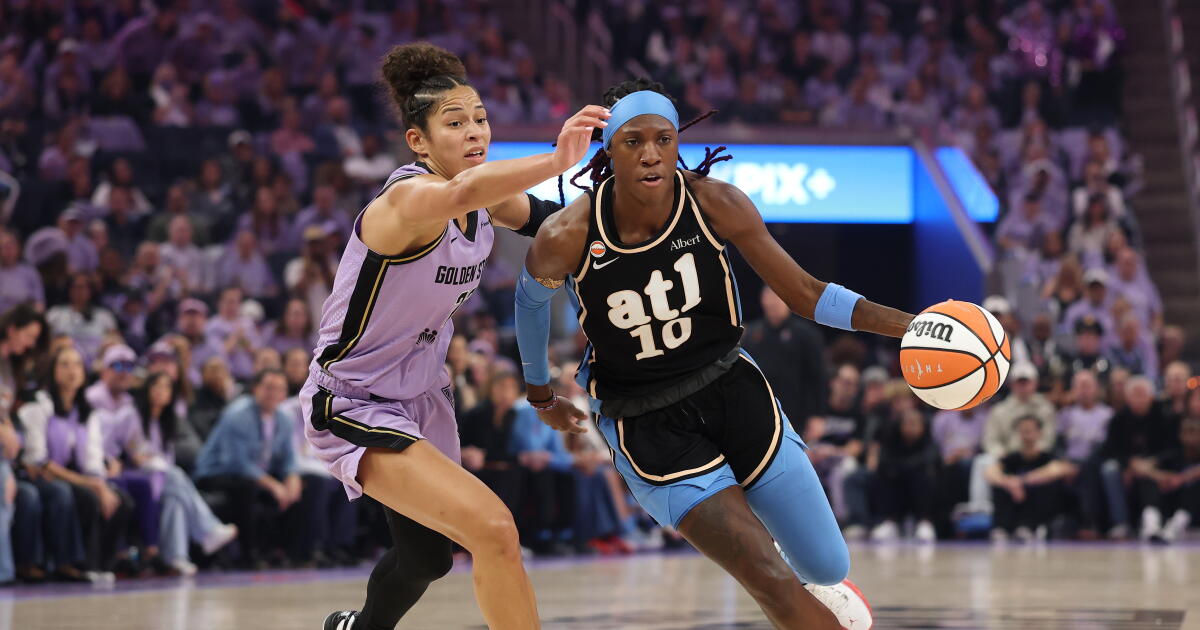
Flavor Flav declares ‘paid holiday’ for WNBA Finals Game 6
If you need permission to watch “The Permission” — a.k.a. Rhyne Howard of the Atlanta Dream — try to keep her team’s WNBA championship dreams alive, Flavor Flav’s got you covered.
The rapper issued signed permission slips Tuesday on social media for everyone to be excused from work on Thursday to watch Game 6 of the WNBA Finals. The next matchup in the best-of-seven championship series between the Dream and the Golden State Valkyries is set to tip off at 9:30 a.m. Pacific that day, when many people would be at work.
“Thursday is a paid holiday. Because Flavor Flav said so,” Flav, whose name is William Jonathan Drayton Jr., declared on Instagram and Threads. “Everyone should be able to watch Women’s Sports.”
The document, which includes a blank space for fans to fill in their own names, urges bosses to “go ahead and approve that day off” for the “very important” Game 6 of the WNBA Finals.
“You support women’s sports, RIGHT?!” the self-proclaimed “World’s Greatest Hype Man” wrote in the note. “Consider it your contribution to gender equality.”
The Valkyries clinched Game 5 at home at the Chase Center on Monday night 64-55 to move within one game of the team’s first-ever WNBA title. The Bay Area expansion team, led by head coach Natalie Nakase and known for its emphasis on defense, is just in its second season.
Flav’s note echoes the message Valkyries stars Veronica Burton and Kiah Stokes sent after Monday’s win to encourage their fans to tune in to Game 6.
“Call in sick,” Burton said. “I recommend it.”
“Y’all know how to fake a cough,” Stokes added.
Atlanta Mayor Andre Dickens also shared a statement Tuesday on Threads asking employers and educators to “show a little love and extend a little grace” to those who may be cheering the Dream on during their school or work hours.
“Lean into the historic moment, embrace the excitement and let Atlanta show up for Atlanta,” he wrote.
The WNBA announced Monday that Game 6 would be played at State Farm Arena in Atlanta with the earlier start time. The game was originally scheduled for 5 p.m. Pacific but was rescheduled so it could be played in the larger arena. Games 3 and 4 of the series were also moved to the larger venue.
The Dream normally play at the 3,500-seat Gateway Center Arena at College Park. State Farm Arena, which can seat around 17,000 for basketball games, will host all Dream home games starting in the 2027 season.
The matinee timing of Game 6 is because of Atlanta’s NBA team, the Hawks, also being scheduled to play at State Farm Arena on Thursday. The team will face the Cleveland Cavaliers for a regular-season matchup at 5 p.m. Pacific.
“Thank you for your cooperation and for doing the right thing,” Flav wrote.