Three members of Congress sent a letter on Monday to Major League Baseball and the players union requesting that they tighten policies so an incident last month involving Bryce Harper, FanDuel and an admitted gambling addict cannot reoccur.
Harper, an All-Star with the Philadelphia Phillies, said on Instagram that he created a troublesome, personalized 21-second video on behalf of FanDuel. But he would not have done so had he known the online sportsbook allegedly intended to use it to entice VIP customer Terry Thompson to continue gambling.
The incident triggered the three-page letter signed by Senator Richard Blumenthal, Congressman Paul Tonko and Congresswoman Valerie Foushee that demands an end to the policies that enabled “this type of predatory promotion.”
The letter states that although Harper said he was unaware of the true purpose of the video, the incident “raises broader concerns that players are not prohibited from such endorsements and highlights a systemic failure rooted in the deep enmeshment between leagues, teams, and sports books.
“In fact, MLB rules currently allow players to enter endorsement deals with sportsbooks so long as they do not encourage betting on baseball. Partnerships that do not violate this rule can even use personalized content from players to drive vulnerable fans into debt and addiction.”
The letter suggests that MLB and the players union must confront this “failure” during collective bargaining negotiations that began in May and likely will continue through the expiration of the current agreement Dec. 1.
The letter posed the following five questions and requested that MLB and the players union provide answers by Aug. 24.
1. As MLB and MLBPA renegotiate their collective bargaining agreement, what is your current position on allowing MLB players to seek endorsements and partnerships from sportsbooks? Note: The MLBPA has publicly announced their intention to seek greater freedom for players to have relationships with gambling companies.
2. How will MLB and the MLBPA guarantee that fan safety and well-being take precedence over revenue from gambling partnerships?
3. Do you believe MLB and MLBPA policies on sportsbook endorsements and partnerships are adequate to prevent engagement with predatory VIP programs?
4. Will the MLB and MLBPA undertake any player education to ensure that players understand the risks their participation in sportsbook promotions poses to fans?
5. Will the MLB and MLBPA prohibit players from participating in personalized marketing campaigns by sportsbooks as part of VIP or tier programs?
Harper said he received a request on Cameo in November 2024 to read a message provided by FanDuel VIP host Bryttanni Morgan for a personal “holiday video for Terry.”
“Hey, Terry? What’s up, brother? Hey, man, your host Bryttanni from FanDuel wanted to make sure your Thanksgiving was extra special,” Harper says in the video.
Thompson sued FanDuel, Morgan, DraftKings and the NFL in March, alleging that the sportsbooks caused him to lose about $1.6 million while betting an estimated $18.5 million over a four-year period.
“Had I known FanDuel’s true intent, I would not have made the video,” Harper said. “The same is true had I known anything about Terry or his situation, or about any alleged ‘partnership’ between Cameo and FanDuel.”
The lawsuit filed by the nonprofit Public Health Advocacy Institute on behalf of Thompson and fellow gambler Christopher Sage alleges that FanDuel and DraftKings intentionally fostered addiction by providing enticements such as Super Bowl tickets, hotel accommodations and access to athletes and celebrities.
FanDuel issued a statement after the Harper video came to light in an investigative story published July 9 in the Philadelphia Inquirer.
“We are committed to fostering a culture of responsible gaming and protecting our customers,” the statement said. “Unlike illegal offshore sportsbooks, FanDuel employees are trained to recognize and flag signs of problem gambling and offer resources and tools, and we continue to review and strengthen our policies to ensure we have the industry’s strongest consumer protection initiatives.”
FanDuel and DraftKings, the leading sportsbooks since the U.S. Supreme Court ruled in 2018 that states could legalize sports betting, have developed lucrative partnerships with leagues in all major sports. The 2022 MLB collective bargaining agreement opened the door for players to do promotional work for sportsbooks.
“To be fair, I really hate running,” Thompson, a former track star, said. “But I’m really good at it.”
Thompson has proven that so far in Chargers training camp, sprinting around defenders and maximizing his 5-foot-9, 170-pound frame in passing drills.
His speed and do-it-all attitude have made him one of Justin Herbert’s favorite targets, including on deeper routes, over the last two weeks.
“He’s going to be very good,” Herbert said of Thompson. “We saw it early on that he was going to be. He’s skilled. He’s fast. He’s going to make a lot of plays for us. So, I’m really excited about him.”
Added Thompson: “I know my speed is pretty much unmatched when I step on the field, and that’s something I take strong confidence in.”
Thompson was clearly the fastest player going into the 2026 NFL draft after he posted a time of 4.26 seconds in the 40-yard dash, the third-best time ever, at the scouting combine.
And after leading the Southeastern Conference with 1,054 receiving yards as a senior at Mississippi State, Thompson impressed the Chargers enough to be their fourth-round pick.
He’s thrived ever since — as a wideout and as a returner.
“I agree with Justin,” added coach Jim Harbaugh. “We’re all seeing the same thing. Much like Akheem [Mesidor], so far, so good — really good.”
Special teams coordinator Ryan Ficken has been impressed with Thompson’s work ethic, saying “he’s willing to go ahead and put in the work.”
The Chargers have good reason to be excited about Thompson’s budding role.
New offensive coordinator Mike McDaniel’s scheme is largely focused on getting the ball to playmakers in space quickly. With Herbert being tasked this season with getting rid of the ball quicker, receivers are being tasked with finding ways of getting open sooner.
“We’re doing a lot more motions, a lot more shifts, a lot more stuff like that. “[McDaniel’s] whole philosophy is speed and moving fast,” wideout Quentin Johnston said. “Just different formations … variations of the same route … I mean, shoot, that just shows how good a coach Coach Mike is — got us in different positions to be successful.”
Thompson acknowledged he struggled to adapt to the NFL’s “20-word” play calls early on after coming from no-huddle communication rules in college.
McDaniel, however, acknowledged the progress and dedication he has seen from the rookie over the last few months.
Chargers wide receiver Brenen Thompson runs a drill during rookie minicamp in May.
(William Liang / Associated Press)
“I think he’s captured the attention of the quarterback room by his attack and ownership of the offense,” McDaniel said. “Typically, it’s a very difficult transition … there’s not pictures on the sidelines that you memorize. … The most impressive part has been his professional attack and ownership of assignment, which is not easy.
“Now, the next challenge is that you have all these stacked installs — can you still execute everything while these new plays are being shoveled to you, much like in a season where you have a new game plan every week?”
It helps Thompson to have veteran receivers such as Johnston and Ladd McConkey, who are willing to work with him.
“I pick their brains a lot,” Johnson said. “Whether it’s a certain route or certain play, how do they see these things? … I think the world of those two guys, along with everyone else in the room.”
McConkey and Johnston have enjoyed working with him too.
“He’s flying around across the field,” McConkey said. “He didn’t run 4.2 by accident. … He’s going to be able to help us a lot this year, for sure.”
Added Johnston: “Man, that’s my dawg. He came in with one thing on his mind: speed. Shoot, you’ve seen his [40-yard dash] time … he brought that to the league — to this team — which I appreciate a lot. He’s a very smart dude in the classroom. … He’s been a fun guy to be around.”
The Chargers’ offense will undoubtedly be different under McDaniel — Herbert’s new shotgun stance is proof of that. Speed and spacing will be key. And those who find ways to learn and contribute quickly, like Thompson, will earn playing time.
“I came here to contribute [and] to make this team better, and so whether that’s blocking, running, special teams — whatever that is — I’m going to put my best foot forward,” Thompson said. “I’m nowhere near where I want to be right now.”
Esther Kim Varet has gotten a lot of questions recently from “depressed” liberals wondering whom they should vote for in November to represent them in the redrawn 40th Congressional District, which covers a large swath of inland Orange County and portions of San Bernardino and Riverside counties.
The Democratic art gallery owner placed third in last month’s closely watched primary for the seat, behind Republican incumbent Reps. Ken Calvert of Corona and Young Kim of Anaheim Hills. Calvert and Kim were pushed into the same district by last year’s Proposition 50 and will be the only two candidates facing off for the seat in November.
Kim Varet said her supporters have “obviously put a lot of thought into” which of the incumbents to support, but they have had a hard time swallowing the idea of voting for either. So she tells them why, “if we’re playing a kind of longer game,” they should vote for Kim.
She says Calvert is favored to win, so supporting Kim will “force both sides to spend more on this race” and reduce Republican spending on other races where Democrats still have a shot at beating a GOP incumbent. She says Calvert is “much more senior” than Kim, so ousting him would be “more significant.” And Calvert, as chair of the House Appropriations Subcommittee on Defense, has funded Trump’s war in Iran and would be “morally the better target.”
In last month’s primary, Kim Varet and other Democratic candidates collectively won 42.9% of the district vote, compared with Calvert’s 34.9% and Kim’s 20.6%. If enough of those Democratic voters coalesced behind Kim, they could end Calvert’s 33-year run in Congress.
Whether they will, however, is unclear. Such “orphaned” voters — those left without a candidate of their party in a general election — are historically just as likely to abstain from voting or to vote based on far less strategic considerations. Californians created that dilemma more than a decade ago when they approved the top-two primary system that puts all candidates on the same ballot and only allows the top-two finishers to advance to the general election, regardless of their party affiliation.
Paul Mitchell, a Democratic redistricting expert who devised California’s new congressional map under Proposition 50, said the backers of California’s primary system sold it years ago as a moderating force, where those orphaned voters would be encouraged to select the least partisan general election candidate.
But in reality, Mitchell said, “it doesn’t work that way.”
Voter decisions
Mitchell said intraparty matchups in the past have shown 35% of orphaned voters or more simply abstain from voting in that race.
A recent analysis Mitchell conducted of races, including for seats in the state Legislature, showed such undervoting among orphaned voters in every intraparty race for a state Senate seat in 2024 — one clear example being the competitive and costly battle between two Democrats, Laura Richardson and Michelle Chambers, in South Los Angeles.
Many others vote based on “tertiary things,” he said, such as a candidate’s race or gender, or whether they seem local or a Washington insider.
“Traditionally, it isn’t so much about somebody being more moderate,” he said, in part because voters can’t always discern moderation among candidates of an opposing party. “Republicans might be able to tell the difference between a moderate Republican and a conservative Republican, but Democrats can’t tell the difference.”
Incumbency can also be a drag on a candidate if orphaned voters dislike their track record, even if their opponent is even further from those voters politically. As one example, Mitchell pointed to rural, more conservative parts of the state going for Kevin de León over Sen. Dianne Feinstein when he challenged her in 2018, despite his running to her left.
“You’re like, how in the hell did these rural counties vote for Kevin de León? And it was because there were a lot of Republicans who, if they were going to vote in the U.S. Senate race, just wanted to vote against Feinstein,” Mitchell said.
Katelyn Stauffer, an associate politics professor at University of Georgia who has studied voter behavior in top-two races in California, said people “like to make decisions that are easy,” and “for most people, the ultimate cue is, does this person share my party?”
When party doesn’t differentiate candidates, voters tend to rely on other “simple cues or heuristics,” Stauffer said.
For example, based on her research, she said, women regardless of party and Democrats regardless of gender are more likely to vote for a woman in such scenarios.
Candidate messaging
Candidates could consider moderating their message to attract orphaned voters, though that can be perilous.
In a statement to The Times, Calvert accused Kim of trying to woo orphaned voters with a more bipartisan message, as evidence she is untrustworthy.
“Young Kim has bragged to some voters that she’s a moderate who censured President Trump. She’s then claimed to others that she [is] a 100% Trump Republican. It’s obvious Young Kim will say anything to try and hold on to her job, which is why voters from every party just can’t trust her,” Calvert said.
He said he has “been a consistent conservative in Congress for many years and that’s not going to change.” He also claimed to be “one of the most effective members of Congress,” saying he has secured funding to reduce traffic congestion, fight fires and improve water infrastructure in his district — things “voters from all parties want.”
Chris Pack, a spokesman for Kim, denied that Kim is changing her tune depending on her audience, and dismissed Calvert’s claims of serving his constituents well, calling him a “do-nothing dinosaur” who has failed to improve his constituents’ lives for decades.
“The truth is he’s had more than enough time to deliver for the people of California, and he hasn’t,” Pack said.
Similar intraparty battles are playing out in other congressional races between Democrats.
In the 4th Congressional District, which stretches through the Napa and Sacramento valleys, Republican voters could help decide between incumbent Rep. Mike Thompson (D-St. Helena) and his challenger from the left, venture capitalist Eric Jones.
Thompson — who has been in Congress since 1999 and sits on the powerful Ways and Means Committee — won 41% of the vote in the primary, while Jones won 22.2%. A slate of six Republican candidates collectively won 36.1%.
Jones, who backs progressive measures to expand Medicare and cut working-class taxes, said he hopes voters of all stripes look beyond political labels and see that he is the only candidate in the race who will take on big utilities, healthcare lobbyists and other big-business interests who fund Thompson’s campaigns.
“I want voters to realize that there’s a real choice in front of them,” he said.
Thompson said he is focused on doing his job, introducing himself to voters in the new parts of his district, reconfigured under Proposition 50, and “figuring out how I can work with them” to address their concerns. He said there is “a lot of commonality” among voters of all parties who want “good roads, clean air, water, strong [agriculture], safe communities,” and that he’s been endorsed by local Republicans and Democrats alike.
Thompson also rejected Jones’ criticism of his fundraising, saying he has “done a lot of good work that’s not necessarily in the interests” of those who have contributed to his campaign. He also said fundraising is necessary in a race against a wealthy opponent like Jones, who donated millions of dollars to his own campaign.
In the 7th Congressional District, Republican voters will help decide between incumbent Rep. Doris Matsui (D-Sacramento) — who has been in Congress since replacing her late husband there in 2005 — and her challenger from the left, progressive Sacramento City Councilmember Mai Vang.
Vang won 31.2% of the primary vote. Matsui won 29.1%. Two Republican candidates together won 37%.
In a statement to The Times, Matsui said November’s general election “will be a significantly different race because there will be many more voters that didn’t vote in the primary,” and that she will “work harder to court voters by meeting them where they are and informing them how I’ve delivered on my promises,” including on healthcare, public safety and jobs.
Vang did not respond to a request for comment but has previously accused Matsui of not delivering on her promises for decades.
“After 20 years, families are living paycheck to paycheck, people of my generation are no closer to owning a home, and you still can’t afford a doctor visit,” Vang said last month.
Party involvement
Political parties have traditionally shunned meddling in races where they lack a candidate of their own, experts said. They sometimes endorse in races where two members of their own party are facing off against each other, but not always.
Nick Poche, a Republican National Committee spokesperson, said his organization is largely focused on three races in which Republicans are either looking to hold or win seats from Democrats: the 13th Congressional District, where Republican Kevin Lincoln is challenging Rep. Adam Gray (D-Merced); the 22nd Congressional District, where Rep. David Valadao (R-Hanford) is trying to fend off Democrat Randy Villegas; and the 48th Congressional District, where Republican Jim Desmond is facing off against Democrat Marni von Wilpert for the seat of retiring Rep. Darrell Issa (R-Bonsall).
He called the Democrats in those races “radical socialists and emblematic of California’s far-left failures,” and said his party would be campaigning against them. But he declined to speak to the Calvert-Kim race, or the races in which two Democrats are facing off.
The California Republican Party did not respond to a request for comment.
Rusty Hicks, chair of the California Democratic Party, said his party is focused on “fulfilling the promise of Proposition 50” to flip five seats to help his party win control of the House, and is also focused on three competitive races: those for Valadao’s and Issa’s seats, and one in the 6th Congressional District, where Democrat Richard Pan is taking on Republican-turned-independent Rep. Kevin Kiley of Rocklin.
Hicks said the party will not endorse Calvert or Kim, whom he called “two rotten choices,” but has endorsed incumbents Matsui and Thompson in their races against fellow Democrats because they have “been leading” on issues of affordability and access to healthcare and “are best positioned to be reelected.”
Jones scoffed at his party endorsing his opponent. “Are we really excited that the Democratic machine keeps trying to choose our electeds for us?” he said.
Two lawsuits already serve as backdrops to the unseemly sequence of events that led to Bryce Harper sending Thanksgiving wishes on behalf of FanDuel to an admitted sports gambling addict.
Could there be a third?
Legal experts say Harper might have grounds to sue FanDuel for false endorsement, misappropriation and invasion of privacy.
The Philadelphia Phillies All-Star first baseman said in a statement posted on Instagram that he created a personalized 21-second video on behalf of FanDuel but would not have done so had he known the online sportsbook allegedly intended to use it to entice VIP customer Terry Thompson to continue gambling.
“I did not know FanDuel would do this,” Harper wrote. “I did not consent to it, and FanDuel had no right to do it.”
Harper said he received a request on Cameo in November 2024 to read a message provided by FanDuel VIP host Bryttanni Morgan for a personal “holiday video for Terry.”
“Hey, Terry? What’s up, brother? Hey, man, your host Bryttanni from FanDuel wanted to make sure your Thanksgiving was extra special,” Harper says in the video.
Thompson sued FanDuel, Morgan, DraftKings and the NFL in March, alleging that the sportsbooks caused him to lose about $1.6 million while betting an estimated $18.5 million over a four-year period.
“Had I known FanDuel’s true intent, I would not have made the video,” Harper said. “The same is true had I known anything about Terry or his situation, or about any alleged ‘partnership’ between Cameo and FanDuel.”
The lawsuit filed by the nonprofit Public Health Advocacy Institute on behalf of Thompson and fellow gambler Christopher Sage alleges that FanDuel and DraftKings intentionally fostered addiction by providing enticements such as Super Bowl tickets, hotel accommodations and access to athletes and celebrities.
Thompson said his home fell into foreclosure after he took out second and third mortgages. He borrowed money from family and friends and burned through his savings, losing his last $10,000 on a DraftKings parlay bet in February.
He describes in the lawsuit feeling so desperate that he reached out to his therapist, who called police officers to his home to prevent him from harming himself.
Harper, an eight-time All-Star and two-time Most Valuable Player, has earned nearly $252 million in salary over his 15-year MLB career and is owed another $75 million before his contract expires after the 2031 season. He also earns about $9 million a year in endorsements, according to Sportico.
In a legal action, Harper could seek monetary damages by alleging that the video tarnished his reputation. The perception that he urged a gambling addict to continue destructive behavior could negatively impact his ability to land endorsement deals.
“Section 43(a) of the federal Lanham Act prohibits false endorsements, including when a business draws from an athlete’s NIL and other identifying characteristics without permission,” McCann wrote. “There can be a viable claim when that unauthorized use leads consumers to believe the athlete endorses the business’s product or service.
“Harper could also sue over unauthorized use of his name, image, voice and other uniquely identifying features. To that end, he could argue the video constitutes misappropriation or invasion of privacy.”
FanDuel, in turn, could counter by pointing out that Harper agreed to create the video as part of his relationship with Cameo, a company that connects fans with celebrities and creators for personalized digital interactions.
“False endorsement and misappropriation, FanDuel could insist, are inapplicable to a personalized video setting where the video’s talent voluntarily assents in exchange for compensation,” McCann wrote. “Further, FanDuel could assert that Harper was, or should have been, aware of a potential connection between the video and FanDuel and, more generally, sports betting.”
FanDuel issued a statement after the Harper video came to light in an investigative story published July 9 in the Philadelphia Inquirer.
“We are committed to fostering a culture of responsible gaming and protecting our customers,” the statement said. “Unlike illegal offshore sportsbooks, FanDuel employees are trained to recognize and flag signs of problem gambling and offer resources and tools, and we continue to review and strengthen our policies to ensure we have the industry’s strongest consumer protection initiatives.”
FanDuel and DraftKings, the leading sportsbooks since the U.S. Supreme Court ruled in 2018 that states could legalize sports betting, have developed lucrative partnerships with leagues in all major sports. The 2022 MLB collective bargaining agreement opened the door for players to do promotional work for sportsbooks.
Yet the collaborations have not come without problems. The MLB players union’s licensing and marketing arm filed a lawsuit in 2024 that accused DraftKings, FanDuel and Bet365 of using without permission or compensation photos of players on its betting app and in social media posts.
Coincidentally, Harper became embroiled in that lawsuit, in which the plaintiffs pointed to images of Harper’s face on the DraftKings app as evidence. The two sides reached a settlement in April ahead of trial.
Sam Thompson was snapped crying on Pete Wicks’ shoulder in an emotional moment after the TRIC Awards show last night, just after snagging the award for Best Podcast
12:39, 24 Jun 2026Updated 12:40, 24 Jun 2026
Sam Thompson got emotional at the TRIC awards(Image: JAMES CURLEY AND MAGICMOMENTSUK)
Sam Thompson could not hold back the tears as he was snapped hugging his best friend Pete Wicks‘ and seeming rather emotional. The pair were in town for the TRIC (Television and Radio Industries Club) Awards with a host of other celebs.
Sam, 33, and Pete, 37, won Best Podcast for Staying Relevant. After cinching the award, Pete and Sam stepped outside with Pete holding onto a cigarette as Sam could be seen having an emotional conversation. During the chat Sam was gesticulating wildly and then wrapped Pete in an embrace, resting his head on his best friend’s shoulder.
Sam’s face was red and slightly puffy, suggesting he’d been rather moved by emotion during the awards ceremony.
A representative for Sam told The Mirror after the awards: “Sam and Pete were absolutely thrilled and very emotional to have won Best Podcast Award at the TRICS for the second year running.
“Staying Relevant is such a passion project for them so to receive such a special accolade twice felt all the more special. Happy tears were flowing from the whole team.”
After winning the awards, the Made in Chelsea star sent a chair flying as he jumped around in excitement and bounced around the table. Accepting the prize, he said: “That’s mad! Wahey!” He then accidentally swore as he said: “No! I just didn’t wanna say the word f***, oop!”
He then clapped his hand over his mouth as Pete brushed off the moment, saying: “Don’t do that!”
The duo shared the moment they won on Instagram in a hilarious video captioned: “SECOND YEAR IN A ROW BABY. Thank you Relevanters for every single vote, we wouldn’t be here without you. As Sam would say, we are a community (sorry @p_wicks01 ) See you next year @tricawardsuk.”
This isn’t the first time Sam has been snapped crying on Pete’s shoulder during at the TRIC Awards, but previously the star wasn’t shedding tears of joy.
Pete was snapped comforting Sam in 2024 as Sam visibly shed tears while in the smoking area after the awards. Addressing his tears, Sam later revealed on his podcast that he had heard some bad news. “Firstly, there’s no way of getting around it, I had actually received some bad news, so I actually was really sad, I’m not going to lie about it, but I was.”
“I wasn’t crying though, I wasn’t actually crying. I just want to let everyone know that now,” he added. “There was a paparazzi shot which said ‘Sam Thompson crying after THAT argument with girlfriend Zara’, after the Soccer Aid thing. They linked both of them together.”
Sam continued: “There’s a few things here, I was really sad, and Pete being my best mate, he took me outside and the beauty of it was that Pete said we can’t go out the front because there were a lot of paps there. So, we went through the back. I let it go, I let it all out. I’m literally head-butting Pete’s shoulder – I’m literally caressed into his armpit.
“He’s being such a good mate and saying he’s always there for me and I’m feeling really sorry for myself. I thought, ‘at least nobody is going to see this’, but little did I know that later that day the pictures were everywhere.”
It’s unclear why Sam was emotional on this occasion, but it could have been tears of happiness after clearly being full of joy during the event. Sam is also now dating model and DJ Talitha Balinska, 25, with the pair frequently posting about one another on social media.
Few players are driven to club soccer practice by a national team player. But then few players have two sisters who play for the U.S. women’s team.
Also Zoe Thompson is just 14, so you can’t expect her to drive herself.
But here’s the thing that truly sets Zoe Thompson apart. Although eldest sister Alyssa, 21, has already played in a World Cup and middle sister Gisele made 38 NWSL appearances and played four times for the national team before her 20th birthday, Zoe may actually be the best of the three.
“She’s better technically,” said her father Mario Thompson, who coached all three.
“I think she’s the combination between Alyssa and Gisele,” said Carlos Marroquin, owner of the pre-professional women’s team that gave Alyssa and Gisele their start.
So maybe there should be a line of coaches, teammates and family members waiting to drive her to practice or to her debut with Marroquin’s team, the Santa Clarita Blue Heat, on Saturday evening at The Master’s University.
The Santa Clarita Blue Heat coach Leonardo Neveleff, center, talks to his team before a practice at Valencia High. Zoe Thompson makes her debut with the team Saturday.
The team, which competes in USL W league, has long been a summer proving ground for elite college players and aspiring pros with alumni that includes Venezuela’s Deyna Castellanos, once a finalist for FIFA’s world player of the year award; World Cup veterans Savannah DeMelo and Ashley Sanchez; former Chelsea and Atlético Madrid star Ana Borges of Portugal; and Natalia Kuikka, a five-time Finnish player of the year.
This year’s roster includes more than two dozen Division I college players, meaning Zoe Thompson will be playing with and against women much older than her.
Did we mention she’s still in middle school?
“She’s always having to get out of her comfort zone, no matter what,” said Mario Thompson, whose job as Zoe’s father is to both nurture and protect his daughter’s talent.
Zoe has followed a different path than her sisters. Alyssa and Gisele were born less than 13 months apart and grew up playing together, practicing together and pushing each other. Zoe, born seven years later, grew up watching them, imitating them and wanting to be them.
But she had to do the work alone.
“It’s a unique dynamic where Alyssa and Gisele had each other,” their father said. “It wasn’t just Alyssa by herself. She always had a partner.”
Zoe, however, observed a lot by watching.
“I feel like their mistakes helped me,” she said. “But at the same time, there are some mistakes that I’ve made that they haven’t. I’m learning differently, but I’m more learning from them.”
Zoe Thompson hugs her father Mario Thompson after practice at Valencia High.
Still, this is uncharted territory. No family has ever had a trio of siblings play for the women’s national team, and the pressure of having to match the success her sisters have had will be inescapable, if unfair, for Zoe.
It’s a level of pressure that has the potential to be crushing.
“She kind of has this expectation that’s put upon her already that ‘oh, she’s going to be like her sister,’” Gisele said. “But it’s her own life.”
And Mario Thompson, an elementary school principal who has been intimately involved in all his daughters’ careers, is having to negotiate all this on the fly.
“Everyone sees the glam and the glitz of Alyssa and Giselle, but people don’t really understand it’s a lot of pressure,” he said of the sisters, who will both be heading to Brazil with the national team next week. “They see all the great stuff, but it’s also their job.”
Mario Thompson faced some of the same issues with Alyssa, the second-youngest U.S. woman to play in a World Cup, so he limited her media interviews and tried to let her be a teenager — albeit it an exceptionally talented one. Zoe faces the additional burden of having do all that while following in her sisters’ footsteps.
“I’m very mindful and aware of that,” he said. “She’s already in the spotlight without having to be in the spotlight. It’s that pressure. I want her to love the sport, love this journey. That’s kind of how I raised all three of them.”
Zoe Thompson during a practice session in preparation for her debut with the Santa Clarita Blue Heat soccer team.
For her part Zoe, mature well beyond her tender age, dismisses the hype with a shrug.
“There are going to be comparisons,” she said. “But we’re such different people that I think it’s unfair. At the same time, they can have those comparisons, they can have those opinions, but I’m not them. So it’s not going to be any different, how I play.”
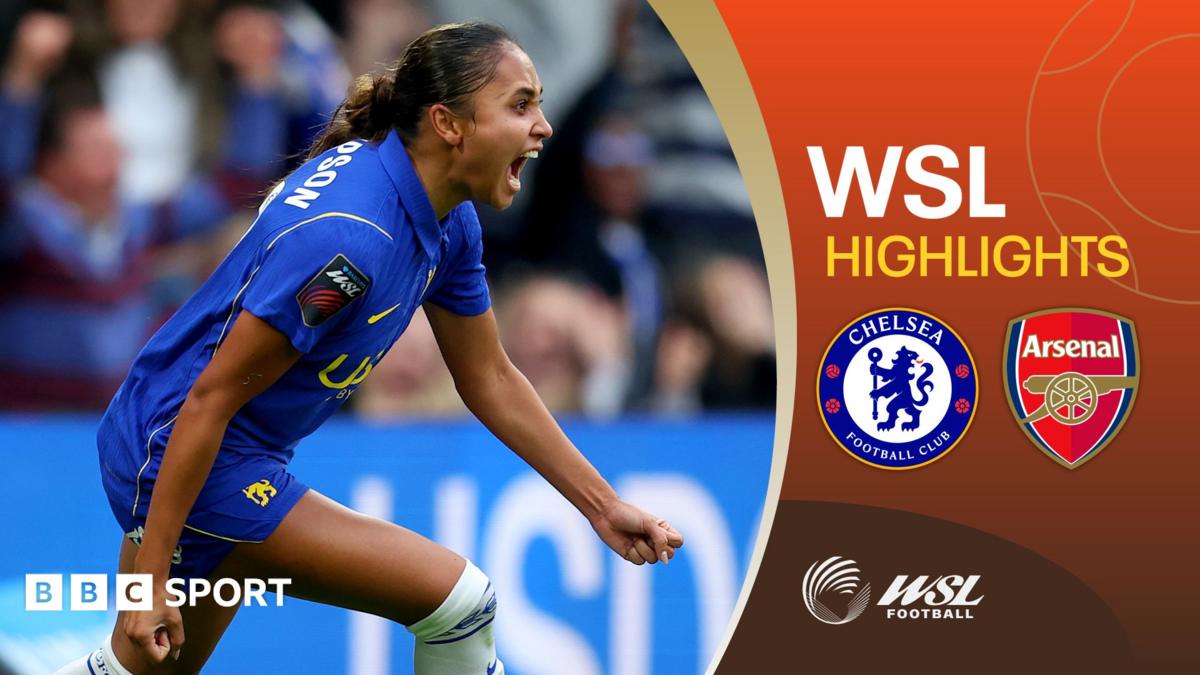
Plus, having two accomplished sisters has its advantages. In the spring Zoe trained with the youth teams at Chelsea, where Alyssa now plays, and this summer she says she’ll train with Angel City, Gisele’s team. But the drawback of being a (much) younger sister is Alyssa and Gisele had each other to lean on growing up. Zoe has had to go it alone and that, she said, has made her stronger.
“Mentally, it is harder. But seeing my sisters and where they are, it’s kind of a motivation for me,” said Zoe, who has already been called in three times by the U-14 national team. “They were kind of at the same place I am. And it’s just very motivating to see them where they are. That’s just kind of where I want to be.”
If there’s been one constant in the girls’ soccer careers it’s been their dad, who has been intimately involved in with all three, drilling them in the backyard of their Studio City home or walking them down the street to a park, where they shared the lumpy grass with softball players and unleashed dogs.
They were often, but not always, willing participants since the family didn’t have a TV when the girls were growing up.
Zoe Thompson controls the ball during a training session in preparation for her debut with the Santa Clarita Blue Heat soccer team.
And while the hours and hours of practice certainly honed the sisters’ skills, their parents can’t explain where the girls got their immense physical gifts. Mario played football and basketball and ran track at Occidental College with modest success while his wife, Karen, an occupational therapist, played basketball and ran cross-country in high school, hardly the pedigree that could be expected to produce three world-class soccer players.
Perhaps part of the answer lies in their unique DNA, a mix of Mario’s Black and Filipino background and Karen’s Italian and Peruvian roots.
“It was never the plan, ‘Hey, let’s have some soccer players’,” Mario said.
But once the sisters decided that was their plan, the parents had to adjust. The girls had rare talent, Mario Thompson quickly realized, and it had to be developed. So Alyssa and Gisele began playing with an elite boys’ team while they were still in high school and passed up scholarships to Stanford to sign lucrative contracts with Angel City while their were teenagers.
Zoe has chosen another way, playing with Tudela FC, an all-girls team that practices near her home, and with the Blue Heat, where she’ll be facing stronger, more mature players for the first time. Mario Thompson hopes those aren’t the only differences, although he said the road his youngest daughter takes will ultimately be up to her.
“My hope is she goes through college and just goes a different pathway, different journey,” Mario Thompson said. “It’s a roller-coaster ride and so for [Zoe], I think she sees that roller-coaster ride and I don’t know if it’s a rush to let me get to that. She wants to eventually be a pro, but I don’t think it’s ‘I need to get there as soon as possible.’”
“It’s Zoe, what do you want?” he added. “It’s not like you have to be here, you have to do this. It’s none of that. It’s about, ‘Hey, Zoe, this is your journey.’ We want you to enjoy it, have fun with it, be happy with it.”
She appears to be accomplishing all three of those goals. She’s also both confident and comfortable in her abilities and believes she’s already ahead of both her sisters despite the weight of expectation.
Zoe Thompson with head coach Leonardo Neveleff at the conclusion of a training session in preparation for her debut with the Santa Clarita Blue Heat soccer team. Thompson, 14, is the younger sister of U.S. women’s soccer players Gisele and Alyssa Thompson.
But she’s also well aware of the pitfalls ahead, having seen Alyssa and Gisele occasionally stumble into them.
“Yeah, it is a lot of pressure but I feel like we just had different paths,” she said. “They didn’t really know they were going to do soccer. They didn’t know that was their sport. But I feel like that path was set for me.
“It was just like I grew faster. I kind of took the understanding of what they were doing, and then I did it a little faster.”
There are other differences as well. Gisele is a defender and Alyssa a forward, but Zoe plays in the midfield. And while it was sometimes difficult to get anything more than a giggle from Alyssa in an interview even after she turned pro, Zoe already gives complete, thoughtful answers to most questions.
Zoe’s game is also different; while Alyssa and Gisele are both exceptionally fast, Zoe relies more on her skill.
“Zoe’s more technical than her sisters at this stage,” her father said. “She’s better on the ball, she has a better understanding of the game. A lot of their game was because of speed. Hers is more thinking, hers is more of the ball on her feet.
“Technically, she’s better and understands the game at this age.”
Gisele, the sister who chauffeurs Zoe to practice in Santa Clarita, agrees. But, she adds, Zoe’s greatest strength may actually be her desire.
“She just has so many great qualities that me and Alyssa don’t have,” she said. “At her age, she wants it way more than we did. She loves soccer with a passion. Me and Alyssa didn’t love it as much as she does.”
And if that passion translates to performance, Zoe will someday join her sisters on the national team. By then she may even be in the driver’s seat.
Santa Clarita Blue Heat team owner Carlos Marroquin talks to Zoe Thompson after a training session at Valencia High.