Thailand Holidays

New Foreign Office alert to anyone planning on drinking alcohol abroad

People are urged to exercise a high level of caution

The UK Foreign, Commonwealth and Development Office (FCDO) has issued a new warning to winter holidaymakers regarding the severe dangers of contaminated alcohol abroad. In a social media alert published today (November 9) on X, the FCDO urged travellers to exercise extreme caution when purchasing or consuming alcoholic drinks while travelling.

The warning comes amid heightened international concern over toxic bootleg alcohol outbreaks in popular tourist destinations. It reads: “Have a holiday booked this winter? In some parts of the world, alcohol can be contaminated with methanol, which can cause serious illness or even death. Avoid homemade, ‘bootleg’ or streetside alcohol.”

According to the FCDO, alcohol in several parts of the world can be contaminated with methanol, which is a highly toxic form of alcohol normally used in industrial products. Even a small amount of methanol can cause permanent blindness, organ failure, or death.

The government body explicitly warned holidaymakers to strictly avoid homemade, “bootleg,” or streetside alcohol to protect themselves. The safety alert applies broadly across global holiday hotspots, but the FCDO currently flags dozens of countries under its “Know the Signs” safety awareness guidelines.

Content cannot be displayed without consent

Travellers should be particularly vigilant in parts of South East Asia, including Thailand, Laos, Indonesia, and Vietnam. The risks are also highlighted in major holiday destinations across the Americas, such as Mexico, Costa Rica, and Brazil, as well as Turkey, India, and various nations across Africa.

Ensure our latest headlines always appear at the top of your Google Search by making us a Preferred Source. Click here to activate or add us as a Preferred Source in your Google search settings

List of destinations where travellers are urged to be highly vigilant:

  • South East Asia: Thailand, Laos, Vietnam, Cambodia, Indonesia, Malaysia, the Philippines
  • The Americas: Mexico, Brazil, Costa Rica, Ecuador, Peru, Papua New Guinea
  • Europe and Central Asia: Turkey, Russia
  • East Asia: Japan
  • Africa: Kenya, Nigeria, Uganda, South Africa, Malawi, Morocco, Libya, Rwanda
  • South and Western Asia: India, Bangladesh, Iran, Jordan, Kuwait, Nepal
  • Oceania: Fiji

The risk of encountering poisoned drinks is highest in areas with weak regulatory oversight or where illegal manufacturing thrives. Illicit producers often deliberately use cheap industrial chemicals such as methanol to stretch their alcohol supplies and maximise profit margins.

Backpacker hubs, informal street markets, and remote beach towns are frequent locations for these incidents. Health experts note that counterfeit alcohol is frequently used in cheap local spirits, complimentary “free shots” at bars, and mass-produced versions of traditional national drinks.

To stay safe while travelling, the FCDO and travel clinics advise tourists to completely avoid open drink buckets, pre-made punches, and unbranded spirits. Travellers should never buy alcohol from street-side stalls or unlicensed vendors.

Instead, holidaymakers are advised to stick to branded beers, ciders, and wines. Where possible, always choose drinks served in sealed bottles or cans, opened directly in front of you, and only purchase alcohol from reputable, fully licensed establishments such as major hotels and established restaurants.

Real-life cases

Recent years have seen high-profile and tragic real-life cases of methanol-contaminated alcohol poisoning, particularly affecting international tourists in popular backpacking and holiday hubs. For example, in Vang Vieng, Laos, during November 2024, in a mass poisoning event that made global headlines, six young foreign tourists died after consuming what were believed to be free vodka shots at the Nana Backpacker Hostel.

The victims included 28-year-old British lawyer Simone White, two 19-year-old Australian teenagers (Bianca Jones and Holly Bowles), two Danish citizens, and an American tourist. Over a dozen others were severely sickened or hospitalised. Investigation teams later traced the source to an illegal factory outside the capital that was supplying local venues with bootleg spirits heavily laced with industrial methanol.

In Fiji, during December 2024, seven foreign tourists, including Australian and American nationals, had to be rushed to the hospital with acute neurological symptoms, nausea, and vomiting after drinking contaminated cocktails at a luxury five-star resort along Fiji’s Coral Coast.

What are the signs to look out for?

Methanol poisoning is a life-threatening medical emergency that typically manifests 12 to 24 hours after consuming contaminated alcohol. Because the toxic chemical is indistinguishable by sight, taste, or smell from normal alcohol, it is impossible to detect in a glass.

While initial symptoms can mimic a standard, severe hangover with intense nausea, vomiting, headaches, and dizziness, the condition quickly progresses to cause unique, critical warning signs. Most distinctively, victims experience profound visual disturbances, such as blurred vision, seeing flashes of light, or feeling like they are “in a snowstorm”, alongside severe abdominal pain, confusion, difficulty breathing, and potentially fatal seizures or organ failure.

If you or a travel companion experience any changes to your eyesight or breathing after drinking, you must seek emergency medical care immediately and explicitly inform hospital staff that you suspect methanol poisoning.
Source link

New Ryanair ’20-minute rule’ to affect millions of passengers

Ryanair passengers checking in luggage will have less time to reach the airport desk under a new deadline

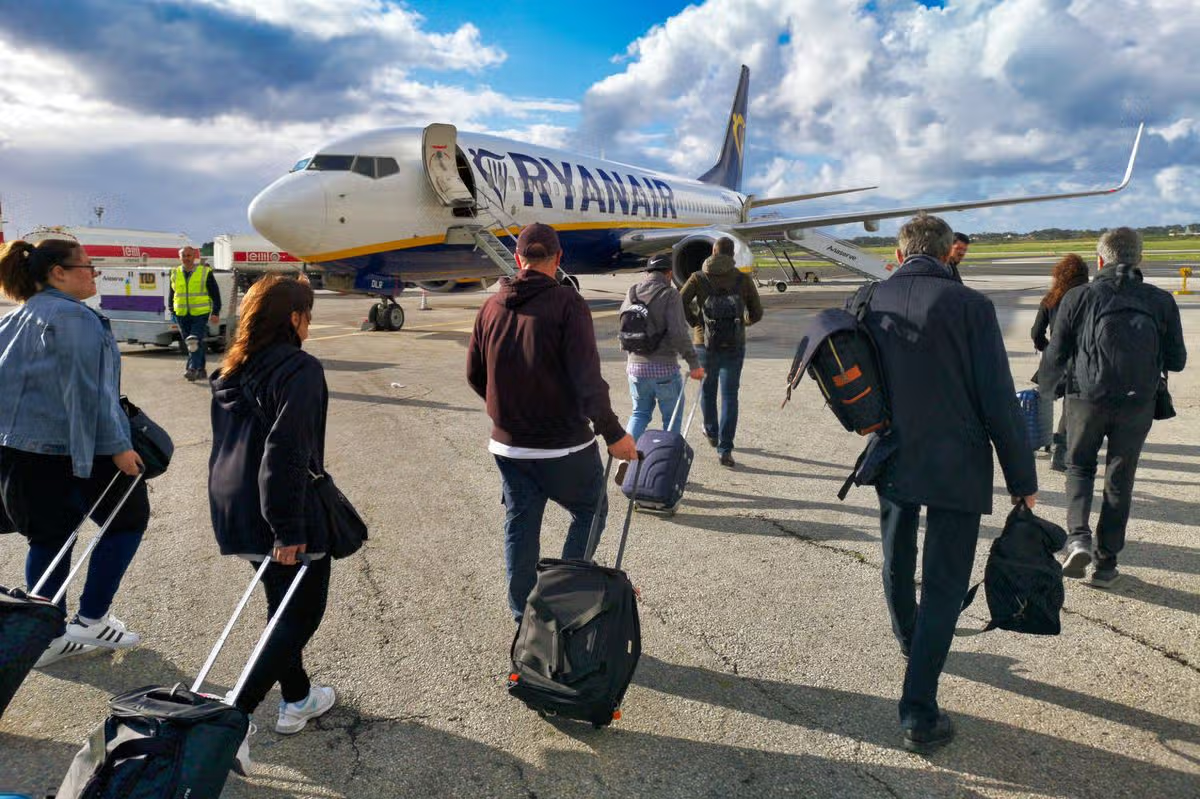
Anyone travelling with Ryanair who leave their airport journey until the last minute could risk missing their flight when a new rule takes effect. From Tuesday, November 10, airport check-in and bag-drop desks will close 60 minutes before departure, instead of the current 40 minutes.

The change means travellers checking in a suitcase will need to get their bags accepted earlier than they may be used to, even if they have already checked in online. For a flight scheduled to leave at 10am, the deadline will move from 9.20am to 9am. Ryanair carried 206.5 million passengers in the 2025 calendar year.

Travel expert Arber Abdullahu, from TripSIM, has urged holidaymakers to check their airport arrangements before setting off, particularly if they have booked a transfer. He warned that having a boarding pass on a phone does not mean a checked bag has been accepted or that passengers can arrive at the desk whenever they like.

“Checking in online can make you feel that everything is sorted. But if you’re taking a suitcase that needs to go in the hold, you still have a separate deadline to meet at the airport,” he said.

Getting to the airport and reaching the correct desk are not necessarily the same thing, as travellers may need to park, take a shuttle, find their terminal and queue. Anyone relying on a transfer that arrives shortly before the cut-off should review the timings rather than treating the deadline as their target arrival time.

The change could also catch people out on their return journey if they are away when the new rule begins. Someone flying out before November 10 but returning on or after that date should check the deadline for both legs and make sure their hotel pick-up leaves enough time to reach the airport.

“Don’t assume the routine that worked on your outbound flight will work for your return. Check your hotel pick-up time and tell the transfer provider which flight you are taking,” Mr Abdullahu said.

Ryanair says the earlier cut-off is intended to give passengers more time to get through airport security and passport-control queues before reaching their departure gate. The airline says around 20 per cent of its passengers check in a bag, while those who check in online and travel without checked luggage will be unaffected by the bag-drop change.

Passengers should remember that online check-in has a separate deadline and remains open until two hours before departure. Anyone using airport check-in or bag drop should check the latest instructions for their flight and allow enough time to complete each stage of the journey.

Source link

20-year-old lost in Thailand after missing flight back to UK

His family has not heard from him in days

A man from the UK has vanished 5,000 miles away from home after missing his flight back. Bailey Singh did not board his scheduled flight back home.

The 20-year-old’s phone is now reportedly off, and he has not been in contact with family for days. He was reported missing on October 5 and was last seen at Suvarnabhumi Airport, Bangkok, Thailand.

Bailey’s family is now pleading for anyone to come forward with information on his whereabouts. His sister Chardonnay said he may have travelled to the Pattaya area – a hotspot for Brits abroad and expats.

He is described as around 5ft 11 with dark brown eyes, curly brown hair and a goatee beard. Bailey is known to have two distinctive tattoos, including a jigsaw on his left inner arm and one behind his left ear which says ‘eleven’.

It is believed that at the time he vanished, he was wearing a blue tracksuit, a blue top and grey trainers. The family says they have contacted the UK Embassy in Thailand.

They state that they were unable to confirm whether he had been arrested or reported injured. Pleas have been shared across social media and amongst local Thai travel groups.

Mother Lisa Ely said: “He’s in Thailand and not heard from him in two days and his phone is off and his location, which is not like him.”

Chardonnay Ely said: “He has been missing for over a week in Bangkok and have suspicions he’s now in Pattaya. If anyone has any information on him please contact me.

“Me and my family are very worried and concerned for him and just want to make sure he is safe.”

Source link

New Foreign Office Thailand alert to UK holidaymakers

Foreign Office issues updated Thailand travel guidance for Brits on Monday

The UK’s Foreign, Commonwealth and Development Office (FCDO) has revised its travel guidance for those planning a trip to Thailand.

The South East Asian destination is growing increasingly popular with British holidaymakers, with over a million making the journey every year. On top of this, tens of thousands of UK nationals live, work, or retire in Thailand – in locations such as Bangkok, Chiang Mai, Hua Hin, and Phuket. To enter Thailand as a tourist, your passport must have an ‘expiry date’ at least 6 months after the date you arrive and have at least one blank page.

The FCDO warns: “You will be denied entry if you do not have a valid travel document or try to use a passport that has been reported lost or stolen.” As of September 15, 2026, if you enter Thailand on a British passport, under the visa exemption scheme, you can stay for up to 30 days for tourism only.

This does not extend to business travel, including attending conferences, meetings or other business activities. Those travelling for business purposes should secure the appropriate visa prior to departure.

New Foreign Office Thailand alert issued

New FCDO Thailand advice, issued on Monday, reads: “Visa-exempt entry for tourism through land-border immigration checkpoints is normally limited to two entries per calendar year. This restriction does not generally apply to arrivals by air.

“If you frequently enter Thailand as a tourist, immigration officials may ask for evidence of your onward travel, accommodation, or sufficient funds, and may refuse entry if they believe you are not a genuine visitor.”

All overseas nationals travelling to Thailand, whether by air, land or sea, are required to complete a digital arrival card online prior to their arrival. Travellers are able to register for an arrival card up to three days before they land.

Should you overstay your visa, you face a penalty of 500 Thai baht (around £11) per day, rising to a maximum of 20,000 baht (around £449). You also risk being detained, deported at your own cost, and banned from returning to Thailand for as long as 10 years.

Source link