tentative

DGA’s board throws support behind tentative contract with major studios

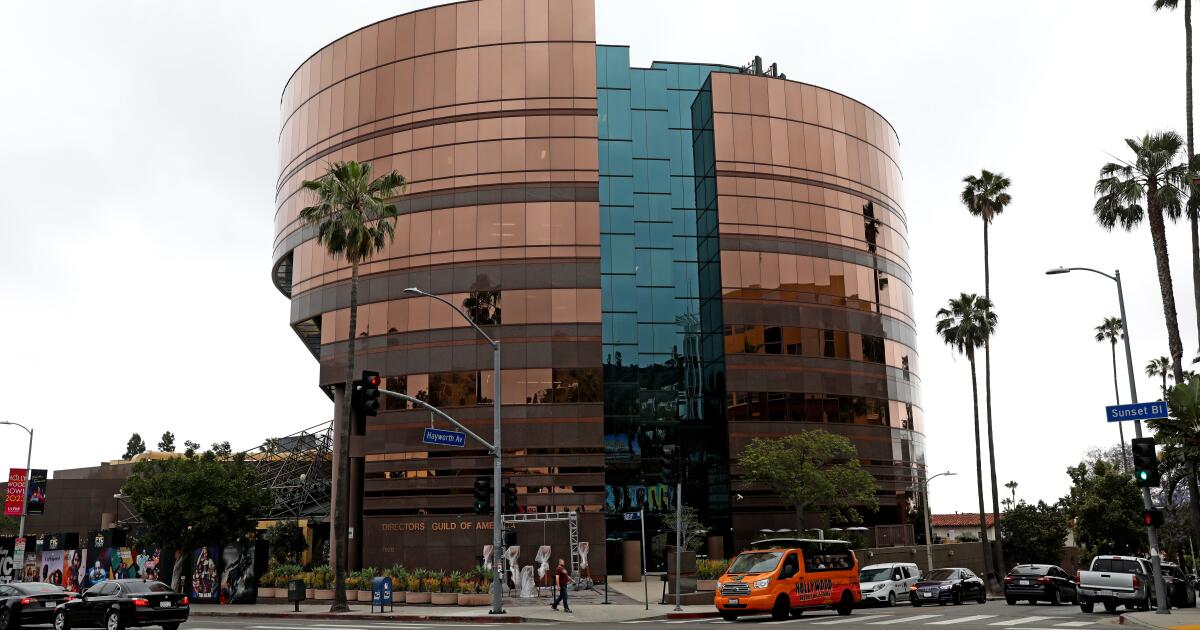
The Directors Guild of America’s national board on Friday unanimously recommended its membership vote in favor of a four-year contract with the major studios that would increase wages, boost contributions to its health plan and establish guardrails surrounding AI technology.

“We entered this negotiation with three main priorities: secure our Health Plan, protect jobs, and ensure that our members remain secure as AI continues to impact our industry,” DGA President Christopher Nolan said in a statement. “We succeeded in these areas and gained in many others.”

Under the proposed contract, major studios would increase their contributions to the DGA’s health plan by 24.4% over four years, the largest since the plan was founded. In return, the DGA would recommend changes to its plan’s trustees including “modest” increases to the eligibility threshold and annual premiums, the DGA said on Friday.

The contract also increases minimum salaries for most jobs by 2.5% in the first year and up 3% for each of the following years in the agreement. Directors of network non-prime time strip dramatic programs will see their minimum salaries increase 2.5% for each year under the agreement.

The union, which represents more than 19,500 directors and members of directorial teams in areas such as film, commercials and news, said the agreement helps the union’s push for a federal production incentive. Hollywood creatives believe such a benefit could prevent U.S. entertainment jobs from moving overseas where production costs can be significantly lower. The proposed agreement secures a commitment that most senior management at the major studios represented by the Alliance of Motion Picture and Television Producers “would engage in meaningful advocacy for a federal production incentive above and beyond the ongoing lobbying efforts of the Motion Picture Association,” according to the DGA.

The contract also adds more guardrails to AI technology, including treating footage created by artificial intelligence as the same as footage shot by a camera, meaning it will still be under the director’s control, according to the DGA. Major studios will also be required to notify the DGA if an employer decides to license a director’s work to train a generative AI system to create new work, the union said. The agreement also establishes an employer-funded program to enhance directors’ AI skills.

“With these gains, a four-year Agreement was both appropriate and necessary to provide stability and potential for growth at a moment when the industry has been experiencing contraction,” Nolan said in a note to members on Friday.

DGA and AMPTP reached the tentative contract earlier this week. At that time, AMPTP said “we appreciate the hard work and commitment of our guild partners in achieving a fair deal that helps advance a stable and successful entertainment industry.”

DGA members will have until June 25 at 5 p.m. to vote on the plan. If approved, the contract would go into effect July 1 and run through June 30, 2030.
Source link

Director’s Guild reaches tentative deal with studios

The Director’s Guild of America has struck a tentative deal with the Alliance of Motion Picture and Television Producers, completing the negotiation cycle for Hollywood’s major unions.

SAG-AFTRA ratified its contract last week, the Writers Guild approved its deal back in April, and the DGA has similarly landed on a new contract, after nearly a month of negotiations. The latest deal with major film and TV studios was announced on Tuesday, but its terms have not yet been disclosed.

The Directors Guild, led by its president Christopher Nolan, reportedly entered negotiations in hopes of improving conditions to create new jobs, bulk up its health fund, and increase protections against generative AI.

“The tentative agreement will be presented to the DGA National Board for approval,” the DGA said in a statement. “Consistent with the Guild’s longstanding practice, terms of the agreement will not be released publicly until the National Board has completed its review.”

Negotiations started on May 11, and the current contract is set to expire on June 30. Once the DGA National Board approves the new contract, it will be sent to its members for a ratification vote. The union represents nearly 20,000 helmers, assistant directors, associate directors, unit production managers and stage managers.

The studios said they were pleased to have reached this latest tentative agreement with DGA.

“We appreciate the hard work and commitment of our guild partners in achieving a fair deal that helps advance a stable and successful entertainment industry,” AMPTP said in a statement.

The DGA’s tentative contract marks the last few steps of the current Hollywood union negotiation cycle. The previous one in 2023 was marked by the industry-stopping strikes from SAG-AFTRA and WGA, and the industry is still feeling the impact from them. But this year’s bargaining season was much quieter and uncontroversial. SAG-AFTRA and WGA will reconvene with the studios for bargaining in 2030, as they all signed four-year contracts.

Source link

SAG-AFTRA gets more AI protections in new tentative contract

Union leaders trumpeted gains in SAG-AFTRA’s tentative contract with the major studios, citing stronger AI protections and the consolidation of previously separate pension plans.

“The theme of this negotiation really has been about looking out for the future of performers, and I think that the contract delivers on that,” Duncan Crabtree-Ireland, SAG-AFTRA’s chief negotiator, said in an interview Tuesday.

After striking the deal a little over a week ago, SAG-AFTRA said its national board approved the proposed contract on Monday.

The union‘s membership, which includes more than 160,000 actors, broadcast journalists, dancers, DJs, stunt performers, voice-over artists and other entertainment professionals, will begin voting on the new contract later this week.

“The scope of the contract is something that I hope the members find meaningful,” SAG-AFTRA President Sean Astin said.

One of the chief gains, he said, was merging of the pension plans of the two previously separate unions — the Screen Actors Guild and the American Federation of Television and Radio Artists — fourteen years after they agreed to combine.

Their health plans were consolidated in 2017, but the pensions have remained separate until the current negotiation cycle. That was a major sticking point with members, some of whom couldn’t qualify for benefits as their contributions were split between two plans. Studios agreed to boost their overall contributions to the combined plan by 1%.

Union leaders also pointed to stronger protections against AI, including new guidelines that govern how studios should use generative AI and that strongly favor “human performances.”

The guardrails state that producers should not intend to use AI in a human role unless a synthetic actor brings “significant additional value” to the production. The contract draws a distinction between a digital replica that is created with a performer’s consent vesus a synthetic digital character that is not authorized.

“Digital replicas are derived from human beings who have compensation and other protections available to them,” Astin said. “If it can’t be done like that, then they’ve got to bargain with us for some very unique use of synthetics…That’s a pretty high bar.”

Under the new contract, minimum wage rates will increase by 3% annually. The agreement also boosts the so-called bonus for residuals that performers get on most-watch streaming shows. Members will increase their contribution to the health plan by 1%.

The actors’ union first began negotiations with the Alliance of Motion Picture and Television Producers in February and extended those talks in March. They were briefly paused to allow the studios to finish negotiations with the writers’ union.

SAG-AFTRA joins WGA as the latest Hollywood union to strike a four-year deal with the studios. The previous contract term was three years.

The Directors Guild of America is the last union that still needs to land its own agreement. Negotiation sessions with the studios started on Monday. The contract is set to expire on June 30.

Source link

SAG-AFTRA reaches a tentative deal with the studios

SAG-AFTRA and the Alliance of Motion Picture and Television Producers have landed on a new tentative contract.

The actors union’s new agreement with the trade group that negotiates with Hollywood unions on behalf of the major studios will reportedly improve AI protections and boost the guild’s pension fund. Similar to the pact the Writers Guild reached with the studios last month, SAG-AFTRA’s contract will last four years instead of the usual three.

SAG-AFTRA confirmed the tentative deal on Saturday. The union said in a statement that “specific details will not be released” until the SAG-AFTRA National Board reviews its terms.

The contract is set to cover workers who are involved in motion pictures, scripted primetime dramatic television, streaming content and new media.

The actors union began negotiations with the studios in February and extended those talks in March, but paused to allow the AMPTP to finish negotiations with the writers union. Negotiations resumed April 27 and ended May 2.

The tentative contract still needs to be voted on by its members — SAG-AFTRA represents more than 160,000 actors, broadcast journalists, dancers, DJs, stunt performers, voice-over artists and other entertainment professionals.

The union’s current contract is set to expire June 30. SAG-AFTRA joins WGA as the latest Hollywood union to strike a deal with the studios.

The Directors Guild of America is the last union that still needs to reach an agreement with the studios. Negotiation sessions with AMPTP will begin on May 11, as its contract is set to expire on June 30.

Source link