teen

Funeral held for New York teen shot while walking to school | Gun Violence

The funeral for Javits Frimpong, a 15-year-old from Ghana shot dead in October, was held in New York City. Police say three teenage boys were involved, one has already been charged with murder. He had moved to the US with his father a year earlier and hoped to become a doctor.

Source link

Family of killed teen Javits Frimpong calls for justice | Black Lives Matter News

The family of slain Ghanaian teenager Javits Frimpong have reiterated their demands for justice and accountability after police arrested a 17-year-old suspect. Frimpong was shot on his way to school in New York’s Bronx borough and died in hospital on October 29.

Source link

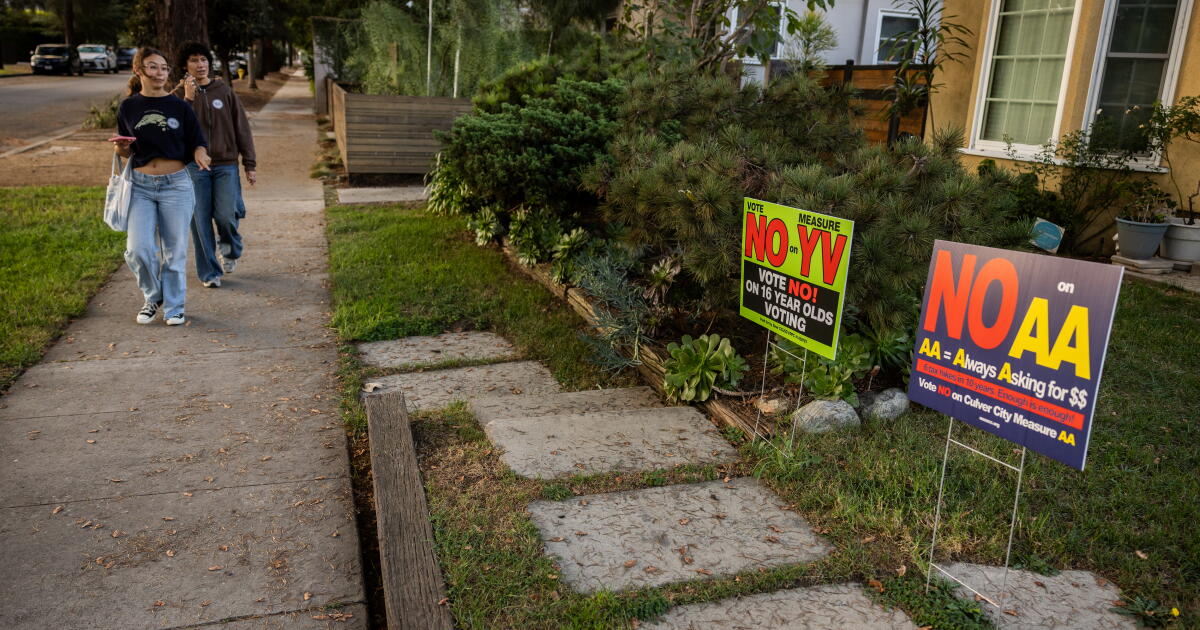
Culver City teen voting measure trailing in early returns

A Culver City ballot measure that would give 16- and 17-year-olds the right to vote in municipal and school board elections was trailing Thursday.

Ballots still were being counted, but Measure YV was losing, with 55% of voters in Culver City voting against it and 45% voting for it, according to early results posted by the Los Angeles County Registrar’s Office.

There were 7,875 votes against the measure and 6,487 for it as of Thursday — a margin of 1,388 votes.

Passage of Measure YV, which was championed by a group of high school students called Vote16 Culver City, would make the Westside city one of just a few municipalities nationwide, and among a handful in California, to expand voting rights to people younger than 18.

The measure proposes an amendment to the city charter that would allow youth voters to participate only in school board and city elections. They would not be able to vote in county, state or federal contests.

The teenage proponents spent weeks canvassing for the measure in Culver City, despite having no power to cast ballots for it.

This is the second time the youth-vote initiative has been on the ballot in Culver City, where a similar measure failed in 2022 by just 16 votes.

In 2024, a citizens’ initiative to lower the voting age failed to gather enough signatures to qualify for the ballot. In February, the City Council, at the request of Vote16 Culver City, voted to put the measure on the November ballot.

Supporters say that 16- and 17-year-olds who are old enough to work, drive and pay taxes are mature enough to have a say in local decisions that affect their schools, parks, public safety, transportation and other matters. In California, they already are allowed to preregister to vote so that on their 18th birthday, they become automatically eligible to cast a ballot.

“I feel really strongly that 16- and 17-year-olds are very capable to vote and make a calm, educated decision for a school board and city elections,” 16-year-old Arlo Meighan-Thiel, a leader for Vote16 Culver City, said last month. “It would be amazing for us, the people who go to school five days a week, to have a say who represents us on the school board.”

Opponents counter that 16- and 17-year-olds are too young to make reasoned electoral choices and easily could be manipulated by adults.

Ron Bassilian, who signed the opposition statement in the city’s voter guide, told The Times in a text message Thursday that the 2022 measure trailed significantly a few days after that year’s election, only to lose by a few votes in the end.

“We remain cautiously optimistic for now” that the measure will not pass, said Bassilian, president of Protect Culver City, a political action committee that has opposed local efforts to defund law enforcement and other causes.

Bassilian, a Republican, told The Times last month that progressive candidates and activists had “really been pushing their way into the high school” seeking to influence young people, and that he was concerned about high schools becoming places where political interests were fighting for access to teenagers.

Vote16 Culver City is a part of Vote16USA, a national organization that supports youth-led state and local campaigns to lower the voting age. Vote16USA is funded by the New York-based nonprofit Goodnation Foundation, according to its website.

In 2013, Takoma Park, Md., became the first city in the U.S. to lower its voting age to 16 for municipal elections. A few additional cities in Maryland, as well as cities in New Jersey and Vermont, allow people younger than 18 to cast ballots in some or all local elections.

Multiple efforts to pass a similar youth voting initiative in San Francisco have failed by a narrow margin in recent years.

In 2016, Berkeley became the first municipality in California to drop the voting age to 16 for school board elections, followed by its Alameda County neighbor Oakland in 2020. Voters in Albany, also in Alameda County, took it a step further in 2024 when they passed a measure to let 16- and 17-year-olds cast ballots in all municipal elections — though the county still is trying to figure out how to fully accommodate youth voters in citywide contests.

In those cities, 16- and 17-year-olds were able to vote for the first time in this year’s school board elections, according to the Alameda County elections office. Every eligible preregistered youth voter was set to receive a vote-by-mail ballot before the election.


Source link

Meta and social media companies sue California over new restrictions

The lawsuit is the latest legal challenge over California’s social media restrictions.

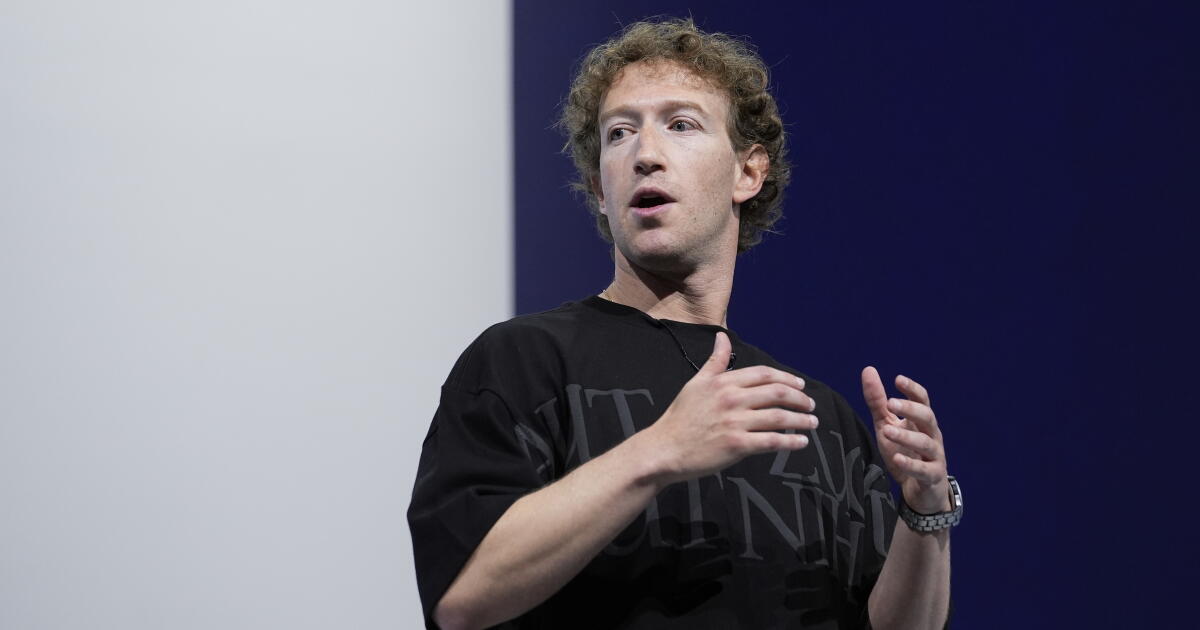
Technology companies Google, Meta and Tik Tok sued the state of California on Wednesday to block a new law that restricts companies from targeting children younger than 16 with “addictive” social media content that can keep them scrolling for hours.

Assembly Bill 1709, introduced by Assemblymember Josh Lowenthal (D-Long Beach), bars social media sites from providing features such as autoplay and recommended content displays to teenagers and young children.

The social media companies, which filed separate lawsuits in federal court, cited their 1st Amendment right to free speech and the Communications Decency Act, which protects online platforms from being sued over content posted by third parties. Meta Platforms, as well as Google and YouTube, filed lawsuits in the Northern District of California. TikTok filed in the Central District.

California’s attempt to “appoint the State as the editor, curator and controller of online speech” and “override Meta’s editorial judgment about how to curate and display these billions of posts of third-party speech,” violates the U.S. Constitution, attorneys for Meta wrote in its lawsuit. The technology company owns Instagram, Facebook and Threads.

A representative for Atty. Gen. Rob Bonta said his office was reviewing the litigation.

The legal action follows successful lawsuits brought against the tech giants by California and others that have resulted in massive civil settlements. At the same time, the tech industry continues to file legal challenges to block state efforts to rein in social media companies.

Lowenthal said earlier this year he was inspired to seek more safeguards for social media users, citing the anxiety and depression among children who grew up with access to cellphones, tablets and computer screens.

The addictive nature of autoplay and other features is “harmful, full stop, and that they’re not appropriate for the developing brain,” Lowenthal said.

Tech industry groups opposed Lowentha’s bill, arguing it would hamper users’ ability to connect with family and friends.

Meta and others sued last year over Senate Bill 976, a similar bill known as “Protecting Our Kids from Social Media Addiction Act” that bars addictive feeds and certain features to minors without parental consent. The 9th Circuit Court of Appeals likely will hear arguments in the case next spring, Courthouse News Services reported last month.

Both Senate Bill 976 and Assembly Bill 1709 go into effect on Jan. 1.

TikTok, in its lawsuit filed Wednesday, argues that AB 1709 essentially overrides SB 976, preventing a social media site from providing “addictive features,” even if parents consent to a minor’s use of the features. The company also argued it has restrictions in place to protect teens.

“The consequence is that a parent who has reviewed TikTok’s platform, linked her account to her fifteen-year-old’s account through Family Pairing, set a 30-minute daily screen-limit, enabled Restricted Mode, and concluded that a personalized For You feed introducing her daughter to new musicians and science educators is appropriate for her family has no ability under California law to make that choice,” Tik Tok’s attorneys wrote. “Nor does the fifteen-year-old daughter have any say in her online expression.”

California is home to some of the biggest social media companies, who increasingly are facing lawsuits over their products. California was among dozens of states that sued Meta in 2023, alleging it designed harmful and addictive features to hook children while misleading the public about the dangers. Some of the harms included depression, anxiety, addiction and body image issues as young people compare themselves to others on social media.

Meta agreed to pay up to $17 billion and make changes to its Facebook and Instagram platforms, including hiding likes and reactions and blocking teens from using extreme makeup filters. The company also said it would enact a default two-hour daily time limit that teens can turn off only with parental permission, mute notifications during school hours and implement a night access mode that blocks its apps from midnight to 6 a.m.

In another landmark case, a Los Angeles jury in March found that Instagram and YouTube were responsible for the suffering of a Chico, Calif., woman who charged the platforms were addictive by design. The 20-year-old, who was awarded $6 million damages, said she became hooked on YouTube and Instagram in grade school.

Source link

Disney teen heartthrob unrecognisable 17 years after co-starring with Miley Cyrus, Selena Gomez and Zac Efron

A FORMER Disney heartthrob looks unrecognisable 17 years after he found teen fame on the channel.

This actor is known for appearing alongside the likes of Miley Cyrus, Demi Lovato, Selena Gomez and Zac Efron.

A former teen Disney star is unrecognisable 17 years after rising to fame on the channel, but do you recognise him? Credit: realsterling/Instagram
This star acted alongside the likes of Selena Gomez, Demi Lovato and Zac Efron Credit: realsterling/Instagram

You may remember him from Sonny With A Chance, 17 Again, Hannah Montana or even his own Disney movie, Starstruck.

It’s Sterling Knight!

The actor, now 37, looks a far cry from his days on Disney Channel now.

Sterling now sports a full beard and longer mousy brunette hair – as opposed to the choppy blonde locks he was known for.

KATIE’S HEARTBREAK

Katie Price hit by ‘devastating news’ saying ‘cherish every moment’


next step?

JoJo Siwa fuels engagement rumours as she tries on diamond rings

It’s Sterling Knight! He rose to fame as a child actor before getting his big break in 17 Again in 2009 (pictured) Credit: Alamy
Sterling also guest starred on Hannah Montana alongside Miley Cyrus Credit: Alamy

He is still acting and appeared in new movie 40 Dates and 40 Nights just this year.

Sterling is also on video platform Cameo, where fans can pay for a personalised video shoutout from him.

The star has just shy of 250,000 followers on Instagram and regularly shares updates with his fans.

He appears to not follow former co-stars such as Demi, Selena or Miley – suggesting their on-screen chemistry hasn’t lasted since their Disney days together.

Sterling’s Sonny With A Chance character famously had a relationship with Demi’s on-screen character, with the relationship becoming a focal point of the show.

The pair were known to be close friends off screen, too.

Child star Sterling, who hails from Texas, began acting aged 10 and had his breakout role in 17 Again – where he played the teenage son of Mike and Scarlet O’Donnell (played by Matthew Perry/Zac Efron and Leslie Mann).

Source link

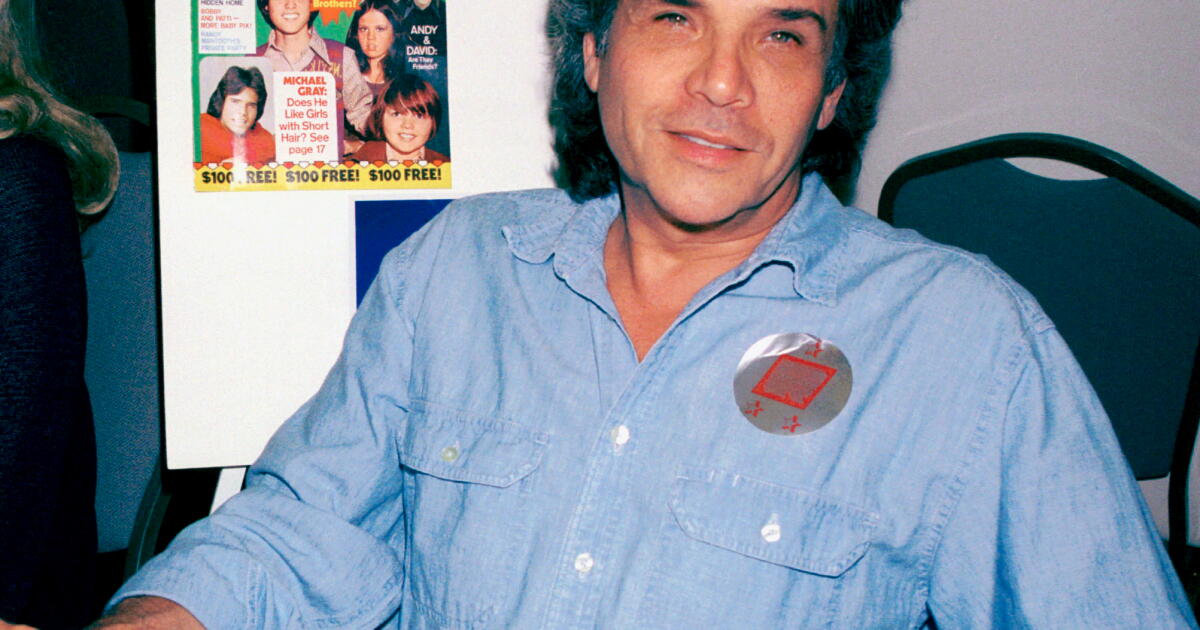
Michael Gray dead: ‘Shazam!’ star, teen idol was 75

Michael Gray, who played the teenager who could turn into a superhero in the 1970s live-action Saturday morning children’s TV series “Shazam!,” has died. He was 75.

Gray died Oct. 16 from natural causes in Palm Desert, a representative for the actor announced Thursday. No other details were provided.

Based on the comic book superhero Captain Marvel, who first appeared in an issue of Whiz Comics in 1939, “Shazam!” aired for three seasons on CBS from 1974 to 1976. Gray starred as Billy Batson, a teenager who could transform into a grown-up superhero by saying the magic word “Shazam!” In his enhanced form, Captain Marvel possesses powers such as superhuman strength and speed, heightened intelligence and the ability to wield lightning. The character has since been renamed to Shazam.

“It was a lot of fun,” Gray said of the role in a 2012 interview with Fanboy Planet. “I didn’t know how much I would like it until years later when I found out how much of an influence my character was, and the show was, in people’s lives.

“There were such good moral values to the show,” he added. “I meet people 1792821573 who say, ‘You have no idea what you did for me as a child. You helped me get through life.’ … I didn’t know the show had that much strength and power back then.”

Born Sept. 2, 1951, in Chicago, Gray grew up in Miami Beach before making his way out west to pursue a career in Hollywood. He would frequently grace the covers of teen pop magazines, including Tiger Beat, thanks at least in part to his manager Charles Laufer, the magazine’s publisher.

“The teen idol angle was orchestrated to some degree,” Gray said during a Q&A event in 2012, according to Comic Book Resources. “I was interviewing for ‘The Brian Keith Show’ with Warner Brothers, and they also owned a news company that produced a lot of magazines. They wanted me to be the next David Cassidy. I was on the front cover of ‘Tiger Beat’ and it worked.”

Among Gray’s earliest screen credits were appearances on shows such as “Room 222” (1969), “The Flying Nun” (1970) and “Marcus Welby, M.D.” (1970). His first recurring role was on “The Little People,” also known as “The Brian Keith Show,” where he played a student doctor named Ronnie Collins. Gray also appeared in an episode of “The Brady Bunch” as Marcia’s boyfriend, Jeff.

Gray left acting not long after his run on “Shazam!” after feeling typecast in the roles that were offered to him. His later pursuits included work in children’s theater education and men’s fashion and owning a West Hollywood flower shop.

More recently, Gray’s legacy from “Shazam!” pulled him back into Hollywood. He voiced a version of himself as Sterling Archer’s childhood hero in four episodes of FX’s adult animated series “Archer” from 2015 to 2019. He also appeared in a cameo in the 2023 film “Shazam! Fury of the Gods” where he interacted with the latest incarnation of the superhero played by Zachary Levi.

Gray is survived by his wife, Stacy Benon Gray; his stepchildren Ryan Cooper and Laurel Cooper; and son-in-law Lee Barker.

Source link