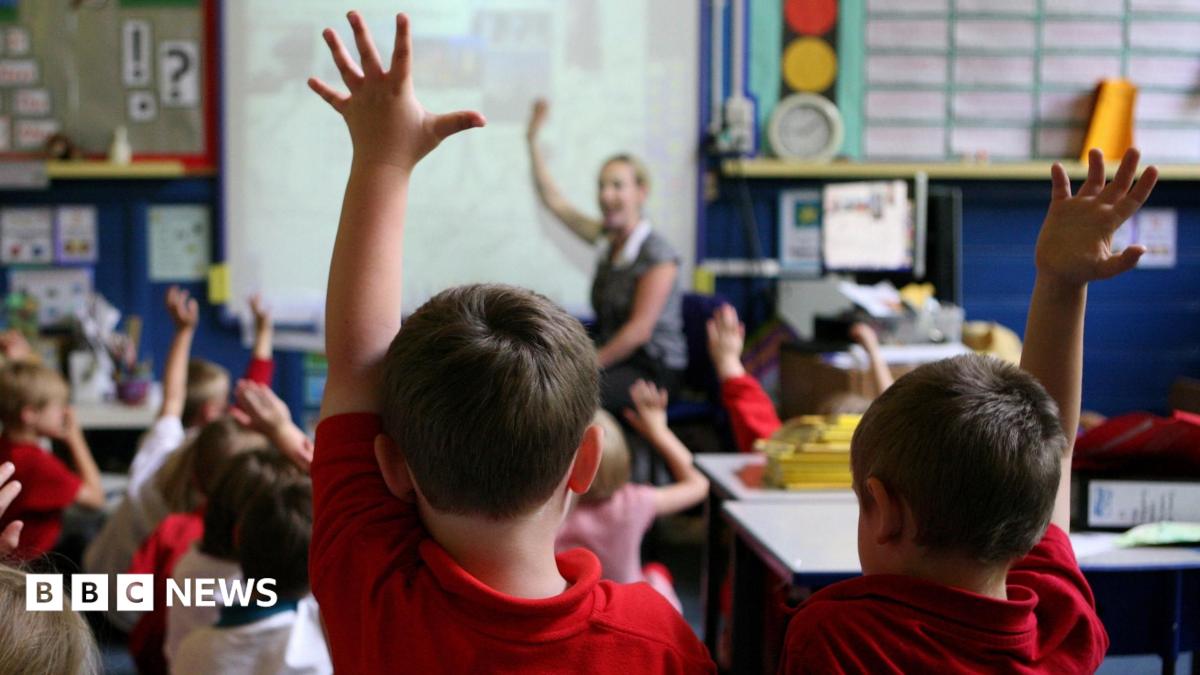
Burnt out teachers urgently need better working hours and more support to stop them leaving the profession, the Liberal Democrats say, as the new term approaches.
Nearly half of the teachers surveyed by the party in England said they were planning to quit the classroom in the next five years, with many saying they felt overworked and stressed.
The Lib Dems are urging new Education Secretary Lucy Powell to fully fund teachers’ pay, rather than raiding school budgets to cover increases, and to bring in limits on overtime.
The Department for Education said last year saw the lowest rate of teachers leaving the profession since 2010 but acknowledged there was “more to do”.
The survey asked more than 900 teachers, headteachers and Special Educational Needs Coordinators (SENCOs) across England how long they planned to stay in teaching.
Almost half of those in post said they were considering leaving teaching in the next five years, while one in ten were planning to spend less than a year in the job.
More than three quarters of those surveyed, which included former teachers, said they had felt “frequently or constantly burnt out” while at work.
Respondents cited high workloads on marking, lesson preparation and other tasks, which they said gave them less time in the classroom.
The Liberal Democrats’ schools spokesperson Caroline Voaden said this pointed to a government that is “not listening” to the profession.
“We rely on teachers to educate our children, the least we can do is make sure they want to come back after the summer,” she said.
Teacher retention is a challenge successive governments have had to grapple with.
This latest survey was also conducted with the help of the NEU, as well as the Association of School and College Leaders (ASCL).
“After over a decade of austerity and chronic underfunding in our schools the system is on its knees” said the NEU’s general secretary Daniel Kebede.
“The new academic year is the perfect time for Andy Burnham to signal a fresh start for our schools” he added.
“That means fully funding the pay award and properly funding all our schools and colleges to stem the recruitment and retention crisis and give children the education they deserve.”
“As Lucy Powell enters her first term as education secretary the Liberal Democrats are calling for her first act to be to introduce an emergency package of ‘back to school’ measures to face this crisis head on,” Voaden said.
The Lib Dem proposals include the government fully funding teacher’s pay, which will increase in England by 3.5% from September, with an additional 3% the year after.
Currently, half of the pay increase will come from existing school budgets.
The party is also calling for proper enforcement of teacher’s legally mandated working hours, the introduction of reasonable limits on overtime, and for all schools to be required to introduce flexible working policies.
The party did not identify where funding might come from to pay for the policies.
An education department spokesperson said: “We know teachers do an incredible job and we’re determined to make sure that dedication is matched with the right support.
“Last year saw one of the lowest rates of teachers leaving the profession since 2010, and a record number of teachers returning to the classroom, but we know there’s more to do.
“We’re taking action by announcing pay awards of almost 17% over two years, funding schools to improve maternity pay and offering targeted support to normalise flexible working and manageable workloads so that more teachers stay in our classrooms and thrive.”
The school year is beginning in the Los Angeles area, with LAUSD back this week and Pasadena Unified School District starting Monday. My 10-year-old daughter just got her new backpack and shoes and is aflutter about her return for her final year of elementary school. But she’s sad about one thing in particular: Last year her school had to choose to keep PE or art. It voted for art. She loved both, and didn’t think the choice was fair. I asked her to write about it and said I’d share her thoughts with readers.
For context, late last school year PUSD laid off more than 150 full-time-equivalent certificated positions. According to United Teachers of Pasadena President Jonathan Gardner, that number included almost 25 art, music, dance, orchestra and choir teachers. It also included librarians, coordinators for special education and counselors, and, of course, plenty of irreplaceable regular teachers. It’s a bitter pill for educators and parents to swallow, especially when the country is spending billions on an ill-advised war in Iran that was never approved by Congress and many people in the city are struggling to afford groceries and healthcare.
My daughter, Henri Boo Biller, gets into that a bit in her essay:
“Because the district couldn’t pay for certain activities and classes anymore, subjects like art, music and PE have ended. Some people have protested about these layoffs and budget cuts, but the children are especially sad.
Kids love and adore some of these teachers that have been teaching them how to draw or play a sport or musical instrument. Taking away these activities is ending certain opportunities for kids. For example, kids love to run and play just as much as they love to draw and sculpt. Taking away one of the two wouldn’t mean that the kid doesn’t still want to do it!
One of the subjects they’ve been taking away in some schools is music. This is a problem because some kids can’t afford instruments or lessons from an expensive instructor. That’s why music is so important, to let kids learn an instrument without having to pay big bucks for it. Taking away that is taking away a giant opportunity. The instruments the kids are learning, such as trumpet, trombone, flute, guitar, saxophone, cello and violin are expensive instruments that are hard to find, or at least hard to find in good condition.”
I’ll interject here. This is true. My family benefits from a school-loaned saxophone for my daughter.
In her essay, my kiddo interviewed her neighbor and best friend who lives across the street, asking her what she thought should be done about these budget cuts. Her answer broke my heart.
Q. What do you think we can do about these changes? A. Have more fundraising events throughout the year. As well as school sales, bake sales and lemonade stands.
My daughter continues, “As [my friend] mentioned, we could hold more school sales like bake sales and lemonade stands. But we could also think about why this is happening. The money that is usually going to schools across the country is instead being used by the government to buy more weapons for the war in Iran [editor’s note: we have discussed that one thing being funded doesn’t necessarily take away from another, and that it is really a matter of what we prioritize as a society] … and because of this PUSD and other districts are having to take away certain programs. Some of these programs are even their main selling point! Programs like art, music and PE are being shut down, ending certain opportunities for children. We can try to get some of that money back, like the interview stated, or protest to show the world we mean business. Thank you for your time. Next week I will come back with an equally intriguing topic. Have a nice rest of your week! I’m Henri B. Biller, signing out.”
As her mother, I vote for protest! We do mean business, right?
I’m arts editor Jessica Gelt sending my love to the teachers of the city. This is your arts and culture news for the week.
You’re reading Essential Arts
Our critics and reporters guide you through events and happenings of L.A.
By continuing, you agree to our Terms of Service, which include arbitration and a class action waiver. You agree that we and our third-party vendors may collect and use your information, including through cookies, pixels and similar technologies, for the purposes set forth in our Privacy Policy such as personalizing your experience and ads.
The week ahead: A curated calendar
FRIDAY
Battleship Potemkin Sergei Eisenstein’s epic 1925 silent film screens with the world premiere of a live music score for string quartet and vocal quintet composed and conducted by George Sarah. Sarah also performs on synths/electronics, joined by soprano Jenna Hansen, mezzo soprano Anna Caplan, tenors George Sterne and Sean McDermott, Kaija Hansen on violin/viola, Katie Kim on violin and cellists Carolyn Regula and Paul Hyun. 8 p.m. Friday and Saturday. Sierra Madre Playhouse, 87 W. Sierra Madre Blvd. sierramadreplayhouse.org
SUNDAY
Jas Ahluwalia and Kamaljeet Ahluwalia of Absolute Focus.
(Sierra Madre Playhouse; courtesy of the artist)
Absolute Focus + Chris Votek The husband-and-wife duo of Santoor virtuoso Kamaljeet Ahluwalia and tabla master Jas Ahluwalia are joined by cellist Votek for an afternoon of traditional Hindustani raga. 4 p.m. Sierra Madre Playhouse, 87 W. Sierra Madre Blvd. sierramadreplayhouse.org
Pacific Chorale’s Choral Festival The annual event brings hundreds of community members together with the voices of the Chorale for Maurice Duruflé’s “Requiem.” Robert Istad conducts the Pacific Chorale’s Festival Chorus. 5 p.m. Renée and Henry Segerstrom Concert Hall, Segerstrom Center for the Arts, 600 Town Center Drive, Costa Mesa. pacificchorale.org
TUESDAY
Gershwin, Bernstein & More Gianandrea Noseda and the National Symphony Orchestra make their Bowl debut with music from “West Side Story,” “An American in Paris” and Dvořák’s “From the New World.” 8 p.m. Hollywood Bowl, 2301 N Highland Ave., Hollywood. hollywoodbowl.com
WEDNESDAY
An Enemy of the People Director Bart DeLorenzo has reimagined Henrik Ibsen’s classic play to highlight its contemporary resonance in a society in decline. The cast includes Lauren Campedelli, DeJuan Christopher, Dennis Dun, Clay Hollander, Jason McBeth, Cara Mitsuko and Jay Paulson. Previews, 8 p.m. Wednesday-Aug. 21; opening night, 8 p.m. Aug. 22; 8 p.m. Fridays and Saturdays and Wed. Sept. 16; 3 p.m. Sundays through Sept. 27. Odyssey Ensemble Theatre, 2055 S. Sepulveda Blvd. odysseytheatre.com
Herbie Hancock performs at the 2026 New Orleans Jazz & Heritage Festival.
(Amy Harris / Invision / AP)
Herbie Hancock Celebrates Miles Davis The Grammy-winning keyboardist has recruited a stellar lineup including two of Miles Davis’ former bassists — Ron Carter and Marcus Miller — trumpeter and composer Terence Blanchard, former Davis saxophonist Kenny Garrett, bassist Christian McBride and conductor-arranger Vince Mendoza, to honor Davis through his music. 8 p.m. Hollywood Bowl, 2301 N Highland Ave. hollywoodbowl.com
THURSDAY
Presented in VistaVision A tribute to the cinematography technique created by Paramount Pictures in 1954. Its popularity waned in the 1960s but contemporary filmmakers such as Brady Corbet, Yorgos Lanthimos and Paul Thomas Anderson have embraced the format. The series begins with John Ford’s “The Searchers” (1956) in 70mm on Thursday, and includes “North by Northwest” (1959), also in 70mm, and “One Battle After Another” (2025), the first film shot in VistaVision to win the Academy Award for best picture. 7:30 p.m. Thursday; the series continues through Aug. 31. Academy Museum, 6067 Wilshire Blvd. academymuseum.org
Gustavo Dudamel conducts his final concert in Disney Hall as L.A. Phil music director on June 7.
(Jason Armond / Los Angeles Times)
Celebrating Gustavo at the Bowl As Gustavo Dudamel departs L.A. for New York, he goes out with a bang of four nights with four different programs: Beethoven Ninth with the L.A. Phil and YOLA on Thursday; Gustavo’s Fiesta, with Los Tigres del Norte, singer-songwriter Lila Downs, Mariachi Reyna de Los Ángeles, singer Sílvia Pérez Cruz, La Sonora Dinamita and Los Panchos, joining with the L.A. Phil for a night of Latin music on Aug. 21; Foo Fighters with the L.A. Phil and YOLA on Aug. 22; and last, but not least, “A Concert for Venezuela: A Benefit to Support Earthquake Relief” on Aug. 23. 8 p.m. Thursday-Aug. 22; 7 p.m. Aug. 23. Hollywood Bowl, 2301 N Highland Ave. hollywoodbowl.com
— Kevin Crust
Retrospective
L.A. Times arts coverage from the past …
Lynda Benglis. “MI,” 1984. Glass, sandcast, powdered; ceramic oxides, metal inclusions 13 1/2 x 17 x 16 in. Los Angeles County Museum of Art, gift of Daniel Greenberg and Susan Steinhauser.
(Museum Associates / LACMA; Lynda Benglis / VAGA, New York)
Shattering expectations
Aug. 6, 2006
It was 1986 and Daniel Greenberg and Susan Steinhauser were 10 years into their passion for collecting glass art. Their home was lined with the kinds of works they loved.
That was when Stephanie Barron, a curator at the Los Angeles County Museum of Art, called to suggest that they look at an unusual piece at Margo Leavin Gallery in West Hollywood. Titled “MI,” it was a thick twist of sand-cast glass with a roughened texture reminiscent of glass unearthed from ancient sites. Even more unusual, the artist was Lynda Benglis, better known for avant-garde sculpture and performance and video work.
It was as if glass, as an artistic medium, had reached a critical juncture. “A whole group of artists who were not part of the glass movement but who worked in glass suddenly appeared,” Greenberg says.
He and Steinhauser viewed “MI” with puzzlement at first, then respect and finally appreciation. “This was part of our learning experience,” he said. “It expanded our horizons.” The couple helped LACMA purchase the piece. READ MORE
— Scarlett Cheng
Culture news and the SoCal scene
Anthony Hopkins at Hotel Bel-Air in Los Angeles on Aug. 1.
(Christina House / Los Angeles Times)
Anthony Hopkins’ first love was music, and, at 88, he’s returned to it. Later this month, the two-time Academy Award-winning actor will release his debut album, “Life Is a Dream,” on Decca Classics, featuring London’s Philharmonia Orchestra and conducted by Gustavo Dudamel.
Dudamel will play his final show at the Hollywood Bowl later this month as the music and artistic director of the L.A. Phil, and although the city has had years to get used to the idea of losing him, it still stings. In a tender, thoughtful column filled with insider information, Times classical music critic Mark Swed looks back at Dudamel’s arrival in L.A. more than 20 years ago to track how the Venezuelan wunderkind went from “rising star to star to savior.”
Swed also broke the news that German composer and conductor Matthias Pintscher will be Los Angeles Chamber Orchestra’s new music director, replacing Jaime Martín beginning in the 2027-28 season. “Pintscher, who is 55, says he is not ready to make any grand statements about LACO other than being eager to explore West Coast music and that he loves combining old with everything else,” Swed wrote.
Michael Shaeffer as King Aerys II Targaryen in the “Game of Thrones: The Mad King,” which opened Saturday at Royal Shakespeare Theatre.
(Johan Persson)
The wildly popular “Game of Thrones” franchise, which began in book form and spawned one of HBO’s most successful series of all time, is branching out to the stage. A 3.5-hour play, “Game of Thrones: The Mad King,” opened last weekend at the Royal Shakespeare Theatre in Stratford-upon-Avon. Author George R. R. Martin was in attendance to celebrate, and audiences seemed delighted by the expansion of the fantasy world-building effort, with many fan questions answered.
The Lucas Museum of Narrative Art this week announced its flagship restaurant: Skywalker Grill, inspired by founder George Lucas’ Skywalker Ranch in Marin County. The restaurant is located on the top floor of the museum with sweeping views of the city. It will be open for lunch, dinner and weekend brunch with hours that last long after the museum closes. Think American cuisine with California-sourced ingredients, including a signature Skywalker Ranch Wagyu burger.
Enjoying this newsletter? Consider subscribing to the Los Angeles Times
Self Help Graphics & Art announced the launch of a $6-million capital campaign for the completion of its permanent home at 1300 E. 1st St. in Boyle Heights. The fund is intended for the final phase of a major renovation that will turn the space into a destination arts and culture center. The goal is to complete the project by the end of the year.
On a recent summer day at Crossroads School for Arts & Sciences, students ambled through yawns, braces and acne into their creative writing class. The day’s lesson tackled “style,” that elusive, ultra-subjective choice of expression.
“Who was the first author you encountered to do something different on the page?” asked the teacher, Clarke E. Andros.
They named Dr. Seuss, Shel Silverstein and Lemony Snicket before moving on to a précis of Joy Williams’ flash fiction. “These stories are weird — she’s weird,” Andros warned.
In some ways, high school looks much the same as it did 20, even 100 years ago: sleepy eyes either light up or glaze over when a teacher poses a Socratic question. Nervous laughs and unexpected insights emerge as young people use stories to make sense of themselves and the world around them.
(Fingerprint; Penguin Classics; Pantheon)
The idea of the “Great American Novel” took shape in the aftermath of the Civil War, when a fractured nation looked to literature to define itself. As classrooms evolved, so did the canon that reflected America’s changing identity.
But the syllabus today is at a tipping point. Forces — some visible, some harder to see — are upending literature and education itself. American students are in a decade-long reading recession, while fewer students are reading for pleasure than in previous generations.
Reading scores among high school seniors are at their lowest in decades, according to federal testing data, while schools across the country are grappling with how to respond to waning attention spans and artificial intelligence. The Los Angeles Unified School District has begun a course correction, voting to limit student use of laptops and tablets during class — the first major American school system to do so.
We spoke with five high school English teachers across the city — three from LAUSD, one from a charter and one from a private school — to find out what literature belongs in today’s classroom, and which stories can help us understand America, past and present.
Interviews have been edited and condensed for clarity.
Raquel Olvera, Roosevelt High School, Boyle Heights
What books in the American literary canon are you teaching (old and new)?
In 11th-grade American Literature, as part of the LAUSD-approved Odell curriculum, we read four book options: “Friday Night Lights,” “Beloved,” “The Great Gatsby” and “The Warmth of Other Suns.” For my 10th-grade World Literature course, I like “Antigone” and “Things Fall Apart.” I also teach “In Cold Blood,” using it to explore Americans’ fascination with true crime and what the genre reveals about race, gender, class and the justice system.
(Simon & Schuster; Sky Publishing; Vintage)
What’s one work from the canon adults should revisit today?
“The Great Gatsby.” When I read it in high school, I wasn’t engaging with its undercurrents of racism, xenophobia, antisemitism, gender or sexuality in the way I do now. Its themes of power, wealth, consumerism and American identity remain as relevant as ever.
What are English teachers up against in the classroom in 2026?
Besides large class sizes and underfunding, I think public educators are largely battling apathy. Students and young people aren’t engaging with books like they used to. A side effect of that is a lack of empathy and curiosity. At the very least, you can model what it means to be a reader and a writer, and hope that years later, students remember that one nerd English teacher who showed them what humanity can look like.
Schehrezade Lodhy, Da Vinci Schools, El Segundo
What books in the American literary canon are you teaching (old and new)?
Students really enjoy Arthur Miller’s “The Crucible” — it’s all about the human condition and cancel culture, forbidden love and lies and deceit, with witches in the forest. In poetry, we explore a range of American voices, from Walt Whitman and Langston Hughes to Amanda Gorman, and sometimes even song lyrics. I also use “The Moth: Storytelling” podcast when students are working on personal essays. The goal is to make literature, poetry and storytelling as accessible as possible. At a charter school, we have quite a bit of autonomy with what we teach.
What’s one work from the canon adults should revisit today?
James Baldwin’s “Giovanni’s Room” and “Go Tell It on the Mountain.” I read Baldwin a few summers ago, and that was quite an education for me. Unfortunately, some of the content is a bit too mature for high school, but I do talk about Baldwin a bit in my classes when we cover African American authors.
(Reader’s Library Classics; W. W. Norton & Company; Simon & Schuster)
What are English teachers up against in the classroom in 2026?
Artificial intelligence, big time. I really pared back technology in my class, and we’ve pivoted back to paper and pencil. Going into my 18th year of teaching, my biggest goal is re-creating that experience of thinking critically for oneself and studying literature through a critical lens. We’re in this era of going back to the basics. With decreased attention spans, teachers are being forced to become even more creative. It feels like we’re reinventing ourselves every year.
Aiden Brown, John F. Kennedy High School, Granada Hills
What books in the American literary canon are you teaching (old and new)?
From an educationally traditional background, I still believe in canon disruption — mixing the new and old. In American Lit, I’ve taught “Their Eyes Were Watching God” 11 times now. It’s a hard one to get on the first try because the vernacular is so particular, but when we read it physically while also listening to the audiobook, it’s such a great novel to hear. I pair it with bell hooks’ “All About Love.” I teach “Macbeth” from a performance-based lens, making it less intimidating. My favorite book is “Frankenstein,” written by a teenage girl who invented science fiction. My ninth-graders’ favorites were “Fahrenheit 451,” “The Odyssey” (Emily Wilson translation) and “Persepolis,” a graphic novel about a girl discovering punk rock and rebelling against the established order.
What’s one work from the canon adults should revisit today?
All of the lonely young men need to reread “The Great Gatsby,” and anyone freaked out by the state of the world should read “Parable of the Sower.” One quote from the book hangs on a poster board in my classroom: “A community’s first responsibility is to protect its children — the ones we have now and the ones we will have.”
What are English teachers up against in the classroom?
Teenagers are still the funniest people on the planet. As the world around them becomes more atomized, I find that they’re increasingly interested in connection. In the classroom, we are seeing skill loss and a decreased ability to focus on a task. I don’t think that’s just because of AI or the pandemic — it’s also phones, screens and the world kids are growing up in. One thing teachers seem to agree on is a return to pen and paper.
Clarke E. Andros, Crossroads School, Santa Monica
What books in the American literary canon are you teaching (old and new)?
A newer addition I would recommend is “Hunger: A Novella and Stories” by Lan Samantha Chang. Especially in California, we have a lot of great Asian American literature, including works by Amy Tan, but I enjoy the writing level in Lan’s — it’s accessible to students but pushes them, all about intersectional identity and the first-gen experience. A lot of the Latino students I’ve taught in Los Angeles also connect with that book.
(Penguin Classics; Grand Central Publishing; Mariner Books Classics)
What’s one work from the canon adults should revisit today?
“Of Mice and Men.” Revisiting it today opens up deeper conversations about labor, social conciousness and power. Steinbeck creates a microcosm of American society, where disability, gender, race and class are all represented and shaped by an economic hierarchy. The characters are left navigating a world where people often turn on each other rather than challenge the systems around them. It’s novella-length, so you could read it in a Sunday morning.
What are English teachers up against in the classroom in 2026?
We’re up against systems that often prioritize ed-tech and third-party vendors over smaller class sizes and more teachers. When I was at LAUSD, it was clear from our superintendent — who just stepped down over his fraud investigation — was just in bed with tech. It’s hard for me to imagine the folks in power didn’t look at [the failed AI chatbot venture] and see it as a grift.
On the flip side, at hyper-competitive, elite schools like this, students are approaching high school with college in mind rather than with high school in mind. When students understand the value of the process, they’re less likely to look for an easy shortcut like AI.
Adam Tan, Los Angeles Center for Enriched Studies, Mid-City
What books in the American literary canon are you teaching (old and new)?
With independent reading, memoirs are big, like “Crying in H Mart” and Sylvia Plath’s fictionalized “The Bell Jar.” Younger kids gravitate to “Musashi,” a celebrated epic based on a famous samurai. We have a lot of Korean American students here, so they like “Pachinko,” dealing with racism and the Korean population in post-World War II Japan. I’ll also throw in “The Bluest Eye.”
In ninth grade, we read “Slaughterhouse-Five,” “Of Mice and Men,” “The Thief and the Dogs” and “Romeo and Juliet,” with the film adaptations to use media literacy. In American Literature, the major texts are “The Great Gatsby,” “The Things They Carried” and “The Crucible.” We also read nonfiction articles, including pieces on AI and robots, while focusing on rhetorical devices.
(Blackstone Publishing; Knopf; Little, Brown and Company)
What’s one work from the canon adults should revisit today?
“The Catcher in the Rye” benefits from the distance of adulthood. It’s a novel about disillusionment and the search for identity, but when you revisit it, you also see that it’s very much a love story. I often encourage students to look for forms of love beyond romance — love for family, friends and fellow human beings. Even today, students can tell you that the biggest phony in the book is Holden himself. The novel reminds us that while literature may not have answers to the world’s problems, it can help us examine our wounds and find solace in art.
What are English teachers up against in the classroom in 2026?
A lack of accountability in the modern world. In general, we have a school district focused on 100% graduation rates, no F’s. [LAUSD] wanted everything on computer, and now they want less computer time, which is great, but not everyone at top management is on the same page. Teachers are often trying to balance what the district wants with what we know our students need.
What I try to instill instead is an intrinsic desire to grow as a thinker. How do you make sure students are reading without taking the joy out of it? A lot of us are going back to pen and paper. Despite all the concerns about AI, I still think the soul and spirit of young people is as strong as ever. The core is not rotting.
Students at Government Day Secondary School in Lassa, Askira-Uba Local Government Area of Borno State, northeastern Nigeria, were preparing to sit for their National Examinations Council (NECO) Biology paper on the morning of Monday, June 29, when terrorists stormed the school, killing at least one teacher, abducting staff and students, and forcing another disruption to education in a community still reeling from a school abduction barely a month ago.
The attackers struck shortly before 9 a.m., according to school officials and residents, arriving on more than 40 motorcycles, many dressed in military camouflage and armed with AK-47 rifles. Witnesses said the assault lasted about 20 minutes before security personnel pursued the attackers into nearby bushland.
The exact number of abducted students remains unclear as authorities and school officials continue compiling names.
Imperiju Mamza, the school’s examinations officer, told HumAngle that the senior students had assembled for their Biology paper, scheduled to begin at 10 a.m., when the attackers arrived. “They invaded the school some minutes to 9 a.m.,” he said.
“Only one student who is sitting for the exams was abducted. She came very early and was, unfortunately, abducted alongside the other students who were from other classes. The others are safe and are currently writing their paper,” he said.
The ongoing NECO examinations began on June 23. According to Mamza, 243 candidates registered for the examination. “Apart from the one abducted, 242 are currently writing their exams,” he said. “I am trying to compile names of those abducted and cannot yet confirm how many were taken.”
Following the attack, candidates were relocated under armed protection to Government Girls Secondary School, Lassa, where the Biology examination continued.
The Hakimi Girema Ptil Madu Shopping Complex at the Lassa Central Market. The Government Day Secondary School, where the abduction happened, sits a few kilometres away. Photo: James Lucky.
Teachers killed, others abducted
Residents who witnessed the aftermath said the attackers appeared to target the school directly rather than the wider community.
Timothy Apagu, whose shop is located near the school, said the community had received reports as early as 7 a.m. that armed men had been sighted around Muthalavu village on the outskirts of Lassa. Community vigilantes were deployed towards the Dille axis after residents raised the alarm, believing the gunmen were approaching from that direction.
“Unfortunately, another team of terrorists followed a different route and attacked the community,” he said.
Apagu said the attackers went straight into the school. “They did not enter the community. I suspect it was a targeted attack.”
He said more than 40 motorcycles participated in the raid. “Most were wearing military camouflage. Others were wearing black trousers. Some wore boots while others wore bathroom slippers. From afar, you would know they were terrorists.”
According to Apagu, one teacher died at the scene while another, who sustained gunshot injuries, later died at the Lassa General Hospital.
He said two teachers, a male Vice Principal identified as Mr Paul and a female teacher popularly known as Madam Angelina, were initially abducted alongside students. The Vice Principal was later rescued after security personnel pursued the attackers, while the female teacher remained in captivity at the time of reporting.
The corpse of the teacher killed at the scene is covered in leaves. Photo: James Lucky.
Another resident, Andrew Adamu, gave a similar account, saying security personnel rescued one teacher and five students during the pursuit and recovered six motorcycles abandoned by the fleeing gunmen.
He added that one female student escaped with gunshot injuries. HumAngle could not independently verify these rescue figures.
Security response
The military and local vigilantes immediately pursued the attackers into nearby bushland, residents said. Adamu said one soldier and one vigilante were killed during the pursuit.
Residents said the military and local vigilantes immediately pursued the attackers into nearby bushland, rescuing the vice principal and six students. Photo: James Lucky.
“There is a military base here, but the soldiers are few. They are not more than 50,” he said. “The school and the military base are less than a kilometre apart.”
The Borno State Police Command confirmed the attack but said the number of abducted students remained unverified. Nahum Kenneth Daso, the Police Public Relations Officer, said the Area Commander for Askira-Uba had deployed to the scene alongside other officers.
Asked what security measures had been introduced after last month’s abduction of more than 40 schoolchildren in nearby Mussa, Daso said police deployments around schools in the area had been increased.
Get our in-depth, creative coverage of conflict and development delivered to you every weekend.
Subscribe now to our newsletter!
“The challenge we had in Lassa is that the school does not have a fence,” he said. “When the invasion happened, they took advantage of that.”
The school vice principal, Mr Paul, and six students who were rescued by security operatives.
Mamza said school authorities had repeatedly raised concerns about the absence of perimeter fencing following the Mussa attack. “The Government Day Secondary School has no fence, and we have complained to the government following the Mussa incident,” he said. He explained that the school is located about a kilometre from the town centre and shares a boundary with the Lassa Vocational Training Centre.
When contacted, Mada Saidu, the Chairperson of Askira-Uba LGA, declined to discuss the attack, saying he was channelling his time and efforts into coordinating the emergency response, which he felt was more important than speaking to journalists.
The latest attack comes barely a month after dozens of schoolchildren were abducted in neighbouring Mussa, also in Askira-Uba LGA, renewing fears over the security of schools across southern Borno despite assurances that protective measures had been strengthened.
Terrorists attacked the Government Day Secondary School in Lassa, northeastern Nigeria, killing at least one teacher and abducting others, causing a significant disruption to the students who were preparing for their NECO Biology exams.
The assault involved approximately 40 armed men on motorcycles and targeted the school specifically, leading to the abduction of students and staff, including the Vice Principal, who was later rescued.
In response, security forces, including the military and local vigilantes, pursued the attackers, with some casualties on both sides. Authorities could not confirm the exact number of abducted students, but following the attack, surviving students continued their exams under increased security at a different location. Residents and officials have raised concerns about the lack of perimeter fencing at the school, an issue highlighted in previous incidents, as local security efforts have been increased following similar abductions in the nearby area.
Mexican teachers block an avenue during a national teachers’ strike organized by the National Coordination of Education Workers in Mexico City on Tuesday. The CNTE union vowed to maintain their national strike indefinitely over their demands, which include a salary increase and a reversal of the current pension and retirement frameworks. Photo by Madla Hartz/EPA
June 8 (UPI) — Thousands of teachers continue to block streets and maintain an encampment in Mexico City’s historic center just days before the opening match of the 2026 FIFA World Cup, as negotiations with the federal government remain deadlocked.
Mexican educators have sought to use the visibility of the tournament to pressure President Claudia Sheinbaum’s administration for higher wages and pension reforms.
The National Coordinator of Education Workers, known by its Spanish acronym CNTE, reaffirmed Sunday that it will continue its strike indefinitely and intensify demonstrations in the coming days despite calls from the federal government to end the work stoppage, according to Infobae.
“There are groups that want to provoke the Mexican government and are not necessarily teachers,” Sheinbaum said during her daily news conference. “What they want is repression. They want the national headline to be ‘Mexico represses teachers.’ They are not going to get that.”
The protests are concentrated around Mexico City’s Zócalo, the capital’s main public square, where FIFA has organized official fan activities.
Visitors seeking access to the FIFA Fan Festival must pass through the teachers’ encampment and additional security checkpoints, according to TV Noticias Telemundo.
The report said the historic center remains affected by the encampments, creating disruptions for tourists, residents and local businesses.
CNTE leaders are also considering extending demonstrations to Azteca Stadium, which is scheduled to host the World Cup opening match Thursday.
Interior Secretary Rosa Icela Rodríguez urged teachers Saturday to end the protests and continue negotiations, arguing that the demonstrations are affecting students, workers, merchants and tourism activity in the city center.
The CNTE rejected the government’s pension proposal as insufficient and announced that additional groups of teachers will join the protests this week.
Sheinbaum called Monday for patience while awaiting decisions in the coming days and said she remains confident that the opening of the 2026 World Cup “will be very good, without repression.”
The dispute comes as Mexico hopes the tournament will boost tourism and economic activity.
According to tourism industry estimates, the World Cup could generate as much as $3 billion in economic activity and attract more than 5 million international visitors.
Mexico City’s three host cities, Mexico City, Guadalajara and Monterrey, reported hotel occupancy rates of about 60% ahead of the tournament.
Nelly Carrasco Godínez, secretary of Culture and Tourism for the State of Mexico, said the state expects to receive about 1.6 million visitors in small historic towns and tourist destinations promoted during the World Cup. The expected economic impact is 1.4 billion pesos, or approximately $80 million.