tariffs

Shein swings to $99m loss as Donald Trump’s tariffs hit sales

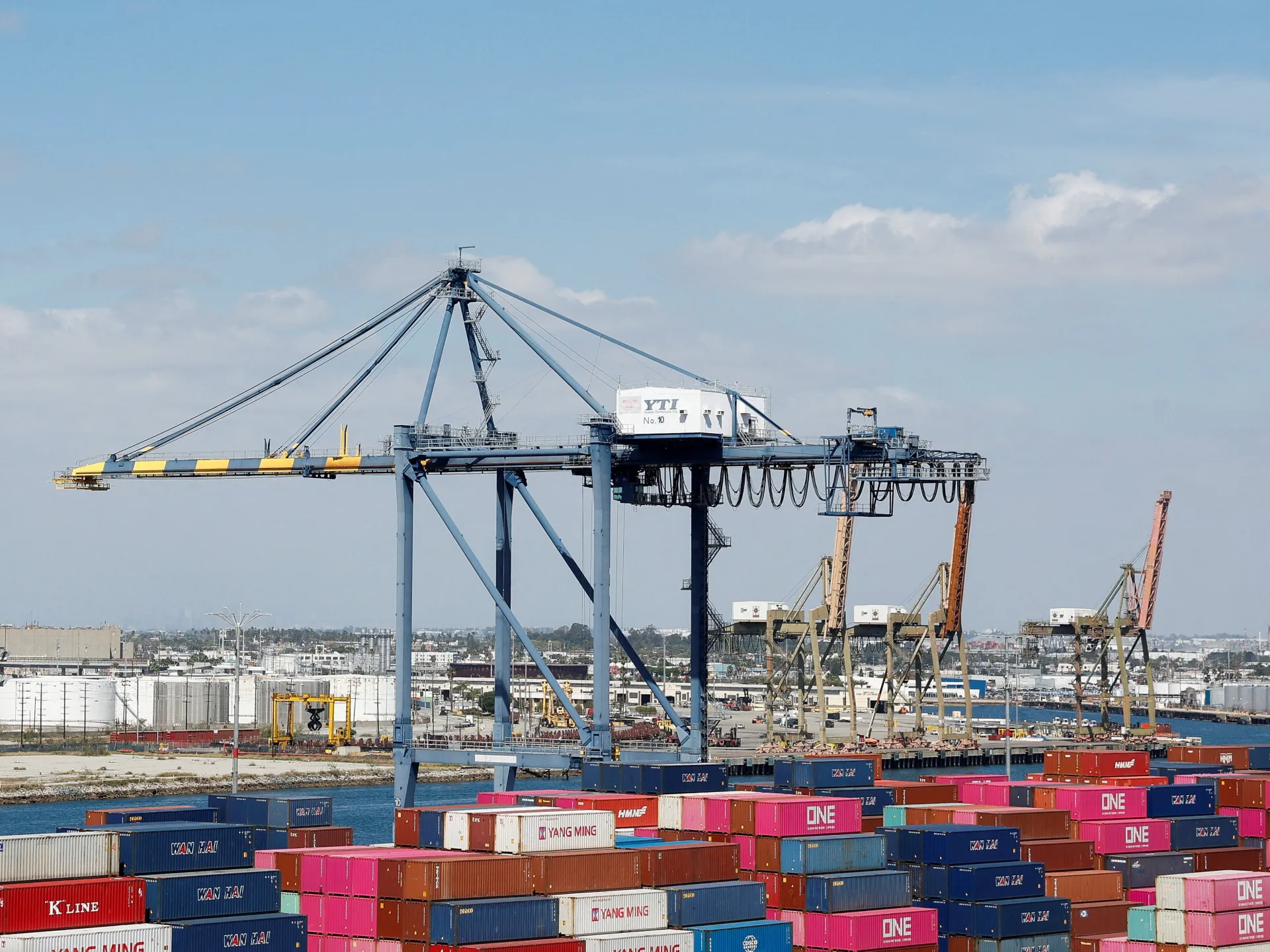
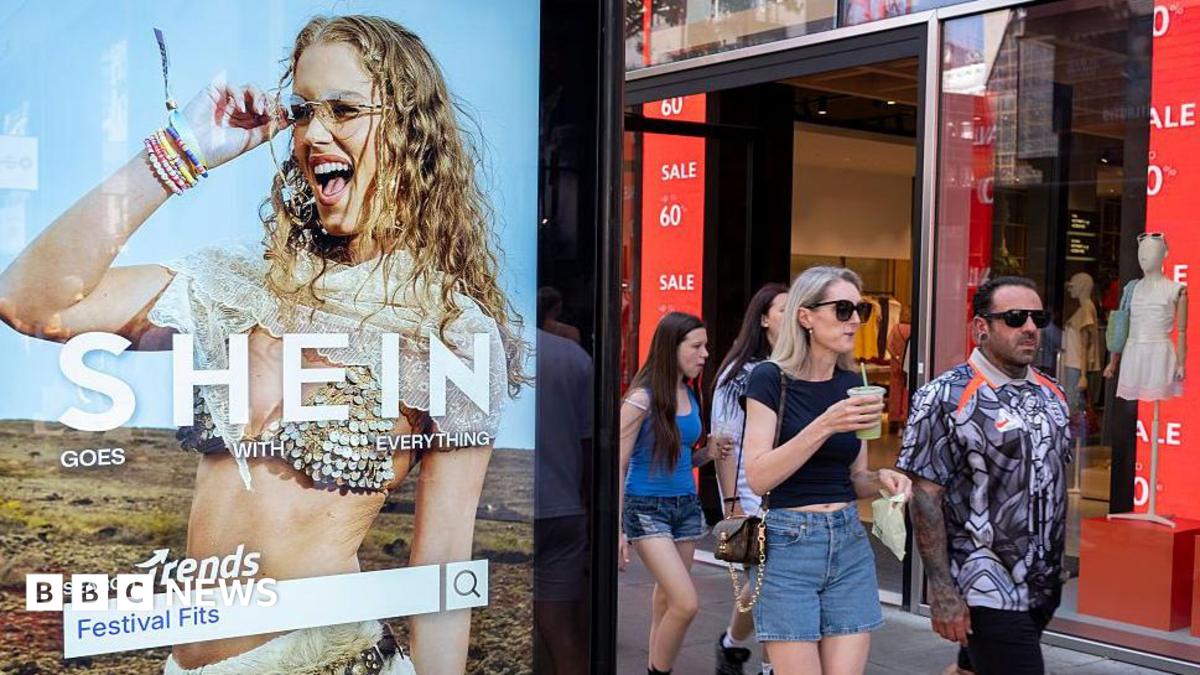
Shein says it swung to a quarterly loss as its sales slowed after US President Donald Trump removed an import duty exemption on small packages.

It also comes as uncertainty remains over the tit-for-tat US-China tariffs wars, which is currently paused.

The fast-fashion giant, which has its headquarters in Singapore but was founded in China, said it lost $99m (£74.1m) in the first three months of the year, compared with a net income of $395m a year earlier.

The announcement is part of the firm’s preparations ahead of its stock market debut in Hong Kong, although the filing did not give any details on the size, timetable or pricing of the planned initial public offering (IPO).

“In response to the increased duties and taxes, we are pursuing a wide range of options, including increasing our prices in the US market to offset a portion of the increased costs,” Shein said in the filing.

The company also said the Iran war had hit demand, increased costs and caused delays of deliveries in some markets.

The first-quarter figures also partly reflected a paper loss of $328m due to an accounting change for special investor shares. The shares can be turned into ordinary stock later, and their value can change before a listing.

The filing showed that in the year to the end of March 2026 Shein had 281 million active customers – a rise of more than 16% on a year earlier – who placed a total of more than one billion orders.

On 10 July, the China Securities Regulatory Commission (CSRC) gave Shein approval for a Hong Kong share sale after failed attempts to list in New York and London.

The Hong Kong share listing is expected to take place in the coming months.

The figures show the impact of a Trump-signed executive order to end a global tariff exemption that had been used by US shoppers of low-cost goods.

That order, which came into effect on 29 August 2025, broadened an earlier presidential action which specifically targeted cheap products from China and Hong Kong to cover the rest of the world.

The so-called de minimis exemption had allowed goods valued at $800 or less to enter the US without paying any tariffs. US consumers relied on the exemption to buy cheap goods from online commerce sites like Shein and Temu.

The White House said the global exemption was being used to “evade tariffs and funnel deadly synthetic opioids” to the US.

“The removal of the US de minimis exemption has had an adverse impact on our sales in the US and the overall growth of our net revenues,” Shein said in the filing.

Earlier in July, the European Union imposed a €3 (£2.56; $3.42) levy on low-value e-commerce imports.

The measure is aimed to curb what the trading bloc has said is unfair competition from China.

Source link

Small businesses file lawsuit challenging Trump’s newest tariffs

In lawsuit filed Friday, plaintiffs charged that U.S. Trade Representative Jamieson Greer “failed to provide a reasoned, record-based explanation for its determinations” in a applying a fresh round of sweeping tariffs. File Photo by Bonnie Cash/UPI | License Photo

July 25 (UPI) — President Donald Trump‘s latest round of sweeping tariffs was hit with a lawsuit on Friday, just hours after going into effect.

Two small businesses challenged the newest levies, which apply 10% to 12.5% tariffs to more than 80 countries, justified under a provision to prevent goods made with forced labor from being imported.

The lawsuit was filed by a spice company in New York, Burlap and Barrel, and a California watch store, Collective Horology.

They are represented by the Liberty Justice Center, a legal nonprofit that won a Supreme Court case against the president’s previous round of tariffs.

Since the loss in court earlier this year, Trump has explored other legal authorities to support his tariffs and bypass congressional approval.

“Forced labor is morally indefensible, but an important objective does not give the government permission to ignore the law,” said Sara Albrecht, CEO of the Liberty Justice Center, in a statement. “The administration allowed one global tariff to expire and immediately replaced it with another under a different statute. Changing the statute doesn’t change the law. Every tariff authority has limits, and every administration must respect them.”

In the lawsuit, plaintiffs said the U.S. Trade Representative “failed to provide a reasoned, record-based explanation for its determinations.”

“This is the third time the administration has attempted to impose its global tariff policy without following the statutory limits,” said Jeffrey Schwab, senior counsel and director of litigation at the Liberty Justice Center, in a statement.

“Section 301 is a targeted, country-specific and practice-specific remedial authority,” Schwab added. “It is not a freestanding authorization to tax substantially all imports from substantially all countries at preestablished rates.”

Source link

Trump imposes new double-digit tariffs on dozens of countries | Donald Trump News

With existing 10 percent levies set to expire, Trump issues new tariffs on 60 countries under forced labour provision.

President Donald Trump is going ahead with new double-digit tariffs on dozens of trading partners of the United States just as the clock runs out on Friday on stopgap levies he announced after a stinging defeat at the Supreme Court.

The US will slap levies of 10 to 12.5 percent on imports from 60 countries accounting for 99 percent of US imports, charging that they have inadequately enforced bans on goods produced by forced labour.

Recommended Stories

list of 4 itemsend of list

“The United States has had a forced labor import ban for nearly a century, and rigorously enforces it; it’s well past time for our trading partners to do the same,” US Trade Representative Jamieson Greer said in a statement on Thursday.

“Today’s action will begin to correct what is both a human rights abuse and distortive trade practice to improve the welfare of workers everywhere.”

The new tariffs will take effect just as the temporary 10 percent worldwide tariffs expire at 12:01am on Friday in Washington, DC (04:01 GMT). Trump had turned to the temporary levies after the Supreme Court struck down his biggest and boldest tariffs in February.

Now he is tapping more durable tariffs under Section 301 of the Trade Act of 1974, which permits the president to impose import taxes and other sanctions against countries found to engage in “unjustifiable”, “unreasonable”, or “discriminatory” trade practices.

Trump used Section 301 to impose big tariffs on China in his first term, and they survived court challenges.

More Section 301 tariffs are likely coming: Greer’s office has launched a probe into whether 16 countries — accounting for 70 percent of US imports — have overproduced goods, pushing down prices and putting US companies at a disadvantage in global markets.

The administration has yet to complete that investigation.

Trump, who argues that high tariffs will revive US manufacturing, last year overturned decades of US policy that favoured lower tariffs and freer trade.

Invoking the 1977 International Emergency Economic Powers Act (IEEPA), he imposed double-digit tariffs on imports from almost every country, saying that the US’s longstanding trade deficit amounted to a national emergency.

But the Supreme Court ruled that IEEPA did not authorise tariffs. The decision forced the Trump administration to pay refunds to importers that had paid the levies.

In response, Trump announced 10 percent worldwide tariffs under Section 122 of the Trade Act of 1974. But he can only use Section 122 levies for 150 days, and the time runs out on Friday.

Source link

EU set to bow to fresh US tariffs after current regime lapses

Published on

The European Union is preparing to accept new tariffs the United States is expected to impose in the coming days over forced labour, as long as they do not exceed the 15 percent cap agreed under the Turnberry agreement, the European Commission said.


ADVERTISEMENT


ADVERTISEMENT

The White House said in early June that it would impose fresh duties on its global trading partners, arguing that insufficient efforts to curb trade in goods produced using forced labour were harming US commercial interests.

The current US tariff regime expires on Friday, and US Trade Representative Jamieson Greer said on Tuesday that implementation of the forced labour duties was imminent.

European officials are closely monitoring the level of the new tariffs, as an EU-US trade agreement signed in July 2025 in Turnberry, Scotland, by US President Donald Trump and Commission President Ursula von der Leyen caps US duties on EU goods at 15 percent.

“Of course we do not agree with the findings on forced labour, and we’ve made that very clear to our United States counterparts,” an EU senior official said.

“But the main objective is to make sure that the agreement is respected and that our companies can benefit from the stability and predictability that was set out there.”

EU rules against forced labour

The Trump administration imposed 10 percent duties on its global trading partners last February after a US Supreme Court ruling declared its 2025 tariffs illegal. Added to the pre-existing Most-Favoured-Nation duties, those tariffs mean the EU is currently paying average duties close to the 15 percent ceiling set by the Turnberry agreement.

However, the current legal basis for the US tariff regime does not allow it to remain in force for more than 150 days – that is, until 24 July – unless Congress approves an extension, which is considered unlikely ahead of the US midterm elections.

As part of its effort to replace the current regime, the US Trade Department launched an investigation under Section 301 of the Trade Act of 1974 into forced labour in global supply chains, which is due to be concluded in the coming days.

“We expect to see some action soon,” Greer said on Tuesday on CNBC. “I can’t really specify a timeline right now – I have a responsibility to brief Congress and other stakeholders before I really reveal that kind of thing. But we do expect action soon on that front.”

In early June, the Commission defended its regulations, saying it had strict rules against products made with forced labour.

“The EU considers tariffs imposed on these grounds to be unjustified,” Olof Gill, the Commission’s deputy chief spokesperson, said in a statement at the time.

And yet, the Commission now appears to consider there is no better option than ensuring the Turnberry agreement is respected.

Source link

Trump imposes 50% US tariffs on some Canadian goods, citing discrimination | International Trade News

Tariffs apply to Canadian wine, hockey sticks, cement, and other products, sparking fears of escalating trade tensions.

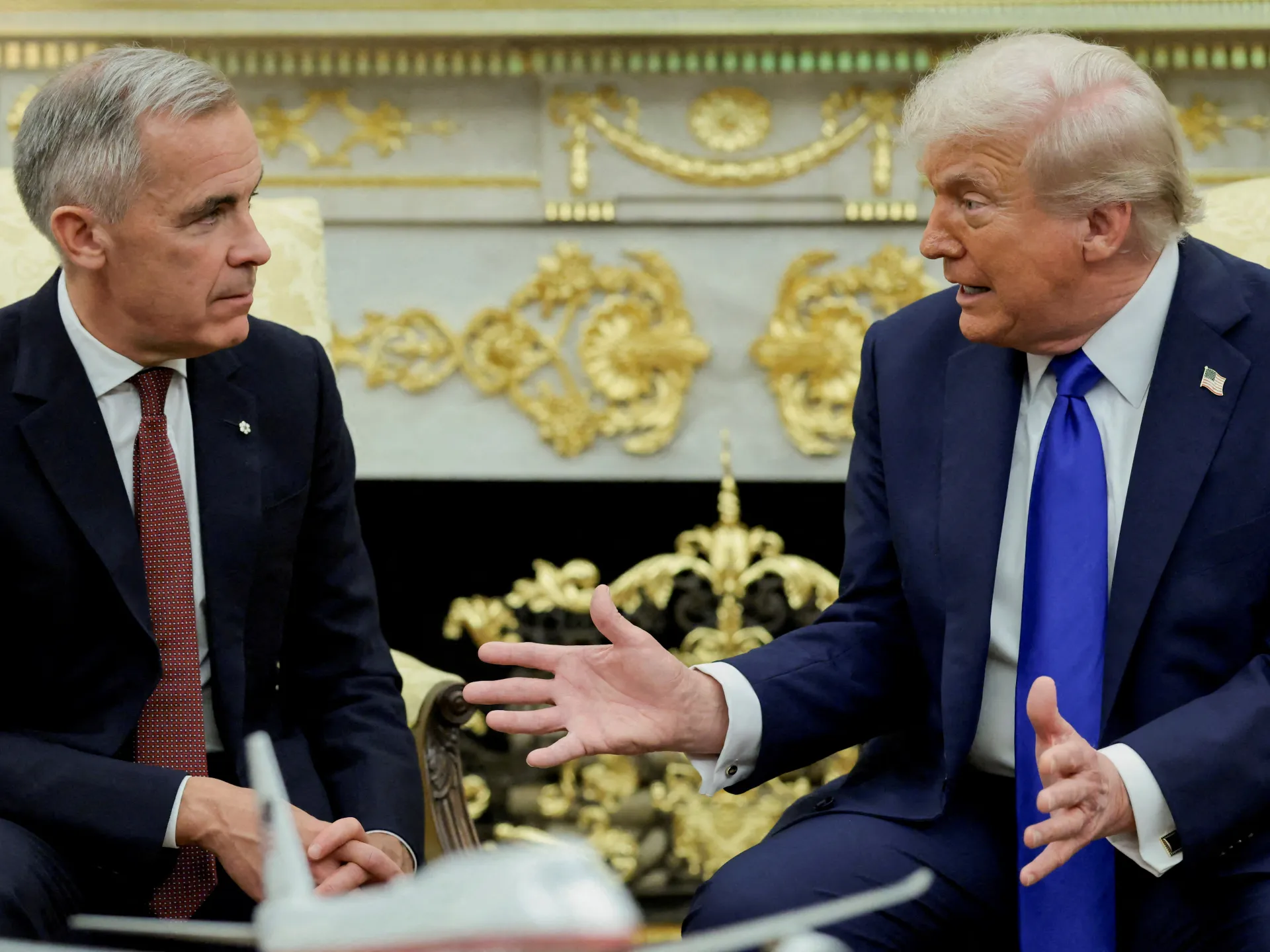
US President Donald Trump will impose new 50 percent tariffs on many Canadian goods, claiming “discriminatory treatment” by Ottawa against US alcohol, automobile and dairy products.

The tariffs, ordered by Trump on Monday, will take effect in 30 days and cover a range of items, including wine, hockey sticks, and cement, according to a White House fact sheet.

Recommended Stories

list of 3 itemsend of list

Trump, who saw many of his tariffs struck down by the Supreme Court earlier this year, is using an untested legal provision for the new duties: Section 338 of the Tariff Act of 1930.

The latest duties will not apply to energy, potash, and goods already impacted by sector-specific tariffs, the White House said.

Crucially, however, they will hit products covered under the US-Mexico-Canada free trade agreement (USMCA).

The tariff announcement quickly raised concerns of escalation among some businesses.

While Trump has slapped sweeping duties on US trading partners since returning to the presidency last year, the orders generally exempted goods entering his country under the North American free trade pact.

His latest actions threaten to further strain ties with the second-largest US trade partner and come just days after he threatened Canada with increased tariffs over a wave of wildfire smoke that descended on the US.

The White House, in announcing the new tariffs, said Canada was one of only two countries – along with China – to retaliate against Trump’s tariffs last year.

It also took aim at the fact that most Canadian provinces have stopped buying US alcohol, boycotting the products over Trump’s tariff threats and repeated calls for annexation of Canada as America’s “51st state”.

“Canada has taken US alcohol products off Canadian shelves, given better market access to dairy products from the European Union, and has put a cap on US vehicle exports to Canada from companies reshoring to the United States,” US Trade Representative Jamieson Greer charged in a statement.

The tariff announcement aims to “hold Canada accountable for its retaliation and discrimination”, he added.

Source link

Flavio Bolsonaro asks Trump to delay tariffs on Brazil until after election | Donald Trump News

President Lula accuses Jair Bolsonaro’s son, now a presidential hopeful, of helping triggered proposed US tariffs.

Brazilian presidential hopeful Flavio Bolsonaro, the son of former President Jair Bolsonaro, is asking the Trump administration to delay proposed tariffs on Brazilian goods until after October’s election, as he tries to counter allegations from President Luiz Inacio Lula da Silva that his family helped bring them about.

The Trump administration proposed the 25 percent tariffs in June, citing alleged trade violations including illegal deforestation and what it called unfair electronic payment practices, catching Brazil’s government by surprise. Lula had said relations were improving after a White House meeting with Trump in May.

Recommended Stories

list of 4 itemsend of list

The announcement came shortly after Bolsonaro met senior US officials in Washington, prompting accusations back home that he had invited US pressure on Brazil, with Lula accusing the right-wing senator of lobbying Washington to impose the tariffs.

He has since doubled down on those accusations, saying in a social media post last week, “the origin of all this was motivated by the Bolsonaro family itself” and that Bolsonaro’s request to delay the tariffs until after the election was “yet another act of treason against the Fatherland”.

Bolsonaro rejects the allegation, arguing instead that it’s Lula who would gain a political advantage if the tariffs were imposed.

“New US tariffs on Brazilian products would hand the current Brazilian government precisely the political victory it has been engineering,” Bolsonaro wrote in a submission to the Office of the US Trade Representative.

Brazilian officials have spent months trying to persuade Washington not to move ahead with the tariffs. But Bolsonaro says the government hasn’t gone far enough to find common ground with the US and is calling for a 180-day delay before any final decision is made.

“Brazil holds general elections in October 2026, and the political landscape that determines the viability of any negotiated resolution will be redefined within roughly ninety days,” he wrote.

So far, there is little sign his efforts are paying off. In a response to a letter Bolsonaro sent last month, Secretary of State Marco Rubio said US officials still had “substantial differences” with Brazil over the issues they say justify the proposed tariffs.

The dispute has left Brazilians split over who’s telling the truth. A Quaest poll published last month found 47 percent of Brazilians agreed with Lula’s claim that Bolsonaro had encouraged the United States to impose tariffs, while 35 percent agreed with Bolsonaro that he had tried to stop them.

Washington has until July 15 to decide whether to impose the tariffs which, if approved, would still exempt beef, coffee, rare earth minerals and aircraft parts. They would come on top of the tariffs Trump imposed last year over what he described as a “witch hunt” against Jair Bolsonaro, who was convicted months later.

Bolsonaro has made Brazil’s relationship with the United States a central part of his campaign, as Trump has taken a more active role in Latin American politics. That has included the capture of Venezuelan President Nicolas Maduro in Caracas and backing right-wing candidates across the region, including Abelardo De La Espriella, who narrowly won Colombia’s presidential election last month.

Source link

Trump threatens 100% tariffs for nations with digital service taxes

June 26 (UPI) — President Donald Trump on Friday threatened to impose a 100% tariff on any country that enacts a digital services tax against a U.S. company.

The new tariff would be applied to all goods shipped into the United States and be levied on top of any other tariff already in effect for that country, Trump said in a post on Truth Social.

At least a dozen nations have digital services taxes, which are meant to limit the influence of large technology companies — especially large U.S. companies such as Apple, Amazon and Meta — and are being considered by several European countries, CNBC and Politico reported.

Canada last year rescinded a digital services tax hours before it was set to go into effect in order to restart trade negotiations with the United States, which Trump held back on until the tax was canceled.

“Please let this statement serve to represent that any Country that imposes such a Tax will immediately be met with a 100% TARIFF on any and all Goods sent to the United States of America,” Trump said in the post.

“This TARIFF will supersede Trade Deals made with the Country, whether implemented, signed, or not,” Trump said. “Additionally, the 100% TARIFF will be immediately imposed, if they proceed.”

Canada’s tax was to be levied against online marketplace and advertising services companies, as well as social media companies, but Trump called it a “direct and blatant attack” on the United States and canceled talks on the tax was rescinded.

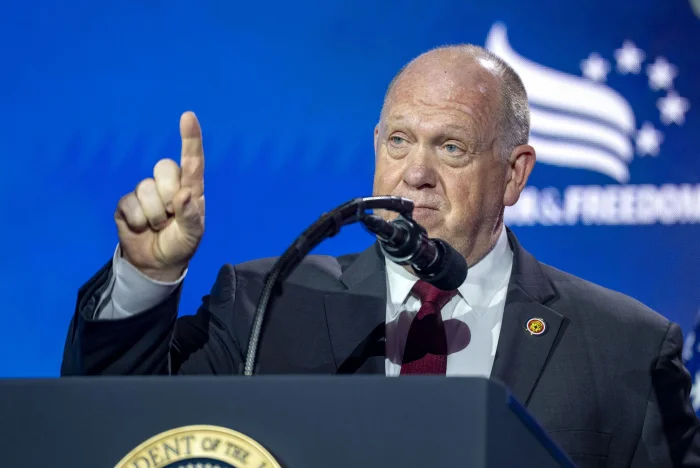
White House Border Czar Tom Homan speaks during the Faith and Freedom Coalition 2026 Road to Majority Policy Conference at the Washington Hilton on Friday. Photo by Bonnie Cash/UPI | License Photo

Source link

Trump makes pitch to farmers hard-hit by tariffs, high prices in Wisconsin | Donald Trump News

Trump seeks to shore up support among rural voters hard hit by tariffs, economic fallout of war with Iran.

United States President Donald Trump has sought to reassure farmers hard-hit by tariffs and the economic fallout of the US-Israeli war with Iran during a visit to Wisconsin.

The stop in Chippewa Falls on Friday for a farming roundtable comes months before the midterm elections in November. Trump was seeking to bolster support for Republican US Representative Derrick Van Orden, who has been targeted by Democrats hoping to take control of the chamber.

Recommended Stories

list of 3 itemsend of list

Van Orden has closely aligned with Trump and has long espoused the president as the best leader for rural Americans. Democrat challenger Rebecca Cook has proven a strong fundraiser and has led Van Orden in recent polls.

Democrats are considered favourites to take control of the US House of Representatives, currently controlled by Republicans, in the midterms.

“I love the place,” Trump said, referring to Wisconsin, “and hopefully you’re going to be voting Republican, because frankly, Republican is – I call it the sane way to go.”

Success for Democrats would allow the party to seriously restrict Trump’s agenda in the final two years of his term.

The Wisconsin visit was also more broadly aimed at shoring up support among farmers, who had largely backed the president in his 2024 election bid.

Farmers have been particularly hard-hit by Trump’s aggressive tariff policies, with many countries limiting imports of US products, notably soybeans, in response. The tariffs have also made importing items needed for daily operations more expensive.

The administration has sought to offset the fallout with temporary aid packages for farmers.

At the same time, fertiliser costs have surged since the US and Israel launched the war with Iran on February 28, with the effective closure of the Strait of Hormuz increasing prices of several key components, including urea.

An April survey by the American Farm Bureau Federation found that 70 percent of farmers in the US reported they cannot afford all of their fertiliser needs.

The average gas price of $4.04 per ⁠gallon of petrol this week was also $1.08 higher than a year ago, according to the American Automobile Association.

Trump assured those gathered that the administration had “largely finished” the war “one way or the other”.

He vowed fertiliser and gas prices would come “way down”.

The visit comes as several polls have shown Trump’s overall approval rating hovering at all-time lows, about or under 40 percent.

His approval was lower on specific issues, with a Marquette Law School poll conducted from May 20-26 finding just 19 percent of respondents approved of Trump’s handling of gas prices. Only 22 percent approved of his handling of inflation and cost of living.

Several top Republicans have also warned that several of Trump’s recent actions could risk alienating voters concerned about the economy.

That included a $1.8bn “anti-weaponisation fund” launched by the Department of Justice to repay individuals, including Trump supporters, who allege they were victims of political prosecutions.

The Department of Justice has since abandoned the plan.

Trump has also requested $1bn in funding for security for his controversial White House ballroom, despite earlier saying that taxpayers would not have to foot the bill.

Source link

US cites forced labour concerns as grounds for new tariffs | Trade War News

The administration of US President Donald Trump has proposed new tariffs of up to 12.5 percent on imports from 60 economies after determining they had failed to curb trade in goods made with forced labour, an assertion that was rejected by US trading partners.

The proposal from the Office of the United States Trade Representative (USTR), issued late on Tuesday, comes from a Section 301 unfair trade practices investigation designed to help rebuild US President Donald Trump’s emergency tariffs, struck down by a US Supreme Court decision in February.

Recommended Stories

list of 4 itemsend of list

Despite laws banning them, the products of forced labour are deeply embedded in supply chains across the world. European lawmakers bristle at the accusation that the region is less effective than the US at curbing the trade in such goods, with one describing the US findings as “utterly absurd”. Business leaders said the US move created more confusion for companies.

The USTR proposed 10 percent additional duties on imports from Canada, Ecuador, the European Union, Indonesia, Mexico, Pakistan, Argentina, Bangladesh, Cambodia, El Salvador, Guatemala, Malaysia, Taiwan and Britain. The USTR said all had plans or partial schemes in place.

The trade agency said it would impose additional duties of 12.5 percent on the remaining 45 countries that it investigated. These include China, India, Nigeria, Japan, South Korea, Vietnam, Australia and New Zealand.

“The failure of our most important trading partners to address the importation of goods made with forced labour is unacceptable,” US Trade Representative Jamieson Greer said in a statement. “This creates a dynamic where American workers are forced to compete globally on an unlevel playing field.”

The USTR said it would accept public comments on the proposed tariffs and other remedies through July 6, with a public hearing scheduled for July 7.

The announcement comes ahead of the July 24 expiration of a 10 percent temporary tariff imposed by the Trump administration on February 20, the day the Supreme Court struck down Trump’s tariffs under the International Emergency Economic Powers Act. It also shows how determined the Trump administration is about building a wall of tariffs around the US economy, the world’s largest, despite repeated setbacks in court.

After the loss in the Supreme Court, Trump turned to another law to impose temporary 10 percent tariffs globally. But those stopgap levies expire July 24. And a specialised trade court ruled last month that they, too, were illegal – though the government can continue collecting them while that case works its way through the courts.

Unjustified tariffs

The European Commission said the tariffs were unjustified and reiterated its commitment to the trade deal sealed with Washington last year.

Bernd Lange, the chair of the European Parliament’s trade committee, which voted on Tuesday to accept that trade deal, said the new tariffs were expected, but said the results of the US investigation were still “utterly absurd” given a 2024 EU law to ban imports of forced labour products.

“The impression is increasingly emerging that a tariff measure is sought first, and only then is a suitable legal justification found,” he said. However, he added that the key question would be whether the additional tariffs would exceed those agreed between both sides last July.

The US’s largest trading partner, the EU, agreed last July to accept tariffs of 15 percent on a broad range of its exports. In its report, the USTR said the EU anti-forced labour measures only came into force in December 2027 and lacked key elements.

It was unclear whether the proposed tariffs – which the US release described as “additional duties” – would come on top of levies agreed in bilateral deals signed with the US.

Britain said it was in regular talks with the US and was taking action to tackle forced labour. It added that the preferential access to US markets that it had negotiated for UK businesses remained in place.

Mexico said that goods that were compliant under the United States-Mexico-Canada Agreement (USMCA) would be exempt from the new tariffs.

Taiwan said it was “hopeful and confident” that the final results would reflect agreements already reached, securing relatively preferential treatment.

Beijing, facing 12.5 percent tariffs, said that it opposed all forms of unilateral tariffs and that there was no forced labour in China. India, confronted with the same rate, said it was engaged with Washington on the Section 301 proceedings, noting the proposed tariffs were not final.

“There will be deep concerns in the international business community that the US [forced labour law could] become a global template,” said Andrew Wilson, deputy secretary general of the International Chamber of Commerce.

“Anyone can make a claim, get a shipment impounded and the company has to prove no forced labour in supply chain.”

Certain exemptions

The USTR said it would exempt from tariffs products including energy, rare earths and some other metals, beef, coffee, certain fruits and vegetables, pharmaceuticals, organic chemicals and aircraft parts.

It also said it was proposing a textile mechanism that would allow for a certain volume of apparel and textile imports to enter the US at a reduced tariff rate, without giving details.

The ICC’s Wilson said the list of exemptions, stretching for more than 76 pages, suggested sensitivities over the potential cost-of-living hit to food and other goods with known forced-labour risks.

“It doesn’t make sense if the object of this is to enhance controls on modern slavery,” he said.
Source link

US targets Brazil with new tariffs over trade practices | International Trade News

The administration of United States President Donald Trump has proposed a new 25 percent tariff on imports from Brazil amid allegations of unfair trading practices.

US Trade Representative Jamieson Greer announced the new punitive tariffs late on Monday, stemming from issues including digital trade and illegal deforestation.

Recommended Stories

list of 4 itemsend of list

The new tariffs would be imposed under Section 301 of US trade policy — a statute that gives the US government broad authority to impose trade sanctions based on violations of trade agreements, as well as what it deems “unfair” trade practices under the Trade Act of 1974.

Greer said there has been an investigation that began in July. The practices under investigation were related to issues such as illegal deforestation, ethanol market access, and anticorruption enforcement, among other key issues, according to the summary released by the US Department of Commerce on Tuesday.

In the 107-page document, the US government said that trade practices between the two nations “are unreasonable and burden or restrict US commerce”, and pointed to agreements that Brazil has with Mexico and India.

“Brazil’s trade arrangements with Mexico and India also create incentives to offshore US production by creating a financial advantage to exporting to Brazil from these countries, as opposed to exporting from the United States,” the document says.

There is a comment period for the general public to weigh in on the proposed tariffs, which begins on Thursday. The written comment period ends on July 1, and there will be a public hearing in Washington on July 6.

Beef, coffee, rare earths, other metals, energy, and aircraft parts are among the products that would be exempt from the tariffs.

On CNBC, Greer said that it would release more findings on unfair trade practices in the next several weeks in order to address what Greer called a “giant” trade deficit.

However, the data shows that the US maintains a trade surplus with Brazil. In March, Brazil bought more goods, worth $3.3bn, from the US than it exported at $2.9bn, representing a $420m trade surplus.

Other countries under investigation include China and Vietnam.

The new tariff would partially replace a tariff of 50 percent on many Brazilian goods imposed last year by Trump, with 40 percent serving as a punishment for Brazil’s prosecution of former President Jair Bolsonaro, a Trump ally.

The White House also recently dropped tariffs on select aluminium, copper, and steel imports, which include agricultural equipment such as harvesters. Those tariffs will drop from 25 percent to 15 percent. The tariffs expire in December 2027.

The new tariffs come after the Supreme Court, in February, struck down the use of the International Emergency Economic Powers Act (IEEPA), which the White House used to impose its sweeping global tariffs.

“They are the first of many new tariffs to replace the IEPPA national security tariffs. The period of public comment will allow for potential modest tweaks and exemptions. Ultimately, it will add to some inflation pressure compared to the last few months but not compared to a year earlier,” Rachel Ziemba, a senior adjunct fellow at the Center for a New American Security, told Al Jazeera.

Political tensions

The changes come despite President Luiz Inacio Lula da Silva’s visit to Washington last month, as relations have deteriorated in recent months.

The US State Department has also designated two of Brazil’s criminal gangs as “terrorist organisations”, a move that supported Senator Flavio Bolsonaro’s position, Lula’s main rival in October’s election, and over the objections of Brazilian officials.

“I expressly asked President Trump not to tariff our companies,” Bolsonaro wrote on X on Tuesday. “Tariffs are not the solution.”

The White House did not respond to Al Jazeera’s request for comment.

Source link