Tankers

Pentagon releases video of strikes on Iranian oil tankers | Oil and Gas

NewsFeed

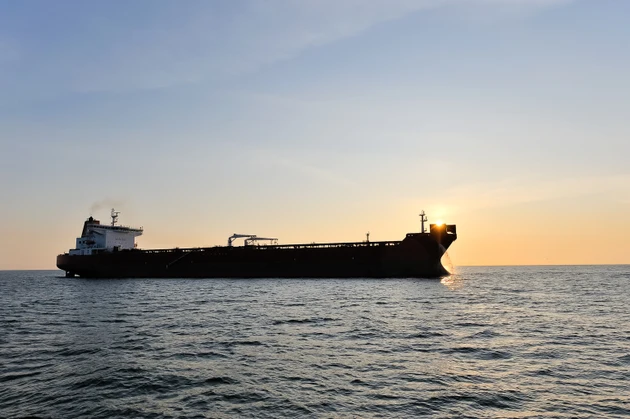
Footage released by the Pentagon shows US strikes on two Iranian oil tankers in the Strait of Hormuz. The US military says the vessels were disabled following overnight exchanges of fire with Iranian forces, preventing them from reaching ports in the Gulf of Oman.

Source link

F/A-18 Super Hornet Drops Bombs Down Smoke Stacks Of Iranian Tankers Running Blockade (Updated)

The U.S. carried out new attacks on Iranian targets today, striking several empty oil tankers trying to break the blockade, according to a post on X by U.S. Central Command (CENTCOM). This latest incident comes as the UAE says it was attacked again by Iran today and hours after the U.S. and Iran exchanged blows in and around the Strait of Hormuz.

U.S. forces “disabled M/T Sea Star III and M/T Sevda, May 8, prior to both vessels entering an Iranian port on the Gulf of Oman in violation of the ongoing U.S. blockade, CENTCOM stated. “A U.S. Navy F/A-18 Super Hornet from USS George H.W. Bush (CVN 77) disabled both tankers after firing precision munitions into their smokestacks, preventing the non-compliant ships from entering Iran.” 

פיקוד המרכז האמריקני פרסם תיעוד של תקיפת המכליות שניסו לפרוץ את מצר הורמוז pic.twitter.com/sIvjeJEqyY

— החדשות – N12 (@N12News) May 8, 2026

This was the third time that the U.S. has fired on Iranian ships running the blockade. The Navy has used a destroyer’s five-inch gun firing inert rounds to blast the engineering section of one ship to disable it and a Super Hornet’s 20mm Vulcan cannon to disable the rudder on another. So, the use of bombs dropped down a ship’s smokestack to disable but not destroy a ship is new. You can read about these prior instances here.

The weapons used in this latest wave of attacks on blockade runners wasn’t disclosed. 500lb laser-guided bombs are likely what was employed here based on the Super Hornet’s stores options, precision required, and the effects seen. These can utilize high-explosive bomb bodies or inert ones for desired effects, with the latter being most probable in this case.

Fox News reporter Jennifer Griffin was the first to report this news.

NEW: US military carried out more airstrikes today hitting several empty tankers trying to break the blockade.

According to a senior US official:
“these were Very Large Crude Carriers (VLCC) …. massive, empty ships trying to make it back to Iran … attempted to run the…

— Jennifer Griffin (@JenGriffinFNC) May 8, 2026

The blockade on Iranian ports was enforced April 13 to strangle Iran’s economy as part of U.S. President Donald Trump’s efforts to prevent Iran from obtaining nuclear weapons. On Friday, CENTCOM reported that U.S. forces have prevented more than 70 tankers from entering or leaving Iranian ports. 

“These commercial ships have the capacity to transport over 166 million barrels of Iranian oil worth an estimated $13 billion-plus,” the command stated on X.

There are currently more than 70 tankers that U.S. forces are preventing from entering or leaving Iranian ports. These commercial ships have the capacity to transport over 166 million barrels of Iranian oil worth an estimated $13 billion-plus. pic.twitter.com/VBKfDwMwqJ

— U.S. Central Command (@CENTCOM) May 8, 2026

However, “a confidential CIA analysis delivered to administration policymakers this week concludes that Iran can survive the U.S. naval blockade for at least three to four months before facing more severe economic hardship,” The Washington Post reported on Thursday, citing four people familiar with the document.

Washington Post (This got a lot of attention overnight)

A confidential CIA analysis delivered to administration policymakers this week concludes that Iran can survive the U.S. naval blockade for at least three to four months before facing more severe economic hardship.

PLUS:…

— Joumanna Nasr Bercetche (@JoumannaTV) May 8, 2026

Meanwhile, the United Arab Emirates claims it was once again attacked by Iranian ballistic missiles and drones on Friday.

“The Ministry of Defense announced that on May 8, 2026, the UAE air defense systems engaged 2 ballistic missiles and 3 UAV’s launched from Iran, resulting in 3 moderate injuries,” the UAE Defense Ministry (MoD) announced on X Friday morning EDT. “Since the beginning of the blatant Iranian attacks on the United Arab Emirates, the air defenses have engaged a total of 551 ballistic missiles, 29 cruise missiles, and 2,263 UAV’s.”

The UAE, located about 60 miles south of Iran across the Strait, claims these attacks have killed 13 and injured 230.

The MoD “affirmed that it remains fully prepared and ready to deal with any threats and will firmly confront anything that aims to undermine the security of the country, in a manner that ensures the protection of its sovereignty, security and stability and safeguards its interests and national capabilities.”

Tehran did not immediately respond to the claim, which TWZ cannot independently verify.

These incidents follow an exchange of fire last night between the U.S. and Iran. As we reported yesterday, U.S. Central Command said it attacked several locations in Iran after “Iranian forces launched multiple missiles, drones and small boats as USS Truxtun (DDG 103), USS Rafael Peralta (DDG 115), and USS Mason (DDG 87) transited the international sea passage. No U.S. assets were struck.”

Iran said it launched the attacks in retaliation for “violation of the ceasefire and the aggression by the terrorist US military against an Iranian oil tanker near the port of Jask.”

IRGC Navy:

Following the violation of the ceasefire and the aggression by the terrorist US military against an Iranian oil tanker near the port of Jask, and the approach of warships belonging to the terrorist US military toward the Strait of Hormuz, a very large-scale and… pic.twitter.com/pmg4IiD15M

— Clash Report (@clashreport) May 7, 2026

The extent of the damage to Bandar Abbas, Qeshm Island and the Bandar Kargan naval checkpoint in Minab, targets struck by the U.S. on Thursday in response to the attacks on U.S. Navy ships, remains unclear. No images have emerged and neither Iran nor the U.S. have commented.

Last night, Trump called the exchange a “love tap” and said the ceasefire still held.

President Trump tells me in a phone call the retaliatory strikes against Iranian targets are just a “love tap.”

“It’s just a love tap.”

When I asked if it means the ceasefire is over.

“No, no, the ceasefire is going. It’s in effect.”

— Rachel Scott (@rachelvscott) May 7, 2026

This is a developing story.

UPDATE: 11:40 AM EDT –

Amid the kinetic activity, diplomacy continues as Trump insists that Iran never develop a nuclear weapon. The status of its ballistic missile arsenal, control of the Strait of Hormuz and support for proxies like Hezbollah and the Houthis are also major sticking points.

The U.S. is awaiting to hear back from Iran about its peace proposal, U.S. Secretary of State Marco Rubio said. 

“We’re expecting a response from them today at some point. We have not received that yet,” he said.

The secretary added that he remained concerned that Iran is still trying to maintain control over the Strait.

“We’ve seen the reporting overnight that Iran is trying to establish some agency that’s going to control traffic in the Strait,” Rubio explained. “That would actually be unacceptable.”

“We’ve seen the reporting overnight that Iran is trying to establish some agency that’s going to control traffic in the Straits… That would actually be unacceptable,” says @SecRubio.

“We’re expecting a response from them today at some point. We have not received that yet.” pic.twitter.com/Wo8IEEWDnI

— Rapid Response 47 (@RapidResponse47) May 8, 2026

Iran, meanwhile, is accusing the U.S. of moving the goal posts in the negotiating process by using force.

“Every time a diplomatic solution is on the table, the U.S. opts for a reckless military adventure,” Iranian Foreign Minister Abbas Araghchi stated on X. “Is it a crude pressure tactic? Or the result of a spoiler once again duping POTUS into another quagmire? Whatever the causes, [the] outcome is the same: Iranians never bow to pressure.”

Every time a diplomatic solution is on the table, the U.S. opts for a reckless military adventure. Is it a crude pressure tactic? Or the result of a spoiler once again duping POTUS into another quagmire?

Whatever the causes, outcome is the same: Iranians never bow to pressure. pic.twitter.com/ev7dMIebNB

— Seyed Abbas Araghchi (@araghchi) May 8, 2026

UPDATE: 11:55 AM EDT –

Iran claims that its “naval commandos carried out a special operation to detain” an oil tanker, “which was attempting to disrupt Iran’s oil exports and national interests.”

“Implementing the decision of the Supreme National Security Council and with a judicial ruling, the Army Navy seized the oil tanker Ocean Koi, which was carrying Iranian oil and tried to take advantage of the situation in the region to harm and disrupt the oil exports and the interests of the Iranian nation,” said Iran’s Army Public Relations Office in a statement on Friday.

​“The commandos of the Army Navy “directed the violating oil tanker to the southern coast of Iran and handed it over to the judicial authorities,” according to the statement. “The Navy of the Islamic Republic of Iran will “vigorously defend the interests and assets of the Iranian nation in the territorial waters of the country and will not tolerate any violator or aggressor.”

Though Iranian officials identified this ship as the Ocean Koi, it is also known as the Jin Li. It is part of Iran’s so-called dark fleet and was sanctioned by the U.S. in February for transporting millions of barrels of Iranian oil. It is unclear why Iran made a show of this event, though it could have been for domestic consumption in the wake of yesterday’s attacks on several targets.

You can see video of the claimed boarding below.

According to IRIB (Islamic Republic of Iran Broadcasting) News, the Iranian Navy had conducted a special operation to seize an “offending tanker” named “OCEAN KOI” for attempting to export Iranian oil.

Her new name is actually JIN LI (9255933), and has been so since 2025-11-30.… pic.twitter.com/3Wv8jJNEAr

— TankerTrackers.com, Inc. (@TankerTrackers) May 8, 2026

UPDATE: 12:16 PM EDT –

The CIA recruited sources inside Iran, but flawed covert communications reportedly helped Iranian counterintelligence identify and arrest informants, a new report from Reuters stated.

“In interviews with six Iranian former CIA informants, Reuters found that the agency was careless…amid its intense drive to gather intelligence in Iran, putting in peril those risking their lives to help the United States,” the outlet explained.

“Such aggressive steps by the CIA sometimes put average Iranians in danger with little prospect of gaining critical intelligence,” Reuters added. “When these men were caught, the agency provided no assistance to the informants or their families, even years later, the six Iranians said.”

UPDATE: 12:25 PM EDT –

Iranian officials continue to dismiss the notion that the country will cede control of the Strait.

Mohammad Mokhber, an adviser to Iran’s Supreme Leader, said on Friday Iran’s control over the Strait of Hormuz is an asset “on the scale of an atomic bomb”, adding that Tehran would not give up the capability it gained through war.”

Mohammad Mokhber, an adviser to Iran’s Supreme Leader, said on Friday Iran’s control over the Strait of Hormuz is an asset “on the scale of an atomic bomb”, adding that Tehran would not give up the capability it gained through war. pic.twitter.com/07vbiRwVPR

— Iran International English (@IranIntl_En) May 8, 2026

12:43 PM EDT –

Hours after launching another attack on the UAE, an Iranian official says that country will remain a target for supporting the U.S. and Israel.

Iran will not leave the Emirates alone, and they are well aware of that, which is why they are trying to maintain tension between Iran, America, and the Zionist entity,” Ali Khodarian, a member of the Iranian Parliament’s National Security Commission, stated on X. “The Americans have realized that their naval blockade parade will henceforth face a military response from the Islamic Republic. No one can now carry out a military operation against our ships without a response.”

عضو لجنة الأمن القومي في البرلمان الإيراني علي خضريان:

⭕إيران لن تترك الإمارات وشأنها وهم يدركون ذلك لذا فهم يحاولون الحفاظ على التوتر بين إيران وأميركا والكيان الصهيوني

⭕ الأميركيون أدركوا أن استعراض حصارهم البحري سيواجه من الآن فصاعدا ردا عسكريا من قبل الجمهورية الإسلامية… pic.twitter.com/qHPE4ZeRsv

— قناة الميادين (@AlMayadeenNews) May 8, 2026

UPDATE: 1:37 PM EDT –

The United States will facilitate two days of intensive talks between the governments of Israel and Lebanon on May 14 and 15, State Department spokesman Tommy Piggott announced on Friday.

State Department

UPDATE: 1:48 PM EDT-

CENTCOM released imagery of the Arleigh Burke class guided missile destroyers USS Truxtun (DDG 103), USS Rafael Peralta (DDG 115), and USS Mason (DDG 87) operating in the Middle East. “The three destroyers are currently sailing in the Arabian Sea supporting the blockade against Iran,” the command stated on X. “As of today, CENTCOM forces have redirected 57 commercial vessels and disabled 4 to prevent the ships from entering or leaving Iranian ports.”

The three destroyers were in last night’s exchange of fire with Iran.

Photos of USS Truxtun (DDG 103), USS Rafael Peralta (DDG 115), and USS Mason (DDG 87) operating in the Middle East. The three destroyers are currently sailing in the Arabian Sea supporting the blockade against Iran. As of today, CENTCOM forces have redirected 57 commercial… pic.twitter.com/iFHp1HHMac

— U.S. Central Command (@CENTCOM) May 8, 2026

UPDATE: 3:32 PM EDT –

The U.S. is denying the latest Iranian claim that it successfully carried out an attack on U.S. military assets.

On Friday, the Iranian Army claimed “while the US Navy was attempting to remove three of its destroyers from the Strait of Hormuz towards the Sea of Oman with air support, we carried out a combined missile and drone operation, during which we targeted this naval group with 8 cruise missiles and 24 suicide drones. As a result of this operation, and despite the extensive attempts by the US Navy to repel the attack, one cruise missile and three suicide drones successfully hit the American destroyers, causing fires to break out on them.”

Asked if any U.S. ships were struck today, a U.S. official offered a one-word response.

“No,” the official stated.

BREAKING: IRAN SAYS IT DIRECTLY HIT US DESTROYERS IN THE HORMUZ

The Iranian Army Statement:

On Friday morning, while the US Navy was attempting to remove three of its destroyers from the Strait of Hormuz towards the Sea of Oman with air support, we carried out a combined… pic.twitter.com/FusP0ihHxt

— Sulaiman Ahmed (@ShaykhSulaiman) May 8, 2026

Contact the author: howard@twz.com

Howard is a Senior Staff Writer for The War Zone, and a former Senior Managing Editor for Military Times. Prior to this, he covered military affairs for the Tampa Bay Times as a Senior Writer. Howard’s work has appeared in various publications including Yahoo News, RealClearDefense, and Air Force Times.


Source link

Army Eyes Drone Tankers To Refuel Its New MV-75 Cheyenne II Tiltrotors

  • Army considers drone tankers for MV-75A refueling. The U.S. Army is exploring the use of drone tankers like the MQ-25 Stingray to refuel its new MV-75A Cheyenne II tiltrotors mid-flight.
  • MV-75A to replace Black Hawk helicopters. The Army plans to replace a significant portion of its H-60 Black Hawk fleet with the MV-75A, enhancing range and speed capabilities.
  • 160th SOAR to receive refueling-capable MV-75s. The elite Night Stalkers regiment will get a special operations version of the MV-75 with in-flight refueling capabilities.
  • MQ-25 could operate from land bases. Although designed for carriers, the MQ-25’s long endurance makes it suitable for land-based operations, potentially aiding Army refueling needs.
  • Army lacks organic tanker capacity. The Army currently has no in-house tanker capability, making drone tankers a viable solution for its expeditionary operations.

Bottom line: The U.S. Army is exploring the integration of drone tankers like the MQ-25 Stingray to refuel its new MV-75A Cheyenne II tiltrotors, aiming to enhance operational range and flexibility. This move could address the Army’s lack of organic tanker capacity and support its future air assault strategies.

The U.S. Army is considering configuring at least a portion of its new MV-75A Cheyenne II tiltrotors to be able to refuel in flight using the probe-and-drogue method. This, in turn, has raised the question of how the service will ensure there is adequate tanker capacity to support that capability. Army officials and the MV-75A’s prime contractor, Bell, have both now pointed to a future where tanker drones like the U.S. Navy’s forthcoming MQ-25 Stingray could help extend the Cheyenne II’s reach.

Army Maj. Gen. Clair Gill discussed aerial refueling capability for the MV-75A, as well as other aspects of the Cheyenne II, during a talk yesterday at the Army Aviation Association of America’s (AAAA) 2026 Warfighting Summit, at which TWZ is in attendance. Gill is currently the service’s Program Acquisition Executive for Maneuver Air. The Army plans to replace a substantial portion of its H-60 Black Hawk helicopters with the MV-75A in the coming years.

A rendering of a pair of MV-75As without in-flight refueling capability. Bell

“Our last chief used to talk to me all the time about aerial refueling. We think that’s something. Maybe we don’t get all of them [the MV-75As] configured for that, but they’ll have the capability,” the Army’s top aviation acquisition officer added. “For industry, I want you to think about how are we going to refuel ourselves, right? One of the challenges, even the Regiment will tell you, and make it top priority – their challenge isn’t you know how good they are on par, their challenge is getting somebody to give them the gas.”

The “Regiment” that Gill refers to here is the Army’s elite 160th Special Operations Aviation Regiment (SOAR), also commonly known as the Night Stalkers. The 160th is expecting to eventually receive a special operations-specific configuration of the MV-75, which will include in-flight refueling capability by default, as you can read more about here. Existing Night Stalker MH-60M Black Hawk and MH-47G Chinook special operations helicopters also have the ability to refuel in flight via probe-and-drogue. However, Army Black Hawks and Chinooks assigned to conventional units do not have this capability.

A rendering of a special operations configured MV-75 that the Army showed at this week’s AAAA conference. Jamie Hunter

“The Navy’s got some pretty good unmanned ideas there if you want to kind of follow where we’re going,” Gill noted yesterday.

Gill did not specifically name Boeing’s MQ-25, but this is the only uncrewed tanker the Navy is currently pursuing, at least that we know about. Furthermore, Bell released a new computer-generated MV-75 promotional video yesterday around the AAAA conference, seen below, wherein a Cheyenne II is clearly depicted linking up with a Stingray, or an extremely similar-looking variant or derivative thereof.

Meet the Cheyenne II thumbnail

Meet the Cheyenne II


A screen capture from the video above showing an in-flight refueling-capable MV-75A linking up with an MQ-25, or a variant or derivative thereof. Bell capture

The MQ-25 is in development now primarily as a carrier-based platform, but there is no reason why it could not also operate from bases on land. Boeing has itself previously presented a concept for an enlarged, land-based derivative of the design that could help meet future U.S. Air Force tanking needs.

A rendering of an enlarged, land-based derivative of the MQ-25 refueling from a KC-46 Pegasus tanker. MQ-28 Ghost Bat drones are also shown flying alongside. Boeing

The MQ-25 by itself promised to offer very long endurance and extreme range, which could make it attractive in the land-based role, as well as when operating from carriers. TWZ has previously explored how those capabilities open the door to the Stingray being utilized as much more than a tanker, as well.

A demonstrator drone, known as the T1, used in the development of the MQ-25 refuels an F-35C Joint Strike Fighter during a test. USN

Currently, the U.S. Air Force provides probe-and-drogue aerial refueling capacity using KC-135 and KC-46 tankers, as well as HC-130J Combat King II combat search and rescue aircraft and MC-130J Commando II special operations tanker/transports. The U.S. Marine Corps and Navy also have C-130 variants that can be employed as tankers, as well as transports. Navy carrier air wings currently rely on F/A-18F Super Hornet fighters carrying buddy refueling stores and drop tanks to provide organic aerial refueling support.

A US Marine Corps KC-130J tanker/transport prefers to refuel an MV-22 Osprey tiltrotor. USMC

Shortfalls in aerial refueling capacity, even to meet peacetime demands, have been an increasingly concerning issue for years now. The Air Force just recently developed a system that allows A-10 Warthog attack jets to refuel via probe-and-drogue to create new operational flexibility for those aircraft, as you can read more about here. The A-10 was originally designed to refuel in flight using the boom method, which the Air Force prefers for fixed-wing aircraft.

On top of all this, the Army has no organic tanker capacity at present, at all. Furthermore, the formal division of roles and missions with the Air Force means that the service does not operate fleets of larger fixed-wing aircraft like the C-130 that could be readily adapted to this role. All of this would point to an uncrewed platform like MQ-25 as the most viable path to establishing an Army tanker force, which could also align better with its expeditionary air assault concepts of operations.

Army MV-75As could still make use of other tankers during joint operations, as well. There could be other organic air refueling options available to the service, too, including the possibility of adapting MV-75 itself to act as a buddy tanker.

The Army is separately advancing plans to acquire fleets of uncrewed aircraft capable of performing a variety of missions in close collaboration with the MV-75A and its existing fleets of crewed helicopters.

For the Army, demands for greater range and ability that cover those distances faster were key factors in the decision to acquire the MV-75A in the first place. The service sees these capabilities as particularly critical in the context of any future fight against China across the sprawling expanses of the Pacific.

“MV-75, as I mentioned, that’s our signature system,” Gen. Gill said yesterday. “Unmatched range, unmatched speed, unmatched mission flexibility.”

Another rendering of a pair of MV-75A Cheyenne IIs. Bell

During a separate talk at the AAAA conference yesterday, Army Maj. Gen. David Gardner, head of the 101st Airborne Division, the service’s premier air assault formation, also highlighted a recent training exercise that included Marine Corps MV-22 Osprey tiltrotors. He said that was done specifically “to help our Division understand the operational reach that it will possess with the MV-75 Cheyenne.”

Units within the 101st are set to be the first to receive operational MV-75As, with or without aerial refueling capability. The Army had previously said that fielding would begin next year as part of a major acceleration of the program. However, it has now stepped back from any fixed timeline for the first flight of the Cheyenne, let alone when Bell will begin delivering production examples.

“It’s going to happen when it’s going to happen. So we are moving as fast as we can,” Gen. Gill told TWZ and other outlets ahead of the AAAA conference this week. “If I was king, and I had all the money in the world and all the engineers, and there were no limits, we probably would be able to do it in a matter of months.”

As an aside, integrating aerial refueling capability onto the MV-75A, and working to pair it with tanker drones like MQ-25, could make the Cheyenne II, or variants thereof, attractive to other potential operators. The Marine Corps is now early in the process of refining requirements for a successor to the MV-22. The Navy has also said it is leveraging work the Army has done on the MV-75A to inform its plans for a Future Vertical Lift-Maritime Strike (FVL-MS) family of systems to succeed its MH-60R and MH-60S Seahawks, as well as the MQ-8C Fire Scout drone helicopter. Bell has presented concepts for variations of its V-280 Valor tiltrotor, on which the MV-75A is based, optimized for supporting amphibious assault and other naval missions in the past.

A rendering of Bell previously released showing a navalized V-280 variant. A V-247 Vigilant tiltrotor drone is also seen in the background. Bell

As it stands now, the Army does not appear to have made a final decision on the extent to which it expects to integrate in-flight refueling capability in its future MV-75A fleet. That will have a direct impact on any pursuit of an organic tanker capability.

Still, the Army and Bell are already pointing to the MQ-25 as an example of what could be on the horizon to help further extend the reach of the Cheyenne II.

UPDATE: 5:08 PM EDT –

Maj. Gen. Clair Gill has now offered some additional comments on aerial refueling support for the MV-75A to TWZ and other outlets at a roundtable today on the sidelines of the AAAA conference.

“We’re also thinking creatively about if we put aerial refueling – which you’re gonna see on the SOCOM [U.S. Special Operations Command] variants – if we put that on a conventional variant, then how do we refuel it?” he explained. “So we’re thinking through, do we need to develop a requirement for aerial refueling for ourselves now that we have really enhanced our capability?”

“One of the things that our special operations aviators – one of their most challenging tasks is helicopter aerial refueling. A lot of times people say, you’re telling me the challenge is the training of that, because it’s a pretty hard task,” he added later on in response to a direct follow-up question on this topic from our Jamie Hunter, who also called attention to what was seen in Bell’s video. “And I would say yes, but it’s actually the asset, the availability [of the] asset, to do the training. And we don’t have those organic to the Army. So I think we need to solve our own problems, and think about how do we do our own, let’s call it logistical resupply in the air, of an MV-75. So that’s where that concept photo or video was pointing.”

“We don’t have a requirement written right now, but I’ve talked with Army leaders,” Gill also noted.

Contact the author: joe@twz.com

Joseph has been a member of The War Zone team since early 2017. Prior to that, he was an Associate Editor at War Is Boring, and his byline has appeared in other publications, including Small Arms Review, Small Arms Defense Journal, Reuters, We Are the Mighty, and Task & Purpose.


Source link