The Lakers have to cut their roster to 15 by the opener. Pelinka mentioned the possibility of consolidation trades to reach the maximum number, but no transactions have materialized, especially with the Lakers trying to cling to their limited draft assets. They don’t control their own first-round pick until 2032 and don’t have a second-round selection until 2031.
If the Lakers can’t pull off a deal, forward Dalton Knecht could be at risk of being waived. Since getting traded as a rookie and returning when the transaction was rescinded, the 17th overall pick in the 2024 draft has never carved out a steady role with the Lakers. Early, he looked like he could be the steal of the draft when he averaged 18.9 points per game during a nine-game stretch in November 2024, including a two-game, 64-point heater in which he hit 14 of 24 three-pointers. He scored more points in his 19 NBA games (231) than he did all of last season (228).
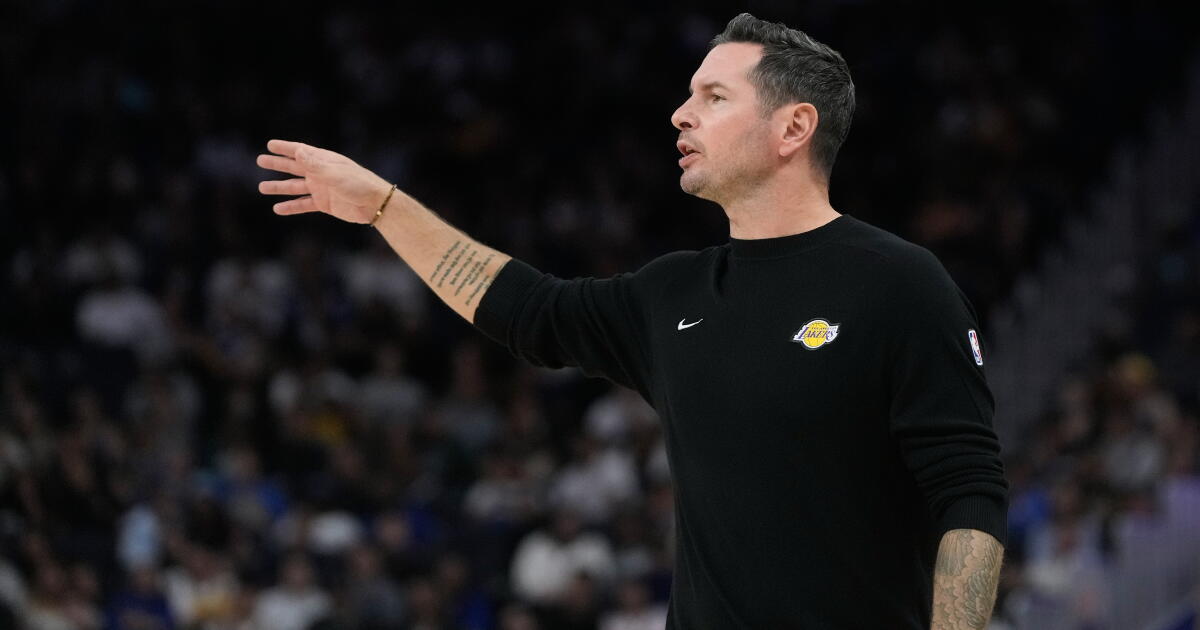
“I think the biggest thing is the team changed,” Redick said before Friday’s game of Knecht’s career arc. “The team changed. The needs changed, the fit changed. I think he got better as a player over the last two years. I think each guy has, particularly last year, each guy got plenty of opportunities with the amount of injuries we had. So I just think coming into this year, we added a lot of wings and he’s in a tough spot right now.”
Forward Jarred Vanderbilt, who has about $25 million left on his contract over the next two seasons, did not suit up for Friday’s preseason finale.
After joining the team through a trade from Washington this offseason, guard Jaden Hardy understood that roster moves would continue through training camp. On the fringe of the rotation, he said he didn’t let it bother him.
“I just came in [with a] clear head, clear mind, new situation, new opportunity,” said Hardy, who has a $6-million salary this season and a team option for next year. “I feel like it’s a blessing to be here and I’m just coming in here every day working, taking care of my business.”
He stated his case for a roster spot with 13 points in 14 minutes Friday.
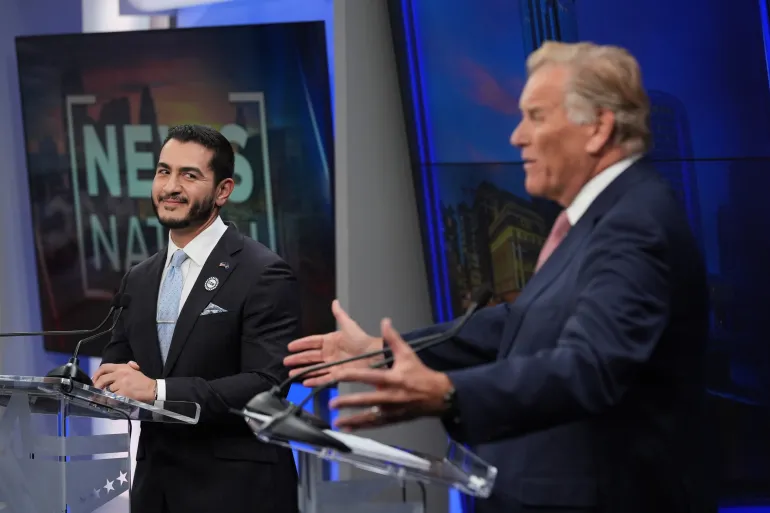
The leading candidates in Michigan’s heated Senate race have faced off in their first televised debate, with less than a month remaining before the United States midterm elections.
Thursday’s hour-long debate was a microcosm of how tense the toss-up race has become.
Recommended Stories
list of 3 itemsend of list
Democratic nominee Abdul El-Sayed, formerly the health director for Wayne County, repeatedly sought to paint his Republican adversary Mike Rogers as a yacht-owning millionaire out of touch with ordinary voters.
For his part, Rogers, a former member of the US House of Representatives, lobbed accusations at El-Sayed that he was soft on “terrorism” and had foreign sympathies.
The Michigan-born El-Sayed has repeatedly faced Islamophobic attacks while on the campaign trail, with Republican President Donald Trump labelling him an “extremist, terrorist sympathizer” whose history “goes back to the days of the Jihad”. If elected, El-Sayed would be the first Muslim member of the US Senate.
The two candidates spent much of their hour onstage together speaking over one another, as they exchanged pointed barbs.
“He can’t condemn a terrorist act that happened on our soil in the state of Michigan. He can’t bring himself to condemn –,” Rogers began, referencing a March attack on a synagogue.
“I did condemn it,” El-Sayed said, jumping in. “No, you did not,” Rogers replied, with El-Sayed quickly responding, “You make stuff up. You make stuff up.”
The Senate race in Michigan is considered key to the battle for control of the US Senate. Democrats are seeking to flip both chambers of Congress, but shifting control of the Senate will be a tougher prospect, given that only a third of its 100 seats are on the November 3 ballot.
Host Rick Albin at times struggled to keep the debate on track, as tensions rose.
“We’ve got dozens of questions we want to get to. You can’t litigate all of these with 14 different rebuttals, so please work with me,” Albin told the two candidates at one point.
Here are the key takeaways from the evening’s debate.
Republican nominee Mike Rogers, right, speaks during a televised debate with Democratic nominee Abdul El-Sayed [Paul Sancya/Pool via AP Photo]
Rogers insinuates El-Sayed family ties to ‘terrorism watch list’
The ferocity of the debate was underscored by the high volume of ad hominem attacks the candidates deployed against each other.
But Rogers repeatedly pushed a series of attacks that seemed to centre on El-Sayed’s identity as a Muslim.
In response to a question about healthcare, Rogers said that El-Sayed has “taken money from individuals on his campaign who openly support Hamas, Hezbollah, al-Qaeda”.
Later, when asked about his position on surveillance by Flock cameras, Rogers argued that such technology has helped catch people suspected of terrorism. He then implied that El-Sayed’s concerns about the cameras were suggestive.
“Why would that bother you?” Rogers asked El-Sayed. “Well, if you have somebody in your family that might be on the terrorism watch list …”
El-Sayed interjected, seeming to dare Rogers to continue his thought.
“Are you going to go ahead and say that I’m a – go ahead and say it,” El-Sayed said. “You’ve been tiptoeing about it the whole time. Just say it. Just say it. Go ahead and say it.”
Muslim and Arab candidates in the US have frequently been subjected to Islamophobic attacks on the campaign trail, accusing them of support for “terrorism” and Islamic fundamentalism.
Republican Mike Rogers insinuated El-Sayed may have family on the ‘terrorism watch list’ [Paul Sancya/Pool via AP Photo]
Both sides agree on ending the Iran war
There were issues, however, on which both candidates found a measure of common ground.
Both Rogers and El-Sayed agreed the US-Israeli war against Iran should end, but they had opposite views on Washington’s relationship with Israel and its role in the conflict.
High gasoline prices and inflation, El-Sayed said, were directly caused by the Iran war, and he blamed the Trump administration for Iran’s decision to shut down the Strait of Hormuz, a critical trade route.
“This is what happens when you start wars you never should be fighting,” El-Sayed said. “We literally taught the Iranian regime that they have a choke on the Strait of Hormuz, and now we’re living in that reality.”
Rogers agreed that “we need [the war] to come to an end”, but he also justified the conflict, saying that Iran’s uranium enrichment programme had been “set back twenty years”, echoing a frequent White House talking point.
The Trump administration has argued that the war was necessary to prevent Iran from creating a nuclear weapon, a goal Tehran has long denied.
Rogers’s position led El-Sayed to accuse him of “cheerleading” for the war and the Trump administration.
Democratic nominee Abdul El-Sayed pushed for an end to unconditional support for Israel [Paul Sancya/Pool via AP Photo]
Rogers backs continued Israel aid, El-Sayed calls for end
As part of the debate about US foreign policy, the candidates were also pressed on their positions about the US alliance with Israel.
The country is considered the largest overall recipient of US aid since World War II. From the start of Israel’s genocidal war on Gaza in October 2023 through September 2025, experts estimate that Israel received nearly $21.7bn in military aid.
El-Sayed has openly called for ending aid to Israel, and he has repeatedly denounced the conflict in Gaza as a genocide, in line with evaluations from United Nations experts and human rights watchdogs.
During the debate, he indicated he preferred US taxpayer dollars to be spent on domestic concerns like education and healthcare, rather than Israeli aid.
“He wants unconditional support for a foreign government,” El-Sayed said of Rogers. “I want unconditional support for kids in our schools, unconditional support for our healthcare, childcare.”
He also blamed Israel for the US military action in Iran. “I don’t want to be pushed into war by Israel, and I don’t want to be in war with Iran,” El-Sayed said.
Rogers, meanwhile, has joined most of his fellow Republicans in continuing to support aid for Israel. He argued that the country had “the right to defend itself in a very difficult neighbourhood”.
“Is there anything Israel could do that would lose your support?” the debate host asked.
“Listen, if they’re talking about using nuclear weapons, they would definitely lose my support,” Rogers replied.
Abdul El-Sayed, right, and Mike Rogers shake hands prior to their debate [Paul Sancya/Pool via AP Photo]
Another hot-button issue during the debate was Trump’s crackdown on immigration.
The Republican leader has pledged to carry out the largest mass deportation effort in US history, and his campaign has spurred human rights concerns.
When asked how they would approach the crackdown, both Rogers and El-Sayed agreed on tempering the militarised nature of the campaign.
In several cities, including Minneapolis, Minnesota, immigration authorities have been accused of racial profiling and using excessive force against immigrants and protesters, as well as violating their rights to due process.
Multiple fatal shootings have occurred during immigration enforcement operations, including the deaths of Renee Good and Alex Pretti in January.
Rogers indicated he would not have supported such confrontational operations, but he repeated a Trump claim that the raids were taking dangerous criminals off the streets.
“I think the public efforts in Minnesota were probably not appropriate,” Rogers said. “You always want to go in quiet, get the bad guy, get out of the neighbourhood for less problems. So that, to me, was something that they could have done differently.”
He later claimed that, under Trump, the country had seen “the largest decrease in murders ever recorded”.
El-Sayed, meanwhile, has previously voiced support for abolishing Immigration and Customs Enforcement (ICE), a key agency in Trump’s deportation campaign. He defended that stance on the debate stage.
“ICE right now is not about immigration enforcement. ICE is about terrorising our streets,” he said.
Mike Rogers speaks to reporters in the spin room after the debate on October 8, 2026 [Jim Vondruska/Reuters]
Candidates debate Canada trade war and tariffs
Donald Trump’s trade war with Canada, felt acutely in neighbouring Michigan, was another key topic of conversation.
El-Sayed depicted Rogers as an uncritical backer of Trump and his tariffs and tied him to past free trade deals such as the North American Free Trade Agreement (NAFTA), which paved the way for companies to shift manufacturing facilities out of the US – though Rogers did not enter Congress until 2001, eight years after NAFTA passed.
“You did that, man. That was your policy. NAFTA, that was your policy,” said El-Sayed.
Rogers sought to distance himself from the current trade war but expressed support for a deal with Canada that would loosen some of Ottawa’s tariffs on US goods.
“I would like to see the deal made,” said Rogers, adding that high Canadian tariffs for US goods “should be eliminated”.
Both candidates tried to strike a balance between criticism of the economic fallout of the trade war and qualifying their support for more selective tariffs, favoured by some industries and labour unions as a means of protecting domestic jobs.
This season is the WSL’s biggest ever, literally, with the league expanding from 12 to 14 teams and three coming up from WSL 2.
But does bigger mean stronger?
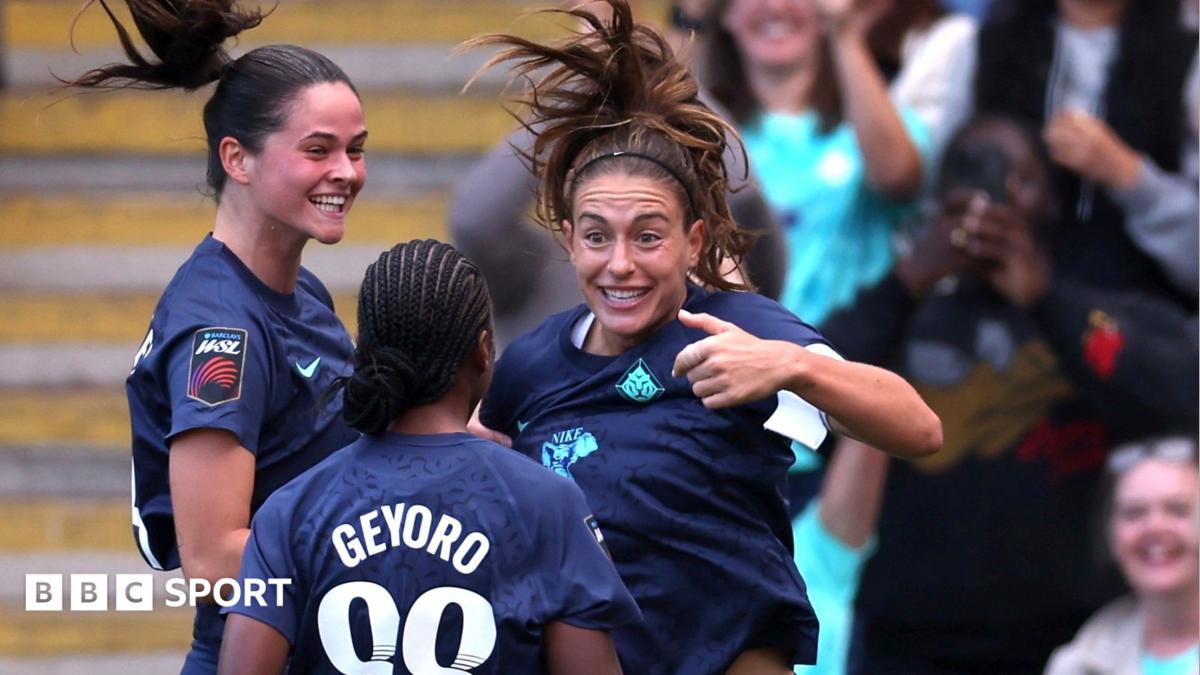
Crystal Palace look the most comfortable of the promoted sides, boasting six points from five games and they moved to eighth in the WSL table by drawing at Aston Villa on Sunday.
But things are more difficult for the other promoted sides, Birmingham and Charlton, who prop up the table.
Despite some promising patches, WSL 2 champions Birmingham have just two points and one of those came against Crystal Palace.
At least France forward Oceane Hurtre looks suited to this level, sitting as joint top scorer in the WSL with five goals from five games.
Hurtre scored against Everton in defeat on Sunday but defender Neve Herron summed things up by saying Blues were “second to everything” after the game.
Meanwhile, it looks bleak for Charlton, bottom of the table with zero points, 15 goals against and only two goals scored.
After their 5-1 loss to Brighton on Sunday, goalkeeper and captain Sophie Whitehouse said: “It just wasn’t good enough.
“It’s a tough league. The jump up is so big. You can’t make any mistakes.”
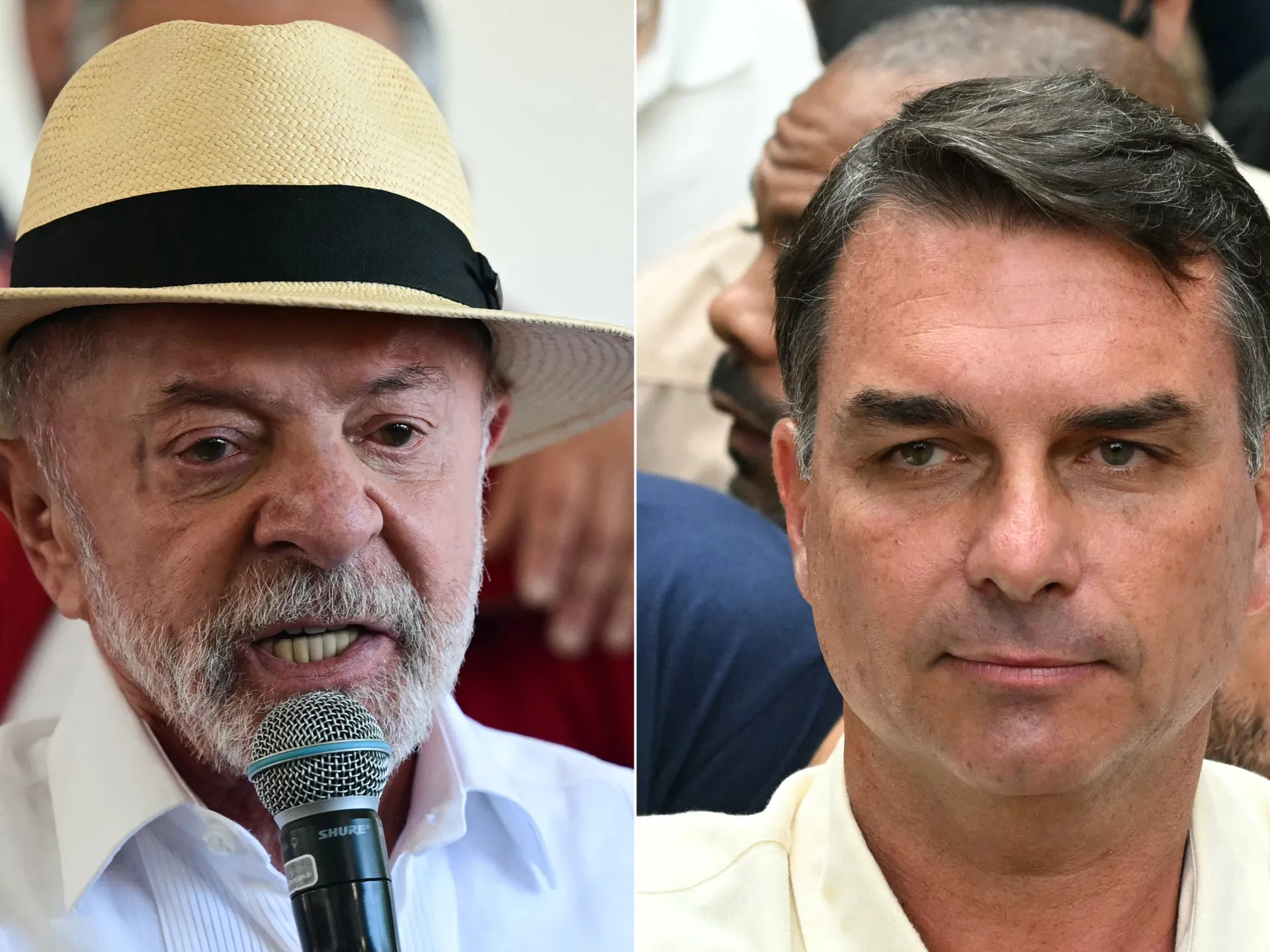
Brazil’s closely watched presidential election is heading to a second round between leftist President Luiz Inacio Lula da Silva and right-wing Senator Flavio Bolsonaro, prolonging a deeply polarised race with major implications for the country and the wider region.
Brazil’s electoral court confirmed on Sunday that the two candidates will advance to a run-off on October 25 after neither won the majority needed to secure the presidency outright, with Bolsonaro leading at 55.8 million votes to Lula’s almost 53.2 million.
Recommended Stories
list of 4 itemsend of list
Lula, 80, is seeking a fourth, non-consecutive term after a political career spanning nearly five decades.
Bolsonaro, 45, is the eldest son of former President Jair Bolsonaro and is trying to return his father’s right-wing movement to power, even as the former president serves a 27-year prison sentence for plotting a coup after losing the 2022 election.
The election comes at a pivotal time for Latin America’s largest economy. Brazilians are grappling with concerns over crime and the cost of living, while the country faces an increasingly tense relationship with the United States. The vote is also being closely watched across a region that has shifted sharply to the right in a series of recent elections.
While a second round was widely expected, the first-round result did not play out quite as pollsters had predicted.
Here are some of the key takeaways from the election so far.
Brazil is heading for another Lula-Bolsonaro run-off
With nearly 99 percent of votes reported, Bolsonaro had about 47 percent of valid votes, compared with 44.9 percent for Lula. Neither reached the 50 percent threshold needed to win in the first round.
That sets up another Lula-Bolsonaro showdown, four years after Lula narrowly defeated former President Jair Bolsonaro. This time, he will face the former president’s eldest son.
The race could be extremely close, as polling ahead of Sunday’s vote suggested Lula and Flavio Bolsonaro were roughly tied in a potential run-off.
That puts voters who backed one of the other 10 candidates in the first round at the centre of the fight for the presidency over the next three weeks.
Ronaldo Caiado and Renan Santos, who together received about 5.3 million votes, have previously said they will not endorse either candidate in the run-off.
Flavio Bolsonaro did better than polls suggested
Most polls leading up to election day predicted the race would be pushed into the second round, but had Lula finishing the first round ahead of Bolsonaro.
Instead, Bolsonaro emerged with a lead of two percentage points, raising questions about why the final polls underestimated his support.
On Sunday, Bolsonaro said the results showed that Brazilians want change.
Analysts told the Reuters news agency that Bolsonaro may have benefitted from “protest votes” from people who may have preferred another candidate but saw defeating Lula as the priority. Many had been expected to shift their support to Bolsonaro only in a second round, meaning this could have consequences for his support in three weeks.
“The protest vote foreshadows what is to come in the run-off,” political analyst Rafael Favetti told Reuters. “While this should benefit Flavio Bolsonaro now, his growth potential in the second round drops precisely because that support has already been front-loaded.”
After the results came in, Lula said the votes were “unexpected” but that he would come back stronger in the run-off.
“I admit, I was convinced I would win in the first round. The game is about to start. We are in extra time. In extra time, we will win over the Brazilian people,” the 80-year-old said.
The right had a strong night in Congress, too
Bolsonaro’s surprising performance in the first round was part of a broader show of strength for Brazil’s right.
Right-wing parties, led by Bolsonaro’s Liberal Party (PL), were performing strongly in both houses of Congress, with the PL on track to emerge as the largest force in the Chamber of Deputies and making gains in the Senate.
This included victories for other members of the Bolsonaro family, including former First Lady Michelle Bolsonaro, Flavio’s stepmother, who won a Senate seat in the Federal District, her first elected office.
His brother, Carlos Bolsonaro, was elected to the Senate in Santa Catarina.
The results show that the political movement built around former President Jair Bolsonaro – known as “bolsonarista” – remains a powerful electoral force, even with the former president barred from running himself.
“The fact that far-right candidates for the legislature have exceeded all expectations suggests a deeper popular grounding for the bolsonarista project than many expected,” Andre Pagliarini, an assistant professor of history and international studies at Louisiana State University and author of a book on Lula, told Al Jazeera.
“Millions of Brazilians right now evidently feel the right best reflects their values and vision for the future,” he added.
The congressional results matter beyond election night, too. Both houses were already dominated by conservative lawmakers, and a stronger right-wing presence could make it even harder for Lula to push through his agenda if he wins another term.
A Bolsonaro victory, meanwhile, could give him more room to pursue his own priorities, including his pledge to seek an amnesty for his father.
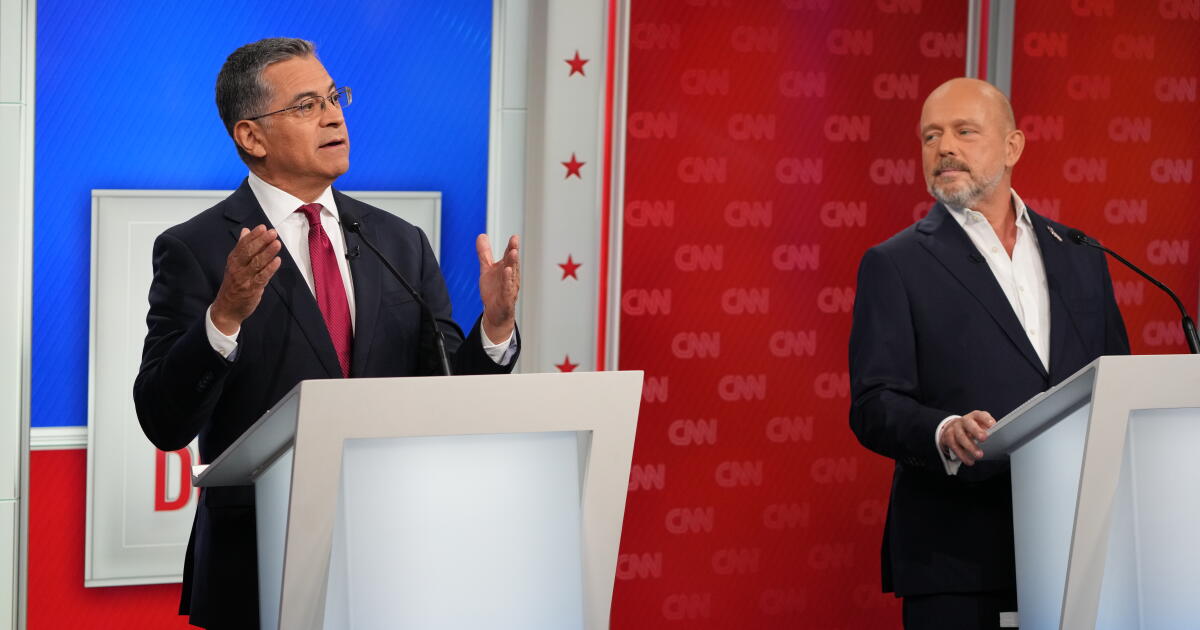
The two candidates to become California’s next governor painted vastly different portraits of the state they want to lead during a televised CNN debate Wednesday night — though they both agreed the state faces tremendous challenges.
Democrat Xavier Becerra, leading in polls, cast the state as an economic engine and a critical bulwark against the disastrous economic policies and creeping authoritarianism of the Trump administration, but also a victim of Trump policies, including tariffs and the war in Iran, that have made life less affordable and the nation less safe.
Becerra said he would work hard to help struggling Californians — including by cutting red tape on housing and regulating AI to ensure it doesn’t destroy jobs — while his challenger, Republican Steve Hilton, would harm them further by backing President Trump’s agenda at every turn.
Hilton, endorsed by Trump, blamed the state’s most entrenched ills on years of Democratic governance, awash in unnecessary state bureaucracy and regulation that have made it wildly unaffordable, and wrongly obsessed with fighting the president instead of bringing down costs and fixing related local issues like homelessness.
Hilton said he would help struggling Californians by cutting taxes, cutting the cost of building new housing, eliminating fraud and bringing common sense back to state policy-making.
Both candidates came out of the gate on offense, and at times it got intensely personal, particularly on immigration — with Becerra accusing Hilton of welcoming white immigrants into the country while rejecting Latino immigrants, and Hilton accusing Becerra of handing migrant children over to sex and labor traffickers during his time as U.S. Health and Human Services secretary.
With ballots soon arriving in voters’ mailboxes and the Nov. 3 midterm election rapidly approaching, the hour-long debate — moderated by CNN anchors Jake Tapper and Dana Bash in Burbank and aired live by the national news network — provided the public with its latest look at two candidates vastly different both in politics and campaign style.
Becerra, a former Congress member from Los Angeles, California attorney general and Health secretary under President Biden, surged past a slate of other Democrats to win the June primary after onetime front runner Rep. Eric Swalwell dropped out of the race amid sexual assault allegations. Hilton placed second after Republican voters and others coalesced behind his message to shake up Sacramento — earning him the right to face off against Becerra in November.
Hilton, a former British political aide, former Fox News host and Silicon Valley entrepreneur, has been crisscrossing the state looking for votes anywhere he can find them — an uphill battle given registered Democrats outnumber Republicans by a nearly 2-to-1 margin, and opposition to Trump is widespread in the state and growing even among Republican voters.
A poll this month by the UC Berkeley Institute of Governmental Studies and co-sponsored by the Los Angeles Times found 58% of likely voters surveyed said they support Becerra, compared with 33% who back Hilton — a slight increase to Becerra’s lead compared with an August IGS poll. California voters identified the high cost of living as their top concern, but that was followed closely by opposition to the Trump administration.
Becerra has taken a less visible approach to campaigning, with critics accusing him of intentionally keeping a low profile in an effort to cruise to victory in a state that hasn’t elected a Republican to statewide office in two decades.
“I just want to say thank you to CNN for bringing Xavier out of hiding,” Hilton said at the beginning of Wednesday’s face-off. “He’s barely been seen in public since the primary four months ago; it’s very important we have this debate.”
During the debate, both candidates seemed prepared to focus on the lack of affordability — namely by blaming the other’s political party for it. But they also discussed artificial intelligence and data centers, immigration policy and, of course, Trump.
Tackling gas prices, high cost of living
California has some of the highest housing and energy costs in the nation, and affordability tops the list of concerns for likely voters. It also was the first issue the candidates debated.
Hilton has made the cost of living a central theme of his campaign, with a plan he calls “Califordable” to cut gas prices and end income taxes on earnings up to $150,000. He blamed California’s high costs on Democrats, who have controlled the Legislature and statewide offices for more than 15 years. Hilton says he can lower costs by slashing onerous state regulations on businesses.
Hilton said the “quickest way to get more money in people’s pockets is for the government to take less out” and to reduce regulations to allow more housing to be built — including in “10 new cities” he said he would help build in the state.
Becerra has blamed higher prices on Trump’s tariffs and the war against Iran. In response to attacks from the U.S. and Israel, Iran has for months choked off a major oil trade route, sending global gas prices soaring — to a national average of $4.48 per gallon this month.
Becerra said Hilton’s plan to end income taxes would amount to a massive tax cut for “billionaires and millionaires” that would take money from schools, healthcare and other critical services. “The math doesn’t add up to what he’s talking about. He’s going to have to take it out of somewhere. It will come out of our schools,” Becerra said.
Becerra said he would bring down costs for people by cutting red tape, including on housing, and fighting the Trump administration — which he said is the real driver of cost increases. He also said he has helped create millions of jobs during his career.
Agree but disagree on AI and data centers
Hilton and Becerra both support regulations for data centers and artificial intelligence companies, a sign of growing bipartisan pushback seen across the country.
Hilton said he wants California to take a leading role in regulating AI, given much of the industry is located in the state, and expressed concern about losing AI jobs to other states such as Texas and Arizona. Hilton questioned whether Becerra would have the political courage to rein in the industry, saying his campaign has received funding from it.
When Bash asked Hilton if those companies should be able to “self-police,” as Trump has suggested, Hilton said, “We’ll have to see.” He also said he appreciates the effort by Trump to get assurances from AI companies on safety during a recent summit, and he would work to make sure that those promises are upheld.
Becerra derided Trump’s deal as a meaningless “pinky promise” that does not guarantee a safe path forward. He said he would lead efforts to reach real and meaningful regulations but also work directly with local communities on what they want.
“If someone wants to come in and build a data center that creates more jobs in the community, adds more energy to our grid, and it actually protects and adds more water capacity, then let’s talk,” he said. “But it has to be good for the community.”
Sharp attacks on immigration
Becerra has faced bipartisan criticism of how Health and Human Services cared for the influx of unaccompanied immigrant children during the pandemic.
Hilton has hammered Becerra on it, and at the debate accused him of sending “thousands of young children directly into the clutches of child sex and labor traffickers.”
Becerra was attacked by Democratic rivals in the gubernatorial primary in the aftermath of a Pulitzer Prize-winning series in the New York Times, including an article that said thousands of migrant children who entered the United States between 2021 and 2023 worked in slaughterhouses, factories and other dangerous jobs that violated child labor laws. The investigation also alleged that tens of thousands of the children Becerra’s agency released couldn’t be found because he relaxed screening of relatives and sponsors.
Becerra repeatedly has said that despite a lack of congressional funding for licensed-care facilities dismantled by the Trump administration, his staff worked hard to vet the people who the children would be placed with.
At the debate, he called Hilton’s claims “Trump talking points.” He also said more needs to be done to ensure children aren’t separated from their immigrant parents.
Becerra also has slammed the Trump administration for its mass deportation program and immigration crackdown, which has sent immigration enforcement agents into cities across the country, including Los Angeles.
Hilton said he would work to “lower the temperature” in the immigration debate and “prioritize the removal of dangerous criminals,” which he said is not occurring in California because Democrats are playing “politics” with the Trump administration.
Becerra, the son of immigrants, said California welcomed Hilton as an immigrant, and Hilton “welcomed ICE mercenaries” into California in return. He also accused Hilton of welcoming immigrants that look like Hilton, who is white, while working to remove immigrants who look like Becerra, who is Latino.
“I have fought all my life to make life better for immigrants, to represent them well, to defend them, to let them grow and build like my parents. But here’s the problem I have with your policies: You seem to welcome immigrants who look like you, but deport immigrants who look like me,” Becerra said.
Hilton called that “disgraceful.”
Trump, Trump and more Trump
Hilton repeatedly has praised Trump and his policies and consolidated support among California Republicans after Trump endorsed him before the June primary. But Trump’s endorsement could be an albatross in the Nov. 3 election, given his low approval ratings — particularly in California.
Becerra repeatedly hammered Hilton as a Trump acolyte, so much so that Hilton said that it was Becerra’s only attack line, and that Becerra “takes no responsibility” for Democratic policies that have harmed California for years.
“All you ever say is Trump, Trump, Trump, and that’s nothing but an insult to every Californian who is desperate for something to change in this state, and all you’re offering is more of the same,” Hilton said.
Becerra countered that Hilton embraced Trump during the primary.
“Your words, Trump, Trump, Trump. Because he is your supporter,” Becerra said. “You chased his endorsement.”
Where they stand on billionaire’s tax, schools and other quick hits
Proposition 40, the billionaires tax: Both Becerra and Hilton oppose the controversial wealth tax proposal on the ballot that would enact a one-time 5% levy on billionaires’ assets to largely replace $100 billion in federal healthcare funding cuts to California.
Proposition 39, voter ID: Hilton expressed support for the ballot measure, which would require voters to present ID at the polls or write a special pin on their mail-in ballot. Becerra, who opposes the measure, claimed the initiative is part of an effort by Trump and his supporters to interfere in elections.
Improving schools: Fewer than half of third-grade students read at grade level. Hilton said it’s a “catastrophe” that exemplifies Democratic failure in the state. Becerra conceded that the school system is not “well coordinated” but supports transitional kindergarten, a new pre-K grade created by Gov. Gavin Newsom.
The 81st United Nations General Assembly (UNGA) concluded on Monday with artificial intelligence (AI), the Israel-Palestine conflict and the US-Israel war on Iran dominating world leaders’ addresses during the general debate.
UN Secretary-General Antonio Guterres, in his final address before his term ends, warned that the future of the world would be shaped by four tests: AI, climate change, wars and inequality.
Recommended Stories
list of 3 itemsend of list
“Across all four tests, the decisive issue is power. Power over force, money, energy, technology, rules and the future. That is why the UN Charter – and the work of the United Nations – matter more than ever,” Guterres said.
Speeches ranged from calls to reform the UN to appeals for upholding international law, as the global body has been undermined by the unilateral foreign policy pushed by United States President Donald Trump.
Here are the biggest takeaways from this year’s summit:
Palestine
The situation in Palestine was a key issue among members amid Israel’s ongoing genocidal war on Gaza despite the so-called “ceasefire” and escalating settler pogroms in the occupied West Bank.
France, Canada, Iraq, the United Kingdom and others called for Palestinian sovereignty during their speeches.
“What credibility do we have if we continue to remain inactive in the face of Gaza,” French President Emmanuel Macron said in his address.
“Some boast of a supposed peace, but this peace hasn’t reopened humanitarian routes for a single second,” he said, adding: “Must we stand by and watch this spectacle that shames us all?”
Macron, British Prime Minister Andy Burnham, his Canadian counterpart Mark Carney and Saudi Foreign Minister Prince Faisal bin Farhan Al Saud chaired a meeting at the UNGA on Palestinian statehood, which is being actively undermined by Israel. Israeli Prime Minister Benjamin Netanyahu’s government has accelerated construction of illegal settlements and provided impunity to settlers in the occupied territory.
At the same time, the US-led Board of Peace unveiled a 66-project reconstruction blueprint with proposed funding of $2.4bn for the Gaza Strip on the sidelines of the UNGA.
However, the board’s plan excludes the UN agency for Palestinian refugees (UNRWA), saying it has no role in the future of Gaza. The decision was described by Palestinian political analyst and playwright Ahmed Najar to Al Jazeera as aligned with Israeli efforts to “marginalise and ultimately dismantle the agency, removing it not only from Gaza’s present but from its future”.
Dozens of delegates left the hall in protest as Netanyahu delivered his speech, in which he declared that Israeli forces would continue fighting against Hamas and Iran.
Trump defends military action on Venezuela, Iran
In his address, Trump emphasised that while others spoke of peace, he “made peace”.
Trump defended his actions in abducting the then-Venezuelan President Nicolas Maduro in January and said, since his military operation, hundreds of political prisoners had been freed in the South American country and that Caracas had signed the largest oil deal in history last month, covering “65 billion barrels of oil, which will benefit both Venezuela and the United States enormously and help drive down the cost of energy all over the world”.
“It was perhaps the biggest deal ever made. To the victor belong the spoils – you’ve all heard that,” Trump boasted.
Trump reiterated that he would never allow Tehran to have nuclear weapons and that the 12-day war in July 2025 had “obliterated their nuclear programme beneath mountains of rubble” as the ongoing US-Israel war on Iran had sunk “159 ships of their navy” to the bottom of the sea.
“I have a big decision to make – will a deal be made with Iran that lets them rebuild and create a far greater country than it ever was before … or do I annihilate the Islamic Republic and do it quickly, never giving them a chance to kill and destroy people and countries again,” he said, adding: “I believe we make a deal right after the elections.”
Popular Iranian officials
During sideline talks and one-on-one meetings, Iranian officials were in demand.
In his speech to delegates, President Masoud Pezeshkian emphasised that Iran had only “defended ourselves” amid attacks on his country and killings of Supreme Leader Ayatollah Ali Khamenei, scientists and children.
“We are not terrorists, our innocent people have been the targets of cowardly attacks and aggressions imposed upon our country,” he said.
Pezeshkian added Iran would not accept that peaceful nuclear technology is held exclusively in the hands of a few countries.
“We will not bow our head and give up the right that is inherently ours,” he said.
Meanwhile, on the sidelines of the summit, Foreign Minister Abbas Araghchi met his counterparts from India, Qatar, Turkiye, Pakistan, Ukraine and other countries.
He also met US Special Envoy Steve Witkoff and Trump’s son-in-law Jared Kushner in a four-hour meeting mediated by Qatar.
AI dominance
World leaders used their time at the podium to call for a global approach to using AI as interest in the technology grows, but fears that it could escalate if unchecked are also growing.
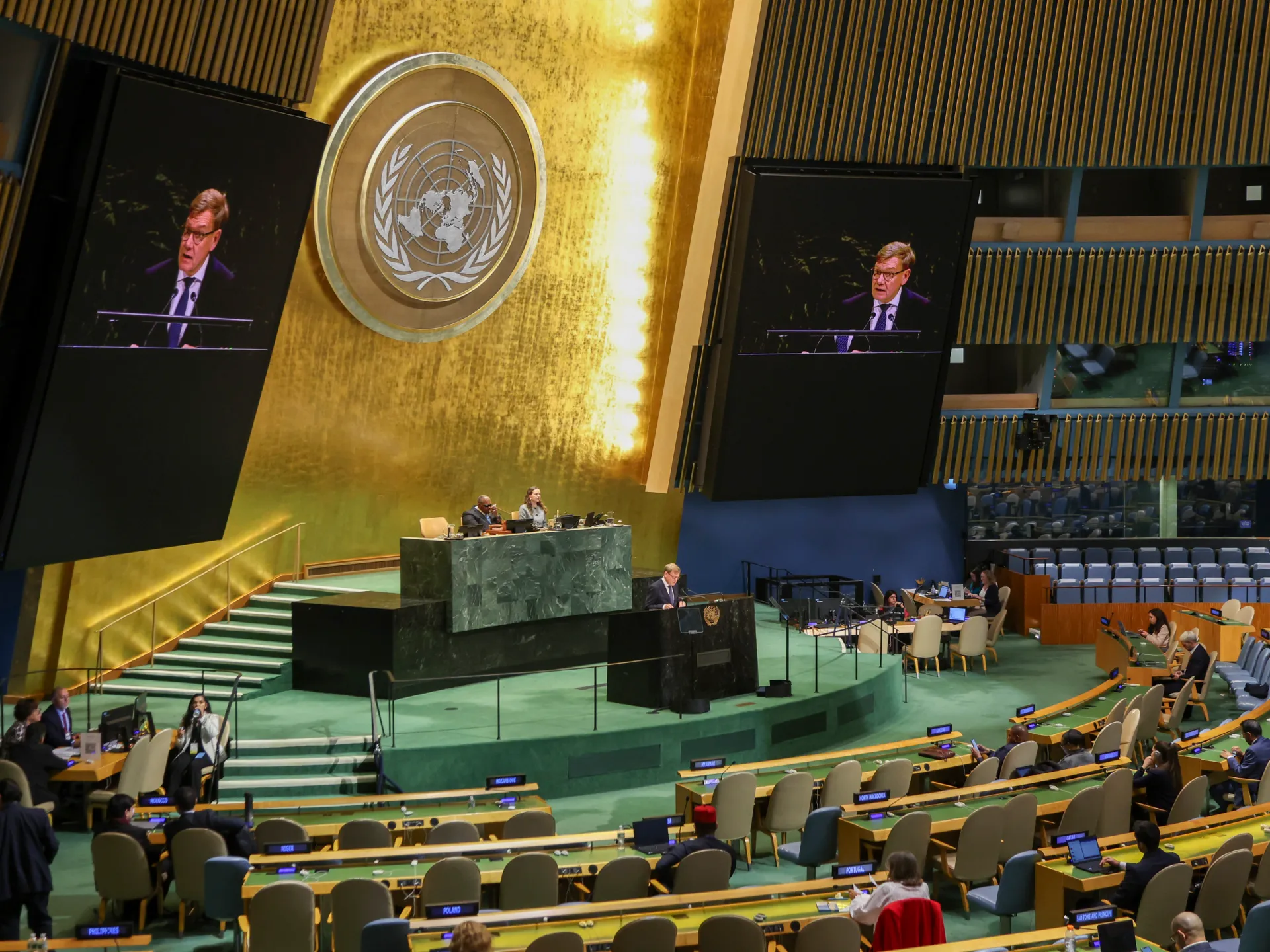
In his address, Finnish President Alexander Stubb said AI was the “most consequential technology in the history of mankind”.
“It will impact science, the economy, politics, security, and the very essence of our humanity. Humans can and should be in the driver’s seat. We have a choice: we can compete, cooperate or slow down. For me, cooperation is the best way forward,” he said.
While discussions are moving away from a good-versus-bad dichotomy, officials disagreed on approaches.
While Guterres and the European Union called for safety standards and international rules, Trump said AI innovation should not be constrained by international regulation, adding that the US should control its AI sector.
Xi skips the UNGA
Chinese President Xi Jinping skipped the UNGA despite being in the US for a summit with Trump. He sent Vice President Han Zheng to attend.
Xi rarely attends the UNGA. He had sent Premier Li Qiang in his place last year. In 2024, Foreign Minister Wang Yi attended the annual gathering.
Without mentioning Iran in his address, Han reiterated Beijing’s position that “sovereignty and security of countries in the Middle East, including the Gulf, should be respected”.
“China calls for advancing the governance of the West Bank and the post-conflict reconstruction of Gaza in accordance with the principle of the Palestinians governing Palestine. It also calls for bringing the Palestinian question back onto the right track of the two-state solution at an early date,” he said.
Han also called for a “people-centred approach and develop AI for the positive and for good, narrow the digital divide, and promote development that is universally beneficial”.