Taiz

Yemen’s besieged city of Taiz faces a deepening water crisis | Houthis News

Taiz, Yemen – Qaid al-Sharaabi waited three days before it was his turn to receive a tanker of clean water.

But the delay is not the only problem. He says he now has to pay more – the result of the Houthi siege on Taiz, in southwestern Yemen.

Recommended Stories

list of 3 itemsend of list

“This is the second time since the siege began a month-and-a-half ago that I’ve had to pay twice the price for a water tanker,” al-Sharaabi told Al Jazeera. “I’m afraid that if things continue like this, more residents will resort to using unsafe water.”

The United Nations children’s agency (UNICEF) says that water production in Taiz has nearly halved, while more than 800,000 people are reported to be cut off from humanitarian assistance.

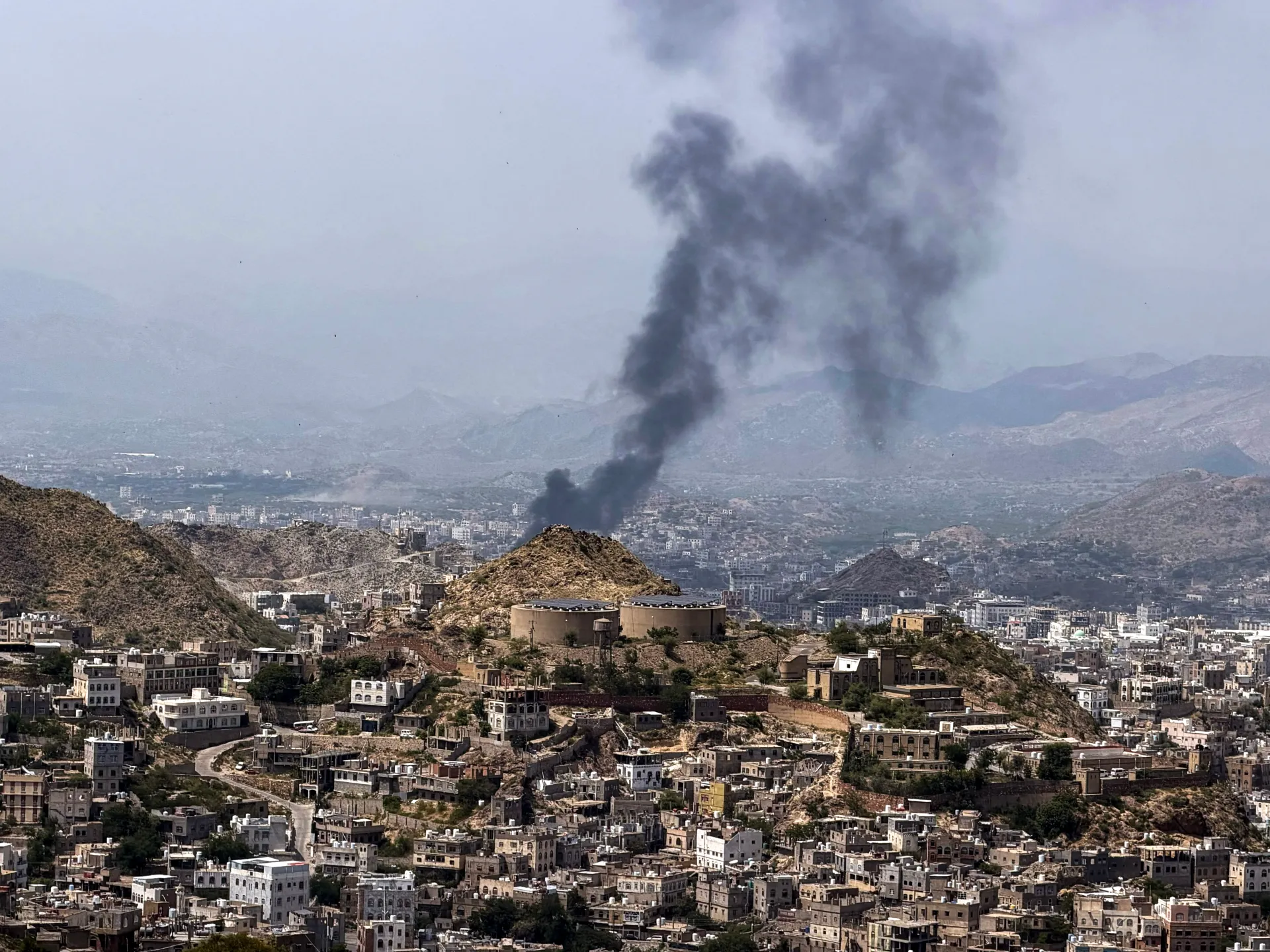
The crisis has left the city reeling, even as government soldiers try to defend it, in the latest round of fighting to hit the area since the war in Yemen started in 2014.

Hospital administrators are warning of a public health disaster, while government officials are unsure how much longer they will have the funds needed to carry out even limited services.

Taiz, Yemen’s third-largest city, has long suffered from severe water shortages.

But, according to Wafiq al-Aghbari, director-general of Taiz governorate’s Local Water and Sanitation Corporation, the crisis “intensified in 2015, with the first siege imposed on the city by the Houthis, and continued to worsen year after year, as the suffering of the city’s residents grew”.

He said the crisis has deepened since the Houthis laid siege to the city again in October, after they made advances against government forces in the countryside around Taiz.

Before the war started in 2014, al-Aghbari explained, Taiz received about 20,000 cubic metres (700,000 cubic feet) of water per day from six large wellfields, which had supplied the city and its immediate surroundings for years.

But only one of those wellfields is inside the city limits, and before the war, it had only been used in emergencies.

By 2015, Taiz had lost access to all five of its external wellfields, which had either fallen under Houthi control or were on the front lines, leaving the city reliant on its emergency wells.

But work in the past few years to dig additional wells and rehabilitate existing sources had brought daily production capacity up to 5,000 cubic metres (175,000 cubic feet) – still just 14 percent of the city’s estimated daily needs.

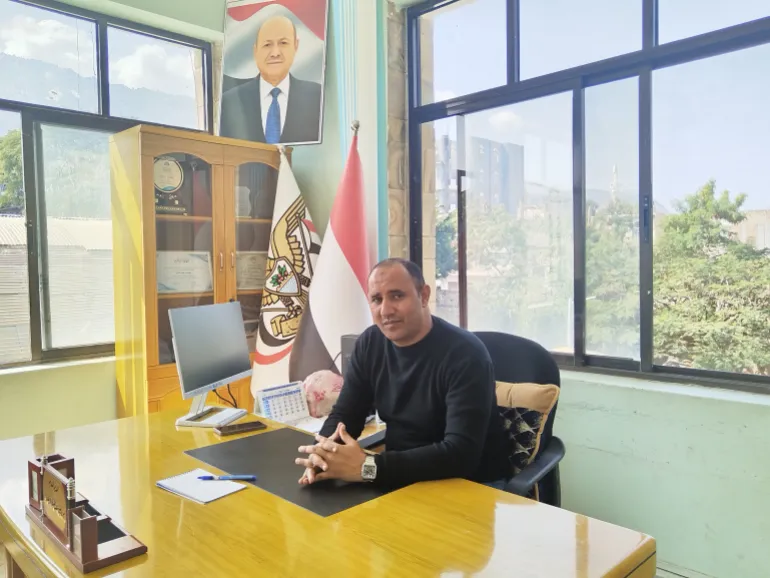
Wafiq al-Aghbari, the director-general of Taiz governorate’s Local Water and Sanitation Corporation
Wafiq al-Aghbari, the director-general of Taiz governorate’s Local Water and Sanitation Corporation [AbdulHakim Helal/Al Jazeera]

Tightening siege

The Houthi encirclement of Taiz in October led to the Iranian-backed group seizing control of Hadhran al-Dhabab, an external wellfield that had been partially restored in August 2025.

The situation has led to the water corporation losing 3,200 cubic metres (112,000 cubic feet) of daily production capacity – 1,200 cubic metres (42,000 cubic feet) after pumping stopped from the Hadhran al-Dhabab wellfield, and a further 2,000 cubic metres (70,000 cubic feet) after wells inside the city stopped operating because of a shortage of diesel. The corporation is now able to produce only 1,800 cubic metres (63,180 cubic feet) a day from the emergency wells that it can still operate.

Al-Aghbari said the consequences of the siege had extended beyond the widening gap between water supplies and demand.

Funding and supplies for the city’s charitable water distribution points, known as “sabeel”, have also been disrupted, because of shortages of fuel and water.

According to al-Aghbari, the subsidised distribution points had previously provided up to 1.5 million litres (396,000 gallons) of fresh water a day, alongside a further 1 million litres (264,000 gallons) of untreated water.

“The water corporation has entered a major financial crisis as a result of the loss of most international and local funding for its operations, at a time when the corporation is also under immense pressure because of the growing shortfall in meeting local water needs,” al-Aghbari said.

He added that this was especially problematic because more residents cannot afford to buy commercially-supplied water as a result of the worsening economic situation, and become more dependent on the free water distribution points.

The owner of one commercial water tanker, who did not want to give his name for security reasons, said that prices had risen sharply at the beginning of the siege, from 18,000 riyals per tanker (about $12 at parallel market rates) to 30,000 riyals (about $20).

He continues to try to pick up water from the Hadhran al-Dhabab wellfield, but said that the process had become difficult.

“[That is] because of the consequences of the siege, including the inspection procedures imposed by the Houthi group … which last for hours,” he said. “Sometimes we are prevented from entering and remain outside the city for more than a day, on the grounds that there are risks because of heightened military and security tensions.”

The Houthis have denied responsibility for the closure of roads into Taiz. Human Rights Watch has said that residents, aid workers, and UN officials had blamed the armed group for shortages in the city.

Contaminated water

The consequences of the siege have gone beyond its humanitarian and economic impact, with serious implications for public health, according to Dr Abdulqawi al-Shamiri, the director of Taiz’s al-Taawun Hospital.

He warned of “serious health disasters because of the interruption of safe water supplies that residents used to obtain from groundwater fields outside the city”.

Al-Shamiri said water from the emergency wells within the city had “long been unfit for human use, as a large proportion of it has become contaminated, or is hard water containing high concentrations of salts”.

He explained that the contamination was the result of sewage mixing with water because of poorly maintained sewage networks, and rubbish dumped in streets and floodwater channels. The Houthis, al-Shamiri said, have prevented waste from being transported to a landfill outside the city.

According to an internal report from the governorate’s Cleaning and Improvement Fund, close to half of the city’s rubbish is going uncollected.

Residents are contracting illnesses such as cholera and acute diarrhoea as a result, Al-Shamiri said.

“The rubbish quickly decomposes into extremely dangerous bacteria and chemicals that increase the existing contamination of the city’s well water, making it unfit for human use,” al-Shamiri said. “Unfortunately, however, most people are being forced to use it under the current circumstances because of the difficulty of accessing clean, safe water.”
Source link

Hospital in Yemen’s Taiz warns of collapse in days because of Houthi siege | Conflict News

Taiz, Yemen – It was approaching 10:30am in the dialysis centre of the Republican Hospital in Taiz when a machine began filtering excess fluids, toxins and salts from the blood of Omar Mukhtar Hammoud.

The 16-year-old suffers from kidney failure and is one of 270 patients who regularly receive dialysis at the centre in the government-held city in southwest Yemen. But with essential medical supplies and fuel running critically low under the renewed Houthi siege, doctors fear they may soon be unable to provide the treatment that keeps their patients alive.

Recommended Stories

list of 3 itemsend of list

Dr Essam Mahyoub Dahan, the centre’s director, warned that a complete shutdown could happen within days.

“Because of the siege and the shortage of diesel and medical solutions, we have recently been forced to reduce dialysis sessions from four hours to just two and a half,” Dahan told Al Jazeera. “We know this is not adequate, but we have no choice if we are to keep the centre operating for as long as possible before it shuts down completely.”

Dahan said the centre’s remaining stocks of specialised dialysis solutions were also close to running out.

The supplies, which are expensive, are normally provided by the Yemeni Ministry of Health every three months. But the latest delivery which was due earlier this month  failed to arrive because of the Houthi siege on Taiz city. It began in the first week of October after Houthi advances in the Taiz countryside.

The city was previously under complete Houthi siege between 2015 and 2016, in the early years of Yemen’s ongoing war.

Across Taiz governorate, where battles are raging between the Saudi-backed Yemeni government forces and Iranian-allied Houthi fighters, the number of patients at risk is far greater.

In an October 12 statement, the governorate’s health office warned that the continued siege and obstruction of essential supplies could endanger the lives of 1,110 patients with kidney failure. They depend on dialysis services in the governorate’s hospitals, which collectively provide about 210 dialysis sessions a day.

International humanitarian and health organisations have issued similar warnings about the impact of the siege on the already fragile healthcare system in Taiz.

On Thursday, Amnesty International called on the Houthis to immediately reopen vital roads into and around the city, warning that the closure of the main road between Taiz and the southern port city of Aden threatened hundreds of thousands of civilians with losing access to food, water and healthcare.

Fuel: A lifeline for hospitals

Taiz’s hospitals depend heavily on diesel-powered generators because much of the city’s electricity infrastructure was destroyed during the war that began 11 years ago and has not been restored.

The renewed Houthi siege has severely disrupted the entry of fuel, including the diesel needed to run hospital generators and lifesaving medical equipment.

Dr Shaheed al-Ameri, deputy director-general for technical affairs at the Republican Hospital, said the shortages have had a devastating impact on medical services.

“A very large part of this suffering is because of the shortage of diesel,” he told Al Jazeera. “We have no reserve diesel supplies. Our stocks ran out early in the siege and we are now buying it on the black market almost every day, at prices that have reached five times what they were before the siege.”

Al-Ameri warned that the longer the siege continues, the more prices will rise and the further medical services will deteriorate.

The hospital has already suspended operations in some departments, including essential units, he said.

“If this situation continues much longer, we fear we will reach a complete and comprehensive collapse of healthcare services,” he said.

The shortages are not confined to the Republican Hospital. On October 22, the World Health Organization (WHO) warned that critical shortages of fuel, oxygen, medicines and medical supplies were threatening lifesaving healthcare throughout  Taiz governorate, with some hospital services already disrupted.

According to the WHO, 42 health facilities in Taiz city had reported severe shortages of essential supplies. Hospitals and ambulances require at least 156,000 litres of fuel a month to continue functioning.

The organisation also warned that diesel shortages threaten to disrupt oxygen production, water pumping, vaccine refrigeration and sanitation services, increasing the risks of disease outbreaks, particularly among displaced families and other vulnerable groups.

The United Nations has separately warned that the restrictions on supplies are bringing Taiz’s health system close to collapse and urged the Houthis to allow humanitarian assistance and essential goods to enter without obstruction.

Oxygen shortages deepen crisis

In its October 12 statement, Taiz’s health office warned that continued restrictions on fuel deliveries could lead to the shutdown of medical oxygen production plants, further endangering patients.

Taysir al-Samei, the health office’s media officer, said that would dramatically worsen the crisis.

“Many medical departments depend on oxygen, particularly operating theatres, inpatient wards, intensive care units and incubators for premature babies,” al-Samei said.

“Most hospitals have already suspended services in some units because of the shortage of diesel and the lack of necessary medical solutions, as well as shortages of medical staff who are struggling to get to work because of the lack of transport,” he added.

He warned that if conditions continued to deteriorate at the same pace, some hospitals could stop providing services in the coming days.

At the Republican Hospital, al-Ameri said that shortages were also affecting diagnostics and treatment. The availability of laboratory reagents had fallen to just 10 to 15 percent of previous levels, he said, while approximately half of the medicines normally available were now out of stock.

Prices for the remaining medicines had doubled, he said, placing them further out of reach for patients already struggling with Yemen’s worsening economic crisis.

The continued fighting and shelling around Taiz have increased the number of wounded people requiring emergency care – placing additional pressure on facilities already struggling with shortages of surgical supplies, anaesthetics and intravenous fluids.

Abdul Badi Abdulwuhab, 53, is another dialysis patient in the Republican Hospital, struggling to cope with the shorter dialysis sessions.

His voice was filled with desperation.

“Because of these measures, I suffer from weakness and I cannot bear the pain,” Abdul Badi told Al Jazeera. “Two and a half hours is not enough to remove all the fluids and toxins from my body.”

Dr Dahan said that the patient’s condition had deteriorated since his sessions were shortened.

“These measures are not effective for many patients,” Dahan said. “The only solution is to end the siege and return things to the way they were.”

Source link

Yemenis face severe shortages in Taiz amid Houthi blockade | Humanitarian Crises

Residents in Yemen’s Taiz are facing severe food and water shortages after a Houthi blockade cut off a key supply route. The UN warns aid can no longer reach the city, leaving an estimated 800,000 people without life-saving assistance amid escalating conflict.

Source link

Cookies and weapons: Women in Yemen’s Taiz find ways to help the city’s defence | Conflict News

Taiz, Yemen – As Houthi fighters tighten their siege on the government-held southwestern Yemeni city of Taiz, women who initially organised food deliveries for soldiers defending the city have begun raising money to buy weapons and ammunition.

The initiatives have emerged spontaneously since the resumption of fighting in early September in the western countryside of Taiz governorate, between Saudi-backed forces of the internationally recognised government and the Iran-backed armed group.

Recommended Stories

list of 3 itemsend of list

At first, women volunteers came together to bake cookies for fighters on the front lines.

The aim was “to strengthen the relationship between the supportive social base and the members of the national army and pro-government popular resistance forces stationed at the front lines in defence of their besieged city, which is subjected to daily shelling in preparation for an invasion,” said Amira al-Saghir, an activist involved in the campaign.

The cookie-making initiative attracted widespread participation among women volunteers, drawing encouragement and support on social media. It coincided with a broader community campaign to supply fighters with food and other basic necessities, as well as weapons, with people contributing from districts and villages across the governorate.

In Yemen, a conservative country and the poorest in the Middle East, the vast majority of women do not participate in active fighting in the civil war, which began in 2014. Instead, these initiatives allow women to take part in what they see as the defence of their city against an invading force, and support for the men who are fighting.

After nearly four years of relative calm following a United Nations-brokered truce in April 2022, Houthi forces launched a major ground offensive in western Taiz in early September. The armed group rapidly captured territory along Yemen’s Red Sea coast, including the strategic port city of Mocha on September 10 , expanding its presence around Bab al-Mandeb strait, a vital shipping route.

The Houthis, also known as Ansar Allah, Arabic for Supporters of God, subsequently advanced towards other parts of Taiz governorate, taking control of key routes into the provincial capital and effectively surrounding the city. Government forces have since launched counteroffensives, with control of some areas remaining contested.

The renewed siege has severely restricted the movement of people and essential supplies into the city, triggering shortages of food, fuel, and medicine.

From cookies to weapons

As the fighting intensified, the women’s initiatives expanded. What began with baking cookies and organising food convoys to supply arms kitchens gradually evolved into efforts to buy ammunition for fighters.

Women involved in the initiatives told Al Jazeera that they felt they had been “forced” to act because of the risk of their city falling to the Houthis.

The change began as more rural districts began falling to the Houthis, leading to some donors making their contributions conditional on part of the money being used to buy ammunition for fighters.

Al-Saghir believes the shift was encouraged by information and criticism circulating on social media suggesting that government fighters in Taiz lacked sufficient ammunition to continue defending the city and surrounding front lines.

The initiatives soon took off, encouraging more women to get involved. Among them was Huriya Wabel, a humanitarian activist.

“After we saw that those [Houthi] militias … are waging a war of extermination against our city, we felt that we had to take a serious stand to support the army, not just with food and clothing, but with weapons as well, especially since a siege has been imposed on Taiz and supplies can no longer reach it easily,” Wabel told Al Jazeera.

“We also found many civilians who wanted to participate in the fighting alongside the army in defence of the city, but they did not have weapons,” she added. “So it became incumbent upon us to help by focusing more of our activities on this aspect at this stage.”

Khadija al-Majidi, a local activist, has begun gathering donations for weapons as well as food for government forces in Taiz [Courtesy of Khadiji al-Majidi]

Defending their city

For Khadija al-Majidi, the move from providing humanitarian supplies to delivering military equipment is a response to the growing threat facing Taiz.

“When the enemy reaches the gates of your city and imposes a complete siege on it in preparation for storming it by force, and everyone in it – including you, your children, and members of your family – is threatened with being killed, captured, or displaced … then what do you expect from us?” the activist told Al Jazeera. “Did you expect us to carry flowers for the criminal who came from the farthest reaches of the country to destroy our city and kill us?”

When Al Jazeera spoke to al-Majidi, she had just returned from the fighting around Jabal Sabir, the mountain overlooking Taiz from the south.

It was al-Majidi’s second trip to the front that day, delivering ammunition and other military supplies, which she valued at $3,000, to the commander on the front, along with winter clothing, shoes, food, and other necessities.

She said that after more than 10 years of living through Yemen’s devastating war, she no longer felt afraid to visit active battlefronts.

“Repeated visits to the front lines play a major role in removing fears, given what we see on the ground of the heroes’ courage and bravery in defending the city and their confidence in victory,” she added.

As fundraising expands, the women’s department of Taiz’s Supreme Council for Popular Resistance launched a campaign on October 8 , aiming to equip 10,000 pro-government fighters with rifles and ammunition.

Supplies are regularly delivered to government forces on Taiz’s frontlines [Courtesy of Khadiji al-Majidi]

The council has called for contributions from Yemenis across the country and abroad to support the initiative.

The campaign reflects the state of the fighting in Taiz, with government forces facing daily Houthi attacks, as they try to conduct their own counter-attacks.

But the longer the siege continues, the more difficult the military and humanitarian situation becomes in the city.

Al-Saghir and al-Majidi both explained that while many of the donations they receive come from Yemenis living abroad, people on the ground are also giving whatever they can, despite the humanitarian crisis in Taiz.

Al-Saghir said one woman whose husband was fighting in the army donated a wedding ring, while al-Majidi recounted stories of other women donating their gold jewellery.

Al-Majidi recalled a woman arriving at her home carrying envelopes containing Yemeni and Saudi currency.

The woman had written on the envelopes, “God willing, we will win. Buy ammunition for the heroes with this.”

Source link