Taiwan

In war with Iran, China sees a familiar pattern of U.S. mistakes

The Trump administration has repeatedly framed the war in Iran as a quick, winnable fight, vowing to defeat the Islamic Republic “totally and decisively” — incomparable to the “dumb” wars in Iraq and Afghanistan.

But from China’s perspective, the parallels are clear.

“You can blow everything up — destroy it all,” one Chinese official told The Times, describing the Americans, “but you don’t have a strategy.”

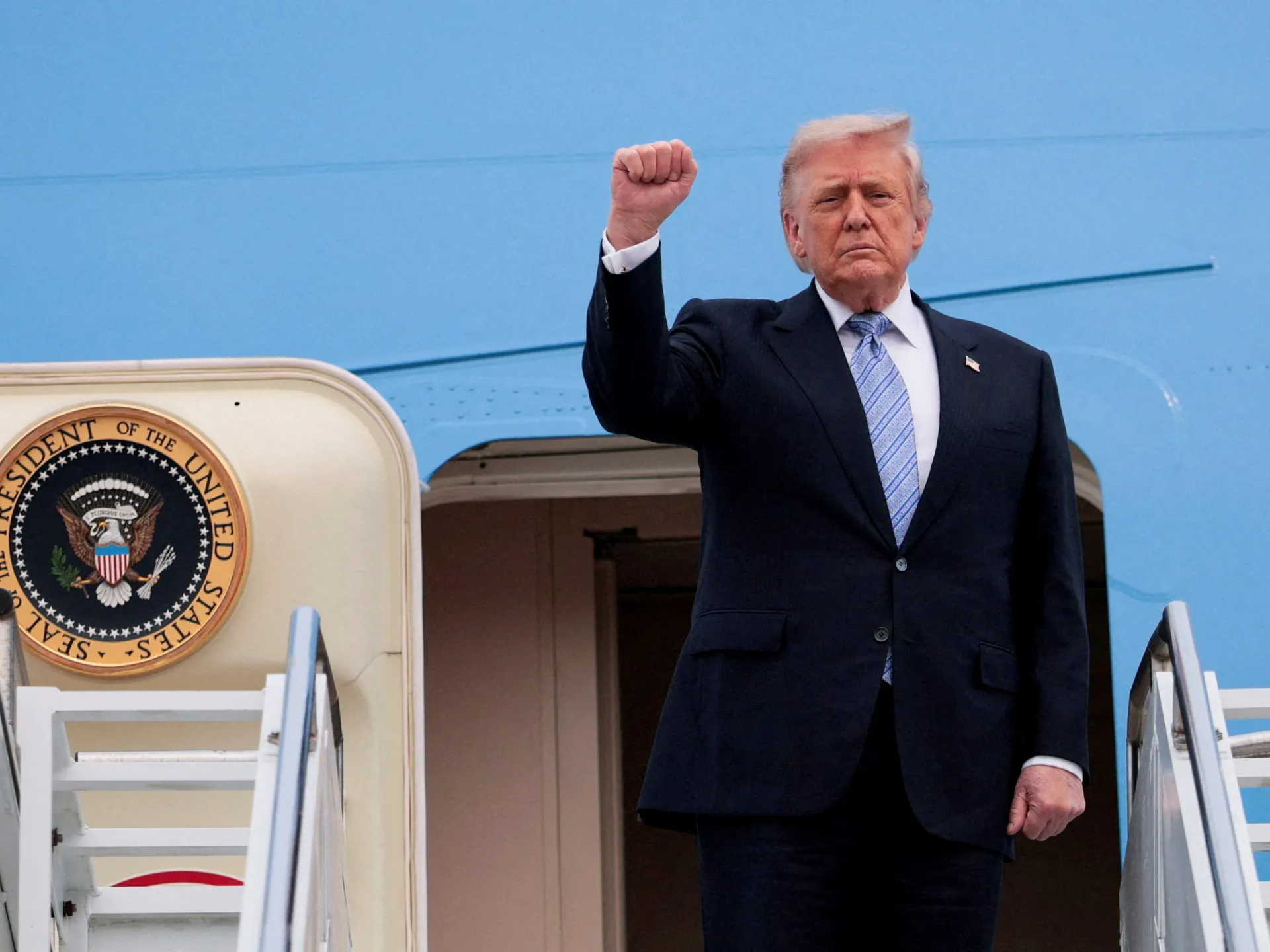
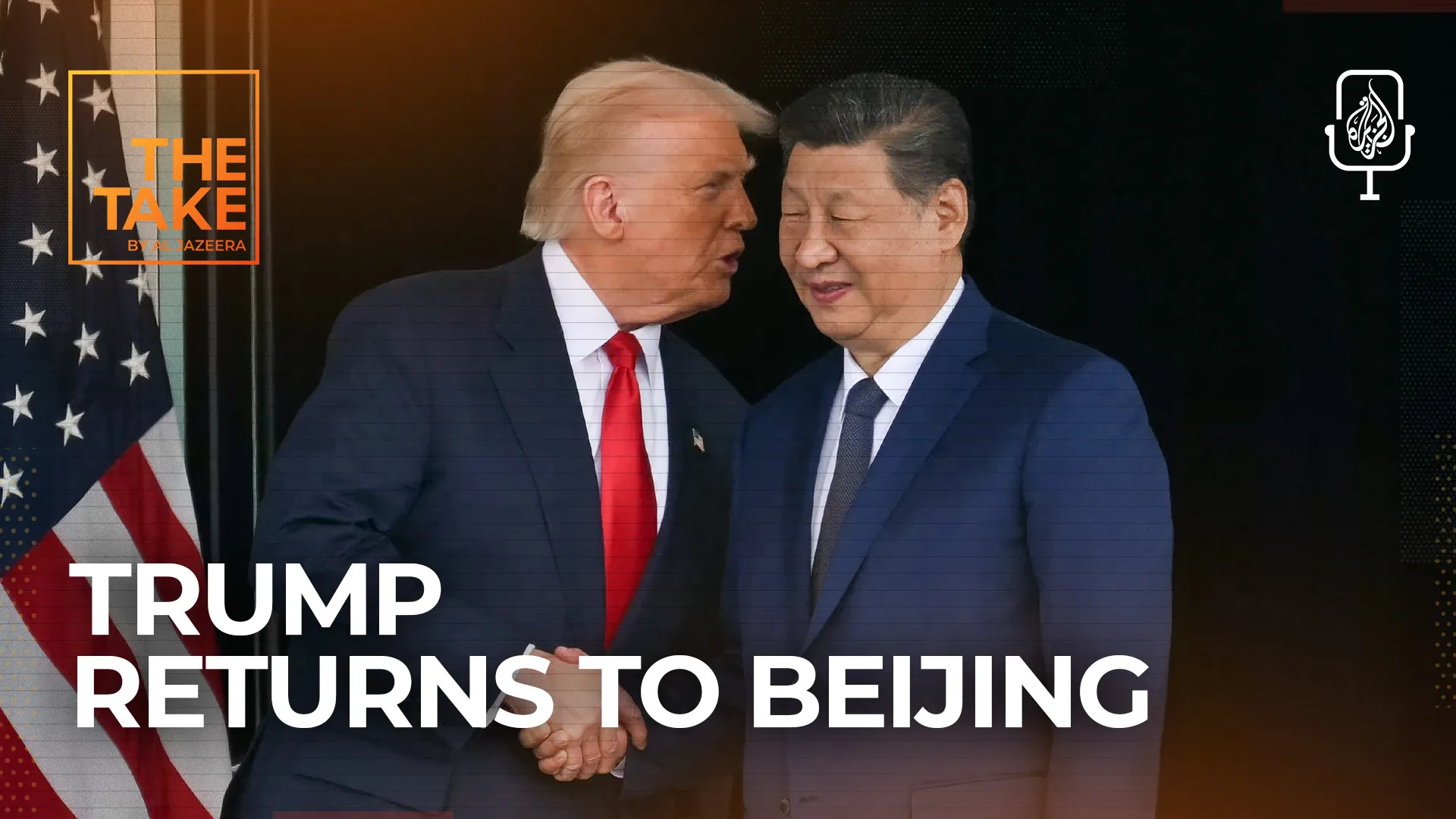
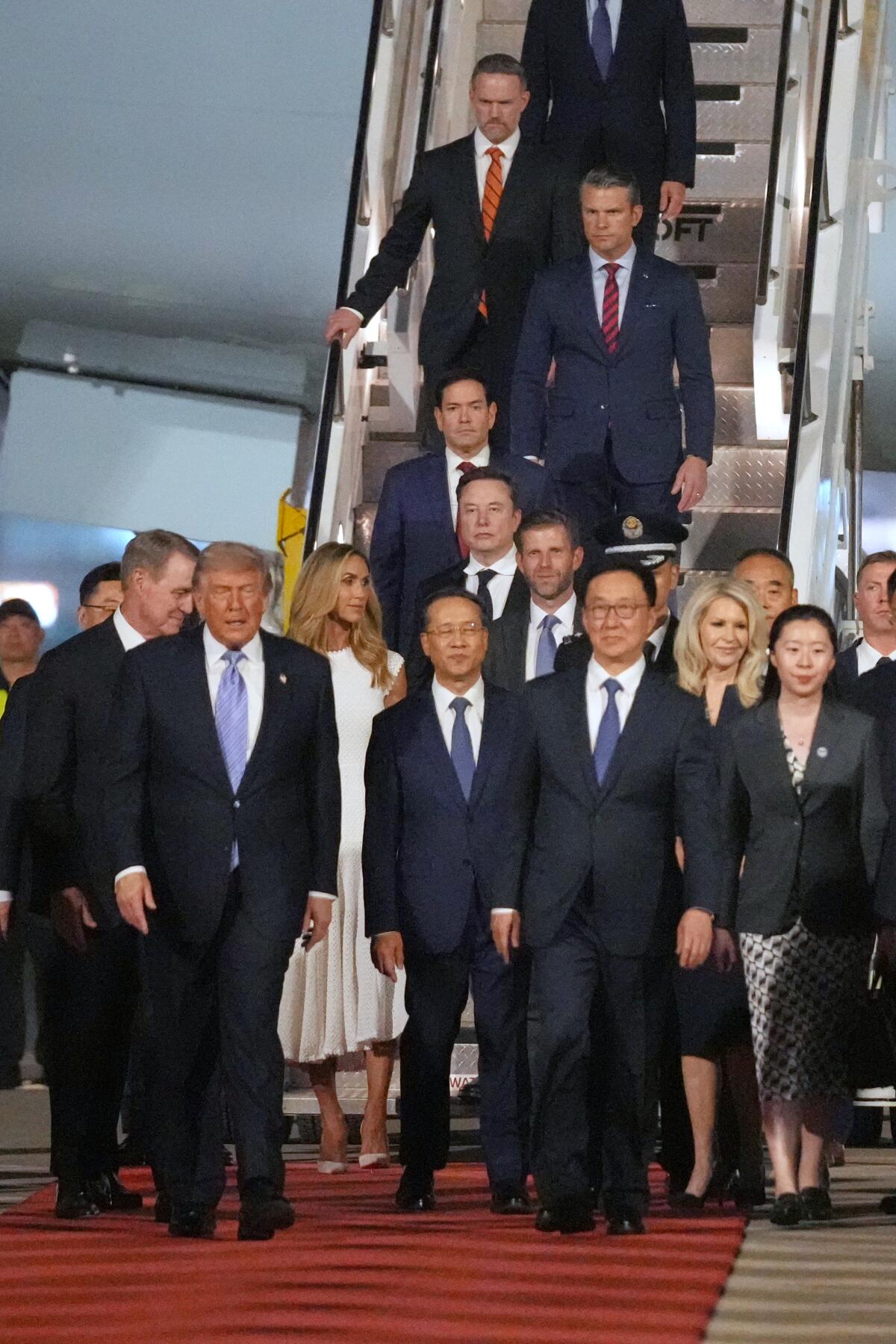
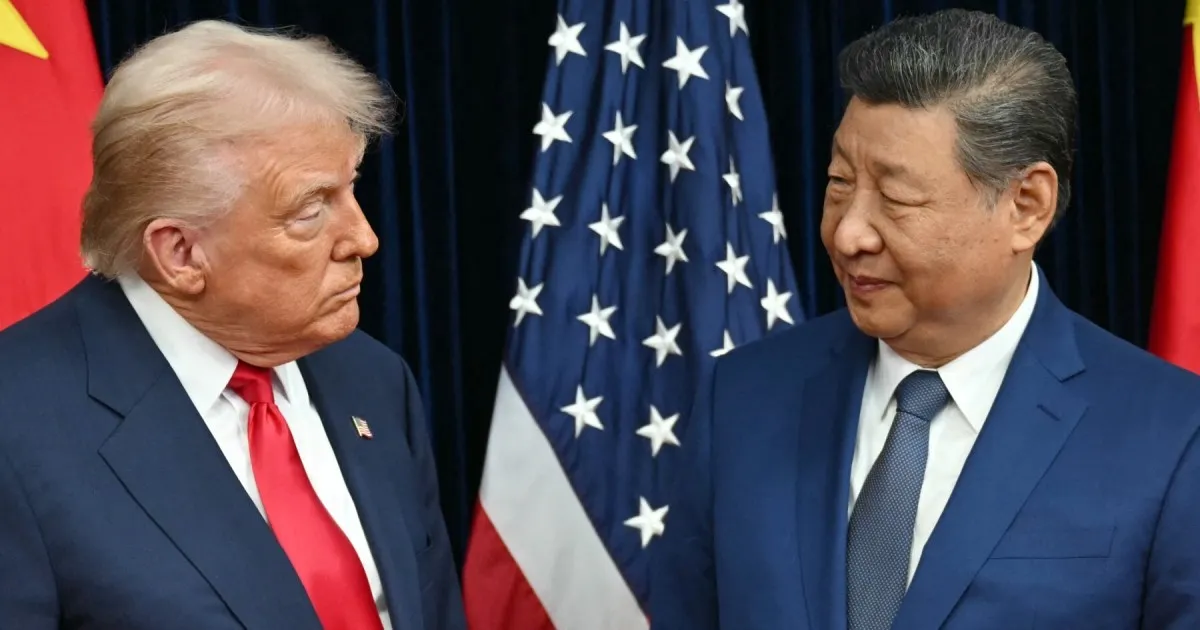
President Trump arrives in Beijing this week for talks with a Chinese government that is confident as ever in its ascendance on the world stage, taking stock of its leverage and still baffled the U.S. administration chose yet another costly war in the Middle East.

China has watched as the United States, over seven weeks of fighting an outmatched enemy, has depleted nearly half of its stockpiles of high-end munitions — including its THAAD and Patriot batteries — and fired its Army chief of staff, among other Pentagon leaders, who had warned of critical shortages.

Marco Rubio, Trump’s national security advisor and secretary of State, has said the military operation that started the war known as Operation Epic Fury “is over.”

But the Strait of Hormuz, one of the world’s most vital commercial waterways, remains effectively shuttered. Iranian attacks in the region continue. And talks between Washington and Tehran have failed to reach a diplomatic agreement to bring a definitive end to the conflict.

“The Chinese have high regard for the operational proficiency of U.S. forces, but they recognize that, thus far at least, the Trump administration has not achieved its core objectives in going to war with Iran,” said David Ochmanek, a former deputy assistant secretary of Defense now with the Rand Corp.

The war has given Beijing an opportunity, Ochmanek said, “to double down on the claim they have made for the past year and a half that the [People’s Republic of China], not the U.S., is a force for global stability.”

The war has allowed China to demonstrate some diplomatic prowess. An initial ceasefire reached between the United States and Iran last month was only clinched after Beijing pressured Tehran to agree. And China’s advocacy for an open strait — rejecting Iranian attempts to impose a toll system — while opposing the U.S. war itself has allowed Beijing to maintain leverage with both sides.

It has also inflicted costs. Allies of Beijing noticed when the government did not leap to the defense of Tehran at the start of the war. And China has its own vested interest in a free and open waterway, where nearly 50% of the country’s crude oil imports pass through each day.

Building up to the start of the war and throughout its initial weeks, Washington diverted significant military assets from Asia — where Trump’s own national security strategy says they are needed most — to the Middle East.

The USS Abraham Lincoln was redirected from the South China Sea, along with scores of advanced missile interceptors from South Korea and Japan and nearly the entire U.S. inventory of long-range air-to-surface missiles in the Pacific.

Policy experts at the Pentagon were brought in to discuss a potential invasion of Kharg Island, the jewel of Iran’s oil industry, to draw lessons from planning a defense of Taiwan, according to a Defense official, who was granted anonymity to speak candidly. A Marine expeditionary unit was sent from Okinawa to the region for the potential operation.

Chinese officials and analysts have been candid in their assessments of U.S. hard power, impressed by a military they acknowledge remains the best in the world.

But Beijing sees a persistent flaw in U.S. strategy: the belief that military strength alone can reshape political realities, a view further weakened by the pressures on a democratic government whose public grows impatient with wars that drag on beyond days or weeks.

China’s autocracy is free from accountability to the public — and anyway has confidence that Chinese public opinion would be on its side if it were to launch a major military operation against its main target, Taiwan.

But there are lessons of caution to be learned from the Americans, as well.

Over the last year, the Taiwanese Navy has been practicing the rapid deployment of cheap and domestically produced smart mines for the sea — a potential bulwark against enemy blockades of ports and hostile invasion forces.

It is the type of asymmetric warfare that has so far frustrated the U.S. military in the Strait of Hormuz, protracting a war that Trump vowed would last a month or less.

Taiwan, too, would confront Beijing with political realities that military force cannot erase. Nearly 90% of the Taiwanese people oppose a Chinese takeover, and about 60% say they would resist it at all costs.

“Chinese analysts see two things at once,” said Craig Singleton, senior director of the China program at the Foundation for Defense of Democracies. “They are impressed by U.S. military reach, precision and operational capability, but they also see a familiar pattern of American power struggling to translate battlefield success into a durable political outcome.”

That matters for Taiwan, Singleton said, “because China’s own military modernization has borrowed heavily from the American model, relying heavily on joint operations, high-tech precision strikes, decapitation concepts and information dominance.

“If the world’s most experienced military can still struggle to convert military pressure into political success,” he added, “Beijing has to ask whether the [People’s Liberation Army] could do better in a far more complex Taiwan scenario.”

Source link

China Escalates Pressure on Paraguay Over Taiwan Relations

China has intensified its diplomatic rhetoric against Santiago Peña following his recent visit to Taiwan, reflecting Beijing’s growing efforts to isolate Taipei internationally and weaken the remaining countries that maintain formal diplomatic ties with the island.

Paraguay is one of only 12 states that officially recognize Taiwan instead of the People’s Republic of China. During his visit, Peña reaffirmed support for Taiwan and described relations with Taipei as rooted in shared democratic values and political freedom.

Beijing responded sharply, accusing Paraguayan politicians of serving as “pawns” of Taiwanese separatist forces and suggesting that leaders supporting Taiwan may have “ulterior motives.” The unusually aggressive language highlights how sensitive the Taiwan issue has become within China’s broader foreign policy strategy.

Why Paraguay Matters to China and Taiwan

Although Paraguay is not a major global power, its diplomatic recognition carries significant symbolic and strategic importance for both China and Taiwan.

For Taiwan, maintaining formal diplomatic allies is essential to preserving international legitimacy and resisting Beijing’s efforts to diplomatically isolate the island. Each country that continues to recognize Taiwan represents political resistance against China’s One China principle.

For China, reducing Taiwan’s remaining diplomatic partnerships is part of a long term strategy aimed at reinforcing Beijing’s claim that Taiwan lacks the status of an independent state. Over the past decade, several countries have switched diplomatic recognition from Taipei to Beijing after economic and political engagement with China.

Paraguay therefore represents one of Taiwan’s most important remaining diplomatic footholds in South America.

Economic Pressure Shapes the Debate

The controversy surrounding Paraguay’s Taiwan relationship is increasingly driven by economic considerations. Some Paraguayan politicians, agricultural exporters, and business groups argue that maintaining ties with Taiwan limits access to Chinese markets and investment opportunities.

China is the world’s second largest economy and a major importer of agricultural products, making diplomatic recognition economically attractive for many developing states.

Supporters of relations with Beijing argue that Paraguay could gain greater trade access, infrastructure investment, and financial opportunities if it abandoned Taiwan.

However, Peña and supporters of Taiwan emphasize ideological and political considerations, framing the relationship as a partnership based on democratic governance and political sovereignty rather than purely economic interests.

This reflects a broader global trend where smaller states increasingly face pressure to balance economic incentives against political alignment and strategic values.

China’s Diplomatic Messaging Is Becoming More Aggressive

The sharp rhetoric from China’s foreign ministry demonstrates Beijing’s increasingly confrontational diplomatic approach on issues related to Taiwan.

By describing Paraguayan leaders as “pawns” and questioning their motivations, China is signaling that support for Taiwan will be treated not merely as a diplomatic disagreement but as active opposition to Chinese national interests.

This language also serves multiple audiences simultaneously.

Internationally, Beijing seeks to discourage other governments from strengthening ties with Taiwan.

Domestically, strong rhetoric reinforces nationalist narratives surrounding territorial sovereignty and reunification.

Regionally, China is attempting to increase pressure on Paraguay by suggesting that continued support for Taiwan contradicts public opinion and economic interests.

The emphasis on opinion polls claiming support for relations with Beijing also reflects China’s strategy of portraying diplomatic recognition of Taiwan as politically unsustainable.

Taiwan’s Shrinking Diplomatic Space

The dispute illustrates Taiwan’s increasingly difficult international position as China expands its diplomatic, military, and economic influence globally.

Under President Lai Ching-te, Taiwan has continued emphasizing democracy, sovereignty, and international partnerships. However, Beijing views Lai as supporting separatist policies and has intensified political and military pressure against Taipei.

Taiwan’s formal diplomatic allies have steadily declined over recent decades as China has used economic incentives and geopolitical influence to persuade states to switch recognition.

As a result, every remaining ally now carries outsized symbolic importance for Taipei’s international visibility and diplomatic legitimacy.

Analysis

China’s reaction to Peña’s Taiwan visit demonstrates how the Taiwan issue has evolved into one of the most emotionally and strategically sensitive dimensions of Chinese foreign policy.

Beijing no longer views diplomatic recognition of Taiwan as a minor symbolic issue. Instead, it increasingly interprets international engagement with Taipei as a challenge to China’s sovereignty, territorial integrity, and geopolitical authority.

The pressure on Paraguay also reflects the broader transformation of global diplomacy under growing United States China rivalry. Smaller countries are increasingly caught between competing geopolitical and economic pressures, particularly when balancing relations with democratic partners against the economic power of China.

For Paraguay, the debate is ultimately about strategic identity as much as economics. Maintaining relations with Taiwan offers political alignment with democratic values and preserves diplomatic independence from Beijing’s influence. Switching recognition to China could deliver economic benefits but may also reduce Paraguay’s foreign policy autonomy.

For Taiwan, retaining Paraguay is important not only diplomatically but psychologically. Every diplomatic loss strengthens Beijing’s narrative that international recognition of Taiwan is disappearing and that eventual reunification is inevitable.

The dispute therefore reflects a much larger geopolitical contest over legitimacy, influence, and the future international status of Taiwan. As competition between China and Taiwan intensifies, diplomatic battles involving even relatively small states are likely to become increasingly significant within global geopolitics.

With information from Reuters.

Source link

Taiwan fears Trump will speak off-script on its fate in Beijing

A resolute Secretary of State Marco Rubio took to the White House lectern Tuesday and declared the United States, under President Trump’s leadership, had launched a bold new operation to reopen the Strait of Hormuz, based on the principle that international waterways must remain free.

An hour later, Trump walked it all back, ending the complex military endeavor after less than a day.

It was just the latest evidence to America’s allies that the word of the U.S. government is subject entirely to the president’s whims. And such is the worry fueling concerns in Taipei ahead of Trump’s state visit to China this week.

Privately, senior administration officials have assured Taiwanese leadership ahead of the trip that Trump has no intention of changing long-standing U.S. policy on the island, two sources familiar with the discussions said — a stance of “strategic ambiguity” that has avoided any declarative statements on Taiwanese independence since it was coined by Henry Kissinger 55 years ago.

A White House official was definitive that U.S. policy toward Taiwan “remains the same as the first Trump administration.”

“The U.S. One China policy, as our cross-strait policies are collectively known, is based on the Taiwan Relations Act, the three U.S.-PRC Joint Communiques and the Six Assurances to Taiwan,” the official said. “There is no change to our policy with respect to Taiwan.”

But Chinese officials told The Times that their president, Xi Jinping, intends to raise the matter as a top priority, knowing that only one person — Trump himself — speaks for the administration today.

Whether Xi can leverage the intimacy of a private audience to shift Trump’s stance, potentially linking it to other U.S. objectives, is the source of significant concern here.

Taiwanese officials fear even the most subtle rhetorical change in policy from Trump could imperil a delicate status quo that has held, to its benefit, for decades. They have similarly sought assurances that the administration will follow through on a pending U.S. arms sale worth over $10 billion, which received approval from Taiwan’s legislature on Friday.

“The most serious scenario would be if President Trump were to make an impromptu statement, such as, ‘I oppose Taiwanese independence,’ particularly if he were to link this to trade, the Iran issue, or a summit agreement,” said Chienyu Shih, of the Institute for National Defense and Security Research in Taiwan. “This would constitute a rhetorical concession of substantial significance to Beijing.”

Rubio told reporters at his news conference Tuesday — with a similar confidence he expressed on the Iran file — that China understands Washington’s long-standing position on the island.

“I’m sure Taiwan will be a topic of conversation. It always is. The Chinese understand our position on that topic — we understand theirs,” Rubio said.

“I think both countries understand that it is in neither one of our interests to see anything destabilizing happen in that part of the world,” he added. “We don’t need any destabilizing events to occur with regards to Taiwan, or anywhere in the Indo-Pacific. And that’s to the mutual benefit of both the United States and the Chinese.”

Trump has suggested a willingness to shift U.S. policy on Taiwan before.

During his initial campaign for the presidency in 2016, Trump openly questioned the One China policy, drawing ire from Beijing for suggesting he might endorse Taiwanese independence. He accepted a call from Taiwan’s president after his victory and would later support significant arms sales to Taipei.

And yet, at a 2017 meeting with Xi, Trump vacillated, telling the Chinese leader he could “deal with” the Taiwan issue in “a matter of months,” according to the Wall Street Journal. The Chinese were reportedly so flabbergasted by the comment that they dismissed it as rhetorical flourish.

“There is concern that the conversation between the two leaders could veer into sensitive territory on the topic of Taiwan,” said Brian Hart, deputy director of the China Power Project at the Center for Strategic and International Studies, “but there are many in the administration who would still appreciate the importance of general continuity in U.S. policy.”

U.S. support for Taiwan’s democratic movement used to be a matter of principle. Today, Washington sees it as a matter of national security. Over 60% of semiconductors are produced in Taiwan, including 90% of the world’s most advanced chips. And it is viewed as the clasp of the first island chain guarding against Chinese maritime expansion.

A robust debate between Taiwan’s Cabinet and the opposition in parliament ended Friday not over whether to accept U.S. defense equipment, but over how much to spend. The Legislative Yuan approved $24 billion in purchases — including a defense package passed by Congress in December and the pending arms sale — falling short of Taipei’s $40-billion proposal.

Anticipation for the president’s state visit is high here in the capital city, where local news is filled with questions over the influence Trump’s war in Iran might have on his appetite for supporting Taiwan.

Chinese defense analysts have seen the war as a sign of U.S. weakness. But Taiwanese defense experts have taken away a different lesson: cheap equipment from a lesser military, such as dumb mines thrown in a strait, may just be enough to paralyze a superpower.

The latest U.S. National Security Strategy, released by the Trump administration in December, emphasized the importance of support for Taiwan and the status quo.

But the Taiwanese took note that the strategy also called for an end to forever wars in the Middle East, offering little preview of the president’s sudden strategic pivot on Iran in February, launching a war few saw coming.

What Trump chooses to say in China “might be difficult to predict,” said Jyh-Shyang Sheu, a scholar of Chinese politics and military capabilities based in Taiwan.

But “in Taipei, we are still focusing on the U.S. policy,” he added, “more focusing on what he does instead of what he says.”

Source link

Taiwan Shrugs off China Sanctions on European Arms Firms

Taiwan has downplayed the impact of new Chinese sanctions targeting European defense companies involved in arms sales to the island. The measures, announced by China, restrict exports of dual use goods to seven firms, marking a rare move against European entities over Taiwan related issues.

Despite the escalation, Taiwan’s Defence Minister Wellington Koo said the sanctions would not disrupt the island’s ability to procure military equipment.

China’s Expanding Use of Sanctions

Beijing has increasingly used economic and trade restrictions to respond to foreign involvement in Taiwan’s defense. While similar sanctions have frequently targeted U.S. arms manufacturers, extending them to European companies signals a broader willingness to pressure multiple partners simultaneously.

The move reflects China’s ongoing effort to isolate Taiwan internationally and deter military cooperation with the island.

Limited European Military Role

Europe’s direct role in arming Taiwan has historically been limited. Major defense exports such as fighter jets have not been supplied for decades due to concerns about damaging relations with China.

However, smaller scale cooperation and component level trade have continued, making these sanctions symbolically significant even if their immediate practical impact is modest.

Diversified Supply Strategy

Taiwan relies heavily on the United States for its defense needs, but it has also worked to diversify procurement channels in recent years. According to Koo, this strategy ensures that disruptions from any single source, including sanctioned European firms, can be mitigated.

Growing support from parts of Central and Eastern Europe, particularly after Russia’s invasion of Ukraine, has also provided Taiwan with additional diplomatic and logistical avenues.

Geopolitical Context

The sanctions come amid heightened global tensions and shifting alliances. China views Taiwan as its own territory and strongly opposes any foreign military assistance to the island.

At the same time, Taiwan’s security concerns have intensified, prompting it to strengthen international partnerships and defense preparedness.

Analysis

China’s decision to target European companies represents an escalation in its economic statecraft, aiming to widen the cost of supporting Taiwan beyond the United States. While the immediate impact on Taiwan’s military capabilities appears limited, the move could have a chilling effect on future European involvement.

Taiwan’s confidence reflects its reliance on U.S. support and its broader diversification strategy. However, repeated sanctions and pressure campaigns could gradually narrow its options, especially if European firms become more risk averse.

For Europe, the sanctions pose a strategic dilemma between economic ties with China and growing political alignment with Taiwan and its partners. For China, they reinforce its stance on sovereignty while testing how far it can push back against international support for Taiwan without triggering broader backlash.

Overall, the episode underscores how economic tools are increasingly being used in geopolitical competition, even when their direct material impact remains limited.

With information from Reuters.

Source link

From Ukraine to Taiwan: Drone warfare lessons meet Indo-Pacific reality

A C-230 Overkill (Striker)) one-way attack drone is on display during a press tour in Taichung, Taiwan, on Tuesday. Thunder Tiger Corp. is a Taiwanese company that designs and manufactures defense-oriented unmanned vehicles, including UAVs, unmanned surface vessels, underwater ROVs and all-terrain ground vehicles. Photo by Ritchie B. Tongo/EPA

April 23 (UPI) — As tensions simmer across the Taiwan Strait, Taiwan is quietly accelerating a shift toward drone-centric defense.

The nation is betting that swarms of low-cost, domestically produced systems can help offset the numerical and industrial advantages of China’s People’s Liberation Army Navy and its expanding network of maritime auxiliaries.

This approach reflects a broader recalibration in Taipei — a move away from expensive, vulnerable platforms toward distributed, resilient and scalable capabilities designed to complicate any attempt at invasion or blockade.

At its core lies a simple calculation. In a high-intensity Indo-Pacific conflict, quantity, adaptability and survivability may matter more than traditional firepower.

From platforms to swarms

Taiwan’s embrace of drones is rooted in the concept of asymmetric warfare. Rather than matching China ship-for-ship or missile-for-missile, Taipei is investing in systems that can be mass-produced, dispersed and rapidly replaced.

“It’s not really about ‘swarms’ yet — it’s about mass. Large volumes of drones used in salvos to overwhelm defenses and increase the probability of a successful strike,” said Molly Campbell, analyst at the Center for a New American Security in Washington, D.C.

Government plans call for the procurement of up to 200,000 drones over the coming decade, spanning aerial, maritime and hybrid platforms in what officials describe as a whole-of-society approach to resilience.

These include a broad mix of air (UAV), surface (USV) and underwater (UUV) drones, designed to operate in contested littoral environments.

The objective is clear: saturate defenses, disrupt amphibious operations and raise the cost of any Chinese military action.

“What Taiwan is trying to do is shift from heavy, high-end defense platforms to a more dispersed and resilient model,” Simona Alba Grano, a senior fellow at the Asia Society Policy Institute, told UPI.

In Taiwan’s case, where the goal is not to defeat China outright, but to make any invasion “extremely costly and uncertain,” such systems fit squarely within a broader denial strategy.

Lessons from Ukraine — with limits

Taiwan’s drone push has been influenced by Ukraine’s battlefield innovations, where low-cost unmanned systems have reshaped modern warfare.

Ukraine’s use of maritime drones in the Black Sea, striking high-value naval targets with relatively inexpensive systems, provides a compelling reference point. It has also highlighted the importance of rapid iteration, short development cycles and close integration between operators and industry.

Taiwanese companies have begun engaging with this ecosystem, supplying components and spare parts to Ukrainian operators and seeking to gain exposure to combat-driven innovation.

Yet, the analogy has limits.

The Taiwan Strait presents a far more demanding operational environment as it is wider, more exposed and subject to extreme weather conditions. Systems must operate over longer distances, carry heavier payloads and withstand harsher maritime conditions.

At the same time, Ukraine’s drone ecosystem is shaped by continuous battlefield validation, giving its manufacturers a level of operational credibility that remains difficult to replicate elsewhere.

Advances in unmanned systems, including long-range platforms and “mothership” concepts, also are eroding the Taiwan Strait’s traditional role as a natural buffer, increasing the tempo of gray-zone interactions.

Ukraine has demonstrated what is possible. Taiwan must now determine what is adaptable to its own operational environment.

Industrial ambition meets resistance

Taiwan’s challenge is no longer strategic clarity, but execution on the ground. The gap between planning and implementation, particularly in scaling capabilities and coordinating across agencies, now defines the island’s defense posture.

“Ukraine’s drone production is on a completely different scale. It’s nowhere near comparable to what Taiwan is currently able to produce, ” Campbell said.

Authorities have signaled openness to integrating foreign expertise, pursuing joint production and accelerating domestic manufacturing. Yet, progress has been uneven.

Industry insiders point to reluctance among local manufacturers to share market opportunities within a rapidly expanding defense budget. This has constrained collaboration both domestically and internationally, slowing efforts to build a more integrated ecosystem.

This dynamic is particularly visible in Taiwan’s interactions with Ukraine. Despite Kyiv’s operational experience and willingness to cooperate, Taiwanese firms have at times resisted incorporating Ukrainian know-how into their platforms, limiting co-development opportunities.

At the same time, Taiwanese companies have sought to market their own systems abroad, often with limited success in operationally mature environments. The result is a mismatch between industrial ambition and battlefield credibility in a highly competitive, experience-driven sector.

The fragmentation of Taiwan’s drone ecosystem comes at a critical moment, when speed, scale and integration are essential.

Cutting the China supply chain

Another pillar of Taiwan’s strategy is reducing reliance on Chinese components, long a structural vulnerability in the global drone industry.

“Taiwan is making a concerted effort to eliminate Chinese components from its drone supply chain to reduce dependence and mitigate security risks, said Ava Shen, an analyst at the Eurasia Group.

Taipei is working with international partners, particularly the United States, to develop a secure, China-free supply chain for unmanned systems. This effort is now backed by policy initiatives in Washington, where bipartisan legislation seeks to expand joint drone production and strengthen industrial resilience between the two partners.

The objective is not only to secure supply chains, but also to align production ecosystems in ways that enhance interoperability and long-term sustainability.

However, decoupling comes with trade-offs. Eliminating Chinese components increases production costs, extends timelines and complicates scaling. These constraints risk slowing deployment at a moment when speed is critical.

Meanwhile, China continues to expand its own unmanned capabilities, including drone swarms, electronic warfare systems and the conversion of legacy platforms into remotely operated assets. The scale of its industrial base and the integration of civilian and military sectors present a formidable challenge.

If Taiwan’s approach emphasizes agility and innovation, China’s rests on mass, coordination and systemic depth.

Southeast Asia as regional test bed

Beyond Taiwan, Southeast Asia, particularly along the South China Sea littoral, is emerging as a practical testing ground for unmanned systems.

The United States has expanded drone support to regional partners, providing intelligence, surveillance and reconnaissance platforms such as the ScanEagle, RQ-20 Puma and Skydio X10 UAVs to countries including the Philippines, Vietnam, Malaysia and Indonesia. These systems are primarily used to enhance maritime awareness in contested areas.

The Philippines, under sustained pressure from Beijing, has become a focal point. The United States has deployed MQ-9A Reaper for extended surveillance missions and introduced maritime drones, such as the Devil Ray T-38.

Together, these deployments are turning parts of Southeast Asia into a real-world environment for testing unmanned concepts short of conflict, particularly in maritime surveillance and denial.

China has also deployed uncrewed surface vehicles such as the Sea Wing and Wave Glider types, many of which have been lost or recovered by fishermen and coast guards, in the South China Sea as well as in the Java Sea, highlighting both the spread and the fragility of these systems in contested waters.

Deterrence, escalation and uncertainty

Drones offer Taiwan a pathway to strengthen deterrence by denial, increasing the cost, complexity and uncertainty of any military action. But they also introduce new risks.

The proliferation of low-cost systems may lower the threshold for escalation, especially in ambiguous encounters involving coast guard or maritime militia vessels. What begins as signaling or harassment could escalate more rapidly in an environment saturated with autonomous or semi-autonomous platforms.

Moreover, drone networks depend heavily on communications, data links and supply chains – all of which are vulnerable to disruption through cyber operations or electronic warfare.

Race against time

For Taiwan, the shift toward drone-centric defense is both an opportunity and a race against time.

Drones offer a scalable and cost-effective means of offsetting China’s advantages. But success depends on overcoming internal fragmentation, accelerating production and adapting technologies to local operational realities.

The central question is no longer whether drones will shape the balance in the Taiwan Strait, but whether Taiwan can scale and integrate them fast enough to make deterrence credible.

As China continues to refine its own capabilities, the balance in the Strait may increasingly hinge on a simple but decisive factor: which side can deploy, adapt and sustain unmanned systems at scale.

Source link

China blocks South Korean spy chief visit amid Taiwan tensions

China’s Foreign Ministry spokesperson Mao Ning speaks during a press conference at the Ministry of Foreign Affairs in Beijing, China, 13 January 2026. Photo by WU HAO / EPA

April 21 (Asia Today) — China has denied entry to South Korea’s intelligence chief and signaled reluctance to improve bilateral relations, amid growing tensions over Seoul’s perceived stance on Taiwan, according to diplomatic sources.

A South Korean delegation led by lawmaker Cho Jung-sik of the Democratic Party of Korea recently visited Beijing and returned Sunday after holding talks on political issues and bilateral relations. The delegation had initially planned to include National Intelligence Service Director Lee Jong-seok.

However, Chinese authorities reportedly refused Lee’s visit, citing remarks in which he suggested that engagement with Taiwan could be used as leverage to encourage China’s cooperation in improving inter-Korean relations.

According to a diplomatic source in Beijing, China reacted strongly to the comments and demanded an explanation through diplomatic channels. The delegation was subsequently restructured to include deputy officials and retired military officers instead of Lee.

Although the visit proceeded, its outcomes were limited. Chinese officials maintained protocol by assigning a vice foreign minister to host the delegation, but expectations for substantive progress were low, sources said.

Beijing is believed to be increasingly dissatisfied with what it views as South Korea’s ambiguous position – publicly supporting the “One China” principle while maintaining a level of engagement with Taiwan.

Tensions have also been fueled by a recent dispute over how Taiwan is officially referenced, in which South Korea appeared to adjust its position following objections from Taipei. Chinese officials reportedly viewed the move as inconsistent and unfavorable.

The strained atmosphere has cast doubt on the possibility of a visit to South Korea this year by Chinese Foreign Minister Wang Yi, which Seoul has sought as part of efforts to stabilize ties.

Analysts say the situation highlights the need for South Korea to carefully manage relations with China while balancing broader regional dynamics.

— Reported by Asia Today; translated by UPI

© Asia Today. Unauthorized reproduction or redistribution prohibited.

Original Korean report: https://www.asiatoday.co.kr/kn/view.php?key=20260421010006584

Source link