tackle

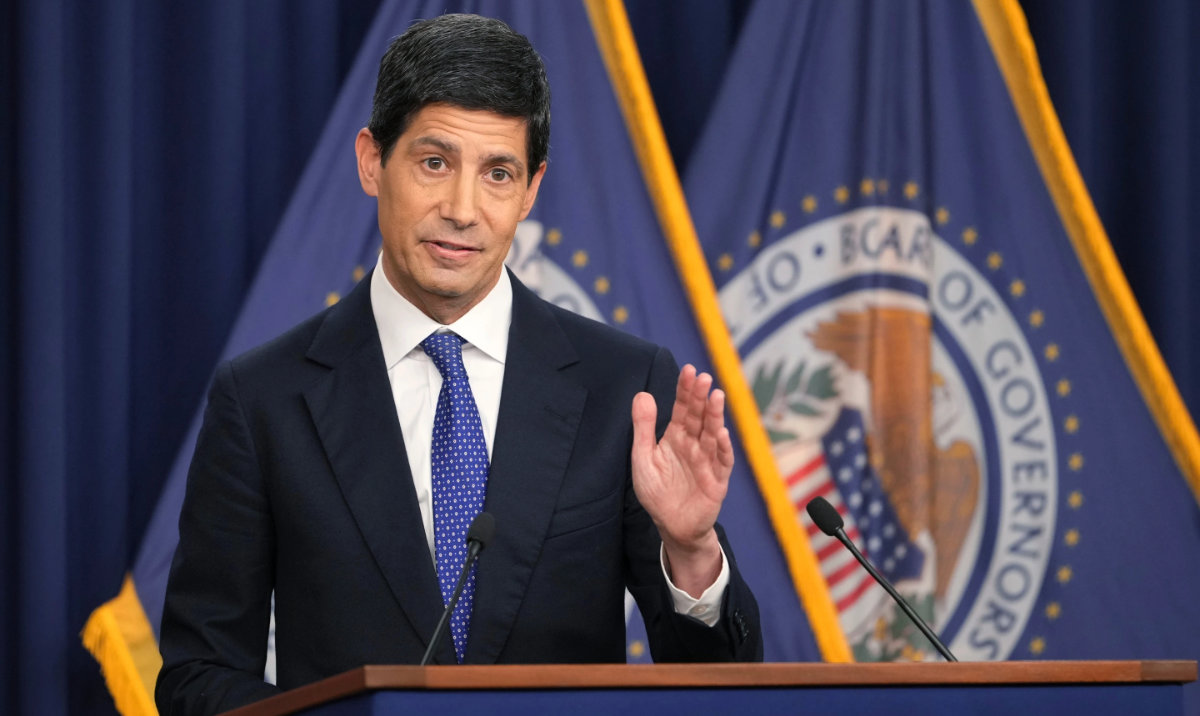
Democrats tackle outside groups flooding their primaries with campaign cash

Democrats are struggling to come up for air after outside groups flooded their first round of midterm primaries with campaign cash.

As the Democratic Party fights to regain control of Congress, organizations affiliated with the American Israel Public Affairs Committee, cryptocurrency and artificial intelligence have dominated the airwaves, sometimes leaving candidates on the sidelines of their own campaigns.

Democratic pollster Zac McCrary said the primaries have “become proxy wars, and the candidates are almost afterthoughts in larger skirmishes.”

Now the Democratic National Committee is advancing a resolution at its New Orleans spring meeting to condemn the surge of spending that has scrambled its primaries and exacerbated tensions within the party.

Candidates who lost have pointed their fingers at special interests, blaming them for derailing their campaigns. Others who are still in the running are courting voters by denouncing deep-pocketed outside groups. Even those who have benefited from the spending have expressed concern.

“It’s definitely a brave new world,” McCrary said.

“We’re not talking about doubling of campaign expenditures,” he added. “We’re talking about 10 times or 20 times more.”

Dan Sena, a former executive director at the Democratic Congressional Campaign Committee, said party organizations are no longer the ones with the clout to push favored candidates.

“All that’s been completely smashed now,” Sena said. Even if Democrats regain control of the U.S. House, he warned that outside spending could damage the party in the long run.

Referring to House Minority Leader Hakeem Jeffries, he said, “You’re going to hand Jeffries a caucus that is divided.”

Democrats bear the brunt of big spending

So far this cycle, outside money in U.S. House races has largely targeted districts particularly friendly to Democrats, meaning the primaries will likely determine who will win the general election in November. After a record number of House members retired this year, many of those seats opened up for the first time in years, drawing dozens of Democratic hopefuls.

In Illinois, for example, there was more than $125 million in outside spending across five open Democratic primaries. In all but one of those congressional races, the outside spending exceeded candidate spending.

While it’s still early in the calendar, there are indicators that many more races could see big spending. Almost 40 seats have already seen more than $1 million in outside spending, according to Federal Election Commission filings.

In Illinois, the top three spenders in U.S. House races were groups affiliated with American Israel Public Affairs Committee, or AIPAC, according to AdImpact, which tracks ad buys in political races, followed by the cryptocurrency-affiliated Fairshake.

AIPAC was founded to support strong ties between the U.S. and Israel, a particularly controversial issue as Democratic hostility toward Israel rises over the war in Gaza. Some Democratic National Committee, or DNC, members wanted to call out AIPAC’s role in primaries, but the final resolution did not.

“We had various resolutions that focused on different industries and groups, and instead of going one-by-one, we passed a blanket repudiation,” DNC Chair Ken Martin said in a statement.

Campaign spending has divided Democrats

The latest DNC meeting marks another chapter in longstanding disputes between progressives and the party establishment.

Progressives want the party to adopt official language that all Democratic presidential contenders oppose money from dark-money groups, or super PACs that aren’t required to disclose their donors.

“It’s necessary that we actually have the party do something on this issue, not just say something,” said Larry Cohen, co-chair of Our Revolution, a progressive group founded by independent Sen. Bernie Sanders of Vermont, who caucuses with Democrats.

The resolution being advanced at the DNC meeting in New Orleans is viewed by progressives as a step toward that goal. However, some Democrats warn against weakening their candidates when facing a Republican Party that’s flush with cash.

“Provided that we don’t handcuff ourselves in the general elections — because if the Republicans are going to use dark money in general elections, we should be using our money in general elections, too — if you provide an even playing field, I think then that’s fine,” said Sen. Ruben Gallego, an Arizona Democrat. “But we just can’t be handcuffing ourselves in the general to lose races.”

Any DNC resolutions would not stop outside groups from surging funds into primary contests or general elections. But some Democrats believe the issue is core to the party’s values.

“We should eliminate any super PAC in a Democratic primary. And I think every presidential candidate in 2028 should pledge that they will not have any super PAC spending in a Democratic primary,” said Rep. Ro Khanna, a progressive and possible Democratic presidential contender who co-chaired Sanders’ 2020 presidential campaign.

“That should be a litmus test,” Khanna argued. “If you’re not willing to take that pledge, then you’re part of the problem.”

Askarinam, Brown and Sweedler write for the Associated Press. Brown reported from New York.

Source link

Can Africa tackle the oil shock from the Iran war? | US-Israel war on Iran

African nations are scrambling to secure oil and gas as the Iran war disrupts supplies from the Middle East.

The war in Iran has created an energy shock in Africa.

The continent relies heavily on oil and gas imports from the Middle East.

Much of this supply is currently stuck on tankers near the Strait of Hormuz, which is closed.

Countries including Kenya, Ethiopia and Zambia are reporting shortages.

Africa’s largest oil refinery in Nigeria is pumping out crude at maximum capacity, but that’s nowhere near enough to meet the continent’s needs.

In addition, Africa’s energy infrastructure has suffered from years of underinvestment.

So, what choices do governments have to contain the crisis?

Source link

‘The Comeback’ boss brought Valerie Cherish back to tackle AI

There’s a lot of chatter around reality TV right now and the hazards of leaning into mess for the sake of potential viewership. Before Utah-based reality star and social media influencer Taylor Frankie Paul was making national headlines over domestic violence allegations brought against her by former boyfriend Dakota Mortensen — putting “The Bachelorette” and “The Secret Lives of Mormon Wives” series under interrogation — The Times was working on a group of stories that captured the longevity and cultural impact of the unscripted format.

News and culture critic Lorraine Ali took a look at the reality TV-to-politics pipleline. Writer Pamela Chelin spoke with “Survivor” host Jeff Probst and others to discuss why CBS’ competition show continues to endure after more than 25 years. And I wrote an oral history on the first episode of “The Real Housewives of Orange County,” which premiered 20 years ago and, in that time, expanded and morphed into a franchise, spreading to 12 other U.S. locales, including the upcoming series set in Rhode Island.

You are reading Screen Gab newsletter

Sign up to get recommendations for the TV shows and streaming movies you can’t miss, plus exclusive interviews with the talent behind your favorite titles, in your inbox every Friday

Speaking of reality TV — Valerie Cherish and “The Comeback” have returned for another round of the showbiz satire. The HBO comedy, which blends scripted comedy with a mockumentary format, originally premiered a year before the “Real Housewives of Orange County” and lampooned the effects of the early-2000s reality TV boom. It followed Valerie (Lisa Kudrow), a former sitcom star from the ’90s, as she attempts to revive her career by starring in a new sitcom while allowing a reality TV crew to document her journey. When the short-lived series was revived in 2014, it poked fun at the rise of prestige TV and the evolution of celebrity culture in the social media era. Now, its third and final season finds our favorite leading lady navigating Hollywood’s AI revolution. Michael Patrick King, who developed the series with Kudrow, stopped by Guest Spot to discuss the show’s latest timely exploration.

Also in this week’s Screen Gab, we take a breather from current programming and dust off two bygone titles. One is an animated sitcom that revolves around a mild-mannered therapist and his sessions with a notable clientele of real-life comedians playing exaggerated versions of themselves; the other is a mid-aughts thriller (of the Lifetime TV variety) that follows a heroic doctor who moonlights as a dangerous predator — its Letterboxd rating spread is something to behold. And it’ll make you wonder what Valerie Cherish might have brought to camp like that.

Let it all be incentive to spend some extra time on the couch this weekend — it’ll cut down on trips to the gas pump! Until next week.

— Yvonne Villarreal

Turn on

Recommendations from the film and TV experts at The Times

A cartoon rendering of a woman and man

Dr. Katz, played by creator Jonathan Katz, invites his ex-wife, Roz, played by actor/author Carrie Fisher, to indulge in a dysfunctional family Thanksgiving on “Dr. Katz, Professional Therapist.”

(Comedy Central)

“Dr. Katz, Professional Therapist” (YouTube)

Once in a while the algorithms that rule our lives do us an actual favor, and so it was that YouTube alerted me that the entirety of this great turn-of-the-century cartoon lives there, hosted unofficially on a variety of channels. (Just type in the title.) Created by star Jonathan Katz with Tom Snyder, the inventor of an animation workaround called Squigglevision — in which vibrating outlines give a crude effect of action — and co-produced by Loren Bouchard, who would go on to co-create “Bob’s Burgers,” this six-season, semi-improvised, Peabody Award-winning Comedy Central series is founded on the notion that a comedian’s patter can resemble the neurotic unloading one might encounter in a psychotherapist’s office. And so onto Katz’s couch comes a parade of future comedy elder statespersons, naively but recognizably rendered, including Ray Romano, Lisa Kudrow, Dave Chappelle, Garry Shandling, Marc Maron, Catherine O’Hara, Margaret Cho, Wanda Sykes, Patton Oswalt, Sandra Bernhard, Paul F. Tompkins, David Cross, Jim Gaffigan, Steven Wright and Conan O’Brien. Rodney Dangerfield, already an elder comedy statesperson, has some things to say about his wife. Framing the therapy sessions are the domestic misadventures of Katz and his adult child son, Ben (H. Jon Benjamin, the Mel Blanc of adult animation, if Mel Blanc only used his own voice). Can’t-be-bothered secretary Laura (Laura Silverman, recently seen as Jane the documentarian on the new season of “The Comeback”), fills out the regular cast. — Robert Lloyd

“Stalked by My Doctor” (Tubi)

Last weekend, the Museum of Home Video hosted an interactive game at Vidiots where the sold-out crowd watched the first five minutes of 10 films and then voted on which flick to finish. “Stalked by My Doctor” won in a landslide. This 2015 Lifetime TV movie is one of the most bizarrely watchable trash films of the 21st century. Eric Roberts stars as Dr. Beck, a lovelorn, egotistical California cardiologist who is convinced he’s a catch. This graying bachelor falls for his patient, a high schooler named Sophie (Brianna Joy Chomer) and, when rejected, threatens to clobber her disabled boyfriend (Carson Boatman) with the guy’s own crutch. Filmmaker Doug Campbell makes B-pictures like a plastic surgeon does liposuction: He hacks off all the fat. Subtle? Absolutely not. Yet, there’s not a single dull scene and the characters make smarter moves than you’d expect. By the end, I was hooting and clapping, and giddy to hear that this top-notch schlock launched a five-film franchise. Some night soon, you can bet I’ll put on “Stalked by My Doctor: Patient’s Revenge.” — Amy Nicholson

Guest spot

A weekly chat with actors, writers, directors and more about what they’re working on — and what they’re watching

A strawberry blond woman in a beige sweater with her arms outstretched

Lisa Kudrow as Valerie Cherish in “The Comeback.”

(Erin Simkin / HBO)

Could ChatGPT deliver a script worthy of Valerie Cherish’s talents? More than 11 years after it was last revived, “The Comeback” returned this month with a third season that explores the fear of technology replacing artists, and the ethical compromises that arise, through its sharp and uncomfortable comedic touch. Valerie is offered the lead in a new sitcom, “How’s That?,” on a faltering streaming service called the New Net. But there’s a catch. It’s the first-ever TV series to be written by AI — a fact that network brass wants to keep secret to avoid industry backlash. Valerie is initially resistant to the idea, but a humiliating experience on an indie shoot has her reconsidering. Is she about to be part of the new future of TV? A new episode of “The Comeback” drops Sunday on HBO and HBO Max. Over email, King shared his worries over how AI may transform the entertainment business and the series he’d pick to join the comeback circuit. — Y.V.

This season has Valerie Cherish starring in the first sitcom written by artificial intelligence. The series has always hilariously explored industry shifts. What concerns or curiosities do you have regarding AI, and did those evolve as you worked on the season?

Concerns — yes, many. They range from young writers with nowhere to learn their craft to no writers, young or seasoned, anywhere but the Coffee Bean & Tea Leaf. And yes I’m curious — white-knuckle curious — to see how the threat of AI (Season 3) will change how we make TV compared to how way the threat of reality TV (Season 1) and the threat of prestige cable and streaming (Season 2) did. Spoiler alert …television and TV writers are still here. When is this being published?

Without spoiling anything, there’s a scene in this week’s second episode where Valerie takes a meeting with some Hollywood folks — and it’s an odd experience. Do those meetings feel any more confusing or bizarre to you, in terms of how network brass thinks about the landscape, than they did a decade or two ago?

That billion-participant Zoom scene in the episode is very reflective of the “pitch process” today — in fact more than reflective — it’s a documentary … minus the occasional “pop-up pet.” What’s missing from this current Zoom pitch process is the in-person connection, which also accounts, I think, for why you no longer hear the phrase: “I sold it in the room.” No room, more people — less sales?

What does your writing process with Lisa Kudrow look like? Place me in those weeks of writing the first episode of this season.

The first and every episode has the same process. We talk, we laugh, we eat, we improv, we take turns writing it down — you know, things human writers do.

In addition to this third go with “The Comeback,” you worked on multiple seasons of “… And Just Like That.” What have you found interesting about the process of revisiting characters at a different stage in your life? Has one felt easier to navigate than the other in the current entertainment landscape?

I’m fascinated by a character’s personal evolution — how they can grow over the years. Who they were, who they might be now, what they’ve let go of — how they’ve changed. I’m also fascinated by how some fans of these characters don’t want them to change. In the current TV landscape — the fans are very vocal.

What have you watched recently that you are recommending to everyone you know?

“The Pitt” [HBO Max]. In addition to the good characters, it’s the thrill of being introduced to new actors.

As a viewer, which show — excluding those in your catalog — do you think would be worthwhile to revisit in 2026?

“Freaks and Geeks” [Prime Video, Paramount+]. One season only. Sometimes … a special show that was canceled — deserves a comeback.

ICYMI

Must-read stories you might have missed

Source link

BHA launch new equality, diversity and inclusion strategy to tackle ‘consistent pattern’ of racism

The BHA’s research into underrepresented groups in racing highlighted “negative experiences, barriers to progression (which are often hidden), inconsistent support, and a lack of trust in reporting systems”.

A study which focused on the Urban Equestrian Academy – a social enterprise aimed at providing people from inner-city and diverse backgrounds access to horses and equestrian – found that all 20 participants had reported experiencing racism.

In the same study, all participants said that race had impacted their career progression.

One participant shared that they had thought about suicide “on a few occasions because of the way I was treated”.

Meanwhile, 40% (67) of respondents in a separate survey said they had experienced, witnessed, or had reported to them inappropriate or poor behaviour because of ethnicity or cultural background.

Some reported verbal abuse including aggressive racist language such as “dirty refugee” and “better off if you had been bombed”.

“The strategy is rooted in evidence and shaped by the lived experiences of people working in racing today, and we offer a huge thank you to those who have taken the time and shown the courage to share these with us,” the BHA’s head of diversity and inclusion, Rose Grissell, said.

“Many have positive experiences, but not everyone does, and acknowledging that is an important step in supporting positive progress.

“Our aim is to make inclusion part of everyday practice, not an optional extra.”

The BHA’s new equality, diversity and inclusion strategy includes the following proposals:

  • Strengthen leadership and accountability

  • Build equitable practices to address bias and barriers

  • Improve education and awareness to act inclusively

  • Better support and celebrate an inclusive culture

  • Engage new audiences and make the sport more accessible

BHA chief executive Brant Dunshea said the new strategy was about ensuring the “long-term health and success” of horse racing.

“To attract talent, fans and investment, we must ensure that everyone who works in or engages with racing feels safe, respected and able to thrive,” he said.

“British racing is at its best when it is open, welcoming and reflective of the society around us.”

Source link

South African soldiers deploy in Johannesburg to tackle crime and gangs | Crime News

First troops touch down nearly a month after President Ramaphosa said organised crime threatened country’s democracy.

Soldiers have been deployed on the streets of South Africa’s biggest city nearly a month after the president announced the army would work alongside the police to tackle high levels of crime.

President Cyril Ramaphosa said in his annual State of the Nation address on February 12 that organised crime was the “most immediate threat” to South Africa’s democracy and economic development.

Recommended Stories

list of 3 itemsend of list

On Wednesday, troops touched down on the streets of Eldorado Park, a working class suburb in the country’s economic capital, Johannesburg, that has high levels of crime and gang violence.

Local media published pictures of armoured vehicles rolling into the area, and the Independent Online reported that local councillor Juwairiya Kaldine welcomed their arrival.

Soldiers were also seen in the Johannesburg suburb of Riverlea. Media reports said the soldiers were searching door-to-door.

South Africa’s national police service and the Department of Defence, which oversees the military, did not immediately provide details on the deployment. But the president said last month that the army will help the police service fight gang violence and illegal mining.

South African National Defence Force (SANDF) soldiers search a building during a patrol operation in Riverlea, near Johannesburg, on March 11, 2026.
South African soldiers search a building during a patrol operation in Riverlea, near Johannesburg [AFP]

Ramaphosa said in a notice to the speaker of parliament that 550 soldiers would be involved in an initial deployment in Gauteng province, which includes Johannesburg, to help combat crime and preserve law and order.

That deployment would last until the end of April, he said.

The government plans a wider deployment in five of its nine provinces, according to details submitted by police to parliament.

The deployment will focus on illegal mining in the Gauteng, North West and Free State provinces, and gang violence in the Western Cape and Eastern Cape provinces.

Parts of the national deployment could last more than a year, police officials said.

South Africa has high rates of violent crime. Police reported 6,351 homicides from October to December 2025, an average of nearly 70 a day in a country of about 63 million people.

However, not all residents of crime-affected communities are pleased about the plan to deploy the army.

In the Cape Flats, an impoverished area of the Western Cape with high levels of gang violence, where troops will also likely deploy, people told Al Jazeera last month that the military will not help fix the root causes of the violence or the social ills that make it easy to recruit people into gangs.

“It’s a very dangerous thing to bring the army because there’s an impatience with the fact that the police are not doing their job,” Irvin Kinnes, an associate professor with the University of Cape Town’s Centre for Criminology, told Al Jazeera at the time, calling the move “political”.

“It’s to show that the political leaders have kind of heard the public. But the call for the army hasn’t come from the community. It’s come from politicians,” he said.

Source link